

Effect of cognitive behavioral therapy program on mental health status among medical student in Palestine during COVID pandemic
Open accessThe DOI matches its Crossref record; 58 of the 58 references it cites were found in a registry or an index.
Abstract
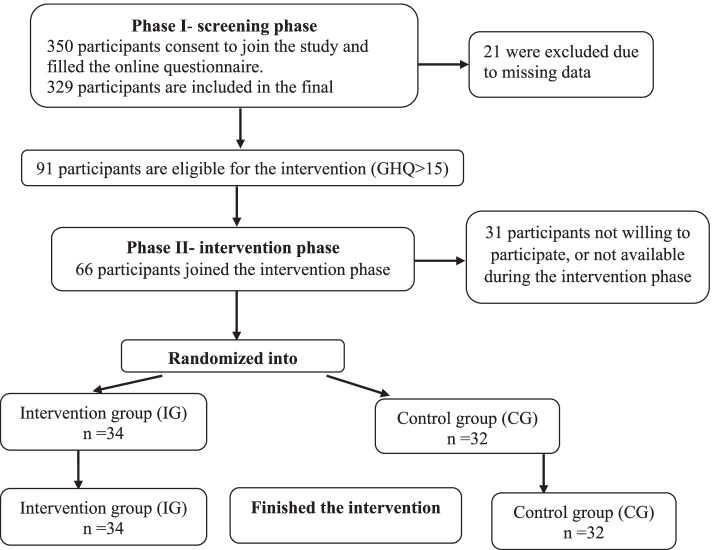
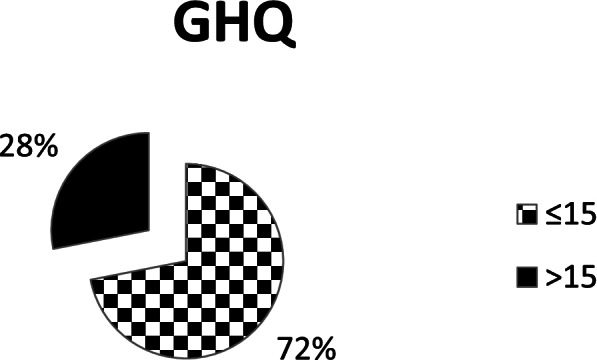
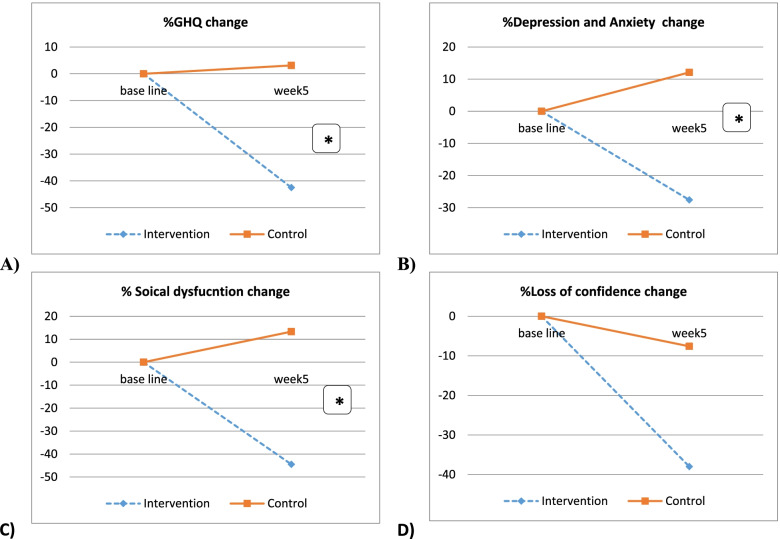
Background: The COVID-19 pandemic had a profound psychological influence on everyone in society, and the impact it had on students, particularly medical students, cannot be underestimated. The main purpose of this study is to (1) determine the prevalence of mental disorders among medical students and their associated factors, and (2) examine the effectiveness of cognitive behavior therapy on mental health problems among medical students. Methods: Between March and May 2021, we conducted a randomized controlled study on two phases among medical students at An-Najah National University. Data were collected using an online questionnaire and the Arabic version of the 12-item General Health Questionnaire (GHQ-12). We also used the MEDAS tool to assess their Mediterranean Diet (MD) adherence. In the second phase, sixty-six students were recruited and assigned randomly to control and intervention groups. Intervention impact was assessed using 12-item General Health Questionnaire at two-time points; baseline, and 8 weeks post-intervention. The interventional model used was cognitive behavioral therapy, and the control group received no treatment. Results: A total of 329 students were included in the analysis of the first phase of the study. Approximately 28% of students had mental health problems. We found a significant relationship between good mental health status with a higher level of physical activity level, longer sleeping hours, and shorter entertainment time (p < 0.05). In the second phase of the study, a total of 91 students were included. Overall, using the CBT program showed a significant improvement in the outcome measures. At 8 weeks post-intervention, students had lower scores on total GHQ-12, depression, anxiety, and social dysfunction. Conclusion: These findings propose that adequate attention must be paid to the mental health of medical students and that CBT programs can be used for the management of mental health problems among medical students.
Overview
The claims and statistics of this paper haven’t been checked yet.
Free: it reads the open-access text and checks the first 5 claims that cite a source we can check. Create a free account to check every claim.
Integrity signals
Registry
Cites
Statistics
Figures
Verification
Claims the paper makes
The claims and statistics of this paper haven’t been checked yet.
Free: it reads the open-access text and checks the first 5 claims that cite a source we can check. Create a free account to check every claim.
Self-check
Percentages, sums and reported differences re-computed from the paper’s own numbers.
The self-check needs the paper’s full text.
Citations
Cites
Coronaviridae Study Group of the International Committee on Taxonomy of Viruses, Gorbalenya, A. E., Baker, S. C., Baric, R. S., de Groot, R. J., Drosten, C., Gulyaeva, A. A., Haagmans, B. L., Lauber, C., Leontovich, A. M., et al. (2020) · Nature Microbiology · doi:10.1038/s41564-020-0695-z · Cited by 8,403 · cited 1×
“Introduction The first case of coronavirus disease 2019 (COVID19) stood out from Wuhan, China in December 2019 [1].”
BackgroundCognitive Therapy of Depression
HOLLON, S. D., & BECK, A. T. (1979) · Cognitive-Behavioral Interventions · doi:10.1016/b978-0-12-404480-7.50012-5 · Cited by 4,685
Qiu, J., Shen, B., Zhao, M., Wang, Z., Xie, B., & Xu, Y. (2020) · General Psychiatry · doi:10.1136/gpsych-2020-100213 · Cited by 4,307 · cited 1×
“Such disruptions among the students caused fear, anxiety, frustration, boredom, and a feeling of isolation from the rest of the world [9].”
BackgroundThe Validity of Two Versions of the GHQ in the WHO Study of Mental Illness in General Health Care
GOLDBERG, D. P., GATER, R., SARTORIUS, N., USTUN, T. B., PICCINELLI, M., GUREJE, O., & RUTTER, C. (1997) · Psychological Medicine · doi:10.1017/s0033291796004242 · Cited by 3,657 · cited 1×
“The validity and reliability of the Arabic version have been confirmed [47].”
BackgroundDyrbye, L. N., Thomas, M. R., & Shanafelt, T. D. (2006) · Academic Medicine · doi:10.1097/00001888-200604000-00009 · Cited by 2,909 · cited 1×
“However, as medical students progress in their studies, they will become exposed to increased levels of psychological distress mental morbidity compared to non-medical students and the general population [13].”
BackgroundRotenstein, L. S., Ramos, M. A., Torre, M., Segal, J. B., Peluso, M. J., Guille, C., Sen, S., & Mata, D. A. (2016) · JAMA · doi:10.1001/jama.2016.17324 · Cited by 2,479 · cited 1×
“Globally, roughly one-third of the medical students have either depressive symptoms or depression [14, 15].”
BackgroundSahu, P. (2020) · Cureus · doi:10.7759/cureus.7541 · Cited by 2,353
Schröder, H., Fitó, M., Estruch, R., Martínez-González, M. A., Corella, D., Salas-Salvadó, J., Lamuela-Raventós, R., Ros, E., Salaverría, I., Fiol, M., et al. (2011) · The Journal of Nutrition · doi:10.3945/jn.110.135566 · Cited by 1,624 · cited 1×
“The final score ranged from 0 to 14 [45].”
BackgroundBayram, N., & Bilgel, N. (2008) · Social Psychiatry and Psychiatric Epidemiology · doi:10.1007/s00127-008-0345-x · Cited by 1,391 · cited 1×
“Various factors that are relevant to the undergraduates’ category may affect mental health including familial factors, debt, economic difficulties, poor quality of life, job losses and unemployment, and lifestyle factors [52].”
BackgroundThomée, S., Härenstam, A., & Hagberg, M. (2011) · BMC Public Health · doi:10.1186/1471-2458-11-66 · Cited by 1,269 · cited 1×
“[59], and Chen [60], which showed that there is a correlation between addiction to mobile phones and mental health in dimensions of depression, psychosis, behavioral problems, and anxiety.”
BackgroundTull, M. T., Edmonds, K. A., Scamaldo, K. M., Richmond, J. R., Rose, J. P., & Gratz, K. L. (2020) · Psychiatry Research · doi:10.1016/j.psychres.2020.113098 · Cited by 922 · cited 1×
“Further studies disclosed growing reports of depression, anxiety, and loneliness as a result of lockdown enjoins required to prevent the spread of the coronavirus [6].”
BackgroundPrevalence of depression amongst medical students: A meta-analysis
Puthran, R., Zhang, M. W. B., Tam, W. W., & Ho, R. C. (2016) · Medical Education · doi:10.1111/medu.12962 · Cited by 855 · cited 1×
“Globally, roughly one-third of the medical students have either depressive symptoms or depression [14, 15].”
BackgroundStress and anxiety among university students in France during Covid-19 mandatory confinement
Husky, M. M., Kovess-Masfety, V., & Swendsen, J. D. (2020) · Comprehensive Psychiatry · doi:10.1016/j.comppsych.2020.152191 · Cited by 702 · cited 1×
“This is in line with a recent study that found students experienced significant psychological distress [50].”
Henning, K., Ey, S., & Shaw, D. (1998) · Medical Education · doi:10.1046/j.1365-2923.1998.00234.x · Cited by 571 · cited 1×
“Numerous studies showed that women medical students experience more stress than men medical students during their studies [29], whereas other studies indicated no relationship between race and psychological distress among medical students [30, 31].”
ResultAl-Rabiaah, A., Temsah, M.-H., Al-Eyadhy, A. A., Hasan, G. M., Al-Zamil, F., Al-Subaie, S., Alsohime, F., Jamal, A., Alhaboob, A., Al-Saadi, B., et al. (2020) · Journal of Infection and Public Health · doi:10.1016/j.jiph.2020.01.005 · Cited by 531
Burnout and Serious Thoughts of Dropping Out of Medical School: A Multi-Institutional Study
Dyrbye, L. N., Thomas, M. R., Power, D. V., Durning, S., Moutier, C., Massie, F. S., Harper, W., Eacker, A., Szydlo, D. W., Sloan, J. A., et al. (2010) · Academic Medicine · doi:10.1097/acm.0b013e3181c46aad · Cited by 480 · cited 1×
“Mental morbidity among medical students has been recognized in several countries including Egypt [18], Saudi Arabia [19], Iran [20], Pakistan [10, 21], China [22], Malaysia [23], India [24–26], Poor mental health also notices to be correlated with suicidal ideation and fatigue [27], substance abuse [10], and earnest t…”
BackgroundA longitudinal study of studentsʼ depression at one medical school
Rosal, M. C., Ockene, I. S., Ockene, J. K., Barrett, S. V., Ma, Y., & Hebert, J. R. (1997) · Academic Medicine · doi:10.1097/00001888-199706000-00022 · Cited by 464
Impact Of Sars-Cov-2 And Its Reverberation In Global Higher Education And Mental Health
Araújo, F. J. D. O., de Lima, L. S. A., Cidade, P. I. M., Nobre, C. B., & Neto, M. L. R. (2020) · Psychiatry Research · doi:10.1016/j.psychres.2020.112977 · Cited by 444 · cited 1×
“Globally, these preventive actions had a great impact on students of all ages [3].”
BackgroundTyssen, R., Vaglum, P., Grønvold, N. T., & Ekeberg, Ø. (2001) · Journal of Affective Disorders · doi:10.1016/s0165-0327(00)00205-6 · Cited by 438 · cited 1×
“Mental morbidity among medical students has been recognized in several countries including Egypt [18], Saudi Arabia [19], Iran [20], Pakistan [10, 21], China [22], Malaysia [23], India [24–26], Poor mental health also notices to be correlated with suicidal ideation and fatigue [27], substance abuse [10], and earnest t…”
BackgroundRace, Ethnicity, and Medical Student Well-being in the United States
Dyrbye, L. N., Thomas, M. R., Eacker, A., Harper, W., Massie, F. S., Power, D. V., Huschka, M., Novotny, P. J., Sloan, J. A., & Shanafelt, T. D. (2007) · Archives of Internal Medicine · doi:10.1001/archinte.167.19.2103 · Cited by 353 · cited 1×
“Marital status has also been found to be related to medical students’ mental health, married students being less probable to suffer from psychological distress [32].”
BackgroundVenkatarao, E., Iqbal, S., & Gupta, S. (2015) · Indian Journal of Medical Research · doi:10.4103/0971-5916.156571 · Cited by 349
Chang, J., Yuan, Y., & Wang, D. (2020) · PubMed · doi:10.12122/j.issn.1673-4254.2020.02.06 · Cited by 349 · cited 1×
“The COVID-19 outbreak had a significant psychological impact on all members of society, and the influence it had on students, particularly medical students, cannot be underestimated [8].”
BackgroundKhan, M. S., Mahmood, S., Badshah, A., Ali, S. U., & Sepah, Y. J. (2006) · PubMed · Cited by 316
Psychological responses during the COVID-19 outbreak among university students in Bangladesh
Islam, M. S., Sujan, M. S. H., Tasnim, R., Sikder, M. T., Potenza, M. N., & van Os, J. (2020) · PLOS ONE · doi:10.1371/journal.pone.0245083 · Cited by 245 · cited 1×
“[51] who noticed unfavorable psychological responses (stress, anxiety, and depression) during the COVID-19 outbreak among Bangladesh undergraduates.”
BackgroundGarcía-Conesa, M.-T., Philippou, E., Pafilas, C., Massaro, M., Quarta, S., Andrade, V., Jorge, R., Chervenkov, M., Ivanova, T., Dimitrova, D., et al. (2020) · Nutrients · doi:10.3390/nu12102960 · Cited by 236 · cited 2×
“Adherence to the Mediterranean diet was measured by a 14- item Mediterranean Diet Adherence Screener (MEDAS), which consists of 14 questions about food consumption frequency and two questions about food intake habits specific to the Mediterranean diet [44].”
BackgroundMethodAnxiety and depression among medical students: a cross-sectional study.
Jadoon, N. A., Yaqoob, R., Raza, A., Shehzad, M. A., & Choudhry, Z. S. (2010) · PubMed · Cited by 213
Helou, K., El Helou, N., Mahfouz, M., Mahfouz, Y., Salameh, P., & Harmouche-Karaki, M. (2018) · BMC Public Health · doi:10.1186/s12889-017-4599-7 · Cited by 165 · cited 1×
“An international physical activity level questionnaire was also used to assess participants’ physical activity levels [42].”
MethodStice, E. M., Burton, E. M., Bearman, S. K., & Rohde, P. (2006) · Behaviour Research and Therapy · doi:10.1016/j.brat.2006.08.008 · Cited by 162 · cited 1×
“The results of this investigation are also in accordance with a former study [62] which found that using CBT programs reduced the depressive symptoms among adolescents, and CBT had a higher impact on depression in comparison to other types of intervention.”
ResultEating disorders in medical students of Karachi, Pakistan-a cross-sectional study
Memon, A. A., Adil, S. E.-E.-R., Siddiqui, E. U., Naeem, S. S., Ali, S. A., & Mehmood, K. (2012) · BMC Research Notes · doi:10.1186/1756-0500-5-84 · Cited by 158 · cited 1×
“Furthermore, medical students are more prone to developing eating disorders as well [17].”
BackgroundRoh, M.-S., Jeon, H. J., Kim, H., Han, S. K., & Hahm, B.-J. (2010) · Academic Medicine · doi:10.1097/acm.0b013e3181df5e43 · Cited by 149 · cited 1×
“Besides that, low academic performance has also been related to psychological distress [33, 34].”
BackgroundA study on stress, stressors and coping strategies among Malaysian medical students.
Yusoff, M. S. B., Yee, L. Y., Wei, L. H., Meng, L. H., Bin, L. X., Siong, T. C., & Rahim, A. F. A. (2011) · International Journal of Students' Research · doi:10.5549/ijsr.1.2.45-50 · Cited by 138 · cited 1×
“Numerous studies showed that women medical students experience more stress than men medical students during their studies [29], whereas other studies indicated no relationship between race and psychological distress among medical students [30, 31].”
ResultKumar, G., Jain, A., & Hegde, S. (2012) · Indian Journal of Psychiatry · doi:10.4103/0019-5545.102412 · Cited by 134
Depression and suicidal ideation in medical students in China: a call for wellness curricula
Sobowale, K., Zhou, A. N., Fan, J., Liu, N., & Sherer, R. (2014) · International Journal of Medical Education · doi:10.5116/ijme.52e3.a465 · Cited by 133 · cited 4×
“The first case of coronavirus disease 2019 (COVID19) stood out from Wuhan, China in December 2019 [1].”
BackgroundInfluentialSupporting Homework Compliance in Cognitive Behavioural Therapy: Essential Features of Mobile Apps
Tang, W., & Kreindler, D. (2017) · JMIR Mental Health · doi:10.2196/mental.5283 · Cited by 124 · cited 1×
“Studies have shown that Cognitive behavior therapy is the most economical and effective psychotherapy in reducing and relieving psychological distress [39, 40].”
BackgroundHamdan-Mansour, A. M., Puskar, K., & Bandak, A. G. (2009) · Issues in Mental Health Nursing · doi:10.1080/01612840802694577 · Cited by 105
Sleep Duration and Depressive Symptoms: A Gene-Environment Interaction
Watson, N. F., Harden, K. P., Buchwald, D., Vitiello, M. V., Pack, A. I., Strachan, E., & Goldberg, J. (2014) · Sleep · doi:10.5665/sleep.3412 · Cited by 98 · cited 1×
“In contrast, two former studies found a U-shaped correlation between depressive symptoms and sleep duration [55, 56].”
ResultCarson, A. J., Dias, S., Johnston, A., McLoughlin, M. A., O'Connor, M., Robinson, B. L., Sellar, R. S., Trewavas, J. J. C., & Wojcik, W. (2000) · Scottish Medical Journal · doi:10.1177/003693300004500406 · Cited by 93 · cited 1×
“During the first year of medical school, medical students have equivalent mental morbidity in comparison to the general population and non-medical students [11, 12].”
BackgroundThe factor structure of the general health questionnaire (GHQ12) in Saudi Arabia
El‐Metwally, A., Javed, S., Razzak, H. A., Aldossari, K. K., Aldiab, A., Al-Ghamdi, S. H., Househ, M. S., Shubair, M. M., & Alzahrani, J. M. (2018) · BMC Health Services Research · doi:10.1186/s12913-018-3381-6 · Cited by 77 · cited 1×
“Participants scoring 15 points or higher were considered to have a tendency toward psychological problems [48, 49].”
BackgroundDepression and Stigma in Medical Students at a Private Medical College
Vankar, J. R., Prabhakaran, A., & Sharma, H. (2014) · Indian Journal of Psychological Medicine · doi:10.4103/0253-7176.135372 · Cited by 62
Mental health of medical students before and during medical education: A prospective study
Yusoff, M. S. B., Mat Pa, M. N., Esa, A. R., & Abdul Rahim, A. F. (2013) · Journal of Taibah University Medical Sciences · doi:10.1016/j.jtumed.2013.03.004 · Cited by 59 · cited 4×
“The factor structure of the general health questionnaire (GHQ12) in Saudi Arabia.”
BackgroundInfluentialSchure, M. B., Lindow, J. C., Greist, J. H., Nakonezny, P. A., Bailey, S. J., Bryan, W. L., & Byerly, M. J. (2019) · Journal of Medical Internet Research · doi:10.2196/14754 · Cited by 53 · cited 1×
“Cognitive Behavior Therapy is evidence-based psychotherapy, and it had been used globally in the prevention and treatment of psychological as well as physical issues [35, 36].”
MethodYusoff, M. S. B. (2013) · Sultan Qaboos University Medical Journal · doi:10.12816/0003203 · Cited by 52
Assessment of Mental Health among Iranian Medical Students : A Cross-Sectional Study
Farahangiz, S., Mohebpour, F., & Salehi, A. (2016) · International Journal of Health Sciences · doi:10.12816/0031216 · Cited by 49 · cited 2×
“Farahangiz S, Mohebpour F, Salehi A. Assessment of mental health among Iranian medical students: a cross-sectional study.”
BackgroundCarskadon, M. A., Sharkey, K. M., Knopik, V. S., & McGeary, J. E. (2012) · Sleep · doi:10.5665/sleep.1876 · Cited by 47 · cited 1×
“Second, former research found that university students who carry two alleles of low-expressing polymorphism of the serotonin transporter gene had more depressive symptoms in the existence of a permanent pattern of short night sleep [58].”
BackgroundChang, J. J., Salas, J., Habicht, K., Pien, G. W., Stamatakis, K. A., & Brownson, R. C. (2012) · The Journal of Rural Health · doi:10.1111/j.1748-0361.2011.00398.x · Cited by 46 · cited 1×
“, which showed that short sleep duration (< 7 h/ night) is positively associated with elevated depressive symptoms [54].”
BackgroundPrevalence and predictors of suicidality among medical students in a public university.
Tan, S. T., Sherina, M. S., Rampal, L., & Normala, I. (2015) · PubMed · Cited by 46
Drissi, N., Alhmoudi, A., Al Nuaimi, H., Alkhyeli, M., Alsalami, S., & Ouhbi, S. (2020) · JMIR Formative Research · doi:10.2196/19876 · Cited by 44 · cited 1×
“Participants scoring 15 points or higher were considered to have a tendency toward psychological problems [48, 49].”
BackgroundFeeney, F., Egan, S., & Gasson, N. (2005) · Clinical Psychologist · doi:10.1080/13284200500048240 · Cited by 43
Psychosomatic problems among medical students: a myth or reality?
Chinawa, J. M., Nwokocha, A. R. C., Manyike, P. C., Chinawa, A. T., Aniwada, E., & Ndukuba, A. C. (2016) · International Journal of Mental Health Systems · doi:10.1186/s13033-016-0105-3 · Cited by 39 · cited 1×
“Alongside depression, psychosomatic disorder and anxiety frame a prominent mental health problem [16].”
BackgroundYang, Y.-L., Sui, G.-Y., Liu, G.-C., Huang, D.-S., Wang, S.-M., & Wang, L. (2014) · BMC Cancer · doi:10.1186/1471-2407-14-956 · Cited by 38 · cited 1×
“Studies have shown that Cognitive behavior therapy is the most economical and effective psychotherapy in reducing and relieving psychological distress [39, 40].”
BackgroundMental Health Status of Medical Students: A Single Faculty Study in Egypt
El‐Gilany, A., Amro, M., Eladawi, N., & Khalil, M. A. E. F. (2019) · The Journal of Nervous and Mental Disease · doi:10.1097/nmd.0000000000000970 · Cited by 30 · cited 2×
“El-Gilany AH, Amro M, Eladawi N, Khalil M. Mental health status of medical students: a single faculty study in Egypt.”
BackgroundKim, H.-M., & Lee, S. W. (2018) · Korean Journal of Family Medicine · doi:10.4082/kjfm.2018.39.1.57 · Cited by 27 · cited 1×
“First, people who sleep for a short period of time may have imperfect comfort and a higher perceived stress severity, which is considered a risk factor for depressive symptoms [57].”
BackgroundChan, P., Bhar, S. S., Davison, T. E., Doyle, C., Knight, B. G., Koder, D., Laidlaw, K., Pachana, N. A., Wells, Y., & Wuthrich, V. M. (2018) · JMIR Research Protocols · doi:10.2196/resprot.9902 · Cited by 17 · cited 1×
“Cognitive Behavior Therapy is evidence-based psychotherapy, and it had been used globally in the prevention and treatment of psychological as well as physical issues [35, 36].”
MethodCoping resources and health responses among men and women medical students
Grossman, H. Y., Salt, P., Nadelson, C. C., & Notman, M. T. (1987) · Social Science & Medicine · doi:10.1016/0277-9536(87)90011-6 · Cited by 13 · cited 1×
“Numerous studies showed that women medical students experience more stress than men medical students during their studies [29], whereas other studies indicated no relationship between race and psychological distress among medical students [30, 31].”
ResultSelf-referral to group cognitive behavioural therapy: Is it effective for treating chronic insomnia?
Hartley, S., Dagneaux, S., Londe, V., Liane, M.-T., Aussert, F., Francs, C. C. D., & Royant‐Parola, S. (2016) · L Encéphale · doi:10.1016/j.encep.2016.08.013 · Cited by 13
Guo, L., Wang, T., Wang, W., Fan, B., Xie, B., Zhang, H., Liao, Y., & Lu, C. (2019) · Journal of Affective Disorders · doi:10.1016/j.jad.2019.11.095 · Cited by 13 · cited 1×
“In contrast, two former studies found a U-shaped correlation between depressive symptoms and sleep duration [55, 56].”
ResultJose, J., & Sruthi, M. V. (2019) · International Journal of Community Medicine and Public Health · doi:10.18203/2394-6040.ijcmph20195056 · Cited by 10 · cited 1×
“This is in keeping with other studies, which demonstrate that physical activity and mental health are associated proportionally and it bears a positive effect on the education of youth [53].”
ResultKhan, M. S., Mahmood, S., Badshah, A., Ali, S., & Jamal, Y. (2006) · American Journal of Epidemiology · doi:10.1093/aje/163.suppl_11.s220-c
Research works printed but not linked: 3
- UNESCO COVID-19 educational disruption and response 2020
- Goldberg DP Williams P A user’s guide to the GHQ 1988 Windsor, UK NFER Nelson
- Chen YF The relationship of mobile phone use to addiction and depression amongst American college students Moblie Communication and Social Change 2004 10 344 352
Cited by
The impact of the COVID-19 pandemic on Mediterranean diet adherence: A narrative systematic review
Farrugia, F., Refalo, D., Bonello, D., & Cuschieri, S. (2023) · Nutrition and Health · doi:10.1177/02601060231187511 · Cited by 14
“These fi ndings support the notion that individuals may have tried to use the lockdown as a chance to improve their dietary habits, as was also seen in some of the studies in this review (Dragun et al., 2020; Kaufman-Shirqui et al., 2021; Hanani et al., 2022).”
BackgroundResultAbu-Ras, W. M., Almoayad, F. A., Bakry, H., Alammari, D., Kelly, P. J., & Aboul-Enein, B. H. (2024) · International Journal of Social Psychiatry · doi:10.1177/00207640241259995 · Cited by 17
“…al., 2017; Hammad & Tribe, 2020; Hanani et al., 2022; Kangaslampi et al., 2016; Peltonen et al., 2012; Qouta et al., 2012, 2016; Shank et al., 2023; Thabet et al., 2009a, 2009b; Veronese & Barola, 2018) and two focused on university students or graduates (Hammad & Tribe, 2020; Hanani et al., 2022).”
BackgroundMethodInfluentialWang, D., Lin, B., Zhang, S., Xu, W., & Liu, X. (2024) · Journal of Medical Internet Research · doi:10.2196/50664 · Cited by 10
Zhang, M., Xu, W., Zhou, H., Fan, J., & Liu, H. (2023) · Medical Science Monitor · doi:10.12659/msm.942317 · Cited by 13
“Recent research has shown that online teaching can sometimes lead to disruption of the educational process, resulting in considerable stress for college students [26].”
BackgroundLyzwinski, L., Zwicker, J. D., Mcdonald, S., & Tough, S. (2024) · JMIR Pediatrics and Parenting · doi:10.2196/59171 · Cited by 7
Metadata
- Authors
- Hanani, A., Badrasawi, M., Zidan, S., & Hunjul, M.
- Affiliations
- An-Najah National University (PS)
- Hebron University (PS)
- Corresponding author
- Hanani, Ahmad
- Venue
- BMC Psychiatry
- Published
- 2022-05-02
- Volume
- 22
- Issue
- 1
- Pages
- 310-310
- ISSN
- 1471-244X (ISSN-L)
- PMC
- PMC9060416
- OpenAlex
- W4225277876
- Semantic Scholar
- aac5ca285258a2b8014609b39b2db8119011a40d
- Cited by
- 21
- References
- 57
- Citations by year
- 2026: 2 · 2025: 3 · 2024: 8 · 2023: 6 · 2022: 2
- FWCI
- 4.33
- Type
- journal article
- Language
- en
- Open access
- gold
- doi.org
- Licence
- cc-by
- creativecommons.org/licenses/by/4.0 (tdm)
- creativecommons.org/licenses/by/4.0 (vor)
- Locations
- BMC Psychiatry (publishedVersion, cc-by)
- PubMed Central (publishedVersion, cc-by)
- PubMed (publishedVersion)
- DOAJ (DOAJ: Directory of Open Access Journals) (submittedVersion, cc-by-sa)
- Topics
- Social Sciences › Psychology › Clinical Psychology › COVID-19 and Mental Health
- Health Sciences › Health Professions › General Health Professions › Healthcare professionals’ stress and burnout
- Social Sciences › Psychology › Developmental and Educational Psychology › Student Stress and Coping
- Keywords
- cognitive behavioral therapy, medical students, mental health, COVID-19 pandemic, depression, anxiety, social dysfunction, GHQ-12, Mediterranean diet adherence, physical activity, sleep duration
- MeSH terms
- COVID-19, Health Status, Humans, Students, Medical, Cognitive Behavioral Therapy, Pandemics
About these checks
Registry, retraction, Cites and statistics results are computed, not judged, with one exception: a printed reference that no index lists is read once by a model before it counts as a citation error. Claims are extracted by a model and kept only when their quote appears verbatim in the text; each cited source is then checked, with a model’s help, for whether it says what the claim relies on. Those verdicts can be wrong — read the claim’s quote and the cited source before relying on one.
Statistics and arithmetic are recomputed, not judged.
Confidence bands are shown only for fields calibrated on our annotated test set. None is calibrated yet, so no band is shown.
What counts as a claim ›How we measure confidence ›How we check this ›
Are you an author, or do you see a problem with this page? Request a review
Data sources
Bibliographic data: Semantic Scholar, OpenAlex, Crossref.
Contains information from the Semantic Scholar Academic Graph Datasets, made available under the ODC Attribution License (ODC-BY 1.0).
Semantic Scholar’s data is described in: Kinney, R., et al. (2023). The Semantic Scholar Open Data Platform. arXiv:2301.10140.
