

Academic stress and suicidal ideation: moderating roles of coping style and resilience
Open accessThe DOI matches its Crossref record; 64 of the 67 references it cites were found in a registry or an index.
Abstract
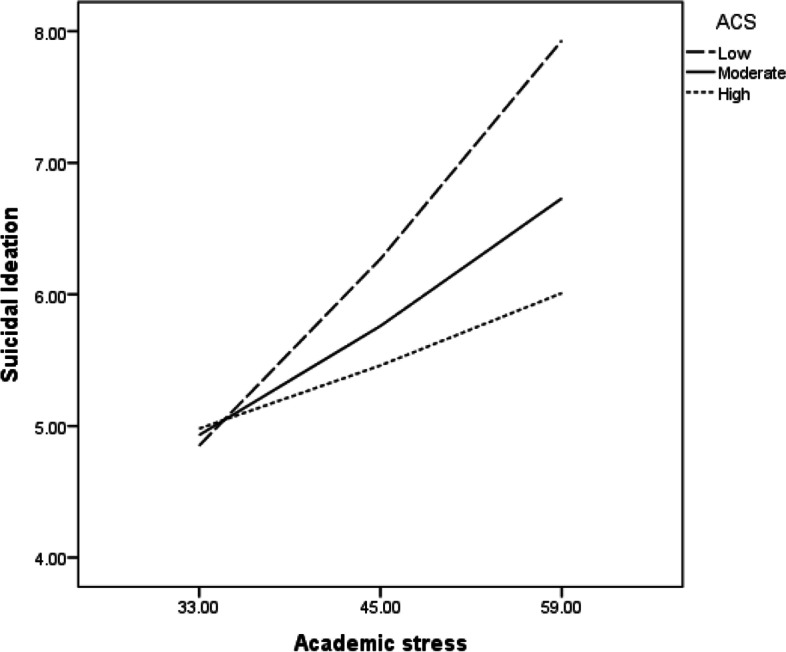
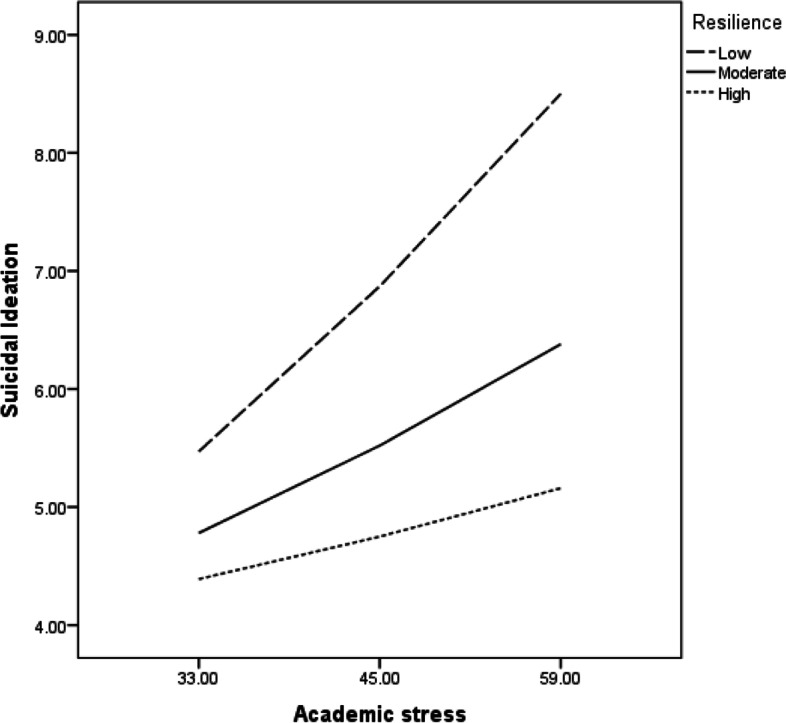
Background: As a global phenomenon, suicide has generated a lot of concern. Scholars from various fields have conducted extensive research on the prevalence, causes, factors, and/or management or possible solutions to suicidal ideation. Despite the research efforts, suicidal cases worldwide still yell for more empirical attention. No doubt that some of the extant literature have specifically evidenced the causal links and factors in suicidal ideation. Yet, none had focused on the moderating roles of coping and resilience in an academic population. We therefore, examined the moderating roles of coping and resilience in the relationship between academic stress and suicidal ideation. Method: We used a cross-sectional design to sample 505 participants (329 males and 176 females) from three southern Nigerian universities. Participants who willingly indicated their participatory consent were administered a paper self-report questionnaire containing the Lakaev Academic Stress Response Scale (LASRS), Scale for Suicidal Ideation (SSI), Brief COPE (B-COPE), and Resilience Scale (RS-14). Hierarchical regression analysis was used to test the hypotheses of the study. Academic stress ( r = 0.17; p.001) was found to be positively associated with suicidal ideation, whereas resilience ( r = −.22; p.001) was found to be negatively associated with suicidal ideation. Suicidal ideation had no significant correlation with adaptive coping style, but it did have a significant correlation with maladaptive coping ( r = .15; p.001). The regression-based PROCESS macro showed that academic stress was a significant predictor of coping [Δ R 2 = .03, F (1, 502) = 16.18, p = .01]. Academic stress was positively associated with suicidal ideation at low or moderate levels of adaptive coping styles. At high levels of adaptive coping styles, the association between academic stress and suicidal ideation was not significant. However, resilience negatively predicted suicidal ideation [R = .29, (R 2 = .08), F(1, 499) = 19.94, p = .00] with academic stress showing a positive association with suicidal ideation at low and moderate levels of resilience, but for those with high resilience, academic stress was not associated with suicidal ideation. In sum, suicidal ideation is heightened by increased academic stress, with greater resilience ameliorating the tendency of academic stress resulting in suicidal ideation. Also, adopting maladaptive ways of coping promotes suicidal ideation among students, with resilience and adaptive coping strategies moderating the relationship between academic stress and suicidal ideation. It is therefore recommended that educational administrators, policy makers, lecturers, teachers, and tutors incorporate courses, teachings, and sessions that foster as well as inculcate resilience and efficient coping skills in pupils and students.
Overview
The claims and statistics of this paper haven’t been checked yet.
Free: it reads the open-access text and checks the first 5 claims that cite a source we can check. Create a free account to check every claim.
Integrity signals
Registry
Cites
Statistics
Figures
Verification
Claims the paper makes
The claims and statistics of this paper haven’t been checked yet.
Free: it reads the open-access text and checks the first 5 claims that cite a source we can check. Create a free account to check every claim.
Claims other papers make about this one
Each is checked against this paper’s own text: does it say what the citing paper says it does?
The source backs part of the claim, not all of it — or backs it for a different population, condition or comparison.
In the citing paper
“In this context, stress, as well as individual coping mechanisms in response to stressors (see Okechukwu et al., 2022), can powerfully influence one’s capability for suicide and shape the progression from suicide ideation to attempt.”
From Toward objective characterizations of suicide risk: A narrative review of laboratory-based cognitive and behavioral tasks (2023) · cites this paper as Okechukwu et al., 2022
Experimental — accuracy not yet measured
Self-check
Percentages, sums and reported differences re-computed from the paper’s own numbers.
The self-check needs the paper’s full text.
Citations
Cites
Tabachnick, B. G., & Fidell, L. S. (1983) · Cited by 80,058
Multiple regression: testing and interpreting interactions
(1992) · Choice Reviews Online · doi:10.5860/choice.29-3352 · Cited by 36,654
Mediation in experimental and nonexperimental studies: New procedures and recommendations.
Shrout, P. E., & Bolger, N. (2002) · Psychological Methods · doi:10.1037/1082-989x.7.4.422 · Cited by 11,335 · cited 1×
“Finally, resilience would negatively predict suicidal ideation [54] as well as moderate the association between academic stress and suicidal ideation, such that academic stress would show a positive association with suicidal ideation for students at low and moderate levels of resilience, but for those with high resili…”
BackgroundYou want to measure coping but your protocol’ too long: Consider the brief cope
Carver, C. S. (1997) · International Journal of Behavioral Medicine · doi:10.1207/s15327558ijbm0401_6 · Cited by 7,361
(1991) · Cited by 7,187
Development and psychometric evaluation of the Resilience Scale.
Wagnild, G. M., & Young, H. M. (1993) · PubMed · Cited by 5,960
Resilient Individuals Use Positive Emotions to Bounce Back From Negative Emotional Experiences.
Tugade, M. M., & Fredrickson, B. L. (2004) · Journal of Personality and Social Psychology · doi:10.1037/0022-3514.86.2.320 · Cited by 3,947 · cited 2×
“Resilience is important as it ensures healthy social functioning, morale, and somatic health, as well as helps an individual maintain emotional stability in the midst of stress [64].”
BackgroundAssessment of suicidal intention: The Scale for Suicide Ideation.
Beck, A. T., Kovacs, M., & Weissman, A. (1979) · Journal of Consulting and Clinical Psychology · doi:10.1037//0022-006x.47.2.343 · Cited by 3,419 · cited 3×
“Suicidal ideation was analysed dimensionally with scores ranging from 0 (low ideation) to 38 (high ideation) [6].”
BackgroundMethodResultInfluentialThe metatheory of resilience and resiliency
Richardson, G. E. (2002) · Journal of Clinical Psychology · doi:10.1002/jclp.10020 · Cited by 2,509
Essentials of Psychological Testing
Urbina, S. (2014) · doi:10.1002/9781394259458 · Cited by 1,845
Jackson, D., Firtko, A., & Edenborough, M. (2007) · Journal of Advanced Nursing · doi:10.1111/j.1365-2648.2007.04412.x · Cited by 1,175 · cited 1×
“Hence, understanding resilience appears to provide homeostasis [51] and personal endurance [33].”
BackgroundSkinner, E. A., & Zimmer-Gembeck, M. J. (2007) · Annual Review of Psychology · doi:10.1146/annurev.psych.58.110405.085705 · Cited by 997
Clinical correlates of inpatient suicide
Busch, K. A., Fawcett, J., & Jacobs, D. G. (2003) · The Journal of Clinical Psychiatry · doi:10.4088/jcp.v64n0105 · Cited by 750 · cited 1×
“This is because most victims of suicide hide or conceal their intentions [11, 25, 70], and this makes it difficult (if not impossible) for people to have knowledge of or even gain access to a potential suicide victim.”
BackgroundResiliency Theory: A Strengths-Based Approach to Research and Practice for Adolescent Health
Zimmerman, M. A. (2013) · Health Education & Behavior · doi:10.1177/1090198113493782 · Cited by 592
Suicide and Youth: Risk Factors
Bilsen, J. (2018) · Frontiers in Psychiatry · doi:10.3389/fpsyt.2018.00540 · Cited by 584 · cited 1×
“Besides, suicide seems to have had multiple underlying causes [9, 67], and therefore requires adopting multiple investigative approach.”
BackgroundTowards an integrated motivational–volitional model of suicidal behaviour
O'connor, R. C. (2011) · International Handbook of Suicide Prevention · doi:10.1002/9781119998556.ch11 · Cited by 552 · cited 1×
“There is a need to understand the moderating roles of some factors in the observed association [45] between academic stress and suicidal ideation in a bid to advance research knowledge on suicide, intervention, and treatment.”
BackgroundSuicidal behavior and alcohol abuse.
Pompili, M., Serafini, G., Innamorati, M., Dominici, G., Ferracuti, S., Kotzalidis, G. D., Serra, G., Girardi, P., Janiri, L., Tatarelli, R., et al. (2010) · International Journal of Environmental Research and Public Health · doi:10.3390/ijerph7041392 · Cited by 477 · cited 1×
“These variables were “entered” “stepby-step” (separately) into the analysis in order to examine the various respective accounts or percentage contributions of each predictor variable in the relationship [50].”
MethodPsychosocial and Risk Behavior Correlates of Youth Suicide Attempts and Suicidal Ideation
KING, R. A., SCHWAB-STONE, M., FLISHER, A. J., GREENWALD, S., KRAMER, R. A., GOODMAN, S. H., LAHEY, B. B., SHAFFER, D., & GOULD, M. S. (2001) · Journal of the American Academy of Child & Adolescent Psychiatry · doi:10.1097/00004583-200107000-00019 · Cited by 448 · cited 1×
“Generally, the role of stressful life events in suicidal ideation, attempts, and completion has been a key area of study in the epidemiology of mental disorders [35, 69].”
BackgroundAnnual Research Review: A meta‐analytic review of worldwide suicide rates in adolescents
Glenn, C. R., Kleiman, E. M., Kellerman, J., Pollak, O., Cha, C. B., Esposito, E. C., Porter, A. C., Wyman, P. A., & Boatman, A. E. (2020) · Journal of Child Psychology and Psychiatry · doi:10.1111/jcpp.13106 · Cited by 391 · cited 1×
“[27, 36]) that suicidal thoughts are more common among younger age groups.”
BackgroundIntroduction to Probability and Statistics
Sylwester, D. (1988) · Technometrics · doi:10.1080/00401706.1988.10488416 · Cited by 370
Resilience: Enhancing well-being through the positive cognitive triad.
Mak, W. W. S., Ng, I. S. W., & Wong, C. C. Y. (2011) · Journal of Counseling Psychology · doi:10.1037/a0025195 · Cited by 366 · cited 2×
“Extant literature have documented the relationships between resilience and well-being [40].”
BackgroundAdolescent suicidal behaviours in 32 low- and middle-income countries
McKinnon, B., Gariépy, G., Sentenac, M., & Elgar, F. J. (2016) · Bulletin of the World Health Organization · doi:10.2471/blt.15.163295 · Cited by 297 · cited 1×
“This could account for why scholars like [1, 4, 41] noted that evidence from 32 low and middle-income countries in sub-Sahara Africa have high suicide rates among adolescents and young people in general (without reference to a particular age bracket).”
BackgroundSpecific coping behaviors in relation to adolescent depression and suicidal ideation
Horwitz, A. G., Hill, R. M., & King, C. A. (2011) · Journal of Adolescence · doi:10.1016/j.adolescence.2010.10.004 · Cited by 265 · cited 1×
“For instance, behavioural disengagement and self-blame increase suicidal vulnerability [30], deficient coping and problem solving skills heighten suicidal ideation [59, 62], passive coping (usually fantasizing) fosters suicidal ideation [75], while ineffective coping skills and negative emotions trigger higher risk of…”
BackgroundYang, B., & Clum, G. A. (1994) · Suicide and Life-Threatening Behavior · doi:10.1111/j.1943-278x.1994.tb00797.x · Cited by 213 · cited 1×
“Besides these direct associations, psychopathological factors, including depression [68], hopelessness [21], and psychological distress [63], have been tested as mediators between life stress and suicidal ideation, with fewer research enquiries involving resilience.”
BackgroundProfiles of Psychological Well-being and Coping Strategies among University Students
Freire, C., Ferradás, M. D. M., Valle, A., Núñez, J. C., & Vallejo, G. (2016) · Frontiers in Psychology · doi:10.3389/fpsyg.2016.01554 · Cited by 194 · cited 1×
“When confronted with the aforementioned potential stressors, a student who is stressed but adopts dysfunctional or ineffective coping styles (blaming oneself for problems, ignoring them, or escaping through fantasizing thoughts) may likely consider suicide as an option to end the perturbation [26].”
BackgroundSocial Problem Solving in Adolescents with Suicidal Behavior: A Systematic Review
Speckens, A. E. M., & Hawton, K. (2005) · Suicide and Life-Threatening Behavior · doi:10.1521/suli.2005.35.4.365 · Cited by 172 · cited 1×
“For instance, behavioural disengagement and self-blame increase suicidal vulnerability [30], deficient coping and problem solving skills heighten suicidal ideation [59, 62], passive coping (usually fantasizing) fosters suicidal ideation [75], while ineffective coping skills and negative emotions trigger higher risk of…”
BackgroundPhang, C. K., Mukhtar, F., Ibrahim, N., Keng, S., & Sidik, S. M. (2015) · Advances in Health Sciences Education · doi:10.1007/s10459-015-9591-3 · Cited by 168 · cited 3×
“These circumstances are not limited to adapting to a new academic environment, academic workload, academic performance, attending to lectures, overwork, future employment [22, 49], nor social and financial stresses [19].”
BackgroundStress, coping and suicide ideation in Chinese college students
Zhang, X., Wang, H., Xia, Y., Liu, X., & Jung, E. (2012) · Journal of Adolescence · doi:10.1016/j.adolescence.2011.10.003 · Cited by 157 · cited 1×
“For instance, behavioural disengagement and self-blame increase suicidal vulnerability [30], deficient coping and problem solving skills heighten suicidal ideation [59, 62], passive coping (usually fantasizing) fosters suicidal ideation [75], while ineffective coping skills and negative emotions trigger higher risk of…”
BackgroundSuicidal feelings in the last year of life in elderly people who commit suicide
Wærn, M., Beskow, J., Runeson, B., & Skoog, I. G. (1999) · The Lancet · doi:10.1016/s0140-6736(99)93099-4 · Cited by 151 · cited 1×
“This is because most victims of suicide hide or conceal their intentions [11, 25, 70], and this makes it difficult (if not impossible) for people to have knowledge of or even gain access to a potential suicide victim.”
BackgroundIntroduction Probability And Statistics
Mendenhall, W. (1967) · Andalas University Repository (Andalas University) · Cited by 149
Resilience and suicidality among homeless youth
Cleverley, K., & Kidd, S. A. (2011) · Journal of Adolescence · doi:10.1016/j.adolescence.2010.11.003 · Cited by 144
Suicidal ideation in adolescence: Examining the role of recent adverse experiences
Thompson, R., Proctor, L. J., English, D. J., Dubowitz, H., Narasimhan, S., & Everson, M. D. (2012) · Journal of Adolescence · doi:10.1016/j.adolescence.2011.03.003 · Cited by 141 · cited 1×
“Besides these direct associations, psychopathological factors, including depression [68], hopelessness [21], and psychological distress [63], have been tested as mediators between life stress and suicidal ideation, with fewer research enquiries involving resilience.”
BackgroundCoping and medication adherence in bipolar disorder
Greenhouse, W. J., Meyer, B., & Johnson, S. L. (2000) · Journal of Affective Disorders · doi:10.1016/s0165-0327(99)00152-4 · Cited by 134 · cited 1×
“Researchers have variously shown B-COPE to have had good psychometric properties [24, 28].”
Howarth, E. J., O'Connor, D. B., Panagioti, M., Hodkinson, A., Wilding, S., & Johnson, J. (2020) · Journal of Affective Disorders · doi:10.1016/j.jad.2020.01.171 · Cited by 134 · cited 3×
“Stressors have become so prevalent in undergraduate education [19, 22, 49] that adequate coping skills have become a panacea to the likelihood of impending suicidal ideation [31, 48].”
BackgroundProblem-solving appraisal, hopelessness, and suicide ideation: Evidence for a mediational model.
Dixon, W. A., Heppner, P. P., & Rudd, M. D. (1994) · Journal of Counseling Psychology · doi:10.1037//0022-0167.41.1.91 · Cited by 131 · cited 1×
“Rather, extant related literature have either focused on stress (not academic stress) and suicidal ideation [17, 20] or coping and suicidal ideation [10].”
BackgroundPrevalence and Correlates of Suicidal Behaviour Among Adolescents in Southwest Nigeria
Omigbodun, O., Dogra, N., Esan, O., & Adedokun, B. (2008) · International Journal of Social Psychiatry · doi:10.1177/0020764007078360 · Cited by 127
Development of population‐based resilience measures in the primary school setting
Sun, J., & Stewart, D. (2007) · Health Education · doi:10.1108/09654280710827957 · Cited by 123 · cited 1×
“The salutogenic model specifically focuses on factors that help identify coping resources that may contribute to resilience and effective adjustment, notwithstanding adversity and risk [60].”
BackgroundProtective factors against depression and suicidal behaviour in adolescence.
Breton, J., Labelle, R. J., Berthiaume, C., Royer, C., St‐Georges, M., Ricard, D., Abadie, P., Gérardin, P., Cohen, D., & Guilé, J.-M. (2015) · PubMed Central · Cited by 120
DeRosier, M. E., Frank, E., Schwartz, V., & Leary, K. A. (2013) · Psychiatric Annals · doi:10.3928/00485713-20131206-05 · Cited by 115 · cited 4×
“These circumstances are not limited to adapting to a new academic environment, academic workload, academic performance, attending to lectures, overwork, future employment [22, 49], nor social and financial stresses [19].”
BackgroundInfluentialIzadinia, N., Amiri, M., Jahromi, R. G., & Hamidi, S. (2010) · Procedia - Social and Behavioral Sciences · doi:10.1016/j.sbspro.2010.07.335 · Cited by 104
Nurses' workplace stressors and coping strategies
Lambert, V. A., & Lambert, C. E. (2008) · Indian Journal of Palliative Care · doi:10.4103/0973-1075.41934 · Cited by 98 · cited 2×
“Lambert VA, Lambert CE.”
BackgroundChou, W.-P., Yen, C.-F., & Liu, T.-L. (2018) · International Journal of Environmental Research and Public Health · doi:10.3390/ijerph15040788 · Cited by 98 · cited 1×
“For instance, behavioural disengagement and self-blame increase suicidal vulnerability [30], deficient coping and problem solving skills heighten suicidal ideation [59, 62], passive coping (usually fantasizing) fosters suicidal ideation [75], while ineffective coping skills and negative emotions trigger higher risk of…”
BackgroundSelf‐Concealment and Suicidal Behaviors
Friedlander, A., Nazem, S., Fiske, A., Nadorff, M. R., & Smith, M. D. (2012) · Suicide and Life-Threatening Behavior · doi:10.1111/j.1943-278x.2012.00094.x · Cited by 96 · cited 1×
“This is because most victims of suicide hide or conceal their intentions [11, 25, 70], and this makes it difficult (if not impossible) for people to have knowledge of or even gain access to a potential suicide victim.”
BackgroundDixon, W. A., Rumford, K. G., Heppner, P. P., & Lips, B. J. (1992) · Journal of Counseling Psychology · doi:10.1037/0022-0167.39.3.342 · Cited by 94 · cited 1×
“Besides these direct associations, psychopathological factors, including depression [68], hopelessness [21], and psychological distress [63], have been tested as mediators between life stress and suicidal ideation, with fewer research enquiries involving resilience.”
BackgroundUndercounting of suicides: Where suicide data lie hidden
Snowdon, J., & Choi, N. G. (2020) · Global Public Health · doi:10.1080/17441692.2020.1801789 · Cited by 92 · cited 3×
“Snowdon and Choi [58] observed that reports of suicide are rare in children under the age of 10, but in the developed world, the prevalence begins to increase for youths between 10 and 14 years of age and in the 15 to 24 year age group [14].”
BackgroundInfluentialAdewuya, A. O., & Oladipo, O. E. (2019) · European Child & Adolescent Psychiatry · doi:10.1007/s00787-019-01462-x · Cited by 89 · cited 4×
“Adewuya AO, Oladipo EO.”
BackgroundMethodInfluentialConsoli, A., Cohen, D., Bodeau, N., Guilé, J.-M., Mirkovic, B., Knafo, A., Mahé, V., Laurent‐Levinson, C., Renaud, J., Labelle, R. J., et al. (2015) · PubMed Central · Cited by 86
Understanding Suicidal Behaviour
(2000) · Primary Health Care · doi:10.7748/phc.10.7.12.s13 · Cited by 86
Clum, G. A., & Febbraro, G. A. R. (1994) · Journal of Psychopathology and Behavioral Assessment · doi:10.1007/bf02229066 · Cited by 78 · cited 1×
“Rather, extant related literature have either focused on stress (not academic stress) and suicidal ideation [17, 20] or coping and suicidal ideation [10].”
BackgroundThe effect of alcohol impairment on road-crossing behaviour
Oxley, J. A., Lenné, M. G., & Corben, B. (2006) · Transportation Research Part F Traffic Psychology and Behaviour · doi:10.1016/j.trf.2006.01.004 · Cited by 77 · cited 1×
“[5, 47]), which specifically suggested and categorized substance use (such as alcohol) as a maladaptive coping style because it impairs judgment and disinhibits impulses, and as such, users of such Table 1 Descriptive statistics of the participants”
BackgroundAlcohol Use to Facilitate a Suicide Attempt: An Event-Based Examination
Bagge, C. L., Conner, K. R., Reed, L. D., Dawkins, M. R., & Murray, K. (2015) · Journal of Studies on Alcohol and Drugs · doi:10.15288/jsad.2015.76.474 · Cited by 68 · cited 1×
“[5, 47]), which specifically suggested and categorized substance use (such as alcohol) as a maladaptive coping style because it impairs judgment and disinhibits impulses, and as such, users of such Table 1 Descriptive statistics of the participants”
BackgroundKyron, M. J., Rikkers, W., Page, A. C., O’Brien, P., Bartlett, J., LaMontagne, A. D., & Lawrence, D. M. (2020) · Australian & New Zealand Journal of Psychiatry · doi:10.1177/0004867420937774 · Cited by 57 · cited 1×
“[27, 36]) that suicidal thoughts are more common among younger age groups.”
BackgroundTang, F., & Qin, P. (2015) · PLOS ONE · doi:10.1371/journal.pone.0121023 · Cited by 50 · cited 1×
“For instance, behavioural disengagement and self-blame increase suicidal vulnerability [30], deficient coping and problem solving skills heighten suicidal ideation [59, 62], passive coping (usually fantasizing) fosters suicidal ideation [75], while ineffective coping skills and negative emotions trigger higher risk of…”
BackgroundCoping Strategies and Suicidality: A Cross-Sectional Study From China
Liang, J.-Q., Kōlves, K., Lew, B., de Leo, D., Yuan, L., Talib, M. A., & Jia, C.-X. (2020) · Frontiers in Psychiatry · doi:10.3389/fpsyt.2020.00129 · Cited by 48 · cited 2×
“Discussion Our hypothesis that academic stress would significantly predict suicidal ideation was confirmed, and this finding is consistent with extant studies [10, 18, 39].”
BackgroundResultSuicide attempts and stressful life events among homeless people in Madrid (Spain)
Panadero, S., Martín, R. M., & Vázquez, J. J. (2018) · Journal of Community & Applied Social Psychology · doi:10.1002/casp.2351 · Cited by 46 · cited 3×
“Stressors have become so prevalent in undergraduate education [19, 22, 49] that adequate coping skills have become a panacea to the likelihood of impending suicidal ideation [31, 48].”
BackgroundFletcher, K., Parker, G. B., & Manicavasagar, V. L. (2013) · Acta Neuropsychiatrica · doi:10.1017/neu.2013.41 · Cited by 44 · cited 1×
“Researchers have variously shown B-COPE to have had good psychometric properties [24, 28].”
Rossetti, M. C., Tosone, A., Stratta, P., Collazzoni, A., Santarelli, V., Guadagni, E., Rossi, R., & Rossi, A. (2017) · Brazilian Journal of Psychiatry · doi:10.1590/1516-4446-2016-2045 · Cited by 38
Ansari, W. E., Khalil, K., & Stock, C. (2014) · International Journal of Environmental Research and Public Health · doi:10.3390/ijerph111212088 · Cited by 37
A Beginner's Guide to Social Theory
Best, S. (2003) · SAGE Publications Ltd eBooks · doi:10.4135/9781446219621 · Cited by 35 · cited 2×
“This is also in consonance with worries about unemployment rates, poverty and destitution, economic crises, feelings of insecurity, marginalization, and economic disempowerment [8, 44] that dominate our society today.”
BackgroundValidation of an Australian Academic Stress Questionnaire
Lakaev, N. (2009) · Australian Journal of Guidance and Counselling · doi:10.1375/ajgc.19.1.56 · Cited by 34 · cited 2×
“Lakaev academic stress response scale (LASRS [37]) The LASRS is a 21-item structured scale that measures students’ responses to stress in physiological, behavioural, cognitive, and affective domains.”
BackgroundYin, Y., Tong, J., Huang, J., Tian, B., Chen, S., Cui, Y., An, H., Tan, S., Wang, Z., Yang, F., et al. (2020) · Suicide and Life-Threatening Behavior · doi:10.1111/sltb.12689 · Cited by 34 · cited 1×
“Generally, the role of stressful life events in suicidal ideation, attempts, and completion has been a key area of study in the epidemiology of mental disorders [35, 69].”
BackgroundAdeyemo, S., Adeosun, I. I., OGUN, O. C., Adewuya, A. O., David, A., Adegbohun, A. A., Adejumo, O., Ogunlowo, O., & Adeyemo, O. O. (2020) · Child and Adolescent Psychiatry and Mental Health · doi:10.1186/s13034-020-00337-3 · Cited by 32
Rizvi, S. L., & Fitzpatrick, S. (2020) · Suicide and Life-Threatening Behavior · doi:10.1111/sltb.12691 · Cited by 29
Uğurlu, N., & Ona, N. (2009) · Social Behavior and Personality An International Journal · doi:10.2224/sbp.2009.37.9.1221 · Cited by 22 · cited 1×
“g [31, 48, 66]) have also documented the significant relationship between academic stress and suicidal ideation.”
BackgroundÇevik, H. (2020) · International Education Studies · doi:10.5539/ies.v13n6p67 · Cited by 9 · cited 2×
“Education, Veterinary Medicine, Applied Food Science and Tourism, Agricultural Economics, Rural Sociology, Extension, Animal Science & Animal Production, Physical & Applied Sciences, Natural Resources & Environmental Management, Natural Sciences, Management & Social Sciences, Engineering & Engineering Technology, Crop…”
BackgroundThe Canadian Journal of Psychiatry in 2014 and beyond
Patten, S. B. (2015) · The Canadian Journal of Psychiatry · doi:10.1177/070674371506000101 · Cited by 6
Scale for Suicide Ideation: Psychometric properties of a self-report version
Beck, A. T., Steer, R. A., & Ranieri, W. F. (1988) · Journal of Clinical Psychology · doi:10.1002/1097-4679(198807)44:4<499::aid-jclp2270440404>3.0.co;2-6 · cited 1×
“The validity of SSI was also indicated by the moderate correlations with clinical ratings of suicidal risk and self-harm [7].”
Background
Research works printed but not linked: 8
- Akinremi R Nigeria has highest suicide rate in Africa, sixth globally 2020
- Field A. Discovering Statistics Using SPSS. 3rd Edition, Sage Publications Ltd., London. 2009.
- Hamzah M Re: Why have you used SPSS/Preacher & Hayes Macro instead of SEM? What could be the best response to this comment by a reviewer? 2019
- Kalu TUO Akande A Adetoun B Adewuyi M Socio-psychological implications of management and organizational bias and hate crime in Nigeria The global nature of organizational science phenomena: sociocultural, environmental, and political context perspectives on international organizational behaviour issues 2020 Hauppauge Nova Science Publishers (in conjunction with Springer’s Publishing Company)
- Nweze A Tanimu TN Bashir IL Alemiko EEO Akano AO Psychological theories and policing Policing Nigeria: past, present and future 1993 Lagos Malthouse Press Ltd 779 105
- Saadu UT An investigation into suicidal ideation of low academic achievers in Kwara State University, Malete, Nigeria FUDMA J Educ Foundations 2019 2 1 36 45
- Swahn M Bossarte R Elimam DM Prevalence and correlates of suicidal ideation and physical fighting: a comparison between students in Botswana, Kenya, Uganda, Zambia and the USA Int J Public Health 2010 2 195 206
- Wagnild GM The resilience scale user’s guide for the US English version of the resilience scale and the 14-item resilience scale 2009 Worden MT The Resilience Centre
Cited by
Academic stress and academic burnout in adolescents: a moderated mediating model
Gao, X. (2023) · Frontiers in Psychology · doi:10.3389/fpsyg.2023.1133706 · Cited by 144
Yang, M., Li, X., Qin, X., Tian, X., Zhang, H., & Wen, H. (2025) · Frontiers in Psychiatry · doi:10.3389/fpsyt.2025.1602808 · Cited by 89
“Resilient individuals can draw upon stable psychological resources — such as optimism, cognitive fl exibility, and emotional endurance — to preserve functioning and prevent further loss (22, 23).”
Dong, C., Xia, L., Zhao, C., Zhang, X., He, J., Zhang, G., & Zhang, J. (2023) · BMC Psychiatry · doi:10.1186/s12888-023-04887-6 · Cited by 50
“in line with the previous findings that students with greater adaptability exhibited more adaptive behaviors and positive emotions amidst stress and were more capable of recovering from stress [71, 72].”
ResultHuang, H., Ding, Y., Liang, Y., Wan, X., Peng, Q., Zhang, Y., Kong, D., & Chen, C. (2023) · Nursing Open · doi:10.1002/nop2.1922 · Cited by 34
“For example, students with high levels of resilience prefer positive coping styles, which may change their perception of tasks and reduce perceived stress (Okechukwu et al., 2022) and, in turn, the frequency of academic procrastination.”
BackgroundStea, T. H., Bonsaksen, T., Smith, P., Kleppang, A. L., Steigen, A. M., Leonhardt, M., Lien, L., & Vettore, M. V. (2024) · BMC Psychiatry · doi:10.1186/s12888-024-05696-1 · Cited by 52
“Moreover, an increase in perceived school-work pressure has been reported over time, especially among females in the highest grades [53], and high levels of academic stress has been related to suicidal ideation, with resilient students able to bounce back from academic challenges [54].”
Background
Metadata
- Authors
- Okechukwu, F. O., Ogba, K. T. U., Nwufo, J. I., Ogba, M. O., Onyekachi, B. N., Nwanosike, C. I., & Onyishi, A. B.
- Affiliations
- University of Nigeria (NG)
- Abia State University (NG)
- Corresponding author
- Ogba, Kalu T. U.
- ORCID
- Venue
- BMC Psychiatry
- Published
- 2022-08-12
- Volume
- 22
- Issue
- 1
- Pages
- 546-546
- ISSN
- 1471-244X (ISSN-L)
- PMC
- PMC9373522
- OpenAlex
- W4291151821
- Cited by
- 129
- References
- 67
- Citations by year
- 2026: 36 · 2025: 46 · 2024: 26 · 2023: 20 · 2022: 1
- FWCI
- 21.24
- Type
- journal article
- Language
- en
- Open access
- gold
- doi.org
- Licence
- cc-by
- creativecommons.org/licenses/by/4.0 (tdm)
- creativecommons.org/licenses/by/4.0 (vor)
- Locations
- BMC Psychiatry (publishedVersion, cc-by)
- PubMed Central (publishedVersion, cc-by)
- PubMed (publishedVersion)
- DOAJ (DOAJ: Directory of Open Access Journals) (submittedVersion, cc-by-sa)
- Funders
- University Of Nigeria Nsukka
- Topics
- Social Sciences › Psychology › Clinical Psychology › Suicide and Self-Harm Studies
- Social Sciences › Psychology › Developmental and Educational Psychology › Student Stress and Coping
- Social Sciences › Psychology › Social Psychology › Stress and Burnout Research
- Keywords
- academic stress, suicidal ideation, coping styles, resilience, moderating effect, maladaptive coping, adaptive coping, university students, student mental health, suicide prevention, Nigerian universities, Brief COPE
- MeSH terms
- Adaptation, Psychological, Cross-Sectional Studies, Female, Humans, Male, Risk Factors, Universities, Suicidal Ideation
About these checks
Registry, retraction, Cites and statistics results are computed, not judged, with one exception: a printed reference that no index lists is read once by a model before it counts as a citation error. Claims are extracted by a model and kept only when their quote appears verbatim in the text; each cited source is then checked, with a model’s help, for whether it says what the claim relies on. Those verdicts can be wrong — read the claim’s quote and the cited source before relying on one.
Statistics and arithmetic are recomputed, not judged.
Confidence bands are shown only for fields calibrated on our annotated test set. None is calibrated yet, so no band is shown.
What counts as a claim ›How we measure confidence ›How we check this ›
Are you an author, or do you see a problem with this page? Request a review
Data sources
Bibliographic data: Semantic Scholar, OpenAlex, Crossref.
Contains information from the Semantic Scholar Academic Graph Datasets, made available under the ODC Attribution License (ODC-BY 1.0).
Semantic Scholar’s data is described in: Kinney, R., et al. (2023). The Semantic Scholar Open Data Platform. arXiv:2301.10140.
