

The component-to-trait relationship between intolerance of uncertainty and obsessive–compulsive personality traits: a network analysis
Open accessThe DOI matches its Crossref record; 87 of the 87 references it cites were found in a registry or an index.
Abstract
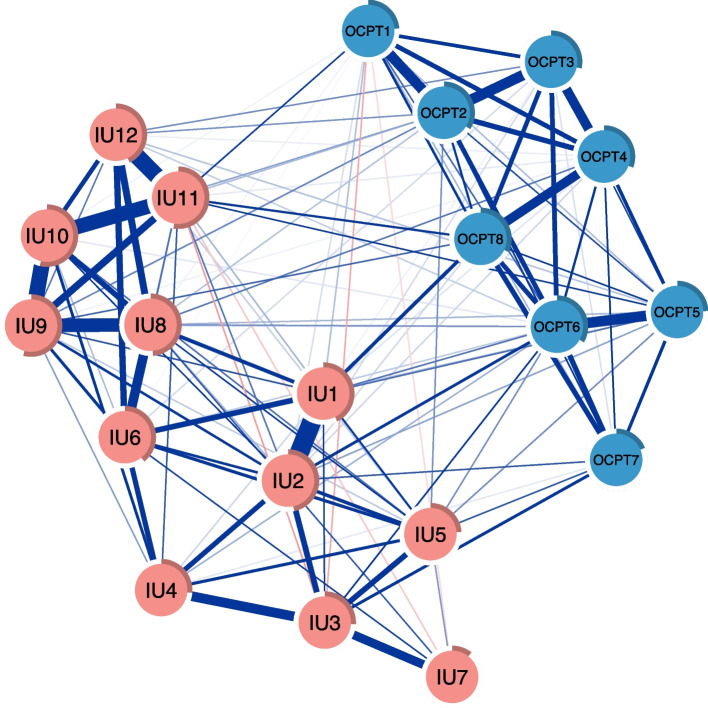
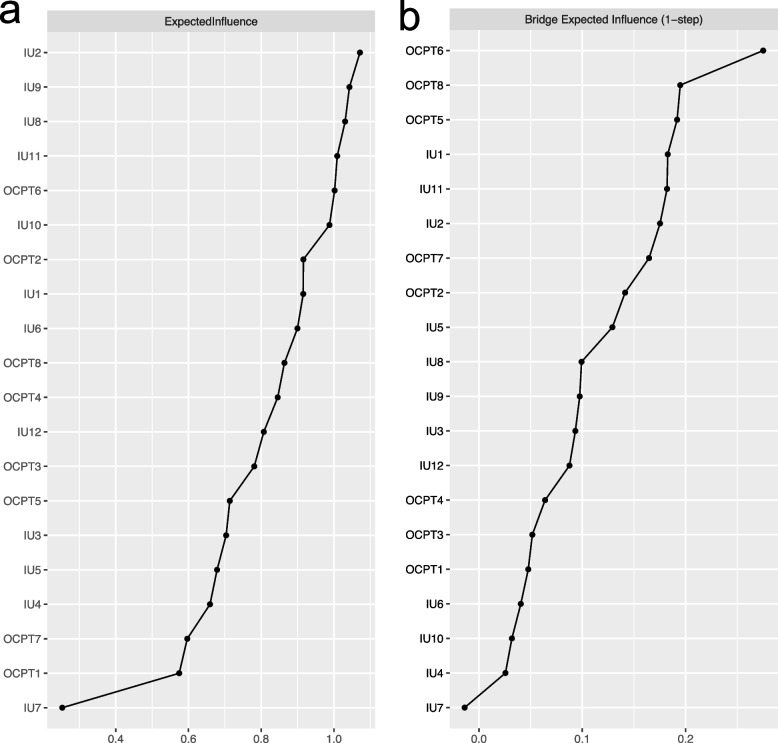
BACKGROUND: Previous studies examining the relationship between obsessive-compulsive personality traits (OCPT) and intolerance of uncertainty (IU) at the latent variable level (using total score analyses) have demonstrated positive correlations between them. However, such aggregate-level analyses obscure potential differential associations among specific OCPT and IU components. METHODS: This study employed network analysis to investigate the correlation patterns between IU and OCPT at the component/trait level in a sample of 1,440 Chinese college students. The Chinese versions of the Intolerance of Uncertainty Scale-Short Form (C-IUS-12) and Compulsive Personality Assessment Scale (CPAS) were used to assess IU components and OCPT, respectively. The regularized partial correlation network was constructed and node centrality, bridge centrality and predictability were identified. Furthermore, network comparison tests (NCT) were conducted to assess potential gender differences in the IU-OCPT network structure. RESULTS: In the IU-OCPT network, the strongest edges connecting IU and OCPT communities are "Unforeseen events upset me greatly" (IU1) and "Rigidity" (OCPT8), "One should always look ahead so as to avoid surprises" (IU3) and "Miserliness" (OCPT7), "It frustrates me not having all the information I need" (IU2) and "Need for control" (OCPT6), "The smallest doubt can stop me from acting" (IU11) and "Rigidity" (OCPT8). IU2 (IU community) and OCPT6 (OCPT community) have the highest expected influence (EI), IU1 (IU community) and OCPT6 (OCPT community) have the highest bridge expected influence (BEI) and "When it's time to act, uncertainty paralyses me" (IU9) has the highest predictability. Network comparison tests did not reveal any gender differences in global EI, edge invariance, node EI and BEI. CONCLUSION: The results of the network analysis indicate that there are extensive and diverse connections between different OCPT and IU components, providing a complementary perspective for deepening existing research and reference for related prevention and intervention. Specifically, regarding the "control" in OCPT and the "frustration" in IU (OCPT6 and IU2, both of which exhibit high centrality and bridge centrality) as potential targets, interventions such as cognitive-behavioral therapy (CBT) can achieve the maximum therapeutic effect of simultaneously reducing OCPT and IU, and effectively reduce their co-occurrence.
Overview
The claims and statistics of this paper haven’t been checked yet.
Free: it reads the open-access text and checks the first 5 claims that cite a source we can check. Create a free account to check every claim.
Integrity signals
Registry
Cites
Statistics
Figures
Verification
Claims the paper makes
The claims and statistics of this paper haven’t been checked yet.
Free: it reads the open-access text and checks the first 5 claims that cite a source we can check. Create a free account to check every claim.
Claims other papers make about this one
Each is checked against this paper’s own text: does it say what the citing paper says it does?
The source backs part of the claim, not all of it — or backs it for a different population, condition or comparison.
In the citing paper
“Such findings bolster cognitive theories of OCD which propose that symptom improvement should coincide with shifts in underlying maladaptive cognitions [1, 58].”
From Neural correlates of response inhibition following cognitive behavioral therapy in obsessive–compulsive disorder: a randomized controlled EEG study (2026) · cites this paper as [58]
Experimental — accuracy not yet measured
Self-check
Percentages, sums and reported differences re-computed from the paper’s own numbers.
The self-check needs the paper’s full text.
Citations
Cites
Diagnostic and Statistical Manual of Mental Disorders
American Psychiatric Association (2013) · doi:10.1176/appi.books.9780890425596 · Cited by 116,369
Sparse inverse covariance estimation with the graphical lasso
Friedman, J., Hastie, T., & Tibshirani, R. (2008) · Biostatistics · doi:10.1093/biostatistics/kxm045 · Cited by 6,355
Estimating psychological networks and their accuracy: A tutorial paper
Epskamp, S., Borsboom, D., & Fried, E. I. (2018) · Behavior Research Methods · doi:10.3758/s13428-017-0862-1 · Cited by 5,715
qgraph: Network Visualizations of Relationships in Psychometric Data
Epskamp, S., Cramer, A. O. J., Waldorp, L. J., Schmittmann, V. D., & Borsboom, D. (2012) · Journal of Statistical Software · doi:10.18637/jss.v048.i04 · Cited by 4,856 · cited 2×
“The node EI, BEI and predictability are calculated by Rpackage qgraph , networktools and mgm, respectively [37, 39, 50].”
A network theory of mental disorders
Borsboom, D. (2017) · World Psychiatry · doi:10.1002/wps.20375 · Cited by 3,482 · cited 1×
“This represents a continuously evolving dynamic process, rather than being merely the result of static and underlying factors [35].”
A tutorial on regularized partial correlation networks
Epskamp, S., & Fried, E. I. (2018) · Psychological Methods · doi:10.1037/met0000167 · Cited by 2,918 · cited 3×
“In GGM, the edges between nodes represented their partial correlation relationships, which meant a purer correlation after controlling other items in the network [47].”
Fearing the unknown: A short version of the Intolerance of Uncertainty Scale
Carleton, R. N., Norton, M. A. P. J., & Asmundson, G. J. G. (2007) · Journal of Anxiety Disorders · doi:10.1016/j.janxdis.2006.03.014 · Cited by 2,288 · cited 2×
“After revision by Carle-ton et al., a simplified version of IUS was proposed [41].”
InfluentialIdentifying highly influential nodes in the complicated grief network.
Robinaugh, D. J., Millner, A. J., & McNally, R. J. (2016) · Journal of Abnormal Psychology · doi:10.1037/abn0000181 · Cited by 1,787 · cited 2×
“EI was used to evaluate the centrality characteristics of nodes [36].”
Bridge Centrality: A Network Approach to Understanding Comorbidity
Jones, P. J., Ma, R., & McNally, R. J. (2021) · Multivariate Behavioral Research · doi:10.1080/00273171.2019.1614898 · Cited by 1,741 · cited 4×
“The higher the value of BEI, the greater the risk of transmission to other communities [37].”
InfluentialFreeston, M. H., Rhéaume, J., Letarte, H., Dugas, M. J., & Ladouceur, R. (1994) · Personality and Individual Differences · doi:10.1016/0191-8869(94)90048-5 · Cited by 1,731 · cited 1×
“Freeston et al. first proposed the concept of IU and developed the Intolerance of Uncertainty Scale (IUS) based on its operational definition [40].”
Comparing network structures on three aspects: A permutation test.
van Borkulo, C. D., van Bork, R., Boschloo, L., Kossakowski, J. J., Tio, P., Schoevers, R. A., Borsboom, D., & Waldorp, L. J. (2023) · Psychological Methods · doi:10.1037/met0000476 · Cited by 1,465
The Gaussian Graphical Model in Cross-Sectional and Time-Series Data
Epskamp, S., Waldorp, L. J., Mõttus, R., & Borsboom, D. (2018) · Multivariate Behavioral Research · doi:10.1080/00273171.2018.1454823 · Cited by 1,134 · cited 1×
“Gaussian graphical model (GGM) was used for network estimation [46].”
Into the unknown: A review and synthesis of contemporary models involving uncertainty
Carleton, R. N. (2016) · Journal of Anxiety Disorders · doi:10.1016/j.janxdis.2016.02.007 · Cited by 1,104 · cited 1×
“Alternatively, they may display behavioral and psychological inhibition when facing uncertainty [7, 8].”
State of the aRt personality research: A tutorial on network analysis of personality data in R
Costantini, G., Epskamp, S., Borsboom, D., Perugini, M., Mõttus, R., Waldorp, L. J., & Cramer, A. O. J. (2015) · Journal of Research in Personality · doi:10.1016/j.jrp.2014.07.003 · Cited by 982
Moving Forward: Challenges and Directions for Psychopathological Network Theory and Methodology
Fried, E. I., & Cramer, A. O. J. (2017) · Perspectives on Psychological Science · doi:10.1177/1745691617705892 · Cited by 938 · cited 1×
“This approach may have overlooked the unique role of the association between IU and OCPD at the components/ traits level [30, 31].”
Mataix-Cols, D., Wooderson, S., Lawrence, N., Brammer, M. J., Speckens, A., & Phillips, M. L. (2004) · Archives of General Psychiatry · doi:10.1001/archpsyc.61.6.564 · Cited by 929
Prevalence and correlates of personality disorder in Great Britain
Coid, J., Yang, M., Tyrer, P., Roberts, A., & Ullrich, S. (2006) · British Journal of Psychiatry · doi:10.1192/bjp.188.5.423 · Cited by 901 · cited 1×
“Although existing research suggests that IU and OCPT may be independently influenced by gender [4, 84–86], the gender differences in the co-occurrence of IU and OCPT have not been reported.”
Association of Symptom Network Structure With the Course of Depression
van Borkulo, C., Boschloo, L., Borsboom, D., Penninx, B. W. J. H., Waldorp, L. J., & Schoevers, R. A. (2015) · JAMA Psychiatry · doi:10.1001/jamapsychiatry.2015.2079 · Cited by 846
Chamberlain, S. R., Blackwell, A. D., Fineberg, N. A., Robbins, T. W., & Sahakian, B. J. (2005) · Neuroscience & Biobehavioral Reviews · doi:10.1016/j.neubiorev.2004.11.006 · Cited by 830
The prevalence of DSM-IV personality disorders in psychiatric outpatients
Zimmerman, M., Rothschild, L., & Chelminski, I. (2005) · American Journal of Psychiatry · doi:10.1176/appi.ajp.162.10.1911 · Cited by 825 · cited 1×
“[2, 3].”
Fried, E. I., Epskamp, S., Nesse, R. M., Tuerlinckx, F., & Borsboom, D. (2016) · Journal of Affective Disorders · doi:10.1016/j.jad.2015.09.005 · Cited by 751 · cited 1×
“This is because one of the primary objectives of clinical intervention is to disrupt the interaction relationships among the components that constitute the psychopathological structure [38, 39].”
Fear of the unknown: One fear to rule them all?
Carleton, R. N. (2016) · Journal of Anxiety Disorders · doi:10.1016/j.janxdis.2016.03.011 · Cited by 647 · cited 1×
“As a cross-diagnostic factor [9, 10], IU is regarded as a contributing factor to many symptomatic behaviors in mental disorders.”
Handbook of personality disorders : theory, research, and treatment
Livesley, W. J. (2001) · Cited by 633
Gentes, E. L., & Ruscio, A. M. (2011) · Clinical Psychology Review · doi:10.1016/j.cpr.2011.05.001 · Cited by 601 · cited 2×
“As a cross-diagnostic factor [9, 10], IU is regarded as a contributing factor to many symptomatic behaviors in mental disorders.”
Experimental manipulation of intolerance of uncertainty: a study of a theoretical model of worry
Ladouceur, R., Gosselin, P., & Dugas, M. J. (2000) · Behaviour Research and Therapy · doi:10.1016/s0005-7967(99)00133-3 · Cited by 524 · cited 1×
“Research has shown that IU is malleable [87].”
Baer, L. (1994) · PubMed · Cited by 504
Intolerance of uncertainty in obsessive-compulsive disorder
Tolin, D. F., Abramowitz, J. S., Brigidi, B. D., & Foa, E. B. (2003) · Journal of Anxiety Disorders · doi:10.1016/s0887-6185(02)00182-2 · Cited by 494 · cited 1×
“IU has been reported to play a significant role in anxiety [11, 12], depression [13], borderline personality disorder [14], schizophrenia [15], and OCD [16].”
McEvoy, P. M., & Mahoney, A. E. J. (2012) · Behavior Therapy · doi:10.1016/j.beth.2011.02.007 · Cited by 468 · cited 1×
“IU has been reported to play a significant role in anxiety [11, 12], depression [13], borderline personality disorder [14], schizophrenia [15], and OCD [16].”
Birrell, J., Meares, K., Wilkinson, A., & Freeston, M. (2011) · Clinical Psychology Review · doi:10.1016/j.cpr.2011.07.009 · Cited by 459
The Study of Psychopathology from the Network Analysis Perspective: A Systematic Review
Contreras, A., Nieto, I., Valiente, C., Espinosa, R., & Vazquez, C. (2019) · Psychotherapy and Psychosomatics · doi:10.1159/000497425 · Cited by 448
How predictable are symptoms in psychopathological networks? A reanalysis of 18 published datasets
Haslbeck, J. M. B., & Fried, E. I. (2017) · Psychological Medicine · doi:10.1017/s0033291717001258 · Cited by 429 · cited 5×
“The predictability of a node is defined as the variance explained by all its neighboring nodes, which can characterize the controllability of the network [39].”
InfluentialBuhr, K., & Dugas, M. J. (2006) · Journal of Anxiety Disorders · doi:10.1016/j.janxdis.2004.12.004 · Cited by 421 · cited 1×
“This may put them in a position of active con-trol rather than passive worry [71].”
McEvoy, P. M., & Mahoney, A. E. J. (2011) · Journal of Anxiety Disorders · doi:10.1016/j.janxdis.2010.08.010 · Cited by 412 · cited 1×
“Alternatively, they may display behavioral and psychological inhibition when facing uncertainty [7, 8].”
A complex network perspective on clinical science
Hofmann, S. G., Curtiss, J., & McNally, R. J. (2016) · Perspectives on Psychological Science · doi:10.1177/1745691616639283 · Cited by 366 · cited 1×
“The F-R (Fruchterman-Reingold) algorithm was employed for network visualization, where blue edges denoted positive correlations, red edges signified negative correlations, and the thickness of the edges corresponded to correlation strength [49].”
Intolerance of uncertainty and information processing: Evidence of biased recall and interpretations
Dugas, M. J., Hedayati, M., Karavidas, A., Buhr, K., Francis, K., & Phillips, N. A. (2005) · Cognitive Therapy and Research · doi:10.1007/s10608-005-1648-9 · Cited by 349
Yook, K., Kim, K.-H., Suh, S. Y., & Lee, K. S. (2010) · Journal of Anxiety Disorders · doi:10.1016/j.janxdis.2010.04.003 · Cited by 321
Intolerance of uncertainty in emotional disorders: what uncertainties remain?
Shihata, S., McEvoy, P. M., Mullan, B. A., & Carleton, R. N. (2016) · Journal of Anxiety Disorders · doi:10.1016/j.janxdis.2016.05.001 · Cited by 301 · cited 1×
“Given the high prevalence of OCPD in the population and the social dysfunction and burden it brings, a deeper understanding of the risk factors and psychological mechanisms underlying the onset and development of OCPD has substantial research value and societal significance [6].”
Butzer, B., & Kuiper, N. A. (2006) · Personality and Individual Differences · doi:10.1016/j.paid.2005.12.017 · Cited by 263 · cited 1×
“This bias not only directly heightens negative emotional responses to unexpected events but also depletes the cognitive resources required for impulse control and emotion-regulation strategies [10, 74, 75], as observed in GAD and major depressive disorder (MDD) [76–78].”
Intolerance of Uncertainty and Loneliness in Older Adults During the COVID-19 Pandemic
Parlapani, E., Holeva, V., Nikopoulou, V. A., Sereslis, K., Athanasiadou, M., Godosidis, A., Stephanou, T., & Diakogiannis, I. (2020) · Frontiers in Psychiatry · doi:10.3389/fpsyt.2020.00842 · Cited by 248 · cited 1×
“Although existing research suggests that IU and OCPT may be independently influenced by gender [4, 84–86], the gender differences in the co-occurrence of IU and OCPT have not been reported.”
Einstein, D. A. (2014) · Clinical Psychology: Science and Practice · doi:10.1111/cpsp.12077 · Cited by 223
Commentary: A network theory of mental disorders
Jones, P. J., Heeren, A., & McNally, R. J. (2017) · Frontiers in Psychology · doi:10.3389/fpsyg.2017.01305 · Cited by 197 · cited 1×
“The correlations between these nodes are depicted as edges [34].”
Intolerance of uncertainty in eating disorders: a systematic review and meta-analysis
Brown, M., Robinson, L., Campione, G. C., Wuensch, K., Hildebrandt, T., & Micali, N. (2017) · European Eating Disorders Review · doi:10.1002/erv.2523 · Cited by 173 · cited 1×
“In eating disorders, it could involve extreme organization and planning prior to meals to avoid uncertainty about weight gain from consuming unfamiliar foods [19].”
Pinto, A., Steinglass, J. E., Greene, A. L., Weber, E. U., & Simpson, H. B. (2014) · Biological Psychiatry · doi:10.1016/j.biopsych.2013.09.007 · Cited by 169 · cited 1×
“These features are potentially driven by shared underlying mechanisms, such as IU [23, 24].”
Park, S.-C., & Kim, D. (2020) · Journal of Affective Disorders · doi:10.1016/j.jad.2020.03.078 · Cited by 166 · cited 1×
“The guideline suggested that a CS coefficient higher than 0.5 indicates good stability [54, 55].”
InfluentialObsessive–Compulsive Personality Disorder: a Current Review
Diedrich, A., & Voderholzer, U. (2015) · Current Psychiatry Reports · doi:10.1007/s11920-014-0547-8 · Cited by 158 · cited 4×
“OCPD generally starts to become prominently evident in early adulthood, and its traits remain relatively stable [4].”
InfluentialRobustness and replicability of psychopathology networks
Borsboom, D., Robinaugh, D. J., The Psychosystems Group, Rhemtulla, M., & Cramer, A. O. J. (2018) · World Psychiatry · doi:10.1002/wps.20515 · Cited by 155 · cited 1×
“The above processes were implemented by the R package bootnet [54, 56].”
Bottesi, G., Noventa, S., Freeston, M. H., & Ghisi, M. (2019) · PLoS ONE · doi:10.1371/journal.pone.0211929 · Cited by 132 · cited 1×
“The controversial results mentioned above may be attributed to the ill-defined nature of node centrality in cross-sectional and between-subject networks, as well as racial and cultural differences in the measurement of IU factors [81–83].”
Grant, J. E., Mooney, M. E., & Kushner, M. G. (2012) · Journal of Psychiatric Research · doi:10.1016/j.jpsychires.2012.01.009 · Cited by 128
The neuropsychology of obsessive-compulsive personality disorder: a new analysis
Fineberg, N. A., Day, G. A., de Koenigswarter, N., Reghunandanan, S., Kolli, S., Jefferies-Sewell, K., Hranov, G., & Laws, K. R. (2015) · CNS Spectrums · doi:10.1017/s1092852914000662 · Cited by 122 · cited 1×
“Similarly, need for control, a crucial characteristic of OCPT [88], demonstrated the highest EI and BEI in the network structure in this study, also suggesting its importance as an intervention target.”
A psychometric analysis of the Intolerance of Uncertainty Scale among four racial groups
Norton, P. J. (2005) · Journal of Anxiety Disorders · doi:10.1016/j.janxdis.2004.08.002 · Cited by 118
Cervin, M. (2022) · Psychiatric Clinics of North America · doi:10.1016/j.psc.2022.10.006 · Cited by 116
Spiller, T. R., Levi, O., Neria, Y., Suarez-Jimenez, B., Bar-Haim, Y., & Lazarov, A. (2020) · BMC Medicine · doi:10.1186/s12916-020-01740-5 · Cited by 113 · cited 1×
“The controversial results mentioned above may be attributed to the ill-defined nature of node centrality in cross-sectional and between-subject networks, as well as racial and cultural differences in the measurement of IU factors [81–83].”
A review on leaching risk of land application of urban sewage sludge
黄野, 董兴, 孙学凯, 徐成斌, & 田丹 (2017) · Institutional Repository of Institute of Psychology, Chinese Academy of Sciences (Institute of Psychology, Chinese Academy of Sciences) · doi:10.3969/j.issn.1000 · Cited by 108
Morriss, J., Christakou, A., & van Reekum, C. M. (2015) · Biology of Mood & Anxiety Disorders · doi:10.1186/s13587-015-0019-8 · Cited by 106 · cited 1×
“Numerous functional magnetic resonance imaging (fMRI) studies have provided neuroimaging evidence of increased amygdala activation in contexts related to IU [79, 80].”
Liang, S., Liu, C., Rotaru, K., Li, K., Wei, X., Yuan, S., Yang, Q., Ren, L., & Liu, X. (2022) · Psychiatry Research · doi:10.1016/j.psychres.2022.114863 · Cited by 95
Self-citationDoes Obsessive-Compulsive Personality Disorder Belong Within the Obsessive-Compulsive Spectrum?
Fineberg, N. A., Sharma, P., Sivakumaran, T., Sahakian, B., & Chamberlain, S. (2007) · CNS Spectrums · doi:10.1017/s1092852900015340 · Cited by 89 · cited 2×
“The CPAS has demonstrated good reliability and validity [22], with a Cronbach’s α of 0.78 in the current study.”
InfluentialChanges in intolerance of uncertainty during cognitive behavior group therapy for social phobia.
Mahoney, A. E. J., & McEvoy, P. M. (2012) · Journal of Behavior Therapy and Experimental Psychiatry · doi:10.1016/j.jbtep.2011.12.004 · Cited by 88 · cited 1×
“Specifically, cognitive behavioral therapy (CBT) can be employed to correct irrational cognition and eliminate negative emotions [89].”
The Interactive Effect of Worry and Intolerance of Uncertainty on Posttraumatic Stress Symptoms
Bardeen, J. R., Fergus, T. A., & Wu, K. D. (2012) · Cognitive Therapy and Research · doi:10.1007/s10608-012-9512-1 · Cited by 84 · cited 1×
“This bias not only directly heightens negative emotional responses to unexpected events but also depletes the cognitive resources required for impulse control and emotion-regulation strategies [10, 74, 75], as observed in GAD and major depressive disorder (MDD) [76–78].”
Saulnier, K. G., Allan, N. P., Raines, A. M., & Schmidt, N. B. (2019) · Psychiatry · doi:10.1080/00332747.2018.1560583 · Cited by 75
Weiss, N. H., Contractor, A. A., Raudales, A. M., Greene, T., & Short, N. A. (2020) · Journal of Anxiety Disorders · doi:10.1016/j.janxdis.2020.102198 · Cited by 72 · cited 1×
“Note: The correspondence between the full name and abbreviation of the node is shown in Table 1 construct or clinical disorder [61].”
What is the internal structure of intolerance of uncertainty? A network analysis approach
Bottesi, G., Marchetti, I., Sica, C., & Ghisi, M. (2020) · Journal of Anxiety Disorders · doi:10.1016/j.janxdis.2020.102293 · Cited by 69 · cited 2×
“Another example is that although IU7 was the node with the highest centrality in an Italian community sample study [68], its centrality showed the opposite result in our study.”
Neural correlates of intolerance of uncertainty
Schienle, A., Köchel, A., Ebner, F., Reishofer, G., & Schäfer, A. (2010) · Neuroscience Letters · doi:10.1016/j.neulet.2010.05.078 · Cited by 66
Intolerance of uncertainty and obsessive-compulsive disorder dimensions
Pinciotti, C. M., Riemann, B. C., & Abramowitz, J. S. (2021) · Journal of Anxiety Disorders · doi:10.1016/j.janxdis.2021.102417 · Cited by 63 · cited 1×
“For instance, in OCD, it might manifest as compulsive cleaning to avoid uncertainty regarding contamination [18].”
Ren, L., Wei, Z., Li, Y., Cui, L., Wang, Y., Wu, L., Wei, X., Peng, J., Li, K., Jin, Y., et al. (2021) · BMC Psychiatry · doi:10.1186/s12888-021-03455-0 · Cited by 59 · cited 3×
“This leads us to hypothesize that IU2 could be a common core element underlying the co-occurrence of IU and a range of psychological and behavioral issues [20, 62, 63].”
Self-citationFracalanza, K., Koerner, N., Deschênes, S. S., & Dugas, M. J. (2014) · Cognitive Behaviour Therapy · doi:10.1080/16506073.2014.888754 · Cited by 58 · cited 1×
“This bias not only directly heightens negative emotional responses to unexpected events but also depletes the cognitive resources required for impulse control and emotion-regulation strategies [10, 74, 75], as observed in GAD and major depressive disorder (MDD) [76–78].”
Pinto, A., Teller, J. A., & Wheaton, M. G. (2022) · FOCUS The Journal of Lifelong Learning in Psychiatry · doi:10.1176/appi.focus.20220058 · Cited by 56 · cited 1×
“If they experience a long-term conflict between their beliefs and reality, this can trigger cognitive dissonance, thereby intensifying negative emotions [66].”
The item network and domain network of burnout in Chinese nurses
Wu, L., Ren, L., Wang, Y., Zhang, K., Fang, P., Liu, X., Yang, Q., Wang, X., Wu, S., & Peng, J. (2021) · BMC Nursing · doi:10.1186/s12912-021-00670-8 · Cited by 55 · cited 1×
“This approach may have overlooked the unique role of the association between IU and OCPD at the components/ traits level [30, 31].”
Self-citationWhite, R. G., & Gumley, A. I. (2009) · Journal of Nervous & Mental Disease · doi:10.1097/nmd.0b013e3181bea625 · Cited by 54 · cited 1×
“IU has been reported to play a significant role in anxiety [11, 12], depression [13], borderline personality disorder [14], schizophrenia [15], and OCD [16].”
Liu, C., Ren, L., Rotaru, K., Liu, X., Li, K., Yang, W., Li, Y., Wei, X., Yücel, M., & Albertella, L. (2023) · Journal of Behavioral Addictions · doi:10.1556/2006.2022.00093 · Cited by 48
Self-citationGallagher, N. G., South, S. C., & Oltmanns, T. F. (2003) · Personality and Individual Differences · doi:10.1016/s0191-8869(02)00025-9 · Cited by 47 · cited 2×
“Specifically, these students allocate extra time to clarify instructions and repeatedly seek feedback to minimize potential errors in uncertain situations [26].”
Ansell, E. B., Pinto, A., Crosby, R. D., Becker, D. F., Añez, L. M., Paris, M., & Grilo, C. M. (2010) · Journal of Behavior Therapy and Experimental Psychiatry · doi:10.1016/j.jbtep.2010.02.005 · Cited by 47 · cited 1×
“OCPT8 represents a psychological phenomenon characterized by rigidity and inflexibility in self-cognition, attitude, and behavior [65].”
Wang, X.-Y., Wang, Z.-W., Jiang, D.-L., Liu, C., Xing, W., Yuan, Z.-T., Cui, L., Wu, S., & Ren, L. (2025) · BMC Psychiatry · doi:10.1186/s12888-025-06675-w · Cited by 42 · cited 1×
“Correspondingly, BEI assesses the transitivity of nodes, indicating the extent to which symptoms can be transmitted between different communities through a given node [51–53].”
Self-citationGadelkarim, W., Shahper, S., Reid, J. E., Wikramanayake, M., Kaur, S., Kolli, S., Osman, S., & Fineberg, N. A. (2019) · International Journal of Psychiatry in Clinical Practice · doi:10.1080/13651501.2019.1638939 · Cited by 41 · cited 1×
“In accordance with the criteria for OCPD in the Diagnostic and Statistical Manual of Mental Disorders (5th ed., DSM-5) [1], Fineberg et al. developed the Compulsive Personality Assessment Scale (CPAS) to evaluate the degree of recognition of OCPT [45].”
Unpacking the role of self-reported compulsivity and impulsivity in obsessive-compulsive disorder
Prochazkova, L., Parkes, L., Dawson, A., Youssef, G., Ferreira, G. M., Lorenzetti, V., Segrave, R. A., Fontenelle, L. F., & Yücel, M. (2018) · CNS Spectrums · doi:10.1017/s1092852917000244 · Cited by 40 · cited 1×
“IU has been reported to play a significant role in anxiety [11, 12], depression [13], borderline personality disorder [14], schizophrenia [15], and OCD [16].”
Liu, C., Ren, L., Li, K., Yang, W., Li, Y., Rotaru, K., Wei, X., Yücel, M., & Albertella, L. (2022) · Frontiers in Psychiatry · doi:10.3389/fpsyt.2022.917833 · Cited by 40 · cited 4×
“In the context of behavioral addic-tions, compulsive social media checking may serve as a coping mechanism to manage uncertainty about missing out on important events [20].”
InfluentialSelf-citationZhang, Z., Qiu, A., Zhang, X., Zhao, Y., Lu, Y., Yi, J., Zhang, Q., Lin, R., Lin, R., & Zhang, X. (2024) · BMC Public Health · doi:10.1186/s12889-024-20130-7 · Cited by 40 · cited 1×
“R package NetworkComparisonTest was used for gender network comparison test (NCT) [57, 58].”
Bottesi, G., Tesini, V., Cerea, S., & Ghisi, M. (2018) · Clinical Psychologist · doi:10.1111/cp.12163 · Cited by 39 · cited 1×
“IU has been reported to play a significant role in anxiety [11, 12], depression [13], borderline personality disorder [14], schizophrenia [15], and OCD [16].”
Clemente, M. J., Martins-da-Silva, A. S., Pedro, M. O. P., Paiva, H. S., Périco, C. D. A.-M., Torales, J. C., Ventriglio, A., & Castaldelli-Maia, J. M. (2022) · Heliyon · doi:10.1016/j.heliyon.2022.e09912 · Cited by 34 · cited 1×
“[2, 3].”
Intolerance of uncertainty and obsessive-compulsive personality disorder.
Wheaton, M. G., & Ward, H. E. (2020) · Personality Disorders Theory Research and Treatment · doi:10.1037/per0000396 · Cited by 31 · cited 2×
“To the best of our knowledge, only one empirical study has investigated IU and OCPD, demonstrating a substantial correlation between IU and OCPD severity [25].”
Phenomenology of hoarding—What is hoarded by individuals with hoarding disorder?
Mogan, C., Kyrios, M., Schweitzer, I., Yap, K., & Moulding, R. (2012) · Journal of Obsessive-Compulsive and Related Disorders · doi:10.1016/j.jocrd.2012.08.002 · Cited by 29
Treatment of obsessive-compulsive disorders (OCD) and obsessive-compulsive-related disorders (OCRD)
Krzyszkowiak, W., Kuleta-Krzyszkowiak, M., & Krzanowska, E. (2019) · Psychiatria Polska · doi:10.12740/pp/105130 · Cited by 22 · cited 1×
“As for clinical treatment, OCD has significant effects on drug therapy and psychological therapy, while psychological therapy for OCPD aims at adjusting personality traits and behavioral patterns [29].”
The impact of obsessive-compulsive personality disorder in perfectionism
Redden, S. A., Mueller, N. E., & Cougle, J. R. (2022) · International Journal of Psychiatry in Clinical Practice · doi:10.1080/13651501.2022.2069581 · Cited by 17 · cited 1×
“…the OCPT community, the strongest correlation exists between OCPT2 and OCPT3, presumably because individuals with perfectionism often have strong internal and exter-nal motivations [64], which may lead to work excellence, but also encroach on the time and energy of other activities, and vice versa.”
Feng, T., Ren, L., Liu, C., Li, K., Wu, L., Wei, X., Yuan, S., Cui, L., Yang, X., Li, D., et al. (2022) · Frontiers in Psychiatry · doi:10.3389/fpsyt.2022.993814 · Cited by 17 · cited 3×
“This leads us to hypothesize that IU2 could be a common core element underlying the co-occurrence of IU and a range of psychological and behavioral issues [20, 62, 63].”
Self-citationLiu, C., Rotaru, K., Wang, Z., Li, K., Cui, L., Li, J., Wei, X., Liu, X., Albertella, L., & Ren, L. (2024) · Journal of Affective Disorders · doi:10.1016/j.jad.2024.06.073 · Cited by 10 · cited 1×
“Bonferroni-Holm method was used to correct significance levels, explain multiple comparisons and correct family-wise errors [59, 60].”
Self-citationReisman, S. S., Gregory, D. F., Stasiak, J., Mitchell, W. J., Helion, C., & Murty, V. P. (2021) · PsyArXiv (OSF Preprints) · doi:10.31234/osf.io/fy2tm · Cited by 8 · cited 1×
“This bias not only directly heightens negative emotional responses to unexpected events but also depletes the cognitive resources required for impulse control and emotion-regulation strategies [10, 74, 75], as observed in GAD and major depressive disorder (MDD) [76–78].”
Obsessive-Compulsive Disorder in Youth
Wells, J. G. (2014) · The Journal of Clinical Psychiatry · doi:10.4088/jcp.13023tx3c · Cited by 5
Chapter 9. Psychotherapy for OCPD
Pinto, A. (2019) · American Psychiatric Association Publishing eBooks · doi:10.1176/appi.books.9781615379293.lg09 · Cited by 1
Research works printed but not linked: 4
- Wu, L. J., Wang, J. N., & Qi, X., D. (2016). Validity and reliability of the Intolerance of Uncertainty Scale-12 in middle school students. Chinese Mental Health J, 30(9),700–705. 10.3969/j.issn.1000.6729.2016.09.012 · doi:10.3969/j.issn.1000.6729.2016.09.012
- Zhang Y, Song JB, Gao YT, Wu SJ, Song L, Miao DM. Reliability and validity of the intolerance ofuncertainty scale-short form in university students. Chinese J Clin Psychol. 2017;25(2):285–8. 10.16128/j.cnki.1005-3611.2017.02.020. · doi:10.16128/j.cnki.1005-3611.2017.02.020
- Weijuan Gao. Understanding Perceived Control from Psychology: A Review of Perceived Control Research. Jilin University. 2005:12–14.
- Yao L, Ren L. Influencing factors, neural basis, and clinical implications of perceived control. China J Health Psychol. 2023;31(8):1141–6. 10.13342/j.cnki.cjhp.2023.08.005. · doi:10.13342/j.cnki.cjhp.2023.08.005
Cited by
Çınaroğlu, M., Ülker, S. V., Yılmazer, E., & Sayar, G. H. (2026) · BMC Psychology · doi:10.1186/s40359-026-05201-1
“Such findings bolster cognitive theories of OCD which propose that symptom improvement should coincide with shifts in underlying maladaptive cognitions [1, 58].”
Metadata
- Authors
- Wu, L., Liu, C., Huang, P., Wang, Z., Cai, M., Fang, P., Liang, W., Sun, K., Tang, X., Ouyang, A., Guo, Y., Li, K., Wei, X., Li, Z., Wu, S., Ren, L., & Liu, X.
- Affiliations
- Air Force Medical University (CN)
- Monash University (AU)
- Shaanxi Normal University (CN)
- Putian University (CN)
- University of Cambridge (GB)
- Corresponding author
- Ren, Lei
- Liu, Xufeng
- ORCID
- Venue
- BMC Psychiatry
- Published
- 2025-07-01
- Volume
- 25
- Issue
- 1
- Pages
- 659-659
- ISSN
- 1471-244X (ISSN-L)
- PMC
- PMC12220072
- OpenAlex
- W4411882623
- Cited by
- 1
- References
- 87
- Citations by year
- 2026: 1
- FWCI
- 1.18
- Type
- journal article
- Language
- en
- Open access
- gold
- doi.org
- Licence
- cc-by-nc-nd
- creativecommons.org/licenses/by-nc-nd/4.0 (tdm)
- creativecommons.org/licenses/by-nc-nd/4.0 (vor)
- Locations
- BMC Psychiatry (publishedVersion, cc-by-nc-nd)
- PubMed Central (publishedVersion, cc-by-nc-nd)
- PubMed (publishedVersion)
- Apollo (University of Cambridge) (submittedVersion, cc-by-nc-nd)
- DOAJ (DOAJ: Directory of Open Access Journals) (submittedVersion, cc-by-sa)
- Funders
- Rapid Response Program of Air Force Medical University (2023KXKT061)
- Military graduate funding program of Chinese People's Liberation Army (JY2023C199)
- Topics
- Social Sciences › Psychology › Clinical Psychology › Obsessive-Compulsive Spectrum Disorders
- Social Sciences › Psychology › Experimental and Cognitive Psychology › Mental Health Research Topics
- Social Sciences › Psychology › Experimental and Cognitive Psychology › Anxiety, Depression, Psychometrics, Treatment, Cognitive Processes
- Keywords
- intolerance of uncertainty, obsessive-compulsive personality traits, need for control, rigidity, gender differences, network centrality, bridge centrality, predictability, Chinese university students, network comparison test
- MeSH terms
- Adolescent, Adult, China, Female, Humans, Male, Obsessive-Compulsive Disorder, Personality, Students, Uncertainty, Young Adult
About these checks
Registry, retraction, Cites and statistics results are computed, not judged, with one exception: a printed reference that no index lists is read once by a model before it counts as a citation error. Claims are extracted by a model and kept only when their quote appears verbatim in the text; each cited source is then checked, with a model’s help, for whether it says what the claim relies on. Those verdicts can be wrong — read the claim’s quote and the cited source before relying on one.
Statistics and arithmetic are recomputed, not judged.
Confidence bands are shown only for fields calibrated on our annotated test set. None is calibrated yet, so no band is shown.
What counts as a claim ›How we measure confidence ›How we check this ›
Are you an author, or do you see a problem with this page? Request a review
Data sources
Bibliographic data: Semantic Scholar, OpenAlex, Crossref.
Contains information from the Semantic Scholar Academic Graph Datasets, made available under the ODC Attribution License (ODC-BY 1.0).
Semantic Scholar’s data is described in: Kinney, R., et al. (2023). The Semantic Scholar Open Data Platform. arXiv:2301.10140.
