

Adaptive goal setting and financial incentives: a 2 × 2 factorial randomized controlled trial to increase adults’ physical activity
Open accessThe DOI matches its Crossref record; 69 of the 69 references it cites were found in a registry or an index.
Abstract
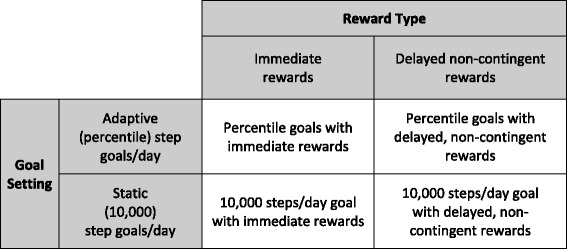
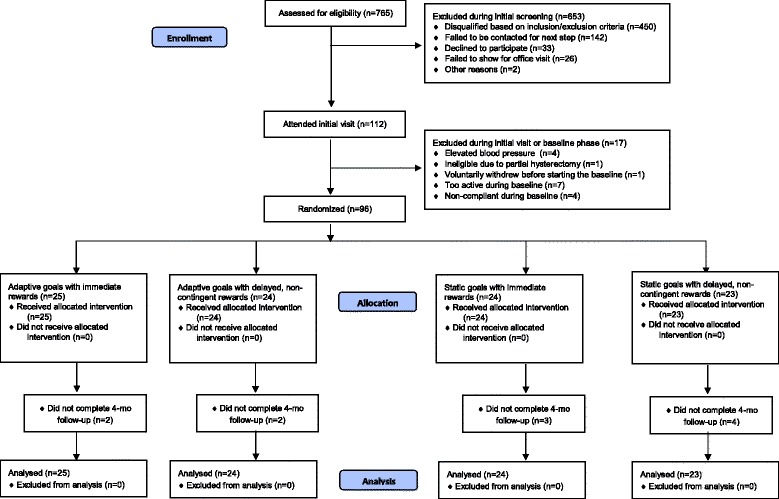
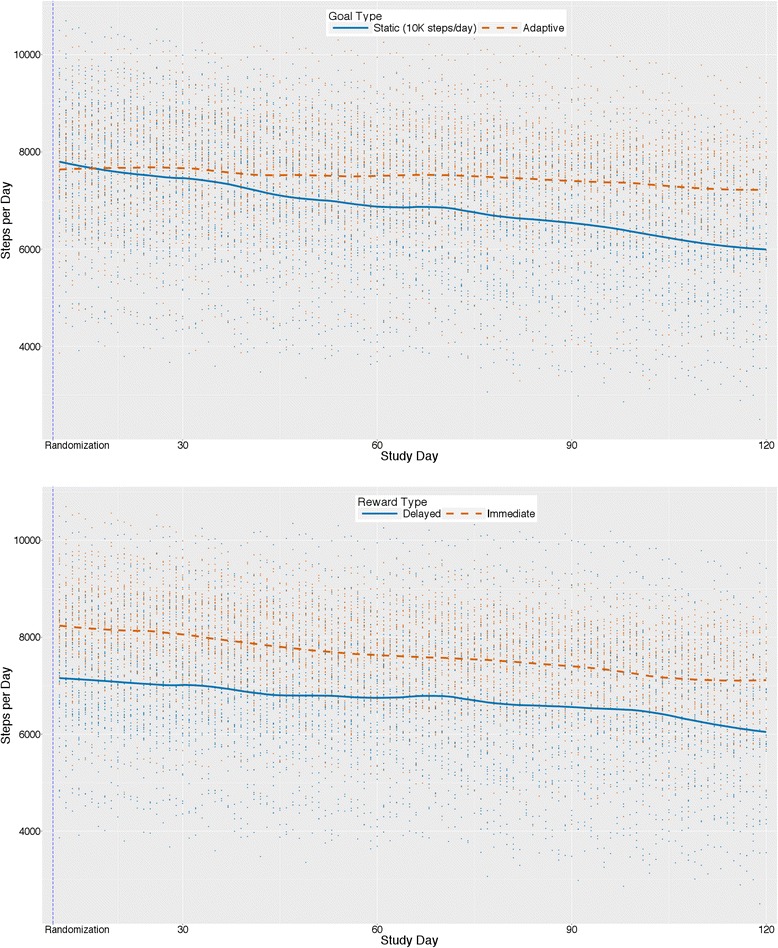
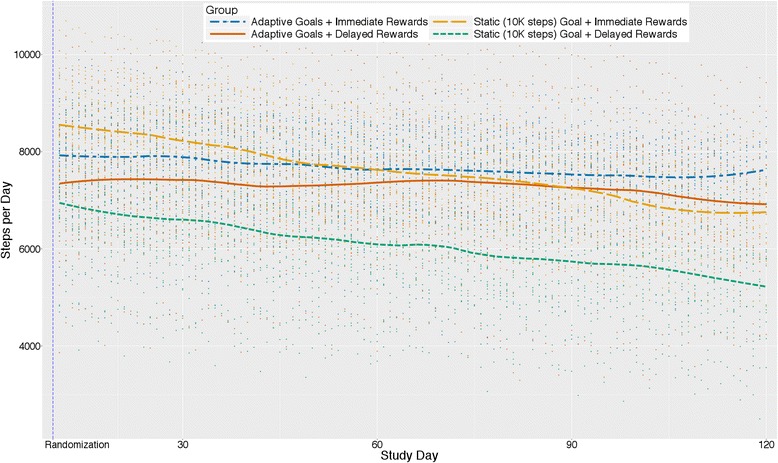
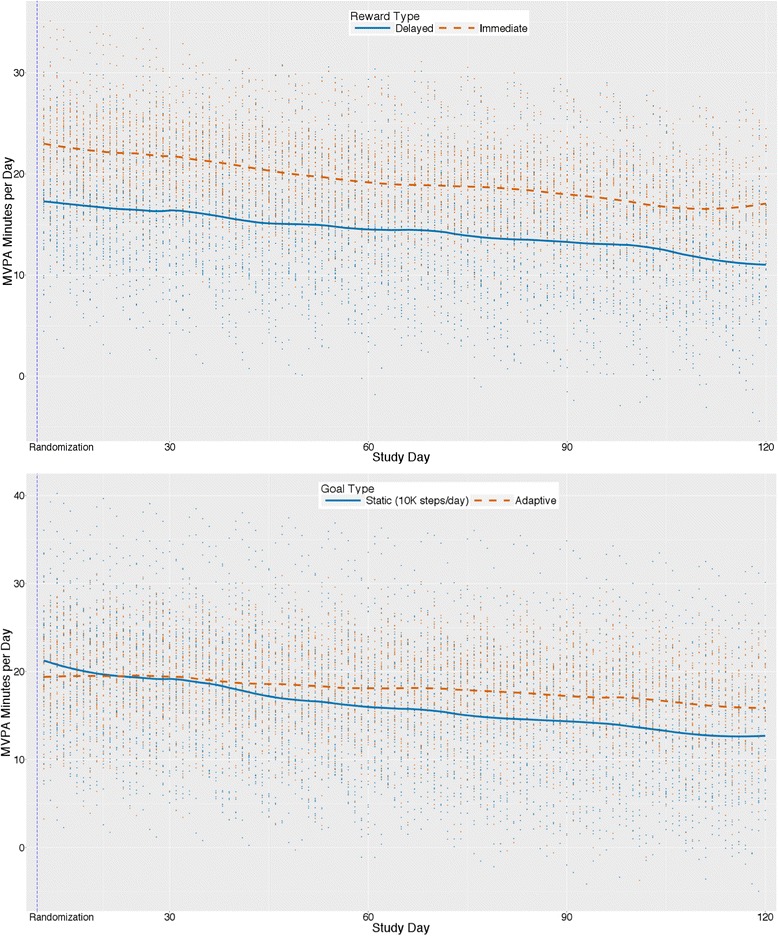
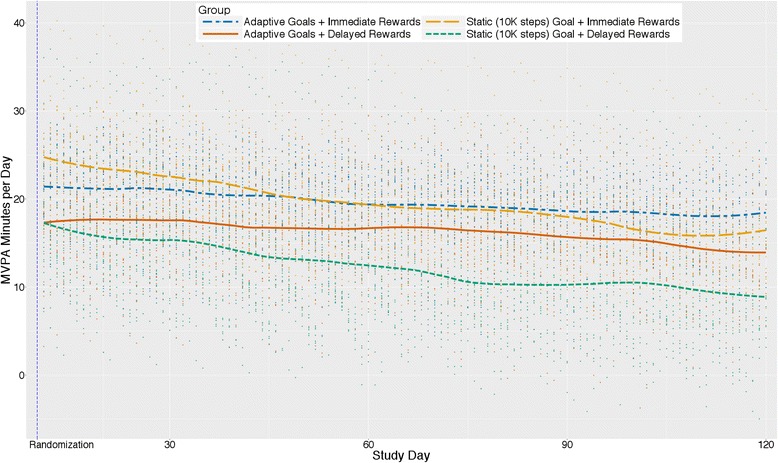
BACKGROUND: Emerging interventions that rely on and harness variability in behavior to adapt to individual performance over time may outperform interventions that prescribe static goals (e.g., 10,000 steps/day). The purpose of this factorial trial was to compare adaptive vs. static goal setting and immediate vs. delayed, non-contingent financial rewards for increasing free-living physical activity (PA). METHODS: A 4-month 2 × 2 factorial randomized controlled trial tested main effects for goal setting (adaptive vs. static goals) and rewards (immediate vs. delayed) and interactions between factors to increase steps/day as measured by a Fitbit Zip. Moderate-to-vigorous PA (MVPA) minutes/day was examined as a secondary outcome. RESULTS: Participants (N = 96) were mainly female (77%), aged 41 ± 9.5 years, and all were insufficiently active and overweight/obese (mean BMI = 34.1 ± 6.2). Participants across all groups increased by 2389 steps/day on average from baseline to intervention phase (p < .001). Participants receiving static goals showed a stronger increase in steps per day from baseline phase to intervention phase (2630 steps/day) than those receiving adaptive goals (2149 steps/day; difference = 482 steps/day, p = .095). Participants receiving immediate rewards showed stronger improvement (2762 step/day increase) from baseline to intervention phase than those receiving delayed rewards (2016 steps/day increase; difference = 746 steps/day, p = .009). However, the adaptive goals group showed a slower decrease in steps/day from the beginning of the intervention phase to the end of the intervention phase (i.e. less than half the rate) compared to the static goals group (-7.7 steps vs. -18.3 steps each day; difference = 10.7 steps/day, p < .001) resulting in better improvements for the adaptive goals group by study end. Rate of change over the intervention phase did not differ between reward groups. Significant goal phase x goal setting x reward interactions were observed. CONCLUSIONS: Adaptive goals outperformed static goals (i.e., 10,000 steps) over a 4-month period. Small immediate rewards outperformed larger, delayed rewards. Adaptive goals with either immediate or delayed rewards should be preferred for promoting PA. TRIAL REGISTRATION: ClinicalTrials.gov ID: NCT02053259 registered prospectively on January 31, 2014.
Overview
The claims and statistics of this paper haven’t been checked yet.
Free: it reads the open-access text and checks the first 5 claims that cite a source we can check. Create a free account to check every claim.
Integrity signals
Registry
Cites
Statistics
Figures
Verification
Claims the paper makes
The claims and statistics of this paper haven’t been checked yet.
Free: it reads the open-access text and checks the first 5 claims that cite a source we can check. Create a free account to check every claim.
Claims other papers make about this one
Each is checked against this paper’s own text: does it say what the citing paper says it does?
The source backs part of the claim, not all of it — or backs it for a different population, condition or comparison.
In the citing paper
“PA interventions, including texting, gamification and social or financial incentives, can promote PA”
From Smart wearable devices in cardiovascular care: Where we are and how to move forward (2021) · cites this paper as [43]
Experimental — accuracy not yet measuredThe cited source says what the claim attributes to it.
In the citing paper
“The trial showed that adaptive goals outperformed static goals and small, immediate rewards outperformed larger, delayed rewards, suggesting that adaptive goals with immediate rewards should be preferred to promote physical activity.”
From Smart wearable devices in cardiovascular care: Where we are and how to move forward (2021) · cites this paper as [43]
In the citing paper
“Rewards, especially monetary rewards, have been shown to provide significant extrinsic motivation toward behavior changes [31-33].”
In the citing paper
“The trial showed that adaptive goals outperformed static goals and small, immediate rewards outperformed larger, delayed rewards, suggesting that adaptive goals with immediate rewards should be preferred to promote physical activity.”
From Smart wearable devices in cardiovascular care: Where we are and how to move forward (2021) · cites this paper as [43]
Self-check
Percentages, sums and reported differences re-computed from the paper’s own numbers.
The self-check needs the paper’s full text.
Citations
Cites
Health Behavior and Health Education: Theory, Research, and Practice
(1992) · Annals of Internal Medicine · doi:10.7326/0003-4819-116-4-350_1 · Cited by 13,207
The Physical Activity Guidelines for Americans
Piercy, K. L., Troiano, R. P., Ballard, R. M., Carlson, S. A., Fulton, J. E., Galuska, D. A., George, S. M., & Olson, R. D. (2018) · JAMA · doi:10.1001/jama.2018.14854 · Cited by 9,755
‘Small Changes' to Diet and Physical Activity Behaviors for Weight Management
Hills, A. P., Byrne, N. M., Lindstrom, R., & Hill, J. O. (2013) · Obesity Facts · doi:10.1159/000345030 · Cited by 9,493
Kilzer, E., & Skinner, B. F. (1953) · The American Catholic Sociological Review · doi:10.2307/3707860 · Cited by 8,943
Child abuse: Adolescent records vs. adult recall
Femina, D. D., Yeager, C. A., & Lewis, D. O. (1990) · Child Abuse & Neglect · doi:10.1016/0145-2134(90)90033-p · Cited by 8,820
Physical Activity in the United States Measured by Accelerometer
TROIANO, R. P., BERRIGAN, D., DODD, K. W., MÂSSE, L. C., TILERT, T., & MCDOWELL, M. (2008) · Medicine & Science in Sports & Exercise · doi:10.1249/mss.0b013e31815a51b3 · Cited by 7,638 · cited 2×
“active [1, 2], with little change in population levels of”
Health Promotion by Social Cognitive Means
Bandura, A. (2004) · Health Education & Behavior · doi:10.1177/1090198104263660 · Cited by 7,238 · cited 2×
“Basic principles of positive reinforcement [18, 19] and behavioral economics [20–25] are integrated into many theoretical approaches (e.g., Transtheoretical Model [26, 27], Social Cognitive Theory [28, 29], and Ecological Models [30, 31]) and have been proposed as unifying behavior change principles behind preventive…”
Preacher, K. J., Curran, P. J., & Bauer, D. J. (2006) · Journal of Educational and Behavioral Statistics · doi:10.3102/10769986031004437 · Cited by 5,034 · cited 1×
“[53], which yielded values for model-estimated means.”
Symonds, P. M. (1954) · Journal of Educational Psychology · doi:10.1037/h0051901 · Cited by 4,875
Finkelstein, E. A., Trogdon, J. G., Cohen, J. W., & Dietz, W. (2009) · Health Affairs · doi:10.1377/hlthaff.28.5.w822 · Cited by 2,957 · cited 1×
“Drugs and financial burdens for chronic diseases related to inactivity that are in excess of $1400/year for obesity and $7383 for diabetes per person per year [65, 66].”
Research works printed but not linked: 5
- Hovell MF Wahlgren DR Adams MA The logical and empirical basis for the Behavioral Ecological Model. In: Emerging Theories in Health Promotion Practice and Research. Volume 2nd, edn. Edited by DiClemente RJ 2009 San Francisco Jossey-Bass
- America On the Move 100 Ways to Add 2000 Steps 2008
- Global Historical Climate Network Climate Data Online: Daily Summaries In.: National Centers for Environmental Informaiton, National Oceanic and Atmospheric Administration 2014
- U.S. Bureau of the Census. Real Median Household Income in the United States [MEHOINUSA672N]. In, vol. 2016: Washington: U.S. Bureau of the Census; 2011.
- Wing R Gillis B The Diabetes Prevention Program's Lifestyle Change Program Manual of Operations, Appendix G: Tool Box 1996 Pittsburgh, PA University of Pittsburgh
Cited by
Smart wearable devices in cardiovascular care: Where we are and how to move forward
Bayoumy, K., Gaber, M., Elshafeey, A., Mhaimeed, O., Dineen, E. H., Marvel, F. A., Martin, S. S., Muse, E. D., Turakhia, M. P., Tarakji, K. G., et al. (2021) · Nature Reviews Cardiology · doi:10.1038/s41569-021-00522-7 · Cited by 829
Digital Behaviour Change Interventions to Break and Form Habits
Pinder, C., Vermeulen, J., Cowan, B. R., & Beale, R. (2018) · ACM Transactions on Computer-Human Interaction · doi:10.1145/3196830 · Cited by 235
“Many theories incorporate elements of behaviourist operant conditioning, e.g., the use of positive reinforcement in the Transtheoretical Model and Social Cognitive Theory (Adams et al. 2017).”
BackgroundMethodInfluentialFinancial incentives for physical activity in adults: systematic review and meta-analysis
Mitchell, M. S., Orstad, S. L., Biswas, A., Oh, P. I., Jay, M., Pakosh, M. T., & Faulkner, G. (2020) · British Journal of Sports Medicine · doi:10.1136/bjsports-2019-100633 · Cited by 143
“For example, Adams et al 15 offered $1 US per day and produced an increase of 3907 steps compared with the no-incentive control.”
Tutorial for Using Control Systems Engineering to Optimize Adaptive Mobile Health Interventions
Hekler, E. B., Rivera, D. E., Martin, C. A., Phatak, S. S., Freigoun, M. T., Korinek, E., Klasnja, P., Adams, M. A., & Buman, M. P. (2018) · Journal of Medical Internet Research · doi:10.2196/jmir.8622 · Cited by 138
Self-citationText Message Interventions for Physical Activity: A Systematic Review and Meta-Analysis
Smith, D. M., Duque, L., Huffman, J. C., Healy, B. C., & Celano, C. M. (2020) · American Journal of Preventive Medicine · doi:10.1016/j.amepre.2019.08.014 · Cited by 129
Zhou, M., Fukuoka, Y., Mintz, Y., Goldberg, K., Kaminsky, P., Flowers, E., & Aswani, A. (2018) · JMIR mHealth and uHealth · doi:10.2196/mhealth.9117 · Cited by 111
“Although this simple adaptive goal algorithm was modestly effective [28], a computer simulation study [43] for a weight loss intervention involving physical activity goal-setting and in-person counseling sessions found that a more sophisticated algorithm using statistics and machine learning to set…”
InfluentialKorinek, E. V., Phatak, S. S., Martín, C. A., Freigoun, M. T., Rivera, D. E., Adams, M. A., Klasnja, P., Buman, M. P., & Hekler, E. B. (2017) · Journal of Behavioral Medicine · doi:10.1007/s10865-017-9878-3 · Cited by 107
Self-citationSystematic review of context-aware digital behavior change interventions to improve health
Craig, K. J. T., Morgan, L. C., Chen, C.-H., Michie, S., Fusco, N., Snowdon, J. L., Scheufele, E. L., Gagliardi, T., & Sill, S. (2020) · Translational Behavioral Medicine · doi:10.1093/tbm/ibaa099 · Cited by 118
“…and technology segmentsd Adams, 2013 [16]; 1b 20 Physical activity 1–5, 7, 10, 14 Education, persuasion, incentivization Access, analytics Adams, 2017 [15]; 2b 96 Physical activity 1–2, 4, 7, 10 Education, persuasion, incentivization Access, analytics Bickmore, Silliman, 2013 [18];…”
BackgroundInfluentialKramer, J.-N., Künzler, F., Mishra, V., Smith, S. N., Kotz, D., Scholz, U., Fleisch, E., & Kowatsch, T. (2020) · Annals of Behavioral Medicine · doi:10.1093/abm/kaaa002 · Cited by 84
“(25), daily step goals correspond to the 60th percentile of the step-count distribution of the past 9 days.”
BackgroundSt Fleur, R. G., St George, S. M., Leite, R., Kobayashi, M., Agosto, Y., & Jake-Schoffman, D. E. (2021) · JMIR mHealth and uHealth · doi:10.2196/23411 · Cited by 74
Kramer, J.-N., Künzler, F., Mishra, V., Presset, B., Kotz, D., Smith, S., Scholz, U., & Kowatsch, T. (2019) · JMIR Research Protocols · doi:10.2196/11540 · Cited by 74
Wearables for Promoting Physical Activity
Strath, S. J., & Rowley, T. W. (2018) · Clinical Chemistry · doi:10.1373/clinchem.2017.272369 · Cited by 74
Mitchell, M., White, L., Lau, E. Y., Leahey, T. M., Adams, M. A., & Faulkner, G. (2018) · JMIR mhealth and uhealth · doi:10.2196/mhealth.9912 · Cited by 68
Self-citationMansour, S., Alkhaaldi, S. M. I., Sammanasunathan, A. F., Ibrahim, S. M., Farhat, J., & Al‐Omari, B. (2024) · Nutrients · doi:10.3390/nu16050581 · Cited by 80
Cajita, M., Kline, C. E., Burke, L. E., Bigini, E. G., & Imes, C. C. (2020) · Current Epidemiology Reports · doi:10.1007/s40471-020-00229-2 · Cited by 60
Phatak, S. S., Freigoun, M. T., Martín, C. A., Rivera, D. E., Korinek, E. V., Adams, M. A., Buman, M. P., Klasnja, P., & Hekler, E. B. (2018) · Journal of Biomedical Informatics · doi:10.1016/j.jbi.2018.01.010 · Cited by 61
“Previous studies have shown that interventions assigning daily step goals that adapt to a person's own PA levels over time and reward goal achievement via points and financial incentives were more successful in increasing steps/day as compared to interventions with a static daily goal of 10,000 steps/day [28,29] or as…”
BackgroundSelf-citationPrecision Nutrition to Improve Risk Factors of Obesity and Type 2 Diabetes
Antwi, J. (2023) · Current Nutrition Reports · doi:10.1007/s13668-023-00491-y · Cited by 62
Martín‐Martín, J., Roldán‐Jiménez, C., De-Torres, I., Muro-Culebras, A., Escriche-Escuder, A., González‐Sánchez, M., Ruiz‐Muñoz, M., Mayoral, F., Biró, A., Tang, W. J., et al. (2021) · Frontiers in Digital Health · doi:10.3389/fdgth.2021.620383 · Cited by 55
“However, only two out of nine studies included healthy adults (19, 35).”
BackgroundMethodSporrel, K., Nibbeling, N., Wang, S., Ettema, D., & Simons, M. (2021) · JMIR mHealth and uHealth · doi:10.2196/16282 · Cited by 47
Baretta, D., Bondaronek, P., Direito, A., & Steca, P. (2019) · Digital Health · doi:10.1177/2055207619862706 · Cited by 61
“Even though implementing the same BCT, these two approaches are qualitatively different (adaptive versus fixed goal setting), with consequent differences in terms of intervention effectiveness.(20,22) Goal-setting theory proposed specific goal components that should be addressed when setting behavioural goals.”
Applying machine learning to predict future adherence to physical activity programs
Zhou, M., Fukuoka, Y., Goldberg, K., Vittinghoff, E., & Aswani, A. (2019) · BMC Medical Informatics and Decision Making · doi:10.1186/s12911-019-0890-0 · Cited by 45
Adams, M. A., Phillips, C. B., Patel, A., & Middel, A. (2022) · International Journal of Environmental Research and Public Health · doi:10.3390/ijerph19084548 · Cited by 47
“A supportive built environment can facilitate walking and active travel [6,11], while an unsupportive environment may be a barrier to physical activity engagement [6,11], warranting behavioral intervention to overcome [8,9].”
BackgroundSelf-citationKankanhalli, A., Xia, Q., & Zhao, X. (2021) · AIS Transactions on Human-Computer Interaction · doi:10.17705/1thci.00152 · Cited by 51
Ceasar, J. N., Claudel, S. E., Andrews, M. R., Tamura, K., Mitchell, V. M., Brooks, A. T., Dodge, T. L., El‐Toukhy, S., Farmer, N. M., Middleton, K. R., et al. (2019) · JMIR Formative Research · doi:10.2196/10944 · Cited by 48
Hrynyschyn, R., Prediger, C., Stock, C., & Helmer, S. M. (2022) · International Journal of Environmental Research and Public Health · doi:10.3390/ijerph19095221 · Cited by 49
“The study by Gonze et al. [32] was the only identified study which applied a SMART design.”
MethodSporrel, K., De Boer, R. D. D., Wang, S., Nibbeling, N., Simons, M., Deutekom, M., Ettema, D., Castro, P. C., Dourado, V. Z., & Kröse, B. (2021) · Frontiers in Public Health · doi:10.3389/fpubh.2020.528472 · Cited by 38
“, (14, 53)], and set by a system or expert rather than self-set by the individual (54).”
BackgroundAvis, N. E., Colvin, A. B., Hess, R., & Bromberger, J. T. (2021) · Journal of Women s Health · doi:10.1089/jwh.2020.8479 · Cited by 42
Byun, W., Lau, E. Y., & Brusseau, T. A. (2018) · International Journal of Environmental Research and Public Health · doi:10.3390/ijerph15091821 · Cited by 32
Ellis, J. D., Struble, C. A., Fodor, M. C., Cairncross, M., Lundahl, L. H., & Ledgerwood, D. M. (2020) · Behaviour Research and Therapy · doi:10.1016/j.brat.2020.103781 · Cited by 35
Vetrovsky, T., Cupka, J., Dudek, M., Kuthanova, B., Vetrovska, K., Capek, V., & Bunc, V. (2018) · BMC Public Health · doi:10.1186/s12889-018-5520-8 · Cited by 30
Klasnja, P., Rosenberg, D. E., Zhou, J., Anau, J., Gupta, A. S., & Arterburn, D. E. (2020) · Translational Behavioral Medicine · doi:10.1093/tbm/ibaa040 · Cited by 33
The Role of Behavioral Economics in Improving Cardiovascular Health Behaviors and Outcomes
Hare, A. J., Patel, M. S., Volpp, K. G. M., & Adusumalli, S. (2021) · Current Cardiology Reports · doi:10.1007/s11886-021-01584-2 · Cited by 31
Lee, S., Patel, P., Myers, N. D., Pfeiffer, K. A., Smith, A. L., & Kelly, K. S. (2022) · Behavioral Medicine · doi:10.1080/08964289.2022.2065239 · Cited by 32
Adams, M. A., Hurley, J. C., Phillips, C. B., Todd, M. W., Angadi, S. S., Berardi, V., Hovell, M. F., & Hooker, S. P. (2019) · Contemporary Clinical Trials · doi:10.1016/j.cct.2019.05.001 · Cited by 25
“As noted by previous researchers, few studies using financial reinforcement have been designed to promote both behavioral adaption and maintenance by slowing thinning out reinforcement over time via intermittent schedules to build resistance to behavioral extinction [11, 95, 96].”
BackgroundMethodResultInfluentialSelf-citationAdams, M. A., Todd, M. W., Angadi, S. S., Hurley, J. C., Stecher, C. D., Berardi, V., Phillips, C. B., McEntee, M. L., Hovell, M. F., & Hooker, S. P. (2021) · American Journal of Preventive Medicine · doi:10.1016/j.amepre.2021.09.014 · Cited by 24
“Previous adaptive goalsetting studies also targeted steps/day as a measure of PA volume but are limited by omitting the assessment of PA intensity, which has a stronger relationship to fitness.(6,11,13,14,17) Meta-analyses indicate that modest financial incentives with various types, delays, and probabilities were mor…”
BackgroundMethodResultSelf-citationRandomised controlled trial of real-time feedback and brief coaching to reduce indoor smoking
Hovell, M. F., Bellettiere, J., Liles, S., Nguyen, B., Berardi, V., Johnson, C., Matt, G. E., Malone, J., Boman‐Davis, M., Quintana, P. J. E., et al. (2019) · Tobacco Control · doi:10.1136/tobaccocontrol-2018-054717 · Cited by 27
“[66] Microincentives, successfully used to increase walking,[67,68] should be tested as reinforcing consequences for smoking only outside the home and car.”
BackgroundPearson, E., Prapavessis, H., Higgins, C., Petrella, R. J., White, L., & Mitchell, M. (2020) · International Journal of Behavioral Nutrition and Physical Activity · doi:10.1186/s12966-020-01043-1 · Cited by 21
Ziser, K., Resmark, G., Giel, K. E., Becker, S., Stuber, F., Zipfel, S., & Junne, F. (2018) · European Eating Disorders Review · doi:10.1002/erv.2590 · Cited by 25
“…a certain amount of weight loss or an exercise goal) and exchange them for rewards or they are directly financially rewarded for achieving goals (Adams et al., 2017; De Melo Boff, Liboni, De Azevedo Batista, De Souza, & Da Silva Oliveira, 2017; Jeffery, 2012; Sykes‐Muskett, Prestwich, Lawton, &…”
BackgroundValle, C. G., Pinto, B. M., LaRose, J. G., Diamond, M. A., Horrell, L. N., Nezami, B. T., Hatley, K. E., Coffman, E. M., Polzien, K. M., Hales, D. P., et al. (2021) · Contemporary Clinical Trials · doi:10.1016/j.cct.2021.106293 · Cited by 27
Cummings, C., Crochiere, R. J., Lansing, A. H., Patel, R., & Stanger, C. (2022) · JMIR Pediatrics and Parenting · doi:10.2196/32420 · Cited by 23
“Within mHealth physical activity programs, specifically, there is a reliance on an array of remote components, including passive sensing to track behavior (eg, momentary feedback via a pedometer) [13-15] and text-based coaching with goal setting [16,17].”
BackgroundNastasi, J. A., Sheppard, R. D., & Raiff, B. R. (2020) · Behavioral Interventions · doi:10.1002/bin.1711 · Cited by 21
Wearable devices and cardiovascular health: revolutionizing remote monitoring and disease prevention
Hughes, A. M., Taylor, D. J., Morris, P. D., & Brittain, E. L. (2026) · European Heart Journal · doi:10.1093/eurheartj/ehag189 · Cited by 33
“42 Strategies such as individualized feedback with personalized text messages, 43 adaptive goal setting, 44 or gamification 45,46 have been leveraged to enhance engagement with mixed results.”
Delay Discount Rate Moderates a Physical Activity Intervention Testing Immediate Rewards
Phillips, C. B., Hurley, J. C., Angadi, S. S., Todd, M. W., Berardi, V., Hovell, M. F., & Adams, M. A. (2019) · Behavioral Medicine · doi:10.1080/08964289.2019.1570071 · Cited by 19
“, $69-$70).(26) Participants were allowed at baseline to select a preferred incentive type from a list of available retail options and were allowed to change their preferred option via text or email at any time during the study.”
BackgroundMethodInfluentialSelf-citationSpartano, N. L., Lin, H., Sun, F. X., Lunetta, K. L., Trinquart, L., Valentino, M., Manders, E. S., Pletcher, M. J., Marcus, G. M., McManus, D. D., et al. (2019) · JMIR mhealth and uhealth · doi:10.2196/13238 · Cited by 13
“However, there is a burgeoning field of study testing communication methods/strategies to increase and sustain health behavior [28-31].”
BackgroundCooper, K. B., Lapierre, S., Seoane, M. C., Lindstrom, K., Pritschmann, R. K., Donahue, M. L., Christou, D. D., McVay, M. A., & Jake‐Schoffman, D. E. (2023) · Translational Behavioral Medicine · doi:10.1093/tbm/ibac111 · Cited by 19
Zheng, X., Yang, Z., Xu, L., & Wang, A. (2025) · Health Psychology Review · doi:10.1080/17437199.2025.2496230 · Cited by 26
“…relevant, and time-bound (SMART) goals, which help them visualise the direct bene fi ts of their health management actions, thereby reinforcing their motivation and engagement in proactive health behaviours (Adams et al., 2017; Joboshi & Oka, 2017; Lin et al., 2017; Lopez-Vargas et al., 2016).”
Alshagrawi, S. S., & Abidi, S. T. (2023) · Journal of Medical Internet Research · doi:10.2196/44108 · Cited by 20
Dang, Y., Guo, S., Song, H., & Li, Y. (2023) · Information Technology and People · doi:10.1108/itp-11-2021-0901 · Cited by 13
Liew, S. J., Gorny, A. W., Tan, C. S., & Müller‐Riemenschneider, F. (2020) · JMIR mhealth and uhealth · doi:10.2196/12665 · Cited by 14
Bowen, K. A., Lopez, O. N., Wright, A., Fuchs, E. L., Ahn, M., Lyons, E., Jupiter, D. C., Berry, L., Suman-Vejas, O. E., Radhakrishnan, R. S., et al. (2021) · Journal of Obesity · doi:10.1155/2021/7625034 · Cited by 20
“Fitness devices used in conjunction with other health motivation programs can lead to improved weight loss [26, 27], and other studies have studied the benefits and reviewed the effectiveness of utilizing activity tracking in adolescents [17, 28, 29].”
BackgroundWillms, A., Rhodes, R. E., & Liu, S. (2023) · JMIR Formative Research · doi:10.2196/36562 · Cited by 14
Barber, B. V., Kephart, G. C., Martin‐Misener, R., Vallis, M., Matthews, S. A., Atkins, L., Cassidy, C. E., Curran, J., & Rainham, D. G. C. (2023) · Translational Behavioral Medicine · doi:10.1093/tbm/ibad065 · Cited by 13
“…behavior change interventions using financial incentives to promote physical activity show variable outcomes when financial incentives are cash versus charitable donation [90]; payouts are delivered immediately versus delayed [88]; and when incentives are framed as losses compared with gains [91].”
Muench, F. J., Madden, S. P., Oommen, S., Forthal, S., Srinagesh, A., Stadler, G., Kuerbis, A., Leeman, R. F., Suffoletto, B. P., Baumel, A., et al. (2023) · Addiction · doi:10.1111/add.16391 · Cited by 12
Karolemeas, C., Mitropoulos, L. K., Koliou, K., Tzamakos, D., Stavropoulou, E., Moschou, E., & Kepaptsoglou, K. L. (2023) · Future Transportation · doi:10.3390/futuretransp3040076 · Cited by 13
Berardi, V., Hovell, M. F., Hurley, J. C., Phillips, C. B., Bellettiere, J., Todd, M. W., & Adams, M. A. (2020) · Perspectives on Behavior Science · doi:10.1007/s40614-019-00241-y · Cited by 11
Self-citationA randomized trial to promote physical activity in adult pre-hypertensive and hypertensive patients
Bai, Y., Burns, R. D., Gell, N., & Byun, W. (2022) · Journal of Sports Sciences · doi:10.1080/02640414.2022.2099179 · Cited by 10
“Besides health coaching, other common intervention components in combination with Fitbit include financial rewards (M. A. Adams et al., 2017; Finkelstein et al., 2016), education(Ashe et al., 2015; Li et al., 2018), text message (Bade et al., 2018; Gell et al., 2020; Janevic et al., 2020), Facebook…”
BackgroundVitzthum, M. A., Krüger, K., & Weyh, C. (2024) · Journal of Occupational Health · doi:10.1093/joccuh/uiae048 · Cited by 16
Burstiness and Stochasticity in the Malleability of Physical Activity
Berardi, V., Pincus, D., Walker, E., & Adams, M. A. (2021) · Journal of Sport and Exercise Psychology · doi:10.1123/jsep.2020-0340 · Cited by 8
Self-citationMcEntee, M. L., Hurley, J. C., Phillips, C. B., Hooker, S. P., Todd, M. W., Frank, L. D., & Adams, M. A. (2023) · International Journal of Behavioral Nutrition and Physical Activity · doi:10.1186/s12966-023-01494-2 · Cited by 7
“Based on prior studies [25, 26], it was anticipated participants would meet 40–73% of their daily goals over the course of the 12-month intervention, or $156 to $265 in incentives.”
MethodSelf-citationKerrigan, S. G., Forman, E. M., Williams, D., Patel, M. S., Loyka, C. M., Zhang, F., Crosby, R. D., & Butryn, M. L. (2021) · Journal of Physical Activity and Health · doi:10.1123/jpah.2020-0198 · Cited by 7
Naber, A. J., Molitor, W. L., Farriell, A., Honius, K., & Poppe, B. (2019) · Journal of Aging and Physical Activity · doi:10.1123/japa.2019-0217 · Cited by 8
Nezami, B. T., Valle, C. G., Wasser, H., Hurley, L., Hatley, K. E., & Tate, D. F. (2025) · Contemporary Clinical Trials · doi:10.1016/j.cct.2025.107808 · Cited by 5
Kim, M., Mansour-Assi, S. J., Mistiri, M. E., Park, J.-H., Banerjee, S., Khan, O., Torre, S. A. D. L., Higgins, M., Godino, J., Patrick, K., et al. (2025) · JMIR Research Protocols · doi:10.2196/70599 · Cited by 6
Versluis, A., Penfornis, K. M., van der Burg, S., Scheltinga, B. L., van Vliet, M. H. M., Albers, N., & Meijer, E. (2024) · JMIR Cardio · doi:10.2196/47730 · Cited by 7
“…techniques as well as novel strategies to facilitate identity change (eg, toward becoming a nonsmoker or physically active person) [36-39], sensor data to objectively assess physical activity and set a personalized activity goal [40], and tailoring of motivational strategies to the user [15,41].”
Hourly step recommendations to achieve daily goals for working and older adults
Ang, G., Tan, C. S., Lim, N., Tan, J., Müller‐Riemenschneider, F., Cook, A. R., & Chen, C. (2024) · Communications Medicine · doi:10.1038/s43856-024-00537-4 · Cited by 5
Ryan, D. J., Ross, M. H., Simmich, J., Ng, N., Burton, N. W., Gilson, N. D., Pavey, T., Brown, W. J., & Gomersall, S. R. (2023) · Journal of Activity Sedentary and Sleep Behaviors · doi:10.1186/s44167-023-00018-4 · Cited by 4
Self-Tracking and Management of Physical Activity Fluctuations: An Investigation into Seasons
Åström, F., Verkade, J., de Kleijn, T., & Karahanoğlu, A. (2021) · CHI Conference Extended Abstracts on Human Factors in Computing Systems (CHI EA) · doi:10.1145/3411763.3451758 · Cited by 7
Artificial Intelligence-based Healthcare Interventions: A Systematic Review
Park, G., Lee, H., & Lee, M. (2021) · Korean Journal of Adult Nursing · doi:10.7475/kjan.2021.33.5.427 · Cited by 5
Kerrigan, S. G., Forman, E. M., Patel, M. S., Williams, D., Zhang, F., Crosby, R. D., & Butryn, M. L. (2019) · Journal of Physical Activity and Health · doi:10.1123/jpah.2018-0589 · Cited by 4
Adams, M. A., Hurley, J. C., Todd, M. W., Bhuiyan, N., Jarrett, C. L., Tucker, W. J., Hollingshead, K. E., & Angadi, S. S. (2017) · BMC Public Health · doi:10.1186/s12889-017-4231-x · Cited by 5
“Erratum Following publication of this article [1], it has come to our attention that in Fig.”
Self-citationBerardi, V., Phillips, C. B., McEntee, M. L., Stecher, C. D., Todd, M. W., & Adams, M. A. (2024) · Annals of Behavioral Medicine · doi:10.1093/abm/kaae009 · Cited by 4
Self-citationChee, Y. J., Liew, H., Tan, A. W. K., Acharyya, S., & Dalan, R. (2025) · Diabetic Medicine · doi:10.1111/dme.70085 · Cited by 3
“42 With the increasing use of digital health technologies, wearable devices and continuous glucose monitoring are tools that can address the BCW intervention function of enablement.”
A behavioral approach to the treatment of chronic illnesses
Raiff, B. R., Burrows, C. A., Nastasi, J. A., Upton, C. R., & Dwyer, M. J. (2020) · Elsevier eBooks · doi:10.1016/b978-0-12-805469-7.00021-8 · Cited by 6
Sanders, J. P., Daley, A., Esliger, D., Roalfe, A. K., Colda, A., Turner, J., Hajdu, S., Potter, A., Humayun, M. A., Spiliotis, I., et al. (2024) · Trials · doi:10.1186/s13063-024-08513-y · Cited by 2
“According to behavioural economics, immediate incentives may be useful in emphasising a short-term physical activity benefit and motivating more people to be active [35, 36].”
Do low-cost economic incentives motivate healthy behavior?
Katare, B. (2021) · Economics & Human Biology · doi:10.1016/j.ehb.2021.100982 · Cited by 5
Zhang, Z., Zhang, J., Zhang, J., & Zhang, J. (2022) · JUSTC · doi:10.52396/justc-2022-0062 · Cited by 3
Berardi, V., Carretero-González, R., Bellettiere, J., Adams, M. A., Hughes, S. C., & Hovell, M. F. (2018) · Journal of Biomedical Informatics · doi:10.1016/j.jbi.2018.07.023 · Cited by 3
“Health promotion interventions characterized by streaming technology and intensive measurement frequency have already begun to be implemented [15, 16, 17].”
Self-citationBehavioral trials in the Arab Gulf States: A scoping review
Saquib, N., Ibrahim, A. Y., & Saquib, J. (2019) · SAGE Open Medicine · doi:10.1177/2050312119846787 · Cited by 4
Mehta, T., John, T., El Zein, A., Faught, V., Nawshin, T., Chilke, T. S., Cohen, C. W., Cherrington, A., & Thirumalai, M. (2025) · JMIR Research Protocols · doi:10.2196/70271 · Cited by 2
Effect of a WhatsApp walking trial on daily steps among female Saudi Arabian university students.
Saquib, J., Alhomaidan, H. T., Al-Mohaimeed, A., Aljaghwani, L., Al-Mohaimeed, R., Alghadhiyah, D., Altwijri, R. M., Alazmi, A. L., Al-Mohaimeed, F. A., Alhamed, G., et al. (2023) · PubMed Central · Cited by 5
LaMarca, A., Karim, R., Larsen, G., Tse, I., WechslerPT, S., Gauthier, L. V., & Keysor, J. J. (2025) · Physical Therapy · doi:10.1093/ptj/pzaf117 · Cited by 2
Longo, A., Mitchell, E., Markandya, A., & Galarraga, I. (2021) · Medical Decision Making · doi:10.1177/0272989x211011606 · Cited by 2
Rovniak, L. S., Adams, M. A., Sciamanna, C., Kong, L., Sullivan, N., Costalas, S., Bopp, M., & Kuzmik, A. (2020) · JMIR Research Protocols · doi:10.2196/16275 · Cited by 2
Self-citationManger, H., Beck-Doßler, K., Hoos, O., Reusch, A., & Szczesny, A. (2025) · Frontiers in Public Health · doi:10.3389/fpubh.2025.1648761 · Cited by 1
Berry, M. P., Adams, M. A., Butryn, M. L., Kerrigan, S. G., & Forman, E. M. (2022) · International Journal of Sport and Exercise Psychology · doi:10.1080/1612197x.2022.2090988 · Cited by 2
“It is also possible that with a longer-duration intervention (e.g., 4–12 months), PA levels would have eventually recovered in the AGS group and eventually exceeded those of the SGS group (Adams et al., 2017; Adams et al., 2013; Adams et al., 2022).”
BackgroundMethodResultInfluentialSelf-citationCajita, M., Kline, C. E., Burke, L. E., Bigini, E. G., & Imes, C. C. (2020) · Current Epidemiology Reports · doi:10.1007/s40471-020-00251-4 · Cited by 2
Zhou, M., Fukuoka, Y., Mintz, Y. D., Goldberg, K. Y., Kaminsky, P., Flowers, E., & Aswani, A. J. (2017) · doi:10.2196/preprints.9117 · Cited by 1
Behavioral Aspects of Healthy Longevity
Rojas, A. M., Boudet, A. M. M., Moscoe, E., Jamison, J., & Riumalló‐Herl, C. (2023) · World Bank, Washington, DC eBooks · doi:10.1596/1813-9450-10347 · Cited by 2
Residential Environments and Active Living
Brown, B. B. (2018) · Elsevier eBooks · doi:10.1016/b978-0-12-811481-0.00003-2
Walkability Around the Worksite and Physical Activity
Hurley, J. C. (2019)
Self-citationENHANCING WELLNESS DURING YOUNG ADULTHOOD
Sforzo, G. A., & Diggin, D. (2020) · ACSMʼs Health & Fitness Journal · doi:10.1249/fit.0000000000000605
“, setting a goal of 10,000 steps) (22).”
McEntee, M. L., Cantley, A., Foreman, E., Berardi, V., Phillips, C. B., Hurley, J. C., Hovell, M. F., Hooker, S. P., & Adams, M. A. (2020) · JMIR Formative Research · doi:10.2196/19863
Self-citationAn Information-Theoretic Analysis of Adherence to Physical Exercise Routines
Foster, L. (2021) · Chapman University Digital Commons (Chapman University) · doi:10.36837/chapman.000332
Dang, Y., Guo, S., Song, H., & Li, Y. (2021) · doi:10.2196/preprints.34585
Arquitectura para la monitorización de la frecuencia cardiaca en tiempo real desde un robot social
Martínez‐Rodrigo, A., Castillo, J. C., Carrasco-Martínez, S., & Costa, Â. (2024) · Revista Iberoamericana de Automática e Informática Industrial RIAI · doi:10.4995/riai.2024.21584
Åsberg, K., Löf, M., & Bendtsen, M. (2025) · JMIR Human Factors · doi:10.2196/66208 · Cited by 3
“In a factorial trial [47], researchers compared adaptive goals versus static goals, and the effect of immediate versus delayed financial rewards on increasing physical activity.”
Pearson, E., Prapavessis, H., Higgins, C., Petrella, R., White, L., & Mitchell, M. (2020) · Figshare · doi:10.6084/m9.figshare.13257522
Pearson, E., Prapavessis, H., Higgins, C., Petrella, R., White, L., & Mitchell, M. (2020) · Figshare · doi:10.6084/m9.figshare.13257510
McEntee, M. L., Hurley, J. C., Phillips, C. B., Hooker, S. P., Todd, M., Frank, L. D., & Adams, M. A. (2023) · Figshare · doi:10.6084/m9.figshare.23962058
Self-citationPearson, E., Prapavessis, H., Higgins, C., Petrella, R., White, L., & Mitchell, M. (2020) · Figshare · doi:10.6084/m9.figshare.13257519
Metadata
- Authors
- Adams, M. A., Hurley, J. C., Todd, M., Bhuiyan, N., Jarrett, C. L., Tucker, W. J., Hollingshead, K. E., & Angadi, S. S.
- Affiliations
- Arizona State University (US)
- Corresponding author
- Adams, Marc A.
- ORCID
- Venue
- BMC Public Health
- Published
- 2017-03-29
- Volume
- 17
- Issue
- 1
- Pages
- 286-286
- ISSN
- 1471-2458 (ISSN-L)
- PMC
- PMC5372290
- OpenAlex
- W2600230333
- Cited by
- 110
- References
- 69
- Citations by year
- 2026: 3 · 2025: 8 · 2024: 7 · 2023: 15 · 2022: 7 · 2021: 17 · 2020: 24 · 2019: 14 · 2018: 11 · 2017: 4
- FWCI
- 10.73
- Type
- journal article
- Language
- en
- Update notices
- correction (2017-04-06)
- Open access
- gold
- doi.org
- Licence
- cc-by
- creativecommons.org/licenses/by/4.0/ (tdm)
- creativecommons.org/licenses/by/4.0/ (vor)
- Locations
- BMC Public Health (publishedVersion, cc-by)
- PubMed Central (publishedVersion, cc-by)
- PubMed (publishedVersion)
- Arizona State University Library Digital Repository (Arizona State University) (submittedVersion, cc-by)
- DOAJ (DOAJ: Directory of Open Access Journals) (submittedVersion, cc-by-sa)
- Funders
- Arizona State University (none (startup funding))
- National Cancer Institute (R01CA198915)
- Topics
- Health Sciences › Medicine › Public Health, Environmental and Occupational Health › Physical Activity and Health
- Social Sciences › Psychology › Applied Psychology › Behavioral Health and Interventions
- Health Sciences › Health Professions › General Health Professions › Mobile Health and mHealth Applications
- Keywords
- financial incentives, immediate rewards, delayed rewards, physical activity promotion, step count, moderate-to-vigorous physical activity, free-living physical activity, behaviour change interventions, Fitbit, overweight and obesity, adults
- MeSH terms
- Adolescent, Adult, Female, Goals, Humans, Male, Middle Aged, Motivation, Obesity, Reward, Exercise, Treatment Outcome, Young Adult, Text Messaging, Accelerometry
About these checks
Registry, retraction, Cites and statistics results are computed, not judged, with one exception: a printed reference that no index lists is read once by a model before it counts as a citation error. Claims are extracted by a model and kept only when their quote appears verbatim in the text; each cited source is then checked, with a model’s help, for whether it says what the claim relies on. Those verdicts can be wrong — read the claim’s quote and the cited source before relying on one.
Statistics and arithmetic are recomputed, not judged.
Confidence bands are shown only for fields calibrated on our annotated test set. None is calibrated yet, so no band is shown.
What counts as a claim ›How we measure confidence ›How we check this ›
Are you an author, or do you see a problem with this page? Request a review
Data sources
Bibliographic data: Semantic Scholar, OpenAlex, Crossref.
Contains information from the Semantic Scholar Academic Graph Datasets, made available under the ODC Attribution License (ODC-BY 1.0).
Semantic Scholar’s data is described in: Kinney, R., et al. (2023). The Semantic Scholar Open Data Platform. arXiv:2301.10140.
