

Gender differences in the associations between age trends of social media interaction and well-being among 10–15 year olds in the UK
Open accessThe DOI matches its Crossref record; 40 of the 42 references it cites were found in a registry or an index.
Abstract
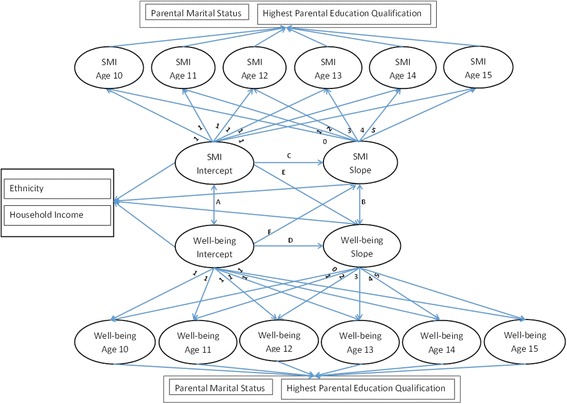
BACKGROUND: Adolescents are among the highest consumers of social media while research has shown that their well-being decreases with age. The temporal relationship between social media interaction and well-being is not well established. The aim of this study was to examine whether the changes in social media interaction and two well-being measures are related across ages using parallel growth models. METHODS: Data come from five waves of the youth questionnaire, 10-15 years, of the Understanding Society, the UK Household Longitudinal Study (pooled n = 9859). Social media interaction was assessed through daily frequency of chatting on social websites. Well-being was measured by happiness with six domains of life and the Strengths and Difficulties Questionnaire. RESULTS: Findings suggest gender differences in the relationship between interacting on social media and well-being. There were significant correlations between interacting on social media and well-being intercepts and between social media interaction and well-being slopes among females. Additionally higher social media interaction at age 10 was associated with declines in well-being thereafter for females, but not for males. Results were similar for both measures of well-being. CONCLUSIONS: High levels of social media interaction in early adolescence have implications for well-being in later adolescence, particularly for females. The lack of an association among males suggests other factors might be associated with their reduction in well-being with age. These findings contribute to the debate on causality and may inform future policy and interventions.
Overview
The claims and statistics of this paper haven’t been checked yet.
Free: it reads the open-access text and checks the first 5 claims that cite a source we can check. Create a free account to check every claim.
Integrity signals
Registry
Cites
Statistics
Figures
Verification
Claims the paper makes
The claims and statistics of this paper haven’t been checked yet.
Free: it reads the open-access text and checks the first 5 claims that cite a source we can check. Create a free account to check every claim.
Claims other papers make about this one
Each is checked against this paper’s own text: does it say what the citing paper says it does?
The source backs part of the claim, not all of it — or backs it for a different population, condition or comparison.
In the citing paper
“we controlled for the following confounders in our analyses: family income – equivalised fifths; family structure (two vs one parent); and age in years. In an attempt to take account of the potentially cyclical association between social media use and depressed mood we controlled for internalising symptoms”
From Social media use and adolescent mental health: Findings from the UK Millennium Cohort Study (2018) · cites this paper as [9]
Experimental — accuracy not yet measuredThe cited source says what the claim attributes to it.
In the citing paper
“The item used was developed by the Millennium Cohort Study team and is similar to items used in other large surveys including the UK Household Longitudinal Study [9] and Ofcom [5].”
From Social media use and adolescent mental health: Findings from the UK Millennium Cohort Study (2018) · cites this paper as [9]
The cited source says what the claim attributes to it.
In the citing paper
“a recent report using longitudinal data suggests that girls may be more affected than boys [9].”
From Social media use and adolescent mental health: Findings from the UK Millennium Cohort Study (2018) · cites this paper as [9]
The cited source says what the claim attributes to it.
In the citing paper
“the estimates of time spent using social media presented in our paper are consistent with those reported from other UK studies [9], [34].”
From Social media use and adolescent mental health: Findings from the UK Millennium Cohort Study (2018) · cites this paper as [9]
The cited source says what the claim attributes to it.
In the citing paper
“However, the questions used were similar to those from other large-scale population based surveys including the UK Household Longitudinal Study [9] and Ofcom [5].”
From Social media use and adolescent mental health: Findings from the UK Millennium Cohort Study (2018) · cites this paper as [9]
2 more claims about this paper
Create a free account to see every claim other papers make about this one.
Self-check
Percentages, sums and reported differences re-computed from the paper’s own numbers.
The self-check needs the paper’s full text.
Citations
Cites
The Strengths and Difficulties Questionnaire: A research note
Goodman, R. (1997) · Journal of Child Psychology and Psychiatry · doi:10.1111/j.1469-7610.1997.tb01545.x · Cited by 14,908 · cited 1×
“The SDQ is a validated instrument which screens for emotional and behavioural problems in children and adolescents aged 3-16 years [34].”
BackgroundApplied Longitudinal Data Analysis: Modeling Change and Event Occurrence
Singer, J. D., & Willett, J. B. (2003) · doi:10.1093/acprof:oso/9780195152968.001.0001 · Cited by 10,647
The Impact of Social Media on Children, Adolescents, and Families
O'Keeffe, G. S., Clarke-Pearson, K., & Council on Communications and Media (2011) · Pediatrics · doi:10.1542/peds.2011-0054 · Cited by 2,943
Goodman, R., Meltzer, H., & Bailey, V. (1998) · European Child & Adolescent Psychiatry · doi:10.1007/s007870050057 · Cited by 2,238
Systematic review of sedentary behaviour and health indicators in school-aged children and youth.
Tremblay, M. S., LeBlanc, A. G., Kho, M. E., Saunders, T. J., Larouche, R., Colley, R. C., Goldfield, G., & Gorber, S. (2011) · International Journal of Behavioral Nutrition and Physical Activity · doi:10.1186/1479-5868-8-98 · Cited by 2,085 · cited 1×
“Risk factors such as social isolation [10], low self-esteem [11, 12], increased obesity [13] and decreased physical activity [14] may all contribute to later life health issues.”
BackgroundFacebook Use Predicts Declines in Subjective Well-Being in Young Adults
Kross, E., Verduyn, P., Demiralp, E., Park, J., Lee, D. S., Lin, N., Shablack, H., Jonides, J., & Ybarra, O. (2013) · PLoS ONE · doi:10.1371/journal.pone.0069841 · Cited by 1,596 · cited 1×
“Many studies have examined the associations between screen-based media and negative markers of well-being such as depression, socio-emotional difficulties and anxiety with mixed results [11, 20, 23, 29].”
BackgroundDo social network sites enhance or undermine subjective well-being? A critical review
Verduyn, P., Ybarra, O., Résibois, M., Jonides, J., & Kross, E. (2017) · Social Issues and Policy Review · doi:10.1111/sipr.12033 · Cited by 1,209 · cited 10×
“, [22] suggest that the relationship operates differently for passive and active users.”
BackgroundResultInfluentialRelations among loneliness, social anxiety, and problematic Internet use
Caplan, S. E. (2007) · CyberPsychology & Behavior · doi:10.1089/cpb.2006.9963 · Cited by 948 · cited 1×
“Risk factors such as social isolation [10], low self-esteem [11, 12], increased obesity [13] and decreased physical activity [14] may all contribute to later life health issues.”
BackgroundValkenburg, P. M., & Peter, J. (2007) · Journal of Computer-Mediated Communication · doi:10.1111/j.1083-6101.2007.00368.x · Cited by 776
(2015) · Cited by 640
Research works printed but not linked: 5
- OfCom Children and parents: media use and attitudes report 2015 London Office of Communications
- Lynn P Burton J Kaminska O Knies G Nandi A An initial look at non-repsonse and attrition in Understanding Society Understanding Society Working Paper Series 2012 Colchester, UK University of Essex
- Muthén LK, Muthén BO: Mplus User's Guide. Seventh Edition. Los Angles, CA: Muthén & Muthén; 1998-2012.
- Lenhart A Purcell K Smith A Zickuhr K PIAL P Social Media & Mobile Internet use among Teens and young people 2010 Washington, DC Pew Research Center
- OfCom Children and parents: media use and attitudes report 2012 London Office of Communications
Cited by
Items 101–200 of 272
Jarman, H. K., McLean, S. A., Paxton, S. J., Sibley, C. G., & Marques, M. D. (2022) · Social Psychiatry and Psychiatric Epidemiology · doi:10.1007/s00127-022-02363-2 · Cited by 25
Papageorgiou, A., CROSS, D. S., & Fisher, C. M. (2022) · International Journal of Environmental Research and Public Health · doi:10.3390/ijerph20010433 · Cited by 27
Smartphone use, gender, and adolescent mental health: Longitudinal evidence from South Korea
Rudolf, R., & Kim, N. (2024) · SSM - Population Health · doi:10.1016/j.ssmph.2024.101722 · Cited by 34
“More specifically, studies show that female adolescents spend more time using online social networks (OSN) than male adolescents (Abi-Jaoude et al., 2020; Barker, 2009; Booker et al., 2018; Kereste ˇ s & ˇ Stulhofer, 2020).”
BackgroundSantoso, N. R., Dewi, E. A. S. K., Arviani, H., & Achmad, Z. A. (2021) · Plaridel · doi:10.52518/2021.18.1-08saderac · Cited by 27
Bidirectional Associations of Adolescents’ Momentary Social Media Use and Negative Emotions
Colasante, T., Faulkner, K., Kharbotli, D., Malti, T., & Hollenstein, T. (2024) · Affective Science · doi:10.1007/s42761-024-00244-2 · Cited by 18
Beauty Standards set by Social Media and their Influence on Women’s Body Image
Yamout, F., Issa, J., & Ghaddar, A. (2019) · Electronic workshops in computing · doi:10.14236/ewic/pom19.10 · Cited by 19
Exploring new measures of online sexual activities, device use, and gender differences
Bélanger-Lejars, V., Bélanger, C. H., & Razmak, J. (2020) · Computers in Human Behavior · doi:10.1016/j.chb.2020.106300 · Cited by 20
The McDonaldisation of pharmacy
Taylor, K. M. G. (2000) · Pharmaceutical journal/The pharmaceutical journal · Cited by 16
Methodological and Conceptual Issues in Digital Media Research
Subrahmanyam, K., & Michikyan, M. (2022) · Cambridge University Press eBooks · doi:10.1017/9781108976237.003 · Cited by 24
Park, J., Hallman, J., Liu, X., & Hancock, J. T. (2023) · New Media & Society · doi:10.1177/14614448231191542 · Cited by 18
“For instance, Booker et al. (2018) found that adolescents from Black African/ Caribbean backgrounds had better well-being at age 10 compared to White adolescents in the UK.”
BackgroundProlonged Social Media Use and Its Association with Perceived Stress in Female College Students
Oyinbo, A. G., Heavner, K. K., Mangano, K. M., Morse, B. L., Ghaziri, M. E., & Thind, H. K. (2024) · American Journal of Health Education · doi:10.1080/19325037.2023.2295550 · Cited by 17
Gracia, P., Bohnert, M., & Celik, S. (2023) · Edward Elgar Publishing eBooks · doi:10.4337/9781789906769.00027 · Cited by 20
Oluwafemi, O. O., Hussein, B. A., Mebu, V. A., Henry, D. P., & Aderibigbe, J. K. (2020) · Cogent Social Sciences · doi:10.1080/23311886.2020.1748478 · Cited by 13
“This position differs from Booker et al. (2018) who reported that females between the ages of 10–15 years engage more in social media interaction than their male counterparts. This was observed in a UK sample and age among other factors could be responsible for the variations in the two studies. To this end, Su et al.…”
BackgroundResultPrevalence and Correlates of (Internet) Gaming Disorder among Young Adults in Singapore
Chew, P. K. H., Naidu, K. N. C., Shi, J. C., & Zhang, M. W. B. (2025) · Psychiatric Quarterly · doi:10.1007/s11126-025-10119-9 · Cited by 17
An Unfiltered Look at Idealized Images: A Social Media Intervention for Adolescent Girls
Casares, D. R., & Binkley, E. E. (2021) · Journal of Creativity in Mental Health · doi:10.1080/15401383.2021.1892556 · Cited by 21
“…and feedback-seeking (Hanna et al., 2017; A. Meier & Schäfer, 2017; Nesi & Prinstein, 2015), which can have a maladaptive effect on identity development (Levine & Stekel, 2016; E. P. Meier & Gray, 2014) and negatively impact future well-being (Booker et al., 2018; Vandenbosch & Eggermont, 2016).”
BackgroundLiquid Youth Generation? The New Psychopathological Trajectories of the Post-Modern Society
Orsolini, L., Ricci, L., Cicolini, A., & Volpe, U. (2023) · Journal of Psychology and Psychotherapy Research · doi:10.12974/2313-1047.2023.10.04 · Cited by 12
Armitage, J. M., Lewis, G., Page, N., Tseliou, F., Anthony, R., Murphy, S., Moore, G. F., & Collishaw, S. (2025) · JCPP Advances · doi:10.1002/jcv2.70005 · Cited by 19
“It is also possible that the introduction of more recent stresses, such as those on social media, place increasing pressures on females relative to males (Booker et al., 2018).”
The economics of investing in women and health
Essue, B. M., Danforth, K., Langer, A., Acharya, P., & Knaul, F. M. (2025) · Nature Medicine · doi:10.1038/s41591-025-03864-8 · Cited by 13
“Risks that disproportionately impact adolescent girls’ mental health stem from gender discrimination 36 , societal pressures related to body image 37 and social-media exposures 38,39 .”
Moreno, M. A., Binger, K. S., Zhao, Q., & Eickhoff, J. C. (2021) · The Journal of Pediatrics · doi:10.1016/j.jpeds.2021.06.005 · Cited by 12
Davison, J., Bunting, B. P., Connolly, P., Lloyd, K., Dunne, L., & Stewart-Knox, B. J. (2022) · Child Indicators Research · doi:10.1007/s12187-022-09924-6 · Cited by 15
“The findings confirmed results of previous research (Booker et al., 2018; Burke & Minton, 2019; Chen & VanderWeele, 2018; Clarke et al., 2011), wellbeing declined between the ages of 13 and 16 years in both sexes.”
BackgroundResultInfluentialDorrestein, M., Nutley, S. B., & Thorell, L. B. (2025) · International Journal of Mental Health and Addiction · doi:10.1007/s11469-025-01491-5 · Cited by 21
“Some previous studies have demonstrated that the associations between social media use and internalizing problems are stronger among females than males (Booker et al., 2018; Orben et al., 2019 Svensson et al., 2022; Thorisdottir et al., 2020; Twenge & Farley., 2021).”
Caba‐Machado, V., Díaz‐López, A., Baridon-Chauvie, D., Machimbarrena, J. M., Ortega-Barón, J., & González‐Cabrera, J. M. (2023) · Current Psychology · doi:10.1007/s12144-023-04451-1 · Cited by 21
“A possible explanation could be that girls have a higher social motivation for using smartphones (Fischer-Grote et al., 2019), a higher frequency of social media use (Booker et al., 2018), and, therefore, a higher risk for smartphones addiction (Fischer-Grote et al., 2019).”
Relaño, R. G., Lucendo-Monedero, Á. L., & Ivaldi, E. (2023) · Social Indicators Research · doi:10.1007/s11205-023-03151-4 · Cited by 10
“…health, the environment, housing, culture, the exercise of rights and access to family support, as well as training and job opportunities (Booker et al., 2018; Ivaldi & Testi, 2011; Longley & Singleton, 2009; Commission of the European Communities, 2000), which are all increasingly…”
Concept analysis of adolescent use of social media for emotional well‐being
Jo, S., & Jang, M. Y. (2022) · International Journal of Nursing Practice · doi:10.1111/ijn.13116 · Cited by 16
(2024) · doi:10.2196/preprints.57154 · Cited by 10
Examining the Effects of Social Media on Mental Health Among Adolescents in Saudi Arabia
Faqihi, F. A., Qutob, R. A., Subh, R. H. M., Aljathalin, L. A. M., Alshalan, L. Z., Yati, S. M. A., Alaryni, A. A., Alghamdi, A., Alsolamy, E. N., Bukhari, A. I., et al. (2024) · Cureus · doi:10.7759/cureus.53261 · Cited by 27
González‐Cabrera, J. M., Díaz‐López, A., Caba‐Machado, V., Ortega-Barón, J., Echezarraga, A., Fernández‐González, L., & Machimbarrena, J. M. (2022) · Journal of Adolescence · doi:10.1002/jad.12128 · Cited by 13
Deprivation's role in adolescent social media use and its links to life satisfaction
Kurten, S., Ghai, S., Odgers, C. L., Kievit, R., & Orben, A. C. (2024) · Computers in Human Behavior · doi:10.1016/j.chb.2024.108541 · Cited by 15
Screen time and psychopathology: investigating directionality using cross-lagged panel models
Bado, P., Schäfer, J., Simioni, A., Bressan, R. A., Gadelha, A., Pan, P. M., Miguel, E. C., Rohde, L. A., & Salum, G. A. (2020) · European Child & Adolescent Psychiatry · doi:10.1007/s00787-020-01675-5 · Cited by 9
“Furthermore, this effect has been found mostly in girls than in boys [3].”
Diferencias de edad y género en el uso y consumo de medios sociales entre los adolescentes
Jiménez, A. G., Catalina-García, B., & Tur‐Viñes, V. (2021) · adComunica revista científica de estrategias tendencias e innovación en comunicación · doi:10.6035/2174-0992.2021.22.12 · Cited by 15
Mushtaque, I., Khan, M. R., Zahra, R., Fatima, S. M., Ejaz, M., Lak, T. A., Rizwan, M. S., Awais‐E‐Yazdan, M., & Raza, M. (2022) · Journal of Population and Social Studies · doi:10.25133/jpssv302022.024 · Cited by 19
Tiraboschi, G. A., Garon‐Carrier, G., Smith, J., & Fitzpatrick, C. (2023) · Preventive Medicine Reports · doi:10.1016/j.pmedr.2023.102471 · Cited by 17
“Indeed, previous work has found that compared to boys, adolescent girls experience higher socio-emotional difficulties as a result of their internet use (Booker et al., 2018; Twenge & Martin, 2020).”
BackgroundResultKosola, S. K., Kullberg, M., Melander, K., Engblom, J., Ranta, K., & Alanko, K. (2024) · Archives of Disease in Childhood · doi:10.1136/archdischild-2023-326331 · Cited by 13
“27 A recent meta-analysis supported the hypothesis that different patterns of internet addiction may be seen among men and women.”
BackgroundSalerno, L., Fortunato, L., Ostwald, V., Muscolino, A., & Coco, G. L. (2025) · PLoS ONE · doi:10.1371/journal.pone.0323320 · Cited by 15
“In recent years, increasing concerns have been raised about the potential negative impact of social media use on the well-being of adolescents [1,2].”
Risk Information Sources for Snow Disaster Risk Preparedness in Scotland
Adekola, J., Renaud, F. G., & Hill, C. (2021) · International Journal of Disaster Risk Science · doi:10.1007/s13753-021-00386-y · Cited by 8
Hebbal, M. I., Helaby, B. S., & AlHefdhi, M. H. (2022) · Journal of Pharmacy And Bioallied Sciences · doi:10.4103/jpbs.jpbs_680_21 · Cited by 8
“[10,11] The results of the present study show consistency with their results.”
Abramson, L., Eldar, E., Markovitch, N., & Knafo‐Noam, A. (2022) · Journal of Personality · doi:10.1111/jopy.12772 · Cited by 19
“…high, Smetana et al., 2006), other school climate considerations (Barr & Higgins- D'Alessandro, 2007), or increase in use of online social media (Booker et al., 2018) may create a relation between being empathic and being sociable and socially valued, as was indeed found in adolescents around…”
BackgroundJagtiani, M. R., Kelly, Y. J., Fancourt, D. E., Shelton, N. J., & Scholes, S. (2019) · Cyberpsychology Behavior and Social Networking · doi:10.1089/cyber.2019.0338 · Cited by 10
Self-citationRisk and protective factors for mental health and wellbeing in childhood and adolescence
ESRI, Nolan, A., Smyth, E., & ESRI (2021) · doi:10.26504/rs120 · Cited by 17
Nordrum, E. I., & Gracia, P. (2023) · Information Communication & Society · doi:10.1080/1369118x.2023.2295360 · Cited by 14
“On the other hand, as boys can suffer higher risks of facing externalising behavioural problems through online settings (Booker et al., 2018) and higher internet gaming addictions (Su et al., 2020), boys could be more harmed academically than girls after having faster and better internet coverage…”
Layte, R., Brannigan, R., & Stanistreet, D. (2023) · Computers in Human Behavior Reports · doi:10.1016/j.chbr.2023.100293 · Cited by 11
Pogorskiy, E., & Beckmann, J. F. (2022) · Computers and Education Artificial Intelligence · doi:10.1016/j.caeai.2022.100094 · Cited by 13
Kaya, M., & McCabe, C. (2022) · International Journal of Environmental Research and Public Health · doi:10.3390/ijerph19158927 · Cited by 10
“males [86] rather than gender effects per se as it has been hard to show this in other studies [87].”
ResultIzzo, F., Saija, E., Pallini, S., Ioverno, S., Baiocco, R., & Pistella, J. (2024) · Child Indicators Research · doi:10.1007/s12187-024-10113-w · Cited by 6
“Several studies find that males are happier than females (Bennefield, 2018; Kaye-Tzadok et al., 2017; Weaver & Habibov, 2010), while other studies report the opposite outcome (Booker et al., 2018 ; Casas et al., 2013; Gross-Manos et al., 2015).”
Hamdan, W. N. (2021) · EDMETIC · doi:10.21071/edmetic.v10i2.13328 · Cited by 9
Social Media Addiction and Self-Esteem in relation to Gender of Students
Zam, S., Dendup, T., & Tenzin, K. (2022) · Bhutan Journal of Research and Development · doi:10.17102/bjrd.rub.11.1.028 · Cited by 13
¿De qué me sirven los YouTubers e Instagramers? Preferencias de los adolescentes en España
Aran-Ramspott, S., Inchaurtieta, Á. M., & Botella, L. (2022) · Revista ICONO14 · doi:10.7195/ri14.v20i2.1875 · Cited by 9
“…diferencias, en especial respecto al sesgo de género (prevalentemente binario), tanto en la desigual representación de los influencers (Wotanis y McMillan, 2014), como en el tipo de contenido producido y su recepción (García-Jiménez et al., 2021; GarcíaJiménez at al., 2016; Booker et al., 2018).”
BackgroundZhao, D., Li, G., Zhou, M., Wang, Q., Gao, Y., Zhao, X., Zhang, X., & Li, P. (2022) · International Journal of Environmental Research and Public Health · doi:10.3390/ijerph192013135 · Cited by 9
Kusuma, I. G. N. A. G. E. T., Landra, N., & Widnyana, I. W. (2019) · Asia Pacific Management and Business Application · doi:10.21776/ub.apmba.2019.008.01.5 · Cited by 9
Kelly, Y. J., Xue, B., Booker, C. L., Sacker, A., Lacey, R. E., Ploubidis, G. B., & Patalay, P. (2022) · medRxiv · doi:10.1101/2022.03.31.22273198 · Cited by 12
“using social media presented in our paper are consistent with those reported from other UK studies.(5,34) We were able to go beyond self-reported time use to incorporate measures of experiences – compulsion and of feeling happier and more connected than in real life – however these measures were only available for a s…”
BackgroundResultSelf-citationTsomokos, D. I. (2026) · Social Psychiatry and Psychiatric Epidemiology · doi:10.1007/s00127-025-02999-w · Cited by 5
Types of Adolescent Screen Use and Positive Wellbeing: Gender and Parental Education Influences
Chang, G. (2025) · Journal of Happiness Studies · doi:10.1007/s10902-025-00884-6 · Cited by 9
“…document a negative relationship between social 1 3 media and adolescent wellbeing (Booker et al., 2018; McNamee et al., 2021 ) and a higher risk of depressive symptoms (Kelly et al., 2019), especially for girls compared to boys (Booker et al., 2018 ; Kelly et al., 2019; McNamee et al., 2021).”
Changes in physical and mental health in Swedish schoolchildren in the digital age
Mossberg, K., & Möllborg, P. (2023) · Acta Paediatrica · doi:10.1111/apa.16941 · Cited by 8
Hygen, B. W., Skalická, V., Coplan, R. J., von Soest, T., Fredriksen, E., & Bekkhus, M. (2024) · Journal of Media Psychology Theories Methods and Applications · doi:10.1027/1864-1105/a000401 · Cited by 6
Self-reported social media use by adolescents in Brazil: a school-based survey
Pereira, R. B., Martini, T., Buchweitz, C., Kieling, R. R., Fisher, H. L., Kohrt, B. A., Mondelli, V., & Kieling, C. (2022) · Trends in Psychiatry and Psychotherapy · doi:10.47626/2237-6089-2022-0545 · Cited by 12
“13 Given the increasing evidence of negative impacts of social media on mental health on some girls in high income countries, such as anxiety, depressive symptoms, and sleep disturbances, 14,15 our findings suggest that similar detrimental effects may be present in middle-income countries.”
BackgroundFactors affecting wellbeing of young adults: A study of Gujrat city, Punjab, Pakistan
Afzal, A., Javed, M., & Safdar, S. (2023) · Journal of Human Behavior in the Social Environment · doi:10.1080/10911359.2023.2225566 · Cited by 5
“It is also considered that adaptability is the one that individuals have to learn, make choices, and avoid in their life, study and communicate in order to adapt to the outer environment, culture, and to meet the demands of their own physical and mental development (Booker et al., 2018).”
BackgroundDevos, S., Schreurs, L., Eggermont, S., & Vandenbosch, L. (2023) · New Media & Society · doi:10.1177/14614448231188935 · Cited by 9
“Prior research on within-person relationships between social media and well-being revealed that while social media interactions may not have lasting consequences after a few months, they may do so if they are sustained over an extended period of time (e.g. Booker et al., 2018).”
Folotiya, M., & Ngoma, C. (2024) · BMC Public Health · doi:10.1186/s12889-024-18764-8 · Cited by 5
Cook, S., Hamilton, H. A., Montazer, S., Sloan, L., Wickens, C. M., Cheung, A., Boak, A., Turner, N. E., & Mann, R. E. (2021) · The Canadian Journal of Psychiatry · doi:10.1177/0706743720987902 · Cited by 10
“Other researchers have suggested that the negative effect of social media use on well-being may be observed primarily among females.(3,24) Our results suggest that increased social media use was associated with increased psychological distress among both males and females in Ontario, and increases in severe psychologi…”
Verbeij, T., Beyens, I., Keijsers, L., & Valkenburg, P. M. (2023) · PsyArXiv (OSF Preprints) · doi:10.31234/osf.io/a9ksb · Cited by 6
Davies, J., Cadwallader, S., Black, L., Dunne, J. H., & Panayiotou, M. (2025) · BMC Public Health · doi:10.1186/s12889-025-23897-5 · Cited by 10
“Some studies even suggest the reverse – that poor mental health may predict increased social media use – and/or that any predictive effects are limited to specific subgroups [11, 93, 98, 103].”
Okubo, R., Matsumoto, R., Motomura, E., & Okada, M. (2024) · Psychiatry International · doi:10.3390/psychiatryint5040041 · Cited by 4
“There have even been reported findings showing that the association between Internet-based behavior and mental health deterioration, such as depression and suicide risks, was predominant in female adolescents in comparison with males [72–74].”
Noon, E. J., Maes, C., Karsay, K., Yang, C., Pešout, O., & Stefańczyk, M. (2025) · Journal of Adolescence · doi:10.1002/jad.12465 · Cited by 5
gaspard, L. (2020) · Children Australia · doi:10.1017/cha.2020.2 · Cited by 4
Mackenzie, E., McMaugh, A. L., Bergen, P. V., & Parada, R. H. (2023) · Australian Journal of Psychology · doi:10.1080/00049530.2023.2170279 · Cited by 11
“The younger and older groups represent the typical period when academic stress and digital communication increases (Anniko et al., 2019; Booker et al., 2018).”
BackgroundHoffman, A. J., McGuire, L., Mathews, C. J., Joy, A., Law, F., Drews, M., Rutland, A., Hartstone‐Rose, A., Winterbottom, M., & Mulvey, K. L. (2023) · PLoS ONE · doi:10.1371/journal.pone.0282076 · Cited by 9
“Conversely, in a 5-year longitudinal study, greater use of social media earlier in adolescence was associated with greater decreases in well-being, compared to adolescents who engaged in less social media use [17].”
BackgroundLilly, K. J., Sibley, C. G., & Osborne, D. (2023) · Cyberpsychology Journal of Psychosocial Research on Cyberspace · doi:10.5817/cp2023-5-1 · Cited by 5
“Specifically, social media may have a greater impact on women than men (Booker et al., 2018; Twenge & Martin, 2020).”
BackgroundAntecedents of happiness at work: The moderating role of gender
Al-Taie, M. Z. (2023) · Cogent Business & Management · doi:10.1080/23311975.2023.2283927 · Cited by 12
“For example, Booker et al. (2018), Burke et al. (2009), Inglehart (2002) and Mousa et al. (2020) have all failed to find a significant difference between male and female well-being/happiness.”
BackgroundNutrition for Adolescent Female Team Sport Athletes: A Review
Sharples, A., Baker, D., & Black, K. (2020) · Strength and conditioning journal · doi:10.1519/ssc.0000000000000559 · Cited by 4
“It would appear that girls are more affected than boys (8,31) and that this population could be more vulnerable to unsupported information which appears on social media platforms.”
BackgroundNew Media Development, Sleep and Lifestyle in Children and Adolescents
Łuszczki, E., Bartosiewicz, A., Bobula, G., Kuchciak, M., Jagielski, P., Oleksy, Ł., Stolarczyk, A., & Dereń, K. (2021) · Sustainability · doi:10.3390/su13042248 · Cited by 5
Rice, T., Calov, C., & Arias, D. (2024) · Bulletin of the Menninger Clinic · doi:10.1521/bumc.2024.88.4.360 · Cited by 3
Vijayakumar, N., Dashti, S. G., Canterford, L. D., Ellul, S., Parissi, A. J. A., Goddings, A., Viner, R., Moran, P., Borschmann, R., Mundy, L. K., et al. (2026) · The Medical Journal of Australia · doi:10.5694/mja2.70220 · Cited by 3
“…results broadly align with several reviews concluding that the negative effects of social media on mental health problems are small across all adolescents [5, 6], but also with many studies suggesting that effects for well-being are greater for female relative to male adolescents [22, 24, 37, 38].”
Vaillant-Coindard, E., Briet, G., Lespiau, F., Gisclard, B., & Charbonnier, É. (2024) · BMC Psychology · doi:10.1186/s40359-024-01723-8 · Cited by 6
“Wellbeing is an important dimension of mental health [103, 115, 179], and seems to be low to moderate among about one third of adolescents (e.g., [115, 234]), with decreasing trends across adolescence (e.g., [27, 41, 87]).”
BackgroundGutmann, B., Jha, S., O’Doherty, E., & Banerji, R. (2022) · Business and Human Rights Journal · doi:10.1017/bhj.2021.48 · Cited by 3
Petalla, M. B., & Tatlonghari, J. K. C. (2023) · Asian Journal of Education and Social Studies · doi:10.9734/ajess/2023/v38i2820 · Cited by 4
McNamee, P., Mendolia, S., & Yerokhin, O. (2019) · SSRN Electronic Journal · doi:10.2139/ssrn.3510445 · Cited by 3
Screen time and psychopathology: investigating directionality using cross-lagged panel modelsPreprint
Bado, P., Schäfer, J., Simioni, A., Bressan, R. A., Gadelha, A., Pan, P. M., Miguel, E. C., Rohde, L. A., & Salum, G. A. (2020) · doi:10.31234/osf.io/q8tur · Cited by 3
Digital Technologies and Youth Health: Insights From a Comprehensive Scoping Review
Banerjee, P., & Holly, L. (2025) · International Digital Public Health Conference (DPH) · doi:10.1109/dph66411.2025.11198052 · Cited by 2
“Six studies explored the influence of social media on self-esteem and body image, indicating that social media can exacerbate body dissatisfaction, especially among adolescent girls [11], [12], [13], [14], [15], [16].”
Religion and Social Media Use: Protective Factors for Youth Well-Being in the Digital Age?
Upenieks, L., & Hill, T. D. (2026) · Journal of Psychology and Theology · doi:10.1177/00916471251404432 · Cited by 4
“Our analyses of data collected from a large sample of young people living in the United States revealed several important findings that were mostly consistent with our study hypotheses.”
InfluentialModern Love: You, Me, and Smartphone Makes Three
Garris, B. R. (2020) · Marriage & Family Review · doi:10.1080/01494929.2020.1712574 · Cited by 4
“Problem Internet use, contrasted with healthy use, moderately correlated with depression and anxiety, social anxiety in particular (Booker et al., 2018; Malak & Khalifeh, 2018; Weinstein et al., 2015).”
BackgroundRandall, J., & York, J. (2020) · Journal of Child & Adolescent Substance Abuse · doi:10.1080/1067828x.2021.1967247 · Cited by 2
Social Media and Screen Time in the Clinical Interview: What to Ask and What It Means?
Sood, A., & Avari, J. M. (2023) · Springer eBooks · doi:10.1007/978-3-031-24804-7_2 · Cited by 2
Şahin, E., & Bekiroğlu, H. A. (2023) · Media Literacy and Academic Research · doi:10.34135/mlar-23-02-10 · Cited by 3
Jokić, B., Dedić, Z. R., & Šimon, J. (2024) · Psihologijske teme · doi:10.31820/pt.33.1.2 · Cited by 5
“From a developmental perspective, the most significant increase in time spent in screen-based activities occurs in early adolesc ence during the transition from primary to lower secondary education (Booker et al., 2018; World Health Organization [WHO], 2020).”
BackgroundMemon, R., Khaliq, A., Ranieri, V. F., Asif, M., Bhatti, M. M., Khan, B. A., Chaudhry, N., Chauhdry, I. B., Husain, N., & Edwards, S. (2024) · BMC Psychology · doi:10.1186/s40359-024-01963-8 · Cited by 4
“Social media use in females [52] as a significant link between sources of information and knowledge has been highlighted by various studies [17, 53, 54].”
Finserås, T. R., Hjetland, G. J., Andersen, A. I. O., Sivertsen, B., Colman, I., & Skogen, J. C. (2025) · Youth & Society · doi:10.1177/0044118x251321109 · Cited by 2
“…ordinal regression models while adjusting for age and subjective socioeconomic status, which has been shown to be related to both mental well-being (Bøe et al., 2018; Orben, Lucas, et al., 2022) and social media use (Booker et al., 2018; Orben, Przybylski, et al., 2022; Skogen et al., 2023).”
TikTok: Effects on Anxiety, Depression, and Physical Activity
Ismail, L. L. (2023) · McNair Scholars Research Journal · doi:10.32855/2642-2492.1164 · Cited by 1
Appearance Self-Attitudes and Health and Well-Being of Bulgarian Adolescents
Alexandrova‐Karamanova, A. (2020) · The Central European Journal of Paediatrics · doi:10.5457/p2005-114.258 · Cited by 2
“Similar patterns regarding gender and age were also found in other studies, exploring psychosomatic health and psychological well-being in adolescence (40-43).”
ResultA Study on Effects of Social Media on Physical and Psychological Health in Thai Teenagers
Pratoom, N. (2021) · International Journal of Current Science Research and Review · doi:10.47191/ijcsrr/v4-i6-10 · Cited by 2
Adolescent Health and Wellbeing in the UK
Kelly, Y. J. (2022) · Springer eBooks · doi:10.1007/978-3-658-35744-3_29 · Cited by 5
Self-citationManneville, F., Briançon, S., Legrand, K., Langlois, J., Lecomte, E., Omorou, A. Y., & Guillemin, F. (2022) · Journal of Physical Activity and Health · doi:10.1123/jpah.2022-0093 · Cited by 4
Validity evidence for the School Subjective Well-Being Scale
Dias-Viana, J. L., & Noronha, A. P. P. (2022) · Estudos de Psicologia (Campinas) · doi:10.1590/1982-0275202239e200220 · Cited by 8
Digital Media Use in Transitional-Age Youth: Challenges and Opportunities
Weigle, P. E., Kaliebe, K., Dalope, K. A., Asamoah, T., & Shafi, R. M. A. (2021) · Springer eBooks · doi:10.1007/978-3-030-62113-1_18 · Cited by 3
Sablaon, C. M., & Madrigal, D. V. (2021) · Philippine Social Science Journal · doi:10.52006/main.v4i1.322 · Cited by 6
Teenage Play and Peer Interactions: Virtual, Social and Emotional Geographies
Hartas, D. (2020) · Springer eBooks · doi:10.1007/978-3-030-60001-3_1 · Cited by 3
NOMOFOBİ VE KİŞİLİK ÖZELLİKLERİ ARASINDAKİ İLİŞKİDE SOSYAL MEDYA BAĞIMLILIĞININ ARACI ROLÜ
Bülbül, A. E. (2023) · Akademik Hassasiyetler · doi:10.58884/akademik-hassasiyetler.1335069 · Cited by 1
Screen use and the mental health of children and young people
Madelaire, L. F., Jeppesen, P., Hansen, A. S., Mainz, J., Bikic, A., Nordentoft, M., & Krantz, M. F. (2024) · Ugeskrift for Læger · doi:10.61409/v05240342 · Cited by 1
Tsodoulos, K. (2025) · Magna Scientia Advanced Research and Reviews · doi:10.30574/msarr.2025.14.2.0091 · Cited by 1
The Mediating Role of Social Media Usage in Mental Well-Being: A Gender Perspective
Uygurtaş, M., & Akdemir, N. (2025) · OPUS Toplum Araştırmaları Dergisi · doi:10.26466/opusjsr.1686931 · Cited by 3
Metadata
- Authors
- Booker, C. L., Kelly, Y. J., & Sacker, A.
- Affiliations
- University of Essex (GB)
- University College London (GB)
- Corresponding author
- Booker, Cara L.
- Venue
- BMC Public Health
- Published
- 2018-03-20
- Volume
- 18
- Issue
- 1
- Pages
- 321-321
- ISSN
- 1471-2458 (ISSN-L)
- PMC
- PMC5859512
- OpenAlex
- W2795762168
- Cited by
- 268
- References
- 42
- Citations by year
- 2026: 24 · 2025: 26 · 2024: 31 · 2023: 47 · 2022: 44 · 2021: 28 · 2020: 49 · 2019: 15 · 2018: 2
- FWCI
- 53.47
- Type
- journal article
- Language
- en
- Open access
- gold
- doi.org
- Licence
- cc-by
- creativecommons.org/licenses/by/4.0/ (tdm)
- Locations
- BMC Public Health (publishedVersion, cc-by)
- Europe PMC (PubMed Central) (publishedVersion, cc-by)
- PubMed Central (publishedVersion, cc-by)
- PubMed (publishedVersion)
- Open Access at Essex (University of Essex) (acceptedVersion)
- DOAJ (DOAJ: Directory of Open Access Journals) (submittedVersion, cc-by-sa)
- UCL Discovery (University College London) (submittedVersion)
- Funders
- Economic and Social Research Council (RES-586-47-0001, RES-586-47-0002, RES-518-28-001, ES/J019119/1)
- Topics
- Social Sciences › Sociology and Political Science › Impact of Technology on Adolescents
- Social Sciences › Education › Child Development and Digital Technology
- Social Sciences › Psychology › Clinical Psychology › Child and Adolescent Psychosocial and Emotional Development
- Keywords
- social media use, adolescents, well-being, gender differences, age trends, happiness, Strengths and Difficulties Questionnaire, early adolescence, longitudinal development
- MeSH terms
- Adolescent, Child, Female, United Kingdom, Humans, Interpersonal Relations, Longitudinal Studies, Male, Mental Health, Surveys and Questionnaires, Sex Factors, Social Media
About these checks
Registry, retraction, Cites and statistics results are computed, not judged, with one exception: a printed reference that no index lists is read once by a model before it counts as a citation error. Claims are extracted by a model and kept only when their quote appears verbatim in the text; each cited source is then checked, with a model’s help, for whether it says what the claim relies on. Those verdicts can be wrong — read the claim’s quote and the cited source before relying on one.
Statistics and arithmetic are recomputed, not judged.
Confidence bands are shown only for fields calibrated on our annotated test set. None is calibrated yet, so no band is shown.
What counts as a claim ›How we measure confidence ›How we check this ›
Are you an author, or do you see a problem with this page? Request a review
Data sources
Bibliographic data: Semantic Scholar, OpenAlex, Crossref.
Contains information from the Semantic Scholar Academic Graph Datasets, made available under the ODC Attribution License (ODC-BY 1.0).
Semantic Scholar’s data is described in: Kinney, R., et al. (2023). The Semantic Scholar Open Data Platform. arXiv:2301.10140.
