

Gender differences in the associations between age trends of social media interaction and well-being among 10–15 year olds in the UK
Open accessThe DOI matches its Crossref record; 40 of the 42 references it cites were found in a registry or an index.
Abstract
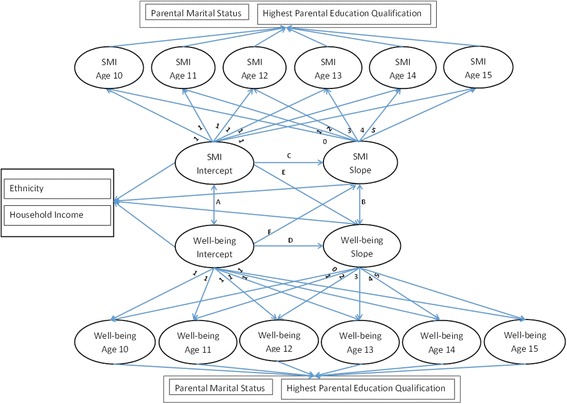
BACKGROUND: Adolescents are among the highest consumers of social media while research has shown that their well-being decreases with age. The temporal relationship between social media interaction and well-being is not well established. The aim of this study was to examine whether the changes in social media interaction and two well-being measures are related across ages using parallel growth models. METHODS: Data come from five waves of the youth questionnaire, 10-15 years, of the Understanding Society, the UK Household Longitudinal Study (pooled n = 9859). Social media interaction was assessed through daily frequency of chatting on social websites. Well-being was measured by happiness with six domains of life and the Strengths and Difficulties Questionnaire. RESULTS: Findings suggest gender differences in the relationship between interacting on social media and well-being. There were significant correlations between interacting on social media and well-being intercepts and between social media interaction and well-being slopes among females. Additionally higher social media interaction at age 10 was associated with declines in well-being thereafter for females, but not for males. Results were similar for both measures of well-being. CONCLUSIONS: High levels of social media interaction in early adolescence have implications for well-being in later adolescence, particularly for females. The lack of an association among males suggests other factors might be associated with their reduction in well-being with age. These findings contribute to the debate on causality and may inform future policy and interventions.
Overview
The claims and statistics of this paper haven’t been checked yet.
Free: it reads the open-access text and checks the first 5 claims that cite a source we can check. Create a free account to check every claim.
Integrity signals
Registry
Cites
Statistics
Figures
Verification
Claims the paper makes
The claims and statistics of this paper haven’t been checked yet.
Free: it reads the open-access text and checks the first 5 claims that cite a source we can check. Create a free account to check every claim.
Claims other papers make about this one
Each is checked against this paper’s own text: does it say what the citing paper says it does?
The source backs part of the claim, not all of it — or backs it for a different population, condition or comparison.
In the citing paper
“we controlled for the following confounders in our analyses: family income – equivalised fifths; family structure (two vs one parent); and age in years. In an attempt to take account of the potentially cyclical association between social media use and depressed mood we controlled for internalising symptoms”
From Social media use and adolescent mental health: Findings from the UK Millennium Cohort Study (2018) · cites this paper as [9]
Experimental — accuracy not yet measuredThe cited source says what the claim attributes to it.
In the citing paper
“The item used was developed by the Millennium Cohort Study team and is similar to items used in other large surveys including the UK Household Longitudinal Study [9] and Ofcom [5].”
From Social media use and adolescent mental health: Findings from the UK Millennium Cohort Study (2018) · cites this paper as [9]
The cited source says what the claim attributes to it.
In the citing paper
“a recent report using longitudinal data suggests that girls may be more affected than boys [9].”
From Social media use and adolescent mental health: Findings from the UK Millennium Cohort Study (2018) · cites this paper as [9]
The cited source says what the claim attributes to it.
In the citing paper
“the estimates of time spent using social media presented in our paper are consistent with those reported from other UK studies [9], [34].”
From Social media use and adolescent mental health: Findings from the UK Millennium Cohort Study (2018) · cites this paper as [9]
The cited source says what the claim attributes to it.
In the citing paper
“However, the questions used were similar to those from other large-scale population based surveys including the UK Household Longitudinal Study [9] and Ofcom [5].”
From Social media use and adolescent mental health: Findings from the UK Millennium Cohort Study (2018) · cites this paper as [9]
2 more claims about this paper
Create a free account to see every claim other papers make about this one.
Self-check
Percentages, sums and reported differences re-computed from the paper’s own numbers.
The self-check needs the paper’s full text.
Citations
Cites
The Strengths and Difficulties Questionnaire: A research note
Goodman, R. (1997) · Journal of Child Psychology and Psychiatry · doi:10.1111/j.1469-7610.1997.tb01545.x · Cited by 14,908 · cited 1×
“The SDQ is a validated instrument which screens for emotional and behavioural problems in children and adolescents aged 3-16 years [34].”
BackgroundApplied Longitudinal Data Analysis: Modeling Change and Event Occurrence
Singer, J. D., & Willett, J. B. (2003) · doi:10.1093/acprof:oso/9780195152968.001.0001 · Cited by 10,647
The Impact of Social Media on Children, Adolescents, and Families
O'Keeffe, G. S., Clarke-Pearson, K., & Council on Communications and Media (2011) · Pediatrics · doi:10.1542/peds.2011-0054 · Cited by 2,943
Goodman, R., Meltzer, H., & Bailey, V. (1998) · European Child & Adolescent Psychiatry · doi:10.1007/s007870050057 · Cited by 2,238
Systematic review of sedentary behaviour and health indicators in school-aged children and youth.
Tremblay, M. S., LeBlanc, A. G., Kho, M. E., Saunders, T. J., Larouche, R., Colley, R. C., Goldfield, G., & Gorber, S. (2011) · International Journal of Behavioral Nutrition and Physical Activity · doi:10.1186/1479-5868-8-98 · Cited by 2,085 · cited 1×
“Risk factors such as social isolation [10], low self-esteem [11, 12], increased obesity [13] and decreased physical activity [14] may all contribute to later life health issues.”
BackgroundFacebook Use Predicts Declines in Subjective Well-Being in Young Adults
Kross, E., Verduyn, P., Demiralp, E., Park, J., Lee, D. S., Lin, N., Shablack, H., Jonides, J., & Ybarra, O. (2013) · PLoS ONE · doi:10.1371/journal.pone.0069841 · Cited by 1,596 · cited 1×
“Many studies have examined the associations between screen-based media and negative markers of well-being such as depression, socio-emotional difficulties and anxiety with mixed results [11, 20, 23, 29].”
BackgroundDo social network sites enhance or undermine subjective well-being? A critical review
Verduyn, P., Ybarra, O., Résibois, M., Jonides, J., & Kross, E. (2017) · Social Issues and Policy Review · doi:10.1111/sipr.12033 · Cited by 1,209 · cited 10×
“, [22] suggest that the relationship operates differently for passive and active users.”
BackgroundResultInfluentialRelations among loneliness, social anxiety, and problematic Internet use
Caplan, S. E. (2007) · CyberPsychology & Behavior · doi:10.1089/cpb.2006.9963 · Cited by 948 · cited 1×
“Risk factors such as social isolation [10], low self-esteem [11, 12], increased obesity [13] and decreased physical activity [14] may all contribute to later life health issues.”
BackgroundValkenburg, P. M., & Peter, J. (2007) · Journal of Computer-Mediated Communication · doi:10.1111/j.1083-6101.2007.00368.x · Cited by 776
(2015) · Cited by 640
Research works printed but not linked: 5
- OfCom Children and parents: media use and attitudes report 2015 London Office of Communications
- Lynn P Burton J Kaminska O Knies G Nandi A An initial look at non-repsonse and attrition in Understanding Society Understanding Society Working Paper Series 2012 Colchester, UK University of Essex
- Muthén LK, Muthén BO: Mplus User's Guide. Seventh Edition. Los Angles, CA: Muthén & Muthén; 1998-2012.
- Lenhart A Purcell K Smith A Zickuhr K PIAL P Social Media & Mobile Internet use among Teens and young people 2010 Washington, DC Pew Research Center
- OfCom Children and parents: media use and attitudes report 2012 London Office of Communications
Cited by
Social media use and adolescent mental health: Findings from the UK Millennium Cohort Study
Kelly, Y., Zilanawala, A., Booker, C., & Sacker, A. (2018) · EClinicalMedicine · doi:10.1016/j.eclinm.2018.12.005 · Cited by 740
Self-citationSocial Media and Mental Health: Benefits, Risks, and Opportunities for Research and Practice
Naslund, J. A., Bondre, A., Torous, J., & Aschbrenner, K. A. (2020) · Journal of Technology in Behavioral Science · doi:10.1007/s41347-020-00134-x · Cited by 1,194
“Social media use also appears to have a differential impact on mental health and emotional wellbeing between females and males (Booker et al. 2018), highlighting the need to explore unique experiences between gender groups to inform tailored programs and services.”
BackgroundMedia Use Is Linked to Lower Psychological Well-Being: Evidence from Three Datasets
Twenge, J. M., & Campbell, W. K. (2019) · Psychiatric Quarterly · doi:10.1007/s11126-019-09630-7 · Cited by 429
Windows of developmental sensitivity to social media
Orben, A., Przybylski, A. K., Blakemore, S.-J., & Kievit, R. A. (2022) · Nature Communications · doi:10.1038/s41467-022-29296-3 · Cited by 387
Viner, R. M., Gireesh, A., Stiglic, N., Hudson, L. D., Goddings, A.-L., Ward, J. L., & Nicholls, D. E. (2019) · The Lancet Child & Adolescent Health · doi:10.1016/s2352-4642(19)30186-5 · Cited by 295
Bekalu, M. A., McCloud, R. F., & Viswanath, K. (2019) · Health Education & Behavior · doi:10.1177/1090198119863768 · Cited by 303
Social media use and mental health and well-being among adolescents: a scoping review
Schønning, V., Hjetland, G. J., Aarø, L. E., & Skogen, J. C. (2020) · Frontiers in Psychology · doi:10.3389/fpsyg.2020.01949 · Cited by 288
Heffer, T., Good, M., Daly, O., MacDonell, E., & Willoughby, T. (2019) · Clinical Psychological Science · doi:10.1177/2167702618812727 · Cited by 278
Beyond Screen Time: Identity Development in the Digital Age
Granic, I., Morita, H., & Scholten, H. (2020) · Psychological Inquiry · doi:10.1080/1047840x.2020.1820214 · Cited by 237
Adolescent mental health in crisis
Gunnell, D., Kidger, J., & Elvidge, H. (2018) · BMJ · doi:10.1136/bmj.k2608 · Cited by 222
Jarman, H. K., Marques, M. D., McLean, S. A., Slater, A., & Paxton, S. J. (2021) · Body Image · doi:10.1016/j.bodyim.2020.11.005 · Cited by 214
Social Media Use and Self-Injurious Thoughts and Behaviors: A Systematic Review and Meta-Analysis
Nesi, J., Burke, T. A., Bettis, A. H., Kudinova, A. Y., Thompson, E. C., MacPherson, H. A., Fox, K. A., Lawrence, H. R., Thomas, S. A., Wolff, J. C., et al. (2021) · Clinical Psychology Review · doi:10.1016/j.cpr.2021.102038 · Cited by 186
Why increases in adolescent depression may be linked to the technological environment
Twenge, J. M. (2020) · Current Opinion in Psychology · doi:10.1016/j.copsyc.2019.06.036 · Cited by 182
Gutman, L. M., & Codiroli McMaster, N. (2020) · Journal of Abnormal Child Psychology · doi:10.1007/s10802-020-00623-w · Cited by 160
“2013;Woods and Scott 2016), with some indication that the mental health of girls may be vulnerable to its use (Booker et al. 2018).”
BackgroundResultInfluentialBarthorpe, A., Winstone, L., Mars, B., & Moran, P. (2020) · Journal of Affective Disorders · doi:10.1016/j.jad.2020.05.106 · Cited by 158
Sewall, C. J. R., Bear, T. M., Merranko, J., & Rosen, D. (2020) · Mobile Media & Communication · doi:10.1177/2050157920902830 · Cited by 139
“Numerous studies have found a negative relationship between digital technology use and well-being (Booker, Kelly, & Sacker, 2018; Demirci, Akgonul, & Akpinar, 2015; Kelly, Zilanawala, Booker, & Sacker, 2018; Kross et al., 2013; Lin et al., 2016; Twenge et al., 2018), whereas others have found…”
BackgroundEducational Research and Innovation
OECD, & Centre for Educational Research and Innovation (2009) · Educational research and innovation · doi:10.1787/20769679 · Cited by 134
Psychological Well-Being During Adolescence: Stability and Association With Romantic Relationships
Gómez-López, M., Viejo, C., & Ruiz, R. O. (2019) · Frontiers in Psychology · doi:10.3389/fpsyg.2019.01772 · Cited by 196
“, friends, family, appearance, school, schoolwork, and life as a whole) as a key variable and included a measure of emotional and behavioral problems (Booker et al., 2018).”
BackgroundSpiller, H. A., Ackerman, J. P., Spiller, N. E., & Casavant, M. J. (2019) · The Journal of Pediatrics · doi:10.1016/j.jpeds.2019.02.045 · Cited by 119
Yang, X., Guo, W.-J., Tao, Y.-J., Meng, Y.-J., Wang, H.-Y., Li, X.-J., Zhang, Y.-M., Zeng, J.-K., Tang, W.-J., Wang, Q., et al. (2022) · Journal of Affective Disorders · doi:10.1016/j.jad.2021.12.013 · Cited by 93
Social media use and adolescent well-being: a narrative review of longitudinal studies
Course-Choi, J., & Hammond, L. (2021) · Cyberpsychology, Behavior, and Social Networking · doi:10.1089/cyber.2020.0020 · Cited by 93
“13 Other studies also observed gender effects: In one, gender moderated the negative effect of SMD symptoms on later life satisfaction, with effects greater for boys than girls.”
Longitudinal association between social media use and psychological distress among adolescents
Thorisdottir, I. E., Sigurvinsdottir, R., Kristjansson, A. L., Allegrante, J. P., Lilly, C. L., & Sigfusdottir, I. D. (2020) · Preventive Medicine · doi:10.1016/j.ypmed.2020.106270 · Cited by 90
“Some studies use well-being scales (Booker et al., 2018; Orben et al., 2019), while others use general distress scales (Jensen et al., 2019) or examine symptoms of internalizing problems (Riehm et al., 2019), such as anxiety and depression (Boers et al., 2019; Coyne et al., 2020; Heffer et al.,…”
BackgroundInfluentialSocial Media Use and Deliberate Self-Harm Among Youth: A Systematized Narrative Review
Biernesser, C., Sewall, C. J. R., Brent, D., Bear, T., Mair, C., & Trauth, J. (2020) · Children and Youth Services Review · doi:10.1016/j.childyouth.2020.105054 · Cited by 86
“[20, 39] However, when adjusting for mediating factors, the association between frequency of use and well-being was attenuated among females and not among males.”
Toward improved methods in social media research.
Griffioen, N., van Rooij, M., Lichtwarck-Aschoff, A., & Granic, I. (2020) · Technology, Mind, and Behavior · doi:10.1037/tmb0000005 · Cited by 85
“Another 4 out of these 77 studies used a longitudinal design (Booker et al., 2018; Frison & Eggermont, 2015;Heffer et al., 2019;Matook et al., 2015),which is an important step toward the ability to draw conclusions about causality, but still surprisingly rare in the body of studies that we have…”
Background“Why don’t I look like her?” How adolescent girls view social media and its connection to body image
Papageorgiou, A., Fisher, C. M., & CROSS, D. S. (2022) · BMC Women s Health · doi:10.1186/s12905-022-01845-4 · Cited by 183
Svensson, R., Johnson, B., & Olsson, A. (2022) · BMC Public Health · doi:10.1186/s12889-022-12670-7 · Cited by 79
“The importance of including gender as a variable is supported by previous research finding social media use to be more strongly associated with well-being for girls than for boys [1, 17, 49, 50], whereas some did not find any gender differences [16].”
Guo, W., Tao, Y., Li, X., Lin, X., Meng, Y., Yang, X., Wang, H., Zhang, Y., Tang, W., Wang, Q., et al. (2020) · Journal of Medical Internet Research · doi:10.2196/17560 · Cited by 79
“A recent survey in the United Kingdom also reported that girls were more likely to be bothered by the content on the internet, which may be attributed to the fact that girls are more concerned about this problem than their male counterparts [44].”
BackgroundMeasurement Invariance of the Flourishing Scale among a Large Sample of Canadian Adolescents
Romano, I., Ferro, M. A., Patte, K. A., Diener, E., & Leatherdale, S. T. (2020) · International Journal of Environmental Research and Public Health · doi:10.3390/ijerph17217800 · Cited by 96
Social media use in adolescents with and without mental health conditions
Fassi, L., Ferguson, A. M., Przybylski, A. K., Ford, T. J., & Orben, A. C. (2025) · Nature Human Behaviour · doi:10.1038/s41562-025-02134-4 · Cited by 146
“…have not only debated about a lack of longitudinal or causal evidence 16 , but have also disagreed about what effect sizes matter 17–19 and how to deal with the substantial individual differences present 20,21 , which have been linked to factors such as age 22 , gender 23,24 and ethnicity 25 .”
Bohnert, M., & Gracia, P. (2021) · Child Indicators Research · doi:10.1007/s12187-020-09767-z · Cited by 71
“Boys, particularly at high levels of digital usage, were found to show greater risks of aggressive behavior and depressive symptoms than girls (Ortega et al. 2010; Booker et al. 2018).”
BackgroundResultInfluentialMougharbel, F., & Goldfield, G. S. (2020) · Current Obesity Reports · doi:10.1007/s13679-020-00401-1 · Cited by 67
Digital Technology and Media Use by Adolescents: Latent Class Analysis
Moreno, M. A., Binger, K., Zhao, Q., Eickhoff, J., Minich, M., & Uhls, Y. T. (2022) · JMIR Pediatrics and Parenting · doi:10.2196/35540 · Cited by 66
Digital Technology and Media Use by Adolescents: Latent Class Analysis (Preprint)
(2022) · doi:10.2196/preprints.35540 · Cited by 66
Kardefelt‐Winther, D., Rees, G., & Livingstone, S. (2020) · Journal of Child Psychology and Psychiatry · doi:10.1111/jcpp.13280 · Cited by 65
Suárez-Álvarez, R., & Jiménez, A. G. (2021) · Revista Latina de Comunicación Social · doi:10.4185/10.4185/rlcs-2021-1503 · Cited by 98
McNamee, P., Mendolia, S., & Yerokhin, O. (2021) · Economics & Human Biology · doi:10.1016/j.ehb.2021.100992 · Cited by 62
Panayiotou, M., Black, L., Carmichael-Murphy, P., Qualter, P., & Humphrey, N. (2023) · Nature Mental Health · doi:10.1038/s44220-023-00063-7 · Cited by 62
The perceptions of social media users of digital detox apps considering personality traits
Nguyen, V. T. (2022) · Education and Information Technologies · doi:10.1007/s10639-022-11022-7 · Cited by 75
“(Booker et al., 2018) discovered that among teenagers who use the Internet, social media profiles may have a detrimental influence on well-being later in adolescence and maybe into adulthood.”
BackgroundKearns, A., & Whitley, E. (2019) · BMC Public Health · doi:10.1186/s12889-019-7199-x · Cited by 84
Plackett, R., Sheringham, J., & Dykxhoorn, J. (2023) · Journal of Medical Internet Research · doi:10.2196/43213 · Cited by 57
The Gray Digital Divide in Social Networking Site Use in Europe: Results From a Quantitative Study
Sala, E., Gaia, A., & Cerati, G. (2020) · Social Science Computer Review · doi:10.1177/0894439320909507 · Cited by 78
“…considering the amount of studies that looked at SNS use in other age groups, for example, the younger population (among others: Best et al., 2014; Booker et al., 2018; Kelly et al., 2018; Woods & Scott, 2016), the ongoing research on the GDD in Internet access and use (for a recent review, see…”
BackgroundIrmer, A., & Schmiedek, F. (2023) · Communications Psychology · doi:10.1038/s44271-023-00013-0 · Cited by 58
(2022) · doi:10.2196/preprints.43213 · Cited by 57
Marques, M. D., Paxton, S. J., McLean, S. A., Jarman, H. K., & Sibley, C. G. (2021) · Body Image · doi:10.1016/j.bodyim.2021.10.008 · Cited by 68
Young People’s health-related learning through social media: What do teachers need to know?
Goodyear, V. A., & Armour, K. (2021) · Teaching and Teacher Education · doi:10.1016/j.tate.2021.103340 · Cited by 85
“Gender differences in how young people learn with social media have also been observed (Booker et al., 2018; Scolari, 2018).”
BackgroundMougharbel, F., Chaput, J., Sampasa‐Kanyinga, H., Hamilton, H. A., Colman, I., Leatherdale, S. T., & Goldfield, G. S. (2023) · Frontiers in Public Health · doi:10.3389/fpubh.2023.1190390 · Cited by 93
“In addition, recent research showed that females who use social media extensively at early ages had poorer mental health outcomes several years on (41).”
BackgroundResultTwigg, L., Duncan, C., & Weich, S. (2020) · Journal of Adolescence · doi:10.1016/j.adolescence.2020.02.002 · Cited by 55
Keresteš, G., & Štulhofer, A. (2020) · Computers in Human Behavior · doi:10.1016/j.chb.2019.106187 · Cited by 54
Xiao, M., Tian, Z., & Xu, W. (2023) · Education and Information Technologies · doi:10.1007/s10639-023-11681-0 · Cited by 91
“Booker et al. (2018) investigated that high level of social media interaction could affect youth well-being.”
BackgroundFors, P. Q., & Barch, D. M. (2019) · Child Psychiatry & Human Development · doi:10.1007/s10578-019-00892-7 · Cited by 49
Stavrova, O., & Denissen, J. (2021) · Social Psychological and Personality Science · doi:10.1177/1948550620944304 · Cited by 49
“Consistent with these claims, several longitudinal studies reported a negative effect of initial levels of social media use on subsequent levels of well-being (Booker et al., 2018; Kraut et al., 1998; Kross et al., 2013; Shakya & Christakis, 2017; Verduyn et al., 2015; cf. Dienlin et al., 2017).”
ResultDhenge, S. A., Ghadge, S. N., Ahire, M. C., Gorantiwar, S. D., & Shinde, M. G. (2022) · Environment Development and Sustainability · doi:10.1007/s10668-021-02015-6 · Cited by 70
“Considering this, compared to females, most of the male respondents were always using social media platforms like WhatsApp followed by Television, YouTube, Facebook and Radio to obtain information (Cara et al., 2018) regarding environmental issues.”
ResultGender Differences in the Associations Between Physical Activity, Smartphone Use, and Weight Stigma
Ping, X., Chen, J., Chang, Y.-L., Wang, X., Jiang, X.-Y., Griffiths, M. D., Pakpour, A. H., & Lin, C. (2022) · Frontiers in Public Health · doi:10.3389/fpubh.2022.862829 · Cited by 57
Digital maturity: Development and validation of the Digital Maturity Inventory (DIMI)
Laaber, F., Florack, A., Koch, T., & Hubert, M. (2023) · Computers in Human Behavior · doi:10.1016/j.chb.2023.107709 · Cited by 71
Xiao, W., Peng, J., & Liao, S. (2022) · International Journal of Environmental Research and Public Health · doi:10.3390/ijerph192013496 · Cited by 42
Prospective associations between internet use and poor mental health: A population-based study
Mars, B., Gunnell, D., Biddle, L., Kidger, J., Moran, P., Winstone, L., & Heron, J. (2020) · PLOS ONE · doi:10.1371/journal.pone.0235889 · Cited by 41
#Skinny girls: young girls’ learning processes and health-related social media
Goodyear, V. A., Andersson, J., Quennerstedt, M., & Varea, V. (2021) · Qualitative Research in Sport Exercise and Health · doi:10.1080/2159676x.2021.1888152 · Cited by 41
“Building on our earlier work (Goodyear and Armour 2019), as well as others (Booker, Kelly, and Sacker 2018; Kelly et al. 2019), we have identified specific gender differences in the ways in which adolescent boys and girls use social media.”
BackgroundMethodSocial networking and symptoms of depression and anxiety in early adolescence
Mundy, L. K., Canterford, L., Moreno‐Betancur, M., Hoq, M., Sawyer, S. M., Allen, N. B., & Patton, G. C. (2021) · Depression and Anxiety · doi:10.1002/da.23117 · Cited by 38
Social Media and Resilience in the COVID-19 Crisis
Mano, R. S. (2020) · Advances in Applied Sociology · doi:10.4236/aasoci.2020.1011026 · Cited by 47
“, 2018; Choate, 2017) causing high dissatisfaction and anxiety (Booker et al., 2018) and subjective well-being (Kim and Kim, 2017) to the point that for some individuals social media use appears to be meaningless (Sagioglu and Greitemeyer, 2014).”
BackgroundLutfeali, S., Ward, T., Greene, T., Arshonsky, J., Seixas, A., Dalton, M., & Bragg, M. A. (2020) · JMIR Public Health and Surveillance · doi:10.2196/20336 · Cited by 38
“Similar proportions of adolescents report using social networking sites daily in the United Kingdom, Australia, India, and Spain [3-6].”
BackgroundLong-term impact of digital media on brain development in children
Nivins, S., Sauce, B., Liebherr, M., Judd, N., & Klingberg, T. (2024) · Scientific Reports · doi:10.1038/s41598-024-63566-y · Cited by 60
Internet use, depression, and cognitive outcomes among Chinese adolescents
Zhou, M., & Ding, X. (2021) · Journal of Community Psychology · doi:10.1002/jcop.22779 · Cited by 40
Hopkins, A. G., Spiller, H. A., Kistamgari, S., Zhu, M., Michaels, N. L., Funk, A. R., & Smith, G. A. (2020) · Pharmacoepidemiology and Drug Safety · doi:10.1002/pds.4997 · Cited by 35
Tibber, M. S., Zhao, J., & Butler, S. (2020) · Computers in Human Behavior · doi:10.1016/j.chb.2020.106371 · Cited by 51
Shafi, R. M. A., Nakonezny, P. A., Miller, K. A., Desai, J., Almorsy, A. G., Ligezka, A. N., Morath, B. A., Romanowicz, M., & Croarkin, P. E. (2021) · Psychiatry Research · doi:10.1016/j.psychres.2021.114020 · Cited by 36
#Gymlad - young boys learning processes and health-related social media
Goodyear, V., & Quennerstedt, M. (2020) · Qualitative Research in Sport, Exercise and Health · doi:10.1080/2159676x.2019.1673470 · Cited by 35
“…Kelly, and Sacker 2018; Ofcom 2017), where there is evidence that girls are primarily interested in the social networking aspects of digital media, whereas boys tend to be more interested in interactions associated with their hobbies and interests (Booker, Kelly, and Sacker 2018; Ofcom 2017).”
BackgroundInfluentialGentzler, A. L., Hughes, J. L., Johnston, M., & Alderson, J. E. (2023) · Journal of Adolescence · doi:10.1002/jad.12243 · Cited by 34
The Influence of Photo Editing Applications on Patients Seeking Facial Plastic Surgery Services
Othman, S., Lyons, T., Cohn, J. E., Shokri, T., & Bloom, J. D. (2020) · Aesthetic Surgery Journal · doi:10.1093/asj/sjaa065 · Cited by 36
Peters, S., Van der Cruijsen, R., van der Aar, L. P. E., Spaans, J. P., Becht, A. I., & Crone, E. A. (2021) · Developmental Cognitive Neuroscience · doi:10.1016/j.dcn.2021.100921 · Cited by 32
“We investigated internalizing and externalizing clinical symptoms, which have already been linked to SMU in prior research (Booker et al., 2018; McCrae et al., 2017).”
Kaloeti, D. V. S., Manalu, R., Kristiana, I. F., & Bidzan, M. (2021) · Frontiers in Psychology · doi:10.3389/fpsyg.2021.635725 · Cited by 60
“A study conducted by Booker et al. (2018) showed that the use of social media in girls at the age of 10 has the potential to reduce psychological well-being compared with boys.”
BackgroundSmartphone use, flow and wellbeing: A case of Jekyll and Hyde
Lavoie, R. V., & Zheng, Y. (2022) · Computers in Human Behavior · doi:10.1016/j.chb.2022.107442 · Cited by 34
Luijten, C. C., van de Bongardt, D., & Nieboer, A. P. (2023) · Journal of Adolescence · doi:10.1002/jad.12175 · Cited by 44
Jenkins, R. H., Shen, C., Dumontheil, I., Thomas, M. S. C., Elliott, P., Röösli, M., & Toledano, M. B. (2020) · Computers in Human Behavior · doi:10.1016/j.chb.2020.106320 · Cited by 35
“The survey found a relationship between interactions on SNS and decreased life satisfaction in females, as well as increased behavioural difficulties over time from age 10 (Booker et al., 2018; Orben et al., 2019).”
InfluentialCalandri, E., Graziano, F., & Rollé, L. (2021) · Frontiers in Psychology · doi:10.3389/fpsyg.2021.660740 · Cited by 28
Vertsberger, D., Naor, N., & Winsberg, M. E. (2022) · JMIR AI · doi:10.2196/38171 · Cited by 37
Lyyra, N., Junttila, N., Gustafsson, J., Lahti, H., & Paakkari, L. T. (2022) · Frontiers in Psychiatry · doi:10.3389/fpsyt.2022.976404 · Cited by 56
“For example, social media have been associated with poorer wellbeing only among girls (24), or with higher well-being among boys (25); by contrast, web communication has been linked to poorer well-being among boys, but not girls (26).”
BackgroundSeptiana, N. Z. (2021) · Nusantara of Research Jurnal Hasil-hasil Penelitian Universitas Nusantara PGRI Kediri · doi:10.29407/nor.v8i1.15632 · Cited by 69
Different Types of Screen Behavior and Depression in Children and Adolescents
Kidokoro, T., Shikano, A., Tanaka, R., Tanabe, K., Imai, N., & Noi, S. (2022) · Frontiers in Pediatrics · doi:10.3389/fped.2021.822603 · Cited by 26
“The sex differences can be explained by the shorter time spent on exercise and longer time spent on social media by girls compared to boys, which are consistent with previous studies (39, 40).”
ResultSocial media use and social well-being: a systematic review and future research agenda
Murari, K., Shukla, S., & Dulal, L. (2024) · Online Information Review · doi:10.1108/oir-11-2022-0608 · Cited by 45
Wright, B., Garside, M., Allgar, V. L., Hodkinson, R., & Thorpe, H. (2020) · Clinical Child Psychology and Psychiatry · doi:10.1177/1359104520925873 · Cited by 25
“Recent studies have linked high social media use to online harassment, poor sleep and self-esteem problems (Booker et al., 2018).”
de Mello, V. O., Cheung, F., & Inzlicht, M. (2024) · Communications Psychology · doi:10.1038/s44271-024-00062-z · Cited by 48
de Mello, V. O., Cheung, F., & Inzlicht, M. (2022) · doi:10.31234/osf.io/4x5em · Cited by 25
Anthony, R., Young, H., Hewitt, G., Sloan, L., Moore, G. F., Murphy, S., & Cook, S. (2022) · Child and Adolescent Mental Health · doi:10.1111/camh.12610 · Cited by 40
“The negative effects of social media exposure appear to be particularly salient among girls (Booker et al., 2018; Nesi & Prinstein, 2015; Twenge et al., 2018).”
BackgroundThe Effects of Social Media Consumption on Adolescent Psychological Well-Being
Fumagalli, E., Shrum, L. J., & Lowrey, T. M. (2023) · Journal of the Association for Consumer Research · doi:10.1086/728739 · Cited by 38
“…studies show that the negative relations between social media usage and adolescent psychological well-being are stronger for girls than for boys (Booker, Kelly, and Sacker 2018; Twenge and Farley 2021; Twenge et al. 2022), consistent with research showing that girls spend more time on social…”
ResultMoreira, P., Pedras, S., & Pombo, P. (2020) · European Journal of Investigation in Health Psychology and Education · doi:10.3390/ejihpe10040079 · Cited by 34
Castrén, S., Mustonen, T., Hylkilä, K., Männikkö, N., Kääriäinen, M., & Raitasalo, K. (2022) · International Journal of Environmental Research and Public Health · doi:10.3390/ijerph19042406 · Cited by 47
Developmental changes in brain function linked with addiction-like social media use two years later
Flannery, J. S., Burnell, K., Kwon, S., Jorgensen, N. A., Prinstein, M. J., Lindquist, K. A., & Telzer, E. H. (2024) · Social Cognitive and Affective Neuroscience · doi:10.1093/scan/nsae008 · Cited by 32
“The current study investigates individual differences in pubertal trajectories of brain responsivity to positive social feedback (Nesi and Prinstein, 2015), ASMU prevalence (Hawi and Samaha, 2019), and relationships between social media use and wellbeing (Booker et al ., 2018).”
BackgroundResultDigital media-related precursors to psychiatric hospitalization among youth.
Nesi, J., Burke, T. A., Caltabiano, A., Spirito, A., & Wolff, J. C. (2022) · Journal of Affective Disorders · doi:10.1016/j.jad.2022.05.013 · Cited by 21
Yu, Z., & Song, X. (2021) · Journal of theoretical and applied electronic commerce research · doi:10.3390/jtaer16070159 · Cited by 28
Gender‐based learning and behavioural differences in an educational social media platform
Theophilou, E., Hernández‐Leo, D., & Gómez, V. (2023) · Journal of Computer Assisted Learning · doi:10.1111/jcal.12927 · Cited by 28
Noon, E. J., Yang, C., Pešout, O., Stefańczyk, M., & Seiler, G. (2024) · Computers in Human Behavior · doi:10.1016/j.chb.2024.108278 · Cited by 33
Poupis, L. M., Rubin, D., & Lteif, L. (2021) · Journal of Business Research · doi:10.1016/j.jbusres.2020.12.062 · Cited by 19
Alenezi, N., & Alfaleh, M. (2024) · Frontiers in Education · doi:10.3389/feduc.2024.1494487 · Cited by 53
“On the other hand, the potential adverse effects of digital media use, including social isolation, internet addiction, exposure to inappropriate content, and cyberbullying, are well-documented (Liu et al., 2016; Booker et al., 2018).”
Scott, E. S., Canivet, C. A., & Östergren, P. (2020) · BMC Public Health · doi:10.1186/s12889-020-09732-z · Cited by 27
The rising threat of cyberhate for young people around the globe
Bauman, S., Perry, V. M., & Wachs, S. (2021) · Child and Adolescent Online Risk Exposure · doi:10.1016/b978-0-12-817499-9.00008-9 · Cited by 17
Tran, T., Liu, Q., & Cole, D. A. (2022) · Journal of Youth and Adolescence · doi:10.1007/s10964-022-01705-2 · Cited by 19
“The quality of peer relations (Li et al., 2014) and feelings of school connectedness (Booker et al., 2018) should also be considered in future research.”
BackgroundMaurya, C., Dhillon, P., Sharma, H., & Kumar, P. (2024) · BMC Public Health · doi:10.1186/s12889-023-17276-1 · Cited by 16
“Adolescents and young adults are the most active social media users, which have a predominantly high risk for developing mental health issues [13–15].”
BackgroundYang, Y., Zhang, Y., & Xiang, A. (2023) · BMC Public Health · doi:10.1186/s12889-023-16151-3 · Cited by 20
“Hypothesis development The frequency of interaction, which refers to the number of times the help seeker interacts with other users, is an important dimension for measuring user interactions [15, 16].”
BackgroundChalermchutidej, W., Manaboriboon, B., Sanpawitayakul, G., Theppiban, S., & In‐iw, S. (2023) · BMC Pediatrics · doi:10.1186/s12887-023-04218-4 · Cited by 26
Social Media Use and Well-Being Across Adolescent Development
Singh, B., Zhou, M., Curtis, R., Maher, C. A., & Dumuid, D. (2026) · Archives of Pediatrics and Adolescent Medicine · doi:10.1001/jamapediatrics.2025.5619 · Cited by 22
Metadata
- Authors
- Booker, C. L., Kelly, Y. J., & Sacker, A.
- Affiliations
- University of Essex (GB)
- University College London (GB)
- Corresponding author
- Booker, Cara L.
- Venue
- BMC Public Health
- Published
- 2018-03-20
- Volume
- 18
- Issue
- 1
- Pages
- 321-321
- ISSN
- 1471-2458 (ISSN-L)
- PMC
- PMC5859512
- OpenAlex
- W2795762168
- Cited by
- 268
- References
- 42
- Citations by year
- 2026: 24 · 2025: 26 · 2024: 31 · 2023: 47 · 2022: 44 · 2021: 28 · 2020: 49 · 2019: 15 · 2018: 2
- FWCI
- 53.47
- Type
- journal article
- Language
- en
- Open access
- gold
- doi.org
- Licence
- cc-by
- creativecommons.org/licenses/by/4.0/ (tdm)
- Locations
- BMC Public Health (publishedVersion, cc-by)
- Europe PMC (PubMed Central) (publishedVersion, cc-by)
- PubMed Central (publishedVersion, cc-by)
- PubMed (publishedVersion)
- Open Access at Essex (University of Essex) (acceptedVersion)
- DOAJ (DOAJ: Directory of Open Access Journals) (submittedVersion, cc-by-sa)
- UCL Discovery (University College London) (submittedVersion)
- Funders
- Economic and Social Research Council (RES-586-47-0001, RES-586-47-0002, RES-518-28-001, ES/J019119/1)
- Topics
- Social Sciences › Sociology and Political Science › Impact of Technology on Adolescents
- Social Sciences › Education › Child Development and Digital Technology
- Social Sciences › Psychology › Clinical Psychology › Child and Adolescent Psychosocial and Emotional Development
- Keywords
- social media use, adolescents, well-being, gender differences, age trends, happiness, Strengths and Difficulties Questionnaire, early adolescence, longitudinal development
- MeSH terms
- Adolescent, Child, Female, United Kingdom, Humans, Interpersonal Relations, Longitudinal Studies, Male, Mental Health, Surveys and Questionnaires, Sex Factors, Social Media
About these checks
Registry, retraction, Cites and statistics results are computed, not judged, with one exception: a printed reference that no index lists is read once by a model before it counts as a citation error. Claims are extracted by a model and kept only when their quote appears verbatim in the text; each cited source is then checked, with a model’s help, for whether it says what the claim relies on. Those verdicts can be wrong — read the claim’s quote and the cited source before relying on one.
Statistics and arithmetic are recomputed, not judged.
Confidence bands are shown only for fields calibrated on our annotated test set. None is calibrated yet, so no band is shown.
What counts as a claim ›How we measure confidence ›How we check this ›
Are you an author, or do you see a problem with this page? Request a review
Data sources
Bibliographic data: Semantic Scholar, OpenAlex, Crossref.
Contains information from the Semantic Scholar Academic Graph Datasets, made available under the ODC Attribution License (ODC-BY 1.0).
Semantic Scholar’s data is described in: Kinney, R., et al. (2023). The Semantic Scholar Open Data Platform. arXiv:2301.10140.
