

The DOI matches its Crossref record; 60 of the 60 references it cites were found in a registry or an index.
The associations between screen time-based sedentary behavior and depression: a systematic review and meta-analysis
Open accessAbstract
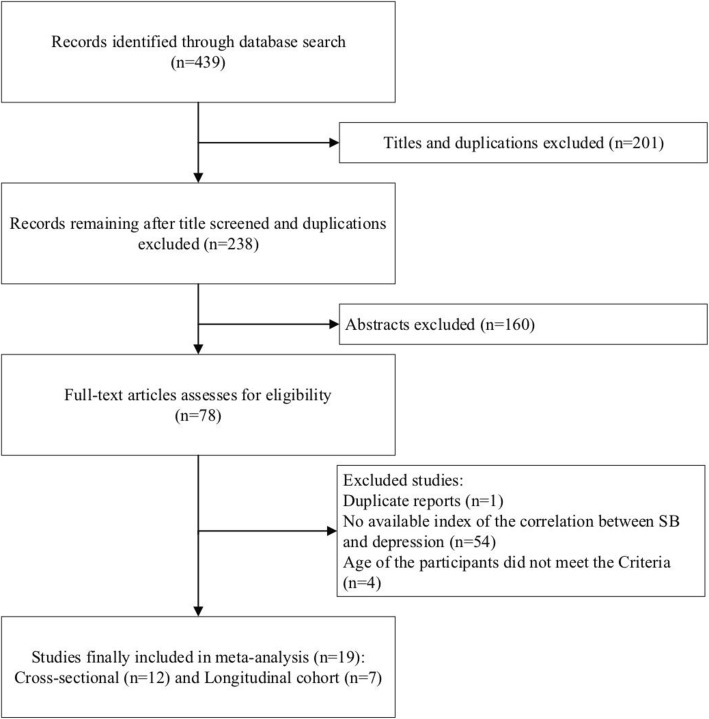
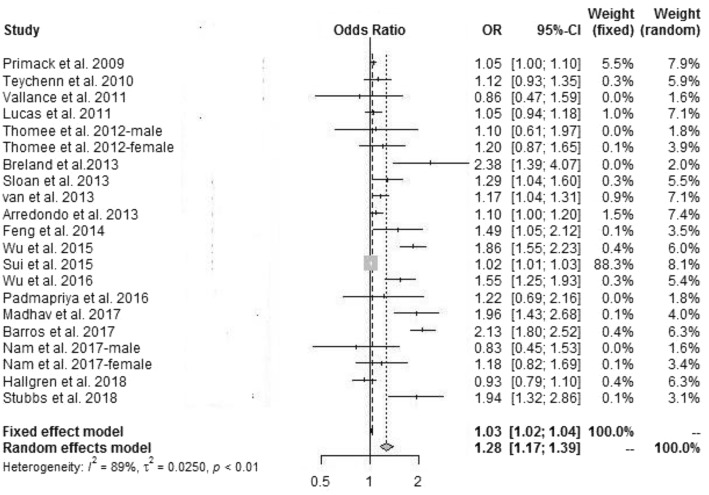
Background: The use of computers/TV has become increasingly common worldwide after entering the twenty-first century and depression represents a growing public health burden. Understanding the association between screen time-based sedentary behavior (ST-SB) and the risk of depression is important to the development of prevention and intervention strategies. Methods: We searched the electronic databases of Medline, Embase and the Cochrane Library. The odds ratio (OR) with corresponding 95% confidence intervals (CIs) was adopted as the pooled measurement. Subgroup analyses were investigated by stratified meta-analyses based on age, gender and reference group (reference category of screen time, e.g. 2 h/day, 4 h/day). Results: There were 12 cross-sectional studies and 7 longitudinal studies met the inclusion criteria. Overall, the pooled OR was 1.28 with high heterogeneity (I 2 = 89%). Compared to those who reported less SB, persons reporting more SB had a significantly higher risk of depression. When the gender was stratified, the pooled OR was 1.18 in female groups while no significant association was observed in males. Among the 19 studies, 5 studies used a reference group with ST = 2 h/days (pooled OR = 1.46), 9 studies used ≥4 h as a reference group (pooled OR = 1.38), 2 studies used 1 h as a reference group (pooled OR = 1.07) and for the remaining 3 studies, hours of ST were calculated as a continuous variable (pooled OR = 1.04). Conclusions: ST-SB is associated with depression risk and the effects vary in different populations. In addition, valid objective measures of SB should be developed in future studies.
Overview
The claims and statistics of this paper haven’t been checked yet.
Run the check — free, no account needed. It reads the open-access text and checks the sources it cites.
Integrity signals
Registry
Cites
Statistics
Figures
Verification
Claims the paper makes
The claims and statistics of this paper haven’t been checked yet.
Run the check — free, no account needed. It reads the open-access text and checks the sources it cites.
Claims other papers make about this one
Each is checked against this paper’s own text: does it say what the citing paper says it does?
In the citing paper
“More screen time has been associated with depressive symptoms among children and adolescents in several systematic reviews [11, 12, 43–50].”
From Screen time and mental health: a prospective analysis of the Adolescent Brain Cognitive Development (ABCD) Study (2024) · cites this paper as [49]
In the citing paper
“The results of the current review largely align with past systematic reviews, which have concluded that there is a positive association between screen time and depressive symptoms (Hoare et al., 2016;Liu et al., 2016;Stiglic & Viner, 2019;Wang et al., 2019), and a weak association between screen time and both anxiety and self-esteem (Stiglic & Viner, 2019).”
From The relationship between screen time and mental health in young people: A systematic review of longitudinal studies (2021) · cites this paper as Wang et al., 2019
Self-check
Percentages, sums and reported differences re-computed from the paper’s own numbers.
The self-check needs the paper’s full text.
Citations
Cites
Kessler, R. C., Berglund, P., Demler, O., Jin, R., Merikangas, K. R., & Walters, E. E. (2005) · Archives of General Psychiatry · doi:10.1001/archpsyc.62.6.593 · Cited by 20,391
Zhang, Q., Wang, C., Zheng, M., Li, Y., Li, J., Zhang, L., Shang, X., & Yan, C. (2014) · Cerebrovascular Diseases · doi:10.1159/000369778 · Cited by 11,609
Self-citationProjections of Global Mortality and Burden of Disease from 2002 to 2030
Mathers, C. D., & Loncar, D. (2006) · PLoS Medicine · doi:10.1371/journal.pmed.0030442 · Cited by 11,386
Murray, C. J. L., Vos, T., Lozano, R., Naghavi, M., Flaxman, A. D., Michaud, C., Ezzati, M., Shibuya, K., Salomon, J. A., Abdalla, S., et al. (2012) · The Lancet · doi:10.1016/s0140-6736(12)61689-4 · Cited by 8,888
Kessler, R. C., Berglund, P., Demler, O., Jin, R., Koretz, D., Merikangas, K. R., Rush, A. J., Walters, E. E., & Wang, P. S. (2003) · JAMA · doi:10.1001/jama.289.23.3095 · Cited by 7,988
The World Health Report 2002 - Reducing Risks, Promoting Healthy Life
Available, N. A. N. (2003) · Education for Health · doi:10.1080/1357628031000116808 · Cited by 6,078
Internet paradox: A social technology that reduces social involvement and psychological well-being?
Kraut, R., Patterson, M., Lundmark, V., Kiesler, S., Mukophadhyay, T., & Scherlis, W. (1998) · American Psychologist · doi:10.1037/0003-066x.53.9.1017 · Cited by 4,793 · cited 1×
“Another explanation refers to social interaction: prolonged sedentary behaviors, such as television viewing, may lead to social solitude and withdrawal from interpersonal relationships, which have been linked to increased feelings of social anxiety [48].”
BackgroundNo health without mental health
Prince, M. J., Patel, V., Saxena, S., Maj, M., Maselko, J., Phillips, M. R., & Rahman, A. (2007) · The Lancet · doi:10.1016/s0140-6736(07)61238-0 · Cited by 4,028
Kawachi, I. I. (2001) · Journal of Heredity · doi:10.1093/jurban/78.3.458 · Cited by 3,565
Systematic review of sedentary behaviour and health indicators in school-aged children and youth.
Tremblay, M. S., LeBlanc, A. G., Kho, M. E., Saunders, T. J., Larouche, R., Colley, R. C., Goldfield, G., & Gorber, S. (2011) · International Journal of Behavioral Nutrition and Physical Activity · doi:10.1186/1479-5868-8-98 · Cited by 2,085
Cited by
Sorted by citations
Items 201–299 of 299
Sjöwall, D., Stålhand, F., Schettini, G., Gustavsson, P. J., & Hirvikoski, T. (2024) · PLoS ONE · doi:10.1371/journal.pone.0315565 · Cited by 1
The association between screen time trajectories and the comorbidity of depression and anxiety
Zhang, J., Feng, X., Liu, Q., Wu, D., Wang, W., Liu, S., & Liu, Q. (2025) · Addictive Behaviors · doi:10.1016/j.addbeh.2025.108260 · Cited by 1
Tohyama, M., Momosaki, R., Tora, K., & Okuhara, T. (2025) · Cureus · doi:10.7759/cureus.78582 · Cited by 1
“In particular, individuals with long screen time tend to have longer sedentary behavior, and a study indicated a link between sedentary time and depression [4].”
Yadav, N., Kasaudhan, S., Dahal, S., Saraswathy, K. N., & Devi, N. K. (2025) · Journal of Public Health · doi:10.1007/s10389-025-02449-6 · Cited by 1
Tornquist, D., Guimarães, M. E. A., dos Santos, E. B., Teixeira, J. A., de Oliveira, J., Waclawovsky, A. J., Zanetti, A. C. G., Pires, D. A., da Silva, D. R. P., de Jesus‐Moraleida, F. R., et al. (2025) · Mental health and physical activity · doi:10.1016/j.mhpa.2025.100682 · Cited by 2
Bertuol, C., da Silva, K. S., Gerage, A. M., dos Santos, P. C., Tozetto, W. R., Medeiros, P. R. D. O., Malta, D. C., & Duca, G. F. D. (2025) · Cadernos Saúde Coletiva · doi:10.1590/1414-462x202533010251 · Cited by 2
Varley, D., Henry, A., Halladay, J., Baillie, A., Keyes, K. M., Slade, T. N., Chapman, C., O’Dean, S., Visontay, R., Mewton, L. R., et al. (2025) · Social Psychiatry and Psychiatric Epidemiology · doi:10.1007/s00127-025-02981-6 · Cited by 1
Yan, R., Hu, Y., Yang, J., Chang, J., Wang, H., Wang, Y., & Song, G. (2025) · Journal of Affective Disorders · doi:10.1016/j.jad.2025.120388 · Cited by 1
Surprenant, R., Bezeau, D., Cabot, I., Smith, J., Kim, H. S. A., & Fitzpatrick, C. (2025) · Health Education & Behavior · doi:10.1177/10901981251387139 · Cited by 1
Wadhen, V., Pavey, L., & Vyas, N. S. (2025) · Applied Psychology · doi:10.1111/apps.70040 · Cited by 3
Chen, W., Xue, Q., Zhang, J., Wang, Q., & Guo, M. (2026) · Frontiers in Public Health · doi:10.3389/fpubh.2025.1644890 · Cited by 1
Tang, H., Nie, Z., Wu, C., Cheng, J., Zhu, K., Liu, Y., Zhang, M., Wang, F., & Han, S. (2026) · Frontiers in Nutrition · doi:10.3389/fnut.2026.1748219 · Cited by 1
“This finding aligned with evidence suggesting that increased sitting time and sedentary behavior were associated with a heightened risk of depression (46, 47).”
Liu, W. (2026) · Frontiers in Public Health · doi:10.3389/fpubh.2026.1766808 · Cited by 1
“A persistent challenge in this literature is the considerable variability in effect sizes across studies and populations (26, 29).”
Piriyakitphaiboon, V., Chia, M. Y. H., Chua, T. B. K., Amornchaicharoensuk, Y., & Sirimongkolchaiyakul, O. (2026) · BMC Pediatrics · doi:10.1186/s12887-026-06666-0 · Cited by 1
“Female trend to have mental health problem that one of the risk of BBD when use screen time compare to male [36, 37].”
Ten years of screen time among medical students in Dresden, Germany: unveiling the trends
Liebig, L., Gräfe, W., Lynch, N. J., Gottschall, M., Birkás, B., Balogh, E., Faubl, N., Zelko, E., & Riemenschneider, H. (2026) · BMC Medical Education · doi:10.1186/s12909-026-09024-x · Cited by 1
“Screen time is closely linked to a sedentary lifestyle, which is an established risk factor for cardio-vascular disease, obesity, and metabolic syndrome [49].”
Pan, S., Wang, P., Herold, F., Heath, M. D., Lee, E. W. J., Law, E. L., Lowe, C. J., Werneck, A. O., Gerber, M., Moreau, D., et al. (2026) · International Journal of Clinical and Health Psychology · doi:10.1016/j.ijchp.2026.100704 · Cited by 1
“For example, several longitudinal observational studies and meta-analyses have reported an association between higher SB, particularly screen-based SB, and poorer mental health outcomes in children and adolescents (Asare, 2015; Rodriguez-Ayllon et al., 2019; Wang et al., 2019; Zhang et al., 2022).”
Posture–environment design promotes executive function and gaming performance during esports play
Matsui, T., Mine, Y., Takahashi, S., Funabashi, D., Yoshitake, S., Matsuoka, H., Yamaguchi, T., Tachibana, Y., Dobashi, S., Sakairi, Y., et al. (2026) · Computers in Human Behavior Reports · doi:10.1016/j.chbr.2026.101325 · Cited by 1
Costa, T. G., Ramos-Urrea, C., Santos, D. D. A. T., Ostolin, T. L. V. D. P., & de Lira, C. A. B. (2022) · Research Society and Development · doi:10.33448/rsd-v11i6.28689 · Cited by 1
Desai, S. R., Satnarine, T., Singla, P., Mistry, A., Gadiwala, S., Patel, S., Das, B. B., Sharma, P., Telsem, M., Stuart, R., et al. (2022) · Adolescents · doi:10.3390/adolescents2020022 · Cited by 1
“Another possibility is that excessive screen time could lead to a sedentary lifestyle that could increase the odds of developing depression and subsequent cognitive dysfunction [11].”
Yamaguchi, S., Kawasaki, Y., Oura, A., Kimura, S., Horii, M., Watanabe, S., Sasho, T., & Ohtori, S. (2023) · Cureus · doi:10.7759/cureus.43776 · Cited by 1
“Screen time is linked to sedentary time, visual problems, mental health, and communication skills and is one of the major determinants of adolescent health [6].”
BackgroundResultInfluentialJabbour, G., & Hermassi, S. (2023) · Diabetes Epidemiology and Management · doi:10.1016/j.deman.2023.100176 · Cited by 1
Sukik, L., Hoque, B., Boutefnouchet, L., Elhadary, M. R., Bawadi, H. A., & Shraim, M. (2023) · Primary care diabetes · doi:10.1016/j.pcd.2023.09.006 · Cited by 1
Teno, S. C., Silva, H., & Júdice, P. B. (2023) · Cities & Health · doi:10.1080/23748834.2023.2280354 · Cited by 1
“2018, Wang et al .”
Evolution of sedentarism prevalence in Spanish population between 1987 and 2020
Montero-Torreiro, M. F., Rey-Brandariz, J., Guerra-Tort, C., Candal-Pedreira, C., Santiago-Pérez, M., Varela-Lema, L., Luque, S. S., & Pérez-Ríos, M. (2024) · Medicina Clínica (English Edition) · doi:10.1016/j.medcle.2023.10.015
Meneguci, J., Galvão, L. L., Meneguci, C. A. G., Oliveira, A. P. D. S., Paula, E. D. S., & Júnior, J. S. V. (2025) · Journal of Aging and Physical Activity · doi:10.1123/japa.2024-0037 · Cited by 1
Verdaguer-Rodríguez, M., Comas, J. O., Garreta, F., Garcia, B., Haro, J. M., Ribas, B., Romero, R., Nicolau, L., Mateo, B., Marcos, S., et al. (2025) · Women · doi:10.3390/women5010008 · Cited by 2
“Wang et al. [43] showed a significant link between SB and depression in women, but not in men.”
Ozturk, C. S., & Ceylan, Ç. (2022) · Mersin Üniversitesi Tıp Fakültesi Lokman Hekim Tıp Tarihi ve Folklorik Tıp Dergisi · doi:10.31020/mutftd.1076101 · Cited by 1
Hubungan Pembatasan Screen Time Dengan Sedentary Behavior Pada Anak Usia Sekolah
Roswita, R., Mulyono, S., & Sukihananto, S. (2023) · JURNAL KEPERAWATAN RAFLESIA · doi:10.33088/jkr.v5i1.804 · Cited by 1
Matsui, T., Mine, Y., Takahashi, S., Funabashi, D., Yoshitake, S., Matsuoka, H., Yamaguchi, T. N., Dobashi, S., Sakairi, Y., Yoshimoto, H., et al. (2024) · doi:10.2196/preprints.60082 · Cited by 1
Gillespie, K. M., Morgan, M., Weir, B., Branjerdporn, G., Patell, S., Bowyer, J. W., Chan, F., & Bartlett, S. E. (2025) · Research Square · doi:10.21203/rs.3.rs-8209607/v1 · Cited by 1
Lewis, R., Roden, L. C., Scheuermaier, K. D., Gómez-Olivé, F. X., Rae, D. E., Iacovides, S., Bentley, A., Davy, J., Christie, C. J.-A., Zschernack, S., et al. (2021) · Research Square · doi:10.21203/rs.3.rs-525775/v1
Beesdo‐Baum, K. (2020) · Faculty Opinions – Post-Publication Peer Review of the Biomedical Literature · doi:10.3410/f.738680951.793580928
Bui, C., Lin, L.-Y., Lin, C.-J., Chiu, Y.-W., & Chiou, H.-Y. (2022) · Research Square · doi:10.21203/rs.3.rs-1600016/v1
Young, M. E. M., Petersen, T., Reid, D. L., & Magerman, Z. (2022) · Medical Research Archives · doi:10.18103/mra.v10i6.2855
Campion, J. (2022) · Oxford University Press eBooks · doi:10.1093/med/9780198861478.003.0051
Effect of Shifting to Virtual Platforms on the Mental Health in School Children
Gulia, L. (2022) · International journal of high school research · doi:10.36838/v4i4.14
Mo, H., Zhang, M., Peng, J., Xiao, J., Wang, G., & Li, Y. (2023) · Research Square · doi:10.21203/rs.3.rs-2479012/v1
Self-citationJarosz, M., Dębski, P. G., Główczyński, P., & Badura-Brzoza, K. (2023) · Healthcare · doi:10.3390/healthcare11081153
“Meta-analyses indicate that a low level of health behaviors has a negative impact on mental health [43,44], and undertaking physical activity reduces the level of depression and anxiety [45].”
BackgroundDelightful screen time visualizations: A sketching-based exploration
Sosa-Tzec, O. (2023) · Nordic design research conference · doi:10.21606/nordes.2023.133
Uzun, A. D., Sapmaz, Ş. Y., Çakır, B., Kale, M. K., Bılaç, Ö., & Kandemır, H. (2023) · Çocuk ve Gençlik Ruh Sağlığı Dergisi / Turkish Journal of Child and Adolescent Mental Health · doi:10.4274/tjcamh.galenos.2022.24085
Basterra, V., Gil, M., Sayon-Orea, M. D. C., Lahortiga‐Ramos, F., de la Fuente‐Arrillaga, C., Martínez‐González, M. Á., & Bes‐Rastrollo, M. (2023) · SSRN Electronic Journal · doi:10.2139/ssrn.4643845
Matsui, T., Mine, Y., Takahashi, S., Funabashi, D., Yoshitake, S., Matsuoka, H., Yamaguchi, T. N., Dobashi, S., Sakairi, Y., Yoshimoto, H., et al. (2024) · doi:10.31234/osf.io/xts5k
Silva, N. S. S. E., Leão, L. L., Cangussu, C. K. S., de PINHO, L., Barbosa, R. E. C., Silveira, M. F., Silva, R. R. V., & Haikal, D. S. (2024) · Cuerpo Cultura y Movimiento · doi:10.15332/2422474x.9859
Changes in Lifestyle and Eating Habits of the Libyan Population During the COVID-19 Pandemic
El-Mani, S. F., Eltuhami, A., Mansour, R. M., Elabbar, L., Bosrewill, N., Burwag, S., Alfadil, M., & Elabbar, W. (2024) · Libyan journal of public health practices. · doi:10.37376/ljphp.v1i1.6835
Sun, Y., Li, L., Zhang, J., & Wei, K. (2024) · Research Square · doi:10.21203/rs.3.rs-4929325/v1
Ayaz, I., Shabbir, R., & Ullah, H. (2024) · Allied Medical Research Journal · doi:10.59564/amrj/02.02/003
Jaakkola, M., Gurdal, S., & Andersson, L. (2024) · Nordisk tidsskrift for ungdomsforskning · doi:10.18261/ntu.5.2.5
Noguchi, N., Shoji, K., Sasai, H., Kitano, M., Waki, F., Edo, N., Saito, T., Sawamura, T., & Nagamine, M. (2024) · Journal of Occupational Health · doi:10.1093/joccuh/uiae069
Teno, S. C., Silva, M. N., Silva, H., & Júdice, P. B. (2024) · Ergonomics · doi:10.1080/00140139.2024.2441451
“…reduced cognitive function, health-related quality-of-life, and depression (Katzmarzyk et al. 2019; Patterson et al. 2018; saunders et al. 2020; X. Wang, li, and Fan 2019). an investigation that used an objective measure of sedentary behaviour found that with office workers, the time at work…”
Obaid, K. B., & ibrahim, M. A. (2025) · Mağallaẗ al-Mawṣil li-l-tamrīḍ/Mosul journal of nursing · doi:10.33899/mjn.2025.149589.1108
Das, S., Bhattacharjya, H., Datta, D., & Das, R. (2025) · Healthline · doi:10.51957/healthline6992025
“It was observed that 41.34% of the subjects were having mood disturbances in the present study, similarly a study conducted in China also showed increased screen-time to be associated with [25] higher depressive symptomatology.”
InfluentialImpact of video display terminal use on ophthalmic symptoms and mental health in adolescents
Zhang, L., Peng, C., & Li, L. (2025) · Journal of American Association for Pediatric Ophthalmology and Strabismus · doi:10.1016/j.jaapos.2025.104270
Zhu, S. (2025) · American Journal of Cancer Research · doi:10.62347/ztpj8215
Li, Z., Wu, M., Wang, P., Xie, W., Hua, Y., Shao, G., & Zhu, H. (2025) · PLoS ONE · doi:10.1371/journal.pone.0331173
“Growing research demonstrates a significant association between sedentary behavior and a variety of chronic diseases [20], such as diabetes [21,22], cardiovascular disease [23], obesity [24], sarcopenia [25], and depression [26,27].”
de Almeida, B. P., Vieira, L. G., da Costa, L. F., da Silva, M. P., & Dumith, S. C. (2025) · Ciência & Saúde Coletiva · doi:10.1590/1413-81232025308.11592023
Utsumi, Y., Seto, M., Usukura, H., Hamaie, Y., Sakuma, A., Tomimoto, K., Komatsu, H., Kikuchi, S., Sugawara, Y., Kuriyama, S., et al. (2025) · Psychiatry and Clinical Neurosciences Reports · doi:10.1002/pcn5.70178
“1,2 For example, after the Great East Japan Earthquake (GEJE) that occurred on March 11, 2011, several studies reported that the physical activity level of evacuees living in temporary housing in the damaged area was lower than the national average in Japan.”
Advancing solutions for workplace sedentary behavior
So, R. (2025) · Industrial Health · doi:10.2486/indhealth.63_500
“International studies have shown that sedentary behavior is associated with an increased risk of cardiovascular disease 1) , musculoskeletal disorders 2) , and mental health issues 3) .”
Yang, Y., & Liu, H. (2025) · PLoS ONE · doi:10.1371/journal.pone.0332719
Yang, Z., Gray, S., Sparkes, M., Hack‐Polay, D., & Zhou, B. (2025) · Frontiers in Education · doi:10.3389/feduc.2025.1645780
Ding, L., Zhang, H., Wang, X., Ma, M., & Kong, W. (2025) · Journal of Affective Disorders · doi:10.1016/j.jad.2025.120860
Self-citationZhang, Y., Li, S., Xie, Y., Xiao, W., Xu, H., Jin, Z., Li, R., Wan, Y., & Tao, F. (2024) · Figshare · doi:10.6084/m9.figshare.26656798
Tang, S., Liu, Y., Gu, Y., Yang, Q., & Wang, Q. (2024) · Figshare · doi:10.6084/m9.figshare.25876201
Draper, C. E., Cook, C. J., Redinger, S., Rochat, T., Prioreschi, A., Rae, D. E., Ware, L. J., Lye, S., & Norris, S. A. (2022) · Figshare · doi:10.6084/m9.figshare.20291007
Kanning, M. K., Niermann, C. Y. N., Ebner-Primer, U., & Giurgiu, M. (2021) · Figshare · doi:10.6084/m9.figshare.15178787
Bertuol, C., da Silveira, M. H. C., Krug, R. D. R., Kupske, J. W., Mielke, G. I., & Duca, G. F. D. (2024) · Figshare · doi:10.6084/m9.figshare.26612159
Wu, H. T., Li, J., & Tsurumi, A. (2024) · Figshare · doi:10.6084/m9.figshare.26667421
Park, J., Nam, H.-K., & Cho, S. (2025) · PLoS ONE · doi:10.1371/journal.pone.0338722
Association of Physical Activity, Sedentary Behavior, and Cannabis Use: A Cross-Sectional Study
Dai, J., Wang, Y., Yan, Y., & Wang, T. (2026) · Substance Use & Misuse · doi:10.1080/10826084.2025.2604639
“Sedentary lifestyles have been linked to an increased prevalence of stress, anxiety, and depression (Lee & Kim, 2019; Wang et al., 2019), prompting some individuals to consume cannabis as a means to induce feelings of relaxation and pleasure to counter these affective states.”
Lyu, X., Jin, W., Lyu, Z., Zhang, P., Xu, Z., Liang, F., Zhan, W., Zhang, H., & Li, L. (2026) · Global Medical Genetics · doi:10.1016/j.gmg.2026.100093
“…4 0.000176 0.000143 0.000299 0.001 0.002189 0.000905 0.002544 0.001 0.002365 0.001121 0.002732 0.001 0.074568 0.061720 0.211520 0.001 the results of previous meta-analyses, which found that the impact of sedentary behavior on depression was significant in women, but not evident in men [17].”
InfluentialThe Importance of Understanding Smartphone Addiction
James, R., & Hitcham, L. (2026) · Palgrave Studies in Cyberpsychology. · doi:10.1007/978-3-031-96188-5_1
van Rooij, A. J., van der Rijst, V. G., Date, M., Tuijnman, A., Oostenbach, K. P. J., Carras, M. C., & Thrul, J. (2026) · Royal Society Open Science · doi:10.1098/rsos.250969 · Cited by 1
Ulloa-Díaz, D., Araya-Sierralta, S., Romero-Vera, L., Saldaña, F. P., Lagos-Olivos, C., Lucic, I. D., Ávila-Valencia, S., & Lobos-Berrios, L. (2026) · Nutrición Hospitalaria · doi:10.20960/nh.06264
Ma, Y., Xu, Y., Liyou, W. U., Guo, J., & Chen, B. J. (2026) · Frontiers in Public Health · doi:10.3389/fpubh.2026.1768160
Hinakura, K., Yasunaga, A., Kurosawa, S., Hosokawa, Y., Ishii, K., Oka, K., & Shibata, A. (2026) · Scientific Reports · doi:10.1038/s41598-026-41363-z
Spontaneous use of sit-stand desks in a shared workspace: A pilot study.
Silva, H., Teno, S. C., & Júdice, P. B. (2026) · Journal of Occupational and Environmental Medicine · doi:10.1097/jom.0000000000003688
Use of public spaces for physical activity: An exploratory study in Oeiras, Portugal
Teno, S. C., & Júdice, P. B. (2026) · Revista Brasileira de Atividade Física & Saúde · doi:10.12820/rbafs.31e0431
Cai, Z., Cai, H., Jia, R., Peng, H., Luo, Y., Lin, J., Ye, Y., Chen, S., Wang, Y., Li, R., et al. (2026) · Behavioural Neurology · doi:10.1155/bn/7167267
“Central to this body of literature is the consistent finding that increased sedentary time correlates with heightened risks of mental health issues, emphasizing a dose–response relationship; that is, as sedentary time increases, so does the risk of developing depression [3, 38, 39].”
Ballou, N., Foldes, A., Hakman, T., & Przybylski, A. K. (2026) · CHI Conference on Human Factors in Computing Systems · doi:10.1145/3772318.3791417
“This persistent focus is not misplaced: playtime is a simple, easily monitored metric, and—while findings are often inconsistent and disputed—(excessive) screen time is commonly linked to negative outcomes such as depression [66] and obesity [17].”
Shehroz, M., Ramzan, T., Sana, F., Asif, L., Wahid, E., & Ahmad, S. (2026) · The Healer Journal of Physiotherapy and Rehabilitation Sciences · doi:10.55735/hv7syw62
Wang, W.-H., Wu, M.-Y., Xu-kuan, Z., Wang, X., Yuan, X.-X., Ma, L., Li, L., & Zhang, L. (2026) · World Journal of Psychiatry · doi:10.5498/wjp.v16.i5.117104
Self-citationBraçe, O., Correa-Fernández, J., García-Marín, R., Bernabéu, M. A. C., & Garrido‐Cumbrera, M. (2026) · Journal of Outdoor Recreation and Tourism · doi:10.1016/j.jort.2026.101046
Pandey, M., Rastogi, K., Sharma, S., -, C. G., -, R. P., Srivastava, N., & Zaidi, S. Z. H. (2026) · Annals of Neurosciences · doi:10.1177/09727531261441453
Dahshan, A., Khalil, M. I. M., Elsaieed, M. M., Alkubati, S. A., Alhetar, S. Z. M., Hweissa, N. A., Khalel, M., Jumaa, Z. Y., Wahba, N. M. I., Abdelfatah, D., et al. (2026) · Cephalalgia Reports · doi:10.1177/25158163261453877
Takakura, M., Kyan, A., & Miyagi, M. (2026) · Research Square · doi:10.21203/rs.3.rs-9787695/v1
Bu, J., Yin, Y., & Yu, L. (2026) · Frontiers in Psychology · doi:10.3389/fpsyg.2026.1838723
Hematabadi, A., Rashidlamir, A., Motevalli, M. S., Schauer, M., & Arazi, H. (2026) · Health Education & Behavior · doi:10.1177/10901981261458638
Screen Time, Sleep-Interrupted Behaviors, and Depression in a Diverse Sample of Emerging Adults
Huang, C., Tu, B., & Vallario, J. (2026) · Emerging Adulthood · doi:10.1177/21676968261468066
“For example, females show a stronger link between screen use and depression than males (Forte et al., 2023; Wang et al., 2019).”
Sanchis-Francés, L., Valencia‐Peris, A., Ferriz, R., & Lizandra, J. (2026) · Journal of Physical Activity and Health · doi:10.1123/jpah.2025-0724
Correlates of extrinsic and intrinsic motives for physical activity among adults with depression
Sillice, M. A., Uebelacker, L. A., Meshesha, L. Z., Braun, T. D., Anderson, B. J., & Abrantes, A. M. (2026) · Mental health and physical activity · doi:10.1016/j.mhpa.2026.100805
Juřicová, T., Janda, D., Dygrýn, J., Chmelík, F., Rubín, L., Martins, C., & Gába, A. (2026) · Research Square · doi:10.21203/rs.3.rs-10265335/v1
Changes in Physical Activity among Older Adults Living Alone: A Latent Class Growth Analysis
Lee, J., & Kim, E. (2026) · Journal of Aging and Physical Activity · doi:10.1123/japa.2025-0066
Orientations of attention in a digital world: cultivating practices of technological resilience
Burdick-Shepherd, S. A. (2026) · Ethics and Education · doi:10.1080/17449642.2026.2714460
“There are some issues that do seem correlated to negative symptoms from frequent use; in particular: sleep issues, well-being, and obesity do seem tied to greater screen use (Wang, Li, Fan 2019).”
Guo, J., Chen, F., Chen, C., Dai, Y., Xu, X., Yongyi, C., & Mengying, H. (2026) · JMIR mhealth and uhealth · doi:10.2196/81378
“Prolonged sedentary behavior has been associated with impaired metabolic function, obesity, anxiety, depression, and increased risks of hypertension, diabetes, cardiovascular disease, and other adverse health outcomes [7-9].”
da Silva, J. F., Sebastião, É., de Barros, M. V. G., Aguiñaga, S., & Tassitano, R. M. (2026) · Geriatric Nursing · doi:10.1016/j.gerinurse.2026.104270
Venguidesvarane, A. G., Venguidesvarane, A. G., Varadarajan, S., Rajamohan, M., & Varadarajan, S. (2026) · Discover Public Health · doi:10.1186/s12982-026-02938-3
“Several studies report positive associations [7, 8], whereas others find the relationship to be weak or to fade once psychological and lifestyle variables are accounted for [9].”
Yang, T., Choi, Y.-C., Kim, Y., & Song, M. (2026) · Journal of Clinical Medicine · doi:10.3390/jcm15187100
Temporal dynamics of affect, screen time, and step count in individuals at risk for mood disorders
Helmink, F. G. L., van Roekel, E., Hillegers, M. H. J., Mesman, E., & Sperry, S. H. (2026) · Psychological Medicine · doi:10.1017/s0033291726105297
“…and reduced depressive symptoms (Biddle, 2016; Buecker et al., 2021; Chekroud et al., 2018; Faurholt-Jepsen et al., 2014; Mammen & Faulkner, 2013; Ohrnberger, Fichera, & Sutton, 2017; Pedrelli et al., 2020; Rohani, Faurholt-Jepsen, Kessing, & Bardram, 2018; Wang, Li, & Fan, 2019; Wu et al., 2024).”
Deshmukh, R., Mahajan, S., & Wani, R. (2026) · Frontiers in Digital Health · doi:10.3389/fdgth.2026.1935205
Fuchs, P. X., Fusco, A., Cortis, C., & Saladino, V. (2026) · Frontiers in Psychology · doi:10.3389/fpsyg.2026.1999332
“Extended sitting, screen exposure, and demanding training schedules raise broader health concerns (Georgiou et al., 2026; Wang et al., 2019).”
Metadata
- Authors
- Wang, X., Li, Y., & Fan, H.
- Affiliations
- Shanxi Medical University (CN)
- Southern Medical University (CN)
- Corresponding author
- Wang, Xiao
- Fan, Haoliang
- Venue
- BMC Public Health
- Published
- 2019-11-14
- Volume
- 19
- Issue
- 1
- Pages
- 1524-1524
- ISSN
- 1471-2458 (ISSN-L)
- PMC
- PMC6857327
- OpenAlex
- W2988909975
- Cited by
- 299
- References
- 60
- Citations by year
- 2026: 43 · 2025: 49 · 2024: 51 · 2023: 48 · 2022: 53 · 2021: 40 · 2020: 14
- FWCI
- 3.15
- Type
- journal article
- Language
- en
- Open access
- gold
- doi.org
- Locations
- BMC Public Health (publishedVersion, cc-by)
- PubMed Central (publishedVersion, cc-by)
- PubMed (publishedVersion)
- DOAJ (DOAJ: Directory of Open Access Journals) (submittedVersion, cc-by-sa)
- Funders
- Technology Plans to Youth R&D Innovation (QCXM201705)
- Topics
- Health Sciences › Medicine › Public Health, Environmental and Occupational Health › Physical Activity and Health
- Social Sciences › Human Factors and Ergonomics › Ergonomics and Musculoskeletal Disorders
- Social Sciences › Sociology and Political Science › Impact of Technology on Adolescents
- Keywords
- screen time, sedentary behavior, depression, depression risk, gender differences, reference groups, television viewing, computer use
- MeSH terms
- Screen Time, Adolescent, Adult, Aged, Aged, 80 and over, Computers, Cross-Sectional Studies, Depression, Depressive Disorder, Female, Humans, Male, Mental Health, Middle Aged, Television, Exercise, Young Adult, Sedentary Behavior
About these checks
Registry, retraction, Cites and statistics results are computed, not judged, with one exception: a printed reference that no index lists is read once by a model before it counts as a citation error. Claims are extracted by a model and kept only when their quote appears verbatim in the text; each cited source is then checked, with a model’s help, for whether it says what the claim relies on. Those verdicts can be wrong — read the claim’s quote and the cited source before relying on one.
Statistics and arithmetic are recomputed, not judged.
Confidence bands are shown only for fields calibrated on our annotated test set. None is calibrated yet, so no band is shown.
What counts as a claim ›How we measure confidence ›How we check this ›
Are you an author, or do you see a problem with this page? Request a review
