

Dementia is (not) a natural part of ageing: a cross-sectional study on dementia knowledge and misconceptions in Swiss and Italian young adults, adults, and older adults
Open accessThe DOI matches its Crossref record; 42 of the 42 references it cites were found in a registry or an index; 13 of the 34 sources its claims cite were checked for support.
Abstract
Increasing public awareness and understanding of dementia is the second key action area of the 2017 WHO Global action plan on a public health response to dementia. The study quantified dementia knowledge and examined differences by age, sex, education, and indirect experience with dementia in two Italian-speaking regions. Misconceptions were common, including limited knowledge of causes, risk factors, and health promotion.
Overview
CoChat Summary
## TL;DR
This cross-sectional online survey of 1,500 adults in Ticino and Piedmont found that dementia knowledge was generally low and misconceptions were common, especially about causes, risk factors, and communication/care. Higher knowledge was associated with being female, higher education, and having contact with someone living with dementia, while age was not associated with the overall DKAS score.
## Key findings
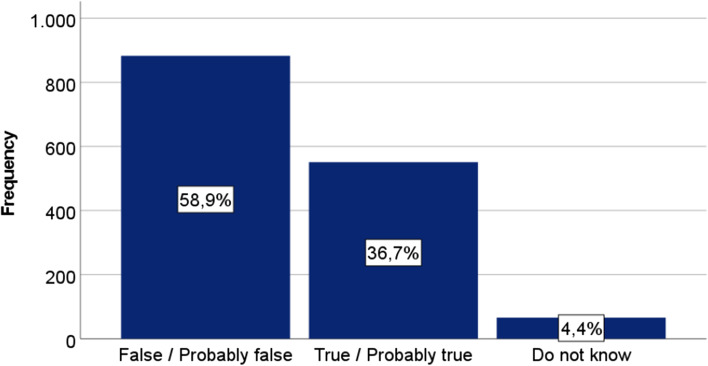
- Among 1,500 respondents, 36.7% said dementia is or may be a normal part of ageing, 4.4% did not know, and 58.9% said it is or may be a pathological condition not invariably linked to old age.
- The overall DKAS score ranged from 0 to 50, with a mean of 22.43 (SD 8.88); the paper set 30 as the 60th-percentile cutoff for “sufficient” knowledge.
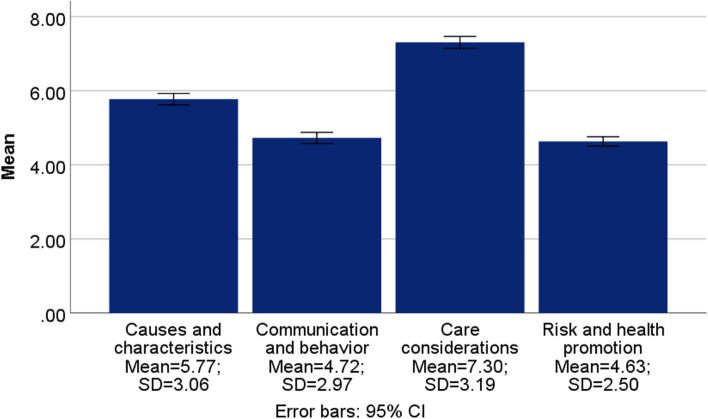
- Lower scores were seen for “Causes and characteristics” (mean 5.77, SD 3.06), “Communication and behavior” (mean 4.72, SD 2.97), and “Risk and health promotion” (mean 4.63, SD 2.5) than for “Care and considerations” (mean 7.3, SD 3.19).
- In adjusted regression, overall DKAS score was positively associated with female sex (β = 0.21; p < 0.001), higher education (β = 0.15; p < 0.001), and contact with a person living with dementia (β = 0.17; p < 0.001), but not age (β = -0.01; p = 0.57).
## Methods
- Online cross-sectional survey conducted in two Italian-speaking regions: Ticino (south Switzerland) and Piedmont (northern Italy), distributed between September and December 2019.
- Convenience and snowball sampling of adults aged 18 years or older; the analytic sample was 1,500 participants.
- Dementia knowledge was measured with the 25-item Dementia Knowledge Assessment Survey (DKAS); analyses included descriptive statistics, chi-square tests, univariate ANOVA, t-tests, and multiple linear regression.
## Limitations
- The paper states the sample was not representative and recruitment may have introduced selection bias.
- Because data were collected online, older adults with higher education and higher digital literacy may be overrepresented.
- The study did not collect information on participants’ work in the health sector, which could affect dementia knowledge.
- The DKAS had not been validated in Italian; the authors note they followed WHO translation/adaptation guidance and also state that measuring dementia awareness with the DKAS “might be sub-optimal” and that qualitative research is needed to better understand measurability.
Model-written summary. Check it against the paper before relying on it.
Integrity signals
Registry
Cites
Statistics
Figures
Verification
Claims the paper makes
7 Valid · 3 Not valid · 14 Not checked · 41 Own results and interpretations
The paper states this without a source or data behind it here, so there is nothing to check it against. The quote shows it is in the paper.
In the paper
“Mean sub-scores were lower for the “Causes and characteristics” (mean = 5.77; SD = 3.06; Range = 0–14), the “Communication and behavior”, and the “Risk and health promotion” (mean = 4.63; SD = 2.5; Range = 0–12) subscales (mean = 4.72; SD = 2.97; Range = 0–12) compared to the “Care and considerations” (mean = 7.3; SD = 3.19; Range = 0–12) subscale Fig. 2.”
§ Dementia is (not) a natural part of ageing: a cross-sectional study on dementia knowledge and misconceptions in Swiss and Italian young adults, adults, and older adults > Results > Dementia awareness and knowledge
- Asserted: passes — The authors put it forward as true.
- Checkable: passes — It can be checked against evidence.
- Load-bearing: unclear — It is unclear whether the paper’s conclusions depend on it.
- Based: unclear — It is unclear why the paper says it holds.
A result the paper reports from its own data — it cites no other source for it, so there is none to check. The quote shows it is in the paper.
In the paper
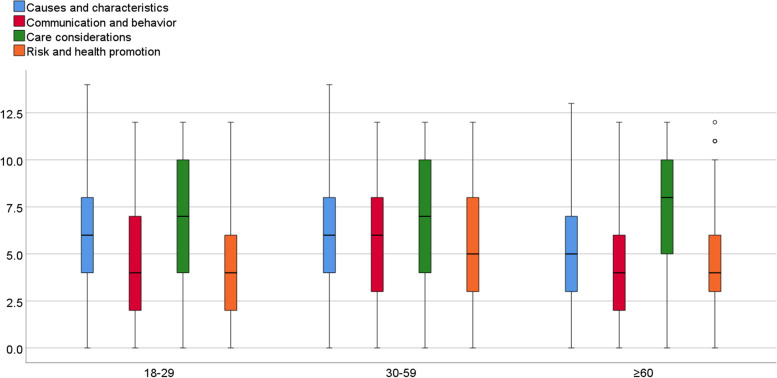
“Overall, young, and older adults had similar levels of dementia knowledge, and adults aged 30 to 59 years had a higher level of general knowledge about dementia compared to the other groups (p value < 0.001).”
§ Dementia is (not) a natural part of ageing: a cross-sectional study on dementia knowledge and misconceptions in Swiss and Italian young adults, adults, and older adults > Results > Dementia awareness and knowledge
plain- Asserted: passes — The authors put it forward as true.
- Checkable: passes — It can be checked against evidence.
- Load-bearing: unclear — It is unclear whether the paper’s conclusions depend on it.
- Based: passes — The paper gives a reason why it holds.
A result the paper reports from its own data — it cites no other source for it, so there is none to check. The quote shows it is in the paper.
In the paper
“Our finding that, compared to adults, dementia risk perception was lower among young adults and older adults suggest that dementia risk perception varies among the life course.”
§ Dementia is (not) a natural part of ageing: a cross-sectional study on dementia knowledge and misconceptions in Swiss and Italian young adults, adults, and older adults > Discussion
hedgedstates an association- Asserted: passes — The authors put it forward as true.
- Checkable: passes — It can be checked against evidence.
- Load-bearing: passes — The paper’s conclusions depend on it.
- Based: passes — The paper gives a reason why it holds.
A result the paper reports from its own data — it cites no other source for it, so there is none to check. The quote shows it is in the paper.
In the paper
“58.9% stated that dementia is or may be a pathological condition not invariably linked to old age”
§ Dementia is (not) a natural part of ageing: a cross-sectional study on dementia knowledge and misconceptions in Swiss and Italian young adults, adults, and older adults > Results > Dementia awareness and knowledge
plain- Asserted: passes — The authors put it forward as true.
- Checkable: passes — It can be checked against evidence.
- Load-bearing: unclear — It is unclear whether the paper’s conclusions depend on it.
- Based: passes — The paper gives a reason why it holds.
A result the paper reports from its own data — it cites no other source for it, so there is none to check. The quote shows it is in the paper.
In the paper
“The overall DKAS score was significantly and positively associated with female sex (β = 0.21; p < 0.001), educational level (β = 0.15; p < 0.001) and contact with a person living with dementia (β = 0.17; p < 0.001), but not with age (β = -0.01; p = 0.57).”
§ Dementia is (not) a natural part of ageing: a cross-sectional study on dementia knowledge and misconceptions in Swiss and Italian young adults, adults, and older adults > Abstract > Results
plainstates an association- Asserted: passes — The authors put it forward as true.
- Checkable: passes — It can be checked against evidence.
- Load-bearing: unclear — It is unclear whether the paper’s conclusions depend on it.
- Based: passes — The paper gives a reason why it holds.
26 more claims
Create a free account to see all 65 claims and to verify the 10 references still open.
- Probably not a substantial claim. 22
- It may state two separate claims as one. 22
Claims other papers make about this one
Each is checked against this paper’s own text: does it say what the citing paper says it does?
In the citing paper
“Unfortunately, public health messaging around ADRD prevention does not target young adults, and their knowledge of lifestyle factors associated with dementia risk is poor.18”
Self-check
Percentages, sums and reported differences re-computed from the paper’s own numbers.
Each contradiction between two passages listed here was confirmed by an independent check.
Rated minor: it would not touch a result — a value no result rests on, a p-value that stays on the same side of the significance level, or a conflict that is clerical, resolved elsewhere in the paper, or outside its own findings.
In the paper
§ Dementia is (not) a natural part of ageing: a cross-sectional study on dementia knowledge and misconceptions in Swiss and Italian young adults, adults, and older adults > Methods > Statistical analysis
“Young adults comprised participants aged 18–29; adults participants aged 30–59; older adults participants aged 60 years or older.”
§ Dementia is (not) a natural part of ageing: a cross-sectional study on dementia knowledge and misconceptions in Swiss and Italian young adults, adults, and older adults > Results > Sociodemographic characteristics
“40.9% were young adults (18 to 30 years old), 11.7% adults (30 to 60 years), 47.5% were older adults (60 years or older)”
Citations
Cites
The REDCap consortium: building an international community of software platform partners
Harris, P. A., Taylor, R., Minor, B. L., Elliott, V., Fernandez, M., O'Neal, L., McLeod, L., Delacqua, G., Delacqua, F., Kirby, J., et al. (2019) · Journal of Biomedical Informatics · doi:10.1016/j.jbi.2019.103208 · Cited by 24,013
Dementia prevention, intervention, and care
Livingston, G., Sommerlad, A., Orgeta, V., Costafreda, S. G., Huntley, J., Ames, D., Ballard, C., Banerjee, S., Burns, A., Cohen-Mansfield, J., et al. (2017) · The Lancet · doi:10.1016/s0140-6736(17)31363-6 · Cited by 6,072 · cited 2×
“Indeed, as estimations suggest that engagement in health-related behaviors could prevent up to 40% of cases of dementia [2] and the benefits of engagement in healthy behaviors are cumulative over time [39], poor knowledge of preventative behaviors amongst young adults could represent a challenge for containment of fut…”
BackgroundKim, H.-Y. (2013) · Restorative Dentistry & Endodontics · doi:10.5395/rde.2013.38.1.52 · Cited by 4,035
Descriptive statistics and normality tests for statistical data
Gupta, A., Mishra, P., Pandey, C., Singh, U., Sahu, C., & Keshri, A. (2019) · Annals of Cardiac Anaesthesia · doi:10.4103/aca.aca_157_18 · Cited by 2,628 · cited 1×
“For a sample size > 300, normality of data are determined by the absolute values of skewness (≤ 2) and kurtosis (≤ 4) [26, 27].”
Baum, F., MacDougall, C., & Smith, D. (2006) · Journal of Epidemiology and Community Health · doi:10.1136/jech.2004.028662 · Cited by 2,420
Gender differences in caregiving among family - caregivers of people with mental illnesses
Sharma, N., Chakrabarti, S., & Grover, S. (2016) · World Journal of Psychiatry · doi:10.5498/wjp.v6.i1.7 · Cited by 865 · cited 1×
“This might be due to the fact that caregivers of people living with dementia are typically women [31, 32], but it might be related to gender differences in health information behavior and health literacy in general: women may be more prone to actively seek information about healthrelated topics [33].”
BackgroundFamily Caregiving for Older Adults
Schulz, R., Beach, S. R., Czaja, S. J., Martire, L. M., & Monin, J. K. (2020) · Annual Review of Psychology · doi:10.1146/annurev-psych-010419-050754 · Cited by 754
Gender differences in health information behaviour: a Finnish population-based survey
Ek, S. (2015) · Health Promotion International · doi:10.1093/heapro/dat063 · Cited by 559 · cited 1×
“This might be due to the fact that caregivers of people living with dementia are typically women [31, 32], but it might be related to gender differences in health information behavior and health literacy in general: women may be more prone to actively seek information about healthrelated topics [33].”
BackgroundCations, M., Radisic, G., Crotty, M., & Laver, K. E. (2018) · PLOS ONE · doi:10.1371/journal.pone.0196085 · Cited by 233 · cited 1×
“In sum, consistently with research conducted in other areas of the world, our results highlight a general lack of dementia knowledge and the presence of false beliefs and misconceptions about dementia in Swiss and Italian young adults, adults, and older adults [45].”
ResultValidation therapy for dementia
Neal, M., & Barton Wright, P. (2003) · Cochrane Database of Systematic Reviews · doi:10.1002/14651858.cd001394 · Cited by 217
Annear, M. J., Toye, C., Elliott, K.-E. J., McInerney, F., Eccleston, C., & Robinson, A. (2017) · BMC Geriatrics · doi:10.1186/s12877-017-0552-y · Cited by 212
Inequalities in dementia care across Europe: key findings of the Facing Dementia Survey
Bond, J., Stave, C., Sganga, A., Vincenzino, O., O'connell, B., & Stanley, R. L. (2005) · International Journal of Clinical Practice · doi:10.1111/j.1368-504x.2005.00480.x · Cited by 185 · cited 1×
“early diagnosis and dementia detection, is crucial; a survey conducted in 2005 shows that 81% of respondents do not recognize the difference between dementia early signs and changes due to the normal aging process [3]; this misconception might lead to postponing visits with healthcare professionals.”
BackgroundDementia Knowledge Assessment Scale: Development and Preliminary Psychometric Properties
Annear, M. J., Toye, C. M., Eccleston, C. E., McInerney, F. J., Elliott, K. J., Tranter, B. K., Hartley, T., & Robinson, A. L. (2015) · Journal of the American Geriatrics Society · doi:10.1111/jgs.13707 · Cited by 184 · cited 3×
“The “Causes and characteristics” subscale consisted of 7 items (α = 0.59), the Communication and behavior”, “Care considerations”, and “Risk and Health Promotion” subscales consisted of 6 items (α = 0.68, α = 0.78, and α = 0.57, respectively).”
BackgroundMethodInfluentialReducing the Stigma Associated with Dementia: Approaches and Goals
Mukadam, N., & Livingston, G. (2012) · Aging Health · doi:10.2217/ahe.12.42 · Cited by 134
Public knowledge and beliefs about dementia risk reduction: a national survey of Australians
Smith, B. J., Ali, S., & Quach, H. (2014) · BMC Public Health · doi:10.1186/1471-2458-14-661 · Cited by 129
What do we know about dementia?: a survey on knowledge about dementia in the general public of Japan
Arai, Y., Arai, A., & Zarit, S. H. (2008) · International Journal of Geriatric Psychiatry · doi:10.1002/gps.1977 · Cited by 109 · cited 2×
“Our results on higher dementia knowledge levels among women are in line with previous studies [29, 30].”
ResultA systematic review of ‘knowledge of dementia’ outcome measures
Spector, A. E., Orrell, M. W., Schepers, A. K., & Shanahan, N. (2011) · Ageing Research Reviews · doi:10.1016/j.arr.2011.09.002 · Cited by 97
Public knowledge and understanding of dementia—evidence from a national survey in Ireland
Glynn, R. W., Shelley, E., & Lawlor, B. A. (2017) · Age and Ageing · doi:10.1093/ageing/afx082 · Cited by 86
Annear, M. J., Eccleston, C. E., McInerney, F. J., Elliott, K. J., Toye, C. M., Tranter, B. K., & Robinson, A. L. (2016) · Journal of the American Geriatrics Society · doi:10.1111/jgs.14142 · Cited by 77
groups, F. T. M.-A. A. H., Rosenberg, A., Coley, N., Soulier, A., Kulmala, J., Soininen, H., Andrieu, S., Kivipelto, M., & Barbera, M. (2020) · BMC Geriatrics · doi:10.1186/s12877-020-1493-4 · Cited by 69
Eccleston, C., Doherty, K., Bindoff, A., Robinson, A., Vickers, J., & McInerney, F. (2019) · npj Science of Learning · doi:10.1038/s41539-019-0042-4 · Cited by 68 · cited 1×
“Our findings are based on the DKAS, which has been used to assess the acquisition of dementia knowledge through educational online courses [35] and interventions [36, 37].”
MethodKnowledge of Dementia Among the Australian Health Workforce: A National Online Survey
Annear, M. J. (2020) · Journal of Applied Gerontology · doi:10.1177/0733464817752085 · Cited by 64 · cited 2×
“However, so far the DKAS has mainly been used for descriptive purposes in specific populations of informal dementia caregivers [14], medical students [38], and health workforce [13].”
MethodVrijsen, J., Matulessij, T. F., Joxhorst, T., de Rooij, S. E., & Smidt, N. (2021) · BMC Public Health · doi:10.1186/s12889-021-10913-7 · Cited by 58 · cited 1×
“Another information that might play a role in dementia knowledge is indirect dementia experiences, as evidence shows its link with increased awareness [22–24]; nevertheless individuals with a parental family history of dementia have limited knowledge on dementia risk reduction [15].”
BackgroundWhat should we know about dementia in the 21st Century? A Delphi consensus study
Annear, M. J., Toye, C., McInerney, F., Eccleston, C., Tranter, B., Elliott, K.-E., & Robinson, A. (2015) · BMC Geriatrics · doi:10.1186/s12877-015-0008-1 · Cited by 58
GENDER-SENSITIVE HOME AND COMMUNITY CARE AND CAREGIVING RESEARCH: A SYNTHESIS PAPER
Morris, M. (2001) · Cited by 58
Knowledge and attitudes towards dementia in adolescent students
Isaac, M. G. E. K. N., Isaac, M. M., Farina, N., & Tabet, N. (2017) · Journal of Mental Health · doi:10.1080/09638237.2016.1207234 · Cited by 51
Public knowledge of late-life cognitive decline and dementia in an international sample
Van Patten, R., & Tremont, G. (2020) · Dementia · doi:10.1177/1471301218805923 · Cited by 40
Lorini, C., Ierardi, F., Bachini, L., Donzellini, M., Gemmi, F., & Bonaccorsi, G. (2018) · International Journal of Environmental Research and Public Health · doi:10.3390/ijerph15040798 · Cited by 38
García‐Ribas, G., García-Arcelay, E., Montoya, A., Mauriño, J., & Ballesteros, J. (2021) · Neurology and Therapy · doi:10.1007/s40120-021-00230-x · Cited by 37
Dementia knowledge and its demographic correlates amongst informal dementia caregivers in Singapore
Tan, G. T. H., Yuan, Q., Devi, F., Wang, P., Ng, L. L., Goveas, R. R., Chong, S. A., & Subramaniam, M. (2020) · Aging & Mental Health · doi:10.1080/13607863.2020.1740914 · Cited by 35
Park, J. S., & Ju, I. (2016) · Health Communication · doi:10.1080/10410236.2014.957375 · Cited by 29 · cited 1×
“Low levels of dementia risk perception among older adults compared to those aged 30 to 59 may represent an optimistic bias in older adults [41].”
BackgroundRiva, M., Caratozzolo, S., Zanetti, M., Chilovi, B. V., Padovani, A., & Rozzini, L. (2012) · Aging Clinical and Experimental Research · doi:10.1007/bf03654820 · Cited by 27
Riva, M., Caratozzolo, S., Zanetti, M., et al. (2012) · PubMed · doi:10.3275/8366 · Cited by 25
Baker, J. R., Jeon, Y.-H., Goodenough, B., Low, L.-F., Bryden, C., Hutchinson, K., & Richards, L. (2018) · International Psychogeriatrics · doi:10.1017/s1041610217002022 · Cited by 25
Chan, W. S., & Leung, A. Y. M. (2020) · Journal of Medical Internet Research · doi:10.2196/16772 · Cited by 24
Room for improvement: An online survey of allied health professionals’ dementia knowledge
Lawler, K., Kitsos, A., Bindoff, A. D., Callisaya, M. L., Eccleston, C. E. A., & Doherty, K. (2020) · Australian Journal on Ageing · doi:10.1111/ajag.12886 · Cited by 22
Tierney, L., Mason, R. L., Doherty, K., Winbolt, M., Long, M., & Robinson, A. (2019) · BMJ Open · doi:10.1136/bmjopen-2018-027804 · Cited by 20
Preventing dementia: how lifestyle in midlife affects risk
Rooney, R. F. E. (2014) · Current Opinion in Psychiatry · doi:10.1097/yco.0000000000000045 · Cited by 13
Predictors of dementia knowledge in a rural general public sample
Eccleston, C. E., Courtney‐Pratt, H., McInerney, F., Johnstone, A., & Doherty, K. (2021) · Australian Journal of Rural Health · doi:10.1111/ajr.12777 · Cited by 11
Morrison, V. (2008) · doi:10.1002/9780470773185.ch4 · Cited by 6
Morgan, J., Bindoff, A., Doherty, K., Vickers, J., & Alty, J. (2022) · Journal of Clinical Neuroscience · doi:10.1016/j.jocn.2021.11.005 · Cited by 4 · cited 1×
“However, so far the DKAS has mainly been used for descriptive purposes in specific populations of informal dementia caregivers [14], medical students [38], and health workforce [13].”
Gender Differences in Dementia Knowledge among Slovenian Adolescents
Felc, B., & Felc, Z. (2021) · International Journal of Psychiatry Research · doi:10.33425/2641-4317.1103 · Cited by 4
Cited by
Farina, F. R., Bridgeman, K., Gregory, S., Crivelli, L., Foote, I. F., Jutila, O.-E. I., Kucikova, L., Mariano, L. I., Nguyen, K.-H., Thayanandan, T., et al. (2024) · The Lancet Healthy Longevity · doi:10.1016/j.lanhl.2024.100665 · Cited by 45
“18 The concept of brain health has gained increasing attention in public campaigns.”
Chen, W., Leuk, J. S.-P., Wu, Y., Huang, N., & Teo, W. (2024) · European Review of Aging and Physical Activity · doi:10.1186/s11556-024-00357-4 · Cited by 22
Oher, N., Tingberg, J., & Bengtsson, A. (2024) · International Journal of Environmental Research and Public Health · doi:10.3390/ijerph21081047 · Cited by 16
What does the public really know about dementia? A community‐based cross‐sectional survey in Turkiye
Akyol, M. A., Güney, S., Özgül, E., Söylemez, B. A., & Küçükgüçlü, Ö. (2024) · Public Health Nursing · doi:10.1111/phn.13398 · Cited by 7
Instability in Caregivers’ Perception of Dementia as a Terminal Disease
Malhotra, C., & Balasubramanian, I. (2023) · Journal of the American Medical Directors Association · doi:10.1016/j.jamda.2023.07.001 · Cited by 7
Metadata
- Authors
- Pacifico, D., Fiordelli, M., Fadda, M., Serena, S., Piumatti, G., Carlevaro, F., Magno, F., Franscella, G., & Albanese, E.
- Affiliations
- Università della Svizzera italiana (CH)
- University of Turin (IT)
- University of Geneva (CH)
- Corresponding author
- Pacifico, Deborah
- ORCID
- Venue
- BMC Public Health
- Published
- 2022-11-25
- Volume
- 22
- Issue
- 1
- Pages
- 2176-2176
- ISSN
- 1471-2458 (ISSN-L)
- PMC
- PMC9701025
- OpenAlex
- W4310045633
- Semantic Scholar
- 3fd20e3d57119f859bb1b4ffa518470e21ddd58a
- Cited by
- 42
- References
- 42
- Citations by year
- 2026: 12 · 2025: 16 · 2024: 11 · 2023: 3
- FWCI
- 4.89
- Type
- journal article
- Language
- en
- Open access
- gold
- doi.org
- Licence
- cc-by
- creativecommons.org/licenses/by/4.0 (tdm)
- creativecommons.org/licenses/by/4.0 (vor)
- Locations
- BMC Public Health (publishedVersion, cc-by)
- PubMed Central (publishedVersion, cc-by)
- PubMed (publishedVersion)
- DOAJ (DOAJ: Directory of Open Access Journals) (submittedVersion, cc-by-sa)
- Funders
- The study was funded with internal funding of the Institute of Public Health (USI).
- Topics
- Health Sciences › Medicine › Psychiatry and Mental health › Dementia and Cognitive Impairment Research
- Health Sciences › Medicine › Psychiatry and Mental health › Mental Health Treatment and Access
- Social Sciences › Health › Health, Education, and Aging
- Keywords
- dementia knowledge, public awareness of dementia, sex differences, educational attainment, age differences, dementia care, Ticino, Piedmont
- MeSH terms
- Aged, Aging, Cross-Sectional Studies, Dementia, Female, Humans, Italy, Switzerland, Young Adult
About these checks
Registry, retraction, Cites and statistics results are computed, not judged, with one exception: a printed reference that no index lists is read once by a model before it counts as a citation error. Claims are extracted by a model and kept only when their quote appears verbatim in the text; each cited source is then checked, with a model’s help, for whether it says what the claim relies on. Those verdicts can be wrong — read the claim’s quote and the cited source before relying on one.
The claim verdicts this report counts are experimental: their accuracy is not yet measured.
A language model drew the claims from the paper on 2026-10-07, under version 3 of the claim definition (model deepseek-v4.1-flash, prompt extract-v3).
A second model labelled each claim on 2026-10-07 (model jev-1.13-20260917, definition revision gold-guideline-v0.2).
Statistics and arithmetic are recomputed, not judged.
Confidence bands are shown only for fields calibrated on our annotated test set. None is calibrated yet, so no band is shown.
What counts as a claim ›How we measure confidence ›How we check this ›
Are you an author, or do you see a problem with this page? Request a review
Data sources
Bibliographic data: Semantic Scholar, OpenAlex, Crossref.
Contains information from the Semantic Scholar Academic Graph Datasets, made available under the ODC Attribution License (ODC-BY 1.0).
Semantic Scholar’s data is described in: Kinney, R., et al. (2023). The Semantic Scholar Open Data Platform. arXiv:2301.10140.
