

Modifiable factors influencing attention performance in healthy children: insights from a comprehensive school nutrition study
Open accessThe DOI matches its Crossref record; 54 of the 54 references it cites were found in a registry or an index.
Abstract
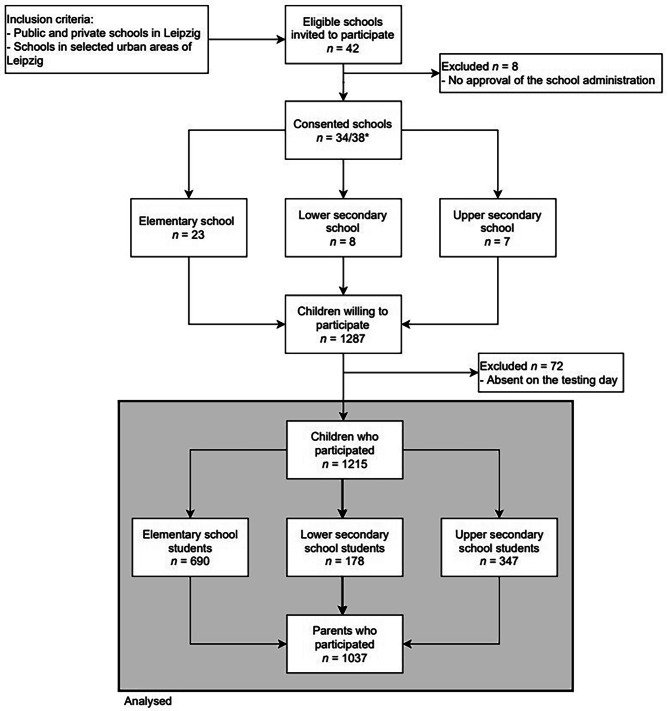
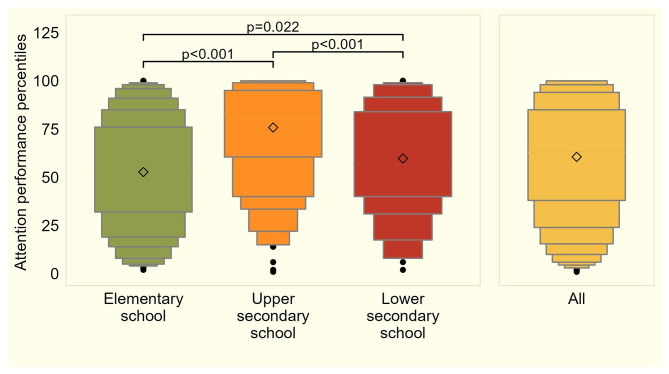
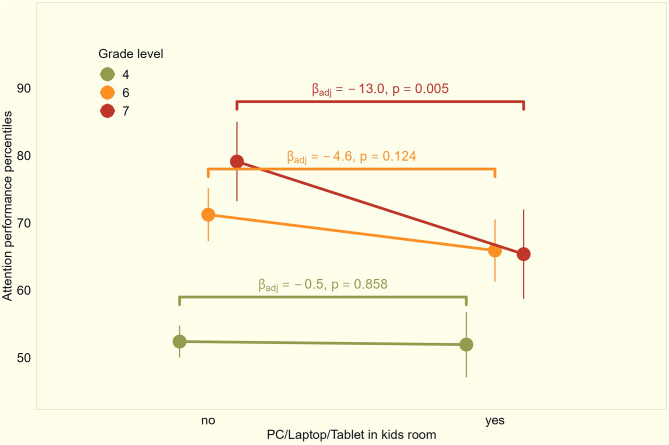
Background: There is inconclusive evidence for the effects of various leisure activities on attention performance in children. The literature reports inconsistent associations between activities such as physical activities or media use. To date, no study has thoroughly examined the various factors influencing attentional performance in a larger cohort of healthy children. This study aims to close this research gap. Methods: From 2018 to 2019, the Leipzig School Nutrition Study collected data from 1215 children and their families. The children report their dietary behavior (using CoCu- Questionnaire), especially their participation in school lunch and their breakfast habits, through a paper questionnaire. Furthermore, attention performance was assessed using a validated test (FAIR-2) at school. Data on physical activity, media consumption, family eating habits and socio-economic status (SES) were collected from parents using questionnaires. Associations between attention and influencing factors were estimated using hierarchical linear regression. Analyses were adjusted for age, SES, and school type. Results: Attending upper secondary schools (ß adj= 23.6, p < 0.001) and having a higher SES (ß= 1.28, p < 0.001) was associated with higher attention performance. Children doing leisure-time sports (ß adj= 4.18, p = 0.046) or reading books for at least one hour/weekday showed better attention performance (ß adj= 3.8, p = 0.040). Attention performance was also better in children having no electronic devices in the bedroom (ß adj= 13.0, p = 0.005) and in children whose parents limited their children’s Internet access (ß adj= 5.2, p = 0.012). We did not find any association between nutritional habits and attention performance. Conclusions: We found that fostering modifiable habits such as reading and physical activity could enhance attention performance. These findings have substantial implications for the development of prevention and intervention programs that aim to improve attention in schoolchildren. It is important to note, however, that social status as a hardly modifiable factor also impacts attention performance. Therefore, interventions should address personal habits in a systemic approach considering the child’s social status. Trial registration: The study is retrospectively registered with the German Clinical Trials Register (DRKS00017317, registration: 05-29-2019).
Overview
The claims and statistics of this paper haven’t been checked yet.
Free: it reads the open-access text and checks the first 5 claims that cite a source we can check. Create a free account to check every claim.
Integrity signals
Registry
Cites
Statistics
Figures
Verification
Claims the paper makes
The claims and statistics of this paper haven’t been checked yet.
Free: it reads the open-access text and checks the first 5 claims that cite a source we can check. Create a free account to check every claim.
Self-check
Percentages, sums and reported differences re-computed from the paper’s own numbers.
The self-check needs the paper’s full text.
Citations
Cites
The REDCap consortium: building an international community of software platform partners
Harris, P. A., Taylor, R., Minor, B. L., Elliott, V., Fernandez, M., O'Neal, L., McLeod, L., Delacqua, G., Delacqua, F., Kirby, J., et al. (2019) · Journal of Biomedical Informatics · doi:10.1016/j.jbi.2019.103208 · Cited by 24,013 · cited 1×
“Study data were collected and managed using RED-Cap electronic data capture tools [32].”
MethodBundesgesundheitsblatt - Gesundheitsforschung - Gesundheitsschutz
(2013) · Bundesgesundheitsblatt - Gesundheitsforschung - Gesundheitsschutz · doi:10.1007/103.1437-1588 · Cited by 11,796
Exercise training increases size of hippocampus and improves memory
Erickson, K. I., Voss, M. W., Prakash, R. S., Basak, C., Szabo, A., Chaddock, L., Kim, J. S., Heo, S., Alves, H., White, S. M., et al. (2011) · Proceedings of the National Academy of Sciences · doi:10.1073/pnas.1015950108 · Cited by 4,855 · cited 1×
“Potential social and metabolic mechanisms behind this effect including improvement of neuroplasticity are discussed elsewhere [12, 13].”
BackgroundDonnelly, J. E., Hillman, C. H., Castelli, D., Etnier, J. L., Lee, S., Tomporowski, P., Lambourne, K., & Szabo-Reed, A. N. (2016) · Medicine & Science in Sports & Exercise · doi:10.1249/mss.0000000000000901 · Cited by 1,864 · cited 2×
“They see fitness as an important promoter of cognitive function and cognitive health in children [46, 47].”
BackgroundResultThe Handbook of aging and cognition
(1993) · Choice Reviews Online · doi:10.5860/choice.30-3520 · Cited by 1,587
International Standard Classification of Education (ISCED) 2011
UNESCO Institute for Statistics (2012) · doi:10.15220/978-92-9189-123-8-en · Cited by 1,129
Early television exposure and subsequent attentional problems in children
Christakis, D. A., Zimmerman, F. J., DiGiuseppe, D. L., & McCarty, C. A. (2004) · Pediatrics · doi:10.1542/peds.113.4.708 · Cited by 926 · cited 1×
“These studies emphasize the importance of monitoring and limiting children´s media use to promote healthy attention development [4].”
BackgroundSarsour, K., Sheridan, M., Jutte, D., Nuru-Jeter, A., Hinshaw, S., & Boyce, W. T. (2011) · Journal of the International Neuropsychological Society · doi:10.1017/s1355617710001335 · Cited by 556 · cited 1×
“In line with previous studies, we found a strong positive association between social status and attention performance [51, 52], which is also true for the relationship between SES and intelligence and academic performance.”
ResultLawson, G. M., Hook, C. J., & Farah, M. J. (2018) · Developmental Science · doi:10.1111/desc.12529 · Cited by 556 · cited 1×
“In line with previous studies, we found a strong positive association between social status and attention performance [51, 52], which is also true for the relationship between SES and intelligence and academic performance.”
ResultA meta-analysis on the relation between reading and working memory
Peng, P., Barnes, M., Wang, C., Wang, W., Li, S., Swanson, H. L., Dardick, W., & Tao, S. (2018) · Psychological Bulletin · doi:10.1037/bul0000124 · Cited by 521 · cited 2×
“Reading books for at least one hour a day was positively related to attention, which aligns with several studies [7, 34, 40].”
BackgroundResultHoyland, A., Dye, L., & Lawton, C. L. (2009) · Nutrition Research Reviews · doi:10.1017/s0954422409990175 · Cited by 510 · cited 1×
“As breakfast is recommended as part of a healthy diet, respective a healthy lifestyle, the associations between breakfast and cognitive function may reflect factors beyond the nutritional aspects [16].”
BackgroundAerobic Fitness and Neurocognitive Function in Healthy Preadolescent Children
HILLMAN, C. H., CASTELLI, D. M., & BUCK, S. M. (2005) · Medicine & Science in Sports & Exercise · doi:10.1249/01.mss.0000176680.79702.ce · Cited by 492 · cited 2×
“They see fitness as an important promoter of cognitive function and cognitive health in children [46, 47].”
BackgroundInternet addiction and sleep problems: A systematic review and meta-analysis
Alimoradi, Z., Lin, C.-Y., Broström, A., Bülow, P. H., Bajalan, Z., Griffiths, M. D., Ohayon, M. M., & Pakpour, A. H. (2019) · Sleep Medicine Reviews · doi:10.1016/j.smrv.2019.06.004 · Cited by 479 · cited 1×
“Limiting online access might be linked with better sleep [35] and more physical activity [36] as children have fewer opportunities to spend their time with online activities.”
BackgroundBiological mechanisms underlying the role of physical fitness in health and resilience
Silverman, M. N., & Deuster, P. A. (2014) · Interface Focus · doi:10.1098/rsfs.2014.0040 · Cited by 416 · cited 1×
“Potential social and metabolic mechanisms behind this effect including improvement of neuroplasticity are discussed elsewhere [12, 13].”
BackgroundAcademic Achievement and Physical Activity: A Meta-analysis
Álvarez-Bueno, C., Pesce, C., Cavero-Redondo, I., Sánchez-López, M., Garrido-Miguel, M., & Martínez-Vizcaíno, V. (2017) · Pediatrics · doi:10.1542/peds.2017-1498 · Cited by 391 · cited 1×
“This finding is in line with previous studies, where physical activity was positively associated with cognition and academic performance [9, 46].”
ResultEarly Attention Problems and Children's Reading Achievement: A Longitudinal Investigation
RABINER, D., & COIE, J. D. (2000) · Journal of the American Academy of Child & Adolescent Psychiatry · doi:10.1097/00004583-200007000-00014 · Cited by 325 · cited 1×
“Studies also show that children with attention problems have poorer reading performance [44, 45].”
BackgroundMessung des sozioökonomischen Status in der Studie „Gesundheit in Deutschland aktuell“ (GEDA)
Lampert, T., Kroll, L. E., Müters, S., & Stolzenberg, H. (2013) · Bundesgesundheitsblatt - Gesundheitsforschung - Gesundheitsschutz · doi:10.1007/s00103-012-1583-3 · Cited by 258
Fergusson, D. M., John Horwood, L., & Ridder, E. M. (2005) · Journal of Child Psychology and Psychiatry · doi:10.1111/j.1469-7610.2005.01472.x · Cited by 251 · cited 2×
“Therefore, it is widely agreed that socially disadvantaged children should receive exceptional support to compensate for their disadvantage [53–55].”
BackgroundBeauchamp, A., Backholer, K., Magliano, D., & Peeters, A. (2014) · Obesity Reviews · doi:10.1111/obr.12161 · Cited by 240 · cited 1×
“It might be beneficial to integrate these programs into the curriculum [59–62] as school-based interventions are predestined to equally reach children with high and low SES respectively [63].”
BackgroundJohnson, J. G., Cohen, P., Kasen, S., & Brook, J. S. (2007) · Archives of Pediatrics & Adolescent Medicine · doi:10.1001/archpedi.161.5.480 · Cited by 202 · cited 1×
“Studies highlight that excessive screen time and media exposure can negatively impact a child´s attention span and focus [3].”
BackgroundBoer, M., Stevens, G., Finkenauer, C., & van den Eijnden, R. (2020) · Child Development · doi:10.1111/cdev.13334 · Cited by 157 · cited 2×
“Further, less online time often means less time in social networks, an online activity often associated with poorer concentration [37].”
BackgroundPark, S. (2014) · BMC Public Health · doi:10.1186/1471-2458-14-1143 · Cited by 147 · cited 1×
“Limiting online access might be linked with better sleep [35] and more physical activity [36] as children have fewer opportunities to spend their time with online activities.”
BackgroundPoulain, T., Ludwig, J., Hiemisch, A., Hilbert, A., & Kiess, W. (2019) · International Journal of Environmental Research and Public Health · doi:10.3390/ijerph16234651 · Cited by 122 · cited 1×
“Questions assessing media consumption considered the usage of TV, game console, PC with and without internet, adapted from Poulain et al. [28].”
MethodSelf-citationEdefonti, V. C., Rosato, V., Parpinel, M. T., Nebbia, G., Fiorica, L., Fossali, E. F., Ferraroni, M., Decarli, A., & Agostoni, C. V. (2014) · American Journal of Clinical Nutrition · doi:10.3945/ajcn.114.083683 · Cited by 116 · cited 1×
“However, the quality of the breakfast is also essential, as negative correlations were found for a low-quality breakfast [17, 18].”
BackgroundBreakfast glycaemic index and cognitive function in adolescent school children
Cooper, S. B., Bandelow, S., Nute, M. L., Morris, J. G., & Nevill, M. E. (2011) · British Journal Of Nutrition · doi:10.1017/s0007114511005022 · Cited by 113
The influence of exercise and physical fitness status on attention: a systematic review
de Sousa, A. F. M., Medeiros, A. R., Rosso, S. D., Stults‐Kolehmainen, M., & Boullosa, D. A. (2018) · International Review of Sport and Exercise Psychology · doi:10.1080/1750984x.2018.1455889 · Cited by 110 · cited 1×
“Furthermore, physical activity has been linked to improved attention skills and academic performance in children [8–11].”
BackgroundWalther, B., Hanewinkel, R., & Morgenstern, M. (2014) · Cyberpsychology, Behavior, and Social Networking · doi:10.1089/cyber.2014.0173 · Cited by 100 · cited 1×
“It might be beneficial to integrate these programs into the curriculum [59–62] as school-based interventions are predestined to equally reach children with high and low SES respectively [63].”
BackgroundEffects of the cyberbullying prevention program media heroes (Medienhelden) on traditional bullying
Chaux, E., Velásquez, A. M., Schultze‐Krumbholz, A., & Scheithauer, H. (2016) · Aggressive Behavior · doi:10.1002/ab.21637 · Cited by 98
Canfield, C. F., Miller, E. B., Shaw, D. S., Morris, P., Alonso, A., & Mendelsohn, A. L. (2020) · Developmental Psychology · doi:10.1037/dev0000940 · Cited by 95 · cited 1×
“Reading and even having something read to them increases a child’s vocabulary [7], improves the (working) memory [7, 40], relaxes, and reduces stress [41–43].”
BackgroundSpitzer, U. S., & Hollmann, W. (2013) · Trends in Neuroscience and Education · doi:10.1016/j.tine.2013.03.002 · Cited by 88 · cited 2×
“It might be beneficial to integrate these programs into the curriculum [59–62] as school-based interventions are predestined to equally reach children with high and low SES respectively [63].”
BackgroundReading Aloud and Child Development: A Cluster-Randomized Trial in Brazil
Weisleder, A., Mazzuchelli, D. S. R., Lopez, A. S., Neto, W. D., Cates, C. B., Gonçalves, H. A., Fonseca, R. P., Oliveira, J., & Mendelsohn, A. L. (2018) · Pediatrics · doi:10.1542/peds.2017-0723 · Cited by 80 · cited 3×
“Compared to the receptive use of electronic media, reading has the potential to enhance attentional performance by training working memory [7].”
BackgroundResultAttention Deficit and Reading Achievement
Fergusson, D. M., & Horwood, L. J. (1992) · Journal of Child Psychology and Psychiatry · doi:10.1111/j.1469-7610.1992.tb00873.x · Cited by 77 · cited 1×
“Studies also show that children with attention problems have poorer reading performance [44, 45].”
BackgroundSocioeconomic status and subjective social status measurement in KiGGS Wave 2
Koch-Institut, R. (2018) · PubMed · doi:10.17886/rki-gbe-2018-033 · Cited by 74 · cited 1×
“The score can vary from 3 to 21 and was categorized into low ( < 8.5), moderate (8.5–15.4), and high ( > 15.4) SES, based on the KiGGS study (German Health Interview and Examination Survey for children and adolescents) [30].”
MethodInfluentialMedia use, attention, mental health and academic performance among 8 to 12 year old children
Cardoso-Leite, P., Buchard, A., Tissieres, I., Mussack, D., & Bavelier, D. (2021) · PLOS ONE · doi:10.1371/journal.pone.0259163 · Cited by 72 · cited 1×
“Research indicates that, e.g. video games can also improve attention and academic performance [5, 6].”
BackgroundMedia Literacy Education and Curriculum Integration: A Literature Review
Zhang, L., Zhang, H., & Wang, K. (2020) · International Journal of Contemporary Education · doi:10.11114/ijce.v3i1.4769 · Cited by 70
Sørensen, L. B., Dyssegaard, C. B., Damsgaard, C. T., Petersen, R. A., Dalskov, S., Hjorth, M. F., Andersen, R., Tetens, I., Ritz, C., Astrup, A. V., et al. (2015) · British Journal Of Nutrition · doi:10.1017/s0007114515000033 · Cited by 68 · cited 1×
“However, a regularly consumed warm lunch can be considered as a proxy for a healthier diet in general, which has been shown to impact various learning outcomes positively [50].”
BackgroundHarris, H. B., Cortina, K. S., Templin, T. J., Colabianchi, N., & Chen, W. (2018) · BioMed Research International · doi:10.1155/2018/2539748 · Cited by 68
Bleiweiss-Sande, R., Chui, K. K. H., Wright, C. M., Amin, S. A., Anzman‐Frasca, S., & Sacheck, J. M. (2019) · Nutrients · doi:10.3390/nu11112722 · Cited by 66
García‐Hermoso, A., Hormazábal‐Aguayo, I., Fernández‐Vergara, O., González‐Calderón, N., Russell‐Guzmán, J., Vicencio‐Rojas, F., Chacana‐Cañas, C., & Ramírez‐Vélez, R. (2020) · Scandinavian Journal of Medicine & Science in Sports · doi:10.1111/sms.13537 · Cited by 62 · cited 1×
“An example is setting up early morning sports for school classes supplementary to physical education classes [58].”
BackgroundLohaus, A., Vierhaus, M., & Ball, J. (2009) · The Journal of Early Adolescence · doi:10.1177/0272431608322954 · Cited by 59
Socioeconomic status and subjective social status measurement in KiGGS Wave 2
Lampert, T., Hoebel, J., Kuntz, B., Müters, S., & Kroll, L. E. (2018) · Publication server of the Robert Koch Institute (Robert Kock Institute) · doi:10.25646/5564 · Cited by 58
Um, Y. H., Hong, S.-C., & Jeong, J.-H. (2017) · Clinical Psychopharmacology and Neuroscience · doi:10.9758/cpn.2017.15.1.9 · Cited by 52 · cited 1×
“Again, sleep shortages [39] and the negative consequences of social media usage [37] may impair attention abilities.”
BackgroundReciprocal Longitudinal Associations Between Adolescents’ Media Consumption and Psychological Health
Poulain, T., Vogel, M., Ludwig, J., Grafe, N., Körner, A., & Kiess, W. (2019) · Academic Pediatrics · doi:10.1016/j.acap.2018.08.009 · Cited by 45 · cited 1×
“For better comparability of the data and later research questions, we have adopted some questions from the study questionnaire of the LIFE Child study (Published e.g. in: [8, 27]).”
MethodSelf-citationPoulain, T., Peschel, T., Vogel, M., Jurkutat, A., & Kiess, W. (2018) · BMC Public Health · doi:10.1186/s12889-018-5489-3 · Cited by 43 · cited 4×
“Furthermore, physical activity has been linked to improved attention skills and academic performance in children [8–11].”
BackgroundMethodInfluentialSelf-citationOber, P., Sobek, C., Stein, N., Spielau, U., Abel, S., Kieß, W., Meigen, C., Poulain, T., Igel, U., Lipek, T., et al. (2021) · Nutrients · doi:10.3390/nu13041351 · Cited by 35 · cited 2×
“Based on previous findings, we expected children´s attention – measured using standardised tests - to be positively associated with regular breakfast and regular participation in sports but negatively with unlimited internet use and low family SES [8, 20].”
BackgroundSelf-citationPlachta‐Danielzik, S., Landsberg, B., Lange, D., Langnäse, K., & Müller, M. (2011) · Bundesgesundheitsblatt - Gesundheitsforschung - Gesundheitsschutz · doi:10.1007/s00103-010-1229-2 · Cited by 31 · cited 1×
“Even if intervention measures were easily accessible or tailor-made for families with precarious backgrounds, most interventions that aimed at individuals or families failed to succeed [56].”
BackgroundThe Concept of Attention Spans in Children
Moyer, K. E. (1954) · The Elementary School Journal · doi:10.1086/458623 · Cited by 30 · cited 1×
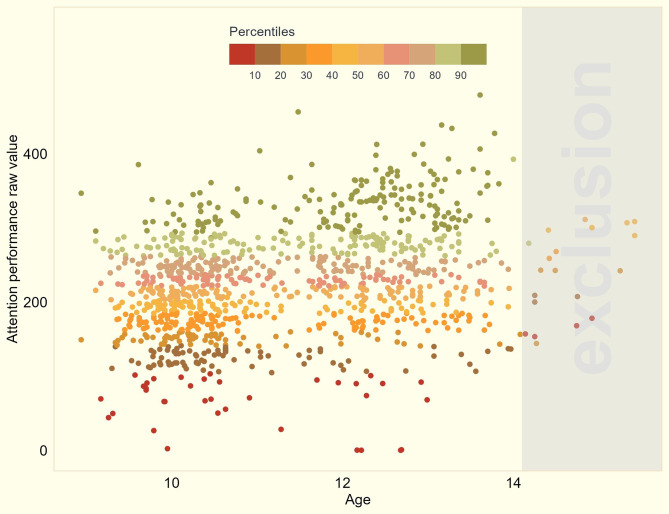
“Attention performance varies with individual developmental stages: Younger children often struggle to maintain attention for extended periods of time, while older children generally have a longer attention span [2].”
BackgroundAdolphus, K., Hoyland, A., Walton, J., Quadt, F., Lawton, C. L., & Dye, L. (2021) · European Journal of Nutrition · doi:10.1007/s00394-021-02506-2 · Cited by 29 · cited 2×
“The current literature indicates that healthy nutrition habits in general, and having breakfast in particular, can positively affect attention and school performance [14, 15].”
BackgroundChiu, K., Lewis, F. C., Ashton, R., Cornish, K. M., & Johnson, K. A. (2022) · Frontiers in Psychology · doi:10.3389/fpsyg.2021.742468 · Cited by 25 · cited 1×
“Research indicates that, e.g. video games can also improve attention and academic performance [5, 6].”
BackgroundPoulain, T., Spielau, U., Vogel, M., Körner, A., & Kieß, W. (2018) · Clinical Nutrition · doi:10.1016/j.clnu.2018.12.020 · Cited by 21 · cited 2×
“Parent’s questionnaire: The parent’s questionnaire included a short questionnaire for assessing the composition of the child’s diet and culture of eating (“CoCu - Composition and Culture of Eating”) [26].”
BackgroundSelf-citationSchröder, M., Müller, K., Falkenstein, M., Stehle, P., Kersting, M., & Libuda, L. (2016) · British Journal of Nutrition · doi:10.1017/s0007114516002932 · Cited by 17 · cited 1×
“School lunch and cognition studies are rare and have shown no effects on attention [49].”
BackgroundBenefits and Limitations of Traditional Self-Report Instruments
Farshchi, H. R., Macdonald, I. A., Madjd, A., & Taylor, M. A. (2017) · CRC Press eBooks · doi:10.1201/9781315152288-1 · Cited by 13 · cited 1×
“In general, questionnaires are not ideal for capturing nutrition [48].”
BackgroundEffects of repeated testing in a pen-and-paper test of selective attention (FAIR-2)
Wühr, B., & Wühr, P. (2021) · Psychological Research · doi:10.1007/s00426-021-01481-x · Cited by 5 · cited 1×
“The test and its internal and external validity are described in detail elsewhere [24].”
BackgroundGnambs, T., & Freund, M.-J. (2019) · LIfBi Leibniz Institute for Educational Trajectories · doi:10.5157/neps:sp57:1.0 · Cited by 1
Research works printed but not linked: 5
- Eissing G Einfluss der Frühstücksqualität auf die mentale Leistung EM - Ernähr Med 2011 26 22 7
- Igel U Gausche R Lück M Molis D Lipek T Schubert K Community-based health promotion for prevention of childhood obesity. Study design of a project in Leipzig-Grünau ErnährungsUmschau 2016 63 8 15
- Moosbrugger H Jens O Frankfurter Aufmerksamkeits-Inventar 2: FAIR-2. 2., überarbeitete, ergänzte und normenaktualisierte auflage des FAIR, 1996 2016 Bern Huber
- Kim B-Y Bae M-J A study on the stress reduction effect of reading aloud the Book using HRV Int J Eng Res Technol 2019 12 1457 61
- Rizzolo D Zipp GP Stiskal D Simpkins S Stress management strategies for students: the Immediate effects of yoga, humor, and reading on stress J Coll Teach Learn TLC 2009 6 79 88
Cited by
AlYousef, N. H., Alhakeem, F. M., AlNasser, K. A., AlSinan, Z. H., Alessa, Z. K., AlDawood, F. M., Shafey, M. M., & Al-Johani, W. M. (2025) · Journal of Family and Community Medicine · doi:10.4103/jfcm.jfcm_223_25 · Cited by 4
“[2,3] Mindfulness, which is defined as intentionally directing one’s attention toward the present moment and consciously observing one’s thoughts, feelings, and experiences, [4,5] has been proposed as a potential method for improving attentional control.”
InfluentialComparative Study on Attention Span among Undergraduate Students
Jacildo, J. A. L. C., Lopez, J. C. C., Leon, M. Q. J. M. D., Almario, M. R. I., Vergara, J. Q., & Cantilero, K. A. S. (2025) · International Journal of Multidisciplinary Applied Business and Education Research · doi:10.11594/ijmaber.06.08.25 · Cited by 3
Free nutritious school meals: Effects on student well-being and learning
Dedy, Danim, S., & Khairi, A. (2026) · Indonesian Journal of Educational Development (IJED) · doi:10.59672/ijed.v6i4.6048 · Cited by 2
Poulain, T., Schmidt, R., Kieß, W., Krause, S., Golz, S., & Meigen, C. (2025) · BMC Pediatrics · doi:10.1186/s12887-025-06260-w · Cited by 2
Self-citationFoster, J. D., Li, E., Juarez, A., Pelkmans, J. L., Fluellen, S., Li, K., Lee, J., Muñoz, L., Rohith, S., Krustrup, P., et al. (2026) · Frontiers in Sports and Active Living · doi:10.3389/fspor.2026.1765167 · Cited by 1
Metadata
- Authors
- Ober, P., Poulain, T., Meigen, C., Spielau, U., Sobek, C., Kiess, W., Igel, U., Lipek, T., & Vogel, M.
- Affiliations
- IFB Adiposity Diseases (DE)
- Leipzig University (DE)
- University of Applied Sciences Erfurt (DE)
- Corresponding author
- Ober, Peggy
- Venue
- BMC Public Health
- Published
- 2024-06-19
- Volume
- 24
- Issue
- 1
- Pages
- 1629-1629
- ISSN
- 1471-2458 (ISSN-L)
- PMC
- PMC11186167
- OpenAlex
- W4399799568
- Cited by
- 6
- References
- 54
- Citations by year
- 2026: 2 · 2025: 4
- FWCI
- 1.76
- Type
- journal article
- Language
- en
- Open access
- gold
- doi.org
- Licence
- cc-by
- creativecommons.org/licenses/by/4.0 (tdm)
- creativecommons.org/licenses/by/4.0 (vor)
- Locations
- BMC Public Health (publishedVersion, cc-by)
- PubMed Central (publishedVersion, cc-by)
- PubMed (publishedVersion)
- Informationszentrum Lebenswissenschaften (ZB MED) (submittedVersion, cc-by)
- DOAJ (DOAJ: Directory of Open Access Journals) (submittedVersion)
- Funders
- Universität Leipzig
- Topics
- Health Sciences › Medicine › Psychiatry and Mental health › Attention Deficit Hyperactivity Disorder
- Health Sciences › Medicine › Public Health, Environmental and Occupational Health › Obesity, Physical Activity, Diet
- Health Sciences › Medicine › Public Health, Environmental and Occupational Health › School Health and Nursing Education
- Keywords
- attentional performance, children, school meals, breakfast habits, recreational sports, reading, physical activity, media use, socioeconomic status, school level
- MeSH terms
- Adolescent, Attention, Child, Feeding Behavior, Female, Germany, Humans, Leisure Activities, Male, Surveys and Questionnaires, Schools, Exercise
About these checks
Registry, retraction, Cites and statistics results are computed, not judged, with one exception: a printed reference that no index lists is read once by a model before it counts as a citation error. Claims are extracted by a model and kept only when their quote appears verbatim in the text; each cited source is then checked, with a model’s help, for whether it says what the claim relies on. Those verdicts can be wrong — read the claim’s quote and the cited source before relying on one.
Statistics and arithmetic are recomputed, not judged.
Confidence bands are shown only for fields calibrated on our annotated test set. None is calibrated yet, so no band is shown.
What counts as a claim ›How we measure confidence ›How we check this ›
Are you an author, or do you see a problem with this page? Request a review
Data sources
Bibliographic data: Semantic Scholar, OpenAlex, Crossref.
Contains information from the Semantic Scholar Academic Graph Datasets, made available under the ODC Attribution License (ODC-BY 1.0).
Semantic Scholar’s data is described in: Kinney, R., et al. (2023). The Semantic Scholar Open Data Platform. arXiv:2301.10140.
