

Sex differences in the prevalence and adverse outcomes of sarcopenia and sarcopenic obesity in community dwelling elderly in East China using the AWGS criteria
Open accessThe DOI matches its Crossref record; 49 of the 49 references it cites were found in a registry or an index.
Abstract
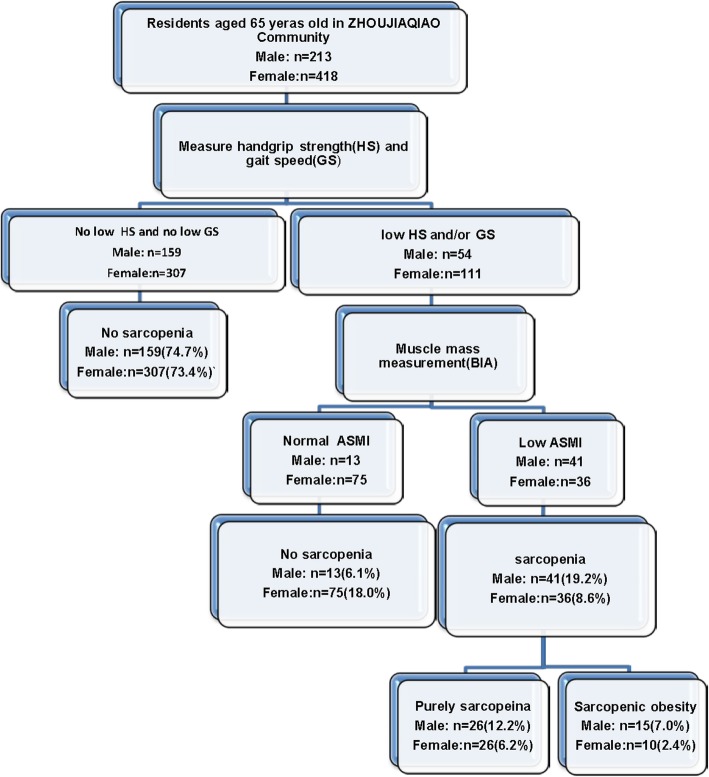
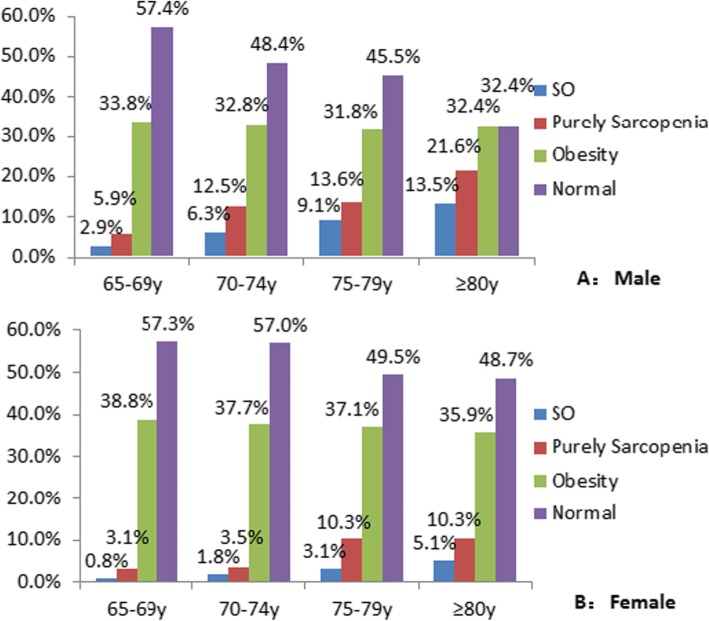
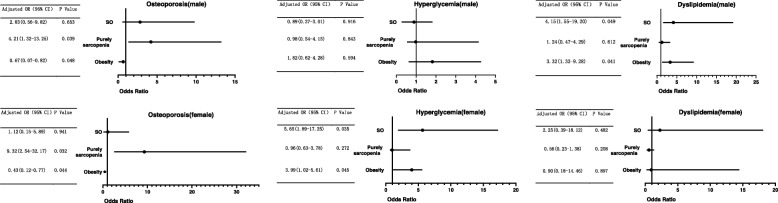
Background: Sarcopenia and sarcopenic obesity (SO) have a greater impact on the elderly. This study aimed to explore whether there were sex differences in the prevalence and adverse outcomes of sarcopenia and SO in community-dwelling elderly individuals in East China. Methods: This was a cross-sectional study that enrolled 213 males and 418 females aged > 65 years. Demographic characteristics, body composition, hand grip, gait speed, and indices of glucose and lipid metabolism were collected. Sarcopenia and SO were diagnosed using the Asian Working Group for Sarcopenia criteria. Results: (1) The prevalence of sarcopenia was 19.2% in males and 8.6% in females. The prevalence of SO was 7.0% in males and 2.4% in females. (2) In males, the odds ratios (ORs) of osteoporosis and dyslipidemia in the SO group were 4.21-fold and 4.15-fold higher than those in the normal group, respectively. In females, the ORs of osteoporosis and hyperglycemia in the SO group were 1.12-fold and 4.21-fold higher than those in the normal group. Conclusions: Males were more likely to be sarcopenic and to have SO than females using the AWGS criteria. Females with SO were more likely to have higher blood glucose, whereas males with SO were more likely to have osteoporosis and dyslipidemia.
Overview
The claims and statistics of this paper haven’t been checked yet.
Free: it reads the open-access text and checks the first 5 claims that cite a source we can check. Create a free account to check every claim.
Integrity signals
Registry
Cites
Statistics
Figures
Verification
Claims the paper makes
The claims and statistics of this paper haven’t been checked yet.
Free: it reads the open-access text and checks the first 5 claims that cite a source we can check. Create a free account to check every claim.
Claims other papers make about this one
Each is checked against this paper’s own text: does it say what the citing paper says it does?
The source backs part of the claim, not all of it — or backs it for a different population, condition or comparison.
In the citing paper
“Sarcopenic obesity has been so far identified through various definitions and diagnostic constructs, but it has been consistently demonstrated to be a strong and independent risk factor for frailty, comorbidities and mortality in various highly prevalent disease conditions, as well as for mortality in the general and especially in the older population [17-19].”
From Definition and Diagnostic Criteria for Sarcopenic Obesity: ESPEN and EASO Consensus Statement (2022) · cites this paper as [19]
Experimental — accuracy not yet measured
Self-check
Percentages, sums and reported differences re-computed from the paper’s own numbers.
The self-check needs the paper’s full text.
Citations
Cites
Sarcopenia: European consensus on definition and diagnosis
Cruz-Jentoft, A. J., Baeyens, J. P., Bauer, J. M., Boirie, Y., Cederholm, T., Landi, F., Martin, F. C., Michel, J.-P., Rolland, Y., Schneider, S. M., et al. (2010) · Age and Ageing · doi:10.1093/ageing/afq034 · Cited by 11,601
The metabolic phenotype in obesity: Fat mass, body fat distribution, and adipose tissue function
Goossens, G. H. (2017) · Obesity Facts · doi:10.1159/000471488 · Cited by 8,481
Sarcopenia in Asia: Consensus Report of the Asian Working Group for Sarcopenia
Chen, L.-K., Liu, L.-K., Woo, J., Assantachai, P., Auyeung, T.-W., Bahyah, K. S., Chou, M.-Y., Chen, L.-Y., Hsu, P.-S., Krairit, O., et al. (2014) · Journal of the American Medical Directors Association · doi:10.1016/j.jamda.2013.11.025 · Cited by 4,051
Fielding, R. A., Vellas, B., Evans, W. J., Bhasin, S., Morley, J. E., Newman, A. B., Abellan van Kan, G., Andrieu, S., Bauer, J., Breuille, D., et al. (2011) · Journal of the American Medical Directors Association · doi:10.1016/j.jamda.2011.01.003 · Cited by 3,256
Studenski, S. A., Peters, K. W., Alley, D. E., Cawthon, P. M., McLean, R. R., Harris, T. B., Ferrucci, L., Guralnik, J. M., Fragala, M. S., Kenny, A. M., et al. (2014) · The Journals of Gerontology: Series A · doi:10.1093/gerona/glu010 · Cited by 2,545
Mitchell, W. K., Williams, J., Atherton, P., Larvin, M., Lund, J., & Narici, M. (2012) · Frontiers in Physiology · doi:10.3389/fphys.2012.00260 · Cited by 1,377
Rosenberg, I. H. (1989) · The American Journal of Clinical Nutrition · doi:10.1093/ajcn/50.5.1231 · Cited by 1,102
Sarcopenic obesity: definition, cause and consequences
Stenholm, S., Harris, T. B., Rantanen, T., Visser, M., Kritchevsky, S. B., & Ferrucci, L. (2008) · Current Opinion in Clinical Nutrition and Metabolic Care · doi:10.1097/mco.0b013e328312c37d · Cited by 1,070
Srikanthan, P., Hevener, A. L., & Karlamangla, A. S. (2010) · PLoS ONE · doi:10.1371/journal.pone.0010805 · Cited by 600
Insulin resistance and sarcopenia: mechanistic links between common co-morbidities
Cleasby, M. E., Jamieson, P. M., & Atherton, P. J. (2016) · Journal of Endocrinology · doi:10.1530/joe-15-0533 · Cited by 596
Cited by
Definition and Diagnostic Criteria for Sarcopenic Obesity: ESPEN and EASO Consensus Statement
Donini, L. M., Busetto, L., Bischoff, S. C., Cederholm, T., Ballesteros-Pomar, M. D., Batsis, J. A., Bauer, J. M., Boirie, Y., Cruz-Jentoft, A. J., Dicker, D., et al. (2022) · Obesity Facts · doi:10.1159/000521241 · Cited by 1,019
Definition and diagnostic criteria for sarcopenic obesity: ESPEN and EASO consensus statement
Donini, L. M., Busetto, L., Bischoff, S. C., Cederholm, T., Ballesteros-Pomar, M. D., Batsis, J. A., Bauer, J. M., Boirie, Y., Cruz-Jentoft, A. J., Dicker, D., et al. (2022) · Clinical Nutrition · doi:10.1016/j.clnu.2021.11.014 · Cited by 566
“…and diagnostic constructs, but it has been consistently demonstrated to be a strong and independent risk factor for frailty, comorbidities and mortality in various highly prevalent disease conditions, as well as for mortality in the general and especially in the older population [17–19].”
Sarcopenia Is Associated with Mortality in Adults: A Systematic Review and Meta-Analysis
Xu, J., Wan, C. S., Ktoris, K., Reijnierse, E. M., & Maier, A. B. (2022) · Gerontology · doi:10.1159/000517099 · Cited by 427
A Narrative Review on Sarcopenia in Type 2 Diabetes Mellitus: Prevalence and Associated Factors
Izzo, A., Massimino, E., Riccardi, G., & Della Pepa, G. (2021) · Nutrients · doi:10.3390/nu13010183 · Cited by 418
“With regard to sarcopenic obesity, a higher prevalence in men than in women was observed [38,89,90], probably related to the muscle decline in men and a fat increase in women during aging [90], as well as to hormonal changes [36].”
BackgroundGlobal prevalence of sarcopenic obesity in older adults: A systematic review and meta-analysis
Gao, Q., Mei, F., Shang, Y., Hu, K., Chen, F., Zhao, L., & Ma, B. (2021) · Clinical Nutrition · doi:10.1016/j.clnu.2021.06.009 · Cited by 376
Liu, C., Wong, P. Y., Chung, Y. L., Chow, S. K., Cheung, W. H., Law, S. W., Chan, J. C. N., & Wong, R. M. Y. (2023) · Obesity Reviews · doi:10.1111/obr.13534 · Cited by 247
“People with SO had lower values of bone mineral density (BMD) than healthy people or those with obesity alone.(47,53) In one study, people with SO had accelerated decline of BMD in 5 years,(60) but this was not confirmed in another cohort.”
BackgroundDeng, M., Qi, Y., Deng, L., Wang, H., Xu, Y., Li, Z., Meng, Z., Tang, J., & Dai, Z. (2020) · Obesity · doi:10.1002/oby.22943 · Cited by 151
“Among people under the age of 40 years, the number of men with obesity is three times greater than the number of women [23].”
BackgroundThe Prevalence of Sarcopenia in Chinese Older Adults: Meta-Analysis and Meta-Regression
Chen, Z., Li, W., Ho, M. M., & Chau, P. H. (2021) · Nutrients · doi:10.3390/nu13051441 · Cited by 155
“As for gender difference, our result was similar to the previous evidence that higher prevalence of sarcopenia was shown in Chinese community-dwelling older males than females [15,22,25].”
BackgroundResultObesity and Bone Health: A Complex Link
Hou, J., He, C., He, W., Yang, M., Luo, X., & Li, C. (2020) · Frontiers in Cell and Developmental Biology · doi:10.3389/fcell.2020.600181 · Cited by 156
Therakomen, V., Petchlorlian, A., & Lakananurak, N. (2020) · Scientific Reports · doi:10.1038/s41598-020-75250-y · Cited by 150
Molecular Mechanisms of Muscle Fatigue
Constantin‐Teodosiu, D., & Constantin, D. (2021) · International Journal of Molecular Sciences · doi:10.3390/ijms222111587 · Cited by 161
“Of note, males are more susceptible than females to become sarcopenic with ageing [24].”
Jones, M. D., Wewege, M. A., Hackett, D. A., Keogh, J. W. L., & Hagstrom, A. D. (2021) · Sports Medicine · doi:10.1007/s40279-020-01388-4 · Cited by 96
Liu, C., Cheng, K. Y.-K., Tong, X., Cheung, W.-H., Chow, S. K.-H., Law, S. W., & Wong, R. M. Y. (2023) · Frontiers in Endocrinology · doi:10.3389/fendo.2023.1077255 · Cited by 88
Li, T., Chang, Y., Liu, C.-W., Su, C., Tsai, H., Tsao, Y., Liao, H., Chen, M., Chuang, C., Yang, Y., et al. (2020) · Seminars in Arthritis and Rheumatism · doi:10.1016/j.semarthrit.2020.10.002 · Cited by 105
Self-citationSex differences in frailty among older adults
Zeidan, R. S., McElroy, T., Rathor, L., Martenson, M. S., Lin, Y., & Mankowski, R. T. (2023) · Experimental Gerontology · doi:10.1016/j.exger.2023.112333 · Cited by 87
“For example, men with frailty are more likely to experience sarcopenia, defined as loss of muscle mass and strength (Du et al., 2019; Kim and Won, 2022).”
Prevalence of sarcopenia in Chinese community-dwelling elderly: a systematic review
Ren, X., Zhang, X., He, Q., Du, L., Chen, K., Chen, S., & Pan, Y. (2022) · BMC Public Health · doi:10.1186/s12889-022-13909-z · Cited by 86
Self-citationSex differences in skeletal muscle-aging trajectory: same processes, but with a different ranking
de Jong, J. C. B. C., Attema, B. J., van der Hoek, M. D., Verschuren, L., Caspers, M. P. M., Kleemann, R., van der Leij, F. R., van den Hoek, A. M., Nieuwenhuizen, A. G., & Keijer, J. (2023) · GeroScience · doi:10.1007/s11357-023-00750-4 · Cited by 87
Prevalence of sarcopenia in older Chinese adults: a systematic review and meta-analysis
Xin, C., Sun, X., Li, L., & Shan, L. (2021) · BMJ Open · doi:10.1136/bmjopen-2020-041879 · Cited by 78
Sex Differences in Adiposity and Cardiovascular Diseases
Li, H., Konja, D., Wang, L., & Wang, Y. (2022) · International Journal of Molecular Sciences · doi:10.3390/ijms23169338 · Cited by 80
“Women with SO may have higher glucose, while men with SO are more likely to develop osteoporosis and dyslipidaemia [68].”
BackgroundSelf-citationSex Differences of Sarcopenia in an Elderly Asian Population: The Prevalence and Risk Factors
Hwang, J., & Park, S. (2022) · International Journal of Environmental Research and Public Health · doi:10.3390/ijerph191911980 · Cited by 72
“The outcome was parallel with earlier sarcopenia studies [40,52].”
BackgroundResultSchoufour, J. D., Tieland, M., Barazzoni, R., Ben Allouch, S., Bie, J. V. D., Boirie, Y., Cruz-Jentoft, A. J., Eglseer, D., Topinková, E., Visser, B., et al. (2021) · Frontiers in Nutrition · doi:10.3389/fnut.2021.661449 · Cited by 62
dos Santos, E. E. P., de Araújo, R. C., Candow, D. G., Forbes, S. C., Guijo, J. A., de Almeida Santana, C. C., Prado, W. L. D., & Botero, J. P. (2021) · Nutrients · doi:10.3390/nu13113757 · Cited by 60
“6% of older adults had sarcopenia [7].”
Chew, S. T. H., Tey, S. L., Yalawar, M., Liu, Z., Baggs, G. E., How, C. H., Cheong, M., Chow, W. L., Low, Y. L., Huynh, D. T. T., et al. (2022) · BMC Geriatrics · doi:10.1186/s12877-022-03704-1 · Cited by 68
“Although the literature regarding gender-related differences shows inconsistency [63], our findings were similar to other Asian studies which had also found a higher prevalence in men [12, 14, 20, 64].”
ResultSarcopenia in aging, obesity, and cancer
Ligibel, J. A., Schmitz, K. H., & Berger, N. A. (2020) · Translational Cancer Research · doi:10.21037/tcr-2019-eaoc-05 · Cited by 53
“Several studies have shown a slight preponderance of sarcopenia among men compared to women, but others have not (65-67).”
BackgroundKhalafi, M., Maleki, A. H., Sakhaei, M. H., Rosenkranz, S. K., Pourvaghar, M. J., Ehsanifar, M., Bayat, H., Korivi, M., & Liu, Y. (2023) · Frontiers in Endocrinology · doi:10.3389/fendo.2023.1183765 · Cited by 81
Obesity paradox in older sarcopenic adults ― a delay in aging: A systematic review and meta-analysis
Eitmann, S., Mátrai, P., Hegyi, P. J., Balaskó, M., Erőss, B. M., Dorogi, K., & Pétervári, E. (2023) · Ageing Research Reviews · doi:10.1016/j.arr.2023.102164 · Cited by 66
A pooled analysis of the association between sarcopenia and osteoporosis
Yu, X., Sun, S., Zhang, S., Hao, Q., Zhu, B., Teng, Y., Long, Q., Li, S., Lv, Y., Yue, Q., et al. (2022) · Medicine · doi:10.1097/md.0000000000031692 · Cited by 68
Hwang, J., & Park, S. (2023) · International Journal of Environmental Research and Public Health · doi:10.3390/ijerph20021140 · Cited by 52
“An SO study in China reported that only men had significantly higher triglycerides (2.40 mmol/L) than the normal elderly population (1.60 mmol/L) [29], while the change in females was not significant.”
BackgroundResultInfluentialLee, H., Lee, I. H., Heo, J., Baik, M., Park, H., Lee, H. S., Nam, H. S., & Kim, Y. D. (2022) · Frontiers in Neurology · doi:10.3389/fneur.2022.841945 · Cited by 55
“Further, men were more likely to have sarcopenic obesity (a combination of sarcopenia and obesity), which had a worse impact on the outcome of vascular or metabolic disease compared with sarcopenia without obesity (27, 28).”
BackgroundMolwitz, I., Ozga, A., Gerdes, L., Ungerer, A., Köhler, D., Ristow, I., Leiderer, M., Adam, G., & Yamamura, J. (2022) · Scientific Reports · doi:10.1038/s41598-022-10266-0 · Cited by 49
Dyslipidemia is associated with sarcopenia of the elderly: a meta-analysis
Bi, B., Dong, X., Yan, M., Zhao, Z., Liu, R., Li, S., & Wu, H. (2024) · BMC Geriatrics · doi:10.1186/s12877-024-04761-4 · Cited by 47
Sarcopenic obesity diagnosis by different criteria mid-to long-term post-bariatric surgery
Vieira, F. T., Godziuk, K., Lamarca, F., Melendez-Araújo, M. S., Lima, R. M., Prado, C. M., de Carvalho, K. M. B., & Dutra, E. S. (2022) · Clinical Nutrition · doi:10.1016/j.clnu.2022.07.006 · Cited by 38
Sabatino, A., Avesani, C. M., Regolisti, G., Adinolfi, M., Benigno, G. D., Delsante, M., Fiaccadori, E., & Gandolfini, I. (2023) · Clinical Nutrition · doi:10.1016/j.clnu.2023.06.032 · Cited by 42
Higher dietary protein intake is associated with sarcopenia in older British twins
Lochlainn, M. N., Bowyer, R. C. E., Welch, A. A., Whelan, K., & Steves, C. J. (2023) · Age and Ageing · doi:10.1093/ageing/afad018 · Cited by 43
Rahman, R., Wilson, B. P., Paul, T. V., Yadav, B., Gopal, G. K., & Viggeswarpu, S. (2021) · Aging Medicine · doi:10.1002/agm2.12186 · Cited by 39
Luo, Y., Wang, Y., Tang, S., Xu, L., Zhao, X., Han, M., Liu, Y., Xu, Y. J., & Han, B. (2024) · BMC Geriatrics · doi:10.1186/s12877-024-04952-z · Cited by 45
“…mass + BMI, low muscle mass + PBF, and low muscle mass + WC was 18% (95% CI: 9–29%, I 2 = 99%, P 0.01, 2 studies [33, 45]), 29% (95% CI: 13–49%, I 2 = 98%, P 0.01, 5 studies [6, 15, 34, 51–52]), 18% (95% CI: 7–32%, I 2 = 98%, P 0.01, 5 studies [8, 13, 17, 47, 54]), respectively (Table 1).”
BackgroundInfluentialIshii test for screening sarcopenia: performance in community-dwelling older adults
Erdoğan, T., Çatıkkaş, N. M., Ören, M. M., Kılıç, C., Karan, M. A., & Bahat, G. (2021) · Aging Clinical and Experimental Research · doi:10.1007/s40520-021-01998-6 · Cited by 36
Meng, L., Yang, R., Wang, D., Wu, W., Shi, J. C., Shen, J., Dang, Y.-M., Fan, G., Shi, H., Dong, J., et al. (2022) · BMC Geriatrics · doi:10.1186/s12877-022-02953-4 · Cited by 35
“Moreover, data on the associations of metabolites with sarcopenia and its components among older Chinese older men, who have a higher prevalence of sarcopenia than women, are scarce [21, 30, 31] compared with related studies mainly involved North American and European people.”
BackgroundResultde Lima, A. B., Ribeiro, G. D. S., Henriques‐Neto, D., Gouveia, É. R., & Baptista, F. (2023) · Scientific Reports · doi:10.1038/s41598-023-39002-y · Cited by 45
Maeda, D., Matsue, Y., Kagiyama, N., Jujo, K., Saito, K., Kamiya, K., Saito, H., Ogasahara, Y., Maekawa, E., Konishi, M., et al. (2021) · Nutrition Metabolism and Cardiovascular Diseases · doi:10.1016/j.numecd.2021.10.012 · Cited by 33
Lu, L., He, X., Song, Y., Zhuang, M., Wu, X., & Chen, N. (2022) · Frontiers in Aging Neuroscience · doi:10.3389/fnagi.2022.1034542 · Cited by 32
“First, this is the first cross-sectional study to investigate and explore the prevalence and risk factors of S and SO in older people over the age of 65 years in the Chongming District, which is a suburban area of Shanghai, China.”
BackgroundResultInfluentialSelf-citationPedauyé-Rueda, B., García-Fernández, P., Maicas-Pérez, L., Maté‐Muñoz, J. L., & Hernández-Lougedo, J. (2024) · Journal of Clinical Medicine · doi:10.3390/jcm13092520 · Cited by 36
“[22,25,30].”
BackgroundInfluentialHart, D. A. (2023) · Frontiers in Physiology · doi:10.3389/fphys.2023.1127689 · Cited by 39
Sex differences in impact of sarcopenia on falls in community-dwelling Korean older adults
Soh, Y., & Won, C. W. (2021) · BMC Geriatrics · doi:10.1186/s12877-021-02688-8 · Cited by 34
“6% in females), and sex differences may affect fall risk, but this has not yet been studied [16].”
BackgroundCho, Y. K., Jung, H. N., Kim, E. H., Lee, M. J., Park, J., Lee, W. J., Kim, H., & Jung, C. H. (2023) · Obesity · doi:10.1002/oby.23733 · Cited by 28
“Clinically, the negative implications of sarcopenic obesity are critical, ranging from frailty to mortality, particularly in the elderly population [6, 7].”
BackgroundBhat, G., Ireland, A., Shah, N. B., Gondhalekar, K. M., Mandlik, R. M., Kajale, N., Katapally, T. R., Bhawra, J., Damle, R., & Khadilkar, A. (2024) · PLOS Global Public Health · doi:10.1371/journal.pgph.0003553 · Cited by 37
Nguyen, T. N., Nguyen, T. N., Nguyen, A. T., Nguyen, T. X., Nguyen, H. T. T., Nguyen, T. T. H., Pham, T., & Vu, H. T. T. (2020) · BMJ Open · doi:10.1136/bmjopen-2020-037630 · Cited by 35
Ramoo, K., Hairi, N. N., Yahya, A., Choo, W. Y., Hairi, F. M., Peramalah, D., Kandiben, S., Bulgiba, A. M., Ali, Z. M., Razak, I. A., et al. (2022) · International Journal of Environmental Research and Public Health · doi:10.3390/ijerph19084723 · Cited by 31
Yin, Y., Liu, J. Y. W., & Valimaki, M. A. (2023) · BMC Geriatrics · doi:10.1186/s12877-023-04327-w · Cited by 28
“In contrast, Du [41] reported that the prevalence of sarco-penic obesity was 7.0% in males and 2.4% in females after screening 213 males and 418 females in Shanghai, China, figures that were obtained using the old Asian criteria for sarcopenic obesity.”
InfluentialMasticatory muscle index for indicating skeletal muscle mass in patients with head and neck cancer
Chang, S., Tsai, Y., Hsu, C., Huang, E. I., Chang, G., Tsai, M., & Tsai, Y.-T. (2021) · PLoS ONE · doi:10.1371/journal.pone.0251455 · Cited by 23
“conducted a cross-sectional study of 631 patients and indicated that male patients were more likely to have sarcopenia and sarcopenic obesity than were female patients [30].”
ResultOh, M. H., Shin, H. E., Kim, K. S., Won, C. W., & Kim, M. (2023) · Journal of the American Medical Directors Association · doi:10.1016/j.jamda.2023.04.005 · Cited by 20
Verma, M., Kapoor, N., Aditi, A., Sharma, P., Ghosh, N., Sidana, S., Kakkar, R., & Kalra, S. (2022) · Advances in Therapy · doi:10.1007/s12325-022-02216-z · Cited by 24
Kandinata, S. G., Widajanti, N., Ichwani, J., Firdausi, H., Aryana, I. G. P. S., & Alkaff, F. F. (2023) · Scientific Reports · doi:10.1038/s41598-023-36585-4 · Cited by 29
Sarcopenic Obesity in Community-Dwelling Spanish Adults Older than 65 Years
Diago-Galmés, A., Guillamón-Escudero, C., Tenías, J. M., Soriano, J. M., & Garrido, J. F. (2023) · Nutrients · doi:10.3390/nu15234932 · Cited by 21
“Following the bibliographic claim of some authors [40,43], the standardization of diagnostic criteria is considered relevant, based on international specialized organizations in this field, to unifying the latest academic content on SO.”
BackgroundDamanti, S., Citterio, L., Zagato, L., Brioni, E., Magnaghi, C., Simonini, M., LORENZO, R. D., Ruggiero, M., Santoro, S., Senini, E., et al. (2024) · BMC Geriatrics · doi:10.1186/s12877-024-05216-6 · Cited by 23
“The risk of developing adverse clinical outcomes derived from the two conditions cumulates in SO [22–29].”
BackgroundMathieu, M., Guillot, P., Riaudel, T., Boureau, A., Chapelet, G., Brouessard, C., de Decker, L., & Berrut, G. (2021) · Nutrients · doi:10.3390/nu13061994 · Cited by 18
“Therefore, as a compensatory mechanism, FM increases significantly during perimenopause and is maintained at a high level after, limiting the estrogenic deficiency and its consequences on the bone [29].”
BackgroundKumari, M., & Khanna, A. (2022) · Annals of Geriatric Medicine and Research · doi:10.4235/agmr.22.0081 · Cited by 20
Shen, S., Zeng, X., Yang, Y., Guan, H., Chen, L., & Chen, X. (2022) · BMC Geriatrics · doi:10.1186/s12877-022-03572-9 · Cited by 21
Viñas, P., Martín, A., Cera, M., Riera, S. A., Escobar, R., Clavé, P., & Ortega, O. (2023) · The journal of nutrition health & aging · doi:10.1007/s12603-023-1996-8 · Cited by 21
“Finally, the prevalence of sarcopenia in older patients is usually higher in men (50, 51), as we found in the present study.”
Prevalence of sarcopenia and depressive symptoms among older adults: a scoping review
Ganggaya, K. S., Vanoh, D., & Ishak, W. R. W. (2023) · Psychogeriatrics · doi:10.1111/psyg.13060 · Cited by 16
“This corresponds to fi ndings from studies by Yuenyongchaiwat et al. 38 and Chew et al. 66 Another study by Du et al. 67 conducted among 631 subjects supported this statement by stating that levels of testosterone and insulin-like growth factor-1 levels decreased signi fi cantly in older males, which…”
ResultSmith, L., Sánchez, G. F. L., Jacob, L., Barnett, Y., Pardhan, S., Veronese, N., Soysal, P., Tully, M. A., Gorely, T., Shin, J. I., et al. (2021) · Aging Clinical and Experimental Research · doi:10.1007/s40520-021-01841-y · Cited by 17
Gandham, A., Scott, D. S., Bonham, M. P., Kulkarni, B., Kinra, S., Ebeling, P. R., & Zengin, A. (2022) · Calcified Tissue International · doi:10.1007/s00223-022-00981-1 · Cited by 15
“Recently, a study of 631 adults aged 65 years and older from East China reported older men were more likely to have sarcopenia and sarcopenic obesity compared with women, when defined by the Asian Working Group for Sarcopenia criteria [16].”
BackgroundInfluentialYoo, T. K., Rhim, H. C., Lee, Y., Yoon, K. J., & Park, C. (2022) · Scientific Reports · doi:10.1038/s41598-022-16401-1 · Cited by 16
Miyazaki, A., Ito, Y., Okuyama, T., Mori, H., Sato, K., Ichiki, M., Hiyama, A., Dinet, J., & Nouchi, R. (2023) · Frontiers in Rehabilitation Sciences · doi:10.3389/fresc.2023.1079781 · Cited by 11
“Body composition is sex-dependent, with men reported to be on average taller, heavier (74), and greater total skeletal muscle mass than women (75, 76).”
BackgroundVery high prevalence of osteosarcopenia in hip fracture patients: risk and protective factors
Wong, R. M. Y., Wong, P. Y., Chau, W., Liu, C., Zhang, N., & Cheung, W. (2025) · Journal of Orthopaedic Surgery and Research · doi:10.1186/s13018-025-05828-7 · Cited by 18
“Another cross-sectional study showed that there were more males compared to females having sarcopenia in community-dwelling elderlies [32].”
Hwang, J., & Park, S. (2023) · Healthcare · doi:10.3390/healthcare11212860 · Cited by 16
“To further strengthen the reliability”
Shi, X., Liu, W., Zhang, L., Xiao, F., Huang, P., Yan, B., Zhang, Y., Su, W., Jiang, Q., Lin, M., et al. (2022) · Frontiers in Endocrinology · doi:10.3389/fendo.2022.913207 · Cited by 13
“Previous researchers have revealed a sex gap in metabolic regulation, diabetes susceptibility and risks for sarcopenia amongst community-dwelling older adults, according to which, males were more likely to be diabetes and sarcopenic (32, 33).”
BackgroundSmith, L., Sánchez, G. F. L., Tully, M. A., Veronese, N., Soysal, P., Yon, D. K., Pizzol, D., López‐Gil, J. F., Barnet, Y., Butler, L., et al. (2023) · Maturitas · doi:10.1016/j.maturitas.2023.04.006 · Cited by 12
Roles of hypoxia-inducible factor-prolyl hydroxylases in aging and disease
Galkin, F., Pulous, F. E., Fu, Y., Zhang, M., Pun, F. W., Ren, F., & Zhavoronkov, A. A. (2024) · Ageing Research Reviews · doi:10.1016/j.arr.2024.102551 · Cited by 16
“…sarcopenia prevalence varies across biological sex and regional populations (Shafiee et al., 2017), affecting 13 – 27 % of males > 60 years old in China, Korea, and the US and 9 – 26 % of older females (Du et al., 2019; Hwang and Park, 2022; Iannuzzi-Sucich et al., 2002; Yang et al., 2022).”
BackgroundPark, H. A., Sung, J., Chang, Y., Ryu, S., Yoon, K. J., Kim, H., & Kim, H. (2024) · Journal of Cachexia Sarcopenia and Muscle · doi:10.1002/jcsm.13636 · Cited by 13
Lian, R., Tang, H., Chen, Z., Chen, X., Luo, S., Jiang, W., Jiang, J., & Yang, M. J. (2025) · Aging Clinical and Experimental Research · doi:10.1007/s40520-025-02975-z · Cited by 19
“On the contrary, other studies reported a higher prevalence of SO in elderly man than in women [34, 35].”
Sreepriya, P. R., Pillai, S. S., Nair, N. N. K. K., Rahul, A., Pillai, S., & Anish, T. S. (2020) · Journal of Frailty Sarcopenia and Falls · doi:10.22540/jfsf-05-079 · Cited by 13
Prevalence, Anthropometric Risk Factors, and Clinical Risk Factors in Sarcopenic Women in Their 40s
Hwang, J. (2023) · Journal of the Korean Society of Physical Medicine · doi:10.13066/kspm.2023.18.2.23 · Cited by 12
Hafızoğlu, M., Yıldırım, H. K., Öztürk, Y., Şahiner, Z., Karaduman, D., Atbas, C., Doğu, B. B., Halil, M. G., Cankurtaran, M., & Balcı, C. (2024) · Nutrition · doi:10.1016/j.nut.2024.112412 · Cited by 14
Fu, M., Wang, X., Zhou, J., & Wang, J. (2025) · BMC Cancer · doi:10.1186/s12885-025-13766-0 · Cited by 14
“A cross-sectional study in East China based on AWGS criteria found that the prevalence of sarcopenia was 19.2% in men and 8.6% in women [41].”
InfluentialSelf-citationTan, N. C., Sankari, U., Ng, C. E., & Koh, Y. L. E. (2022) · BMC Geriatrics · doi:10.1186/s12877-022-03098-0 · Cited by 11
“Several studies have revealed a male preponderance towards sarcopenia based on AWGS criteria [14].”
BackgroundYamagishi, S., Okamura, Y., Kang, W., Shindate, M., Kochi, M., Mitsuka, Y., Watabe, M., Yoshida, N., Ikarashi, M., Yamazaki, S., et al. (2023) · Digestive Surgery · doi:10.1159/000531797 · Cited by 14
“Sarcopenic obesity has been reported to be an independent risk factor for mortality and various diseases in older individuals [36 – 38].”
BackgroundHwang, J., & Park, S. (2024) · Healthcare · doi:10.3390/healthcare12060700 · Cited by 11
“A study of sarcopenic obesity in China reported substantially increased triglyceride levels in a sarcopenic obesity group compared with the normal elderly population [25].”
BackgroundLiang, X., Jiang, C. Q., Zhang, W. S., Zhu, F., Jin, Y. L., Cheng, K. K., Lam, T. H., & Xu, L. (2021) · Aging · doi:10.18632/aging.203285 · Cited by 12
“Finally, all participants in the present study were older people with generally lower grip strength and poorer TUG test, which was quite similar to the elderly in China with normal body fat and muscle [15, 40].”
Hwang, J. (2024) · Journal of the Korean Society of Physical Medicine · doi:10.13066/kspm.2024.19.1.43 · Cited by 12
Yang, J., Wang, Y., Shi, X., Liu, Y., Ge, S., Li, S., Wang, Y., Li, F., Suryawanshi, P., & Chen, W. (2024) · Nutrition in Clinical Practice · doi:10.1002/ncp.11214 · Cited by 13
Hwang, J. (2023) · Journal of the Korean Society of Physical Medicine · doi:10.13066/kspm.2023.18.2.13 · Cited by 11
Hwang, J. (2023) · Journal of the Korean Society of Physical Medicine · doi:10.13066/kspm.2023.18.3.1 · Cited by 10
Hwang, J. (2023) · Journal of the Korean Society of Physical Medicine · doi:10.13066/kspm.2023.18.3.21 · Cited by 10
Demir, L., & Oflazoğlu, U. (2023) · Supportive Care in Cancer · doi:10.1007/s00520-023-08041-6 · Cited by 16
“In a cross-sectional study conducted on 213 male and 418 female patients aged over 65 years with AGWS criteria in the Shanghai population, rates of sarcopenia and sarcopenic obesity were found to be significantly higher in males [45].”
BackgroundGuan, Z., Stephan, B. C. M., Donini, L. M., Prado, C. M. M., Sim, M., & Siervo, M. (2024) · Proceedings of The Nutrition Society · doi:10.1017/s0029665124007559 · Cited by 14
“…2022 (27) Mexican-American Other Hispanic Non-Hispanic White Non-Hispanic Black Other, including multi-racial Luo et al. 2024 (28) White Author and year Study population and subgroup SOprevalence % (95% CI) Du et al. 2019 (26) Older adults (≥65 years) Gao et al. 2021 (15) Older adults (≥60 years)”
InfluentialHwang, J., & Moon, I.-Y. (2023) · Journal of the Korean Society of Physical Medicine · doi:10.13066/kspm.2023.18.3.11 · Cited by 9
Yuan, J., & Jia, P. (2024) · Diabetology & Metabolic Syndrome · doi:10.1186/s13098-024-01355-3 · Cited by 12
“The gender distribution of susceptibility to sarcopenia may be attributed to faster muscle degeneration in men and a gradually fat increase in women during aging, and the change pattern in estrogen, testosterone and insulin-like growth factor-1 levels [24].”
BackgroundAnalyzing Proportion and Susceptibility Markers of Sarcopenia In Korean Younger Female
Hwang, J. (2023) · Journal of the Korean Society of Physical Medicine · doi:10.13066/kspm.2023.18.4.19 · Cited by 8
Korean Nationwide Exploration of Sarcopenia Prevalence and Risk Factors in Late Middle-Aged Women
Hwang, J., & Park, S. (2024) · Healthcare · doi:10.3390/healthcare12030362 · Cited by 11
“Total cholesterol was recognized as a risk factor for sarcopenia, which was consistent with the results of previous studies [27,32].”
BackgroundResultZhang, C., Huang, X., Lü, H., Chen, M., Wang, J., & Deng, H. (2024) · Frontiers in Nutrition · doi:10.3389/fnut.2024.1492191 · Cited by 8
Self-citationOyeka, C. P., He, J. H., Ma, J., Michos, E. D., Kalyani, R. R., Woodward, M., Vaidya, D. M., & Bennett, W. L. (2025) · The Journal of Clinical Endocrinology & Metabolism · doi:10.1210/clinem/dgaf287 · Cited by 8
Lipid metabolites and sarcopenia-related traits: a Mendelian randomization study
Liu, J., Wang, S., Shen, Y., Shi, H., & Han, L. (2024) · Diabetology & Metabolic Syndrome · doi:10.1186/s13098-024-01465-y · Cited by 7
“The prevalence of sarcopenia in elderly men was 19.2%, which was twice the prevalence in elderly women [43].”
BackgroundInfluentialSarcopenia: an Aging Perspective and Management Options
Teixeira, A. M., Nosrani, S. E., Parvani, M., Viola, J., & Mohammadi, S. (2025) · International Journal of Sports Medicine · doi:10.1055/a-2577-2577 · Cited by 10
Bevilacqua, G., D’Angelo, S., Westbury, L. D., Harvey, N. C., & Dennison, E. M. (2024) · Health & Place · doi:10.1016/j.healthplace.2024.103184 · Cited by 8
“…been previously associated with loss of in-dependence and need to care placement (Dos Santos et al., 2017; Steffl et al., 2017), and a number of studies have reported that this condition is more prevalent in men than in women (Di Monaco et al., 2012; Iannuzzi-Sucich et al., 2002; Du et al., 2019).”
Mihai, F., Trifan, A. V., Stanciu, C., Huiban, L., Muzica, C. M., Lupaşcu-Ursulescu, C. V., Negru, D., Savin, M. L., Gîrleanu, I., Cuciureanu, T., et al. (2021) · Medicina · doi:10.3390/medicina57111226 · Cited by 7
Tian, M., Yuan, J., Yu, F., He, P., Zhang, Q., & Zha, Y. (2023) · BMC Geriatrics · doi:10.1186/s12877-023-04357-4 · Cited by 7
Prevalence of sarcopenia and association with HIV infection in China elderly: An observational study
Peng, T., Jin, X., Chen, X., He, J., Juhai, C., Longhang, W., & Wang, Y. (2024) · Medicine · doi:10.1097/md.0000000000038532 · Cited by 7
“[6,7] Two studies conducted in India, which defined sarcopenia according to low muscle mass, indicated that the prevalence of sarcopenia was 40% among middle-aged male patients with HIV and 18% among premenopausal female patients with HIV.”
BackgroundScott, J., Yates, M. M., Tanaka, T., Ferrucci, L., Cameron, D., & Welch, A. A. (2025) · Journal of Nutrition · doi:10.1016/j.tjnut.2025.03.006 · Cited by 7
Vithran, D. T. A., Hassan, M. H. Y., Rahmati, M., Boyer, L., Wehliye, A. A., Mahamat, E. O., Xiao, W., Xiao, Y., & Li, Y. (2025) · BMC Geriatrics · doi:10.1186/s12877-025-06777-w · Cited by 8
“Previous studies have reported that women, particularly around menopause, may experience pronounced losses in muscle quality and function despite comparatively more minor reductions in muscle mass [10, 46, 50].”
Metadata
- Authors
- Du, Y., Wang, X., Xie, H., Zheng, S., Wu, X., Zhu, X., Zhang, X., Xue, S., Li, H., Hong, W., Tang, W., Chen, M., Cheng, Q., & Sun, J.
- Affiliations
- Shanghai Medical College of Fudan University (CN)
- Fudan University (CN)
- Corresponding author
- Cheng, Qun
- Sun, Jianqin
- ORCID
- Venue
- BMC Endocrine Disorders
- Published
- 2019-10-25
- Volume
- 19
- Issue
- 1
- Pages
- 109-109
- ISSN
- 1472-6823 (ISSN-L)
- PMC
- PMC6814981
- OpenAlex
- W2981634288
- Cited by
- 175
- References
- 49
- Citations by year
- 2026: 13 · 2025: 23 · 2024: 38 · 2023: 38 · 2022: 34 · 2021: 21 · 2020: 8
- FWCI
- 10.80
- Type
- journal article
- Language
- en
- Open access
- gold
- doi.org
- Licence
- cc-by
- creativecommons.org/licenses/by/4.0/ (tdm)
- creativecommons.org/licenses/by/4.0/ (vor)
- Locations
- BMC Endocrine Disorders (publishedVersion, cc-by)
- Europe PMC (PubMed Central) (publishedVersion, cc-by)
- PubMed Central (publishedVersion, cc-by)
- PubMed (publishedVersion)
- DOAJ (DOAJ: Directory of Open Access Journals) (submittedVersion, cc-by-sa)
- Funders
- Foundation of Shanghai Municipal Commission of Health and Family Planning (201840176, 201740028)
- Shanghai Hospital Development Center (SHDC12016201)
- Natural Science Foundation of Shanghai (16411954600)
- Shanghai Key Laboratory of Clinical Geriatric Medicine (13dz2260700)
- Topics
- Health Sciences › Medicine › Physiology (medical) › Nutrition and Health in Aging
- Health Sciences › Medicine › Physiology (medical) › Body Composition Measurement Techniques
- Health Sciences › Medicine › Geriatrics and Gerontology › Frailty in Older Adults
- Keywords
- sarcopenia, sarcopenic obesity, sex differences, community-dwelling older adults, AWGS criteria, prevalence, osteoporosis, dyslipidemia, hyperglycemia, body composition, grip strength, walking speed, eastern China
- MeSH terms
- Aged, Aged, 80 and over, China, Cross-Sectional Studies, Female, Follow-Up Studies, Humans, Male, Obesity, Osteoporosis, Prognosis, Sex Factors, Body Mass Index, Prevalence, Hand Strength, Dyslipidemias, Sarcopenia, Independent Living
About these checks
Registry, retraction, Cites and statistics results are computed, not judged, with one exception: a printed reference that no index lists is read once by a model before it counts as a citation error. Claims are extracted by a model and kept only when their quote appears verbatim in the text; each cited source is then checked, with a model’s help, for whether it says what the claim relies on. Those verdicts can be wrong — read the claim’s quote and the cited source before relying on one.
Statistics and arithmetic are recomputed, not judged.
Confidence bands are shown only for fields calibrated on our annotated test set. None is calibrated yet, so no band is shown.
What counts as a claim ›How we measure confidence ›How we check this ›
Are you an author, or do you see a problem with this page? Request a review
Data sources
Bibliographic data: Semantic Scholar, OpenAlex, Crossref.
Contains information from the Semantic Scholar Academic Graph Datasets, made available under the ODC Attribution License (ODC-BY 1.0).
Semantic Scholar’s data is described in: Kinney, R., et al. (2023). The Semantic Scholar Open Data Platform. arXiv:2301.10140.
