

Can mental health treatments help prevent or reduce intimate partner violence in low- and middle-income countries? A systematic review
Open accessThe DOI matches its Crossref record; 64 of the 64 references it cites were found in a registry or an index.
Abstract
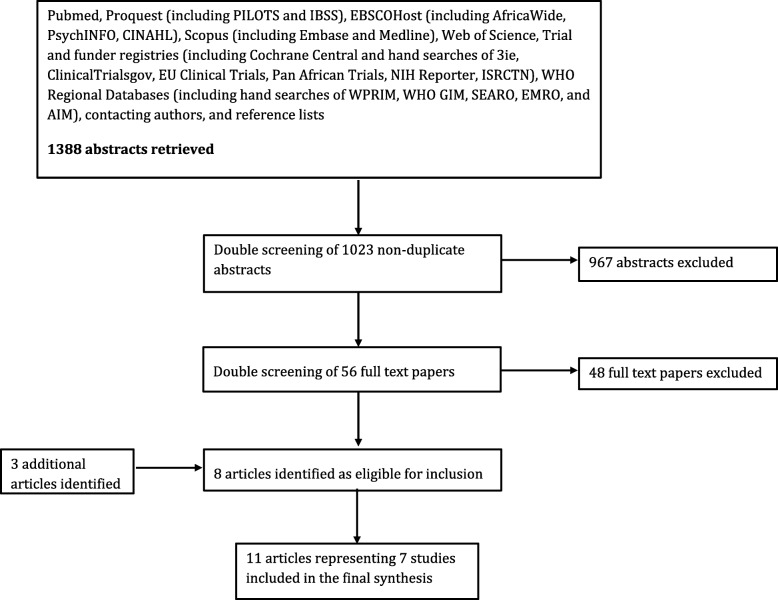
BACKGROUND: Epidemiological research suggests an interrelationship between mental health problems and the (re)occurrence of intimate partner violence (IPV). However, little is known about the impact of mental health treatments on IPV victimization or perpetration, especially in low- and middle-income countries (LMIC). METHODS: We conducted a systematic review to identify prospective, controlled studies of mental health treatments in LMIC. We defined 'mental health treatment' as an intervention for individuals experiencing mental ill health (including substance misuse) including a substantial psychosocial or pharmacological component. Studies had to measure a mental health and IPV outcome. We searched across multi-disciplinary databases using a structured search strategy. Screening of title/abstracts and full-text eligibility assessments were conducted by two researchers independently, data were extracted using a piloted spreadsheet, and a narrative synthesis was generated. RESULTS: We identified seven studies reported in 11 papers conducted in five middle-income countries. With the exception of blinding, studies overall showed acceptable levels of risk of bias. Four of the seven studies focused on dedicated mental health treatments in various populations, including: common mental disorders in earthquake survivors; depression in primary care; alcohol misuse in men; and alcohol misuse in female adult sex workers. The dedicated mental health treatments targeting depression or alcohol misuse consistently reduced levels of these outcomes. The two studies targeting depression also reduced short-term IPV, but no IPV benefits were identified in the two alcohol-focused studies. The other three studies evaluated integrated interventions, in which a focus on substance misuse was part of efforts to reduce HIV/AIDS and violence against particularly vulnerable women. In contrast to the dedicated mental health interventions, the integrated interventions did not consistently reduce mental ill health or alcohol misuse compared to control conditions. CONCLUSIONS: Too few studies have been conducted to judge whether mental health treatments may provide a beneficial strategy to prevent or reduce IPV in LMIC. Key future research questions include: whether promising initial evidence on the effects of depression interventions on reducing IPV hold more broadly, the required intensity of mental health components in integrated interventions, and the identification of mechanisms of IPV that are amenable to mental health intervention.
Overview
The claims and statistics of this paper haven’t been checked yet.
Free: it reads the open-access text and checks the first 5 claims that cite a source we can check. Create a free account to check every claim.
Integrity signals
Registry
Cites
Statistics
Figures
Verification
Claims the paper makes
The claims and statistics of this paper haven’t been checked yet.
Free: it reads the open-access text and checks the first 5 claims that cite a source we can check. Create a free account to check every claim.
Claims other papers make about this one
Each is checked against this paper’s own text: does it say what the citing paper says it does?
The source backs part of the claim, not all of it — or backs it for a different population, condition or comparison.
In the citing paper
“though there are limited numbers of high-quality studies available [14]”
From Psychological Interventions for Survivors of Intimate Partner Violence in Humanitarian Settings: An Overview of the Evidence and Implementation Considerations (2022) · cites this paper as [14]
Experimental — accuracy not yet measuredThe cited source says what the claim attributes to it.
In the citing paper
“involvement in mental health interventions can improve outcomes related to depression, PTS, and substance use problems [13,14]”
The cited source says what the claim attributes to it.
In the citing paper
“There is some evidence that psychological/psychosocial interventions can contribute to reductions in violence [12,14].”
Self-check
Percentages, sums and reported differences re-computed from the paper’s own numbers.
The self-check needs the paper’s full text.
Citations
Cites
Developing and evaluating complex interventions: the new Medical Research Council guidance
Craig, P., Dieppe, P., Macintyre, S., Michie, S., Nazareth, I., & Petticrew, M. (2008) · BMJ · doi:10.1136/bmj.a1655 · Cited by 10,995
The Revised Conflict Tactics Scales (CTS2): Development and Preliminary Psychometric Data
STRAUS, M. A., HAMBY, S. L., BONEY-McCOY, S., & SUGARMAN, D. B. (1996) · Journal of Family Issues · doi:10.1177/019251396017003001 · Cited by 6,923
Physical and mental health effects of intimate partner violence for men and women
Coker, A. L., Davis, K. E., Arias, I., Desai, S., Sanderson, M., Brandt, H. M., & Smith, P. H. (2002) · American Journal of Preventive Medicine · doi:10.1016/s0749-3797(02)00514-7 · Cited by 2,258
Violence Against Women: An Integrated, Ecological Framework
HEISE, L. L. (1998) · Violence Against Women · doi:10.1177/1077801298004003002 · Cited by 2,042
Ellsberg, M., Jansen, H. A., Heise, L., Watts, C. H., & Garcia-Moreno, C. (2008) · The Lancet · doi:10.1016/s0140-6736(08)60522-x · Cited by 1,820 · cited 1×
“Consequences of IPV include physical, reproductive, and mental health issues [3 – 5] and in severe cases, the resulting injuries can be fatal [6].”
BackgroundThe Global Prevalence of Intimate Partner Violence Against Women
Devries, K. M., Mak, J. Y. T., García-Moreno, C., Petzold, M., Child, J. C., Falder, G., Lim, S., Bacchus, L. J., Engell, R. E., Rosenfeld, L., et al. (2013) · Science · doi:10.1126/science.1240937 · Cited by 1,460 · cited 1×
“A comprehensive meta-analysis of 141 studies from 81 countries found that 30% of women and girls aged 15 and older have experienced IPV [2].”
BackgroundDevries, K. M., Mak, J. Y., Bacchus, L. J., Child, J. C., Falder, G., Petzold, M., Astbury, J., & Watts, C. H. (2013) · PLoS Medicine · doi:10.1371/journal.pmed.1001439 · Cited by 1,258 · cited 1×
“Mental health interventions may also reduce further risk for victimization by treating mental health problems among IPV survivors [23 – 25].”
BackgroundThe global prevalence of intimate partner homicide: a systematic review
Stöckl, H., Devries, K., Rotstein, A., Abrahams, N., Campbell, J., Watts, C., & Moreno, C. G. (2013) · The Lancet · doi:10.1016/s0140-6736(13)61030-2 · Cited by 955 · cited 1×
“Consequences of IPV include physical, reproductive, and mental health issues [3 – 5] and in severe cases, the resulting injuries can be fatal [6].”
BackgroundPoverty and mental disorders: breaking the cycle in low-income and middle-income countries
Lund, C., De Silva, M., Plagerson, S., Cooper, S., Chisholm, D., Das, J., Knapp, M., & Patel, V. (2011) · The Lancet · doi:10.1016/s0140-6736(11)60754-x · Cited by 929 · cited 1×
“Together with a university librarian, this search was iteratively refined by examining search strategies from relevant reviews (e.g. [35 – 37] of the impact of mental health interventions and a search of keywords of relevant and retrieved irrelevant articles.”
MethodSelf-citationPrevention of violence against women and girls: what does the evidence say?
Ellsberg, M., Arango, D. J., Morton, M., Gennari, F., Kiplesund, S., Contreras, M., & Watts, C. (2015) · The Lancet · doi:10.1016/s0140-6736(14)61703-7 · Cited by 875 · cited 2×
“, participatory learning activities focused on gender roles and conflict resolution skills), community mobilization interventions, and combined livelihood and training interventions for women [8].”
Background
Research works printed but not linked: 2
- 10. Fulu E, Heise L. What do we know about violence against women and girls and what more do we need to know to prevent it? A summary of the evidence. WhatWorks to Prevent Violence: Cape Town; 2014.
- 54. Arango DJ, Morton M, Gennari F, Kiplesund S, Ellsberg M. Interventions to prevent or reduce violence against women and girls: a systematic review of reviews (Women's voice and agency research series 2014). Washington, DC: World Bank; 2014. p. 1-60.
Cited by
Barbui, C., Purgato, M., Abdulmalik, J., Acarturk, C., Eaton, J., Gastaldon, C., Gureje, O., Hanlon, C., Jordans, M., Lund, C., et al. (2020) · The Lancet Psychiatry · doi:10.1016/s2215-0366(19)30511-5 · Cited by 349
“For example, systematic reviews that assessed the efficacy of psycho social interventions in reducing intimate partner violence 58 or in reducing psychological distress in people with HIV 59 were excluded, because no meta-analysis was done.”
Self-citationOram, S., Fisher, H. L., Minnis, H., Seedat, S., Walby, S., Hegarty, K., Rouf, K., Angénieux, C., Callard, F., Chandra, P. S., et al. (2022) · The Lancet Psychiatry · doi:10.1016/s2215-0366(22)00008-6 · Cited by 331
Self-citationIntimate partner violence, substance use, and health comorbidities among women: A narrative review
Mehr, J. B., Bennett, E. R., Price, J. L., de Souza, N. L., Buckman, J. F., Wilde, E. A., Tate, D. F., Marshall, A. D., Dams-O’Connor, K., & Esopenko, C. (2023) · Frontiers in Psychology · doi:10.3389/fpsyg.2022.1028375 · Cited by 105
“This sets a potentially cyclical relationship between IPV exposure, substance misuse, and mental health problems, which must be considered in all clinical contexts to reduce the potential for worsening mental health outcomes and the risk for revictimization (Gearon and Bellack, 1999; Tol et al., 2019).”
BackgroundEmezue, C., Chase, J. D., Udmuangpia, T., & Bloom, T. (2022) · Campbell Systematic Reviews · doi:10.1002/cl2.1271 · Cited by 93
Bacchus, L. J., Colombini, M., Pearson, I., Gevers, A., Stöckl, H., & Guedes, A. C. (2024) · The Lancet Public Health · doi:10.1016/s2468-2667(24)00048-3 · Cited by 72
“83,84 Interventions focused on repairing relationships between young children and their parents or caregivers who have not perpetrated IPV or VAC have been effective in aiding children’s recovery from the trauma caused by family violence, although the evidence is predominantly from HICs.”
BackgroundPaphitis, S. A., Bentley, A., Asher, L., Osrin, D., & Oram, S. (2022) · PLoS ONE · doi:10.1371/journal.pone.0264845 · Cited by 80
Greene, M. C., Rees, S. J., Likindikoki, S. L., Bonz, A. G., Joscelyne, A., Kaysen, D. L., Nixon, R. D. V., Njau, T., Tankink, M. T. A., Tiwari, A., et al. (2019) · Conflict and Health · doi:10.1186/s13031-019-0222-0 · Cited by 70
“Treatment of depression in low- and middle-income countries has shown some promising short-term benefits in reducing IPV, but too few mental health treatment studies have been conducted to understand potential impacts in such settings [27].”
BackgroundSelf-citationHartmann, M., Datta, S., Browne, E. N., Appiah, P., Banay, R., Caetano, V., Floreak, R., Spring, H., Sreevasthsa, A., Thomas, S., et al. (2021) · Journal of Interpersonal Violence · doi:10.1177/0886260519898431 · Cited by 35
Patel, A., Weobong, B., Patel, V., & Singla, D. R. (2019) · Archives of Women s Mental Health · doi:10.1007/s00737-019-00992-2 · Cited by 40
Self-citationLokot, M., Pichon, M., Kalichman, B. D., Nardella, S., Falconer, J., Kyegombe, N., & Buller, A. M. (2024) · Social Science & Medicine · doi:10.1016/j.socscimed.2024.117168 · Cited by 41
Sousa, M., Andrade, J., Rodrigues, A. D. C., Caridade, S., & Cunha, O. S. (2024) · Trauma Violence & Abuse · doi:10.1177/15248380241270063 · Cited by 37
“These factors collectively contribute to potentially lowering the incidence of IPV (Tol et al., 2019).”
BackgroundEmezue, C., & Bloom, T. (2021) · Campbell Systematic Reviews · doi:10.1002/cl2.1132 · Cited by 33
Allen, K., Meléndez‐Torres, G. J., Ford, T. J., Bonell, C. P., Finning, K., Fredlund, M., Gainsbury, A., & Berry, V. (2022) · PLoS ONE · doi:10.1371/journal.pone.0270894 · Cited by 33
Mobile technology and task shifting to improve access to alcohol treatment services in Mozambique
O'Grady, M. A., Mootz, J., Suleman, A., Sweetland, A., Teodoro, E., Anube, A., Feliciano, P., Bezuidenhout, C., Dos Santos, P. F., Fumo, W., et al. (2022) · Journal of Substance Abuse Treatment · doi:10.1016/j.jsat.2021.108549 · Cited by 24
PTSD and Depression Symptoms Increase Women’s Risk for Experiencing Future Intimate Partner Violence
Iverson, K. M., Rossi, F. S., Nillni, Y. I., Fox, A. B., & Galovski, T. E. (2022) · International Journal of Environmental Research and Public Health · doi:10.3390/ijerph191912217 · Cited by 25
“Identification and effective treatment of mental health symptoms may strengthen efforts to prevent and reduce IPV, but relatively little research to date has specifically focused on this topic [72].”
BackgroundParcesepe, A. M., Cordoba, E., Gallis, J. A., Headley, J., Tchatchou, B., Hembling, J., Soffo, C., & Baumgartner, J. N. (2021) · BMC Pregnancy and Childbirth · doi:10.1186/s12884-021-03673-0 · Cited by 24
“A systematic review of mental health interventions conducted in LMICs that measured both mental health and IPV outcomes identified just three interventions with integrated mental health and IPV components, all of which targeted alcohol or drug use, rather than CMD [59].”
BackgroundTol, W. A. (2020) · Cambridge Prisms Global Mental Health · doi:10.1017/gmh.2020.4 · Cited by 23
“from mental health to interpersonal violence) has received increasing attention in recent years (Tol et al., 2019) – and is the focus of a number of papers in this series as well.”
BackgroundSelf-citationKeynejad, R. C., Bitew, T., Sorsdahl, K., Myers, B., Honikman, S., Medhin, G., Deyessa, N., Sevdalis, N., Tol, W. A., Howard, L., et al. (2020) · Trials · doi:10.1186/s13063-020-04331-0 · Cited by 18
Self-citationHow do women’s empowerment metrics measure up? A comparative analysis
Bageant, E., Lentz, E., Narayanan, S., Jensen, N., & Lepariyo, W. (2024) · Food Policy · doi:10.1016/j.foodpol.2024.102764 · Cited by 21
Lakin, D. P., García-Moreno, C., & Roesch, E. (2022) · International Journal of Environmental Research and Public Health · doi:10.3390/ijerph19052916 · Cited by 18
“There is some evidence that psychological/psychosocial interventions can contribute to reductions in violence [12,14].”
BackgroundMurray, S. M., Skavenski, S. V. W., Metz, K. L., Munthali, S., Mwenge, M., Kane, J. C., Alto, M. E., Venturo‐Conerly, K. E., Wasil, A. R., Fine, S. L., et al. (2020) · Social Science & Medicine · doi:10.1016/j.socscimed.2020.113458 · Cited by 19
Self-citationLakin, D. P., Cooper, S. E., Andersen, L. S., Brown, F. L., Augustinavicius, J., Carswell, K., Leku, M. R., Adaku, A., Au, T. M., Bryant, R. A., et al. (2023) · Journal of Consulting and Clinical Psychology · doi:10.1037/ccp0000774 · Cited by 17
Self-citationGreene, M. C., Bencomo, C., Rees, S. J., Ventevogel, P., Likindikoki, S. L., Nemiro, A., Bonz, A. G., Mbwambo, J. K. K., Tol, W. A., & McGovern, T. (2021) · International Journal of Environmental Research and Public Health · doi:10.3390/ijerph182312484 · Cited by 16
“Results suggested that the integrated interventions were not as consistently effective in reducing mental health problems as the dedicated mental health interventions [20].”
BackgroundInfluentialSelf-citationLeight, J., Deyessa, N., Verani, F., Tewolde, S., & Sharma, V. (2020) · PLoS Medicine · doi:10.1371/journal.pmed.1003131 · Cited by 17
“Other recent literature has highlighted the limited evidence base around the effects of mental health interventions on the prevention and reduction of IPV [61], suggesting the potential importance of further exploring the role of targeted interventions addressing the nexus between IPV and mental health.”
BackgroundPerpetration of Intimate Partner Violence Among Men Living with HIV in Northern Vietnam
Hershow, R. B., Hà, T. V., Sripaipan, T., Latkin, C. A., Hutton, H. E., Chander, G., Bui, Q., Nguyen, V. Q. C., Frangakis, C., & Go, V. F.-L. (2020) · AIDS and Behavior · doi:10.1007/s10461-020-02813-5 · Cited by 12
Ertl, V., Groß, M., Mwaka, S. O., & Neuner, F. (2021) · BMC Psychiatry · doi:10.1186/s12888-021-03593-5 · Cited by 12
Mootz, J. J., Fennig, M., Giusto, A. M., Mumey, A., Greene, M. C., & Wainberg, M. L. (2023) · Cambridge Prisms Global Mental Health · doi:10.1017/gmh.2023.62 · Cited by 13
“A recent review of mental health interventions ’ effects on IPV found seven studies all from middle-income countries and noted lack of representativeness of low-income countries as a critical gap (Tol et al. , 2019).”
BackgroundCao, J., Gallis, J. A., Ali, M., Lillie, M., Abubakr-Bibilazu, S., Adam, H., McEwan, E., Awoonor‐Williams, J. K., Hembling, J., & Baumgartner, J. N. (2021) · BMC Public Health · doi:10.1186/s12889-021-12121-9 · Cited by 13
Seward, N., Garman, E. C., Davies, T., Hanlon, C., MacBeth, A. M., Stewart, R. C., Waqas, A., Araya, R., & Lund, C. (2025) · Journal of Affective Disorders · doi:10.1016/j.jad.2025.03.159 · Cited by 11
Self-citationKeynejad, R. C., Bentley, A., Bhatia, U., Nalwadda, O., Mekonnen, F. D., Ali, P. A., & McGarry, J. (2021) · Social Psychiatry and Psychiatric Epidemiology · doi:10.1007/s00127-021-02061-5 · Cited by 12
Awolaran, O., Olubumuyi, O., OlaOlorun, F. M., Assink, M., van Rooij, F. B., & Leijten, P. H. O. (2022) · Aggression and Violent Behavior · doi:10.1016/j.avb.2022.101746 · Cited by 11
“It is any behavior within an intimate relationship that causes physical, sexual or psychological harm (L ¨ ovestad et al., 2017; Tol et al., 2019).”
BackgroundParcesepe, A. M., Filiatreau, L. M., Ebasone, P. V., Dzudié, A., Pence, B. W., Wainberg, M. L., Yotebieng, M., Anastos, K., Pefura-Yone, E. W., Nsame, D., et al. (2023) · BMC Psychiatry · doi:10.1186/s12888-023-04630-1 · Cited by 8
“Interventions that concurrently address IPV and mental health remain limited [50].”
BackgroundBrown, L. J., Reddy, T., Mannell, J., Burgess, R. A., Shai, N., Washington, L., Jewkes, R. K., & Gibbs, A. (2023) · SSM - Mental Health · doi:10.1016/j.ssmmh.2023.100273 · Cited by 8
“As this analysis shows, given the inseparability of mental health from other health risks, it is essential to prioritise mental health support within interventions (Keynejad et al., 2020; Tol et al., 2019).”
BackgroundThe influence of socioeconomic and cultural factors on emotional violence in gender-based abuse
Patel, P., Xavier, A. F., Longchar, S., & Shrestha, S. (2025) · Global Public Health · doi:10.1080/17441692.2025.2514522 · Cited by 7
Behl, R. (2025) · Discover Mental Health · doi:10.1007/s44192-025-00204-7 · Cited by 7
“…and are strongly influenced by the psychosocial factors that exist in society [10, 29] that consistently and continuously interact with each other [30, 31]; and whose impact is magnified in the absence of requisite health laws and policies [17], and • making it imperative to recognize perinatal…”
Salud mental y riesgo de violencia en mujeres y adultos mayores víctimas de violencia
Carnero, B. A. M., Carnero, R. E. M., & Márquez, E. L. (2022) · Enfermería Global · doi:10.6018/eglobal.512101 · Cited by 7
Ambikile, J. S., Leshabari, S., & Ohnishi, M. (2020) · Health & Social Care in the Community · doi:10.1111/hsc.13129 · Cited by 7
Triplett, N. S., Roberts, S. T., Hartmann, M., Wagner, L. D., Reddy, K., Mathebula, F., Tolley, E. E., Baeten, J. M., Palanee‐Phillips, T., & Montgomery, E. (2022) · AIDS and Behavior · doi:10.1007/s10461-022-03936-7 · Cited by 7
A qualitative study of mental health problems among children living in New Delhi slums
Martin, P., Haroz, E. E., Lee, C., Bolton, P. A., Martin, K., Meza, R. D., McCarthy, E., & Dorsey, S. (2024) · Transcultural Psychiatry · doi:10.1177/13634615231202098 · Cited by 6
“…irritability, explosive anger, physical and verbal aggression) often co-occur with many internalizing symptoms (e.g., sadness, anxiety) has been reported in other diverse populations exposed to similar levels of deprivation and threat (Haroz et al., 2017; Izutsu et al., 2006; Tol et al., 2019).”
BackgroundSelf-citationMootz, J. J., dos Santos, P. F., dos Santos, K., Stith, S. M., Wainberg, M. L., & Oliffe, J. L. (2024) · SSM - Mental Health · doi:10.1016/j.ssmmh.2024.100297 · Cited by 7
“Another review of 11 studies in LMICs found that targeted mental health interventions performed better in reducing symptoms of mental health problems and IPV, although substance use or integrated interventions produced mixed results (Tol et al., 2019).”
BackgroundHershow, R. B., Reyes, H. L. M. N., Hà, T. V., Chander, G., Mai, N. V. T., Sripaipan, T., Dowdy, D. W., Latkin, C. A., Hutton, H. E., Pettifor, A. E., et al. (2021) · Addiction · doi:10.1111/add.15496 · Cited by 4
Grimes, K. E. L., Ebasone, P. V., Dzudié, A., Nash, D., Pence, B. W., Wainberg, M. L., Yotebieng, M., Ajeh, R. A., & Parcesepe, A. M. (2024) · PLoS ONE · doi:10.1371/journal.pone.0304114 · Cited by 3
Shrestha, M., Heylen, E., Sigdel, K., Dhimal, M., Nepal, P., Pant, P. D., Jha, R. K., Rimal, R. N., Khatri, R., Joshi, S., et al. (2026) · Trials · doi:10.1186/s13063-026-09507-8 · Cited by 2
“Existing interventions addressing IPV and mental health issues in LMICs are scarce and often ineffective [28–31].”
Winter, S. C., Obara, L. M., Ndetei, D. M., Mutiso, V., Gilbert, L., Bellamy, S. L., Shin, G. U., Shrestha, A., & Witte, S. S. (2026) · Social Science & Medicine · doi:10.1016/j.socscimed.2026.119095 · Cited by 2
Hershow, R. B., Reyes, H. L. M., Hà, T. V., Chander, G., Mai, N. V. T., Sripaipan, T., Frangakis, C., Dowdy, D. W., Latkin, C. A., Hutton, H. E., et al. (2020) · PLoS ONE · doi:10.1371/journal.pone.0240674 · Cited by 2
“However, there is limited research on the impact of mental health treatment targeting depression on IPV perpetration instead of IPV victimization [75].”
BackgroundInfluentialNandi, A. K., Sarkar, B., Huda, M. N., Chandio, N., Rahaman, K. S., & Arora, A. (2024) · Behavioral Sciences · doi:10.3390/bs14111012 · Cited by 2
“Women who have experienced IPV are more likely to suffer from chronic pain, respiratory diseases, gynecological symptoms, sexually transmitted infections, HIV [6], depression, post-traumatic stress disorder, anxiety, and suicide [7,8].”
Bourey, C., Murray, S. M., Tol, W. A., Bass, J., Ba, A., Mahenge, B., Munthali, S., & Falb, K. (2025) · The Lancet Global Health · doi:10.1016/s2214-109x(25)00191-3 · Cited by 2
Self-citationMental Health and SDG3.3, 3d, 3.4 and 3.5
Mphande, F. A. (2023) · Sustainable development goals series · doi:10.1007/978-981-99-4254-1_7 · Cited by 1
Johnson, S. L., Hamisi, H. Z., Owity, O. J., Ochieng, Y. A., Goel, P., Bielskis, M., & Puffer, E. S. (2025) · Violence Against Women · doi:10.1177/10778012251351921 · Cited by 1
“Further, there are mechanistic gaps in our understanding of the prevention of IPV during adolescence, with the potential of mental health promotion as a mechanism of violence prevention not yet adequately explored (Lowe et al., 2022; McNaughton Reyes et al., 2021; Tol et al., 2019).”
Behl, R. (2025) · Frontiers in Public Health · doi:10.3389/fpubh.2025.1636310 · Cited by 1
A pathways framework for the climate change-mental health-violence nexus in informal settlements
Winter, S. C. (2026) · Urban Climate · doi:10.1016/j.uclim.2026.102844 · Cited by 2
Reproductive Mental Health and the Indian Criminal Legal System: An Unexplored Dimension
Behl, R. (2020) · Advances in religious and cultural studies (ARCS) book series · doi:10.4018/978-1-7998-2819-8.ch021 · Cited by 1
de Oliveira, E. S. T., & da Silveira, J. M. (2021) · Acta comportamentalia. · doi:10.32870/ac.v29i3.80303 · Cited by 4
To tackle gendered violence, we also need to look at drugs, trauma and mental health
O’Dean, S., Kershaw, S., & Grummitt, L. R. (2024) · The Conversation · doi:10.64628/aa.ewdeamnnu
Psychosocial needs of women undergoing perinatal intimate examinations
Tshabalala, N. M., Yazbek, M., & Maree, C. (2025) · Health SA Gesondheid · doi:10.4102/hsag.v30i0.3179
Ertl, V., Groß, M., Mwaka, S. O., & Neuner, F. (2021) · Figshare · doi:10.6084/m9.figshare.17110688
Cao, J., Gallis, J. A., Ali, M., Lillie, M., Abubakr-Bibilazu, S., Adam, H., McEwan, E., Awoonor‐Williams, J. K., Hembling, J., & Baumgartner, J. N. (2021) · Figshare · doi:10.6084/m9.figshare.16935500
Ertl, V., Groß, M., Mwaka, S. O., & Neuner, F. (2021) · Figshare · doi:10.6084/m9.figshare.17110685
Allen, K. (2023) · Open Research Exeter (University of Exeter) · Cited by 1
Sen, M., Rajvanshi, S., Khandelwal, S., & Ghosh, S. (2025) · SSRN Electronic Journal · doi:10.2139/ssrn.5383098
Adams, F. (2025) · Open University of Cape Town (University of Cape Town)
Morrison, A. M. (2025) · Carolina Digital Repository (University of North Carolina at Chapel Hill) · doi:10.17615/qgdq-cp71
Johnson, S. L., Rasmussen, J. M., Bielskis, M., Falls, A., Hamisi, H. Z., Owity, O. J., & Puffer, E. S. (2026) · BMC Public Health · doi:10.1186/s12889-026-26880-w
“Despite this link, there is a lack of adolescent interventions that are designed to directly target and prevent the emergence of mental health problems and partner violence in low-and middle-income countries (LMICs) [12, 13].”
Advancing the right to perinatal mental health through feminist jurisprudence: A narrative review
Behl, R. (2026) · Women s Health · doi:10.1177/17455057261466977
“64 Due to these facets, risk factors for PMDs have been described as interactive and multiplicative in nature 65 With reference to IPV, emotional, physical, sexual, and psychological abuse formed part of the spectrum of risk propensity to develop PMD. 59,66 Suicide ideation amongst perinatal women…”
Exposure to workplace and domestic violence as differential risk factors for stress and depression
Lanchimba, C., & Courtois, R. (2026) · BMC Public Health · doi:10.1186/s12889-026-29048-8
Liaqat, R., Malik, A., Suleman, N., Ahmad, I., Nasir, A., & Atif, N. (2026) · Cambridge Prisms Global Mental Health · doi:10.1017/gmh.2026.10304
“Over the past decade, global mental health research in LMICs has expanded rapidly, including observational studies, biomarker investigations, and intervention trials embedded within public hospitals and community settings (Kohrt et al., 2018; Tol et al., 2019).”
Ramírez-Cruz, J. C., Santana-Cárdenas, S., & Javier-Juárez, S. P. (2022) · Uaricha. (en linea) · doi:10.35830/5mz8gf20
Metadata
- Authors
- Tol, W. A., Murray, S. M., Lund, C., Bolton, P., Murray, L. K., Davies, T., Haushofer, J., Orkin, K., Witte, M., Salama, L., Patel, V., Thornicroft, G., & Bass, J. K.
- Affiliations
- Johns Hopkins University (US)
- University of Cape Town (ZA)
- National Bureau of Economic Research (US)
- University of Oxford (GB)
- Harvard University (US)
- King's College London (GB)
- Corresponding author
- Tol, W. A.
- ORCID
- Venue
- BMC Women's Health
- Published
- 2019-02-14
- Volume
- 19
- Issue
- 1
- Pages
- 34-34
- ISSN
- 1472-6874 (ISSN-L)
- PMC
- PMC6376658
- OpenAlex
- W2921720327
- Semantic Scholar
- f3b92254bcfb72d8123e38a3e2f479d598849fbd
- Cited by
- 60
- References
- 63
- Citations by year
- 2026: 5 · 2025: 8 · 2024: 9 · 2023: 5 · 2022: 10 · 2021: 11 · 2020: 10 · 2019: 2
- FWCI
- 1.75
- Type
- journal article
- Language
- en
- Open access
- gold
- doi.org
- Licence
- cc-by
- creativecommons.org/licenses/by/4.0/ (tdm)
- Locations
- BMC Women s Health (publishedVersion, cc-by)
- Europe PMC (PubMed Central) (publishedVersion, other-oa)
- PubMed Central (publishedVersion, cc-by)
- PubMed (publishedVersion)
- DOAJ (DOAJ: Directory of Open Access Journals) (submittedVersion, cc-by-sa)
- Research Portal (King's College London) (submittedVersion, cc-by)
- Open University of Cape Town (University of Cape Town) (submittedVersion)
- Funders
- Wellsprings Advisors (NA)
- Topics
- Social Sciences › Health › Intimate Partner and Family Violence
- Health Sciences › Medicine › Epidemiology › Substance Abuse Treatment and Outcomes
- Social Sciences › Sociology and Political Science › Stalking, Cyberstalking, and Harassment
- Keywords
- intimate partner violence, psychotherapy, IPV prevention, IPV perpetration, IPV victimization, depression intervention, alcohol abuse, substance abuse, integrated intervention, HIV prevention, violence against women, earthquake survivors, primary care depression, low- and middle-income countries
- MeSH terms
- Intimate Partner Violence, Adolescent, Adult, Aged, Aged, 80 and over, Mental Disorders, Female, Humans, Male, Middle Aged, Poverty, Prospective Studies, Crime Victims, Young Adult
About these checks
Registry, retraction, Cites and statistics results are computed, not judged, with one exception: a printed reference that no index lists is read once by a model before it counts as a citation error. Claims are extracted by a model and kept only when their quote appears verbatim in the text; each cited source is then checked, with a model’s help, for whether it says what the claim relies on. Those verdicts can be wrong — read the claim’s quote and the cited source before relying on one.
Statistics and arithmetic are recomputed, not judged.
Confidence bands are shown only for fields calibrated on our annotated test set. None is calibrated yet, so no band is shown.
What counts as a claim ›How we measure confidence ›How we check this ›
Are you an author, or do you see a problem with this page? Request a review
Data sources
Bibliographic data: Semantic Scholar, OpenAlex, Crossref.
Contains information from the Semantic Scholar Academic Graph Datasets, made available under the ODC Attribution License (ODC-BY 1.0).
Semantic Scholar’s data is described in: Kinney, R., et al. (2023). The Semantic Scholar Open Data Platform. arXiv:2301.10140.
