

Women’s use of online health and social media resources to make sense of their polycystic ovary syndrome (PCOS) diagnosis: a qualitative study
Open accessThe DOI matches its Crossref record; 65 of the 65 references it cites were found in a registry or an index.
Abstract
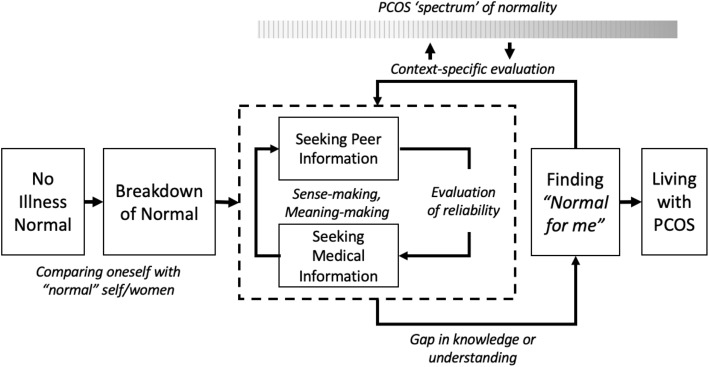
Background: With the growing availability of online health resources and the widespread use of social media to better understand health conditions, people are increasingly making sense of and managing their health conditions using resources beyond their health professionals and personal networks. However, where the condition is complex and poorly understood, this can involve extensive “patient work” to locate, interpret and test the information available. The overall purpose of this study was to investigate how women with polycystic ovary syndrome (PCOS) across two healthcare systems engage with online health resources and social media to better understand this complex and poorly understood lifelong endocrine disorder. Methods: A semi-structured interview study was conducted with women from the US ($$N=8$$N=8) and UK ($$N=7$$N=7) who had been diagnosed with PCOS within the previous five years. Transcribed data was analysed using a reflexive thematic analysis method. Results: We highlight the information needs and information-seeking strategies women use to make sense of how PCOS affects them, to gain emotional support, and to help them find an effective treatment. We also show how women with PCOS use online health and social media resources to compare themselves to women they view as “normal” and other women with PCOS, to find their sense of “normal for me” along a spectrum of this disorder. Conclusion: We draw on previous models of sense-making and finding normal for other complex and sensitive health conditions to capture the nuances of making sense of PCOS. We also discuss implications for the design and use of social media to support people managing PCOS.
Overview
The claims and statistics of this paper haven’t been checked yet.
Free: it reads the open-access text and checks the first 5 claims that cite a source we can check. Create a free account to check every claim.
Integrity signals
Registry
Cites
Statistics
Figures
Verification
Claims the paper makes
The claims and statistics of this paper haven’t been checked yet.
Free: it reads the open-access text and checks the first 5 claims that cite a source we can check. Create a free account to check every claim.
Claims other papers make about this one
Each is checked against this paper’s own text: does it say what the citing paper says it does?
The source backs part of the claim, not all of it — or backs it for a different population, condition or comparison.
In the citing paper
“As expected, women quickly and conveniently found health information with a Google search, yet they reported the volume of information as overwhelming and the content contradictory [40].”
From Availability and Use of Digital Technology Among Women With Polycystic Ovary Syndrome: Scoping Review (2025) · cites this paper as [40]
Experimental — accuracy not yet measuredThe cited source says what the claim attributes to it.
In the citing paper
“women with PCOS felt overwhelmed by the amount of information and doubted the information’s reliability [3840]”
From Availability and Use of Digital Technology Among Women With Polycystic Ovary Syndrome: Scoping Review (2025) · cites this paper as [40]
Experimental — accuracy not yet measuredThe cited source says what the claim attributes to it.
In the citing paper
“In 15% of articles (5/34), the researchers studied the Google search browser as used by organizations to promote PCOS awareness [33] and by women with PCOS to search for PCOS health information [303339], nutrition and exercise [14], and social support [14373840]”
From Availability and Use of Digital Technology Among Women With Polycystic Ovary Syndrome: Scoping Review (2025) · cites this paper as [40]
Self-check
Percentages, sums and reported differences re-computed from the paper’s own numbers.
The self-check needs the paper’s full text.
Citations
Cites
Using thematic analysis in psychology
Braun, V., & Clarke, V. (2006) · Qualitative Research in Psychology · doi:10.1191/1478088706qp063oa · Cited by 194,414
One size fits all? What counts as quality practice in (reflexive) thematic analysis?
Braun, V., & Clarke, V. (2021) · Qualitative Research in Psychology · doi:10.1080/14780887.2020.1769238 · Cited by 9,727
The Rotterdam ESHRE/ASRM-sponsored PCOS consensus workshop group (2004) · Human Reproduction · doi:10.1093/humrep/deh098 · Cited by 6,138
A worked example of Braun and Clarke’s approach to reflexive thematic analysis
Byrne, D. (2022) · Quality & Quantity · doi:10.1007/s11135-021-01182-y · Cited by 5,355 · cited 1×
“We used the reflexive thematic analysis (RTA) approach [46, 47] to inductively analyse our data as this approach is method and theory-agnostic, meaning we were able to use RTA with a constructivist approach [48].”
MethodBraun, V., & Clarke, V. (2021) · Qualitative Research in Sport, Exercise and Health · doi:10.1080/2159676x.2019.1704846 · Cited by 4,776 · cited 1×
“In presenting the themes, we incorporate several participant quotes, which we expand on in Table 1A (See: Additional files).”
MethodFauser, B. C. J. M., Tarlatzis, B. C., Rebar, R. W., Legro, R. S., Balen, A. H., Lobo, R., Carmina, E., Chang, J., Yildiz, B. O., Laven, J. S. E., et al. (2012) · Fertility and Sterility · doi:10.1016/j.fertnstert.2011.09.024 · Cited by 1,976 · cited 4×
“As well as the health complications outlined above [10], women with PCOS also have an increased risk of developing eating disorders [11], suicide [12], and sexual dysfunction [3, 11, 13].”
BackgroundInfluentialON USER STUDIES AND INFORMATION NEEDS
WILSON, T. D. (1981) · Journal of Documentation · doi:10.1108/eb026702 · Cited by 1,565 · cited 1×
“The findings pro - vide evidence to support Wilson’s [67] suggestion that information-seeking is collaborative and that people participate in “information exchanges”.”
BackgroundBozdag, G., Mumusoglu, S., Zengin, D., Karabulut, E., & Yildiz, B. O. (2016) · Human Reproduction · doi:10.1093/humrep/dew218 · Cited by 1,526 · cited 2×
“The criteria for diagnosis differ [1], but are commonly menstrual irregularities, hyperandrogenism, and/or polycystic ovary morphology detected via ultrasound [3, 6].”
BackgroundLeventhal, H., Phillips, L. A., & Burns, E. (2016) · Journal of Behavioral Medicine · doi:10.1007/s10865-016-9782-2 · Cited by 1,350 · cited 1×
“…understand how people respond to and manage illness threats, modelling how people use past experiences of illnesses to develop a collection of mental models of health conditions (e.g., the common cold), using these to help them identify where symptoms deviate from their usual “normative” self [70].”
Background(2012) · doi:10.1002/9781119973249.ch15 · Cited by 723
Update on PCOS: consequences, challenges, and guiding treatment
Hoeger, K. M., Dokras, A., & Piltonen, T. (2021) · The Journal of Clinical Endocrinology & Metabolism · doi:10.1210/clinem/dgaa839 · Cited by 610 · cited 4×
“…women vary greatly, making clinical care and research challenging [3, 6]; these include hirsutism, alopecia, acne, obesity, anxiety, depression, and stress [3, 6], as well as psycho-social impacts such as feeling “different”, struggling with notions of femininity, and wanting to be “normal” [7–9].”
BackgroundInfluentialGibson-Helm, M., Teede, H., Dunaif, A., & Dokras, A. (2016) · The Journal of Clinical Endocrinology & Metabolism · doi:10.1210/jc.2016-2963 · Cited by 428 · cited 1×
“However, our participants did highlight sometimes distressing divisions within the population of women managing PCOS - particularly related to the severity of symptoms and whether or not weight management was an issue (obese vs. lean PCOS).”
Background‘The thief of womanhood’: women's experience of polycystic ovarian syndrome
Kitzinger, C., & Willmott, J. (2002) · Social Science & Medicine · doi:10.1016/s0277-9536(01)00034-x · Cited by 392 · cited 2×
“As well as the health complications outlined above [10], women with PCOS also have an increased risk of developing eating disorders [11], suicide [12], and sexual dysfunction [3, 11, 13].”
BackgroundCancer peer support programs—do they work?
Campbell, H. S., Phaneuf, M. R., & Deane, K. (2004) · Patient Education and Counseling · doi:10.1016/j.pec.2003.10.001 · Cited by 288
Chang, W. Y., Knochenhauer, E. S., Bartolucci, A. A., & Azziz, R. (2005) · Fertility and Sterility · doi:10.1016/j.fertnstert.2005.01.096 · Cited by 285 · cited 1×
“The criteria for diagnosis differ [1], but are commonly menstrual irregularities, hyperandrogenism, and/or polycystic ovary morphology detected via ultrasound [3, 6].”
BackgroundWomen with polycystic ovary syndrome are often depressed or anxious—A case control study
Månsson, M., Holte, J., Landin-Wilhelmsen, K., Dahlgren, E., Johansson, A., & Landén, M. (2008) · Psychoneuroendocrinology · doi:10.1016/j.psyneuen.2008.06.003 · Cited by 260 · cited 1×
“As well as the health complications outlined above [10], women with PCOS also have an increased risk of developing eating disorders [11], suicide [12], and sexual dysfunction [3, 11, 13].”
BackgroundPolycystic Ovary Syndrome and Mental Health: A Review
Himelein, M. J., & Thatcher, S. S. (2006) · Obstetrical & Gynecological Survey · doi:10.1097/01.ogx.0000243772.33357.84 · Cited by 239 · cited 1×
“As well as the health complications outlined above [10], women with PCOS also have an increased risk of developing eating disorders [11], suicide [12], and sexual dysfunction [3, 11, 13].”
BackgroundManaging Life with a Chronic Condition: The Story of Normalization
Robinson, C. A. (1993) · Qualitative Health Research · doi:10.1177/104973239300300102 · Cited by 195 · cited 2×
“As prior work has found, online peer support helped women feel less isolated, gain access to advice and information, learn to navigate their relationships with doctors and make decisions about lifestyle management and treatment [28, 57, 62], but also increased some women’s anxiety about their own…”
BackgroundDennett, C. C., & Simon, J. (2015) · Diabetes Spectrum · doi:10.2337/diaspect.28.2.116 · Cited by 194 · cited 1×
“Finding the most effective medication options and lifestyle changes for PCOS can be challenging for women due to the different ways in which PCOS presents itself.”
BackgroundDiamanti‐Kandarakis, E., & Panidis, D. (2007) · Clinical Endocrinology · doi:10.1111/j.1365-2265.2007.02954.x · Cited by 183 · cited 1×
“PCOS is a heterogeneous disorder with a spectrum of phenotypes [2–5].”
BackgroundBenson, S., Hahn, S., Tan, S., Mann, K., Janssen, O. E., Schedlowski, M., & Elsenbruch, S. (2009) · Human Reproduction · doi:10.1093/humrep/dep031 · Cited by 160 · cited 1×
“As well as the health complications outlined above [10], women with PCOS also have an increased risk of developing eating disorders [11], suicide [12], and sexual dysfunction [3, 11, 13].”
BackgroundIntroduction to this Special Issue on Sensemaking
Pirolli, P., & Russell, D. (2011) · Human-Computer Interaction · doi:10.1080/07370024.2011.556557 · Cited by 140 · cited 1×
“…it has been recognised that interpersonal information-seeking allows people to engage in an information exchange [33], to share their views and lived experiences and help them make sense of health information (i.e., interpret and integrate information into their own understanding) [34, 35].”
BackgroundLiving with Depression: Illness and Identity Turning Points
Karp, D. A. (1994) · Qualitative Health Research · doi:10.1177/104973239400400102 · Cited by 131
Thannickal, A., Brutocao, C., Alsawas, M., Morrow, A., Zaiem, F., Murad, M. H., & Javed Chattha, A. (2020) · Clinical Endocrinology · doi:10.1111/cen.14153 · Cited by 122 · cited 1×
“As well as the health complications outlined above [10], women with PCOS also have an increased risk of developing eating disorders [11], suicide [12], and sexual dysfunction [3, 11, 13].”
BackgroundThe Lived Experience of Women Diagnosed With Polycystic Ovary Syndrome
Snyder, B. S. (2006) · Journal of Obstetric, Gynecologic & Neonatal Nursing · doi:10.1111/j.1552-6909.2006.00047.x · Cited by 116 · cited 1×
“As well as the health complications outlined above [10], women with PCOS also have an increased risk of developing eating disorders [11], suicide [12], and sexual dysfunction [3, 11, 13].”
BackgroundWomen's experiences of polycystic ovary syndrome diagnosis
Gibson-Helm, M. E., Lucas, I. M., Boyle, J. A., & Teede, H. J. (2014) · Family Practice · doi:10.1093/fampra/cmu028 · Cited by 112 · cited 2×
“…yet we found that most women were not receiving adequate information from their doctors at the time of diagnosis which resulted in them turning to online sources such as evidence-informed websites (e.g., NHS), social media (e.g., Reddit), and blogs; this supports prior work [9, 16, 29, 30, 63–65].”
ResultHolbrey, S., & Coulson, N. S. (2013) · BMC Women's Health · doi:10.1186/1472-6874-13-51 · Cited by 108 · cited 3×
“Holbrey and Coulson [32] investigated women’s experiences of online peer support within a defined online community, and identified factors that made participants feel more or less empowered by participating in the community; they did not, however, investigate how women sought out or made sense of…”
BackgroundResultAvery, J. C., & Braunack-Mayer, A. J. (2007) · BMC Women's Health · doi:10.1186/1472-6874-7-9 · Cited by 100 · cited 4×
“Prior research has considered women’s experiences of PCOS (e.g., [9, 18, 19]), their information-needs [19, 28– 30], the accuracy of PCOS information online (e.g., [31]) and women’s information-seeking behaviour relating to PCOS [28, 30].”
BackgroundInfluentialCarmina, E., & Løbo, R. A. (2022) · Diagnostics · doi:10.3390/diagnostics12102313 · Cited by 94 · cited 1×
“‘Lean PCOS’ is a label commonly attached to a specific PCOS phenotype that is not associated with weight gain or obesity, whilst ‘obese PCOS’ is a label commonly associated with weight gain or obesity [54–56].”
BackgroundJumisko, E., Lexell, J., & Söderberg, S. (2005) · Journal of Neuroscience Nursing · doi:10.1097/01376517-200502000-00007 · Cited by 89 · cited 1×
“More broadly, people with long-term conditions are often concerned with feeling “normal” [37–39] and tend to compare themselves to their peers to normalise their experiences [40].”
BackgroundThe diagnosis and lived experience of polycystic ovary syndrome: A qualitative study
Tomlinson, J., Pinkney, J., Adams, L., Stenhouse, E., Bendall, A., Corrigan, O., & Letherby, G. (2017) · Journal of Advanced Nursing · doi:10.1111/jan.13300 · Cited by 88 · cited 2×
“…yet we found that most women were not receiving adequate information from their doctors at the time of diagnosis which resulted in them turning to online sources such as evidence-informed websites (e.g., NHS), social media (e.g., Reddit), and blogs; this supports prior work [9, 16, 29, 30, 63–65].”
ResultPCOS and nutritional approaches: Differences between lean and obese phenotype
Barrea, L., Frias-Toral, E., Verde, L., Ceriani, F., Cucalón, G., Garcia-Velasquez, E., Moretti, D., Savastano, S., Colao, A., & Muscogiuri, G. (2021) · Metabolism Open · doi:10.1016/j.metop.2021.100123 · Cited by 86
Costa Figueiredo, M., Caldeira, C., Eikey, E. V., Mazmanian, M., & Chen, Y. (2018) · Proceedings of the ACM on Human-Computer Interaction · doi:10.1145/3274309 · Cited by 78
Braun, V., Clarke, V., Hayfield, N., & Terry, G. (2024) · Routledge eBooks · doi:10.4324/9781003362715-21 · Cited by 75
Young women's experiences living with polycystic ovary syndrome
Weiss, T. R., & Bulmer, S. M. (2011) · Journal of Obstetric, Gynecologic & Neonatal Nursing · doi:10.1111/j.1552-6909.2011.01299.x · Cited by 73 · cited 5×
“…women vary greatly, making clinical care and research challenging [3, 6]; these include hirsutism, alopecia, acne, obesity, anxiety, depression, and stress [3, 6], as well as psycho-social impacts such as feeling “different”, struggling with notions of femininity, and wanting to be “normal” [7–9].”
BackgroundResultInfluentialAndalibi, N., & Garcia, P. (2021) · Proceedings of the ACM on Human-Computer Interaction · doi:10.1145/3449201 · Cited by 71 · cited 2×
“1) that links together these different phases of information-seeking and sense-making.”
BackgroundIsmayilova, M., & Yaya, S. (2022) · BMC Women's Health · doi:10.1186/s12905-022-01630-3 · Cited by 68
Chopra, S., Zehrung, R., Shanmugam, T. A., & Choe, E. K. (2021) · Proceedings of the 2021 CHI Conference on Human Factors in Computing Systems · doi:10.1145/3411764.3445706 · Cited by 67
Cross-sectional Study on the Knowledge and Prevalence of PCOS at a Multiethnic University
Rao, M., Broughton, K. S., & LeMieux, M. J. (2020) · Progress in Preventive Medicine · doi:10.1097/pp9.0000000000000028 · Cited by 66 · cited 1×
“…on PCOS is widely available online, it is often contradictory and of variable quality [20], lacks comprehensive, specific, and accurate details on lifestyle changes for managing PCOS symptoms [21], is not culturally specific [18, 22], and is not developed at appropriate education levels [22].”
BackgroundPatel, D., BLANDFORD, A. E., Warner, M., Shawe, J., & Stephenson, J. (2019) · Proceedings of the ACM on Human-Computer Interaction · doi:10.1145/3359184 · Cited by 65 · cited 2×
“1) that links together these different phases of information-seeking and sense-making.”
BackgroundSelf-citationO’Kane, A. A., Park, S. Y., Mentis, H., Blandford, A., & Chen, Y. (2016) · Computer Supported Cooperative Work (CSCW) · doi:10.1007/s10606-016-9260-y · Cited by 62 · cited 4×
“The behaviour of seeking information online to compare the personal experience of an illness to the lived experiences of peers is a recurrent theme in the literature on living with long-term conditions [41–44].”
BackgroundResultInfluentialSelf-citationThe Diagnostic Experiences of Women With Polycystic Ovary Syndrome (PCOS) in Ontario, Canada
Soucie, K., Samardzic, T., Schramer, K., Ly, C., & Katzman, R. (2021) · Qualitative Health Research · doi:10.1177/1049732320971235 · Cited by 56 · cited 1×
“Moreover, it can be difficult to obtain reliable information from doctors and general online health resources [19, 23–27].”
BackgroundLooking for “normal”: Sense making in the context of health disruption
Genuis, S. K., & Bronstein, J. (2017) · Journal of the Association for Information Science and Technology · doi:10.1002/asi.23715 · Cited by 55 · cited 7×
“In keeping with literature on long-term conditions [36–40], we found that women with PCOS are concerned with feeling “normal” and that they compare themselves to their peers to normalise their illness experience.”
BackgroundMethodResultInfluentialHuttunen, A., & Kortelainen, T. (2021) · Journal of the Association for Information Science and Technology · doi:10.1002/asi.24447 · Cited by 49 · cited 1×
“1) that links together these different phases of information-seeking and sense-making.”
BackgroundTassone, E., Teede, H., Dokras, A., Garad, R., & Gibson-Helm, M. (2018) · Seminars in Reproductive Medicine · doi:10.1055/s-0038-1668086 · Cited by 48 · cited 4×
“Prior research has considered women’s experiences of PCOS (e.g., [9, 18, 19]), their information-needs [19, 28– 30], the accuracy of PCOS information online (e.g., [31]) and women’s information-seeking behaviour relating to PCOS [28, 30].”
BackgroundResultInfluentialBurgess, E. R., Reddy, M. C., Davenport, A., Laboi, P., & BLANDFORD, A. E. (2019) · CHI Conference on Human Factors in Computing Systems · doi:10.1145/3290605.3300895 · Cited by 46 · cited 2×
“Consistent with our findings, Burgess et al. [44] found that once patients accepted their condition, they moved from a learning phase to a phase of living with their condition.”
BackgroundResultSelf-citationO'Brien, B., Dahiya, R., & KIMBLE, R. M. N. (2020) · BMJ Case Reports · doi:10.1136/bcr-2019-231749 · Cited by 44 · cited 1×
“For example, P13 UK said: “Face-book, obviously, you kind of take with a pinch of salt, I guess.”
BackgroundFertility concerns and related information needs and preferences of women with PCOS
Holton, S., Hammarberg, K., & Johnson, L. (2018) · Human Reproduction Open · doi:10.1093/hropen/hoy019 · Cited by 43 · cited 1×
“…yet we found that most women were not receiving adequate information from their doctors at the time of diagnosis which resulted in them turning to online sources such as evidence-informed websites (e.g., NHS), social media (e.g., Reddit), and blogs; this supports prior work [9, 16, 29, 30, 63–65].”
ResultPirotta, S., Joham, A. J., Moran, L. J., Skouteris, H., & Lim, S. S. (2021) · Patient Education and Counseling · doi:10.1016/j.pec.2021.01.036 · Cited by 41 · cited 1×
“The clinical recommendations for managing PCOS focus on targeting specific symptoms through medication and implementing lifestyle changes such as adjustments to diet and exercise [6, 14–17].”
BackgroundBecoming anormalguy: Men making sense of long-term bodily changes following bariatric surgery
Groven, K. S., Galdas, P., & Solbrække, K. N. (2015) · International Journal of Qualitative Studies on Health and Well-Being · doi:10.3402/qhw.v10.29923 · Cited by 38 · cited 2×
“Similarly, in line with findings from Groven and Galdas [59], people experiencing a disruption to their perceived “normal” would directly compare themselves with others.”
BackgroundResultIsmayilova, M., & Yaya, S. (2023) · International Health · doi:10.1093/inthealth/ihac028 · Cited by 38 · cited 1×
“Gaining knowledge of the self through experimentation with treatments is consistent with research by O’Kane et al. [41] around complex long-term conditions, and by Chopra et al. [57] and Ismayilova and Sanni [25] around PCOS.”
ResultLau, G. M., Elghobashy, M., Thanki, M., Ibegbulam, S., Latthe, P., Gillett, C. D. T., O’Reilly, M. W., Arlt, W., Lindenmeyer, A., Kempegowda, P., et al. (2022) · Frontiers in Endocrinology · doi:10.3389/fendo.2022.1064937 · Cited by 36 · cited 3×
“As a result, there is a growing focus on women’s lived experiences with PCOS and on their information needs [18, 19].”
BackgroundEe, C., Smith, C., Moran, L., MacMillan, F., Costello, M., Baylock, B., & Teede, H. (2020) · BMC Women's Health · doi:10.1186/s12905-020-01090-7 · Cited by 35 · cited 1×
“Our findings support existing literature on experiences of PCOS [7, 9, 16, 32, 61], in that many women questioned their femininity and whether they were “normal” because of their symptoms, turning to others with PCOS to provide context for their own experiences.”
ResultSandsund, C., Pattison, N. A., Doyle, N., & Shaw, C. (2012) · European Journal of Cancer Care · doi:10.1111/ecc.12016 · Cited by 31 · cited 1×
“More broadly, people with long-term conditions are often concerned with feeling “normal” [37–39] and tend to compare themselves to their peers to normalise their experiences [40].”
BackgroundMousiolis, A., Michala, L., & Antsaklis, A. (2012) · European Journal of Obstetrics & Gynecology and Reproductive Biology · doi:10.1016/j.ejogrb.2012.03.028 · Cited by 30 · cited 1×
“Although information on PCOS is widely available online, it is often contradictory and of variable quality [20], lacks comprehensive, specific, and accurate details on lifestyle changes for managing PCOS symptoms [21], is not culturally specific [18, 22], and is not developed at appropriate…”
BackgroundChiu, W.-L., Kuczynska-Burggraf, M., Gibson-Helm, M., Teede, H., Vincent, A., & Boyle, J. (2018) · Seminars in Reproductive Medicine · doi:10.1055/s-0038-1667186 · Cited by 24 · cited 1×
“However, as found by Chiu et al. [66] and others, women reported that information from PCOS-specific medical websites was too general.”
Avery, J., Ottey, S., Morman, R., Cree-Green, M., & Gibson-Helm, M. (2020) · Current Opinion in Endocrine and Metabolic Research · doi:10.1016/j.coemr.2020.04.008 · Cited by 24 · cited 2×
“As women’s knowledge of PCOS increased, so too did their understanding of the condition; this may have also contributed to increased confidence in managing the condition [62].”
BackgroundHargittai, E., & Young, H. C. (2012) · Policy & Internet · doi:10.1515/1944-2866.1176 · Cited by 21 · cited 2×
“Prior work has highlighted the difficulties women face when looking for relevant information around health topics, where vast amounts of information exist [60].”
BackgroundThe diagnostic experience of polycystic ovary syndrome: A scoping review of patient perspectives
Presswala, B., & De Souza, L. R. (2023) · Patient Education and Counseling · doi:10.1016/j.pec.2023.107771 · Cited by 21 · cited 2×
“These shortcomings mean women can have incomplete information, limiting their ability to make effective lifestyle changes, such as to diet and exercise [21].”
BackgroundHtet, T., Cassar, S., Kuczynska-Burggraf, M., Gibson-Helm, M., Chiu, W.-L., Stepto, N., Moran, L., & Boyle, J. (2018) · Seminars in Reproductive Medicine · doi:10.1055/s-0038-1667309 · Cited by 16 · cited 2×
“These shortcomings mean women can have incomplete information, limiting their ability to make effective lifestyle changes, such as to diet and exercise [21].”
BackgroundSoucie, K. M., Samardžić, T., Schramer, K., Salam, Z., & Ly, C. (2019) · Journal of Health Psychology · doi:10.1177/1359105319840696 · Cited by 13 · cited 1×
“These shortcomings mean women can have incomplete information, limiting their ability to make effective lifestyle changes, such as to diet and exercise [21].”
BackgroundVågenes, H., & Pranić, S. M. (2023) · Reproductive Biology and Endocrinology · doi:10.1186/s12958-023-01100-x · Cited by 10 · cited 1×
“Prior research has considered women’s experiences of PCOS (e.g., [9, 18, 19]), their information-needs [19, 28– 30], the accuracy of PCOS information online (e.g., [31]) and women’s information-seeking behaviour relating to PCOS [28, 30].”
BackgroundPolycystic ovary syndrome (PCOS) in the adolescent patient: recommendations for practice.
Snyder, B. S. (2005) · PubMed · Cited by 9
Tay, C. T., Williams, F., Mousa, A., Teede, H., & Burgert, T. S. (2023) · Seminars in Reproductive Medicine · doi:10.1055/s-0043-1777086 · Cited by 8 · cited 3×
“As a result, there is a growing focus on women’s lived experiences with PCOS and on their information needs [18, 19].”
BackgroundPolycystic Ovary Syndrome Across the Life Span of Women: A Wellness-Based Integrative Intervention
Callender, K. A. (2018) · Adultspan Journal · doi:10.1002/adsp.12052 · Cited by 3 · cited 1×
“The clinical recommendations for managing PCOS focus on targeting specific symptoms through medication and implementing lifestyle changes such as adjustments to diet and exercise [6, 14–17].”
Background
Research works printed but not linked: 3
- Blandford A Attfield S Interacting with information Synth Lect Hum-Cent Inform. 2010 3 1 1 99
- Veinot TC We have a lot of information to share with each other": Understanding the value of peer-based health information exchange Inf Res. 2010 15 4 15 4
- Akshaya S Bhattacharya R Comparative study of clinical profile of lean and obese polycystic ovary syndrome women Int J Reprod Contracept Obstet Gynecol. 2016 5 8 2530 2534
Cited by
Towards Hormone Health: An Autoethnography of Long-Term Holistic Tracking to Manage PCOS
Kang, D., Li, J., Leshed, G., Rzeszotarski, J. M., & Lu, X. (2025) · CHI Conference on Human Factors in Computing Systems · doi:10.1145/3706598.3713619 · Cited by 24
“Thus, patients often largely rely on self-tracking technology (e.g., menstrual tracking app) to monitor their symptoms and fnd management strategies that work for them [10, 22, 51, 64].”
Riemma, G., Carotenuto, R. M., Casolari, C., Ronsini, C., Corte, L. D., Verde, M. L., Unfer, V., FRANCISCIS, P. D., Laganà, A. S., & Etrusco, A. (2025) · International Journal of Gynecology & Obstetrics · doi:10.1002/ijgo.70007 · Cited by 14
Wright, P. J., Burts, C., Harmon, C., & Corbett, C. F. (2025) · JMIR Infodemiology · doi:10.2196/68469 · Cited by 8
“In 15% of articles (5/34), the researchers studied the Google search browser as used by organizations to promote PCOS awareness [33] and by women with PCOS to search for PCOS health information [30,33,39], nutrition and exercise [14], and social support [14,37,38,40].”
InfluentialEfficacy of physical activity in polycystic ovary syndrome treatment
Parmar, S.-L. K., & Whooten, R. (2024) · Current Opinion in Endocrinology Diabetes and Obesity · doi:10.1097/med.0000000000000885 · Cited by 10
“…and calling or to social media to fill information gaps they may not be receiving from healthcare providers, specifically in relation to health literacy on PCOS, specific advice regarding lifestyle behaviors, and psychological and emotional support from an online community of women with PCOS [43].”
Afaq, M., Vashisht, K., Al-Dhoon, A., Abraham, D., Atanasov, A. G., Matin, M., Arshad, Z., Kashyap, R., & Nawaz, F. A. (2025) · DIGITAL HEALTH · doi:10.1177/20552076251314100 · Cited by 6
Metadata
- Authors
- Gomula, J., Warner, M., & Blandford, A.
- Affiliations
- University College London (GB)
- Corresponding author
- Warner, Mark
- Venue
- BMC Women's Health
- Published
- 2024-03-05
- Volume
- 24
- Issue
- 1
- Pages
- 157-157
- ISSN
- 1472-6874 (ISSN-L)
- PMC
- PMC10913566
- OpenAlex
- W4392469452
- Cited by
- 22
- References
- 65
- Citations by year
- 2026: 14 · 2025: 6 · 2024: 2
- FWCI
- 12.92
- Type
- journal article
- Language
- en
- Open access
- gold
- doi.org
- Licence
- cc-by
- creativecommons.org/licenses/by/4.0 (tdm)
- creativecommons.org/licenses/by/4.0 (vor)
- Locations
- BMC Women s Health (publishedVersion, cc-by)
- PubMed Central (publishedVersion, cc-by)
- PubMed (publishedVersion)
- UCL Discovery (University College London) (submittedVersion, cc-by)
- DOAJ (DOAJ: Directory of Open Access Journals) (submittedVersion)
- Topics
- Health Sciences › Health Professions › General Health Professions › Health Literacy and Information Accessibility
- Social Sciences › Health › Social Media in Health Education
- Health Sciences › Medicine › Reproductive Medicine › Ovarian function and disorders
- Keywords
- polycystic ovary syndrome, online health resources, social media, sensemaking, patient work, information seeking, emotional support, normality, women's health, endocrine disorders, social comparison, healthcare system differences
- MeSH terms
- Female, Health Personnel, Health Resources, Humans, Polycystic Ovary Syndrome, Qualitative Research, Social Media
About these checks
Registry, retraction, Cites and statistics results are computed, not judged, with one exception: a printed reference that no index lists is read once by a model before it counts as a citation error. Claims are extracted by a model and kept only when their quote appears verbatim in the text; each cited source is then checked, with a model’s help, for whether it says what the claim relies on. Those verdicts can be wrong — read the claim’s quote and the cited source before relying on one.
Statistics and arithmetic are recomputed, not judged.
Confidence bands are shown only for fields calibrated on our annotated test set. None is calibrated yet, so no band is shown.
What counts as a claim ›How we measure confidence ›How we check this ›
Are you an author, or do you see a problem with this page? Request a review
Data sources
Bibliographic data: Semantic Scholar, OpenAlex, Crossref.
Contains information from the Semantic Scholar Academic Graph Datasets, made available under the ODC Attribution License (ODC-BY 1.0).
Semantic Scholar’s data is described in: Kinney, R., et al. (2023). The Semantic Scholar Open Data Platform. arXiv:2301.10140.
