

Training to reduce LGBTQ-related bias among medical, nursing, and dental students and providers: a systematic review
Open accessThe DOI matches its Crossref record; 82 of the 83 references it cites were found in a registry or an index.
Abstract
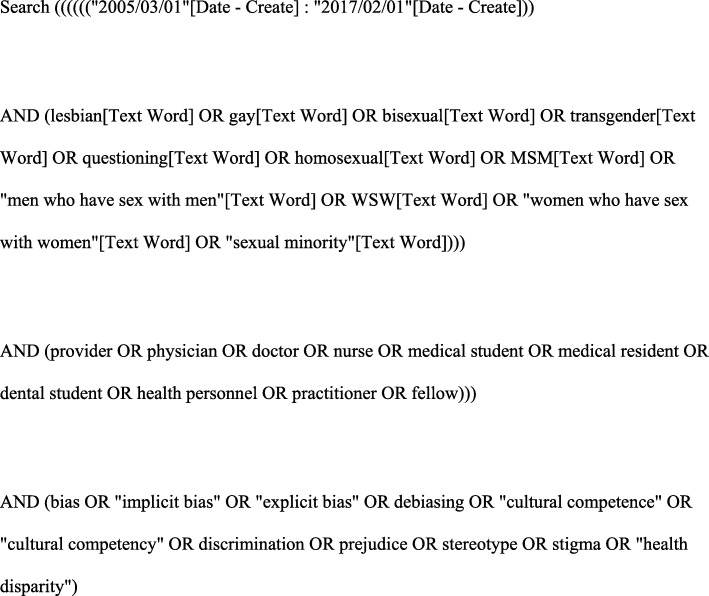
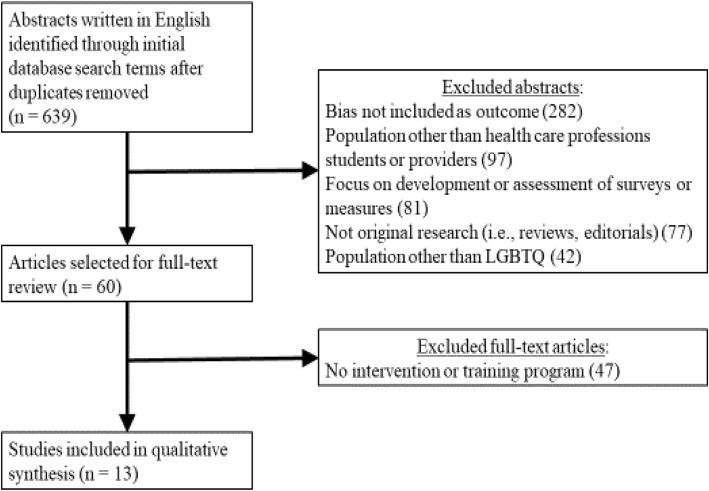
BACKGROUND: Lesbian, gay, bisexual, transgender and questioning (LGBTQ) individuals experience higher rates of health disparities. These disparities may be driven, in part, by biases of medical providers encountered in health care settings. Little is known about how medical, nursing, or dental students are trained to identify and reduce the effects of their own biases toward LGBTQ individuals. Therefore, a systematic review was conducted to determine the effectiveness of programs to reduce health care student or provider bias towards these LGBTQ patients. METHODS: The authors performed searches of online databases (MEDLINE/PubMed, PsycINFO, Web of Science, Scopus, Ingenta, Science Direct, and Google Scholar) for original articles, published in English, between March 2005 and February 2017, describing intervention studies focused on reducing health care student or provider bias towards LGBTQ individuals. Data extracted included sample characteristics (i.e., medical, nursing, or dental students or providers), study design (i.e., pre-post intervention tests, qualitative), program format, program target (i.e., knowledge, comfort level, attitudes, implicit bias), and relevant outcomes. Study quality was assessed using a five-point scale. RESULTS: The search identified 639 abstracts addressing bias among medical, nursing, and dental students or providers; from these abstracts, 60 articles were identified as medical education programs to reduce bias; of these articles, 13 described programs to reduce bias towards LGBTQ patients. Bias-focused educational interventions were effective at increasing knowledge of LGBTQ health care issues. Experiential learning interventions were effective at increasing comfort levels working with LGBTQ patients. Intergroup contact was effective at promoting more tolerant attitudes toward LGBTQ patients. Despite promising support for bias education in increasing knowledge and comfort levels among medical, nursing, and dental students or providers towards LGBTQ persons, this systematic review did not identify any interventions that assessed changes in implicit bias among students or providers. CONCLUSIONS: Strategies for assessing and mitigating implicit bias towards LGBTQ patients are discussed and recommendations for medical, nursing, and dental school curricula are presented.
Overview
The claims and statistics of this paper haven’t been checked yet.
Free: it reads the open-access text and checks the first 5 claims that cite a source we can check. Create a free account to check every claim.
Integrity signals
Registry
Cites
Statistics
Figures
Verification
Claims the paper makes
The claims and statistics of this paper haven’t been checked yet.
Free: it reads the open-access text and checks the first 5 claims that cite a source we can check. Create a free account to check every claim.
Claims other papers make about this one
Each is checked against this paper’s own text: does it say what the citing paper says it does?
In the citing paper
“Individuals who are lesbian, gay, bisexual, transgender, transsexual, two-spirit, queer, or questioning (LGBTQ+) are particularly affected by inequalities in health care, which arise due to particular needs for treatment47 and due to bias in health care practitioners.48”
From Addressing bias in big data and AI for health care: A call for open science (2021) · cites this paper as [48]
Self-check
Percentages, sums and reported differences re-computed from the paper’s own numbers.
The self-check needs the paper’s full text.
Citations
Cites
Preferred Reporting Items for Systematic Reviews and Meta-Analyses: the PRISMA statement
Moher, D., Liberati, A., Tetzlaff, J., Altman, D. G., & for the PRISMA Group (2009) · BMJ · doi:10.1136/bmj.b2535 · Cited by 83,823
Preferred reporting items for systematic reviews and meta-analyses: The PRISMA statement
Moher, D., Liberati, A., Tetzlaff, J., Altman, D. G., & the PRISMA Group* (2009) · Annals of Internal Medicine · doi:10.7326/0003-4819-151-4-200908180-00135 · Cited by 37,554
A meta-analytic test of intergroup contact theory.
Pettigrew, T. F., & Tropp, L. R. (2006) · Journal of personality and social psychology · doi:10.1037/0022-3514.90.5.751 · Cited by 9,708
Measuring individual differences in implicit cognition: the implicit association test
Greenwald, A. G., McGhee, D. E., & Schwartz, J. L. K. (1998) · Journal of Personality and Social Psychology · doi:10.1037/0022-3514.74.6.1464 · Cited by 9,210
Unequal treatment: confronting racial and ethnic disparities in health care
(2003) · Choice Reviews Online · doi:10.5860/choice.40-5843 · Cited by 7,043
Implicit social cognition: Attitudes, self-esteem, and stereotypes
Greenwald, A. G., & Banaji, M. R. (1995) · Psychological Review · doi:10.1037/0033-295x.102.1.4 · Cited by 6,682
Understanding and using the Implicit Association Test: III. Meta-analysis of predictive validity.
Greenwald, A. G., Poehlman, T. A., Uhlmann, E. L., & Banaji, M. R. (2009) · Journal of Personality and Social Psychology · doi:10.1037/a0015575 · Cited by 3,257
Implicit bias in healthcare professionals: a systematic review
FitzGerald, C., & Hurst, S. (2017) · BMC Medical Ethics · doi:10.1186/s12910-017-0179-8 · Cited by 2,556
Beyond curriculum reform: confronting medicineʼs hidden curriculum
Hafferty, F. W. (1998) · Academic Medicine · doi:10.1097/00001888-199804000-00013 · Cited by 1,881
Physicians and Implicit Bias: How Doctors May Unwittingly Perpetuate Health Care Disparities
Chapman, E. N., Kaatz, A., & Carnes, M. (2013) · Journal of General Internal Medicine · doi:10.1007/s11606-013-2441-1 · Cited by 1,300
Research works printed but not linked: 7
- Institute of Medicine Collecting sexual orientation and gender identity data in electronic health records: workshop summary 2013 Washington DC National Academy of Sciences 23967501
- Krehely J How to close the LGBT health disparities gap. Center for American Progress 2009 1 9
- Legal L When health care Isn't caring: lambda Legal's survey of discrimination against LGBT people and people with HIV 2010 New York Lamba Legal
- Grant JM Mottet LA Tanis J National Transgender Discrimination Survey Report on health and health care 2010 Washington DC National Center for Transgender Equality and National Gay and Lesbian Task Force
- Stone J Moskowitz GB Zestcott CA A brief, active learning workshop for reducing implicit bias among medical students. Manuscript in preparation 2017
- AAMC Advisory Committee on Sexual Orientation GI, and Sex Development,. Implementing Curricular and Institutional Climate Changes to Improve Health Care for Individuals Who Are LGBT, Gender Nonconforming, or Born with DSD: A Resource for Medical Educators 2014
- Staats C, Capatosto K, Wright RA, Jackson VW. State of the science: implicit bias review. 2016th ed. Colubus: Kirwan Institute for the Study of race and ethnicity, The Ohio Statee University.
Cited by
Addressing bias in big data and AI for health care: A call for open science
Norori, N., Hu, Q., Aellen, F. M., Faraci, F. D., & Tzovara, A. (2021) · Patterns · doi:10.1016/j.patter.2021.100347 · Cited by 903
“48”
LGBTQ + cultural competency training for health professionals: a systematic review
Yu, H., Flores, D. D., Bonett, S., & Bauermeister, J. A. (2023) · BMC Medical Education · doi:10.1186/s12909-023-04373-3 · Cited by 185
Broken down by bias: Healthcare biases experienced by BIPOC and LGBTQ+ patients.
Casanova-Pérez, R., Apodaca, C., Bascom, E., Mohanraj, D., Lane, C., Vidyarthi, D., Beneteau, E., Sabin, J., Pratt, W., Weibel, N., et al. (2021) · PubMed Central · Cited by 119
Transgender and gender diverse health education for future nurses: Students' knowledge and attitudes
Sherman, A. D. F., McDowell, A., Clark, K. D., Balthazar, M. S., Klepper, M., & Bower, K. M. (2020) · Nurse Education Today · doi:10.1016/j.nedt.2020.104690 · Cited by 115
“These future directions align with findings from a recent systematic review of interventions aimed to reduce bias related to sexual orientation and gender identity among nursing, dental, and medical students (Morris et al., 2019).”
BackgroundParenteau, A. M., Boyer, C. J., Campos, L., Carranza, A. F., Deer, L. K., Hartman, D. T., Bidwell, J. T., & Hostinar, C. E. (2022) · Development and Psychopathology · doi:10.1017/s0954579422000499 · Cited by 113
“However, interventions aimed at promoting positive attitudes toward LGBTQ þ and obese populations have been less successful, with recent reviews documenting mixed results (Morris et al., 2019; Phelan et al., 2015).”
BackgroundResultNowaskie, D. Z., & Patel, A. U. (2020) · BMC Medical Education · doi:10.1186/s12909-020-02381-1 · Cited by 101
Nowaskie, D. Z., Patel, A. U., & Fang, R. C. (2020) · PLoS ONE · doi:10.1371/journal.pone.0237670 · Cited by 93
“This finding is akin to the few studies that have shown that curricular education can be effective in ameliorating LGBT-specific attitudes, preparedness, and knowledge among dental, [18] medical, [7,8] and pharmacy [19,20] students.”
BackgroundResultSileo, K. M., Baldwin, A., Huynh, T. A., Olfers, A., Woo, J., Greene, S. L., Casillas, G. L., & Taylor, B. S. (2022) · Journal of Health Psychology · doi:10.1177/13591053211027652 · Cited by 83
“First, a systematic review reported positive effects of trainings to reduce LGBTQ+ bias on healthcare students’ and providers’ knowledge, attitudes, and comfort treating LGBTQ+ patients (Morris et al., 2019).”
BackgroundBaiocco, R., Pezzella, A., Pistella, J., Kouta, C., Rousou, E., Pérez, P. R., López‐Liria, R., Dudau, V., Doru, A. M., Kuckert‐Wöstheinrich, A., et al. (2021) · Sexuality Research and Social Policy · doi:10.1007/s13178-020-00521-2 · Cited by 79
Suárez-Alcázar, M. P., Roca, M. E. G., Collado‐Boira, E., Recacha-Ponce, P., Temprado, M. D., Baliño, P., Muriach, M., Buils, R. F., Salas‐Medina, P., Hernando, C., et al. (2013) · Healthcare · doi:10.3390/healthcare · Cited by 83
Kamen, C. S., Pratt‐Chapman, M. L., Meersman, S. C., Quinn, G. P., Schabath, M. B., Maingi, S., Merrill, J. K., Garrett-Mayer, E. S., Kaltenbaugh, M. W., Schenkel, C., et al. (2022) · JCO Oncology Practice · doi:10.1200/op.22.00084 · Cited by 71
Review of current 2SLGBTQIA+ inequities in the Canadian health care system
Comeau, D., Johnson, C., & Bouhamdani, N. (2023) · Frontiers in Public Health · doi:10.3389/fpubh.2023.1183284 · Cited by 71
“Even more importantly, repetition of relevant trainings was a strategy that increased the long-term comfort level of HCP (46).”
BackgroundInfluentialCultural Competence in the Care of LGBTQ Patients
Bass, B., & Nagy, H. (2021) · StatPearls · Cited by 66
Smith, J. B., Willis, E., & Hopkins‐Walsh, J. (2022) · Nursing Philosophy · doi:10.1111/nup.12401 · Cited by 62
Heer, E. V., Peters, C., Knight, R., Yang, L., & Heitman, S. J. (2023) · Preventive Medicine · doi:10.1016/j.ypmed.2023.107478 · Cited by 62
LGBTQ2S + childbearing individuals and perinatal mental health: A systematic review
Kirubarajan, A., Barker, L. C., Leung, S., Ross, L. E., Zaheer, J., Park, B., Abramovich, A., Yudin, M. H., & Lam, J. S. H. (2022) · BJOG: An International Journal of Obstetrics & Gynaecology · doi:10.1111/1471-0528.17103 · Cited by 59
LGBTQ+ health education for medical students in the United States: a narrative literature review
Jewell, T., & Petty, E. M. (2024) · Medical Education Online · doi:10.1080/10872981.2024.2312716 · Cited by 62
“While there are existing literature reviews that have explored medical education curricula on LGBTQ+ health [5–7, 11”
BackgroundMateo, C. M., & Williams, D. R. (2020) · Academic Medicine · doi:10.1097/acm.0000000000003683 · Cited by 61
Oral health‐related stigma: Describing and defining a ubiquitous phenomenon
Doughty, J., Macdonald, M. E., Muirhead, V., & Freeman, R. (2023) · Community Dentistry And Oral Epidemiology · doi:10.1111/cdoe.12893 · Cited by 58
Jeffrey, S., Ashton, L. M., Ferfolja, T., & Armour, M. (2024) · Women s Health · doi:10.1177/17455057241251974 · Cited by 49
“…barriers to care, including barriers within the learning institution, profession, wider environment and the history of trans and gender diverse healthcare, 13,66,67 can teach students how to recognize and respond to illness as a down-stream effect of social, political and economic structures.”
BackgroundLGBTQ+ health: tackling potential health-care professionals’ bias
Malta, M. (2023) · Nature Reviews Disease Primers · doi:10.1038/s41572-022-00413-2 · Cited by 46
Madrigal, J., Rudasill, S. E., Tran, Z. K., Bergman, J., & Benharash, P. (2021) · PLoS ONE · doi:10.1371/journal.pone.0260387 · Cited by 44
Lacombe‐Duncan, A., Logie, C. H., Persad, Y., Leblanc, G., Nation, K., Kia, H., Scheim, A. I., Lyons, T., Horemans, C., Olawale, R., et al. (2021) · BMC Medical Education · doi:10.1186/s12909-021-02991-3 · Cited by 41
Damery, S. L., Sekoni, A. O., Retzer, A., Okafor, I. P., Manga‐Atangana, B., Posaner, R., Gale, N. K., & Jolly, K. B. (2025) · BMJ Open · doi:10.1136/bmjopen-2024-090005 · Cited by 40
Serchen, J., Hilden, D. R., Beachy, M. W., Hilden, D. R., Beachy, M. W., Carney, J. K., Foster, H., Hoeg, A., Hollon, M. F., Jumper, C., et al. (2024) · Annals of Internal Medicine · doi:10.7326/m24-0636 · Cited by 37
“Such training has been shown to improve students' knowledge, con fi dence, and comfort in caring for LGBTQ+ patients (83, 84).”
BackgroundHealth Care Disparities Among Autistic LGBTQ+ People
Wallisch, A. M., Boyd, B. A., Hall, J. P., Kurth, N. K., Streed, C. G., Mulcahy, A. C., McMaughan, D. J., & Batza, K. (2023) · Autism in Adulthood · doi:10.1089/aut.2022.0006 · Cited by 37
“Furthermore, studies have suggested that many health care providers lack knowledge and training related to LGBTQ + health care needs, 53,54 and this is especially true for people with dual identities of LGBTQ + and autism, as providers often specialize in only one of these areas of practice.”
Jecke, L., & Zepf, F. D. (2023) · European Child & Adolescent Psychiatry · doi:10.1007/s00787-023-02195-8 · Cited by 35
“Another important feature is to highlight education exclusively on transgender care since previously published reviews often studied interventions about LGBTQI health in general [42–45] or cultural competency [46] and did not focus on a special population.”
Lyons, A., Hill, A. O., McNair, R., Carman, M., Morris, S., & Bourne, A. H. (2021) · Journal of Affective Disorders · doi:10.1016/j.jad.2021.09.105 · Cited by 35
A rapid review of end-of-life needs in the LGBTQ+ community and recommendations for clinicians
Lintott, L., Beringer, R., Do, A., & Daudt, H. (2022) · Palliative Medicine · doi:10.1177/02692163221078475 · Cited by 35
Preliminary effectiveness of an LGBTQ+ affirmative parenting intervention with foster parents
Austin, A., Craig, S. L., Matarese, M., Greeno, E. J., Weeks, A., & Betsinger, S. (2021) · Children and Youth Services Review · doi:10.1016/j.childyouth.2021.106107 · Cited by 34
Hughes, T. L., Bochicchio, L. A., Drabble, L. A., Muntinga, M. E., Jukema, J., Veldhuis, C. B., Brück, S., & Bos, H. (2023) · BMC Public Health · doi:10.1186/s12889-023-17466-x · Cited by 34
Perspectives of Transgender and Genderqueer Standardized Patients
Noonan, E. J., Weingartner, L. A., Combs, R. M., Bohnert, C. A., Shaw, M. A., & Sawning, S. (2020) · Teaching and Learning in Medicine · doi:10.1080/10401334.2020.1811096 · Cited by 32
Rainbows and “Ready for Residency”: Integrating LGBTQ Health Into Medical Education
Roth, L. T., Friedman, S., Gordon, R. J., & Catallozzi, M. (2020) · MedEdPORTAL · doi:10.15766/mep_2374-8265.11013 · Cited by 32
Progression of Gender Dysphoria in Children and Adolescents: A Longitudinal Study
Wagner, S., Panagiotakopoulos, L., Nash, R., Bradlyn, A. S., Getahun, D., Lash, T. L., Roblin, D. W., Silverberg, M. J., Tangpricha, V., Vupputuri, S. X., et al. (2021) · PEDIATRICS · doi:10.1542/peds.2020-027722 · Cited by 33
LGBTQ+ health education interventions for nursing students: A systematic review
Yu, H., Bauermeister, J. A., & Flores, D. D. (2022) · Nurse Education Today · doi:10.1016/j.nedt.2022.105661 · Cited by 32
Student Education About Pre-exposure Prophylaxis (PrEP) Varies Between Regions of the United States
Bunting, S. R., Garber, S. S., Goldstein, R. H., Ritchie, T. D., Batteson, T. J., & Keyes, T. (2020) · Journal of General Internal Medicine · doi:10.1007/s11606-020-05736-y · Cited by 32
“in a bias-free, neutral fashion to avoid propagating stigma.(86)”
BackgroundThe needs of LGBTI+ people within student nurse education programmes: A new conceptualisation
McCann, E., & Brown, M. J. (2020) · Nurse Education in Practice · doi:10.1016/j.nepr.2020.102828 · Cited by 31
“Other issues may include physical health, mental health, and sexual health (McCann and Brown 2018a; Morris et al. 2019).”
BackgroundCipollina, R., Ruben, M. A., Maroney, M. R., Fu, C., González, A., Fogwell, N. T., Bettergarcia, J. N., & Levitt, H. M. (2024) · Journal of Social Issues · doi:10.1111/josi.12641 · Cited by 30
Ethical Challenges of Artificial Intelligence in Health Care: A Narrative Review
Hui, A. T., Ahn, S. S., Lye, C. T., & Deng, J. (2021) · Ethics in Biology Engineering and Medicine An International Journal · doi:10.1615/ethicsbiologyengmed.2022041580 · Cited by 30
Integrating LGBTQIA + Community Member Perspectives into Medical Education
Katz‐Wise, S. L., Jarvie, E. J., Potter, J. E., Keuroghlian, A. S., Gums, J. N., Kosciesza, A. J., Hanshaw, B. D., Ornelas, A., Mais, E., DeJesus, K., et al. (2022) · Teaching and Learning in Medicine · doi:10.1080/10401334.2022.2092112 · Cited by 29
Implicit Bias Training in Health Professions Education: A Scoping Review
Mavis, S. C., Caruso, C. G., Dyess, N. F., Carr, C. B., Gerberi, D., & Dadiz, R. (2022) · Medical Science Educator · doi:10.1007/s40670-022-01673-z · Cited by 30
Calabrese, S. K., Kalwicz, D. A., Modrakovic, D. X., Earnshaw, V. A., Edelman, E. J., Bunting, S. R., del Río‐González, A. M., Magnus, M., Mayer, K. H., Hansen, N. B., et al. (2021) · AIDS and Behavior · doi:10.1007/s10461-021-03495-3 · Cited by 29
“The past two decades have brought heightened attention to healthcare disparities and the need to address provider biases related to race [77, 110] and sexual orientation [111, 112] and have coincided with waning explicit and implicit prejudice against racial and sexual minorities among members of the US general public…”
BackgroundAddressing the Challenges of Cross-Cultural Communication
Zegers, C. A., & Aurón, M. (2022) · Medical Clinics of North America · doi:10.1016/j.mcna.2022.02.006 · Cited by 29
Treharne, G. J., Blakey, A. G., Graham, K., Carrington, S. D., McLachlan, L. A., Withey-Rila, C., Pearman-Beres, L. J., & Anderson, L. C. (2021) · International Journal of Transgender Health · doi:10.1080/26895269.2020.1870189 · Cited by 29
Levy, A., Prasad, S. A., Griffin, D. P., Ortega, M., & O'Malley, C. B. (2021) · Cureus · doi:10.7759/cureus.17425 · Cited by 27
IMPROVing communication about diversity, equity, and inclusion in health professions education
Muldoon, K. M. (2022) · The Anatomical Record · doi:10.1002/ar.24864 · Cited by 27
“There is ample evidence of systematic intergroup bias in the medical diagnosis and treatment of historically excluded groups, which multiply across the many intersecting areas of diversity (e.g., Chrisler et al., 2016; Morris et al., 2019; Read et al., 2015; While & Clark, 2010).”
BackgroundCooney, E. E., Muschialli, L., Yeh, P. T., Allen, C. L., Connolly, D. J., Kaptchuk, R. P., Kennedy, K. S., Wong, B., & Kennedy, C. E. (2025) · EClinicalMedicine · doi:10.1016/j.eclinm.2025.103458 · Cited by 26
“Search terms were adapted from other recent reviews 4,26,27 and included two primary concepts: 1) gender-affirming care and 2) trans and gender-diverse people (Appendix B).”
Moore, S. E., Coleman, C. L., Hughes, T. L., Dorsen, C. G., Smith, S., Bower, K. M., Clochesy, J. M., Clark, K. D., & Sherman, A. D. F. (2023) · Nursing Outlook · doi:10.1016/j.outlook.2023.101950 · Cited by 26
Bohnert, C. A., Combs, R. M., Noonan, E. J., Weathers, A. E., & Weingartner, L. A. (2021) · PubMed · doi:10.1097/sih.0000000000000532 · Cited by 10
Roth, L. T., Catallozzi, M., Soren, K., Lane, M. M., & Friedman, S. (2021) · Academic Pediatrics · doi:10.1016/j.acap.2021.05.027 · Cited by 25
Lu, P., Hsu, A. S. C., Green, A. R., & Tsai, J. (2022) · PLoS ONE · doi:10.1371/journal.pone.0270862 · Cited by 25
“Implicit biases are also formed through the combination of cultural socialization and repeated experiences [43], and these biases might be difficult to unlearn once they become habitual [44].”
BackgroundBolding, D. J., Acosta, A., Butler, B., Chau, A., Craig, B., & Dunbar, F. (2022) · American Journal of Occupational Therapy · doi:10.5014/ajot.2022.049065 · Cited by 24
“Experiential learning experiences for health professionals have been shown to improve comfort levels with and attitudes toward working with SGM persons (Morris et al., 2019).”
Permezel, J., Arnold, A. S. C., Thomas, J., Maepioh, A., Brown, R., Hafford‐Letchfield, T., Skouteris, H., Hatzikiriakidis, K., & McNair, R. (2023) · Midwifery · doi:10.1016/j.midw.2023.103712 · Cited by 24
Perceived Discrimination in Health Care for LGBTQIA+ People Living With Parkinson’s Disease
Bayram, E., Weigand, A. J., & Flatt, J. D. (2023) · The Journals of Gerontology Series B · doi:10.1093/geronb/gbad046 · Cited by 23
Ferrero, E. M., Yunker, A. G., Cuffe, S., Gautam, S., Mendoza, K., Bhupathiraju, S. N., & Mattei, J. (2023) · Advances in Nutrition · doi:10.1016/j.advnut.2023.07.009 · Cited by 24
“…þ community in an inclusive and af fi rming manner moving forward, medical provider training curricula must implement LGBTQ-related programming, with a focus on explicit and implicit bias reduction interventions [67], queer pedagogical practices [68], and health equity and intersectionality [69].”
BackgroundBrandt, G., Stobrawe, J., Korte, S., Prüll, L., Laskowski, N. M., Halbeisen, G., & Paslakis, G. (2022) · International Journal of Environmental Research and Public Health · doi:10.3390/ijerph191610010 · Cited by 23
“Physicians’ prejudice against LGBTQI+ persons, a lack of knowledge of LGBTQI+ relevant healthcare needs, and low comfort levels and self-efficacy beliefs in working with LGBTQI+ patients are frequently noted as potential sources of healthcare discrimination [23,24], prompting national and international calls for inclu…”
BackgroundInfluentialSchefter, A., Thomaier, L., Jewett, P., Brown, K., Stenzel, A. E., Blaes, A., Teoh, D., & Vogel, R. I. (2022) · Cancer Reports · doi:10.1002/cnr2.1461 · Cited by 22
Ellaway, R. H., Thompson, N. L., Temple-Oberle, C., Pacaud, D., Frecker, H., Jablonski, T. J., Demers, J., Mattatall, F., Raiche, J., Hull, A., et al. (2021) · Perspectives on Medical Education · doi:10.1007/s40037-021-00692-7 · Cited by 22
Confronting implicit bias toward patients: a scoping review of post-graduate physician curricula
Gleicher, S., Chalmiers, M. A., Aiyanyor, B., Jain, R., Kotha, N. V., Scott, K. R., Song, R., Tram, J., Vuong, C., & Kesselheim, J. C. (2022) · BMC Medical Education · doi:10.1186/s12909-022-03720-0 · Cited by 23
Valente, P. K., Bauermeister, J. A., Lin, W., Operario, D., Rusley, J. C., Hightow‐Weidman, L., Mayer, K. H., & Biello, K. B. (2022) · AIDS and Behavior · doi:10.1007/s10461-022-03665-x · Cited by 22
Li, C., Zhao, M., Sun, T., Guo, J., Wu, M., Li, Y., Luo, H., Wang, X., & Li, J. (2022) · International Journal of Geriatric Psychiatry · doi:10.1002/gps.5798 · Cited by 22
“Many other factors may also affect the treatment effect, such as neuroanatomy, endocrinology, and transmitters.(28) Future research should investigate the existence and mechanism of gender differences in the treatment of PSD.”
BackgroundReproductive health risks and clinician practices with gender diverse adolescents and young adults
Quinn, G. P., Tishelman, A. C., Chen, D., & Nahata, L. (2021) · Andrology · doi:10.1111/andr.13026 · Cited by 20
Hascher, K., Jaiswal, J., Lorenzo, J., LoSchiavo, C. E., Burton, W. M., Cox, A. B., Dunlap, K., Grin, B. M., Griffin, M., & Halkitis, P. N. (2021) · Culture Health & Sexuality · doi:10.1080/13691058.2021.2018501 · Cited by 20
“Furthermore, many sexual minority men lack access to LGBTQ competent health care and experience stigma and discrimination within the medical system (Bonvicini 2017; Morris et al. 2019).”
BackgroundCorpos em Diálogo: Vivências LGBTQIA+ e os desafios da interseccionalidade
Oliveira, F. A., & Silva, R. (2023) · CLAEC e-Books · doi:10.23899/9786589284475 · Cited by 19
“2013: o ano em que o armário ficou vazio”: discursos sobre a homossexualidade na Revista Veja
Fleck, S., Detoni, P. P., & Ketzer, P. (2023) · CLAEC e-Books · doi:10.23899/9786589284475.18 · Cited by 19
Luctkar‐Flude, M., Tyerman, J. J., Ziegler, E., Walker, S., & Carroll, B. (2021) · Teaching and learning in nursing · doi:10.1016/j.teln.2021.06.015 · Cited by 19
Salakphet, T., Mattawanon, N., Manojai, N., Muangmool, T., & Tangpricha, V. (2022) · The Journal of Sexual Medicine · doi:10.1016/j.jsxm.2022.02.023 · Cited by 19
Berk, A. L., Pickett, A., Kusters, I. S., & Gregory, M. E. (2023) · Journal of Racial and Ethnic Health Disparities · doi:10.1007/s40615-023-01579-5 · Cited by 18
Ehsan, F., Iqbal, S., Younis, M. A., & Khalid, M. (2024) · BMC Medical Education · doi:10.1186/s12909-024-06198-0 · Cited by 18
“…where students reported better physical health, emotional regulation, and stress management following the PDP. Likewise, Morris et al. noted that structured programs reduced psychological distress among healthcare students, aligning with the stress-reduction outcomes observed in our research [45].”
Nowaskie, D. Z., Garcia-Dehbozorgi, S., & Cortez, J. L. (2022) · International Journal of Women’s Dermatology · doi:10.1097/jw9.0000000000000030 · Cited by 18
Marr, M. C., Heffron, A. S., & Kwan, J. M. (2022) · BMC Medical Education · doi:10.1186/s12909-022-03378-8 · Cited by 17
Koch, A. M., Rabins, M., Messina, J., & Brennan‐Cook, J. (2023) · The Journal for Nurse Practitioners · doi:10.1016/j.nurpra.2023.104765 · Cited by 17
Frias, A. M. A., Soto-Fernández, I., Sousa, L., Gómez‐Cantarino, S., Barros, M. D. L., Bocos-Reglero, M. J., Aaberg, V., Caldeira, E. D. C. V., & Sim-Sim, M. (2021) · Healthcare · doi:10.3390/healthcare9030294 · Cited by 17
“Literature has demonstrated that nursing students need educational programs regarding knowledge and respect for the LGBT community and individual patients [35].”
BackgroundCloyes, K. G., Jones, M., Gettens, C., Wawrzynski, S. E., Bybee, S., Tay, D. L., Reblin, M., & Ellington, L. (2022) · Palliative & Supportive Care · doi:10.1017/s1478951522000657 · Cited by 17
“This training was generally helpful for understanding the larger context of historical and structural discrimination and fostering empathy (Morris et al., 2019) but more emphasis on connecting these insights with specific EOL considerations is needed.”
BackgroundCloyes, K. G., Tay, D. L., Iacob, E., Jones, M., Reblin, M., & Ellington, L. (2020) · Patient Education and Counseling · doi:10.1016/j.pec.2020.07.004 · Cited by 17
Gênero e sexualidade no currículo dos cursos de graduação em saúde coletiva
Silva, J. M. N., & Rasera, E. F. (2024) · Saúde e Sociedade · doi:10.1590/s0104-12902024220037pt · Cited by 16
Gómez‐Ibáñez, R., Leyva‐Moral, J. M., Cruzado-Reyes, A., Méndez, R. L. P., Granel, N., & Watson, C. (2024) · Archives of Sexual Behavior · doi:10.1007/s10508-024-02849-x · Cited by 16
“Education emerges as a potent tool to address these challenges (Morris et al., 2019), with participants advo-cating for educational programs normalizing and understanding gender, sexuality, and social diversity.”
BackgroundAnson, C., Zhong, H. M. J., & Wilby, K. J. (2021) · Currents in Pharmacy Teaching and Learning · doi:10.1016/j.cptl.2021.09.045 · Cited by 16
Ropero‐Padilla, C., Rodriguez‐Valbuena, C., Rodríguez-Arrastia, M. J., Fernández, M. D. R., Román, P., & Sánchez‐Labraca, N. (2022) · Nurse Education Today · doi:10.1016/j.nedt.2022.105423 · Cited by 16
Brenner, N., Ross, M. H., McLachlan, E., McKinnon, R., Moulton, L., & Hammond, J. A. (2022) · European Journal of Physiotherapy · doi:10.1080/21679169.2022.2080252 · Cited by 16
“…the evidence to support LGBTQIA þ healthcare education’s effect on attitudes is equivocal [36,37], there is strong evidence to suggest it is effective in improving knowledge, clinical readiness and confidence amongst students from a variety of disciplines, including physiotherapy [7,21,36,38].”
BackgroundBunting, S. R., Feinstein, B. A., Calabrese, S. K., Hazra, A., Sheth, N. K., Chen, A. F., & Garber, S. S. (2022) · PLoS ONE · doi:10.1371/journal.pone.0270861 · Cited by 16
Brown, M. J., McCann, E., Webster-Henderson, B., Lim, F. A., & McCormick, F. (2023) · Healthcare · doi:10.3390/healthcare11020198 · Cited by 15
“Researchers of LGBTQ+ health in nursing are unanimous in their assertion for the need to step up cross-cutting efforts to address the unique healthcare issues of the LGBTQ+ population in research [23,64,65].”
BackgroundMezzalira, S., Quintigliano, M., Cruciani, G., Lorusso, M. M., Bochicchio, V., Carone, N., & Scandurra, C. (2025) · Psychology and Sexuality · doi:10.1080/19419899.2025.2527644 · Cited by 15
“While evidence shows that educational programmes tend to improve healthcare professionals’ knowledge of LGBTQIA+ health needs (Carone et al., 2023; Morris et al., 2019; Santamaria et al., 2024), healthcare curricula often allocate insufficient funds to addressing LGBTQIA+ concerns (Higgins et al.,…”
Re‐examining our roots: Queer history and anatomy
Smith, T. C. (2022) · The Anatomical Record · doi:10.1002/ar.24859 · Cited by 15
Pezzella, A., Pistella, J., Baiocco, R., Kouta, C., Pérez, P. R., Nielsen, D. S., Kuckert‐Wöstheinrich, A., Dudau, V., & Papadopoulos, I. (2022) · Journal of Gay & Lesbian Mental Health · doi:10.1080/19359705.2021.2012733 · Cited by 15
“…called for bias reduction programs addressing the specific needs of LGBT + patients (Baiocco & Pistella, 2019; Bränström & van der Star, 2013; Morris et al., 2019), given that evidence showed there was a need to ensure that health and social care professionals are competent to deliver care…”
BackgroundLGBTQ+ and dental education: Analyzing the present and recommendations for the future
Haley, C. M., Macri, D., Perez, H. L., & Schwartz, S. B. (2022) · Journal of Dental Education · doi:10.1002/jdd.13100 · Cited by 15
Varotto, B. L. R., Massuda, M., Massuda, M., Nápole, R. D. C. D., & Antequera, R. (2022) · Revista da ABENO · doi:10.30979/revabeno.v22i2.1542 · Cited by 15
Morris, M. C., Cooper, R. L., Ramesh, A., Tabatabai, M., Arcury, T. A., Shinn, M., Im, W., Juárez, P. D., & Matthews-Juarez, P. (2020) · Medical Science Educator · doi:10.1007/s40670-020-00930-3 · Cited by 14
Self-citationPre-Exposure Prophylaxis Training among Medical Schools in the United States
Cooper, R. L., Tabatabai, M., Juárez, P. D., Ramesh, A., Morris, M. C., Brown, K. Y., Arcury, T. A., Shinn, M., Mena, L. A., & Juarez, P.-M. (2021) · Journal of Primary Care & Community Health · doi:10.1177/21501327211028713 · Cited by 14
Self-citationFor LGBTQ Patients, High-Quality Care In A Welcoming Environment
Tuller, D. (2020) · Health Affairs · doi:10.1377/hlthaff.2020.00345 · Cited by 14
Jerala, N., & Petek, D. (2024) · European Journal of General Practice · doi:10.1080/13814788.2024.2373121 · Cited by 13
“…that as society moves forward, bias becomes more implicit and though still noticed by the patients, is often underestimated by provider self-report [23]. similarly, discriminatory behaviour shifts from explicit to microaggressions, that may not even be conscious, but affect interactions with the…”
BackgroundResultLGBTQ+ Identity and Ophthalmologist Burnout
Chang, T. C., Rafael, A., Candelario, R. A. C., Berrocal, A. M., Briceño, C. A., Chen, J. Y., Shoham-Hazon, N., Berco, E., Valle, D. S.-D., & Vanner, E. A. (2022) · American Journal of Ophthalmology · doi:10.1016/j.ajo.2022.10.002 · Cited by 13
Addressing Bias in Acute Postoperative Pain Management
Harbell, M. W., Maloney, J. A., Anderson, M. A., Attanti, S., Kraus, M. B., & Strand, N. H. (2023) · Current Pain and Headache Reports · doi:10.1007/s11916-023-01135-0 · Cited by 13
Sexual and Gender Identity Development in Young Adults and Implications for Healthcare
Bosse, J. D. (2019) · Current Sexual Health Reports · doi:10.1007/s11930-019-00215-w · Cited by 13
Kano, M. A., Tamí‐Maury, I., Pratt‐Chapman, M. L., Chang, S., Kosich, M., Quinn, G. P., Poteat, T., Kanetsky, P. A., Elk, R. A., Boehmer, U., et al. (2022) · Journal of Cancer Education · doi:10.1007/s13187-022-02233-0 · Cited by 13
“Although many graduate health schools and national organizations have developed curricula to prepare clinicians to provide clinical care for SGM populations [23], and the Curriculum for Oncologists on LGBT populations to Optimize Relevance and Skills (COLORS) has launched to improve SGM-related knowledge, attitudes, a…”
BackgroundBunting, S. R., Feinstein, B. A., Hazra, A., & Garber, S. S. (2021) · Sexually Transmitted Diseases · doi:10.1097/olq.0000000000001488 · Cited by 13
Evidence review: The primary prevention of mental health conditions
VicHealth (2020) · doi:10.37309/2020.po906 · Cited by 13
O’Hara, C. A., Foon, X. L., Ng, J. C., Wong, C. S., Wang, F. Y., Tan, C. Y., Cheah, Y. T., Griva, K., Yoong, J., & Tan, R. K. J. (2023) · Medical Education Online · doi:10.1080/10872981.2023.2172744 · Cited by 12
“Inclusion of LGBTQI+ bias reduction and training programmes has been shown to increase knowledge of health issues, and improve attitudes and comfort towards LGBTQI+ patients [26,27].”
BackgroundWestwood, S., James, J., & Hafford‐Letchfield, T. (2023) · Ethics and Social Welfare · doi:10.1080/17496535.2023.2223786 · Cited by 12
“It is essential, too, for students and quali fi ed nurses to be helped to explore their own personal values and how they might impact the quality of their nursing practice (Morris et al. 2019).”
BackgroundClare, C. A., Woodland, M. B., Buery-Joyner, S. D., Whetstone, S., Ogunyemi, D., Sims, S. M., Moxley, M. D., Baecher-Lind, L. E., Hampton, B. S., Pradhan, A., et al. (2024) · American Journal of Obstetrics and Gynecology · doi:10.1016/j.ajog.2024.02.309 · Cited by 12
Metadata
- Authors
- Morris, M., Cooper, R. L., Ramesh, A., Tabatabai, M., Arcury, T. A., Shinn, M., Im, W., Juarez, P., & Matthews-Juarez, P.
- Affiliations
- Meharry Medical College (US)
- Wake Forest University Health Sciences (US)
- Vanderbilt University (US)
- Corresponding author
- Morris, Matthew
- ORCID
- Venue
- BMC Medical Education
- Published
- 2019-08-30
- Volume
- 19
- Issue
- 1
- Pages
- 325-325
- ISSN
- 1472-6920 (ISSN-L)
- PMC
- PMC6716913
- OpenAlex
- W2970002910
- Cited by
- 363
- References
- 83
- Citations by year
- 2026: 35 · 2025: 51 · 2024: 49 · 2023: 93 · 2022: 77 · 2021: 37 · 2020: 19 · 2019: 1
- FWCI
- 5.14
- Type
- journal article
- Language
- en
- Open access
- gold
- doi.org
- Licence
- cc-by
- creativecommons.org/licenses/by/4.0/ (tdm)
- creativecommons.org/licenses/by/4.0/ (vor)
- Locations
- BMC Medical Education (publishedVersion, cc-by)
- Europe PMC (PubMed Central) (publishedVersion, cc-by)
- PubMed Central (publishedVersion, cc-by)
- PubMed (publishedVersion)
- DOAJ (DOAJ: Directory of Open Access Journals) (submittedVersion, cc-by-sa)
- Funders
- Health Resources and Services Administration (UH1HP30348)
- Topics
- Social Sciences › Psychology › Social Psychology › LGBTQ Health, Identity, and Policy
- Health Sciences › Medicine › Public Health, Environmental and Occupational Health › Cultural Competency in Health Care
- Health Sciences › Medicine › Public Health, Environmental and Occupational Health › Obesity and Health Practices
- Keywords
- LGBTQ health disparities, provider bias, implicit bias, medical students, nursing students, dental students, health professions education, experiential learning, intergroup contact
- MeSH terms
- Sexual and Gender Minorities, Attitude of Health Personnel, Humans, Physician-Patient Relations, Prejudice, Students, Dental, Students, Medical, Students, Nursing, Homophobia
About these checks
Registry, retraction, Cites and statistics results are computed, not judged, with one exception: a printed reference that no index lists is read once by a model before it counts as a citation error. Claims are extracted by a model and kept only when their quote appears verbatim in the text; each cited source is then checked, with a model’s help, for whether it says what the claim relies on. Those verdicts can be wrong — read the claim’s quote and the cited source before relying on one.
Statistics and arithmetic are recomputed, not judged.
Confidence bands are shown only for fields calibrated on our annotated test set. None is calibrated yet, so no band is shown.
What counts as a claim ›How we measure confidence ›How we check this ›
Are you an author, or do you see a problem with this page? Request a review
Data sources
Bibliographic data: Semantic Scholar, OpenAlex, Crossref.
Contains information from the Semantic Scholar Academic Graph Datasets, made available under the ODC Attribution License (ODC-BY 1.0).
Semantic Scholar’s data is described in: Kinney, R., et al. (2023). The Semantic Scholar Open Data Platform. arXiv:2301.10140.
