

Differences between doctors of medicine and dental medicine in the perception of professionalism on social networking sites: the development of the e-professionalism assessment compatibility index (ePACI)
Open accessThe DOI matches its Crossref record; 56 of the 58 references it cites were found in a registry or an index; 16 of the 22 sources its claims cite were checked for support.
Abstract
Background: Social networking sites (SNSs) have penetrated all aspects of health care professionals’ (HCPs’) professional and private lives. A new term, e-professionalism, has emerged, which describes the linking of traditional values with this new dynamic online environment for HCPs. The four aims of this study were: (1) to examine their SNS prevalence and usage habits, (2) to examine their perception of e-professionalism, (3) to develop an e-professionalism assessment compatibility index and (4) to investigate their tendencies and differences in values of the e-professionalism assessment compatibility index (ePACI). Methods: A cross-sectional study was conducted among MDs and DMDs in Croatia via email using a questionnaire. The questionnaire was distributed to all MDs and DMDs who were members of their respective chambers. In addition to descriptive statistics, Chi-square or Fisher’s exact test when appropriate, t-test, ANOVA and Mann–Whitney U tests were used to determine differences between groups. A principal component analysis (PCA) with varimax rotation was used to investigate dimensionality. Results of the PCA were compared to the coding based on the Social Media e-Professionalism rubric in order to create the ePACI. Results: Of the 1013 gathered responses, 753 were from valid SNS users and suitable for further analysis. Facebook (91.6%) and Instagram (63.1%) were the predominant SNSs used. Both groups have a good understanding of e-professionalism. The newly developed ePACI deviates slightly in the “conservative” direction in the cases of both, MDs (t 506 = 19.033, p < 0.001) and DMDs (t 245 = 12.991, p < 0.001). HCPs who are older (r = 0.308, p < 0.001), who have fewer SNS profiles (r s = −0.142, p < 0.001), and who access their profiles less frequently (r = −0.166, p < 0.001) have statistically significantly more conservative ePACI values. Conclusions: MDs and DMDs in Croatia are frequent SNS users, with Facebook and Instagram being the main SNSs used. Both groups have a good understanding of e-professionalism. The newly developed ePACI deviates slightly towards the conservative side regarding perception of the e-professionalism content for both groups. The development of the ePACI, and its subsequent usage in further research, will have a direct influence in its validation, gathering comparable data, and be able to direct efforts in oversight, regulation and education.
Overview
CoChat Summary
## TL;DR
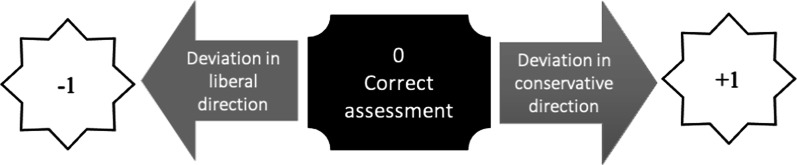
This cross-sectional survey of Croatian doctors of medicine (MDs) and doctors of dental medicine (DMDs) examined SNS use and perceptions of e-professionalism, and developed the ePACI index to quantify deviations from a rubric-based “correct” perception. Both groups used SNSs heavily and showed generally good understanding of e-professionalism, with ePACI scores tending slightly toward the conservative side.
## Key findings
- Of 1,013 collected questionnaires, 753 valid SNS users were analyzed; 507 (67.3%) were MDs and 246 (32.7%) were DMDs, with a 4.4% response rate (1,013/23,178).
- Facebook (91.6%) and Instagram (63.1%) were the predominant SNSs used; 78% used SNSs at least once per day, and 92.8% accessed them via mobile devices.
- PCA on 17 items extracted 4 components explaining 54.41% of total variance; the authors used this to build the ePACI from 5 “professional” and 10 “unprofessional” items.
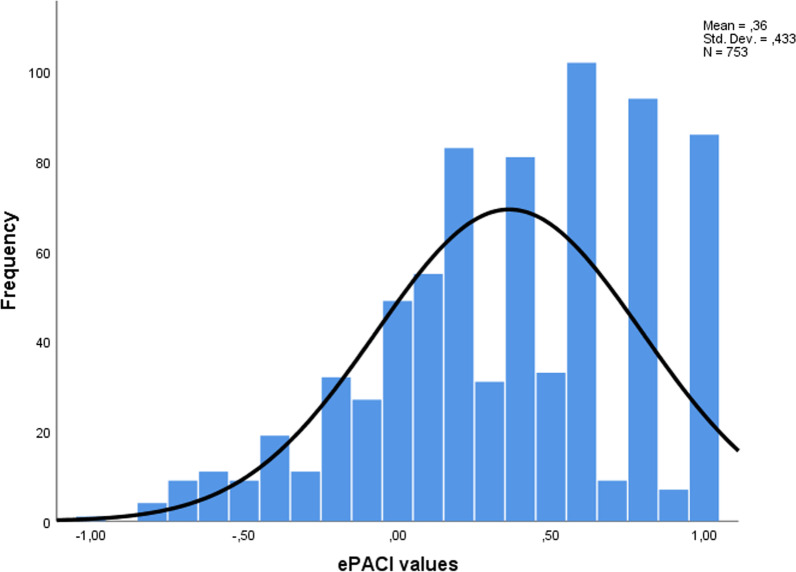
- Both MDs and DMDs deviated significantly from the neutral/correct ePACI answer in the conservative direction (MDs: t506 = 19.033, p < 0.001; DMDs: t245 = 12.991, p < 0.001), with mean ePACI value 0.36 (SD = 0.433).
- No statistically significant ePACI differences were found between MDs and DMDs, genders, or public vs private sector employment; older age was associated with more conservative ePACI values (r = 0.308, p < 0.001), while more SNS profiles (rs = −0.142, p < 0.001) and more frequent access (r = −0.166, p < 0.001) were associated with more liberal values.
## Methods
- Quantitative cross-sectional survey of MDs and DMDs in Croatia, conducted via email in collaboration with the Croatian Medical Chamber and Croatian Chamber of Dental Medicine.
- Non-probabilistic convenience sample recruited from full chamber mailing lists; 15,562 MD emails and 7,616 DMD emails were invited, with data collected between 16 February and 13 July 2021.
- Questionnaire covered SNS use habits and attitudes toward e-professionalism; analyses included descriptive statistics, chi-square/Fisher’s exact tests, t-tests, ANOVA, Mann–Whitney U tests, correlations, and PCA with varimax rotation to develop the ePACI.
## Limitations
- The paper states the sample was voluntary, non-probabilistic, and subject to information/recall bias; it also acknowledges low response rate and possible non-response bias.
- The authors could not compare respondents to the full invited population because the chambers could not provide demographic variables due to data protection/GDPR constraints.
- The study is limited to Croatian MDs and DMDs, and the authors state this limits generalizability to other populations and other HCP groups.
Model-written summary. Check it against the paper before relying on it.
Integrity signals
Registry
Cites
Statistics
Figures
Verification
Claims the paper makes
12 Valid · 0 Not valid · 4 Not checked · 91 Own results and interpretations
The cited sources support only part of this claim — read each source’s verdict below.
In the paper
“There is also an exceptionally large knowledge gap in the understanding of the similarities and differences, concerning e-professionalism, between MDs and DMDs [15].”
§ Differences between doctors of medicine and dental medicine in the perception of professionalism on social networking sites: the development of the e-professionalism assessment compatibility index (ePACI) > Background
What the sources say
- Partly supportedcites [15] Vukušić Rukavina T Viskić J Machala Poplašen L Relić D Marelić M Jokic D Dangers and benefits of social media on e-professionalism of health care professionals: scoping review J Med Internet Res 2021 23 e25770 10.2196/25770 34662284 PMC8663533 sourceExperimental — accuracy not yet measured
The Discussion section, “Gaps in the Literature and Potential Areas for Further Research” (page unavailable), says e-professionalism research is dominated by studies of physicians and medical students and that comparisons among health care professions would add insight. It does not specifically characterize the knowledge gap between MDs and DMDs as “exceptionally large.” (LLM, conf=0.82)
boosted- Asserted: passes — The authors put it forward as true.
- Checkable: passes — It can be checked against evidence.
- Load-bearing: passes — The paper’s conclusions depend on it.
- Based: passes — The paper gives a reason why it holds.
- Partly supported
The cited sources support only part of this claim — read each source’s verdict below.
In the paper
“Results from research show students of dental medicine are less sensitive in response to visual representations of patients on SNSs, even if they reveal patient information, than medical students [13].”
§ Differences between doctors of medicine and dental medicine in the perception of professionalism on social networking sites: the development of the e-professionalism assessment compatibility index (ePACI) > Background
What the sources say
- Partly supportedcites [13] Viskić J Jokić D Marelić M Machala Poplašen L Relić D Sedak K Social media use habits, and attitudes toward e-professionalism among medicine and dental medicine students: a quantitative cross-sectional study Croat Med J 2021 62 569 579 10.3325/cmj.2021.62.569 34981689 PMC8771237 sourceExperimental — accuracy not yet measured
The Results (Table 3; page not provided) show that fewer dental than medical students considered patient photos on social media unprofessional (61.0% versus 89.8%), supporting the comparison about visual representations. But the paper assesses posts displaying patient information separately; it does not establish that the difference persists when the photos reveal patient information. (LLM, conf=0.89)
plainstates an association- Asserted: passes — The authors put it forward as true.
- Checkable: passes — It can be checked against evidence.
- Load-bearing: passes — The paper’s conclusions depend on it.
- Based: passes — The paper gives a reason why it holds.
- Partly supported
Every source the paper cites for this claim was checked and supports it.
In the paper
“While reviewing literature, although there are available scales and indexes in some form or another for the student population [44, 58], we did not encounter a way to easily measure and scale perceptions of e-professionalism among graduate MDs and DMDs.”
§ Differences between doctors of medicine and dental medicine in the perception of professionalism on social networking sites: the development of the e-professionalism assessment compatibility index (ePACI) > Discussion
What the sources say
- Supportedcites [44] Marelić M Viskić J Poplašen LM Relić D Jokić D Rukavina TV Development and validation of scale for measuring attitudes towards e-professionalism among medical and dental students: SMePROF-S scale BMC Med Educ 2021 21 445 10.1186/s12909-021-02879-2 34425792 PMC8381479 source
The citation supports the sentence’s reference to a scale for medical and dental students, not the citing authors’ own conclusion about graduate MDs and DMDs. The Discussion identifies this paper as a scale designed to investigate students’ attitudes towards e-professionalism; the Abstract > Background likewise describes its student population. (LLM, conf=0.93)
- Supportedcites [58] Chisholm-Burns MA Spivey CA Jaeger MC Williams J George C Development of an instrument to measure pharmacy student attitudes toward social media professionalism Am J Pharm Educ 2017 81 65 10.5688/ajpe81465 28630506 PMC5468703 source
The citation supports the sentence’s statement that scales exist for student populations. The Introduction describes this paper’s aim as developing a scale for pharmacy students, and the Conclusion identifies the resulting PSMPI. The statement about not finding a measure for graduate MDs and DMDs is the citing authors’ own literature-review finding, not a claim attributed to this source. (LLM, conf=0.94)
plain- Asserted: passes — The authors put it forward as true.
- Checkable: passes — It can be checked against evidence.
- Load-bearing: passes — The paper’s conclusions depend on it.
- Based: passes — The paper gives a reason why it holds.
- Supported
Every source the paper cites for this claim was checked and supports it.
In the paper
“The perception of e-professional behaviour of our study group is very similar to that in previous research, both from our group involving the student population [13], as well as other authors’ research on practising HCPs [12].”
§ Differences between doctors of medicine and dental medicine in the perception of professionalism on social networking sites: the development of the e-professionalism assessment compatibility index (ePACI) > Discussion
What the sources say
- Supportedcites [13] Viskić J Jokić D Marelić M Machala Poplašen L Relić D Sedak K Social media use habits, and attitudes toward e-professionalism among medicine and dental medicine students: a quantitative cross-sectional study Croat Med J 2021 62 569 579 10.3325/cmj.2021.62.569 34981689 PMC8771237 source
Citation [13] is attached to the previous research involving students, not to the separate research on practising HCPs cited as [12]. The Results table reports medical and dental students’ opinions about online professionalism, and the Discussion says the two student groups had similar attitudes toward e-professionalism. This paper is therefore the student-population research the citing sentence identifies; it does not itself establish the citing study’s comparison. (LLM, conf=0.88)
- Supportedcites [12] White J Kirwan P Lai K Walton J Ross S ‘Have you seen what is on Facebook?’ The use of social networking software by healthcare professions students BMJ Open 2013 3 e003013 10.1136/bmjopen-2013-003013 PMC3731743 23883886 source
The Results and Discussion describe healthcare professions students’ perceptions of unprofessional behaviour on Facebook, including posts involving patient information, alcohol, drugs and sexual content. The citation to this paper identifies the earlier student-population research; the comparison with practising HCPs is attached to a separate citation. (LLM, conf=0.91)
plain- Asserted: passes — The authors put it forward as true.
- Checkable: passes — It can be checked against evidence.
- Load-bearing: unclear — It is unclear whether the paper’s conclusions depend on it.
- Based: passes — The paper gives a reason why it holds.
- Supported
The cited sources support only part of this claim — read each source’s verdict below.
In the paper
“Several studies, including our current results, have reported the first two items as being the highest ranked in the perception of unprofessional behaviour [12, 13, 57].”
§ Differences between doctors of medicine and dental medicine in the perception of professionalism on social networking sites: the development of the e-professionalism assessment compatibility index (ePACI) > Discussion
What the sources say
- Supportedcites [12] White J Kirwan P Lai K Walton J Ross S ‘Have you seen what is on Facebook?’ The use of social networking software by healthcare professions students BMJ Open 2013 3 e003013 10.1136/bmjopen-2013-003013 PMC3731743 23883886 source
In the Results (Table 3), posts disclosing patient/client information (99%) and posts depicting illicit drug consumption (94%) received the two highest percentages of respondents classifying them as unprofessional. This supports the claim for this cited study, assuming those are the citing sentence’s unspecified “first two items”; the source cannot establish what other cited studies or the citing authors’ results found. (LLM, conf=0.82)
- Supportedcites [13] Viskić J Jokić D Marelić M Machala Poplašen L Relić D Sedak K Social media use habits, and attitudes toward e-professionalism among medicine and dental medicine students: a quantitative cross-sectional study Croat Med J 2021 62 569 579 10.3325/cmj.2021.62.569 34981689 PMC8771237 source
In Results, Table 3 (page not provided), the first two listed items—posts displaying patient information and posts showing illicit drug use—were the two most frequently judged unprofessional, at 92.7% and 91.1% of all students. The Discussion also says respondents’ views were in line with previous research. (LLM, conf=0.88)
- Could not verifycites [57] Panahi S Watson J Partridge H Fostering interpersonal trust on social media: physicians’ perspectives and experiences Postgrad Med J 2016 92 70 73 10.1136/postgradmedj-2015-133270 26627975 sourceExperimental — accuracy not yet measured
The Discussion (page unavailable) describes how physicians establish trust on social media, and the Professional standing section discusses assessing other users’ qualifications. Neither reports ranked perceptions of unprofessional behaviour or identifies two highest-ranked items. Searches for those terms found no passage addressing the claim. (LLM, conf=0.75)
plain- Asserted: passes — The authors put it forward as true.
- Checkable: passes — It can be checked against evidence.
- Load-bearing: unclear — It is unclear whether the paper’s conclusions depend on it.
- Based: passes — The paper gives a reason why it holds.
- Supported
52 more claims
Create a free account to see all 107 claims and every source verdict.
- Probably not a substantial claim. 29
- It may state two separate claims as one. 31
- The quote only partly states this claim. 1
Self-check
Percentages, sums and reported differences re-computed from the paper’s own numbers.
Self-check results appear here once an independent check has confirmed them.
Cited works that were retracted
Works this paper cites that were later retracted, from the retraction notices publishers deposit. Major when the notice came out before this paper was published.
Rated major: it would touch a result — a value a result rests on, reported and recomputed p-values on opposite sides of the significance level, two passages that conflict with no sign which is right, or a cited work retracted before this paper was published.
In the paper
“, posts depicting bikinis were considered “potentially unprofessional”, sparking outrage among the HCPs SNS community and resulting in the “medbikini affair” [38, 39].”
Cited work 10.1016/j.jvs.2019.10.069 · retracted 2020-08-01 · notice 10.1016/j.jvs.2019.11.002 · this paper published 2022-12-06
Citations
Cites
1 retracted
RETRACTED: Prevalence of unprofessional social media content among young vascular surgeons
Hardouin, S., Cheng, T. W., Mitchell, E. L., Raulli, S. J., Jones, D. W., Siracuse, J. J., & Farber, A. (2020) · Journal of Vascular Surgery · doi:10.1016/j.jvs.2019.10.069 · Cited by 100 · cited 1×
“, posts depicting bikinis were considered “potentially unprofessional”, sparking outrage among the HCPs SNS community and resulting in the “medbikini affair” [38, 39].”
BackgroundRetractedUsers of the world, unite! The challenges and opportunities of Social Media
Kaplan, A. M., & Haenlein, M. (2010) · Business Horizons · doi:10.1016/j.bushor.2009.09.003 · Cited by 17,875 · cited 1×
“SNSs by definition are “applications that enable users to connect by creating personal information profiles, inviting friends and colleagues to have access to those profiles, and sending e-mails and instant messages between each other” [5].”
BackgroundPhysician response to surveys A review of the literature
Kellerman, S. (2001) · American Journal of Preventive Medicine · doi:10.1016/s0749-3797(00)00258-0 · Cited by 956 · cited 1×
“Even though we can’t control possible non-response bias, mitigating circumstances are that prior research suggests that physician surveys may be less prone to nonresponse bias than surveys of other populations, given that physicians are rather homogenous with respect to their knowledge, attitudes, and beliefs [73].”
Amending miller’s pyramid to include professional identity formation.
Cruess, R. L., Cruess, S. R., & Steinert, Y. (2016) · Academic Medicine · doi:10.1097/acm.0000000000000913 · Cited by 558 · cited 1×
“Traditional concepts of professionalism in medicine require healthcare professionals (HCPs) to adopt the identity of medical professional, and enact it at the individual, interpersonal, and societal levels [6, 7].”
BackgroundCook, J. V., Dickinson, H. O., & Eccles, M. P. (2009) · BMC Health Services Research · doi:10.1186/1472-6963-9-160 · Cited by 493
Enhancing Surveys of Health Care Professionals: A Meta-Analysis of Techniques to Improve Response
Cho, Y. I., Johnson, T. P., & VanGeest, J. B. (2013) · Evaluation & the Health Professions · doi:10.1177/0163278713496425 · Cited by 489
Response Rates and Response Bias for 50 Surveys of Pediatricians
Cull, W. L., O'Connor, K. G., Sharp, S., & Tang, S. S. (2005) · Health Services Research · doi:10.1111/j.1475-6773.2005.00350.x · Cited by 421
Web Versus Other Survey Modes: An Updated and Extended Meta-Analysis Comparing Response Rates
Daikeler, J., Bošnjak, M., & Lozar Manfreda, K. (2020) · Journal of Survey Statistics and Methodology · doi:10.1093/jssam/smz008 · Cited by 411 · cited 1×
“Unfortunately, overall physician response rates are declining [64–68], and web surveys have overall lower response rates than other survey methods [69], the combination that could explain lower response rate in this research too.”
BackgroundHandbook of Parametric and Nonparametric Statistical Procedures
Kafadar, K., & Sheskin, D. J. (1997) · The American Statistician · doi:10.2307/2685909 · Cited by 364
Empowering patients through social media: The benefits and challenges
Househ, M., Borycki, E., & Kushniruk, A. (2014) · Health Informatics Journal · doi:10.1177/1460458213476969 · Cited by 342 · cited 1×
“educating themselves about their health online and using SNSs to investigate their disease, their therapy and also their healthcare provider [26, 27].”
BackgroundEvolution of Aesthetic Dentistry
Blatz, M. B., Chiche, G., Bahat, O., Roblee, R., Coachman, C., & Heymann, H. O. (2019) · Journal of Dental Research · doi:10.1177/0022034519875450 · Cited by 255
Chen, J., Ishii, M., Bater, K. L., Darrach, H., Liao, D., Huynh, P. P., Reh, I. P., Nellis, J. C., Kumar, A. R., & Ishii, L. E. (2019) · JAMA Facial Plastic Surgery · doi:10.1001/jamafacial.2019.0328 · Cited by 230 · cited 1×
“In the field of medicine, cosmetic medicine is also under a similar influence, but it is a proportionately smaller division of medicine [20].”
BackgroundSocial media usage among health care providers
Surani, Z., Hirani, R., Elias, A., Quisenberry, L., Varon, J., Surani, S., & Surani, S. (2017) · BMC Research Notes · doi:10.1186/s13104-017-2993-y · Cited by 214 · cited 1×
“maxi −mini − 1 mature phase of their careers, have decades of knowledge and experience with professional standards, and may be less than knowledgeable and even potentially fearful of new technologies, or could have a low digital literacy level [15, 47, 48].”
BackgroundVukušić Rukavina, T., Viskić, J., Machala Poplašen, L., Relić, D., Marelić, M., Jokic, D., & Sedak, K. (2021) · Journal of Medical Internet Research · doi:10.2196/25770 · Cited by 199
Self-citationHealth Care Provider Surveys in the United States, 2000–2010: A Review
McLeod, C. C., Klabunde, C. N., Willis, G. B., & Stark, D. (2013) · Evaluation & the Health Professions · doi:10.1177/0163278712474001 · Cited by 190
Greysen, S. R., Chretien, K. C., Kind, T., Young, A., & Gross, C. P. (2012) · JAMA · doi:10.1001/jama.2012.330 · Cited by 158 · cited 2×
“Behaviour and posts in the serious unprofessional behaviour remained in the realm of activity which should evoke a formal response from governing bodies [15, 29].”
BackgroundE-professionalism: a new paradigm for a digital age
Cain, J., & Romanelli, F. (2009) · Currents in Pharmacy Teaching and Learning · doi:10.1016/j.cptl.2009.10.001 · Cited by 158 · cited 1×
“, defined as “attitudes and behaviours (some of which may occur in private settings) reflecting traditional professionalism paradigms that are manifested through digital media” [8].”
BackgroundAfroz, S., Rathi, S., Rajput, G., & Rahman, S. A. (2013) · The Journal of Indian Prosthodontic Society · doi:10.1007/s13191-012-0247-1 · Cited by 156
Social Media Use by Health Care Professionals and Trainees: A Scoping Review
Hamm, M. P., Chisholm, A., Shulhan, J., Milne, A., Scott, S. D., Klassen, T. P., & Hartling, L. (2013) · Academic Medicine · doi:10.1097/acm.0b013e31829eb91c · Cited by 136 · cited 2×
“The most widely accepted definition of SM is “a group of online applications that allow for the creation and exchange of content generated by users” [4].”
BackgroundDouglas, N. K., Scholz, M. M., Myers, M. A., Rae, S., Elmansouri, A., Hall, S., & Border, S. (2019) · Medical Science Educator · doi:10.1007/s40670-019-00767-5 · Cited by 106 · cited 1×
“demonstrates that Instagram, being a very visually driven SNS, can be successfully used in dental education [54].”
BackgroundFacebook and the professional behaviours of undergraduate medical students
Garner, J., & O’Sullivan, H. (2010) · The Clinical Teacher · doi:10.1111/j.1743-498x.2010.00356.x · Cited by 103
White, J., Kirwan, P., Lai, K., Walton, J., & Ross, S. (2013) · BMJ Open · doi:10.1136/bmjopen-2013-003013 · Cited by 93 · cited 6×
“The perception of e-professional behaviour of our study group is very similar to that in previous research, both from our group involving the student population [13], as well as other authors’ research on practising HCPs [12].”
BackgroundResultInfluentialSocial media and dentistry: some reflections on e-professionalism
Neville, P., & Waylen, A. (2015) · British Dental Journal · doi:10.1038/sj.bdj.2015.294 · Cited by 91 · cited 1×
“These professionally similar yet perhaps motivationally and practically diverging health care professions are adopting the benefits and responding to the dangers of SNSs in different ways [4, 16].”
BackgroundGuraya, S. S., Guraya, S. Y., & Yusoff, M. S. B. (2021) · BMC Medical Education · doi:10.1186/s12909-021-02802-9 · Cited by 86 · cited 1×
“Traditional concepts of professionalism in medicine require healthcare professionals (HCPs) to adopt the identity of medical professional, and enact it at the individual, interpersonal, and societal levels [6, 7].”
BackgroundSurvey Methods to Optimize Response Rate in the National Dental Practice-Based Research Network
Funkhouser, E., Vellala, K., Baltuck, C., Cacciato, R., Durand, E., McEdward, D., Sowell, E., Theisen, S. E., Gilbert, G. H., & National Dental PBRN Collaborative Group (2017) · Evaluation & the Health Professions · doi:10.1177/0163278715625738 · Cited by 82
A Survey of US Dental Practices’ use of Social Media
Henry, R. K., Molnar, A., & Henry, J. C. (2012) · The Journal of Contemporary Dental Practice · doi:10.5005/jp-journals-10024-1109 · Cited by 82 · cited 1×
“Dentists learned early on that SNSs could be used to educate patients and the general public, and that their habits could also be influenced through SNSs [21, 22].”
BackgroundWeaver, L., Beebe, T. J., & Rockwood, T. (2019) · BMC Medical Research Methodology · doi:10.1186/s12874-019-0719-7 · Cited by 81
Numbers of Observations and Variables in Multivariate Analyses
Knapp, T. R., & Campbell-Heider, N. (1989) · Western Journal of Nursing Research · doi:10.1177/019394598901100517 · Cited by 60 · cited 2×
“A high number of responses (1013 responses) was obtained, with the results having a sufficient number of respondents for the required statistical tests (including the multivariate test [45]).”
BackgroundMethodWalton, J. M., White, J., & Ross, S. (2015) · Medical Education Online · doi:10.3402/meo.v20.28708 · Cited by 59 · cited 1×
“have stressed that there is a need for instructions for use of these developing media and communication training for HCPs before they begin using SNSs for their professional work [60].”
BackgroundUnprofessional content on Facebook accounts of US urology residency graduates
Koo, K., Ficko, Z., & Gormley, E. A. (2017) · BJU International · doi:10.1111/bju.13846 · Cited by 54
Professionalism and the Internet in Psychiatry: What to Teach and How to Teach It
DeJong, S. M., Benjamin, S., Anzia, J. M., John, N. J., BOLAND, R. J., Lomax, J. W., & Rostain, A. L. (2012) · Academic Psychiatry · doi:10.1176/appi.ap.11050097 · Cited by 50
Beyond Good and Evil: Exploring Medical Trainee Use of Social Media
George, D. R., & Green, M. J. (2012) · Teaching and Learning in Medicine · doi:10.1080/10401334.2012.664972 · Cited by 43 · cited 1×
“In the early stages of SNS development, researchers expressed much reserve and caution regarding these new emerging platforms, suggesting HCPs exercise stricter oversight and caution when using SNSs [10, 11].”
BackgroundSAGE Internet Research Methods
(2012) · SAGE Publications Ltd eBooks · doi:10.4135/9781446268513 · Cited by 43
Medical Education e-Professionalism (MEeP) framework; from conception to development
Guraya, S. S., Frcs, S. Y. G., Harkin, D. W., Ryan, Á., Nor, M. Z. M., & Yusoff, M. S. B. (2021) · Medical Education Online · doi:10.1080/10872981.2021.1983926 · Cited by 34 · cited 1×
“, in a recent study, argued that an adequate framework for e-professionalism on a “virtue-based”, “behaviour-based” and “professional identity formation-based” framework did not exist [9].”
BackgroundLangenfeld, S. J., Sudbeck, C., Luers, T., Adamson, P., Cook, G., & Schenarts, P. J. (2015) · Journal of Surgical Education · doi:10.1016/j.jsurg.2015.07.007 · Cited by 33
Marelić, M., Viskić, J., Poplašen, L. M., Relić, D., Jokić, D., & Rukavina, T. V. (2021) · BMC Medical Education · doi:10.1186/s12909-021-02879-2 · Cited by 31 · cited 3×
“The questionnaire used in this study was derived from previous studies within the project “Dangers and benefits of social networks: E-professionalism of healthcare professionals—SMePROF [13, 41, 44] where the study population was students of medicine and dental medicine.”
BackgroundMethodSelf-citationBrisson, G. E., Fisher, M. J., LaBelle, M. W., & Kozmic, S. E. (2015) · Teaching and Learning in Medicine · doi:10.1080/10401334.2015.1011648 · Cited by 29 · cited 1×
“maxi −mini − 1 mature phase of their careers, have decades of knowledge and experience with professional standards, and may be less than knowledgeable and even potentially fearful of new technologies, or could have a low digital literacy level [15, 47, 48].”
BackgroundKoo, K., Bowman, M. S., Ficko, Z., & Gormley, E. A. (2018) · BJU International · doi:10.1111/bju.14363 · Cited by 29
The effect of a web-push survey on physician survey responses rates: a randomized experiment
Delnevo, C. D., & Singh, B. (2021) · Survey Practice · doi:10.29115/sp-2021-0001 · Cited by 27 · cited 1×
“Achieving a high response rate for physicians has been challenging, and with response rates declining in recent years, innovative methods are needed to increase rates [62].”
BackgroundFuture healthcare providers and professionalism on social media: a cross-sectional study
Soubra, R., Hasan, I., Ftouni, L., Saab, A., & Shaarani, I. (2022) · BMC Medical Ethics · doi:10.1186/s12910-022-00742-7 · Cited by 26 · cited 3×
“This can lead them to be more errorprone and more likely to post unprofessional content [12, 14, 59].”
BackgroundGorrindo, T., Gorrindo, P., & Groves, J. E. (2008) · Journal of General Internal Medicine · doi:10.1007/s11606-008-0810-y · Cited by 24 · cited 1×
“In the early stages of SNS development, researchers expressed much reserve and caution regarding these new emerging platforms, suggesting HCPs exercise stricter oversight and caution when using SNSs [10, 11].”
BackgroundViskić, J., Jokić, D., Marelić, M., Machala Poplašen, L., Relić, D., Sedak, K., & Vukušić Rukavina, T. (2021) · Croatian Medical Journal · doi:10.3325/cmj.2021.62.569 · Cited by 24 · cited 6×
“This instrument was translated into Croatian, tested on medical and dental students in Croatia during the 2018/2019 academic year and proved to be a valuable tool for understanding perceptions of e-professionalism among this group [13].”
BackgroundMethodResultInfluentialSelf-citationChisholm-Burns, M. A., Spivey, C. A., Jaeger, M. C., Williams, J., & George, C. (2017) · American Journal of Pharmaceutical Education · doi:10.5688/ajpe81465 · Cited by 24 · cited 1×
“While reviewing literature, although there are available scales and indexes in some form or another for the student population [44, 58], we did not encounter a way to easily measure and scale perceptions of e-professionalism among graduate MDs and DMDs.”
BackgroundAnsari, S., Alzahrani, A. A., Abomelha, A., Elhalwagy, A. A., Alalawi, T. M., & Sadiq, T. M. (2020) · Journal of Family Medicine and Primary Care · doi:10.4103/jfmpc.jfmpc_442_20 · Cited by 23
E-Professionalism among Dental Students from Malaysia and Finland
Nieminen, P. A., Uma, E., Mani, S. A., John, J., Laitala, M., & Lappalainen, O.-P. (2022) · International Journal of Environmental Research and Public Health · doi:10.3390/ijerph19063234 · Cited by 21 · cited 2×
“This can lead them to be more errorprone and more likely to post unprofessional content [12, 14, 59].”
BackgroundBlurred lines: the General Medical Council guidance on doctors and social media
Cork, N., & Grant, P. (2016) · Clinical Medicine · doi:10.7861/clinmedicine.16-3-219 · Cited by 20 · cited 1×
“Interaction between HCPs and patients is inevitably happening on SNSs, with professional boundaries being blurred and potentially crossed [28].”
BackgroundFostering interpersonal trust on social media: physicians' perspectives and experiences
Panahi, S., Watson, J., & Partridge, H. (2016) · Postgraduate Medical Journal · doi:10.1136/postgradmedj-2015-133270 · Cited by 19
Student and Faculty Observations and Perceptions of Professionalism in Online Domain Scenarios
Gettig, J. P., Lee, N., & Fjortoft, N. F. (2013) · American Journal of Pharmaceutical Education · doi:10.5688/ajpe779192 · Cited by 18
Social Media and Your Cancer Patient
Stiles, B. M., & Mynard, J. N. (2021) · Seminars in Thoracic and Cardiovascular Surgery · doi:10.1053/j.semtcvs.2020.12.014 · Cited by 17 · cited 1×
“educating themselves about their health online and using SNSs to investigate their disease, their therapy and also their healthcare provider [26, 27].”
BackgroundDental Tourism and Business Risks: The Example of the Republic of Croatia
Demonja, D., & Uglješic, N. (2020) · Interdisciplinary Description of Complex Systems · doi:10.7906/indecs.18.4.3 · Cited by 14 · cited 1×
“Since the market in Croatia is saturated with DMDs and there is also a large dental tourism business, SNS platforms provide great tools and opportunities for advancing patient recruitment, patient communications and education [51].”
BackgroundThe dentist as doctor: A rallying call for the future
Quock, R. L., Al‐Sabbagh, M., Mason, M. K., Sfeir, C. S., & Bennett, J. (2014) · Oral Surgery Oral Medicine Oral Pathology and Oral Radiology · doi:10.1016/j.oooo.2014.07.010 · Cited by 13 · cited 1×
“This also opens the possibility for a more financially motivated approach to practising than medical [24, 25].”
BackgroundVukušić Rukavina, T., Machala Poplašen, L., Majer, M., Relić, D., Viskić, J., & Marelić, M. (2022) · JMIR Medical Education · doi:10.2196/35585 · Cited by 12
Self-citationE-professionalism in medical sciences: A Hybrid Concept Analysis
Mosalanejad, L., Tafvisi, M., & Zarifsanaiey, N. (2021) · Journal of Education and Health Promotion · doi:10.4103/jehp.jehp_408_20 · Cited by 11
(2019) · PubMed · Cited by 10
Professionalism in (vascular) surgery: What does it mean?
Drudi, L. M., Woo, K., Ziegler, K. R., & O’Banion, L. A. (2021) · Journal of Vascular Surgery · doi:10.1016/j.jvs.2021.04.020 · Cited by 7 · cited 1×
“Excluding MDs and DMDs diminishes their basic right of free speech and robs the overall discussion of another (HCP’s) opinion [56].”
BackgroundARE DENTISTS LOSING THEIR STATUS AS ‘PROFESSIONALS'?
Esterburg, J. C. (2011) · The Journal of the American Dental Association · doi:10.14219/jada.archive.2011.0333 · Cited by 3
Research works printed but not linked: 3
- Prensky M Digital natives, digital immigrants part 1 On the Horizon 2001 9 1 6
- Kumar H Raj P An indagation on experiences and awareness of digital footprint among pupils of higher education Acad Res Int 2020 11 16 31
- Flanigan TS, McFarlane E, Cook S. Conducting survey research among physicians and other medical professionals: a review of current literature. In: Proceedings of the Survey Research Methods Section, American Statistical Association, 2008 [Internet]. p. 4136–47. [cited 2022 Aug 21]. http://www.asasrms.org/Proceedings/y2008/Files/flanigan.pdf
Cited by
Reclaiming the concept of professionalism in the digital context: a principle-based concept analysis
Guraya, S. S., Guraya, S. Y., Rashid‐Doubell, F., Fredericks, S., Harkin, D. W., Nor, M. Z. M., & Yusoff, M. S. B. (2024) · Annals of Medicine · doi:10.1080/07853890.2024.2398202 · Cited by 23
“…key attributes defined by Guraya et al. [62] help to build on these e-professionalism constructs. although digital natives [87] born and bought up in 90s found themselves in an environment saturated with digital technologies, they were found to be ill-equipped for digital literacy [18,62,74,75].”
BackgroundMarelić, M., Klasnić, K., & Rukavina, T. V. (2024) · JMIR Medical Education · doi:10.2196/50156 · Cited by 8
“Although the questionnaire contained multiple instruments partially derived from previous studies [10,34,35], the instrument for measuring the e-professional behavior of MDs and DMDs is a novel instrument created by the authors.”
BackgroundMethodSelf-citationThe evolving role of social media in paediatric dentistry: A narrative review
Bhatara, S., Goswami, M., Saxena, A., Pathak, P., Tuli, S., & Saxena, B. (2024) · Global Pediatrics · doi:10.1016/j.gpeds.2024.100221 · Cited by 10
Relić, D., Marelić, M., Viskić, J., Poplašen, L. M., Majer, M., Sedak, K., & Rukavina, T. V. (2024) · Croatian Medical Journal · doi:10.3325/cmj.2024.65.43 · Cited by 3
“Viskić et al comprehensively explain the mathematical and statistical processes of creating this index (20).”
BackgroundMethodResultInfluentialSelf-citationDang, T. K. C., Yeh, B.-I., Park, Y. C., Hoang, B. B., Vinh, K., & Park, K. H. (2026) · Frontiers in Public Health · doi:10.3389/fpubh.2026.1703842 · Cited by 1
Metadata
- Authors
- Viskić, J., Marelić, M., Machala Poplašen, L., & Vukušić Rukavina, T.
- Affiliations
- University of Zagreb (HR)
- Corresponding author
- Marelić, M.
- Venue
- BMC Medical Ethics
- Published
- 2022-12-06
- Volume
- 23
- Issue
- 1
- Pages
- 129-129
- ISSN
- 1472-6939 (ISSN-L)
- PMC
- PMC9727956
- OpenAlex
- W4311644715
- Cited by
- 10
- References
- 58
- Citations by year
- 2026: 3 · 2024: 4 · 2023: 2
- FWCI
- 1.17
- Type
- journal article
- Language
- en
- Open access
- gold
- doi.org
- Licence
- cc-by
- creativecommons.org/licenses/by/4.0 (tdm)
- creativecommons.org/licenses/by/4.0 (vor)
- Locations
- BMC Medical Ethics (publishedVersion, cc-by)
- PubMed (publishedVersion)
- PubMed Central (submittedVersion, cc-by)
- DOAJ (DOAJ: Directory of Open Access Journals) (submittedVersion, cc-by-sa)
- Funders
- Croatian Science Foundation (UIP-05-2017 "Dangers and benefits of social networks: E-Professionalism of healthcare professionals – SMePROF")
- Topics
- Social Sciences › Health › Social Media in Health Education
- Health Sciences › Health Professions › General Health Professions › Mobile Health and mHealth Applications
- Health Sciences › Dentistry › General Dentistry › Dental Research and COVID-19
- Keywords
- social networking sites, physicians, dentists, professional values, Facebook, Instagram, online professional conduct, healthcare workers
- MeSH terms
- Cross-Sectional Studies, Humans, Perception, Croatia, Social Networking
About these checks
Registry, retraction, Cites and statistics results are computed, not judged, with one exception: a printed reference that no index lists is read once by a model before it counts as a citation error. Claims are extracted by a model and kept only when their quote appears verbatim in the text; each cited source is then checked, with a model’s help, for whether it says what the claim relies on. Those verdicts can be wrong — read the claim’s quote and the cited source before relying on one.
The claim verdicts this report counts are experimental: their accuracy is not yet measured.
A language model drew the claims from the paper on 2026-10-09, under version 3 of the claim definition (model deepseek-v4.1-flash, prompt extract-v3).
A second model labelled each claim on 2026-10-09 (model jev-1.13-20260917, definition revision gold-guideline-v0.2).
Cited sources are checked with a language model’s help (gpt-6-sol).
Statistics and arithmetic are recomputed, not judged.
Confidence bands are shown only for fields calibrated on our annotated test set. None is calibrated yet, so no band is shown.
What counts as a claim ›How we measure confidence ›How we check this ›
Are you an author, or do you see a problem with this page? Request a review
Data sources
Bibliographic data: Semantic Scholar, OpenAlex, Crossref.
Contains information from the Semantic Scholar Academic Graph Datasets, made available under the ODC Attribution License (ODC-BY 1.0).
Semantic Scholar’s data is described in: Kinney, R., et al. (2023). The Semantic Scholar Open Data Platform. arXiv:2301.10140.
