

The DOI matches its Crossref record; 34 of the 35 references it cites were found in a registry or an index.
Combining structured and unstructured data for predictive models: a deep learning approach
Open accessPublished version of a preprint
Abstract
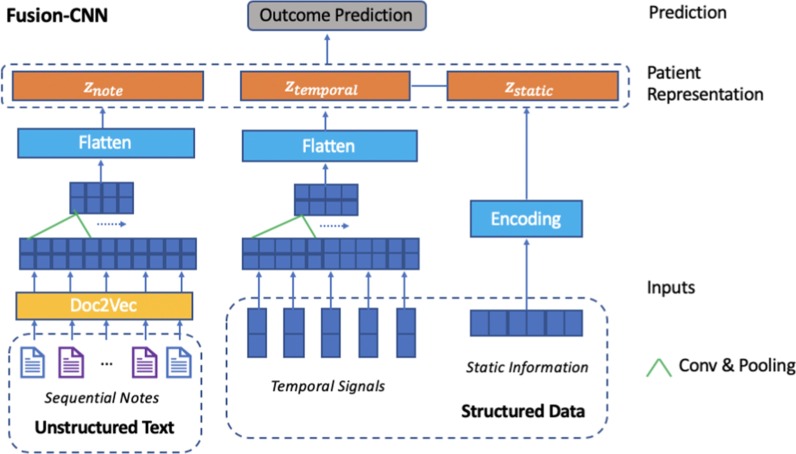
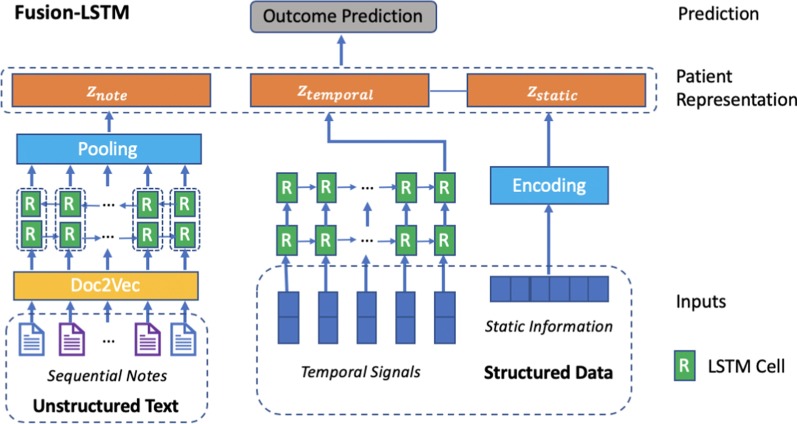
BACKGROUND: The broad adoption of electronic health records (EHRs) provides great opportunities to conduct health care research and solve various clinical problems in medicine. With recent advances and success, methods based on machine learning and deep learning have become increasingly popular in medical informatics. However, while many research studies utilize temporal structured data on predictive modeling, they typically neglect potentially valuable information in unstructured clinical notes. Integrating heterogeneous data types across EHRs through deep learning techniques may help improve the performance of prediction models. METHODS: In this research, we proposed 2 general-purpose multi-modal neural network architectures to enhance patient representation learning by combining sequential unstructured notes with structured data. The proposed fusion models leverage document embeddings for the representation of long clinical note documents and either convolutional neural network or long short-term memory networks to model the sequential clinical notes and temporal signals, and one-hot encoding for static information representation. The concatenated representation is the final patient representation which is used to make predictions. RESULTS: We evaluate the performance of proposed models on 3 risk prediction tasks (i.e. in-hospital mortality, 30-day hospital readmission, and long length of stay prediction) using derived data from the publicly available Medical Information Mart for Intensive Care III dataset. Our results show that by combining unstructured clinical notes with structured data, the proposed models outperform other models that utilize either unstructured notes or structured data only. CONCLUSIONS: The proposed fusion models learn better patient representation by combining structured and unstructured data. Integrating heterogeneous data types across EHRs helps improve the performance of prediction models and reduce errors.
Overview
The claims and statistics of this paper haven’t been checked yet.
Run the check — free, no account needed. It reads the open-access text and checks the sources it cites.
Integrity signals
Registry
Cites
Statistics
Figures
Verification
Claims the paper makes
The claims and statistics of this paper haven’t been checked yet.
Run the check — free, no account needed. It reads the open-access text and checks the sources it cites.
Claims other papers make about this one
Each is checked against this paper’s own text: does it say what the citing paper says it does?
The cited source doesn’t support the claim as written.
In the citing paper
“For evaluation, we use a 0.70-0.15-0.15 train-validation-test split following the previous work [13]. However, we equalized the size of the validation set and the test set to get a better estimation of test performance on the validation set. We split the dataset according to patient ID and admission ID so that there's no overlap between training, validation, and test sets.”
From Multimodal risk prediction with physiological signals, medical images and clinical notes (2024) · cites this paper as [13]
Checked by a reasoning model — may be wrong.
Experimental — accuracy not yet measuredThe cited source says what the claim attributes to it.
In the citing paper
“They hold great promise in deriving meaningful insights from EHR, which can aid in accurately predicting clinical outcomes, such as mortality [13] and readmission [13], [14].”
From Multimodal risk prediction with physiological signals, medical images and clinical notes (2024) · cites this paper as [13]
Self-check
Percentages, sums and reported differences re-computed from the paper’s own numbers.
The self-check needs the paper’s full text.
Citations
Cites
LeCun, Y., Bengio, Y., & Hinton, G. (2015) · Nature · doi:10.1038/nature14539 · Cited by 84,126
Scikit-learn: Machine Learning in Python
Pedregosa, F., Varoquaux, G., Gramfort, A., Michel, V., Thirion, B., Grisel, O., Blondel, M., Müller, A., Nothman, J., Louppe, G., et al. (2012) · arXiv · doi:10.48550/arxiv.1201.0490 · Cited by 71,016 · cited 1×
“, logistic regression and random forest) with scikit-learn [32].”
BackgroundPyTorch: An Imperative Style, High-Performance Deep Learning Library
Paszke, A., Gross, S., Massa, F., Lerer, A., Bradbury, J., Chanan, G., Killeen, T., Lin, Z., Gimelshein, N., Antiga, L., et al. (2019) · arXiv · doi:10.48550/arxiv.1912.01703 · Cited by 31,473 · cited 1×
“Deep learning models are implemented using PyTorch [33].”
MethodSantos, A. G., da Rocha, G. O., & de Andrade, J. B. (2019) · Scientific Reports · doi:10.1038/s41598-018-37186-2 · Cited by 8,495
MIMIC-III, a freely accessible critical care database
Johnson, A. E. W., Pollard, T. J., Shen, L., Lehman, L.-W. H., Feng, M., Ghassemi, M., Moody, B., Szolovits, P., Anthony Celi, L., & Mark, R. G. (2016) · Scientific Data · doi:10.1038/sdata.2016.35 · Cited by 8,141
Distributed Representations of Sentences and DocumentsPreprint
Le, Q. V., & Mikolov, T. (2014) · arXiv (Cornell University) · doi:10.48550/arxiv.1405.4053 · Cited by 7,905 · cited 1×
“Doc2Vec) [30] to learn the embedding of each clinical note.”
BackgroundA unified architecture for natural language processing: deep neural networks with multitask learning
Collobert, R., & Weston, J. (2008) · Proceedings of the 25th international conference on Machine learning - ICML '08 · doi:10.1145/1390156.1390177 · Cited by 5,058
Software Framework for Topic Modelling with Large Corpora
Rek, R. R. U., & Sojka, P. (2010) · doi:10.13140/2.1.2393.1847 · Cited by 3,789
Scalable and accurate deep learning with electronic health records
Rajkomar, A., Oren, E., Chen, K., Dai, A. M., Hajaj, N., Hardt, M., Liu, P. J., Liu, X., Marcus, J., Sun, M., et al. (2018) · npj Digital Medicine · doi:10.1038/s41746-018-0029-1 · Cited by 2,648
Scalable and accurate deep learning with electronic health records.
Rajkomar, A., Oren, E., Chen, K., Dai, A. M., Hajaj, N., Hardt, M., Liu, P. J., Liu, X., Marcus, J., Sun, M., et al. (2018) · eScholarship (California Digital Library) · Cited by 2,242
Research works printed but not linked: 3
- Henry J, Pylypchuk Y, Searcy T, Patel V. Adoption of electronic health record systems among US non-federal acute care hospitals: 2008–2015. ONC Data Brief. 2016;35:1–9.
- Ghassemi M, Naumann T, Joshi R, Rumshisky A. Topic models for mortality modeling in intensive care units. In: ICML machine learning for clinical data analysis workshop; 2012. p. 1–4.
- Hackbarth G, Reischauer R, Miller M. Report to the congress: promoting greater efficiency in medicare. Washington, DC: MedPAC; 2007.
Cited by
Sorted by citations
Items 101–200 of 268
Statistics in enabling 2D materials: Optimization, predictive modelling, and data-driven discovery
Abifarin, J. K., & Lu, Y. (2025) · Materials Today Physics · doi:10.1016/j.mtphys.2025.101814 · Cited by 10
Madrid-García, A., Barbancho, B. M., Freites, D., Rodríguez‐Rodríguez, L., Menasalvas, E., Rodríguez‐González, A., & Peñas, A. (2024) · Computers in Biology and Medicine · doi:10.1016/j.compbiomed.2024.108920 · Cited by 8
Length of stay prediction for hospital management using domain adaptation
Momo, L. N. W., Moorosi, N., Nsoesie, E. O., Rademakers, F. E., & Moor, B. D. (2024) · Engineering Applications of Artificial Intelligence · doi:10.1016/j.engappai.2024.108088 · Cited by 10
Sung, S., Hu, Y., & Chen, C.-Y. (2024) · JMIR Medical Informatics · doi:10.2196/56955 · Cited by 10
Emdad, F. B., Tian, S., Nandy, E., Hanna, K., & He, Z. (2023) · PubMed Central · Cited by 9
Stam, W. T., Ingwersen, E. W., Ali, M., Spijkerman, J. T., Geert Kazemier, M., Bruns, E. R. J., & Daams, F. D. (2023) · Surgery Today · doi:10.1007/s00595-023-02662-4 · Cited by 14
“With unstructured data in particular, such as data from electronic health records and computed tomography or magnetic resonance imaging, ML models show their superiority [50].”
MethodEnhancing heart failure diagnosis through multi-modal data integration and deep learning
Liu, Y., Li, D., Zhao, J., & Liang, Y. (2023) · Multimedia Tools and Applications · doi:10.1007/s11042-023-17716-5 · Cited by 8
“In [25], a deep learning-based multimodal neural network is introduced for risk prediction tasks.”
Garrido, N. J., González-Martínez, F., Losada, S., Plaza, A., Carrillo, E. D. O., & Mateo, J. (2024) · Biomimetics · doi:10.3390/biomimetics9070440 · Cited by 8
“…[46,47], Gaussian Naive Bayes (GNB) [48–50], K-Nearest Neighbors (KNNs) [51–53], Support Vector Machines (SVMs) [54–56], Neural Networks (NNs) [57,58], Random forest (RF) [59–61], the Convolutional Neural Network (CNN) [62,63], AdaBoost [64,65], and the novel method proposed in this study [66–69].”
MethodPandey, S. R., Tile, J. D., & Oghaz, M. M. (2025) · PLoS ONE · doi:10.1371/journal.pone.0328848 · Cited by 14
“Notably, the performance of our model exceeds that of the study by [45].”
Empowering text classification with NLP and explainable AI for enhanced interpretability
Mustafa, S. K., & Saeed, M. H. (2025) · Journal of Electrical Systems and Information Technology · doi:10.1186/s43067-025-00273-2 · Cited by 8
“For the research in 2020 and onward, a multi-model of CNN LSTM and Bio-BERT were proposed for biomedical text mining and [18, 19].”
Nainamalai, V., Qair, H. A., Pelanis, E., Jenssen, H. B., Fretland, Å. A., Edwin, B., Elle, O. J., & Balasingham, I. (2024) · European Journal of Radiology Open · doi:10.1016/j.ejro.2024.100582 · Cited by 8
Hospital Readmission Prediction Using Clinical Admission Notes
Thapa, N. B., Seifollahi, S., & Taheri, S. (2022) · Australasian Computer Science Week Multiconference (ACSW) · doi:10.1145/3511616.3513115 · Cited by 9
“The BoW model is considered as a strong baseline representation used in downstream clinical tasks such as predicting early mortality risk, length of stay, and hospital readmission[19, 32].”
BackgroundMethodUmar, U. S., Rana, M. E., & Hameed, V. A. (2023) · IEEE Student Conference on Research and Development (SCOReD) · doi:10.1109/scored60679.2023.10563245 · Cited by 7
“On the other hand, neural networks, particularly deep learning models, excel at processing unstructured data, including images and sequences, allowing them to extract intricate patterns and representations [31].”
BackgroundMethodKnifo, S., & Alzubi, A. B. (2024) · Complex & Intelligent Systems · doi:10.1007/s40747-024-01613-x · Cited by 7
“Zhang et al. [29] implemented a fusion-based model that combined the benefits of a fused LSTM and CNN model and provided accurate prediction.”
Mostaghimi, H., Cohen, D. A., Okhravi, H. R., Niknejad, B., & Audette, M. A. (2025) · Archives of Gerontology and Geriatrics Plus · doi:10.1016/j.aggp.2025.100207 · Cited by 7
Multimodal Clinical Prediction with Unified Prompts and Pretrained Large-Language Models
Winston, C., Winston, C., Winston, C., Winston, C., & Winston, C. (2024) · 2024 IEEE 12th International Conference on Healthcare Informatics (ICHI) · doi:10.1109/ichi61247.2024.00108 · Cited by 6
“…monitoring, and the electronic health record (EHR) - to assist in tasks ranging from determining patient acuity in the emergency department to predicting patient outcomes, such as length of stay, probability of hospital readmission, and risk of specific diseases like asthma exacerbations [1]– [4].”
BackgroundArtificial Intelligence in Cardiovascular Medicine: Focus on Hypertension
Varzideh, F., Mone, P., Kansakar, U., Pande, S., Jankauskas, S. S., & Santulli, G. (2026) · Hypertension · doi:10.1161/hypertensionaha.126.26094 · Cited by 6
Machine Learning Model to Predict Postmastectomy Breast Reconstruction Complications
Shaheen, M. S., McManus, B. T., Cullen, C. M., Chen, J., Momeni, A., Kuo, C., Tsai, P.-H., & Chung, K. C. (2026) · JAMA Network Open · doi:10.1001/jamanetworkopen.2026.7232 · Cited by 6
Deep learning for multisource medical information processing
Gezimati, M., & Singh, G. K. (2024) · Elsevier eBooks · doi:10.1016/b978-0-44-313233-9.00009-6 · Cited by 6
Heart failure prognosis prediction: Let’s start with the MDL-HFP model
Ma, H., Li, D., Fu, J., Zhao, G., & Zhao, J. (2024) · Information Systems · doi:10.1016/j.is.2024.102408 · Cited by 6
Wu, S., Li, C., Chien, T.-N., & Chu, C.-M. (2024) · Applied Sciences · doi:10.3390/app14177546 · Cited by 8
Baniecki, H., Sobieski, B., Bombiński, P., Szatkowski, P., & Biecek, P. (2023) · Lecture notes in computer science · doi:10.1007/978-3-031-34344-5_9 · Cited by 6
Huang, Y., Zheng, Z., Ma, M., Xin, X., Liu, H., Fei, X., Wei, L., & Chen, H. (2022) · Journal of Medical Internet Research · doi:10.2196/37486 · Cited by 6
“Our finding is similar to the results of other studies [39,40].”
ResultBlanco-Carrasco, A. J., Merino-Torres, J. F., Rubio-Almanza, M., Molina, G. C., Brito-Sanfiel, M. Á., Galindo, D. E. B., Olmedo, L. A. C., Mauricio, D., Tofé, S., Barro, J. A. B., et al. (2025) · Diabetes Research and Clinical Practice · doi:10.1016/j.diabres.2025.112214 · Cited by 5
Heterogeneous graph neural network-based prediction of immune-related adverse events
He, X., Ni, Q., Cui, C., Li, H., Ni, L., Zhou, J., Tang, L., & Peng, B. (2025) · Scientific Reports · doi:10.1038/s41598-025-30266-0 · Cited by 7
Ruan, Y., Tan, D. J., Ng, S. K., Huang, L., & Feng, M. (2025) · Journal of Healthcare Informatics Research · doi:10.1007/s41666-025-00219-3 · Cited by 11
“In this study, we focus on Nursing , Nursing/Other , Physician , and Radiology notes, as these comprise the majority of clinical documentation and are frequently recorded in the MIMIC-III database [12].”
Singh, P. K., Kumar, V., Parihar, A., Shah, K., & Dewangan, H. K. (2025) · Journal of Pharmaceutical Innovation · doi:10.1007/s12247-025-10283-2 · Cited by 5
SimSUM – simulated benchmark with structured and unstructured medical records
Rabaey, P., Heytens, S., & Demeester, T. (2025) · Journal of Biomedical Semantics · doi:10.1186/s13326-025-00341-6 · Cited by 11
“Electronic health records (EHRs) are a gold mine of information, containing a mix of structured tabular variables 1 (medication, diagnosis codes, lab results. . . ) and free unstructured text (detailed clinical notes from physicians, nurses. . . ) (Ford et al. 2016).”
InfluentialSGIR: Star Graph-Based Interaction for Efficient and Robust Multimodal Representation
Ding, Z., Lan, G., Song, Y., & Yang, Z. (2023) · IEEE Transactions on Multimedia · doi:10.1109/tmm.2023.3321404 · Cited by 5
“Following the previous works [24], [26], [41], we apply the preprocessing and unimodal encoding of raw features for different datasets.”
BackgroundMethodInfluentialMolaei, S., Bousejin, N. G., Ghosheh, G. O., Thakur, A., Chauhan, V. K., Zhu, T., & Clifton, D. A. (2024) · Journal of Healthcare Informatics Research · doi:10.1007/s41666-024-00169-2 · Cited by 5
Li, F., Rasmy, L., Yang, X., Feng, J., Du, J., Aguilar, D. A., Dhoble, A., Wang, Q., Niu, S., Hu, X., et al. (2022) · medRxiv · doi:10.1101/2022.02.05.22270508 · Cited by 6
“Further, we will integrate multi-modal data (such as unstructured clinical notes) as complementary information to enhance patient representation learning (48).”
Transforming primary healthcare through natural language processing and big data analytics
Uddin, Y., Nair, A., Shariq, S., & Hannan, S. H. (2023) · BMJ · doi:10.1136/bmj.p948 · Cited by 5
Kim, M. K., Kim, Y., Kang, H. J., Seo, H., Choi, H., Han, J., Kee, G., Ko, S., Jung, H., Kim, B., et al. (2025) · BMC Medical Informatics and Decision Making · doi:10.1186/s12911-025-03145-x · Cited by 4
“Future research should focus on incorporating broader datasets, exploring alternative coding systems, and including additional patient data types to develop more comprehensive and accurate prediction models [55].”
Machine Learning Approaches for Segmentation of Cardiovascular Neurocristopathy Related Images
Iqbal, T., Soliman, O. I. I., Sultan, S., & Ullah, I. (2023) · IEEE Access · doi:10.1109/access.2023.3325960 · Cited by 7
Saleh, H., McCann, M., El–Sappagh, S., & Breslin, J. G. (2024) · International Conference on Computer and Applications (ICCA) · doi:10.1109/icca62237.2024.10927742 · Cited by 5
Predicting Patient ICU Readmission Using Recurrent Neural Networks With Long Short-Term Memory
Rasheed, N., Khaliq, U., Ahmed, A., & Bermak, A. (2025) · IEEE Access · doi:10.1109/access.2025.3601117 · Cited by 4
“Zhang et al. [35] have performed three prediction tasks: in-hospital mortality, 30-day hospital readmission, and length of stay from the MIMIC-III dataset.”
Nazih, W., Abuhmed, T., Alharbi, M., & El–Sappagh, S. (2025) · PLoS ONE · doi:10.1371/journal.pone.0332134 · Cited by 5
“However, integrating structured and unstructured electronic health record (EHR) data has proven critical for predicting ICU patient mortality [48].”
Finch, A., Crowell, A., Chang, Y.-C., Parameshwarappa, P., Martinez, J., & Horberg, M. A. (2021) · JAMIA Open · doi:10.1093/jamiaopen/ooab064 · Cited by 7
“Some studies have also examined provider notes and demonstrated significant utility from this data, although it is often much less structured and may contain similar content to the semistructured diagnostic information provided by medical entities.(10) Beginning with techniques such as Med2Vec, it has become standard…”
MethodXie, J., Wang, Z., Yu, Z., & Guo, B. (2022) · Sensors · doi:10.3390/s22166104 · Cited by 4
“Recently, a set of models had been proposed to combine vital physiological time series with demographic information (including age, gender, lab test results and so on) to provide clinical predictions [30,61].”
BackgroundA Cloudy Crystal Ball: Critically Assessing and Rethinking the Antibiogram
MacDougall, C. (2023) · Clinical Infectious Diseases · doi:10.1093/cid/ciad468 · Cited by 4
Integration of text-mining and telemedicine appointment optimization
Ji, M., Mosaffa, M., Ardestani-Jaafari, A., Li, J., & Peng, C. L. (2023) · Annals of Operations Research · doi:10.1007/s10479-023-05660-4 · Cited by 4
“For instance, Baechle et al. (2020) and Zhang et al. (2020) utilize unstructured data as the primary data source to provide a much richer understanding of healthcare decision-making problems.”
Enhancing Suicide Attempt Risk Prediction Models with Temporal Clinical Note Features
Krause, K. J., Davis, S. E., Yin, Z., Schafer, K. M., Rosenbloom, S. T., & Walsh, C. G. (2024) · Applied Clinical Informatics · doi:10.1055/a-2411-5796 · Cited by 4
“18, 19,”
Deep learning-based mortality surveillance: implications for healthcare policy and practice
Rakhmawan, S. A., Mahmood, T. A., & Abbas, N. (2024) · Journal of Population Research · doi:10.1007/s12546-024-09358-7 · Cited by 4
“Segmentation of other groups, such as patients in the ICU, is also an issue raised in modeling mortality using deep learning methods (Zeng et al., 2023; Zhang et al., 2020).”
Cabral‐Miranda, W., Beloni, C., Lora, F. M., Afonso, R., Araújo, T., & Fernandes, F. R. (2025) · Journal of Global Health · doi:10.7189/jogh.15.04207 · Cited by 4
“Recent advances in ML have shown great promise in health care, particularly in predicting clinical outcomes such as morbidity, hospital readmission, and mortality [ 5 , 6 ].”
Harvesting social media with artificial intelligence for medical threats mapping and analytics
David, W., King‐Okoye, M., Capone, A., Sensidoni, G., & Piovan, S. (2021) · Proceedings of the ICA · doi:10.5194/ica-proc-4-24-2021 · Cited by 4
“This helps with the development of predictive and reasoning models that can be run against all the relevant features (Zhang et al., 2020).”
BackgroundMa, M., Wang, M., Wei, L., Fei, X., & Chen, H. (2025) · Journal of Biomedical Informatics · doi:10.1016/j.jbi.2025.104823 · Cited by 3
Gelmiş, M., Kardaş, S., Ayten, A., Cura, O., Gönültaş, S., & Köse, M. G. (2025) · Journal of College of Physicians And Surgeons Pakistan · doi:10.29271/jcpsp.2025.08.1007 · Cited by 3
Explainable multimodal deep learning models for variable-length sequences in critically ill patients
Martin, J., Afshar, M., Afshar, A. S., Caskey, J., Dligach, D., Gao, Y., Gao, J., Chen, G., Mayampurath, A. M., & Churpek, M. M. (2026) · Journal of Biomedical Informatics · doi:10.1016/j.jbi.2026.105001 · Cited by 4
David, W., Garmendia-Doval, B., & King‐Okoye, M. (2023) · Lecture notes in computer science · doi:10.1007/978-3-031-31268-7_9 · Cited by 3
Zou, B., Ding, Y., Li, J., Yu, B., & Kui, X. (2023) · Computer Methods and Programs in Biomedicine · doi:10.1016/j.cmpb.2023.107783 · Cited by 3
Sharma, R., Gulati, A., & Chopra, K. (2023) · Springer eBooks · doi:10.1007/978-981-99-6472-7_2 · Cited by 4
Deep Learning Based Satellite Image Segmentation Analyzes for Coastal Flood Disaster
Hayatunnufus, H., Candra, A., Slamet, B., Jaya, I., Wilson, & Syadzwana, H. (2024) · International Conference on Electrical, Telecommunication and Computer Engineering (ELTICOM) · doi:10.1109/elticom64085.2024.10864384 · Cited by 3
Data Imputation Based on Retrieval-Augmented Generation
Shi, X., Wang, J., Chung, G., Julian, D., & Qiao, L. (2025) · Applied Sciences · doi:10.3390/app15137371 · Cited by 4
Rabii, K. B., Javaid, W., & Nabeel, I. (2022) · The Lancet Digital Health · doi:10.1016/s2589-7500(22)00171-6 · Cited by 3
Zhang, Q., Qiang, S., Alataş, B., & Yuan, Y.-H. (2025) · Journal of Organizational and End User Computing · doi:10.4018/joeuc.368840 · Cited by 2
Liu, Y., Wang, Z., Cao, X., Liu, M., & Zhong, L. (2025) · Frontiers in Medicine · doi:10.3389/fmed.2025.1561083 · Cited by 2
Oei, C. W., Ng, E. Y. K., Ng, M. H. S., Chan, Y. M., Subbhuraam, V., Chan, L. G., & Acharya, U. R. (2025) · Bioengineering · doi:10.3390/bioengineering12050517 · Cited by 2
“…such as longitudinal clinical variables such as daily lab results (e.g., white blood count, C-reactive protein, etc.), which are modeled using DL algorithms to capture temporal trends and interactions, hypothesising that including data from various data types leads to better model performance [33].”
Towards Privacy-Preserving Big Data Analysis With Decentralized Learning for ROP Imaging
Mahrous, F. M., Abu-Leif, H. A., Modyiq, T. A., AlGhamdi, H. M., AlSaedi, K. S., & Algamdi, A. M. (2025) · International Conference on Innovation in Artificial Intelligence and Internet of Things (AIIT) · doi:10.1109/aiit63112.2025.11082911 · Cited by 2
“In parallel, the role of big data analytics in health-care has been extensively examined and analyzed [22]–[24], emphasizing its potential in processing vast volumes of structured and unstructured data [25].”
Yu, X., He, L., Wang, Q., Zhang, Z., Zhu, H., & Song, J. (2025) · Frontiers in Pharmacology · doi:10.3389/fphar.2025.1601601 · Cited by 2
“Previous studies have employed CNN to predict clinical outcomes such as in-hospital mortality using structured data (Zhang et al., 2020).”
Desai, N. R., Ahmad, T., & Wilson, F. P. (2025) · Heart Failure Reviews · doi:10.1007/s10741-025-10564-5 · Cited by 4
Kou, G., Tang, X., Chen, X., Wang, X., & Chang, J. (2025) · 中国科学基金 · doi:10.3724/bnsfc-2025.07.14.0001 · Cited by 2
Talukdar, N., Zhang, X., Paithankar, S., Wang, H., & Chen, B. (2025) · Drug Discovery Today · doi:10.1016/j.drudis.2025.104552 · Cited by 2
Hummel, L., Lorenz-Artz, K. C. A. G., Bierbooms, J. J. P. A., & Bongers, I. M. B. (2025) · JMIR Medical Informatics · doi:10.2196/74240 · Cited by 4
Ouda, E., Chaabi, I. M., Abualola, H., Ramadan, M. A., Patro, P. K., Kaya, G. K., & Simsekler, M. C. E. (2026) · Risk Management and Healthcare Policy · doi:10.2147/rmhp.s573762 · Cited by 2
“38,44 In parallel, transparency, ethics, and governance must be embedded throughout the model lifecycle: explainability, auditability, and systematic bias assessment should accompany data protection, access control, and incident-response mechanisms, with clearly delineated accountability for…”
David, W., King‐Okoye, M., Mugambwa, I., & Garmendia-Doval, B. (2023) · Lecture notes in networks and systems · doi:10.1007/978-3-031-26754-3_13 · Cited by 2
Clinical Reasoning over Tabular Data and Text with Bayesian Networks
Rabaey, P., Deleu, J., Heytens, S., & Demeester, T. (2024) · Lecture notes in computer science · doi:10.1007/978-3-031-66538-7_24 · Cited by 3
Disease Phenotype Classification Model Based on Multi-channel Deep Supervised Bi-LSTM
Wang, D., Zou, C. R., Wei, Z., & Zhong, Z. (2024) · International Conference on Computer Engineering and Application (ICCEA) · doi:10.1109/iccea62105.2024.10603967 · Cited by 2
“The dataset was divided into training and testing sets following a ratio of 85% to 15%, like previous studies [19] .”
MethodNLP Based Prediction of Hospital Readmission using ClinicalBERT and Clinician Notes
Matondora, L., Mutandavari, M., & Mupini, B. (2024) · International Journal of Innovative Science and Research Technology (IJISRT) · doi:10.38124/ijisrt/ijisrt24jul1191 · Cited by 2
“[17]”
Xiong, J., Sun, Y., Xu, Z., Wan, Y., & Yu, G. (2024) · Sustainability · doi:10.3390/su17010230 · Cited by 2
Predicting Robotic Hysterectomy Incision Time: Optimizing Surgical Scheduling with Machine Learning
Shah, V., Yung, H. C., Yang, J. C., Zaslavsky, J. M., Algarroba, G. N., Pullano, A., Karpel, H. C., Munoz, N. E., Aphinyanaphongs, Y., Saraceni, M., et al. (2024) · JSLS Journal of the Society of Laparoscopic & Robotic Surgeons · doi:10.4293/jsls.2024.00040 · Cited by 2
Data-Driven Decision Management: Multi-Modal Analytics in a Health Case Study
Agomuo, O. C., Khan, Z., Otuomasirichi, A. I., Uzoma, A. K., & Muzamal, J. H. (2025) · International Conference on Ubiquitous Information Management and Communication (IMCOM) · doi:10.1109/imcom64595.2025.10857526 · Cited by 2
Zhu, L., Liu, H., Zhao, J., Liang, K., Zhou, L., & Yang, J. (2025) · Expert Systems with Applications · doi:10.1016/j.eswa.2025.127357 · Cited by 4
Gupta, S., Sharma, S., Sharma, R. K., & Chandra, J. (2025) · Artificial Intelligence in Medicine · doi:10.1016/j.artmed.2025.103134 · Cited by 3
Operationalizing a Medical Intelligence Platform for Humanitarian Security in Protracted Crises
David, W., King‐Okoye, M., Sensidoni, G., Capone, A., Mugambwa, I., Kraynova, S., & Garmendia-Doval, B. (2022) · Lecture notes in computer science · doi:10.1007/978-3-030-98260-7_25 · Cited by 2
Video-based AI Decision Support System for Lifting Risk Assessment
Zhou, G., Aggarwal, V., Yin, M., & Yu, D. (2021) · Conference proceedings/Conference proceedings - IEEE International Conference on Systems, Man, and Cybernetics · doi:10.1109/smc52423.2021.9659025 · Cited by 2
“Since structured data with domain-specified features can still be widely observed in various healthcare settings [20], both LIME and SHAP have been widely used in healthcare AI applications, such as risk detection and disease diagnoses (e.g., [21], [22]).”
MethodImproving information fusion on multimodal clinical data in classification settings
Jha, S., Mayer, E. K., & Barahona, M. (2022) · International Workshop on Health Text Mining and Information Analysis (LOUHI) · doi:10.18653/v1/2022.louhi-1.18 · Cited by 2
“There are also available comparisons against baseline logistic regression and random forest models in (Zhang et al., 2020).”
ResultConvolutional Neural Network Based Predictive Framework for Intensive Care Unit Readmission
Rasheed, N., Akram, M. U., & Zeb, J. (2024) · International Conference on Advancements in Computational Sciences (ICACS) · doi:10.1109/icacs60934.2024.10473298 · Cited by 2
“Zhang, D., et al. [34] have performed three prediction tasks including in-hospital mortality, 30-day hospital readmission, and long length of stay using MIMIC-III dataset.”
MethodBoukhers, Z., Goswami, P., & Jürjens, J. (2022) · Research Square · doi:10.21203/rs.3.rs-1873701/v1 · Cited by 2
MuST: Multimodal Spatiotemporal Graph-Transformer for Hospital Readmission Prediction
Miao, Y., & Yu, L. (2023) · Lecture Notes in Computer Science · doi:10.1007/978-3-031-47425-5_25 · Cited by 1
Xiang, K., & Shi, D. (2025) · Frontiers in Public Health · doi:10.3389/fpubh.2025.1467117 · Cited by 1
da Silva, R. P., & Pazin‐Filho, A. (2025) · BMC Medical Informatics and Decision Making · doi:10.1186/s12911-025-03178-2 · Cited by 1
“…unstructured data led to improved model metrics, particularly in terms of sensitivity for four of the six models tested, the head-to-head comparison revealed that none of these performance gains were statistically significant, a finding that contradicts results presented by other authors [19, 44].”
InfluentialFan, Z., Liang, R., Sun, C., Pan, J., Terry, R. S., & Xu, J. (2026) · JMIR Medical Informatics · doi:10.2196/84396 · Cited by 1
Deep Learning in the Design of Nanoparticle-based Drug Formulations
Pawar, M. K., Joshi, S., Bhandari, R. B., Jagadish, S., M, V. T. R. P. K., & Karthikayen, A. (2025) · International Conference on Electronics and Sustainable Communication Systems (ICESC) · doi:10.1109/icesc65114.2025.11212406 · Cited by 1
“[24] Deep Learning (CNN + NLP for text mining) Improved predictive accuracy by integrating chemical structures with literature text; enabled better decision-making in drug formulation.”
Musawi, A. F. A., Rana, P., Raha, S., Braunstein, J. A., Sleeman, W. C., Kapoor, R., & Ghosh, P. (2025) · ACM International Conference on Bioinformatics, Computational Biology, and Health Informatics (ACM-BCB) · doi:10.1145/3765612.3767211 · Cited by 1
“Zhang et al. [23] further incorporated clinical notes using CNNs, LSTMs, and Doc2Vec embeddings.”
The evolution of accountancy research: A systematic literature review of trends from 1995 to 2025
Dunakhir, S., & Idrus, M. (2025) · Multidisciplinary Reviews · doi:10.31893/multirev.2026329 · Cited by 2
“(Zhang et al., 2020; Landers & Behrend, 2023) How can unstructured data be reliably incorporated into forecasting models?”
Zhe, J. (2026) · Archives of Physiology and Biochemistry · doi:10.1080/13813455.2025.2610477 · Cited by 1
Zhao, Q., Guo, Y., Gong, D., & Jin, Y. (2026) · Biomedical Signal Processing and Control · doi:10.1016/j.bspc.2026.109850 · Cited by 1
Predicting Mortality and Readmission in Obstructive Sleep Apnea via LLM-Expanded Clinical Concepts
Ahmed, A., Rispoli, A., Wasieloski, C., Khurram, I., Zamora‐Resendiz, R., Morrow, D., Dong, A., & Crivelli, S. N. (2026) · Big Data and Cognitive Computing · doi:10.3390/bdcc10030097 · Cited by 1
“Recent studies have shown that unstructured clinical notes improve the prediction of mortality and hospital readmission [12,13].”
KACAR, A., & Türkoğlu, İ. (2026) · Türk doğa ve fen dergisi :/Türk doğa ve fen dergisi · doi:10.46810/tdfd.1783115 · Cited by 1
Zhang, X., Ling, H., Zhang, X., & Zhang, A. (2026) · JMIR Medical Informatics · doi:10.2196/85255 · Cited by 1
“Notably, such a finding builds on and further affirms the existing methodological literature suggesting the potential of combining structured and unstructured data [28,29].”
Ramezani, A., Bagheri, M., Mahmoudian, F., Fattahi, F., ghahroodi, F. N., Nasirmoghadas, P., Pourzardosht, N., Khalesi, B., Hashemi, Z. S., & Khalili, S. (2026) · Expert Review of Molecular Diagnostics · doi:10.1080/14737159.2026.2706000 · Cited by 1
“Also, most of the information in EHRs is recorded as unstructured data, like narrative reports and clinical notes, whereas a smaller fraction is structured data, such as vital signs, patient demographics, and lab test results [111].”
An Introduction to Quantitative Portfolio Management and Risk Management
Zhang, Q. T., Li, B., & Xie, D. (2022) · Palgrave studies in risk and insurance · doi:10.1007/978-3-031-11612-4_1 · Cited by 1
Automatic retrieval of health case reports for public needs using deep learning techniques
Liu, Y.-H., Chen, S.-F., & Wen, D.-W. (2023) · Aslib Journal of Information Management · doi:10.1108/ajim-01-2023-0002 · Cited by 2
SAFE : Unsupervised image feature extraction using self‐attention based feature extraction network
Choi, Y. J., Lee, G. T., & Kim, C. O. (2024) · Expert Systems · doi:10.1111/exsy.13583 · Cited by 1
Research on Key Technologies of Deep Learning Techniques in Unstructured Data Processing
Zhang, G., Cheng-li, F., & Zhou, H. (2024) · Applied Mathematics and Nonlinear Sciences · doi:10.2478/amns-2024-3175 · Cited by 1
Brimacombe, M. B. (2024) · Bioengineering · doi:10.3390/bioengineering11121189 · Cited by 3
“These procedures and related tagging/keyword search procedures have been applied to a wide variety of data [7].”
Momo, L. N. W., Scheltjens, V., Verbeke, W., Rademakers, F. E., & Moor, B. D. (2025) · Computer Methods and Programs in Biomedicine · doi:10.1016/j.cmpb.2025.108832 · Cited by 1
Tang, R., Zhu, P., Yan, R., Zhou, Y., Tang, Z., & He, W. (2025) · Digital Health · doi:10.1177/20552076251393289 · Cited by 1
“Extracting meaningful, clinically relevant insights necessitates sophisticated computational methods for knowledge extraction and interpretation, 24 which have historically been lacking.”
Partovi, A., Lukose, D., & Webb, G. I. (2022) · Research Square · doi:10.21203/rs.3.rs-2100869/v1 · Cited by 1
Delice, B., Nalbantoğlu, Ö. U., & Yıldırım, S. (2025) · bioRxiv (Cold Spring Harbor Laboratory) · doi:10.1101/2025.03.28.645180 · Cited by 1
Metadata
- Authors
- Zhang, D., Yin, C., Zeng, J., Yuan, X., & Zhang, P.
- Affiliations
- Wuhan University of Technology (CN)
- The Ohio State University (US)
- Corresponding author
- Zhang, Ping
- Venue
- BMC Medical Informatics and Decision Making
- Published
- 2020-10-29
- Volume
- 20
- Issue
- 1
- Pages
- 280-280
- ISSN
- 1472-6947 (ISSN-L)
- PMC
- PMC7596962
- OpenAlex
- W3095791468
- Cited by
- 269
- References
- 35
- Citations by year
- 2026: 41 · 2025: 72 · 2024: 52 · 2023: 52 · 2022: 34 · 2021: 18
- FWCI
- 10.13
- Type
- journal article
- Language
- en
- Open access
- gold
- doi.org
- Locations
- BMC Medical Informatics and Decision Making (publishedVersion, cc-by)
- medRxiv (acceptedVersion, cc-by-nc-nd)
- PubMed Central (publishedVersion, cc-by)
- PubMed (publishedVersion)
- DOAJ (DOAJ: Directory of Open Access Journals) (submittedVersion, cc-by-sa)
- Topics
- Physical Sciences › Computer Science › Artificial Intelligence › Machine Learning in Healthcare
- Health Sciences › Nursing › Research and Theory › Nursing Diagnosis and Documentation
- Health Sciences › Health Professions › Health Information Management › Electronic Health Records Systems
- Keywords
- electronic health records, unstructured clinical notes, multimodal neural networks, patient representation learning, in-hospital mortality prediction, hospital readmission prediction, length of stay prediction, MIMIC-III, clinical risk prediction
- MeSH terms
- Machine Learning, Deep Learning, Humans, Patient Readmission, Neural Networks, Computer, Electronic Health Records
About these checks
Registry, retraction, Cites and statistics results are computed, not judged, with one exception: a printed reference that no index lists is read once by a model before it counts as a citation error. Claims are extracted by a model and kept only when their quote appears verbatim in the text; each cited source is then checked, with a model’s help, for whether it says what the claim relies on. Those verdicts can be wrong — read the claim’s quote and the cited source before relying on one.
Statistics and arithmetic are recomputed, not judged.
Confidence bands are shown only for fields calibrated on our annotated test set. None is calibrated yet, so no band is shown.
What counts as a claim ›How we measure confidence ›How we check this ›
Are you an author, or do you see a problem with this page? Request a review
