

The DOI matches its Crossref record; 34 of the 35 references it cites were found in a registry or an index.
Combining structured and unstructured data for predictive models: a deep learning approach
Open accessPublished version of a preprint
Abstract
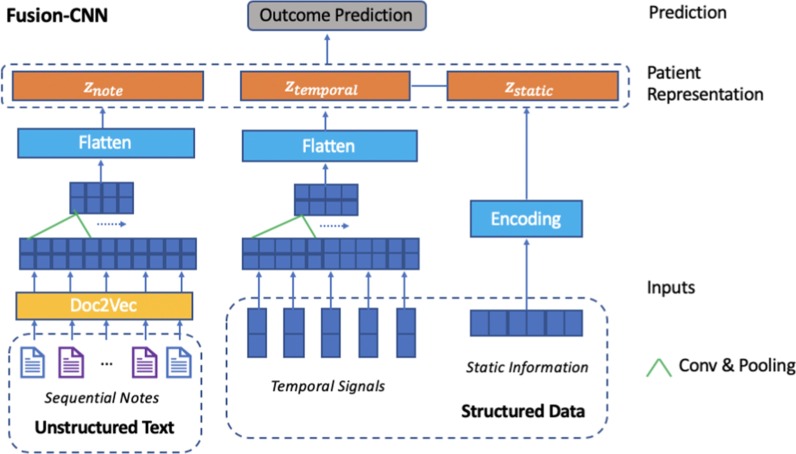
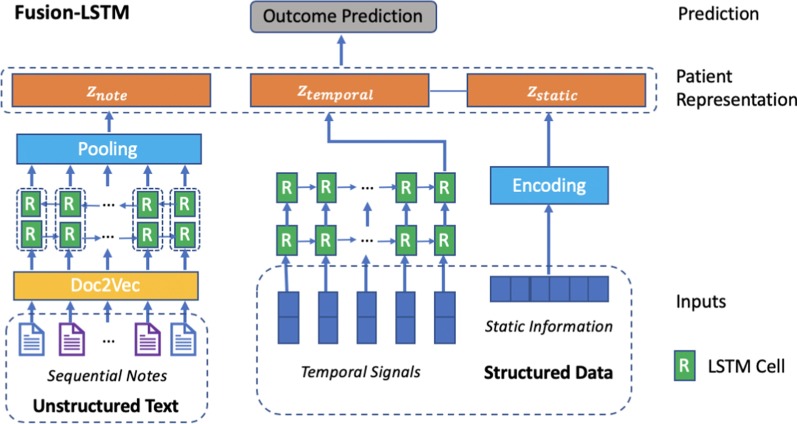
BACKGROUND: The broad adoption of electronic health records (EHRs) provides great opportunities to conduct health care research and solve various clinical problems in medicine. With recent advances and success, methods based on machine learning and deep learning have become increasingly popular in medical informatics. However, while many research studies utilize temporal structured data on predictive modeling, they typically neglect potentially valuable information in unstructured clinical notes. Integrating heterogeneous data types across EHRs through deep learning techniques may help improve the performance of prediction models. METHODS: In this research, we proposed 2 general-purpose multi-modal neural network architectures to enhance patient representation learning by combining sequential unstructured notes with structured data. The proposed fusion models leverage document embeddings for the representation of long clinical note documents and either convolutional neural network or long short-term memory networks to model the sequential clinical notes and temporal signals, and one-hot encoding for static information representation. The concatenated representation is the final patient representation which is used to make predictions. RESULTS: We evaluate the performance of proposed models on 3 risk prediction tasks (i.e. in-hospital mortality, 30-day hospital readmission, and long length of stay prediction) using derived data from the publicly available Medical Information Mart for Intensive Care III dataset. Our results show that by combining unstructured clinical notes with structured data, the proposed models outperform other models that utilize either unstructured notes or structured data only. CONCLUSIONS: The proposed fusion models learn better patient representation by combining structured and unstructured data. Integrating heterogeneous data types across EHRs helps improve the performance of prediction models and reduce errors.
Overview
The claims and statistics of this paper haven’t been checked yet.
Run the check — free, no account needed. It reads the open-access text and checks the sources it cites.
Integrity signals
Registry
Cites
Statistics
Figures
Verification
Claims the paper makes
The claims and statistics of this paper haven’t been checked yet.
Run the check — free, no account needed. It reads the open-access text and checks the sources it cites.
Claims other papers make about this one
Each is checked against this paper’s own text: does it say what the citing paper says it does?
The cited source doesn’t support the claim as written.
In the citing paper
“For evaluation, we use a 0.70-0.15-0.15 train-validation-test split following the previous work [13]. However, we equalized the size of the validation set and the test set to get a better estimation of test performance on the validation set. We split the dataset according to patient ID and admission ID so that there's no overlap between training, validation, and test sets.”
From Multimodal risk prediction with physiological signals, medical images and clinical notes (2024) · cites this paper as [13]
Checked by a reasoning model — may be wrong.
Experimental — accuracy not yet measuredThe cited source says what the claim attributes to it.
In the citing paper
“They hold great promise in deriving meaningful insights from EHR, which can aid in accurately predicting clinical outcomes, such as mortality [13] and readmission [13], [14].”
From Multimodal risk prediction with physiological signals, medical images and clinical notes (2024) · cites this paper as [13]
Self-check
Percentages, sums and reported differences re-computed from the paper’s own numbers.
The self-check needs the paper’s full text.
Citations
Cites
LeCun, Y., Bengio, Y., & Hinton, G. (2015) · Nature · doi:10.1038/nature14539 · Cited by 84,126
Scikit-learn: Machine Learning in Python
Pedregosa, F., Varoquaux, G., Gramfort, A., Michel, V., Thirion, B., Grisel, O., Blondel, M., Müller, A., Nothman, J., Louppe, G., et al. (2012) · arXiv · doi:10.48550/arxiv.1201.0490 · Cited by 71,016 · cited 1×
“, logistic regression and random forest) with scikit-learn [32].”
BackgroundPyTorch: An Imperative Style, High-Performance Deep Learning Library
Paszke, A., Gross, S., Massa, F., Lerer, A., Bradbury, J., Chanan, G., Killeen, T., Lin, Z., Gimelshein, N., Antiga, L., et al. (2019) · arXiv · doi:10.48550/arxiv.1912.01703 · Cited by 31,473 · cited 1×
“Deep learning models are implemented using PyTorch [33].”
MethodSantos, A. G., da Rocha, G. O., & de Andrade, J. B. (2019) · Scientific Reports · doi:10.1038/s41598-018-37186-2 · Cited by 8,495
MIMIC-III, a freely accessible critical care database
Johnson, A. E. W., Pollard, T. J., Shen, L., Lehman, L.-W. H., Feng, M., Ghassemi, M., Moody, B., Szolovits, P., Anthony Celi, L., & Mark, R. G. (2016) · Scientific Data · doi:10.1038/sdata.2016.35 · Cited by 8,141
Distributed Representations of Sentences and DocumentsPreprint
Le, Q. V., & Mikolov, T. (2014) · arXiv (Cornell University) · doi:10.48550/arxiv.1405.4053 · Cited by 7,905 · cited 1×
“Doc2Vec) [30] to learn the embedding of each clinical note.”
BackgroundA unified architecture for natural language processing: deep neural networks with multitask learning
Collobert, R., & Weston, J. (2008) · Proceedings of the 25th international conference on Machine learning - ICML '08 · doi:10.1145/1390156.1390177 · Cited by 5,058
Software Framework for Topic Modelling with Large Corpora
Rek, R. R. U., & Sojka, P. (2010) · doi:10.13140/2.1.2393.1847 · Cited by 3,789
Scalable and accurate deep learning with electronic health records
Rajkomar, A., Oren, E., Chen, K., Dai, A. M., Hajaj, N., Hardt, M., Liu, P. J., Liu, X., Marcus, J., Sun, M., et al. (2018) · npj Digital Medicine · doi:10.1038/s41746-018-0029-1 · Cited by 2,648
Scalable and accurate deep learning with electronic health records.
Rajkomar, A., Oren, E., Chen, K., Dai, A. M., Hajaj, N., Hardt, M., Liu, P. J., Liu, X., Marcus, J., Sun, M., et al. (2018) · eScholarship (California Digital Library) · Cited by 2,242
Research works printed but not linked: 3
- Henry J, Pylypchuk Y, Searcy T, Patel V. Adoption of electronic health record systems among US non-federal acute care hospitals: 2008–2015. ONC Data Brief. 2016;35:1–9.
- Ghassemi M, Naumann T, Joshi R, Rumshisky A. Topic models for mortality modeling in intensive care units. In: ICML machine learning for clinical data analysis workshop; 2012. p. 1–4.
- Hackbarth G, Reischauer R, Miller M. Report to the congress: promoting greater efficiency in medicare. Washington, DC: MedPAC; 2007.
Cited by
Sorted by citations
Multimodal deep learning for biomedical data fusion: a review
Stahlschmidt, S. R., Ulfenborg, B., & Synnergren, J. (2022) · Briefings in Bioinformatics · doi:10.1093/bib/bbab569 · Cited by 766
“[64] proposed a CNN- and a RNN-based fusion model that take temporal signals, sequential clinical notes as well as static demographic and admission data as input to the different branches.”
MethodMultimodal machine learning in precision health: A scoping review
Kline, A., Wang, H., Li, Y., Dennis, S., Hutch, M., Xu, Z., Wang, F., Cheng, F., & Luo, Y. (2022) · npj Digital Medicine · doi:10.1038/s41746-022-00712-8 · Cited by 528
Synthetic data generation for tabular health records: A systematic review
Hernandez, M., Epelde, G., Alberdi, A., Cilla, R., & Rankin, D. (2022) · Neurocomputing · doi:10.1016/j.neucom.2022.04.053 · Cited by 278
“Despite recent trends that combine non-structured data with structured health data [22], the most common approach for developing ML models for healthcare decision making has been through structured data and the structuring of unstructured data through coding or feature extraction algorithms.”
BackgroundTime Series Prediction Using Deep Learning Methods in Healthcare
Morid, M. A., Sheng, O. R. L., & Dunbar, J. (2022) · ACM Transactions on Management Information Systems · doi:10.1145/3531326 · Cited by 280
“Zhang et al. (2020)[77] later enhanced this initial ontological strategy by considering more than one parent for each node and also by providing an ordered set of ancestors for each medical concept.”
BackgroundMethodInfluentialA systematic review of the prediction of hospital length of stay: Towards a unified framework
Stone, K., Reyer Zwiggelaar, A., Jones, P., & Parthaláin, N. M. (2022) · PLOS Digital Health · doi:10.1371/journal.pdig.0000017 · Cited by 274
Digital Mental Health Challenges and the Horizon Ahead for Solutions
Balcombe, L., & Leo, D. D. (2021) · JMIR Mental Health · doi:10.2196/26811 · Cited by 212
“Machine learning and deep learning have until recently only been fed structured data in medical informatics, neglecting invaluable information from unstructured clinical notes [52].”
BackgroundA narrative review on the validity of electronic health record-based research in epidemiology
Gianfrancesco, M. A., & Goldstein, N. D. (2021) · BMC Medical Research Methodology · doi:10.1186/s12874-021-01416-5 · Cited by 196
Theranostics and artificial intelligence: new frontiers in personalized medicine
Bilgin, G. B., Bilgin, C., Burkett, B. J., Orme, J. J., Childs, D. S., Thorpe, M. P., Halfdanarson, T. R., Johnson, G. B., Kendi, A. T., & Sartor, O. A. (2024) · Theranostics · doi:10.7150/thno.94788 · Cited by 157
“In contrast, unstructured data, which involves formats like images or texts, lacks a predetermined organization or format, making it more complex and challenging to analyze [10].”
Automated Machine Learning for Healthcare and Clinical Notes Analysis
Mustafa, A., & Azghadi, M. R. (2021) · Computers · doi:10.3390/computers10020024 · Cited by 131
Deep leaning in food safety and authenticity detection: An integrative review and future prospects
Wang, Y., Gu, H., Yin, X., Geng, T., Long, W., Fu, H., & She, Y. (2024) · Trends in Food Science & Technology · doi:10.1016/j.tifs.2024.104396 · Cited by 120
A survey on clinical natural language processing in the United Kingdom from 2007 to 2022
Wu, H., Wang, M., Wu, J., Francis, F., Chang, Y.-H., Shavick, A., Dong, H., Poon, M. T. C., Fitzpatrick, N., Levine, A. P., et al. (2022) · npj Digital Medicine · doi:10.1038/s41746-022-00730-6 · Cited by 101
“(Eligibility criteria) The inclusion criteria were: (1) develop or apply NLP technologies; (2) applied in health or life science domains including genetics; (3) full articles including research papers, preprints, conference publications, thesis and book chapters.”
BackgroundInfluentialMultimodal deep learning approaches for single-cell multi-omics data integration
Athaya, T., Ripan, R. C., Li, X., & Hu, H. (2023) · Briefings in Bioinformatics · doi:10.1093/bib/bbad313 · Cited by 96
“[66] developed fusion models based on CNNs and RNNs to learn patient representation by combining sequential clinical notes, static demographic and admission data.”
MethodPiccialli, F., Giampaolo, F., Prezioso, E., Camacho, D., & Acampora, G. (2021) · Information Fusion · doi:10.1016/j.inffus.2021.03.004 · Cited by 90
Use of unstructured text in prognostic clinical prediction models: a systematic review
Seinen, T. M., Fridgeirsson, E. A., Ioannou, S., Jeannetot, D. Y. B., John, L. H., Kors, J. A., Markus, A. F., Pera, V., Rekkas, A., Williams, R. D., et al. (2022) · Journal of the American Medical Informatics Association · doi:10.1093/jamia/ocac058 · Cited by 81
Syed, M., Syed, S., Sexton, K. W., Syeda, H. B., Garza, M. Y., Zozus, M. N., Syed, F., Begum, S., Syed, A. U., Sanford, J. A., et al. (2021) · Informatics · doi:10.3390/informatics8010016 · Cited by 74
Best practices in the real-world data life cycle
Zhang, J., Symons, J., Agapow, P., Teo, J., Paxton, C. A., Abdi, J., Mattie, H., Davie, C., Torres, A. Z., Folarin, A., et al. (2022) · PLOS Digital Health · doi:10.1371/journal.pdig.0000003 · Cited by 72
“Unstructured data contain critical context on the patient journey and have remarkable impact on the performance of models [55] and accumulation of pharmaceutical RWE [20], with recent emphasis on necessity for regulatory grade accuracy [56].”
BackgroundLiu, J., Capurro, D., Nguyen, A., & Verspoor, K. (2023) · Journal of Biomedical Informatics · doi:10.1016/j.jbi.2023.104466 · Cited by 66
Natural Language Processing Applications for Computer-Aided Diagnosis in Oncology
Li, C., Zhang, Y., Weng, Y., Wang, B., & Li, Z. (2023) · Diagnostics · doi:10.3390/diagnostics13020286 · Cited by 64
“Most data in EHR or EMR are recorded in the form of unstructured data (clinical notes and reports), with a small amount recorded in the form of structured data (patient demographics, vital signs, lab tests) [3].”
BackgroundMultimodal risk prediction with physiological signals, medical images and clinical notes
Wang, Y., Yin, C., & Zhang, P. (2024) · Heliyon · doi:10.1016/j.heliyon.2024.e26772 · Cited by 66
“Zhang et al. [13] integrated time series variables with unstructured clinical notes in MIMIC-III to perform predictive modeling tasks, using LSTM and CNN for sequential feature extraction.”
BackgroundMethodInfluentialTsietso, D., Yahya, A., Samikannu, R., Tariq, M. U., Babar, M. A., Qureshi, B., & Koubâa, A. (2023) · IEEE Access · doi:10.1109/access.2023.3280422 · Cited by 51
“This view is supported by findings in [37] where a hybrid model was trained on unstructured clinical notes combined with structured data.”
Tsai, M., Chen, K., & Chen, P. (2025) · Journal of the American Heart Association · doi:10.1161/jaha.124.036946 · Cited by 56
“28 31 Traditionally, researchers have relied on structured tabular data like laboratory results, vital signs, diagnostic and procedure codes, and basic demographic features to build their prediction models.”
Lybarger, K., Dobbins, N. J., Long, R., Singh, A., Wedgeworth, P., Uzuner, Ö., & Yetisgen, M. (2023) · Journal of the American Medical Informatics Association · doi:10.1093/jamia/ocad073 · Cited by 48
Chiu, C., Wu, C.-M., Chien, T.-N., Kao, L., Li, C., & Chu, C.-M. (2023) · International Journal of Environmental Research and Public Health · doi:10.3390/ijerph20054340 · Cited by 50
Conformal Prediction: A Data Perspective
Zhou, X., Chen, B., Gui, Y., & Cheng, L. (2025) · ACM Computing Surveys · doi:10.1145/3736575 · Cited by 69
Taha, M., & Morren, J. A. (2023) · Muscle & Nerve · doi:10.1002/mus.28023 · Cited by 43
“66,67 A notable study 68 employed ML techniques for diagnosing and assessing the severity of diabetic sensorimotor polyneuropathy (DSPN).”
Method“Note Bloat” impacts deep learning-based NLP models for clinical prediction tasks
Liu, J., Daniel Capurro, N., Nguyen, A. N., & Verspoor, K. M. (2022) · Journal of Biomedical Informatics · doi:10.1016/j.jbi.2022.104149 · Cited by 42
Bhuiyan, M. S. M., Rafi, M. A., Rodrigues, G. N., Mir, M. N. H., Ishraq, A., Mridha, M. F., & Shin, J. (2025) · Array · doi:10.1016/j.array.2025.100390 · Cited by 65
Ingwersen, E. W., Stam, W. T., Meijs, B. J. V., Roor, J., Besselink, M. G., Koerkamp, B. G., de Hingh, I. H. J. T., van Santvoort, H. C., Stommel, M. W. J., & Daams, F. D. (2023) · Surgery · doi:10.1016/j.surg.2023.03.012 · Cited by 39
Tang, S., Tariq, A., Dunnmon, J., Sharma, U., Elugunti, P., Rubin, D. L., Patel, B. N., & Banerjee, I. (2023) · IEEE Journal of Biomedical and Health Informatics · doi:10.1109/jbhi.2023.3236888 · Cited by 49
“Third, while patient data often involve multiple modalities, such as imaging and clinical data, only a few studies have included multimodal data for hospital readmission prediction [15], [16].”
BackgroundMethodInfluentialGonzález-Castro, L., Chávez, M., Duflot, P., Bleret, V., Martin, A. G., Zobel, M., Nateqi, J., Lin, S. M., Pazos-Arias, J. J., Fiol, G. D., et al. (2023) · Cancers · doi:10.3390/cancers15102741 · Cited by 41
“Some efforts have been made to integrate heterogeneous data from both structured and unstructured sources for risk prediction [29,30], leading to improved performance prediction and a reduction of errors.”
BackgroundCardiovascular Care Innovation through Data-Driven Discoveries in the Electronic Health Record
Dhingra, L. S., Shen, M., Mangla, A., & Khera, R. (2023) · The American Journal of Cardiology · doi:10.1016/j.amjcard.2023.06.104 · Cited by 42
Identification of piRNA disease associations using deep learning
Ali, S. D., Tayara, H., & Chong, K. T. (2022) · Computational and Structural Biotechnology Journal · doi:10.1016/j.csbj.2022.02.026 · Cited by 37
“Moreover, deep learning is also capable of identifying and recognizing the patterns in unstructured data with low-level involvement of manual configuration [41].”
BackgroundLyu, W., Dong, X., Wong, R., Zheng, S., Abell-Hart, K., Wang, F., & Chen, C. (2022) · arXiv · doi:10.48550/arxiv.2208.10240 · Cited by 46
“Some works merely extract features from structured and unstructured data separately, and then concatenate the two features(Zhang et al., 2020).”
BackgroundYu, M.-Y., & Son, Y. (2024) · European Journal of Cardiovascular Nursing · doi:10.1093/eurjcn/zvae031 · Cited by 40
Seinen, T. M., Kors, J. A., van Mulligen, E. M., & Rijnbeek, P. R. (2024) · Journal of Medical Internet Research · doi:10.2196/66910 · Cited by 34
Garriga, R., Buda, T. S., Guerreiro, J., Iglesias, J. O., Aguerri, I. E., & Matić, A. (2023) · Cell Reports Medicine · doi:10.1016/j.xcrm.2023.101260 · Cited by 36
“21 Research has shown that complementing structured with unstructured data can improve cohort identification 22 as well as the prediction accuracy of hospital readmission 23–25 and suicide attempts.”
BackgroundUsing Deep Learning to Identify High-Risk Patients with Heart Failure with Reduced Ejection Fraction
Wang, Z., Chen, X., Tan, X., Yang, L., Kannapur, K., Vincent, J. L., Kessler, G. N., Ru, B., & Yang, M. (2021) · Journal of health economics and outcomes research · doi:10.36469/jheor.2021.25753 · Cited by 31
Usmani, U. A., Happonen, A., & Watada, J. (2022) · Lecture notes in networks and systems · doi:10.1007/978-3-031-18461-1_19 · Cited by 30
Distilling the knowledge from large-language model for health event prediction
Ding, S., Ye, J., Hu, X., & Zou, N. (2024) · Scientific Reports · doi:10.1038/s41598-024-75331-2 · Cited by 28
“In the Intensive Care Unit (ICU), the ability to predict health-related events 2,3 in advance is paramount for optimizing treatment strategies and improving patient outcomes.”
Generative AI Models in Time-Varying Biomedical Data: Scoping Review
He, R., Sarwal, V., Qiu, X., Zhuang, Y., Zhang, L., Liu, Y., & Chiang, J. N. (2024) · Journal of Medical Internet Research · doi:10.2196/59792 · Cited by 36
“In these studies, RNN models were used to predict methicillin-resistant Staphylococcus aureus positivity [61], mortality [51,62-64], readmission [65-68], next diagnosis [69-72], length of stay [73,74], hypertension [75,76], treatment response [77], and survival analysis [78].”
Wu, J., He, K., Mao, R., Shang, X., & Cambria, E. (2025) · Information Fusion · doi:10.1016/j.inffus.2025.103283 · Cited by 29
Lin, W.-C., Chen, A., Song, X. B., Weiskopf, N. G., Chiang, M. F., & Hribar, M. R. (2023) · Journal of the American Medical Informatics Association · doi:10.1093/jamia/ocad213 · Cited by 27
Multi-modal learning for inpatient length of stay prediction
Chen, J., Wen, Y., Pokojovy, M., Tseng, T.-L., McCaffrey, P., Vo, A. H., Walser, E., & Moen, S. T. (2024) · Computers in Biology and Medicine · doi:10.1016/j.compbiomed.2024.108121 · Cited by 26
Prediction of Hemorrhagic Transformation after Ischemic Stroke Using Machine Learning
Choi, J.-M., Seo, S.-Y., Kim, P.-J., Kim, Y.-S., Lee, S., Sohn, J., Kim, D., Lee, J., & Kim, C. (2021) · Journal of Personalized Medicine · doi:10.3390/jpm11090863 · Cited by 26
“In future studies, we expect that the ensemble learning method, which adds the patient’s clinical variables and image variables, will further enhance the predictive power of the DL model.”
MethodChen, P., Chen, L., Lin, Y.-K., Li, G.-H., Lai, F., Lü, C.-W., Yang, C.-Y., Chen, K., & Lin, T. (2022) · JMIR Medical Informatics · doi:10.2196/38241 · Cited by 28
“However, including this unstructured text improves the advanced prediction of unfavorable clinical outcomes [14-16].”
BackgroundMethodAnalyzing the Challenges Facing Digital Mental Health (DMH) Between Aspiration and Reality
Tassnim, R., Ja'far, R. A. T., & Al-Tarawneh, A. M. A. (2024) · International Conference on Cyber Resilience (ICCR) · doi:10.1109/iccr61006.2024.10533151 · Cited by 24
“Moreover, in assessing these apps, the distribution of scores or star ratings does not necessarily reflect genuine quality and reliability [61].”
BackgroundAllen, K. S., Hood, D. R., Cummins, J., Kasturi, S., Mendonca, E. A., & Vest, J. R. (2023) · JAMIA Open · doi:10.1093/jamiaopen/ooad024 · Cited by 25
“Free-text data constitute an important source for feature creation(11) and are one that generally contribute to better prediction models.(70) Additionally, unlike structured codes or patient surveys that cannot be collected retroactively, NLP algorithms can be applied to historical data, for times prior to the impleme…”
BackgroundThe quality and utility of artificial intelligence in patient care
Wehkamp, K., Krawczak, M., & Schreiber, S. (2023) · Deutsches Ärzteblatt international · doi:10.3238/arztebl.m2023.0124 · Cited by 28
Qiu, Z., Chen, X., Xie, D., Ren, Y., Wang, Y., Yang, Z., Guo, M., Song, Y., Guo, J., Feng, Y., et al. (2024) · Trends in Food Science & Technology · doi:10.1016/j.tifs.2024.104797 · Cited by 23
A Novel Extra Tree Ensemble Optimized DL Framework (ETEODL) for Early Detection of Diabetes
Arya, M., Hanumat Sastry, G., Motwani, A., Kumar, S., & Zaguia, A. (2022) · Frontiers in Public Health · doi:10.3389/fpubh.2021.797877 · Cited by 23
“While DL models are more promising, as DL networks are flexible, making them suitable for structured and unstructured data (33), they can process the data than the shallow architecture.”
BackgroundEnhancing early autism prediction based on electronic records using clinical narratives
Chen, J., Engelhard, M., Henao, R., Berchuck, S. I., Eichner, B., Perrin, E. M., Sapiro, G., & Dawson, G. (2023) · Journal of Biomedical Informatics · doi:10.1016/j.jbi.2023.104390 · Cited by 24
Jaotombo, F., Adorni, L., Ghattas, B., & Boyer, L. (2023) · PLoS ONE · doi:10.1371/journal.pone.0289795 · Cited by 24
Multi-Class Text Classification Using Machine Learning Models for Online Drug Reviews
Joshi, S., & Abdelfattah, E. (2021) · IEEE World AI IoT Congress (AIIoT) · doi:10.1109/aiiot52608.2021.9454250 · Cited by 22
Dipnall, J. F., Page, R. S., Du, L., Costa, M. L., Lyons, R. A., Cameron, P. A., de Steiger, R. N., Hau, R., Bucknill, A., Oppy, A., et al. (2021) · PLoS ONE · doi:10.1371/journal.pone.0257361 · Cited by 23
Liu, Z., Zhang, J., Hou, Y., Zhang, X., Li, G., & Xiang, Y. (2023) · Communications in computer and information science · doi:10.1007/978-981-19-9865-2_10 · Cited by 26
A systematic data characteristic understanding framework towards physical-sensor big data challenges
Ma, Z., Jôrgensen, B. N., & Ma, Z. G. (2024) · Journal Of Big Data · doi:10.1186/s40537-024-00942-5 · Cited by 27
“Unstructured data are difficult to be analyzed by conventional data processing tools and methods, which typically include text and social media data [52, 53].”
BackgroundExplainable Artificial Intelligence for State of Charge Estimation of Lithium-Ion Batteries
Chan, H. T. J., Rubeša-Zrim, J., Pichler, F., Salihi, A., Mourad, A., Šimić, I., Časni, K., & Veas, E. E. (2025) · Applied Sciences · doi:10.3390/app15095078 · Cited by 25
Interpretable prediction of mortality in liver transplant recipients based on machine learning
Zhang, X., Gavaldà, R., & Baixeries, J. (2022) · Computers in Biology and Medicine · doi:10.1016/j.compbiomed.2022.106188 · Cited by 23
Khalate, P., Gite, S., Pradhan, B., & Lee, C.-W. (2024) · Frontiers in Physics · doi:10.3389/fphy.2024.1445204 · Cited by 23
Natural Language Processing Enhanced Qualitative Methods: An Opportunity to Improve Health Outcomes
Parker, R. D., Mancini, K., & Abram, M. D. (2023) · International Journal of Qualitative Methods · doi:10.1177/16094069231214144 · Cited by 20
“…pertaining to multiple aspects of a patient ’ s current health and often includes a biopsy-chosocial assessment which covers social and family history, behavioral and sexual health, travel history, housing, employment, home safety, interpersonal violence, and similar fi elds (Zhang et al., 2020).”
BackgroundAn Interpretable Adaptive Multiscale Attention Deep Neural Network for Tabular Data
Dentamaro, V., Giglio, P., Impedovo, D., Pirlo, G., & Ciano, M. D. (2024) · IEEE Transactions on Neural Networks and Learning Systems · doi:10.1109/tnnls.2024.3392355 · Cited by 24
Teles, A. S., de Moura, I. R., Silva, F., Roberts, A., & Stahl, D. R. (2025) · Information Fusion · doi:10.1016/j.inffus.2025.102981 · Cited by 23
Wang, N., Wang, M., Yang, Z., Liu, H., Lan, W., Fei, X., & Chen, H. (2021) · Journal of Medical Internet Research · doi:10.2196/30720 · Cited by 20
“The reason might be that the readmission condition was multifactorial and complex, such as related to patient medical insurance, economic conditions, and individual factors, thus, it is challenging to make a prediction [4].”
BackgroundResultInfluentialVagliano, I., Dormosh, N., Rios, M., Luik, T. T., Buonocore, T. M., Elbers, P., Dongelmans, D. A., Schut, M. C., & Abu–Hanna, A. (2023) · Journal of Biomedical Informatics · doi:10.1016/j.jbi.2023.104504 · Cited by 22
Jujjavarapu, C., Suri, P., Pejaver, V. R., Friedly, J. L., Gold, L. S., Meier, E. N., Cohen, T., Mooney, S. D., Heagerty, P. J., & Jarvik, J. G. (2023) · BMC Medical Informatics and Decision Making · doi:10.1186/s12911-022-02096-x · Cited by 20
“…and weight decay), we 1) split the training data into 80% for training and 20% for validation, 2) used previous works as a starting point for values [30, 59], then 3) grid searched to identify the combination of values that was associated to the lowest validation loss (Additional file 2: Table S2).”
BackgroundMethodGaviria-Valencia, S., Murphy, S. P., Kaggal, V. C., McBane, R. D., Rooke, T. W., Chaudhry, R., Aguirre, M. A., & Arruda-Olson, A. M. (2023) · JMIR Medical Informatics · doi:10.2196/40964 · Cited by 19
“In the future, transformer-based NLP models [23,24] may be trained to interpret nuanced language, and ablation experiments [25] could be used to further evaluate these models.”
MethodInterpretable machine learning for time-to-event prediction in medicine and healthcare
Baniecki, H., Sobieski, B., Szatkowski, P., Bombiński, P., & Biecek, P. (2024) · Artificial Intelligence in Medicine · doi:10.1016/j.artmed.2024.103026 · Cited by 20
“In [36], deep learning models classify the patient staying in a hospital for longer than 7 days based on multi-modal data combining unstructured notes and tabular features.”
Kabir, R., Watanobe, Y., Ding, D., Islam, M. R., & Naruse, K. (2025) · IEEE Access · doi:10.1109/access.2025.3619776 · Cited by 17
The risk assessment tool for intensive care unit readmission: A systematic review and meta-analysis
Long, J., Wang, M., Li, W., Cheng, J., Yuan, M., Zhong, M., Zhang, Z., & Zhang, C. (2023) · Intensive and Critical Care Nursing · doi:10.1016/j.iccn.2022.103378 · Cited by 18
Gezimati, M., & Singh, G. K. (2025) · IEEE Transactions on Instrumentation and Measurement · doi:10.1109/tim.2025.3547084 · Cited by 16
“There has been wide progress in multitask deep learning based on late data fusion [59], [60], [61], [62], [63], [64], [65].”
Loaiza‐Bonilla, A., Thaker, N. G., Chung, C. D., Parikh, R. B., Stapleton, S., & Borkowski, P. (2025) · American Society of Clinical Oncology Educational Book · doi:10.1200/edbk-25-100048 · Cited by 16
Ostropolets, A., Hripcsak, G. M., Husain, S. A., Richter, L. R., Spotnitz, H. M., Elhussein, A., & Ryan, P. B. (2023) · Journal of the American Medical Informatics Association · doi:10.1093/jamia/ocad202 · Cited by 16
“20 , 43 –45 Yet, we need a scalable solution.”
BackgroundLi, Y., Liang, Z., Li, Y., Cao, Y., Zhang, H., & Dong, B. (2024) · European Journal of Radiology · doi:10.1016/j.ejrad.2024.111714 · Cited by 18
Kim, Y., Kim, M., Kim, Y., & Choi, M. (2025) · International Journal of Nursing Studies · doi:10.1016/j.ijnurstu.2025.105133 · Cited by 21
Li, F., Rasmy, L., Xiang, Y., Feng, J., Abdelhameed, A. M., Hu, X., Sun, Z., Aguilar, D. A., Dhoble, A., Du, J., et al. (2024) · Journal of the American Heart Association · doi:10.1161/jaha.123.029900 · Cited by 17
Accelerating the characterization of dynamic DNA origami devices with deep neural networks
Wang, Y., Jin, X., & Castro, C. (2023) · Scientific Reports · doi:10.1038/s41598-023-41459-w · Cited by 16
Data Science Trends Relevant to Nursing Practice: A Rapid Review of the 2020 Literature
Douthit, B. J., Walden, R. L., Cato, K., Coviak, C. P., Cruz, C., D’Agostino, F., Forbes, T. H., Gao, G., Kapetanovic, T. A., Lee, M. A., et al. (2022) · Applied Clinical Informatics · doi:10.1055/s-0041-1742218 · Cited by 16
Oxygenation Fluctuations Associated with Severe Retinopathy of Prematurity
Lin, W.-C., Jordan, B. K., Scottoline, B. P., Ostmo, S. R., Coyner, A. S., Singh, P., Kalpathy–Cramer, J., Deniz Erdogmus, B., Chan, R. V. P., Chiang, M. F., et al. (2023) · Ophthalmology Science · doi:10.1016/j.xops.2023.100417 · Cited by 14
“25 e 29 Moreover, deep learning models are fl exible and capable of integrating different modalities of data, such as tabular data, free-text data, images, and time-series data, into a single predictive model.”
BackgroundBandyopadhyay, A., Albashayreh, A., Zeinali, N., Fan, W., & Gilbertson‐White, S. (2024) · JAMIA Open · doi:10.1093/jamiaopen/ooae082 · Cited by 14
Jia, Q., Zhu, Y., Xu, R., Zhang, Y., & Zhao, Y. (2022) · Industrial Management & Data Systems · doi:10.1108/imds-12-2021-0769 · Cited by 16
Introduction to machine learning
Rezaei, N., & Jabbari, P. (2022) · Elsevier eBooks · doi:10.1016/b978-0-12-822400-7.00012-9 · Cited by 14
Khairuddin, M. Z. F., Hasikin, K. B., Razak, N. A. A., Mohshim, S. A., & Ibrahim, S. S. (2023) · IEEE Access · doi:10.1109/access.2023.3304328 · Cited by 13
“More-over, Zhang et al. [27] developed a multimodal DNN named ‘Fusion-LSTM’ to predict mortality, hospitalization stay and hospital readmission using the ‘MIMIC-III’ health records.”
BackgroundMethodInfluentialPingi, S. T., Zhang, D., Bashar, M. A., & Nayak, R. (2023) · Data Science and Engineering · doi:10.1007/s41019-023-00232-9 · Cited by 13
Moharrami, M., Zavareh, P. A., Watson, E. E., Singhal, S., Johnson, A. E. W., Hosni, A., Quiñonez, C., & Glogauer, M. (2024) · PLoS ONE · doi:10.1371/journal.pone.0307531 · Cited by 15
Hunik, L., Chaabouni, A., van Laarhoven, T., Hartman, T. O., Leijenaar, R. T. H., Cals, J., Uijen, A. A., & Schers, H. (2025) · JMIR Medical Informatics · doi:10.2196/62862 · Cited by 14
“Literature found it valuable for the performance of the model to use unstructured data together with structured data for prognostic prediction models [76,77].”
Galimzhanov, A. M., Matetić, A., Tenekecioğlu, E., & Mamas, M. A. (2023) · International Journal of Cardiology · doi:10.1016/j.ijcard.2023.131339 · Cited by 12
Electronic Health Records-Based Data-Driven Diabetes Knowledge Unveiling and Risk Prognosis
Pang, H., Zhou, L. N., Dong, Y., Chen, P., Gu, D., Lyu, T., & Zhang, H.-J. (2024) · ICCK Transactions on Intelligent Systematics · doi:10.62762/tis.2025.367320 · Cited by 26
“CNN excels in text classification, especially with spatially structured data, but demands high computational resources [22].”
Classification algorithm for congenital Zika Syndrome: characterizations, diagnosis and validation
Veiga, R., Schüler‐Faccini, L., de França, G. V. A., Andrade, R. F. S., Teixeira, M. G., Costa, L. C., Paixão, E. S., Costa, M. D. C. N., Barreto, M. L., de Oliveira, J. F., et al. (2021) · Scientific Reports · doi:10.1038/s41598-021-86361-5 · Cited by 12
“Despite the difficulties, the use of unstructured data such as texts from medical records in conjunction with structured data has helped in classifying problems 20 .”
MethodAlam, M. A. U. (2022) · Proceedings of the AAAI Conference on Artificial Intelligence · doi:10.1609/aaai.v36i11.21545 · Cited by 13
Multi-Gate Mixture of Multi-View Graph Contrastive Learning on Electronic Health Record
Cao, Y., Wang, Q., Wang, X., Peng, D., & Li, P. (2023) · IEEE Journal of Biomedical and Health Informatics · doi:10.1109/jbhi.2023.3325221 · Cited by 13
“Our study segments LOS into LOS3 ( ≤ 3 days) and LOS7 ( ≤ 7 days) categories, inspired by neural network usage on these thresholds in [60], [61], [62].”
EL‐Manzalawy, Y., Abbas, M. M., Hoaglund, I., Cerna, A. U., Morland, T., Haggerty, C. M., Hall, E. S., & Fornwalt, B. K. (2021) · BMC Medical Informatics and Decision Making · doi:10.1186/s12911-021-01517-7 · Cited by 11
“Several deep learning models for multivariate time series based on conventional neural networks (CNN) [28], long-short terms memory (LSTM) [26, 27], and gated recurrent unit (GRU) networks [26] have been proposed and shown to have superior performance over shallow models as well as simple severity scores.”
BackgroundPham, T.-H., Yin, C., Mehta, L. S., Zhang, X., & Zhang, P. (2022) · Knowledge and Information Systems · doi:10.1007/s10115-022-01813-2 · Cited by 11
“Specifically, it can be easily extended to work with heterogeneous clinical data [54] (e.g., clinical notes, lab tests, vital signs) by incorporating more encoders designed to handle these data types [55, 56].”
BackgroundSax, D. R., Warton, E. M., Sofrygin, O., Mark, D. G., Ballard, D. W., Kene, M. V., Vinson, D. R., & Reed, M. E. (2023) · Journal of the American College of Emergency Physicians Open · doi:10.1002/emp2.13003 · Cited by 13
“Recent studies have shown that the use of advanced predictive analytics can improve the accuracy of triage predictions 8–21 and that implementation of such machine learning (ML)-based models is feasible.”
BackgroundSalybekov, A. A., Wolfien, M., Kobayashi, S., Steinhoff, G., & Asahara, T. (2021) · Cells · doi:10.3390/cells10123266 · Cited by 10
“Other DL methods have recently been reviewed for heterogeneous medical data [96] and image analysis [97].”
MethodResearch on Multimodal Fusion of Temporal Electronic Medical Records
Ma, M., Wang, M., Gao, B., Li, Y., Huang, J., & Chen, H. (2024) · Bioengineering · doi:10.3390/bioengineering11010094 · Cited by 11
“…categorizing them into the following types: • Models using a simple fusion method—fusion-convolutional neural network (Fusion-CNN) and fusion-LSTM [33]; • Transformer-based fusion models—Multimodal Transformer (MulT) [34], Crossformer [35], and patch time series transformer (PatchTST) [36]; •…”
MethodAI-Enhanced Lung Cancer Prediction: A Hybrid Model's Precision Triumph
Kesiku, C. Y., & García-Zapirain, B. (2024) · IEEE Journal of Biomedical and Health Informatics · doi:10.1109/jbhi.2024.3447583 · Cited by 10
Ovarian cancer data analysis using deep learning: A systematic review
Hira, M. T., Razzaque, M. A., & Sarker, M. H. (2024) · Engineering Applications of Artificial Intelligence · doi:10.1016/j.engappai.2024.109250 · Cited by 27
ARCH: Large-scale knowledge graph via aggregated narrative codified health records analysis
Gan, Z., Zhou, D., Rush, E. N., Panickan, V. A., Ho, Y.-L. A., Ostrouchovm, G., Xu, Z., Shen, S., Xiong, X., Greco, K. F., et al. (2025) · Journal of Biomedical Informatics · doi:10.1016/j.jbi.2024.104761 · Cited by 15
Shi, J., Hubbard, A., Fong, N., & Pirracchio, R. (2025) · BMC Medical Informatics and Decision Making · doi:10.1186/s12911-025-03058-9 · Cited by 10
“This becomes especially problematic when data are not missing at random, as has been observed in Intensive Care Unit (ICU) settings [14, 15].”
Metadata
- Authors
- Zhang, D., Yin, C., Zeng, J., Yuan, X., & Zhang, P.
- Affiliations
- Wuhan University of Technology (CN)
- The Ohio State University (US)
- Corresponding author
- Zhang, Ping
- Venue
- BMC Medical Informatics and Decision Making
- Published
- 2020-10-29
- Volume
- 20
- Issue
- 1
- Pages
- 280-280
- ISSN
- 1472-6947 (ISSN-L)
- PMC
- PMC7596962
- OpenAlex
- W3095791468
- Cited by
- 269
- References
- 35
- Citations by year
- 2026: 41 · 2025: 72 · 2024: 52 · 2023: 52 · 2022: 34 · 2021: 18
- FWCI
- 10.13
- Type
- journal article
- Language
- en
- Open access
- gold
- doi.org
- Locations
- BMC Medical Informatics and Decision Making (publishedVersion, cc-by)
- medRxiv (acceptedVersion, cc-by-nc-nd)
- PubMed Central (publishedVersion, cc-by)
- PubMed (publishedVersion)
- DOAJ (DOAJ: Directory of Open Access Journals) (submittedVersion, cc-by-sa)
- Topics
- Physical Sciences › Computer Science › Artificial Intelligence › Machine Learning in Healthcare
- Health Sciences › Nursing › Research and Theory › Nursing Diagnosis and Documentation
- Health Sciences › Health Professions › Health Information Management › Electronic Health Records Systems
- Keywords
- electronic health records, unstructured clinical notes, multimodal neural networks, patient representation learning, in-hospital mortality prediction, hospital readmission prediction, length of stay prediction, MIMIC-III, clinical risk prediction
- MeSH terms
- Machine Learning, Deep Learning, Humans, Patient Readmission, Neural Networks, Computer, Electronic Health Records
About these checks
Registry, retraction, Cites and statistics results are computed, not judged, with one exception: a printed reference that no index lists is read once by a model before it counts as a citation error. Claims are extracted by a model and kept only when their quote appears verbatim in the text; each cited source is then checked, with a model’s help, for whether it says what the claim relies on. Those verdicts can be wrong — read the claim’s quote and the cited source before relying on one.
Statistics and arithmetic are recomputed, not judged.
Confidence bands are shown only for fields calibrated on our annotated test set. None is calibrated yet, so no band is shown.
What counts as a claim ›How we measure confidence ›How we check this ›
Are you an author, or do you see a problem with this page? Request a review
