

Integrating mental health into primary care in Nigeria: report of a demonstration project using the mental health gap action programme intervention guide
Open accessThe DOI matches its Crossref record; 22 of the 22 references it cites were found in a registry or an index; 4 of the 17 sources its claims cite were checked for support.
Abstract
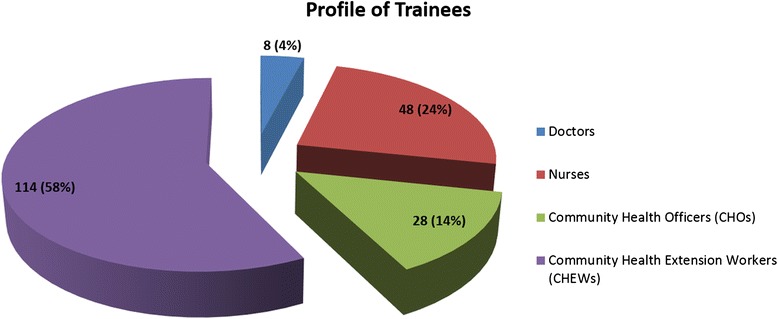
BACKGROUND: The World Mental Health Surveys conducted by the World Health Organization (WHO) have shown that huge treatment gaps for severe mental disorders exist in both developed and developing countries. This gap is greatest in low and middle income countries (LMICs). Efforts to scale up mental health services in LMICs have to contend with the paucity of mental health professionals and health facilities providing specialist services for mental, neurological and substance use (MNS) disorders. A pragmatic solution is to improve access to care through the facilities that exist closest to the community, via a task-shifting strategy. This study describes a pilot implementation program to integrate mental health services into primary health care in Nigeria. METHODS: The program was implemented over 18 months in 8 selected local government areas (LGAs) in Osun state of Nigeria, using the WHO Mental Health Gap Action Programme Intervention Guide (mhGAP-IG), which had been contextualized for the local setting. A well supervised cascade training model was utilized, with Master Trainers providing training for the Facilitators, who in turn conducted several rounds of training for front-line primary health care workers. The first set of trainings by the Facilitators was supervised and mentored by the Master Trainers and refresher trainings were provided after 9 months. RESULTS: A total of 198 primary care workers, from 68 primary care clinics, drawn from 8 LGAs with a combined population of 966,714 were trained in the detection and management of four MNS conditions: moderate to severe major depression, psychosis, epilepsy, and alcohol use disorders, using the mhGAP-IG. Following training, there was a marked improvement in the knowledge and skills of the health workers and there was also a significant increase in the numbers of persons identified and treated for MNS disorders, and in the number of referrals. Even though substantial retention of gained knowledge was observed nine months after the initial training, some level of decay had occurred supporting the need for a refresher training. CONCLUSION: It is feasible to scale up mental health services in primary care settings in Nigeria, using the mhGAP-IG and a well-supervised cascade-training model. This format of training is pragmatic, cost-effective and holds promise, especially in settings where there are few specialists.
Overview
CoChat Summary
TL;DR
This pilot demonstration project in Osun State, Nigeria, tested whether the WHO mhGAP-IG plus a supervised cascade-training model could integrate mental health care into primary care. It found improved provider knowledge, increased identification and referral of MNS disorders, and feasibility of the model, though some skill decay occurred by 9 months.
Key findings
- A total of 198 primary care workers from 68 primary care clinics across 8 LGAs with a combined population of 966,714 were trained to detect and manage moderate to severe major depression, psychosis, epilepsy, and alcohol use disorders using the mhGAP-IG.
- Knowledge improved significantly from pre- to post-training (mean score difference −4.90, p < 0.001, CI −5.88 to −3.92), with retention at 9 months still above baseline (pre-training vs 9 months: −2.92, p < 0.001, CI −3.96 to −1.88) but lower than immediate post-training (post-training vs 9 months: 1.98, p < 0.001, CI 1.95 to 3.01).
- Compared with a baseline of zero MNS detection and treatment, trained staff identified and treated 96 clients and made 45 referrals to other levels of care, including 31 to PHC doctors and 14 to psychiatrists; 51 clients presented for follow-up clinics.
- About 65% of observed or assessed clinical encounters were rated in substantial compliance with the mhGAP-IG; policy attention increased, including employment of the state’s first psychiatrist and adoption of a national mhGAP-IG scale-up plan at the 56th National Council of Health meeting in August 2013.
Methods
- The program was implemented over 18 months in 8 selected LGAs in Osun State, Nigeria, as a pilot demonstration project with the Federal Ministry of Health and Osun State Ministry of Health, using a locally contextualized mhGAP-IG.
- A cascade training model was used: Master Trainers (psychiatrists) trained Facilitators (non-specialist physicians and senior nurses), who then trained frontline primary care workers; initial facilitator-led trainings were supervised by Master Trainers, and refresher training was provided after 9 months.
- Monitoring and evaluation included regular clinic visits, live clinical observations, review of clinical notes, debriefing sessions, and use of a contextualized WHO mhGAP monitoring and evaluation toolkit; pre- and post-training tests and a 9-month repeat test assessed knowledge and skills.
Limitations
- The paper states that relatively small numbers of clients were seen for MNS conditions despite training and public engagement, which the authors attribute to service utilization being a long and slow process.
- The paper states that stigma reduction among service providers was not measured, and that no personal information or individual patient-level data were collected.
- The paper states that knowledge and skills acquired during training may not necessarily translate into actual change in clinical practice; it also notes that cascade training runs the risk of quality decay, and some decay was observed at 9 months. Evident from the text: this was a pilot demonstration without a control or comparison group, and outcomes are facility-level counts rather than patient-level clinical outcomes.
Model-written summary. Check it against the paper before relying on it.
Integrity signals
Registry
Cites
Statistics
Figures
Verification
Claims the paper makes
4 Valid · 0 Not valid · 13 Not checked · 32 Own results and interpretations
Every source the paper cites for this claim was checked and supports it.
In the paper
“This step has already been successfully completed in Nigeria [21].”
§ Integrating mental health into primary care in Nigeria: report of a demonstration project using the mental health gap action programme intervention guide > Methods > The project overview
What the sources say
- Supportedcites [21] Abdulmalik J Kola L Fadahunsi W Adebayo K Yasamy MT Musa E Gureje O Country contextualization of the mental health gap action programme intervention guide: a case study from Nigeria PLOS Med 2013 10 8 e1001501 10.1371/journal.pmed.1001501 23976884 PMC3747990 source
The Summary Points explicitly state that contextualization of the mhGAP-IG was successfully carried out in Nigeria and produced a country-specific version. The Lessons Learnt section likewise describes the resulting context-specific manual. The claim concerns completion of contextualization, not the still-unevaluated impact of implementation. (LLM, conf=0.95)
plain- Asserted: passes — The authors put it forward as true.
- Checkable: passes — It can be checked against evidence.
- Load-bearing: passes — The paper’s conclusions depend on it.
- Based: passes — The paper gives a reason why it holds.
- Supported
The cited sources support only part of this claim — read each source’s verdict below.
In the paper
“This finding most likely reflects the observation previously made by others that even with continuous and sustained community engagement, ensuring acceptability and an increase in service utilization is often a long and slow process, whereby the numbers are initially modest and then slowly build up over time [23].”
§ Integrating mental health into primary care in Nigeria: report of a demonstration project using the mental health gap action programme intervention guide > Discussion
What the sources say
- Partly supportedcites [23] Ventevogel P van de Put W Faiz H van Mierlo B Siddiqi M Komproe IH Improving access to mental health care and psychosocial support within a fragile context: a case study from Afghanistan PLoS Med 2012 9 5 e1001225 10.1371/journal.pmed.1001225 22666183 PMC3362640 sourceExperimental — accuracy not yet measured
Split into 2 atoms — 0 confirmed, 2 partially supported, 0 disputed, 0 misattributed, 0 unverifiable. Expand the claim to see per-atom verdicts.
hedgedstates a possible cause- Asserted: passes — The authors put it forward as true.
- Checkable: passes — It can be checked against evidence.
- Load-bearing: unclear — It is unclear whether the paper’s conclusions depend on it.
- Based: passes — The paper gives a reason why it holds.
- Partly supported
A result the paper states — it cites no source for it, so there is none to check. The quote shows it is in the paper.
In the paper
“(a) the employment of the first psychiatrist in the state”
§ Integrating mental health into primary care in Nigeria: report of a demonstration project using the mental health gap action programme intervention guide > Results
plain- Asserted: passes — The authors put it forward as true.
- Checkable: passes — It can be checked against evidence.
- Load-bearing: unclear — It is unclear whether the paper’s conclusions depend on it.
- Based: passes — The paper gives a reason why it holds.
None of the sources cited for this claim have been checked yet.
In the paper
“We observed that relatively small numbers of clients were seen for MNS conditions despite the training of the providers to deliver improved service and the public engagement activities designed to inform the public about the availability of service. This was also in spite of the fact that the clinics were serving communities with relatively large population.”
§ Integrating mental health into primary care in Nigeria: report of a demonstration project using the mental health gap action programme intervention guide > Discussion
plain- Asserted: passes — The authors put it forward as true.
- Checkable: passes — It can be checked against evidence.
- Load-bearing: passes — The paper’s conclusions depend on it.
- Based: passes — The paper gives a reason why it holds.
A result the paper reports from its own data — it cites no other source for it, so there is none to check. The quote shows it is in the paper.
In the paper
“Following training, there was a marked improvement in the knowledge and skills of the health workers and there was also a significant increase in the numbers of persons identified and treated for MNS disorders, and in the number of referrals.”
§ Integrating mental health into primary care in Nigeria: report of a demonstration project using the mental health gap action programme intervention guide > Abstract > Results
plainstates a cause- Asserted: passes — The authors put it forward as true.
- Checkable: passes — It can be checked against evidence.
- Load-bearing: passes — The paper’s conclusions depend on it.
- Based: passes — The paper gives a reason why it holds.
27 more claims
Create a free account to see all 49 claims and to verify the 1 reference still open.
- Probably not a substantial claim. 11
- It may state two separate claims as one. 6
- The quote only partly states this claim. 1
Claims other papers make about this one
Each is checked against this paper’s own text: does it say what the citing paper says it does?
The source backs part of the claim, not all of it — or backs it for a different population, condition or comparison.
In the citing paper
“Gureje et al. (2015) earlier noted 40,8% knowledge gains but lacked longitudinal follow-up.”
From Scaling mental health care in Nigeria: Impact of WHO mhGAP training under the MeHPriC program on knowledge, attitudes, and practices of primary health care workers in Lagos State – A pre-post mixed-methods study (2025) · cites this paper as Gureje et al. (2015)
Experimental — accuracy not yet measuredThe source backs part of the claim, not all of it — or backs it for a different population, condition or comparison.
In the citing paper
“In other state-wide mhGAP projects in Nigeria, only clinical outcomes and trainee skill retention have been evaluated so far [27, 29, 30].”
From Integrating mental health into primary care: evaluation of the Health Action for Psychiatric Problems In Nigeria including Epilepsy and SubstanceS (HAPPINESS) pilot project (2022) · cites this paper as [30]
Experimental — accuracy not yet measuredThe source backs part of the claim, not all of it — or backs it for a different population, condition or comparison.
In the citing paper
“However, to date, only three Nigerian States (Lagos, Osun, and Ogun) have implemented state-wide mental health training for primary health care workers, which are the first contact for people with signs of mental illnesses [27–30].”
From Integrating mental health into primary care: evaluation of the Health Action for Psychiatric Problems In Nigeria including Epilepsy and SubstanceS (HAPPINESS) pilot project (2022) · cites this paper as [30]
Experimental — accuracy not yet measuredThe source backs part of the claim, not all of it — or backs it for a different population, condition or comparison.
In the citing paper
“Through building partnerships with other facilities, engaging users’ families, recruiting users via community outreach, and developing community awareness towards mental health issues, task-sharing providers can strengthen community acceptability and sustainability of the intervention [80].”
From Barriers and facilitators to implementation of evidence-based task-sharing mental health interventions in low- and middle-income countries: a systematic review using implementation science frameworks (2022) · cites this paper as [80]
Experimental — accuracy not yet measuredThe source backs part of the claim, not all of it — or backs it for a different population, condition or comparison.
In the citing paper
“In one instance, a general disorganization of the mental health system failed to provide service based on need, resulting in clients with serious mental health conditions receiving inadequate care at the primary care level while a disproportionate number of clients with common mental health conditions receiving specialized care [80].”
From Barriers and facilitators to implementation of evidence-based task-sharing mental health interventions in low- and middle-income countries: a systematic review using implementation science frameworks (2022) · cites this paper as [80]
Experimental — accuracy not yet measured
14 more claims about this paper
Create a free account to see every claim other papers make about this one.
Self-check
Percentages, sums and reported differences re-computed from the paper’s own numbers.
Rated minor: it would not touch a result — a value no result rests on, a p-value that stays on the same side of the significance level, or a conflict that is clerical, resolved elsewhere in the paper, or outside its own findings.
In the paper
“| Repeat assessment in November 2013 | TOTAL = 96 | TOTAL = 31 | TOTAL = 14 | 51 |”
§ Integrating mental health into primary care in Nigeria: report of a demonstration project using the mental health gap action programme intervention guide > Results
Reported 31 · recomputed 23
Rated minor: it would not touch a result — a value no result rests on, a p-value that stays on the same side of the significance level, or a conflict that is clerical, resolved elsewhere in the paper, or outside its own findings.
In the paper
“| Initial post-training scores versus scores 9 months later | 1.98 | <0.001 | 1.95 to 3.01 |”
§ Integrating mental health into primary care in Nigeria: report of a demonstration project using the mental health gap action programme intervention guide > Results
Reported 1.98 · recomputed 2.48
Citations
Cites
Vos, T., Flaxman, A. D., Naghavi, M., Lozano, R., Michaud, C., Ezzati, M., Shibuya, K., Salomon, J. A., Abdalla, S., Aboyans, V., et al. (2012) · The Lancet · doi:10.1016/s0140-6736(12)61729-2 · Cited by 8,291
Resources for mental health: scarcity, inequity, and inefficiency
Saxena, S., Thornicroft, G., Knapp, M., & Whiteford, H. (2007) · The Lancet · doi:10.1016/s0140-6736(07)61239-2 · Cited by 1,789 · cited 1×
“Thus, the system is characterized by inequity and inefficiency [18].”
BackgroundWang, P. S., Aguilar-Gaxiola, S., Alonso, J., Angermeyer, M. C., Borges, G., Bromet, E. J., Bruffaerts, R., de Girolamo, G., de Graaf, R., Gureje, O., et al. (2007) · The Lancet · doi:10.1016/s0140-6736(07)61414-7 · Cited by 1,655
Self-citationBarriers to improvement of mental health services in low-income and middle-income countries
Saraceno, B., van Ommeren, M., Batniji, R., Cohen, A., Gureje, O., Mahoney, J., Sridhar, D., & Underhill, C. (2007) · The Lancet · doi:10.1016/s0140-6736(07)61263-x · Cited by 1,088
Self-citationScale up services for mental disorders: a call for action
(2007) · The Lancet · doi:10.1016/s0140-6736(07)61242-2 · Cited by 835
Integrating Mental Health Into Primary Care. A Global Perspective
(2009) · Journal of Nervous & Mental Disease · doi:10.1097/01.nmd.0000362204.63479.6b · Cited by 807
Critical review of the literature
HORVÁTH, I. (1984) · Modelling in the Technology of Wastewater Treatment · doi:10.1016/b978-0-08-023978-1.50007-x · Cited by 531
Community study of knowledge of and attitude to mental illness in Nigeria
Gureje, O., Lasebikan, V. O., Ephraim-Oluwanuga, O., Olley, B. O., & Kola, L. (2005) · British Journal of Psychiatry · doi:10.1192/bjp.186.5.436 · Cited by 437 · cited 1×
“(MNS) disorders exposes the sufferers to abuse and economic impoverishment [4].”
BackgroundSelf-citationMbuba, C. K., Ngugi, A. K., Newton, C. R., & Carter, J. A. (2008) · Epilepsia · doi:10.1111/j.1528-1167.2008.01693.x · Cited by 407 · cited 1×
“treatment [2].”
Kroenke, K., Taylor-Vaisey, A., Dietrich, A. J., & Oxman, T. E. (2000) · Psychosomatics · doi:10.1016/s0033-3182(00)71172-8 · Cited by 164 · cited 1×
“It is an accepted norm that for the maintenance of clinical skills and competencies, primary care providers require opportunity for acquired knowledge to be reinforced through refresher training activities [22].”
Background
Research works printed but not linked: 2
- World Health Organization Mental Health Gap Action Programme (mhGAP) scaling up care for mental, neurological and substance abuse disorders 2008 Geneva World Health Organization 26290926
- WHO mhGAP Intervention Guide for mental, neurological and substance use disorders in non-specialized health settings: mental heatlh Gap Action Programme (mhGAP) 2010 Geneva World Health Organization 23741783
Cited by
Keynejad, R. C., Dua, T., Barbui, C., & Thornicroft, G. (2018) · Evidence Based Mental Health · doi:10.1136/eb-2017-102750 · Cited by 341
Le, P. D., Eschliman, E. L., Grivel, M. M., Tang, J., Cho, Y. G., Yang, X., Tay, C., Li, T., Bass, J., & Yang, L. H. (2022) · Implementation Science · doi:10.1186/s13012-021-01179-z · Cited by 233
“One way of ensuring that provider roles are congruent with both their context and their competencies is ensuring highquality training and consistent supervision [80].”
BackgroundInfluentialHalim, N., Beard, J., Mesic, A., Patel, A., Henderson, D., & Hibberd, P. (2018) · Clinical Psychology Review · doi:10.1016/j.cpr.2017.11.004 · Cited by 161
Faregh, N., Lencucha, R., Ventevogel, P., Dubale, B. W., & Kirmayer, L. J. (2019) · International Journal of Mental Health Systems · doi:10.1186/s13033-019-0312-9 · Cited by 120
Mugisha, J., Abdulmalik, J., Hanlon, C., Petersen, I., Lund, C., Upadhaya, N., Ahuja, S., Shidhaye, R., Mntambo, N., Alem, A., et al. (2017) · International Journal of Mental Health Systems · doi:10.1186/s13033-016-0114-2 · Cited by 103
“Related to this challenge is the ambiguity about the skills set that are required to deliver the integrated packages, though the mhGAPhas apparently tried to solve this dilemma [23].”
BackgroundInfluentialSelf-citationHumayun, A., Haq, I., Khan, F. R., Azad, N., Khan, M. M., & Weissbecker, I. (2017) · Global Mental Health · doi:10.1017/gmh.2017.1 · Cited by 95
“Since then, there have been encouraging reports of mhGAP training in several resource-limited settings (Hijazi et al. 2011; Hussain & Hughes, 2013; Andrea, 2014; Gureje et al. 2015).”
BackgroundResultGureje, O., Oladeji, B. D., Montgomery, A. A., Bello, T., Kola, L., Ojagbemi, A., Chisholm, D., & Araya, R. (2019) · The Lancet Global Health · doi:10.1016/s2214-109x(19)30148-2 · Cited by 88
Self-citationWagenaar, B. H., Hammett, W. H., Jackson, C., Atkins, D. L., Belus, J. M., & Kemp, C. G. (2020) · Global Mental Health · doi:10.1017/gmh.2020.1 · Cited by 71
“34 Gureje et al. (2015) Nigeria Pilot a program integrating mental health into primary care in Osun State, Nigeria A multicomponent intervention delivered to community members by multiple providers at the facility level Multiple providers conducting ongoing training at the facility level Quasi-Experimental – Uncontrol…”
BackgroundMethodInfluentialKaiser, B. N., Ticao, C., Anoje, C., Minto, J., Boglosa, J., & Kohrt, B. A. (2019) · Global Mental Health · doi:10.1017/gmh.2019.8 · Cited by 69
“In line with World Health Organization (WHO) recommendations, Nigeria’s 2013 National Mental Health Policy recommends task-shifting mental healthcare to non-specialist providers in primary care settings (Gureje et al., 2015).”
BackgroundParcesepe, A. M., Bernard, C., Agler, R. A., Ross, J., Yotebieng, M., Bass, J., Kwobah, E., Adedimeji, A., Goulet, J. L., & Althoff, K. N. (2018) · Journal of Virus Eradication · doi:10.1016/s2055-6640(20)30341-1 · Cited by 69
“integration of the mhGAP into primary care in Nigeria was associated with increased identification, treatment, and referral for mental health disorders [68].”
BackgroundNational Policies and Older People’s Healthcare in Sub-Saharan Africa: A Scoping Review
Saka, S. A., Oosthuizen, F., & Nlooto, M. (2019) · Annals of Global Health · doi:10.5334/aogh.2401 · Cited by 84
Sustainable financing mechanisms for strengthening mental health systems in Nigeria
Abdulmalik, J., Olayiwola, S., Docrat, S., Lund, C., Chisholm, D., & Gureje, O. (2019) · International Journal of Mental Health Systems · doi:10.1186/s13033-019-0293-8 · Cited by 63
Self-citationAccessing Mental Health Services in Africa: Current state, efforts, challenges and recommendation
Nicholas, A., Joshua, O., & Elizabeth, O. (2022) · Annals of Medicine & Surgery · doi:10.1016/j.amsu.2022.104421 · Cited by 63
“Integrating mental health services into primary health care is essential to improving accessibility and eliminating many structural barriers [18].”
Hanlon, C., Medhin, G., Selamu, M., Birhane, R., Dewey, M. E., Tirfessa, K., Garman, E. C., Asher, L., Thornicroft, G., Patel, V., et al. (2019) · Epidemiology and Psychiatric Sciences · doi:10.1017/s2045796019000398 · Cited by 66
“In the few examples of programmes employing a ‘full’ task-sharing approach (Ventevogel et al., 2012; Gureje et al., 2015), there is only limited evidence on whether care can be delivered safely and with sufficient quality to bring about improved outcomes for people with SMD (Jordans et al., 2017;…”
BackgroundTrani, J., Ballard, E., Bakhshi, P., & Hovmand, P. S. (2016) · Conflict and Health · doi:10.1186/s13031-016-0089-2 · Cited by 81
“…World Health Organization (WHO) Mental Health Gap Action Plan (mhGAP) provide guidelines for the provision of drugs and psychosocial interventions and has informed several programs aiming primarily at integrating mental health into primary care in Low and Middle In-come Countries (LMICs) [5 – 7].”
Myers, B., Lund, C., Lombard, C., Joska, J., Levitt, N., Butler, C., Cleary, S., Naledi, T., Milligan, P., Stein, D. J., et al. (2018) · Trials · doi:10.1186/s13063-018-2568-9 · Cited by 59
“On one hand, some have shown that basic mental health counselling can be effectively task-shifted to CHWs already working in PHC settings [29, 39, 40], suggesting that resources available in the PHC system can be reconfigured to enable the delivery of new programmes.”
BackgroundMental health system governance in Nigeria: challenges, opportunities and strategies for improvement
Abdulmalik, J. O., Kola, L., & Gureje, O. (2016) · Cambridge Prisms Global Mental Health · doi:10.1017/gmh.2016.2 · Cited by 78
“There is evidence for the feasibility and utility of this approach using a cascade model of delivering mhGAP-IG training in a demonstration project conducted in Nigeria (Gureje et al. 2015).”
BackgroundMethodInfluentialSelf-citationVentevogel, P., Tarannum, S., Elshazly, M., & Harlass, S. (2019) · Intervention · doi:10.4103/intv.intv_34_19 · Cited by 60
Lovero, K. L., Lammie, S. L., van Zyl, A., Paul, S. N., Ngwepe, P., Mootz, J. J., Carlson, C., Sweetland, A. C., Shelton, R. C., Wainberg, M. L., et al. (2019) · BMC Health Services Research · doi:10.1186/s12913-019-3912-9 · Cited by 54
Godman, B., Grobler, C., Van-De-Lisle, M., Wale, J., Barbosa, W. B., Massele, A., Opondo, P., Petrova, G., Tachkov, K., Sefah, I., et al. (2019) · Expert Opinion on Pharmacotherapy · doi:10.1080/14656566.2019.1684473 · Cited by 48
“a population of 170 million, with only 10% of the population with common but serious mental disorders receiving minimally adequate treatment [25].”
BackgroundGiebel, C. M., Shrestha, N., Reilly, S., White, R. G., Zuluaga, M. I., Ruíz, G. J. S., Liu, G., Allen, D., & Gabbay, M. (2022) · BMC Geriatrics · doi:10.1186/s12877-022-03453-1 · Cited by 77
“This is particularly pertinent to these geographical and cultural contexts as mental health support in general is sparse and difficult to access, if not prohibited by stigma [69], so that easily achievable changes to people’s daily lives which do not specifically label attendees with mental health may be more suitable.”
BackgroundAtif, N., Nisar, A., Bibi, A., Khan, S., Zulfiqar, S., Ahmad, I., Sikander, S., & Rahman, A. (2019) · Cambridge Prisms Global Mental Health · doi:10.1017/gmh.2019.4 · Cited by 53
Mutiso, V., Gitonga, I., Musau, A., Musyimi, C. W., Nandoya, E., Rebello, T. J., Pike, K. M., & Ndetei, D. M. (2018) · International Journal of Mental Health Systems · doi:10.1186/s13033-018-0234-y · Cited by 47
Feyissa, Y. M., Hanlon, C., Ferede, S. E., Cornick, R. V., Fairall, L. R., Gebremichael, D., Teka, T., Shiferaw, S., Dagnaw, W. W., Mamo, Y., et al. (2018) · BMJ Global Health · doi:10.1136/bmjgh-2018-001108 · Cited by 45
Ojagbemi, A., Daley, S., Kola, L., Taylor Salisbury, T., Feeney, Y., Makhmud, A., Lempp, H., Thornicroft, G., & Gureje, O. (2022) · BMC Primary Care · doi:10.1186/s12875-022-01869-7 · Cited by 28
“The mhGAP-IG was adopted, in 2013, by Nigeria’s highest health policy making body as a pathway for scaling up mental health services in the country [16].”
MethodSelf-citationProcess evaluation of a district mental healthcare plan in Nepal: a mixed-methods case study
Luitel, N. P., Breuer, E., Adhikari, A., Kohrt, B. A., Lund, C., Komproe, I. H., & Jordans, M. J. D. (2020) · BJPsych Open · doi:10.1192/bjo.2020.60 · Cited by 41
Kane, J. C., Adaku, A., Nakku, J., Odokonyero, R., Okello, J., Musisi, S., Augustinavicius, J., Greene, M. C., Alderman, S., & Tol, W. A. (2015) · Implementation Science · doi:10.1186/s13012-016-0400-z · Cited by 41
“Several research consortia are evaluating the application of the mhGAP guidelines in multiple LMIC, including in Uganda [19–21].”
MethodJidong, D. E., Bailey, D., Sodi, T., Gibson, L. M., Sawadogo, N., Ikhile, D., Musoke, D., Madhombiro, M., & Mbah, M. F. (2021) · The Journal of Mental Health Training Education and Practice · doi:10.1108/jmhtep-08-2020-0057 · Cited by 41
Integrating mental health into primary care for post-conflict populations: a pilot study
Siriwardhana, C., Adikari, A., Jayaweera, K., Abeyrathna, B., & Sumathipala, A. (2016) · International Journal of Mental Health Systems · doi:10.1186/s13033-016-0046-x · Cited by 39
Gask, L., Coupe, N., & Green, G. (2019) · BMC Health Services Research · doi:10.1186/s12913-019-4398-1 · Cited by 42
Eaton, J., Gureje, O., De Silva, M., Sheikh, T. L., Ekpe, E. E., Abdulaziz, M., Muhammad, A., Akande, Y., Onukogu, U., Onyuku, T., et al. (2018) · International Journal of Mental Health Systems · doi:10.1186/s13033-018-0188-0 · Cited by 34
Self-citationAhmed, E., Merga, H., & Alemseged, F. (2019) · International Journal of Mental Health Systems · doi:10.1186/s13033-019-0261-3 · Cited by 34
Akol, A., Nalugya, J., Nshemereirwe, S., Babirye, J. N., & Engebretsen, I. M. S. (2017) · International Journal of Mental Health Systems · doi:10.1186/s13033-017-0158-y · Cited by 35
“A significant knowledge gain was also observed from mhGAP in-service training of PHC workers in Nigeria [35].”
BackgroundMethodInfluentialChu, C., Roxas, N., Aguocha, C. M., Nwefoh, E., Wang, K., Dike, C., & Iheanacho, T. (2022) · BMC Health Services Research · doi:10.1186/s12913-022-07703-1 · Cited by 30
“In other state-wide mhGAP projects in Nigeria, only clinical outcomes and trainee skill retention have been evaluated so far [27, 29, 30].”
BackgroundAlfredsson, M., Sebastiån, M. S., & Jeghannathan, B. (2017) · Global Health Action · doi:10.1080/16549716.2017.1331579 · Cited by 43
“As many as 80% of people suffering from MNS disorders are living in low- and middle-income countries (LMICs) [2] and the treatment gap in these settings can be as large as 75–90% [3,4].”
BackgroundAwotiwon, A., Sword, C., Eastman, T., Ras, C., Ana, P., Cornick, R. V., Fairall, L. R., Bateman, E. D., Dube, A., Curran, R., et al. (2018) · BMJ Global Health · doi:10.1136/bmjgh-2018-001079 · Cited by 30
Mobile Based mhGAP-IG Depression Screening in Kenya
Musyimi, C. W., Mutiso, V., Haji, Z. R., Nandoya, E., & Ndetei, D. M. (2016) · Community Mental Health Journal · doi:10.1007/s10597-016-0072-9 · Cited by 37
Wang, Y., Nunes, B. P., Coêlho, B. M., Santana, G. L., do Nascimento, C. F., Viana, M. C., Benseñor, I. M., Andrade, L. H., & Filho, A. D. P. C. (2019) · Scientific Reports · doi:10.1038/s41598-019-39326-8 · Cited by 38
Aliyu, M. H., Abdullahi, A. T., Iliyasu, Z., Salihu, A., Adamu, H., Sabo, U. A., Prieto-Garcia, J., Abdullahi, S. U., Mande, A., Xian, H., et al. (2019) · Contemporary Clinical Trials Communications · doi:10.1016/j.conctc.2019.100362 · Cited by 31
“depression care may be effective [86], the diagnosis and management of the many types of childhood epilepsy may be a more challenging role for CHEWs, who have significantly less educational background in neurology than do nurse practitioners.”
BackgroundAdedeji, I. A., Ogunniyi, A. O., Henderson, D. C., & Sam-Agudu, N. A. (2022) · Dementia · doi:10.1177/14713012211065398 · Cited by 35
“The need for informal dementia care is also driven by mental health workforce shortages, especially in LMICs (Baiyewu et al., 2003; Gureje et al., 2015).”
BackgroundAhrens, J., Kokota, D., Mafuta, C., Konyani, M., Chasweka, D., Mwale, O., Stewart, R. C., Osborn, M., Chikasema, B., Mcheka, M., et al. (2020) · International Journal of Mental Health Systems · doi:10.1186/s13033-020-00345-y · Cited by 27
Akol, A., Makumbi, F. E., Babirye, J. N., Nalugya, J., Nshemereirwe, S., & Engebretsen, I. M. S. (2018) · Cambridge Prisms Global Mental Health · doi:10.1017/gmh.2018.18 · Cited by 28
“Gureje et al . found analogous results in their 2015 study in Nigeria (Gureje et al .”
InfluentialAluh, D. O., Ayilara, O. O., Onu, J. U., Grigaitė, U., Pedrosa, B., Santos-Dias, M., Cardoso, G., & Caldas‐de‐Almeida, J. M. (2022) · International Journal of Mental Health Systems · doi:10.1186/s13033-022-00565-4 · Cited by 43
Kigozi, G., Heunis, J. C., & Engelbrecht, M. (2023) · BMC Nursing · doi:10.1186/s12912-023-01188-x · Cited by 26
“This training model was reported to be pragmatic and cost-effective for enhancing mental health care in settings with a scarcity of mental health specialists [43].”
BackgroundMuhammed, A., Dalhat, M. M., Joseph, B. O., Ahmed, A., Nguku, P., Poggensee, G., Adeiza, M. A., Yahya, G. I., Hamza, M., Habib, Z. G., et al. (2017) · International Journal of Mental Health Systems · doi:10.1186/s13033-017-0132-8 · Cited by 26
“This results in psychiatric services only been available in big tertiary hospitals located in state capitals [16].”
BackgroundModels of community-based primary care for epilepsy in low- and middle-income countries
Singh, G., Sharma, M., Krishnan, A., Dua, T., d’Aniello, F., Manzoni, S., & Sander, J. W. A. S. (2020) · Neurology · doi:10.1212/wnl.0000000000008839 · Cited by 31
Community mental health: a brief, global perspective
Abdulmalik, J. O., & Thornicroft, G. (2016) · Neurology Psychiatry and Brain Research · doi:10.1016/j.npbr.2015.12.065 · Cited by 29
“It has been adapted and pilot implemented in some countries such as Nigeria, with good results [39].”
BackgroundSelf-citationLasebikan, V. O. (2016) · Mental Health Religion & Culture · doi:10.1080/13674676.2016.1180672 · Cited by 37
“The current proposed model in order to scale up mental health services is via the in primary care settings in Nigeria, using the WHO Mental Health Gap Action Programme model (Gureje et al., 2015).”
BackgroundMethodInfluentialNakku, J. E. M., Rathod, S. D., Garman, E. C., Ssebunnya, J., Kangere, S., Silva, M. D., Patel, V., Lund, C., & Kigozi, F. N. (2019) · International Journal of Mental Health Systems · doi:10.1186/s13033-019-0319-2 · Cited by 33
Ezeanolue, E. E., Iheanacho, T., Adedeji, I. A., Itanyi, I. U., Olakunde, B. O., Patel, D. V., Dakum, P., Okonkwo, P., Akinmurele, T., Obiefune, M. C., et al. (2020) · BMC Health Services Research · doi:10.1186/s12913-020-05750-0 · Cited by 37
“The mhGAP has already been contextualized and tested in Nigeria [49, 50].”
MethodSpagnolo, J., Champagne, F., Leduc, N., Melki, W., Guesmi, I., Bram, N., Guisset, A.-L., Piat, M., Laporta, M., & Charfi, F. (2018) · Global Mental Health · doi:10.1017/gmh.2018.8 · Cited by 23
“In other words, ‘ policy makers need to be convinced about the reality of unmet needs and the fact that simple and a ff ordable interventions are available ’ (Gureje et al. 2015).”
Kaiser, B. N., Ticao, C. J., Anoje, C., Boglosa, J., Gafaar, T., Minto, J., & Kohrt, B. A. (2022) · SSM - Mental Health · doi:10.1016/j.ssmmh.2022.100168 · Cited by 28
Implementing the Mental Health Gap Action Programme in Cox’s Bazar, Bangladesh
Momotaz, H., Ahmed, H., Uddin, M. J., Karim, R. M., Khan, M., Al-Amin, R., Anwar, N., & Kessaram, T. (2019) · Intervention · doi:10.4103/intv.intv_14_19 · Cited by 22
Discussion of the updated WHO recommendations for mental, neurological, and substance use disorders
Dua, T., Barbui, C., Patel, A. A., Tablante, E. C., Thornicroft, G., & Saxena, S. (2016) · The Lancet Psychiatry · doi:10.1016/s2215-0366(16)30184-5 · Cited by 26
Mushi, D., Francis, J. M., Moshiro, C., Hanlon, C., & Teferra, S. (2022) · Frontiers in Psychiatry · doi:10.3389/fpsyt.2022.822791 · Cited by 21
Sørensen, C. W., Bæk, O., Kallestrup, P., & Carlsson, J. M. (2016) · Nordic Journal of Psychiatry · doi:10.1080/08039488.2016.1245784 · Cited by 23
Chibanda, D. (2018) · International Review of Psychiatry · doi:10.1080/09540261.2018.1564648 · Cited by 24
“There is a need to explore the role of these traditional complimentary medicine (TCM) practitioners (Gureje et al., 2015b), despite the strong mutual mistrust between the different players (Akol, Moland, Babirye, & Engebretsen, 2018; Campbell-Hall et al., 2010; Chowdhury, 2016).”
BackgroundSpagnolo, J., Champagne, F., Leduc, N., Rivard, M., Melki, W., Piat, M., Laporta, M., Guesmi, I., Bram, N., & Charfi, F. (2020) · Health Policy and Planning · doi:10.1093/heapol/czz138 · Cited by 21
Stigma and infectious diseases in Africa: examining impact and strategies for reduction
Omosigho, P. O., John, O. O., Musa, M. B., Aboelhassan, Y. M. E. I., Olabode, O. N., Bouaddi, O., Mengesha, D. T., Micheal, A. S., Modber, M. A. K. A., Sow, A. U., et al. (2023) · Annals of Medicine and Surgery · doi:10.1097/ms9.0000000000001470 · Cited by 24
“Many African nations have undertaken several efforts to address infectious disease stigma through public health campaigns, community engagement, education, healthcare professional training, and policy development [25,26] .”
BackgroundHeaton, M. M. (2018) · History of Psychiatry · doi:10.1177/0957154x18765422 · Cited by 20
Robles, R., López-García, P., Miret, M., Cabello, M., Cisneros, E., Rizo, A., Ayuso‐Mateos, J. L., & Medina‐Mora, M. E. (2019) · Archives of Medical Research · doi:10.1016/j.arcmed.2019.12.008 · Cited by 26
Adewuya, A. O., Adewumi, T., Ola, B., Abosede, O., Oyeneyin, A., Fasawe, A., & Idris, O. (2017) · General Hospital Psychiatry · doi:10.1016/j.genhosppsych.2017.04.002 · Cited by 17
Gureje, O., Oladeji, B. D., Kola, L., Bello, T., Ayinde, O. O., Faregh, N., Bennett, I. M., & Zelkowitz, P. (2022) · Journal of Affective Disorders · doi:10.1016/j.jad.2022.06.032 · Cited by 50
Self-citationvon Gaudecker, J. R., Agbapuonwu, N. E., Kyololo, O. M., Sathyaseelan, M., & Oruche, U. M. (2022) · Archives of Psychiatric Nursing · doi:10.1016/j.apnu.2022.07.006 · Cited by 22
Atilola, O., Abiri, G., & Ola, B. A. (2018) · BJPsych International · doi:10.1192/bji.2017.37 · Cited by 18
“In addition, strategies for incorporating mental health services into broader community healthcare systems (Gureje et al, 2015), training of more youth mental health practitioners for the country (Omigbodun & Belfer, 2016), and task-shifting approaches for mental health services in youth…”
MethodKutcher, S., Wei, Y., Gilberds, H., Brown, A., Ubuguyu, O., Njau, T., Sabuni, N., Magimba, A., & Perkins, K. (2017) · Depression Research and Treatment · doi:10.1155/2017/9109086 · Cited by 22
Kwobah, E., Turissini, M., Barasa, J., Kimaiyo, M., Okeyo, L., Araka, J., Njiriri, F., Matundura, R., & Jaguga, F. (2023) · BMC Health Services Research · doi:10.1186/s12913-023-09481-w · Cited by 29
“Mental health integration in primary care level has been shown to be feasible in an African setting as demonstrated in Kenya [18], South African rural clinics [19], and Nigeria [20] as a potential pathway for providing affordable and accessible mental health care, yet this has not been operationalized in many settings…”
BackgroundCascade training for scaling up care for perinatal depression in primary care in Nigeria
Oladeji, B. D., Ayinde, O. O., Bello, T., Kola, L., Faregh, N., Abdulmalik, J. O., Zelkowitz, P., Seedat, S., & Gureje, O. (2023) · International Journal of Mental Health Systems · doi:10.1186/s13033-023-00607-5 · Cited by 24
“Over the course of 12 months post-training, there was an average increase of 400% in the proportion of patients attending the clinics who received a mental, neurological or substance abuse (MNS) diagnosis [15].”
BackgroundSelf-citationMayoyo, E. M., van de Put, W. A. C. M., Belle, S. V., van Mierlo, B., & Criel, B. (2021) · Santé Publique · doi:10.3917/spub.211.0077 · Cited by 16
Zafra‐Tanaka, J. H., Pacheco‐Barrios, K., Inga-Berrospi, F., & Taype-Rondán, Á. (2019) · BMC Medical Education · doi:10.1186/s12909-019-1900-8 · Cited by 12
Karkou, V., Omylinska‐Thurston, J., Parsons, A. S., Nair, K., Starkey, J., Haslam, S., Thurston, S., & Dubrow‐Marshall, L. (2022) · Counselling and Psychotherapy Research · doi:10.1002/capr.12544 · Cited by 19
Mushi, D., Hanlon, C., Francis, J. M., Candida, M., Demissie, M., & Teferra, S. (2023) · BMC Family Practice · doi:10.1186/s12875-023-02061-1 · Cited by 12
Jegede, A. S., Willey, B., Hamade, P., et al. (2020) · Malaria Journal · doi:10.1186/s12936-020-03167-y · Cited by 11
Ogunbajo, A., Iwuagwu, S., Williams, R., Biello, K. B., Kahler, C. W., Sandfort, T. G. M., & Mimiaga, M. J. (2021) · Archives of Sexual Behavior · doi:10.1007/s10508-021-01943-8 · Cited by 15
Alabi, A. A. (2022) · South African Family Practice · doi:10.4102/safp.v64i1.5377 · Cited by 16
Alqassim, A. Y., Makeen, A. M., Ahmed, A. E., Alqarny, A., Alrabaee, A., Aboalqasim, A., Ageel, A., Alnami, A., Hassani, M., Hakami, M., et al. (2022) · Journal of Family Medicine and Primary Care · doi:10.4103/jfmpc.jfmpc_2023_21 · Cited by 15
“Generally, this is in the same line with the studies conducted in KSA, Qatar, Ethiopia, and Nigeria.[14,20,22,24] However, the difference is evident in the role of gender in mental literacy, given that females are associated with a higher mental health literacy level.”
ResultRathod, S., Javed, A., Iqbal, R., Al-Sudani, A., Vaswani-Bye, A., Haider, I., & Phiri, P. (2023) · The Cognitive Behaviour Therapist · doi:10.1017/s1754470x23000077 · Cited by 14
“…accessing formal mental health services may be due to people in LMICs accessing care through non-formal or traditional routes of healing (e.g. faith healers) that are more aligned with their explanatory models of understanding psychosis (see for example Burns and Tomita, 2015; Gureje et al., 2015).”
BackgroundAl-Uzri, M., Al-Taiar, H., Abdulghani, E. A., Abbas, Y. A., & Suleman, M. (2024) · BJPsych International · doi:10.1192/bji.2023.36 · Cited by 10
Gureje, O., Oladeji, B. D., Ayinde, O. O., Kola, L., Abdulmalik, J. O., Abass, W. A. L., Faregh, N., & Zelkowitz, P. (2021) · International Journal of Mental Health Systems · doi:10.1186/s13033-021-00496-6 · Cited by 11
“In an earlier study, we have demonstrated the impact of a cascade training format for the mhGAP-IG, (where mental health specialists (designated as Master Trainers) train non-specialist physicians and senior nurses (Trainers) who in turn deliver training to other primary care providers) in increasing the recognition a…”
BackgroundSelf-citationOgunlesi, A. O., & Ogunwale, A. (2018) · BJPsych International · doi:10.1192/bji.2017.13 · Cited by 13
Hughes, P. G., & Thomson, S. (2019) · Progress in Neurology and Psychiatry · doi:10.1002/pnp.546 · Cited by 8
Adefolarin, A. O., & Arulogun, O. (2018) · Archives of Basic and Applied Medicine · Cited by 10
Developing competencies for the WHO mhGAP Intervention Guide Version 2.0 training package
Michael, S. A., Chowdhary, N., Rawstorne, P., & Dua, T. (2020) · World Psychiatry · doi:10.1002/wps.20762 · Cited by 9
Money and my mind: Maternal cash transfers and mental health
Okeke, E. N. (2021) · Health Economics · doi:10.1002/hec.4398 · Cited by 11
“It is estimated that there are about 200 psychiatrists (total) in Nigeria or 1 for every million people (Gureje et al., 2015).”
BackgroundAledeh, S., Sokan‐Adeaga, A. A., Adam, H., Aledeh, M., & Kotera, Y. (2024) · Psychology International · doi:10.3390/psycholint6020037 · Cited by 9
“The disparity between the demand for mental health care and the availability of services is substantial in many countries, with a pronounced emphasis on challenges in low-and middle-income countries (LMICs) [11,12].”
BackgroundZhang, H., Yu, D., Wang, Z., Shi, J., & Qian, J. (2019) · Annals of Global Health · doi:10.5334/aogh.2628 · Cited by 8
A new era for mental health care in Nigeria
Aluh, D. O., Onu, J. U., & Caldas‐de‐Almeida, J. M. (2023) · The Lancet Psychiatry · doi:10.1016/s2215-0366(23)00071-8 · Cited by 12
Adewuya, A., Ola, B., Coker, O., Atilola, O., Olibamoyo, O., Oladipo, O., & Ajomale, T. (2025) · Cambridge Prisms: Global Mental Health · doi:10.1017/gmh.2025.10040 · Cited by 7
Karpenko, O., Melikhov, O. G., Tyazhelnikov, A. A., & Kostyuk, G. P. (2021) · Consortium Psychiatricum · doi:10.17816/cp112 · Cited by 6
“32,33 Interestingly, referrals of patients with mental health There was no significant difference between samples in terms of the proportion of patients who received the indicated pharmacological treatment according to the study criteria (χ 2 =2.8; p =0.09).”
ResultInfluentialStruggling Along in Nigeria: Depression, Treatment, and Morality
Otto, M., & van Roekel, E. (2022) · Ethos · doi:10.1111/etho.12345 · Cited by 6
Aluh, D. O., Onu, J. U., & Caldas‐de‐Almeida, J. M. (2022) · International Journal of Law and Psychiatry · doi:10.1016/j.ijlp.2022.101817 · Cited by 7
Oseni, T. I. A., Mensah-Bonsu, M., Damagum, F. M., et al. (2023) · Health Services Insights · doi:10.1177/11786329231166366 · Cited by 6
Salehi, M., Hormozi, F., Marvi, A., Seddigh, B., & Zakeri, A. (2025) · BMC Health Services Research · doi:10.1186/s12913-025-13702-9 · Cited by 10
“Studies by Patel in India [43] and Gureje in Nigeria [44] similarly demonstrate that the absence of dedicated counseling rooms is associated with reduced patient trust and early discontinuation of treatment.”
Jervase, R., Adams, B., Myaba, J., & Vallières, F. (2022) · SSM - Mental Health · doi:10.1016/j.ssmmh.2022.100108 · Cited by 7
Ekoh, P. C., Nnadi, F. B., Nwabineli, I. H., Oyinlola, O., Odo, C., Okolie, T. J., Onuh, S. C., Ugwu, E. O., Bhatta, K., & Onalu, C. E. (2023) · Advances in Mental Health · doi:10.1080/18387357.2023.2277757 · Cited by 7
“The integration of mental health services into primary care in Nigeria is still in the infancy stage (Anyebe et al., 2019; Eaton et al., 2018; Gureje et al., 2015), with Wada et al. (2021) and WHO (2018) maintaining that integrating mental health services into primary healthcare will enhance access…”
Iheanacho, T., Chu, C., Aguocha, C. M., Nwefoh, E., & Dike, C. (2024) · Cambridge Prisms Global Mental Health · doi:10.1017/gmh.2024.4 · Cited by 3
“With only 250 psychiatrists for 200 million people, one psychologist per 2 million people, one psychiatric nurse per 103,000 people, and no dedicated government funding for community mental health centers (Esan et al., 2014; APN, 2023), Nigeria exem-plifies the severe lack of mental health specialists and services tha…”
BackgroundResultInfluentialImplementation of the Nigerian Mental Health Act 2021
Ogunwale, A. (2023) · The Lancet Psychiatry · doi:10.1016/s2215-0366(23)00261-4 · Cited by 3
Attitude towards mental illness and seeking professional help among pharmacy students in Yemen
Anaam, M. S. (2023) · Pharmacy Education · doi:10.46542/pe.2023.231.7888 · Cited by 4
Addressing the challenges of integrating care for perinatal depression in primary care in Nigeria
Oladeji, B. D., Ayinde, O. O., Bello, T., Kola, L., Faregh, N., Abdulmalik, J. O., Zelkowitz, P., Seedat, S., & Gureje, O. (2024) · Social Psychiatry and Psychiatric Epidemiology · doi:10.1007/s00127-024-02611-7 · Cited by 7
Self-citationAdeleke, O. T., Adekunle, W. A., Oduniyi, O. A., Akinbode, A. O., Oluwasanya, A. N., Aibangbee, O., Orji, E. J., Olabode, A. T., & Ariba, A. J. (2025) · Discover Mental Health · doi:10.1007/s44192-025-00221-6 · Cited by 3
“…clinical encounters are properly documented; (2) having a supervisor observe the health providers’ clinical assessment of patients using the mhGAP-IG in a non-intrusive manner, and (3) holding debriefing meetings with the clinical staff to go over the observations or notes made in (1) and (2) [3].”
Influential
Metadata
- Authors
- Gureje, O., Abdulmalik, J., Kola, L., Musa, E., Yasamy, M. T., & Adebayo, K.
- Affiliations
- University of Ibadan (NG)
- World Health Organization - Nigeria (NG)
- World Health Organization (CH)
- Ladoke Akintola University of Technology (NG)
- Corresponding author
- Abdulmalik, Jibril
- Venue
- BMC Health Services Research
- Published
- 2015-06-21
- Volume
- 15
- Issue
- 1
- Pages
- 242-242
- ISSN
- 1472-6963 (ISSN-L)
- PMC
- PMC4475323
- OpenAlex
- W1598536764
- Semantic Scholar
- c845c3d7f8d78e2ed545e58b01980a164567aa3d
- Cited by
- 188
- References
- 22
- Citations by year
- 2026: 20 · 2025: 18 · 2024: 12 · 2023: 30 · 2022: 23 · 2021: 10 · 2020: 11 · 2019: 26 · 2018: 18 · 2017: 10 · 2016: 9 · 2015: 1
- FWCI
- 20.72
- Type
- journal article
- Language
- en
- Open access
- gold
- doi.org
- Locations
- BMC Health Services Research (publishedVersion, cc-by)
- Europe PMC (PubMed Central) (publishedVersion, cc-by)
- PubMed Central (publishedVersion, cc-by)
- PubMed (publishedVersion)
- Funders
- World Health Organization
- European Commission
- Bundesministerium für Gesundheit
- Topics
- Health Sciences › Medicine › Psychiatry and Mental health › Mental Health Treatment and Access
- Health Sciences › Health Professions › General Health Professions › Health Policy Implementation Science
- Social Sciences › Psychology › Clinical Psychology › Psychiatric care and mental health services
- Keywords
- mental health integration, primary care, Mental Health Gap Action Programme, task shifting, cascade training, mental health workforce shortage, major depressive disorder, psychosis, epilepsy, alcoholism, treatment gap, knowledge retention, refresher training, Osun State
- MeSH terms
- Adult, Cost-Benefit Analysis, Major Depressive Disorder, Developing Countries, Female, Health Personnel, Humans, Male, Mental Health Services, Nigeria, Pilot Projects, Poverty, Primary Health Care, Referral and Consultation, Delivery of Health Care, Integrated, Substance-Related Disorders
About these checks
Registry, retraction, Cites and statistics results are computed, not judged, with one exception: a printed reference that no index lists is read once by a model before it counts as a citation error. Claims are extracted by a model and kept only when their quote appears verbatim in the text; each cited source is then checked, with a model’s help, for whether it says what the claim relies on. Those verdicts can be wrong — read the claim’s quote and the cited source before relying on one.
The claim verdicts this report counts are experimental: their accuracy is not yet measured.
A language model drew the claims from the paper on 2026-10-10, under version 3 of the claim definition (model deepseek-v4.1-flash, prompt extract-v3).
A second model labelled each claim on 2026-10-10 (model jev-1.13-20260917, definition revision gold-guideline-v0.2).
Cited sources are checked with a language model’s help (gpt-6-sol).
Statistics and arithmetic are recomputed, not judged.
Confidence bands are shown only for fields calibrated on our annotated test set. None is calibrated yet, so no band is shown.
What counts as a claim ›How we measure confidence ›How we check this ›
Are you an author, or do you see a problem with this page? Request a review
Data sources
Bibliographic data: Semantic Scholar, OpenAlex, Crossref.
Contains information from the Semantic Scholar Academic Graph Datasets, made available under the ODC Attribution License (ODC-BY 1.0).
Semantic Scholar’s data is described in: Kinney, R., et al. (2023). The Semantic Scholar Open Data Platform. arXiv:2301.10140.
