

Advancing scoping study methodology: a web-based survey and consultation of perceptions on terminology, definition and methodological steps
Open accessThe DOI matches its Crossref record; 30 of the 30 references it cites were found in a registry or an index.
Abstract
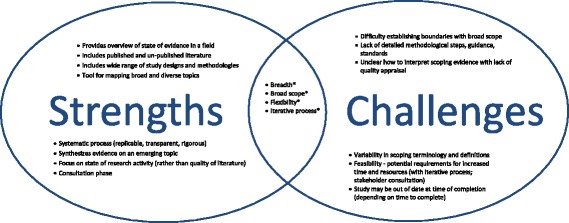
BACKGROUND: Scoping studies (or reviews) are a method used to comprehensively map evidence across a range of study designs in an area, with the aim of informing future research practice, programs and policy. However, no universal agreement exists on terminology, definition or methodological steps. Our aim was to understand the experiences of, and considerations for conducting scoping studies from the perspective of academic and community partners. Primary objectives were to 1) describe experiences conducting scoping studies including strengths and challenges; and 2) describe perspectives on terminology, definition, and methodological steps. METHODS: We conducted a cross-sectional web-based survey with clinicians, educators, researchers, knowledge users, representatives from community-based organizations, graduate students, and policy stakeholders with experience and/or interest in conducting scoping studies to gain an understanding of experiences and perspectives on the conduct and reporting of scoping studies. We administered an electronic self-reported questionnaire comprised of 22 items related to experiences with scoping studies, strengths and challenges, opinions on terminology, and methodological steps. We analyzed questionnaire data using descriptive statistics and content analytical techniques. Survey results were discussed during a multi-stakeholder consultation to identify key considerations in the conduct and reporting of scoping studies. RESULTS: Of the 83 invitations, 54 individuals (65 %) completed the scoping questionnaire, and 48 (58 %) attended the scoping study meeting from Canada, the United Kingdom and United States. Many scoping study strengths were dually identified as challenges including breadth of scope, and iterative process. No consensus on terminology emerged, however key defining features that comprised a working definition of scoping studies included the exploratory mapping of literature in a field; iterative process, inclusion of grey literature; no quality assessment of included studies, and an optional consultation phase. We offer considerations for the conduct and reporting of scoping studies for researchers, clinicians and knowledge users engaging in this methodology. CONCLUSIONS: Lack of consensus on scoping terminology, definition and methodological steps persists. Reasons for this may be attributed to diversity of disciplines adopting this methodology for differing purposes. Further work is needed to establish guidelines on the reporting and methodological quality assessment of scoping studies.
Overview
The claims and statistics of this paper haven’t been checked yet.
Free: it reads the open-access text and checks the first 5 claims that cite a source we can check. Create a free account to check every claim.
Integrity signals
Registry
Cites
Statistics
Figures
Verification
Claims the paper makes
The claims and statistics of this paper haven’t been checked yet.
Free: it reads the open-access text and checks the first 5 claims that cite a source we can check. Create a free account to check every claim.
Self-check
Percentages, sums and reported differences re-computed from the paper’s own numbers.
The self-check needs the paper’s full text.
Citations
Cites
Preferred Reporting Items for Systematic Reviews and Meta-Analyses: the PRISMA statement
Moher, D., Liberati, A., Tetzlaff, J., Altman, D. G., & for the PRISMA Group (2009) · BMJ · doi:10.1136/bmj.b2535 · Cited by 83,823
Self-citationPreferred Reporting Items for Systematic Reviews and Meta-Analyses: The PRISMA Statement
Moher, D., Liberati, A., Tetzlaff, J., Altman, D. G., & The PRISMA Group (2009) · PLoS Medicine · doi:10.1371/journal.pmed.1000097 · Cited by 64,042 · cited 1×
“The preference for scoping review seemed to emerge from the methodological steps referencing review of the literature, and feeling that ‘scoping review’ provided more legitimacy and rigor if considered in the same classification of systematic reviews, which have clear established steps and reporting criteria [24].”
BackgroundSelf-citationPreferred reporting items for systematic reviews and meta-analyses: the PRISMA Statement.
(2009) · PubMed Central · Cited by 44,859
Self-citationThree Approaches to Qualitative Content Analysis
Hsieh, H.-F., & Shannon, S. E. (2005) · Qualitative Health Research · doi:10.1177/1049732305276687 · Cited by 44,601 · cited 2×
“Scoping Study Meeting Rapporteur Notes: We analyzed the rapporteur data capturing the discussion at the scoping study meeting using content analysis [17].”
MethodScoping studies: towards a methodological framework
Arksey, H., & O'Malley, L. (2005) · International Journal of Social Research Methodology · doi:10.1080/1364557032000119616 · Cited by 36,742 · cited 14×
“Daudt HM, van Mossel C, Scott SJ. Enhancing the scoping study methodology: a large, inter-professional team’s experience with Arksey and O’Malley’s framework.”
BackgroundMethodInfluentialSelf-citationPreferred Reporting Items for Systematic Reviews and Meta-Analyses: The PRISMA Statement
Moher, D., Liberati, A., Tetzlaff, J., & Altman, D. G. (2009) · Journal of Clinical Epidemiology · doi:10.1016/j.jclinepi.2009.06.005 · Cited by 19,575
Self-citationWang, G., Ma, R., Qiao, G., Wada, K., Aizawa, Y., & Satoh, T. (2015) · Integrative Medicine International · doi:10.1159/000368408 · Cited by 18,657
Scoping studies: advancing the methodology
Levac, D., Colquhoun, H., & O'Brien, K. K. (2010) · Implementation Science · doi:10.1186/1748-5908-5-69 · Cited by 15,268 · cited 6×
“[8] and Daudt and colleagues [9], while considering newly published recommendations on the methodological protocol of conducting and reporting scoping studies [25, 29].”
BackgroundMethodInfluentialSelf-citationMail and internet surveys : the tailored design method
Dillman, D. A. (2007) · Cited by 9,587
Guidance for conducting systematic scoping reviews
Peters, M. D. J., Godfrey, C. M., Khalil, H., McInerney, P., Parker, D., & Soares, C. B. (2015) · International Journal of Evidence-Based Healthcare · doi:10.1097/xeb.0000000000000050 · Cited by 7,472 · cited 3×
“Strategies to enhance methodological rigour that emerged from this work similarly reflect those documented in the literature such as clearly justifying the use of scoping study methodology over other forms of knowledge syntheses, and articulating a clear and focused scoping purpose which directly links to the research…”
BackgroundMethod
Cited by
PRISMA Extension for Scoping Reviews (PRISMA-ScR): Checklist and Explanation
Tricco, A. C., Lillie, E., Zarin, W., O'Brien, K. K., Colquhoun, H., Levac, D., Moher, D., Peters, M. D. J., Horsley, T., Weeks, L., et al. (2018) · Annals of Internal Medicine · doi:10.7326/m18-0850 · Cited by 43,565
“The modifications were based on a research program carried out by members 178 of the advisory board to better understand scoping review practices (1, 3, 20) and 179 included: a broader research question and literature search strategy, optional risk of 180 bias assessment and consultation exercise (whereby relevant sta…”
MethodSelf-citationNilsen, P., & Bernhardsson, S. (2019) · BMC Health Services Research · doi:10.1186/s12913-019-4015-3 · Cited by 1,014
Méndez, M., Flores-Haro, G., & Zucker, L. (2020) · Geoforum · doi:10.1016/j.geoforum.2020.07.007 · Cited by 214
Emodi, N. V., Lovell, H., Levitt, C., & Franklin, E. (2021) · International Journal of Hydrogen Energy · doi:10.1016/j.ijhydene.2021.06.212 · Cited by 203
Key attributes of integrated community-based youth service hubs for mental health: a scoping review
Settipani, C. A., Hawke, L. D., Cleverley, K., Chaim, G., Cheung, A., Mehra, K., Rice, M., Szatmari, P., & Henderson, J. (2019) · International Journal of Mental Health Systems · doi:10.1186/s13033-019-0306-7 · Cited by 172
Trends in guideline implementation: an updated scoping review
Peters, S., Sukumar, K., Blanchard, S., Ramasamy, A., Malinowski, J., Ginex, P., Senerth, E., Corremans, M., Munn, Z., Kredo, T., et al. (2022) · Implementation Science · doi:10.1186/s13012-022-01223-6 · Cited by 163
What makes mental health and substance use services youth friendly? A scoping review of literature
Hawke, L. D., Mehra, K., Settipani, C., Relihan, J., Darnay, K., Chaim, G., & Henderson, J. (2019) · BMC Health Services Research · doi:10.1186/s12913-019-4066-5 · Cited by 139
Becoming a Clinical Teacher: Identity Formation in Context
Cantillon, P., Dornan, T., & de Grave, W. S. (2018) · Academic Medicine · doi:10.1097/acm.0000000000002403 · Cited by 166
Eg, R., Tønnesen, O. D., & Tennfjord, M. K. (2022) · Computers in Human Behavior Reports · doi:10.1016/j.chbr.2022.100253 · Cited by 243
Côté-Boileau, É., Denis, J.-L., Callery, B., & Sabean, M. (2019) · Health Research Policy and Systems · doi:10.1186/s12961-019-0482-6 · Cited by 133
Thomas, A., Lubarsky, S., Varpio, L., Durning, S. J., & Young, M. E. (2019) · Advances in Health Sciences Education · doi:10.1007/s10459-019-09932-2 · Cited by 181
“When rooted in the subjectivist epistemological foundation, scoping reviews set out to map the available knowledge on a given topic (Arksey and O’Malley 2005; O’Brien et al. 2016; Tricco et al. 2016a).”
BackgroundNavarro, M. Á. E., García-Madurga, M.-Á., Morte-Nadal, T., & Nogales-Bocio, A. I. (2020) · Informatics · doi:10.3390/informatics7040054 · Cited by 157
“to increase its transparency [47], which has been used to facilitate traceability of the entire process followed in general and the flow of information in particular.”
BackgroundGagliardi, A. R., Yip, C. Y. Y., Irish, J. C., Wright, F. C., Rubin, B. B., Ross, H. J., Green, R., Abbey, S. E., McAndrews, M. P., & Stewart, D. E. (2021) · Health Expectations · doi:10.1111/hex.13241 · Cited by 144
Queer and present danger: understanding the disparate impacts of disasters on LGBTQ+ communities
Goldsmith, L., Raditz, V., & Méndez, M. (2022) · Disasters · doi:10.1111/disa.12509 · Cited by 153
Richter, A., Sjunnestrand, M., Strandh, M. R., & Hasson, H. (2022) · International Journal of Environmental Research and Public Health · doi:10.3390/ijerph19063489 · Cited by 198
“Regarding individuals’ characteristics is important for the implementation of SBHMs; in particular, actors’ knowledge of and belief in the program were mentioned.”
MethodInfluentialThe impact of caring for family members with mental illnesses on the caregiver: a scoping review
Phillips, R., Durkin, M. A., Engward, H., Cable, G., & Iancu, M. (2022) · Health Promotion International · doi:10.1093/heapro/daac049 · Cited by 165
“…(Arksey and O’Malley, 2005) five-step protocol of scoping reviews because this is one of the most frequently utilized and published frameworks in scoping review literature (i.e. Abraham et al. , 2010; Halas et al. , 2015; O’Flaherty and Phillips, 2015; O’Brien et al. , 2016; Walsh et al. , 2019).”
A scoping review of augmented reality in nursing
Wüller, H., Behrens, J., Garthaus, M., Marquard, S., & Remmers, H. (2019) · BMC Nursing · doi:10.1186/s12912-019-0342-2 · Cited by 129
Scoping reviews in medical education: A scoping review
Maggio, L. A., Larsen, K., Thomas, A., Costello, J. A., & Artino, A. R. (2021) · Medical Education · doi:10.1111/medu.14431 · Cited by 104
An Evidence-Based Checklist for Improving Scoping Review Quality
Cooper, S., Cant, R., Kelly, M., Levett-Jones, T., McKenna, L., Seaton, P., & Bogossian, F. (2021) · Clinical Nursing Research · doi:10.1177/1054773819846024 · Cited by 102
“…a framework for the conduct of scoping studies, and we identified seven other studies that reported on model methodology: Levac et al. (2010); Daudt, van Mossel, and Scott (2013); Colquhoun et al. (2014); The Johanna Briggs Institute (JBI; 2015); Khalil et al. (2016); and O’Brien et al. (2016).”
MethodEllen, M., DeMaio, P., Lange, A., & Wilson, M. G. (2016) · The Gerontologist · doi:10.1093/geront/gnw165 · Cited by 102
“Moreover, scoping reviews typically use a systematic yet iterative approach to searching, selecting, summarizing, and synthesizing existing knowledge (O’Brien et al., 2016), and we adopted this type of approach in our methods.”
MethodNilsén, P., Ingvarsson, S., Hasson, H., Schwarz, U. V. T., & Augustsson, H. (2020) · Implementation Research and Practice · doi:10.1177/2633489520953762 · Cited by 118
“A scoping review was chosen because it allows for synthesis of findings across a range of study types and designs, providing a broad overview of a topic (O’Brien et al., 2016).”
MethodRad, D., Redeș, A., Roman, A. F., Ignat, S., Lile, R. A., Demeter, E., Egerău, A., Dughi, T. S., Balaș, E., Maier, R., et al. (2022) · Frontiers in Psychology · doi:10.3389/fpsyg.2022.955833 · Cited by 236
“Since the goal of scoping studies is to map the evidence generated in a particular subject rather than seek for the best evidence available to address a topic connected to policy and practice, the absence of methodological quality evaluation is to be seen as a distinctive feature of these studies (Daudt et al., 2013;…”
BackgroundEvaluation of the JBI scoping reviews methodology by current users
Khalil, H., Bennett, M., Godfrey, C., McInerney, P., Munn, Z., & Peters, M. (2020) · International Journal of Evidence-Based Healthcare · doi:10.1097/xeb.0000000000000202 · Cited by 89
“Our response rate of 61% is similar to another survey study evaluating scoping reviews methodology of 65%.(10) Another limitation of this study is surveying authors who published their reviews in the JBIDSRIR because themethodology is cited in other journals.”
BackgroundMethodResultInfluentialCo-design of digital health interventions with young people: A scoping review
Malloy, J. A., Partridge, S. R., Kemper, J. A., Braakhuis, A. J., & Roy, R. (2023) · Digital Health · doi:10.1177/20552076231219117 · Cited by 115
“104 This is evidenced by the iterative widening of the age-inclusion criteria, resulting in an inability to target results to young adults aged 18 – 26 years.”
BackgroundMachine Learning Methods for Predicting Postpartum Depression: Scoping Review
Saqib, K., Khan, A. F., & Butt, Z. A. (2021) · JMIR Mental Health · doi:10.2196/29838 · Cited by 111
“The Arksey and O’Malley framework was used in addition to methodological improvements for scoping review [28-30].”
MethodArksey and O′Malleyʼs consultation exercise in scoping reviews: A critical review
Buus, N., Nygaard, L., Berring, L. L., Hybholt, L., Kamionka, S. L., Rossen, C. B., Søndergaard, R., & Juel, A. (2022) · Journal of Advanced Nursing · doi:10.1111/jan.15265 · Cited by 108
“However, scoping reviews often lack definitional and methodological clarity (Colquhoun et al., 2014; Khalil et al., 2016; OʼBrien et al., 2016).”
BackgroundSamadbeik, M., Fatehi, F., Braunstein, M. L., Barry, B., Saremian, M., Kalhor, F., & Edirippulige, S. (2020) · International Journal of Medical Informatics · doi:10.1016/j.ijmedinf.2020.104238 · Cited by 101
Scoping reviews and rapid reviews
Sabiston, C. M., Vani, M., de Jonge, M., & Nesbitt, A. (2022) · International Review of Sport and Exercise Psychology · doi:10.1080/1750984x.2021.1964095 · Cited by 74
“However, the impact and use of scoping reviews that are published in the field, particularly when stakeholder consultation is not prioritized, remains unknown (O’Brien et al., 2016).”
BackgroundBuerkle, A., O’Dell, A., Matharu, H., Buerkle, L., & Ferreira, P. (2023) · International Journal of Educational Research Open · doi:10.1016/j.ijedro.2023.100280 · Cited by 136
A Scoping Review of Technological Approaches to Environmental Monitoring
Coulby, G., Clear, A. K., Jones, O., & Godfrey, A. (2020) · International Journal of Environmental Research and Public Health · doi:10.3390/ijerph17113995 · Cited by 72
MacNeil, M., Koch, M., Kuspinar, A., Juzwishin, D., Lehoux, P., & Stolee, P. (2019) · Health Policy · doi:10.1016/j.healthpol.2018.09.018 · Cited by 65
Patient safety culture in care homes for older people: a scoping review
Gartshore, E., Waring, J., & Timmons, S. (2017) · BMC Health Services Research · doi:10.1186/s12913-017-2713-2 · Cited by 64
Burden of non-communicable diseases among Syrian refugees: a scoping review
Naja, F., Shatila, H., Koussa, M. E., Meho, L. I., Ghandour, L. A., & Saleh, S. S. (2019) · BMC Public Health · doi:10.1186/s12889-019-6977-9 · Cited by 70
How to identify, incorporate and report patient preferences in clinical guidelines: A scoping review
Kim, C., Armstrong, M. J., Berta, W. B., & Gagliardi, A. R. (2020) · Health Expectations · doi:10.1111/hex.13099 · Cited by 58
King, A. J., Brophy, L. M., Fortune, T., & Byrne, L. (2020) · Psychiatric Services · doi:10.1176/appi.ps.201900606 · Cited by 70
Beese, F., Waldhauer, J., Wollgast, L., Pförtner, T., Wahrendorf, M., Haller, S., Hoebel, J., & Wachtler, B. (2022) · International Journal of Public Health · doi:10.3389/ijph.2022.1605128 · Cited by 56
“This could potentially have led to biased results in the narrative synthesis as methodical limitations of the studies were not systematically assessed and considered [80].”
BackgroundDefinitions for “palliative care”, “end-of-life” and “terminally ill” in oncology: a scoping review
Cordeiro, F. R., Oliveira, S. G., Giudice, J. Z., Fernandes, V. P., & Oliveira, A. T. (2020) · Enfermería Cuidados Humanizados · doi:10.22235/ech.v9i2.2317 · Cited by 54
“Defining terms, establishing criteria, as well as adopting standardized language favors not only the methodological aspects of research but the transfer of knowledge to clinical practice, helping to consolidate knowledge areas (57).”
BackgroundMarulappa, N., Anderson, N. N., Bethell, J., Bourbonnais, A., Kelly, F., McMurray, J., Rogers, H. L., Vedel, I., & Gagliardi, A. R. (2022) · BMC Health Services Research · doi:10.1186/s12913-022-07875-w · Cited by 65
“We employed rigorous scoping review methods [22, 23], and complied with standards for the conduct and reporting of scoping reviews and search strategies [24, 29].”
BackgroundMethodStudy protocol for a scoping review on rehabilitation scoping reviews
Colquhoun, H. L., Jesus, T. S., O’Brien, K. K., Tricco, A. C., Chui, A., Zarin, W., Lillie, E., Hitzig, S. L., & Straus, S. E. (2017) · Clinical Rehabilitation · doi:10.1177/0269215516688514 · Cited by 53
Self-citationUsefulness of Wearable Cameras as a Tool to Enhance Chronic Disease Self-Management: Scoping Review
Maddison, R., Cartledge, S. H., Rogerson, M., Goedhart, N. S., Singh, T. R., Neil, C., Phung, D., & Ball, K. (2019) · JMIR mhealth and uhealth · doi:10.2196/10371 · Cited by 51
“Following current guidelines for conducting scoping reviews [21,23,24], once we identified the research question, we proceeded to (1) identify relevant studies, (2) select studies, and (3) collate, summarize, and report the results.”
Readmission rates following heart failure: a scoping review of sex and gender based considerations
Hoang-Kim, A., Parpia, C., Freitas, C., Austin, P. C., Ross, H. J., Wijeysundera, H. C., Tu, K., Mak, S. S., Farkouh, M. E., Sun, L. Y., et al. (2020) · BMC Cardiovascular Disorders · doi:10.1186/s12872-020-01422-3 · Cited by 40
“Data items and data abstraction process We employed a ‘descriptive-analytical’ method, a narrative study design, which applies a common framework to all the included studies [20].”
MethodWiggins, D., Downie, A., Engel, R. M., & Brown, B. T. (2022) · Human Resources for Health · doi:10.1186/s12960-022-00783-4 · Cited by 46
Unlocking the power of machine learning in big data: a scoping survey
Surur, F. M., Mamo, A. A., Gebresilassie, B. G., Mekonen, K. A., Golda, A., Behera, R. K., & Kumar, K. S. K. (2025) · Data Science and Management · doi:10.1016/j.dsm.2025.02.004 · Cited by 64
The transition of clinical nurses to nurse educator roles – A scoping review
Halton, J., Ireland, C. J., & Vaughan, B. (2024) · Nurse Education in Practice · doi:10.1016/j.nepr.2024.104022 · Cited by 38
Owens, R. A. (2019) · Nursing Education Perspectives · doi:10.1097/01.nep.0000000000000455 · Cited by 44
Measuring Family Quality of Life: Scoping Review of the Available Scales and Future Directions
Alnahdi, G. H., Alwadei, A. M., Woltran, F., & Schwab, S. (2022) · International Journal of Environmental Research and Public Health · doi:10.3390/ijerph192315473 · Cited by 34
“Literature Search A scoping review methodology was chosen to provide an overview of the QoL scales for families of children with an ID because it offers the opportunity to provide a comprehensive synthesis of the findings on broader topics across a range of study designs [31].”
MethodSnell, R., Fyfe, S., Fyfe, G. M., Blackwood, D., & Itsiopoulos, C. (2020) · Focus on Health Professional Education A Multi-Professional Journal · doi:10.11157/fohpe.v21i1.322 · Cited by 35
“Th e optional stages of critical appraisal or quality assessment of studies and expert consultation were omitted (O'Brien et al., 2016).”
BackgroundEslami Jahromi, M., & Ayatollahi, H. (2023) · Journal of the American Medical Informatics Association · doi:10.1093/jamia/ocac250 · Cited by 30
Lawlor, P. G., Rutkowski, N. A., MacDonald, A. R., Ansari, M. T., Sikora, L., Momoli, F., Kanji, S., Wright, D. K., Rosenberg, E., Hosie, A., et al. (2018) · Journal of Pain and Symptom Management · doi:10.1016/j.jpainsymman.2018.12.002 · Cited by 35
“the standards for scoping reviews, included studies were not formally appraised for risk of bias.(33,38) We adopted an inclusive approach to comparative effectiveness and harms evaluation: in addition to therapeutic interventions, we also included screening and diagnostic and prognostic tool evaluations if they report…”
MethodSanders, C., Burnett, K., Lâm, S., Hassan, M., & Skinner, K. A. (2020) · International Journal of Environmental Research and Public Health · doi:10.3390/ijerph17124227 · Cited by 38
“Second, in general scoping reviews, including this one, do not evaluate the methodological quality of the studies nor the quality of the evidence, but rather focus more broadly on the outcomes presented by the studies [63].”
BackgroundSorondo, D., Delpierre, C., Côté, P., Salmi, L., Cedraschi, C., Taylor-Vaisey, A. L., & Lemeunier, N. (2021) · BMC Musculoskeletal Disorders · doi:10.1186/s12891-021-04204-w · Cited by 37
Territorial Intelligence, a Collective Challenge for Sustainable Development: A Scoping Review
García-Madurga, M.-Á., Grilló-Méndez, A.-J., & Navarro, M. Á. E. (2020) · Social Sciences · doi:10.3390/socsci9070126 · Cited by 64
“There is an ongoing need and interest for advancement of this methodology (O’Brien et al. 2016); over the last two decades, scoping studies have become an increasingly common search method for literature on a specific topic (Daudt et al. 2013).”
BackgroundMethodA Scoping Review: Characteristics and Outcomes of Residents Who Experience Involuntary Relocation
Weaver, R. H., Roberto, K. A., & Brossoie, N. (2019) · The Gerontologist · doi:10.1093/geront/gnz035 · Cited by 35
Cagas, J. Y., Biddle, S., & Vergeer, I. (2020) · International Review of Sport and Exercise Psychology · doi:10.1080/1750984x.2020.1827448 · Cited by 52
Characteristics of transformational leadership development programs: A scoping review
Lawrason, S., Shaw, R. B., Turnnidge, J., & Côté, J. (2023) · Evaluation and Program Planning · doi:10.1016/j.evalprogplan.2023.102354 · Cited by 56
Champ, R. E., Adamou, M., & Tolchard, B. (2021) · PLoS ONE · doi:10.1371/journal.pone.0261247 · Cited by 43
“Search design and criteria were formulated based on guidance and recommendations by Ark-sey & O’Malley [27], Colquhoun et al. [28], O’Brien et al. [29] and the Joanna Briggs Institute [30].”
How workplace‐based assessments guide learning in postgraduate education: A scoping review
Martin, L. J., Blissett, S., Johnston, B. K., Tsang, M., Gauthier, S. R., Ahmed, Z., & Sibbald, M. (2022) · Medical Education · doi:10.1111/medu.14960 · Cited by 40
“This methodology allows for the inclusion of qualitative, quantitative and unpublished literature, and focuses on capturing the state of existing literature the use WBA in residency training.(29)”
MethodThe simulation design in health and nursing: A scoping review
Silva, G. O., Fonseca, L. M. M., Siqueira, K. M., de Góes, F. D. S. N., Ribeiro, L. M., & Aredes, N. D. (2022) · Nursing Open · doi:10.1002/nop2.1466 · Cited by 35
“…by the opportunity of mapping the main concepts of a given area of knowledge, the scoping review allows the integration of results from studies of different designs, with the objective of summarizing the findings and identifying relevant gaps in the area of investigation (O'Brien et al., 2016).”
MethodPratte, M.-M., Audette-Chapdelaine, S., Auger, A.-M., Wilhelmy, C., & Brodeur, M. (2023) · Research Involvement and Engagement · doi:10.1186/s40900-023-00431-8 · Cited by 28
Garcia, J. T., DuBose, L., Arunachalam, P., Hairrell, A., Milman, R. M., & Carpenter, R. O. (2023) · Medical Science Educator · doi:10.1007/s40670-023-01769-0 · Cited by 27
“We did not enact the optional “consultation exercise” stage [22] because we viewed this as too perfunctory to capture the unconscious use of everyday, spontaneous humor, which people are generally unaware of [3].”
BackgroundA scoping review of the wider and long-term impacts of attacks on healthcare in conflict zones
Afzal, M. H., & Jafar, A. J. N. (2019) · Medicine Conflict & Survival · doi:10.1080/13623699.2019.1589687 · Cited by 26
Trajectory research in children with an autism diagnosis: A scoping review
Gentles, S. J., Ng‐Cordell, E., Hunsche, M. C., McVey, A. J., Bednar, E. D., DeGroote, M. G., Chen, Y., Duku, E., Kerns, C. M., Banfield, L. E., et al. (2023) · Autism · doi:10.1177/13623613231170280 · Cited by 32
“We followed scoping review methods described by Arksey and O ʼ Malley (2005) and informed by subsequent clarifi-cations and enhancements (Levac et al., 2010; O’Brien et al., 2016).”
BackgroundMethodDigital Media Production of Refugee-Background Youth: A Scoping Review
Michalovich, A. (2021) · Journalism and Media · doi:10.3390/journalmedia2010003 · Cited by 28
“Visibility and engagement with audiences (N = 22) Baú (2017); Rogers et al. (2018); Dattatreyan (2015); Emert (2013, 2014a, 2014b); Fairey (2018); Gifford and Wilding (2013); Harris (2011); Johnson and Kendrick (2017); Karam (2018); Leurs et al.”
BackgroundThe Development of Artificial Intelligence in Hernia Surgery: A Scoping Review
Taha, A., Enodien, B., Frey, D. M., & Taha‐Mehlitz, S. (2022) · Frontiers in Surgery · doi:10.3389/fsurg.2022.908014 · Cited by 30
“Through a scoping review, it is easier to gather an overview of the current knowledge in the field, highlight the gaps and guide future research on the subject (6).”
BackgroundActive methodologies in teaching the nursing process: Scoping review
Silva, G. O., Aredes, N. D., Cecilio, J. O., Oliveira, F. S. E., Cavalcante, Á. M. R. Z., & Campbell, S. (2025) · Nurse Education in Practice · doi:10.1016/j.nepr.2025.104274 · Cited by 67
Tillyard, G., & DeGennaro, V. A. (2018) · Qualitative Health Research · doi:10.1177/1049732318816675 · Cited by 28
A Tailored Approach: A model for literature searching in complex systematic reviews
Cooper, C., Booth, A., Husk, K., Lovell, R., Frost, J., Schauberger, U., Britten, N., & Garside, R. (2022) · Journal of Information Science · doi:10.1177/01655515221114452 · Cited by 26
“The research team worked closely with Cochrane and an expert advisory group convened to help support the project [116,140].”
BackgroundMethodMcLean, L. J., Paleg, G., & Livingstone, R. (2022) · Developmental Medicine & Child Neurology · doi:10.1111/dmcn.15435 · Cited by 23
Towards Nuts and Bolts of Conducting Literature Review: A Typology of Literature Review
Taherdoost, H. (2023) · Electronics · doi:10.3390/electronics12040800 · Cited by 56
Ainuddin, H. A., Romli, M. H., Hamid, T. A., Salim, M. S., & Mackenzie, L. A. (2021) · Frontiers in Public Health · doi:10.3389/fpubh.2021.611793 · Cited by 69
“The scoping review was comprehensive but inadequate to gain a realistic view of what occurs in practice in Southeast Asia compared to the feedback from the consultation group (138).”
BackgroundMishara, B. L., Côté, L., & Dargis, L. (2022) · Crisis · doi:10.1027/0227-5910/a000838 · Cited by 25
“Our methodology is inspired by scoping studies (Arksey & O’Malley, 2005; Levac et al., 2010; O’Brien et al., 2016; Tricco et al., 2016) and rapid reviews (Tricco et al., 2015).”
MethodWork Demands and Cognitive Health Inequities by Race and Ethnicity: A Scoping Review
Gonzales, E. G., Whetung, C., Lee, Y. J., & Kruchten, R. (2022) · The Gerontologist · doi:10.1093/geront/gnac025 · Cited by 28
Meaning Making Mechanisms in Women Survivors of Childhood Sexual Abuse: A Scoping Review
van der Westhuizen, M., Walker-Williams, H. J., & Fouché, A. (2022) · Trauma Violence & Abuse · doi:10.1177/15248380211066100 · Cited by 36
“Thereafter, the 126 articles chosen for possible inclusion underwent quality appraisal, and although not necessary for a scoping review, the first author as well as an independent researcher conducted this process to ensure more trustworthy and reliable results (O’Brien et al., 2016).”
MethodSmith, J. L., Ritchie, M. J., Kim, B., Miller, C. J., Chinman, M., Kelly, P. A., Landes, S. J., & Kirchner, J. E. (2024) · Global Implementation Research and Applications · doi:10.1007/s43477-024-00119-5 · Cited by 27
“Also, as is typical of scoping reviews (Levac et al., 2010; O’Brien et al., 2016), we did not conduct a quality appraisal of included For each study included, data were extracted to document activities used by facilitators (including whether authors identified specific activities as ‘core’,…”
Scoping Review Methodology: History, Theory and Practice
Николаевна, К. Е., Nastausheva, T. L., & Kondratjeva, I. V. (2021) · Вопросы современной педиатрии · doi:10.15690/vsp.v20i3/2271 · Cited by 31
Markiewicz‐Kęszycka, M., Carter, A., O’Brien, D., Henchion, M. M., Mooney, S., & Hynds, P. D. (2022) · Renewable Agriculture and Food Systems · doi:10.1017/s1742170522000382 · Cited by 28
A scoping review of environmental governance challenges in southern Africa from 2010 to 2020
Falayi, M., Gambiza, J., & Schoon, M. (2021) · Environmental Conservation · doi:10.1017/s0376892921000333 · Cited by 33
“They provide an overview of the state of knowledge in a field, document knowledge gaps and shape future research agendas (O’Brien et al. 2016).”
BackgroundNeil‐Sztramko, S., Smith‐Turchyn, J., Fong, A. J., Kauffeldt, K. D., & Tomasone, J. R. (2021) · Archives of Physical Medicine and Rehabilitation · doi:10.1016/j.apmr.2021.06.026 · Cited by 29
A Method of Detecting Webshell Based on Multi-layer Perception
Wang, Z., Yang, J., Dai, M., Xu, R., & Liang, X. (2019) · Academic Journal of Computing & Information Science · doi:10.25236/ajcis.010021 · Cited by 20
“Real-time dynamic detection; Ma Yanfa et al [5] use Web traffic analysis to detect WebShell on the WAF (Web Application Firewall) side, avoiding the drawbacks of traditional detection methods that require separate detection modules on all Web servers.”
MethodBattaglia, L., & Flynn, C. A. (2019) · Journal of Social Work · doi:10.1177/1468017319852598 · Cited by 25
Engaged scholarship and public policy decision-making: a scoping review
McIsaac, J. D., & Riley, B. (2020) · Health Research Policy and Systems · doi:10.1186/s12961-020-00613-w · Cited by 25
Educação interprofessional na formação em saúde no Brasil: scoping review
Prevedello, A. S., de Góes, F. D. S. N., & Cyrino, E. G. (2022) · Revista Brasileira de Educação Médica · doi:10.1590/1981-5271v46.3-20210006 · Cited by 41
Exploring the intersection of hermeneutics and implementation: a scoping review
MacLeod, M., McCaffrey, G., Wilson, E., Zimmer, L. V., Snadden, D., Zimmer, P., Jónatansdóttir, S., Fyfe, T., Koopmans, E., Ulrich, C., et al. (2023) · Systematic Reviews · doi:10.1186/s13643-023-02176-7 · Cited by 37
“Due to a commitment to the hermeneutic approach of remaining open to new possibilities [8, 9, 12, 34], coupled with the unexplored area of what could count as a hermeneutic approach, we used flexible and iterative processes [7, 38] in (1) formulating the research question; (2) screening and identifying relevant litera…”
MethodChiropractic services in the active duty military setting: a scoping review
To, D., Mior, S. A., Sutton, D. A., Cancelliere, C., French, S., Taylor-Vaisey, A. L., & Côté, P. (2019) · Chiropractic & Manual Therapies · doi:10.1186/s12998-019-0259-6 · Cited by 20
Steller, R. S., Recklies, E. A., & Schweizer-Ries, P. (2024) · International Journal of Hydrogen Energy · doi:10.1016/j.ijhydene.2024.06.422 · Cited by 23
Selamat, S. N. S., Me, R. C., Ainuddin, H. A., Salim, M. S., Ramli, H. R., & Romli, M. H. (2022) · Frontiers in Public Health · doi:10.3389/fpubh.2021.783565 · Cited by 24
“The session with the stakeholders mimics a qualitative research design on FGD session (29) but could be not rigorous as it is a complementary step in a scoping review (30).”
BackgroundGagliardi, A. R., Chen, R. H., Boury, H., Albert, M., Chow, J. C. L., DaCosta, R. S., Hoffman, M. M., Keshavarz, B., Kontos, P., Liu, J. X., et al. (2023) · PLoS ONE · doi:10.1371/journal.pone.0270616 · Cited by 28
Counseling and disclosure practices in predictive Alzheimer's disease diagnostics: A scoping review
Perry, J., Radenbach, K., Geschke, K., & Rostamzadeh, A. (2024) · Alzheimer s & Dementia · doi:10.1002/alz.14365 · Cited by 19
Haysom, Z., McKibbin, G., Shlonsky, A., & Hamilton, B. E. (2020) · Children and Youth Services Review · doi:10.1016/j.childyouth.2020.105409 · Cited by 20
Ketelings, L., Havermans, R. C., Kremers, S., & de Boer, A. (2023) · Current Developments in Nutrition · doi:10.1016/j.cdnut.2023.101960 · Cited by 25
Livingstone, R., & Paleg, G. (2023) · Disabilities · doi:10.3390/disabilities3020012 · Cited by 18
Fostering knowledge translation in Africa’s flagship universities: a case of Makerere University
Etomaru, I., Bisaso, R., & Nakayiwa-Mayega, F. (2021) · Higher Education Research & Development · doi:10.1080/07294360.2021.1887093 · Cited by 16
Settipani, C. A., Cleverley, K., Hawke, L. D., Rice, M., & Henderson, J. L. (2017) · BMJ Open · doi:10.1136/bmjopen-2016-015454 · Cited by 19
“Other notable strengths of scoping reviews that led to the selection of this method include emphasis on the state of research activity and enabling policy makers to make evidence-informed decisions in a rapidly growing area.(24) Objectives of the review are as follows: (1) identify the populations, settings, service p…”
DISABKIDS® in Brazil: advances and future perspectives for the production of scientific knowledge
Romeiro, V., Bullinger, M., Marziale, M. H. P., Fegadolli, C., Reis, R. A., Silveira, R. C. D. C. P., da Costa-Júnior, M. L., Sousa, F. A. E. F., de Andrade, V. S., Conacci, B. J., et al. (2020) · Revista Latino-Americana de Enfermagem · doi:10.1590/1518-8345.3003.3257 · Cited by 15
“The research question must be designed to ensure comprehensiveness and depth(19), and, in addition, it should be well structured, and contain information such as definition of concepts, target population, among others(21).”
BackgroundMethodInfluentialStudent-Led Clinics in Aotearoa New Zealand: A Scoping Review with Stakeholder Consultation
Tokolahi, E., Broman, P., Longhurst, G., Pearce, A., Cook, C., Andersen, P., & Brownie, S. M. (2021) · Journal of Multidisciplinary Healthcare · doi:10.2147/jmdh.s308032 · Cited by 21
Guideline on terminology and definitions of updating clinical guidelines: The Updating Glossary
García, L. M., Hernandez, H. P., Sanabria, A. J., Alonso‐Coello, P., Penman, K., McFarlane, E., García, L. M., Hernandez, H. P., Sanabria, A. J., Alonso‐Coello, P., et al. (2017) · Journal of Clinical Epidemiology · doi:10.1016/j.jclinepi.2017.11.023 · Cited by 13
“, for scoping studies or for measurement of properties [COnsensusbased Standards for the selection of health Measurement INstruments study]) [17,18].”
MethodRiera-Negre, L., Hidalgo-Andrade, P., Ramón, M. R. R., & Gelabert, S. V. (2024) · Frontiers in Education · doi:10.3389/feduc.2024.1328247 · Cited by 22
Tucker, C. A., Martin, M. P., & Jones, R. B. (2017) · BMJ Open · doi:10.1136/bmjopen-2016-013619 · Cited by 20
Neurolaw today – A systematic review of the recent law and neuroscience literature
Chandler, J. A., Harrel, N., & Potkonjak, T. (2018) · International Journal of Law and Psychiatry · doi:10.1016/j.ijlp.2018.04.002 · Cited by 14
Morse, C., Zhao, L., & Livesay, K. (2025) · Clinical Simulation in Nursing · doi:10.1016/j.ecns.2025.101799 · Cited by 15
Metadata
- Authors
- O’Brien, K. K., Colquhoun, H., Levac, D., Baxter, L., Tricco, A. C., Straus, S., Wickerson, L., Nayar, A., Moher, D., & O’Malley, L.
- Affiliations
- University of Toronto (CA)
- Northeastern University (US)
- St. Michael's Hospital (CA)
- University Health Network (CA)
- University of Ottawa (CA)
- University of York (GB)
- Corresponding author
- O’Brien, Kelly K.
- ORCID
- Venue
- BMC Health Services Research
- Published
- 2016-07-26
- Volume
- 16
- Issue
- 1
- Pages
- 305-305
- ISSN
- 1472-6963 (ISSN-L)
- PMC
- PMC4962390
- OpenAlex
- W2501240337
- Semantic Scholar
- b6d0cdb93468ba12345b4964bfd11fd4c376bc91
- Cited by
- 282
- References
- 30
- Citations by year
- 2026: 16 · 2025: 24 · 2024: 39 · 2023: 31 · 2022: 55 · 2021: 39 · 2020: 26 · 2019: 30 · 2018: 15 · 2017: 6 · 2016: 1
- FWCI
- 16.09
- Type
- journal article
- Language
- en
- Open access
- gold
- doi.org
- Licence
- Locations
- BMC Health Services Research (publishedVersion, cc-by)
- Europe PMC (PubMed Central) (publishedVersion, cc-by)
- PubMed Central (publishedVersion, cc-by)
- PubMed (publishedVersion)
- TSpace (University of Toronto) (submittedVersion, cc-by)
- uO Research (University of Ottawa) (submittedVersion, public-domain)
- Funders
- Canadian Institutes of Health Research (MAG-133817)
- Topics
- Social Sciences › Decision Sciences › Statistics, Probability and Uncertainty › Meta-analysis and systematic reviews
- Social Sciences › Sociology and Political Science › Delphi Technique in Research
- Health Sciences › Nursing › Research and Theory › Methodologies in Health Research and Practice
- Keywords
- scoping review, scoping review methodology, terminology and definitions, methodological consensus, stakeholder perspectives, knowledge users, community organizations, grey literature, reporting guidelines, methodological quality assessment, iterative processes
- MeSH terms
- Scoping Reviews as Topic, Attitude of Health Personnel, Canada, Epidemiologic Methods, United Kingdom, Humans, Terminology as Topic, Perception, Research Personnel, United States, Internet, Consensus
About these checks
Registry, retraction, Cites and statistics results are computed, not judged, with one exception: a printed reference that no index lists is read once by a model before it counts as a citation error. Claims are extracted by a model and kept only when their quote appears verbatim in the text; each cited source is then checked, with a model’s help, for whether it says what the claim relies on. Those verdicts can be wrong — read the claim’s quote and the cited source before relying on one.
Statistics and arithmetic are recomputed, not judged.
Confidence bands are shown only for fields calibrated on our annotated test set. None is calibrated yet, so no band is shown.
What counts as a claim ›How we measure confidence ›How we check this ›
Are you an author, or do you see a problem with this page? Request a review
Data sources
Bibliographic data: Semantic Scholar, OpenAlex, Crossref.
Contains information from the Semantic Scholar Academic Graph Datasets, made available under the ODC Attribution License (ODC-BY 1.0).
Semantic Scholar’s data is described in: Kinney, R., et al. (2023). The Semantic Scholar Open Data Platform. arXiv:2301.10140.
