

Comparison of village dog and wolf genomes highlights the role of the neural crest in dog domestication
Open accessPublished version of a preprint
The DOI matches its Crossref record; 197 of the 199 references it cites were found in a registry or an index.
Abstract
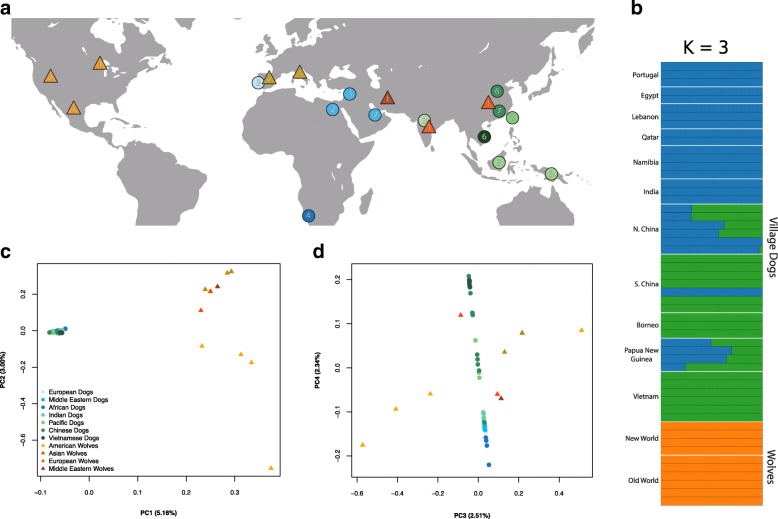
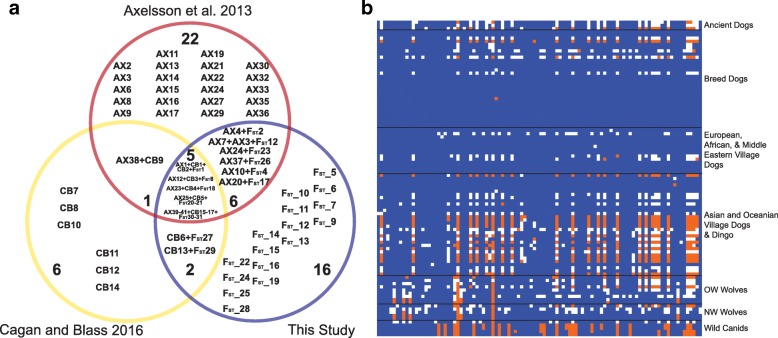
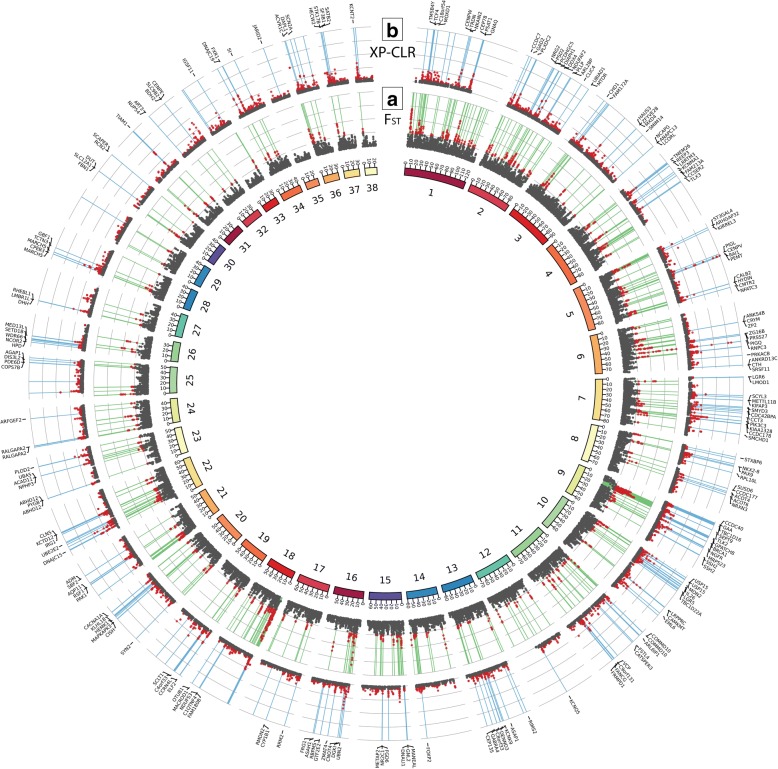
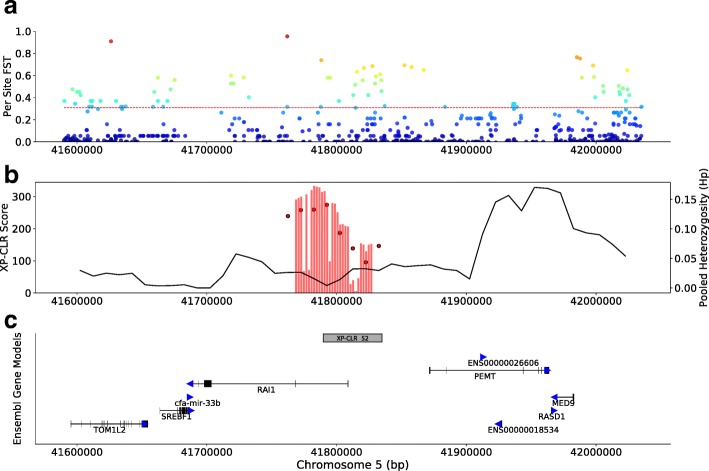
BACKGROUND: Domesticated from gray wolves between 10 and 40 kya in Eurasia, dogs display a vast array of phenotypes that differ from their ancestors, yet mirror other domesticated animal species, a phenomenon known as the domestication syndrome. Here, we use signatures persisting in dog genomes to identify genes and pathways possibly altered by the selective pressures of domestication. RESULTS: Whole-genome SNP analyses of 43 globally distributed village dogs and 10 wolves differentiated signatures resulting from domestication rather than breed formation. We identified 246 candidate domestication regions containing 10.8 Mb of genome sequence and 429 genes. The regions share haplotypes with ancient dogs, suggesting that the detected signals are not the result of recent selection. Gene enrichments highlight numerous genes linked to neural crest and central nervous system development as well as neurological function. Read depth analysis suggests that copy number variation played a minor role in dog domestication. CONCLUSIONS: Our results identify genes that act early in embryogenesis and can confer phenotypes distinguishing domesticated dogs from wolves, such as tameness, smaller jaws, floppy ears, and diminished craniofacial development as the targets of selection during domestication. These differences reflect the phenotypes of the domestication syndrome, which can be explained by alterations in the migration or activity of neural crest cells during development. We propose that initial selection during early dog domestication was for behavior, a trait influenced by genes which act in the neural crest, which secondarily gave rise to the phenotypes of modern dogs.
Overview
The claims and statistics of this paper haven’t been checked yet.
Free: it reads the open-access text and checks the first 5 claims that cite a source we can check. Create a free account to check every claim.
Integrity signals
Registry
Cites
Statistics
Figures
Verification
Claims the paper makes
The claims and statistics of this paper haven’t been checked yet.
Free: it reads the open-access text and checks the first 5 claims that cite a source we can check. Create a free account to check every claim.
Claims other papers make about this one
Each is checked against this paper’s own text: does it say what the citing paper says it does?
The cited source says what the claim attributes to it.
In the citing paper
“Recent genomic studies (Carneiro et al. 2014; Pendleton et al. 2018; Wang et al. 2018) have found evidence of selection at a few handfuls of genes that have molecular functions associated with the neural crest, but that in itself is not good evidence that neural crest cell proliferation and migration are underlying the domestication syndrome.”
From The neural crest cell hypothesis: no unified explanation for domestication (2021) · cites this paper as Pendleton et al. 2018
The cited source says what the claim attributes to it.
In the citing paper
“the neural-crest cell hypothesis of domestication assumes that a process of domestication leads to depigmentation rather than an intensification of pigmentation [40,41].”
From Are dark-eyed dogs favoured by humans? Domestication as a potential driver of iris colour difference between dogs and wolves (2023) · cites this paper as [41]
Self-check
Percentages, sums and reported differences re-computed from the paper’s own numbers.
The self-check needs the paper’s full text.
Citations
Cites
PLINK: a tool set for whole-genome association and population-based linkage analyses.
Purcell, S., Neale, B., Todd-Brown, K., Thomas, L., Ferreira, M. A. R., Bender, D., Maller, J., Sklar, P., de Bakker, P. I. W., Daly, M. J., et al. (2007) · The American Journal of Human Genetics · doi:10.1086/519795 · Cited by 34,089 · cited 1×
“1; [133]), where SNPs with an 530 R(2) value over 0.”
BackgroundThe Genome Analysis Toolkit: A MapReduce framework for analyzing next-generation DNA sequencing data
McKenna, A., Hanna, M., Banks, E., Sivachenko, A., Cibulskis, K., Kernytsky, A., Garimella, K., Altshuler, D., Gabriel, S., Daly, M., et al. (2010) · Genome Research · doi:10.1101/gr.107524.110 · Cited by 27,895
BEDTools: a flexible suite of utilities for comparing genomic features
Quinlan, A. R., & Hall, I. M. (2010) · Bioinformatics · doi:10.1093/bioinformatics/btq033 · Cited by 27,437
A global reference for human genetic variation
The 1000 Genomes Project Consortium, authors, C., Auton, A., Abecasis, G. R., Steering committee, Altshuler, D. M., Durbin, R. M., Abecasis, G. R., Bentley, D. R., Chakravarti, A., et al. (2015) · Nature · doi:10.1038/nature15393 · Cited by 18,247
The variant call format and VCFtools
Danecek, P., Auton, A., Abecasis, G., Albers, C. A., Banks, E., DePristo, M. A., Handsaker, R. E., Lunter, G., Marth, G. T., Sherry, S. T., et al. (2011) · Bioinformatics · doi:10.1093/bioinformatics/btr330 · Cited by 16,200
Fast model-based estimation of ancestry in unrelated individuals
Alexander, D. H., Novembre, J., & Lange, K. (2009) · Genome Research · doi:10.1101/gr.094052.109 · Cited by 9,898 · cited 4×
“Thirty-seven breed dogs, 45 village dogs, and 12 wolves were selected 527 from the samples described in Botigue et al. [34], and ADMIXTURE [132] was utilized to 528 estimate the levels of wolf-dog admixture within this subset.”
MethodInfluentialNear-optimal probabilistic RNA-seq quantification
Bray, N. L., Pimentel, H., Melsted, P., & Pachter, L. (2016) · Nature Biotechnology · doi:10.1038/nbt.3519 · Cited by 9,723
Primer3—new capabilities and interfaces
Untergasser, A., Cutcutache, I., Koressaar, T., Ye, J., Faircloth, B. C., Remm, M., & Rozen, S. G. (2012) · Nucleic Acids Research · doi:10.1093/nar/gks596 · Cited by 9,461
The Ensembl Variant Effect Predictor
McLaren, W., Gil, L., Hunt, S. E., Riat, H. S., Ritchie, G. R. S., Thormann, A., Flicek, P., & Cunningham, F. (2016) · Genome Biology · doi:10.1186/s13059-016-0974-4 · Cited by 8,099
A map of human genome variation from population-scale sequencing.
The 1000 Genomes Project Consortium (2010) · Nature · doi:10.1038/nature09534 · Cited by 7,877
Research works printed but not linked: 2
- Harlan JR. Crops and man. Foundation for modern Crop Science. Madison: American Society of Agronomy; 1975.
- Alexa A, Rahnenfuhrer J. topGO: enrichment analysis for gene ontology. R Packag Ver. 2010;2(0):1-26.
Cited by
The complete sequence of a human Y chromosome
Rhie, A., Nurk, S., Cechova, M., Hoyt, S. J., Taylor, D. J., Altemose, N., Hook, P. W., Koren, S., Rautiainen, M., Alexandrov, I. A., et al. (2023) · Nature · doi:10.1038/s41586-023-06457-y · Cited by 471
Animal domestication in the era of ancient genomics
Frantz, L. A. F., Bradley, D. G., Larson, G., & Orlando, L. (2020) · Nature Reviews Genetics · doi:10.1038/s41576-020-0225-0 · Cited by 282
Recurrent inversion polymorphisms in humans associate with genetic instability and genomic disorders
Porubsky, D., Höps, W., Ashraf, H., Hsieh, P., Rodriguez-Martin, B., Yilmaz, F., Ebler, J., Hallast, P., Maria Maggiolini, F. A., Harvey, W. T., et al. (2022) · Cell · doi:10.1016/j.cell.2022.04.017 · Cited by 156
“Read-depth-based copy number estimates were generated using the FastCN (Pendleton et al., 2018) software package, which uses known copy number stable regions to correct for Illumina sequencing GCbias and convert read depth to diploid copy number over 1,000 base-pair windows.”
MethodHighly heritable and functionally relevant breed differences in dog behaviour
MacLean, E. L., Snyder-Mackler, N., vonHoldt, B. M., & Serpell, J. A. (2019) · Proceedings of the Royal Society B: Biological Sciences · doi:10.1098/rspb.2019.0716 · Cited by 144
Complex genetic variation in nearly complete human genomes
Logsdon, G. A., Ebert, P., Audano, P. A., Loftus, M. G., Porubskỳ, D., Ebler, J., Yilmaz, F., Hallast, P., Prodanov, T., Yoo, D., et al. (2025) · Nature · doi:10.1038/s41586-025-09140-6 · Cited by 208
“In addition, the highly confident SD callset was further validated by fastCN 103 .”
Getting Back to Nature: Feralization in Animals and Plants
Gering, E., Incorvaia, D. C., Henriksen, R., Conner, J. K., Getty, T., & Wright, D. (2019) · Trends in Ecology & Evolution · doi:10.1016/j.tree.2019.07.018 · Cited by 133
Meadows, J. R. S., Kidd, J. M., Wang, G., Parker, H. G., Schall, P. Z., Bianchi, M., Christmas, M. J., Bougiouri, K., Buckley, R. M., Hitte, C., et al. (2023) · Genome biology · doi:10.1186/s13059-023-03023-7 · Cited by 156
“…number and GC normalization were defined by excluding non-autosomal chromosomal sequence, regions that are duplicated in the genome assembly based on assembly self-alignment [147], reported CNVs [30], and regions with an elevated copy number identified in a prelimi-nary analysis using fastCN [148].”
MethodSelf-citationGenomic regions under selection in the feralization of the dingoes
Zhang, S., Wang, G., Ma, P., Zhang, L., Yin, T., Yan-hu, L., Otecko, N. O., Wang, M., Ma, Y., Wang, L., et al. (2020) · Nature Communications · doi:10.1038/s41467-020-14515-6 · Cited by 136
Evaluating the self‐domestication hypothesis of human evolution
Sánchez‐Villagra, M. R., & van Schaik, C. P. (2019) · Evolutionary Anthropology: Issues, News, and Reviews · doi:10.1002/evan.21777 · Cited by 115
“, Pendleton et al.(12) for dogs) are relevant but do not reveal the mechanistic (developmental) connection domestication traits and the neural crest have, and thus remain phenomenological in their approach and value.”
BackgroundInfluentialOstrander, E. A., Wang, G., Larson, G., vonHoldt, B. M., Davis, B. W., Jagannathan, V., Hitte, C., Wayne, R. K., Zhang, Y.-P., André, C., et al. (2019) · National Science Review · doi:10.1093/nsr/nwz049 · Cited by 131
Self-citationIncreased mutation and gene conversion within human segmental duplications
Vollger, M. R., Dishuck, P. C., Harvey, W. T., DeWitt, W. S., Guitart, X., Goldberg, M. E., Rozanski, A. N., Lucas, J., Asri, M., Human Pangenome Reference Consortium, et al. (2023) · Nature · doi:10.1038/s41586-023-05895-y · Cited by 104
“For both datasets, we derived these estimates using FastCN, an algorithm implementing whole-genome shotgun sequence detection 55 .”
MethodZhou, W., Emery, S. B., Flasch, D. A., Wang, Y., Kwan, K. Y., Kidd, J. M., Moran, J. V., & Mills, R. E. (2020) · Nucleic Acids Research · doi:10.1093/nar/gkz1173 · Cited by 97
“For PALMERspecific L1Hs insertions where we could not differentiate between near-identical segmental duplications, we applied QuicK-mer to the error-corrected read sequences.”
MethodSelf-citationParallel and Intertwining Threads of Domestication in Allopolyploid Cotton
Yuan, D., Grover, C. E., Hu, G., Pan, M., Miller, E. R., Conover, J. L., Hunt, S. P., Udall, J. A., & Wendel, J. F. (2021) · Advanced Science · doi:10.1002/advs.202003634 · Cited by 112
The Domestication Makeup: Evolution, Survival, and Challenges
Ahmad, H. I., Ahmad, M. J., Jabbir, F., Ahmar, S., Ahmad, N., Elokil, A. A., & Chen, J. (2020) · Frontiers in Ecology and Evolution · doi:10.3389/fevo.2020.00103 · Cited by 98
Wrangham, R. W. (2019) · Frontiers in Psychology · doi:10.3389/fpsyg.2019.01914 · Cited by 97
“, 2014) has received important support (Wilkins, 2017; Pendleton et al., 2018), including evidence that genetic variants underlying selfdomestication occur in H.”
BackgroundUnlocking the origins and biology of domestic animals using ancient DNA and paleogenomics
McHugo, G. P., Dover, M. J., & MacHugh, D. E. (2019) · BMC Biology · doi:10.1186/s12915-019-0724-7 · Cited by 123
Targeted conspiratorial killing, human self-domestication and the evolution of groupishness
Wrangham, R. W. (2021) · Evolutionary Human Sciences · doi:10.1017/ehs.2021.20 · Cited by 110
“, 2017), dogs, Canis familiaris (Pendleton et al., 2018), rats, Rattus norvegicus (Singh et al.”
BackgroundDomestic dog lineages reveal genetic drivers of behavioral diversification
Dutrow, E. V., Serpell, J. A., & Ostrander, E. A. (2022) · Cell · doi:10.1016/j.cell.2022.11.003 · Cited by 119
“breed types available for interrogation (Bannasch et al., 2020; Jagannathan et al., 2019; Leinonen 45 et al., 2011; Ostrander et al., 2019; Pendleton et al., 2018; Plassais et al., 2019).”
BackgroundBiological adaptations in the Arctic cervid, the reindeer ( Rangifer tarandus )
Lin, Z., Chen, L., Chen, X., Zhong, Y., Yang, Y., Xia, W., Liu, C., Zhu, W., Wang, H., Yan, B., et al. (2019) · Science · doi:10.1126/science.aav6312 · Cited by 104
Epimutations in Developmental Genes Underlie the Onset of Domestication in Farmed European Sea Bass
Anastasiadi, D., & Piferrer, F. (2019) · Molecular Biology and Evolution · doi:10.1093/molbev/msz153 · Cited by 99
“To confirm that sea bass would be a suitable model for analysis of epigenetic changes during domestication, we compared genes under positive selection in this species with those found in mammalian and avian domesticates (Carneiro et al. 2014; Montague et al. 2014; Schubert et al. 2014; Kukekova et al. 2018; Pendleton…”
BackgroundNew developments in the field of genomic technologies and their relevance to conservation management
Segelbacher, G., Bosse, M., Burger, P. A., Galbusera, P., Godoy, J. A., Helsen, P., Hvilsom, C., Iacolina, L., Kahrić, A., Manfrin, C., et al. (2021) · Conservation Genetics · doi:10.1007/s10592-021-01415-5 · Cited by 107
The complete and fully-phased diploid genome of a male Han Chinese
Yang, C., Zhou, Y., Song, Y., Wu, D., Zeng, Y., Nie, L., Liu, P., Zhang, S., Chen, G., Xu, J., et al. (2023) · Cell Research · doi:10.1038/s41422-023-00849-5 · Cited by 101
“To determine whether CN1 was a more suitable reference genome for the Chinese population than CHM13, the copy number of protein-coding genes in 301 Chinese samples from the 1KGP and the two reference genomes (CHM13 and CN1) were estimated using fastCN (commit f97eb25).(117) CN1 was regarded as a better representative…”
MethodLuo, X., Zhou, Y. J., Zhang, B., Zhang, Y., Wang, X., Feng, T., Li, Z., Cui, K., Wang, Z., Luo, C., et al. (2020) · National Science Review · doi:10.1093/nsr/nwaa024 · Cited by 88
“GRIK2 Fear, anxiety and aggression [70] Rabbit, dog, yak, duck [70] GRIA2 Fear, anxiety and aggression [70] Cat, pig [70] NF1 Language learning [71] Chicken [72] FOXP2 Language learning [73] Dog [74] SCN1A Epilepsy [75] Rabbit [76] SCN9A Pain sensation [75] Rabbit [76] DLG4 Spatial learning [77] Cat [78] PLCB1 Schizop…”
BackgroundKruger, A. N., Brogley, M. A., Huizinga, J. L., Kidd, J. M., de Rooij, D. G., Hu, Y., & Mueller, J. L. (2019) · Current Biology · doi:10.1016/j.cub.2019.08.057 · Cited by 74
“Estimation of amplicon copy number—For estimating the number of Slxl1 copies in the rat genome, read depth analysis was performed using the mrsFAST[43] aligner and the fastCN pipeline[44].”
MethodSelf-citationGenomic signatures of domestication in Old World camels
Fitak, R. R., Mohandesan, E., Corander, J., Yadamsuren, A., Battsetseg, C., Abdelhadi, O., Raziq, A., Nagy, P., Walzer, C., Faye, B., et al. (2020) · Communications Biology · doi:10.1038/s42003-020-1039-5 · Cited by 79
Maladaptation in feral and domesticated animals
Gering, E., Incorvaia, D. C., Henriksen, R., Wright, D., & Getty, T. (2019) · Evolutionary Applications · doi:10.1111/eva.12784 · Cited by 70
“Rapid evolutionary changes at loci coordinating neural crest cell fates have been found in several taxa that were domesticated for diverse human utilities, including village dogs (Pendleton et al., 2018), housecats (Montague et al., 2014), and horses (Librado et al., 2017).”
BackgroundGaps and complex structurally variant loci in phased genome assemblies
Porubsky, D., Vollger, M. R., Harvey, W. T., Rozanski, A. N., Ebert, P., Hickey, G., Hasenfeld, P., Sanders, A. D., Stober, C., Human Pangenome Reference Consortium, et al. (2023) · Genome Research · doi:10.1101/gr.277334.122 · Cited by 58
Halo, J. V., Pendleton, A. L., Shen, F., Doucet, A. J., Derrien, T., Hitte, C., Kirby, L. E., Myers, B., Śliwerska, E., Emery, S. B., et al. (2021) · Proceedings of the National Academy of Sciences · doi:10.1073/pnas.2016274118 · Cited by 64
“Read-depth analysis was performed using fastCN as 401 described previously (44).”
MethodSelf-citationThe Quest for Genes Involved in Adaptation to Climate Change in Ruminant Livestock
Passamonti, M. M., Somenzi, E., Barbato, M., Chillemi, G., Colli, L., Joost, S., Milanesi, M., Negrini, R., Santini, M., Vajana, E., et al. (2021) · Animals · doi:10.3390/ani11102833 · Cited by 74
“At the genetic level, signals of adaptive changes driven by domestication have been found in genes related to nervous system development [57,58] including kit ligand (KITLG), the treacle ribosome biogenesis factor 1 (TCOF1), and fibroblast growth factor receptor 1 (FGFR1) [57].”
BackgroundThe neural crest cell hypothesis: no unified explanation for domestication
Johnsson, M., Henriksen, R., & Wright, D. (2021) · Genetics · doi:10.1093/genetics/iyab097 · Cited by 51
Zhang, S., Liu, W., Liu, X., Du, X., Zhang, K., Zhang, Y., Song, Y., Zi, Y., Qiu, Q., Lenstra, J. A., et al. (2021) · Molecular Biology and Evolution · doi:10.1093/molbev/msab134 · Cited by 64
“GAD2 has been linked to fear in dog (Pendleton et al. 2018).”
BackgroundGlutamate receptors in domestication and modern human evolution
O’Rourke, T., & Boeckx, C. (2020) · Neuroscience & Biobehavioral Reviews · doi:10.1016/j.neubiorev.2019.10.004 · Cited by 50
Dog10K_Boxer_Tasha_1.0: A Long-Read Assembly of the Dog Reference Genome
Jagannathan, V., Hitte, C., Kidd, J. M., Masterson, P., Murphy, T. D., Emery, S. B., Davis, B. W., Buckley, R. M., Yan-hu, L., Zhang, X., et al. (2021) · Genes · doi:10.3390/genes12060847 · Cited by 63
“Second, duplications were defined based on an analysis of the depth of coverage of Illumina sequencing data using the fastCN [26] program.”
BackgroundMethodSelf-citationThe Australian dingo is an early offshoot of modern breed dogs
Yadav, S., Dudchenko, O., Esvaran, M., Rosen, B. D., Field, M. A., Skvortsova, K., Edwards, R. J., Gopalakrishnan, S., Keilwagen, J., Cochran, B. J., et al. (2022) · Science Advances · doi:10.1126/sciadv.abm5944 · Cited by 55
Structural polymorphism and diversity of human segmental duplications
Jeong, H., Dishuck, P. C., Yoo, D., Harvey, W. T., Munson, K. M., Lewis, A. P., Kordosky, J., Garcia, G. H., Yilmaz, F., Hallast, P., et al. (2025) · Nature Genetics · doi:10.1038/s41588-024-02051-8 · Cited by 61
Prassack, K. A., DuBois, J., Lázničková‐Galetová, M., Germonpré, M., & Ungar, P. S. (2020) · Journal of Archaeological Science · doi:10.1016/j.jas.2020.105092 · Cited by 41
Deane‐Coe, P. E., Chu, E. T., Slavney, A., Boyko, A. R., & Sams, A. J. (2018) · PLoS Genetics · doi:10.1371/journal.pgen.1007648 · Cited by 36
Self-citationGaleta, P., Lázničková‐Galetová, M., Sablin, M., & Germonpré, M. (2020) · The Anatomical Record · doi:10.1002/ar.24500 · Cited by 46
Elephants as an animal model for self-domestication
Raviv, L., Jacobson, S. L., Plotnik, J. M., Bowman, J. D., Lynch, V. J., & Benítez‐Burraco, A. (2023) · Proceedings of the National Academy of Sciences · doi:10.1073/pnas.2208607120 · Cited by 37
“…species, including the pig ( Sus scrofa domesticus) , lab rat ( Rattus norvegicus) , dog ( C. lupus familiaris) , cat ( Felis silvestris catus) , cattle ( Bos taurus) , horse ( Equus ferus caballus) , rabbit ( Oryctolagus cuniculus domesticus) , and sheep ( Ovis orientalis aries) (3, 6, 201–215).”
Naval-Sánchez, M., McWilliam, S. M., Evans, B., Yañez, J. M., Houston, R. D., & Kijas, J. (2020) · Frontiers in Genetics · doi:10.3389/fgene.2020.00264 · Cited by 35
“…in velo-cardio-facial syndrome-like Neurocognitive and neuroanatomical, craniofacial morphology Cho et al., 2011; Tran et al., 2011; Sim et al., 2012 + Dog breeds (Persson et al., 2016) 20 53700001 53850000 −1.74 3.04 4.79 gsonmt000 21581001 gsonmt 00046282001 ints4 spg20 dckl1 panx1 LOC106580981…”
BackgroundInfluentialWilson, L. A. B., Balcarcel, A. M., Geiger, M., Heck, L., & Sánchez-Villagra, M. R. (2021) · Evolution Letters · doi:10.1002/evl3.231 · Cited by 35
Wilkins, A. S., Wrangham, R. W., & Fitch, W. T. (2021) · Genetics · doi:10.1093/genetics/iyab098 · Cited by 36
Dogs functionally respond to and use emotional information from human expressions
Albuquerque, N. D. S., & Resende, B. D. D. (2022) · Evolutionary Human Sciences · doi:10.1017/ehs.2022.57 · Cited by 37
The evolutionary neuroscience of domestication
Hecht, E. E., Barton, S. A., Flattery, C. N. R., & Meza, A. M. (2023) · Trends in Cognitive Sciences · doi:10.1016/j.tics.2023.03.008 · Cited by 34
Neural crest cell genes and the domestication syndrome: A comparative analysis of selection
Rubio, A. O., & Summers, K. (2022) · PLoS ONE · doi:10.1371/journal.pone.0263830 · Cited by 31
“[23] (horses); [24] (cats); [25] (rabbits); [26] (dogs)).”
Pongrácz, P., & Dobos, P. (2024) · Biological reviews/Biological reviews of the Cambridge Philosophical Society · doi:10.1111/brv.13128 · Cited by 39
“…as unowned individuals living in the cities and villages of Southeast Asia, Africa and Central and South America (Coppinger & Coppinger, 2021), where they are mainly known as pariah (Oppenheimer & Oppenheimer, 1975), village (Pendleton et al ., 2018) or street dogs (Reece, Chawla & Hiby, 2013).”
Domestication Phenotype Linked to Vocal Behavior in Marmoset Monkeys
Ghazanfar, A. A., Kelly, L. M., Takahashi, D. Y., Winters, S., Terrett, R., & Higham, J. P. (2020) · Current Biology · doi:10.1016/j.cub.2020.09.049 · Cited by 28
Neural crest cells as a source of microevolutionary variation
Brandon, A. A., Almeida, D., & Powder, K. E. (2022) · Seminars in Cell and Developmental Biology · doi:10.1016/j.semcdb.2022.06.001 · Cited by 29
Being a Dog: A Review of the Domestication Process
Tancredi, D., & Cardinali, I. (2023) · Genes · doi:10.3390/genes14050992 · Cited by 53
Leonetti, S., Cimarelli, G., Hersh, T. A., & Ravignani, A. (2024) · Biology Letters · doi:10.1098/rsbl.2023.0407 · Cited by 30
“For instance, initial selections for docility may have triggered alterations of the neural crest cells during development, with repercussions on various phenotypic traits, including tail anatomy [72,84,85].”
BackgroundShared reproductive disruption, not neural crest or tameness, explains the domestication syndrome
Gleeson, B. T., & Wilson, L. A. B. (2023) · Proceedings of the Royal Society B Biological Sciences · doi:10.1098/rspb.2022.2464 · Cited by 36
Rapid, Paralog-Sensitive CNV Analysis of 2457 Human Genomes Using QuicK-mer2
Shen, F., & Kidd, J. M. (2020) · Genes · doi:10.3390/genes11020141 · Cited by 26
“QuicK-mer2 is a stand-alone reimplementation of our previously described and validated approach that estimates genome copy number based on counts for unique k-mers [38].”
MethodInfluentialSelf-citationFriedrich, J., Talenti, A., Arvelius, P., Strandberg, E., Haskell, M. J., & Wiener, P. (2020) · Advanced Genetics · doi:10.1002/ggn2.10024 · Cited by 24
Neuropeptides as facilitators of domestication
Herbeck, Y. E., & Gulevich, R. G. (2018) · Cell and Tissue Research · doi:10.1007/s00441-018-2939-2 · Cited by 24
Identifying and Classifying Shared Selective Sweeps from Multilocus Data
Harris, A. M., & DeGiorgio, M. (2020) · Genetics · doi:10.1534/genetics.120.303137 · Cited by 22
Mothering the Orphaned Pup: The Beginning of a Domestication Process in the Upper Palaeolithic
Germonpré, M., den Broeck, M. V., Lázničková‐Galetová, M., Sablin, M., & Bocherens, H. (2021) · Human Ecology · doi:10.1007/s10745-021-00234-z · Cited by 26
Wheat, C. H., & Temrin, H. (2020) · iScience · doi:10.1016/j.isci.2019.100811 · Cited by 22
“Specifically, in relation to current attempts to reveal the genomic basis of behavioral changes during domestication (Pendleton et al., 2018; Freedman et al., 2014; Kukekova et al., 2018), our observations indicate that signatures of selection for human-directed behavior in dogs are likely to be weak and prone to fals…”
BackgroundLobo, D., López‐Bao, J. V., & Godinho, R. (2023) · Molecular Ecology · doi:10.1111/mec.17171 · Cited by 26
“…found no direct correlation between the proportion of dog ancestry and chromosomal rates of recombination in the dog genetic map (Campbell et al., 2016), or with reported levels of genome-wide genetic differentiation between wolves and dogs (Pendleton et al., 2018) that could explain these results.”
ResultOrigin and recent expansion of an endogenous gammaretroviral lineage in domestic and wild canids
Halo, J. V., Pendleton, A. L., Jarosz, A. S., Gifford, R. J., Day, M., & Kidd, J. M. (2019) · Retrovirology · doi:10.1186/s12977-019-0468-z · Cited by 25
Self-citationWheat, C. H., van der Bijl, W., & Wheat, C. W. (2020) · Evolution Letters · doi:10.1002/evl3.168 · Cited by 28
“20 domesticated foxes [3], horses [4] and dogs [5].”
BackgroundSantostasi, N. L., Giménez, O., Caniglia, R., Fabbri, E., Molinari, L., Reggioni, W., & Ciucci, P. (2021) · Journal of Wildlife Management · doi:10.1002/jwmg.22038 · Cited by 21
“Because of intense artificial selection, dogs differ from wolves in several morphological, physiological, and behavioral traits, and many of these differences are genetically based (vonHoldt et al. 2017, Pendleton et al. 2018).”
BackgroundFu, H., Zhang, L., Fan, C., Liu, C., Li, W., Li, J., Zhao, X., Jia, S., & Zhang, Y. (2021) · Frontiers in Microbiology · doi:10.3389/fmicb.2021.594075 · Cited by 23
Benítez‐Burraco, A., Chekalin, E., Bruskin, S. A., Tatarinova, T. V., & Morozova, I. (2021) · Annals of Human Biology · doi:10.1080/03014460.2021.1936634 · Cited by 18
Zhou, Q.-J., Liu, X., Zhang, L., Wang, R., Yin, T., Li, X., Li, G., He, Y., Ding, Z., Ma, P., et al. (2022) · National Science Review · doi:10.1093/nsr/nwac147 · Cited by 25
“GO enrichment analysis showed that the target genes ofCUX2were related to glutamatergic synaptic transmission (GO : 0035249, Supplementary Table S10).”
BackgroundResultInfluentialThe Flourishing Camel Milk Market and Concerns about Animal Welfare and Legislation
Smits, M. G., Joosten, H. M. L. J., Faye, B., & Burger, P. A. (2022) · Animals · doi:10.3390/ani13010047 · Cited by 21
“Additionally, during dog domestication, the role of NCC migration and differentiation was highlighted [74].”
BackgroundInference of Chromosome-Length Haplotypes Using Genomic Data of Three or a Few More Single Gametes
Li, R., Qu, H., Chen, J., Wang, S., Chater, J. M., Zhang, L., Wei, J., Zhang, Y., Xu, C., Zhong, W., et al. (2020) · Molecular Biology and Evolution · doi:10.1093/molbev/msaa176 · Cited by 20
“2008), detection of selection signatures (Sabeti et al. 2002; International HapMap Consortium 2005; Pendleton et al. 2018), and inference of genetic admixture, introgression, and demographic history in a population (Lohmueller et al.”
BackgroundAdaptive introgression reveals the genetic basis of a sexually selected syndrome in wall lizards
Feiner, N., Yang, W., Bunikis, I., While, G. M., & Uller, T. (2024) · Science Advances · doi:10.1126/sciadv.adk9315 · Cited by 20
“While comparisons of the genomes of domesticated animals and their wild relatives provide some evidence for this hypothesis ( 3 – 5 ), it remains controversial [e.g., ( 6 )] and comparable data on phenotypic syndromes of neural crest–derived traits in wild animals are lacking.”
ResultSocio‐economic evaluation of human–dog coexistence: A 40,000 years history
Fallahi, M., Masoudi, A. A., Vaez Torshizi, R., & Maghsoudi, A. (2024) · Veterinary Medicine and Science · doi:10.1002/vms3.70012 · Cited by 17
Zug, R., & Uller, T. (2022) · Evolutionary Human Sciences · doi:10.1017/ehs.2022.42 · Cited by 17
“…many haploinsufficient TR genes involved in NC development, including BAZ1B, CHD7, MITF, PAX3, PAX9, RAI1, SATB2, SOX9, SOX10 and ZEB2, are not only known to cause human NCPs (Table S1), but also are candidate genes for the domestication syndrome (Wilkins et al., 2014; Pendleton et al., 2018).”
BackgroundResultLi, J., Fan, Z., Shen, F., Pendleton, A. L., Song, Y., Xing, J., Yue, B., Kidd, J. M., & Li, J. (2020) · Genome Biology and Evolution · doi:10.1093/gbe/evaa200 · Cited by 19
Self-citationIdentification of genes associated with human-canine communication in canine evolution
Tonoike, A., Otaki, K.-I., Terauchi, G., Ogawa, M., Katayama, M., Sakata, H., Miyasako, F., Mogi, K., Kikusui, T., & Nagasawa, M. (2022) · Scientific Reports · doi:10.1038/s41598-022-11130-x · Cited by 19
Local genetic adaptation to habitat in wild chimpanzees
Ostridge, H. J., Fontsere, C., Lizano, E., Soto, D. C., Schmidt, J. M., Saxena, V., Álvarez-Estapé, M., Barratt, C. D., Gratton, P., Bocksberger, G., et al. (2025) · Science · doi:10.1126/science.adn7954 · Cited by 22
Lesch, R., Kitchener, A. C., Hantke, G., Kotrschal, K. M., & Fitch, W. T. (2022) · Royal Society Open Science · doi:10.1098/rsos.210477 · Cited by 17
Tyagi, A., Godbole, M., Vanak, A. T., & Ramakrishnan, U. (2023) · Ecology and Evolution · doi:10.1002/ece3.10100 · Cited by 16
Alén, F., Gómez‐Redondo, I., Rivera, P., Suárez, J., Ramos‐Ibeas, P., Pericuesta, E., Fernández‐González, R., Pérez‐Cerezales, S., Horiuchi, K., Orío, L., et al. (2019) · International Journal of Molecular Sciences · doi:10.3390/ijms20143543 · Cited by 15
“Remarkably, genomic analyses have shown that minor splicing mechanisms related with cell differentiation, migration, and neural crest development had a pivotal role in the early domestication process of dogs [39].”
BackgroundIndependent expansion, selection, and hypervariability of the TBC1D3 gene family in humans
Guitart, X., Porubsky, D., Yoo, D., Dougherty, M. L., Dishuck, P. C., Munson, K. M., Lewis, A. P., Hoekzema, K., Knuth, J., Chang, S., et al. (2024) · Genome Research · doi:10.1101/gr.279299.124 · Cited by 14
“Next, k -mer libraries were aligned to the T2T-CHM13 reference genome using FastCN, allowing for up to two mismatches between the k -mer and assembly alignments (Pendleton et al. 2018; Nurk et al. 2022).”
Independent expansion, selection and hypervariability of the TBC1D3 gene family in humans
Guitart, X., Porubsky, D., Yoo, D., Dougherty, M. L., Dishuck, P. C., Munson, K. M., Lewis, A. P., Hoekzema, K., Knuth, J., Chang, S., et al. (2024) · doi:10.1101/2024.03.12.584650 · Cited by 14
Masculinity and the Mechanisms of Human Self-Domestication
Gleeson, B. T. (2020) · Adaptive Human Behavior and Physiology · doi:10.1007/s40750-019-00126-z · Cited by 19
Anastasiadi, D., Piferrer, F., Wellenreuther, M., & Benítez‐Burraco, A. (2022) · Genes · doi:10.3390/genes13060987 · Cited by 14
Variants That Differentiate Wolf and Dog Populations Are Enriched in Regulatory Elements
Sahlén, P., Yan-hu, L., Xu, J., Kubinyi, E., Wang, G., & Savolainen, P. (2021) · Genome Biology and Evolution · doi:10.1093/gbe/evab076 · Cited by 16
Dog10K_Boxer_Tasha_1.0: A long-read assembly of the dog reference genomePreprint
Jagannathan, V., Hitte, C., Kidd, J. M., Masterson, P., Murphy, T. D., Emery, S. B., Davis, B. W., Buckley, R. M., Liu, Y., Zhang, X., et al. (2021) · bioRxiv (Cold Spring Harbor Laboratory) · doi:10.1101/2021.05.05.442772 · Cited by 14
Self-citationDishuck, P. C., Munson, K. M., Lewis, A. P., Dougherty, M. L., Underwood, J. G., Harvey, W. T., Hsieh, P., Pastinen, T., & Eichler, E. E. (2025) · Cell Genomics · doi:10.1016/j.xgen.2025.100977 · Cited by 17
The Socio-Ecology of Free-Ranging Dogs
Range, F., & Marshall‐Pescini, S. (2022) · Fascinating life sciences · doi:10.1007/978-3-030-98411-3_4 · Cited by 14
Trut, L. N., Kharlamova, A. V., Сергеевич, П. А., & Herbeck, Y. E. (2021) · Russian Journal of Genetics · doi:10.1134/s1022795421070140 · Cited by 14
“[68] used mathematical modeling and determined (for the record: they did not use arbitrarily pre-set values, as many do, but determined) a threshold value, Fst, at which a genomic region in the population’s individuals might have been statistically significantly differentiated by neutral evolution.”
BackgroundMethodInfluentialTrabecular bone in domestic dogs and wolves: Implications for understanding human self‐domestication
Chirchir, H. (2020) · The Anatomical Record · doi:10.1002/ar.24510 · Cited by 13
Porubskỳ, D., Höps, W., Ashraf, H., Hsieh, P., Rodríguez–Martín, B., Yilmaz, F., Ebler, J., Hallast, P., Maggiolini, F. A. M., Harvey, W. T., et al. (2021) · bioRxiv (Cold Spring Harbor Laboratory) · doi:10.1101/2021.12.20.472354 · Cited by 12
The role of common ancestry and gene flow in the evolution of human‐directed play behaviour in dogs
Garamszegi, L. Z., Temrin, H., Kubinyi, E., Miklósi, Á., & Kolm, N. (2019) · Journal of Evolutionary Biology · doi:10.1111/jeb.13567 · Cited by 13
“Wolf-dog hybrids are considerably less playful with humans than dogs in general indicating that the human-directed playfulness was not or little expressed in the undomesticated wild ancestors (Burghardt, 2005; Pendleton et al., 2018; Wheat et al., 2018).”
BackgroundThe domestication of the larynx: The neural crest connection
Lesch, R., & Fitch, W. T. (2024) · Journal of Experimental Zoology Part B Molecular and Developmental Evolution · doi:10.1002/jez.b.23251 · Cited by 10
“(Pendleton et al., 2018; Torres ‐ Pérez et al., 2023; Wilkins et al., 2014, 2021).”
Moldovan, J. B., Kopera, H. C., Liu, Y., García-Cañadas, M., Catalina, P., Leone, P., Sánchez, L., Kitzman, J. O., Kidd, J. M., Garcia-Perez, J. L., et al. (2024) · Nucleic Acids Research · doi:10.1093/nar/gkae448 · Cited by 12
“Copy number profiles were created using fastCN ( 47 ).”
MethodSelf-citationRedefining Parenting and Family – The Child-Like Role of Dogs in Western Societies
Gillet, L., & Kubinyi, E. (2025) · European Psychologist · doi:10.1027/1016-9040/a000552 · Cited by 15
Binversie, E. E., Baker, L. A., Engelman, C. D., Hao, Z., Moran, J. J. M., Piazza, A. M., Sample, S. J., & Muir, P. (2020) · PLoS ONE · doi:10.1371/journal.pone.0244075 · Cited by 12
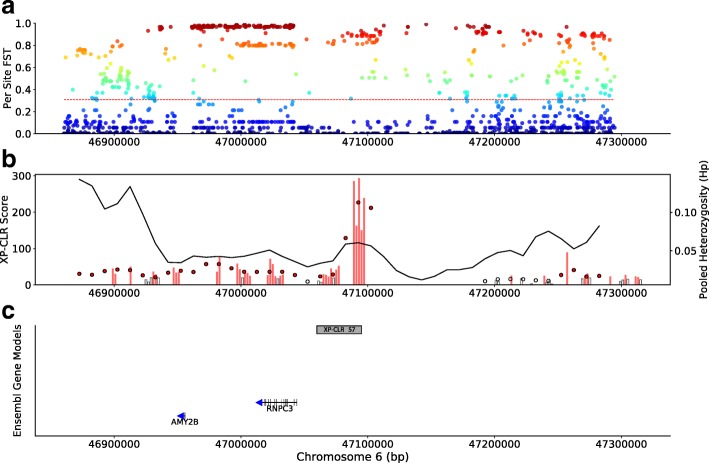
“More recent canine domestication research has identified a large duplication in the genomic region distal and separate from AMY2B that is centered on RNPC3 [81].”
BackgroundInfluentialAncient Faunal History Revealed by Interdisciplinary Biomolecular Approaches
Rosengren, E., Acatrinei, A., Cruceru, N., Dehasque, M., Haliuc, A., Lord, E., Mircea, C., Rusu, I., Mármol‐Sánchez, E., Kelemen, B., et al. (2021) · Diversity · doi:10.3390/d13080370 · Cited by 11
Duplications and Retrogenes Are Numerous and Widespread in Modern Canine Genomic Assemblies
Nguyen, A. K., Blacksmith, M. S., & Kidd, J. M. (2024) · Genome Biology and Evolution · doi:10.1093/gbe/evae142 · Cited by 13
“…assembly self-alignment, which involves the mapping of an assembly to itself in order to find matching duplicated segments (Išeric´ et al. 2022) and read-depth analysis, which searches for regions of unusually high coverage in Illumina sequencing data (Pendleton et al. 2018; Shen and Kidd 2020).”
BackgroundMethodInfluentialSelf-citationBiology’s best friend: Bridging disciplinary gaps to advance canine science
Bryce, C. M., Davis, M. S., Gompper, M. E., Hurt, A., Koster, J., Larson, G., Ostrander, E. A., Udell, M. A. R., Urfer, S. R., Wirsing, A. J., et al. (2021) · Integrative and Comparative Biology · doi:10.1093/icb/icab072 · Cited by 12
Xu, B., Yang, G., Jiao, B., & Zhu, H. (2022) · Frontiers in Genetics · doi:10.3389/fgene.2022.944933 · Cited by 8
“The process of animal domestication probably goes through two stages (Zeder, 2015; Pendleton et al., 2018).”
BackgroundMethodSamaha, G., Wade, C. M., Mazrier, H., Grueber, C. E., & Haase, B. (2021) · BMC Genomics · doi:10.1186/s12864-021-07899-2 · Cited by 10
Konno, A., Aoki, H., Suzuki, E., Furuta, S., & Ueda, S. (2023) · Royal Society Open Science · doi:10.1098/rsos.230854 · Cited by 7
Coexisting With Humans: Genomic and Behavioral Consequences in a Small and Isolated Bear Population
Fabbri, G., Biello, R., Gabrielli, M., Vilaça, S. T., Sammarco, B., Fuselli, S., Santos, P., Ancona, L., Peretto, L., Padovani, G., et al. (2025) · Molecular Biology and Evolution · doi:10.1093/molbev/msaf292 · Cited by 8
Arlt, M. F., Kruger, A. N., Swanepoel, C. M., & Mueller, J. L. (2025) · Proceedings of the National Academy of Sciences · doi:10.1073/pnas.2421446122 · Cited by 8
“M. spretus Slx , Slxl1, and Sly and M. caroli Slx and Slxl1 copy numbers were estimated using fastCN (42), a pipeline for copy - number estimation based on read depth.”
Wang, M., Lin, Y., Zhou, S., Cui, Y., Feng, Q., Yan, W., & Xiang, H. (2020) · Frontiers in Genetics · doi:10.3389/fgene.2020.566961 · Cited by 6
Metadata
- Authors
- Pendleton, A. L., Shen, F., Taravella, A. M., Emery, S., Veeramah, K. R., Boyko, A. R., & Kidd, J. M.
- Affiliations
- University of Michigan (US)
- Stony Brook University (US)
- Cornell University (US)
- Corresponding author
- Kidd, Jeffrey M.
- Venue
- BMC Biology
- Published
- 2018-06-28
- Volume
- 16
- Issue
- 1
- Pages
- 64-64
- ISSN
- 1741-7007 (ISSN-L)
- PMC
- PMC6022502
- OpenAlex
- W2806382960
- Cited by
- 156
- References
- 199
- Citations by year
- 2026: 10 · 2025: 12 · 2024: 19 · 2023: 21 · 2022: 21 · 2021: 27 · 2020: 24 · 2019: 18 · 2018: 3
- FWCI
- 10.86
- Type
- journal article
- Language
- en
- Open access
- gold
- doi.org
- Licence
- cc-by
- creativecommons.org/licenses/by/4.0/ (tdm)
- creativecommons.org/licenses/by/4.0/ (vor)
- Locations
- BMC Biology (publishedVersion, cc-by)
- Europe PMC (PubMed Central) (publishedVersion, cc-by)
- PubMed Central (publishedVersion, cc-by)
- PubMed (publishedVersion)
- Deep Blue (University of Michigan) (submittedVersion)
- DOAJ (DOAJ: Directory of Open Access Journals) (submittedVersion, cc-by-sa)
- Funders
- National Institute of General Medical Sciences (R01GM103961)
- National Human Genome Research Institute (T32HG00040)
- Topics
- Life Sciences › Agricultural and Biological Sciences › Animal Science and Zoology › Human-Animal Interaction Studies
- Life Sciences › Biochemistry, Genetics and Molecular Biology › Genetics › Genetic and phenotypic traits in livestock
- Life Sciences › Biochemistry, Genetics and Molecular Biology › Genetics › Genetic Mapping and Diversity in Plants and Animals
- Keywords
- dog domestication, village dogs, gray wolves, domestication syndrome, neural crest, copy number variation, craniofacial development, tameness, behavioral selection, ancient dogs
- MeSH terms
- Domestication, Animals, Dogs, Haplotypes, Neural Crest, Phenotype, Selection, Genetic, Genetic Variation, Genome, Wolves, DNA Copy Number Variations
About these checks
Registry, retraction, Cites and statistics results are computed, not judged, with one exception: a printed reference that no index lists is read once by a model before it counts as a citation error. Claims are extracted by a model and kept only when their quote appears verbatim in the text; each cited source is then checked, with a model’s help, for whether it says what the claim relies on. Those verdicts can be wrong — read the claim’s quote and the cited source before relying on one.
Statistics and arithmetic are recomputed, not judged.
Confidence bands are shown only for fields calibrated on our annotated test set. None is calibrated yet, so no band is shown.
What counts as a claim ›How we measure confidence ›How we check this ›
Are you an author, or do you see a problem with this page? Request a review
Data sources
Bibliographic data: Semantic Scholar, OpenAlex, Crossref.
Contains information from the Semantic Scholar Academic Graph Datasets, made available under the ODC Attribution License (ODC-BY 1.0).
Semantic Scholar’s data is described in: Kinney, R., et al. (2023). The Semantic Scholar Open Data Platform. arXiv:2301.10140.
