

Comparison of village dog and wolf genomes highlights the role of the neural crest in dog domestication
Open accessPublished version of a preprint
The DOI matches its Crossref record; 197 of the 199 references it cites were found in a registry or an index.
Abstract
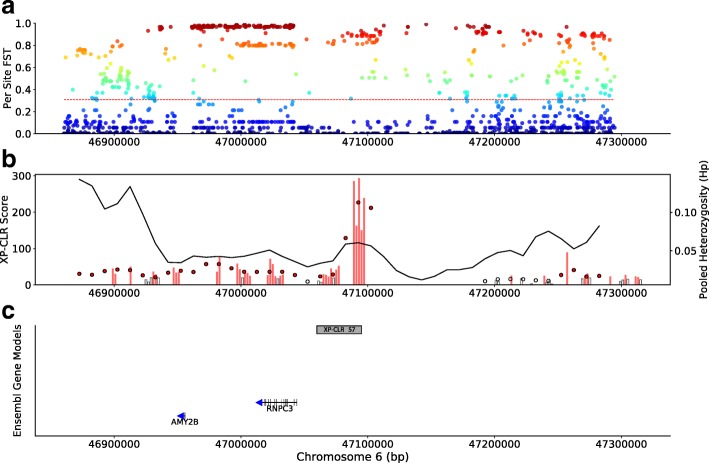
BACKGROUND: Domesticated from gray wolves between 10 and 40 kya in Eurasia, dogs display a vast array of phenotypes that differ from their ancestors, yet mirror other domesticated animal species, a phenomenon known as the domestication syndrome. Here, we use signatures persisting in dog genomes to identify genes and pathways possibly altered by the selective pressures of domestication. RESULTS: Whole-genome SNP analyses of 43 globally distributed village dogs and 10 wolves differentiated signatures resulting from domestication rather than breed formation. We identified 246 candidate domestication regions containing 10.8 Mb of genome sequence and 429 genes. The regions share haplotypes with ancient dogs, suggesting that the detected signals are not the result of recent selection. Gene enrichments highlight numerous genes linked to neural crest and central nervous system development as well as neurological function. Read depth analysis suggests that copy number variation played a minor role in dog domestication. CONCLUSIONS: Our results identify genes that act early in embryogenesis and can confer phenotypes distinguishing domesticated dogs from wolves, such as tameness, smaller jaws, floppy ears, and diminished craniofacial development as the targets of selection during domestication. These differences reflect the phenotypes of the domestication syndrome, which can be explained by alterations in the migration or activity of neural crest cells during development. We propose that initial selection during early dog domestication was for behavior, a trait influenced by genes which act in the neural crest, which secondarily gave rise to the phenotypes of modern dogs.
Overview
The claims and statistics of this paper haven’t been checked yet.
Free: it reads the open-access text and checks the first 5 claims that cite a source we can check. Create a free account to check every claim.
Integrity signals
Registry
Cites
Statistics
Figures
Verification
Claims the paper makes
The claims and statistics of this paper haven’t been checked yet.
Free: it reads the open-access text and checks the first 5 claims that cite a source we can check. Create a free account to check every claim.
Claims other papers make about this one
Each is checked against this paper’s own text: does it say what the citing paper says it does?
The cited source says what the claim attributes to it.
In the citing paper
“Recent genomic studies (Carneiro et al. 2014; Pendleton et al. 2018; Wang et al. 2018) have found evidence of selection at a few handfuls of genes that have molecular functions associated with the neural crest, but that in itself is not good evidence that neural crest cell proliferation and migration are underlying the domestication syndrome.”
From The neural crest cell hypothesis: no unified explanation for domestication (2021) · cites this paper as Pendleton et al. 2018
The cited source says what the claim attributes to it.
In the citing paper
“the neural-crest cell hypothesis of domestication assumes that a process of domestication leads to depigmentation rather than an intensification of pigmentation [40,41].”
From Are dark-eyed dogs favoured by humans? Domestication as a potential driver of iris colour difference between dogs and wolves (2023) · cites this paper as [41]
Self-check
Percentages, sums and reported differences re-computed from the paper’s own numbers.
The self-check needs the paper’s full text.
Citations
Cites
PLINK: a tool set for whole-genome association and population-based linkage analyses.
Purcell, S., Neale, B., Todd-Brown, K., Thomas, L., Ferreira, M. A. R., Bender, D., Maller, J., Sklar, P., de Bakker, P. I. W., Daly, M. J., et al. (2007) · The American Journal of Human Genetics · doi:10.1086/519795 · Cited by 34,089 · cited 1×
“1; [133]), where SNPs with an 530 R(2) value over 0.”
BackgroundThe Genome Analysis Toolkit: A MapReduce framework for analyzing next-generation DNA sequencing data
McKenna, A., Hanna, M., Banks, E., Sivachenko, A., Cibulskis, K., Kernytsky, A., Garimella, K., Altshuler, D., Gabriel, S., Daly, M., et al. (2010) · Genome Research · doi:10.1101/gr.107524.110 · Cited by 27,895
BEDTools: a flexible suite of utilities for comparing genomic features
Quinlan, A. R., & Hall, I. M. (2010) · Bioinformatics · doi:10.1093/bioinformatics/btq033 · Cited by 27,437
A global reference for human genetic variation
The 1000 Genomes Project Consortium, authors, C., Auton, A., Abecasis, G. R., Steering committee, Altshuler, D. M., Durbin, R. M., Abecasis, G. R., Bentley, D. R., Chakravarti, A., et al. (2015) · Nature · doi:10.1038/nature15393 · Cited by 18,247
The variant call format and VCFtools
Danecek, P., Auton, A., Abecasis, G., Albers, C. A., Banks, E., DePristo, M. A., Handsaker, R. E., Lunter, G., Marth, G. T., Sherry, S. T., et al. (2011) · Bioinformatics · doi:10.1093/bioinformatics/btr330 · Cited by 16,200
Fast model-based estimation of ancestry in unrelated individuals
Alexander, D. H., Novembre, J., & Lange, K. (2009) · Genome Research · doi:10.1101/gr.094052.109 · Cited by 9,898 · cited 4×
“Thirty-seven breed dogs, 45 village dogs, and 12 wolves were selected 527 from the samples described in Botigue et al. [34], and ADMIXTURE [132] was utilized to 528 estimate the levels of wolf-dog admixture within this subset.”
MethodInfluentialNear-optimal probabilistic RNA-seq quantification
Bray, N. L., Pimentel, H., Melsted, P., & Pachter, L. (2016) · Nature Biotechnology · doi:10.1038/nbt.3519 · Cited by 9,723
Primer3—new capabilities and interfaces
Untergasser, A., Cutcutache, I., Koressaar, T., Ye, J., Faircloth, B. C., Remm, M., & Rozen, S. G. (2012) · Nucleic Acids Research · doi:10.1093/nar/gks596 · Cited by 9,461
The Ensembl Variant Effect Predictor
McLaren, W., Gil, L., Hunt, S. E., Riat, H. S., Ritchie, G. R. S., Thormann, A., Flicek, P., & Cunningham, F. (2016) · Genome Biology · doi:10.1186/s13059-016-0974-4 · Cited by 8,099
A map of human genome variation from population-scale sequencing.
The 1000 Genomes Project Consortium (2010) · Nature · doi:10.1038/nature09534 · Cited by 7,877
An integrated map of genetic variation from 1,092 human genomes
The 1000 Genomes Project Consortium (2012) · Nature · doi:10.1038/nature11632 · Cited by 7,711
Population Structure and Eigenanalysis
Patterson, N., Price, A. L., & Reich, D. (2006) · PLoS Genetics · doi:10.1371/journal.pgen.0020190 · Cited by 5,280
A fast, lock-free approach for efficient parallel counting of occurrences of k -mers
Marçais, G., & Kingsford, C. (2011) · Bioinformatics · doi:10.1093/bioinformatics/btr011 · Cited by 4,661
High-throughput functional annotation and data mining with the Blast2GO suite
Gotz, S., Garcia-Gomez, J. M., Terol, J., Williams, T. D., Nagaraj, S. H., Nueda, M. J., Robles, M., Talon, M., Dopazo, J., & Conesa, A. (2008) · Nucleic Acids Research · doi:10.1093/nar/gkn176 · Cited by 4,423 · cited 1×
“Importantly, our gene annotations 380 were obtained directly through established BLAST2GO pipelines [74], rather than 381 assignment of function via homologous human genes, as has been employed in earlier 382 dog domestication studies [26,28,29].”
MethodGlobal variation in copy number in the human genome
Redon, R., Ishikawa, S., Fitch, K. R., Feuk, L., Perry, G. H., Andrews, T. D., Fiegler, H., Shapero, M. H., Carson, A. R., Chen, W., et al. (2006) · Nature · doi:10.1038/nature05329 · Cited by 4,288 · cited 3×
“303 304 Survey of copy-number variation between dogs and wolves 305 Copy-number variants have also been associated with population-specific selection and 306 domestication in a number of species [5,69,70].”
BackgroundMethodSelf-citationAccurate whole human genome sequencing using reversible terminator chemistry
Bentley, D. R., Balasubramanian, S., Swerdlow, H. P., Smith, G. P., Milton, J., Brown, C. G., Hall, K. P., Evers, D. J., Barnes, C. L., Bignell, H. R., et al. (2008) · Nature · doi:10.1038/nature07517 · Cited by 3,684
The complete genome sequence of a Neanderthal from the Altai Mountains
Prüfer, K., Racimo, F., Patterson, N., Jay, F., Sankararaman, S., Sawyer, S., Heinze, A., Renaud, G., Sudmant, P. H., de Filippo, C., et al. (2014) · Nature · doi:10.1038/nature12886 · Cited by 2,254
Genome structural variation discovery and genotyping
Alkan, C., Coe, B. P., & Eichler, E. E. (2011) · Nature Reviews Genetics · doi:10.1038/nrg2958 · Cited by 1,630
Whole-genome resequencing reveals loci under selection during chicken domestication
Rubin, C.-J., Zody, M. C., Eriksson, J., Meadows, J. R. S., Sherwood, E., Webster, M. T., Jiang, L., Ingman, M., Sharpe, T., Ka, S., et al. (2010) · Nature · doi:10.1038/nature08832 · Cited by 1,138 · cited 2×
“590 591 Pooled Heterozygosity (HP) and ΔHP Calculations 592 Per window, dog allele frequencies were used to calculate pooled heterozygosity (HP) 593 using the following formula from [6]: 2ΣnMAJΣnMIN/(ΣnMAJ + ΣnMIN) (2), where ΣnMAJ is the 594 sum of major and ΣnMIN minor dog alleles, respectively, for all sites in the…”
BackgroundMethodZhou, Z., Jiang, Y., Wang, Z., Gou, Z., Lyu, J., Li, W., Yu, Y., Shu, L., Zhao, Y., Ma, Y., et al. (2015) · Nature Biotechnology · doi:10.1038/nbt.3096 · Cited by 1,102 · cited 1×
“303 304 Survey of copy-number variation between dogs and wolves 305 Copy-number variants have also been associated with population-specific selection and 306 domestication in a number of species [5,69,70].”
BackgroundAmbra1 regulates autophagy and development of the nervous system
Maria Fimia, G., Stoykova, A., Romagnoli, A., Giunta, L., Di Bartolomeo, S., Nardacci, R., Corazzari, M., Fuoco, C., Ucar, A., Schwartz, P., et al. (2007) · Nature · doi:10.1038/nature05925 · Cited by 1,048
The genomic signature of dog domestication reveals adaptation to a starch-rich diet
Axelsson, E., Ratnakumar, A., Arendt, M.-L., Maqbool, K., Webster, M. T., Perloski, M., Liberg, O., Arnemo, J. M., Hedhammar, Å., & Lindblad-Toh, K. (2013) · Nature · doi:10.1038/nature11837 · Cited by 963 · cited 2×
“327 328 Refined analysis of a large-scale structural variant located at the AMY2B locus 329 The top VCDR encompasses the AMY2B gene, which at increased copy number 330 confers greater starch metabolism efficiency due to higher pancreatic amylase enzyme 331 levels [5,38].”
BackgroundRetinoic acid in the development, regeneration and maintenance of the nervous system
Maden, M. (2007) · Nature Reviews Neuroscience · doi:10.1038/nrn2212 · Cited by 896 · cited 1×
“Candidate Genes Influencing Retinoic Acid Signaling 237 Retinoic acid (RA) is a signaling molecule that has numerous critical roles in 238 development at the embryonic level, continuing into adult stages with roles including 239 maintaining stem cell proliferation, tissue regeneration, and regulation of circadian 240…”
BackgroundPopulation differentiation as a test for selective sweeps
Chen, H., Patterson, N., & Reich, D. (2010) · Genome Research · doi:10.1101/gr.100545.109 · Cited by 888
Carmon, K. S., Gong, X., Lin, Q., Thomas, A., & Liu, Q. (2011) · Proceedings of the National Academy of Sciences · doi:10.1073/pnas.1106083108 · Cited by 855
Peters, H., Neubüser, A., Kratochwil, K., & Balling, R. (1998) · Genes & Development · doi:10.1101/gad.12.17.2735 · Cited by 833
Genome-wide SNP and haplotype analyses reveal a rich history underlying dog domestication
vonHoldt, B. M., Pollinger, J. P., Lohmueller, K. E., Han, E., Parker, H. G., Quignon, P., Degenhardt, J. D., Boyko, A. R., Earl, D. A., Auton, A., et al. (2010) · Nature · doi:10.1038/nature08837 · Cited by 807
Self-citationMunc13-1 is essential for fusion competence of glutamatergic synaptic vesicles
Augustin, I., Rosenmund, C., Südhof, T. C., & Brose, N. (1999) · Nature · doi:10.1038/22768 · Cited by 787 · cited 1×
“Finally, UNC13B (Unc-13 Homolog B) is essential for competence of 266 glutamatergic synaptic vesicles [54], and CACNA1A (Calcium Voltage-Gated Channel 267 Subunit Alpha1 A) influences glutamatergic synaptic transmission [55].”
BackgroundWilkins, A. S., Wrangham, R. W., & Fitch, W. T. (2014) · Genetics · doi:10.1534/genetics.114.165423 · Cited by 751
Personalized copy number and segmental duplication maps using next-generation sequencing
Alkan, C., Kidd, J. M., Marques-Bonet, T., Aksay, G., Antonacci, F., Hormozdiari, F., Kitzman, J. O., Baker, C., Malig, M., Mutlu, O., et al. (2009) · Nature Genetics · doi:10.1038/ng.437 · Cited by 748
Self-citationZhou, Z., Jiang, Y., Wang, Z., Gou, Z., Lyu, J., Li, W., Yu, Y., Shu, L., Zhao, Y., Ma, Y., et al. (2016) · Nature Biotechnology · doi:10.1038/nbt0416-441c · Cited by 689 · cited 1×
“Copy number variants have also been associated with population-specific selection and domestication in a number of species [5, 66, 67].”
BackgroundDiversity of Human Copy Number Variation and Multicopy Genes
Sudmant, P. H., Kitzman, J. O., Antonacci, F., Alkan, C., Malig, M., Tsalenko, A., Sampas, N., Bruhn, L., Shendure, J., 1000 Genomes Project, et al. (2010) · Science · doi:10.1126/science.1197005 · Cited by 667
Efficient Coalescent Simulation and Genealogical Analysis for Large Sample Sizes
Kelleher, J., Etheridge, A. M., & McVean, G. (2016) · PLOS Computational Biology · doi:10.1371/journal.pcbi.1004842 · Cited by 654
Strong signatures of selection in the domestic pig genome
Rubin, C.-J., Megens, H.-J., Barrio, A. M., Maqbool, K., Sayyab, S., Schwochow, D., Wang, C., Carlborg, Ö., Jern, P., Jørgensen, C. B., et al. (2012) · Proceedings of the National Academy of Sciences · doi:10.1073/pnas.1217149109 · Cited by 652
Early canid domestication: the farm-fox experiment.
Trut, L. (1999) · American Scientist · doi:10.1511/1999.2.160 · Cited by 626 · cited 1×
“floppy 477 ears, altered craniofacial proportions, and unseasonal timing for mating), appeared 478 within twenty generations when researchers selected only for tameness in a silver fox 479 breeding population [1,113].”
BackgroundGenome sequencing highlights the dynamic early history of dogs
Freedman, A. H., Gronau, I., Schweizer, R. M., Ortega-Del Vecchyo, D., Han, E., Silva, P. M., Galaverni, M., Fan, Z., Marx, P., Lorente-Galdos, B., et al. (2014) · PLoS Genetics · doi:10.1371/journal.pgen.1004016 · Cited by 624
Self-citationHare, B., Wobber, V., & Wrangham, R. (2012) · Animal Behaviour · doi:10.1016/j.anbehav.2011.12.007 · Cited by 613 · cited 1×
“The link between tameness and the NC 482 suggests that changes in neural crest development could have arisen first, either 483 through direct selection by humans for desired behaviors or via the “self-domestication” 484 [114,115] of wolves that were more docile around humans.”
BackgroundEstimating and interpreting F ST : The impact of rare variants
Bhatia, G., Patterson, N., Sankararaman, S., & Price, A. L. (2013) · Genome Research · doi:10.1101/gr.154831.113 · Cited by 612 · cited 1×
“570 571 FST Selection Scans 572 Dog and wolf allele counts generated above were used to calculate the fixation index 573 (FST) using the Hudson estimator derived in [139]with the formula: FST = (( 1 - 2) 574 ( 1(1 - 1) / 1 - 1) - ( 2(1 - 2) / 2 - 1)) / ( 1(1 - 2) + 2(1 - 1)) where is the 575 allele frequency in popula…”
MethodPatro, R., Mount, S. M., & Kingsford, C. (2014) · Nature Biotechnology · doi:10.1038/nbt.2862 · Cited by 586
Genomic analyses identify distinct patterns of selection in domesticated pigs and Tibetan wild boars
Li, M., Tian, S., Jin, L., Zhou, G., Li, Y., Zhang, Y., Wang, T., Yeung, C. K. L., Chen, L., Ma, J., et al. (2013) · Nature Genetics · doi:10.1038/ng.2811 · Cited by 556
Theveneau, E., & Mayor, R. (2012) · Developmental Biology · doi:10.1016/j.ydbio.2011.12.041 · Cited by 535
SATB2 Is a Multifunctional Determinant of Craniofacial Patterning and Osteoblast Differentiation
Dobreva, G., Chahrour, M., Dautzenberg, M., Chirivella, L., Kanzler, B., Fariñas, I., Karsenty, G., & Grosschedl, R. (2006) · Cell · doi:10.1016/j.cell.2006.05.012 · Cited by 524
Minoux, M., & Rijli, F. M. (2010) · Development · doi:10.1242/dev.040048 · Cited by 507
II. Hypersociability in Williams Syndrome
Jones, W., Bellugi, U., Lai, Z., Chiles, M., Reilly, J., Lincoln, A., & Adolphs, R. (2000) · Journal of Cognitive Neuroscience · doi:10.1162/089892900561968 · Cited by 503
A Simple Genetic Architecture Underlies Morphological Variation in Dogs
Boyko, A. R., Quignon, P., Li, L., Schoenebeck, J. J., Degenhardt, J. D., Lohmueller, K. E., Zhao, K., Brisbin, A., Parker, H. G., vonHoldt, B. M., et al. (2010) · PLoS Biology · doi:10.1371/journal.pbio.1000451 · Cited by 494 · cited 1×
“Analogously, compared to the pricked ears of wolves, dogs predominantly have 449 “floppy” ears [105], a hallmark feature of domesticates [18].”
ResultSelf-citationMaternal and Offspring Pools of Osteocalcin Influence Brain Development and Functions
Oury, F., Khrimian, L., Denny, C. A., Gardin, A., Chamouni, A., Goeden, N., Huang, Y.-Y., Lee, H., Srinivas, P., Gao, X.-B., et al. (2013) · Cell · doi:10.1016/j.cell.2013.08.042 · Cited by 484 · cited 2×
“Genes in our XP-271 CLR loci relating to GABA include one of the two mammalian GABA biosynthetic 272 enzymes GAD2 (or GAD65; ranked 20th), the GABA receptor GABRA4, auxiliary 273 subunit of GABA-B receptors KCTD12 ([52,58]), and the GABA inhibitor osteocalcin (or 274 BGLAP; [59]).”
BackgroundThe After-Hours Mutant Reveals a Role for Fbxl3 in Determining Mammalian Circadian Period
Godinho, S. I. H., Maywood, E. S., Shaw, L., Tucci, V., Barnard, A. R., Busino, L., Pagano, M., Kendall, R., Quwailid, M. M., Romero, M. R., et al. (2007) · Science · doi:10.1126/science.1141138 · Cited by 475
Cranial neural crest and the building of the vertebrate head
Santagati, F., & Rijli, F. M. (2003) · Nature Reviews Neuroscience · doi:10.1038/nrn1221 · Cited by 461 · cited 1×
“Assignment of identity and the determination of migration routes 421 relies on positional information provided by external signaling cues [88,89].”
BackgroundGenomic and archaeological evidence suggest a dual origin of domestic dogs
Frantz, L. A. F., Mullin, V. E., Pionnier-Capitan, M., Lebrasseur, O., Ollivier, M., Perri, A., Linderholm, A., Mattiangeli, V., Teasdale, M. D., Dimopoulos, E. A., et al. (2016) · Science · doi:10.1126/science.aaf3161 · Cited by 430 · cited 2×
“Evidence suggests that the 350 domestication process was complex and may have spanned thousands of years [3,71].”
BackgroundPotocki, L., Bi, W., Treadwell-Deering, D., Carvalho, C. M. B., Eifert, A., Friedman, E. M., Glaze, D., Krull, K., Lee, J. A., Lewis, R. A., et al. (2007) · The American Journal of Human Genetics · doi:10.1086/512864 · Cited by 426 · cited 1×
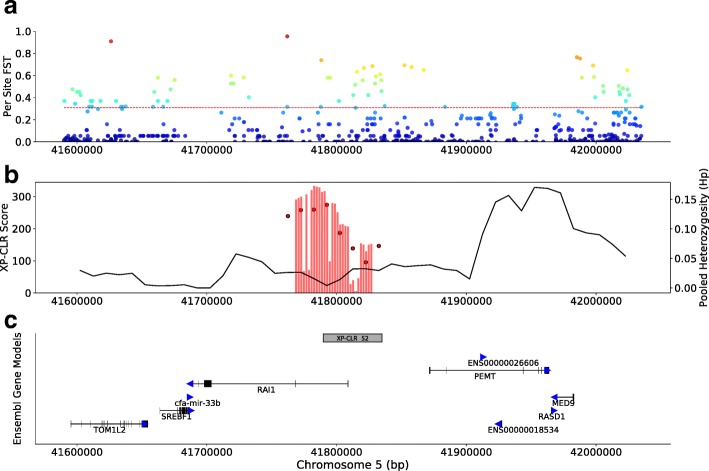
“The highest scoring XP-CLR locus centers upon RAI1 (Retinoic Acid241 Induced 1; Figure 4), a gene with numerous developmental functions in the RA pathway 242 and the gene responsible for Smith-Magenis and Potocki-Lupski Syndromes in humans 243 ([47,48]).”
BackgroundSzeto, D. P., Rodriguez-Esteban, C., Ryan, A. K., O'Connell, S. M., Liu, F., Kioussi, C., Gleiberman, A. S., Izpisua-Belmonte, J. C., & Rosenfeld, M. G. (1999) · Genes & Development · doi:10.1101/gad.13.4.484 · Cited by 426 · cited 2×
“and branchial arch defects [100], and influences vertebrate tooth development [101].”
BackgroundChimpanzee and human Y chromosomes are remarkably divergent in structure and gene content
Hughes, J. F., Skaletsky, H., Pyntikova, T., Graves, T. A., van Daalen, S. K. M., Minx, P. J., Fulton, R. S., McGrath, S. D., Locke, D. P., Friedman, C., et al. (2010) · Nature · doi:10.1038/nature08700 · Cited by 409
Rabbit genome analysis reveals a polygenic basis for phenotypic change during domestication
Carneiro, M., Rubin, C.-J., Di Palma, F., Albert, F. W., Alföldi, J., Barrio, A. M., Pielberg, G., Rafati, N., Sayyab, S., Turner-Maier, J., et al. (2014) · Science · doi:10.1126/science.1253714 · Cited by 404 · cited 3×
“Based on the specific range of 62 traits associated with DS, it is likely that numerous genes with pleiotropic effects likely 63 contribute through mechanisms which act early in organismal development [18,19].”
BackgroundDevelopment and evolution of the neural crest: An overview
Bronner, M. E., & LeDouarin, N. M. (2012) · Developmental Biology · doi:10.1016/j.ydbio.2011.12.042 · Cited by 403
Large multiallelic copy number variations in humans
Handsaker, R. E., Van Doren, V., Berman, J. R., Genovese, G., Kashin, S., Boettger, L. M., & McCarroll, S. A. (2015) · Nature Genetics · doi:10.1038/ng.3200 · Cited by 402
Inhibition of nuclear hormone receptor activity by calreticulin
Dedhar, S., Rennie, P. S., Shago, M., Hagesteijn, C.-Y. L., Yang, H., Filmus, J., Hawley, R. G., Bruchovsky, N., Cheng, H., Matusik, R. J., et al. (1994) · Nature · doi:10.1038/367480a0 · Cited by 375 · cited 1×
“The 248 second gene encodes Calreticulin, a protein involved in inhibition of both androgen and 249 RA transcriptional activities [49,50].”
BackgroundNagai, N., Hosokawa, M., Itohara, S., Adachi, E., Matsushita, T., Hosokawa, N., & Nagata, K. (2000) · The Journal of Cell Biology · doi:10.1083/jcb.150.6.1499 · Cited by 366
Bartels, C. F., Bükülmez, H., Padayatti, P., Rhee, D. K., van Ravenswaaij-Arts, C., Pauli, R. M., Mundlos, S., Chitayat, D., Shih, L.-Y., Al-Gazali, L. I., et al. (2004) · The American Journal of Human Genetics · doi:10.1086/422013 · Cited by 365
Regulation of neuronal GABAB receptor functions by subunit composition
Gassmann, M., & Bettler, B. (2012) · Nature Reviews Neuroscience · doi:10.1038/nrn3249 · Cited by 363 · cited 3×
“Genes in our XP-271 CLR loci relating to GABA include one of the two mammalian GABA biosynthetic 272 enzymes GAD2 (or GAD65; ranked 20th), the GABA receptor GABRA4, auxiliary 273 subunit of GABA-B receptors KCTD12 ([52,58]), and the GABA inhibitor osteocalcin (or 274 BGLAP; [59]).”
BackgroundMutations in RAI1 associated with Smith-Magenis syndrome
Slager, R. E., Newton, T. L., Vlangos, C. N., Finucane, B., & Elsea, S. H. (2003) · Nature Genetics · doi:10.1038/ng1126 · Cited by 362 · cited 1×
“The highest scoring XP-CLR locus centers upon RAI1 (Retinoic Acid241 Induced 1; Figure 4), a gene with numerous developmental functions in the RA pathway 242 and the gene responsible for Smith-Magenis and Potocki-Lupski Syndromes in humans 243 ([47,48]).”
BackgroundImproved detection of overrepresentation of Gene-Ontology annotations with parent–child analysis
Grossmann, S., Bauer, S., Robinson, P. N., & Vingron, M. (2007) · Bioinformatics · doi:10.1093/bioinformatics/btm440 · Cited by 361 · cited 3×
“05) using the Parent-Child model of Fisher’s Exact Test [44].”
MethodInfluentialTlx3 and Tlx1 are post-mitotic selector genes determining glutamatergic over GABAergic cell fates
Cheng, L., Arata, A., Mizuguchi, R., Qian, Y., Karunaratne, A., Gray, P. A., Arata, S., Shirasawa, S., Bouchard, M., Luo, P., et al. (2004) · Nature Neuroscience · doi:10.1038/nn1221 · Cited by 351 · cited 1×
“Lastly, T-Cell Leukemia Homeobox 3 (TLX3) is a key switch between 275 glutamatergic and GABAergic cell fates [60].”
BackgroundOut of southern East Asia: the natural history of domestic dogs across the world
Wang, G.-D., Zhai, W., Yang, H.-C., Wang, L., Zhong, L., Liu, Y.-H., Fan, R.-X., Yin, T.-T., Zhu, C.-L., Poyarkov, A. D., et al. (2016) · Cell Research · doi:10.1038/cr.2015.147 · Cited by 351
Global diversity, population stratification, and selection of human copy-number variation
Sudmant, P. H., Mallick, S., Nelson, B. J., Hormozdiari, F., Krumm, N., Huddleston, J., Coe, B. P., Baker, C., Nordenfelt, S., Bamshad, M., et al. (2015) · Science · doi:10.1126/science.aab3761 · Cited by 345
Matrix2png: a utility for visualizing matrix data
Pavlidis, P., & Noble, W. S. (2003) · Bioinformatics · doi:10.1093/bioinformatics/19.2.295 · Cited by 344
Montague, M. J., Li, G., Gandolfi, B., Khan, R., Aken, B. L., Searle, S. M. J., Minx, P., Hillier, L. W., Koboldt, D. C., Davis, B. W., et al. (2014) · Proceedings of the National Academy of Sciences · doi:10.1073/pnas.1410083111 · Cited by 340 · cited 2×
“RNPC3, which affects early development and is linked to dwarfism (isolated growth hormone deficiency; [128]), is also under selection in cats and humans [17, 77].”
BackgroundMarsden, C. D., Ortega-Del Vecchyo, D., O’Brien, D. P., Taylor, J. F., Ramirez, O., Vilà, C., Marques-Bonet, T., Schnabel, R. D., Wayne, R. K., & Lohmueller, K. E. (2016) · Proceedings of the National Academy of Sciences · doi:10.1073/pnas.1512501113 · Cited by 333 · cited 1×
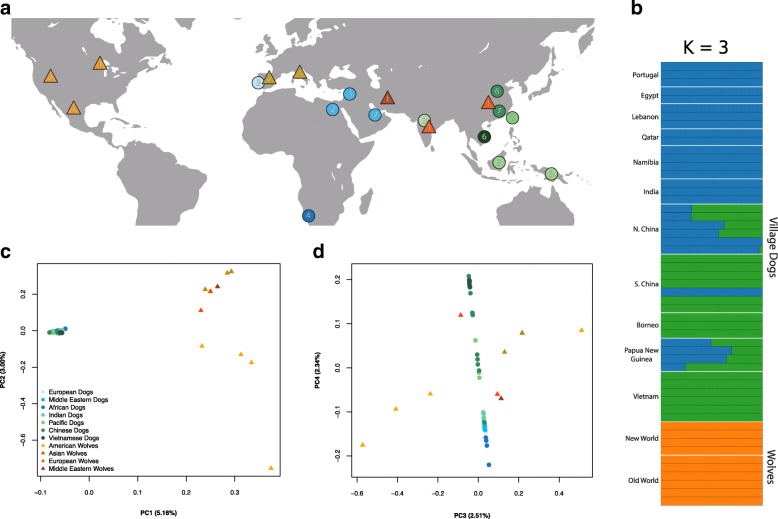
“84 These two dog groups represent products of two severe bottlenecks in the evolution of 85 the domestic dog, the first resulting from the initial domestication of gray wolves, and 86 the second from modern breed formation [32,33].”
BackgroundPrehistoric genomes reveal the genetic foundation and cost of horse domestication
Schubert, M., Jónsson, H., Chang, D., Der Sarkissian, C., Ermini, L., Ginolhac, A., Albrechtsen, A., Dupanloup, I., Foucal, A., Petersen, B., et al. (2014) · Proceedings of the National Academy of Sciences · doi:10.1073/pnas.1416991111 · Cited by 324 · cited 1×
“Although 393 the overlap of specific genes across species is modest, there are many enriched gene 394 pathways and ontologies shared in domesticates including neurological and nervous 395 system development, behavior, reproduction, metabolism, and pigmentation 396 [10,11,17,75,80,81].”
BackgroundBergmann, C., Fliegauf, M., Brüchle, N. O., Frank, V., Olbrich, H., Kirschner, J., Schermer, B., Schmedding, I., Kispert, A., Kränzlin, B., et al. (2008) · The American Journal of Human Genetics · doi:10.1016/j.ajhg.2008.02.017 · Cited by 324 · cited 1×
“Several of the genes 415 identified in our analysis are involved in this transition including members of the Fgf 416 (Fgf1) family as well as a transcription factor (TCF4; [84]), inhibitors (RRM2; NPHP3; 417 [85,86]) and regulators (LGR5; [87]) of the Wnt signaling pathways.”
BackgroundThe genomics of selection in dogs and the parallel evolution between dogs and humans
Wang, G.-D., Zhai, W., Yang, H.-C., Fan, R.-X., Cao, X., Zhong, L., Wang, L., Liu, F., Wu, H., Cheng, L.-G., et al. (2013) · Nature Communications · doi:10.1038/ncomms2814 · Cited by 323
Skoglund, P., Ersmark, E., Palkopoulou, E., & Dalén, L. (2015) · Current Biology · doi:10.1016/j.cub.2015.04.019 · Cited by 310 · cited 1×
“Genetic and archaeological data indicate that the dog was first domesticated from 349 Eurasian gray wolves well over 10 kya [25,34,40,71].”
BackgroundYak whole-genome resequencing reveals domestication signatures and prehistoric population expansions
Qiu, Q., Wang, L., Wang, K., Yang, Y., Ma, T., Wang, Z., Zhang, X., Ni, Z., Hou, F., Long, R., et al. (2015) · Nature Communications · doi:10.1038/ncomms10283 · Cited by 304
A population genetics view of animal domestication
Larson, G., & Burger, J. (2013) · Trends in Genetics · doi:10.1016/j.tig.2013.01.003 · Cited by 294
Takahashi, H., Kanno, T., Nakayamada, S., Hirahara, K., Sciumè, G., Muljo, S. A., Kuchen, S., Casellas, R., Wei, L., Kanno, Y., et al. (2012) · Nature Immunology · doi:10.1038/ni.2286 · Cited by 281
Identification of SATB2 as the cleft palate gene on 2q32-q33
FitzPatrick, D. R. (2003) · Human Molecular Genetics · doi:10.1093/hmg/ddg248 · Cited by 280
A Critical Role for the Wnt Effector Tcf4 in Adult Intestinal Homeostatic Self-Renewal
van Es, J. H., Haegebarth, A., Kujala, P., Itzkovitz, S., Koo, B.-K., Boj, S. F., Korving, J., van den Born, M., van Oudenaarden, A., Robine, S., et al. (2012) · Molecular and Cellular Biology · doi:10.1128/mcb.06288-11 · Cited by 276 · cited 1×
“Several of the genes identified in our XP-CLR analysis are involved in this transition including members of the Fgf (Fgf1) family as well as a transcription factor (TCF4; [82]), inhibitors (RRM2; NPHP3; [83, 84]), and regulators (LGR5; [85]) of the Wnt signaling pathways.”
BackgroundmrsFAST: a cache-oblivious algorithm for short-read mapping
Hach, F., Hormozdiari, F., Alkan, C., Hormozdiari, F., Birol, I., Eichler, E. E., & Sahinalp, S. C. (2010) · Nature Methods · doi:10.1038/nmeth0810-576 · Cited by 274
Contrasting Mode of Evolution at a Coat Color Locus in Wild and Domestic Pigs
Fang, M., Larson, G., Soares Ribeiro, H., Li, N., & Andersson, L. (2009) · PLoS Genetics · doi:10.1371/journal.pgen.1000341 · Cited by 270
Ancient European dog genomes reveal continuity since the Early Neolithic
Botigué, L. R., Song, S., Scheu, A., Gopalan, S., Pendleton, A. L., Oetjens, M., Taravella, A. M., Seregély, T., Zeeb-Lanz, A., Arbogast, R.-M., et al. (2017) · Nature Communications · doi:10.1038/ncomms16082 · Cited by 256 · cited 13×
“Sample Processing and Population Structure Analysis 524 Genomes of canids (Additional File 11: Table S9) were processed using the pipeline 525 outlined in [34] to produce a data set of single nucleotide polymorphisms (SNPs) using 526 .”
BackgroundMethodInfluentialSelf-citationElsea, S. H., & Girirajan, S. (2008) · European Journal of Human Genetics · doi:10.1038/sj.ejhg.5202009 · Cited by 241
Embryonic cardiomyocyte hypoplasia and craniofacial defects in Galpha q/Galpha 11-mutant mice
Offermanns, S. (1998) · The EMBO Journal · doi:10.1093/emboj/17.15.4304 · Cited by 236
Classic Selective Sweeps Revealed by Massive Sequencing in Cattle
Qanbari, S., Pausch, H., Jansen, S., Somel, M., Strom, T. M., Fries, R., Nielsen, R., & Simianer, H. (2014) · PLoS Genetics · doi:10.1371/journal.pgen.1004148 · Cited by 233 · cited 1×
“Although 393 the overlap of specific genes across species is modest, there are many enriched gene 394 pathways and ontologies shared in domesticates including neurological and nervous 395 system development, behavior, reproduction, metabolism, and pigmentation 396 [10,11,17,75,80,81].”
BackgroundGenetic Recombination Is Targeted towards Gene Promoter Regions in Dogs
Auton, A., Rui Li, Y., Kidd, J., Oliveira, K., Nadel, J., Holloway, J. K., Hayward, J. J., Cohen, P. E., Greally, J. M., Wang, J., et al. (2013) · PLoS Genetics · doi:10.1371/journal.pgen.1003984 · Cited by 230
Self-citationAssociation of TALS Developmental Disorder with Defect in Minor Splicing Component U4atac snRNA
Edery, P., Marcaillou, C., Sahbatou, M., Labalme, A., Chastang, J., Touraine, R., Tubacher, E., Senni, F., Bober, M. B., Nampoothiri, S., et al. (2011) · Science · doi:10.1126/science.1202205 · Cited by 228 · cited 1×
“Phenotypes of this syndrome resemble those of the DS including craniofacial, 469 brain, and skeletal abnormalities [110].”
BackgroundGenetic structure in village dogs reveals a Central Asian domestication origin
Shannon, L. M., Boyko, R. H., Castelhano, M., Corey, E., Hayward, J. J., McLean, C., White, M. E., Abi Said, M., Anita, B. A., Bondjengo, N. I., et al. (2015) · Proceedings of the National Academy of Sciences · doi:10.1073/pnas.1516215112 · Cited by 226 · cited 1×
“Instead, semi-feral village dogs 82 are the most abundant and genetically diverse modern dog populations, and have 83 undergone limited targeted selection by humans since initial domestication [22,31].”
BackgroundSelf-citationAncient genomic changes associated with domestication of the horse
Librado, P., Gamba, C., Gaunitz, C., Der Sarkissian, C., Pruvost, M., Albrechtsen, A., Fages, A., Khan, N., Schubert, M., Jagannathan, V., et al. (2017) · Science · doi:10.1126/science.aam5298 · Cited by 223
Genomic signatures of positive selection in humans and the limits of outlier approaches
Kelley, J. L., Madeoy, J., Calhoun, J. C., Swanson, W., & Akey, J. M. (2006) · Genome Research · doi:10.1101/gr.5157306 · Cited by 218 · cited 1×
“Furthermore, 90 most of these studies employed empirical outlier approaches wherein the extreme tail of 91 differentiated loci are assumed to differ due to the action of selection [35].”
BackgroundBai, S. W., Herrera-Abreu, M. T., Rohn, J. L., Racine, V., Tajadura, V., Suryavanshi, N., Bechtel, S., Wiemann, S., Baum, B., & Ridley, A. J. (2011) · BMC Biology · doi:10.1186/1741-7007-9-54 · Cited by 215
DOCK2 is a Rac activator that regulates motility and polarity during neutrophil chemotaxis
Kunisaki, Y., Nishikimi, A., Tanaka, Y., Takii, R., Noda, M., Inayoshi, A., Watanabe, K.-I., Sanematsu, F., Sasazuki, T., Sasaki, T., et al. (2006) · The Journal of Cell Biology · doi:10.1083/jcb.200602142 · Cited by 213
Worldwide patterns of genomic variation and admixture in gray wolves
Fan, Z., Silva, P., Gronau, I., Wang, S., Armero, A. S., Schweizer, R. M., Ramirez, O., Pollinger, J., Galaverni, M., Ortega Del-Vecchyo, D., et al. (2016) · Genome Research · doi:10.1101/gr.197517.115 · Cited by 209 · cited 3×
“The 53 564 samples were modeled as coming from 10 lineages with population histories adapted 565 from [34,40] (Additional File 2: Figure S2; Additional File 3: Table S2).”
BackgroundMethodSt.Amand, T. R., Zhang, Y., Semina, E. V., Zhao, X., Hu, Y., Nguyen, L., Murray, J. C., & Chen, Y. (2000) · Developmental Biology · doi:10.1006/dbio.1999.9547 · Cited by 207
Austin-Tse, C., Halbritter, J., Zariwala, M. A., Gilberti, R. M., Gee, H. Y., Hellman, N., Pathak, N., Liu, Y., Panizzi, J. R., Patel-King, R. S., et al. (2013) · The American Journal of Human Genetics · doi:10.1016/j.ajhg.2013.08.015 · Cited by 202
Inversion of the circadian rhythm of melatonin in the Smith-Magenis syndrome
De Leersnyder, H., de Blois, M.-C., Claustrat, B., Romana, S., Albrecht, U., von Kleist-Retzow, J.-C., Delobel, B., Viot, G., Lyonnet, S., Vekemans, M., et al. (2001) · The Journal of Pediatrics · doi:10.1067/mpd.2001.115018 · Cited by 200
An Experiment on Fox Domestication and Debatable Issues of Evolution of the Dog
Trut, L. N., Plyusnina, I. Z., & Oskina, I. N. (2004) · Russian Journal of Genetics · doi:10.1023/b:ruge.0000033312.92773.c1 · Cited by 196 · cited 1×
“floppy 477 ears, altered craniofacial proportions, and unseasonal timing for mating), appeared 478 within twenty generations when researchers selected only for tameness in a silver fox 479 breeding population [1,113].”
BackgroundEvolution and diversity of copy number variation in the great ape lineage
Sudmant, P. H., Huddleston, J., Catacchio, C. R., Malig, M., Hillier, L. W., Baker, C., Mohajeri, K., Kondova, I., Bontrop, R. E., Persengiev, S., et al. (2013) · Genome Research · doi:10.1101/gr.158543.113 · Cited by 196
Sánchez-Villagra, M. R., Geiger, M., & Schneider, R. A. (2016) · Royal Society Open Science · doi:10.1098/rsos.160107 · Cited by 195 · cited 1×
“405 For these reasons, the role of the neural crest in animal domestication has gained 406 support from researchers over recent years [18,82].”
BackgroundCELF1 preferentially binds to exon-intron boundary and regulates alternative splicing in HeLa cells
Xia, H., Chen, D., Wu, Q., Wu, G., Zhou, Y., Zhang, Y., & Zhang, L. (2017) · Biochimica et Biophysica Acta (BBA) - Gene Regulatory Mechanisms · doi:10.1016/j.bbagrm.2017.07.004 · Cited by 194 · cited 1×
“Additional XP-CLR genes related to splicing 294 and/or spliceosome function include FRG1 [61], DDX23 (alias PRP28; [62]), CELF1 295 [63], NSRP1 (alias NSrp70; [64,65]), and SRSF11 (alias P54; [66]).”
Neural crest cell formation and migration in the developing embryo
Bronner‐Fraser, M. (1994) · The FASEB Journal · doi:10.1096/fasebj.8.10.8050668 · Cited by 190
vonHoldt, B. M., Shuldiner, E., Koch, I. J., Kartzinel, R. Y., Hogan, A., Brubaker, L., Wanser, S., Stahler, D., Wynne, C. D. L., Ostrander, E. A., et al. (2017) · Science Advances · doi:10.1126/sciadv.1700398 · Cited by 186 · cited 1×
“A recent study in canines linked behavioral changes in breed dogs to structural variants near WBSCR17, a Williams-Beuren syndrome gene [117].”
BackgroundSize, shape and development in the evolution of the domestic dog
Morey, D. F. (1992) · Journal of Archaeological Science · doi:10.1016/0305-4403(92)90049-9 · Cited by 186
Pegtel, D. M., Ellenbroek, S. I. J., Mertens, A. E. E., van der Kammen, R. A., de Rooij, J., & Collard, J. G. (2007) · Current Biology · doi:10.1016/j.cub.2007.08.035 · Cited by 183
The activity of the Nodal antagonist Cerl-2 in the mouse node is required for correct L/R body axis
Marques, S., Borges, A. C., Silva, A. C., Freitas, S., Cordenonsi, M., & Belo, J. A. (2004) · Genes & Development · doi:10.1101/gad.306504 · Cited by 180
Mathew, R. S., Hartmuth, K., Möhlmann, S., Urlaub, H., Ficner, R., & Lührmann, R. (2008) · Nature Structural & Molecular Biology · doi:10.1038/nsmb.1415 · Cited by 180
Selection Signatures in Worldwide Sheep Populations
Fariello, M.-I., Servin, B., Tosser-Klopp, G., Rupp, R., Moreno, C., International Sheep Genomics Consortium, Cristobal, M. S., & Boitard, S. (2014) · PLoS ONE · doi:10.1371/journal.pone.0103813 · Cited by 178 · cited 1×
“Although 393 the overlap of specific genes across species is modest, there are many enriched gene 394 pathways and ontologies shared in domesticates including neurological and nervous 395 system development, behavior, reproduction, metabolism, and pigmentation 396 [10,11,17,75,80,81].”
BackgroundZebrafishfoxi1mediates otic placode formation and jaw development
Solomon, K. S., Kudoh, T., Dawid, I. B., & Fritz, A. (2003) · Development · doi:10.1242/dev.00308 · Cited by 174
Dornier, E., Coumailleau, F., Ottavi, J.-F., Moretti, J., Boucheix, C., Mauduit, P., Schweisguth, F., & Rubinstein, E. (2012) · Journal of Cell Biology · doi:10.1083/jcb.201201133 · Cited by 173 · cited 1×
“TSPAN14 XP 46 (129th) Human Promotes the activity of notch receptors and the expression of ADAM10 [189], both players in the neural crest signaling pathway [190].”
BackgroundLinkage Disequilibrium and Demographic History of Wild and Domestic Canids
Gray, M. M., Granka, J. M., Bustamante, C. D., Sutter, N. B., Boyko, A. R., Zhu, L., Ostrander, E. A., & Wayne, R. K. (2009) · Genetics · doi:10.1534/genetics.108.098830 · Cited by 172
Self-citationEvidence that GABA transmission mediates context-specific extinction of learned fear
Harris, J. A., & Westbrook, R. F. (1998) · Psychopharmacology · doi:10.1007/s002130050745 · Cited by 164 · cited 1×
“In contrast to glutamate, GABA is the nervous system’s inhibitory neurotransmitter and has been linked to the response to and memory of fear [55, 56].”
BackgroundZhao, C., Deng, Y., Liu, L., Yu, K., Zhang, L., Wang, H., He, X., Wang, J., Lu, C., Wu, L. N., et al. (2016) · Nature Communications · doi:10.1038/ncomms10883 · Cited by 154 · cited 1×
“TCF4 XP 3 (127th) Mouse Myelinates oligodendrocytes, antagonizes the Wnt signaling pathway, and interacts with SOX10 (a known neural crest gene [187]) to promote oligodendrocytic maturation gene expression [188].”
BackgroundRALDH-independent generation of retinoic acid during vertebrate embryogenesis by CYP1B1
Chambers, D., Wilson, L., Maden, M., & Lumsden, A. (2007) · Development · doi:10.1242/dev.02815 · Cited by 151
Tsuji, T., & Kunieda, T. (2005) · Journal of Biological Chemistry · doi:10.1074/jbc.c500024200 · Cited by 149
Linkage Disequilibrium Decay and Haplotype Block Structure in the Pig
Amaral, A. J., Megens, H.-J., Crooijmans, R. P. M. A., Heuven, H. C. M., & Groenen, M. A. M. (2008) · Genetics · doi:10.1534/genetics.107.084277 · Cited by 147 · cited 1×
“This 55 selection process may result in detectable genetic signatures such as alterations in 56 allele frequencies [5–11], amino acid substitution patterns [12–14], and linkage 57 disequilibrium patterns [15,16].”
BackgroundMapping DNA structural variation in dogs
Chen, W., Swartz, J. D., Rush, L. J., & Alvarez, C. E. (2008) · Genome Research · doi:10.1101/gr.083741.108 · Cited by 143
On the unfounded enthusiasm for soft selective sweeps
Jensen, J. D. (2014) · Nature Communications · doi:10.1038/ncomms6281 · Cited by 143 · cited 1×
“However, even when selection acts on 374 preexisting mutation a single haplotype often reaches fixation [73], consistent with the 375 variation patterns we identify across village dog populations.”
BackgroundThe genomic architecture of segmental duplications and associated copy number variants in dogs
Nicholas, T. J., Cheng, Z., Ventura, M., Mealey, K., Eichler, E. E., & Akey, J. M. (2009) · Genome Research · doi:10.1101/gr.084715.108 · Cited by 140
Dornier, E., Coumailleau, F., Ottavi, J.-F., Moretti, J., Boucheix, C., Mauduit, P., Schweisguth, F., & Rubinstein, E. (2016) · Journal of Cell Biology · doi:10.1083/jcb.20120113304262016c · Cited by 133
Evidence for the involvement of central serotonin in mechanism of domestication of silver foxes
Popova, N. K., Voǐtenko, N. N., Kulikov, A. V., & Avgustinovich, D. F. (1991) · Pharmacology Biochemistry and Behavior · doi:10.1016/0091-3057(91)90080-l · Cited by 128
Caddick, S. J., Wang, C., Fletcher, C. F., Jenkins, N. A., Copeland, N. G., & Hosford, D. A. (1999) · Journal of Neurophysiology · doi:10.1152/jn.1999.81.5.2066 · Cited by 124
The domestic dog: man's best friend in the genomic era
Boyko, A. R. (2011) · Genome Biology · doi:10.1186/gb-2011-12-2-216 · Cited by 123
Self-citationDiet adaptation in dog reflects spread of prehistoric agriculture
Arendt, M., Cairns, K. M., Ballard, J. W. O., Savolainen, P., & Axelsson, E. (2016) · Heredity · doi:10.1038/hdy.2016.48 · Cited by 121
Wilson, R., Norris, E. L., Brachvogel, B., Angelucci, C., Zivkovic, S., Gordon, L., Bernardo, B. C., Stermann, J., Sekiguchi, K., Gorman, J. J., et al. (2011) · Molecular & Cellular Proteomics · doi:10.1074/mcp.m111.014159 · Cited by 119
Anterior cephalic neural crest is required for forebrain viability
Etchevers, H. C., Couly, G., Vincent, C., & Douarin, N. M. L. (1999) · Development · doi:10.1242/dev.126.16.3533 · Cited by 116
Williams, S. R., Zies, D., Mullegama, S. V., Grotewiel, M. S., & Elsea, S. H. (2012) · The American Journal of Human Genetics · doi:10.1016/j.ajhg.2012.04.013 · Cited by 115 · cited 1×
“Furthermore, both syndromes involve 505 perturbations in sleep patterns [124–127], and RAI1 has been shown to regulate the 506 circadian rhythm pathway [126].”
BackgroundArendt, M. L., Fall, T., Lindblad‐Toh, K., & Axelsson, E. (2014) · Animal Genetics · doi:10.1111/age.12179 · Cited by 115 · cited 1×
“327 328 Refined analysis of a large-scale structural variant located at the AMY2B locus 329 The top VCDR encompasses the AMY2B gene, which at increased copy number 330 confers greater starch metabolism efficiency due to higher pancreatic amylase enzyme 331 levels [5,38].”
BackgroundDupraz, S., Grassi, D., Bernis, M. E., Sosa, L., Bisbal, M., Gastaldi, L., Jausoro, I., Cáceres, A., Pfenninger, K. H., & Quiroga, S. (2009) · The Journal of Neuroscience · doi:10.1523/jneurosci.3907-09.2009 · Cited by 111
Defective minor spliceosome mRNA processing results in isolated familial growth hormone deficiency
Argente, J., Flores, R., Gutiérrez‐Arumí, A., Verma, B., Martos‐Moreno, G. Á., Cuscó, I., Oghabian, A., Chowen, J. A., Frilander, M. J., & Pérez‐Jurado, L. A. (2014) · EMBO Molecular Medicine · doi:10.1002/emmm.201303573 · Cited by 111 · cited 1×
“RNPC3, which 463 affects early development and is linked to dwarfism (Isolated Growth Hormone 464 Deficiency; [108]), is also under selection in cats and humans [17,77].”
BackgroundAgnvall, B., Jöngren, M., Strandberg, E., & Jensen, P. (2012) · PLoS ONE · doi:10.1371/journal.pone.0035162 · Cited by 109 · cited 1×
“472 473 Genes associated with neurological signaling, circadian rhythms, and behavior 474 Tameness or reduced fear toward humans was likely the earliest trait selected for by 475 humans during domestication [3,111,112].”
BackgroundDomain and Functional Analysis of a Novel Platelet-Endothelial Cell Surface Protein, SCUBE1
Tu, C.-F., Yan, Y.-T., Wu, S.-Y., Djoko, B., Tsai, M.-T., Cheng, C.-J., & Yang, R. (2008) · Journal of Biological Chemistry · doi:10.1074/jbc.m705872200 · Cited by 108 · cited 1×
“SCUBE1 XP 115 (202nd) Mouse Required for proper development of the central nervous system, neural tube, brain regions, and the cranial vault formation [200].”
BackgroundProtein Kinase A Deficiency Causes Axially Localized Neural Tube Defects in Mice
Huang, Y., Roelink, H., & McKnight, G. S. (2002) · Journal of Biological Chemistry · doi:10.1074/jbc.m111412200 · Cited by 106
Demographically-based evaluation of genomic regions under selection in domestic dogs
Freedman, A. H., Schweizer, R. M., Ortega-Del Vecchyo, D., Han, E., Davis, B. W., Gronau, I., Silva, P. M., Galaverni, M., Fan, Z., Marx, P., et al. (2016) · PLoS Genetics · doi:10.1371/journal.pgen.1005851 · Cited by 104
Self-citationKondo, T., Matsuoka, A. J., Shimomura, A., Koehler, K. R., Chan, R. J., Miller, J. M., Srour, E. F., & Hashino, E. (2011) · Stem Cells · doi:10.1002/stem.624 · Cited by 102
Domestication relaxed selective constraints on the yak mitochondrial genome
Wang, Z., Yonezawa, T., Liu, B., Ma, T., Shen, X., Su, J., Guo, S., Hasegawa, M., & Liu, J. (2011) · Molecular Biology and Evolution · doi:10.1093/molbev/msq336 · Cited by 98
The RNA-splicing Factor PSF/p54 Controls DNA-Topoisomerase I Activity by a Direct Interaction
Straub, T., Grue, P., Uhse, A., Lisby, M., Knudsen, B. R., Tange, T. Ø., Westergaard, O., & Boege, F. (1998) · Journal of Biological Chemistry · doi:10.1074/jbc.273.41.26261 · Cited by 97 · cited 1×
“Additional XP-CLR genes related to splicing 294 and/or spliceosome function include FRG1 [61], DDX23 (alias PRP28; [62]), CELF1 295 [63], NSRP1 (alias NSrp70; [64,65]), and SRSF11 (alias P54; [66]).”
A FOXO–Pak1 transcriptional pathway controls neuronal polarity
de la Torre-Ubieta, L., Gaudillière, B., Yang, Y., Ikeuchi, Y., Yamada, T., DiBacco, S., Stegmüller, J., Schüller, U., Salih, D. A., Rowitch, D., et al. (2010) · Genes & Development · doi:10.1101/gad.1880510 · Cited by 97
The neural crest in vertebrate evolution
Douarin, N. M. L., & Dupin, É. (2012) · Current Opinion in Genetics & Development · doi:10.1016/j.gde.2012.06.001 · Cited by 96
Testing for ancient selection using cross-population allele frequency differentiation
Racimo, F. (2016) · Genetics · doi:10.1534/genetics.115.178095 · Cited by 96
Detecting ancient positive selection in humans using extended lineage sorting
Peyrégne, S., Boyle, M. J., Dannemann, M., & Prüfer, K. (2017) · Genome Research · doi:10.1101/gr.219493.116 · Cited by 93 · cited 1×
“RNPC3, which 463 affects early development and is linked to dwarfism (Isolated Growth Hormone 464 Deficiency; [108]), is also under selection in cats and humans [17,77].”
BackgroundGopalakrishnan, S., Samaniego Castruita, J. A., Sinding, M.-H. S., Kuderna, L. F. K., Räikkönen, J., Petersen, B., Sicheritz-Ponten, T., Larson, G., Orlando, L., Marques-Bonet, T., et al. (2017) · BMC Genomics · doi:10.1186/s12864-017-3883-3 · Cited by 88
A Pedigree-Based Map of Recombination in the Domestic Dog Genome
Campbell, C. L., Bhérer, C., Morrow, B. E., Boyko, A. R., & Auton, A. (2016) · G3 Genes Genomes Genetics · doi:10.1534/g3.116.034678 · Cited by 84
Self-citationTransmembrane Protein GDE2 Induces Motor Neuron Differentiation in Vivo
Rao, M., & Sockanathan, S. (2005) · Science · doi:10.1126/science.1117156 · Cited by 83
Stork, O., Ji, F.-Y., & Obata, K. (2002) · Neuroscience Letters · doi:10.1016/s0304-3940(02)00387-7 · Cited by 81 · cited 1×
“268 269 In contrast to glutamate, GABA is the nervous system’s inhibitory neurotransmitter, and 270 has been linked to the response to and memory of fear [53,56,57].”
BackgroundHomozygous loss of DIAPH1 is a novel cause of microcephaly in humans
Ercan‐Sencicek, A. G., Jambi, S., Franjic, D., Nishimura, S., Li, M., El-Fishawy, P., Morgan, T. M., Sanders, S., Bilgüvar, K., Suri, M., et al. (2014) · European Journal of Human Genetics · doi:10.1038/ejhg.2014.82 · Cited by 80
Amy2B copy number variation reveals starch diet adaptations in ancient European dogs
Ollivier, M., Tresset, A., Bastian, F., Lagoutte, L., Axelsson, E., Arendt, M.-L., Bălăşescu, A., Marshour, M., Sablin, M. V., Salanova, L., et al. (2016) · Royal Society Open Science · doi:10.1098/rsos.160449 · Cited by 78 · cited 1×
“Quantitative PCR results have suggested an ancient origin for the AMY2B 332 copy number expansion, as 7ky old Romanian dogs exhibit elevated AMY2B copy 333 number [26,37].”
BackgroundBerryman, M. A., & Goldenring, J. R. (2003) · Cell Motility and the Cytoskeleton · doi:10.1002/cm.10141 · Cited by 77
LIMCH1 regulates nonmuscle myosin-II activity and suppresses cell migration
Lin, Y., Zhen, Y., Chien, K., Lee, I.-C., Lin, W.-C., Chen, M., & Pai, L. (2017) · Molecular Biology of the Cell · doi:10.1091/mbc.e15-04-0218 · Cited by 77 · cited 1×
“LIMCH1 depletion increased cell migration by spatiotemporally regulating non-muscular myosin II activity [176].”
BackgroundFRG1P-mediated aggregation of proteins involved in pre-mRNA processing
van Koningsbruggen, S., Straasheijm, K. R., Sterrenburg, E., de Graaf, N., Dauwerse, H. G., Frants, R. R., & van der Maarel, S. M. (2006) · Chromosoma · doi:10.1007/s00412-006-0083-3 · Cited by 76
Nicholas, T. J., Baker, C. A., Eichler, E. E., & Akey, J. M. (2011) · BMC Genomics · doi:10.1186/1471-2164-12-414 · Cited by 76
Selection for tameness has changed brain gene expression in silver foxes
Lindberg, J. H., Björnerfeldt, S., Saetre, P., Svartberg, K., Seehuus, B., Bakken, M., Vilà, C., & JAZIN, E. E. (2005) · Current Biology · doi:10.1016/j.cub.2005.11.009 · Cited by 75 · cited 1×
“472 473 Genes associated with neurological signaling, circadian rhythms, and behavior 474 Tameness or reduced fear toward humans was likely the earliest trait selected for by 475 humans during domestication [3,111,112].”
BackgroundDomestication Effects on Stress Induced Steroid Secretion and Adrenal Gene Expression in Chickens
Fallahshahroudi, A., de Kock, N., Johnsson, M., Ubhayasekera, S. J. K. A., Bergquist, J., Wright, D., & Jensen, P. (2015) · Scientific Reports · doi:10.1038/srep15345 · Cited by 72 · cited 1×
“Functions of the adrenal and pituitary 67 systems, also derived from neural crest cells, influence aggression and the “fight or 68 flight” behavioral reactions, and have found to be differentially affected in domesticates 69 [20].”
BackgroundEvaluating the performance of selection scans to detect selective sweeps in domestic dogs
Schlamp, F., van der Made, J., Stambler, R., Chesebrough, L., Boyko, A. R., & Messer, P. W. (2016) · Molecular Ecology · doi:10.1111/mec.13485 · Cited by 72
Self-citationOn the origin of mongrels: evolutionary history of free-breeding dogs in Eurasia
Pilot, M., Malewski, T., Moura, A. E., Grzybowski, T., Oleński, K., Ruść, A., Kamiński, S., Ruiz Fadel, F., Mills, D. S., Alagaili, A. N., et al. (2015) · Proceedings of the Royal Society B: Biological Sciences · doi:10.1098/rspb.2015.2189 · Cited by 69 · cited 1×
“Instead, semi-feral village dogs 82 are the most abundant and genetically diverse modern dog populations, and have 83 undergone limited targeted selection by humans since initial domestication [22,31].”
BackgroundIdentification of genomic variants putatively targeted by selection during dog domestication
Cagan, A., & Blass, T. (2016) · BMC Evolutionary Biology · doi:10.1186/s12862-015-0579-7 · Cited by 69
Quantitative Phosphoproteome Profiling of Wnt3a-mediated Signaling Network
Tang, L.-Y., Deng, N., Wang, L., Dai, J., Wang, Z., Jiang, X.-S., Li, S., Li, L., Sheng, Q., Wu, D., et al. (2007) · Molecular & Cellular Proteomics · doi:10.1074/mcp.m700120-mcp200 · Cited by 68 · cited 2×
“Several of the genes identified in our XP-CLR analysis are involved in this transition including members of the Fgf (Fgf1) family as well as a transcription factor (TCF4; [82]), inhibitors (RRM2; NPHP3; [83, 84]), and regulators (LGR5; [85]) of the Wnt signaling pathways.”
BackgroundSleep patterns and daytime sleepiness in adolescents and young adults with Williams syndrome
Goldman, S. E., Malow, B. A., Newman, K. D., Roof, E., & Dykens, E. M. (2009) · Journal of Intellectual Disability Research · doi:10.1111/j.1365-2788.2008.01140.x · Cited by 66
Palaeolithic dogs and Pleistocene wolves revisited: a reply to
Germonpré, M., Sablin, M., Lázničková‐Galetová, M., Després, V. R., Stevens, R. E., Stiller, M., & Hofreiter, M. (2014) · Journal of Archaeological Science · doi:10.1016/j.jas.2014.11.035 · Cited by 64
DGKι regulates presynaptic release during mGluR‐dependent LTD
Yang, J., Seo, J., Nair, R., Han, S., Jang, S., Kim, K., Han, K., Paik, S. K., Choi, J., Lee, S., et al. (2010) · The EMBO Journal · doi:10.1038/emboj.2010.286 · Cited by 64 · cited 4×
“Genes in our XP-271 CLR loci relating to GABA include one of the two mammalian GABA biosynthetic 272 enzymes GAD2 (or GAD65; ranked 20th), the GABA receptor GABRA4, auxiliary 273 subunit of GABA-B receptors KCTD12 ([52,58]), and the GABA inhibitor osteocalcin (or 274 BGLAP; [59]).”
BackgroundInfluentialDiscovery of transcription factors and other candidate regulators of neural crest development
Adams, M. S., Gammill, L. S., & Bronner-Fraser, M. E. (2008) · Developmental Dynamics · doi:10.1002/dvdy.21513 · Cited by 55 · cited 1×
“Williams-Beuren and Smith-Magenis 500 syndromes each display multiple features associated with improper NCC development 501 [118,121].”
BackgroundThe ancestral role of nodal signalling in breaking L/R symmetry in the vertebrate forebrain
Lagadec, R., Laguerre, L., Menuet, A., Amara, A., Rocancourt, C., Péricard, P., Godard, B. G., Rodicio, M. C., Rodríguez‐Moldes, I., Mayeur, H., et al. (2015) · Nature Communications · doi:10.1038/ncomms7686 · Cited by 54
RNA-Skim: a rapid method for RNA-Seq quantification at transcript level
Zhang, Z., & Wang, W. W. (2014) · Bioinformatics · doi:10.1093/bioinformatics/btu288 · Cited by 54
Bidirectional CLOCK/BMAL1-dependent circadian gene regulation by retinoic acid in vitro
Shirai, H., Oishi, K., & Ishida, N. (2006) · Biochemical and Biophysical Research Communications · doi:10.1016/j.bbrc.2006.10.031 · Cited by 50 · cited 1×
“Candidate Genes Influencing Retinoic Acid Signaling 237 Retinoic acid (RA) is a signaling molecule that has numerous critical roles in 238 development at the embryonic level, continuing into adult stages with roles including 239 maintaining stem cell proliferation, tissue regeneration, and regulation of circadian 240…”
BackgroundModeling Human Population Separation History Using Physically Phased Genomes
Song, S., Śliwerska, E., Emery, S. B., & Kidd, J. M. (2016) · Genetics · doi:10.1534/genetics.116.192963 · Cited by 50
Self-citationWong, R. L. Y., Wlodarczyk, B. J., Min, K. S., Scott, M. L., Kartiko, S., Yu, W., Merriweather, M. Y., Vogel, P., Zambrowicz, B. P., & Finnell, R. H. (2008) · Human Molecular Genetics · doi:10.1093/hmg/ddm333 · Cited by 49
Williams syndrome transcription factor is critical for neural crest cell function in Xenopus laevis
Barnett, C., Yazgan, O., Kuo, H.-C., Malakar, S., Thomas, T., Fitzgerald, A., Harbour, W., Henry, J. J., & Krebs, J. E. (2012) · Mechanisms of Development · doi:10.1016/j.mod.2012.06.001 · Cited by 48 · cited 1×
“In Xenopus, disruption of the transcription factors RAI1 and WSTF (Williams502 Beuren Syndrome Transcription Factor, a gene also disrupted in Williams-Beuren 503 syndrome) negatively impacts proper NCC migration, recapitulating the craniofacial 504 defects associated with the syndromes [122,123].”
BackgroundSniecinska-Cooper, A. M., Iles, R. K., Butler, S. A., Jones, H., Bayford, R. H., & Dimitriou, D. (2014) · Sleep Medicine · doi:10.1016/j.sleep.2014.09.003 · Cited by 48
Paleolithic dogs: Why sustained domestication then?
Morey, D. F., & Jeger, R. (2015) · Journal of Archaeological Science Reports · doi:10.1016/j.jasrep.2015.06.031 · Cited by 47 · cited 1×
“The link between tameness and the NC suggests that changes in neural crest development could have arisen first, either through direct selection by humans for desired behaviors or via the “self-domestication” [109, 110] of wolves that were more docile around humans.”
BackgroundThe genomic architecture of segmental duplications and copy number variants in dogs
Nicholas, T. J., Cheng, Z., Mealey, K. L., Eichler, E. E., & Akey, J. M. (2009) · Journal of Veterinary Behavior · doi:10.1016/j.jveb.2008.09.037 · Cited by 46
Retinoic acid induced-1 (Rai1) regulates craniofacial and brain development in Xenopus
Tahir, R., Kennedy, A. E., Elsea, S. H., & DICKINSON, A. J. G. (2014) · Mechanisms of Development · doi:10.1016/j.mod.2014.05.004 · Cited by 45
Revisiting two hypotheses on the “domestication syndrome” in light of genomic data.
Wilkins, A. S. (2017) · Vavilov Journal of Genetics and Breeding · doi:10.18699/vj17.262 · Cited by 44 · cited 2×
“The biological functions of numerous genes near the candidate domestication regions are consistent with the neural crest hypothesis, linking this critical embryonic development pathway to the domestication syndrome (Table 1; [18, 20, 21]).”
BackgroundHaplotype-based analysis of selective sweeps in sheep
Kijas, J. (2014) · Genome · doi:10.1139/gen-2014-0049 · Cited by 43
Mazaki, Y., Nishimura, Y., & Sabe, H. (2012) · Molecular Biology of the Cell · doi:10.1091/mbc.e12-01-0062 · Cited by 42 · cited 1×
“GBF1 XP 220 (67th) Fly Expressed in embryogenesis, contributes to cell polarity in tubular organs and chemotaxis of neutrophils [179, 180].”
BackgroundKim, Y.-D., Lee, J.-Y., Oh, K.-M., Araki, M., Araki, K., Yamamura, K., & Jun, C. (2011) · Nucleic Acids Research · doi:10.1093/nar/gkq1267 · Cited by 42 · cited 2×
“Additional XP-CLR genes related to splicing and/or spliceosome function include FRG1 [60], DDX23 (alias PRP28; [61]), CELF1 [62], NSRP1 (alias NSrp70; [63, 64]), and SRSF11 (alias P54; [65]).”
Du, L., Xu, J., Li, X., Ma, N., Liu, Y., Peng, J., Osato, M., Zhang, W., & Wen, Z. (2011) · Development · doi:10.1242/dev.054536 · Cited by 41
Transcriptome Sequencing and Positive Selected Genes Analysis of Bombyx mandarina
Cheng, T., Fu, B., Wu, Y., Long, R., Liu, C., & Xia, Q. (2015) · PLoS ONE · doi:10.1371/journal.pone.0122837 · Cited by 40
GBF1 (Gartenzwerg)-dependent secretion is required for Drosophila tubulogenesis
Wang, S., Meyer, H., Ochoa‐Espinosa, A., Buchwald, U., Önel, S., Altenhein, B., Heinisch, J. J., Affolter, M., & Paululat, A. (2012) · Journal of Cell Science · doi:10.1242/jcs.092551 · Cited by 40
Cyp1b1 Regulates Ocular Fissure Closure Through a Retinoic Acid–Independent Pathway
Williams, A. L., Eason, J., Chawla, B., & Bohnsack, B. L. (2017) · Investigative Ophthalmology & Visual Science · doi:10.1167/iovs.16-20235 · Cited by 38
Semaphorin and neuropilin expression during early morphogenesis of Xenopus laevis
Koestner, U., Shnitsar, I., Linnemannstöns, K., Hufton, A. L., & Borchers, A. (2008) · Developmental Dynamics · doi:10.1002/dvdy.21785 · Cited by 36
An, M. J., & Henion, P. D. (2012) · The International Journal of Developmental Biology · doi:10.1387/ijdb.113383ma · Cited by 36 · cited 1×
“Absence of Sf3b1 465 disrupts proper NCC specification, survival and migration [109].”
BackgroundScube1 is expressed during facial development in the mouse
Xavier, G. M., Sharpe, P. T., & Cobourne, M. T. (2008) · Journal of Experimental Zoology Part B Molecular and Developmental Evolution · doi:10.1002/jez.b.21260 · Cited by 34
PITX1 promotes chondrogenesis and myogenesis in mouse hindlimbs through conserved regulatory targets
Wang, J. S., Infante, C. R., Park, S., & Menke, D. B. (2017) · Developmental Biology · doi:10.1016/j.ydbio.2017.12.013 · Cited by 31 · cited 1×
“PITX1 XP 124 (157th) Mouse, anolis Transcription factor whose binding sites are near key neural crest signaling members (Wnt, Hedgehog, BMP) [197].”
BackgroundArmero, A. S., Povolotskaya, I., Quilez, J., Ramírez, Ó., Santpere, G., Kuderna, L. F. K., Hernández-Rodríguez, J., Fernández-Callejo, M., Gómez‐Sánchez, D., Freedman, A. H., et al. (2017) · BMC Genomics · doi:10.1186/s12864-017-4318-x · Cited by 30
Self-citationTian, C., Liu, D., Sun, Q., Chen, C., Xu, Y., Wang, H., Xiang, W., Kretzschmar, H. A., Li, W., Chen, C., et al. (2013) · Molecular Neurobiology · doi:10.1007/s12035-013-8426-6 · Cited by 27
Popova, N. K., Kulikov, A. V., Avgustinovich, D. F., Voǐtenko, N. N., & Ln, T. (1997) · PubMed · Cited by 27
Analysis of structural diversity in wolf-like canids reveals post-domestication variants
Ramírez, Ó., Olalde, Í., Berglund, J., Lorente-Galdós, B., Hernández-Rodríguez, J., Quilez, J., Webster, M. T., Wayne, R. K., Lalueza‐Fox, C., Vilà, C., et al. (2014) · BMC Genomics · doi:10.1186/1471-2164-15-465 · Cited by 26
Bocciardi, R., Giorda, R., Marigo, V., Zordan, P., Montanaro, D., Gimelli, S., Seri, M., Lerone, M., Ravazzolo, R., & Gimelli, G. (2005) · Human Mutation · doi:10.1002/humu.20235 · Cited by 25 · cited 1×
“NKAIN2 (TCBA1) XP 9 (4th) Human Neurocristopathy-like phenotypes observed in patients with translocation breakpoint in NKAIN2 such as hair hypopigmentation, craniofacial and limb malformation, misdevelopment of eyes, and macrocephaly [172].”
BackgroundAlkobtawi, M., Ray, H. J., Barriga, E. H., Moreno, M., Kerney, R. R., Monsoro-Burq, A. H., Saint‐Jeannet, J., & Mayor, R. (2018) · Developmental Biology · doi:10.1016/j.ydbio.2018.02.020 · Cited by 25 · cited 1×
“TCF4 XP 3 (127th) Mouse Myelinates oligodendrocytes, antagonizes the Wnt signaling pathway, and interacts with SOX10 (a known neural crest gene [187]) to promote oligodendrocytic maturation gene expression [188].”
BackgroundY-Chromosome Structural Diversity in the Bonobo and Chimpanzee Lineages
Oetjens, M. T., Shen, F., Emery, S. B., Zou, Z., & Kidd, J. M. (2016) · Genome Biology and Evolution · doi:10.1093/gbe/evw150 · Cited by 24
Self-citationTruong, H. T., Solaymani-Kohal, S., Baker, K. R., Girirajan, S., Williams, S. R., Vlangos, C. N., Smith, A. C. M., Bunyan, D. J., Roffey, P., BLANCHARD, C. L., et al. (2008) · Genetic Testing · doi:10.1089/gte.2007.0058 · Cited by 18 · cited 1×
“492 493 Our top XP-CLR locus was located within RAI1, the gene for Smith-Magenis syndrome 494 (SMS; [117]), a disorder that is associated with craniofacial and skeletal deformations, 495 aggression, developmental delays, altered circadian rhythms, and intellectual disabilities 496 [118].”
BackgroundKim, C., Kim, Y., Choi, E., Kim, H., Na, B.-R., Im, S., & Jun, C. (2016) · Journal of Biological Chemistry · doi:10.1074/jbc.m115.689414 · Cited by 18 · cited 2×
“Additional XP-CLR genes related to splicing and/or spliceosome function include FRG1 [60], DDX23 (alias PRP28; [61]), CELF1 [62], NSRP1 (alias NSrp70; [63, 64]), and SRSF11 (alias P54; [65]).”
Neural Crest Cells in Ear Development
Sandell, L. J. (2013) · Elsevier eBooks · doi:10.1016/b978-0-12-401730-6.00010-7 · Cited by 18
Chromosomal localization of gene for human glutamate receptor subunit-7
Puranam, R. S., Eubanks, J. H., Heinemann, S. F., & McNamara, J. O. (1993) · Somatic Cell and Molecular Genetics · doi:10.1007/bf01233385 · Cited by 17 · cited 2×
“Genes 262 associated with glutamate, the excitatory neurotransmitter, include DGKI (Diacylglycerol 263 kinase iota; ranked 6th by XP-CLR), which regulates presynaptic release in glutamate 264 receptors [52], and GRIK3 (Glutamate receptor, ionotropic, kainate 3), a glutamate 265 receptor [53].”
BackgroundNikonova, E. V., Gilliland, J., Tanis, K. Q., Podtelezhnikov, A. A., Rigby, A. M., Galante, R. J., Finney, E. M., Stone, D. J., Renger, J. J., Pack, A. I., et al. (2017) · SLEEP · doi:10.1093/sleep/zsx059 · Cited by 17 · cited 1×
“RAI1 also regulates circadian rhythms [121–124], a pathway within which other XP-CLR candidate loci genes also exhibit possible (RNPC3; [125, 126]) and experimentally verified (FBLX3; [127]) roles.”
BackgroundOlivares, A. M., Han, Y., Soto, D. R., Flattery, K., Marini, J., Mollema, N., Haider, A., Escher, P., DeAngelis, M. M., & Haider, N. B. (2017) · Developmental Biology · doi:10.1016/j.ydbio.2017.05.021 · Cited by 13 · cited 2×
“This category includes NR2C1 (Nuclear Receptor Subfamily 2 Group C 246 Member 1), essential for the development of early retina cells through regulation of early 247 transcription factors that govern retinal progenitor cells such as RA receptors [49].”
BackgroundLin, R., Du, X., Peng, S., Yang, L., Ma, Y., Gong, Y., & Li, S. (2015) · Evolutionary Bioinformatics · doi:10.4137/ebo.s21545 · Cited by 9 · cited 1×
“Although 393 the overlap of specific genes across species is modest, there are many enriched gene 394 pathways and ontologies shared in domesticates including neurological and nervous 395 system development, behavior, reproduction, metabolism, and pigmentation 396 [10,11,17,75,80,81].”
BackgroundGlycerophosphodiesterase GDE2/GDPD5 affects pancreas differentiation in zebrafish
van Veen, M., Mans, L. A., Matas-Rico, E., van Pelt, J., Anastassis Perrakis, A., Moolenaar, W. H., & Haramis, A.-P. G. (2017) · The International Journal of Biochemistry & Cell Biology · doi:10.1016/j.biocel.2017.11.015 · Cited by 9
A unique methylation pattern co-segregates with neural tube defect statuses in Han Chinese pedigrees
Zhang, R., Cao, L., Wang, Y., Fang, Y., Zhao, L., Li, W., Shi, O., & Cai, C. (2017) · Neurological Sciences · doi:10.1007/s10072-017-3132-1 · Cited by 5
[Changes in the morphology of the epiphysis of silver foxes during domestication].
Kolesnikova, L. A., Ln, T., & Dk, B. (1988) · PubMed · Cited by 3
Research works printed but not linked: 2
- Harlan JR. Crops and man. Foundation for modern Crop Science. Madison: American Society of Agronomy; 1975.
- Alexa A, Rahnenfuhrer J. topGO: enrichment analysis for gene ontology. R Packag Ver. 2010;2(0):1-26.
Cited by
The complete sequence of a human Y chromosome
Rhie, A., Nurk, S., Cechova, M., Hoyt, S. J., Taylor, D. J., Altemose, N., Hook, P. W., Koren, S., Rautiainen, M., Alexandrov, I. A., et al. (2023) · Nature · doi:10.1038/s41586-023-06457-y · Cited by 471
Animal domestication in the era of ancient genomics
Frantz, L. A. F., Bradley, D. G., Larson, G., & Orlando, L. (2020) · Nature Reviews Genetics · doi:10.1038/s41576-020-0225-0 · Cited by 282
Recurrent inversion polymorphisms in humans associate with genetic instability and genomic disorders
Porubsky, D., Höps, W., Ashraf, H., Hsieh, P., Rodriguez-Martin, B., Yilmaz, F., Ebler, J., Hallast, P., Maria Maggiolini, F. A., Harvey, W. T., et al. (2022) · Cell · doi:10.1016/j.cell.2022.04.017 · Cited by 156
“Read-depth-based copy number estimates were generated using the FastCN (Pendleton et al., 2018) software package, which uses known copy number stable regions to correct for Illumina sequencing GCbias and convert read depth to diploid copy number over 1,000 base-pair windows.”
MethodHighly heritable and functionally relevant breed differences in dog behaviour
MacLean, E. L., Snyder-Mackler, N., vonHoldt, B. M., & Serpell, J. A. (2019) · Proceedings of the Royal Society B: Biological Sciences · doi:10.1098/rspb.2019.0716 · Cited by 144
Complex genetic variation in nearly complete human genomes
Logsdon, G. A., Ebert, P., Audano, P. A., Loftus, M. G., Porubskỳ, D., Ebler, J., Yilmaz, F., Hallast, P., Prodanov, T., Yoo, D., et al. (2025) · Nature · doi:10.1038/s41586-025-09140-6 · Cited by 208
“In addition, the highly confident SD callset was further validated by fastCN 103 .”
Metadata
- Authors
- Pendleton, A. L., Shen, F., Taravella, A. M., Emery, S., Veeramah, K. R., Boyko, A. R., & Kidd, J. M.
- Affiliations
- University of Michigan (US)
- Stony Brook University (US)
- Cornell University (US)
- Corresponding author
- Kidd, Jeffrey M.
- Venue
- BMC Biology
- Published
- 2018-06-28
- Volume
- 16
- Issue
- 1
- Pages
- 64-64
- ISSN
- 1741-7007 (ISSN-L)
- PMC
- PMC6022502
- OpenAlex
- W2806382960
- Cited by
- 156
- References
- 199
- Citations by year
- 2026: 10 · 2025: 12 · 2024: 19 · 2023: 21 · 2022: 21 · 2021: 27 · 2020: 24 · 2019: 18 · 2018: 3
- FWCI
- 10.86
- Type
- journal article
- Language
- en
- Open access
- gold
- doi.org
- Licence
- cc-by
- creativecommons.org/licenses/by/4.0/ (tdm)
- creativecommons.org/licenses/by/4.0/ (vor)
- Locations
- BMC Biology (publishedVersion, cc-by)
- Europe PMC (PubMed Central) (publishedVersion, cc-by)
- PubMed Central (publishedVersion, cc-by)
- PubMed (publishedVersion)
- Deep Blue (University of Michigan) (submittedVersion)
- DOAJ (DOAJ: Directory of Open Access Journals) (submittedVersion, cc-by-sa)
- Funders
- National Institute of General Medical Sciences (R01GM103961)
- National Human Genome Research Institute (T32HG00040)
- Topics
- Life Sciences › Agricultural and Biological Sciences › Animal Science and Zoology › Human-Animal Interaction Studies
- Life Sciences › Biochemistry, Genetics and Molecular Biology › Genetics › Genetic and phenotypic traits in livestock
- Life Sciences › Biochemistry, Genetics and Molecular Biology › Genetics › Genetic Mapping and Diversity in Plants and Animals
- Keywords
- dog domestication, village dogs, gray wolves, domestication syndrome, neural crest, copy number variation, craniofacial development, tameness, behavioral selection, ancient dogs
- MeSH terms
- Domestication, Animals, Dogs, Haplotypes, Neural Crest, Phenotype, Selection, Genetic, Genetic Variation, Genome, Wolves, DNA Copy Number Variations
About these checks
Registry, retraction, Cites and statistics results are computed, not judged, with one exception: a printed reference that no index lists is read once by a model before it counts as a citation error. Claims are extracted by a model and kept only when their quote appears verbatim in the text; each cited source is then checked, with a model’s help, for whether it says what the claim relies on. Those verdicts can be wrong — read the claim’s quote and the cited source before relying on one.
Statistics and arithmetic are recomputed, not judged.
Confidence bands are shown only for fields calibrated on our annotated test set. None is calibrated yet, so no band is shown.
What counts as a claim ›How we measure confidence ›How we check this ›
Are you an author, or do you see a problem with this page? Request a review
Data sources
Bibliographic data: Semantic Scholar, OpenAlex, Crossref.
Contains information from the Semantic Scholar Academic Graph Datasets, made available under the ODC Attribution License (ODC-BY 1.0).
Semantic Scholar’s data is described in: Kinney, R., et al. (2023). The Semantic Scholar Open Data Platform. arXiv:2301.10140.
