

The DOI matches its Crossref record; 195 of the 196 references it cites were found in a registry or an index; none of the 57 sources its claims cite is checked for support yet.
The overlap between vascular disease and Alzheimer’s disease - lessons from pathology
Open accessAbstract
Recent epidemiological and clinico-pathological data indicate considerable overlap between cerebrovascular disease (CVD) and Alzheimer's disease (AD) and suggest additive or synergistic effects of both pathologies on cognitive decline. The most frequent vascular pathologies in the aging brain and in AD are cerebral amyloid angiopathy and small vessel disease. Up to 84% of aged subjects show morphological substrates of CVD in addition to AD pathology. AD brains with minor CVD, similar to pure vascular dementia, show subcortical vascular lesions in about two-thirds, while in mixed type dementia (AD plus vascular dementia), multiple larger infarcts are more frequent. Small infarcts in patients with full-blown AD have no impact on cognitive decline but are overwhelmed by the severity of Alzheimer pathology, while in early stages of AD, cerebrovascular lesions may influence and promote cognitive impairment, lowering the threshold for clinically overt dementia. Further studies are warranted to elucidate the many hitherto unanswered questions regarding the overlap between CVD and AD as well as the impact of both CVD and AD pathologies on the development and progression of dementia.
Overview
AI snapshot
Written from the paper’s full text.
TL;DR
This review synthesizes pathological and clinicopathological evidence that cerebrovascular disease (CVD) and Alzheimer’s disease (AD) frequently overlap, with additive or synergistic effects on cognitive decline. It emphasizes that vascular lesions may lower the threshold for dementia in early AD, while severe AD pathology often overwhelms the cognitive impact of small vascular lesions.
Key findings
- Up to 84% of aged subjects show morphological substrates of CVD in addition to AD pathology; cerebral amyloid angiopathy (CAA) is present in 82% to 98% of AD patients, and small vessel disease (SVD) is common in both aging and AD.
- In pure vascular dementia (VaD), about 68% of cases show lacunar/strategic subcortical infarcts and 32.5% show multiple large cortico-subcortical infarcts; in mixed dementia (AD + severe CVD), 56.6% show multiple large/lobar or cortico-subcortical lesions and 43.4% show small subcortical lacunar, micro-infarcts, or strategic infarcts.
- Small infarcts in full-blown AD have no impact on cognitive decline and are overwhelmed by Alzheimer pathology, whereas in early AD, cerebrovascular lesions may promote cognitive impairment and lower the threshold for clinically overt dementia.
- Converging autopsy, amyloid PET, functional MRI, and CSF biomarker evidence indicates that AD and CVD exert additive rather than interactive adverse effects on cognitive health, though interactions between vascular factors and amyloidosis/tauopathy remain unresolved.
Methods
- Narrative review of epidemiological, clinico-pathological, and autopsy studies on the overlap between CVD and AD, including data from large cohorts such as the National Alzheimer’s Coordinating Center (NACC) database and the Rush Memory and Aging Project/Religious Orders Study.
- The paper summarizes prevalence and topographical distribution of cerebrovascular lesions across AD, VaD, mixed dementia, and aged controls, using tables from prior autopsy series (e.g., VaD total 188; mixed dementia n = 83; NACC 5,715 autopsy cases).
- Main analysis is qualitative synthesis of reported frequencies, odds ratios, and clinicopathological correlations; no new primary data or systematic meta-analysis are presented.
Limitations
- The paper states that further studies are warranted to elucidate unanswered questions about CVD–AD overlap and that there is still a lack of consensus on incorporating vascular disease into clinical and neuropathological classification schemes for dementias.
- It notes that sample selection may strongly bias results: community samples tend to show greater cerebrovascular pathology than hospital-based samples, and mixed AD/CVD prevalence was higher in the community-based RUSH Memory and Aging Project (44%) than in the RUSH Religious Order Study (28%).
- The text also raises doubts about PiB-PET as representative of Aβ loads in the living brain and states that differentiation of mixed AD/CVD with CSF biomarkers may be difficult; evident from the text, this is a narrative review without a systematic search or quantitative pooling, so findings depend on heterogeneous autopsy cohorts and diagnostic criteria.
Model-written summary. Check it against the paper before relying on it.
Integrity signals
Registry
Cites
Statistics
Figures
Verification
Claims the paper makes
51 Not checked yet · 12 Own interpretation · 6 No basis given · 1 Own result
The paper states this without a source or data behind it here, so there is nothing to check it against. The quote shows it is in the paper.
In the paper
“In AD brains with minor CVD the majority of CVLs are lacunar infarcts in basal ganglia and white matter, and multiple micro-infarcts.”
§ The overlap between vascular disease and Alzheimer’s disease - lessons from pathology > Review > Topographical distribution of cerebrovascular lesions
plain- Asserted: passes — The authors put it forward as true.
- Checkable: passes — It can be checked against evidence.
- Load-bearing: passes — The paper’s conclusions depend on it.
- Based: passes — The paper gives a reason why it holds.
The paper states this without a source or data behind it here, so there is nothing to check it against. The quote shows it is in the paper.
In the paper
“while in mixed type dementia (AD plus vascular dementia), multiple larger infarcts are more frequent.”
§ The overlap between vascular disease and Alzheimer’s disease - lessons from pathology > Abstract
plaincorrelational- Asserted: passes — The authors put it forward as true.
- Checkable: passes — It can be checked against evidence.
- Load-bearing: unclear — It is unclear whether the paper’s conclusions depend on it.
- Based: passes — The paper gives a reason why it holds.
A result the paper reports from its own data — it cites no other source for it, so there is none to check. The quote shows it is in the paper.
In the paper
“By contrast, mixed dementia (AD + severe CVD), according to our experience, is more frequently characterized by large or lobar infarcts, and multiple cortico-subcortical lesions (56.6%) than small subcortical lacunar infarcts, micro-infarcts, or strategic infarcts (43.4%, Table 2)”
§ The overlap between vascular disease and Alzheimer’s disease - lessons from pathology > Review > Topographical distribution of cerebrovascular lesions
hedgedcorrelational- Asserted: passes — The authors put it forward as true.
- Checkable: passes — It can be checked against evidence.
- Load-bearing: passes — The paper’s conclusions depend on it.
- Based: passes — The paper gives a reason why it holds.
The paper states this without a source or data behind it here, so there is nothing to check it against. The quote shows it is in the paper.
In the paper
“AD brains with minor CVD, similar to pure vascular dementia, show subcortical vascular lesions in about two-thirds”
§ The overlap between vascular disease and Alzheimer’s disease - lessons from pathology > Abstract
plaincorrelational- Asserted: passes — The authors put it forward as true.
- Checkable: passes — It can be checked against evidence.
- Load-bearing: unclear — It is unclear whether the paper’s conclusions depend on it.
- Based: passes — The paper gives a reason why it holds.
In the paper
“Up to 84% of aged subjects show morphological substrates of CVD in addition to AD pathology.”
§ The overlap between vascular disease and Alzheimer’s disease - lessons from pathology > Abstract
What the sources say
- Not checked yetcites [1] Petrovitch H, Ross GW, Steinhorn SC, Abbott RD, Markesberry W, Davis DG, Nelson J, Hardman J, Masaki KH, Vogt MR, Launer LJ, White LR: AD lesions and infarcts in demented and no-demented Japanese-American men. Ann Neurol. 2005, 57: 98-103. source
hedgedcorrelational- Asserted: passes — The authors put it forward as true.
- Checkable: passes — It can be checked against evidence.
- Load-bearing: passes — The paper’s conclusions depend on it.
- Based: passes — The paper gives a reason why it holds.
None of the sources cited for this claim have been checked yet.
In the paper
“These data add further evidence for AD pathology (mainly neurofibrillary tangles and neuritic plaques) being the main morphological substrate of clinical dementia [51],[79],[80].”
§ The overlap between vascular disease and Alzheimer’s disease - lessons from pathology > Review > Coincidence between cerebrovascular disease and Alzheimer’s disease
What the sources say
- Not checked yetcites [51] Bennett DA, Wilson RS, Arvanitakis Z, Boyle PA, de Toledo-Morrell L, Schneider JA: Selected findings from the religious orders study and rush memory and aging project. J Alzheimers Dis. 2013, 33: S397-S403. source
- Not checked yetcites [79] Nelson PT, Jicha GA, Schmitt FA, Liu H, Davis DG, Mendiondo MS, Abner EL, Markesbery WR: Clinicopathologic correlations in a large Alzheimer disease center autopsy cohort: neuritic plaques and neurofibrillary tangles “do count” when staging disease severity. J Neuropathol Exp Neurol. 2007, 66: 1136-1146. source
- Not checked yetcites [80] Nelson PT, Pious NM, Jicha GA, Wilcock DM, Fardo DW, Estus S, Rebeck GW: APOE-epsilon2 and APOE-epsilon4 correlate with increased amyloid accumulation in cerebral vasculature. J Neuropathol Exp Neurol. 2013, 72: 708-715. source
plaindirect- Asserted: passes — The authors put it forward as true.
- Checkable: passes — It can be checked against evidence.
- Load-bearing: passes — The paper’s conclusions depend on it.
- Based: passes — The paper gives a reason why it holds.
A conclusion the paper draws from its own results — it cites no other source for it, so there is none to check. The quote shows it is in the paper.
In the paper
“while small CVLs alone, seen in 10% to 50% of aged cognitively unimpaired controls, are not likely to account for a single cause of dementia.”
§ The overlap between vascular disease and Alzheimer’s disease - lessons from pathology > Review > Topographical distribution of cerebrovascular lesions
hedged- Asserted: passes — The authors put it forward as true.
- Checkable: passes — It can be checked against evidence.
- Load-bearing: passes — The paper’s conclusions depend on it.
- Based: passes — The paper gives a reason why it holds.
In the paper
“However, AD pathology alone more frequently accounts for dementia than both macroscopic and microscopic infarcts [15]”
§ The overlap between vascular disease and Alzheimer’s disease - lessons from pathology > Review > Coincidence between cerebrovascular disease and Alzheimer’s disease
What the sources say
- Not checked yetcites [15] Troncoso JC, Zonderman AB, Resnick SM, Crain B, Pletnikova O, O’Brien RJ: Effect of infarcts on dementia in the Baltimore longitudinal study of aging. Ann Neurol. 2008, 64: 168-176. source
plaindirect- Asserted: passes — The authors put it forward as true.
- Checkable: passes — It can be checked against evidence.
- Load-bearing: passes — The paper’s conclusions depend on it.
- Based: passes — The paper gives a reason why it holds.
A conclusion the paper draws from its own results — it cites no other source for it, so there is none to check. The quote shows it is in the paper.
In the paper
“while in early stages of AD, cerebrovascular lesions may influence and promote cognitive impairment, lowering the threshold for clinically overt dementia.”
§ The overlap between vascular disease and Alzheimer’s disease - lessons from pathology > Abstract
hedgedconditional- Asserted: passes — The authors put it forward as true.
- Checkable: passes — It can be checked against evidence.
- Load-bearing: passes — The paper’s conclusions depend on it.
- Based: passes — The paper gives a reason why it holds.
A conclusion the paper draws from its own results — it cites no other source for it, so there is none to check. The quote shows it is in the paper.
In the paper
“The combination of two or more pathological processes may influence the severity of cognitive deficits, unmasking preclinical dementia due to mild AD lesions”
§ The overlap between vascular disease and Alzheimer’s disease - lessons from pathology > Review > Topographical distribution of cerebrovascular lesions
hedgedconditional- Asserted: passes — The authors put it forward as true.
- Checkable: passes — It can be checked against evidence.
- Load-bearing: passes — The paper’s conclusions depend on it.
- Based: passes — The paper gives a reason why it holds.
- It may state two separate claims as one. 7
- Probably not a substantial claim. 1
A conclusion the paper draws from its own results — it cites no other source for it, so there is none to check. The quote shows it is in the paper.
In the paper
“Recent epidemiological and clinico-pathological data indicate considerable overlap between cerebrovascular disease (CVD) and Alzheimer’s disease (AD) and suggest additive or synergistic effects of both pathologies on cognitive decline.”
§ The overlap between vascular disease and Alzheimer’s disease - lessons from pathology > Abstract
hedgedcorrelational- Asserted: passes — The authors put it forward as true.
- Checkable: passes — It can be checked against evidence.
- Load-bearing: passes — The paper’s conclusions depend on it.
- Based: passes — The paper gives a reason why it holds.
It may state two separate claims as one.
In the paper
“There are considerable differences in the pathological burden in relation to age of onset of dementia, suggesting that late onset is associated with increased vascular pathology and lower AD burden [161],[162].”
§ The overlap between vascular disease and Alzheimer’s disease - lessons from pathology > Review > Cerebrovascular and Alzheimer’s disease pathology in demented and non-demented elderly
What the sources say
- Not checked yetcites [161],[162]
hedgedcorrelational- Asserted: passes — The authors put it forward as true.
- Checkable: passes — It can be checked against evidence.
- Load-bearing: passes — The paper’s conclusions depend on it.
- Based: passes — The paper gives a reason why it holds.
It may state two separate claims as one.
In the paper
“A lacunar state in basal ganglia and/or white matter was observed in 73%, hippocampal sclerosis in 3%, and mixed cerebral pathologies in 6%, whereas only 9% were free of CVLs [169].”
§ The overlap between vascular disease and Alzheimer’s disease - lessons from pathology > Review > Cerebrovascular and Alzheimer’s disease pathology in demented and non-demented elderly
What the sources say
- Not checked yetcites [169] Jellinger KA, Attems J: Neuropathology and general autopsy findings in nondemented aged subjects. Clin Neuropathol. 2012, 31: 87-98. source
plain- Asserted: passes — The authors put it forward as true.
- Checkable: passes — It can be checked against evidence.
- Load-bearing: fails — The paper’s conclusions may not depend on it.
- Based: passes — The paper gives a reason why it holds.
Probably not a substantial claim. The paper’s conclusions may not depend on it.
In the paper
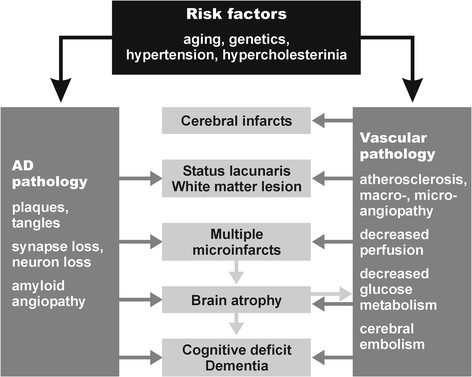
“The pathogenic chain of these and other deleterious effects, in a vicious circle, finally produces either structural cerebral disintegration (lacunes, infarcts, WMLs) with compromised neuronal metabolism, mitochondrial deficiency, oxidative stress, protein degradation, failure promoting cytoskeletal lesions with deposition of Aβ, and formation of neuritic lesions (e.g., neurofibrillary tangles).”
§ The overlap between vascular disease and Alzheimer’s disease - lessons from pathology > Review > Pathogenic factors
What the sources say
- Not checked yetcites [147] Jellinger KA, Attems J: Neuropathological evaluation of mixed dementia. J Neurol Sci. 2007, 257: 80-87. source
plaindirect- Asserted: passes — The authors put it forward as true.
- Checkable: passes — It can be checked against evidence.
- Load-bearing: passes — The paper’s conclusions depend on it.
- Based: passes — The paper gives a reason why it holds.
It may state two separate claims as one.
In the paper
“Microvascular changes in the aged brain and in AD induce impairment of cerebral perfusion, in particular decrease of regional blood flow, reduction of glucose transport and utilization, loss of vascular innervation with special impact on the cholinergic and transmitter deficits in AD [171], impairment of neurovascular regulation, ultrastructural changes in capillaries and basement membranes due to”
§ The overlap between vascular disease and Alzheimer’s disease - lessons from pathology > Review > Pathogenic factors
What the sources say
- Not checked yetcites [171] Roman GC, Kalaria RN: Vascular determinants of cholinergic deficits in Alzheimer disease and vascular dementia. Neurobiol Aging. 2006, 27: 1769-1785. source
plaindirect- Asserted: passes — The authors put it forward as true.
- Checkable: passes — It can be checked against evidence.
- Load-bearing: passes — The paper’s conclusions depend on it.
- Based: passes — The paper gives a reason why it holds.
It may state two separate claims as one.
In the paper
“These factors induce brain atrophy with cognitive and memory impairment (Figure 1) [147], although the complex cascade of these and other noxious factors needs further elucidation.”
§ The overlap between vascular disease and Alzheimer’s disease - lessons from pathology > Review > Pathogenic factors
What the sources say
- Not checked yetcites [147] Jellinger KA, Attems J: Neuropathological evaluation of mixed dementia. J Neurol Sci. 2007, 257: 80-87. source
plaindirect- Asserted: passes — The authors put it forward as true.
- Checkable: passes — It can be checked against evidence.
- Load-bearing: passes — The paper’s conclusions depend on it.
- Based: passes — The paper gives a reason why it holds.
It may state two separate claims as one.
In the paper
“Both hypertension and CAA are associated with an increased prevalence of CVLs [157]”
§ The overlap between vascular disease and Alzheimer’s disease - lessons from pathology > Review > Pathogenic factors
What the sources say
- Not checked yetcites [157] Jellinger KA, Attems J: Prevalence and pathogenic role of cerebrovascular lesions in Alzheimer’s disease. J Neurol Sci. 2005, 229-230: 37-41. source
plaincorrelational- Asserted: passes — The authors put it forward as true.
- Checkable: passes — It can be checked against evidence.
- Load-bearing: unclear — It is unclear whether the paper’s conclusions depend on it.
- Based: passes — The paper gives a reason why it holds.
It may state two separate claims as one.
In the paper
“CVD has been suggested to be an important cause of cognitive impairment in the elderly, both by itself or as a catalyst for the conversion of low-grade AD to overt dementia [186].”
§ The overlap between vascular disease and Alzheimer’s disease - lessons from pathology > Conclusions
What the sources say
- Not checked yetcites [186] Kalaria RN, Kenny RA, Ballard CG, Perry R, Ince P, Polvikoski T: Towards defining the neuropathological substrates of vascular dementia. J Neurol Sci. 2004, 226: 75-80. source
hedgedconditional- Asserted: passes — The authors put it forward as true.
- Checkable: passes — It can be checked against evidence.
- Load-bearing: passes — The paper’s conclusions depend on it.
- Based: passes — The paper gives a reason why it holds.
It may state two separate claims as one.
The authors state this as an assumption.
WMLs contribute to cognitive decline.
“and, thus, are assumed to contribute to cognitive decline [184].”
Claims other papers make about this one
Each is checked against this paper’s own text: does it say what the citing paper says it does?
The cited source says what the claim attributes to it.
In the citing paper
“Studies have consistently found a positive epidemiological correlation between Alzheimer’s disease (AD) and cardiometabolic traits, yet the biological mechanisms behind this correlation is not well understood [1–4].”
From Multi-trait association studies discover pleiotropic loci between Alzheimer’s disease and cardiometabolic traits (2021) · cites this paper as [1]
In the citing paper
“Moreover, the growing recognition of overlapping pathologies (e.g., Lewy body inclusions, TDP-43 pathology, vascular lesions, etc.) among dementia patients indicates a wide range of biological heterogeneity within AD that necessitates a broader approach to scientific investigations of its pathophysiology [37–39].”
From Systems-based proteomics to resolve the biology of Alzheimer’s disease beyond amyloid and tau (2021) · cites this paper as [38]
Self-check
Percentages, sums and reported differences re-computed from the paper’s own numbers.
Each contradiction between two passages listed here was confirmed by an independent check.
Rated minor: it would not touch a result — a value no result rests on, a p-value that stays on the same side of the significance level, or a conflict that is clerical, resolved elsewhere in the paper, or outside its own findings.
In the paper
“Multiple infarcts (61 = 32.5%)”
§ The overlap between vascular disease and Alzheimer’s disease - lessons from pathology > Review > Topographical distribution of cerebrovascular lesions
Reported 61 · recomputed 58
Rated minor: it would not touch a result — a value no result rests on, a p-value that stays on the same side of the significance level, or a conflict that is clerical, resolved elsewhere in the paper, or outside its own findings.
In the paper
§ The overlap between vascular disease and Alzheimer’s disease - lessons from pathology > Review > Topographical distribution of cerebrovascular lesions
“Table: Table 3 Common lesions in AD, VaD, MIX, and aged controls (from[130])”
§ The overlap between vascular disease and Alzheimer’s disease - lessons from pathology > Review > Topographical distribution of cerebrovascular lesions
“The type and average prevalence of CVLs in AD, VaD, mixed dementia, and aged controls is shown in Table 3[147].”
Rated minor: it would not touch a result — a value no result rests on, a p-value that stays on the same side of the significance level, or a conflict that is clerical, resolved elsewhere in the paper, or outside its own findings.
In the paper
§ The overlap between vascular disease and Alzheimer’s disease - lessons from pathology > Review > Cerebrovascular and Alzheimer’s disease pathology in demented and non-demented elderly
“compared to 66.8% in age-matched controls, all showing low Braak stages (P <0.01).”
§ The overlap between vascular disease and Alzheimer’s disease - lessons from pathology > Review > Cerebrovascular and Alzheimer’s disease pathology in demented and non-demented elderly
“Minor and moderate vascular pathology in AD were about twice as frequent as in controls (26.2% vs. 12.2% and 20.9% vs. 11.3%; P <0.01). On the other hand, severe vascular pathology did not significantly differ between both groups (10.2% vs. 12.2%).”
Citations
Cites
Wardlaw, J. M., Smith, E. E., Biessels, G. J., Cordonnier, C., Fazekas, F., Frayne, R., Lindley, R. I., O'Brien, J. T., Barkhof, F., Benavente, O. R., et al. (2013) · The Lancet Neurology · doi:10.1016/s1474-4422(13)70124-8 · Cited by 5,544 · cited 1×
“SVD is a frequent cause of white matter lesions (WMLs; leukoaraiosis) that are increasingly detected by neuroimaging [118-121].”
BackgroundGorelick, P. B., Scuteri, A., Black, S. E., DeCarli, C., Greenberg, S. M., Iadecola, C., Launer, L. J., Laurent, S., Lopez, O. L., Nyenhuis, D., et al. (2011) · Stroke · doi:10.1161/str.0b013e3182299496 · Cited by 3,811 · cited 3×
“Epidemiological studies have shown that AD and CVD share common risk factors such as hypertension during midlife, diabetes mellitus, smoking, apolipoprotein E (ApoE) ε4 isoforms, hypercholesterolemia, homocysteinemia, and, in particular, age [16,30-34].”
BackgroundPantoni, L. (2010) · The Lancet Neurology · doi:10.1016/s1474-4422(10)70104-6 · Cited by 3,405 · cited 1×
“SVD affects small arteries and arterioles and refers to pathological changes similar to atherosclerosis that are termed small vessel arteriosclerosis/atherosclerosis, lipoor fibrohyalinosis, or hypertensive arteriopathy [115].”
BackgroundNeurovascular pathways to neurodegeneration in Alzheimer’s disease and other disorders
Zlokovic, B. V. (2011) · Nature Reviews Neuroscience · doi:10.1038/nrn3114 · Cited by 2,969 · cited 1×
“CVD has been suggested to contribute to AD neuropathological changes including selective brain atrophy and accumulation of abnormal proteins such as Aβ [24,35,84,85].”
BackgroundThe projected effect of risk factor reduction on Alzheimer's disease prevalence
Barnes, D. E., & Yaffe, K. S. (2011) · The Lancet Neurology · doi:10.1016/s1474-4422(11)70072-2 · Cited by 2,846
Mixed brain pathologies account for most dementia cases in community-dwelling older persons
Schneider, J. A., Arvanitakis, Z., Bang, W., & Bennett, D. A. (2007) · Neurology · doi:10.1212/01.wnl.0000271090.28148.24 · Cited by 1,992 · cited 2×
“The burden of vascular and AD-type pathologies are leading and independent causes of dementia in the elderly [4,9-15], suggesting additive or synergistic effects of both types of lesions on cognitive impairment [2,3,5,9,16-29].”
BackgroundThe Pathobiology of Vascular Dementia
Iadecola, C. (2013) · Neuron · doi:10.1016/j.neuron.2013.10.008 · Cited by 1,857 · cited 1×
“The pathophysiology of VaD has been critically reviewed recently [48,144-146].”
BackgroundCerebral microbleeds: a guide to detection and interpretation
Greenberg, S. M., Vernooij, M. W., Cordonnier, C., Viswanathan, A., Al-Shahi Salman, R., Warach, S., Launer, L. J., Van Buchem, M. A., & Breteler, M. M. (2009) · The Lancet Neurology · doi:10.1016/s1474-4422(09)70013-4 · Cited by 1,798
Brain Infarction and the Clinical Expression of Alzheimer Disease<subtitle>The Nun Study</subtitle>
Snowdon, D. A. (1997) · JAMA: The Journal of the American Medical Association · doi:10.1001/jama.1997.03540340047031 · Cited by 1,590
Silent brain infarcts: a systematic review
Vermeer, S. E., Longstreth, W. T., & Koudstaal, P. J. (2007) · The Lancet Neurology · doi:10.1016/s1474-4422(07)70170-9 · Cited by 1,221 · cited 1×
““Silent” lacunar infarcts are frequently detected by MRI or CCT and are not accompanied by any overt clinical symptoms, but double the risk of subsequent stroke and dementia [133].”
Background
Research works printed but not linked: 2
- Crystal H, Dickson D: Cerebral infarcts in patients with autopsy proven Alzheimer’s disease. Neurobiol Aging. 2002, 23: 207.
- Jentoft M, Parisi J, Dickson D, Johnson K, Boeve B, Knopman D, Petersen R: Neuropathologic findings in 32 nondemented elderly subjects (abs.). J Neuropathol Exp Neurol. 2011, 70: 531.
Cited by
Sorted by citations
Items 201–300 of 736
Reveglia, P., Paolillo, C., Ferretti, G., Carlo, A. D., Angiolillo, A., Nasso, R., Caputo, M., Matrone, C., Costanzo, A. D., & Corso, G. (2021) · Metabolomics · doi:10.1007/s11306-021-01828-w · Cited by 40
Vascular risk burden is a key player in the early progression of Alzheimer’s disease
Ferrari‐Souza, J. P., Brum, W. S., Hauschild, L. A., Ros, L. U. D., Ferreira, P. C. L., Bellaver, B., Leffa, D. T., Bieger, A., Tissot, C., Lussier, F. Z., et al. (2021) · Neurobiology of Aging · doi:10.1016/j.neurobiolaging.2023.12.008 · Cited by 40
Hayden, E. Y., Putman, J. N., Nuñez, S., Shin, W. S., Oberoi, M. R., Charreton, M., Dutta, S., Li, Z., Komuro, Y., Joy, M. T., et al. (2019) · Acta Neuropathologica Communications · doi:10.1186/s40478-019-0783-6 · Cited by 37
Solovyev, N. D., El‐Khatib, A. H., Costas‐Rodríguez, M., Schwab, K., Griffin, E., Raab, A., Platt, B., Theuring, F., Vogl, J., & Vanhaecke, F. (2021) · Journal of Biological Chemistry · doi:10.1016/j.jbc.2021.100292 · Cited by 39
“The 5xFAD mice develop congophilic amyloid angiopathy (60, 61), which also makes them an adequate model for human AD, often containing vascular pathology (62).”
BackgroundAlzheimer’s Disease: A Systems View Provides a Unifying Explanation of Its Development
Grobler, C., van Tongeren, M., Gettemans, J., Kell, D. B., & Pretorius, E. (2022) · Journal of Alzheimer s Disease · doi:10.3233/jad-220720 · Cited by 45
Utilization of precision medicine digital twins for drug discovery in Alzheimer's disease
Ren, Y., Pieper, A. A., & Cheng, F. (2025) · Neurotherapeutics · doi:10.1016/j.neurot.2025.e00553 · Cited by 48
“Cerebrovascular lesions are often found in the brains of AD patients and the most common vascular lesions are cerebral amyloid angiopathy and small vessel disease [30,31].”
CSF level of β-amyloid peptide predicts mortality in Alzheimer’s disease
Boumenir, A., Cognat, E., Sabia, S., Hourrègue, C., Lilamand, M., Dugravot, A., Bouaziz-Amar, É., Laplanche, J., Hugon, J., Singh‐Manoux, A., et al. (2019) · Alzheimer s Research & Therapy · doi:10.1186/s13195-019-0481-4 · Cited by 38
Denver, P., D’Adamo, H., Hu, S., Zuo, X., Zhu, C., Okuma, C., Kim, P., Castro, D., Jones, M. R., Leal, C. D. R., et al. (2019) · Frontiers in Physiology · doi:10.3389/fphys.2019.01269 · Cited by 37
González-Molina, L. A., Villar-Vesga, J., Henao-Restrepo, J., Villegas, A., Lopera, F., Cardona-Gómez, G. P., & Posada-Duque, R. (2021) · Frontiers in Aging Neuroscience · doi:10.3389/fnagi.2021.593927 · Cited by 37
The Vascular-Immune Hypothesis of Alzheimer’s Disease
Mehta, R. I., & Mehta, R. I. (2023) · Biomedicines · doi:10.3390/biomedicines11020408 · Cited by 39
Blood DNA methylation signatures to detect dementia prior to overt clinical symptoms
Fransquet, P. D., Lacaze, P., Saffery, R., Phung, J., Parker, E., Shah, R., Murray, A., Woods, R. L., & Ryan, J. (2020) · Alzheimer's & Dementia: Diagnosis, Assessment & Disease Monitoring · doi:10.1002/dad2.12056 · Cited by 36
Aging of the Vascular System and Neural Diseases
Watanabe, C., Imaizumi, T., Kawai, H., Suda, K., Honma, Y., Ichihashi, M., Ema, M., & Mizutani, K. (2020) · Frontiers in Aging Neuroscience · doi:10.3389/fnagi.2020.557384 · Cited by 38
“Mixed pathologies of both Alzheimer’s disease (AD) and vascular abnormalities are the most common cause of clinical dementia in the elderly (Attems and Jellinger, 2014; Bennett et al., 2018; Sweeney et al., 2018a).”
BackgroundLecordier, S., Pons, V., Rivest, S., & ElAli, A. (2022) · Frontiers in Immunology · doi:10.3389/fimmu.2021.813536 · Cited by 34
“The vascular pathologies that comprise cerebral amyloid angiopathy (CAA) and cerebral small vessel disease (CSVD) have been shown to constitute the most prevalent forms of cerebrovascular diseases associatedwithAD (36, 37).”
BackgroundThe correlation between neuropathology levels and cognitive performance in centenarians
Zhang, M., Ganz, A. B., Rohde, S. K., Lorenz, L. M. C., Rozemüller, A. J. M., van Vliet, K., Graat, M., Sikkes, S. A. M., Reinders, M. J. T., Scheltens, P., et al. (2023) · Alzheimer s & Dementia · doi:10.1002/alz.13087 · Cited by 34
“45,46 While cerebrovascular disease and amyloid accumulation frequently co-occur in AD, 47 the amyloid or tau factors did not associate with the vascular factor, suggesting that they need not be mechanistically related.”
BackgroundAcupuncture Prevents the Impairment of Hippocampal LTP Through β1-AR in Vascular Dementia Rats
Xiao, L., Wang, X., Yang, J., Yang, Y., Zhu, W. X., Cao, Y., Ma, S., & Liu, C. (2018) · Molecular Neurobiology · doi:10.1007/s12035-018-0943-x · Cited by 36
The role of the autonomic nervous system in cerebral blood flow regulation in dementia: A review
Beishon, L., Hosford, P. S., Gurung, D., Brassard, P., Minhas, J. S., Robinson, T. G., Haunton, V. J., & Panerai, R. B. (2022) · Autonomic Neuroscience · doi:10.1016/j.autneu.2022.102985 · Cited by 34
“Amyloid deposition is also seen in VaD (Attems and Jellinger, 2014; Iadecola, 2013; Kalaria, 2002; Kalaria, 2018), DLB (Edison et al.”
InfluentialChanges in Verbal Fluency in Parkinson's Disease
Rosenthal, L. S., Salnikova, Y., Pontone, G. M., Pantelyat, A. Y., Mills, K. A., Dorsey, E. R., Wang, J., Wu, S. S., & Mari, Z. K. (2016) · Movement Disorders Clinical Practice · doi:10.1002/mdc3.12421 · Cited by 37
“Numerous investigators have identified an additive or synergistic interaction between Alzheimer’s disease pathology and cardiovascular pathology leading to increased cognitive impairment.(16) There is less evidence for cardiovascular disease potentiating PD pathology.”
BackgroundLarge household reduces dementia mortality: A cross-sectional data analysis of 183 populations
You, W., & Henneberg, M. (2022) · PLoS ONE · doi:10.1371/journal.pone.0263309 · Cited by 33
“Frontotemporal dementia (FTD) is an umbrella term for a group of uncommon neurologi- cal diseases due to progressive damage to the frontal and/or temporal lobes of the brain.”
BackgroundInfluentialNovel fluid biomarkers for mild cognitive impairment: A systematic review and meta-analysis
Gaur, A., Rivet, L., Mah, E., Bawa, K. K., Gallagher, D., Herrmann, N., & Lanctôt, K. L. (2023) · Ageing Research Reviews · doi:10.1016/j.arr.2023.102046 · Cited by 37
Suchy‐Dicey, A. M., Domoto‐Reilly, K., Nelson, L. A., Jayadev, S., Buchwald, D., Grabowski, T. J., & Rhoads, K. (2024) · Alzheimer s & Dementia · doi:10.1002/alz.13849 · Cited by 40
“33,34 However, our findings placed VBI as primary cause, and AD as secondary.”
BackgroundMikkola, T. S., Savolainen-Peltonen, H. M., Tuomikoski, P., Hoti, F. J., Vattulainen, P., Gissler, M., & Ylikorkala, O. (2016) · The Journal of Clinical Endocrinology & Metabolism · doi:10.1210/jc.2016-3590 · Cited by 32
Serum Hepatocyte Growth Factor Is Associated with Small Vessel Disease in Alzheimer’s Dementia
Zhu, Y., Hilal, S., Chai, Y. L., Ikram, M. K., Venketasubramanian, N., Chen, C., & Lai, M. K. P. (2018) · Frontiers in Aging Neuroscience · doi:10.3389/fnagi.2018.00008 · Cited by 35
“Several neuroimaging markers of CeVD, such as cortical infarct, lacunes and especially white matter hyperintensities (WMH) are associated with AD and may contribute to disease deterioration (Jellinger, 2002; Moghekar et al., 2012; Toledo et al., 2013; Attems and Jellinger, 2014).”
BackgroundXia, C., Vonder, M., Sidorenkov, G. A., Oudkerk, M., de Groot, J. C., van der Harst, P., de Bock, G. H., Deyn, P. P. D., & Vliegenthart, R. (2020) · Journal of Atherosclerosis and Thrombosis · doi:10.5551/jat.52928 · Cited by 36
Non‐coding variants in MYH11, FZD3, and SORCS3 are associated with dementia in women
Blue, E., Thornton, T. A., Kooperberg, C. L., Liu, S., Wactawski‐Wende, J., Manson, J. E., Kuller, L., Hayden, K. M., & Reiner, A. P. (2020) · Alzheimer s & Dementia · doi:10.1002/alz.12181 · Cited by 32
Tan, L. Y., Yeo, X. Y., Bae, H., Lee, D. P. S., Ho, R., Kim, J. E., Jo, D., & Jung, S. (2021) · Life · doi:10.3390/life11070698 · Cited by 35
“However, sporadic AD can also be associated with vascular dementia, likely due to aggregations of damaged proteins occurring in microinfarcts arising from vascular thrombosis [72,73].”
BackgroundKakae, M., Nakajima, H., Tobori, S., Kawashita, A., Miyanohara, J., Morishima, M., Nagayasu, K., Nakagawa, T., Shigetomi, E., Koizumi, S., et al. (2023) · Science Advances · doi:10.1126/sciadv.adh0102 · Cited by 37
“Recent studies have strongly suggested that CCH may be a major factor in SVD ( 7 , 8 ).”
Clinicopathological overlap of neurodegenerative diseases: A comprehensive review
Das, S. K., Zhang, Z., & Ang, L. C. (2020) · Journal of Clinical Neuroscience · doi:10.1016/j.jocn.2020.04.088 · Cited by 33
Xu, Q., Shan, C.-S., Wang, Y., Shi, Y., Zhang, Q., & Zheng, G. (2018) · Journal of Alzheimer s Disease · doi:10.3233/jad-170856 · Cited by 34
Logue, M. W., Miller, M. W., Sherva, R., Zhang, R., Harrington, K. M., Fonda, J. R., Merritt, V. C., Panizzon, M. S., Hauger, R. L., Wolf, E. J., et al. (2023) · Alzheimer's & Dementia · doi:10.1002/alz.12870 · Cited by 35
The effect of shingles vaccination at different stages of the dementia disease course
Xie, M., Eyting, M., Bommer, C., Ahmed, H., & Geldsetzer, P. (2025) · Cell · doi:10.1016/j.cell.2025.11.007 · Cited by 40
“11–16 In addition, reactivations of the varicella zoster virus may lead to reactivations of the herpes simplex virus in the brain.”
Han, H., Hou, Y., & Hsu, S. (2019) · Materials Science and Engineering C · doi:10.1016/j.msec.2019.01.089 · Cited by 32
Cho, K., Park, H., Kim, S., & Kim, J.-R. (2019) · International Journal of Environmental Research and Public Health · doi:10.3390/ijerph16183329 · Cited by 32
“Frequently, cardiovascular vascular disease (CVD) is associated with the coincidence of MCI and Alzheimer’s disease (AD) [8], even though the pathologic link between CVD and AD remain to be elucidated.”
BackgroundSkrobot, O. A., McKnight, A. J., Passmore, P., Seripa, D., Mecocci, P., Panza, F., Kalaria, R. N., Wilcock, G. K., Munafo, M. R., Erkinjuntti, T., et al. (2016) · Journal of Alzheimer s Disease · doi:10.3233/jad-150862 · Cited by 33
“However, there is ongoing debate regarding the validity and utility of distinguishing between AD and VaD given the very high presence of cerebrovascular disease in AD [1, 2].”
Ursin, M. H., Bergland, A., Fure, B., Thommessen, B., Hagberg, G., Øksengård, A. R., & Ihle‐Hansen, H. (2018) · Physiotherapy · doi:10.1016/j.physio.2018.07.007 · Cited by 35
Situated Prevention: Framing the “New Dementia”
Leibing, A. (2018) · The Journal of Law Medicine & Ethics · doi:10.1177/1073110518804232 · Cited by 31
Rawat, P., Sehar, U., Bisht, J., Reddy, A. P., & Reddy, P. H. (2023) · Ageing Research Reviews · doi:10.1016/j.arr.2023.102178 · Cited by 36
Neuroimaging and neuropathology indices of cerebrovascular disease burden
Paradise, M., Shepherd, C. E., Wen, W. X., & Sachdev, P. S. (2018) · Neurology · doi:10.1212/wnl.0000000000005997 · Cited by 31
Pathogenesis and Treatment of Vascular Cognitive Impairment
Jellinger, K. A. (2014) · Neurodegenerative Disease Management · doi:10.2217/nmt.14.37 · Cited by 30
Self-citationBrain Capillaries in Alzheimer’s Disease
Balogiannis, S. (2015) · Journal of Neurology & Stroke · doi:10.15406/jnsk.2015.02.00069 · Cited by 31
“First, it is essential that the concrete and sharp differentiation between AD and VaD has undergone critical reviews the last years, given that mixed findings at autopsy, plead in favor of a vascular component, concerning mostly large vessel, in AD pathology [9], and second, that vascular comorbidity may be present in…”
ResultWijesinghe, P., Shankar, S. K., Yasha, T. C., Gorrie, C. A., Amaratunga, D., Hulathduwa, S., Kumara, K. S., Samarasinghe, K., Suh, Y., Steinbusch, H. W. M., et al. (2016) · Journal of Alzheimer s Disease · doi:10.3233/jad-160425 · Cited by 30
Toppala, S., Ekblad, L. L., Lötjönen, J. M. P., Helin, S., Hurme, S. A. M., Johansson, J. J., Jula, A., Karrasch, M., Koikkalainen, J. R., Laine, H. K., et al. (2019) · Journal of Alzheimer s Disease · doi:10.3233/jad-190691 · Cited by 32
Unzeta, M., Hernández‐Guillamón, M., Sun, P., & Solé, M. (2021) · International Journal of Molecular Sciences · doi:10.3390/ijms22073365 · Cited by 34
Biological correlates of elevated soluble TREM2 in cerebrospinal fluid
Winfree, R. L., Dumitrescu, L. C., Blennow, K., Zetterberg, H., Gifford, K. A., Pechman, K. R., Jefferson, A. L., & Hohman, T. J. (2022) · Neurobiology of Aging · doi:10.1016/j.neurobiolaging.2022.06.013 · Cited by 31
Lai, A. Y., & McLaurin, J. (2017) · Journal of Neurochemistry · doi:10.1111/jnc.14130 · Cited by 31
Regional rather than global brain age mediates cognitive function in cerebral small vessel disease
Lee, P., Kuo, C.-Y., Wang, P., Chen, L., Lin, C., Chou, K., & Chung, C. (2022) · Brain Communications · doi:10.1093/braincomms/fcac233 · Cited by 30
“44,45 Our results also suggest that CSVD should be considered in future studies that aim to evaluate abnormal brain aging in other diseases.”
Exploratory study on immune phenotypes in Alzheimer’s disease and vascular dementia
D’Angelo, C., Goldeck, D., Pawelec, G., Gaspari, L., Iorio, A. D., & Paganelli, R. (2020) · European Journal of Neurology · doi:10.1111/ene.14360 · Cited by 29
“030); AD patients with concomitant vascular damage were older than patients without vascular involvement [14].”
BackgroundMinta, K., Brinkmalm, G., Portelius, E., Johansson, P., Svensson, J., Kettunen, P., Wallin, A., Zetterberg, H., Blennow, K., & Andréasson, U. (2020) · Journal of Alzheimer s Disease · doi:10.3233/jad-201039 · Cited by 32
“Since AD and VaD patients share many common pathological features and have clinically similar symptoms [9], there is a great need to develop biochemical markers to facilitate differentiation of VaD from AD and other dementias.”
Button, E. B., Cheng, W. H., Barrón, C., Cheung, H., Bashir, A., Cooper, J. G., Gill, J., Stukas, S. K., Baron, D. C., Robert, J., et al. (2021) · Alzheimer s Research & Therapy · doi:10.1186/s13195-021-00793-9 · Cited by 28
“Although AD is characterized by amyloid beta (Aβ) plaques and neurofibrillary tangles, cerebral vessel pathologies are also common [32, 33] and may be an early step in disease progression [34, 35].”
BackgroundElahi, F. M., Ashimatey, B. S., Bennett, D. J., Walters, S. M., Joie, R. L., Jiang, X., Wolf, A. A., Cobigo, Y., Staffaroni, A. M., Rosen, H. J., et al. (2021) · Alzheimer s & Dementia Diagnosis Assessment & Disease Monitoring · doi:10.1002/dad2.12181 · Cited by 29
Role of Citicoline in Patients With Mild Cognitive Impairment
Bermejo, P. E., Dorado, R., & Zea‐Sevilla, M. A. (2023) · Neuroscience Insights · doi:10.1177/26331055231152496 · Cited by 34
Montero‐Calle, A., Coronel, R., Garranzo‐Asensio, M., Solís‐Fernández, G., Rábano, A., Ríos, V. D. L., Fernández‐Aceñero, M. J., Mendes, M. L., Martínez‐Useros, J., Megías, D., et al. (2023) · Cellular and Molecular Life Sciences · doi:10.1007/s00018-023-04791-y · Cited by 32
“dysregulations might be common to both pathologies even though these similarities were not observed at protein level [85, 86].”
BackgroundKoppelmans, V., Ruitenberg, M. F. L., Schaefer, S. Y., et al. (2023) · Journal of Alzheimer s Disease · doi:10.3233/jad-221297 · Cited by 29
“Alternatively, subjectswithsubstantiallypoorermotorperformance mayhaveotherneurologicalcomorbiditiesthatcom-monlypresentwithAD,thatwewereunableto detectduringsubjectscreeningsuchascerebrovas-culardiseaseincludingatherosclerosis,whitematter pathology, and infarctions, but also Lewy bodies [87, 88].”
Retinal Alterations Predict Early Prodromal Signs of Neurodegenerative Disease
Casciano, F., Zauli, E., Celeghini, C., Caruso, L., Gonelli, A., Zauli, G., & Pignatelli, A. (2024) · International Journal of Molecular Sciences · doi:10.3390/ijms25031689 · Cited by 34
“Therefore, it cannot be excluded that these co-pathologies may also cause damage to the retina [260,261].”
Background“Liquid Biopsy” of White Matter Hyperintensity in Functionally Normal Elders
Elahi, F. M., Casaletto, K. B., Altendahl, M., Staffaroni, A. M., Fletcher, E. M., Filshtein, T. J., Glymour, M. M., Miller, B. L., Hinman, J. D., DeCarli, C. S., et al. (2018) · Frontiers in Aging Neuroscience · doi:10.3389/fnagi.2018.00343 · Cited by 28
Robert, J., Button, E. B., Martin, E. M., McAlary, L., Gidden, Z., Gilmour, M., Boyce, G., Caffrey, T. M., Agbay, A., Clark, A., et al. (2020) · Molecular Neurodegeneration · doi:10.1186/s13024-020-00366-8 · Cited by 27
“Although CAA is highly associated with the Flemish, Iowa and Dutch genetic mutations in amyloid precursor protein, sporadic CAA is present in 10–40% of non-cognitively declined elderly brains and in 80% of AD brains [7, 40].”
BackgroundTarawneh, R. (2023) · Biomolecules · doi:10.3390/biom13050830 · Cited by 29
“Furthermore, it remains unclear whether the severity of vascular disease correlates with the severity of neuronal or synaptic loss in AD brains [5].”
BackgroundInfluentialHayden, M. R. (2024) · Biomedicines · doi:10.3390/biomedicines12071463 · Cited by 34
“Each of these three (LOAD, CAA, and VaD) contributes to clinical risk for the development of neurodegeneration and also share a common factor of being age-related [125].”
BackgroundMerlini, M., Shi, Y., Keller, S., Savarese, G., Akhmedov, A., Derungs, R., Spescha, R. D., Kulic, L., Nitsch, R. M., Lüscher, T. F., et al. (2016) · American Journal of Physiology-Heart and Circulatory Physiology · doi:10.1152/ajpheart.00607.2016 · Cited by 29
“CEREBROVASCULAR PATHOLOGY is inherent to Alzheimer’s disease (AD), with several lines of evidence indicating that it also strongly contributes to the onset of the disease (1, 2, 4).”
BackgroundHuang, C., Rust, N. C., Wu, H., & Hart, G. W. (2022) · Neural Regeneration Research · doi:10.4103/1673-5374.354515 · Cited by 28
“All of these pathologies could chronically disrupt vessel integrity in the brain and thus affect brain perfusion (Attems and Jellinger, 2014).”
InfluentialSkampardoni, I., Nasrallah, I. M., Abdulkadir, A., Wen, J., Melhem, R., Mamourian, E., Erus, G., Doshi, J., Singh, A., Yang, Z., et al. (2024) · JAMA Psychiatry · doi:10.1001/jamapsychiatry.2023.5599 · Cited by 28
The immunology of stroke and dementia
Iadecola, C., & Anrather, J. (2025) · Immunity · doi:10.1016/j.immuni.2024.12.008 · Cited by 37
Human brain vascular multi-omics elucidates disease-risk associations
Reid, M. M., Menon, S., Liu, H., Zhou, H., Hu, Z., Frerich, S., Ding, B., Oveisgharan, S., Zhang, Z., Nelson, S., et al. (2025) · Neuron · doi:10.1016/j.neuron.2025.07.001 · Cited by 35
Higher prevalence of dementia in patients with schizophrenia: A nationwide population‐based study
Ku, H., Lee, E., Lee, K., Lee, M., & Kwon, J. (2016) · Asia-Pacific Psychiatry · doi:10.1111/appy.12239 · Cited by 27
“Reports in the literature support our results regarding the coincidence or overlap of AD and VaD (Attems and Jellinger, 2014), and a postmortem study revealed that some dementia patients have mixed AD and VaD pathology (Neuropathology Group, Medical Research Council Cognitive Function and Aging…”
ResultInfluentialRodriguez, F. S., Jackson, J., Ware, C., Churchyard, R., Hanseeuw, B. J., & for the International Interdisciplinary Young Investigators Alzheimer’s & Dementia (https://iyialzheimer.wordpress.com/) (2020) · Journal of Alzheimer s Disease Reports · doi:10.3233/adr-180070 · Cited by 31
“For instance, more than 80% of those with Alzheimer’s disease pathology also have vascular pathologies [6].”
BackgroundA short perspective on the long road to effective treatments for Alzheimer's disease
Reynolds, D. S. (2019) · British Journal of Pharmacology · doi:10.1111/bph.14581 · Cited by 28
“Recent post‐mortem studies are increasingly demonstrating that many patients have overlapping neuropathological features of AD, vascular dementia, dementia with Lewy bodies, and so forth (Attems & Jellinger, 2014; Irwin et al., 2017; Spires‐Jones, Attems, & Thal, 2017).”
BackgroundRibeiro, V. T., Cordeiro, T. M. E., Filha, R. D. S., Perez, L. G., Caramelli, P., Teixeira, A. L., de Souza, L. C., & Silva, A. C. S. E. (2021) · Frontiers in Neuroscience · doi:10.3389/fnins.2021.636754 · Cited by 27
“…the Figure Memory Test from the Brief Cognitive Screening Battery (BCSB) for visual episodic memory (Nitrini et al., 2004), the Frontal Assessment Battery (FAB) for executive functions (Beato et al., 2012), and category fluency test (animals in 1 min) for verbal fluency (Machado et al., 2009).”
MethodJiang, Z., Wang, J., Qin, Y., Liu, S., Luo, B., Bai, F., Wei, H., Zhang, S., Wei, J., Ding, G., et al. (2024) · Alzheimer s Research & Therapy · doi:10.1186/s13195-024-01392-0 · Cited by 32
“In fact, clinicopathological data also indicate an alarming positive feedback loop among vascular, glial and neuronal dysfunctions dictating the onset and development of the Alzheimer’s disease through its entire course (Attems and Jellinger 2014; de la Torre 2002; de la Torre 2004; Govindpani, et al. 2019).”
BackgroundFluid Candidate Biomarkers for Alzheimer’s Disease: A Precision Medicine Approach
Prete, E. D., Beatino, M. F., Campese, N., Giampietri, L., Siciliano, G., Ceravolo, R., & Baldacci, F. (2020) · Journal of Personalized Medicine · doi:10.3390/jpm10040221 · Cited by 29
“This pathway is mainly modulated by the sleep–wake cycle and seems to be important for the sleep-driven clearance of Aβ [61].”
BackgroundObesity impacts the expression of Alzheimer's disease–related genes: The Framingham Heart Study
Charisis, S., Lin, H., Ray, R., Joehanes, R., Beiser, A., Levy, D. A., Seshadri, S. S., Sargurupremraj, M., & Satizábal, C. L. (2023) · Alzheimer s & Dementia · doi:10.1002/alz.12954 · Cited by 27
“Current smoker (n%) 530 (9) 306 (11) 224 (8) 279 (9) 251 (10)”
Loughman, A., Adler, C. J., & Macpherson, H. (2023) · Journal of Alzheimer s Disease · doi:10.3233/jad-220760 · Cited by 26
“Small vessel disease, microvascular injury, and microscopic lesions are common in AD [22].”
BackgroundWeidung, B., Littbrand, H., Nordström, P., Carlberg, B., & Gustafson, Y. (2016) · Journal of Hypertension · doi:10.1097/hjh.0000000000000831 · Cited by 27
Post-Mortem MRI and Histopathology in Neurologic Disease: A Translational Approach
Jonkman, L. E., Kenkhuis, B., Geurts, J. J. G., & van de Berg, W. D. J. (2019) · Neuroscience Bulletin · doi:10.1007/s12264-019-00342-3 · Cited by 27
Wu, C.-Y., Hu, H.-Y., Chow, L., Chou, Y., Huang, N., Wang, P., & Li, C.-P. (2015) · PLoS ONE · doi:10.1371/journal.pone.0130993 · Cited by 26
“A recent study indicated a considerable overlap between cerebrovascular disease and AD and suggests that both pathologies have an additive effect on cognitive decline [34], which may support the possibility of a synergistic effect of anti-dementia and nootropic medications.”
BackgroundThal, D. R., Ronisz, A., Tousseyn, T., Upadhaya, A. R., Balakrishnan, K., Vandenberghe, R. R., Vandenbulcke, M., Arnim, C. A. F. V., Otto, M., Beach, T. G., et al. (2020) · Acta Neuropathologica Communications · doi:10.1186/s40478-020-01005-5 · Cited by 25
Fibrin-targeting immunotherapy for dementia
Kantor, A. B., Akassoglou, K., & Stavenhagen, J. B. (2023) · The Journal of Prevention of Alzheimer's Disease · doi:10.14283/jpad.2023.105 · Cited by 24
“CAA, which is frequently observed in AD patients and asymptomatic aged adults (68–70), results from A β deposits in and around cerebral blood vessels that are believed to mediate disruption of the brain vasculature.”
BackgroundRole of tau versus TDP‐43 pathology on medial temporal lobe atrophy in aging and Alzheimer's disease
Wisse, L. E. M., Wuestefeld, A., Murray, M. E., Jagust, W. J., & Joie, R. L. (2025) · Alzheimer s & Dementia · doi:10.1002/alz.14582 · Cited by 24
Derby, C. A. (2020) · Current Epidemiology Reports · doi:10.1007/s40471-020-00231-8 · Cited by 27
Heldt, N. A., Reichenbach, N. L., McGary, H. M., & Persidsky, Y. (2020) · American Journal Of Pathology · doi:10.1016/j.ajpath.2020.11.007 · Cited by 27
Garrigue, P., Mounien, L., Champion, S., Mouhajir, Y., Pechère, L., Guillet, B. A., Landrier, J., & Sérée, E. (2021) · The Journal of Nutritional Biochemistry · doi:10.1016/j.jnutbio.2021.108786 · Cited by 26
Yue, Q., Zhou, X., Zhang, Z., & Hoi, M. P. M. (2022) · International Journal of Molecular Sciences · doi:10.3390/ijms23031878 · Cited by 26
“Apart from the pathological hallmarks of amyloid plaques and neurofibrillary tangles, coexisting cerebrovascular lesions and microvascular alterations are often observed in the brains of AD patients [4,5], and accumulating evidence from independent post-mortem human studies have confirmed the breakdown of the BBB in A…”
BackgroundToniolo, S., Romoli, M., & Sen, A. (2022) · Neurologic Clinics · doi:10.1016/j.ncl.2022.03.014 · Cited by 25
Prosser, L., MacDougall, A. M., Sudre, C. H., Manning, E. N., Malone, I. B., Walsh, P., Goodkin, O., Pemberton, H., Barkhof, F., Biessels, G. J., et al. (2022) · Neurology · doi:10.1212/wnl.0000000000201572 · Cited by 25
Devi, G. (2023) · Frontiers in Aging Neuroscience · doi:10.3389/fnagi.2023.1213968 · Cited by 29
“Vascular pathology may directly increase Aβ deposition by inducing accumulation and impeding clearance (Attems and Jellinger, 2014).”
BackgroundCheng, C.-K., Tsao, Y., Su, Y., Sung, F., Tai, H.-C., & Kung, W. (2018) · Behavioural Neurology · doi:10.1155/2018/8312346 · Cited by 29
“Moreover, a history of CAD or CVA is associated with accelerated cognitive decline in AD patients [8, 11, 12].”
BackgroundAmyloid and cerebrovascular burden divergently influence brain functional network changes over time
Chong, J. S. X., Jang, H., Kim, H. J., Ng, K. K., Na, D. L., Lee, J. H., Seo, S. W., & Zhou, J. H. (2019) · Neurology · doi:10.1212/wnl.0000000000008315 · Cited by 25
Current and Future Treatments of Vascular Cognitive Impairment
Ip, B. Y. M., Ko, H., Lam, B. Y. K., Au, L. W. C., Lau, A. Y. L., Huang, J., Kwok, A. J., Leng, X., Cai, Y., Leung, T. W. H., et al. (2024) · Stroke · doi:10.1161/strokeaha.123.044174 · Cited by 27
“41,42 These lesions lower the threshold for AD pathologies in causing clinical manifestation.”
BackgroundBouwman, M. M. A., Frigerio, I., Lin, C., Reijner, N., van de Berg, W. D. J., & Jonkman, L. E. (2025) · Alzheimer s Research & Therapy · doi:10.1186/s13195-025-01768-w · Cited by 32
“…pathologies that could attribute to volume loss and disease progression are synaptic dysfunction and loss [121], neuroinflammation [122, 123, 124, hippocampal sclerosis125] and vascular pathology [126, 127, 128], but also biological processes such as neuronal shrinkage [129] and autophagy [130].”
Zhou, M., Li, H., Wang, Y., Pan, Y., & Wang, Y. (2021) · European Journal of Neurology · doi:10.1111/ene.15190 · Cited by 25
“As AD and CSVD are both geriatric comorbidities, concurrence of AD and CSVD pathology is commonly observed in patients with AD [6].”
BackgroundPanda, S. P., & Soni, U. (2022) · Ageing Research Reviews · doi:10.1016/j.arr.2022.101560 · Cited by 22
Förster, C. Y., Shityakov, S., Scheper, V., & Lenarz, T. (2022) · Biomolecules · doi:10.3390/biom12111717 · Cited by 30
Newton, P., the BIOCARD Research Team, Tchounguen, J., Pettigrew, C., Lim, C., Lin, Z., Lu, H., Moghekar, A., Albert, M., & Soldan, A. (2023) · Journal of Alzheimer's Disease · doi:10.3233/jad-220846 · Cited by 23
“Older adults without cognitive impairment also commonly have evidence of small vessel cerebrovascular disease (CVD) [2].”
InfluentialHempel, P., Heinig, B., Jerosch, C., Decius, I., Karczewski, P., Kassner, U., Kunze, R., Steinhagen‐Thiessen, E., & Bimmler, M. (2016) · Therapeutic Apheresis and Dialysis · doi:10.1111/1744-9987.12415 · Cited by 23
“A significant number of patients with dementia suffer from a mixed-type dementia (2).”
BackgroundRogne, S., Vangberg, T. R., Eldevik, P., Wikran, G., Mathiesen, E. B., & Schirmer, H. (2016) · Dementia and Geriatric Cognitive Disorders Extra · doi:10.1159/000450885 · Cited by 25
The hidden variables problem in Alzheimer's disease clinical trial design
Liyanage, S., Santos, C., & Weaver, D. F. (2018) · Alzheimer's & Dementia · doi:10.1016/j.trci.2018.09.003 · Cited by 20
“It is as yet unclear what role many of these concurrent illnesses may have on AD progression, although it is reported that complications associated with vascular disorders generally exacerbate AD symptomology [43].”
BackgroundSokolovič, L., Hofmann, M., Mohammad, N., & Kukolja, J. (2023) · Frontiers in Aging Neuroscience · doi:10.3389/fnagi.2023.1267434 · Cited by 33
Shinto, L. H., Murchison, C., Silbert, L. C., Dodge, H. H., Lahna, D. L., Rooney, W. D., Kaye, J. A., Quinn, J. F., & Bowman, G. L. (2024) · JAMA Network Open · doi:10.1001/jamanetworkopen.2024.26872 · Cited by 23
Fatima, G., Ashiquzzaman, A., Kim, S. S., Kim, Y. R., Kwon, H.-S., & Chung, E. (2025) · Neurobiology of Disease · doi:10.1016/j.nbd.2025.106877 · Cited by 26
“Patients with AD and vascular disease have a mixed pattern of pathologies (Schneider et al., 2007; Attems and Jellinger, 2014; Agrawal and Schneider, 2022).”
Lipids and lipoproteins may play a role in the neuropathology of Alzheimer’s disease
Akyol, Ö., Akyol, S., Chou, M., Chen, S., Liu, C., Selek, S., Soares, J. C., & Chen, C. (2023) · Frontiers in Neuroscience · doi:10.3389/fnins.2023.1275932 · Cited by 27
“Co-occurrence of CVD and AD pathology is common in older patients with dementia (Attems and Jellinger, 2014), and vascular pathology images in the brain are regularly monitored in MRI scans of AD patients (Staffaroni et al., 2017).”
BackgroundFreeze, W. M., on behalf of the LeARN project, Jacobs, H. I. L., Gronenschild, E. H. B. M., Jansen, J. F. A., Burgmans, S., Aalten, P., Clerx, L., Vos, S. J. B., van Buchem, M. A., et al. (2016) · Journal of Alzheimer s Disease · doi:10.3233/jad-160474 · Cited by 26
Amyloid-Related Imaging Abnormalities in an Aged Squirrel Monkey with Cerebral Amyloid Angiopathy
Heuer, E., Jacobs, J. T., Du, R. Y., Wang, S., Keifer, O. P., Cintron, A. F., Dooyema, J. M., Meng, Y., Zhang, X., & Walker, L. C. (2017) · Journal of Alzheimer s Disease · doi:10.3233/jad-160981 · Cited by 23
Metadata
- Authors
- Attems, J., & Jellinger, K. A.
- Affiliations
- Newcastle University (GB)
- Medical University of Vienna (AT)
- Corresponding author
- Attems, Johannes
- Venue
- BMC Medicine
- Published
- 2014-11-11
- Volume
- 12
- Issue
- 1
- Pages
- 206-206
- ISSN
- 1741-7015 (ISSN-L)
- PMC
- PMC4226890
- OpenAlex
- W2043522411
- Cited by
- 739
- References
- 196
- Citations by year
- 2026: 55 · 2025: 79 · 2024: 73 · 2023: 66 · 2022: 61 · 2021: 71 · 2020: 91 · 2019: 70 · 2018: 53 · 2017: 44 · 2016: 53 · 2015: 19 · 2014: 3
- FWCI
- 5.49
- Type
- journal article
- Language
- en
- Open access
- gold
- doi.org
- Locations
- BMC Medicine (publishedVersion, cc-by)
- Europe PMC (PubMed Central) (publishedVersion, cc-by)
- PubMed Central (publishedVersion, cc-by)
- PubMed (publishedVersion)
- Newcastle University ePrints (Newcastle Univesity) (cc-by)
- Funders
- Alzheimer's Society
- National Institute for Health and Care Research
- Dunhill Medical Trust (R173/1110)
- Newcastle University (G0400074)
- Newcastle upon Tyne Hospitals NHS Foundation Trust
- Medical Research Council (G0400074)
- Topics
- Health Sciences › Medicine › Psychiatry and Mental health › Dementia and Cognitive Impairment Research
- Life Sciences › Neuroscience › Neurology › Neurological Disease Mechanisms and Treatments
- Life Sciences › Neuroscience › Cellular and Molecular Neuroscience › Alzheimer's disease research and treatments
- Keywords
- Alzheimer's disease, cerebrovascular disease, cerebral amyloid angiopathy, cerebral small vessel disease, vascular dementia, mixed dementia, cognitive decline, dementia progression, subcortical infarcts
- MeSH terms
- Aging, Alzheimer Disease, Cerebrovascular Disorders, Humans
About these checks
Registry, retraction, Cites and statistics results are computed, not judged, with one exception: a printed reference that no index lists is read once by a model before it counts as a citation error. Claims are extracted by a model and kept only when their quote appears verbatim in the text; each cited source is then checked, with a model’s help, for whether it says what the claim relies on. Those verdicts can be wrong — read the claim’s quote and the cited source before relying on one.
A language model drew the claims from the paper on 2026-10-10, under version 3 of the claim definition (model deepseek-v4.1-flash, prompt extract-v3).
A second model labelled each claim on 2026-10-10 (model jev-1.13-20260917, definition revision gold-guideline-v0.2).
Statistics and arithmetic are recomputed, not judged.
Confidence bands are shown only for fields calibrated on our annotated test set. None is calibrated yet, so no band is shown.
What counts as a claim ›How we measure confidence ›How we check this ›
Are you an author, or do you see a problem with this page? Request a review
