

A realist review of mobile phone-based health interventions for non-communicable disease management in sub-Saharan Africa
Open accessThe DOI matches its Crossref record; 50 of the 52 references it cites were found in a registry or an index, and 1 are not checked yet; 45 of the 201 sources its claims cite were checked for support.
Abstract
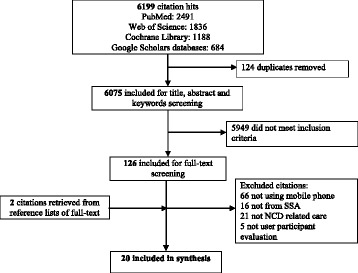
BACKGROUND: The prevalence of non-communicable diseases (NCDs) is increasing in sub-Saharan Africa. At the same time, the use of mobile phones is rising, expanding the opportunities for the implementation of mobile phone-based health (mHealth) interventions. This review aims to understand how, why, for whom, and in what circumstances mHealth interventions against NCDs improve treatment and care in sub-Saharan Africa. METHODS: Four main databases (PubMed, Cochrane Library, Web of Science, and Google Scholar) and references of included articles were searched for studies reporting effects of mHealth interventions on patients with NCDs in sub-Saharan Africa. All studies published up until May 2015 were included in the review. Following a realist review approach, middle-range theories were identified and integrated into a Framework for Understanding the Contribution of mHealth Interventions to Improved Access to Care for patients with NCDs in sub-Saharan Africa. The main indicators of the framework consist of predisposing characteristics, needs, enabling resources, perceived usefulness, and perceived ease of use. Studies were analyzed in depth to populate the framework. RESULTS: The search identified 6137 titles for screening, of which 20 were retained for the realist synthesis. The contribution of mHealth interventions to improved treatment and care is that they facilitate (remote) access to previously unavailable (specialized) services. Three contextual factors (predisposing characteristics, needs, and enabling resources) influence if patients and providers believe that mHealth interventions are useful and easy to use. Only if they believe mHealth to be useful and easy to use, will mHealth ultimately contribute to improved access to care. The analysis of included studies showed that the most important predisposing characteristics are a positive attitude and a common language of communication. The most relevant needs are a high burden of disease and a lack of capacity of first-contact providers. Essential enabling resources are the availability of a stable communications network, accessible maintenance services, and regulatory policies. CONCLUSIONS: Policy makers and program managers should consider predisposing characteristics and needs of patients and providers as well as the necessary enabling resources prior to the introduction of an mHealth intervention. Researchers would benefit from placing greater attention on the context in which mHealth interventions are being implemented instead of focusing (too strongly) on the technical aspects of these interventions.
Verified 2026-10-05 · 1 reference not checked yet
Overview
CoChat Summary
TL;DR
This realist review of 20 studies finds that mobile phone-based health (mHealth) interventions for non-communicable diseases (NCDs) in sub-Saharan Africa mainly facilitate remote access to previously unavailable, often specialized services. It argues that predisposing characteristics, needs, and enabling resources shape whether patients and providers perceive mHealth as useful and easy to use, which determines sustained use and improved access to care.
Key findings
- The search identified 6137 titles for screening, of which 20 studies were retained for realist synthesis; the included studies were published between 2005 and 2015 and covered 18 interventions in dermatology, mental healthcare, cancer, diabetes, and hypertension.
- mHealth’s main contribution was facilitating remote access to previously unavailable and often specialized services: 12 studies involved provider-to-provider consultations, while 8 connected patients directly to providers.
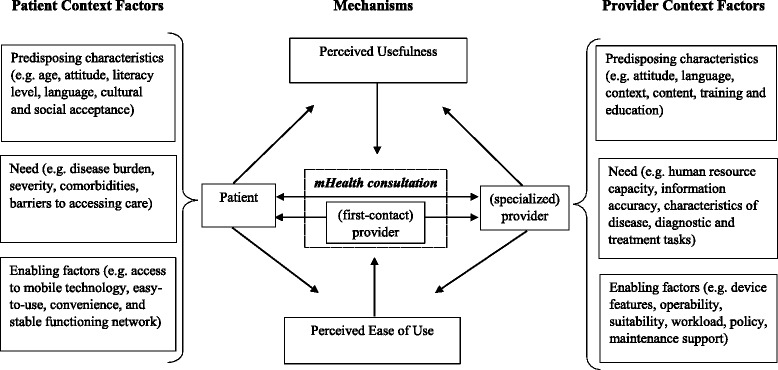
- The review’s framework holds that contextual factors—predisposing characteristics, needs, and enabling resources—influence perceived usefulness and perceived ease of use; only if mHealth is perceived as useful and easy to use will it contribute to improved access to care.
- Key contextual factors included positive attitude and a common language of communication (predisposing characteristics), high burden of disease and lack of capacity among first-contact providers (needs), and stable communications networks, accessible maintenance services, and regulatory policies (enabling resources).
Methods
- Realist review following established realist review guidelines, searching PubMed, Cochrane Library, Web of Science, and Google Scholar from March to May 2015, plus hand searches; no language restrictions or time limits were applied.
- Inclusion criteria required studies in sub-Saharan Africa, mobile phone-based interventions, NCD-related treatment and care, and an evaluation of the relationship between intervention and NCD care; 126 full texts were retrieved and independently screened by two reviewers, with disagreements resolved by a third.
- Candidate theories were explored and Andersen’s Behavioral Model of Health Services Utilization and Davis’s Technology Acceptance Model were integrated into a framework; data were extracted into Excel templates and synthesized through team discussions into Context-Mechanism-Outcome categories.
Limitations
- The paper states that the review does not answer whether mHealth interventions improve access to care or whether they should be scaled up; inclusion of findings depended on subjective judgments; and available evidence remains limited, making the contextual factors in Table 2 indicative rather than exhaustive.
- The paper states that future research is needed to confirm the framework and operationalize categories such as cultural and social acceptance and the interplay between need and specialized providers’ ease of use.
- Evident from the text: the search ended in May 2015, so later evidence is not captured; the review synthesizes heterogeneous study designs and gray literature without meta-analytic effect estimates, limiting comparability across interventions.
Model-written summary. Check it against the paper before relying on it.
Integrity signals
Registry
Cites
Statistics
Figures
Verification
Claims the paper makes
18 Valid · 0 Not valid · 34 Not checked · 45 Own results and interpretations
The cited sources support only part of this claim — read each source’s verdict below.
In the paper
“An important feature of most mHealth interventions was that interactions between participants usually took place on the basis of standardized information exchange protocols [36, 39, 40, 42, 43, 45–47, 49, 52, 54].”
§ A realist review of mobile phone-based health interventions for non-communicable disease management in sub-Saharan Africa > Results > The contribution of mHealth to improved treatment and care for patients with NCDs
What the sources say
- Partly supportedcites [36] Azfar RS Lee RA Castelo-Soccio L Greenberg MS Bilker WB Gelfand JM Reliability and validity of mobile teledermatology in human immunodeficiency virus-positive patients in Botswana: a pilot study JAMA Dermatol 2014 150 6 601 7 10.1001/jamadermatol.2013.7321 24622778 PMC4167027 sourceExperimental — accuracy not yet measured
Our copy does show a standardized, structured exchange of clinical information in this one intervention: the Methods (Data sources/measurement and bias) describe a nurse using trained phone software and piloted forms to send de-identified history and 5-megapixel photos to a secure teledermatology website, with remote evaluators returning a ranked differential diagnosis, a diagnostic category and a management recommendation (treat/test/test and treat/refer). But the paper supports only that narrow, single-study point: it is a 76-patient pilot in Gaborone, Botswana, and nowhere characterizes 'most mHealth interventions' as sharing this feature, so the generalization the citing sentence attributes is not in our copy. Moreover the Design was one-way store-and-forward — 'Mobile evaluations were not used to guide clinical decision-making and were solely conducted for study purposes' — so there was no genuine two-way interaction between participants, and the Discussion frames the restricted interface ('history intake [limited] to demographic, yes/no or multiple choice based questions') as a limitation that future software versions will overcome by adding free text. (LLM, conf=0.72)
- Partly supportedcites [39] Fruhauf J Hofman-Wellenhof R Kovarik C Mulyowa G Alitwala C Soyer HP Mobile teledermatology in sub-Saharan Africa: a useful tool in supporting health workers in low-resource centres Acta Derm Venereol 2013 93 1 122 3 10.2340/00015555-1404 22735496 sourceExperimental — accuracy not yet measured
Our copy of Frühauf et al. (2013) describes a fixed, software-mediated way of exchanging case information — the Materials and Methods (p. 1-2) state that 'Special phone software enabled the capture of patient's images (up to 3 images per case) and input of relevant clinical information', with all requests archived in an online database and biopsies required for unclear cases. That supports the idea that this teledermatology interaction ran on a defined submission format. However, the paper nowhere characterises its exchange as a 'standardized information exchange protocol' (searched: standardized/structured form, protocol for information exchange), and it makes no statement about mHealth interventions in general — the Discussion (p. 3) only compares its experience with prior mobile-phone and store-and-forward teledermatology studies. The generalising half of the citing sentence ('most mHealth interventions') is the review's own synthesis across many citations, not this source's claim. (LLM, conf=0.65)
- Not checked yetcites [40] Greisman L Nguyen TM Mann RE Baganizi M Jacobson M Paccione GA Feasibility and cost of a medical student proxy-based mobile teledermatology consult service with Kisoro, Uganda, and Lake Atitlan, Guatemala Int J Dermatol 2014 25558031 source
- Partly supportedcites [42] Kingue S Angandji P Menanga AP Ashuntantang G Sobngwi E Dossou-Yovo RA Efficiency of an intervention package for arterial hypertension comprising telemanagement in a Cameroonian rural setting: the TELEMED-CAM study Pan Afr Med J 2013 15 153 10.11604/pamj.2013.15.153.2655 24396559 PMC3880813 sourceExperimental — accuracy not yet measured
Our copy of TELEMED-CAM supports the feature for this one intervention only: the Methods (Telecare intervention) state that patients in the intervention centres 'were treated following standardized protocols', that staff liaised with the Yaounde telecare centre by mobile phone and 'were requested to send patients data to the telemedicine center everyday via SMS or voice mail' with immediate real-time feedback, and that teams were trained on 'telecommunication protocols' (Methods, Training of investigators; Table 1 overall strategy). The Discussion (p. on interactions) characterises telemedicine interactions in studies merely as real-time versus asynchronous/store-and-forward, saying nothing about standardisation across studies. Nothing in our copy supports the generalisation that 'most mHealth interventions' had interactions based on standardized information exchange protocols; the paper reports a single Cameroonian trial, so the claim's scope exceeds what this source states. (LLM, conf=0.70)
- Not checked yetcites [43] Kiser M Beijer G Mjuweni S Muyco A Cairns B Charles A Photographic assessment of burn wounds: a simple strategy in a resource-poor setting Burns 2013 39 1 155 61 10.1016/j.burns.2012.04.003 22647494 source
- Partly supportedcites [45] Ndlovu K Littman-Quinn R Park E Dikai Z Kovarik CL Scaling up a mobile telemedicine solution in Botswana: keys to sustainability Front Public Health 2014 2 275 10.3389/fpubh.2014.00275 25566520 PMC4269123 sourceExperimental — accuracy not yet measured
Our copy of Ndlovu et al. (2014) supports the standardized-exchange idea only for the Botswana programme it describes: the Pilot project workflow section states that 'all four mobile telemedicine projects used the same model' with a fixed set of roles (referring health worker → in-country specialist → international specialist), and the Pilot project's mobile application section describes structured case capture ('at least thirty unique medical data fields and one to multiple photographs') via ClickDiagnostics and then ODK forms; the Background section adds recommended transmission protocols (HTTPS, SSL, AES, HIPAA). Nothing in our copy makes the generalization the citing sentence asserts, i.e. that this was 'an important feature of most mHealth interventions' — the paper is a single-country scale-up description, not a survey of mHealth interventions, and it offers no statement about other interventions' interaction protocols. The unsupported part is therefore the 'most mHealth interventions' breadth; the source works as one exemplar, not as evidence for the generalization. (LLM, conf=0.68)
- Not checked yetcites [46] Odigie VI Yusufu LM Dawotola DA Ejagwulu F Abur P Mai A The mobile phone as a tool in improving cancer care in Nigeria Psychooncology 2012 21 3 332 5 10.1002/pon.1894 22383275 source
- Not checked yetcites [47] Opoku D Scott P Quentin W Healthcare professionals’ perceptions of the benefits and challenges of a teleconsultation service in the Amansie-West District of Ghana Telemed J E Health 2015 25942579 source
- Not checked yetcites [49] Qin R Dzombak R Amin R Mehta K Reliability of a telemedicine system designed for rural Kenya J Prim Care Community Health 2013 4 177 81 10.1177/2150131912461797 23799704 source
- Not checked yetcites [52] Littman-Quinn R Mibenge C Antwi C Chandra A Kovarik CL Implementation of m-health applications in Botswana: telemedicine and education on mobile devices in a low resource setting J Telemed Telecare 2013 19 120 5 10.1177/1357633X12474746 23454821 source
plain- Asserted: passes — The authors put it forward as true.
- Checkable: passes — It can be checked against evidence.
- Load-bearing: unclear — It is unclear whether the paper’s conclusions depend on it.
- Based: passes — The paper gives a reason why it holds.
- Partly supported
The sources with a verdict support this claim; the rest weren’t checked yet, have no full text we could read, or their verdicts aren’t rated yet.
In the paper
“Understanding these mechanisms is particularly relevant for complex interventions, such as mHealth interventions, which are implemented in vastly different healthcare settings (varying from rural communities [13, 14] to major university hospitals [15]), use various functions of mobile phones (from text messaging [16–18] to picture transmission [19]), target widely different health conditions (from”
§ A realist review of mobile phone-based health interventions for non-communicable disease management in sub-Saharan Africa > Background
What the sources say
- Supportedcites [13] Kamanga A Moono P Stresman G Mharakurwa S Shiff C Rural health centres, communities and malaria case detection in Zambia using mobile telephones: a means to detect potential reservoirs of infection in unstable transmission conditions Malar J 2010 9 96 10.1186/1475-2875-9-96 20398318 PMC2861692 source
Split into 2 atoms — 2 confirmed, 0 partially supported, 0 disputed, 0 misattributed, 0 unverifiable. Expand the claim to see per-atom verdicts.
- Not checked yetcites [14] Wakadha H Chandir S Were EV Rubin A Obor D Levine OS The feasibility of using mobile-phone based SMS reminders and conditional cash transfers to improve timely immunization in rural Kenya Vaccine 2013 31 6 987 93 10.1016/j.vaccine.2012.11.093 23246258 PMC4603391 source
- Supportedcites [15] Mbuagbaw L Thabane L Ongolo-Zogo P Lester RT Mills E Volmink J The Cameroon mobile phone SMS (CAMPS) trial: a protocol for a randomized controlled trial of mobile phone text messaging versus usual care for improving adherence to highly active anti-retroviral therapy Trials 2011 12 5 5 10.1186/1745-6215-12-5 21211064 PMC3023676 source
The citation is attached to “text messaging” as an example of a mobile-phone function used in mHealth, not to the sentence’s broader claim about causal mechanisms. The Abstract’s Discussion identifies this paper as a trial protocol investigating SMS motivational reminders for antiretroviral-treatment adherence in Cameroon. (LLM, conf=0.94)
- Not checked yetcites [16] Leong KC Chen WS Leong KW Mastura I Mimi O Sheikh MA The use of text messaging to improve attendance in primary care: a randomized controlled trial Fam Pract 2006 23 6 699 705 10.1093/fampra/cml044 16916871 source
- Not checked yetcites [17] Ostojic V Cvoriscec B Ostojic SB Reznikoff D Stipic-Markovic A Tudjman Z Improving asthma control through telemedicine: a study of short-message service Telemed J E Health 2005 11 1 28 35 10.1089/tmj.2005.11.28 15785218 source
- Not checked yetcites [18] Shetty AS Chamukuttan S Nanditha A Raj RK Ramachandran A Reinforcement of adherence to prescription recommendations in Asian Indian diabetes patients using short message service (SMS)—a pilot study J Assoc Physicians India 2011 59 711 4 22616337
plain- Asserted: passes — The authors put it forward as true.
- Checkable: passes — It can be checked against evidence.
- Load-bearing: passes — The paper’s conclusions depend on it.
- Based: passes — The paper gives a reason why it holds.
- Supported
The sources with a verdict support this claim; the rest weren’t checked yet, have no full text we could read, or their verdicts aren’t rated yet.
In the paper
“Three recent systematic reviews, two specifically focusing on the use of mHealth interventions for the care and management of NCDs in SSA [6] and in developing countries [9], and the other looking more broadly at the use of mHealth interventions against chronic diseases in developing countries [10], found that the included studies generally reported positive outcomes.”
§ A realist review of mobile phone-based health interventions for non-communicable disease management in sub-Saharan Africa > Background
What the sources say
- Supportedcites [6] Bloomfield GS Vedanthan R Vasudevan L Kithei A Were M Velazquez EJ Mobile health for non-communicable diseases in sub-Saharan Africa: a systematic review of the literature and strategic framework for research Global Health 2014 10 49 10.1186/1744-8603-10-49 24927745 PMC4064106 source
The Results (page unavailable) report favorable findings across several of the five included SSA studies, including lower HbA1C, feasible cervical-cancer referrals, and better clinic attendance. The review cautions in its Conclusions (page unavailable) that evidence for a positive effect on health is sparse; the citing sentence says the studies reported generally positive outcomes, not that effectiveness was established. This verdict concerns the SSA review attributed to this source, not the other two reviews cited in the sentence. (LLM, conf=0.84)
- Supportedcites [9] Stephani V Opoku D Quentin W A systematic review of randomized controlled trials of mHealth interventions against non-communicable diseases in developing countries BMC Public Health 2016 16 572 10.1186/s12889-016-3226-3 27417513 PMC4946127 source
The Conclusion states that this review examined eight RCTs of mHealth interventions for patients with NCDs in low- and middle-income countries and that they generally found positive results. It also cautions that the evidence is too limited and heterogeneous for a firm conclusion about effectiveness. No page number is provided in our copy. (LLM, conf=0.93)
- Not checked yetcites [10] Beratarrechea A Lee AG Willner JM Jahangir E Ciapponi A Rubinstein A The impact of mobile health interventions on chronic disease outcomes in developing countries: a systematic review Telemed J E Health 2014 20 1 75 82 10.1089/tmj.2012.0328 24205809 PMC3880111 source
plainstates an association- Asserted: passes — The authors put it forward as true.
- Checkable: passes — It can be checked against evidence.
- Load-bearing: passes — The paper’s conclusions depend on it.
- Based: passes — The paper gives a reason why it holds.
- Supported
The cited sources support only part of this claim — read each source’s verdict below.
In the paper
“In fact, almost all included studies highlighted this characteristic feature of mHealth interventions [20, 36–51].”
§ A realist review of mobile phone-based health interventions for non-communicable disease management in sub-Saharan Africa > Results > The contribution of mHealth to improved treatment and care for patients with NCDs
What the sources say
- Supportedcites [20] Azfar RS Weinberg JL Cavric G Lee-Keltner IA Bilker WB Gelfand JM HIV-positive patients in Botswana state that mobile teledermatology is an acceptable method for receiving dermatology care J Telemed Telecare 2011 17 338 40 10.1258/jtt.2011.110115 21844175 PMC3163714 source
The Introduction says mobile teledermatology offers a way to increase access to skin specialists where dermatologists are scarce and mobile networks are more accessible than computers. The discussion adds that it may provide skin care in underserved communities when face-to-face specialist consultations are difficult to obtain. This paper supports the access-related feature as an example; the citing authors’ statement about almost all included studies is their synthesis, not a finding attributed to this paper alone. (LLM, conf=0.88)
- Partly supportedcites [36] Azfar RS Lee RA Castelo-Soccio L Greenberg MS Bilker WB Gelfand JM Reliability and validity of mobile teledermatology in human immunodeficiency virus-positive patients in Botswana: a pilot study JAMA Dermatol 2014 150 6 601 7 10.1001/jamadermatol.2013.7321 24622778 PMC4167027 sourceExperimental — accuracy not yet measured
The Introduction describes a shortage of dermatology specialists and explains how mobile teledermatology could increase access through cellular networks. The Discussion calls improved access a “theoretical potential,” and the Methods say study participants also received face-to-face dermatology evaluations. This paper therefore highlights a possible access benefit, but does not show that its intervention provided previously unavailable services. (LLM, conf=0.85)
- Not checked yetcites [37] Chindo L Mobile phone use in Cameroon: an increasingly useful tool for the follow-up of children with Burkitt lymphoma Pediatr Blood Cancer 2013 60 3 524 10.1002/pbc.24226 23065945 source
- Not checked yetcites [38] Fiander A Ndahani C Mmuya K Vanneste T Results from 2011 for the transportMYpatient program for overcoming transport costs among women seeking treatment for obstetric fistula in Tanzania Int J Gynaecol Obstet 2013 120 3 292 5 10.1016/j.ijgo.2012.09.026 23265834 source
- Supportedcites [39] Fruhauf J Hofman-Wellenhof R Kovarik C Mulyowa G Alitwala C Soyer HP Mobile teledermatology in sub-Saharan Africa: a useful tool in supporting health workers in low-resource centres Acta Derm Venereol 2013 93 1 122 3 10.2340/00015555-1404 22735496 source
The paper’s introduction says the mobile teledermatology service was established to bridge a gap in access to dermatology services in Uganda. The Results report that local health workers valued direct, instantaneous access to dermatology experts. This supports the access-related feature attributed to this study; the 'almost all included studies' count is the citing authors’ synthesis, not a finding attributed to this individual source. (LLM, conf=0.91)
- Not checked yetcites [40] Greisman L Nguyen TM Mann RE Baganizi M Jacobson M Paccione GA Feasibility and cost of a medical student proxy-based mobile teledermatology consult service with Kisoro, Uganda, and Lake Atitlan, Guatemala Int J Dermatol 2014 25558031 source
- Partly supportedcites [41] Holeman I Evans J Kane D Grant L Pagliari C Weller D Mobile health for cancer in low to middle income countries: priorities for research and development Eur J Cancer Care (Engl) 2014 23 6 750 6 10.1111/ecc.12250 25324023 sourceExperimental — accuracy not yet measured
The sections “The mHealth opportunity” and “An Example of mHealth service delivery innovation in a low-resource setting” describe mHealth’s potential to improve access in poorly served communities. The paper does not report that almost all included studies found that mHealth provided access to previously unavailable services; it discusses examples rather than making that near-universal finding. (LLM, conf=0.82)
- Supportedcites [42] Kingue S Angandji P Menanga AP Ashuntantang G Sobngwi E Dossou-Yovo RA Efficiency of an intervention package for arterial hypertension comprising telemanagement in a Cameroonian rural setting: the TELEMED-CAM study Pan Afr Med J 2013 15 153 10.11604/pamj.2013.15.153.2655 24396559 PMC3880813 source
The Discussion says the telemedicine package is a potential strategy for improving access to adequate care where healthcare staff are limited. The Methods (Telecare intervention) describe rural centres obtaining guidance and real-time feedback from a hospital telemedicine centre. This supports the access-to-services point for this cited study; the statement about ‘almost all included studies’ is the citing authors’ synthesis, not a finding attributed to this individual source. (LLM, conf=0.88)
- Not checked yetcites [43] Kiser M Beijer G Mjuweni S Muyco A Cairns B Charles A Photographic assessment of burn wounds: a simple strategy in a resource-poor setting Burns 2013 39 1 155 61 10.1016/j.burns.2012.04.003 22647494 source
- Partly supportedcites [44] Goldbach H Chang AY Kyer A Ketshogileng D Taylor L Chandra A Evaluation of generic medical information accessed via mobile phones at the point of care in resource-limited settings J Am Med Inform Assoc 2014 21 37 42 10.1136/amiajnl-2012-001276 23535665 PMC3912712 sourceExperimental — accuracy not yet measured
The Abstract (page not provided) says mobile resources can improve clinicians’ access to healthcare information in resource-limited settings, including where reliable computers are unavailable. The Study design and Discussion describe a comparison of two mobile information resources, not evidence that the intervention provided previously unavailable healthcare services. The claim’s broader point about access has support, but its characterization of services does not. (LLM, conf=0.82)
plainstates a cause- Asserted: passes — The authors put it forward as true.
- Checkable: passes — It can be checked against evidence.
- Load-bearing: passes — The paper’s conclusions depend on it.
- Based: passes — The paper gives a reason why it holds.
- Supported
The cited sources support only part of this claim — read each source’s verdict below.
In the paper
“The most important need contributing to (first-contact) providers perceiving mHealth to be useful was their self-reported lack of capacity to provide adequate care [36, 38–40, 47, 52].”
§ A realist review of mobile phone-based health interventions for non-communicable disease management in sub-Saharan Africa > Results > Main findings from the literature
What the sources say
- Partly supportedcites [36] Azfar RS Lee RA Castelo-Soccio L Greenberg MS Bilker WB Gelfand JM Reliability and validity of mobile teledermatology in human immunodeficiency virus-positive patients in Botswana: a pilot study JAMA Dermatol 2014 150 6 601 7 10.1001/jamadermatol.2013.7321 24622778 PMC4167027 sourceExperimental — accuracy not yet measured
The Introduction (Background; page unavailable) says dermatologic care is often provided by clinicians and rural health workers with limited dermatology training. The Discussion (page unavailable) describes mobile teledermatology as having potential to improve access to care. Neither passage reports providers’ self-assessed capacity, their perceptions of mHealth’s usefulness, or that lack of capacity was the most important reason for those perceptions. (LLM, conf=0.82)
- Not checked yetcites [38] Fiander A Ndahani C Mmuya K Vanneste T Results from 2011 for the transportMYpatient program for overcoming transport costs among women seeking treatment for obstetric fistula in Tanzania Int J Gynaecol Obstet 2013 120 3 292 5 10.1016/j.ijgo.2012.09.026 23265834 source
- Partly supportedcites [39] Fruhauf J Hofman-Wellenhof R Kovarik C Mulyowa G Alitwala C Soyer HP Mobile teledermatology in sub-Saharan Africa: a useful tool in supporting health workers in low-resource centres Acta Derm Venereol 2013 93 1 122 3 10.2340/00015555-1404 22735496 sourceExperimental — accuracy not yet measured
The introduction says auxiliary health workers had limited education in skin-disease management, and Materials and Methods says they submitted cases with uncertain diagnoses or treatment problems. Results reports high satisfaction with the technology and access to experts. These passages support a need for assistance, but do not show that workers self-reported an inability to provide adequate care or that this was the most important reason they found the service useful. Page numbers are unavailable in our copy. (LLM, conf=0.85)
- Not checked yetcites [40] Greisman L Nguyen TM Mann RE Baganizi M Jacobson M Paccione GA Feasibility and cost of a medical student proxy-based mobile teledermatology consult service with Kisoro, Uganda, and Lake Atitlan, Guatemala Int J Dermatol 2014 25558031 source
- Not checked yetcites [47] Opoku D Scott P Quentin W Healthcare professionals’ perceptions of the benefits and challenges of a teleconsultation service in the Amansie-West District of Ghana Telemed J E Health 2015 25942579 source
- Not checked yetcites [52] Littman-Quinn R Mibenge C Antwi C Chandra A Kovarik CL Implementation of m-health applications in Botswana: telemedicine and education on mobile devices in a low resource setting J Telemed Telecare 2013 19 120 5 10.1177/1357633X12474746 23454821 source
plainstates a cause- Asserted: passes — The authors put it forward as true.
- Checkable: passes — It can be checked against evidence.
- Load-bearing: unclear — It is unclear whether the paper’s conclusions depend on it.
- Based: passes — The paper gives a reason why it holds.
- Partly supported
58 more claims · 13 with their cited sources checked
Create a free account to see all 97 claims and to verify the 156 references still open.
- It may state two separate claims as one. 18
- Probably not a substantial claim. 25
Claims other papers make about this one
Each is checked against this paper’s own text: does it say what the citing paper says it does?
The source backs part of the claim, not all of it — or backs it for a different population, condition or comparison.
In the citing paper
“The literature shows that the contribution of an app to the improvement of health outcomes depends on its perceived usefulness and usability by the users.”
From Operability, Usefulness, and Task-Technology Fit of an mHealth App for Delivering Primary Health Care Services by Community Health Workers in Underserved Areas of Pakistan and Afghanistan: Qualitative Study (2020) · cites this paper as [40]
Experimental — accuracy not yet measuredThe cited source says what the claim attributes to it.
In the citing paper
“A realist review of mobile phone-based health interventions for non-communicable disease management in sub-Saharan Africa48 found that patient related contextual factors influenced the impact of interventions.”
From mHealth text and voice communication for monitoring people with chronic diseases in low-resource settings: a realist review (2018) · cites this paper as [48]
The cited source says what the claim attributes to it.
In the citing paper
“It highlights the role of the users in the successful implementation of an mHealth app [39,40].”
Citations
Cites
Perceived usefulness, perceived ease of use, and user acceptance of information technology
Davis, F. D. (1989) · MIS Quarterly · doi:10.2307/249008 · Cited by 68,483 · cited 5×
“The identified theories and models included the Middle-Range Theory of Self-Care of Chronic Illness [28], the Theory of Reasoned Action/ Theory of Planned Behavior [29], Rosenstock’s Health Belief Model [30], Andersen’s Behavioral Model of Health Services Utilization [31, 32], Young’s ChoiceMaking Model [33], and Davi…”
BackgroundMethodInfluentialDeveloping and evaluating complex interventions: the new Medical Research Council guidance
Craig, P., Dieppe, P., Macintyre, S., Michie, S., Nazareth, I., & Petticrew, M. (2008) · BMJ · doi:10.1136/bmj.a1655 · Cited by 10,995
Revisiting the Behavioral Model and Access to Medical Care: Does it Matter?
Andersen, R. M. (1995) · Journal of Health and Social Behavior · doi:10.2307/2137284 · Cited by 9,831 · cited 2×
“Following discussions within the review team, Andersen’s Behavioral Model of Health Services Utilization was retained because it could potentially provide insights into the mechanisms linking contextual and individual level factors with improved access to care.”
MethodSocial Learning Theory and the Health Belief Model
Rosenstock, I. M., Strecher, V. J., & Becker, M. H. (1988) · Health Education Quarterly · doi:10.1177/109019818801500203 · Cited by 5,564
Realist review - a new method of systematic review designed for complex policy interventions
Pawson, R., Greenhalgh, T., Harvey, G., & Walshe, K. (2005) · Journal of Health Services Research & Policy · doi:10.1258/1355819054308530 · Cited by 3,190 · cited 3×
“Following guidelines for realist reviews [11, 12, 26, 27], it was necessary to make decisions about whether a study’s findings were relevant for the development of the framework and whether inferences drawn by an original study were sufficiently supported by evidence.”
BackgroundMethodPawson, R. (2006) · doi:10.4135/9781849209120 · Cited by 1,791
RAMESES publication standards: realist syntheses
Wong, G., Greenhalgh, T., Westhorp, G., Buckingham, J., & Pawson, R. (2013) · BMC Medicine · doi:10.1186/1741-7015-11-21 · Cited by 1,374 · cited 4×
“Following guidelines for realist reviews [11, 12, 26, 27], it was necessary to make decisions about whether a study’s findings were relevant for the development of the framework and whether inferences drawn by an original study were sufficiently supported by evidence.”
BackgroundMethodInfluentialA Middle-Range Theory of Self-Care of Chronic Illness
Riegel, B., Jaarsma, T., & Strömberg, A. (2012) · Advances in Nursing Science · doi:10.1097/ans.0b013e318261b1ba · Cited by 1,062 · cited 1×
“The identified theories and models included the Middle-Range Theory of Self-Care of Chronic Illness [28], the Theory of Reasoned Action/ Theory of Planned Behavior [29], Rosenstock’s Health Belief Model [30], Andersen’s Behavioral Model of Health Services Utilization [31, 32], Young’s ChoiceMaking Model [33], and Davi…”
MethodA Reasoned Action Approach to Health Promotion
Fishbein, M. (2008) · Medical Decision Making · doi:10.1177/0272989x08326092 · Cited by 668 · cited 1×
“The identified theories and models included the Middle-Range Theory of Self-Care of Chronic Illness [28], the Theory of Reasoned Action/ Theory of Planned Behavior [29], Rosenstock’s Health Belief Model [30], Andersen’s Behavioral Model of Health Services Utilization [31, 32], Young’s ChoiceMaking Model [33], and Davi…”
MethodAranda-Jan, C. B., Mohutsiwa-Dibe, N., & Loukanova, S. (2014) · BMC Public Health · doi:10.1186/1471-2458-14-188 · Cited by 644
Beratarrechea, A., Lee, A. G., Willner, J. M., Jahangir, E., Ciapponi, A., & Rubinstein, A. (2014) · Telemedicine and e-Health · doi:10.1089/tmj.2012.0328 · Cited by 403 · cited 3×
“Three recent systematic reviews, two specifically focusing on the use of mHealth interventions for the care and management of NCDs in SSA [6] and in developing countries [9], and the other looking more broadly at the use of mHealth interventions against chronic diseases in developing countries [10], found that the inc…”
BackgroundMethodRAMESES publication standards: realist syntheses
Wong, G., Greenhalgh, T., Westhorp, G., Buckingham, J., & Pawson, R. (2013) · Journal of Advanced Nursing · doi:10.1111/jan.12095 · Cited by 385
Chib, A., van Velthoven, M. H., & Car, J. (2015) · Journal of Health Communication · doi:10.1080/10810730.2013.864735 · Cited by 384 · cited 4×
“Davis’s Technology Acceptance Model posits that the use and acceptance of technology is determined by two factors: perceived usefulness and perceived ease of use.”
MethodInfluentialThe use of text messaging to improve attendance in primary care: a randomized controlled trial
Leong, K. C., Chen, W. S., Leong, K. W., Mastura, I., Mimi, O., Sheikh, M. A., Zailinawati, A. H., Ng, C. J., Phua, K. L., & Teng, C. L. (2006) · Family Practice · doi:10.1093/fampra/cml044 · Cited by 291
(2012) · PubMed Central · doi:10.11604/pamj.2012.13.31.1864 · Cited by 259
Realist review to understand the efficacy of school feeding programmes
Greenhalgh, T., Kristjansson, E., & Robinson, V. (2007) · BMJ · doi:10.1136/bmj.39359.525174.ad · Cited by 224
Improving Asthma Control Through Telemedicine: A Study of Short-Message Service
Ostojic, V., Cvoriscec, B., Ostojic, S. B., Reznikoff, D., Stipic-Markovic, A., & Tudjman, Z. (2005) · Telemedicine and e-Health · doi:10.1089/tmj.2005.11.28 · Cited by 183
Betjeman, T. J., Soghoian, S. E., & Foran, M. P. (2013) · International Journal of Telemedicine and Applications · doi:10.1155/2013/482324 · Cited by 160
Bloomfield, G. S., Vedanthan, R., Vasudevan, L., Kithei, A., Were, M., & Velazquez, E. J. (2014) · Globalization and Health · doi:10.1186/1744-8603-10-49 · Cited by 154 · cited 14×
“Following a realist methodology, it has included a wider scope of evidence than previous reviews [6, 10], and it has focused on the policy-relevant questions of how, for whom, and in what circumstances mHealth interventions facilitate access to care.”
BackgroundMethodInfluentialWakadha, H., Chandir, S., Were, E. V., Rubin, A., Obor, D., Levine, O. S., Gibson, D. G., Odhiambo, F., Laserson, K. F., & Feikin, D. R. (2013) · Vaccine · doi:10.1016/j.vaccine.2012.11.093 · Cited by 149 · cited 1×
“Understanding these mechanisms is particularly relevant for complex interventions, such as mHealth interventions, which are implemented in vastly different healthcare settings (varying from rural communities [13, 14] to major university hospitals [15]), use various functions of mobile phones (from text messaging [16–1…”
BackgroundShetty, A. S., Snehalatha, C., Nanditha, A., Raj, R. K. C., & Ramachandran, A. (2011) · PubMed · Cited by 131
Stephani, V., Opoku, D., & Quentin, W. (2016) · BMC Public Health · doi:10.1186/s12889-016-3226-3 · Cited by 118 · cited 2×
“Three recent systematic reviews, two specifically focusing on the use of mHealth interventions for the care and management of NCDs in SSA [6] and in developing countries [9], and the other looking more broadly at the use of mHealth interventions against chronic diseases in developing countries [10], found that the inc…”
BackgroundSelf-citationDiabetes Buddies: Peer Support Through a Mobile Phone Buddy System
Rotheram-Borus, M. J., Tomlinson, M., Gwegwe, M., Comulada, W. S., Kaufman, N., & Keim, M. (2012) · The Diabetes Educator · doi:10.1177/0145721712444617 · Cited by 108
Kamanga, A., Moono, P., Stresman, G., Mharakurwa, S., & Shiff, C. (2010) · Malaria Journal · doi:10.1186/1475-2875-9-96 · Cited by 88 · cited 1×
“Understanding these mechanisms is particularly relevant for complex interventions, such as mHealth interventions, which are implemented in vastly different healthcare settings (varying from rural communities [13, 14] to major university hospitals [15]), use various functions of mobile phones (from text messaging [16–1…”
BackgroundUsing cell phones to collect postpartum hemorrhage outcome data in rural Ghana
Andreatta, P., Debpuur, D., Danquah, A., & Perosky, J. (2011) · International Journal of Gynecology & Obstetrics · doi:10.1016/j.ijgo.2010.11.020 · Cited by 88 · cited 1×
“Understanding these mechanisms is particularly relevant for complex interventions, such as mHealth interventions, which are implemented in vastly different healthcare settings (varying from rural communities [13, 14] to major university hospitals [15]), use various functions of mobile phones (from text messaging [16–1…”
BackgroundThe mobile phone as a tool in improving cancer care in Nigeria
Odigie, V. I., Yusufu, L. M. D., Dawotola, D. A., Ejagwulu, F., Abur, P., Mai, A., Ukwenya, Y., Garba, E. S., Rotibi, B. B., & Odigie, E. C. (2012) · Psycho-Oncology · doi:10.1002/pon.1894 · Cited by 74 · cited 6×
“For (specialized) healthcare providers, the most important enabling resources were a tolerable additional workload [40, 46, 47], the use of financial incentives [47, 55], and the availability of policy guidelines regarding data protection, phone usage, etc.”
BackgroundInfluentialMbuagbaw, L., Thabane, L., Ongolo-Zogo, P., Lester, R. T., Mills, E., Volmink, J., Yondo, D., Essi, M. J., Bonono-Momnougui, R.-C., Mba, R., et al. (2011) · Trials · doi:10.1186/1745-6215-12-5 · Cited by 66 · cited 1×
“Understanding these mechanisms is particularly relevant for complex interventions, such as mHealth interventions, which are implemented in vastly different healthcare settings (varying from rural communities [13, 14] to major university hospitals [15]), use various functions of mobile phones (from text messaging [16–1…”
BackgroundLittman-Quinn, R., Mibenge, C., Antwi, C., Chandra, A., & Kovarik, C. L. (2013) · Journal of Telemedicine and Telecare · doi:10.1177/1357633x12474746 · Cited by 66 · cited 5×
“Enabling resources for first-contact providers were access to basic infrastructure, such as electric power and functioning medical technologies [49, 52], ambulance services and good roads [46, 47], as well as the affordability of telecommunication services and other operating costs [50, 54, 55] (see Table 2).”
BackgroundInfluentialA Smartphone App and Cloud-Based Consultation System for Burn Injury Emergency Care
Wallis, L. A., Fleming, J., Hasselberg, M., Laflamme, L., & Lundin, J. (2016) · PLOS ONE · doi:10.1371/journal.pone.0147253 · Cited by 66 · cited 1×
“Understanding these mechanisms is particularly relevant for complex interventions, such as mHealth interventions, which are implemented in vastly different healthcare settings (varying from rural communities [13, 14] to major university hospitals [15]), use various functions of mobile phones (from text messaging [16–1…”
BackgroundThe young osteoarthritic knee: dilemmas in management
Sutton, P. M., & Holloway, E. S. (2013) · BMC Medicine · doi:10.1186/1741-7015-11-14 · Cited by 64
Wong, G., Greenhalgh, T., Westhorp, G., & Pawson, R. (2014) · Cited by 63
Scaling up a mobile telemedicine solution in Botswana: keys to sustainability
Ndlovu, K., Littman-Quinn, R., Park, E., Dikai, Z., & Kovarik, C. L. (2014) · Frontiers in Public Health · doi:10.3389/fpubh.2014.00275 · Cited by 58 · cited 2×
“The same enabling resources — easy portability and operability [36, 39], using technologies from basic SMS to smartphones, built-in camera, and battery-saving apps [41, 43, 45, 52] — were also found to be associated with the perception among healthcare providers that mHealth was easy to use.”
BackgroundA Reality Checkpoint for Mobile Health: Three Challenges to Overcome
Editors, T. P. M. (2013) · PLoS Medicine · doi:10.1371/journal.pmed.1001395 · Cited by 56
Azfar, R. S., Weinberg, J. L., Cavric, G., Lee-Keltner, I. A., Bilker, W. B., Gelfand, J. M., & Kovarik, C. L. (2011) · Journal of Telemedicine and Telecare · doi:10.1258/jtt.2011.110115 · Cited by 51 · cited 4×
“Enabling resources For patients, unsurprisingly, the two most important enabling resources necessary for a mHealth intervention to be (perceived to be) useful were access to mobile phones [37, 45, 46, 50, 53–55] (also possible through borrowing [46, 50]) and the availability of a functioning stable telecommunications…”
BackgroundMethodInfluentialHoleman, I., Evans, J., Kane, D., Grant, L., Pagliari, C., & Weller, D. (2014) · European Journal of Cancer Care · doi:10.1111/ecc.12250 · Cited by 42 · cited 2×
“The same enabling resources — easy portability and operability [36, 39], using technologies from basic SMS to smartphones, built-in camera, and battery-saving apps [41, 43, 45, 52] — were also found to be associated with the perception among healthcare providers that mHealth was easy to use.”
BackgroundThe Evolution of Diabetes Care in the Rural, Resource-Constrained Setting of Western Kenya
Pastakia, S. D., Karwa, R., Kahn, C. B., & Nyabundi, J. S. (2011) · Annals of Pharmacotherapy · doi:10.1345/aph.1p779 · Cited by 38 · cited 3×
“, positive attitudes [38, 40, 52], fluency in the language of the locality [46, 54], and sufficient training to use the technology [47, 52].”
BackgroundKingue, S., Angandji, P., Menanga, A. P., Ashutantang, G., Sobngwi, E., Dossou-Yovo, R. A., Kaze, F., Kengne, A. P., Dzudie, A., Ndobo, P., et al. (2013) · Pan African Medical Journal · doi:10.11604/pamj.2013.15.153.2655 · Cited by 38 · cited 2×
“Firstcontact providers found mobile phone technologies easy to use if they were simple, relevant, and essentially combined local content and language [42].”
BackgroundFrühauf, J., Hofman-Wellenhof, R., Kovarik, C., Mulyowa, G., Alitwala, C., Soyer, H., & Kaddu, S. (2013) · Acta Dermato-Venereologica · doi:10.2340/00015555-1404 · Cited by 37 · cited 3×
“The same enabling resources — easy portability and operability [36, 39], using technologies from basic SMS to smartphones, built-in camera, and battery-saving apps [41, 43, 45, 52] — were also found to be associated with the perception among healthcare providers that mHealth was easy to use.”
BackgroundGoldbach, H., Chang, A. Y., Kyer, A., Ketshogileng, D., Taylor, L., Chandra, A., Dacso, M., Kung, S.-J., Rijken, T., Fontelo, P., et al. (2014) · Journal of the American Medical Informatics Association · doi:10.1136/amiajnl-2012-001276 · Cited by 37
Photographic assessment of burn wounds: A simple strategy in a resource-poor setting
Kiser, M., Beijer, G., Mjuweni, S., Muyco, A., Cairns, B., & Charles, A. (2013) · Burns · doi:10.1016/j.burns.2012.04.003 · Cited by 36 · cited 4×
“The same enabling resources — easy portability and operability [36, 39], using technologies from basic SMS to smartphones, built-in camera, and battery-saving apps [41, 43, 45, 52] — were also found to be associated with the perception among healthcare providers that mHealth was easy to use.”
BackgroundInfluentialReliability of a Telemedicine System Designed for Rural Kenya
Qin, R., Dzombak, R., Amin, R., & Mehta, K. (2013) · Journal of Primary Care & Community Health · doi:10.1177/2150131912461797 · Cited by 35 · cited 4×
“, that mHealth is better for sharing feedback and continuous follow-up than for special tests and for probing for additional information [43, 47, 49].”
BackgroundInfluentialAdherence to cardiovascular risk factor modification in patients with hypertension.
Stewart, A., Noakes, T. D., Eales, C. J., Shepard, K. F., Becker, P., & Veriawa, Y. (2005) · Cardiovascular journal of South Africa · Cited by 34
Greisman, L., Nguyen, T. M., Mann, R. E., Baganizi, M., Jacobson, M., Paccione, G. A., Friedman, A. J., & Lipoff, J. B. (2015) · International Journal of Dermatology · doi:10.1111/ijd.12708 · Cited by 33 · cited 4×
“, positive attitudes [38, 40, 52], fluency in the language of the locality [46, 54], and sufficient training to use the technology [47, 52].”
BackgroundInfluentialMobile teledermatology in Ghana: Sending and answering consults via mobile platform
Osei-tutu, A., Shih, T., Rosen, A., Amanquah, N., Chowdhury, M., Nijhawan, R. I., Siegel, D., & Kovarik, C. (2013) · Journal of the American Academy of Dermatology · doi:10.1016/j.jaad.2012.08.008 · Cited by 33 · cited 2×
“Enabling resources For patients, unsurprisingly, the two most important enabling resources necessary for a mHealth intervention to be (perceived to be) useful were access to mobile phones [37, 45, 46, 50, 53–55] (also possible through borrowing [46, 50]) and the availability of a functioning stable telecommunications…”
BackgroundAzfar, R. S., Lee, R. A., Castelo-Soccio, L., Greenberg, M. S., Bilker, W. B., Gelfand, J. M., & Kovarik, C. L. (2014) · JAMA Dermatology · doi:10.1001/jamadermatol.2013.7321 · Cited by 32 · cited 3×
“The same enabling resources — easy portability and operability [36, 39], using technologies from basic SMS to smartphones, built-in camera, and battery-saving apps [41, 43, 45, 52] — were also found to be associated with the perception among healthcare providers that mHealth was easy to use.”
BackgroundTemmingh, H., Claassen, A., van Zyl, S., Carrara, H., Dayakalashe, N. M., Myer, L., & Stein, D. J. (2013) · Journal of Nervous & Mental Disease · doi:10.1097/nmd.0000000000000036 · Cited by 31 · cited 4×
“Other enabling resources were assurance of privacy [43, 48], support from partners/relatives [51, 55], reduced costs of travel, and reduced time away from home or work [24, 50–53].”
BackgroundMethodInfluentialFiander, A., Ndahani, C., Mmuya, K., & Vanneste, T. (2013) · International Journal of Gynecology & Obstetrics · doi:10.1016/j.ijgo.2012.09.026 · Cited by 28 · cited 3×
“Also for (specialized) providers, several need factors contributed to the perceived usefulness of the intervention, including, for example, an over-burdening workload [20, 36, 38–41, 43, 45, 47, 50] and a lack of adequate referral and transport systems [38, 46, 47].”
BackgroundOpoku, D., Scott, P., & Quentin, W. (2015) · Telemedicine and e-Health · doi:10.1089/tmj.2014.0210 · Cited by 20 · cited 7×
“For (specialized) healthcare providers, the most important enabling resources were a tolerable additional workload [40, 46, 47], the use of financial incentives [47, 55], and the availability of policy guidelines regarding data protection, phone usage, etc.”
BackgroundInfluentialSelf-citationSelf-reported use of internet by cervical cancer clients in two National Referral Hospitals in Kenya
Kivuti-Bitok, L. W., McDonnell, G., Pokhariyal, G. P., & Roudsari, A. V. (2012) · BMC Research Notes · doi:10.1186/1756-0500-5-559 · Cited by 17 · cited 2×
“Enabling resources influencing patients’ perceived ease of use of mHealth interventions included the durability and portability of mobile phones [37, 55] and the low complexity of the technology, for example, short message service (SMS) and icons [53, 55].”
BackgroundChindo, L. (2013) · Pediatric Blood & Cancer · doi:10.1002/pbc.24226 · Cited by 11 · cited 1×
“Enabling resources influencing patients’ perceived ease of use of mHealth interventions included the durability and portability of mobile phones [37, 55] and the low complexity of the technology, for example, short message service (SMS) and icons [53, 55].”
BackgroundGold, O. P., & John, E. U. (2013) · American journal of public health research · doi:10.12691/ajphr-1-7-2 · Cited by 11 · cited 1×
“Background In sub-Saharan Africa (SSA), the prevalence of noncommunicable diseases (NCDs) is increasing rapidly [1], placing a growing burden on already weak health systems in the region [2, 3].”
Background
Research works printed but not linked: 5
- Institute for Health Metrics and Evaluation HDN, The World Bank The global burden of disease: generating evidence, guiding policy — sub-Saharan Africa regional edition 2013 Seattle, WA IHME
- WHO Global Action Plan for the prevention and control of noncommunicable diseases 2013-2020 2013 Geneva, Switzerland WHO Press, World Health Organization
- WHO Atlas of eHealth country profiles: the use of eHealth in support of universal health coverage: based on the findings of the third global survey on eHealth 2015. Global Observatory for eHealth 2016 Geneva, Switzerland WHO Press, World Health Organization
- Wong G, Westhrop G, Pawson R, Greenhalgh T. Realist synthesis: RAMESES training materials. University of Oxford: RAMESES Project; 2013.
- Andersen R A behavioral model of families’s use of health services. Research series: Center for Health Administration Studies 1968 Chicago University of Chicago 25
Cited by
Anstey Watkins, J. O. T., Goudge, J., Gómez-Olivé, F. X., & Griffiths, F. (2018) · Social Science & Medicine · doi:10.1016/j.socscimed.2018.01.011 · Cited by 196
“dress the lack of capacity at the point at which people access healthcare (Opoku et al., 2017).”
BackgroundInfluentialMobile health technology: a novel tool in chronic disease management
Fan, K., & Zhao, Y. (2021) · Intelligent Medicine · doi:10.1016/j.imed.2021.06.003 · Cited by 178
Yang, Q., & Van Stee, S. K. (2019) · JMIR mHealth and uHealth · doi:10.2196/11244 · Cited by 113
“To benefit mobile phone users, public health professionals have begun to utilize mobile phone capabilities for prevention, management, and treatment of health issues [14].”
Telemedicine and health policy: A systematic review
Kruse, C. S., Williams, K., Bohls, J., & Shamsi, W. (2021) · Health Policy and Technology · doi:10.1016/j.hlpt.2020.10.006 · Cited by 88
Species identification of adult African blowflies (Diptera: Calliphoridae) of forensic importance
Lutz, L., Williams, K. A., Villet, M. H., EKANEM, M. S., & Szpila, K. (2017) · International Journal of Legal Medicine · doi:10.1007/s00414-017-1654-y · Cited by 102
“Additionally, there is a widespread lack of access to printed material in Africa, but the high penetration of internet-enabled mobile phone technology in Africa is making access to Health and open-access electronic media an increasingly practical alternative [26, 27].”
Background
Metadata
- Authors
- Opoku, D., Stephani, V., & Quentin, W.
- Affiliations
- Technische Universität Berlin (DE)
- Corresponding author
- Opoku, Daniel
- Venue
- BMC Medicine
- Published
- 2017-02-06
- Volume
- 15
- Issue
- 1
- Pages
- 24-24
- ISSN
- 1741-7015 (ISSN-L)
- PMC
- PMC5292812
- OpenAlex
- W2583763071
- Cited by
- 97
- References
- 52
- Citations by year
- 2026: 7 · 2025: 13 · 2024: 6 · 2023: 11 · 2022: 10 · 2021: 16 · 2020: 11 · 2019: 10 · 2018: 9 · 2017: 4
- FWCI
- 1.64
- Type
- journal article
- Language
- en
- Open access
- gold
- doi.org
- Licence
- cc-by
- Locations
- BMC Medicine (publishedVersion, cc-by)
- PubMed Central (publishedVersion, cc-by)
- PubMed (publishedVersion)
- DepositOnce (publishedVersion, cc-by)
- Technische Universität Berlin – Universitätsbibliothek (cc-by)
- Topics
- Health Sciences › Health Professions › General Health Professions › Mobile Health and mHealth Applications
- Physical Sciences › Computer Science › Information Systems › ICT in Developing Communities
- Physical Sciences › Computer Science › Information Systems › Mobile Learning in Education
- Keywords
- mobile health intervention, non-communicable diseases, health care access, sub-Saharan Africa, perceived usefulness, perceived ease of use, technology acceptance, communication networks, regulatory policy, disease burden
- MeSH terms
- Humans, Telemedicine, Africa South of the Sahara, Disease Management, Cell Phone
About these checks
Registry, retraction, Cites and statistics results are computed, not judged, with one exception: a printed reference that no index lists is read once by a model before it counts as a citation error. Claims are extracted by a model and kept only when their quote appears verbatim in the text; each cited source is then checked, with a model’s help, for whether it says what the claim relies on. Those verdicts can be wrong — read the claim’s quote and the cited source before relying on one.
The claim verdicts this report counts are experimental: their accuracy is not yet measured.
A language model drew the claims from the paper on 2026-10-05, under version 3 of the claim definition (model deepseek-v4.1-flash, prompt extract-v3).
A second model labelled each claim on 2026-10-05 (model jev-1.13-20260917, definition revision gold-guideline-v0.2).
Cited sources are checked with a language model’s help (qwen3.8-omni-flash and gpt-6-sol).
Statistics and arithmetic are recomputed, not judged.
Confidence bands are shown only for fields calibrated on our annotated test set. None is calibrated yet, so no band is shown.
What counts as a claim ›How we measure confidence ›How we check this ›
Are you an author, or do you see a problem with this page? Request a review
Data sources
Bibliographic data: Semantic Scholar, OpenAlex, Crossref.
Contains information from the Semantic Scholar Academic Graph Datasets, made available under the ODC Attribution License (ODC-BY 1.0).
Semantic Scholar’s data is described in: Kinney, R., et al. (2023). The Semantic Scholar Open Data Platform. arXiv:2301.10140.
