

Gestational weight gain across continents and ethnicity: systematic review and meta-analysis of maternal and infant outcomes in more than one million women
Open accessThe DOI matches its Crossref record; 61 of the 61 references it cites were found in a registry or an index.
Abstract
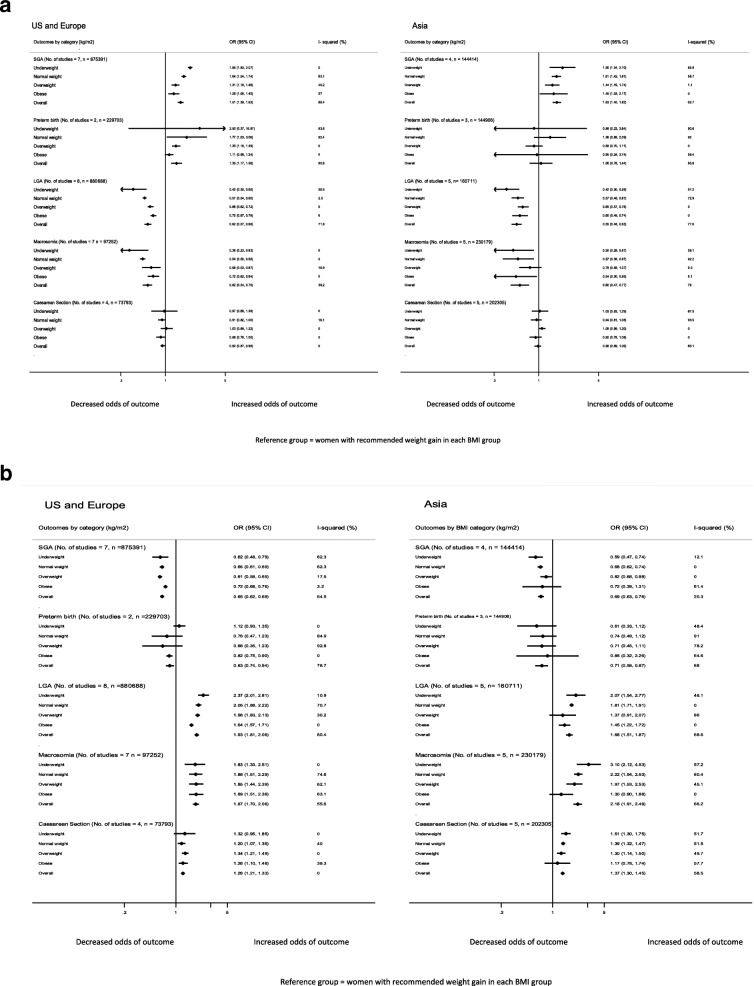
BACKGROUND: The association between Institute of Medicine (IOM) guidelines and pregnancy outcomes across ethnicities is uncertain. We evaluated the associations of gestational weight gain (GWG) outside 2009 IOM guidelines, with maternal and infant outcomes across the USA, western Europe and east Asia, with subgroup analyses in Asia. The aim was to explore ethnic differences in maternal prepregnancy body mass index (BMI), GWG and health outcomes across these regions. METHODS: Systematic review, meta-analysis and meta-regression of observational studies were used for the study. MEDLINE, MEDLINE In-Process, Embase and all Evidence-Based Medicine (EBM) Reviews were searched from 1999 to 2017. Studies were stratified by prepregnancy BMI category and total pregnancy GWG. Odds ratio (ORs) 95% confidence intervals (CI) applied recommended GWG within each BMI category as the reference. Primary outcomes were small for gestational age (SGA), preterm birth and large for gestational age (LGA). Secondary outcomes were macrosomia, caesarean section and gestational diabetes. RESULTS: Overall, 5874 studies were identified and 23 were included (n = 1,309,136). Prepregnancy overweight/obesity in the USA, Europe and Asia was measured at 42%, 30% and 10% respectively, with underweight 5%, 3% and 17%. GWG below guidelines in the USA, Europe and Asia was 21%, 18% and 31%, and above was 51%, 51% and 37% respectively. Applying regional BMI categories in Asia showed GWG above guidelines (51%) was similar to that in the USA and Europe. GWG below guidelines was associated with a higher risk of SGA (USA/Europe [OR 1.51; CI 1.39, 1.63]; Asia [1.63; 1.45, 1.82]) and preterm birth (USA/Europe [1.35; 1.17, 1.56]; Asia [1.06; 0.78, 1.44]) than GWG within guidelines. GWG above guidelines was associated with a higher risk of LGA (USA/Europe [1.93; 1.81, 2.06]; Asia [1.68; 1.51 , 1.87]), macrosomia (USA/Europe [1.87; 1.70, 2.06]; Asia [2.18; 1.91, 2.49]) and caesarean (USA/Europe [1.26; 1.21, 1.33]; Asia [1.37; 1.30, 1.45]). Risks remained elevated when regional BMI categories were applied for GWG recommendations. More women in Asia were categorised as having GWG below guidelines using World Health Organization (WHO) (60%) compared to regional BMI categories (16%), yet WHO BMI was not accompanied by increased risks of adverse outcomes. CONCLUSIONS: Women in the USA and western Europe have higher prepregnancy BMI and higher rates of GWG above guidelines than women in east Asia. However, when using regional BMI categories in east Asia, rates of GWG above guidelines are similar across the three continents. GWG outside guidelines is associated with adverse outcomes across all regions. If regional BMI categories are used in east Asia, IOM guidelines are applicable in the USA, western Europe and east Asia.
Overview
The claims and statistics of this paper haven’t been checked yet.
Free: it reads the open-access text and checks the first 5 claims that cite a source we can check. Create a free account to check every claim.
Integrity signals
Registry
Cites
Statistics
Figures
Verification
Claims the paper makes
The claims and statistics of this paper haven’t been checked yet.
Free: it reads the open-access text and checks the first 5 claims that cite a source we can check. Create a free account to check every claim.
Claims other papers make about this one
Each is checked against this paper’s own text: does it say what the citing paper says it does?
The source backs part of the claim, not all of it — or backs it for a different population, condition or comparison.
In the citing paper
“Excessive GWG is more common in women who are overweight or obese (64%) and is linked to higher risks of delivering large-for-gestational-age (LGA) infants across ethnicities (OR 1.68–1.93) [35].”
From Medical Nutrition Therapy for Women with Gestational Diabetes: Current Practice and Future Perspectives (2025) · cites this paper as [35]
Experimental — accuracy not yet measured
Self-check
Percentages, sums and reported differences re-computed from the paper’s own numbers.
The self-check needs the paper’s full text.
Citations
Cites
Measuring inconsistency in meta-analyses
Higgins, J. P. T., Thompson, S. G., Deeks, J. J., & Altman, D. G. (2003) · BMJ · doi:10.1136/bmj.327.7414.557 · Cited by 63,139
(2004) · The Lancet · doi:10.1016/s0140-6736(03)15268-3 · Cited by 12,717
Trends in Obesity Among Adults in the United States, 2005 to 2014
Flegal, K. M., Kruszon-Moran, D., Carroll, M. D., Fryar, C. D., & Ogden, C. L. (2016) · JAMA · doi:10.1001/jama.2016.6458 · Cited by 2,803 · cited 1×
“Applying WHO prepregnancy BMI categories, the USA had the greatest prevalence of overweight and obesity at 43%, consistent with trends from the 2013– 2014 National Health and Nutrition Examination Survey (NHANES), with 37% of reproductive-aged women obese [43].”
MethodObesity and Kidney Disease: Hidden Consequences of the Epidemic
Kovesdy, C. P., Furth, S. L., Zoccali, C., & on behalf of the World Kidney Day Steering Committee (2017) · American Journal of Nephrology · doi:10.1159/000458467 · Cited by 2,217
New Criteria for `Obesity Disease' in Japan
The Examination Committee of Criter (2002) · Circulation Journal · doi:10.1253/circj.66.987 · Cited by 1,650
Goldstein, R. F., Abell, S. K., Ranasinha, S., Misso, M., Boyle, J. A., Black, M. H., Li, N., Hu, G., Corrado, F., Rode, L., et al. (2017) · JAMA · doi:10.1001/jama.2017.3635 · Cited by 1,636
Self-citationDeurenberg, P., Deurenberg‐Yap, M., & Guricci, S. (2002) · Obesity Reviews · doi:10.1046/j.1467-789x.2002.00065.x · Cited by 1,326
Preconceptional and maternal obesity: epidemiology and health consequences
Poston, L., Caleyachetty, R., Cnattingius, S., Corvalán, C., Uauy, R., Herring, S., & Gillman, M. W. (2016) · The Lancet Diabetes & Endocrinology · doi:10.1016/s2213-8587(16)30217-0 · Cited by 1,111
New Criteria for `Obesity Disease' in Japan
Oda, E. (2006) · Circulation Journal · doi:10.1253/circj.70.150 · Cited by 783
Wang, Y., Mi, J., Shan, X.-Y., Wang, Q. J., & Ge, K.-Y. (2007) · International Journal of Obesity · doi:10.1038/sj.ijo.0803354 · Cited by 779
Research works printed but not linked: 1
- Rasmussen K Yaktine AL Institute of Medicine and National Research Council Committee to reexamine IOM pregnancy weight guidelines. Weight gain during pregnancy: reexamining the guidelines 2009 Washington DC National Academic Press
Cited by
Items 101–200 of 540
Maternal Anthropometric Factors and Circulating Adipokines as Predictors of Birth Weight and Length
Mazurek, D., & Bronkowska, M. (2020) · International Journal of Environmental Research and Public Health · doi:10.3390/ijerph17134799 · Cited by 20
Jin, C., Lin, L., Han, N., Zhao, Z., Liu, Z., Luo, S., Xu, X., Liu, J., & Wang, H. (2019) · Diabetes Research and Clinical Practice · doi:10.1016/j.diabres.2019.107912 · Cited by 17
Editorial: The importance of gestational weight gain
Goldstein, R. F., Harrison, C. L., & Teede, H. J. (2020) · Obesity Reviews · doi:10.1111/obr.13073 · Cited by 19
Self-citationSöderström, E., Müssener, U., Löfgren, M., Sandell, L., Thomas, K., & Löf, M. (2022) · International Journal of Environmental Research and Public Health · doi:10.3390/ijerph19042328 · Cited by 19
“Our previous work when evaluating this app both in quantitative and qualitative studies have shown that users perceived the app to be trustworthy with relevant content for supporting health behaviors [15] and that the app had beneficial effects on GWG in women with pre-pregnancy overweight and obesity in the intervent…”
BackgroundInfluentialAwoke, M. A., Wycherley, T. P., Earnest, A., Skouteris, H., & Moran, L. (2022) · Nutrients · doi:10.3390/nu14132607 · Cited by 18
“Nearly 50% of women enter pregnancy with overweight or obesity [3] or gain weight above the Institute of Medicine guidelines’ recommendation during pregnancy [4], and postpartum women retain an extra 0.”
BackgroundPatel, N., Loganathan, V., Sagili, H., & Lakshminarayanan, S. (2023) · Clinical Epidemiology and Global Health · doi:10.1016/j.cegh.2023.101364 · Cited by 18
Chen, H., Hsiung, Y., Lee, C., Huang, J.-P., Chi, L., & Weng, S.-S. (2024) · Midwifery · doi:10.1016/j.midw.2024.104143 · Cited by 21
Lauer, J. M., Natamba, B., Ghosh, S. A., Webb, P., Wang, J., & Griffiths, J. K. (2020) · Tropical Medicine & International Health · doi:10.1111/tmi.13457 · Cited by 17
“Inadequate GWG is a recognised risk factor for infants being born preterm (<37 weeks gestation) and/or low birthweight (LBW) (<2500 g) particularly in low- and middle-income countries (LMICs) [2, 3].”
BackgroundHanley‐Cook, G., Toe, L. C., Tesfamariam, K., de Kok, B., Argaw, A., Compaoré, A., Ouédraogo, M., Dailey-Chwalibóg, T., Kolsteren, P. W., Lachat, C. K., et al. (2022) · Journal of Nutrition · doi:10.1093/jn/nxac171 · Cited by 21
“In addition, women who gain excessive weight during pregnancy may experience various adverse maternal outcomes, including the progression of gestational diabetes, complications during labor, increased prevalence of cesarean delivery, and subsequent maternal postpartum weight retention, obesity, and cardiovascular diso…”
BackgroundShearer, J., Klein, M. S., Vogel, H. J., Mohammad, S., Bainbridge, S. A., & Adamo, K. B. (2021) · Journal of Proteome Research · doi:10.1021/acs.jproteome.0c00854 · Cited by 18
Khomami, M. B., Teede, H. J., Enticott, J., O'Reilly, S. L., Bailey, C., & Harrison, C. L. (2022) · JAMA Network Open · doi:10.1001/jamanetworkopen.2022.34870 · Cited by 20
Self-citationSuárez‐Idueta, L., Ohuma, E. O., Chang, C.-J., Hazel, E., Yargawa, J., Okwaraji, Y. B., Bradley, E., Gordon, A., Sexton, J. K., Lawford, H. L. S., et al. (2023) · BJOG An International Journal of Obstetrics & Gynaecology · doi:10.1111/1471-0528.17706 · Cited by 22
Begum, N., Rahman, M. M., & Faruk, M. O. (2024) · PLoS ONE · doi:10.1371/journal.pone.0304389 · Cited by 20
Shimura, M., Obata, S., Misumi, T., Miyagi, E., & Aoki, S. (2020) · Journal of obstetrics and gynaecology research · doi:10.1111/jog.14529 · Cited by 15
“The prevalence of HDP was higher in women with GWG meeting the IOM-recommended GWG than in women with GWG below the IOM-recommended GWG. GWG was also higher in women with both twins born AGA than in those with one or both twins born SGA.”
BackgroundInfluentialCarolan, M. C., Vasilevski, V., Nagle, C., & Stepto, N. K. (2021) · Internet Interventions · doi:10.1016/j.invent.2021.100393 · Cited by 18
Rate of gestational weight gain trajectory is associated with adverse pregnancy outcomes
Yong, H. Y., Shariff, Z. M., Appannah, G., Rejali, Z., Yusof, B. N. M., BINDELS, J. G., Tee, Y. Y. S., & van der Beek, E. M. (2020) · Public Health Nutrition · doi:10.1017/s1368980020002372 · Cited by 17
“Worldwide, about two-thirds of pregnant women had excessive rate of gestational weight gain (GWG), while about one-fifth had inadequate rate of GWG, but the numbers may differ by region and country(1).”
BackgroundCheong, L., Law, L. S.-C., Tan, L. Y. L., Amal, A. A.-A., Khoo, C. M., & Eng, P. C. (2025) · Nutrients · doi:10.3390/nu17071210 · Cited by 14
“%) and is linked to higher risks of delivering large-for-gestational-age (LGA) infants across ethnicities (OR 1.68–1.93) [35].”
InfluentialShekaili, H. A. A., Hashmi, I. A., & Omari, O. A. (2024) · Midwifery · doi:10.1016/j.midw.2024.103929 · Cited by 17
Nutrition during Pregnancy and Birth Outcomes
Perumal, N., & Gernand, A. D. (2025) · Annals of Nutrition and Metabolism · doi:10.1159/000541205 · Cited by 17
“These findings were consistent with meta-analyses of over 1 million pregnancies primarily from high-income countries [33, 34], though evidence for the association between suboptimal weight gain and preterm birth was inconsistent between studies.”
Nguyen, P. H., Young, M. F., Long, K. Q., Tran, L. M., Duong, T. H., Nguyen, H. C., Martorell, R., & Ramakrishnan, U. (2021) · Journal of Nutrition · doi:10.1093/jn/nxab004 · Cited by 16
“Studies from Asia have shown that 31% of women gained below the IOM recommendations and 37% above the recommended GWG guidelines (45), whereas 70% of women in our study had inadequate GWG, and only 6% gained above the recommendation.”
BackgroundMediators Linking Maternal Weight to Birthweight and Neonatal Fat Mass in Healthy Pregnancies
Kristiansen, O., Zucknick, M., Reine, T. M., Kolset, S. O., Jansson, T., Powell, T. L., Haugen, G. N., Henriksen, T., & Michelsen, T. M. (2021) · The Journal of Clinical Endocrinology & Metabolism · doi:10.1210/clinem/dgab166 · Cited by 15
Pregnancy outcomes among Asian Americans of advanced maternal age, 1992–2018
Dongarwar, D., Tahseen, D., Aliyu, M. H., & Salihu, H. M. (2021) · Journal of obstetrics and gynaecology research · doi:10.1111/jog.14790 · Cited by 15
“maternal education, barriers to accessing medical services, and so on.(11,12) This finding suggests a risk modifying interaction between race/ethnicity and nativity,”
BackgroundXie, Q., Du, T., Zhao, M., Gao, C., Lyu, Q., Suo, L., & Kuang, Y. (2021) · Human Reproduction · doi:10.1093/humrep/deab088 · Cited by 14
Benvenuti, M. B., Bø, K., Draghi, S., Tandoi, E., & Haakstad, L. A. H. (2021) · Women s Health · doi:10.1177/17455065211016136 · Cited by 17
Weight management in postpartum women - An Indian perspective
Kaur, D., Malhotra, A., Ranjan, P., Chopra, S., Kumari, A., & Vikram, N. K. (2021) · Diabetes & Metabolic Syndrome Clinical Research & Reviews · doi:10.1016/j.dsx.2021.102291 · Cited by 14
Cheng, T. S., Ali, N., Elbarazi, I., Al‐Rifai, R. H., Al‐Maskari, F., Loney, T., & Ahmed, L. A. (2021) · Obesity Science & Practice · doi:10.1002/osp4.573 · Cited by 14
“3‐5 These associations remain similar across continents and ethnicities even when population‐specific BMI categories were considered.(6) Moreover, preconception overweight and obesity is associated with poorer neurocognitive development(7) and childhood overweight and obesity in offspring.”
BackgroundAssociations between Gestational Weight Gain Adequacy and Neonatal Outcomes in Tanzania
Perumal, N., Wang, D., Darling, A. M., Wang, M., Liu, E., Urassa, W. K., Pembe, A. B., & Fawzi, W. W. (2022) · Annals of Nutrition and Metabolism · doi:10.1159/000522197 · Cited by 18
Lorenz, L., Krebs, F., Nawabi, F., Alayli, A., & Stock, S. (2022) · International Journal of Environmental Research and Public Health · doi:10.3390/ijerph19106122 · Cited by 17
Krebs, F., Lorenz, L., Nawabi, F., Alayli, A., & Stock, S. (2022) · International Journal of Environmental Research and Public Health · doi:10.3390/ijerph19105863 · Cited by 19
Morisaki, N., Nagata, C., Morokuma, S., Nakahara, K., Kato, K., Sanefuji, M., Shibata, E., Tsuji, M., Shimono, M., Kawamoto, T., et al. (2022) · BMC Pregnancy and Childbirth · doi:10.1186/s12884-022-04542-0 · Cited by 13
Chairat, T., Ratinthorn, A., Limruangrong, P., & Boriboonhirunsarn, D. (2023) · BMC Pregnancy and Childbirth · doi:10.1186/s12884-023-05635-0 · Cited by 16
“Meanwhile, inadequate GWG is associated with small-for-gestational-age (SGA) neonates [5, 6], low birth weight, and preterm birth [1].”
BackgroundResultHuang, Z. G., Tan, X., Wang, J., & Zhang, A. (2024) · Journal of Health Population and Nutrition · doi:10.1186/s41043-024-00652-x · Cited by 17
“Furthermore, our findings are broadly consistent with previous studies that had explored associations of GWG with birth weight, showing an increased risk of mac-rosomia and LGA [20], but decreased risk of low birth weight, SGA, and preterm birth [23].”
MethodResultDomanski, G., Lange, A. E., Ittermann, T., Fallenberg, J., Allenberg, H., Zygmunt, M., & Heckmann, M. (2020) · Acta Paediatrica · doi:10.1111/apa.15701 · Cited by 13
Risk scores for predicting small for gestational age infants in Japan: The TMM birthree cohort study
Iwama, N., Obara, T., Ishikuro, M., Murakami, K., Ueno, F., Noda, A., Onuma, T., Matsuzaki, F., Hoshiai, T., Saito, M., et al. (2022) · Scientific Reports · doi:10.1038/s41598-022-12892-0 · Cited by 14
Flor‐Alemany, M., Acosta‐Manzano, P., Migueles, J. H., Henriksson, P., Löf, M., & Aparicio, V. A. (2023) · Nutrients · doi:10.3390/nu15204413 · Cited by 13
“In Europe, 51% of women experience excessive gestational weight gain (GWG) [2], which is often retained long term after birth (postpartum weight retention (PPWR)) [3–5], contributing to the obesity rates in adult women [4,6].”
BackgroundUndernutrition during Pregnancy
Nguyen, H. A. (2019) · IntechOpen eBooks · doi:10.5772/intechopen.82727 · Cited by 18
“A large meta-analysis study with more than 300,000 Asian women confirmed that the IOM recommendations about GWG can be applicable in Asian countries when using regional BMI cutoff points for overweight or obese [7].”
BackgroundSaldiva, S. R. D. M., Neta, A. D. C. P. D. A., Teixeira, J. A., Peres, S. V., Marchioni, D. M. L., Carvalho, M. A., Vieira, S. E., & Francisco, R. P. V. (2022) · Nutrients · doi:10.3390/nu14204428 · Cited by 13
“The prevalence of inadequate GWG varies among countries and ethnicities [4,5].”
BackgroundMethodGestational weight gain and birth weight of newborn
Chang, W.-H., Lee, W.-L., & Wang, P. (2021) · Taiwanese Journal of Obstetrics and Gynecology · doi:10.1016/j.tjog.2021.09.005 · Cited by 13
Luo, X., Gao, J., He, Z., Ji, J., Zhang, W., Wu, P., Guo, X., Cao, D., Xu, Z., Li, C., et al. (2022) · Diabetology & Metabolic Syndrome · doi:10.1186/s13098-022-00940-8 · Cited by 12
Optimal gestational weight gain in Taiwan: A retrospective cohort study
Chuang, F.-C., Huang, H.-Y., Chen, Y., & Huang, J. (2024) · Taiwanese Journal of Obstetrics and Gynecology · doi:10.1016/j.tjog.2024.01.034 · Cited by 14
Ma, Z., Chu, L., Zhang, Z., Hu, Y., Zhu, Y., Wu, F. H., & Zhang, Y. (2024) · BMJ Open · doi:10.1136/bmjopen-2023-075269 · Cited by 12
The Impact of Excessive Gestational Weight Gain on Adverse Perinatal Outcomes: A Systematic Review
Kalli, E., Potiris, A., Domali, E., Zikopoulos, A., Kathopoulis, N., Drakaki, Ε., Machairiotis, N., Louis, K., Gkirgkinoudis, A., Christodoulaki, C., et al. (2025) · Journal of Clinical Medicine · doi:10.3390/jcm14041197 · Cited by 13
“The aforementioned prevalence differs also depending on the pre-pregnancy body mass index status of the pregnant woman [2].”
Benhalima, K., Minschart, C., Geerts, I., Ameye, L., der Schueren, B. V., Devlieger, R., Bogaerts, A., & Mathieu, C. (2025) · BMC Medicine · doi:10.1186/s12916-025-03992-5 · Cited by 13
“However, since GWG is influenced by ethnicity and body composition, the GWG targets that are proposed in these Chinese studies cannot be generalized to women from other eth-nicities such as the predominantly Caucasian population in our study [32].”
Self-citationJabin, N., Malla, L., Otieno, G. P., Ismail, L. C., Barros, F. C., Berkley, J. A., Carvalho, M., Munim, S., Norris, S. A., Nosten, F. H., et al. (2025) · American Journal of Clinical Nutrition · doi:10.1016/j.ajcnut.2025.04.012 · Cited by 13
“In this secondary analysis across 6 multinational sites, 53% of females gained below the IG standard, and 62% fell short of the IOM guidelines, re fl ecting trends seen in other studies [7 – 9, 21, 22 ].”
InfluentialGestational weight gain and offspring’s cognitive skills: a systematic review and meta-analysis
Martínez‐Hortelano, J. A., Álvarez‐Bueno, C., Cavero‐Redondo, I., Herráiz-Adillo, Á., Berlanga‐Macías, C., & Martínez‐Vizcaíno, V. (2020) · BMC Pediatrics · doi:10.1186/s12887-020-02429-7 · Cited by 13
Wang, T., Li, L., Wu, C., Cao, R., Li, Q., Yu, L., & Chen, Y. (2021) · Journal of Diabetes Research · doi:10.1155/2021/4542367 · Cited by 14
“In general, clinicians use the IOM guidelines to educate pregnant women about the best GWG recommendations for different BMI categories [26].”
BackgroundSámano, R., Martínez‐Rojano, H., Ortiz-Hernández, L., Nájera-Medina, O., Chico‐Barba, G., Godínez-Martínez, E., Gamboa, R., & Aguirre-Minutti, E. (2022) · Nutrients · doi:10.3390/nu14214545 · Cited by 17
“This population likely experiences nutritional transitions and reduced physical activity [58], which may lead to changes in maternal diets before and during pregnancy, thereby affecting GWG patterns [59].”
BackgroundChoi, B. Y., Hong, S., Jeon, M., Park, J. Y., Oh, K. J., & Hong, J. (2020) · Obstetrics & Gynecology Science · doi:10.5468/ogs.20133 · Cited by 12
“Since GWG may be influenced by various factors, which may be social, environmental, or genetic, the values for appropriate GWG are different for each ethnic group [9-13].”
BackgroundMurata, T., Kyozuka, H., Yamaguchi, A., Fukuda, T., Yasuda, S., Satô, A., Ogata, Y., Shinoki, K., Hosoya, M., Yasumura, S., et al. (2020) · Scientific Reports · doi:10.1038/s41598-020-77429-9 · Cited by 13
Amadori, R., Aquino, C. I., Colagiorgio, S., OSELLA, E., Surico, D., & Remorgida, V. (2021) · Minerva Obstetrics and Gynecology · doi:10.23736/s2724-606x.21.04878-8 · Cited by 12
Gestational weight gain and long-term postpartum weight retention
Berezowsky, A., & Berger, H. M. (2021) · Clinical and Experimental Obstetrics & Gynecology · doi:10.31083/j.ceog.2021.03.2413 · Cited by 12
Vito, M. D., Alameddine, S., Capannolo, G., Mappa, I., Gualtieri, P., Renzo, L. D., LORENZO, A. D., Antonio, F. D., & Rizzo, G. (2022) · Healthcare · doi:10.3390/healthcare10122490 · Cited by 17
Health-related Behaviors in Pregnancy: A Key to Achieve Better Outcomes
Surita, F. G., Paulino, D. S. M., & Pinho‐Pompeu, M. (2020) · Revista Brasileira Ginecologia e Obstetrícia · doi:10.1055/s-0040-1708094 · Cited by 13
Filippi-Arriaga, F., Agarwal, N., Rodrigues-Martins, D., Monteiro, M. P., Huvinen, E., Suliman, S. G. I., McGowan, B. M., & Ciudin, A. (2025) · Obesity Facts · doi:10.1159/000546449 · Cited by 14
“However, lower GWG targets should be considered, particularly for those with class II or III obesity.”
Polyendocrine metabolic ovarian syndrome in pregnancy: pathophysiology and outcomes
Teede, H. J., Vanky, E., Piltonen, T., Stener‐Victorin, E., Moran, L., & Khomami, M. B. (2026) · Nature Reviews Endocrinology · doi:10.1038/s41574-026-01261-w · Cited by 13
“This observation is reflected in the lower BMI cut-off for defining healthy gestational weight gain, and substantially higher rates of GDM and type 2 diabetes mellitus, at any given BMI in these populations 118 .”
Self-citationDepression during pregnancy and gestational weight gain: A study of Brazilian pregnant women
Gomes, C. D. B., Mendonça, L. S., Roberto, A. P. D. S. C., & Carvalhães, M. A. D. B. L. (2022) · Nutrition · doi:10.1016/j.nut.2022.111883 · Cited by 12
Cheng, Z., Wei, Y., Li, H., Yu, H., Zhou, Y., & Liu, J. (2022) · European Journal of Clinical Nutrition · doi:10.1038/s41430-022-01238-8 · Cited by 12
“0 kg/m(2)) according to the Chinese criteria [25], which were recommended when applying the NAM targets to Chinese women [26].”
MethodDevelopmental effects of in utero metformin exposure.
Carroll, D. T., Sassin, A. M., Aagaard, K. M., & GANNON, M. A. (2021) · PubMed · Cited by 13
Preconception-Health-Related Attitudes of Bulgarian Women of Reproductive Age
Hristova-Atanasova, E., Iskrov, G. G., Raycheva, R., Mandova, V., & Stefanov, R. S. (2023) · Healthcare · doi:10.3390/healthcare11070989 · Cited by 14
Nightingale, H., Mnatzaganian, G., Hooker, L., Barrett, S., & Kingsley, M. (2023) · BMC Public Health · doi:10.1186/s12889-023-15446-9 · Cited by 13
“Although evidence suggests that GWG patterns are similar across different populations [5], these guidelines have been inconsistently adopted by other countries [6, 7].”
BackgroundMaternal seafood consumption and fetal growth: a birth cohort study in urban China
Zhang, W., Li, W., Lei, C., An, C., Zhang, C., & Jianqin, W. (2023) · BMC Pregnancy and Childbirth · doi:10.1186/s12884-023-05431-w · Cited by 11
“Increased seafood consumption was associated with increased GWG, which in turn, was associated with increased birth weight.”
BackgroundInfluentialYou, Z., Shan, L., Cheng, S., Xia, Y., Zhao, Y., Zhang, H., & Zhao, Z. (2023) · Food & Function · doi:10.1039/d3fo01550e · Cited by 15
Wang, D., Ye, H., Liu, S., Duan, H., Ma, Q., Yao, N., Gui, Z., Yu, G., Liu, L., Wan, H., et al. (2024) · Nutrition & Metabolism · doi:10.1186/s12986-024-00801-3 · Cited by 11
“BMI was classified into 24 kg/m 2 and ≥ 24 kg/m 2 [24].”
Ruiz, A. M. P., de Assumpção, D., Malta, D. C., & Francisco, P. M. S. B. (2021) · Revista Brasileira de Saúde Materno Infantil · doi:10.1590/1806-93042021000200009 · Cited by 11
Ge, J., Zhao, S., Peng, X., Walker, A. N., Yang, N., Zhou, H., Wang, L., Zhang, C., Zhou, M., & You, H. (2022) · Frontiers in Public Health · doi:10.3389/fpubh.2022.759946 · Cited by 11
Shahrir, N. F., Rohana, A. J., Hamid, N. A., Daud, Z., & Asis, S. H. H. (2022) · Nutrients · doi:10.3390/nu14071436 · Cited by 11
“In contrast, in high-income countries, such as the USA and those in Western Europe, the prevalence of excessive GWG was far higher [4].”
BackgroundRosinha, P. M. O., Dantas, R., Alves, M., Azevedo, T., Inácio, I. M. R., Esteves-Ferreira, S., Pedrosa, C. A. V., Ferreira, M. S., Sousa, I. M. A., & Guimarães, J. (2022) · Archives of Endocrinology and Metabolism · doi:10.20945/2359-3997000000463 · Cited by 14
“On the other hand, insufficient GWG tends to result in lower rates of macrosomia, higher rates of prematurity and small-for-gestationalage (SGA) infants, despite the limited number of studies (7,13-15).”
BackgroundResultJeong, D. E., Hyun, S. M., Cho, I., Lee, K., Ahn, K., Kim, H. J., Park, J. Y., & Oh, K. J. (2022) · Taiwanese Journal of Obstetrics and Gynecology · doi:10.1016/j.tjog.2022.03.008 · Cited by 12
Zhang, Q., Lee, C. S., Zhang, L., Wu, Q., Chen, Y., Chen, D., Qi, L., & Liang, Z. (2022) · Frontiers in Medicine · doi:10.3389/fmed.2022.842428 · Cited by 14
Brammall, B. R., Garad, R. M., Boyle, J. A., Hayman, M., de Jersey, S., Teede, H. J., Hong, Q. V., Carrandi, A., & Harrison, C. L. (2022) · Journal of Medical Internet Research · doi:10.2196/37552 · Cited by 13
“Epidemiological data in over 1 million pregnancies globally reported GWG below or above the recommended thresholds in 23% and 47% of all pregnancies, respectively [7].”
Self-citationHuang, D., Liang, M., Xu, B., Chen, S., Xiao, Y., Liu, H., Yin, D., Yang, J. J., Wang, L., Pan, P., et al. (2023) · Frontiers in Public Health · doi:10.3389/fpubh.2023.1054626 · Cited by 11
Head circumference as an epigenetic risk factor for maternal nutrition
Miele, M. J. D. O., Souza, R. T., Calderon, I. D. M. P., Feitosa, F. E. D. L., Leite, D. F. B., Filho, E. A. R., Vettorazzi, J., Mayrink, J., Fernandes, K. G., Vieira, M. C., et al. (2022) · Frontiers in Nutrition · doi:10.3389/fnut.2022.867727 · Cited by 11
Gong, X., Wu, T., Zhang, L., You, Y., Wei, H., Zuo, X., Zhou, Y., Xing, X., Meng, Z., Lv, Q., et al. (2023) · International Journal of Gynecology & Obstetrics · doi:10.1002/ijgo.14788 · Cited by 10
Associations between blood essential metal mixture and serum uric acid: a cross-sectional study
Wang, D., Li, Y., Duan, H., Zhang, S., Liu, L., He, Y., Chen, X., Jiang, Y., Ma, Q., Yu, G., et al. (2023) · Frontiers in Public Health · doi:10.3389/fpubh.2023.1182127 · Cited by 12
Brammall, B. R., Garad, R. M., Teede, H. J., & Harrison, C. L. (2024) · Nutrients · doi:10.3390/nu16010155 · Cited by 13
Self-citationMinimization of bias in measures of gestational weight gain
Stamm, R. A., Coppell, K. J., & Paterson, H. (2020) · Obesity Reviews · doi:10.1111/obr.13056 · Cited by 11
Bacârea, A., Bacârea, V., & Tarcea, M. (2020) · The Journal of Maternal-Fetal & Neonatal Medicine · doi:10.1080/14767058.2020.1818205 · Cited by 11
“[13], so we obtained lower percentage for overweight/obesity and higher percentage for underweight.”
BackgroundGestational weight gain and postpartum weight retention in Tasmanian women: The Baby-bod Study
Jayasinghe, S. U., Herath, M. P., Beckett, J. M., Ahuja, K., Street, S. J., Byrne, N. M., & Hills, A. P. (2022) · PLoS ONE · doi:10.1371/journal.pone.0264744 · Cited by 10
“Given the unique patterns of GWG reported in various ethnic groups [39], it may be worthwhile to repeat this research in a more representative sample.”
BackgroundYang, M., Feng, Q., Chen, C., Chen, S., Guo, Y., Su, D., Chen, H., Sun, H., Dong, H., & Zeng, G. (2022) · Maternal and Child Nutrition · doi:10.1111/mcn.13397 · Cited by 11
“%) compared with the United States and Europe (Goldstein et al., 2018).”
BackgroundResultLee, C., Hsiung, Y., Chi, L., Huang, J., & Chen, H. (2022) · Midwifery · doi:10.1016/j.midw.2022.103552 · Cited by 11
Vanstone, M. G., Sadik, M., Blyderveen, S. V., Biringer, A. B., Sword, W. A., Schmidt, L. A., & McDonald, S. D. (2020) · BMC Pregnancy and Childbirth · doi:10.1186/s12884-020-03210-5 · Cited by 10
“Women who gain excess gestational weight face increased risk of caesarean delivery and associated complications [1] and are less likely to return to their pre-pregnancy weight [2–5].”
BackgroundSecular trends in gestational weight gain and parity on birth weight: An editorial
Hermanussen, M., & Scheffler, C. (2020) · Acta Paediatrica · doi:10.1111/apa.15678 · Cited by 10
Pregnancy Nutrition Core Outcome Set (PRENCOS): A core outcome set development study
Killeen, S. L., Callaghan, S. L., O'Reilly, S. L., & McAuliffe, F. M. (2023) · BJOG An International Journal of Obstetrics & Gynaecology · doi:10.1111/1471-0528.17470 · Cited by 10
Fatores maternos associados ao consumo usual de alimentos ultraprocessados na gestação
Carreira, N. P., de Lima, M. C., Travieso, S. G., Sartorelli, D. S., & Crivellenti, L. C. (2024) · Ciência & Saúde Coletiva · doi:10.1590/1413-81232024291.16302022 · Cited by 13
Pre-pregnancy obesity and weight gain during pregnancy: impact on newborn outcomes
Gunes, S., Şahin, S., Arslan, M. K., Korkmaz, N., DAĞ, Ö. K., Gokalp, E., Saban, H., Koca, M., & Öncel, M. Y. (2025) · BMC Pediatrics · doi:10.1186/s12887-024-05381-y · Cited by 9
“While body mass index (BMI) has limitations during pregnancy, as it does not reflect weight gain, fat versus lean mass, or fluid retention, alternative measures like GWG guidelines may provide better insights into maternal and fetal health [18, 19].”
Guo, Z., Lin, L., Dong, J.-Y., & Lin, J. (2025) · Frontiers in Endocrinology · doi:10.3389/fendo.2025.1531814 · Cited by 9
Pregnancy Risk, I. S., Surveillance, I., & Measurement Alliance Investigators (2026) · BMJ Open · doi:10.1136/bmjopen-2025-104512 · Cited by 9
Moffat, T., McKerracher, L., Oresnik, S., Atkinson, S. A., Barker, M. E., McDonald, S. D., Murray‐Davis, B., & Sloboda, D. M. (2021) · American Journal of Human Biology · doi:10.1002/ajhb.23604 · Cited by 9
“In addition to pregnancy-related complications (Goldstein et al., 2018; Siega-Riz et al., 2009), both low and high gestational weight gain (GWG) are major contributors to babies being born low birth weight (LBW) and small for gestational age (SGA) or macrosomic and large for gestational age (LGA)…”
BackgroundInfluentialDangat, K. D., Gupte, S., Wagh, G. N., Lalwani, S. K., Randhir, K., Madiwale, S. D., Pisal, H., Kadam, V., Gundu, S., Chandhiok, N., et al. (2022) · Frontiers in Medicine · doi:10.3389/fmed.2022.1022990 · Cited by 10
Psychometric Properties of the Healthy Lifestyle Behaviors Scale in Portuguese Pregnant Women
Nunes, M. A. R. A. P., Melnyk, B. M., Almeida, S., Cardoso, A., & Vieira, M. M. D. S. (2024) · Western Journal of Nursing Research · doi:10.1177/01939459241245217 · Cited by 9
“15 Goldstein et al (2018) noticed that 42% of pregnant women in the United States, 30% in Europe, and 10% in Asia were classified as overweight or obese.”
BackgroundHuang, Z. G., Zhang, Y., Wang, J., Tan, X., & Zhang, A. (2025) · BMC Pregnancy and Childbirth · doi:10.1186/s12884-025-07199-7 · Cited by 9
“Maternal pregnancy weight associated with both maternal age and birth weight [5, 31], were not included.”
Noever, K., Schubert, J., Reuschel, E., Timmesfeld, N., & Arabin, B. (2020) · Geburtshilfe und Frauenheilkunde · doi:10.1055/a-1110-0859 · Cited by 11
Zhou, Y., Luo, Y., Zhou, Q., Xu, J., Tian, S., & Liao, B. (2023) · BMC Pregnancy and Childbirth · doi:10.1186/s12884-023-05602-9 · Cited by 10
“A systematic review and meta-analysis that included more than one million pregnant women reported that approximately 51% of pregnant women gained more weight during pregnancy compared to the IOM recommendation [18].”
ResultWilkins, E. G., Sun, B., Thomas, A. S., Alabaster, A. L., Greenberg, M., Sperling, J. D., WALTON, D. L., Alves, J. M., & Gunderson, E. P. (2023) · AJOG Global Reports · doi:10.1016/j.xagr.2023.100246 · Cited by 12
Wei, Y., Peng, J., Li, H., Wei, M., Peng, H., Wang, K., Yu, Y., & He, Q. (2022) · Diabetes Metabolic Syndrome and Obesity · doi:10.2147/dmso.s391253 · Cited by 10
“Aberrant glucose metabolism during pregnancy, particularly impaired fasting glucose, may operate as an independent risk factor for an abnormal birth weight of newborns.(18) In our study, macrosomia risk and birth weight were correlated with maternal fasting plasma glucose values.”
BackgroundFactors Associated With Inadequate Gestational Weight Gain: A Prospective Multicenter Cohort Study
Aoyama, S., Haruna, M., Yonezawa, K., Tahara‐Sasagawa, E., Usui, Y., Ohori, R., Tanaka, M., Fujita, M., Matsuzaki, M., Suetsugu, Y., et al. (2025) · Nursing and Health Sciences · doi:10.1111/nhs.70047 · Cited by 8
Li, Q., & Li, J. (2025) · BMC Pregnancy and Childbirth · doi:10.1186/s12884-025-07876-7 · Cited by 10
Maternal BMI and allergy in children until 3 years of age (JECS)
Hayashi, D., Noguchi, E., Maruo, K., Hara, M., Nakayama, S. F., Takada, H., Kamijima, M., Yamazaki, S., Ohya, Y., Kishi, R., et al. (2022) · Journal of Allergy and Clinical Immunology Global · doi:10.1016/j.jacig.2022.02.003 · Cited by 8
Zhu, Y., Zhang, J., Li, Q., & Min, L. (2023) · BMC Pediatrics · doi:10.1186/s12887-023-03951-0 · Cited by 8
Miao, J., Chen, Y., Liu, X., Ye, C., Zhou, X., Yang, Z., Gong, Z., Chen, L., & Wang, T. (2023) · Nutrients · doi:10.3390/nu15071601 · Cited by 9
Metadata
- Authors
- Goldstein, R. F., Abell, S. K., Ranasinha, S., Misso, M. L., Boyle, J. A., Harrison, C. L., Black, M. H., Li, N., Hu, G., Corrado, F., Hegaard, H., Kim, Y. J., Haugen, M., Song, W. O., Kim, M. H., Bogaerts, A., Devlieger, R., Chung, J. H., & Teede, H. J.
- Affiliations
- Monash Health (AU)
- Monash University (AU)
- Kaiser Permanente (US)
- Tianjin Women's and Children's Health Center (CN)
- Pennington Biomedical Research Center (US)
- University of Messina (IT)
- Copenhagen University Hospital (DK)
- Ewha Womans University (KR)
- Norwegian Institute of Public Health (NO)
- Michigan State University (US)
- Dankook University (KR)
- University of Antwerp (BE)
- GZA Ziekenhuizen Campus Sint-Augustinus (BE)
- Monash Medical Centre (AU)
- Corresponding author
- Teede, Helena J.
- ORCID
- Venue
- BMC Medicine
- Published
- 2018-08-31
- Volume
- 16
- Issue
- 1
- Pages
- 153-153
- ISSN
- 1741-7015 (ISSN-L)
- PMC
- PMC6117916
- OpenAlex
- W2888709256
- Cited by
- 515
- References
- 61
- Citations by year
- 2026: 45 · 2025: 65 · 2024: 61 · 2023: 78 · 2022: 108 · 2021: 63 · 2020: 67 · 2019: 27
- FWCI
- 6.41
- Type
- journal article
- Language
- en
- Open access
- gold
- doi.org
- Licence
- cc-by
- creativecommons.org/licenses/by/4.0/ (tdm)
- Locations
- BMC Medicine (publishedVersion, cc-by)
- Europe PMC (PubMed Central) (publishedVersion, other-oa)
- PubMed Central (publishedVersion, cc-by)
- PubMed (publishedVersion)
- Research at the University of Copenhagen (University of Copenhagen) (publishedVersion, cc-by)
- Adelaide Research & Scholarship (AR&S) (University of Adelaide) (submittedVersion, cc-by)
- Monash University Research Portal (Monash University) (submittedVersion, other-oa)
- Lirias (submittedVersion, other-oa)
- DOAJ (DOAJ: Directory of Open Access Journals) (submittedVersion, cc-by-sa)
- eScholarship (California Digital Library) (submittedVersion, cc-by)
- NORA - Norwegian Open Research Archives (submittedVersion, other-oa)
- Funders
- Gentofte Hospital
- Centers for Disease Control and Prevention
- University of Illinois at Urbana-Champaign
- Medical Research Council
- National Health and Medical Research Council
- National Institute of General Medical Sciences (U54GM104940)
- National Center for Chronic Disease Prevention and Health Promotion
- Topics
- Health Sciences › Medicine › Obstetrics and Gynecology › Gestational Diabetes Research and Management
- Health Sciences › Medicine › Pediatrics, Perinatology and Child Health › Birth, Development, and Health
- Health Sciences › Medicine › Pediatrics, Perinatology and Child Health › Maternal and Neonatal Healthcare
- Keywords
- gestational weight gain, IOM weight gain guidelines, pre-pregnancy body mass index, maternal obesity, ethnic differences, small for gestational age, preterm birth, large for gestational age, macrosomia, cesarean section, gestational diabetes mellitus, Asian women, regional comparison, maternal outcomes, infant outcomes, underweight pregnancy, overweight in pregnancy
- MeSH terms
- Adult, Female, Humans, Infant, Newborn, Pregnancy, Pregnancy Complications, Pregnancy Outcome, Weight Gain, Fetal Weight
About these checks
Registry, retraction, Cites and statistics results are computed, not judged, with one exception: a printed reference that no index lists is read once by a model before it counts as a citation error. Claims are extracted by a model and kept only when their quote appears verbatim in the text; each cited source is then checked, with a model’s help, for whether it says what the claim relies on. Those verdicts can be wrong — read the claim’s quote and the cited source before relying on one.
Statistics and arithmetic are recomputed, not judged.
Confidence bands are shown only for fields calibrated on our annotated test set. None is calibrated yet, so no band is shown.
What counts as a claim ›How we measure confidence ›How we check this ›
Are you an author, or do you see a problem with this page? Request a review
Data sources
Bibliographic data: Semantic Scholar, OpenAlex, Crossref.
Contains information from the Semantic Scholar Academic Graph Datasets, made available under the ODC Attribution License (ODC-BY 1.0).
Semantic Scholar’s data is described in: Kinney, R., et al. (2023). The Semantic Scholar Open Data Platform. arXiv:2301.10140.
