

Gestational weight gain across continents and ethnicity: systematic review and meta-analysis of maternal and infant outcomes in more than one million women
Open accessThe DOI matches its Crossref record; 61 of the 61 references it cites were found in a registry or an index.
Abstract
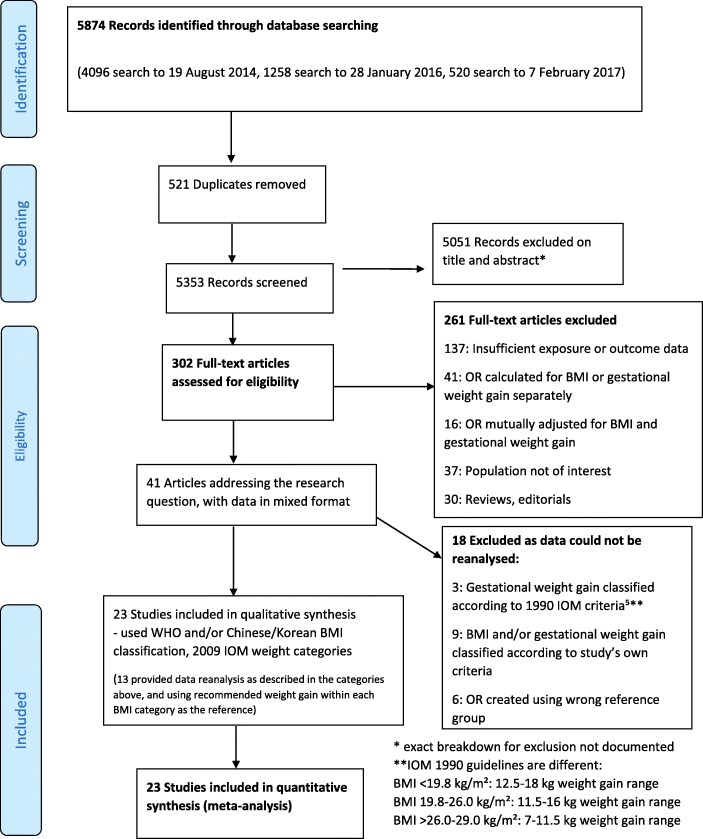
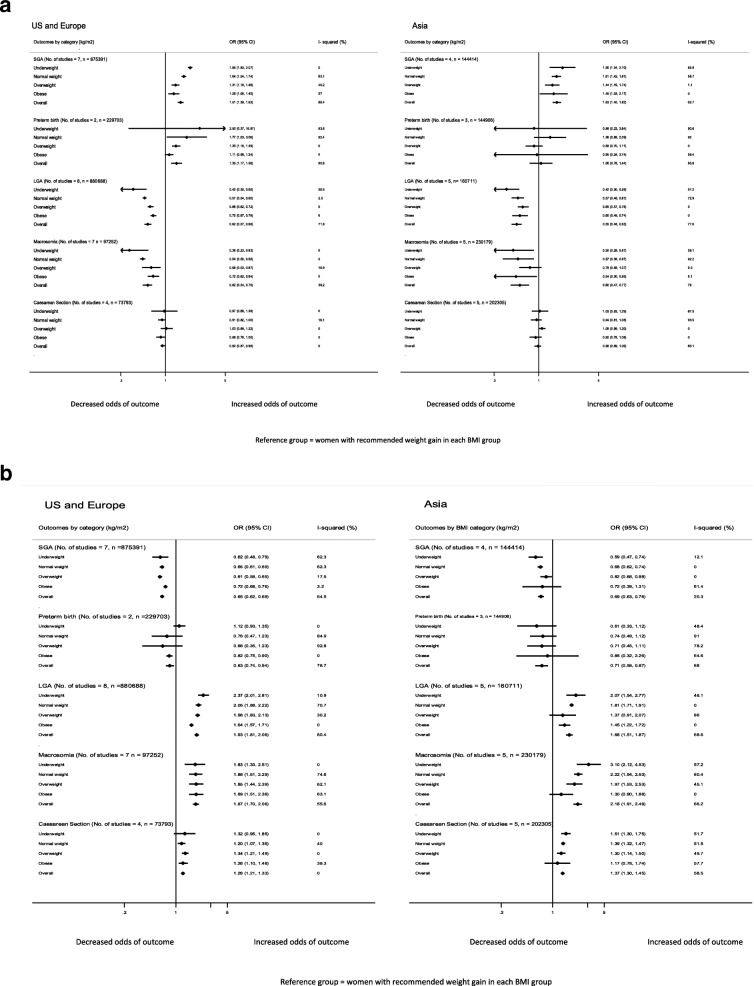
BACKGROUND: The association between Institute of Medicine (IOM) guidelines and pregnancy outcomes across ethnicities is uncertain. We evaluated the associations of gestational weight gain (GWG) outside 2009 IOM guidelines, with maternal and infant outcomes across the USA, western Europe and east Asia, with subgroup analyses in Asia. The aim was to explore ethnic differences in maternal prepregnancy body mass index (BMI), GWG and health outcomes across these regions. METHODS: Systematic review, meta-analysis and meta-regression of observational studies were used for the study. MEDLINE, MEDLINE In-Process, Embase and all Evidence-Based Medicine (EBM) Reviews were searched from 1999 to 2017. Studies were stratified by prepregnancy BMI category and total pregnancy GWG. Odds ratio (ORs) 95% confidence intervals (CI) applied recommended GWG within each BMI category as the reference. Primary outcomes were small for gestational age (SGA), preterm birth and large for gestational age (LGA). Secondary outcomes were macrosomia, caesarean section and gestational diabetes. RESULTS: Overall, 5874 studies were identified and 23 were included (n = 1,309,136). Prepregnancy overweight/obesity in the USA, Europe and Asia was measured at 42%, 30% and 10% respectively, with underweight 5%, 3% and 17%. GWG below guidelines in the USA, Europe and Asia was 21%, 18% and 31%, and above was 51%, 51% and 37% respectively. Applying regional BMI categories in Asia showed GWG above guidelines (51%) was similar to that in the USA and Europe. GWG below guidelines was associated with a higher risk of SGA (USA/Europe [OR 1.51; CI 1.39, 1.63]; Asia [1.63; 1.45, 1.82]) and preterm birth (USA/Europe [1.35; 1.17, 1.56]; Asia [1.06; 0.78, 1.44]) than GWG within guidelines. GWG above guidelines was associated with a higher risk of LGA (USA/Europe [1.93; 1.81, 2.06]; Asia [1.68; 1.51 , 1.87]), macrosomia (USA/Europe [1.87; 1.70, 2.06]; Asia [2.18; 1.91, 2.49]) and caesarean (USA/Europe [1.26; 1.21, 1.33]; Asia [1.37; 1.30, 1.45]). Risks remained elevated when regional BMI categories were applied for GWG recommendations. More women in Asia were categorised as having GWG below guidelines using World Health Organization (WHO) (60%) compared to regional BMI categories (16%), yet WHO BMI was not accompanied by increased risks of adverse outcomes. CONCLUSIONS: Women in the USA and western Europe have higher prepregnancy BMI and higher rates of GWG above guidelines than women in east Asia. However, when using regional BMI categories in east Asia, rates of GWG above guidelines are similar across the three continents. GWG outside guidelines is associated with adverse outcomes across all regions. If regional BMI categories are used in east Asia, IOM guidelines are applicable in the USA, western Europe and east Asia.
Overview
The claims and statistics of this paper haven’t been checked yet.
Free: it reads the open-access text and checks the first 5 claims that cite a source we can check. Create a free account to check every claim.
Integrity signals
Registry
Cites
Statistics
Figures
Verification
Claims the paper makes
The claims and statistics of this paper haven’t been checked yet.
Free: it reads the open-access text and checks the first 5 claims that cite a source we can check. Create a free account to check every claim.
Claims other papers make about this one
Each is checked against this paper’s own text: does it say what the citing paper says it does?
The source backs part of the claim, not all of it — or backs it for a different population, condition or comparison.
In the citing paper
“Excessive GWG is more common in women who are overweight or obese (64%) and is linked to higher risks of delivering large-for-gestational-age (LGA) infants across ethnicities (OR 1.68–1.93) [35].”
From Medical Nutrition Therapy for Women with Gestational Diabetes: Current Practice and Future Perspectives (2025) · cites this paper as [35]
Experimental — accuracy not yet measured
Self-check
Percentages, sums and reported differences re-computed from the paper’s own numbers.
The self-check needs the paper’s full text.
Citations
Cites
Measuring inconsistency in meta-analyses
Higgins, J. P. T., Thompson, S. G., Deeks, J. J., & Altman, D. G. (2003) · BMJ · doi:10.1136/bmj.327.7414.557 · Cited by 63,139
(2004) · The Lancet · doi:10.1016/s0140-6736(03)15268-3 · Cited by 12,717
Trends in Obesity Among Adults in the United States, 2005 to 2014
Flegal, K. M., Kruszon-Moran, D., Carroll, M. D., Fryar, C. D., & Ogden, C. L. (2016) · JAMA · doi:10.1001/jama.2016.6458 · Cited by 2,803 · cited 1×
“Applying WHO prepregnancy BMI categories, the USA had the greatest prevalence of overweight and obesity at 43%, consistent with trends from the 2013– 2014 National Health and Nutrition Examination Survey (NHANES), with 37% of reproductive-aged women obese [43].”
MethodObesity and Kidney Disease: Hidden Consequences of the Epidemic
Kovesdy, C. P., Furth, S. L., Zoccali, C., & on behalf of the World Kidney Day Steering Committee (2017) · American Journal of Nephrology · doi:10.1159/000458467 · Cited by 2,217
New Criteria for `Obesity Disease' in Japan
The Examination Committee of Criter (2002) · Circulation Journal · doi:10.1253/circj.66.987 · Cited by 1,650
Goldstein, R. F., Abell, S. K., Ranasinha, S., Misso, M., Boyle, J. A., Black, M. H., Li, N., Hu, G., Corrado, F., Rode, L., et al. (2017) · JAMA · doi:10.1001/jama.2017.3635 · Cited by 1,636
Self-citationDeurenberg, P., Deurenberg‐Yap, M., & Guricci, S. (2002) · Obesity Reviews · doi:10.1046/j.1467-789x.2002.00065.x · Cited by 1,326
Preconceptional and maternal obesity: epidemiology and health consequences
Poston, L., Caleyachetty, R., Cnattingius, S., Corvalán, C., Uauy, R., Herring, S., & Gillman, M. W. (2016) · The Lancet Diabetes & Endocrinology · doi:10.1016/s2213-8587(16)30217-0 · Cited by 1,111
New Criteria for `Obesity Disease' in Japan
Oda, E. (2006) · Circulation Journal · doi:10.1253/circj.70.150 · Cited by 783
Wang, Y., Mi, J., Shan, X.-Y., Wang, Q. J., & Ge, K.-Y. (2007) · International Journal of Obesity · doi:10.1038/sj.ijo.0803354 · Cited by 779
Research works printed but not linked: 1
- Rasmussen K Yaktine AL Institute of Medicine and National Research Council Committee to reexamine IOM pregnancy weight guidelines. Weight gain during pregnancy: reexamining the guidelines 2009 Washington DC National Academic Press
Cited by
Teede, H. J., Bailey, C., Moran, L. J., Bahri Khomami, M., Enticott, J., Ranasinha, S., Rogozińska, E., Skouteris, H., Boyle, J. A., Thangaratinam, S., et al. (2022) · JAMA Internal Medicine · doi:10.1001/jamainternmed.2021.6373 · Cited by 329
Self-citationFerrara, A., Hedderson, M. M., Brown, S. D., Ehrlich, S. F., Tsai, A.-L., Feng, J., Galarce, M., Marcovina, S., Catalano, P., & Quesenberry, C. P. (2020) · The Lancet Diabetes & Endocrinology · doi:10.1016/s2213-8587(20)30107-8 · Cited by 162
McAuliffe, F. M., Killeen, S. L., Jacob, C. M., Hanson, M. A., Hadar, E., McIntyre, D. H., Kapur, A., Kihara, A., Ronald, C. W., Divakar, H., et al. (2020) · International Journal of Gynecology & Obstetrics · doi:10.1002/ijgo.13334 · Cited by 196
Maternal body mass index and pregnancy outcomes: a systematic review and metaanalysis
D’Souza, R., Horyn, I., Pavalagantharajah, S., Zaffar, N., & Jacob, C.-E. (2019) · American Journal of Obstetrics & Gynecology MFM · doi:10.1016/j.ajogmf.2019.100041 · Cited by 150
Martínez‐Hortelano, J. A., Cavero‐Redondo, I., Álvarez‐Bueno, C., Garrido‐Miguel, M., Soriano‐Cano, A., & Martínez‐Vizcaíno, V. (2020) · BMC Pregnancy and Childbirth · doi:10.1186/s12884-020-03335-7 · Cited by 167
“The highest mean prepregnancy BMI was found in South America with 25.05 kg (95% CI: 23.39, 26.72) and the lowest was found in Asia with 11.36 kg (95% CI: 10.14, 12.58).”
ResultInfluentialSandborg, J., Söderström, E., Henriksson, P., Bendtsen, M., Henström, M., Leppänen, M. H., Maddison, R., Migueles, J. H., Blomberg, M., & Löf, M. (2021) · JMIR mHealth and uHealth · doi:10.2196/26091 · Cited by 139
“Access to scalable and cost-effective interventions such as the HealthyMoms app may be of importance in order to counteract the high prevalence of excessive GWG in Sweden and globally [1,2,4] and its negative implications on pregnancy complications and long-term maternal and fetal health [2,5].”
BackgroundInfluentialGrieger, J. A., Hutchesson, M., Cooray, S. D., Khomami, M. B., Zaman, S. J., Segan, L. A., Teede, H. J., & Moran, L. (2021) · Therapeutic Advances in Reproductive Health · doi:10.1177/2633494120986544 · Cited by 123
Self-citationBiological and pathological mechanisms leading to the birth of a small vulnerable newborn
Hunter, P., Awoyemi, T., Ayede, A. I., Chico, R. M., David, A. L., Dewey, K. G., Duggan, C., Gravett, M. G., Prendergast, A. J., Ramakrishnan, U., et al. (2023) · The Lancet · doi:10.1016/s0140-6736(23)00573-1 · Cited by 112
Rhodes, A., Smith, A. D., Chadwick, P., Croker, H. A., & Llewellyn, C. H. (2020) · JMIR mhealth and uhealth · doi:10.2196/18255 · Cited by 111
“This is problematic because excessive GWG is associated with an increased risk of adverse health outcomes, such as gestational diabetes, large for gestational age babies, macrosomia, and cesarean section [6,8].”
BackgroundUkah, U. V., Bayrampour, H., Sabr, Y., Razaz, N., Chan, W., Lim, K. I., & Lisonkova, S. (2019) · PLoS Medicine · doi:10.1371/journal.pmed.1003009 · Cited by 104
“And while similar proportions with suboptimal weight gain have been observed in the US and Europe, in Asian countries, for instance, the proportion of women with excess weight gain is much lower when standard BMI categories are applied [31].”
BackgroundResultBlotsky, A. L., Rahme, E., Dahhou, M., Nakhla, M., & Dasgupta, K. (2019) · Canadian Medical Association Journal · doi:10.1503/cmaj.181001 · Cited by 87
Perumal, N., Wang, D., Darling, A. M., Liu, E., Wang, M., Ahmed, T., Christian, P. S., Dewey, K. G., Kac, G., Kennedy, S., et al. (2023) · BMJ · doi:10.1136/bmj-2022-072249 · Cited by 98
Regional trends in birth weight in low- and middle-income countries 2013–2018
Marete, I., Ekhaguere, O. A., Bann, C., Bucher, S., Nyongesa, P., Patel, A., Hibberd, P. L., Saleem, S., Goldenberg, R. L., Goudar, S. S., et al. (2020) · Reproductive Health · doi:10.1186/s12978-020-01026-2 · Cited by 97
Chen, C.-N., Chen, H.-S., & Hsu, H.-C. (2020) · International Journal of Environmental Research and Public Health · doi:10.3390/ijerph17041221 · Cited by 81
“Although the prevalence of overweight and obesity in our study sample was substantially lower than in the United States [3,14], the risks of preterm birth and LBW in women with high GWG remained significant.”
BackgroundInfluentialWeight gain during pregnancy: A narrative review on the recent evidences
Dalfrà, M. G., Burlina, S., & Lapolla, A. (2022) · Diabetes Research and Clinical Practice · doi:10.1016/j.diabres.2022.109913 · Cited by 93
Barnes, R. A., Wong, T., Ross, G. P., Griffiths, M. M., Smart, C. E., Collins, C. E., MacDonald-Wicks, L., & Flack, J. R. (2020) · Diabetes Care · doi:10.2337/dc19-0800 · Cited by 80
“These findings are consistent with those from a systematic review of 23 studies that found significant differences in rates of EGWG between ethnic groups (17).”
ResultMustafa, H. J., Seif, K. E., Javinani, A., Aghajani, F., Orlinsky, R., Alvarez, M. V., Ryan, A., & Crimmins, S. D. (2022) · American Journal of Obstetrics & Gynecology MFM · doi:10.1016/j.ajogmf.2022.100682 · Cited by 76
Role of Body Mass Index and gestational weight gain on preterm birth and adverse perinatal outcomes
Silva, F. P., Souza, R. T., Cecatti, J. G., Passini, R., Tedesco, R. P., Lajos, G. J., Nomura, M. L., Rehder, P. M., Dias, T. Z., Oliveira, P. F., et al. (2019) · Scientific Reports · doi:10.1038/s41598-019-49704-x · Cited by 82
Siega‐Riz, A. M., Bodnar, L. M., Stotland, N. E., & Stang, J. L. (2020) · NAM Perspectives · doi:10.31478/202001a · Cited by 83
Gestational weight gain charts: results from the Brazilian Maternal and Child Nutrition Consortium
Kac, G., Carrilho, T. R. B., Rasmussen, K. M., Reichenheim, M. E., Farias, D. R., & Hutcheon, J. A. (2020) · American Journal of Clinical Nutrition · doi:10.1093/ajcn/nqaa402 · Cited by 73
Zhang, Y., Lu, M., Yi, Y., Xia, L., Zhang, R., Li, C., & Liu, P. (2024) · Frontiers in Endocrinology · doi:10.3389/fendo.2024.1280692 · Cited by 93
Harville, E. W., Beitsch, L. M., Uejio, C. K., Sherchan, S. P., & Lichtveld, M. Y. (2021) · International Journal of Disaster Risk Reduction · doi:10.1016/j.ijdrr.2021.102415 · Cited by 73
González-Plaza, E., Bellart, J., Arranz, Á., Luján‐Barroso, L., Crespo-Mirasol, E., & Seguranyes, G. (2021) · JMIR mhealth and uhealth · doi:10.2196/28886 · Cited by 67
“Women with excessive gestational weight gain (GWG) have a higher probability of presenting complications [4], which increases according to the class of obesity [5].”
BackgroundWan, C. S., Abell, S., Aroni, R., Nankervis, A., Boyle, J., & Teede, H. (2019) · Journal of Diabetes · doi:10.1111/1753-0407.12909 · Cited by 59
Self-citationDarling, A. M., Wang, D., Perumal, N., Liu, E., Wang, M., Ahmed, T., Christian, P. S., Dewey, K. G., Kac, G., Kennedy, S., et al. (2023) · PLoS Medicine · doi:10.1371/journal.pmed.1004236 · Cited by 59
“Abbreviations: ART, antiretroviral therapy; BMI, body mass index; CI, confidence interval; GWG, gestational weight gain; HIC, high-income country; HIV, human immunodeficiency virus; IOM, Institute of Medicine; IQR, interquartile range; LGA, large for gestational age; LMIC, low- and middle-income country; MUAC, mid-upp…”
BackgroundInfluentialHarrison, C. L., Teede, H., Khan, N., Lim, S., Chauhan, A., Drakeley, S., Moran, L., & Boyle, J. (2021) · Obesity Reviews · doi:10.1111/obr.13310 · Cited by 54
Self-citationZhang, S., Liu, H., Li, N., Dong, W., Li, W., Wang, L., Zhang, Y., Yang, Y., & Leng, J. (2022) · BMC Pregnancy and Childbirth · doi:10.1186/s12884-022-04672-5 · Cited by 63
“Regional BMI categories are acknowledged to be more applicable than WHO BMI categories when applying IOM GWG guidelines in the Asia population [27].”
BackgroundMethodInfluentialSelf-citationLippert, R. N., & Brüning, J. C. (2021) · Biological Psychiatry · doi:10.1016/j.biopsych.2021.06.002 · Cited by 53
Glomerular diseases in pregnancy: pragmatic recommendations for clinical management
Fakhouri, F., Schwotzer, N., Cabiddu, G., Barratt, J., Legardeur, H., Garovic, V. D., Orozco-Guillén, A., Wetzels, J. F. M., Daugas, É., Moroni, G. L., et al. (2022) · Kidney International · doi:10.1016/j.kint.2022.10.029 · Cited by 59
Clinical management of pregnancy in women with polycystic ovary syndrome: An expert opinion
Khomami, M. B., Teede, H. J., Joham, A. E., Moran, L., Piltonen, T., & Boyle, J. A. (2022) · Clinical Endocrinology · doi:10.1111/cen.14723 · Cited by 58
“Additionally, women with a BMI in the overweight or obese category are more likely to exceed gestational weight gain recommendations.(25) Selected populations of”
BackgroundSelf-citationPeláez, M., Gonzalez‐Cerron, S., Montejo, R., & Barakat, R. (2019) · Mayo Clinic Proceedings · doi:10.1016/j.mayocp.2019.01.050 · Cited by 52
Maternal Nutrition Status Associated with Pregnancy-Related Adverse Outcomes
Miele, M. J. D. O., Souza, R. T., Calderon, I. D. M. P., Feitosa, F. E. D. L., Leite, D. F. B., Filho, E. A. R., Vettorazzi, J., Mayrink, J., Fernandes, K. G., Vieira, M. C., et al. (2021) · Nutrients · doi:10.3390/nu13072398 · Cited by 60
“Nevertheless, a review of 5874 studies compared the World Health Organization recommendations and showed that BMI alone was not associated with a higher probability of adverse results [39].”
BackgroundAoyama, T., Li, D., & Bay, J. L. (2022) · Nutrients · doi:10.3390/nu14061288 · Cited by 57
“On the other hand, excessive GWG increases the risk of macrosomia and a large-for-gestational-age [4,6], which likely are associated with obesity and related chronic diseases in adulthood [7].”
BackgroundZhang, N., Tan, J., Yang, H., & Khalil, R. A. (2020) · Biochemical Pharmacology · doi:10.1016/j.bcp.2020.114247 · Cited by 54
“Women in USA and Western Europe have higher pre-pregnancy BMI and higher rates of gestational weight gain, often surpassing healthy guidelines when compared with women in East Asia [92].”
BackgroundLipworth, H., Barrett, J., Murphy, K. E., Redelmeier, D. A., & Melamed, N. (2021) · BJOG An International Journal of Obstetrics & Gynaecology · doi:10.1111/1471-0528.17011 · Cited by 49
Atkinson, S. A., Maran, A., Dempsey, K., Perreault, M., Vanniyasingam, T., Phillips, S. M., Hutton, E. K., Mottola, M. F., Wahoush, O., Xie, F., et al. (2022) · Nutrients · doi:10.3390/nu14040810 · Cited by 46
Itani, L., Radwan, H. M., Hashim, M. S., Hasan, H. A., Obaid, R. S., Ghazal, H. A., Hilali, M. A., Rayess, R., Mohamed, H. J. J., Hamadeh, R., et al. (2020) · Nutrition Journal · doi:10.1186/s12937-020-00553-9 · Cited by 48
Song, X., Shu, J., Zhang, S., Chen, L., Diao, J., Li, J., Li, Y., Wei, J., Liu, Y., Sun, M., et al. (2022) · Nutrients · doi:10.3390/nu14051072 · Cited by 49
Chen, H., Lee, C., Huang, J., Hsiung, Y., & Chi, L. (2022) · Journal of Nursing Scholarship · doi:10.1111/jnu.12813 · Cited by 47
Managing idiopathic intracranial hypertension in pregnancy: practical advice
Thaller, M., Wakerley, B. R., Abbott, S., Tahrani, A. A., Mollan, S. P., & Sinclair, A. J. (2022) · Practical Neurology · doi:10.1136/practneurol-2021-003152 · Cited by 42
Gestational Weight Gain and Pregnancy Outcomes among Nulliparous Women
Dude, A. M., Grobman, W., Haas, D., Mercer, B. M., Parry, S., Silver, R. M., Wapner, R., Wing, D., Saade, G., Reddy, U., et al. (2021) · American Journal of Perinatology · doi:10.1055/s-0039-1696640 · Cited by 39
Yang, W., Liu, J., Li, J., Liu, J., Liu, H., Wang, Y., Leng, J., Wang, S., Chen, H., Chan, J. C. N., et al. (2019) · Diabetes Research and Clinical Practice · doi:10.1016/j.diabres.2019.06.014 · Cited by 44
Self-citationRacial/ethnic variations in gestational weight gain: a population-based study in Ontario
Guo, Y., Miao, Q., Huang, T., Fell, D. B., Dingwall‐Harvey, A. L. J., Wen, S. W., Walker, M. C., & Gaudet, L. (2019) · Canadian Journal of Public Health · doi:10.17269/s41997-019-00250-z · Cited by 38
Günther, J., Hoffmann, J., Kunath, J., Spies, M., Meyer, D. M., Stecher, L., Rosenfeld, E., Kick, L., Rauh, K., & Hauner, H. (2019) · Journal of Clinical Medicine · doi:10.3390/jcm8070960 · Cited by 37
“Nevertheless, the trend in prepregnancy obesity prevalence continues to rise concomitantly with the proportion of women with excessive GWG over the last decades [8,9].”
BackgroundHu, J., Aris, I. M., Oken, E., Ma, Y., Ding, N., Gao, M., Wei, X., & Wen, D. (2019) · Nutrients · doi:10.3390/nu11020280 · Cited by 36
“Although a previous study in China [28] has examined associations of trimester specific GWG with offspring weight status at birth, further studies are needed to assess this association in Asian populations, where GWG patterns may differ from Western populations [20,29,30].”
ResultHasan, S. M. T., Khan, M. A., & Ahmed, T. (2019) · PLoS ONE · doi:10.1371/journal.pone.0212116 · Cited by 36
Physical activity and gestational weight gain: a systematic review of observational studies
Hamann, V., Deruelle, P., Enaux, C., Deguen, S., & Kihal, W. (2022) · BMC Public Health · doi:10.1186/s12889-022-14324-0 · Cited by 39
“Yet despite these recommendations, GWG has continued to increase in recent years (for instance, almost three-quarters of women now gain weight beyond the guidelines [2]), and limiting this trend has proved challenging.”
BackgroundGoldstein, R. F., Khomami, M. B., Tay, C. T., Sethi, P., Liew, J., Moran, L., Harrison, C. L., Reddy, A. J., Lang, S., Brammall, B. R., et al. (2025) · Obstetric Anesthesia Digest · doi:10.1097/01.aoa.0001237824.17347.02 · Cited by 40
Self-citationAssociation between maternal factors and fetal macrosomia in full-term singleton births
Chen, Y., Chen, W., Chang, C., Cho, C.-Y., Tang, Y.-H., Yeh, C.-C., Yang, Y., Tsao, P., & Lee, Y.-S. (2023) · Journal of the Chinese Medical Association · doi:10.1097/jcma.0000000000000871 · Cited by 34
The triad macrosomia, obesity, and hypertriglyceridemia in gestational diabetes
Lapertosa, S., Alvariñas, J., Elgart, J. F., Salzberg, S., Gagliardino, J. J., & the EduGest group (2020) · Diabetes/Metabolism Research and Reviews · doi:10.1002/dmrr.3302 · Cited by 36
“Supporting our interpretation is the report that gestational weight gain greater than or less than guideline recommendations, compared to gestational weight gain within recommended levels, is associated with higher risk of adverse maternal and infant outcome.(20,21) Maternal hypertriglyceridemia was the other signific…”
ResultGuan, P., Tang, F., Sun, G., & Ren, W. (2019) · Journal of International Medical Research · doi:10.1177/0300060519861463 · Cited by 37
Carrilho, T. R. B., Farias, D. R., Batalha, M. A., Costa, N. C. F., Rasmussen, K. M., Reichenheim, M. E., Ohuma, E. O., Hutcheon, J. A., Kac, G., Oliveira, A. E., et al. (2020) · Scientific Reports · doi:10.1038/s41598-020-71612-8 · Cited by 35
Birth weight increases with birth order despite decreasing maternal pregnancy weight gain
Bohn, C., Vogel, M., Poulain, T., Spielau, U., Hilbert, C., Kieß, W., & Körner, A. (2020) · Acta Paediatrica · doi:10.1111/apa.15598 · Cited by 32
Factors Predicting Successful Vaginal Delivery Following Induction of Labor in Term Pregnancy
Kamlungkuea, T., Manonai, J., Suriyawongpaisal, P., & Hansahiranwadee, W. (2022) · International Journal of Women s Health · doi:10.2147/ijwh.s347878 · Cited by 32
“30,31 With regard to fetal factors, our model showed that IOL at a gestational age ≤39 weeks promoted vaginal delivery, independently of birthweight.”
Foratori-Júnior, G. A., Missio, A. L. T., Orenha, E. S., & Peres, S. H. D. C. S. (2021) · International Dental Journal · doi:10.1016/j.identj.2020.12.012 · Cited by 37
McDonald, S. D., Yu, Z., Blyderveen, S. V., Schmidt, L. A., Sword, W. A., Vanstone, M. G., Biringer, A. B., McDonald, H., & Beyene, J. (2020) · PLoS ONE · doi:10.1371/journal.pone.0233774 · Cited by 34
Radwan, H. M., Hashim, M. S., Hasan, H. A., Abbas, N., Obaid, R. S., Ghazal, H. A., & Naja, F. (2021) · British Journal Of Nutrition · doi:10.1017/s0007114521002762 · Cited by 33
“For instance, women who exceed the recommended weight gain during pregnancy are more likely to enter the next pregnancy with a higher BMI, to deliver heavier babies, who in turn may have higher odds to become overweight or obese adults later in life(6,7).”
BackgroundYoshida, S., Hatasa, M., Ohsugi, Y., Tsuchiya, Y., Liu, A., Niimi, H., Morita, K., Shimohira, T., Sasaki, N., Maekawa, S., et al. (2022) · Frontiers in Cellular and Infection Microbiology · doi:10.3389/fcimb.2021.745117 · Cited by 33
“Gestational weight gain is regarded as a high-risk factor of large-for-gestational-age or macrosomia (Goldstein et al., 2017; Goldstein et al., 2018).”
BackgroundAddressing the gaps in nutritional care before and during pregnancy
Killeen, S. L., Geraghty, A. A., O’Brien, E. C., O'Reilly, S. L., Yelverton, C. A., & McAuliffe, F. M. (2021) · Proceedings of The Nutrition Society · doi:10.1017/s0029665121003724 · Cited by 34
“Collectively, pre-pregnancy underweight BMI is estimated to be present in 5 % of women in the USA, 3 % in Europe and 17% in Asia.”
InfluentialWierzejska, R. E. (2022) · Nutrients · doi:10.3390/nu14061143 · Cited by 31
“When it comes to singleton pregnancies, a meta-analysis of studies indicates that 51% women in Europe and the USA and 37% women in Asia exceed the American body weight gain guidelines, while 21%, 18% and 31% women in these world regions, respectively, do not reach the minimum body weight gain [48].”
BackgroundWang, Y., Ma, H., Feng, Y., Zhan, Y., Wu, S., Cai, S., Shi, Y., Chen, Y., Ma, L., & Jiang, Y. (2020) · BMC Pregnancy and Childbirth · doi:10.1186/s12884-020-03323-x · Cited by 31
Song, X., Chen, L., Zhang, S., Liu, Y., Wei, J., Wang, T., & Qin, J. (2022) · Nutrients · doi:10.3390/nu14163347 · Cited by 28
Multiwave validation sampling for error‐prone electronic health records
Shepherd, B. E., Han, K., Chen, T., Bian, A., Pugh, S., Duda, S. N., Lumley, T., Heerman, W. J., & Shaw, P. A. (2022) · Biometrics · doi:10.1111/biom.13713 · Cited by 41
Li, H., Miao, C., Xu, L., Gao, H., Bai, M., Liu, W., Li, W., Wu, Z., & Zhu, Y. (2021) · International Journal of Gynecology & Obstetrics · doi:10.1002/ijgo.13922 · Cited by 28
Sandborg, J., Migueles, J. H., Söderström, E., Blomberg, M. I., Henriksson, P., & Löf, M. (2022) · Medicine & Science in Sports & Exercise · doi:10.1249/mss.0000000000002996 · Cited by 32
“The participating women in this study (n = 272) were, on average (SD) 31 (4) yr of age, 77% (n = 209) had a university degree, 56% (n = 153) were nulliparous, and the average (SD) prepregnancy BMI was 23.”
BackgroundLeite, M. I., Panahloo, Z., Harrison, N., & Palace, J. A. (2023) · Multiple Sclerosis and Related Disorders · doi:10.1016/j.msard.2023.104760 · Cited by 29
Yang, J., Wang, M., Tobias, D. K., Rich-Edwards, J. W., Darling, A. M., Abioye, A. I., Pembe, A. B., Madzorera, I., & Fawzi, W. W. (2022) · Reproductive Health · doi:10.1186/s12978-022-01441-7 · Cited by 29
Pacyga, D. C., Patti, M. A., Papandonatos, G. D., Haggerty, D. K., Calafat, A. M., Gardiner, J. C., Braun, J. M., Schantz, S. L., & Strakovsky, R. S. (2022) · The Science of The Total Environment · doi:10.1016/j.scitotenv.2022.158788 · Cited by 28
Maternal weight and gestational diabetes impacts on child health
Dalrymple, K. V., El‐Heis, S., & Godfrey, K. M. (2022) · Current Opinion in Clinical Nutrition & Metabolic Care · doi:10.1097/mco.0000000000000826 · Cited by 32
“t © 2022 Wolters Kluwe Maternal obesity and GDM are associated with a range of adverse pregnancy outcomes for themother and infant [5,6].”
BackgroundHenriksson, P., Migueles, J. H., Söderström, E., Sandborg, J., Maddison, R., & Löf, M. (2022) · Scientific Reports · doi:10.1038/s41598-022-17554-9 · Cited by 28
Women's Report of Health Care Provider Advice and Gestational Weight Gain: A Systematic Review
Whitaker, K. M., Becker, C., Healy, H. S., Wilcox, S., & Liu, J. (2020) · Journal of Women s Health · doi:10.1089/jwh.2019.8223 · Cited by 28
Mustaniemi, S., Nikkinen, H., Bloigu, A. H., Pouta, A. M., Kaaja, R., Eriksson, J. G., Laivuori, H. M., Gissler, M., Kajantie, E., & Vääräsmäki, M. (2021) · Frontiers in Public Health · doi:10.3389/fpubh.2021.550860 · Cited by 25
Goldstein, R. F., Boyle, J. A., Lo, C., Teede, H. J., & Harrison, C. L. (2021) · BMC Pregnancy and Childbirth · doi:10.1186/s12884-021-04034-7 · Cited by 25
“Women who attended the Healthy Pregnancy service between 2016 and 2018 were compared to standard care (those not receiving embedded lifestyle intervention) for the primary outcome of GWG and secondary outcome of maternal and infant outcomes and implementation knowledge [31].”
BackgroundInfluentialSelf-citationSodium-to-Potassium Ratio as an Indicator of Diet Quality in Healthy Pregnant Women
Vulin, M., Magušić, L., Metzger, A.-M., Müller, A., Drenjančević, I., Jukić, I., Šijanović, S., Lukić, M., Stanojević, L., Cvetko, E. D., et al. (2022) · Nutrients · doi:10.3390/nu14235052 · Cited by 25
“The results of a large systematic review and meta-analysis from 2018 on maternal and infant outcomes that involved more than one million women showed that GWG in Europe was above guidelines for 51%, within the guidelines for 31%, and below guidelines for 18% of examined pregnant women [15].”
BackgroundKnudsen, S. D. P., Roland, C. B., Alomairah, S. A., Jessen, A. D., Maindal, H. T., Bendix, J. M., Clausen, T. D., Løkkegaard, E., Stallknecht, B. M., & Mølsted, S. (2024) · BMC Public Health · doi:10.1186/s12889-023-17525-3 · Cited by 25
Gestational Weight Gain, Pregnancy Related Complications and the Short-Term Risks for the Offspring
Lacković, M., Janković, M. Z., Mihajlovic, S., Milovanović, Z., Rovčanin, M., Mitic, N., & Nikolić, D. (2024) · Journal of Clinical Medicine · doi:10.3390/jcm13020445 · Cited by 30
“Maintaining a healthy weight during pregnancy is crucial for the wellbeing of both the mother and the developing fetus [10].”
BackgroundGrammatikopoulou, M. G., Theodoridis, X., Gkiouras, K., Lampropoulou, M., Petalidou, A., Patelida, M., Tsirou, E., Papoutsakis, C., & Goulis, D. G. (2019) · Nutrition Reviews · doi:10.1093/nutrit/nuz065 · Cited by 24
Hasan, S. M. T., Khan, M. A., & Ahmed, T. (2021) · International Journal of Environmental Research and Public Health · doi:10.3390/ijerph18126519 · Cited by 23
“Unfortunately, due to lack of data, the review was unable to comment on the applicability of IOM guidelines to women in South Asia, including Bangladesh [1].”
BackgroundFeng, Y. Y., Yu, Z., Blyderveen, S. V., Schmidt, L. A., Sword, W. A., Vanstone, M. G., Biringer, A. B., McDonald, H., Beyene, J., & McDonald, S. D. (2021) · BMC Pregnancy and Childbirth · doi:10.1186/s12884-021-03555-5 · Cited by 22
“A recent meta-analysis of over 1 million women reported that in the United States, Europe, and Asia, rates of inadequate GWG were 21, 18, and 31%, respectively, and those of excess GWG were 51, 51, and 37%, respectively [7].”
BackgroundNewson, L., Bould, K., Aspin‐Wood, B., Sinclair, L., Ikramullah, Z., & Abayomi, J. C. (2022) · Health Expectations · doi:10.1111/hex.13514 · Cited by 25
Jesuino, B. G., Foratori-Júnior, G. A., Missio, A. L. T., Máscoli, L. S., & Peres, S. H. D. C. S. (2020) · International Dental Journal · doi:10.1111/idj.12580 · Cited by 23
Maternal stress or sleep during pregnancy are not reflected on telomere length of newborns
Ämmälä, A., Vitikainen, E., Hovatta, I., Paavonen, E. J., Saarenpää‐Heikkilä, O., Kylliäinen, A., Pölkki, P., Porkka‐Heiskanen, T., & Paunio, T. (2020) · Scientific Reports · doi:10.1038/s41598-020-71000-2 · Cited by 24
Carrilho, T. R. B., Rasmussen, K. M., Hutcheon, J. A., Alves, R. F. S., Farias, D. R., de Freitas-Costa, N. C., Gonzalez, M. M., Batalha, M. A., & Kac, G. (2021) · Maternal and Child Nutrition · doi:10.1111/mcn.13240 · Cited by 28
“This proportion is consistent with the prevalence of GWG below the guidelines observed in HIC, such as the Republic of Korea (21%), the United States (21”
BackgroundInfluentialMustafa, H. J., Javinani, A., Seif, K. E., Aghajani, F., Makar, E., Selhorst, S., & Crimmins, S. D. (2023) · American Journal of Obstetrics & Gynecology MFM · doi:10.1016/j.ajogmf.2023.100914 · Cited by 24
Wang, J., Tang, N., Jin, C., Yang, J., Zheng, X., Jiang, Q., Li, S., Xiao, N., & Zhou, X. (2025) · Journal of Medical Internet Research · doi:10.2196/66580 · Cited by 28
“In 2018, only 28%, 31%, and 32% of women in the United States, Europe, and Asia achieved the recommended weight gain during pregnancy [2].”
Associations between gestational weight gain and preterm birth in Puerto Rico
Eick, S. M., Welton, M., Claridy, M. D., Velasquez, S. G., Mallis, N., & Cordero, J. F. (2020) · BMC Pregnancy and Childbirth · doi:10.1186/s12884-020-03292-1 · Cited by 20
Assessment of pregnancy dietary intake and association with maternal and neonatal outcomes
Costanza, J., Camanni, M., Ferrari, M. M., Cosmi, V. D., Tabano, S. M., Fontana, L., Radaelli, T., Privitera, G., Alberico, D., Colapietro, P., et al. (2021) · Pediatric Research · doi:10.1038/s41390-021-01665-6 · Cited by 21
Lee, C. S., Zhu, S., Wu, Q., Hu, Y., Chen, Y., Chen, D., & Liang, Z. (2022) · Diabetes Therapy · doi:10.1007/s13300-022-01352-7 · Cited by 22
Gestational weight gain and newborn anthropometric outcomes in rural Bangladesh
Kac, G., Arnold, C. D., Matias, S. L., Mridha, M. K., & Dewey, K. G. (2019) · Maternal and Child Nutrition · doi:10.1111/mcn.12816 · Cited by 19
“…followed by a meta‐analysis with emphasis on ethnicity, the risk of SGA and LBW remained elevated for those women with GWG below the IOM guideline when regional cut‐off points were used to classify prepregnancy BMI in East Asia instead of the traditional WHO cut‐off points (Goldstein et al., 2018).”
MethodLacković, M., Filimonović, D., Mihajlovic, S., Miličić, B., Filipović, I., Rovčanin, M., Dimitrijevic, D., & Nikolić, D. (2020) · Healthcare · doi:10.3390/healthcare8040362 · Cited by 21
Gestational weight gain in sub-Saharan Africa: Estimation based on pseudo-cohort design
Gebremedhin, S., & Bekele, T. (2021) · PLoS ONE · doi:10.1371/journal.pone.0252247 · Cited by 20
Retnakaran, R. R. (2021) · Metabolism · doi:10.1016/j.metabol.2021.154772 · Cited by 21
Nomogram for perinatal prediction of intrapartum fever: a retrospective case–control study
Jiang, Z., Hu, X., Zeng, H., Wang, X., Tan, C., Ni, C., Dai, L., & Liu, S. (2021) · BMC Pregnancy and Childbirth · doi:10.1186/s12884-021-03891-6 · Cited by 18
Kavle, J. A. (2022) · Public Health Nutrition · doi:10.1017/s1368980022002129 · Cited by 19
“nancy which reflect the variation in populations(15,57).”
Goldstein, R. F., Walker, R., Teede, H. J., Harrison, C. L., & Boyle, J. A. (2020) · Journal of Clinical Medicine · doi:10.3390/jcm9124073 · Cited by 18
“Women above a healthy weight preconception had the highest prevalence of excess GWG [7].”
BackgroundSelf-citationHoffman, R. M., Newhouse, C. N., Chu, B., Stringer, J. S. A., & Currier, J. S. (2021) · Current HIV/AIDS Reports · doi:10.1007/s11904-020-00539-6 · Cited by 21
Benham, J. L., Booth, J. E., Donovan, L., Leung, A. A. C., Sigal, R. J., & Rabi, D. M. (2021) · CMAJ Open · doi:10.9778/cmajo.20200276 · Cited by 18
Ribeiro, T. A., Breznik, J. A., Kennedy, K. M., Yeo, E., Kennelly, B. K. E., Jazwiec, P. A., Patterson, V. S., Bellissimo, C. J., Anhê, F. F., Schertzer, J. D., et al. (2023) · PLoS ONE · doi:10.1371/journal.pone.0284972 · Cited by 18
Lloyd, M., Teede, H. J., Bailey, C., Callander, E. J., & Ademi, Z. (2022) · JAMA Network Open · doi:10.1001/jamanetworkopen.2022.30683 · Cited by 17
Self-citationTéoule, J., Woll-Weber, C. F. J., Ray, J., Sütterlin, M., & Filsinger, B. (2024) · Archives of Gynecology and Obstetrics · doi:10.1007/s00404-023-07296-y · Cited by 19
Metadata
- Authors
- Goldstein, R. F., Abell, S. K., Ranasinha, S., Misso, M. L., Boyle, J. A., Harrison, C. L., Black, M. H., Li, N., Hu, G., Corrado, F., Hegaard, H., Kim, Y. J., Haugen, M., Song, W. O., Kim, M. H., Bogaerts, A., Devlieger, R., Chung, J. H., & Teede, H. J.
- Affiliations
- Monash Health (AU)
- Monash University (AU)
- Kaiser Permanente (US)
- Tianjin Women's and Children's Health Center (CN)
- Pennington Biomedical Research Center (US)
- University of Messina (IT)
- Copenhagen University Hospital (DK)
- Ewha Womans University (KR)
- Norwegian Institute of Public Health (NO)
- Michigan State University (US)
- Dankook University (KR)
- University of Antwerp (BE)
- GZA Ziekenhuizen Campus Sint-Augustinus (BE)
- Monash Medical Centre (AU)
- Corresponding author
- Teede, Helena J.
- ORCID
- Venue
- BMC Medicine
- Published
- 2018-08-31
- Volume
- 16
- Issue
- 1
- Pages
- 153-153
- ISSN
- 1741-7015 (ISSN-L)
- PMC
- PMC6117916
- OpenAlex
- W2888709256
- Cited by
- 515
- References
- 61
- Citations by year
- 2026: 45 · 2025: 65 · 2024: 61 · 2023: 78 · 2022: 108 · 2021: 63 · 2020: 67 · 2019: 27
- FWCI
- 6.41
- Type
- journal article
- Language
- en
- Open access
- gold
- doi.org
- Licence
- cc-by
- creativecommons.org/licenses/by/4.0/ (tdm)
- Locations
- BMC Medicine (publishedVersion, cc-by)
- Europe PMC (PubMed Central) (publishedVersion, other-oa)
- PubMed Central (publishedVersion, cc-by)
- PubMed (publishedVersion)
- Research at the University of Copenhagen (University of Copenhagen) (publishedVersion, cc-by)
- Adelaide Research & Scholarship (AR&S) (University of Adelaide) (submittedVersion, cc-by)
- Monash University Research Portal (Monash University) (submittedVersion, other-oa)
- Lirias (submittedVersion, other-oa)
- DOAJ (DOAJ: Directory of Open Access Journals) (submittedVersion, cc-by-sa)
- eScholarship (California Digital Library) (submittedVersion, cc-by)
- NORA - Norwegian Open Research Archives (submittedVersion, other-oa)
- Funders
- Gentofte Hospital
- Centers for Disease Control and Prevention
- University of Illinois at Urbana-Champaign
- Medical Research Council
- National Health and Medical Research Council
- National Institute of General Medical Sciences (U54GM104940)
- National Center for Chronic Disease Prevention and Health Promotion
- Topics
- Health Sciences › Medicine › Obstetrics and Gynecology › Gestational Diabetes Research and Management
- Health Sciences › Medicine › Pediatrics, Perinatology and Child Health › Birth, Development, and Health
- Health Sciences › Medicine › Pediatrics, Perinatology and Child Health › Maternal and Neonatal Healthcare
- Keywords
- gestational weight gain, IOM weight gain guidelines, pre-pregnancy body mass index, maternal obesity, ethnic differences, small for gestational age, preterm birth, large for gestational age, macrosomia, cesarean section, gestational diabetes mellitus, Asian women, regional comparison, maternal outcomes, infant outcomes, underweight pregnancy, overweight in pregnancy
- MeSH terms
- Adult, Female, Humans, Infant, Newborn, Pregnancy, Pregnancy Complications, Pregnancy Outcome, Weight Gain, Fetal Weight
About these checks
Registry, retraction, Cites and statistics results are computed, not judged, with one exception: a printed reference that no index lists is read once by a model before it counts as a citation error. Claims are extracted by a model and kept only when their quote appears verbatim in the text; each cited source is then checked, with a model’s help, for whether it says what the claim relies on. Those verdicts can be wrong — read the claim’s quote and the cited source before relying on one.
Statistics and arithmetic are recomputed, not judged.
Confidence bands are shown only for fields calibrated on our annotated test set. None is calibrated yet, so no band is shown.
What counts as a claim ›How we measure confidence ›How we check this ›
Are you an author, or do you see a problem with this page? Request a review
Data sources
Bibliographic data: Semantic Scholar, OpenAlex, Crossref.
Contains information from the Semantic Scholar Academic Graph Datasets, made available under the ODC Attribution License (ODC-BY 1.0).
Semantic Scholar’s data is described in: Kinney, R., et al. (2023). The Semantic Scholar Open Data Platform. arXiv:2301.10140.
