

Gestational weight gain across continents and ethnicity: systematic review and meta-analysis of maternal and infant outcomes in more than one million women
Open accessThe DOI matches its Crossref record; 61 of the 61 references it cites were found in a registry or an index.
Abstract
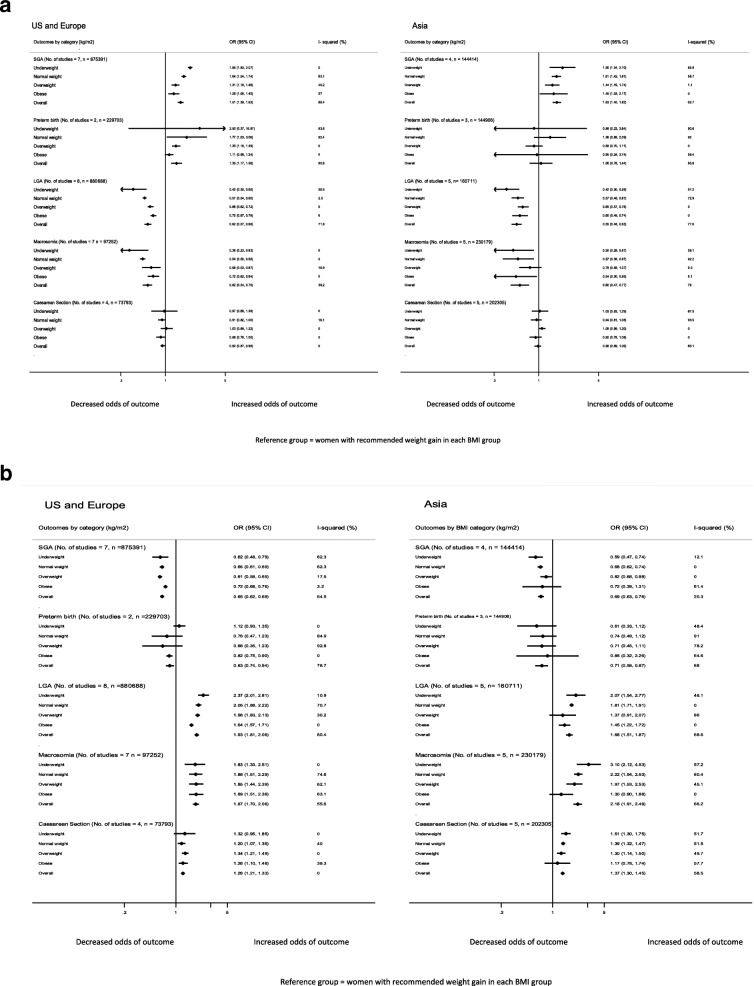
BACKGROUND: The association between Institute of Medicine (IOM) guidelines and pregnancy outcomes across ethnicities is uncertain. We evaluated the associations of gestational weight gain (GWG) outside 2009 IOM guidelines, with maternal and infant outcomes across the USA, western Europe and east Asia, with subgroup analyses in Asia. The aim was to explore ethnic differences in maternal prepregnancy body mass index (BMI), GWG and health outcomes across these regions. METHODS: Systematic review, meta-analysis and meta-regression of observational studies were used for the study. MEDLINE, MEDLINE In-Process, Embase and all Evidence-Based Medicine (EBM) Reviews were searched from 1999 to 2017. Studies were stratified by prepregnancy BMI category and total pregnancy GWG. Odds ratio (ORs) 95% confidence intervals (CI) applied recommended GWG within each BMI category as the reference. Primary outcomes were small for gestational age (SGA), preterm birth and large for gestational age (LGA). Secondary outcomes were macrosomia, caesarean section and gestational diabetes. RESULTS: Overall, 5874 studies were identified and 23 were included (n = 1,309,136). Prepregnancy overweight/obesity in the USA, Europe and Asia was measured at 42%, 30% and 10% respectively, with underweight 5%, 3% and 17%. GWG below guidelines in the USA, Europe and Asia was 21%, 18% and 31%, and above was 51%, 51% and 37% respectively. Applying regional BMI categories in Asia showed GWG above guidelines (51%) was similar to that in the USA and Europe. GWG below guidelines was associated with a higher risk of SGA (USA/Europe [OR 1.51; CI 1.39, 1.63]; Asia [1.63; 1.45, 1.82]) and preterm birth (USA/Europe [1.35; 1.17, 1.56]; Asia [1.06; 0.78, 1.44]) than GWG within guidelines. GWG above guidelines was associated with a higher risk of LGA (USA/Europe [1.93; 1.81, 2.06]; Asia [1.68; 1.51 , 1.87]), macrosomia (USA/Europe [1.87; 1.70, 2.06]; Asia [2.18; 1.91, 2.49]) and caesarean (USA/Europe [1.26; 1.21, 1.33]; Asia [1.37; 1.30, 1.45]). Risks remained elevated when regional BMI categories were applied for GWG recommendations. More women in Asia were categorised as having GWG below guidelines using World Health Organization (WHO) (60%) compared to regional BMI categories (16%), yet WHO BMI was not accompanied by increased risks of adverse outcomes. CONCLUSIONS: Women in the USA and western Europe have higher prepregnancy BMI and higher rates of GWG above guidelines than women in east Asia. However, when using regional BMI categories in east Asia, rates of GWG above guidelines are similar across the three continents. GWG outside guidelines is associated with adverse outcomes across all regions. If regional BMI categories are used in east Asia, IOM guidelines are applicable in the USA, western Europe and east Asia.
Overview
The claims and statistics of this paper haven’t been checked yet.
Free: it reads the open-access text and checks the first 5 claims that cite a source we can check. Create a free account to check every claim.
Integrity signals
Registry
Cites
Statistics
Figures
Verification
Claims the paper makes
The claims and statistics of this paper haven’t been checked yet.
Free: it reads the open-access text and checks the first 5 claims that cite a source we can check. Create a free account to check every claim.
Claims other papers make about this one
Each is checked against this paper’s own text: does it say what the citing paper says it does?
The source backs part of the claim, not all of it — or backs it for a different population, condition or comparison.
In the citing paper
“Excessive GWG is more common in women who are overweight or obese (64%) and is linked to higher risks of delivering large-for-gestational-age (LGA) infants across ethnicities (OR 1.68–1.93) [35].”
From Medical Nutrition Therapy for Women with Gestational Diabetes: Current Practice and Future Perspectives (2025) · cites this paper as [35]
Experimental — accuracy not yet measured
Self-check
Percentages, sums and reported differences re-computed from the paper’s own numbers.
The self-check needs the paper’s full text.
Citations
Cites
Measuring inconsistency in meta-analyses
Higgins, J. P. T., Thompson, S. G., Deeks, J. J., & Altman, D. G. (2003) · BMJ · doi:10.1136/bmj.327.7414.557 · Cited by 63,139
(2004) · The Lancet · doi:10.1016/s0140-6736(03)15268-3 · Cited by 12,717
Trends in Obesity Among Adults in the United States, 2005 to 2014
Flegal, K. M., Kruszon-Moran, D., Carroll, M. D., Fryar, C. D., & Ogden, C. L. (2016) · JAMA · doi:10.1001/jama.2016.6458 · Cited by 2,803 · cited 1×
“Applying WHO prepregnancy BMI categories, the USA had the greatest prevalence of overweight and obesity at 43%, consistent with trends from the 2013– 2014 National Health and Nutrition Examination Survey (NHANES), with 37% of reproductive-aged women obese [43].”
MethodObesity and Kidney Disease: Hidden Consequences of the Epidemic
Kovesdy, C. P., Furth, S. L., Zoccali, C., & on behalf of the World Kidney Day Steering Committee (2017) · American Journal of Nephrology · doi:10.1159/000458467 · Cited by 2,217
New Criteria for `Obesity Disease' in Japan
The Examination Committee of Criter (2002) · Circulation Journal · doi:10.1253/circj.66.987 · Cited by 1,650
Goldstein, R. F., Abell, S. K., Ranasinha, S., Misso, M., Boyle, J. A., Black, M. H., Li, N., Hu, G., Corrado, F., Rode, L., et al. (2017) · JAMA · doi:10.1001/jama.2017.3635 · Cited by 1,636
Self-citationDeurenberg, P., Deurenberg‐Yap, M., & Guricci, S. (2002) · Obesity Reviews · doi:10.1046/j.1467-789x.2002.00065.x · Cited by 1,326
Preconceptional and maternal obesity: epidemiology and health consequences
Poston, L., Caleyachetty, R., Cnattingius, S., Corvalán, C., Uauy, R., Herring, S., & Gillman, M. W. (2016) · The Lancet Diabetes & Endocrinology · doi:10.1016/s2213-8587(16)30217-0 · Cited by 1,111
New Criteria for `Obesity Disease' in Japan
Oda, E. (2006) · Circulation Journal · doi:10.1253/circj.70.150 · Cited by 783
Wang, Y., Mi, J., Shan, X.-Y., Wang, Q. J., & Ge, K.-Y. (2007) · International Journal of Obesity · doi:10.1038/sj.ijo.0803354 · Cited by 779
Research works printed but not linked: 1
- Rasmussen K Yaktine AL Institute of Medicine and National Research Council Committee to reexamine IOM pregnancy weight guidelines. Weight gain during pregnancy: reexamining the guidelines 2009 Washington DC National Academic Press
Cited by
Items 301–400 of 540
Wahabi, H., Esmaeil, S. A., & Fayed, A. A. (2025) · Healthcare · doi:10.3390/healthcare13243258 · Cited by 4
“The significant variation in the prevalence of inadequate GWG is anticipated due to the impact of numerous modifiable socioeconomic and ethnic factors [32,33].”
Su, Y.-Y., Chen, C.-J., Chen, M., Lin, C.-C., Chiou, H., Hsieh, W.-S., Chang, H. C., Chen, C., & Chen, P.-C. (2026) · Journal of the Formosan Medical Association · doi:10.1016/j.jfma.2025.12.012 · Cited by 3
Battung, S. M., Thaha, A. R., van der Beek, E. M., & Groen, H. (2026) · BMC Public Health · doi:10.1186/s12889-026-26818-2 · Cited by 3
Dickert, J. J., Springer, D. L. M., von Kaisenberg, C., Hillemanns, P., de Zwaan, M., & Brodowski, L. (2023) · Obesity Facts · doi:10.1159/000533276 · Cited by 3
“Interestingly, the proportion of women who gained less weight than recommended is consistent across studies with 20% [13, 36].”
BackgroundHong, M., Liang, F., Zheng, Z., Chen, H., Li, X., Guo, Y., Liu, X., Li, K., & Xia, H. (2023) · Clinical Nutrition ESPEN · doi:10.1016/j.clnesp.2023.11.001 · Cited by 3
Moreno, V. A., Lucero, D., Rodriguez-Cruz, N., Le, Q., Greaney, M. L., & Lindsay, A. C. (2024) · International Journal of Environmental Research and Public Health · doi:10.3390/ijerph21121672 · Cited by 3
Dammer, U., Gall, C. M., Pretscher, J., Schneider, M. O., Faschingbauer, F., Loehberg, C. R., Beckmann, M. W., & Kehl, S. (2025) · Geburtshilfe und Frauenheilkunde · doi:10.1055/a-2423-4541 · Cited by 3
Zhu, Y., Li, J., Wang, L., Qi, Q., Li, S., Cheng, Y., Liu, D., Zeng, L., & Zhu, Z. (2025) · Maternal and Child Nutrition · doi:10.1111/mcn.70015 · Cited by 3
“The IOM guidelines used in this study were established using data from US white women, which may not be directly applicable to LMIC populations with different nutritional profiles and anthropometric characteristics (Goldstein et al. 2018).”
Matias, S. L., & French, C. D. (2025) · Current Developments in Nutrition · doi:10.1016/j.cdnut.2025.107457 · Cited by 3
“Conversely, gaining weight below guidelines has been found to be associated with small for gestational age and preterm birth [8].”
Oh, E.-J., Kim, T., Park, S. H., Park, H. W., Kweon, H.-J., Choi, J., & Shin, J. (2025) · Journal of Personalized Medicine · doi:10.3390/jpm15060261 · Cited by 3
“The association between maternal pre-pregnancy BMI and fetal health outcomes may vary across continents when region-specific BMI classifications [25].”
Mental health and gestational weight gain: A comparison between Brazilian cohorts
Victor, A., Leitão, M. P. C., Argentato, P. P., Batista, L. P. R., Teles, L. D. F. D. S., Luzia, L. A., Artes, R., & Rondó, P. H. D. C. (2025) · PLoS ONE · doi:10.1371/journal.pone.0326743 · Cited by 3
“Excessive GWG is associated with increased risks of obstetric complications, including gestational diabetes, preeclampsia, cesarean section, macrosomia, metabolic diseases, and cardiometabolic diseases in childhood [16,19–22].”
Gilmore, L. A., & Redman, L. M. (2019) · Nutrition Research · doi:10.1016/j.nutres.2019.03.013 · Cited by 3
“In addition to pre-pregnancy obesity, weight gain during pregnancy is independently associated with maternal and fetal health [3, 14, 15].”
BackgroundThe role of resistin in the genesis of metabolic disorders in pathological pregnancy
Ostafiichuk, S. O. (2019) · The Ukrainian Biochemical Journal · doi:10.15407/ubj91.05.055 · Cited by 3
“Pathological weight gain is considered to be a significant and independent risk factor for obstetric and perinatal complications such as preeclampsia, gestational diabetes, and macrosomia, and increases operative delivery and the development of overweight and obesity after delivery [2].”
BackgroundASSOCIATION OF HYPERTLEPTINEMIA AND GESTATIONAL WEIGHT GAIN
Ostafiichuk, S. O., & Henyk, N. I. (2019) · PROBLEMS OF ENDOCRINE PATHOLOGY · doi:10.21856/j-pep.2019.3.07 · Cited by 3
Prévalence à la maternité des facteurs de risque de développer une obésité infantile
Thibault, H., Pailler, M., Carriere, C., Barat, P., Sentilhes, L., Rebola, M., Rigalleau, V., & Lamireau, T. (2022) · Bulletin de l Académie Nationale de Médecine · doi:10.1016/j.banm.2021.09.017 · Cited by 5
Angali, K. A., Azhdari, M., Cheraghi, M., Shahri, P., Salmanzadeh, S., & Borazjani, F. (2023) · Journal of Holistic Nursing and Midwifery · doi:10.32598/jhnm.33.2.2290 · Cited by 3
Healthy Lifestyle Beliefs Scale: Psychometric properties in Portuguese pregnant women
Nunes, M. A. R. A. P., Almeida, S., Cardoso, A., Vieira, M. M. D. S., & Melnyk, B. M. (2023) · Research in Nursing & Health · doi:10.1002/nur.22329 · Cited by 4
Racism and Pregnancy Health in Hamilton, Ontario
McKerracher, L., Moffat, T., Barker, M. E., Galloway, T., & Sloboda, D. M. (2023) · Canadian Journal of Midwifery Research and Practice · doi:10.22374/cjmrp.v22i1.8 · Cited by 5
“29 The increased risks of complications and below-recommended weight gain are particularly concerning, because these factors predict poor birth outcomes, 30 which in turn predict higher risks of noncommunicable disease over the lifespan of both the person giving birth and their child.”
BackgroundCarrilho, T. R. B., Wang, D., Hutcheon, J. A., Wang, M., Fawzi, W. W., Kac, G., Accrombessi, M., Adu‐Afarwuah, S., Alves, J. G. B., de Araújo, C. A. L., et al. (2024) · American Journal of Clinical Nutrition · doi:10.1016/j.ajcnut.2024.03.016 · Cited by 3
Perceptual Factors Associated with Gestational Weight Gain: A Cross-Sectional Survey
Kim, S., & Ahn, S. (2024) · Journal of Korean Academy of Nursing · doi:10.4040/jkan.24052 · Cited by 3
Call, C. C., Jouppi, R. J., Emery, R. L., Grace, J. L., Sweeney, G. M., Conlon, R. P. K., Ferguson, E., & Levine, M. D. (2024) · Appetite · doi:10.1016/j.appet.2024.107828 · Cited by 4
Yu, Y., Hardy, I. S., Sun, W., Fergusson, D. A., Fraser, W. D., & Dubois, L. (2020) · BMJ Open · doi:10.1136/bmjopen-2019-033130 · Cited by 3
Oba, M. S., Murakami, Y., Satoh, M., Murakami, T., Ishikuro, M., Obara, T., Hoshi, K., Imai, Y., Ohkubo, T., & Metoki, H. (2020) · Journal of Developmental Origins of Health and Disease · doi:10.1017/s2040174420000240 · Cited by 3
Relação entre ganho de peso gestacional e composição corporal do concepto
Teles, L. D. F. D. S. (2021) · Digital Library of Theses and Dissertations (Universidade de São Paulo) · doi:10.11606/t.6.2021.tde-05042021-161019 · Cited by 8
Maternal nutrient metabolism and requirements in pregnancy
Vesco, K. K., Lindsay, K., & Johnson, M. (2020) · Elsevier eBooks · doi:10.1016/b978-0-12-818460-8.00003-4 · Cited by 2
Kung, W., Kuo, H., Chang, C.-F., Zen, Y., & Lin, C. (2024) · Reproductive Sciences · doi:10.1007/s43032-024-01525-8 · Cited by 3
Nepal, J., Chaudhary, K., Adhikari, B., Shrestha, A., Shrestha, A., Pudasainee‐Kapri, S., & Rawal, S. (2024) · PLOS Global Public Health · doi:10.1371/journal.pgph.0003546 · Cited by 3
Prevalence of risk factors for developing childhood obesity in maternity
Thibault, H., Pailler, M., Carriere, C., Barat, P., Goff, M. L., Ghemini, N., Sentilhes, L., Rebola, M., Rigalleau, V., & Lamireau, T. (2025) · Archives de Pédiatrie · doi:10.1016/j.arcped.2025.04.001 · Cited by 2
Fjorback, S. S. O., Hugin, A. W., Schiøtz, M. L., Hansen, M. K., Brethvad, S. G. B., Løkkegaard, E., Bendix, J. M., & Broberg, L. (2025) · Midwifery · doi:10.1016/j.midw.2025.104519 · Cited by 2
Diwan, N., Mbithe, B., Kinuthia, J., Cagle, T. J., Kibaara, C., Adly, A., Chung, M. H., & Bengtson, A. M. (2025) · Annals of Epidemiology · doi:10.1016/j.annepidem.2025.08.001 · Cited by 2
Experience of pregnant women living in temporary shelters post-earthquake: a phenomenological study
KELEŞ, M. G., & Toker, E. (2025) · BMC Pregnancy and Childbirth · doi:10.1186/s12884-025-07994-2 · Cited by 2
“In this context, malnutrition among pregnant women can lead to serious health issues such as anemia, infections, weight loss, and premature birth, while also posing risks of developmental delays and mental retardation in infants [18].”
Tang, W., Kang, Z., Cai, Q., Xu, H., Zhao, Y., Yang, Y., Liu, T., Han, F., Wang, Y., & Zhou, N. (2025) · Journal of Endocrinological Investigation · doi:10.1007/s40618-025-02691-5 · Cited by 2
“Several meta-analyses have shown that abnormal GWG is closely linked to the occurrence of adverse pregnancy outcomes such as gestational diabetes mellitus (GDM), pre-eclampsia (PE), and small for gestational age (SGA) fetuses [4, 5].”
Zhang, L., Wang, J., Zheng, W., Yuan, X., Liu, C., Xin, Y., Song, W. L., Wang, X., Liang, S., Chen, L., et al. (2025) · Diabetes Obesity and Metabolism · doi:10.1111/dom.70158 · Cited by 2
Self-citationFalkenhain, K., Kracht, C. L., Flanagan, E. W., Altazan, A. D., Hsia, D. S., Cabre, H. E., Apolzan, J. W., & Redman, L. M. (2025) · Annals of Behavioral Medicine · doi:10.1093/abm/kaaf072 · Cited by 2
Effect of dietary and lifestyle intervention in pregnant women: randomized clinical trial
de Lima, M. C., Carreira, N. P., & Sartorelli, D. S. (2025) · Revista de Saúde Pública · doi:10.11606/s15188787.2025059006259 · Cited by 2
Protocol for the development of the WHO gestational weight gain charts
Carrilho, T. R. B., Oladapo, O. T., Hutcheon, J. A., Gatica‐Domínguez, G., Rasmussen, K. M., Flores-Urrutia, M. C., Kumapley, R., Tunçalp, Ӧ., Bahya-Batinda, D., Fayed, A. A., et al. (2026) · BMJ Open · doi:10.1136/bmjopen-2025-101973 · Cited by 2
Self-citationGestational Weight Gain and Early Child Neurodevelopment: Prospective Cohort Study
Liu, W., Wang, X., Wu, F., ye, X., Su, J., Xu, H., Li, L. S., Fang, F., Liu, M., Zhang, Q., et al. (2026) · BJOG An International Journal of Obstetrics & Gynaecology · doi:10.1111/1471-0528.70172 · Cited by 2
“Besides, since Asian populations tend to have lower BMI and lower gestational weight gain compared to Western populations, caution is warranted when extrapolating these results to non-Asian populations [51].”
Fayed, A. A., Esmaeil, S. A., AlZabin, A. K., AlMutiri, W. A., Almajed, E. H., & Wahabi, H. (2026) · Healthcare · doi:10.3390/healthcare14030403 · Cited by 2
“Adequate gestational weight gain (GWG) is consistently linked to better maternal and neonatal outcomes, whereas inadequate and excessive GWG were associated with preterm delivery, cesarean section, low birth weight, and macrosomia [1].”
Khademioore, S., Darling, E. K., D'Souza, R., Muraca, G. M., Guo, Y., & Anderson, L. N. (2026) · Journal of Obstetrics and Gynaecology Canada · doi:10.1016/j.jogc.2026.103406 · Cited by 2
Physical development of newborns born to mothers with different carbohydrate metabolism disorders
Харитонова, Л. А., Папышева, О. В., Васильевна, Б. Л., & Bogomaz, D. S. (2019) · Экспериментальная и клиническая гастроэнтерология · doi:10.31146/1682-8658-ecg-161-1-88-98 · Cited by 2
Харитонова, Л. А., Папышева, О. В., & Котайш, Г. А. (2020) · Экспериментальная и клиническая гастроэнтерология · doi:10.31146/1682-8658-ecg-173-1-66-75 · Cited by 2
Mainland, R., & Retnakaran, R. R. (2020) · Jornal de Pediatria · doi:10.1016/j.jped.2020.09.001 · Cited by 4
Liu, F. D. L., & Borbe, M. M. G. (2022) · Philippine Journal of Obstetrics and Gynecology · doi:10.4103/pjog.pjog_15_22 · Cited by 2
Monitoring gestational weight gain: setting up a regional surveillance system in Italy
Pani, P., Carletti, C. V., Giangreco, M., Knowles, A., Clagnan, E., Gobbato, M., Zotto, S. D., Cattaneo, A., Ronfani, L., on behalf of the Gestational Weight Survey Group (GWS group), et al. (2023) · BMC Public Health · doi:10.1186/s12889-023-15028-9 · Cited by 2
“for western Europe (69%), and Asia (67%), but lower than that described for the USA (72%) [39].”
BackgroundAwoke, M. A., Earnest, A., Skouteris, H., Moran, L., & Wycherley, T. P. (2023) · Nutrition · doi:10.1016/j.nut.2023.112026 · Cited by 2
Kumari, A., Ranjan, P., Vikram, N. K., Kaur, D., Balsarkar, G. D., Malhotra, A., Puri, M., Batra, A., Madan, J., Tyagi, S., et al. (2023) · Journal of Family Medicine and Primary Care · doi:10.4103/jfmpc.jfmpc_45_22 · Cited by 3
“%) gain excessive gestational weight [3] (weight gain more than that recommended by the Institute of Medicine during pregnancy [4] ) with 20% retaining 1 to 5.5 kg of this weight during the first year of their postpartum period.”
InfluentialWierzejska, R. E., Wojda, B. K., Bomba-Opon, D. A., Rzucidło-Szymańska, I., Brawura-Biskupski-Samaha, R., & Szymusik, I. (2024) · Nutrients · doi:10.3390/nu16203535 · Cited by 2
“In twin pregnancies, as in singleton pregnancies, the growth of the fetus and the birth weight of the newborns are associated with gestational weight gain [35,44,61,62], which was also proven in our study.”
BackgroundResultGoldstein, R. F., Boyle, J. A., Cooray, S. D., Joham, A. E., Fitz‐Gerald, A. L., Enticott, J., Harrison, C. L., & Teede, H. J. (2024) · Obesity · doi:10.1002/oby.24192 · Cited by 2
“Our systematic review and meta-analysis of over 1.3 million women demonstrated 47% gain above recommendations [5], with the highest prevalence of excess GWG experienced in women who have overweight, followed by women who have obesity (64% and 60%, respectively) [1].”
InfluentialSelf-citationYang, A., Wang, Y., Liu, Y., Yang, J., Xu, C., & Zhong, S. (2025) · BMJ Open · doi:10.1136/bmjopen-2024-084282 · Cited by 2
Risk factors for inadequate and excessive gestational weight gain during pregnancy among women
Cho, J. S., & Kang, S. J. (2025) · Midwifery · doi:10.1016/j.midw.2025.104345 · Cited by 2
Wei, C., Chen, M., Lin, C., Tsai, M., Chen, Y., Guo, Y. L., Lin, S., Liao, H., Chen, J. T., Hsieh, W., et al. (2025) · Journal of Occupational and Environmental Medicine · doi:10.1097/jom.0000000000003369 · Cited by 2
Wilding, S., Francis, J., Seabrook, J. A., & Twynstra, J. (2025) · Canadian Journal of Dietetic Practice and Research · doi:10.3148/cjdpr-2024-027 · Cited by 5
Yuan, S., Liu, W., Shen, Z., Ren, M., & Hao, S. (2025) · BMC Pregnancy and Childbirth · doi:10.1186/s12884-025-07436-z · Cited by 3
“…be avoided during pregnancy [45] since the consumption of ultra-processed foods has been associated with the development of chronic diseases in the general population and pregnant women [46, 47], including anemia [48], excessive weight gain [49], hypertension [49], and gestational diabetes [50].”
Li, M., Dawuti, W., Wu, T., Tian, X., Zhang, Y., Gao, W., Huang, T., & Li, Z. (2025) · BMC Pregnancy and Childbirth · doi:10.1186/s12884-025-07414-5 · Cited by 3
“While there is extensive data on the relationship between GWG and pregnancy outcomes in singleton pregnancies [15, 16], the impact of GWG on twin pregnancy outcomes remains less consistent [17, 18].”
Ranasinha, S., Enticott, J., Harrison, C. L., & Teede, H. J. (2025) · BMJ Open · doi:10.1136/bmjopen-2024-087589 · Cited by 3
Self-citationوزن گیری دوران بارداری زنان مراجعه کننده به مراکز بهداشتی درمانی تهران در سال 1395
عبداللهی, م., صفیری, س., کلاهی, ع. ا., رشیدی, م. م., محمدی, ف., اشرفی, آ., & ابدی, ع. (2021) · Salāmat-i ijtimā̒ī · doi:10.22037/ch.v8i1.31230 · Cited by 2
Coe, C. L. (2021) · Biological Psychiatry Cognitive Neuroscience and Neuroimaging · doi:10.1016/j.bpsc.2021.11.013 · Cited by 2
Formoso, G., Bianchi, C., Burlina, S., Manicardi, E., Sculli, M. A., Resi, V., & Sciacca, L. (2022) · Acta Diabetologica · doi:10.1007/s00592-022-01950-8 · Cited by 2
“It must be pointed out that, although IOM recommendations were originally intended for use among American women [18], these recommendations might also be appropriate for women living in western Europe and East Asia [46].”
BackgroundGouws, M., McGready, R., Pan-ngum, W., Min, A. M., Tun, N. W., Gilder, M. E., Prins, T. J., Yotyingaphiram, W., Pimanpanarak, M., Viladpai-Nguen, J., et al. (2025) · PLOS One · doi:10.1371/journal.pone.0330256 · Cited by 1
“Although literacy and socioeconomic status are also possible confounders [4,25], reliable measures of these variables were not available within the dataset.”
Nutritional status of children born to mothers with gestational diabetes mellitus
Bogomaz, D. S., Папышева, О. В., Shurygina, D. A., & Васильевна, Б. Л. (2021) · Экспериментальная и клиническая гастроэнтерология · doi:10.31146/1682-8658-ecg-185-1-67-74 · Cited by 1
Vacuum-Assisted Delivery Complication Rates Based on Ultrasound-Estimated Fetal Weight
Schreiber, H., Cohen, G., Farladansky‐Gershnabel, S., Sharon‐Weiner, M., Shechter‐Maor, G., Biron‐Shental, T., & Markovitch, O. (2022) · Journal of Clinical Medicine · doi:10.3390/jcm11123480 · Cited by 1
“There was tendency toward older maternal age, higher pre-pregnancy BMI and diabetes in the group of higher EFW, but this did not reach statistical significance.”
BackgroundInfluentialComportamientos en estados crónicos y salud mental en grupos vulnerables
Mendoza-Catalán, G. S., Domínguez-Chávez, C. J., Villa-Rueda, A. A., González-Ramírez, J., Terrero, J. Y. T., Gutiérrez, G. A. L., Ochoa, D. L. D., Pacheco-Pérez, L. A., Ortiz-Félix, R. E., Ruíz-González, K. J., et al. (2022) · Ediciones Comunicación Científica eBooks · doi:10.52501/cc.055 · Cited by 1
Intervención psicoeducativa para el control de peso en mujeres embarazadas
Ortíz, E. G., Villarreal, V. M. C., & Peña, C. M. (2023) · Enfermería Global · doi:10.6018/eglobal.558771 · Cited by 2
Mitra, S., & Mondal, A. (2024) · Asian Journal of Medical Sciences · doi:10.3126/ajms.v15i4.60822 · Cited by 1
Inian, S., Nadar, S. R., Marconi, S. D., Sukumar, A., & Cherian, A. G. (2024) · Journal of Family Medicine and Primary Care · doi:10.4103/jfmpc.jfmpc_350_24 · Cited by 1
Huang, L., Huang, Y., Chi, P., Zhuang, Y., Alifu, X., Cheng, H., Zhou, H., Qiu, Y., Zhang, L., Ainiwan, D., et al. (2025) · European Journal of Clinical Nutrition · doi:10.1038/s41430-025-01576-3 · Cited by 2
“Several systematic reviews and meta-analysis indicated that a considerable number of women did not meet the optimal recommendations [5, 6].”
InfluentialRanasinha, S., Teede, H. J., Harrison, C. L., Wang, R., & Enticott, J. (2025) · BMJ Open · doi:10.1136/bmjopen-2024-088664 · Cited by 1
Self-citationInadera, H., Matsumura, K., Yoda, T., Nakano, T., Kasamatsu, H., Shimada, K., Tsuchida, A., the Japan Environment and Children’s Study Group, Kamijima, M., Yamazaki, S., et al. (2025) · BMC Pregnancy and Childbirth · doi:10.1186/s12884-025-07429-y · Cited by 1
“One previous meta-analysis reported that the proportion of mothers with pre-pregnancy BMI 18.5 was higher among Asian women than among Western women [48].”
InfluentialNutritional Screening During Pregnancy: Women’s Views of Weight Monitoring as Part of This Process
Knight-Agarwal, C. R., Munro, L., Morgan, S., Gschwend, A., Fekete, C., & Minehan, M. (2025) · Nutrients · doi:10.3390/nu17091516 · Cited by 1
“In addition, due to changing social attitudes, pregnant women and health professionals found the topic of ‘weight’ increasingly difficult to talk about [2].”
Nurul-Farehah, S., Rohana, A. J., Hamid, N. A., Daud, Z., & Asis, S. H. H. (2025) · Healthcare · doi:10.3390/healthcare13101099 · Cited by 2
“A meta-analysis of 1,309,136 pregnancies indicated that less than half of pregnant women in the US, Europe, and Asia gained the recommended amount of weight [3].”
Hua, W., Lu, S., Zhang, L., Chen, F., Xu, J., Wang, D., Kakongoma, N., & Hu, W. (2025) · Clinical Nutrition ESPEN · doi:10.1016/j.clnesp.2025.07.004 · Cited by 1
Demirtaş, M. S., Yalçın, S. S., Tuşat, M., Ozmen, I., Basar, D., Calapoğlu, A. S., Siyve, S., Demirtas, O., & Ural, D. A. (2025) · Atmospheric Pollution Research · doi:10.1016/j.apr.2025.102675 · Cited by 1
Baquerizo-Sedano, L., Chaquila, J. A., Salinas, C., & González‐Muniesa, P. (2025) · Nutrición clínica y dietética hospitalaria/Nutrición clínica, dietética hospitalaria · doi:10.12873/453baquerizo · Cited by 1
Xiang, X., Wang, W., Yu, Y., & Dang, S. (2025) · Nursing Open · doi:10.1002/nop2.70378 · Cited by 1
Durmishi, S., Lalo, R., Kamberi, F., Hidri, S., & Gugu, M. (2026) · Healthcare · doi:10.3390/healthcare14020172 · Cited by 1
“According to that, it has been observed that a good portion of pregnant women are affected by overweight and obesity; in the USA, a prevalence of 42% is reported, in various European countries, 30%, and in populations of Asia, 10% [10].”
Lloyd, M., Hu, Y., Callander, E. J., Teede, H. J., & Ademi, Z. (2026) · Public Health · doi:10.1016/j.puhe.2026.106137 · Cited by 1
Self-citationSu, Y.-Y., & Chen, P.-C. (2026) · Journal of the Formosan Medical Association · doi:10.1016/j.jfma.2026.01.053 · Cited by 1
Simmons, L. A., Phipps, J. E., Castro-Alvarez, S., Smith, P. M., Overstreet, C., Patrikeyeva, A., Gilliland, P. D., Keeton, V. F., & Noonan, D. (2026) · BMC Pregnancy and Childbirth · doi:10.1186/s12884-026-08846-3 · Cited by 2
“Globally, these rates range from approximately 18% to over 60%, with higher rates reported in high-income countries and among women with higher pre-pregnancy BMI [16, 17].”
Excessive Weight Gain in Pregnancy: Time for Action
Perumal, N., & Carrilho, T. R. B. (2026) · Paediatric and Perinatal Epidemiology · doi:10.1111/ppe.70134 · Cited by 1
Impact of low and late fertility on gestational diabetes mellitus and macrosomia
Zanardo, V., Battistin, T., Sandri, S., Severino, L., BRUGNARO, L., Camporese, A., ROMAGNOLI, D., & Straface, G. (2026) · Minerva Obstetrics and Gynecology · doi:10.23736/s2724-606x.26.05845-8 · Cited by 1
Gestational weight gain and adverse perinatal outcomes among individuals with gestational diabetes
Zhao, X. B., Su, X. J., Qi, X., Ma, Y. X., Mol, B. W., Liu, X. H., & Ying, H. (2026) · Communications Medicine · doi:10.1038/s43856-026-01544-3 · Cited by 1
Opportunities and Challenges for Precision Nutrition in Gestational Obesity Management
Söderström, E., Kaegi-Braun, N., Sandborg, J., Lilliecreutz, C., & Löf, M. (2026) · Current Obesity Reports · doi:10.1007/s13679-026-00710-x · Cited by 1
“…u r it y i s a ss o - c i a t e d w it h i n c r ea s e d p e r i n a t a l c o m p li ca ti on r i s k e v e n a f t e r a d j u s ti ng f o r B M I [ 36 ] E t hn i c it y - s p ec i fi c B M I ca t e go r i e s t o d e fi n e w e i gh t g a i n t a r g e t s i n w o m e n fr o m A s i a [ 32 ] .”
Bodilly, L., Weiner, S., Misel‐Wuchter, K., & Bermick, J. (2026) · The FASEB Journal · doi:10.1096/fj.202502656rr · Cited by 1
Stunes, A. K., Syversen, U., Øvreseth, A. H., Kinge, I. T., Mørkved, S., Salvesen, K. Å., Garnæs, K. K., & Moholdt, T. T. (2026) · Frontiers in Endocrinology · doi:10.3389/fendo.2026.1809102 · Cited by 1
“However, it aligns with fi ndings from high-income countries showing similar rates among individuals with pre-pregnancy overweight or obesity, particularly when excessive gestational weight gain is present (45, 46).”
Gestational weight gain and preeclampsia in twin pregnancies: a retrospective cohort study
Zhang, Y., Peng, K., Wang, L., Jiang, Y., He, N., Zou, J., Zhang, L., & Zhou, L. (2026) · The Journal of Maternal-Fetal & Neonatal Medicine · doi:10.1080/14767058.2026.2683302 · Cited by 2
Alaze-Hagemann, F., Reiß, K., Abou‐Dakn, M., Abu‐Omar, K., Alexy, U., Beyer, K., Breidenassel, C., Brettschneider, A.-K., Cremer, M., Ensenauer, R. E., et al. (2026) · Geburtshilfe und Frauenheilkunde · doi:10.1055/a-2827-5905 · Cited by 1
Hydration status count for weight gain on pregnancy period
Mulyani, E. Y., Angkasa, D., Stanin, E., & Jus’at, I. (2021) · Nutrition & Food Science · doi:10.1108/nfs-03-2021-0096 · Cited by 1
Grammatikopoulou, M. G., & Magkos, F. (2022) · Springer eBooks · doi:10.1007/978-3-030-89243-2_11 · Cited by 1
Current Resources for Evidence-Based Practice, March 2019
Bovbjerg, M. L. (2019) · Journal of Obstetric, Gynecologic & Neonatal Nursing · doi:10.1016/j.jogn.2019.01.007 · Cited by 1
Genetic aspects of metabolic disorders in pregnant women with pathological weight gain
Ostafiichuk, S. O. (2019) · Regulatory Mechanisms in Biosystems · doi:10.15421/021941 · Cited by 1
Nutrition in Critical Illness During Pregnancy
Bendavid, I., & Singer, P. (2020) · Springer eBooks · doi:10.1007/978-3-030-43477-9_32 · Cited by 1
Killeen, S. L., Byrne, D. F., Geraghty, A. A., Kilbane, M. T., Twomey, P. J., McKenna, M. J., Yelverton, C. A., Saldova, R., van Sinderen, D., Cotter, P. D., et al. (2022) · Annals of Nutrition and Metabolism · doi:10.1159/000522564 · Cited by 1
Matsushita, T., Honda, A., Hasegawa, T., Inoue, E., Noma, H., & Ota, E. (2022) · Systematic Reviews · doi:10.1186/s13643-022-01977-6 · Cited by 1
“Although BMI categories applied in IOM guidelines are widely adapted, previous research suggested that applying regional BMI categories for GWG is more appropriate for assessing pregnancy outcomes [5].”
BackgroundMethodPericonception care of the infertile patient: Are we doing enough?
Legro, R. S. (2022) · Fertility and Sterility · doi:10.1016/j.fertnstert.2022.08.018 · Cited by 1
Bodnarchuk, О. V. (2022) · Reports of Vinnytsia National Medical University · doi:10.31393/reports-vnmedical-2022-26(3)-09 · Cited by 1
Argentato, P. P., Guerra, J. V. D. S., Luzia, L. A., Ramos, E. S., Maschietto, M. C., & Rondó, P. H. D. C. (2024) · Genetics and Molecular Biology · doi:10.1590/1678-4685-gmb-2023-0203 · Cited by 1
“Overweight is a global problem in women of reproductive age (Branum et al ., 2016; Goldstein et al ., 2018).”
BackgroundPre-pregnancy shift work’s influence on postpartum weight retention: Body mass index’s role
Wei, C., Chen, M., Lin, C., Tsai, M., Guo, Y. L., Lin, S., Chavarro, J. E., Hsieh, W.-S., & Chen, P. (2024) · Chronobiology International · doi:10.1080/07420528.2024.2382909 · Cited by 1
“Recently, major public health concerns focused on the increasing prevalence of mothers with obesity, excessive gestational weight gain (GWG) and postpartum weight retention (PPWR) (National Research Council 2009; Arora and Tamber Aeri 2019; Goldstein et al. 2018).”
Ballard, M., Saben, J. L., Krukowski, R. A., Børsheim, E., Sims, C. R., Samuel, H., Jansen, L. T., & Andres, A. (2024) · Journal of the Academy of Nutrition and Dietetics · doi:10.1016/j.jand.2024.10.011 · Cited by 1
Manejo de la Ganancia Insuficiente de Peso en Gestantes Atendidas en un Hogar Materno
Martínez, M. P., Martínez, M. P., Pérez, N. L. D., Ochoa, O. N. F., & Marrero, O. G. (2022) · Revista Científica Hallazgos21 · doi:10.69890/hallazgos21.v7i3.598 · Cited by 1
Zanardo, V., Polver, S., Zanardo, B., Volpe, F., Battistin, T., Ghiro, L., & Straface, G. (2025) · European Journal of Obstetrics & Gynecology and Reproductive Biology · doi:10.1016/j.ejogrb.2025.114746 · Cited by 4
Metadata
- Authors
- Goldstein, R. F., Abell, S. K., Ranasinha, S., Misso, M. L., Boyle, J. A., Harrison, C. L., Black, M. H., Li, N., Hu, G., Corrado, F., Hegaard, H., Kim, Y. J., Haugen, M., Song, W. O., Kim, M. H., Bogaerts, A., Devlieger, R., Chung, J. H., & Teede, H. J.
- Affiliations
- Monash Health (AU)
- Monash University (AU)
- Kaiser Permanente (US)
- Tianjin Women's and Children's Health Center (CN)
- Pennington Biomedical Research Center (US)
- University of Messina (IT)
- Copenhagen University Hospital (DK)
- Ewha Womans University (KR)
- Norwegian Institute of Public Health (NO)
- Michigan State University (US)
- Dankook University (KR)
- University of Antwerp (BE)
- GZA Ziekenhuizen Campus Sint-Augustinus (BE)
- Monash Medical Centre (AU)
- Corresponding author
- Teede, Helena J.
- ORCID
- Venue
- BMC Medicine
- Published
- 2018-08-31
- Volume
- 16
- Issue
- 1
- Pages
- 153-153
- ISSN
- 1741-7015 (ISSN-L)
- PMC
- PMC6117916
- OpenAlex
- W2888709256
- Cited by
- 515
- References
- 61
- Citations by year
- 2026: 45 · 2025: 65 · 2024: 61 · 2023: 78 · 2022: 108 · 2021: 63 · 2020: 67 · 2019: 27
- FWCI
- 6.41
- Type
- journal article
- Language
- en
- Open access
- gold
- doi.org
- Licence
- cc-by
- creativecommons.org/licenses/by/4.0/ (tdm)
- Locations
- BMC Medicine (publishedVersion, cc-by)
- Europe PMC (PubMed Central) (publishedVersion, other-oa)
- PubMed Central (publishedVersion, cc-by)
- PubMed (publishedVersion)
- Research at the University of Copenhagen (University of Copenhagen) (publishedVersion, cc-by)
- Adelaide Research & Scholarship (AR&S) (University of Adelaide) (submittedVersion, cc-by)
- Monash University Research Portal (Monash University) (submittedVersion, other-oa)
- Lirias (submittedVersion, other-oa)
- DOAJ (DOAJ: Directory of Open Access Journals) (submittedVersion, cc-by-sa)
- eScholarship (California Digital Library) (submittedVersion, cc-by)
- NORA - Norwegian Open Research Archives (submittedVersion, other-oa)
- Funders
- Gentofte Hospital
- Centers for Disease Control and Prevention
- University of Illinois at Urbana-Champaign
- Medical Research Council
- National Health and Medical Research Council
- National Institute of General Medical Sciences (U54GM104940)
- National Center for Chronic Disease Prevention and Health Promotion
- Topics
- Health Sciences › Medicine › Obstetrics and Gynecology › Gestational Diabetes Research and Management
- Health Sciences › Medicine › Pediatrics, Perinatology and Child Health › Birth, Development, and Health
- Health Sciences › Medicine › Pediatrics, Perinatology and Child Health › Maternal and Neonatal Healthcare
- Keywords
- gestational weight gain, IOM weight gain guidelines, pre-pregnancy body mass index, maternal obesity, ethnic differences, small for gestational age, preterm birth, large for gestational age, macrosomia, cesarean section, gestational diabetes mellitus, Asian women, regional comparison, maternal outcomes, infant outcomes, underweight pregnancy, overweight in pregnancy
- MeSH terms
- Adult, Female, Humans, Infant, Newborn, Pregnancy, Pregnancy Complications, Pregnancy Outcome, Weight Gain, Fetal Weight
About these checks
Registry, retraction, Cites and statistics results are computed, not judged, with one exception: a printed reference that no index lists is read once by a model before it counts as a citation error. Claims are extracted by a model and kept only when their quote appears verbatim in the text; each cited source is then checked, with a model’s help, for whether it says what the claim relies on. Those verdicts can be wrong — read the claim’s quote and the cited source before relying on one.
Statistics and arithmetic are recomputed, not judged.
Confidence bands are shown only for fields calibrated on our annotated test set. None is calibrated yet, so no band is shown.
What counts as a claim ›How we measure confidence ›How we check this ›
Are you an author, or do you see a problem with this page? Request a review
Data sources
Bibliographic data: Semantic Scholar, OpenAlex, Crossref.
Contains information from the Semantic Scholar Academic Graph Datasets, made available under the ODC Attribution License (ODC-BY 1.0).
Semantic Scholar’s data is described in: Kinney, R., et al. (2023). The Semantic Scholar Open Data Platform. arXiv:2301.10140.
