

The Health Stigma and Discrimination Framework: a global, crosscutting framework to inform research, intervention development, and policy on health-related stigmas
Open accessThe DOI matches its Crossref record; 122 of the 123 references it cites were found in a registry or an index; 22 of the 169 sources its claims cite were checked for support.
Abstract
Stigma is a well-documented barrier to health seeking behavior, engagement in care and adherence to treatment across a range of health conditions globally. In order to halt the stigmatization process and mitigate the harmful consequences of health-related stigma (i.e. stigma associated with health conditions), it is critical to have an explicit theoretical framework to guide intervention development, measurement, research, and policy. Existing stigma frameworks typically focus on one health condition in isolation and often concentrate on the psychological pathways occurring among individuals. This tendency has encouraged a siloed approach to research on health-related stigmas, focusing on individuals, impeding both comparisons across stigmatized conditions and research on innovations to reduce health-related stigma and improve health outcomes. We propose the Health Stigma and Discrimination Framework, which is a global, crosscutting framework based on theory, research, and practice, and demonstrate its application to a range of health conditions, including leprosy, epilepsy, mental health, cancer, HIV, and obesity/overweight. We also discuss how stigma related to race, gender, sexual orientation, class, and occupation intersects with health-related stigmas, and examine how the framework can be used to enhance research, programming, and policy efforts. Research and interventions inspired by a common framework will enable the field to identify similarities and differences in stigma processes across diseases and will amplify our collective ability to respond effectively and at-scale to a major driver of poor health outcomes globally.
Overview
CoChat Summary
## TL;DR
This paper proposes the Health Stigma and Discrimination Framework, a crosscutting model for understanding health-related stigma across diseases, levels of influence, and stages of the stigmatization process. It argues that a common framework can improve research, intervention design, monitoring, and policy for conditions such as leprosy, epilepsy, mental health, cancer, HIV, and overweight/obesity.
## Key findings
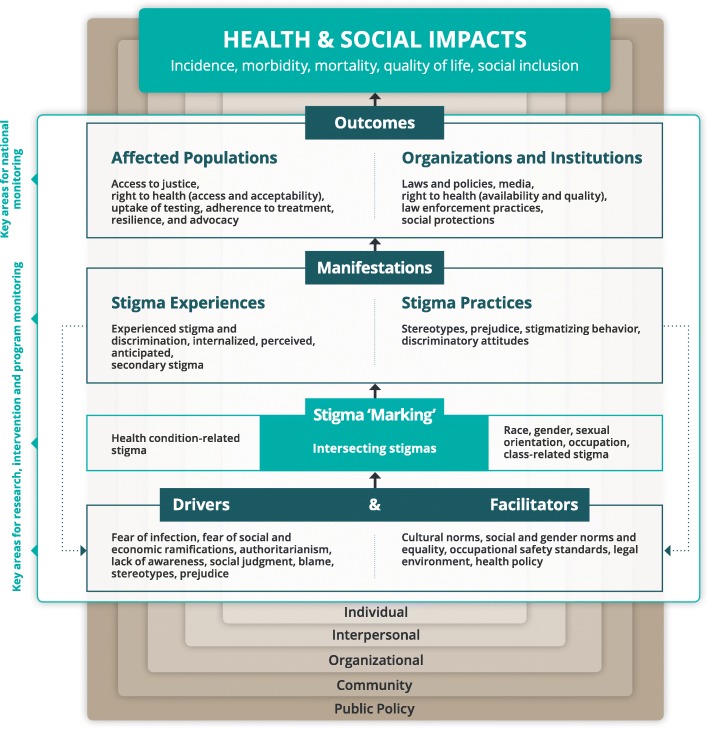
- The framework breaks health-related stigma into domains including drivers and facilitators, stigma marking, stigma experiences/practices, and outcomes for both affected populations and organizations/institutions.
- The authors emphasize that stigma is not just an individual psychological process; it operates across socio-ecological levels and is shaped by social, cultural, political, and economic forces.
- In the paper’s examples, stigma is linked to harmful outcomes such as delayed treatment, poor adherence, lower testing, worse engagement in care, social exclusion, and reduced quality of life.
- The abstract states that the framework is demonstrated using 6 conditions: leprosy, epilepsy, mental health, cancer, HIV, and obesity/overweight; it also notes a mental health study across 16 countries.
## Methods
- The paper is a framework/theory paper: it proposes and explains a new Health Stigma and Discrimination Framework rather than reporting a single empirical study.
- It uses conceptual synthesis and practical applications/examples drawn from multiple health conditions, including communicable and non-communicable diseases.
- The main analysis is an interpretive comparison across conditions and socio-ecological levels, with discussion of how the framework can guide research, intervention development, monitoring, and policy.
## Limitations
- The paper does not report a formal empirical evaluation of the framework; this is evident from the text, which presents the framework and examples rather than original study data.
- The paper states that health-related stigmas vary by condition and context, and that the framework is broad and orienting rather than condition-specific; this implies limited specificity for any single disease context.
- It is evident from the text that the examples are illustrative and selective, so the framework’s practical applications are not exhaustively tested across all health conditions or settings.
Model-written summary. Check it against the paper before relying on it.
Integrity signals
Registry
Cites
Statistics
Figures
Verification
Claims the paper makes
14 Valid · 1 Not valid · 81 Not checked · 29 Own results and interpretations
Some cited sources support this claim and some don’t — read each source’s verdict below.
In the paper
“Outcomes of HIV stigma for people at risk of or living with HIV include engagement in greater HIV risk behaviors, lower rates of HIV testing, worse engagement and retention in HIV care, and worse initiation and adherence to medication [3, 44, 111].”
§ The Health Stigma and Discrimination Framework: a global, crosscutting framework to inform research, intervention development, and policy on health-related stigmas > Practical applications > HIV
What the sources say
- Supportedcites [3] Mahajan AP Stigma in the HIV/AIDS epidemic: a review of the literature and recommendations for the way forward AIDS 2008 22 Suppl 2 S67 S79 10.1097/01.aids.0000327438.13291.62 18641472 PMC2835402 source
The 'Stigma, Testing, & Treatment' subsection (Results, Relationship of HIV/AIDS related Stigma to Prevention & Treatment Programs) states outright that H/A stigma 'is documented as a barrier to uptake of HIV testing and treatment services in numerous settings,' citing South African data where untested individuals held significantly greater stigmatizing attitudes and Botswana data where a majority of patients who delayed testing did so because of fear of stigma. The adjacent passage (same section) adds that individuals with stigmatizing attitudes were significantly less likely to have been tested or to have heard of routine testing, and the Discussion/Recommendations reiterates stigma as a barrier to the entire spectrum of prevention and treatment services with testing as the primary gateway. The other outcomes bundled in the citing sentence are likewise in our copy (risk behavior in the 'Stigma & HIV risk behavior' subsection; care retention and adherence in the following subsection), so the paraphrase is supported; the review's caveats (some attribute poor uptake to lack of ART access; calls for more rigorous research) qualify strength but not direction. (LLM, conf=0.85)
- Not checked yetcites [44] Logie CH Pathways From HIV-Related Stigma to Antiretroviral Therapy Measures in the HIV Care Cascade for Women Living With HIV in Canada J Acquir Immune Defic Syndr 2018 77 2 144 153 29135650 PMC5770113 source
- Misattributedcites [111] Katz IT, et al. Impact of HIV-related stigma on treatment adherence: systematic review and meta-synthesis. J Int AIDS Soc. 2013;16((Suppl 2):3. PMC3833107 24242258 sourceExperimental — accuracy not yet measured
Katz et al. (2013) reviewed only stigma's effect on ART adherence among 26,715 HIV-positive persons; the Discussion states explicitly that 'The evidence search protocol was not designed to identify studies examining the influences of stigma on HIV testing [156, 157]' and instead credits the point to two other works it cites. Our copy therefore does not report or synthesize any association between stigma and lower HIV-testing uptake — it mentions the finding only to hand it off to Young et al. (2010) and Wong et al. (2009), whose titles it lists in the References. The broader sentence in the Discussion ('HIV-related stigma has been shown to adversely affect these treatment- and care-related behaviours in a wide range of settings [35, 161–166]') is likewise a pointer to other citations, not this paper's own result. (LLM, conf=0.80) It matches “HIV-related stigma, social norms, and HIV testing in Soweto and Vulindlela, South Africa: National Institutes of Mental Health Project Accept (HPTN 043)” (2010) instead.
Checked by a reasoning model — may be wrong.
plainstates an association- Asserted: passes — The authors put it forward as true.
- Checkable: passes — It can be checked against evidence.
- Load-bearing: unclear — It is unclear whether the paper’s conclusions depend on it.
- Based: passes — The paper gives a reason why it holds.
- Supported
The cited sources support only part of this claim — read each source’s verdict below.
In the paper
“Stigma is a well-documented barrier to health seeking behavior, engagement in care and adherence to treatment across a range of health conditions globally.”
- Also stated in: § Background · boosted
“Stigma is a well-documented global barrier to health-seeking behavior [1], engagement in care [2], and adherence to treatment [3] across a range of health conditions [4, 5].”
§ The Health Stigma and Discrimination Framework: a global, crosscutting framework to inform research, intervention development, and policy on health-related stigmas > Abstract Stigma is a well-documented barrier to health seeking behavior, engagement in care and adherence to treatment across a range of health conditions globally. In order to halt the stigmatization process and mitigate the harmful consequences of health-related stigma (i.e. stigma associated with health conditions), it is critical to have an explicit theoretical framework to guide intervention development, measurement, research, and policy. Existing stigma frameworks typically focus on one health condition in isolation and often concentrate on the psychological pathways occurring among individuals. This tendency has encouraged a siloed approach to research on health-related stigmas, focusing on individuals, impeding both comparisons across stigmatized conditions and research on innovations to reduce health-related stigma and improve health outcomes. We propose the Health Stigma and Discrimination Framework, which is a global, crosscutting framework based on theory, research, and practice, and demonstrate its application to a range of health conditions, including leprosy, epilepsy, mental health, cancer, HIV, and obesity/overweight. We also discuss how stigma related to race, gender, sexual orientation, class, and occupation intersects with health-related stigmas, and examine how the framework can be used to enhance research, programming, and policy efforts. Research and interventions inspired by a common framework will enable the field to identify similarities and differences in stigma processes across diseases and will amplify our collective ability to respond effectively and at-scale to a major driver of poor health outcomes globally.
What the sources say
- Partly supportedcites [1] Scott N Crane M Lafontaine M Seale H Currow D Stigma as a barrier to diagnosis of lung cancer: patient and general practitioner perspectives Prim Health Care Res Dev 2015 16 06 618 622 10.1017/S1463423615000043 25660904 sourceExperimental — accuracy not yet measured
The Introduction states only the broad background point that 'Stigma has been linked to negative outcomes across a range of areas in health,' and the Abstract/Discussion support stigma as a barrier to help-seeking — anticipation of stigma delayed reporting of symptoms and diagnosis in a lung-cancer sample of 20 patients and 10 GPs in New South Wales, Australia, with 'international research' cited merely on lung-cancer stigma being commonly experienced. Nothing in our copy addresses stigma as a barrier to engagement in care or adherence to treatment, and nothing extends the claim across a range of health conditions globally; the paper's own scope is lung cancer diagnosis delay. So the help-seeking element is supported while the engagement/adherence and multi-condition global generalisation is not. (LLM, conf=0.72)
- Not checked yetcites [2] Corrigan P How stigma interferes with mental health care Am Psychol 2004 59 7 614 625 10.1037/0003-066X.59.7.614 15491256 source
- Partly supportedcites [3] Mahajan AP Stigma in the HIV/AIDS epidemic: a review of the literature and recommendations for the way forward AIDS 2008 22 Suppl 2 S67 S79 10.1097/01.aids.0000327438.13291.62 18641472 PMC2835402 sourceExperimental — accuracy not yet measured
Our copy of Mahajan et al. (2008) supports the three components of the claim, but only within HIV/AIDS: 'Stigma, Testing, & Treatment' (Results) states H/A stigma 'is documented as a barrier to uptake of HIV testing and treatment services in numerous settings, particularly in resource limited countries', and the same section reports that stigma 'impedes access to and retention in HIV care' and 'adherence to antiretroviral medications', with emerging evidence from Africa and Asia and persistence in developed countries — covering the global scope. What the source does not support is the generalization 'across a range of health conditions': the review's scope is HIV/AIDS-related stigma, and other conditions (mental illness, unemployment) appear only as conceptual analogues in 'Defining Stigma: Conceptual Considerations', not as documented evidence of health-seeking, care-engagement or adherence barriers. (LLM, conf=0.78)
boostedstates a cause- Asserted: passes — The authors put it forward as true.
- Checkable: passes — It can be checked against evidence.
- Load-bearing: passes — The paper’s conclusions depend on it.
- Based: passes — The paper gives a reason why it holds.
- Also stated in: § Background · boosted
Every source the paper cites for this claim was checked and supports it.
In the paper
“Stigma influences population health outcomes by worsening, undermining, or impeding a number of processes, including social relationships, resource availability, stress, and psychological and behavioral responses, exacerbating poor health [9].”
§ The Health Stigma and Discrimination Framework: a global, crosscutting framework to inform research, intervention development, and policy on health-related stigmas > Background
What the sources say
- Supportedcites [9] Hatzenbuehler ML Phelan JC Link BG Stigma as a Fundamental Cause of Population Health Inequalities Am J Public Health 2013 103 5 813 821 10.2105/AJPH.2012.301069 23488505 PMC3682466 source
The MEDIATORS LINKING STIGMA TO HEALTH section (p. opening paragraph) states directly that 'stigma thwarts, undermines, or exacerbates several processes (i.e., availability of resources, social relationships, psychological and behavioral responses, stress) that ultimately lead to adverse health outcomes' — the same four mediators and the same direction of effect the claim attributes, with 'worsening/impeding' a fair paraphrase of 'thwarts/exacerbates'. Subsections on Stress, Social Isolation, and Psychological and Behavioral Responses, plus the Abstract and Conclusions ('disrupts or inhibits access to multiple resources—structural, interpersonal, and psychological—that could otherwise be used to avoid or minimize poor health'), corroborate the mediating-pathway framing. (LLM, conf=0.92)
plainstates a cause- Asserted: passes — The authors put it forward as true.
- Checkable: passes — It can be checked against evidence.
- Load-bearing: passes — The paper’s conclusions depend on it.
- Based: passes — The paper gives a reason why it holds.
- Supported
The cited sources support only part of this claim — read each source’s verdict below.
In the paper
“The majority of health-related stigma frameworks explore psychological pathways at the individual level, focusing either on the individuals experiencing stigma [10, 11, 14–16, 30, 31], those perpetuating stigma [21, 26], or both [20, 24, 32].”
§ The Health Stigma and Discrimination Framework: a global, crosscutting framework to inform research, intervention development, and policy on health-related stigmas > Background
What the sources say
- Not checked yetcites [10] Barlösius E Philipps A Felt stigma and obesity: Introducing the generalized other Soc Sci Med 2015 130 9 15 10.1016/j.socscimed.2015.01.048 25658623 source
- Partly supportedcites [11] Tomiyama AJ Weight stigma is stressful. A review of evidence for the Cyclic Obesity/Weight-Based Stigma model Appetite 2014 82 8 15 10.1016/j.appet.2014.06.108 24997407 sourceExperimental — accuracy not yet measured
Our copy of Tomiyama (2014) does present an individual-level psychological framework: 'The COBWEBS model' (p. ~9) and 'Step 1. Weight stigma as a psychological stressor' characterise weight stigma as a stressor and trace psychological/physiological pathways (cortisol, eating, coping) in the person experiencing it, and the paper also points to comparable individual-experiencer frameworks elsewhere (Major & O'Brien, 2005 social identity threat; Meyer, 2003 sexual minority stress). That supports the 'psychological pathways at the individual level, focusing on individuals experiencing stigma' branch. It does not support the rest of the attributed sentence: the paper never examines the psychology of those perpetuating weight stigma (perpetrators appear only descriptively — e.g. family, friends, health care settings), and it makes no survey or claim about 'the majority of health-related stigma frameworks'. (LLM, conf=0.70)
- Not checked yetcites [14] Sikorski C Luppa M Luck T Riedel-Heller SG Weight stigma ‘gets under the skin’-evidence for an adapted psychological mediation framework-a systematic review Obesity 2015 23 2 266 276 10.1002/oby.20952 25627624 source
- Not checked yetcites [15] Ratcliffe D Ellison N Obesity and Internalized Weight Stigma: A Formulation Model for an Emerging Psychological Problem Behav Cogn Psychother 2015 43 02 239 252 10.1017/S1352465813000763 25632949 source
- Not checked yetcites [16] Himmelstein MS Puhl RM Quinn DM Intersectionality: An Understudied Framework for Addressing Weight Stigma Am J Prev Med 2017 53 4 421 431 10.1016/j.amepre.2017.04.003 28579331 source
- Not checked yetcites [30] Schabert J Browne JL Mosely K Speight J Social Stigma in Diabetes Patient - Patient-Centered Outcomes Res 2013 6 1 1 10 10.1007/s40271-012-0001-0 23322536 source
- Partly supportedcites [31] Hatzenbuehler ML How does sexual minority stigma ‘get under the skin’? A psychological mediation framework Psychol Bull 2009 135 5 707 730 10.1037/a0016441 19702379 PMC2789474 sourceExperimental — accuracy not yet measured
Our copy of Hatzenbuehler (2009) supports only the 'individuals experiencing stigma / individual-level psychological pathways' component: the Abstract states the psychological mediation framework 'examines the intra- and interpersonal psychological processes through which stigma-related stress leads to psychopathology' in LGB populations, and that prior social-psychological stigma research 'has examined individual responses to discrimination and stigma.' The paper makes no survey-level claim that 'the majority' of health-related stigma frameworks do this, and it says nothing about frameworks oriented to those perpetuating stigma or to both targets and perpetrators; that part of the paraphrase is not attributable to this source. Notably, the same passage adds that in the stigma tradition 'the focus is often on group-level processes (e.g., disidentification),' which qualifies a purely individual-level reading. (LLM, conf=0.65)
- Not checked yetcites [21] Misir P Structuration Theory J Int Assoc Provid AIDS Care 2015 14 4 328 334 10.1177/2325957412463072 26195671 source
- Not checked yetcites [26] Longdon E Read J ‘People with Problems, Not Patients with Illnesses’: Using Psychosocial Frameworks to Reduce the Stigma of Psychosis Isr J Psychiatry Relat Sci 2017 54 1 24 28 28857755
- Not checked yetcites [20] Earnshaw VA Chaudoir SR From conceptualizing to measuring HIV stigma: a review of HIV stigma mechanism measures AIDS Behav 2009 13 6 1160 1177 10.1007/s10461-009-9593-3 19636699 PMC4511707 source
plain- Asserted: passes — The authors put it forward as true.
- Checkable: passes — It can be checked against evidence.
- Load-bearing: passes — The paper’s conclusions depend on it.
- Based: passes — The paper gives a reason why it holds.
None of the sources cited for this claim have been checked yet.
In the paper
“The Health Stigma and Discrimination Framework differs from many other models in that it does not distinguish the ‘stigmatized’ from the ‘stigmatizer’ [21, 32].”
§ The Health Stigma and Discrimination Framework: a global, crosscutting framework to inform research, intervention development, and policy on health-related stigmas > The Health Stigma and Discrimination Framework > How is the framework different?
What the sources say
- Not checked yetcites [21] Misir P Structuration Theory J Int Assoc Provid AIDS Care 2015 14 4 328 334 10.1177/2325957412463072 26195671 source
- Could not verifycites [32] Weiss MG Stigma and the Social Burden of Neglected Tropical Diseases PLoS Negl Trop Dis 2008 2 5 e237 10.1371/journal.pntd.0000237 18478049 PMC2359851 sourceExperimental — accuracy not yet measured
Our copy of Weiss (2008) never mentions the Health Stigma and Discrimination Framework, nor any comparison of stigma models on whether they separate the 'stigmatized' from the 'stigmatizer'; searches for that phrasing and for framework/model comparisons returned only passages on Scambler's hidden-distress model (enacted vs. felt, anticipated, internalized stigma) and on Goffman/labeling theory. The closest material is Figure 3 and Figure 4 ('Points of Intervention to Mitigate Stigmatizing and being Stigmatized'), in which Weiss's own extended model does explicitly differentiate stigmatizers who enact, endorse or accept exclusion from those who are stigmatized — but that describes this paper's model, not the later framework the claim is about. Since the cited paper predates and does not address that framework, the claim can be neither confirmed nor contradicted from our copy. (LLM, conf=0.70)
plain- Asserted: passes — The authors put it forward as true.
- Checkable: passes — It can be checked against evidence.
- Load-bearing: passes — The paper’s conclusions depend on it.
- Based: passes — The paper gives a reason why it holds.
67 more claims · 10 with their cited sources checked
Create a free account to see all 125 claims and to verify the 147 references still open.
- It may state two separate claims as one. 40
- Probably not a substantial claim. 17
Claims other papers make about this one
Each is checked against this paper’s own text: does it say what the citing paper says it does?
The source backs part of the claim, not all of it — or backs it for a different population, condition or comparison.
In the citing paper
“While there are manifold efforts aiming to reduce providers' and the public's stigmatizing attitudes,16,17 evidence on the effectiveness of stigma interventions specifically targeting people with HIV who inject drugs in order to facilitate care engagement is limited.1,18”
From An acceptance-based, intersectional stigma coping intervention for people with HIV who inject drugs—a randomized clinical trial (2023) · cites this paper as [1]
Experimental — accuracy not yet measuredThe source backs part of the claim, not all of it — or backs it for a different population, condition or comparison.
In the citing paper
“HIV stigma manifestations, including enacted (experienced), anticipated (expected) and internalized stigma (endorsing stigmatizing attitudes),1 have adverse effects on the entire HIV care cascade. These range from delayed testing and care to low rates of antiretroviral treatment (ART) initiation and adherence, thereby impeding viral load suppression.3”
From An acceptance-based, intersectional stigma coping intervention for people with HIV who inject drugs—a randomized clinical trial (2023) · cites this paper as [1]
Experimental — accuracy not yet measuredThe cited source says what the claim attributes to it.
In the citing paper
“Stigma, the negative labeling and devaluation of people based on an undesired social category, is a well-documented barrier to care and has negative health effects.1”
From An acceptance-based, intersectional stigma coping intervention for people with HIV who inject drugs—a randomized clinical trial (2023) · cites this paper as [1]
Citations
Cites
Stigma: Notes on the Management of Spoiled Identity
(1969) · Postgraduate Medical Journal · doi:10.1136/pgmj.45.527.642 · Cited by 14,231
Stigma: Notes on the Management of Spoiled Identity.
Seeman, M., & Goffman, E. (1964) · American Sociological Review · doi:10.2307/2091442 · Cited by 10,716
Link, B. G., & Phelan, J. C. (2001) · Annual Review of Sociology · doi:10.1146/annurev.soc.27.1.363 · Cited by 8,848
Lippa, N. C., & Sanderson, S. C. (2013) · Human Heredity · doi:10.1159/000353712 · Cited by 6,078
How stigma interferes with mental health care.
Corrigan, P. (2004) · American Psychologist · doi:10.1037/0003-066x.59.7.614 · Cited by 3,648 · cited 1×
“Background Stigma is a well-documented global barrier to health-seeking behavior [1], engagement in care [2], and adherence to treatment [3] across a range of health conditions [4, 5].”
BackgroundThe Stigma of Obesity: A Review and Update
Puhl, R. M., & Heuer, C. A. (2009) · Obesity · doi:10.1038/oby.2008.636 · Cited by 3,323 · cited 1×
“Weight-based disparities are well documented in employment, healthcare, education, and interpersonal outcomes [115, 116].”
BackgroundHIV and AIDS-related stigma and discrimination: a conceptual framework and implications for action
Parker, R., & Aggleton, P. (2003) · Social Science & Medicine · doi:10.1016/s0277-9536(02)00304-0 · Cited by 2,748
How does sexual minority stigma “get under the skin”? A psychological mediation framework
Hatzenbuehler, M. L. (2009) · Psychological Bulletin · doi:10.1037/a0016441 · Cited by 2,695
Stigma as a fundamental cause of population health inequalities
Hatzenbuehler, M. L., Phelan, J. C., & Link, B. G. (2013) · American Journal of Public Health · doi:10.2105/ajph.2012.301069 · Cited by 2,674 · cited 2×
“A few general stigma frameworks have also highlighted the influence of social and structural forces on the stigmatization process across socio-ecological levels [6, 9, 36].”
BackgroundObesity Stigma: Important Considerations for Public Health
Puhl, R. M., & Heuer, C. A. (2010) · American Journal of Public Health · doi:10.2105/ajph.2009.159491 · Cited by 1,917 · cited 1×
“For some health conditions, including HIV [8, 18, 19, 23, 34, 35], mental health [27, 28], child health [35], and obesity/overweight [17], frameworks addressing the social (e.”
Background
Research works printed but not linked: 3
- Stangl AL Brady L Fritz K Measuring HIV stigma and discrimination 2012 Washington, D.C. International Center for Research on Women
- Try L Gendered experiences: marriage and the stigma of leprosy Asia Pacific Disabil Rehabil J 2006 17 2 55 72
- Engelbrektsson U Challenged Lives: A Medical Anthropological Study of Leprosy in Nepal 2012 Göteborg University of Gothenburg
Cited by
Liverpool, S., Mota, C. P., Sales, C. M. D., Čuš, A., Carletto, S., Hancheva, C., Sousa, S., Cerón, S. C., Moreno-Peral, P., Pietrabissa, G., et al. (2020) · Journal of Medical Internet Research · doi:10.2196/16317 · Cited by 408
“Similarly, options for anonymous usage may be particularly important for CYP’s self-connectedness in terms of sharing experience in a manner that mitigates the role of stigma and shame [77,78].”
Khanal, P., Devkota, N., Dahal, M., Paudel, K., & Joshi, D. (2020) · Globalization and Health · doi:10.1186/s12992-020-00621-z · Cited by 383
Stigma reduction interventions in people living with HIV to improve health-related quality of life
Andersson, G. Z., Reinius, M., Eriksson, L. E., Svedhem, V., Esfahani, F. M., Deuba, K., Rao, D., Lyatuu, G. W., Giovenco, D., & Ekström, A. M. (2020) · The Lancet HIV · doi:10.1016/s2352-3018(19)30343-1 · Cited by 310
“recently proposed a cross-cutting theoretical “Health Stigma and Discrimination framework” that could be applied across a range of stigmatizing health conditions, including HIV, while also accounting for intersectional stigma.(29)”
BackgroundLogie, C. H., & Turan, J. M. (2020) · AIDS and Behavior · doi:10.1007/s10461-020-02856-8 · Cited by 283
Self-citationStigma and substance use disorders: A clinical, research, and advocacy agenda.
Earnshaw, V. A. (2020) · American Psychologist · doi:10.1037/amp0000744 · Cited by 221
“Blurring the lines between perceivers and targets, a perceiver of SUD stigma may be a target of race/ethnicity or sexual and gender minority stigma (Stangl et al., 2019).”
BackgroundSelf-citationSubstance Use in Pregnancy: Identifying Stigma and Improving Care
Weber, A., Miskle, B., Lynch, A., Arndt, S., & Acion, L. (2021) · Substance Abuse and Rehabilitation · doi:10.2147/sar.s319180 · Cited by 197
“operationalized and impacts various health and social outcomes.(7) Figure 1 is an adaption of this framework”
Drabish, K., & Theeke, L. A. (2022) · Issues in Mental Health Nursing · doi:10.1080/01612840.2021.1961330 · Cited by 198
“Stigma is a “global barrier to health-seeking behavior, engagement in care, and adherence to treatment across a range of health conditions” (Stangl et al., 2019, p. 1).”
BackgroundKilian, C., Manthey, J., Carr, S., Hanschmidt, F., Rehm, J., Speerforck, S., & Schomerus, G. (2021) · Alcoholism: Clinical and Experimental Research · doi:10.1111/acer.14598 · Cited by 192
“The second component includes stereotypes and prejudices, closely related concepts that are largely linked to negative, harmful, and disrespectful beliefs about a person or group (Corrigan et al., 2017; Link & Phelan, 2013; Stangl et al., 2019).”
BackgroundRedefining fatty liver disease: an international patient perspective
Shiha, G., Korenjak, M., Eskridge, W., Casanovas, T., Velez-Moller, P., Högström, S., Richardson, B., Munoz, C., Sigurðardóttir, S., Coulibaly, A., et al. (2021) · The Lancet Gastroenterology & Hepatology · doi:10.1016/s2468-1253(20)30294-6 · Cited by 189
Fauk, N. K., Ward, P. R., Hawke, K., & Mwanri, L. (2021) · Frontiers in Medicine · doi:10.3389/fmed.2021.625787 · Cited by 179
“Finally, the framework suggests that stigma manifestations influence PLWHA, including their access to healthcare services and adherence to HIV treatment or antiretroviral therapy (24).”
BackgroundMethodResultInfluentialKohrt, B. A., Turner, E. L., Rai, S., Bhardwaj, A., Sikkema, K. J., Adelekun, A., Dhakal, M., Luitel, N. P., Lund, C., Patel, V., et al. (2020) · Social Science & Medicine · doi:10.1016/j.socscimed.2020.112852 · Cited by 177
“We began with general domains: survival, social, and professional threats (Griffith and Kohrt, 2016; Stangl et al., 2019).”
BackgroundStigma reduction: an essential ingredient to ending AIDS by 2030
Nyblade, L., Mingkwan, P., & Stockton, M. A. (2021) · The Lancet HIV · doi:10.1016/s2352-3018(20)30309-x · Cited by 165
Ransing, R., Ramalho, R., de Filippis, R., Ojeahere, M. I., Karaliuniene, R., Orsolini, L., Pinto da Costa, M., Ullah, I., Grandinetti, P., Gashi Bytyçi, D., et al. (2020) · Brain, Behavior, and Immunity · doi:10.1016/j.bbi.2020.07.033 · Cited by 166
“In this letter, we attempt to explore COS related factors based on the real-life experiences of a group of psychiatrists from thirteen countries using the health stigma and discrimination framework (HSDF) (Stangl et al., 2019).”
InfluentialFauk, N. K., Hawke, K., Mwanri, L., & Ward, P. R. (2021) · International Journal of Environmental Research and Public Health · doi:10.3390/ijerph18105424 · Cited by 163
“The overall aim is to contribute to the understanding of drivers of stigma that arise within social contexts in Indonesia where the influence of strong family and community values, norms, ties, and religious thoughts on stigma and discrimination towards PLHIV have not been addressed in previous studies [8,11,28].”
BackgroundResultInfluentialThe “Untold” Side of COVID-19: Social Stigma and Its Consequences in India
Bhattacharya, P., Banerjee, D., & Rao, T. S. (2020) · Indian Journal of Psychological Medicine · doi:10.1177/0253717620935578 · Cited by 161
Shelton, R. C., Adsul, P., Oh, A., Moise, N., & Griffith, D. M. (2021) · Implementation Research and Practice · doi:10.1177/26334895211049482 · Cited by 169
“There has been insufficient focus on aspects of extra-organizational or social context that shape communities, institutions, and provision of care (e.g., racism, regulations, healthcare system norms, bias, stigma, medical mistrust; Griffith et al., 2007; Stangl et al., 2019).”
BackgroundLiu, Y., Finch, B. K., Brenneke, S. G., Thomas, K., & Le, P. D. (2020) · American Journal of Preventive Medicine · doi:10.1016/j.amepre.2020.06.007 · Cited by 160
“>120 minutes 259 (8) 17 (11) 242 (7) 34 (9)”
Monkeypox and Its Possible Sexual Transmission: Where Are We Now with Its Evidence?
Sah, R., Abdelaal, A., Reda, A., Katamesh, B. E., Manirambona, E., Abdelmonem, H., Mehta, R., Rabaan, A. A., Alhumaid, S., Alfouzan, W. A., et al. (2022) · Pathogens · doi:10.3390/pathogens11080924 · Cited by 139
Speight, J., Holmes-Truscott, E., Garza, M., Scibilia, R., Wagner, S., Kato, A., Pedrero, V., Deschênes, S., Guzman, S. J., Joiner, K. L., et al. (2024) · The Lancet Diabetes & Endocrinology · doi:10.1016/s2213-8587(23)00347-9 · Cited by 145
A cross-sectional study of social inequities in medical crowdfunding campaigns in the United States
Kenworthy, N., Dong, Z., Montgomery, A., Fuller, E., & Berliner, L. S. (2020) · PLoS ONE · doi:10.1371/journal.pone.0229760 · Cited by 138
“(51–55) Existing social inequalities also compound the stigma of particular illnesses, increasing the likelihood that those with marginalized identities will be seen as to blame for their conditions.(56,57) All of this contributes to the likelihood of differential access and outcomes in medical crowdfunding campaigns.”
BackgroundSchmidt, T., Cloete, A., Davids, A., Makola, L., Zondi, N., & Jantjies, M. A. (2020) · PLoS ONE · doi:10.1371/journal.pone.0244420 · Cited by 138
“Stigma is a well-documented barrier to health seeking behavior, engagement in care and adherence to treatment across a range of health conditions globally [24].”
BackgroundShirley‐Beavan, S., Roig, A., Burke-Shyne, N., Daniels, C., & Csák, R. (2020) · Harm Reduction Journal · doi:10.1186/s12954-020-00429-5 · Cited by 153
Lessons learned from HIV can inform our approach to COVID‐19 stigma
Logie, C. H. (2020) · Journal of the International AIDS Society · doi:10.1002/jia2.25504 · Cited by 135
“Social ecological approaches to HIV remind us that stigma is intrapersonal (affecting our self-perception and mental health), interpersonal (altering our relationships), social (embedded in community norms and values) and structural (reproduced institutionally in health, legal, employment and other practices) [15,16].”
BackgroundSelf-citationCOVID-19-related stigmatization among a sample of Egyptian healthcare workers
Mostafa, A., Sabry, W., & Mostafa, N. S. (2020) · PLoS ONE · doi:10.1371/journal.pone.0244172 · Cited by 122
“The conceptual framework for the process of health-related stigma constitutes an interplay of drivers and facilitators that influence several outcomes among affected individuals [8], such as the right of healthcare, housing, burial, advocacy, and appreciation from community members [9].”
BackgroundWild, A., Kunstler, B., Goodwin, D. M., Onyala, S., Zhang, L., Kufi, M., Salim, W., Musse, F., Mohideen, M., Asthana, M., et al. (2021) · Public Health Research & Practice · doi:10.17061/phrp3112105 · Cited by 114
“The Untold Side of COVID-19”: Struggle and Perspectives of the Sexual Minorities
Banerjee, D., & Nair, V. S. (2020) · Journal of Psychosexual Health · doi:10.1177/2631831820939017 · Cited by 132
“Adopted with Permission from Stangl et al.(10)”
Forecasting of COVID-19 pandemic: From integer derivatives to fractional derivatives
Nabi, K. N., Abboubakar, H., & Kumar, P. (2020) · Chaos Solitons & Fractals · doi:10.1016/j.chaos.2020.110283 · Cited by 108
Shame anxiety, stigma and clinical encounters
Dolezal, L. (2022) · Journal of Evaluation in Clinical Practice · doi:10.1111/jep.13744 · Cited by 154
“Overall, the negative impacts of health‐related stigma are serious and directly impact on health and health outcomes.(3)”
BackgroundClay, J., Eaton, J., Gronholm, P. C., Semrau, M., & Votruba, N. (2020) · Epidemiology and Psychiatric Sciences · doi:10.1017/s2045796020000797 · Cited by 103
Alcohol Use Disorder Treatment: Problems and Solutions
Koob, G. F. (2024) · The Annual Review of Pharmacology and Toxicology · doi:10.1146/annurev-pharmtox-031323-115847 · Cited by 147
The stigma system: How sociopolitical domination, scapegoating, and stigma shape public health
Friedman, S. R., Williams, L. D., Guarino, H., Mateu‐Gelabert, P., Krawczyk, N., Hamilton, L., Walters, S. M., Ezell, J. M., Khan, M., Di Iorio, J., et al. (2022) · Journal of Community Psychology · doi:10.1002/jcop.22581 · Cited by 98
“Stigma, both structural and individual, is a fundamental driver of adverse population health outcomes (Hatzenbuehler, 2016; McCradden et al., 2019; Stangl et al., 2019).”
BackgroundSelf-citationAn Expanded Definition of Intersectional Stigma for Public Health Research and Praxis
Sievwright, K. M., Stangl, A. L., Nyblade, L. C., Lippman, S. A., Logie, C. H., Veras, M. A. D. S. M., Zamudio‐Haas, S., Poteat, T., Rao, D., Pachankis, J. E., et al. (2022) · American Journal of Public Health · doi:10.2105/ajph.2022.306718 · Cited by 106
Self-citationLong Covid stigma: Estimating burden and validating scale in a UK-based sample
Pantelic, M., Ziauddeen, N., Boyes, M. E., O’Hara, M. E., Hastie, C., & Alwan, N. A. (2022) · PLoS ONE · doi:10.1371/journal.pone.0277317 · Cited by 114
“People living with poorly understood and managed health conditions such as Long Covid may experience stigma through three main mechanisms [2].”
BackgroundMethodHIV and stigma in the healthcare setting
Yuvaraj, A., Mahendra, V. S., Chakrapani, V., Yunihastuti, E., Santella, A. J., Ranauta, A., & Doughty, J. (2020) · Oral Diseases · doi:10.1111/odi.13585 · Cited by 111
Rai, S. S., Peters, R. M. H., Syurina, E. V., Irwanto, I., Naniche, D., & Zweekhorst, M. B. M. (2020) · International Journal for Equity in Health · doi:10.1186/s12939-020-01318-w · Cited by 129
“While there are many existing conceptual frameworks and models on health-related stigma [2, 50, 51], this study provides evidence-based substantiation and further extension to those frameworks to also include multi-level conceptualization of intersection between healthrelated stigma and other social oppressions.”
BackgroundDunbar, W., Labat, A., Raccurt, C., Sohler, N., Pape, J. W., Maulet, N., & Coppieters, Y. (2020) · International Journal of STD & AIDS · doi:10.1177/0956462420924984 · Cited by 95
“Despite advances in scientific understanding of HIV, stigmatization continues to be widespread and affect many aspects of life for PLHIV.(4,5) Goffman distinguished three types of stigma: the first one, physical deformity is a deficit between the (1)Health Systems and Policies – International Health, School of Public…”
BackgroundBean, D. J., Dryland, A., Rashid, U., & Tuck, N. L. (2022) · Journal of Pain · doi:10.1016/j.jpain.2022.05.006 · Cited by 97
Ashcroft, R., Donnelly, C. A., Dancey, M., Gill, S., Lam, S., Kourgiantakis, T., Adamson, K., Verrilli, D., Dolovich, L. R., Kirvan, A., et al. (2021) · BMC Family Practice · doi:10.1186/s12875-021-01496-8 · Cited by 101
“Furthermore, stigma is an important determinant of health and while our study did not explicitly study this topic, we recognize that addressing and reducing stigma occurs through education and raising awareness [38, 39].”
BackgroundShahwan, S., Goh, C. M. J., Tan, G. T. H., Ong, W. J., Chong, S. A., & Subramaniam, M. (2022) · International Journal of Environmental Research and Public Health · doi:10.3390/ijerph19031632 · Cited by 109
Bohren, M. A., Corona, M. V., Odiase, O. J., Wilson, A. N., Sudhinaraset, M., Diamond‐Smith, N., Berryman, J., Tunçalp, Ö., & Afulani, P. A. (2022) · PLOS Global Public Health · doi:10.1371/journal.pgph.0000582 · Cited by 116
“Ideally, such interventions should be led or co-led by representatives from the particular group or community [78], to ensure that their needs and experiences are addressed.”
BackgroundNon-Communicable Diseases-Related Stigma: A Mixed-Methods Systematic Review
Rai, S. S., Syurina, E. V., Peters, R. M. H., Putri, A. I., & Zweekhorst, M. B. M. (2020) · International Journal of Environmental Research and Public Health · doi:10.3390/ijerph17186657 · Cited by 93
“In this review, perceived stigma and anticipated stigma are categorized as two distinct manifestations of felt stigma, the former arising from the awareness of stigma in society and the perception of stigmatization as a result of it, and the latter from anticipation and fear of discrimination [21,55].”
BackgroundGovender, K., Cowden, R., Nyamaruze, P., Armstrong, R., & Hatane, L. (2020) · Frontiers in Public Health · doi:10.3389/fpubh.2020.00504 · Cited by 72
“Stigmatization can deter health-seeking behaviors and contribute to more severe health problems (37).”
Background“There’s Nothing Wrong With You”: Pain-Related Stigma in Adolescents With Chronic Pain
Wakefield, E. O., Belamkar, V., Litt, M. D., Puhl, R. M., & Zempsky, W. T. (2021) · Journal of Pediatric Psychology · doi:10.1093/jpepsy/jsab122 · Cited by 95
Anticipated stigma, stereotypes, and COVID-19 testing.
Earnshaw, V. A., Brousseau, N. M., Hill, E. C., Kalichman, S. C., Eaton, L. A., & Fox, A. B. (2020) · Stigma and Health · doi:10.1037/sah0000255 · Cited by 105
Self-citationShrestha, S., Yoshinaga, E., Chapagain, S. K., Mohan, G., Gasparatos, A., & Fukushi, K. (2021) · Water · doi:10.3390/w13202897 · Cited by 87
Benuto, L. T., Gonzalez, F. R., Segovia, F. A. R., & Duckworth, M. P. (2019) · Journal of Racial and Ethnic Health Disparities · doi:10.1007/s40615-019-00614-8 · Cited by 101
ART Adherence Among Men Who Have Sex with Men Living with HIV: Key Challenges and Opportunities
Quinn, K. G., & Voisin, D. R. (2020) · Current HIV/AIDS Reports · doi:10.1007/s11904-020-00510-5 · Cited by 91
Lopez, A. M., Dhatt, Z. K., Howe, M., Al-Nassir, M., Billing, A. S., Artigiani, E., & Wish, E. D. (2021) · International Journal of Drug Policy · doi:10.1016/j.drugpo.2020.103098 · Cited by 86
Chew, C.-C., Lim, X.-J., Chang, C. T., Rajan, P., Nasir, N. H. B., & Low, W. Y. (2021) · BMC Public Health · doi:10.1186/s12889-021-11679-8 · Cited by 91
Weight stigma and obesity‐related policies: A systematic review of the state of the literature
Hill, B., Bergmeier, H., Incollingo Rodriguez, A. C., Barlow, F. K., Chung, A., Ramachandran, D., Savaglio, M., & Skouteris, H. (2021) · Obesity Reviews · doi:10.1111/obr.13333 · Cited by 74
Attaching a stigma to the LGBTQI+ community should be avoided during the monkeypox epidemic
Bragazzi, N. L., Khamisy‐Farah, R., Tsigalou, C., Mahroum, N., & Converti, M. (2022) · Journal of Medical Virology · doi:10.1002/jmv.27913 · Cited by 78
“Sexual orientation‐ and gender identity‐related stigma represents a major barrier to health‐seeking behavior, engagement in care, and compliance with treatment.(4) Labeling a disease as “gay”, as Henry Kazal did in 1976 by coining the expression “Gay Bowel Syndrome” (GBS)(5) or as it was done for HIV/AIDS which was pr…”
BackgroundAdedimeji, A., Ajeh, R. A., Pierz, A. J., Nkeng, R., Ndenkeh, J. J. N., Fuhngwa, N., Nsame, D., Nji, M., Dzudié, A., Anastos, K., et al. (2021) · BMC Women s Health · doi:10.1186/s12905-021-01211-w · Cited by 105
Stigma and cervical cancer prevention: A scoping review of the U.S. literature
Peterson, C. E., Silva, A., Goben, A. H., Ongtengco, N. P., Hu, E. Z., Khanna, D., Nussbaum, E. R., Jasenof, I. G., Kim, S. J., & Dykens, J. A. (2021) · Preventive Medicine · doi:10.1016/j.ypmed.2021.106849 · Cited by 90
Hoover, K., Lockhart, S., Callister, C., Holtrop, J. S., & Calcaterra, S. L. (2021) · Journal of Substance Abuse Treatment · doi:10.1016/j.jsat.2021.108708 · Cited by 105
Clissold, E., Nylander, D., Watson, C. J., & Ventriglio, A. (2020) · International Journal of Social Psychiatry · doi:10.1177/0020764020937873 · Cited by 82
“On an individual level, we know the stigma that results limits the uptake of healthy behaviours (Stangl et al., 2019) and, as Ahuja et al.”
BackgroundLogie, C. H., Earnshaw, V. A., Nyblade, L. C., Turan, J. M., Stangl, A. L., Poteat, T., Nelson, L. E., & Baral, S. (2021) · Global Public Health · doi:10.1080/17441692.2021.1934061 · Cited by 98
“Interest in, and application of, intersectionality as an approach to assess multiple stigmatised identities is becoming more prevalent in stigma research (e.g. Logie et al., 2011; Stangl et al., 2019; Turan et al., 2019).”
BackgroundSelf-citationvan Beugen, S., Schut, C., Kupfer, J. P., Bewley, A. P., Finlay, A. Y., Gieler, U., Thompson, A. R., Gracia‐Cazaña, T., Balieva, F., Ferreira, B. R., et al. (2023) · Acta Dermato Venereologica · doi:10.2340/actadv.v103.6485 · Cited by 74
“associated with psychological distress, decreased selfesteem, and shame (5)), but is also a bar rier to optimal healthcare considering its negative influ ence on healthseeking behaviour, treatment adherence and engagement in care (12).”
BackgroundGilmer, C., & Buccieri, K. (2020) · Journal of Primary Care & Community Health · doi:10.1177/2150132720910289 · Cited by 73
Gronholm, P. C., Nosè, M., van Brakel, W. H., Eaton, J., Ebenso, B., Fiekert, K., Milenova, M., Sunkel, C., Barbui, C., & Thornicroft, G. (2021) · Epidemiology and Psychiatric Sciences · doi:10.1017/s2045796021000056 · Cited by 83
Hill, B., & Incollingo Rodriguez, A. C. (2020) · Seminars in Reproductive Medicine · doi:10.1055/s-0041-1723775 · Cited by 72
HIV-Related Stigma Research as a Priority at the National Institutes of Health
Greenwood, G. L., Wilson, A., Bansal, G. P., Barnhart, C., Barr, E., Berzon, R. A., Boyce, C. A., Elwood, W. N., Gamble‐George, J., Glenshaw, M. T., et al. (2021) · AIDS and Behavior · doi:10.1007/s10461-021-03260-6 · Cited by 84
COVID-19 in LMICs: The Need to Place Stigma Front and Centre to Its Response
Roelen, K., Ackley, C., Boyce, P., Farina, N., & Ripoll, S. (2020) · European Journal of Development Research · doi:10.1057/s41287-020-00316-6 · Cited by 92
Logie, C. H., Okumu, M., Musoke, D. K., Hakiza, R., Mwima, S., Kyambadde, P., Abela, H., Gittings, L., Musinguzi, J., Mbuagbaw, L. C. E., et al. (2021) · Journal of the International AIDS Society · doi:10.1002/jia2.25674 · Cited by 79
“Stigma profoundly shapes HIV testing practices [12].”
BackgroundMethodSelf-citationLearning about COVID-19-related stigma, quarantine and isolation experiences in Finland
Lohiniva, A., Dub, T., Hagberg, L., & Nohynek, H. (2021) · PLoS ONE · doi:10.1371/journal.pone.0247962 · Cited by 83
“This framework was selected as it is not only theoretical, but facilitates an understanding of the factors that facilitate and mediate the stigmatization process for individuals and also informs intervention development [25].”
BackgroundMethodInfluentialBanerjee, D., & Rao, T. S. (2021) · Frontiers in Psychiatry · doi:10.3389/fpsyt.2020.604472 · Cited by 89
“The resultant “minority” stress has been explained in terms of the Health, Stigma, and Discrimination model (33), where facilitators like disasters, societal apathy, and prejudice toward age-related and sexual minorities can eventually led to detrimental psychosocial outcomes during crises (23).”
BackgroundLengton, R., Schoenmakers, M., Penninx, B. W. J. H., Boon, M. R., & van Rossum, E. F. C. (2024) · Clinical Obesity · doi:10.1111/cob.12725 · Cited by 107
“38,39 In this way, a vicious circle may be formed between stress and obesity, leading to more weight gain and poorer mental and physical health among individuals living with overweight or obesity.”
Earnshaw, V. A., & Karpyn, A. (2020) · Translational Behavioral Medicine · doi:10.1093/tbm/ibaa087 · Cited by 65
“Anticipated stigma includes expecting to experience prejudice, stereotypes, and discrimination from others in the future [17].”
BackgroundSelf-citationSileo, K. M., Baldwin, A., Huynh, T. A., Olfers, A., Woo, J., Greene, S. L., Casillas, G. L., & Taylor, B. S. (2022) · Journal of Health Psychology · doi:10.1177/13591053211027652 · Cited by 83
“cultural norms, health policy) and are located at higher ecological levels (Stangl et al., 2019).”
BackgroundMethodInfluentialBhandari, B., Narasimhan, P., Vaidya, A., Subedi, M. S., & Jayasuriya, R. (2021) · BMC Public Health · doi:10.1186/s12889-021-11548-4 · Cited by 77
“Studies have used the health stigma and discrimination framework [62] in other settings to overcome barriers due to stigma.”
MethodFauk, N. K., Mwanri, L., Hawke, K., Mohammadi, L., & Ward, P. (2022) · International Journal of Environmental Research and Public Health · doi:10.3390/ijerph19116668 · Cited by 75
“HIV is a stigmatising infection, which varies according to culture and context [60].”
BackgroundMcCullock, S. P., & Scrivano, R. M. (2022) · Clinical Psychology Review · doi:10.1016/j.cpr.2022.102242 · Cited by 88
Perceived Disability-Based Discrimination in Health Care for Children With Medical Complexity
Ames, S. G., Delaney, R. K., Houtrow, A. J., Delgado‐Corcoran, C., Alvey, J. C., Watt, M. H., & Murphy, N. (2023) · PEDIATRICS · doi:10.1542/peds.2022-060975 · Cited by 76
What can we learn from HIV, COVID‐19 and mpox stigma to guide stigma‐informed pandemic preparedness?
Logie, C. H. (2022) · Journal of the International AIDS Society · doi:10.1002/jia2.26042 · Cited by 63
Self-citationExploring nurses’ perception about the care needs of patients with COVID-19: a qualitative study
Galehdar, N., Toulabi, T., Kamran, A., & Heydari, H. (2020) · BMC Nursing · doi:10.1186/s12912-020-00516-9 · Cited by 73
HIV-Related Intersectional Stigma and Discrimination Measurement: State of the Science
Karver, T. S., Atkins, K., Fonner, V. A., Rodríguez-Díaz, C. E., Sweat, M. D., Taggart, T., Yeh, P. T., Kennedy, C. E., & Kerrigan, D. L. (2022) · American Journal of Public Health · doi:10.2105/ajph.2021.306639 · Cited by 73
Lee, B. P., Witkiewitz, K. A., Mellinger, J. L., Anania, F. A., Bataller, R. A., Cotter, T. G., Curtis, B. L., Dasarathy, S., DeMartini, K. S., Diamond, I., et al. (2024) · Nature Reviews Gastroenterology & Hepatology · doi:10.1038/s41575-024-00936-x · Cited by 80
Lyons, C. E., Rwema, J. O. T., Makofane, K., Diouf, D., Njindam, I. M., Ba, I. O., Kouamé, A., Tamoufé, U., Cham, B., Djaló, M. A., et al. (2023) · The Lancet HIV · doi:10.1016/s2352-3018(22)00336-8 · Cited by 60
Logie, C. H., Okumu, M., Mwima, S., Kyambadde, P., Hakiza, R., Kibathi, I. P., Kironde, E., Musinguzi, J., & Kipenda, C. U. (2019) · Sexual and Reproductive Health Matters · doi:10.1080/26410397.2019.1695380 · Cited by 68
“Stigma presents formidable barriers to HIV testing uptake across global regions.(20) Stigma refers to social processes of devaluation that result in reduced power and opportunity, and this is experienced as awareness of negative community norms and beliefs (perceived stigma, or stigmatising lay attitudes); acts of mis…”
BackgroundSelf-citationStangl, A. L., Lilleston, P. S., Mathema, H., Pliakas, T., Krishnaratne, S., Sievwright, K. M., Bell‐Mandla, N., Vermaak, R., Mainga, T., Steinhaus, M. C., et al. (2019) · Journal of the International AIDS Society · doi:10.1002/jia2.25421 · Cited by 59
Self-citationGronholm, P. C., Bakolis, I., Cherian, A. V., Davies, K., Evans-Lacko, S. E., Girma, E., Gurung, D., Hanlon, C., Hanna, F., Henderson, C., et al. (2023) · International Journal of Mental Health Systems · doi:10.1186/s13033-022-00564-5 · Cited by 66
Hajek, A., König, H., Buczak‐Stec, E., Blessmann, M., & Grupp, K. (2023) · Healthcare · doi:10.3390/healthcare11050705 · Cited by 83
“Moreover, transgender people face difficulties in receiving the diagnosis and obtaining care due to, for example, barriers to mental health care or/and experiencing stigma and discrimination by healthcare professionals or/and lack of support by their families [14].”
Davidson, C. A., Kennedy, K., & Jackson, K. T. (2022) · Trauma Violence & Abuse · doi:10.1177/15248380221120836 · Cited by 71
“Common sources of healthcare-related trauma include discrimination and stigma (i.e., racism, sex-ism, ableism, etc.; Stangl et al., 2019).”
BackgroundLowther-Payne, H. J., Ushakova, A., Beckwith, A., Liberty, C., Edge, R., & Lobban, F. A. (2023) · BMC Health Services Research · doi:10.1186/s12913-023-10030-8 · Cited by 85
“Stigma-reducing interventions may be effective for specific population groups (e.g. ethnic minorities, LGBTQ + groups), such as individual support to overcome internalised stigma, or community support to change harmful attitudes towards mental ill health [32].”
BackgroundInfluentialStigma in functional neurological disorder (FND) – A systematic review
McLoughlin, C., McWhirter, L., Pisegna, K., Tijssen, M. A. J., Tak, L. M., Carson, A. J., & Stone, J. (2024) · Clinical Psychology Review · doi:10.1016/j.cpr.2024.102460 · Cited by 69
Rahman, T., Hasnain, M. D. G., & Islam, A. (2021) · PLoS ONE · doi:10.1371/journal.pone.0255392 · Cited by 66
“On the other hand, stigma can potentially contribute to health inequalities by obstructing social support, resources, and health care, including care for stress, psychological and behavioural problems, and perpetuating poor health outcomes [53, 54].”
BackgroundRetractedEmbleton, L., Logie, C. H., Ngure, K., Nelson, L. E., Kimbo, L., Ayuku, D., Turan, J. M., & Braitstein, P. K. A. (2022) · AIDS and Behavior · doi:10.1007/s10461-022-03793-4 · Cited by 71
“Analysis We conducted a within and cross-case theoretical thematic analysis situated in the Health and Stigma Discrimination Framework [17, 77].”
BackgroundMethodInfluentialSelf-citationMental Disorders and Oral Diseases: Future Research Directions
Joury, E., Kisely, S. R., Watt, R. G., Ahmed, N., Morris, A. J., Fortune, F., & Bhui, K. S. (2022) · Journal of Dental Research · doi:10.1177/00220345221120510 · Cited by 66
“The resultant stigma might also affect access to adequate health care, potentially leading to underutilization, poor quality of medical care, and low adherence with treatment recommendations among people with mental disorders (Stangl et al. 2019).”
BackgroundSocial Stigma, Mental Health, Stress, and Health-Related Quality of Life in People with Long COVID
Scholz, U., Bierbauer, W., & Lüscher, J. (2023) · International Journal of Environmental Research and Public Health · doi:10.3390/ijerph20053927 · Cited by 65
“This is particularly important because experiencing social stigma differs for different populations [10,12].”
BackgroundResultInfluentialMa, H., & Loke, A. Y. (2019) · International Journal for Equity in Health · doi:10.1186/s12939-019-1084-1 · Cited by 67
“The anticipated stigma refers to the expectations that the members of the stigmatized group may experience stigma if their stigmatized condition has been revealed [10].”
BackgroundWright, P. J., Dawson, R. M., & Corbett, C. F. (2020) · Journal of Advanced Nursing · doi:10.1111/jan.14371 · Cited by 53
Stigmatisation associated with COVID-19 in the general Colombian population
Cassiani-Miranda, C. A., Campo‐Arias, A., Otálvaro, A. F. T., Botero-Tobón, L. A., Upegui-Arango, L. D., Rodríguez-Verdugo, M. S., Botero-Tobón, M. E., Arismendy-López, Y. A., Fonnegra, W. A. R., Niño, L., et al. (2020) · International Journal of Social Psychiatry · doi:10.1177/0020764020972445 · Cited by 62
“The data collected during the evaluation of stigmatisation situations is the first input to guide the development of informed intervention strategies since it generates a characterisation of the magnitude of the phenomenon and associated variables in each specific cultural context (Stangl et al., 2019).”
BackgroundTan, J. S., Yoshida, Y., Sheng‐Kai, K., Mauvais‐Jarvis, F., & Lee, C. (2021) · BMC Public Health · doi:10.1186/s12889-022-14288-1 · Cited by 66
Fournier, H., Calcagni, N., Morice‐Picard, F., & Quintard, B. (2023) · Orphanet Journal of Rare Diseases · doi:10.1186/s13023-023-02629-1 · Cited by 72
Quinn, K. G., Walsh, J. L., John, S. A., & Nyitray, A. G. (2020) · AIDS and Behavior · doi:10.1007/s10461-020-03036-4 · Cited by 59
“Fear and misinformation, which have been key characteristics of the early COVID-19 pandemic, can contribute to stigma [22], and as the pandemic unfolds, stigma may emerge as a consequence of our public response to COVID-19 [17].”
BackgroundStardust, Z., Treloar, C., Cama, E. J., & Kim, J. (2021) · International Journal for Crime Justice and Social Democracy · doi:10.5204/ijcjsd.1894 · Cited by 57
Banerjee, D., Sathyanarayana Rao, T. S., Kallivayalil, R. A., & Javed, A. (2021) · Frontiers in Psychology · doi:10.3389/fpsyg.2021.622132 · Cited by 52
“Such societal attitudes generate self-stigma in physicians, according to the Health-Stigma-Discrimination model, which facilitates internal hate, minimizes interactions, and causes social exclusion, further compounding isolation and burnout (Stangl et al., 2019).”
BackgroundTreloar, C., Lancaster, K., Gendera, S., Rhodes, T., Shahbazi, J., Byrne, M., Degenhardt, L., & Farrell, M. (2022) · International Journal of Drug Policy · doi:10.1016/j.drugpo.2022.103788 · Cited by 52
Clutterbuck, D., Ramasawmy, M., Pantelic, M., Hayer, J., Begum, F., Faghy, M. A., Nasir, N., Causer, B., Heightman, M., Allsopp, G. M., et al. (2024) · Health Expectations · doi:10.1111/hex.14037 · Cited by 61
“28 Similarly, internalised stigma, including feelings of shame or self ‐ comparisons with others, has been associated with chronic conditions.”
BackgroundInfluentialWhat’s PrEP?: peer navigator acceptability among minority MSM in Washington
Pagkas-Bather, J., Jaramillo, J., Henry, J., Grandberry, V., Ramirez, L. F., Cervantes, L., Stekler, J. D., Andrasik, M. P., & Graham, S. M. (2020) · BMC Public Health · doi:10.1186/s12889-020-8325-5 · Cited by 59
Analysing interventions designed to reduce tuberculosis-related stigma: A scoping review
Foster, I., Galloway, M., Human, W., Anthony, M. G., Myburgh, H., Vanqa, N., Wademan, D. T., Makanda, G., Tisile, P., Schoeman, I., et al. (2022) · PLOS Global Public Health · doi:10.1371/journal.pgph.0000989 · Cited by 63
“Intervening after stigma has been linked to a disease involves addressing the manifestations of stigma and their subsequent manifestations such as community or workplace discrimination, in order to mitigate harm and to shift negative attitudes and behaviours [12].”
BackgroundMethodInfluential
Metadata
- Authors
- Stangl, A. L., Earnshaw, V. A., Logie, C. H., van Brakel, W., C. Simbayi, L., Barré, I., & Dovidio, J. F.
- Affiliations
- International Center for Research on Women (US)
- University of Delaware (US)
- University of Toronto (CA)
- Yale University (US)
- Corresponding author
- Stangl, Anne L.
- Venue
- BMC Medicine
- Published
- 2019-02-15
- Volume
- 17
- Issue
- 1
- Pages
- 31-31
- ISSN
- 1741-7015 (ISSN-L)
- PMC
- PMC6376797
- OpenAlex
- W2921199185
- Semantic Scholar
- c22719b5d96a28434c9cd2d3a33d4747a72bfa46
- Cited by
- 1,603
- References
- 123
- Citations by year
- 2026: 265 · 2025: 333 · 2024: 311 · 2023: 217 · 2022: 207 · 2021: 155 · 2020: 100 · 2019: 14
- FWCI
- 149.53
- Type
- journal article
- Language
- en
- Open access
- gold
- doi.org
- Licence
- cc-by
- creativecommons.org/licenses/by/4.0/ (tdm)
- creativecommons.org/licenses/by/4.0/ (vor)
- Locations
- BMC Medicine (publishedVersion, cc-by)
- Europe PMC (PubMed Central) (publishedVersion, other-oa)
- PubMed Central (publishedVersion, cc-by)
- PubMed (publishedVersion)
- TSpace (University of Toronto) (submittedVersion, cc-by)
- DOAJ (DOAJ: Directory of Open Access Journals) (submittedVersion, cc-by-sa)
- Open University of Cape Town (University of Cape Town) (submittedVersion)
- Funders
- Fogarty International Center of the National Institutes of Health
- William and Flora Hewlett Foundation (2016-4379)
- UKaid from the Department for International Development
- National Institute on Drug Abuse (K01DA042881)
- Ontario Ministry of Research and Innovation Early Researcher Award
- Canadian Foundation for Innovation
- Topics
- Health Sciences › Medicine › Psychiatry and Mental health › Mental Health Treatment and Access
- Health Sciences › Medicine › Public Health, Environmental and Occupational Health › Obesity and Health Practices
- Health Sciences › Medicine › Infectious Diseases › HIV/AIDS Research and Interventions
- Keywords
- health stigma, discrimination, stigma reduction interventions, health-seeking behavior, medication adherence, leprosy, epilepsy, mental health stigma, cancer stigma, HIV stigma, weight stigma, intersectionality, health policy
- MeSH terms
- Female, Humans, Male, Social Stigma
About these checks
Registry, retraction, Cites and statistics results are computed, not judged, with one exception: a printed reference that no index lists is read once by a model before it counts as a citation error. Claims are extracted by a model and kept only when their quote appears verbatim in the text; each cited source is then checked, with a model’s help, for whether it says what the claim relies on. Those verdicts can be wrong — read the claim’s quote and the cited source before relying on one.
The claim verdicts this report counts are experimental: their accuracy is not yet measured.
A language model drew the claims from the paper on 2026-10-11, under version 3 of the claim definition (model deepseek-v4.1-flash, prompt extract-v3).
A second model labelled each claim on 2026-10-11 (model jev-1.13-20260917, definition revision gold-guideline-v0.2).
Cited sources are checked with a language model’s help (qwen3.8-omni-flash).
Statistics and arithmetic are recomputed, not judged.
Confidence bands are shown only for fields calibrated on our annotated test set. None is calibrated yet, so no band is shown.
What counts as a claim ›How we measure confidence ›How we check this ›
Are you an author, or do you see a problem with this page? Request a review
Data sources
Bibliographic data: Semantic Scholar, OpenAlex, Crossref.
Contains information from the Semantic Scholar Academic Graph Datasets, made available under the ODC Attribution License (ODC-BY 1.0).
Semantic Scholar’s data is described in: Kinney, R., et al. (2023). The Semantic Scholar Open Data Platform. arXiv:2301.10140.
