

The Health Stigma and Discrimination Framework: a global, crosscutting framework to inform research, intervention development, and policy on health-related stigmas
Open accessThe DOI matches its Crossref record; 122 of the 123 references it cites were found in a registry or an index; 22 of the 169 sources its claims cite were checked for support.
Abstract
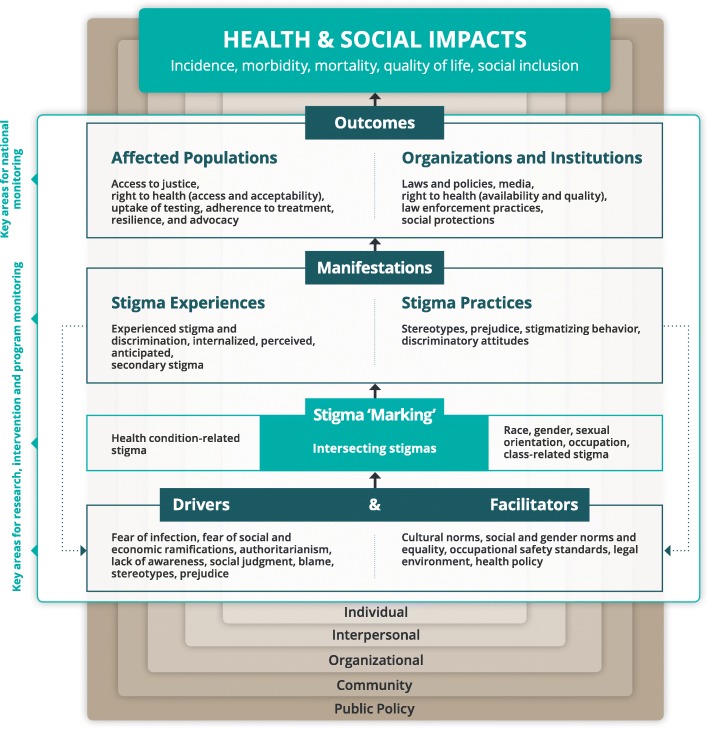
Stigma is a well-documented barrier to health seeking behavior, engagement in care and adherence to treatment across a range of health conditions globally. In order to halt the stigmatization process and mitigate the harmful consequences of health-related stigma (i.e. stigma associated with health conditions), it is critical to have an explicit theoretical framework to guide intervention development, measurement, research, and policy. Existing stigma frameworks typically focus on one health condition in isolation and often concentrate on the psychological pathways occurring among individuals. This tendency has encouraged a siloed approach to research on health-related stigmas, focusing on individuals, impeding both comparisons across stigmatized conditions and research on innovations to reduce health-related stigma and improve health outcomes. We propose the Health Stigma and Discrimination Framework, which is a global, crosscutting framework based on theory, research, and practice, and demonstrate its application to a range of health conditions, including leprosy, epilepsy, mental health, cancer, HIV, and obesity/overweight. We also discuss how stigma related to race, gender, sexual orientation, class, and occupation intersects with health-related stigmas, and examine how the framework can be used to enhance research, programming, and policy efforts. Research and interventions inspired by a common framework will enable the field to identify similarities and differences in stigma processes across diseases and will amplify our collective ability to respond effectively and at-scale to a major driver of poor health outcomes globally.
Overview
CoChat Summary
## TL;DR
This paper proposes the Health Stigma and Discrimination Framework, a crosscutting model for understanding health-related stigma across diseases, levels of influence, and stages of the stigmatization process. It argues that a common framework can improve research, intervention design, monitoring, and policy for conditions such as leprosy, epilepsy, mental health, cancer, HIV, and overweight/obesity.
## Key findings
- The framework breaks health-related stigma into domains including drivers and facilitators, stigma marking, stigma experiences/practices, and outcomes for both affected populations and organizations/institutions.
- The authors emphasize that stigma is not just an individual psychological process; it operates across socio-ecological levels and is shaped by social, cultural, political, and economic forces.
- In the paper’s examples, stigma is linked to harmful outcomes such as delayed treatment, poor adherence, lower testing, worse engagement in care, social exclusion, and reduced quality of life.
- The abstract states that the framework is demonstrated using 6 conditions: leprosy, epilepsy, mental health, cancer, HIV, and obesity/overweight; it also notes a mental health study across 16 countries.
## Methods
- The paper is a framework/theory paper: it proposes and explains a new Health Stigma and Discrimination Framework rather than reporting a single empirical study.
- It uses conceptual synthesis and practical applications/examples drawn from multiple health conditions, including communicable and non-communicable diseases.
- The main analysis is an interpretive comparison across conditions and socio-ecological levels, with discussion of how the framework can guide research, intervention development, monitoring, and policy.
## Limitations
- The paper does not report a formal empirical evaluation of the framework; this is evident from the text, which presents the framework and examples rather than original study data.
- The paper states that health-related stigmas vary by condition and context, and that the framework is broad and orienting rather than condition-specific; this implies limited specificity for any single disease context.
- It is evident from the text that the examples are illustrative and selective, so the framework’s practical applications are not exhaustively tested across all health conditions or settings.
Model-written summary. Check it against the paper before relying on it.
Integrity signals
Registry
Cites
Statistics
Figures
Verification
Claims the paper makes
14 Valid · 1 Not valid · 81 Not checked · 29 Own results and interpretations
Some cited sources support this claim and some don’t — read each source’s verdict below.
In the paper
“Outcomes of HIV stigma for people at risk of or living with HIV include engagement in greater HIV risk behaviors, lower rates of HIV testing, worse engagement and retention in HIV care, and worse initiation and adherence to medication [3, 44, 111].”
§ The Health Stigma and Discrimination Framework: a global, crosscutting framework to inform research, intervention development, and policy on health-related stigmas > Practical applications > HIV
What the sources say
- Supportedcites [3] Mahajan AP Stigma in the HIV/AIDS epidemic: a review of the literature and recommendations for the way forward AIDS 2008 22 Suppl 2 S67 S79 10.1097/01.aids.0000327438.13291.62 18641472 PMC2835402 source
The 'Stigma, Testing, & Treatment' subsection (Results, Relationship of HIV/AIDS related Stigma to Prevention & Treatment Programs) states outright that H/A stigma 'is documented as a barrier to uptake of HIV testing and treatment services in numerous settings,' citing South African data where untested individuals held significantly greater stigmatizing attitudes and Botswana data where a majority of patients who delayed testing did so because of fear of stigma. The adjacent passage (same section) adds that individuals with stigmatizing attitudes were significantly less likely to have been tested or to have heard of routine testing, and the Discussion/Recommendations reiterates stigma as a barrier to the entire spectrum of prevention and treatment services with testing as the primary gateway. The other outcomes bundled in the citing sentence are likewise in our copy (risk behavior in the 'Stigma & HIV risk behavior' subsection; care retention and adherence in the following subsection), so the paraphrase is supported; the review's caveats (some attribute poor uptake to lack of ART access; calls for more rigorous research) qualify strength but not direction. (LLM, conf=0.85)
- Not checked yetcites [44] Logie CH Pathways From HIV-Related Stigma to Antiretroviral Therapy Measures in the HIV Care Cascade for Women Living With HIV in Canada J Acquir Immune Defic Syndr 2018 77 2 144 153 29135650 PMC5770113 source
- Misattributedcites [111] Katz IT, et al. Impact of HIV-related stigma on treatment adherence: systematic review and meta-synthesis. J Int AIDS Soc. 2013;16((Suppl 2):3. PMC3833107 24242258 sourceExperimental — accuracy not yet measured
Katz et al. (2013) reviewed only stigma's effect on ART adherence among 26,715 HIV-positive persons; the Discussion states explicitly that 'The evidence search protocol was not designed to identify studies examining the influences of stigma on HIV testing [156, 157]' and instead credits the point to two other works it cites. Our copy therefore does not report or synthesize any association between stigma and lower HIV-testing uptake — it mentions the finding only to hand it off to Young et al. (2010) and Wong et al. (2009), whose titles it lists in the References. The broader sentence in the Discussion ('HIV-related stigma has been shown to adversely affect these treatment- and care-related behaviours in a wide range of settings [35, 161–166]') is likewise a pointer to other citations, not this paper's own result. (LLM, conf=0.80) It matches “HIV-related stigma, social norms, and HIV testing in Soweto and Vulindlela, South Africa: National Institutes of Mental Health Project Accept (HPTN 043)” (2010) instead.
Checked by a reasoning model — may be wrong.
plainstates an association- Asserted: passes — The authors put it forward as true.
- Checkable: passes — It can be checked against evidence.
- Load-bearing: unclear — It is unclear whether the paper’s conclusions depend on it.
- Based: passes — The paper gives a reason why it holds.
- Supported
The cited sources support only part of this claim — read each source’s verdict below.
In the paper
“Stigma is a well-documented barrier to health seeking behavior, engagement in care and adherence to treatment across a range of health conditions globally.”
- Also stated in: § Background · boosted
“Stigma is a well-documented global barrier to health-seeking behavior [1], engagement in care [2], and adherence to treatment [3] across a range of health conditions [4, 5].”
§ The Health Stigma and Discrimination Framework: a global, crosscutting framework to inform research, intervention development, and policy on health-related stigmas > Abstract Stigma is a well-documented barrier to health seeking behavior, engagement in care and adherence to treatment across a range of health conditions globally. In order to halt the stigmatization process and mitigate the harmful consequences of health-related stigma (i.e. stigma associated with health conditions), it is critical to have an explicit theoretical framework to guide intervention development, measurement, research, and policy. Existing stigma frameworks typically focus on one health condition in isolation and often concentrate on the psychological pathways occurring among individuals. This tendency has encouraged a siloed approach to research on health-related stigmas, focusing on individuals, impeding both comparisons across stigmatized conditions and research on innovations to reduce health-related stigma and improve health outcomes. We propose the Health Stigma and Discrimination Framework, which is a global, crosscutting framework based on theory, research, and practice, and demonstrate its application to a range of health conditions, including leprosy, epilepsy, mental health, cancer, HIV, and obesity/overweight. We also discuss how stigma related to race, gender, sexual orientation, class, and occupation intersects with health-related stigmas, and examine how the framework can be used to enhance research, programming, and policy efforts. Research and interventions inspired by a common framework will enable the field to identify similarities and differences in stigma processes across diseases and will amplify our collective ability to respond effectively and at-scale to a major driver of poor health outcomes globally.
What the sources say
- Partly supportedcites [1] Scott N Crane M Lafontaine M Seale H Currow D Stigma as a barrier to diagnosis of lung cancer: patient and general practitioner perspectives Prim Health Care Res Dev 2015 16 06 618 622 10.1017/S1463423615000043 25660904 sourceExperimental — accuracy not yet measured
The Introduction states only the broad background point that 'Stigma has been linked to negative outcomes across a range of areas in health,' and the Abstract/Discussion support stigma as a barrier to help-seeking — anticipation of stigma delayed reporting of symptoms and diagnosis in a lung-cancer sample of 20 patients and 10 GPs in New South Wales, Australia, with 'international research' cited merely on lung-cancer stigma being commonly experienced. Nothing in our copy addresses stigma as a barrier to engagement in care or adherence to treatment, and nothing extends the claim across a range of health conditions globally; the paper's own scope is lung cancer diagnosis delay. So the help-seeking element is supported while the engagement/adherence and multi-condition global generalisation is not. (LLM, conf=0.72)
- Not checked yetcites [2] Corrigan P How stigma interferes with mental health care Am Psychol 2004 59 7 614 625 10.1037/0003-066X.59.7.614 15491256 source
- Partly supportedcites [3] Mahajan AP Stigma in the HIV/AIDS epidemic: a review of the literature and recommendations for the way forward AIDS 2008 22 Suppl 2 S67 S79 10.1097/01.aids.0000327438.13291.62 18641472 PMC2835402 sourceExperimental — accuracy not yet measured
Our copy of Mahajan et al. (2008) supports the three components of the claim, but only within HIV/AIDS: 'Stigma, Testing, & Treatment' (Results) states H/A stigma 'is documented as a barrier to uptake of HIV testing and treatment services in numerous settings, particularly in resource limited countries', and the same section reports that stigma 'impedes access to and retention in HIV care' and 'adherence to antiretroviral medications', with emerging evidence from Africa and Asia and persistence in developed countries — covering the global scope. What the source does not support is the generalization 'across a range of health conditions': the review's scope is HIV/AIDS-related stigma, and other conditions (mental illness, unemployment) appear only as conceptual analogues in 'Defining Stigma: Conceptual Considerations', not as documented evidence of health-seeking, care-engagement or adherence barriers. (LLM, conf=0.78)
boostedstates a cause- Asserted: passes — The authors put it forward as true.
- Checkable: passes — It can be checked against evidence.
- Load-bearing: passes — The paper’s conclusions depend on it.
- Based: passes — The paper gives a reason why it holds.
- Also stated in: § Background · boosted
Every source the paper cites for this claim was checked and supports it.
In the paper
“Stigma influences population health outcomes by worsening, undermining, or impeding a number of processes, including social relationships, resource availability, stress, and psychological and behavioral responses, exacerbating poor health [9].”
§ The Health Stigma and Discrimination Framework: a global, crosscutting framework to inform research, intervention development, and policy on health-related stigmas > Background
What the sources say
- Supportedcites [9] Hatzenbuehler ML Phelan JC Link BG Stigma as a Fundamental Cause of Population Health Inequalities Am J Public Health 2013 103 5 813 821 10.2105/AJPH.2012.301069 23488505 PMC3682466 source
The MEDIATORS LINKING STIGMA TO HEALTH section (p. opening paragraph) states directly that 'stigma thwarts, undermines, or exacerbates several processes (i.e., availability of resources, social relationships, psychological and behavioral responses, stress) that ultimately lead to adverse health outcomes' — the same four mediators and the same direction of effect the claim attributes, with 'worsening/impeding' a fair paraphrase of 'thwarts/exacerbates'. Subsections on Stress, Social Isolation, and Psychological and Behavioral Responses, plus the Abstract and Conclusions ('disrupts or inhibits access to multiple resources—structural, interpersonal, and psychological—that could otherwise be used to avoid or minimize poor health'), corroborate the mediating-pathway framing. (LLM, conf=0.92)
plainstates a cause- Asserted: passes — The authors put it forward as true.
- Checkable: passes — It can be checked against evidence.
- Load-bearing: passes — The paper’s conclusions depend on it.
- Based: passes — The paper gives a reason why it holds.
- Supported
The cited sources support only part of this claim — read each source’s verdict below.
In the paper
“The majority of health-related stigma frameworks explore psychological pathways at the individual level, focusing either on the individuals experiencing stigma [10, 11, 14–16, 30, 31], those perpetuating stigma [21, 26], or both [20, 24, 32].”
§ The Health Stigma and Discrimination Framework: a global, crosscutting framework to inform research, intervention development, and policy on health-related stigmas > Background
What the sources say
- Not checked yetcites [10] Barlösius E Philipps A Felt stigma and obesity: Introducing the generalized other Soc Sci Med 2015 130 9 15 10.1016/j.socscimed.2015.01.048 25658623 source
- Partly supportedcites [11] Tomiyama AJ Weight stigma is stressful. A review of evidence for the Cyclic Obesity/Weight-Based Stigma model Appetite 2014 82 8 15 10.1016/j.appet.2014.06.108 24997407 sourceExperimental — accuracy not yet measured
Our copy of Tomiyama (2014) does present an individual-level psychological framework: 'The COBWEBS model' (p. ~9) and 'Step 1. Weight stigma as a psychological stressor' characterise weight stigma as a stressor and trace psychological/physiological pathways (cortisol, eating, coping) in the person experiencing it, and the paper also points to comparable individual-experiencer frameworks elsewhere (Major & O'Brien, 2005 social identity threat; Meyer, 2003 sexual minority stress). That supports the 'psychological pathways at the individual level, focusing on individuals experiencing stigma' branch. It does not support the rest of the attributed sentence: the paper never examines the psychology of those perpetuating weight stigma (perpetrators appear only descriptively — e.g. family, friends, health care settings), and it makes no survey or claim about 'the majority of health-related stigma frameworks'. (LLM, conf=0.70)
- Not checked yetcites [14] Sikorski C Luppa M Luck T Riedel-Heller SG Weight stigma ‘gets under the skin’-evidence for an adapted psychological mediation framework-a systematic review Obesity 2015 23 2 266 276 10.1002/oby.20952 25627624 source
- Not checked yetcites [15] Ratcliffe D Ellison N Obesity and Internalized Weight Stigma: A Formulation Model for an Emerging Psychological Problem Behav Cogn Psychother 2015 43 02 239 252 10.1017/S1352465813000763 25632949 source
- Not checked yetcites [16] Himmelstein MS Puhl RM Quinn DM Intersectionality: An Understudied Framework for Addressing Weight Stigma Am J Prev Med 2017 53 4 421 431 10.1016/j.amepre.2017.04.003 28579331 source
- Not checked yetcites [30] Schabert J Browne JL Mosely K Speight J Social Stigma in Diabetes Patient - Patient-Centered Outcomes Res 2013 6 1 1 10 10.1007/s40271-012-0001-0 23322536 source
- Partly supportedcites [31] Hatzenbuehler ML How does sexual minority stigma ‘get under the skin’? A psychological mediation framework Psychol Bull 2009 135 5 707 730 10.1037/a0016441 19702379 PMC2789474 sourceExperimental — accuracy not yet measured
Our copy of Hatzenbuehler (2009) supports only the 'individuals experiencing stigma / individual-level psychological pathways' component: the Abstract states the psychological mediation framework 'examines the intra- and interpersonal psychological processes through which stigma-related stress leads to psychopathology' in LGB populations, and that prior social-psychological stigma research 'has examined individual responses to discrimination and stigma.' The paper makes no survey-level claim that 'the majority' of health-related stigma frameworks do this, and it says nothing about frameworks oriented to those perpetuating stigma or to both targets and perpetrators; that part of the paraphrase is not attributable to this source. Notably, the same passage adds that in the stigma tradition 'the focus is often on group-level processes (e.g., disidentification),' which qualifies a purely individual-level reading. (LLM, conf=0.65)
- Not checked yetcites [21] Misir P Structuration Theory J Int Assoc Provid AIDS Care 2015 14 4 328 334 10.1177/2325957412463072 26195671 source
- Not checked yetcites [26] Longdon E Read J ‘People with Problems, Not Patients with Illnesses’: Using Psychosocial Frameworks to Reduce the Stigma of Psychosis Isr J Psychiatry Relat Sci 2017 54 1 24 28 28857755
- Not checked yetcites [20] Earnshaw VA Chaudoir SR From conceptualizing to measuring HIV stigma: a review of HIV stigma mechanism measures AIDS Behav 2009 13 6 1160 1177 10.1007/s10461-009-9593-3 19636699 PMC4511707 source
plain- Asserted: passes — The authors put it forward as true.
- Checkable: passes — It can be checked against evidence.
- Load-bearing: passes — The paper’s conclusions depend on it.
- Based: passes — The paper gives a reason why it holds.
None of the sources cited for this claim have been checked yet.
In the paper
“The Health Stigma and Discrimination Framework differs from many other models in that it does not distinguish the ‘stigmatized’ from the ‘stigmatizer’ [21, 32].”
§ The Health Stigma and Discrimination Framework: a global, crosscutting framework to inform research, intervention development, and policy on health-related stigmas > The Health Stigma and Discrimination Framework > How is the framework different?
What the sources say
- Not checked yetcites [21] Misir P Structuration Theory J Int Assoc Provid AIDS Care 2015 14 4 328 334 10.1177/2325957412463072 26195671 source
- Could not verifycites [32] Weiss MG Stigma and the Social Burden of Neglected Tropical Diseases PLoS Negl Trop Dis 2008 2 5 e237 10.1371/journal.pntd.0000237 18478049 PMC2359851 sourceExperimental — accuracy not yet measured
Our copy of Weiss (2008) never mentions the Health Stigma and Discrimination Framework, nor any comparison of stigma models on whether they separate the 'stigmatized' from the 'stigmatizer'; searches for that phrasing and for framework/model comparisons returned only passages on Scambler's hidden-distress model (enacted vs. felt, anticipated, internalized stigma) and on Goffman/labeling theory. The closest material is Figure 3 and Figure 4 ('Points of Intervention to Mitigate Stigmatizing and being Stigmatized'), in which Weiss's own extended model does explicitly differentiate stigmatizers who enact, endorse or accept exclusion from those who are stigmatized — but that describes this paper's model, not the later framework the claim is about. Since the cited paper predates and does not address that framework, the claim can be neither confirmed nor contradicted from our copy. (LLM, conf=0.70)
plain- Asserted: passes — The authors put it forward as true.
- Checkable: passes — It can be checked against evidence.
- Load-bearing: passes — The paper’s conclusions depend on it.
- Based: passes — The paper gives a reason why it holds.
67 more claims · 10 with their cited sources checked
Create a free account to see all 125 claims and to verify the 147 references still open.
- It may state two separate claims as one. 40
- Probably not a substantial claim. 17
Claims other papers make about this one
Each is checked against this paper’s own text: does it say what the citing paper says it does?
The source backs part of the claim, not all of it — or backs it for a different population, condition or comparison.
In the citing paper
“While there are manifold efforts aiming to reduce providers' and the public's stigmatizing attitudes,16,17 evidence on the effectiveness of stigma interventions specifically targeting people with HIV who inject drugs in order to facilitate care engagement is limited.1,18”
From An acceptance-based, intersectional stigma coping intervention for people with HIV who inject drugs—a randomized clinical trial (2023) · cites this paper as [1]
Experimental — accuracy not yet measuredThe source backs part of the claim, not all of it — or backs it for a different population, condition or comparison.
In the citing paper
“HIV stigma manifestations, including enacted (experienced), anticipated (expected) and internalized stigma (endorsing stigmatizing attitudes),1 have adverse effects on the entire HIV care cascade. These range from delayed testing and care to low rates of antiretroviral treatment (ART) initiation and adherence, thereby impeding viral load suppression.3”
From An acceptance-based, intersectional stigma coping intervention for people with HIV who inject drugs—a randomized clinical trial (2023) · cites this paper as [1]
Experimental — accuracy not yet measuredThe cited source says what the claim attributes to it.
In the citing paper
“Stigma, the negative labeling and devaluation of people based on an undesired social category, is a well-documented barrier to care and has negative health effects.1”
From An acceptance-based, intersectional stigma coping intervention for people with HIV who inject drugs—a randomized clinical trial (2023) · cites this paper as [1]
Citations
Cites
Stigma: Notes on the Management of Spoiled Identity
(1969) · Postgraduate Medical Journal · doi:10.1136/pgmj.45.527.642 · Cited by 14,231
Stigma: Notes on the Management of Spoiled Identity.
Seeman, M., & Goffman, E. (1964) · American Sociological Review · doi:10.2307/2091442 · Cited by 10,716
Link, B. G., & Phelan, J. C. (2001) · Annual Review of Sociology · doi:10.1146/annurev.soc.27.1.363 · Cited by 8,848
Lippa, N. C., & Sanderson, S. C. (2013) · Human Heredity · doi:10.1159/000353712 · Cited by 6,078
How stigma interferes with mental health care.
Corrigan, P. (2004) · American Psychologist · doi:10.1037/0003-066x.59.7.614 · Cited by 3,648 · cited 1×
“Background Stigma is a well-documented global barrier to health-seeking behavior [1], engagement in care [2], and adherence to treatment [3] across a range of health conditions [4, 5].”
BackgroundThe Stigma of Obesity: A Review and Update
Puhl, R. M., & Heuer, C. A. (2009) · Obesity · doi:10.1038/oby.2008.636 · Cited by 3,323 · cited 1×
“Weight-based disparities are well documented in employment, healthcare, education, and interpersonal outcomes [115, 116].”
BackgroundHIV and AIDS-related stigma and discrimination: a conceptual framework and implications for action
Parker, R., & Aggleton, P. (2003) · Social Science & Medicine · doi:10.1016/s0277-9536(02)00304-0 · Cited by 2,748
How does sexual minority stigma “get under the skin”? A psychological mediation framework
Hatzenbuehler, M. L. (2009) · Psychological Bulletin · doi:10.1037/a0016441 · Cited by 2,695
Stigma as a fundamental cause of population health inequalities
Hatzenbuehler, M. L., Phelan, J. C., & Link, B. G. (2013) · American Journal of Public Health · doi:10.2105/ajph.2012.301069 · Cited by 2,674 · cited 2×
“A few general stigma frameworks have also highlighted the influence of social and structural forces on the stigmatization process across socio-ecological levels [6, 9, 36].”
BackgroundObesity Stigma: Important Considerations for Public Health
Puhl, R. M., & Heuer, C. A. (2010) · American Journal of Public Health · doi:10.2105/ajph.2009.159491 · Cited by 1,917 · cited 1×
“For some health conditions, including HIV [8, 18, 19, 23, 34, 35], mental health [27, 28], child health [35], and obesity/overweight [17], frameworks addressing the social (e.”
Background
Research works printed but not linked: 3
- Stangl AL Brady L Fritz K Measuring HIV stigma and discrimination 2012 Washington, D.C. International Center for Research on Women
- Try L Gendered experiences: marriage and the stigma of leprosy Asia Pacific Disabil Rehabil J 2006 17 2 55 72
- Engelbrektsson U Challenged Lives: A Medical Anthropological Study of Leprosy in Nepal 2012 Göteborg University of Gothenburg
Cited by
Items 401–500 of 1,001
Pearl, R. L., Li, Y., Groshon, L. C., Hernandez, M., Saunders, D., Sheynblyum, M., Driscoll, K. A., Gelfand, J. M., Manavalan, P., Montanez-Wiscovich, M. E., et al. (2024) · BMC Medicine · doi:10.1186/s12916-024-03661-z · Cited by 13
“Recent theoretical models of health-related stigma highlight common-alities across different forms of stigma and emphasize the need for overarching solutions [1, 12].”
BackgroundMethodInfluentialBarcelona, V., Scroggins, J. K., Scharp, D., Harkins, S., Goffman, D., Aubey, J. J., & Topaz, M. (2024) · Journal of Obstetric, Gynecologic & Neonatal Nursing · doi:10.1016/j.jogn.2024.10.003 · Cited by 13
Obesity and psychology: a bibliometric analysis of half a century
Zhou, H., Liu, S., Xiao, Z., Yin, S., Fan, B., & Sun, G. (2025) · Frontiers in Nutrition · doi:10.3389/fnut.2025.1539587 · Cited by 17
Hossain, M. B., Alam, M. Z., Islam, M. S., Sultan, S., Faysal, M. M., Rima, S., Hossain, M. A., Mahmood, M. M., Kashfi, S. S., Mamun, A. A., et al. (2021) · Stigma and Health · doi:10.1037/sah0000305 · Cited by 11
Teti, M., Myroniuk, T. W., Epping, S., Lewis, K. R., & Liebenberg, L. (2021) · Archives of Sexual Behavior · doi:10.1007/s10508-021-02058-w · Cited by 12
Stigma and Medication for Opioid Use Disorder (MOUD) Among Women
Chou, J. L., Patton, R., Cooper‐Sadlo, S., Swan, C., Bennett, D. S., McDowell, D., Zaarur, A., & Schindler, B. (2022) · International Journal of Mental Health and Addiction · doi:10.1007/s11469-022-00768-3 · Cited by 15
“Because women who use illicit substances are more likely to experience stigma compared to men (Goodyear et al., 2018; Gunn et al., 2018; Stone, 2015; Syvertsen et al., 2021), women with OUD may be particularly at risk for experiencing stigmatization (Goodyear et al., 2018), which has been…”
BackgroundBonetto, C., Pace, D., Bodini, L., Colombi, M., Bortel, T. V. V., & Lasalvia, A. (2022) · Epidemiology and Psychiatric Sciences · doi:10.1017/s204579602200021x · Cited by 18
“In fact, in order to avoid discrimination, people infected with severe acute respiratory syndrome coronavirus 2 (SARS-CoV-2) may be reluctant to seek healthcare or may try to hide the disease or misreport symptoms, thus reducing early detection and treatment (Des Jarlais et al., 2006; Stangl et al., 2019) and posing d…”
Why we need to re‐define long‐term success for people living with HIV
Fuster‐RuizdeApodaca, M. J., Wohl, D. A., Cascio, M., Guaraldi, G., Rockstroh, J. K., Hodson, M., Richman, B., Brown, G., Anderson, J., & Lazarus, J. V. (2023) · HIV Medicine · doi:10.1111/hiv.13461 · Cited by 11
“HIV-related stigma is a complex phenomenon with diverse manifestations and intersections, occurring at different levels, such as institutional, organizational, community, interpersonal, and intrapersonal levels [22].”
BackgroundMartei, Y. M., Obasohan, M., Mokokwe, L. T., Ralefala, T. B., Mosepele, M., Gross, R., & Barg, F. K. (2023) · The Oncologist · doi:10.1093/oncolo/oyad183 · Cited by 12
Improving mental health care in depression: A call for action
Eder, J., Dom, G., Gorwood, P. A. P. M., Kärkkäinen, H., Decraene, A., Kumpf, U., Beezhold, J., Samochowiec, J., Kurimay, T., Gäebel, W., et al. (2023) · European Psychiatry · doi:10.1192/j.eurpsy.2023.2434 · Cited by 21
“Furthermore, stigmatization of mental disorders aggravates psychopathology and impedes symptom improvement across all mental disorders [13, 14].”
BackgroundBromberg, D. J., Machavariani, E., Madden, L. M., Dumchev, K. V., LaMonaca, K., Earnshaw, V. A., Pykalo, I., Filippovych, M., Haddad, M. S., Дворяк, С., et al. (2024) · Journal of the International AIDS Society · doi:10.1002/jia2.26202 · Cited by 12
Self-citationCOVID/HIV Co-Infection: A Syndemic Perspective on What to Ask and How to Answer
Gesesew, H. A., Mwanri, L., Stephens, J. H., Woldemichael, K., & Ward, P. (2021) · Frontiers in Public Health · doi:10.3389/fpubh.2021.623468 · Cited by 12
“Goffman’s stigma framework (55) and other revised versions (56, 57) could be a starting point of assessment.”
BackgroundHuang, F., Sun, W., Zhang, L., Lu, H., & Chen, W. (2021) · Journal of Affective Disorders · doi:10.1016/j.jad.2021.10.043 · Cited by 15
“It is well documented that being stigmatized is very likely to impede individuals’ health-seeking behavior and access to healthcare and social services, undermine their treatment adherence, and lead to social exclusion, mental distress, violence (in some cases), and decreased quality of life (QOL; Roelen et al., 2020;…”
Long Covid stigma: estimating burden and validating scale in a UK-based samplePreprint
Pantelic, M., Ziauddeen, N., Boyes, M. E., O’Hara, M. E., Hastie, C., & Alwan, N. A. (2022) · medRxiv · doi:10.1101/2022.05.26.22275585 · Cited by 12
Awareness, attitudes, and beliefs of dementia in Indonesia.
Farina, N., Hassan, E., Theresia, I., Fitri, F. I., Suswanti, I., Sani, T. P., Evans‐Lacko, S., Banerjee, S., & Turana, Y. (2024) · Alzheimer's & Dementia: Diagnosis, Assessment & Disease Monitoring · doi:10.1002/dad2.12570 · Cited by 11
McFadden, K., Nickel, B., Houssami, N., Rankin, N. M., & Dodd, R. H. (2025) · Patient Education and Counseling · doi:10.1016/j.pec.2025.109172 · Cited by 14
Rai, S. S., Syurina, E. V., Peters, R. M. H., Putri, A. I., Irwanto, I., & Zweekhorst, M. B. M. (2021) · Qualitative Health Research · doi:10.1177/10497323211058164 · Cited by 16
“However, studies have found that such interventions are often resource-intensive, have poor uptake by target beneficiaries, and not sustainable on the long run (Singhal et al., 2010; Singhal & Svenkerud, 2019; Stangl et al., 2019).”
BackgroundInfluentialFarley, J. E., Beuchamp, G., Bergman, A., Hughes, J. P., Batey, D. S., del Río, C., Raifman, J., Lowensen, K., Gamble, T., Remien, R. H., et al. (2022) · Stigma and Health · doi:10.1037/sah0000413 · Cited by 14
O’Hara, C. A., Foon, X. L., Ng, J. C., Wong, C. S., Wang, F. Y., Tan, C. Y., Cheah, Y. T., Griva, K., Yoong, J., & Tan, R. K. J. (2023) · Medical Education Online · doi:10.1080/10872981.2023.2172744 · Cited by 12
Mistreatment in health care among women in Appalachia
Alspaugh, A., Swan, L. E. T., Auerbach, S. L., Bartmess, M. P., Agbemenu, K., & Ely, G. E. (2023) · Culture Health & Sexuality · doi:10.1080/13691058.2023.2176547 · Cited by 12
“This framework identifies how stigmatisation occurs across several domains (Stangl et al. 2019).”
BackgroundMethodInfluentialMental Health Stigma Among Generation Z Students in Salafi Islamic Boarding Schools
Guntur, A., Rahmadanty, I. P., & Ulfa, M. (2022) · Journal of Health Sciences · doi:10.33086/jhs.v15i03.2886 · Cited by 11
Tegegne, A. S. (2023) · Patient Preference and Adherence · doi:10.2147/ppa.s413192 · Cited by 13
“In general, females are the most marginalized population, perhaps due to the high stigma and discrimination against them and this also leads to poor quality of life.(20) Comparing children with adults and old people, children have better quality of life, as children had high number of CD4 cell count as compared to adu…”
BackgroundFotso, A. S., Wright, C. G., & Low, A. (2023) · BMC Public Health · doi:10.1186/s12889-023-16545-3 · Cited by 12
“In our conceptual framework, stigmatizing behavior refers to exclusion, avoidance or gossip, while discriminatory attitudes are beliefs that people with a specific condition should not be allowed to fully participate to the society [14, 20, 24].”
BackgroundMethodInfluentialVora, A. S., & Grilo, S. A. (2023) · Journal of Racial and Ethnic Health Disparities · doi:10.1007/s40615-023-01785-1 · Cited by 13
Mboweni, N. E., Mphasha, M. H., & Skaal, L. (2023) · Healthcare · doi:10.3390/healthcare12010085 · Cited by 33
Bartholomew, T. S., Plesons, M., Serota, D. P., Alonso, E., Metsch, L. R., Feaster, D. J., Ucha, J., Suarez, E., Forrest, D. W., Chueng, T. A., et al. (2024) · Addiction Science & Clinical Practice · doi:10.1186/s13722-024-00447-9 · Cited by 12
“…: a telehealth-based, multicomponent care model for PWID with HIV implemented at the IDEA Miami SSP. THR integrates multilevel stigma reduction [38, 39] and harm reduction frameworks [40] to provide access to HIV care through telehealth in an SSP setting that is supported by on-site…”
MethodBorg, S. J., Borg, D. N., Arora, M., Middleton, J. W., Marshall, R., Nunn, A. K., & Geraghty, T. J. (2024) · Spinal Cord · doi:10.1038/s41393-024-00997-4 · Cited by 11
“V a r i a b l e s i n c l u d e d t h e s i x B a y e s i a n p e n a li s e d r e g r e ss i o n m o d e l s . the most important factor to explain inequality in comorbidities experienced by people with SCI [12, 13].”
BackgroundAdugna, M. B., Ghahari, S., & Lysaght, R. M. (2024) · Disability and Rehabilitation · doi:10.1080/09638288.2024.2356016 · Cited by 17
“…their past incidents or stigma experiences faced by others) [51], social or enacted stigma (stigma derived from the general public) [60], systemic or structural stigma (stigma based in policy and media), and [53] courtesy or secondary stigma (stigma experienced by family members) [8,10,14,15,61].”
Medicine's New Rhythm: Harnessing Acoustic Sensing via the Internet of Audio Things for Healthcare
Pervez, F., Shoukat, M., Suresh, V., Farooq, M. U. B., Sandhu, M. M., Qayyum, A., Usama, M., Girardi, A. M., Latif, S., & Qadir, J. (2024) · IEEE Open Journal of the Computer Society · doi:10.1109/ojcs.2024.3462812 · Cited by 16
“These challenges include communication breakdown, lack of trust, technological divide, time constraints, cultural incompetence, stigma and discrimination, mental health issues, and difficulty maintaining accurate and timely documentation and record keeping [100], [101], [102], [103].”
BackgroundCervical cancer stigma – A silent barrier to the elimination of cervical cancer
Bae, H. S., & Temkin, S. M. (2025) · Cancer · doi:10.1002/cncr.35776 · Cited by 21
Sebong, P. H., Ferdiana, A., Tegu, F. A. R., Harbianto, D., Soviandhi, R., Sinaga, A., Budiawan, T., Risnanto, A. J. A. Y., Sidjabat, R. T., Yudopuspito, T., et al. (2025) · Frontiers in Public Health · doi:10.3389/fpubh.2025.1453470 · Cited by 21
Papageorgiou, V., Cullen, L., Witzel, T. C., Sparrowhawk, A., Coukan, F., Sewell, J., Rodger, A., May, C. R., & Burns, F. M. (2025) · Social Science & Medicine · doi:10.1016/j.socscimed.2025.118109 · Cited by 14
“Intersecting stigma can apply to other health conditions including mental health, cancer and epilepsy (Stangl et al., 2019).”
Lu, X., Chen, H., Bai, D., Chen, X., Ji, W., Gao, H., Yuan, Y., Hou, C., & Gao, J. (2025) · International Psychogeriatrics · doi:10.1016/j.inpsyc.2025.100106 · Cited by 16
Hall, J. E., Kabir, T. M., Shih, P., & Degeling, C. (2020) · Australian and New Zealand Journal of Public Health · doi:10.1111/1753-6405.13021 · Cited by 11
Anthropological foundations of public health; the case of COVID 19
Hahn, R. A., & Schoch‐Spana, M. (2021) · Preventive Medicine Reports · doi:10.1016/j.pmedr.2021.101331 · Cited by 23
“History has shown that the stigma of disease often fosters discrimination, jeopardizes livelihoods from certain commodities, and creates fear in infected people seeking care (Markel and Stern, 2002; Tadros et al., 2010; Stangl et al., 2019).”
Stigmatisation of COVID-19 in Riyadh, Saudi Arabia: A cross-sectional study
Almoayad, F. A., Mahboub, S. M., Amer, L. B., Alrabiah, A. M., & Alhashem, A. M. (2021) · Sultan Qaboos University medical journal · doi:10.18295/squmj.4.2021.044 · Cited by 12
Gender Differences among Sardinians with Alcohol Use Disorder
Agabio, R., Pisanu, C., Minerba, L., Gessa, G. L., & Franconi, F. (2021) · Journal of Clinical Medicine · doi:10.3390/jcm10204688 · Cited by 11
Sociodemographic and behavioral factors associated with COVID-19 stigmatizing attitudes in the U.S.
Grivel, M. M., Lieff, S. A., Meltzer, G., Chang, V. W., Yang, L. H., & Jarlais, D. C. D. (2021) · Stigma and Health · doi:10.1037/sah0000345 · Cited by 15
Stigma in COVID-19: A barrier to seek medical care and family support
Asadi-Aliabadi, M., Tehrani‐Banihashemi, A., & Moradi‐Lakeh, M. (2020) · Medical Journal of the Islamic Republic of Iran · doi:10.47176/mjiri.34.98 · Cited by 11
Baldwin, A., Sileo, K. M., Huynh, T. A., Olfers, A., Woo, C. J., Greene, S. L., Casillas, G. L., & Taylor, B. S. (2022) · Journal of Health Care for the Poor and Underserved · doi:10.1353/hpu.2022.0074 · Cited by 13
“6– 9 The Health Stigma and Discrimination Framework (HSD), 10 a global, crosscutting framework informed by theory, research, and practice delineates the stigmatization process in the context of health.”
Peters, L., Burkert, S., Brenner, C., & Grüner, B. (2022) · BMJ Open · doi:10.1136/bmjopen-2021-059472 · Cited by 17
Kutner, B. A., Vaughn, M. P., Giguere, R., Rodriguez‐Hart, C., McKinnon, K. M., Kaighobadi, F., Felix, B., Akakpo, A., Cournos, F., Микаелян, М. А., et al. (2023) · Annals of Behavioral Medicine · doi:10.1093/abm/kaad022 · Cited by 13
Bhutada, K., Chakrapani, V., Gulfam, F. R., Ross, J., Golub, S. A., Safren, S. A., Prasad, R., & Patel, V. V. (2023) · Journal of the International Association of Providers of AIDS Care (JIAPAC) · doi:10.1177/23259582231199398 · Cited by 15
Mujugira, A., Karungi, B., Mugisha, J., Nakyanzi, A., Bagaya, M., Kamusiime, B., Nalumansi, A., Nalukwago, G. K., Kasiita, V., Twesige, C. C., et al. (2023) · Journal of the International AIDS Society · doi:10.1002/jia2.26201 · Cited by 15
Emergence of Coronavirus (COVID-19) Outbreak: Anthropological and Social Science Perspectives
Sonekar, H., & Ponnaiah, M. (2020) · Disaster Medicine and Public Health Preparedness · doi:10.1017/dmp.2020.203 · Cited by 12
Small, E., Nikolova, S., Zhou, Y., & Okumu, M. (2021) · Global Public Health · doi:10.1080/17441692.2020.1869286 · Cited by 16
“…various groups (e.g. people with disabilities, interveners, drug abusers, gay people, people who engage in prostitution), disease categories (e.g. COVID-19, cleft palate, mental illness, epilepsy, HIV/AIDS), and even countries, such as those in the Global South (Logie, 2020; Stangl et al., 2019).”
BackgroundFrom “period poverty” to “period parity” to meet menstrual health needs
Lansbury, N. (2021) · Med · doi:10.1016/j.medj.2021.03.001 · Cited by 21
The representation of HIV/AIDS and hepatitis B in the dentistry context
Wakayama, B., Garbin, C. A. S., Garbin, A. J. S., Saliba, O. A., & Garbín, A. J. Í. (2021) · The Journal of Infection in Developing Countries · doi:10.3855/jidc.12283 · Cited by 11
Li, M., Long, J., Wang, X., Liao, Y., Liu, Y., Hao, Y., Wu, Q., Zhou, Y., Wang, Y., Wang, Y., et al. (2021) · Frontiers in Psychiatry · doi:10.3389/fpsyt.2021.782501 · Cited by 13
“Previous stigma-related studies on AIDS reported that HIV-positive individuals were more vulnerable to receive stigma from others, which usually contain health, moral, and racial dimensions and promoted stigma including intrapersonal, interpersonal, and social aspects (25).”
BackgroundMurray, S. M., Lasater, M. E., Guimond, M.-F., Poku, O. B., Musci, R. J., Al-Fataftah, M., Kasina, L. K., Lwambi, M., Salaimeh, A., & Falb, K. (2021) · Conflict and Health · doi:10.1186/s13031-021-00431-z · Cited by 14
“Stigma experiences can include the perception of maltreatment by others (perceived stigma) and/or having been subjected to harmful behaviors or acts of discrimination (enacted stigma) on account of being a survivor of sexual violence [24].”
BackgroundLiu, S., Wu, G., Ma, X., Kai, X. U., Lan, X., Wang, L., Li, H., Gu, D., Wang, M., & Liu, J. (2026) · Frontiers in Aging Neuroscience · doi:10.3389/fnagi.2025.1683158 · Cited by 15
Criminality labelling influences reactions to others’ pain
Boutet, I., Goulet‐Pelletier, J., Maslouhi, S., Fiset, D., & Blais, C. (2022) · Heliyon · doi:10.1016/j.heliyon.2022.e12068 · Cited by 12
“In the context of health care, it is believed that stigma leads to inequalities via multiple interacting stressors (Corrigan and Rao, 2012; Stangl et al., 2019; Stuber et al., 2008).”
BackgroundA conceptual framework of gender-based violence and femicide drivers in South Africa
Mtotywa, M. M., Ledwaba, M., Mambo, B., Nkonzo, Z., Ntshagovhe, R., & Negota, A. (2023) · International Journal of Research in Business and Social Science (2147-4478) · doi:10.20525/ijrbs.v12i5.2633 · Cited by 15
“Social (e.g., cultural and gender norms) and structural (e.g., regulations and laws) aspects in a given setting influence the processes and manifestations of stigma (Stangl et al., 2019; Embleton et al., 2022).”
BackgroundHidayat, J., Chen, M., Maulina, R., & Nurbaya, S. (2023) · Journal of Nursing Research · doi:10.1097/jnr.0000000000000573 · Cited by 20
Systematic Review of Scales for Measuring Infectious Disease–Related Stigma
Paterson, A., Cheyne, A., Jones, B., Schilling, S., Sigfrid, L., Stolow, J. A., Moses, L., Olliaro, P., & Rojek, A. M. (2024) · Emerging infectious diseases · doi:10.3201/eid3003.230934 · Cited by 13
“Those similarities are noted both in this review and in previous stigma literature ( 8 , 11 , 14 ).”
BackgroundInfluentialSouth African rape survivors’ expressions of shame, self-blame and internalized-stigma
Willan, S., Shai, N., Majola, T., Mabhida, M., Mngadi, S., Gounden, T., Jewkes, R. K., Abrahams, N., & Machisa, M. (2024) · SSM - Mental Health · doi:10.1016/j.ssmmh.2024.100310 · Cited by 18
Post-Acute Sequelae of Covid-19: A System-wise Approach on the Effects of Long-Covid-19
Umakanthan, S., Katwaroo, A. R., Bukelo, M. M., Shashidhar, B. G., Boralingaiah, P., Ranade, A. V., Rangan, P., Shashidhar, S., Kini, J. R., & Kini, G. (2024) · American Journal of Medicine Open · doi:10.1016/j.ajmo.2024.100071 · Cited by 14
“61 The phenomenon of posttraumatic growth, signifying the capacity of individuals to discover meaning and personal development amidst adversity, has been manifested by certain COVID-19 survivors.”
Backgroundde Lannoy, L. H., Fuentes, A., dos Santos, P. C., Coelho, R. D. A., & Miranda, A. E. (2024) · International Journal of Gynecology & Obstetrics · doi:10.1002/ijgo.15737 · Cited by 10
“31,32 The continuation of social policies, the establishment of integrated information systems, and the increase in primary healthcare coverage in the region, would improve quality of life.”
BackgroundLogie, C. H., Kinitz, D. J., Gittings, L., Lalor, P., Mackenzie, F., Newman, P. A., Baral, S., Mbuagbaw, L. C. E., Shuper, P. A., & Levermore, K. (2024) · AIDS and Behavior · doi:10.1007/s10461-024-04460-6 · Cited by 14
“For instance, stigma drivers include structural, community, and individual level factors that may produce and reproduce stigma, including misinformation, cultural norms and the legal environment [40].”
InfluentialSelf-citationHayward, S. E., Vanqa, N., Makanda, G., Tisile, P., Ngwatyu, L., Foster, I., Mcinziba, A., Biewer, A., Mbuyamba, R., Galloway, M., et al. (2024) · BMC Global and Public Health · doi:10.1186/s44263-024-00084-z · Cited by 18
“Drivers and facilitators of health-related stigma determine whether stigma “marking” of people or groups occurs [8], such as labelling of people with TB as likely having HIV co-infection in South Africa [9].”
BackgroundMethodRanta, J., Kaskela, T., Nurmi, J., Ruokolainen, T., & Shorter, G. W. (2024) · Harm Reduction Journal · doi:10.1186/s12954-024-01139-y · Cited by 13
Mukerji, R., Osrin, D., & Mannell, J. (2025) · BMC Global and Public Health · doi:10.1186/s44263-024-00122-w · Cited by 10
“RM coded the data in Nvivo 12.6.1 qualitative software (QSR International, USA) using a mix of deductive and inductive coding (Additional file 4: Coding framework), so that both emergent themes and themes from the intersectional stigma framework were captured [33].”
InfluentialGao, J. L., Pan, Q., Li, S. L., Chen, S., Luo, B., Chen, L., & Lin, Y. (2025) · BMJ Open · doi:10.1136/bmjopen-2023-076181 · Cited by 11
“These findings can be applied to design interventions for practice and further research to promote better implementation of health behaviour.”
Holmes‐Truscott, E., Litterbach, E., Arampatzi, C., Calyx, C., Cherry, J. E., Gilbert‐Morresi, V., Williams, A., Fuller‐Tyszkiewicz, M., Teede, H. J., & Speight, J. (2025) · Diabetic Medicine · doi:10.1111/dme.70073 · Cited by 14
“Key strengths of this study included the following: drawing on published interview guides 8,9 and health stigma frameworks 7,24 to guide our exploration of GDM-specific stigma and the comprehensive consideration of internalised as well as anticipated, perceived and experienced GDM-specific stigma…”
The role of stigma in impeding implementation of harm reduction services in San Francisco
Akiba, C. F., Megerian, C. E., Chung, E. O., Morris, T., Wenger, L. D., Suen, L. W., Lambdin, B. H., & Kral, A. H. (2025) · SSM - Qualitative Research in Health · doi:10.1016/j.ssmqr.2025.100593 · Cited by 13
“We utilized the HSDF and Proctor’s implementation outcomes within our codebook (Proctor et al., 2011; E. K. Proctor et al., 2009; Stangl et al., 2019).”
Psoriasis-related stigma and its intersection with intergroup bias in medical students
Fino, E., Mazzetti, M., & Russo, P. M. (2020) · Journal of the American Academy of Dermatology · doi:10.1016/j.jaad.2020.06.060 · Cited by 10
Douglass, C. H., Block, K., Horyniak, D., Hellard, M. E., & Lim, M. S. C. (2021) · Health & Social Care in the Community · doi:10.1111/hsc.13355 · Cited by 10
Patel, E. U., Solomon, S. S., McFall, A. M., Menezes, N. P., Tomori, C., Srikrishnan, A. K., Kumar, M. S., Celentano, D. D., Lucas, G. M., & Mehta, S. H. (2022) · AIDS · doi:10.1097/qad.0000000000003297 · Cited by 12
Stigma, Discrimination, and Social Exclusion
Liamputtong, P., & Rice, Z. S. (2022) · Springer eBooks · doi:10.1007/978-3-030-89594-5_6 · Cited by 15
Bosch-Arís, M., Gasulla, L., de Gispert, T., Segura, L., & Colom, J. (2022) · Harm Reduction Journal · doi:10.1186/s12954-022-00699-1 · Cited by 10
“People who use drugs are also stigmatised and face discrimination, well-known barriers to accessing to treatment, health care and social services [7, 8].”
BackgroundShi, C., & Cleofas, J. V. (2023) · BMC Medical Education · doi:10.1186/s12909-023-04074-x · Cited by 13
Wakefield, E. O., Belamkar, V., Sandoval, A., Puhl, R. M., Edelheit, B. S., Zempsky, W. T., Rodrigues, H. A., & Litt, M. D. (2023) · Journal of Pediatric Psychology · doi:10.1093/jpepsy/jsac092 · Cited by 16
Gurung, D., Neupane, M., Bhattarai, K., Acharya, B., Gautam, N. C., Gautam, K., Koirala, S., Marahatta, K., Gurung, P., Khadka, K. B., et al. (2023) · Epidemiology and Psychiatric Sciences · doi:10.1017/s2045796023000823 · Cited by 13
“Although much is known about individual experiences of stigma, frameworks that ignore the multi-level mechanisms of stigma limit the understanding of what factors influence and mediate stigma processes (Stangl et al. , 2019).”
BackgroundSmith, E. K., & Harrop, E. N. (2024) · Social Science & Medicine · doi:10.1016/j.socscimed.2024.116836 · Cited by 14
McGhie-Fraser, B., McLoughlin, C., Lucassen, P. L., Ballering, A., van Dulmen, S., Brouwers, E. P. M., Stone, J., & Hartman, T. O. (2024) · Journal of Psychosomatic Research · doi:10.1016/j.jpsychores.2024.111689 · Cited by 11
Rai, S. S., Syurina, E. V., Peters, R. M. H., Irwanto, I., Naniche, D., & Zweekhorst, M. B. M. (2020) · Global Public Health · doi:10.1080/17441692.2020.1850834 · Cited by 10
“Health-related stigma negatively affects the lives of people living with a diversity of health conditions and undermines public health response to curb the burden of these diseases (Stangl et al., 2019; Van Brakel, 2006; Weiss et al., 2006).”
BackgroundInfluentialO’Rourke, R., Lima, M. L., & Jetten, J. (2021) · Journal of Public Health · doi:10.1007/s10389-021-01624-9 · Cited by 11
Bringing social marketing closer to the disability field
Guzman, J. M. G., Fernández, A. H., & Ronda, P. C. (2021) · Journal of Social Marketing · doi:10.1108/jsocm-06-2020-0105 · Cited by 17
Ndirangu, J. W., Gichane, M. W., Browne, F. A., Bonner, C. P., Zule, W. A., Cox, E. N., Smith, K. M., Carney, T., & Wechsberg, W. M. (2022) · Health Expectations · doi:10.1111/hex.13422 · Cited by 10
“Providing food supplements and nutritional support to ART patients as a public health service also may improve adherence.44–46 Government disability social grants provide financial assistance to persons with chronic illnesses such as HIV.”
BackgroundInfluentialMcGarity‐Shipley, E. C., Lew, L. A., Bonafiglia, J. T., & Pyke, K. E. (2022) · Experimental Physiology · doi:10.1113/ep090396 · Cited by 10
“…Physiological Society. of people are stigmatized throughout North American society and the world, including, but not limited to, people with low socioeconomic status, people who identify as homosexual, overweight individuals, people of colour and people who smoke cigarettes (Stangl et al., 2019).”
BackgroundLodi, S., Rossi, S. L., Bendiks, S., Gnatienko, N., Lloyd-Travaglini, C. A., Vetrova, M., Toussova, O., Bushara, N., Blokhina, E. A., Krupitsky, E. M., et al. (2022) · AIDS and Behavior · doi:10.1007/s10461-022-03781-8 · Cited by 13
“When people with HIV (PWH) perceive negative attitudes and experience or expect stigma and discrimination, they might endorse the negative feelings and beliefs held by others about their HIV status and apply these feelings to themselves [2].”
BackgroundAndersson, K., Ozanne, A., Zelano, J., Malmgren, K., & Chaplin, J. E. (2022) · Epilepsy & Behavior · doi:10.1016/j.yebeh.2022.108886 · Cited by 10
“Importantly, foreign-born participants may also experience stigma related to being an immigrant [10], related to race and/or ethnicity [36] and suffer from misbeliefs and a lack of knowledge of epilepsy which might especially apply to persons from low-income countries [37].”
BackgroundYu, C. C., Tang, B., Low, J. A., Mathews, M., Straus, S. E., & Fahim, C. (2023) · Frontiers in Public Health · doi:10.3389/fpubh.2023.1143640 · Cited by 12
“More importantly, the HSDF distinguishes between stigmatised experiences and stigma practises.”
BackgroundMethodInfluentialAziz, M. M., Badahdah, A. M., & Mohammed, H. M. (2021) · Journal of the International Association of Providers of AIDS Care (JIAPAC) · doi:10.1177/23259582211066402 · Cited by 9
“Over the years, several measures of HIV stigma among HCPs have been developed and used in many countries,(18-20) including the United States,(21,22) China,(23) Ethiopia,(24) Zambia, and South Africa.(25) However, research on HIV stigma among HCPs in the Arab world is limited due to lack of an HIV-standardized measurem…”
The Roles of Lifetime Enacted Stigma in Tic Symptoms among Young Adults with Tourette Syndrome
Shiu, C. A., Chen, W., Kim, B., Ricketts, E. J., Stiede, J. T., Espil, F. M., Specht, M. W., Woods, D. W., & Piacentini, J. C. (2023) · Movement Disorders Clinical Practice · doi:10.1002/mdc3.13900 · Cited by 10
van Wees, S. H., & Ström, M. (2024) · Social Science & Medicine · doi:10.1016/j.socscimed.2024.116893 · Cited by 36
Collier, S. M., Semeere, A., Chemtai, L., Byakwaga, H., Lagat, C., Laker‐Oketta, M., Bramante, J., Pacheco, A. M., Zehtab, M., Strahan, A. G., et al. (2024) · JNCI Monographs · doi:10.1093/jncimonographs/lgae017 · Cited by 10
Jordans, C. C. E., Vliegenthart-Jongbloed, K. J., van Bruggen, A. W., van Holten, N., van Beek, J. E. A., Vriesde, M., van der Sluis, D., Verbon, A., Roukens, A. H. E., Stutterheim, S. E., et al. (2024) · AIDS and Behavior · doi:10.1007/s10461-024-04404-0 · Cited by 14
“However, people with HIV still experience disproportionate intersecting forms of discrimination and stigma based on aspects of their identity, such as sexual orientation, race/ethnicity, gender identity, substance use, or engagement in sex work [5 , 6 ].”
BackgroundMoving Toward Anti-Ableist Practices in Aphasia Rehabilitation and Research: A Viewpoint
Nunn, K., Tilton-Bolowsky, V. E., & Kershenbaum, A. M. (2024) · American Journal of Speech-Language Pathology · doi:10.1044/2024_ajslp-23-00456 · Cited by 11
Butler, J. L., Johnson, C., Hardison‐Moody, A., & Bowen, S. (2024) · Nutrients · doi:10.3390/nu16152491 · Cited by 12
“First, findings point to the need to understand and eliminate the stigma that is associated with many food and nutrition assistance programs [65–67], including the Supplemental Nutrition Assistance Program.”
BackgroundExpert providers implement integrated and coordinated care in opioid use disorder treatment
Harris, L. M., Guerrero, E. G., Khachikian, T., Serret, V., & Marsh, J. C. (2024) · International Journal of Drug Policy · doi:10.1016/j.drugpo.2024.104567 · Cited by 12
Drivers and Facilitators of HIV-Related Stigma in Healthcare Settings in Ireland
Vaughan, E., & Költő, A. (2024) · AIDS and Behavior · doi:10.1007/s10461-024-04489-7 · Cited by 15
Simmons, K., Llewellyn, C. D., Bremner, S. A., Gilleece, Y. C., Norcross, C., & Iwuji, C. C. (2024) · Women s Health · doi:10.1177/17455057241277723 · Cited by 18
Xiaoqin, S., Wu, T., Zhang, H., Shi, Q., Xu, Y., Kuai, B.-X., Zhao, H., & Guo, Y. (2024) · Scientific Reports · doi:10.1038/s41598-024-82013-6 · Cited by 12
A Systematic Review and Meta‐Analysis of HIV/AIDS Prevalence Among Transgender Populations Worldwide
Moradi, G., Soheili, M., Bahrami, P., Amini, E. E., Rashti, R., Azadnia, A., Zakaryaei, F., Soheili, M., & Moradi, Y. (2025) · Health Science Reports · doi:10.1002/hsr2.70500 · Cited by 11
“Trans people are individuals whose current identity or sexual expression differs from the sex assigned at birth [4].”
Key Terms and Concepts in Alcohol Use and Problems: A Critical Evaluation
Morris, J. K., Boness, C. L., & Hartwell, M. L. (2025) · Substance Use Research and Treatment · doi:10.1177/29768357241312555 · Cited by 14
Cox, L. T. J., Piatkowski, T. M., & Dunn, M. (2025) · Harm Reduction Journal · doi:10.1186/s12954-025-01198-9 · Cited by 12
“Recent approaches consider stigma as a social process shaped by the social context, as well as by social, economic, and political power dynamics [66].”
A call to action to include disability in intersectional health equity research and policy
Havercamp, S. M., Krahn, G. L., Murray, A., Akobirshoev, I., Bellamy, C. D., Bonardi, A., Breslin, M. L., Brown, L. X. Z., Costa, M. N., Dembo, R. S., et al. (2025) · The Lancet Regional Health - Americas · doi:10.1016/j.lana.2025.101199 · Cited by 15
A Scoping Review on Ethical Issues in the Mpox Outbreak
Jannath, A., Elango, R., & Chidambaranathan, A. M. (2025) · Asian Journal of Ethics in Health and Medicine · doi:10.51847/eq8at7q7la · Cited by 9
Mupunga, I., Dimech, W. J., Izumi, K., Rahevar, K., Sanikullah, K. H., Kelley, J. F., Morishita, F., Tran, H., & Yadav, R. P. H. (2025) · Tropical Medicine and Health · doi:10.1186/s41182-025-00797-3 · Cited by 13
“The likelihood of future global pandemics remains high due to several factors [19].”
Metadata
- Authors
- Stangl, A. L., Earnshaw, V. A., Logie, C. H., van Brakel, W., C. Simbayi, L., Barré, I., & Dovidio, J. F.
- Affiliations
- International Center for Research on Women (US)
- University of Delaware (US)
- University of Toronto (CA)
- Yale University (US)
- Corresponding author
- Stangl, Anne L.
- Venue
- BMC Medicine
- Published
- 2019-02-15
- Volume
- 17
- Issue
- 1
- Pages
- 31-31
- ISSN
- 1741-7015 (ISSN-L)
- PMC
- PMC6376797
- OpenAlex
- W2921199185
- Semantic Scholar
- c22719b5d96a28434c9cd2d3a33d4747a72bfa46
- Cited by
- 1,603
- References
- 123
- Citations by year
- 2026: 265 · 2025: 333 · 2024: 311 · 2023: 217 · 2022: 207 · 2021: 155 · 2020: 100 · 2019: 14
- FWCI
- 149.53
- Type
- journal article
- Language
- en
- Open access
- gold
- doi.org
- Licence
- cc-by
- creativecommons.org/licenses/by/4.0/ (tdm)
- creativecommons.org/licenses/by/4.0/ (vor)
- Locations
- BMC Medicine (publishedVersion, cc-by)
- Europe PMC (PubMed Central) (publishedVersion, other-oa)
- PubMed Central (publishedVersion, cc-by)
- PubMed (publishedVersion)
- TSpace (University of Toronto) (submittedVersion, cc-by)
- DOAJ (DOAJ: Directory of Open Access Journals) (submittedVersion, cc-by-sa)
- Open University of Cape Town (University of Cape Town) (submittedVersion)
- Funders
- Fogarty International Center of the National Institutes of Health
- William and Flora Hewlett Foundation (2016-4379)
- UKaid from the Department for International Development
- National Institute on Drug Abuse (K01DA042881)
- Ontario Ministry of Research and Innovation Early Researcher Award
- Canadian Foundation for Innovation
- Topics
- Health Sciences › Medicine › Psychiatry and Mental health › Mental Health Treatment and Access
- Health Sciences › Medicine › Public Health, Environmental and Occupational Health › Obesity and Health Practices
- Health Sciences › Medicine › Infectious Diseases › HIV/AIDS Research and Interventions
- Keywords
- health stigma, discrimination, stigma reduction interventions, health-seeking behavior, medication adherence, leprosy, epilepsy, mental health stigma, cancer stigma, HIV stigma, weight stigma, intersectionality, health policy
- MeSH terms
- Female, Humans, Male, Social Stigma
About these checks
Registry, retraction, Cites and statistics results are computed, not judged, with one exception: a printed reference that no index lists is read once by a model before it counts as a citation error. Claims are extracted by a model and kept only when their quote appears verbatim in the text; each cited source is then checked, with a model’s help, for whether it says what the claim relies on. Those verdicts can be wrong — read the claim’s quote and the cited source before relying on one.
The claim verdicts this report counts are experimental: their accuracy is not yet measured.
A language model drew the claims from the paper on 2026-10-11, under version 3 of the claim definition (model deepseek-v4.1-flash, prompt extract-v3).
A second model labelled each claim on 2026-10-11 (model jev-1.13-20260917, definition revision gold-guideline-v0.2).
Cited sources are checked with a language model’s help (qwen3.8-omni-flash).
Statistics and arithmetic are recomputed, not judged.
Confidence bands are shown only for fields calibrated on our annotated test set. None is calibrated yet, so no band is shown.
What counts as a claim ›How we measure confidence ›How we check this ›
Are you an author, or do you see a problem with this page? Request a review
Data sources
Bibliographic data: Semantic Scholar, OpenAlex, Crossref.
Contains information from the Semantic Scholar Academic Graph Datasets, made available under the ODC Attribution License (ODC-BY 1.0).
Semantic Scholar’s data is described in: Kinney, R., et al. (2023). The Semantic Scholar Open Data Platform. arXiv:2301.10140.
