

The Health Stigma and Discrimination Framework: a global, crosscutting framework to inform research, intervention development, and policy on health-related stigmas
Open accessThe DOI matches its Crossref record; 122 of the 123 references it cites were found in a registry or an index; 22 of the 169 sources its claims cite were checked for support.
Abstract
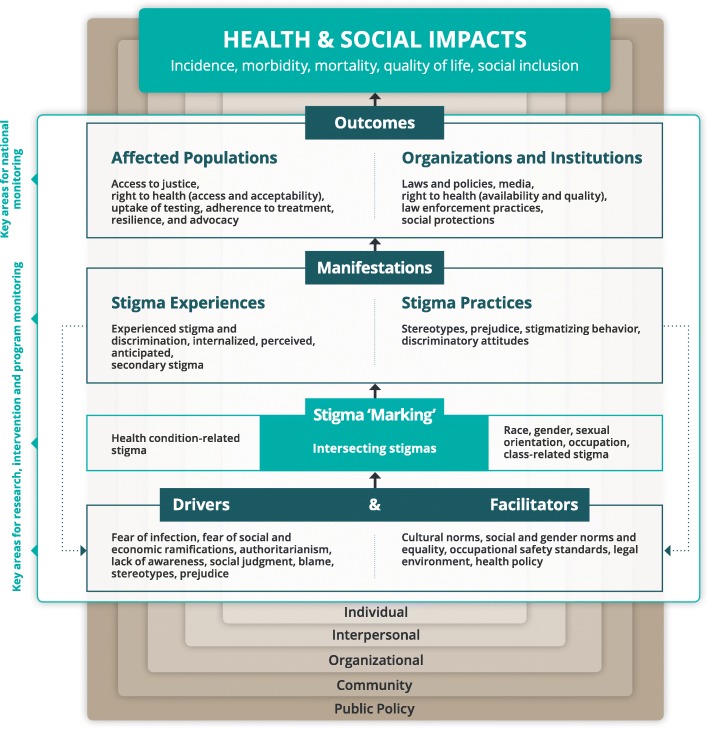
Stigma is a well-documented barrier to health seeking behavior, engagement in care and adherence to treatment across a range of health conditions globally. In order to halt the stigmatization process and mitigate the harmful consequences of health-related stigma (i.e. stigma associated with health conditions), it is critical to have an explicit theoretical framework to guide intervention development, measurement, research, and policy. Existing stigma frameworks typically focus on one health condition in isolation and often concentrate on the psychological pathways occurring among individuals. This tendency has encouraged a siloed approach to research on health-related stigmas, focusing on individuals, impeding both comparisons across stigmatized conditions and research on innovations to reduce health-related stigma and improve health outcomes. We propose the Health Stigma and Discrimination Framework, which is a global, crosscutting framework based on theory, research, and practice, and demonstrate its application to a range of health conditions, including leprosy, epilepsy, mental health, cancer, HIV, and obesity/overweight. We also discuss how stigma related to race, gender, sexual orientation, class, and occupation intersects with health-related stigmas, and examine how the framework can be used to enhance research, programming, and policy efforts. Research and interventions inspired by a common framework will enable the field to identify similarities and differences in stigma processes across diseases and will amplify our collective ability to respond effectively and at-scale to a major driver of poor health outcomes globally.
Overview
CoChat Summary
## TL;DR
This paper proposes the Health Stigma and Discrimination Framework, a crosscutting model for understanding health-related stigma across diseases, levels of influence, and stages of the stigmatization process. It argues that a common framework can improve research, intervention design, monitoring, and policy for conditions such as leprosy, epilepsy, mental health, cancer, HIV, and overweight/obesity.
## Key findings
- The framework breaks health-related stigma into domains including drivers and facilitators, stigma marking, stigma experiences/practices, and outcomes for both affected populations and organizations/institutions.
- The authors emphasize that stigma is not just an individual psychological process; it operates across socio-ecological levels and is shaped by social, cultural, political, and economic forces.
- In the paper’s examples, stigma is linked to harmful outcomes such as delayed treatment, poor adherence, lower testing, worse engagement in care, social exclusion, and reduced quality of life.
- The abstract states that the framework is demonstrated using 6 conditions: leprosy, epilepsy, mental health, cancer, HIV, and obesity/overweight; it also notes a mental health study across 16 countries.
## Methods
- The paper is a framework/theory paper: it proposes and explains a new Health Stigma and Discrimination Framework rather than reporting a single empirical study.
- It uses conceptual synthesis and practical applications/examples drawn from multiple health conditions, including communicable and non-communicable diseases.
- The main analysis is an interpretive comparison across conditions and socio-ecological levels, with discussion of how the framework can guide research, intervention development, monitoring, and policy.
## Limitations
- The paper does not report a formal empirical evaluation of the framework; this is evident from the text, which presents the framework and examples rather than original study data.
- The paper states that health-related stigmas vary by condition and context, and that the framework is broad and orienting rather than condition-specific; this implies limited specificity for any single disease context.
- It is evident from the text that the examples are illustrative and selective, so the framework’s practical applications are not exhaustively tested across all health conditions or settings.
Model-written summary. Check it against the paper before relying on it.
Integrity signals
Registry
Cites
Statistics
Figures
Verification
Claims the paper makes
14 Valid · 1 Not valid · 81 Not checked · 29 Own results and interpretations
Some cited sources support this claim and some don’t — read each source’s verdict below.
In the paper
“Outcomes of HIV stigma for people at risk of or living with HIV include engagement in greater HIV risk behaviors, lower rates of HIV testing, worse engagement and retention in HIV care, and worse initiation and adherence to medication [3, 44, 111].”
§ The Health Stigma and Discrimination Framework: a global, crosscutting framework to inform research, intervention development, and policy on health-related stigmas > Practical applications > HIV
What the sources say
- Supportedcites [3] Mahajan AP Stigma in the HIV/AIDS epidemic: a review of the literature and recommendations for the way forward AIDS 2008 22 Suppl 2 S67 S79 10.1097/01.aids.0000327438.13291.62 18641472 PMC2835402 source
The 'Stigma, Testing, & Treatment' subsection (Results, Relationship of HIV/AIDS related Stigma to Prevention & Treatment Programs) states outright that H/A stigma 'is documented as a barrier to uptake of HIV testing and treatment services in numerous settings,' citing South African data where untested individuals held significantly greater stigmatizing attitudes and Botswana data where a majority of patients who delayed testing did so because of fear of stigma. The adjacent passage (same section) adds that individuals with stigmatizing attitudes were significantly less likely to have been tested or to have heard of routine testing, and the Discussion/Recommendations reiterates stigma as a barrier to the entire spectrum of prevention and treatment services with testing as the primary gateway. The other outcomes bundled in the citing sentence are likewise in our copy (risk behavior in the 'Stigma & HIV risk behavior' subsection; care retention and adherence in the following subsection), so the paraphrase is supported; the review's caveats (some attribute poor uptake to lack of ART access; calls for more rigorous research) qualify strength but not direction. (LLM, conf=0.85)
- Not checked yetcites [44] Logie CH Pathways From HIV-Related Stigma to Antiretroviral Therapy Measures in the HIV Care Cascade for Women Living With HIV in Canada J Acquir Immune Defic Syndr 2018 77 2 144 153 29135650 PMC5770113 source
- Misattributedcites [111] Katz IT, et al. Impact of HIV-related stigma on treatment adherence: systematic review and meta-synthesis. J Int AIDS Soc. 2013;16((Suppl 2):3. PMC3833107 24242258 sourceExperimental — accuracy not yet measured
Katz et al. (2013) reviewed only stigma's effect on ART adherence among 26,715 HIV-positive persons; the Discussion states explicitly that 'The evidence search protocol was not designed to identify studies examining the influences of stigma on HIV testing [156, 157]' and instead credits the point to two other works it cites. Our copy therefore does not report or synthesize any association between stigma and lower HIV-testing uptake — it mentions the finding only to hand it off to Young et al. (2010) and Wong et al. (2009), whose titles it lists in the References. The broader sentence in the Discussion ('HIV-related stigma has been shown to adversely affect these treatment- and care-related behaviours in a wide range of settings [35, 161–166]') is likewise a pointer to other citations, not this paper's own result. (LLM, conf=0.80) It matches “HIV-related stigma, social norms, and HIV testing in Soweto and Vulindlela, South Africa: National Institutes of Mental Health Project Accept (HPTN 043)” (2010) instead.
Checked by a reasoning model — may be wrong.
plainstates an association- Asserted: passes — The authors put it forward as true.
- Checkable: passes — It can be checked against evidence.
- Load-bearing: unclear — It is unclear whether the paper’s conclusions depend on it.
- Based: passes — The paper gives a reason why it holds.
- Supported
The cited sources support only part of this claim — read each source’s verdict below.
In the paper
“Stigma is a well-documented barrier to health seeking behavior, engagement in care and adherence to treatment across a range of health conditions globally.”
- Also stated in: § Background · boosted
“Stigma is a well-documented global barrier to health-seeking behavior [1], engagement in care [2], and adherence to treatment [3] across a range of health conditions [4, 5].”
§ The Health Stigma and Discrimination Framework: a global, crosscutting framework to inform research, intervention development, and policy on health-related stigmas > Abstract Stigma is a well-documented barrier to health seeking behavior, engagement in care and adherence to treatment across a range of health conditions globally. In order to halt the stigmatization process and mitigate the harmful consequences of health-related stigma (i.e. stigma associated with health conditions), it is critical to have an explicit theoretical framework to guide intervention development, measurement, research, and policy. Existing stigma frameworks typically focus on one health condition in isolation and often concentrate on the psychological pathways occurring among individuals. This tendency has encouraged a siloed approach to research on health-related stigmas, focusing on individuals, impeding both comparisons across stigmatized conditions and research on innovations to reduce health-related stigma and improve health outcomes. We propose the Health Stigma and Discrimination Framework, which is a global, crosscutting framework based on theory, research, and practice, and demonstrate its application to a range of health conditions, including leprosy, epilepsy, mental health, cancer, HIV, and obesity/overweight. We also discuss how stigma related to race, gender, sexual orientation, class, and occupation intersects with health-related stigmas, and examine how the framework can be used to enhance research, programming, and policy efforts. Research and interventions inspired by a common framework will enable the field to identify similarities and differences in stigma processes across diseases and will amplify our collective ability to respond effectively and at-scale to a major driver of poor health outcomes globally.
What the sources say
- Partly supportedcites [1] Scott N Crane M Lafontaine M Seale H Currow D Stigma as a barrier to diagnosis of lung cancer: patient and general practitioner perspectives Prim Health Care Res Dev 2015 16 06 618 622 10.1017/S1463423615000043 25660904 sourceExperimental — accuracy not yet measured
The Introduction states only the broad background point that 'Stigma has been linked to negative outcomes across a range of areas in health,' and the Abstract/Discussion support stigma as a barrier to help-seeking — anticipation of stigma delayed reporting of symptoms and diagnosis in a lung-cancer sample of 20 patients and 10 GPs in New South Wales, Australia, with 'international research' cited merely on lung-cancer stigma being commonly experienced. Nothing in our copy addresses stigma as a barrier to engagement in care or adherence to treatment, and nothing extends the claim across a range of health conditions globally; the paper's own scope is lung cancer diagnosis delay. So the help-seeking element is supported while the engagement/adherence and multi-condition global generalisation is not. (LLM, conf=0.72)
- Not checked yetcites [2] Corrigan P How stigma interferes with mental health care Am Psychol 2004 59 7 614 625 10.1037/0003-066X.59.7.614 15491256 source
- Partly supportedcites [3] Mahajan AP Stigma in the HIV/AIDS epidemic: a review of the literature and recommendations for the way forward AIDS 2008 22 Suppl 2 S67 S79 10.1097/01.aids.0000327438.13291.62 18641472 PMC2835402 sourceExperimental — accuracy not yet measured
Our copy of Mahajan et al. (2008) supports the three components of the claim, but only within HIV/AIDS: 'Stigma, Testing, & Treatment' (Results) states H/A stigma 'is documented as a barrier to uptake of HIV testing and treatment services in numerous settings, particularly in resource limited countries', and the same section reports that stigma 'impedes access to and retention in HIV care' and 'adherence to antiretroviral medications', with emerging evidence from Africa and Asia and persistence in developed countries — covering the global scope. What the source does not support is the generalization 'across a range of health conditions': the review's scope is HIV/AIDS-related stigma, and other conditions (mental illness, unemployment) appear only as conceptual analogues in 'Defining Stigma: Conceptual Considerations', not as documented evidence of health-seeking, care-engagement or adherence barriers. (LLM, conf=0.78)
boostedstates a cause- Asserted: passes — The authors put it forward as true.
- Checkable: passes — It can be checked against evidence.
- Load-bearing: passes — The paper’s conclusions depend on it.
- Based: passes — The paper gives a reason why it holds.
- Also stated in: § Background · boosted
Every source the paper cites for this claim was checked and supports it.
In the paper
“Stigma influences population health outcomes by worsening, undermining, or impeding a number of processes, including social relationships, resource availability, stress, and psychological and behavioral responses, exacerbating poor health [9].”
§ The Health Stigma and Discrimination Framework: a global, crosscutting framework to inform research, intervention development, and policy on health-related stigmas > Background
What the sources say
- Supportedcites [9] Hatzenbuehler ML Phelan JC Link BG Stigma as a Fundamental Cause of Population Health Inequalities Am J Public Health 2013 103 5 813 821 10.2105/AJPH.2012.301069 23488505 PMC3682466 source
The MEDIATORS LINKING STIGMA TO HEALTH section (p. opening paragraph) states directly that 'stigma thwarts, undermines, or exacerbates several processes (i.e., availability of resources, social relationships, psychological and behavioral responses, stress) that ultimately lead to adverse health outcomes' — the same four mediators and the same direction of effect the claim attributes, with 'worsening/impeding' a fair paraphrase of 'thwarts/exacerbates'. Subsections on Stress, Social Isolation, and Psychological and Behavioral Responses, plus the Abstract and Conclusions ('disrupts or inhibits access to multiple resources—structural, interpersonal, and psychological—that could otherwise be used to avoid or minimize poor health'), corroborate the mediating-pathway framing. (LLM, conf=0.92)
plainstates a cause- Asserted: passes — The authors put it forward as true.
- Checkable: passes — It can be checked against evidence.
- Load-bearing: passes — The paper’s conclusions depend on it.
- Based: passes — The paper gives a reason why it holds.
- Supported
The cited sources support only part of this claim — read each source’s verdict below.
In the paper
“The majority of health-related stigma frameworks explore psychological pathways at the individual level, focusing either on the individuals experiencing stigma [10, 11, 14–16, 30, 31], those perpetuating stigma [21, 26], or both [20, 24, 32].”
§ The Health Stigma and Discrimination Framework: a global, crosscutting framework to inform research, intervention development, and policy on health-related stigmas > Background
What the sources say
- Not checked yetcites [10] Barlösius E Philipps A Felt stigma and obesity: Introducing the generalized other Soc Sci Med 2015 130 9 15 10.1016/j.socscimed.2015.01.048 25658623 source
- Partly supportedcites [11] Tomiyama AJ Weight stigma is stressful. A review of evidence for the Cyclic Obesity/Weight-Based Stigma model Appetite 2014 82 8 15 10.1016/j.appet.2014.06.108 24997407 sourceExperimental — accuracy not yet measured
Our copy of Tomiyama (2014) does present an individual-level psychological framework: 'The COBWEBS model' (p. ~9) and 'Step 1. Weight stigma as a psychological stressor' characterise weight stigma as a stressor and trace psychological/physiological pathways (cortisol, eating, coping) in the person experiencing it, and the paper also points to comparable individual-experiencer frameworks elsewhere (Major & O'Brien, 2005 social identity threat; Meyer, 2003 sexual minority stress). That supports the 'psychological pathways at the individual level, focusing on individuals experiencing stigma' branch. It does not support the rest of the attributed sentence: the paper never examines the psychology of those perpetuating weight stigma (perpetrators appear only descriptively — e.g. family, friends, health care settings), and it makes no survey or claim about 'the majority of health-related stigma frameworks'. (LLM, conf=0.70)
- Not checked yetcites [14] Sikorski C Luppa M Luck T Riedel-Heller SG Weight stigma ‘gets under the skin’-evidence for an adapted psychological mediation framework-a systematic review Obesity 2015 23 2 266 276 10.1002/oby.20952 25627624 source
- Not checked yetcites [15] Ratcliffe D Ellison N Obesity and Internalized Weight Stigma: A Formulation Model for an Emerging Psychological Problem Behav Cogn Psychother 2015 43 02 239 252 10.1017/S1352465813000763 25632949 source
- Not checked yetcites [16] Himmelstein MS Puhl RM Quinn DM Intersectionality: An Understudied Framework for Addressing Weight Stigma Am J Prev Med 2017 53 4 421 431 10.1016/j.amepre.2017.04.003 28579331 source
- Not checked yetcites [30] Schabert J Browne JL Mosely K Speight J Social Stigma in Diabetes Patient - Patient-Centered Outcomes Res 2013 6 1 1 10 10.1007/s40271-012-0001-0 23322536 source
- Partly supportedcites [31] Hatzenbuehler ML How does sexual minority stigma ‘get under the skin’? A psychological mediation framework Psychol Bull 2009 135 5 707 730 10.1037/a0016441 19702379 PMC2789474 sourceExperimental — accuracy not yet measured
Our copy of Hatzenbuehler (2009) supports only the 'individuals experiencing stigma / individual-level psychological pathways' component: the Abstract states the psychological mediation framework 'examines the intra- and interpersonal psychological processes through which stigma-related stress leads to psychopathology' in LGB populations, and that prior social-psychological stigma research 'has examined individual responses to discrimination and stigma.' The paper makes no survey-level claim that 'the majority' of health-related stigma frameworks do this, and it says nothing about frameworks oriented to those perpetuating stigma or to both targets and perpetrators; that part of the paraphrase is not attributable to this source. Notably, the same passage adds that in the stigma tradition 'the focus is often on group-level processes (e.g., disidentification),' which qualifies a purely individual-level reading. (LLM, conf=0.65)
- Not checked yetcites [21] Misir P Structuration Theory J Int Assoc Provid AIDS Care 2015 14 4 328 334 10.1177/2325957412463072 26195671 source
- Not checked yetcites [26] Longdon E Read J ‘People with Problems, Not Patients with Illnesses’: Using Psychosocial Frameworks to Reduce the Stigma of Psychosis Isr J Psychiatry Relat Sci 2017 54 1 24 28 28857755
- Not checked yetcites [20] Earnshaw VA Chaudoir SR From conceptualizing to measuring HIV stigma: a review of HIV stigma mechanism measures AIDS Behav 2009 13 6 1160 1177 10.1007/s10461-009-9593-3 19636699 PMC4511707 source
plain- Asserted: passes — The authors put it forward as true.
- Checkable: passes — It can be checked against evidence.
- Load-bearing: passes — The paper’s conclusions depend on it.
- Based: passes — The paper gives a reason why it holds.
None of the sources cited for this claim have been checked yet.
In the paper
“The Health Stigma and Discrimination Framework differs from many other models in that it does not distinguish the ‘stigmatized’ from the ‘stigmatizer’ [21, 32].”
§ The Health Stigma and Discrimination Framework: a global, crosscutting framework to inform research, intervention development, and policy on health-related stigmas > The Health Stigma and Discrimination Framework > How is the framework different?
What the sources say
- Not checked yetcites [21] Misir P Structuration Theory J Int Assoc Provid AIDS Care 2015 14 4 328 334 10.1177/2325957412463072 26195671 source
- Could not verifycites [32] Weiss MG Stigma and the Social Burden of Neglected Tropical Diseases PLoS Negl Trop Dis 2008 2 5 e237 10.1371/journal.pntd.0000237 18478049 PMC2359851 sourceExperimental — accuracy not yet measured
Our copy of Weiss (2008) never mentions the Health Stigma and Discrimination Framework, nor any comparison of stigma models on whether they separate the 'stigmatized' from the 'stigmatizer'; searches for that phrasing and for framework/model comparisons returned only passages on Scambler's hidden-distress model (enacted vs. felt, anticipated, internalized stigma) and on Goffman/labeling theory. The closest material is Figure 3 and Figure 4 ('Points of Intervention to Mitigate Stigmatizing and being Stigmatized'), in which Weiss's own extended model does explicitly differentiate stigmatizers who enact, endorse or accept exclusion from those who are stigmatized — but that describes this paper's model, not the later framework the claim is about. Since the cited paper predates and does not address that framework, the claim can be neither confirmed nor contradicted from our copy. (LLM, conf=0.70)
plain- Asserted: passes — The authors put it forward as true.
- Checkable: passes — It can be checked against evidence.
- Load-bearing: passes — The paper’s conclusions depend on it.
- Based: passes — The paper gives a reason why it holds.
67 more claims · 10 with their cited sources checked
Create a free account to see all 125 claims and to verify the 147 references still open.
- It may state two separate claims as one. 40
- Probably not a substantial claim. 17
Claims other papers make about this one
Each is checked against this paper’s own text: does it say what the citing paper says it does?
The source backs part of the claim, not all of it — or backs it for a different population, condition or comparison.
In the citing paper
“While there are manifold efforts aiming to reduce providers' and the public's stigmatizing attitudes,16,17 evidence on the effectiveness of stigma interventions specifically targeting people with HIV who inject drugs in order to facilitate care engagement is limited.1,18”
From An acceptance-based, intersectional stigma coping intervention for people with HIV who inject drugs—a randomized clinical trial (2023) · cites this paper as [1]
Experimental — accuracy not yet measuredThe source backs part of the claim, not all of it — or backs it for a different population, condition or comparison.
In the citing paper
“HIV stigma manifestations, including enacted (experienced), anticipated (expected) and internalized stigma (endorsing stigmatizing attitudes),1 have adverse effects on the entire HIV care cascade. These range from delayed testing and care to low rates of antiretroviral treatment (ART) initiation and adherence, thereby impeding viral load suppression.3”
From An acceptance-based, intersectional stigma coping intervention for people with HIV who inject drugs—a randomized clinical trial (2023) · cites this paper as [1]
Experimental — accuracy not yet measuredThe cited source says what the claim attributes to it.
In the citing paper
“Stigma, the negative labeling and devaluation of people based on an undesired social category, is a well-documented barrier to care and has negative health effects.1”
From An acceptance-based, intersectional stigma coping intervention for people with HIV who inject drugs—a randomized clinical trial (2023) · cites this paper as [1]
Citations
Cites
Stigma: Notes on the Management of Spoiled Identity
(1969) · Postgraduate Medical Journal · doi:10.1136/pgmj.45.527.642 · Cited by 14,231
Stigma: Notes on the Management of Spoiled Identity.
Seeman, M., & Goffman, E. (1964) · American Sociological Review · doi:10.2307/2091442 · Cited by 10,716
Link, B. G., & Phelan, J. C. (2001) · Annual Review of Sociology · doi:10.1146/annurev.soc.27.1.363 · Cited by 8,848
Lippa, N. C., & Sanderson, S. C. (2013) · Human Heredity · doi:10.1159/000353712 · Cited by 6,078
How stigma interferes with mental health care.
Corrigan, P. (2004) · American Psychologist · doi:10.1037/0003-066x.59.7.614 · Cited by 3,648 · cited 1×
“Background Stigma is a well-documented global barrier to health-seeking behavior [1], engagement in care [2], and adherence to treatment [3] across a range of health conditions [4, 5].”
BackgroundThe Stigma of Obesity: A Review and Update
Puhl, R. M., & Heuer, C. A. (2009) · Obesity · doi:10.1038/oby.2008.636 · Cited by 3,323 · cited 1×
“Weight-based disparities are well documented in employment, healthcare, education, and interpersonal outcomes [115, 116].”
BackgroundHIV and AIDS-related stigma and discrimination: a conceptual framework and implications for action
Parker, R., & Aggleton, P. (2003) · Social Science & Medicine · doi:10.1016/s0277-9536(02)00304-0 · Cited by 2,748
How does sexual minority stigma “get under the skin”? A psychological mediation framework
Hatzenbuehler, M. L. (2009) · Psychological Bulletin · doi:10.1037/a0016441 · Cited by 2,695
Stigma as a fundamental cause of population health inequalities
Hatzenbuehler, M. L., Phelan, J. C., & Link, B. G. (2013) · American Journal of Public Health · doi:10.2105/ajph.2012.301069 · Cited by 2,674 · cited 2×
“A few general stigma frameworks have also highlighted the influence of social and structural forces on the stigmatization process across socio-ecological levels [6, 9, 36].”
BackgroundObesity Stigma: Important Considerations for Public Health
Puhl, R. M., & Heuer, C. A. (2010) · American Journal of Public Health · doi:10.2105/ajph.2009.159491 · Cited by 1,917 · cited 1×
“For some health conditions, including HIV [8, 18, 19, 23, 34, 35], mental health [27, 28], child health [35], and obesity/overweight [17], frameworks addressing the social (e.”
BackgroundStigma in the HIV/AIDS epidemic: a review of the literature and recommendations for the way forward
Mahajan, A. P., Sayles, J. N., Patel, V. A., Remien, R. H., Sawires, S. R., Ortiz, D. J., Szekeres, G., & Coates, T. J. (2008) · AIDS · doi:10.1097/01.aids.0000327438.13291.62 · Cited by 1,404 · cited 7×
“The level of HIV stigma in communities and societies influences a number of stigma practices, such as discriminatory attitudes among the general public and healthcare workers, and harmful stereotypes and prejudices that can lead to stigmatizing behavior towards PLHIV (exclusion, verbal abuse, etc.).”
BackgroundInfluentialPrejudice against fat people: Ideology and self-interest.
Crandall, C. S. (1994) · Journal of Personality and Social Psychology · doi:10.1037//0022-3514.66.5.882 · Cited by 1,392 · cited 1×
“Individuals with obesity are often blamed for their weight status and stereotyped as lazy, lacking willpower, incompetent, and unattractive, particularly in cultures that hold core values, such as the Protestant Work Ethic, that emphasize self-control and hard work [113].”
BackgroundImpact of weight bias and stigma on quality of care and outcomes for patients with obesity
Phelan, S. M., Burgess, D. J., Yeazel, M. W., Hellerstedt, W. L., Griffin, J. M., & van Ryn, M. (2015) · Obesity Reviews · doi:10.1111/obr.12266 · Cited by 1,361 · cited 1×
“In healthcare settings, women who perceive stigmatization from their providers report delaying use of preventive health services for fear of being judged or embarrassed [120].”
BackgroundMeasuring Mental Illness Stigma
Link, B. G., Yang, L. H., Phelan, J. C., & Collins, P. Y. (2004) · Schizophrenia Bulletin · doi:10.1093/oxfordjournals.schbul.a007098 · Cited by 1,349 · cited 1×
“Anticipated and perceived stigma are common manifestations of mental health-related stigma, contributing to fear of acknowledging one’s mental health issue and possibly leading to shame and avoidance regarding seeking mental health care [90, 91].”
BackgroundPescosolido, B. A., Martin, J. K., Long, J. S., Medina, T. R., Phelan, J. C., & Link, B. G. (2010) · American Journal of Psychiatry · doi:10.1176/appi.ajp.2010.09121743 · Cited by 1,262
From Conceptualizing to Measuring HIV Stigma: A Review of HIV Stigma Mechanism Measures
Earnshaw, V. A., & Chaudoir, S. R. (2009) · AIDS and Behavior · doi:10.1007/s10461-009-9593-3 · Cited by 1,216 · cited 1×
“The majority of health-related stigma frameworks explore psychological pathways at the individual level, focusing either on the individuals experiencing stigma [10, 11, 14–16, 30, 31], those perpetuating stigma [21, 26], or both [20, 24, 32].”
BackgroundSelf-citationAngermeyer, M. C., & Dietrich, S. (2006) · Acta Psychiatrica Scandinavica · doi:10.1111/j.1600-0447.2005.00699.x · Cited by 1,155 · cited 2×
“Persons with mental health issues are often viewed as incompetent and unable to work or live independently [79].”
BackgroundImpact of HIV‐related stigma on treatment adherence: systematic review and meta‐synthesis
Katz, I. T., Ryu, A. E., Onuegbu, A. G., Psaros, C., Weiser, S. D., Bangsberg, D. R., & Tsai, A. C. (2013) · Journal of the International AIDS Society · doi:10.7448/ias.16.3.18640 · Cited by 1,126 · cited 1×
“Outcomes of HIV stigma for people at risk of or living with HIV include engagement in greater HIV risk behaviors, lower rates of HIV testing, worse engagement and retention in HIV care, and worse initiation and adherence to medication [3, 44, 111].”
BackgroundQuinn, D. M., & Chaudoir, S. R. (2009) · Journal of Personality and Social Psychology · doi:10.1037/a0015815 · Cited by 932 · cited 1×
“expectations of bias being perpetrated by others if their health condition becomes known) are also classified as stigma experiences [42].”
BackgroundEvolution of public attitudes about mental illness: a systematic review and meta‐analysis
Schomerus, G., Schwahn, C., Holzinger, A., Corrigan, P. W., Grabe, H. J., Carta, M. G., & Angermeyer, M. C. (2012) · Acta Psychiatrica Scandinavica · doi:10.1111/j.1600-0447.2012.01826.x · Cited by 906
(2015) · Routledge eBooks · doi:10.4324/9781315865737 · Cited by 899
Handbook of the Sociology of Mental Health
(1999) · Handbooks of Sociology and Social Research · doi:10.1007/0-387-36223-1 · Cited by 810
Stigma and prejudice: One animal or two?
Phelan, J. C., Link, B. G., & Dovidio, J. F. (2008) · Social Science & Medicine · doi:10.1016/j.socscimed.2008.03.022 · Cited by 809 · cited 1×
“same-sex sexual relations, injection drug use, sex work) and therefore PLHIV are devalued due to their perceived associations with these behaviors [107, 108].”
BackgroundSelf-citationThe fight against stigma: An overview of stigma-reduction strategies and interventions
Heijnders, M., & Van Der Meij, S. (2006) · Psychology, Health & Medicine · doi:10.1080/13548500600595327 · Cited by 726 · cited 2×
“Stigma-reduction interventions are most effective when they include components directed at a range of actors and socio-ecological levels [37].”
BackgroundStangl, A. L., Lloyd, J. K., Brady, L. M., Holland, C. E., & Baral, S. (2013) · Journal of the International AIDS Society · doi:10.7448/ias.16.3.18734 · Cited by 698
Self-citationPhelan, J. C., Link, B. G., Stueve, A., & Pescosolido, B. A. (2000) · Journal of Health and Social Behavior · doi:10.2307/2676305 · Cited by 692
Weight stigma is stressful. A review of evidence for the Cyclic Obesity/Weight-Based Stigma model
Tomiyama, A. J. (2014) · Appetite · doi:10.1016/j.appet.2014.06.108 · Cited by 690
HEREK, G. M. (1999) · American Behavioral Scientist · doi:10.1177/0002764299042007004 · Cited by 637 · cited 1×
“same-sex sexual relations, injection drug use, sex work) and therefore PLHIV are devalued due to their perceived associations with these behaviors [107, 108].”
BackgroundLogie, C. H., James, L., Tharao, W., & Loutfy, M. R. (2011) · PLoS Medicine · doi:10.1371/journal.pmed.1001124 · Cited by 589 · cited 4×
“Key populations for HIV include men who have sex with men, people with histories of injection drug use, racial and ethnic minorities, and sex workers, and therefore stigmas that intersect with HIV include those associated with sexual orientation, substance use, race, and occupation [36, 109].”
BackgroundInfluentialSelf-citationPescosolido, B. A., Martin, J. K., Lang, A., & Olafsdottir, S. (2008) · Social Science & Medicine · doi:10.1016/j.socscimed.2008.03.018 · Cited by 522 · cited 1×
“For some health conditions, including HIV [8, 18, 19, 23, 34, 35], mental health [27, 28], child health [35], and obesity/overweight [17], frameworks addressing the social (e.”
BackgroundStigma and racial/ethnic HIV disparities: Moving toward resilience.
Earnshaw, V. A., Bogart, L. M., Dovidio, J. F., & Williams, D. R. (2013) · American Psychologist · doi:10.1037/a0032705 · Cited by 504 · cited 2×
“For some health conditions, including HIV [8, 18, 19, 23, 34, 35], mental health [27, 28], child health [35], and obesity/overweight [17], frameworks addressing the social (e.”
BackgroundSelf-citationExamining a progressive model of self-stigma and its impact on people with serious mental illness
Corrigan, P. W., Rafacz, J., & Rüsch, N. (2011) · Psychiatry Research · doi:10.1016/j.psychres.2011.05.024 · Cited by 467 · cited 1×
“Mental health-related stigma also has a profound influence on life opportunities and persons realizing their goals and potential; it is associated with lower self-efficacy and self-esteem and compromised engagement in employment and independent living [92].”
BackgroundHIV-related stigma: Adapting a theoretical framework for use in India
Steward, W. T., Herek, G. M., Ramakrishna, J., Bharat, S., Chandy, S., Wrubel, J., & Ekstrand, M. L. (2008) · Social Science & Medicine · doi:10.1016/j.socscimed.2008.05.032 · Cited by 455
Obesity and discrimination – a systematic review and meta‐analysis of observational studies
Spahlholz, J., Baer, N., König, H. ‐., Riedel‐Heller, S. G., & Luck‐Sikorski, C. (2016) · Obesity Reviews · doi:10.1111/obr.12343 · Cited by 448 · cited 1×
“Weight-based disparities are well documented in employment, healthcare, education, and interpersonal outcomes [115, 116].”
BackgroundFox, A. B., Earnshaw, V. A., Taverna, E. C., & Vogt, D. (2018) · Stigma and Health · doi:10.1037/sah0000104 · Cited by 400 · cited 1×
“The majority of health-related stigma frameworks explore psychological pathways at the individual level, focusing either on the individuals experiencing stigma [10, 11, 14–16, 30, 31], those perpetuating stigma [21, 26], or both [20, 24, 32].”
BackgroundSelf-citationThe Mental Health of Black Caribbean Immigrants: Results from the National Survey of American Life
Williams, D. R., Haile, R., González, H. M., Neighbors, H., Baser, R., & Jackson, J. S. (2007) · American Journal of Public Health · doi:10.2105/ajph.2006.088211 · Cited by 397 · cited 1×
“For example, a higher risk for psychiatric disorders among Caribbean-born versus US-born black men has been reported [85] and greater embarrassment in seeking mental health care has been reported among Somalian-born participants compared to US-born black participants [86].”
Resultvan Brakel, W. H., Sihombing, B., Djarir, H., Beise, K., Kusumawardhani, L., Yulihane, R., Kurniasari, I., Kasim, M., Kesumaningsih, K. I., & Wilder-Smith, A. (2012) · Global Health Action · doi:10.3402/gha.v5i0.18394 · Cited by 391
Pathogen-avoidance mechanisms and the stigmatization of obese people
Park, J. H., Schaller, M., & Crandall, C. S. (2007) · Evolution and Human Behavior · doi:10.1016/j.evolhumbehav.2007.05.008 · Cited by 378 · cited 2×
“In addition to concerns about character, because obesity and overweight are perceived as abnormal physical features, they may activate the behavioral immune system [99] and elicit disgust and related concerns about disease avoidance [114], which leads to distancing and other direct forms of social rejection.”
BackgroundKerrigan, D., Kennedy, C. E., Morgan-Thomas, R., Reza-Paul, S., Mwangi, P., Win, K. T., McFall, A., Fonner, V. A., & Butler, J. (2015) · The Lancet · doi:10.1016/s0140-6736(14)60973-9 · Cited by 375 · cited 1×
“While outcomes are mostly negative, positive outcomes are possible; stigma has been known to foster resilience in marginalized populations [46] and fuel the formation of patient advocacy groups and advocacy efforts that have led to major policy changes to improve access to healthcare for some stigmatized conditions li…”
BackgroundPescosolido, B. A., Medina, T. R., Martin, J. K., & Long, J. S. (2013) · American Journal of Public Health · doi:10.2105/ajph.2012.301147 · Cited by 349 · cited 1×
“For instance, findings from the Stigma in Global Context – Mental Health Study, examining responses to scenarios of depression and schizophrenia in 16 countries [84], indicated that core ‘backbone’ stigmatizing beliefs remain across settings with regards to having a person with mental health issues provide childcare,…”
BackgroundSocial Stigma in Diabetes: A Framework to Understand a Growing Problem for an Increasing Epidemic
Schabert, J., Browne, J. L., Mosely, K., & Speight, J. (2013) · The Patient - Patient-Centered Outcomes Research · doi:10.1007/s40271-012-0001-0 · Cited by 339
Intersectionality: An Understudied Framework for Addressing Weight Stigma
Himmelstein, M. S., Puhl, R. M., & Quinn, D. M. (2017) · American Journal of Preventive Medicine · doi:10.1016/j.amepre.2017.04.003 · Cited by 302
Social stigma for adults and children with epilepsy
Jacoby, A., & Austin, J. K. (2007) · Epilepsia · doi:10.1111/j.1528-1167.2007.01391.x · Cited by 286 · cited 1×
“Institutional outcomes include stigmatizing policies such as driving and/or employment restrictions that may be disproportionate to illness severity [78].”
BackgroundStigma and the Social Burden of Neglected Tropical Diseases
Weiss, M. G. (2008) · PLoS Neglected Tropical Diseases · doi:10.1371/journal.pntd.0000237 · Cited by 286 · cited 2×
“The majority of health-related stigma frameworks explore psychological pathways at the individual level, focusing either on the individuals experiencing stigma [10, 11, 14–16, 30, 31], those perpetuating stigma [21, 26], or both [20, 24, 32].”
BackgroundEpidemiology of Epilepsy in Developing Countries
(2006) · Epilepsy in the Tropics · doi:10.1201/9781498713467-8 · Cited by 272
The Stigma of Childhood Mental Disorders: A Conceptual Framework
Mukolo, A., Heflinger, C. A., & Wallston, K. A. (2010) · Journal of the American Academy of Child & Adolescent Psychiatry · doi:10.1016/j.jaac.2009.10.011 · Cited by 244 · cited 1×
“For some health conditions, including HIV [8, 18, 19, 23, 34, 35], mental health [27, 28], child health [35], and obesity/overweight [17], frameworks addressing the social (e.”
BackgroundDiIorio, C., Osborne Shafer, P., Letz, R., Henry, T., Schomer, D. L., & Yeager, K. (2003) · Epilepsy & Behavior · doi:10.1016/s1525-5050(03)00103-3 · Cited by 230 · cited 2×
“Background Stigma is a well-documented global barrier to health-seeking behavior [1], engagement in care [2], and adherence to treatment [3] across a range of health conditions [4, 5].”
BackgroundPattyn, E., Verhaeghe, M., Sercu, C., & Bracke, P. (2014) · Psychiatric Services · doi:10.1176/appi.ps.201200561 · Cited by 216 · cited 1×
“Anticipated and perceived stigma are common manifestations of mental health-related stigma, contributing to fear of acknowledging one’s mental health issue and possibly leading to shame and avoidance regarding seeking mental health care [90, 91].”
BackgroundA conceptual model of HIV/AIDS stigma from five African countries
Holzemer, W. L., Uys, L., Makoae, L., Stewart, A., Phetlhu, R., Dlamini, P. S., Greeff, M., Kohi, T. W., Chirwa, M., Cuca, Y., et al. (2007) · Journal of Advanced Nursing · doi:10.1111/j.1365-2648.2007.04244.x · Cited by 202 · cited 1×
“For some health conditions, including HIV [8, 18, 19, 23, 34, 35], mental health [27, 28], child health [35], and obesity/overweight [17], frameworks addressing the social (e.”
BackgroundStigma as an Unrecognized Determinant of Population Health: Research and Policy Implications
Link, B., & Hatzenbuehler, M. L. (2016) · Journal of Health Politics, Policy and Law · doi:10.1215/03616878-3620869 · Cited by 189 · cited 2×
“Background Stigma is a well-documented global barrier to health-seeking behavior [1], engagement in care [2], and adherence to treatment [3] across a range of health conditions [4, 5].”
BackgroundThe quality of life, mental health, and perceived stigma of leprosy patients in Bangladesh
Tsutsumi, A., Izutsu, T., Md Islam, A., Maksuda, A. N., Kato, H., & Wakai, S. (2007) · Social Science & Medicine · doi:10.1016/j.socscimed.2007.02.014 · Cited by 184 · cited 1×
“At the personal level, these outcomes of stigma lead to a number of negative impacts for people living with leprosy, such as reduced quality of life and mental wellbeing, including a much increased risk of anxiety and depression [69, 70].”
BackgroundOvert Weight Stigma, Psychological Distress and Weight Loss Treatment Outcomes
Wott, C. B., & Carels, R. A. (2010) · Journal of Health Psychology · doi:10.1177/1359105309355339 · Cited by 174 · cited 1×
“Consequently, experiencing more weight-based stigmatization predicts greater caloric consumption and reduced energy expenditure during weight-loss treatment [119].”
BackgroundMukhopadhyay, R., Sambandam, S., Pillarisetti, A., Jack, D., Mukhopadhyay, K., Balakrishnan, K., Vaswani, M., Bates, M. N., Kinney, P., Arora, N., et al. (2012) · Global Health Action · doi:10.3402/gha.v5i0.19016 · Cited by 171
Trapence, G., Collins, C., Avrett, S., Carr, R. S., Sánchez, H., Ayala, G., Diouf, D., Beyrer, C., & Baral, S. (2012) · The Lancet · doi:10.1016/s0140-6736(12)60834-4 · Cited by 165 · cited 1×
“While outcomes are mostly negative, positive outcomes are possible; stigma has been known to foster resilience in marginalized populations [46] and fuel the formation of patient advocacy groups and advocacy efforts that have led to major policy changes to improve access to healthcare for some stigmatized conditions li…”
BackgroundStigma in leprosy: concepts, causes and determinants
Sermrittirong, S., & Van Brakel, W. H. (2014) · Leprosy Review · doi:10.47276/lr.85.1.36 · Cited by 165 · cited 1×
“The fact that persons affected by leprosy often have a low socioeconomic status, a low level of education and little awareness of human rights increases people’s vulnerability to discrimination [57].”
BackgroundLogie, C. H., Wang, Y., Lacombe‐Duncan, A., Wagner, A. C., Kaida, A., Conway, T., Webster, K., de Pokomandy, A., & Loutfy, M. R. (2017) · Preventive Medicine · doi:10.1016/j.ypmed.2017.12.018 · Cited by 164 · cited 6×
“The level of HIV stigma in communities and societies influences a number of stigma practices, such as discriminatory attitudes among the general public and healthcare workers, and harmful stereotypes and prejudices that can lead to stigmatizing behavior towards PLHIV (exclusion, verbal abuse, etc.).”
BackgroundInfluentialSelf-citationFiest, K. M., Birbeck, G. L., Jacoby, A., & Jetté, N. (2014) · Current Neurology and Neuroscience Reports · doi:10.1007/s11910-014-0444-x · Cited by 158 · cited 1×
“Epilepsy-related stigma ultimately undermines the quality of life of people living with epilepsy [72].”
BackgroundEpilepsy Care in Zambia: A Study of Traditional Healers
Baskind, R., & Birbeck, G. L. (2005) · Epilepsia · doi:10.1111/j.1528-1167.2005.03505.x · Cited by 139 · cited 2×
“Religious and supernatural beliefs act as facilitators of epilepsy-related stigma in some contexts, with some believing that epilepsy is a curse or caused by witchcraft [76].”
BackgroundMorrell, M. J. (2002) · Epilepsy & Behavior · doi:10.1016/s1525-5050(02)00547-4 · Cited by 134 · cited 2×
“People with epilepsy experience a number of manifestations, such as social rejection and exclusion in a range of contexts, including familial and romantic [77].”
BackgroundThe importance of theories in health care
Alderson, P. (1998) · BMJ · doi:10.1136/bmj.317.7164.1007 · Cited by 131 · cited 1×
“Alderson argues that it is practical and scientific to examine theories, as they powerfully influence how evidence is collected, analysed, understood and used and notes that, when theories are implicit, their power to clarify or to confuse, and to reveal or obscure new insights, can work unnoticed [29].”
BackgroundCultural considerations for South Asian women with breast cancer
Bedi, M., & Devins, G. M. (2015) · Journal of Cancer Survivorship · doi:10.1007/s11764-015-0449-8 · Cited by 131 · cited 2×
“Fears that a diagnosis of breast cancer will dim prospects for arranged marriages have been shown to discourage single Muslim women from accessing treatment for breast cancer in Pakistan [106].”
BackgroundChambers, S. K., Baade, P., Youl, P., Aitken, J., Occhipinti, S., Vinod, S., Valery, P. C., Garvey, G., Fong, K. M., Ball, D., et al. (2015) · Psycho-Oncology · doi:10.1002/pon.3829 · Cited by 130
Relationship of Weight-Based Teasing and Adolescents’ Psychological Well-Being and Physical Health
Greenleaf, C., Petrie, T. A., & Martin, S. B. (2014) · Journal of School Health · doi:10.1111/josh.12118 · Cited by 130 · cited 1×
“Physically, people who experience greater weight-based stigma display less cardiovascular fitness, muscular strength, and endurance [118].”
BackgroundThe Role of Gender in Mental-Illness Stigma: A National Experiment
Wirth, J. H., & Bodenhausen, G. V. (2009) · Psychological Science · doi:10.1111/j.1467-9280.2009.02282.x · Cited by 130
Lung Cancer Stigma Predicts Timing of Medical Help-Seeking Behavior
Carter-Harris, L., Hermann, C. P., Schreiber, J., Weaver, M. T., & Rawl, S. M. (2014) · Oncology Nursing Forum · doi:10.1188/14.onf.e203-e210 · Cited by 129 · cited 1×
“Individuals who experience greater cancer-related stigma tend to delay more in seeking medical care [101] and often attempt to conceal their disease from others [102].”
BackgroundObesity and Internalized Weight Stigma: A Formulation Model for an Emerging Psychological Problem
Ratcliffe, D., & Ellison, N. (2015) · Behavioural and Cognitive Psychotherapy · doi:10.1017/s1352465813000763 · Cited by 122
Does lung cancer attract greater stigma than other cancer types?
Marlow, L. A. V., Waller, J., & Wardle, J. (2015) · Lung Cancer · doi:10.1016/j.lungcan.2015.01.024 · Cited by 117 · cited 1×
“For example, cancers of the lung are highly stigmatized [1] due to the belief that smoking is their primary cause, which is believed to be under the person’s control [97].”
BackgroundKippax, S., Stephenson, N., Parker, R. G., & Aggleton, P. (2013) · American Journal of Public Health · doi:10.2105/ajph.2013.301301 · Cited by 115 · cited 2×
“[45], the danger in separating ‘us’ from ‘them’, or ‘agency’ from ‘vulnerability’, is that it removes the power that vulnerable populations have to act upon the social contexts driving their experiences, behaviors, and actions.”
BackgroundSikorski, C., Luppa, M., Luck, T., & Riedel-Heller, S. G. (2015) · Obesity · doi:10.1002/oby.20952 · Cited by 113
Measuring Leprosy Stigma—A Preliminary Review of the Leprosy Literature
van Brakel, W. H. (2003) · International journal of leprosy · doi:10.1489/1544-581x(2003)71<190:mlspro>2.0.co;2 · Cited by 112
Rao, D., Desmond, M., Andrasik, M., Rasberry, T., Lambert, N., Cohn, S. E., & Simoni, J. (2012) · AIDS Patient Care and STDs · doi:10.1089/apc.2012.0106 · Cited by 108 · cited 1×
“Another stigma experience is internalized or ‘self-stigma’, which is defined as a stigmatized group member’s own adoption of negative societal beliefs and feelings, as well as the social devaluation, associated with their stigmatized status [40].”
BackgroundStigma as a barrier to diagnosis of lung cancer: patient and general practitioner perspectives
Scott, N., Crane, M., Lafontaine, M., Seale, H., & Currow, D. (2015) · Primary Health Care Research & Development · doi:10.1017/s1463423615000043 · Cited by 106 · cited 2×
“For example, cancers of the lung are highly stigmatized [1] due to the belief that smoking is their primary cause, which is believed to be under the person’s control [97].”
BackgroundEpilepsy in Laos: Knowledge, attitudes, and practices in the community
Tran, D.-S., Odermatt, P., Singphuoangphet, S., Druet‐Cabanac, M., Preux, P., Strobel, M., & Barennes, H. (2007) · Epilepsy & Behavior · doi:10.1016/j.yebeh.2007.02.018 · Cited by 102
Cancer Stigma and its Health Consequences
Fujisawa, D., & Hagiwara, N. (2015) · Current Breast Cancer Reports · doi:10.1007/s12609-015-0185-0 · Cited by 101 · cited 1×
“Psychologically, it is associated with depression, anxiety, and demoralization among patients with cancer [100].”
BackgroundSelf-mortification and the stigma of leprosy in northern India.
Barrett, R. (2005) · Medical Anthropology Quarterly · doi:10.1525/maq.2005.19.2.216 · Cited by 99 · cited 1×
“Concealment causes stress and anxiety, but may also lead to a delay in presenting for diagnosis and treatment [65, 66].”
BackgroundZelaya, C. E., Sivaram, S., Johnson, S. C., Srikrishnan, A. K., Suniti, S., & Celentano, D. D. (2012) · AIDS Care · doi:10.1080/09540121.2011.647674 · Cited by 92 · cited 1×
“perceptions about how stigmatized groups are treated in a given context) [41] and anticipated stigma (i.”
BackgroundToddlers’ bias to look at average versus obese figures relates to maternal anti-fat prejudice
Ruffman, T., O’Brien, K., Taumoepeau, M., Latner, J. D., & Hunter, J. A. (2015) · Journal of Experimental Child Psychology · doi:10.1016/j.jecp.2015.10.008 · Cited by 87 · cited 1×
“It develops relatively early in socialization, emerging as early as 31 months [112].”
BackgroundThe Meaning of Leprosy and Everyday Experiences: An Exploration in Cirebon, Indonesia
Peters, R. M. H., Dadun, Lusli, M., Miranda-Galarza, B., van Brakel, W. H., Zweekhorst, M. B. M., Damayanti, R., Seda, F. S. S. E., Bunders, J., & Irwanto, I. (2013) · Journal of Tropical Medicine · doi:10.1155/2013/507034 · Cited by 85
Boysen, G., Ebersole, A., Casner, R., & Coston, N. (2014) · The Journal of Social Psychology · doi:10.1080/00224545.2014.953028 · Cited by 85 · cited 1×
“eating disorder), and public stigma towards issues perceived as masculine appears to be higher than towards those perceived as feminine [87, 88].”
BackgroundPeters, R. M. H., Dadun, Zweekhorst, M. B. M., Bunders, J. F. G., Irwanto, & van Brakel, W. H. (2015) · PLOS Neglected Tropical Diseases · doi:10.1371/journal.pntd.0004003 · Cited by 82 · cited 1×
“A multi-component intervention, for example, may seek to support individuals with leprosy to cope with experienced stigma and overcome internalized stigma, as well as reaching out to community members to shift harmful norms about leprosy through community dialogues or engaging local leaders to share anti-stigma messag…”
BackgroundVeen, N. H. J. V., Meima, A., & Richardus, J. H. (2006) · Leprosy Review · doi:10.47276/lr.77.4.356 · Cited by 79 · cited 1×
“When treatment is delayed, the severity of disability may increase [67, 68].”
BackgroundLogie, C. H., Lacombe‐Duncan, A., Wang, Y., Kaida, A., Conway, T., Webster, K., de Pokomandy, A., & Loutfy, M. R. (2017) · JAIDS Journal of Acquired Immune Deficiency Syndromes · doi:10.1097/qai.0000000000001589 · Cited by 79 · cited 2×
“Outcomes of HIV stigma for people at risk of or living with HIV include engagement in greater HIV risk behaviors, lower rates of HIV testing, worse engagement and retention in HIV care, and worse initiation and adherence to medication [3, 44, 111].”
BackgroundSelf-citationde STIGTER, D. H., de Geus, L., & HEYNDERS, M. L. (2000) · Leprosy Review · doi:10.5935/0305-7518.20000051 · Cited by 76
Pulerwitz, J., Oanh, K. T. H., Akinwolemiwa, D. K., Ashburn, K., & Nyblade, L. C. (2014) · AIDS and Behavior · doi:10.1007/s10461-014-0935-4 · Cited by 72 · cited 1×
“Conversely, facilitators may be positive or negative influences [33], for example, the presence or absence of occupational safety standards and protective supplies in health facilities can minimize or exacerbate stigmatizing avoidance behaviors towards populations with infectious diseases by healthcare workers [38].”
BackgroundMeasuring HIV stigma for PLHAs and nurses over time in five African countries
Holzemer, W. L., Makoae, L. N., Greeff, M., Dlamini, P. S., Kohi, T. W., Chirwa, M. L., Naidoo, J. R., Durrheim, K. L., Cuca, Y. P., & Uys, L. R. (2009) · SAHARA-J Journal of Social Aspects of HIV/AIDS · doi:10.1080/17290376.2009.9724933 · Cited by 72 · cited 1×
“Finally, secondary or ‘associative’ stigma, which refers to the experience of stigma by family or friends of members of stigmatized groups or among healthcare providers who provide care to members of stigmatized groups [43], is included under stigma experiences.”
BackgroundFactors associated with impairments in new leprosy patients: the AMFES cohort
Meima, A., Saunderson, P. R., GEBRE, S., DESTA, K., van Oortmarssen, G. J., & Habbema, J. D. F. (1999) · Leprosy Review · doi:10.5935/0305-7518.19990022 · Cited by 66 · cited 1×
“When treatment is delayed, the severity of disability may increase [67, 68].”
BackgroundLongdon, E., & Read, J. (2017) · PubMed · Cited by 64
California’s Historic Effort to Reduce the Stigma of Mental Illness: The Mental Health Services Act
Clark, W., Welch, S. N., Berry, S. H., Collentine, A. M., Collins, R., Lebron, D., & Shearer, A. L. (2013) · American Journal of Public Health · doi:10.2105/ajph.2013.301225 · Cited by 60 · cited 1×
“Additionally, California’s Mental Health Services Act in 2004 [95] addressed stigma at institutional, societal and individual levels, including social marketing, training, and a focus on cultural competence.”
BackgroundNayar, U. S., Stangl, A. L., De Zalduondo, B., & Brady, L. M. (2014) · Journal of Health Communication · doi:10.1080/10810730.2014.930213 · Cited by 57 · cited 1×
“For some health conditions, including HIV [8, 18, 19, 23, 34, 35], mental health [27, 28], child health [35], and obesity/overweight [17], frameworks addressing the social (e.”
BackgroundSelf-citationPublic awareness of, attitudes toward, and understanding of epilepsy in Isparta, Turkey
Demirci, S., Dönmez, C. M., Gündoğar, D., & Baydar, Ç. L. (2007) · Epilepsy & Behavior · doi:10.1016/j.yebeh.2007.08.005 · Cited by 57
Noordende, A. T. V. ‘., van Brakel, W. H., Banstola, N. L., & Dhakal, K. P. (2016) · Journal of Tropical Medicine · doi:10.1155/2016/4230235 · Cited by 57
Martinez, A. N., Bluthenthal, R. N., Lorvick, J., Anderson, R. L., Flynn, N. M., & Kral, A. H. (2007) · Journal of Urban Health · doi:10.1007/s11524-006-9139-1 · Cited by 54 · cited 1×
“Likewise, advocacy with policy-makers and community leaders about the benefits of syringe exchange programs to prevent transmission of HIV may be combined with training of law enforcement officers on harm reduction and proper implementation of laws that de-criminalize drug use [49].”
BackgroundDeJoy, S. B., & Bittner, K. (2014) · Maternal and Child Health Journal · doi:10.1007/s10995-014-1577-x · Cited by 53
Courtesy stigma: A concealed consternation among caregivers of people affected by leprosy
Dako‐Gyeke, M. (2017) · Social Science & Medicine · doi:10.1016/j.socscimed.2017.11.030 · Cited by 52 · cited 1×
“The stigma attached to leprosy typically manifests as a ‘spoiled identity’ in the affected person, affecting status and reputation, including that of family members [54, 59].”
BackgroundFelt stigma and obesity: Introducing the generalized other
Barlösius, E., & Philipps, A. (2015) · Social Science & Medicine · doi:10.1016/j.socscimed.2015.01.048 · Cited by 49
Fat Stigma and Public Health: A Theoretical Framework and Ethical Analysis
Abu-Odeh, D. (2014) · Kennedy Institute of Ethics journal · doi:10.1353/ken.2014.0024 · Cited by 48
Weiss, S. M., Zulu, R., Jones, D. L., Redding, C. A., Cook, R., & Chitalu, N. W. (2015) · The Lancet HIV · doi:10.1016/s2352-3018(15)00042-9 · Cited by 48
Gender and leprosy-related stigma in endemic areas: A systematic review
Dijkstra, J. I. R., van Brakel, W. H., & van Elteren, M. (2017) · Leprosy Review · doi:10.47276/lr.88.3.419 · Cited by 48 · cited 1×
“In South Asia, a low-caste background can add a further, intersecting layer of stigma, as is the case for women in many endemic countries [58].”
BackgroundRobinson, M. D., Meier, B. P., Zetocha, K. J., & McCaul, K. D. (2005) · Basic and Applied Social Psychology · doi:10.1207/s15324834basp2703_2 · Cited by 46 · cited 1×
“Most people have negative explicit and implicit attitudes toward smoking and those who smoke [98], which may further strengthen the stigmatization of people with lung cancer.”
BackgroundBrown, R. L., Moloney, M., & Brown, J. (2017) · Journal of Community Psychology · doi:10.1002/jcop.21933 · Cited by 46 · cited 1×
“There are also gender differences in perceived stigma, where men may experience elevated stress regarding disclosing mental health issues in comparison to women [89].”
BackgroundHenning‐Smith, C., Shippee, T. P., McAlpine, D. D., Hardeman, R. R., & Farah, F. (2013) · American Journal of Public Health · doi:10.2105/ajph.2012.301184 · Cited by 43 · cited 1×
“For example, a higher risk for psychiatric disorders among Caribbean-born versus US-born black men has been reported [85] and greater embarrassment in seeking mental health care has been reported among Somalian-born participants compared to US-born black participants [86].”
ResultYamaguchi, N., Poudel, K. C., & Jimba, M. (2013) · BMC Public Health · doi:10.1186/1471-2458-13-22 · Cited by 41 · cited 1×
“At the personal level, these outcomes of stigma lead to a number of negative impacts for people living with leprosy, such as reduced quality of life and mental wellbeing, including a much increased risk of anxiety and depression [69, 70].”
Backgroundvan Leeuwen, F., Hunt, D. F., & Park, J. H. (2015) · Evolutionary Psychology · doi:10.1177/1474704915600565 · Cited by 41 · cited 1×
“In addition to concerns about character, because obesity and overweight are perceived as abnormal physical features, they may activate the behavioral immune system [99] and elicit disgust and related concerns about disease avoidance [114], which leads to distancing and other direct forms of social rejection.”
BackgroundShame, guilt, and communication in lung cancer patients and their partners
Dirkse, D., Lamont, L., Li, Y., Simonič, A., Bebb, G., & Giese–Davis, J. (2014) · Current Oncology · doi:10.3747/co.21.2034 · Cited by 39 · cited 1×
“To the extent to which people experience stigma and shame associated with their disease, such as is common with people with lung cancer, they often experience disruption in their personal relationships and decreased marital satisfaction, as well as increased depression, particularly when they blame themselves for thei…”
BackgroundPeters, R. M. H., Hofker, M. E., van Brakel, W. H., Zweekhorst, M. B. M., Seda, F. S. S. E., Irwanto, I., & Bunders, J. (2014) · Disability CBR & Inclusive Development · doi:10.5463/dcid.v25i4.389 · Cited by 35 · cited 1×
“Further, many persons affected seek to conceal their condition [63, 64].”
BackgroundA theoretical and empirical framework for constructing culture-specific stigma instruments for Chile
Yang, L. H., Valencia, E., Alvarado, R., Link, B., Huynh, N., Nguyen, K., Morita, K., Saavedra, M., Wong, C., Galea, S., et al. (2013) · Cadernos Saúde Coletiva · doi:10.1590/s1414-462x2013000100011 · Cited by 32
Patient Stigma, Medical Interactions, and Health Care Disparities: A Selective Review
Penner, L. A., Phelan, S. M., Earnshaw, V. A., Albrecht, T. L., & Dovidio, J. F. (2017) · Oxford University Press eBooks · doi:10.1093/oxfordhb/9780190243470.013.12 · Cited by 31 · cited 1×
“Despite the fact that many cancers can be cured or at least effectively controlled, it remains a highly stigmatized condition, with some types of cancer more stigmatized than others [96].”
BackgroundSelf-citationEpilepsy-related knowledge, attitudes, and practices among Zambian police officers
Mbewe, E. K., Haworth, A., Atadzhanov, M., Chomba, E., & Birbeck, G. L. (2007) · Epilepsy & Behavior · doi:10.1016/j.yebeh.2006.12.010 · Cited by 28 · cited 1×
“Such fears of contagion may be particularly problematic when they are endorsed by first responders, including police officers [75].”
BackgroundBarriers to Cancer Screening Among Orthodox Jewish Women
Tkatch, R., Hudson, J. N., Katz, A., Berry‐Bobovski, L., Vichich, J., Eggly, S. S., Penner, L. A., & Albrecht, T. L. (2014) · Journal of Community Health · doi:10.1007/s10900-014-9879-x · Cited by 27 · cited 1×
“Although women who are members of ultra-Orthodox Jewish communities are at heightened risk for both breast and ovarian cancer due to an increased probability of being carriers of certain genes associated with these cancers given their Eastern and Central European ancestry, they tend to have low screening rates, low he…”
BackgroundEarnshaw, V. A., Bogart, L. M., Courtney, I., Zanoni, H. M., Bangsberg, D. R., Orrell, C., Goggin, K., & Katz, I. T. (2018) · AIDS and Behavior · doi:10.1007/s10461-018-2101-x · Cited by 26 · cited 1×
“PLHIV, including adolescents and young people, report a range of stigmatizing experiences from others, including social rejection, exclusion, gossip, and poor healthcare, and are at risk of internalizing stigma [110].”
BackgroundSelf-citationSchuller, I., van Brakel, W. H., van der Vliet, I., Beise, K., Wardhani, L., & Silwana, S. (2010) · VU Research Portal · Cited by 25
Ferreira, F. R., Goulart, L. R., Silva, H. D., & Goulart, I. M. B. (2004) · International journal of leprosy · doi:10.1489/1544-581x(2004)72<437:tdosil>2.0.co;2 · Cited by 24
Physical Health Disparities and Stigma: Race, Sexual Orientation, and Body Weight
Dovidio, J. F., Penner, L. A., Calabrese, S. K., & Pearl, R. L. (2017) · Oxford University Press eBooks · doi:10.1093/oxfordhb/9780190243470.013.2 · Cited by 24 · cited 1×
“Experiencing and anticipating weight-based stigma (including discrimination, teasing and bullying, social rejection, and other forms of unfair treatment) adversely affects the mental and physical health of people with overweight or obesity [117].”
BackgroundSelf-citationStructuration Theory: A Conceptual Framework for HIV/AIDS Stigma
Misir, P. (2015) · Journal of the International Association of Providers of AIDS Care (JIAPAC) · doi:10.1177/2325957412463072 · Cited by 23 · cited 2×
“The majority of health-related stigma frameworks explore psychological pathways at the individual level, focusing either on the individuals experiencing stigma [10, 11, 14–16, 30, 31], those perpetuating stigma [21, 26], or both [20, 24, 32].”
BackgroundAddressing Stigma Through Social Inclusion
Carter, R., Satcher, D. S., & Coelho, T. (2013) · American Journal of Public Health · doi:10.2105/ajph.2012.301167 · Cited by 21 · cited 1×
“In 1999, this was followed by Mental Health: A Report of the Surgeon General [94] to inform the public of mental health issues and raise awareness of stigma and discrimination.”
BackgroundStructuration Theory: A Conceptual Framework for HIV/AIDS Stigma
Misir, P. (2013) · Journal of the International Association of Providers of AIDS Care (JIAPAC) · doi:10.1177/1545109712463072 · Cited by 20
Technical Brief: Measuring HIV stigma and discrimination
Stangl, A. L., Brady, L., & Fritz, K. (2012) · Cited by 19
Self-citationConcealment of lung cancer diagnosis: prevalence and correlates
Gonzalez, B. D., Jim, H., Cessna, J. M., Small, B. J., Sutton, S. K., & Jacobsen, P. B. (2015) · Psycho-Oncology · doi:10.1002/pon.3793 · Cited by 19 · cited 1×
“Individuals who experience greater cancer-related stigma tend to delay more in seeking medical care [101] and often attempt to conceal their disease from others [102].”
BackgroundJopling, W. H. (1991) · Leprosy Review · doi:10.5935/0305-7518.19910001 · Cited by 16 · cited 1×
“Leprosy Leprosy is perhaps the oldest stigmatized health condition known to humankind [51].”
BackgroundCommunity attitude to divorce in leprosy.
Raju, M. S. V. K., & Reddy, J. V. (1996) · PubMed · Cited by 10
Hargreaves, Jr., Stangl, A., Bond, V, Hoddinott, G., Krishnaratne, S., Mathema, H., & Moyo, M. (2015) · Sexually Transmitted Infections · doi:10.1136/sextrans-2015-052270.526 · Cited by 9 · cited 1×
“Intersecting stigma occurs when people are ‘marked’ with multiple stigmas [39].”
BackgroundSelf-citationHIV-Related Stigma and Children
Stangl, A. L., & Sievwright, K. M. (2016) · Springer eBooks · doi:10.1007/978-3-319-49704-4_12 · Cited by 8
Self-citation
Research works printed but not linked: 3
- Stangl AL Brady L Fritz K Measuring HIV stigma and discrimination 2012 Washington, D.C. International Center for Research on Women
- Try L Gendered experiences: marriage and the stigma of leprosy Asia Pacific Disabil Rehabil J 2006 17 2 55 72
- Engelbrektsson U Challenged Lives: A Medical Anthropological Study of Leprosy in Nepal 2012 Göteborg University of Gothenburg
Cited by
Liverpool, S., Mota, C. P., Sales, C. M. D., Čuš, A., Carletto, S., Hancheva, C., Sousa, S., Cerón, S. C., Moreno-Peral, P., Pietrabissa, G., et al. (2020) · Journal of Medical Internet Research · doi:10.2196/16317 · Cited by 408
“Similarly, options for anonymous usage may be particularly important for CYP’s self-connectedness in terms of sharing experience in a manner that mitigates the role of stigma and shame [77,78].”
Khanal, P., Devkota, N., Dahal, M., Paudel, K., & Joshi, D. (2020) · Globalization and Health · doi:10.1186/s12992-020-00621-z · Cited by 383
Stigma reduction interventions in people living with HIV to improve health-related quality of life
Andersson, G. Z., Reinius, M., Eriksson, L. E., Svedhem, V., Esfahani, F. M., Deuba, K., Rao, D., Lyatuu, G. W., Giovenco, D., & Ekström, A. M. (2020) · The Lancet HIV · doi:10.1016/s2352-3018(19)30343-1 · Cited by 310
“recently proposed a cross-cutting theoretical “Health Stigma and Discrimination framework” that could be applied across a range of stigmatizing health conditions, including HIV, while also accounting for intersectional stigma.(29)”
BackgroundLogie, C. H., & Turan, J. M. (2020) · AIDS and Behavior · doi:10.1007/s10461-020-02856-8 · Cited by 283
Self-citationStigma and substance use disorders: A clinical, research, and advocacy agenda.
Earnshaw, V. A. (2020) · American Psychologist · doi:10.1037/amp0000744 · Cited by 221
“Blurring the lines between perceivers and targets, a perceiver of SUD stigma may be a target of race/ethnicity or sexual and gender minority stigma (Stangl et al., 2019).”
BackgroundSelf-citation
Metadata
- Authors
- Stangl, A. L., Earnshaw, V. A., Logie, C. H., van Brakel, W., C. Simbayi, L., Barré, I., & Dovidio, J. F.
- Affiliations
- International Center for Research on Women (US)
- University of Delaware (US)
- University of Toronto (CA)
- Yale University (US)
- Corresponding author
- Stangl, Anne L.
- Venue
- BMC Medicine
- Published
- 2019-02-15
- Volume
- 17
- Issue
- 1
- Pages
- 31-31
- ISSN
- 1741-7015 (ISSN-L)
- PMC
- PMC6376797
- OpenAlex
- W2921199185
- Semantic Scholar
- c22719b5d96a28434c9cd2d3a33d4747a72bfa46
- Cited by
- 1,603
- References
- 123
- Citations by year
- 2026: 265 · 2025: 333 · 2024: 311 · 2023: 217 · 2022: 207 · 2021: 155 · 2020: 100 · 2019: 14
- FWCI
- 149.53
- Type
- journal article
- Language
- en
- Open access
- gold
- doi.org
- Licence
- cc-by
- creativecommons.org/licenses/by/4.0/ (tdm)
- creativecommons.org/licenses/by/4.0/ (vor)
- Locations
- BMC Medicine (publishedVersion, cc-by)
- Europe PMC (PubMed Central) (publishedVersion, other-oa)
- PubMed Central (publishedVersion, cc-by)
- PubMed (publishedVersion)
- TSpace (University of Toronto) (submittedVersion, cc-by)
- DOAJ (DOAJ: Directory of Open Access Journals) (submittedVersion, cc-by-sa)
- Open University of Cape Town (University of Cape Town) (submittedVersion)
- Funders
- Fogarty International Center of the National Institutes of Health
- William and Flora Hewlett Foundation (2016-4379)
- UKaid from the Department for International Development
- National Institute on Drug Abuse (K01DA042881)
- Ontario Ministry of Research and Innovation Early Researcher Award
- Canadian Foundation for Innovation
- Topics
- Health Sciences › Medicine › Psychiatry and Mental health › Mental Health Treatment and Access
- Health Sciences › Medicine › Public Health, Environmental and Occupational Health › Obesity and Health Practices
- Health Sciences › Medicine › Infectious Diseases › HIV/AIDS Research and Interventions
- Keywords
- health stigma, discrimination, stigma reduction interventions, health-seeking behavior, medication adherence, leprosy, epilepsy, mental health stigma, cancer stigma, HIV stigma, weight stigma, intersectionality, health policy
- MeSH terms
- Female, Humans, Male, Social Stigma
About these checks
Registry, retraction, Cites and statistics results are computed, not judged, with one exception: a printed reference that no index lists is read once by a model before it counts as a citation error. Claims are extracted by a model and kept only when their quote appears verbatim in the text; each cited source is then checked, with a model’s help, for whether it says what the claim relies on. Those verdicts can be wrong — read the claim’s quote and the cited source before relying on one.
The claim verdicts this report counts are experimental: their accuracy is not yet measured.
A language model drew the claims from the paper on 2026-10-11, under version 3 of the claim definition (model deepseek-v4.1-flash, prompt extract-v3).
A second model labelled each claim on 2026-10-11 (model jev-1.13-20260917, definition revision gold-guideline-v0.2).
Cited sources are checked with a language model’s help (qwen3.8-omni-flash).
Statistics and arithmetic are recomputed, not judged.
Confidence bands are shown only for fields calibrated on our annotated test set. None is calibrated yet, so no band is shown.
What counts as a claim ›How we measure confidence ›How we check this ›
Are you an author, or do you see a problem with this page? Request a review
Data sources
Bibliographic data: Semantic Scholar, OpenAlex, Crossref.
Contains information from the Semantic Scholar Academic Graph Datasets, made available under the ODC Attribution License (ODC-BY 1.0).
Semantic Scholar’s data is described in: Kinney, R., et al. (2023). The Semantic Scholar Open Data Platform. arXiv:2301.10140.
