

Adaptation of a RAS pathway activation signature from FF to FFPE tissues in colorectal cancer
Open accessThe DOI matches its Crossref record; 44 of the 44 references it cites were found in a registry or an index.
Abstract
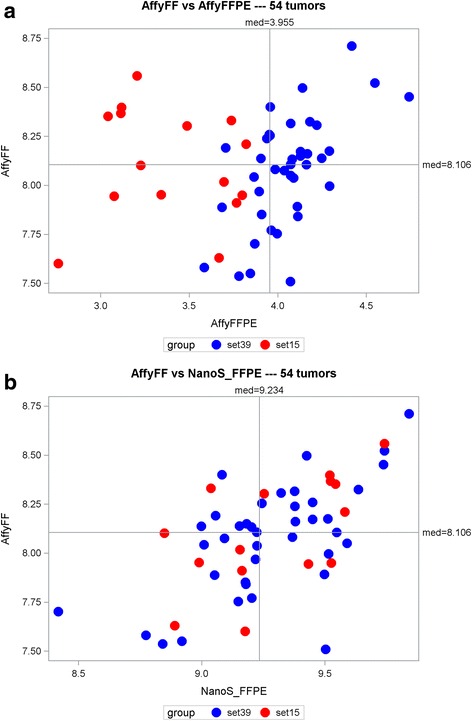
BACKGROUND: The KRAS gene is mutated in about 40 % of colorectal cancer (CRC) cases, which has been clinically validated as a predictive mutational marker of intrinsic resistance to anti-EGFR inhibitor (EGFRi) therapy. Since nearly 60 % of patients with a wild type KRAS fail to respond to EGFRi combination therapies, there is a need to develop more reliable molecular signatures to better predict response. Here we address the challenge of adapting a gene expression signature predictive of RAS pathway activation, created using fresh frozen (FF) tissues, for use with more widely available formalin fixed paraffin-embedded (FFPE) tissues. METHODS: In this study, we evaluated the translation of an 18-gene RAS pathway signature score from FF to FFPE in 54 CRC cases, using a head-to-head comparison of five technology platforms. FFPE-based technologies included the Affymetrix GeneChip (Affy), NanoString nCounter™ (NanoS), Illumina whole genome RNASeq (RNA-Acc), Illumina targeted RNASeq (t-RNA), and Illumina stranded Total RNA-rRNA-depletion (rRNA). RESULTS: Using Affy_FF as the "gold" standard, initial analysis of the 18-gene RAS scores on all 54 samples shows varying pairwise Spearman correlations, with (1) Affy_FFPE (r = 0.233, p = 0.090); (2) NanoS_FFPE (r = 0.608, p < 0.0001); (3) RNA-Acc_FFPE (r = 0.175, p = 0.21); (4) t-RNA_FFPE (r = -0.237, p = 0.085); (5) and t-RNA (r = -0.012, p = 0.93). These results suggest that only NanoString has successful FF to FFPE translation. The subsequent removal of identified "problematic" samples (n = 15) and genes (n = 2) further improves the correlations of Affy_FF with three of the five technologies: Affy_FFPE (r = 0.672, p < 0.0001); NanoS_FFPE (r = 0.738, p < 0.0001); and RNA-Acc_FFPE (r = 0.483, p = 0.002). CONCLUSIONS: Of the five technology platforms tested, NanoString technology provides a more faithful translation of the RAS pathway gene expression signature from FF to FFPE than the Affymetrix GeneChip and multiple RNASeq technologies. Moreover, NanoString was the most forgiving technology in the analysis of samples with presumably poor RNA quality. Using this approach, the RAS signature score may now be reasonably applied to FFPE clinical samples.
Overview
The claims and statistics of this paper haven’t been checked yet.
Free: it reads the open-access text and checks the first 5 claims that cite a source we can check. Create a free account to check every claim.
Integrity signals
Registry
Cites
Statistics
Figures
Verification
Claims the paper makes
The claims and statistics of this paper haven’t been checked yet.
Free: it reads the open-access text and checks the first 5 claims that cite a source we can check. Create a free account to check every claim.
Claims other papers make about this one
Each is checked against this paper’s own text: does it say what the citing paper says it does?
The cited source says what the claim attributes to it.
In the citing paper
“We recently adapted the 18-gene MEK activation signature from use in fresh frozen CRC samples to more clinically available, archived formalin-fixed, paraffin-embedded (FFPE) tissues [33], as a means to predict RAS/MEK pathway dependence regardless of RAS/RAF mutation status.”
From An integrative gene expression signature analysis identifies CMS4 KRAS-mutated colorectal cancers sensitive to combined MEK and SRC targeted therapy (2022) · cites this paper as [33]
Self-check
Percentages, sums and reported differences re-computed from the paper’s own numbers.
The self-check needs the paper’s full text.
Citations
Cites
STAR: ultrafast universal RNA-seq aligner
Dobin, A., Davis, C. A., Schlesinger, F., Drenkow, J., Zaleski, C., Jha, S., Batut, P., Chaisson, M., & Gingeras, T. R. (2013) · Bioinformatics · doi:10.1093/bioinformatics/bts635 · Cited by 51,709
Siegel, R. L., Miller, K. D., & Jemal, A. (2016) · CA: A Cancer Journal for Clinicians · doi:10.3322/caac.21332 · Cited by 16,003
Differential expression analysis for sequence count data
Anders, S., & Huber, W. (2010) · Genome Biology · doi:10.1186/gb-2010-11-10-r106 · Cited by 15,581
Trapnell, C., Roberts, A., Goff, L., Pertea, G., Kim, D., Kelley, D. R., Pimentel, H., Salzberg, S. L., Rinn, J. L., & Pachter, L. (2012) · Nature Protocols · doi:10.1038/nprot.2012.016 · Cited by 12,116 · cited 1×
“For the whole transcriptome RNASeq (RNA-Acc and rRNA) platforms, the data was first processed by STAR aligner [30] and cufflinks [31], then the resulting FPKM was log2-transformed and z-score-normalized.”
MethodExploration, normalization, and summaries of high density oligonucleotide array probe level data
Irizarry, R. A. (2003) · Biostatistics · doi:10.1093/biostatistics/4.2.249 · Cited by 10,603 · cited 2×
“Both the 54 Affy_FF and matching Affy_FFPE samples were normalized using the RMA method [26].”
MethodComprehensive molecular characterization of human colon and rectal cancer
The Cancer Genome Atlas Network (2012) · Nature · doi:10.1038/nature11252 · Cited by 8,499
Diagnosis of multiple cancer types by shrunken centroids of gene expression
Tibshirani, R., Hastie, T., Narasimhan, B., & Chu, G. (2002) · Proceedings of the National Academy of Sciences · doi:10.1073/pnas.082099299 · Cited by 2,930 · cited 1×
“The nearest shrunken centroids algorithm [33] was employed in predicting the mutation type of a sample, based on the gene expression profiles of the 16 genes from the 18-gene RAS signature.”
MethodPanitumumab–FOLFOX4 Treatment and RAS Mutations in Colorectal Cancer
Douillard, J.-Y., Oliner, K. S., Siena, S., Tabernero, J., Burkes, R., Barugel, M., Humblet, Y., Bodoky, G., Cunningham, D., Jassem, J., et al. (2013) · New England Journal of Medicine · doi:10.1056/nejmoa1305275 · Cited by 2,263 · cited 1×
“It has been recently reported that mutations in BRAF and NRAS that also activate the RAS pathway may account for EGFRi therapy resistance in some of the wild-type KRAS CRCs [7, 10, 12, 14].”
BackgroundKRAS Mutation Status Is Predictive of Response to Cetuximab Therapy in Colorectal Cancer
Lièvre, A., Bachet, J.-B., Le Corre, D., Boige, V., Landi, B., Emile, J.-F., Côté, J.-F., Tomasic, G., Penna, C., Ducreux, M., et al. (2006) · Cancer Research · doi:10.1158/0008-5472.can-06-0191 · Cited by 2,229
De Roock, W., Claes, B., Bernasconi, D., De Schutter, J., Biesmans, B., Fountzilas, G., Kalogeras, K. T., Kotoula, V., Papamichael, D., Laurent-Puig, P., et al. (2010) · The Lancet Oncology · doi:10.1016/s1470-2045(10)70130-3 · Cited by 2,144 · cited 1×
“It has been recently reported that mutations in BRAF and NRAS that also activate the RAS pathway may account for EGFRi therapy resistance in some of the wild-type KRAS CRCs [7, 10, 12, 14].”
BackgroundEGFR Antagonists in Cancer Treatment
Ciardiello, F., & Tortora, G. (2008) · New England Journal of Medicine · doi:10.1056/nejmra0707704 · Cited by 2,058
Pitfalls in the Use of DNA Microarray Data for Diagnostic and Prognostic Classification
Simon, R., Radmacher, M. D., Dobbin, K., & McShane, L. M. (2003) · JNCI Journal of the National Cancer Institute · doi:10.1093/jnci/95.1.14 · Cited by 1,006
Analysis of gene expression data using BRB-ArrayTools.
Simon, R. M., Lam, A., Li, M., et al. (2007) · PubMed · Cited by 689
Laurent-Puig, P., Cayre, A., Manceau, G., Buc, E., Bachet, J.-B., Lecomte, T., Rougier, P., Lievre, A., Landi, B., Boige, V., et al. (2009) · Journal of Clinical Oncology · doi:10.1200/jco.2008.21.6796 · Cited by 673 · cited 1×
“It has been recently reported that mutations in BRAF and NRAS that also activate the RAS pathway may account for EGFRi therapy resistance in some of the wild-type KRAS CRCs [7, 10, 12, 14].”
BackgroundAnalysis of Gene Expression Data Using BRB-Array Tools
Simon, R., Lam, A., Li, M.-C., Ngan, M., Menenzes, S., & Zhao, Y. (2007) · Cancer Informatics · doi:10.1177/117693510700300022 · Cited by 626 · cited 2×
“The entire probe filtration process was implemented by the BRB-ArrayTools software [32].”
MethodLoupakis, F., Ruzzo, A., Cremolini, C., Vincenzi, B., Salvatore, L., Santini, D., Masi, G., Stasi, I., Canestrari, E., Rulli, E., et al. (2009) · British Journal of Cancer · doi:10.1038/sj.bjc.6605177 · Cited by 564 · cited 1×
“It has been recently reported that mutations in BRAF and NRAS that also activate the RAS pathway may account for EGFRi therapy resistance in some of the wild-type KRAS CRCs [7, 10, 12, 14].”
BackgroundDeterminants of RNA Quality from FFPE Samples
von Ahlfen, S., Missel, A., Bendrat, K., & Schlumpberger, M. (2007) · PLoS ONE · doi:10.1371/journal.pone.0001261 · Cited by 456
Design and Analysis of DNA Microarray Investigations
(2003) · Statistics for Biology and Health · doi:10.1007/b97583 · Cited by 334
Veldman-Jones, M. H., Brant, R., Rooney, C., Geh, C., Emery, H., Harbron, C. G., Wappett, M., Sharpe, A., Dymond, M., Barrett, J. C., et al. (2015) · Cancer Research · doi:10.1158/0008-5472.can-15-0262 · Cited by 328
Human Tribbles, a Protein Family Controlling Mitogen-activated Protein Kinase Cascades
Kiss-Toth, E., Bagstaff, S. M., Sung, H. Y., Jozsa, V., Dempsey, C., Caunt, J. C., Oxley, K. M., Wyllie, D. H., Polgar, T., Harte, M., et al. (2004) · Journal of Biological Chemistry · doi:10.1074/jbc.m407732200 · Cited by 300 · cited 1×
“ETV4/5 [42] can replace RAS/MAPK pathway activation and TRIB2 can enhance ERK phosphorylation [43].”
BackgroundFiltering for increased power for microarray data analysis
Hackstadt, A. J., & Hess, A. M. (2009) · BMC Bioinformatics · doi:10.1186/1471-2105-10-11 · Cited by 290
mRNA transcript quantification in archival samples using multiplexed, color-coded probes
Reis, P. P., Waldron, L., Goswami, R. S., Xu, W., Xuan, Y., Perez-Ordonez, B., Gullane, P., Irish, J., Jurisica, I., & Kamel-Reid, S. (2011) · BMC Biotechnology · doi:10.1186/1472-6750-11-46 · Cited by 283 · cited 1×
“However, the recently developed, probebased NanoString method was shown to be superior to the RT-qPCR approach in archived FFPE samples [22].”
MethodLi, C., Scott, D. A., Hatch, E., Tian, X., & Mansour, S. L. (2007) · Development · doi:10.1242/dev.02701 · Cited by 273
Transcriptional Pathway Signatures Predict MEK Addiction and Response to Selumetinib (AZD6244)
Dry, J. R., Pavey, S., Pratilas, C. A., Harbron, C., Runswick, S., Hodgson, D., Chresta, C., McCormack, R., Byrne, N., Cockerill, M., et al. (2010) · Cancer Research · doi:10.1158/0008-5472.can-09-1577 · Cited by 262 · cited 21×
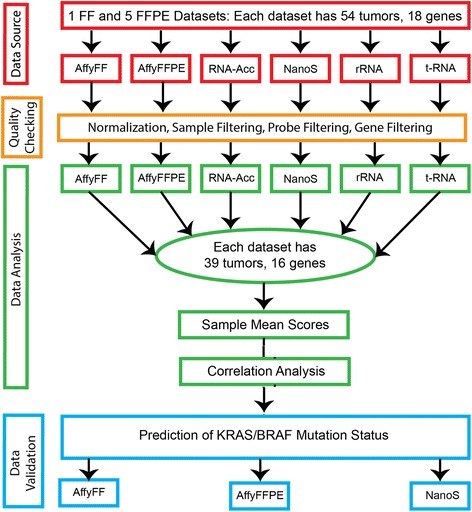
“we elected to evaluate the translation of an 18-gene RAS signature score [2] from FF to FFPE in 54 selected CRC cases in a head-to-head comparison of five technology platforms: Affymetrix GeneChip (Affy), NanoString nCounterTM (NanoS), whole genome RNASeq (Illumina RNA-Access (RNA-Acc), targeted RNASeq (t-RNA), and Il…”
BackgroundMethodInfluentialStatistical Analysis of Array Expression Data as Applied to the Problem of Tamoxifen Resistance
Hilsenbeck, S. G., Friedrichs, W. E., Schiff, R., O'Connell, P., Hansen, R. K., Osborne, C. K., & Fuqua, S. A. W. (1999) · JNCI Journal of the National Cancer Institute · doi:10.1093/jnci/91.5.453 · Cited by 201 · cited 8×
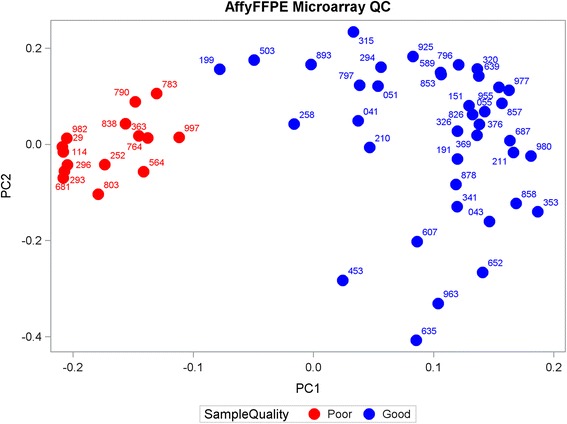
“Additional file 1: The 18 gene RAS scores, and KRAS/BRAF/NRAS mutation status for 54 CRC samples (15 “bad” samples are in bold; PC1: the first principal component; PC2: the second principal component; 1 = mutation present, 0 = mutation absent; * = score based on 16 genes) (XLSX 15 kb) Abbreviations AffyFF: Affymetrix…”
MethodInfluentialRNA expression analysis from formalin fixed paraffin embedded tissues
Farragher, S. M., Tanney, A., Kennedy, R. D., & Paul Harkin, D. (2008) · Histochemistry and Cell Biology · doi:10.1007/s00418-008-0479-7 · Cited by 184
Oncogenic ETS proteins mimic activated RAS/MAPK signaling in prostate cells
Hollenhorst, P. C., Ferris, M. W., Hull, M. A., Chae, H., Kim, S., & Graves, B. J. (2011) · Genes & Development · doi:10.1101/gad.17546311 · Cited by 154 · cited 1×
“ETV4/5 [42] can replace RAS/MAPK pathway activation and TRIB2 can enhance ERK phosphorylation [43].”
BackgroundMittempergher, L., de Ronde, J. J., Nieuwland, M., Kerkhoven, R. M., Simon, I., Th. Rutgers, E. J., Wessels, L. F. A., & Van't Veer, L. J. (2011) · PLoS ONE · doi:10.1371/journal.pone.0017163 · Cited by 153
Loboda, A., Nebozhyn, M., Klinghoffer, R., Frazier, J., Chastain, M., Arthur, W., Roberts, B., Zhang, T., Chenard, M., Haines, B., et al. (2010) · BMC Medical Genomics · doi:10.1186/1755-8794-3-26 · Cited by 152 · cited 9×
“Gene expression signatures have been identified for prediction of RAS pathway dependence and drug response [2, 3].”
BackgroundMethodInfluentialImplementing Personalized Medicine in a Cancer Center
Fenstermacher, D. A., Wenham, R. M., Rollison, D. E., & Dalton, W. S. (2011) · The Cancer Journal · doi:10.1097/ppo.0b013e318238216e · Cited by 149 · cited 1×
“In all cases, tissue and clinical data were collected on patients with the University of South Florida institutional review board approval [25].”
Bronte, G., Silvestris, N., Castiglia, M., Galvano, A., Passiglia, F., Sortino, G., Cicero, G., Rolfo, C., Peeters, M., Bazan, V., et al. (2015) · Oncotarget · doi:10.18632/oncotarget.4959 · Cited by 84
Bresters, D., Schipper, M. E. I., Reesink, H. W., Boeser‐Nunnink, B., & Cuypers, H. T. M. (1994) · Journal of Virological Methods · doi:10.1016/0166-0934(94)90125-2 · Cited by 80
Mosakhani, N., Lahti, L., Borze, I., Karjalainen‐Lindsberg, M., Sundström, J. T. T., Ristamäki, R., Osterlund, P. J., Knuutila, S., & Sarhadi, V. K. (2012) · Cancer Genetics · doi:10.1016/j.cancergen.2012.08.003 · Cited by 78 · cited 7×
“While measuring mutations in individual genes such as KRAS and NRAS can predict EGFRi response, their level of accuracy is low with up to 60 % of patients still notresponding [15].”
BackgroundInfluentialVeldman-Jones, M. H., Lai, Z., Wappett, M., Harbron, C. G., Barrett, J. C., Harrington, E. A., & Thress, K. S. (2015) · Clinical Cancer Research · doi:10.1158/1078-0432.ccr-14-0357 · Cited by 76
Astolfi, A., Urbini, M., Indio, V., Nannini, M., Genovese, C. G., Santini, D., Saponara, M., Mandrioli, A., Ercolani, G., Brandi, G., et al. (2015) · BMC Genomics · doi:10.1186/s12864-015-1982-6 · Cited by 67 · cited 1×
“In order for these signature scores to be clinically useful, they need to be adapted to the more commonly available archival formalin-fixed paraffinembedded (FFPE) tissues [16, 17].”
BackgroundSánchez-Navarro, I., Gámez-Pozo, A., González-Barón, M., Pinto-Marín, Á., Hardisson, D., López, R., Madero, R., Cejas, P., Mendiola, M., Espinosa, E., et al. (2010) · BioTechniques · doi:10.2144/000113388 · Cited by 66
Oberst, M. D., Beberman, S. J., Liu, Z., Yin, J. J., Ward, Y., & Kelly, K. (2008) · BMC Cancer · doi:10.1186/1471-2407-8-189 · Cited by 52
Guinney, J., Ferté, C., Dry, J., McEwen, R., Manceau, G., Kao, K., Chang, K.-M., Bendtsen, C., Hudson, K., Huang, E., et al. (2014) · Clinical Cancer Research · doi:10.1158/1078-0432.ccr-13-1943 · Cited by 43 · cited 9×
“Additional file 1: The 18 gene RAS scores, and KRAS/BRAF/NRAS mutation status for 54 CRC samples (15 “bad” samples are in bold; PC1: the first principal component; PC2: the second principal component; 1 = mutation present, 0 = mutation absent; * = score based on 16 genes) (XLSX 15 kb) Abbreviations AffyFF: Affymetrix…”
MethodInfluentialSchell, M. J., Yang, M., Missiaglia, E., Delorenzi, M., Soneson, C., Yue, B., Nebozhyn, M. V., Loboda, A., Bloom, G., & Yeatman, T. J. (2016) · Clinical Cancer Research · doi:10.1158/1078-0432.ccr-15-0143 · Cited by 42 · cited 1×
“Fifty-four (54) FFPE evaluable tumor specimens were selected from a larger multi-center cohort of 468 wellcharacterized colorectal adenocarcinoma patients whose tissues were obtained between October 2006 and September 2010 [24].”
MethodSelf-citationKRAS testing in metastatic colorectal carcinoma: challenges, controversies, breakthroughs and beyond
Malapelle, U., Carlomagno, C., Luca, C. D., Bellevicine, C., & Troncone, G. (2013) · Journal of Clinical Pathology · doi:10.1136/jclinpath-2013-201835 · Cited by 34 · cited 9×
“While measuring mutations in individual genes such as KRAS and NRAS can predict EGFRi response, their level of accuracy is low with up to 60 % of patients still notresponding [15].”
BackgroundInfluentialSfakianos, G. P., Iversen, E. S., Whitaker, R. S., Akushevich, L., Schildkraut, J. M., Murphy, S. K., Marks, J. R., & Berchuck, A. (2012) · Gynecologic Oncology · doi:10.1016/j.ygyno.2012.12.030 · Cited by 32 · cited 11×
“Additional file 1: The 18 gene RAS scores, and KRAS/BRAF/NRAS mutation status for 54 CRC samples (15 “bad” samples are in bold; PC1: the first principal component; PC2: the second principal component; 1 = mutation present, 0 = mutation absent; * = score based on 16 genes) (XLSX 15 kb) Abbreviations AffyFF: Affymetrix…”
BackgroundMethodInfluentialPredictive Biomarkers: Identification and Verification
Yeatman, T. J. (2009) · Journal of Clinical Oncology · doi:10.1200/jco.2008.21.5087 · Cited by 14
Self-citationLebbé, C., Guedj, M., Basset‐Séguin, N., Podgorniak, M.-P., Ménashi, S., Janin, A., & Mourah, S. (2012) · PLoS ONE · doi:10.1371/journal.pone.0029143 · Cited by 7 · cited 1×
“While Lebbe and co-workers used the expression levels of a set of reference genes to construct a statistic for differentiating “bad” melanoma samples from “good” ones [36], Sfakianos et al.”
BackgroundMustafa, D. A. M., Sieuwerts, A. M., Smid, M., de Weerd, V., van der Weiden, M., Gelder, M. E. M., Martens, J. W. M., Foekens, J. A., & Kros, J. M. (2015) · PLoS ONE · doi:10.1371/journal.pone.0144097 · Cited by 6 · cited 1×
“In order for these signature scores to be clinically useful, they need to be adapted to the more commonly available archival formalin-fixed paraffinembedded (FFPE) tissues [16, 17].”
Background
Cited by
Systemic Juvenile Idiopathic Arthritis–Associated Lung Disease: Characterization and Risk Factors
Schulert, G. S., Yasin, S., Carey, B., Chalk, C., Do, T., Schapiro, A. H., Husami, A., Watts, A., Brunner, H. I., Huggins, J., et al. (2019) · Arthritis & Rheumatology · doi:10.1002/art.41073 · Cited by 212
“FFPE and freshly frozen lung tissue sections (44).”
BackgroundRNA-seq from archival FFPE breast cancer samples: molecular pathway fidelity and novel discovery
Pennock, N. D., Jindal, S., Horton, W. R., Sun, D., Narasimhan, J., Carbone, L., Fei, S. S., Searles, R. P., Harrington, C. A., Burchard, J., et al. (2019) · BMC Medical Genomics · doi:10.1186/s12920-019-0643-z · Cited by 65
Jovanović, B., Sheng, Q., Seitz, R. S., Lawrence, K. D., Morris, S. W., Thomas, L. R., Hout, D. R., Schweitzer, B. L., Guo, Y. P., Pietenpol, J. A., et al. (2017) · BMC Cancer · doi:10.1186/s12885-017-3237-1 · Cited by 51
“In a comparison of an 18-gene Ras pathway signature between FF and FFPE using five technologies (Affymetrix GeneChip, NanoString, Illumina RNA-Seq, Illumina targeted RNA –seq and Illumina rRNA-depleted stranded RNA-seq), the investigators show that only the NanoString technology provides an acceptable translation of t…”
MethodPark, S., Hwang, C. Y., Cho, S., Lee, D., Gong, J., Lee, S., Nam, S., & Cho, K. (2019) · FEBS Journal · doi:10.1111/febs.14773 · Cited by 50
Expression Levels of RAD51 Inversely Correlate with Survival of Glioblastoma Patients
Morrison, C. M., Weterings, E., Mahadevan, D., Sanan, A., Weinand, M. E., & Stea, B. (2021) · Cancers · doi:10.3390/cancers13215358 · Cited by 37
Metadata
- Authors
- Omolo, B., Yang, M., Lo, F. Y., Schell, M. J., Austin, S., Howard, K., Madan, A., & Yeatman, T. J.
- Affiliations
- University of South Carolina Upstate (US)
- Covance (United States) (US)
- Moffitt Cancer Center (US)
- Corresponding author
- Yeatman, Timothy J.
- Venue
- BMC Medical Genomics
- Published
- 2016-10-19
- Volume
- 9
- Issue
- 1
- Pages
- 65-65
- ISSN
- 1755-8794 (ISSN-L)
- PMC
- PMC5069826
- OpenAlex
- W2536826816
- Cited by
- 25
- References
- 44
- Citations by year
- 2024: 1 · 2023: 1 · 2022: 3 · 2021: 3 · 2020: 3 · 2019: 9 · 2018: 2 · 2017: 2
- FWCI
- 2.34
- Type
- journal article
- Language
- en
- Open access
- gold
- doi.org
- Licence
- cc-by
- creativecommons.org/licenses/by/4.0/ (tdm)
- creativecommons.org/licenses/by/4.0/ (vor)
- Locations
- BMC Medical Genomics (publishedVersion, cc-by)
- PubMed Central (publishedVersion, cc-by)
- PubMed (publishedVersion)
- SU+ Digital Repository (Strathmore University) (submittedVersion)
- DOAJ (DOAJ: Directory of Open Access Journals) (submittedVersion, cc-by-sa)
- Funders
- National Cancer Institute (U01CA157960)
- The Burroughs Wellcome Fund (1015192)
- Simons Foundation (282714)
- Topics
- Health Sciences › Medicine › Oncology › Colorectal Cancer Treatments and Studies
- Life Sciences › Biochemistry, Genetics and Molecular Biology › Molecular Biology › Gene expression and cancer classification
- Health Sciences › Medicine › Pathology and Forensic Medicine › Genetic factors in colorectal cancer
- Keywords
- colorectal cancer, KRAS mutation, formalin-fixed paraffin-embedded tissue, fresh frozen tissue, EGFR inhibitor resistance, predictive biomarkers, NanoString nCounter, Affymetrix GeneChip, RNA sequencing, targeted RNA sequencing, platform comparison
- MeSH terms
- Formaldehyde, Humans, Mutation, Colorectal Neoplasms, Signal Transduction, Paraffin Embedding, Tissue Fixation, ras Proteins, Proto-Oncogene Proteins B-raf
About these checks
Registry, retraction, Cites and statistics results are computed, not judged, with one exception: a printed reference that no index lists is read once by a model before it counts as a citation error. Claims are extracted by a model and kept only when their quote appears verbatim in the text; each cited source is then checked, with a model’s help, for whether it says what the claim relies on. Those verdicts can be wrong — read the claim’s quote and the cited source before relying on one.
Statistics and arithmetic are recomputed, not judged.
Confidence bands are shown only for fields calibrated on our annotated test set. None is calibrated yet, so no band is shown.
What counts as a claim ›How we measure confidence ›How we check this ›
Are you an author, or do you see a problem with this page? Request a review
Data sources
Bibliographic data: Semantic Scholar, OpenAlex, Crossref.
Contains information from the Semantic Scholar Academic Graph Datasets, made available under the ODC Attribution License (ODC-BY 1.0).
Semantic Scholar’s data is described in: Kinney, R., et al. (2023). The Semantic Scholar Open Data Platform. arXiv:2301.10140.
