

Oxidative stress, inflammation, endothelial dysfunction and incidence of type 2 diabetes
Open accessThe DOI matches its Crossref record; 49 of the 54 references it cites were found in a registry or an index.
Abstract
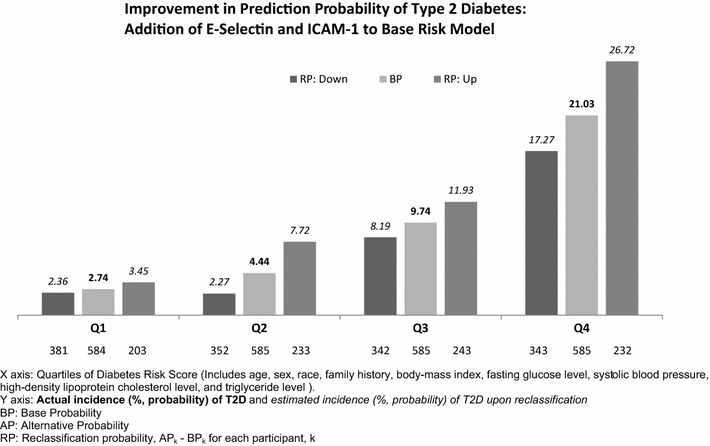
BACKGROUND: Oxidative stress, inflammation and endothelial dysfunction are interrelated factors in the etiology of cardiovascular disease, but their linkage to type 2 diabetes is less clear. We examined the association of these biomarkers with incident type 2 diabetes (T2D). METHODS: Analysis of 2339 participants in the community-based coronary artery risk development in young adults (CARDIA) study. Participants (age 40.1 ± 3.6 years, 44 % Black, 58 % women) were free of diabetes, and were followed 10 years. Cox regression was used to estimate hazard ratios (HRs) for incident T2D adjusting for the other biomarkers under study, demographic and lifestyle measures, dietary biomarkers, BMI (kg/m(2)) and metabolic syndrome components. RESULTS: F2-isoprostanes and oxidized LDL (oxidative stress) were positively associated with incident T2D, but the associations were attenuated by adjustment for BMI. C-reactive protein was positively associated with T2D even with full adjustment: HR (95 % CI) = 2.21 (1.26-3.88) for quartile 4 (Q4) v. quartile 1 (Q1). The HR (95 % CI) for T2D for biomarkers of endothelial dysfunction ICAM-1 and E-selectin for Q4 v. Q1 were 1.64 (0.96-2.81) and 1.68 (1.04-2.71) respectively, with full adjustment. Including these two markers in a common risk score incorporating BMI and clinical measures improved the prediction probability of T2D: relative risk for the average person classified up compared to the average person classified down: 1.09, (1.06-1.13), P < 0.0001. CONCLUSIONS: Biomarkers of inflammation and endothelial dysfunction were positively associated with incident T2D. ICAM-1 and E-selectin add to the prediction of T2D beyond a common risk score.
Overview
The claims and statistics of this paper haven’t been checked yet.
Free: it reads the open-access text and checks the first 5 claims that cite a source we can check. Create a free account to check every claim.
Integrity signals
Registry
Cites
Statistics
Figures
Verification
Claims the paper makes
The claims and statistics of this paper haven’t been checked yet.
Free: it reads the open-access text and checks the first 5 claims that cite a source we can check. Create a free account to check every claim.
Claims other papers make about this one
Each is checked against this paper’s own text: does it say what the citing paper says it does?
The source backs part of the claim, not all of it — or backs it for a different population, condition or comparison.
In the citing paper
“inflammation also contributes to the pathogenesis of other chronic non-CVDs — such as anaemia, cancer, type 2 diabetes, dementia, osteoporosis, sarcopenia, chronic kidney disease, and depression”
From Inflammageing: chronic inflammation in ageing, cardiovascular disease, and frailty (2018) · cites this paper as [138]
Experimental — accuracy not yet measuredThe source backs part of the claim, not all of it — or backs it for a different population, condition or comparison.
In the citing paper
“inflammation is a risk factor for the development of diabetes and its complications, and these associations are not accounted for by body composition parameters”
From Inflammageing: chronic inflammation in ageing, cardiovascular disease, and frailty (2018) · cites this paper as [138]
Experimental — accuracy not yet measuredThe check wasn’t confident either way, so it gives no verdict — never disputed.
In the citing paper
“CVDs in old age often develop in the context of multimorbidity and frailty”
From Inflammageing: chronic inflammation in ageing, cardiovascular disease, and frailty (2018) · cites this paper as [138]
Experimental — accuracy not yet measured
Self-check
Percentages, sums and reported differences re-computed from the paper’s own numbers.
The self-check needs the paper’s full text.
Citations
Cites
Acute-Phase Proteins and Other Systemic Responses to Inflammation
Gabay, C., & Kushner, I. (1999) · New England Journal of Medicine · doi:10.1056/nejm199902113400607 · Cited by 6,734 · cited 2×
“In an inflammatory state a cascade of reactions occur that harm vascular reactivity and insulin delivery and lead to insulin resistance [49].”
BackgroundPencina, M. J., D' Agostino, R. B., D' Agostino, R. B., & Vasan, R. S. (2008) · Statistics in Medicine · doi:10.1002/sim.2929 · Cited by 6,493 · cited 1×
“Due to concerns with net reclassification index (NRI) [34–37], we devised an alternative method.”
MethodHalliwell, B., & Whiteman, M. (2004) · British Journal of Pharmacology · doi:10.1038/sj.bjp.0705776 · Cited by 2,238 · cited 1×
“Furthermore, oxidized LDL and isoprostanes represent different aspects of oxidative stress where the former likely represents a local measure in the vasculature and the latter a more general marker of a specific oxidation pathway [40].”
BackgroundCardia: study design, recruitment, and some characteristics of the examined subjects
Friedman, G. D., Cutter, G. R., Donahue, R. P., Hughes, G. H., Hulley, S. B., Jacobs, D. R., Liu, K., & Savage, P. J. (1988) · Journal of Clinical Epidemiology · doi:10.1016/0895-4356(88)90080-7 · Cited by 1,687 · cited 2×
“Details on the measurement and calibration of glucose and insulin [7], blood pressure measurement [19], and anthropometry (height, weight, waist circumference) have also been previously described [21].”
BackgroundSelf-citationCeriello, A., & Motz, E. (2004) · Arteriosclerosis, Thrombosis, and Vascular Biology · doi:10.1161/01.atv.0000122852.22604.78 · Cited by 1,378 · cited 2×
“Oxidative stress, inflammation, and endothelial dysfunction may be ameliorated by a healthy diet and lifestyle and have also been linked to the etiology of insulin resistance and type 2 diabetes (T2D), and thus hypothesized as unifying components tying vascular factors to metabolic and cardiovascular risk [4, 5].”
BackgroundGreenland, P. (2008) · Statistics in Medicine · doi:10.1002/sim.2976 · Cited by 1,300
Inflammatory Markers and Risk of Type 2 Diabetes
Wang, X., Bao, W., Liu, J., OuYang, Y.-Y., Wang, D., Rong, S., Xiao, X., Shan, Z.-L., Zhang, Y., Yao, P., et al. (2013) · Diabetes Care · doi:10.2337/dc12-0702 · Cited by 820
Genotype score in addition to common risk factors for prediction of type 2 diabetes
Meigs, J. B., Shrader, P., Sullivan, L. M., McAteer, J. B., Fox, C. S., Dupuis, J., Manning, A. K., Florez, J. C., Wilson, P. W. F., D'Agostino, R. B., et al. (2008) · New England Journal of Medicine · doi:10.1056/nejmoa0804742 · Cited by 759 · cited 1×
“Lastly, we examined whether these different biomarkers improved the prediction of diabetes relative to a common risk score utilized in research and clinical settings [33].”
BackgroundBiomarkers of Endothelial Dysfunction and Risk of Type 2 Diabetes Mellitus
Meigs, J. B. (2004) · JAMA · doi:10.1001/jama.291.16.1978 · Cited by 643 · cited 6×
“Of note, only 1982 participants had a measure of VCAM.”
BackgroundInfluentialRacial Differences in Incident Heart Failure among Young Adults
Bibbins-Domingo, K., Pletcher, M. J., Lin, F., Vittinghoff, E., Gardin, J. M., Arynchyn, A., Lewis, C. E., Williams, O. D., & Hulley, S. B. (2009) · New England Journal of Medicine · doi:10.1056/nejmoa0807265 · Cited by 612 · cited 1×
“We included all participants without a history of diabetes or an adjudicated cardiovascular disease event prior to year 15 [26], who also participated in at least one of the year 20 or 25 exams and had complete data on the spectrum of oxidative stress, inflammation, and endothelial dysfunction biomarkers as well as th…”
Method
Cited by
Items 201–288 of 288
Suh, D. I., Kang, M., Park, Y. M., Lee, J.-K., Lee, S., Sheen, Y. H., Kim, K. W., Ahn, K., & Hong, S. (2019) · Asia Pacific Allergy · doi:10.5415/apallergy.2019.9.e33 · Cited by 5
“Oxidative stress affects non-communicable disease development [1, 2].”
Kunder, M., Lakshmaiah, V., & Kutty, A. V. M. (2022) · International Journal of Microbiology Research · doi:10.4103/ijmr.ijmr_1293_19 · Cited by 6
Montes-Ochoa, S., Serna-Arrieta, K., Estrada-Ávila, S., Lopez, F. G., & Sánchez, I. P. (2016) · Medicina y Laboratorio · doi:10.36384/01232576.105 · Cited by 6
“La disfunción endotelial es un fenómeno temprano en la diabetes mellitus, existen evidencias de que los marcadores de disfunción endotelial están elevados en los pacientes diabéticos tipo 2, años antes de que la enfermedad se manifieste clínicamente [21,22].”
BackgroundEfficacy of herbal medicine for patients with diabetic neuropathies: An updated literature review
Hutapea, A. M., & Simbolon, B. M. (2022) · Biomedicine · doi:10.51248/.v42i2.1346 · Cited by 4
“Oxidative stress, inflammation, glycation, ischemia, and aldose reductase hyperactivity are the central mechanisms in neuronal damage, which hyperactive aldose reductase also causes oxidative stress and upregulation of several other pathogenic pathways (10, 11).”
BackgroundDoes Diabetes and Hypertension have Common Pathophysiology - A Study
Daivasikamani, P. (2020) · Diabetes & Obesity International Journal · doi:10.23880/doij-16000233 · Cited by 4
Rebamipide treatment ameliorates obesity phenotype by regulation of immune cells and adipocytes
Jhun, J., Moon, J., Kim, S. Y., Cho, K.-H., Na, H. S., Choi, J., Jung, Y. J., Song, K. Y., Min, J., & Cho, M. (2022) · PLoS ONE · doi:10.1371/journal.pone.0277692 · Cited by 4
“Oxidative stress plays a critical role in the development of obesity-related diseases through hyperglycemia [31], hyperlipidemia [32], mitochondrial dysfunction [33], impaired endothelial dysfunction [34], and chronic inflammation [35, 36].”
BackgroundAlshahrani, M., Almalki, L. Z., Hasoosah, N. A., Alahmari, A. H., Alqahtani, A. M. A., Alqahtani, A. A., Muarfaj, A. M. A., Ghaseb, L. S. A. A., Alkahtani, F. S., & Alsharif, R. Y. (2024) · Annals of Medicine and Surgery · doi:10.1097/ms9.0000000000001755 · Cited by 6
The pathogenesis and available prevention options in patients with diabetic thrombophilia
Kwiatkowski, J., Halupczok-Żyła, J., Bolanowski, M., & Kuliszkiewicz-Janus, M. (2018) · Advances in Clinical and Experimental Medicine · doi:10.17219/acem/71054 · Cited by 4
Functional and Medicinal Properties of Caffeine-Based Common Beverages
Cadoná, F. C., Weis, G. C. C., Assmann, C. E., Alves, A. D. O., Bonadiman, B. D. S. R., Machado, A. K., Montano, M. A. E., & da Cruz, I. B. M. (2019) · Elsevier eBooks · doi:10.1016/b978-0-12-815864-7.00001-5 · Cited by 4
Yang, S., Yan, M.-L., Feng, J.-K., Duan, Y., Ye, J., Liu, Z., Guo, L., Xue, J., Shi, J., Lau, W. Y., et al. (2022) · Frontiers in Oncology · doi:10.3389/fonc.2022.979434 · Cited by 6
“Diabetic patients tend to have sustained oxidative stress and disordered inflammation and immunity function (39, 40); diabetic patients are more vulnerable to space organ and surgical site infections due to worse physical status after surgery.”
BackgroundJiménez-Castilla, L., Opazo-Ríos, L., Marín‐Royo, G., Orejudo, M., Rodrigues‐Díez, R., Ballesteros‐Martínez, C., Soto‐Catalán, M., Caro-Ordieres, T., Artaiz, I., Suarez-Cortes, T. M., et al. (2022) · Antioxidants · doi:10.3390/antiox11122499 · Cited by 6
“Hyperglycemia also modifies the NO bioavailability and eNOS uncoupling, responsible factors of the vascular reactivity changes and endothelial dysfunction [4,5,10].”
BackgroundHeravi, A. S., Zhao, D., Michos, E. D., Vasconcellos, H. D. D., Ambale‐Venkatesh, B., Lloyd‐Jones, D. M., Schreiner, P. J., Reis, J. P., Shikany, J. M., Lewis, C. E., et al. (2023) · Antioxidants · doi:10.3390/antiox12030555 · Cited by 5
“The utility of isoprostanes in prediction of incident diabetes is also contested, and while some reports show higher future risk with high isoprostane concentrations [39], others describe an inverse association [40].”
Bi, R., Gao, J., Pan, L., & Lai, X. (2020) · Natural Product Communications · doi:10.1177/1934578x20918418 · Cited by 5
“Biological disorders caused by microbial dysregulation can increase chronic inflammatory conditions,(26) and lipopolysaccharide (LPS), a component of Gram- negative bacteria of the genus Proteus, can induce the release of a series of inflammatory factors and help promote the development of DM.(27) Intestinal microorga…”
BackgroundWang, Y., Huang, R., Wu, Z., Lai, X., Ma, C., Wang, W., Li, R., & Wang, L. Y. (2025) · Scientific Reports · doi:10.1038/s41598-025-25099-w · Cited by 5
Patil, N., Uppal, N., Bedi, S., Undhad, H., & Joshi, P. (2026) · Cureus · doi:10.7759/cureus.102160 · Cited by 6
An inflammatory biomarker panel for prediabetes classification using interpretable machine learning
Maalouf, M., Tammam, M. M. S., Kurungadan, S., Alsereidi, A., Afzal, M., & Jelinek, H. F. (2026) · PLoS ONE · doi:10.1371/journal.pone.0341195 · Cited by 4
“Researchers now recognize biological processes, such as chronic inflammation, mitochondrial dysfunction, and oxidative stress, as crucial early disruptions that precede overt glycemic disorders [15–19].”
Athinarayanan, S. J., Phinney, S. D., Adams, R. N., Volek, J. S., Thurmond, D. C., McKenzie, A. L., Roberts, C. G. P., Ratner, R. E., Krauss, R. M., & Fonseca, V. A. (2026) · Endocrine Research · doi:10.1080/07435800.2026.2659579 · Cited by 3
Iwamoto, H., Sanada, J., Kimura, T., Shimoda, M., Iwamoto, Y., Dan, K., Fushimi, Y., Katakura, Y., Nogami, Y., Shirakiya, Y., et al. (2025) · Scientific Reports · doi:10.1038/s41598-025-95324-z · Cited by 3
“An important risk factor for atherosclerosis is the dysfunction of vascular endothelial cells due to chronic inflammation, which is often observed in subjects with metabolic syndrome or diabetes mellitus 2–9 .”
Mavondo, G. A., Ncube, N., Sibanda, A., Dube, D., Chikuse, F. F., & Makoni, P. (2021) · IntechOpen eBooks · doi:10.5772/intechopen.99832 · Cited by 12
Kanodia, A. K., & Noland, D. (2020) · Springer eBooks · doi:10.1007/978-3-030-30730-1_46 · Cited by 3
Zhang, Q., Wang, Z., Xu, H., Li, Q., An, R., & Zhang, Y. (2022) · Tropical Journal of Pharmaceutical Research · doi:10.4314/tjpr.v20i8.17 · Cited by 3
“Oxidative stress is one of the important causes of insulin resistance and islet β cell injury in peripheral tissues [2].”
BackgroundProgress in Epidemiology of Tuberculosis in China
Lu, W., Zhu, L., Liu, Q., Chen, C., Lü, P., Ding, X., Shao, Y., & Li, Y. (2022) · Springer eBooks · doi:10.1007/978-981-19-2199-5_8 · Cited by 4
Pien Tze Huang (PZH) protects endothelial function in diabetic mice
Chen, Q., Hao, H., Guo, Z., Zuo, Y., Cheng, C. K., Zhang, C., Wang, L., Lü, A., Huang, Y., & He, L. (2024) · Life Sciences · doi:10.1016/j.lfs.2024.122723 · Cited by 6
Kim, Y. H., Her, A., Rha, S., Choi, C. U., Choi, B. G., Park, S., Kang, D. O., Hyun, S. J., Cho, J. R., Park, J. Y., et al. (2024) · Cardiology Journal · doi:10.5603/cj.97842 · Cited by 3
Ji, Y., Lyu, Z., Cui, B., & Wang, W. (2025) · Endocrine Practice · doi:10.1016/j.eprac.2025.02.011 · Cited by 4
Gemma, V.-A., Jara, P., Pedro, M. D. M. R.-S., Yuste, C., Ortiz-Diaz, M. G., Ramírez, R., Alique, M., Guerra‐Pérez, N., Carracedo, J., & Morales, E. (2025) · Oxygen · doi:10.3390/oxygen5040020 · Cited by 2
“OXYSCORE was elevated in TX with CVD compared to HS, but not in those without CVD. Oxidative stress contributes to CVD development via endothelial dysfunction, cellular senescence, and pro-inflammatory signaling [42].”
Chen, Z., Zhu, A., Xu, Z., Qu, Q., Ying, Y., Chen, S., Zhang, H., Cheang, I., & Li, X. (2025) · Frontiers in Nutrition · doi:10.3389/fnut.2025.1702364 · Cited by 3
“Dysfunctional endothelial cells, in turn, become a platform for the recruitment, activation, and amplification of inflammatory cells, exacerbating tissue damage and microcirculatory disorders (25).”
薛亦聪, Jiang, P., Yu, Y., Chai, S., Tong, L., Li, X., Wei, Y., Huang, Q., Lin, C., Zheng, L., et al. (2026) · Pharmacological Research · doi:10.1016/j.phrs.2026.108299 · Cited by 2
Prasad, P. S. (2020) · Indian Journal of Public Health Research & Development · doi:10.37506/ijphrd.v11i5.9335 · Cited by 3
Impact of Diabetic Condition on the Remodeling of In Situ Tissue-Engineered Heart Valves
Yang, F., Du, X., Zhao, Z., Guo, G., & Wang, Y. (2024) · ACS Biomaterials Science & Engineering · doi:10.1021/acsbiomaterials.4c01273 · Cited by 2
Kumari, J. A., Bhaskar, M. V., Sanober, A., Mohan, I. K., Sreedevi, N. N., Mohammed, N., Saibaba, K. S. S., & Khan, S. A. (2024) · The Journal of Clinical and Scientific Research · doi:10.4103/jcsr.jcsr_201_23 · Cited by 2
Лєвих, А. Е., Ткаченко, В. А., Kharchenko, Y., Шевцова, А. И., Ушакова, Г. А., & Zhylіuk, V. I. (2021) · Regulatory Mechanisms in Biosystems · doi:10.15421/0221101 · Cited by 2
“Furthermore, AGEs also induce decreased endothelial NO synthase (eNOS) expression as well as NO synthesis and increased endothelin-1 expression, leading to endothelial dysfunction (Odegaard et al., 2016; Kaur et al., 2018).”
BackgroundJoohee, S., Smith, S. A., & Carsten, S. (2020) · International Journal of Diabetes and Clinical Research · doi:10.23937/2377-3634/1410116 · Cited by 2
Espe, A. (2019) · NDSU Repository (North Dakota State University) · Cited by 4
Naderi‐Meshkin, H., Eleftheriadou, M., Carney, G., Cornelius, V. A., Nelson, C.-A., Kelaini, S., Yacoub, A., Donaghy, C. L., Dunne, P. D., Amirkhah, R., et al. (2022) · bioRxiv (Cold Spring Harbor Laboratory) · doi:10.1101/2022.07.18.500478 · Cited by 2
Page, M., Bagali, S., & Das, K. K. (2024) · Cureus · doi:10.7759/cureus.68342 · Cited by 1
“Therefore, oxidative stress, inflammation, and endothelial dysfunction are interrelated components of an etiological network underlying the development of cardiovascular diseases [4].”
BackgroundPeng, Q., Ma, T., Gao, M. L., Wang, X., & Pan, W. (2025) · Open Heart · doi:10.1136/openhrt-2024-003034 · Cited by 2
Figueroa, E. G., Castillo, R. L., Paz, A. A., Monsalves‐Álvarez, M., Salas‐Pérez, F., Calle, X., Jimenez, T. A., Herrera, E. A., & González‐Candia, A. (2025) · Antioxidants · doi:10.3390/antiox14060736 · Cited by 4
“The decrease in ATP results in the accumulation of radicals in the electron transport chain, as observed in HIE models [36].”
Cheng, J., Li, K., Chen, M., Yu, Y., & Tan, Z. (2026) · Frontiers in Cardiovascular Medicine · doi:10.3389/fcvm.2025.1755408 · Cited by 2
Lin, G., Dai, C., & Chen, W. (2026) · Scientific Reports · doi:10.1038/s41598-026-43062-1 · Cited by 1
Xu, M.-R., Li, M.-H., Wang, J.-W., Zhang, Y.-W., Lu, J.-X., Ke, J.-F., & Li, L. (2026) · World Journal of Diabetes · doi:10.4239/wjd.v17.i3.115465 · Cited by 1
Long-Term Impact of New-Onset Diabetes Mellitus in Hypertensive Patients
Park, S., Kim, S., Shin, H. G., Park, K., Lee, S., Lee, H., Lee, J., Kim, K., Kang, S., Lee, J. H., et al. (2027) · Korean Circulation Journal · doi:10.4070/kcj.2026.0017
Functional foods, hormesis, and oxidative stress
Alizadeh, M., & Daneghian, S. (2021) · Elsevier eBooks · doi:10.1016/b978-0-12-823482-2.00022-4 · Cited by 2
Point of care detection of infection/inflammation in the diabetic clinic
Levinson, T., Zehavi, N. T., Berliner, S. A., Zeltser, D., Shapira, I., Shenhar‐Tsarfaty, S., Wasserman, A., Goldiner, I., Rogowski, O., & Shtark, M. (2022) · European Journal of Inflammation · doi:10.1177/1721727x221091323 · Cited by 1
The Association Between Hematological Indices and Type 2 Diabetes Mellitus in Iranian Population
Shahmoradi, M., Hajiabdolrassouli, L., Kheirandish, M., Rafati, S., Hashemi, S. M. H., Moradi, Y., Eftekhar, E., Jamshidi, V., & Sheybani‐Arani, M. (2024) · Shiraz E-Medical Journal · doi:10.5812/semj-145464 · Cited by 1
Sharma, B. M., & Sharma, B. (2021) · Research Journal of Pharmacy and Technology · doi:10.52711/0974-360x.2021.01152 · Cited by 1
Alho, M. (2019) · Jyväskylä University Digital Archive (University of Jyväskylä) · Cited by 1
Wu, Q., Yang, F., An, Q., Liu, Y., Tian, H., Du, Y., Cai, W., Lei, M., Xu, J., Deng, L., et al. (2026) · Journal of the American Heart Association · doi:10.1161/jaha.126.049987
Protección renal con ARA II e IECA en pacientes diabéticos Normotensos-Normoalbuminuricos
Crespo, A. O. O., Cedillo, A. X. O., Cedillo, A. E. O., Cedillo, P. O. O., & López, V. S. (2018) · Revista Clínica Escuela de Medicina UCR-HSJD · doi:10.15517/rc_ucr-hsjd.v8i4.34245
ENDOTHELIAL DYSFUNCTION IN TYPE 2 DIABETES. Review
Chernobrivtsev, O. P., Zyablitsev, S. V., Panova, T. I., & Panchenko, Y. O. (2019) · Medical Science of Ukraine (MSU) · doi:10.32345/2664-4738.1-2.2019.12
Vavlukis, A., Vavlukis, M., Dimovski, A. J., Petrushevska, G., Eftimov, A., Domazetovska, S., Demirovikj, A., & Mladenovska, K. (2020) · Open Access Macedonian Journal of Medical Sciences · doi:10.3889/oamjms.2020.5119
“The reciprocal relationship between DM and CVD; a hypothesis that the two diseases share common antecedents, supported by the recently discovered shared molecular drivers, pathways and gene subnetworks [19], [20], [21]; and 3.”
BackgroundHuzum, B., Dima, N., Ganceanu-Rusu, A. R., Parlapan, A., Clim, A., Lazăr, C., Hiliteanu, R., & Șerban, I. L. (2020) · The Medical-Surgical Journal
Gorb, Y. G., Strona, V. I., Ev, T., Serik, S. A., & Ryabukha, V. V. (2021) · Ukraïnsʹkij žurnal medicini bìologìï ta sportu · doi:10.26693/jmbs06.03.022 · Cited by 2
Borikov, O. Y., Gorbenko, N., Ivanova, O., Таран, К. В., Litvinova, Т. S., & Kiprych, T. (2018) · PROBLEMS OF ENDOCRINE PATHOLOGY · doi:10.21856/j-pep.2018.4.04
Chemical Biology of Sterols, Triterpenoids and Other Natural Products
Zhou, W., & Guo, D. (2019) · MDPI eBooks · doi:10.3390/books978-3-03897-417-8 · Cited by 1
Prevention of Atrial Fibrillation
Kornej, J., & Benjamin, E. J. (2020) · Contemporary cardiology · doi:10.1007/978-3-030-56279-3_23
Association between lipid peroxidation and risk of type 2 diabetes in women
Zhao, Y., Milne, G. L., Chen, Q., Dai, Q., Zhang, X., Nogueira, M. S., Cai, H., Lan, Q., Rothman, N., Cai, Q., et al. (2022) · Free Radical Research · doi:10.1080/10715762.2022.2154667
“subsequent risk of T2D among apparently healthy younger adults [11].”
BackgroundMethodCLINICAL RELEVANCE OF HIGH SENSITIVITY C-REACTIVE PROTEIN IN ACUTE MYOCARDIAL INFARCTION PATIENTS
Kaur, K., SINGH, D. I., & Amita, A. (2024) · Asian Journal of Pharmaceutical and Clinical Research · doi:10.22159/ajpcr.2024.v17i5.50981 · Cited by 1
“It is widely recognized that inflammation shows a part in atherosclerosis as well as, by extension, AMI [8,18-20].”
BackgroundLi, X., Zhao, Y., Zhou, H., Hu, Y., Chen, Y., & Guo, D. (2024) · Current Topics in Medicinal Chemistry · doi:10.2174/0115680266306301240821073416
Nandave, M. (2024) · Springer eBooks · doi:10.1007/978-981-97-7568-2_8
Zhang, Z., Shi, G., Jin, F., & Zhang, Y. (2025) · Frontiers in Public Health · doi:10.3389/fpubh.2024.1472074 · Cited by 1
Cardiometabolic-Based Chronic Disease
Hernández-Sevillano, J., Babagoli, M. A., Mellacheruvu, P., & Mechanick, J. I. (2025) · Springer eBooks · doi:10.1007/978-3-031-82888-1_6
Impact of type 2 diabetes mellitus on semen quality in Sudanese males: a case-control study
Abdrabo, A. A., Omer, S. A., & Eldaif, W. A. H. (2025) · Journal of Research in Applied and Basic Medical Sciences · doi:10.61186/rabms.11.2.147
MTHFR C677T polymorphism and T2DM risk in Iraqi Kurds: a cross-sectional study
Shareef, Z. A., & Sulaiman, D. M. (2025) · Annals of Medicine and Surgery · doi:10.1097/ms9.0000000000004146
“Elevated homocysteine is independently linked to endothelial dysfunction, oxidative stress, and vascular inflammation, all of which contribute to heightened cardiovascular risk in T2DM [ 47 , 48 ] .”
Risk of dementia in diabetes mellitus: a mechanistic endeavor
Samanta, S. (2025) · Elsevier eBooks · doi:10.1016/b978-0-443-33355-2.00029-3
Cheng, Z., He, D., Li, J., Wu, Q., Liu, Z., & Zhu, Y. (2022) · Figshare · doi:10.6084/m9.figshare.20003478
Doumatey, A. P., Shriner, D., Zhou, J., Lei, L., Chen, G., Oluwasola-Taiwo, O., Nkem, S., Ogundeji, A., Adebamowo, S. N., Bentley, A. R., et al. (2024) · Figshare · doi:10.6084/m9.figshare.25347107
Doumatey, A. P., Shriner, D., Zhou, J., Lei, L., Chen, G., Oluwasola-Taiwo, O., Nkem, S., Ogundeji, A., Adebamowo, S. N., Bentley, A. R., et al. (2024) · Figshare · doi:10.6084/m9.figshare.26689157
Doumatey, A. P., Shriner, D., Zhou, J., Lei, L., Chen, G., Oluwasola-Taiwo, O., Nkem, S., Ogundeji, A., Adebamowo, S. N., Bentley, A. R., et al. (2024) · Figshare · doi:10.6084/m9.figshare.25347235
Varghese, D. S., Oommen, D., John, A., & Ali, B. R. (2024) · Figshare · doi:10.6084/m9.figshare.26592611
Yuxiu, Y., Ma, X., Gao, F., Liu, T., Deng, J., & Wang, Z. (2024) · Figshare · doi:10.6084/m9.figshare.26054565
Trombara, F., Cosentino, N., Bonomi, A., Ludergnani, M., Poggio, P., Gionti, L., Baviera, M., Colacioppo, P., Roncaglioni, M. C., Leoni, O., et al. (2024) · Figshare · doi:10.6084/m9.figshare.26566868
Doumatey, A. P., Shriner, D., Zhou, J., Lei, L., Chen, G., Oluwasola-Taiwo, O., Nkem, S., Ogundeji, A., Adebamowo, S. N., Bentley, A. R., et al. (2024) · Figshare · doi:10.6084/m9.figshare.26689160
Guo, L., Lv, H., Wang, J., Zhang, B., Zhu, Y., Zhang, X., Zhu, H., Zhou, X., & Xia, Y. (2024) · Figshare · doi:10.6084/m9.figshare.26583924
Wang, P., Deshan, Y., Zhang, C., Zhu, P., Jia, S., Song, Y., Tang, X., Xu, J., Li, T., Zeng, G., et al. (2022) · Figshare · doi:10.6084/m9.figshare.19395900
Deshan, Y., Jiang, P., Zhu, P., Jia, S., Zhang, C., Liu, Y., Liu, R., Xu, J., Tang, X., Zhao, X., et al. (2021) · Figshare · doi:10.6084/m9.figshare.14998736
Guo, L., Lv, H., Wang, J., Zhang, B., Zhu, Y., Zhang, X., Zhu, H., Zhou, X., & Xia, Y. (2024) · Figshare · doi:10.6084/m9.figshare.26583927
Feng, J., Tao, Q., Li, M.-Z., Zhang, Z., Yu, Q.-F., & Li, J.-Y. (2026) · International Journal of Molecular Sciences · doi:10.3390/ijms27020877 · Cited by 1
Yuhong, Y., Tian, Y., Cao, J., & Wang, Z. (2026) · LWT · doi:10.1016/j.lwt.2026.119159
He, Q., Liu, Y., Li, Y., & Wang, Y. (2026) · Health Science Reports · doi:10.1002/hsr2.72213
Cardiovascular diseases as systemic modulators of oncogenesis: Mechanisms and clinical implications
Chen, Z., Ren, S., Li, L., & Zhang, L. (2026) · Genes & Diseases · doi:10.1016/j.gendis.2026.102195
New insights into the multifaceted role of eryptosis in metabolic and cardiovascular diseases
Tkachenko, A., Escorza, M. A. Q., Tryfonyuk, L., & Havránek, O. (2026) · Biochimica et Biophysica Acta (BBA) - Molecular Cell Research · doi:10.1016/j.bbamcr.2026.120161 · Cited by 1
Liu, Z., Wu, X., Xu, J., 蔡建勇, 巴华君, Lin, Q., Sun, J., & Shi, W. (2026) · Frontiers in Neurology · doi:10.3389/fneur.2026.1817370
Mixotrophy enhances C. sorokiniana exosome yield and bioactivity: proteomic antioxidant mechanisms
Yang, N., Yang, L., Guo, J., WANG, L. C., Yan, X., Ruan, R. R., Yin, Y., & Cheng, P. (2026) · Water Biology and Security · doi:10.1016/j.watbs.2026.100655
EGFR as a context-dependent modulator of endothelial inflammation: A systematic review
Giacinti, G. M., Altoé, L. S. C., da Silva, A. M. Á., Coelho, F. F., Baldam, R. D. L., Louro, I. D., & Meira, D. D. (2026) · Cytokine · doi:10.1016/j.cyto.2026.157183
Lan, T., Liu, W., Li, S., Chen, S., Liu, J., Zhang, J., Heng, C., Wang, G., & Zhou, T. (2026) · Ecotoxicology and Environmental Safety · doi:10.1016/j.ecoenv.2026.120455
Su, H., Tao, D., Teng, J., Zhang, L., Shen, Y., Yang, R., Yang, J., Sun, R., Shen, Z., Chen, P., et al. (2026) · Non-Coding RNA · doi:10.3390/ncrna12050032
“…major pathological feature of cerebrovascular diseases, oxidative stress mainly originates from the imbalance between the production of reactive oxygen species (ROS) and reactive nitrogen species (RNS) and the body’s ability to scavenge them, which results in an imbalance in redox homeostasis [89].”
Deng, X., Song, S., Su, Y., & Wang, F. (2026) · Experimental Cell Research · doi:10.1016/j.yexcr.2026.115189
Metadata
- Authors
- Odegaard, A. O., Jacobs, D. R., Sanchez, O. A., Goff, D. C., Reiner, A. P., & Gross, M. D.
- Affiliations
- University of California, Irvine (US)
- University of Minnesota (US)
- Colorado School of Public Health (US)
- Corresponding author
- Odegaard, Andrew O.
- Venue
- Cardiovascular Diabetology
- Published
- 2016-03-24
- Volume
- 15
- Issue
- 1
- Pages
- 51-51
- ISSN
- 1475-2840 (ISSN-L)
- PMC
- PMC4806507
- OpenAlex
- W2303236807
- Cited by
- 286
- References
- 54
- Citations by year
- 2026: 20 · 2025: 19 · 2024: 35 · 2023: 23 · 2022: 52 · 2021: 25 · 2020: 34 · 2019: 24 · 2018: 27 · 2017: 21 · 2016: 6
- FWCI
- 26.11
- Type
- journal article
- Language
- en
- Open access
- gold
- doi.org
- Licence
- cc-by
- creativecommons.org/licenses/by/4.0/ (tdm)
- creativecommons.org/licenses/by/4.0/ (vor)
- Locations
- Cardiovascular Diabetology (publishedVersion, cc-by)
- PubMed Central (publishedVersion, cc-by)
- PubMed (publishedVersion)
- eScholarship (California Digital Library) (submittedVersion)
- Funders
- National Heart, Lung, and Blood Institute (hl53560)
- Topics
- Health Sciences › Medicine › Endocrinology, Diabetes and Metabolism › Diabetes, Cardiovascular Risks, and Lipoproteins
- Health Sciences › Medicine › Endocrinology, Diabetes and Metabolism › Adipokines, Inflammation, and Metabolic Diseases
- Health Sciences › Medicine › Physiology (medical) › Nitric Oxide and Endothelin Effects
- Keywords
- type 2 diabetes, oxidative stress, inflammation, endothelial dysfunction, F2-isoprostanes, oxidized LDL, C-reactive protein, ICAM-1, E-selectin, diabetes risk prediction, body mass index, CARDIA study
- MeSH terms
- Adult, C-Reactive Protein, Diabetes Mellitus, Type 2, Endothelium, Female, Follow-Up Studies, Humans, Inflammation, Male, Middle Aged, Risk Factors, Biomarkers, Incidence, Oxidative Stress, Black People
About these checks
Registry, retraction, Cites and statistics results are computed, not judged, with one exception: a printed reference that no index lists is read once by a model before it counts as a citation error. Claims are extracted by a model and kept only when their quote appears verbatim in the text; each cited source is then checked, with a model’s help, for whether it says what the claim relies on. Those verdicts can be wrong — read the claim’s quote and the cited source before relying on one.
Statistics and arithmetic are recomputed, not judged.
Confidence bands are shown only for fields calibrated on our annotated test set. None is calibrated yet, so no band is shown.
What counts as a claim ›How we measure confidence ›How we check this ›
Are you an author, or do you see a problem with this page? Request a review
Data sources
Bibliographic data: Semantic Scholar, OpenAlex, Crossref.
Contains information from the Semantic Scholar Academic Graph Datasets, made available under the ODC Attribution License (ODC-BY 1.0).
Semantic Scholar’s data is described in: Kinney, R., et al. (2023). The Semantic Scholar Open Data Platform. arXiv:2301.10140.
