

Oxidative stress, inflammation, endothelial dysfunction and incidence of type 2 diabetes
Open accessThe DOI matches its Crossref record; 53 of the 54 references it cites were found in a registry or an index.
Abstract
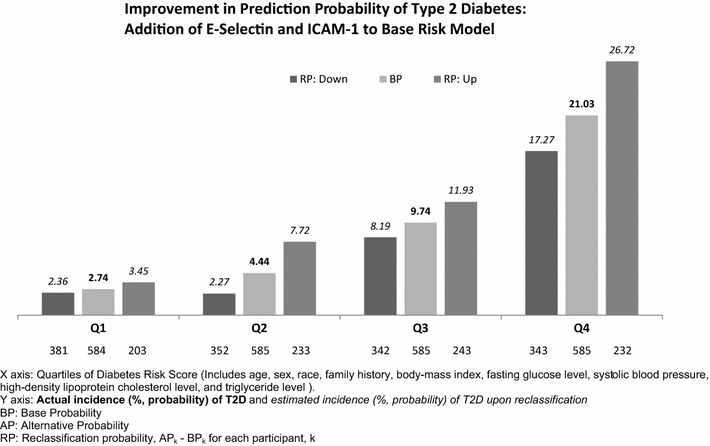
BACKGROUND: Oxidative stress, inflammation and endothelial dysfunction are interrelated factors in the etiology of cardiovascular disease, but their linkage to type 2 diabetes is less clear. We examined the association of these biomarkers with incident type 2 diabetes (T2D). METHODS: Analysis of 2339 participants in the community-based coronary artery risk development in young adults (CARDIA) study. Participants (age 40.1 ± 3.6 years, 44 % Black, 58 % women) were free of diabetes, and were followed 10 years. Cox regression was used to estimate hazard ratios (HRs) for incident T2D adjusting for the other biomarkers under study, demographic and lifestyle measures, dietary biomarkers, BMI (kg/m(2)) and metabolic syndrome components. RESULTS: F2-isoprostanes and oxidized LDL (oxidative stress) were positively associated with incident T2D, but the associations were attenuated by adjustment for BMI. C-reactive protein was positively associated with T2D even with full adjustment: HR (95 % CI) = 2.21 (1.26-3.88) for quartile 4 (Q4) v. quartile 1 (Q1). The HR (95 % CI) for T2D for biomarkers of endothelial dysfunction ICAM-1 and E-selectin for Q4 v. Q1 were 1.64 (0.96-2.81) and 1.68 (1.04-2.71) respectively, with full adjustment. Including these two markers in a common risk score incorporating BMI and clinical measures improved the prediction probability of T2D: relative risk for the average person classified up compared to the average person classified down: 1.09, (1.06-1.13), P < 0.0001. CONCLUSIONS: Biomarkers of inflammation and endothelial dysfunction were positively associated with incident T2D. ICAM-1 and E-selectin add to the prediction of T2D beyond a common risk score.
Overview
The claims and statistics of this paper haven’t been checked yet.
Free: it reads the open-access text and checks the first 5 claims that cite a source we can check. Create a free account to check every claim.
Integrity signals
Registry
Cites
Statistics
Figures
Verification
Claims the paper makes
The claims and statistics of this paper haven’t been checked yet.
Free: it reads the open-access text and checks the first 5 claims that cite a source we can check. Create a free account to check every claim.
Claims other papers make about this one
Each is checked against this paper’s own text: does it say what the citing paper says it does?
The source backs part of the claim, not all of it — or backs it for a different population, condition or comparison.
In the citing paper
“inflammation also contributes to the pathogenesis of other chronic non-CVDs — such as anaemia, cancer, type 2 diabetes, dementia, osteoporosis, sarcopenia, chronic kidney disease, and depression”
From Inflammageing: chronic inflammation in ageing, cardiovascular disease, and frailty (2018) · cites this paper as [138]
Experimental — accuracy not yet measuredThe source backs part of the claim, not all of it — or backs it for a different population, condition or comparison.
In the citing paper
“inflammation is a risk factor for the development of diabetes and its complications, and these associations are not accounted for by body composition parameters”
From Inflammageing: chronic inflammation in ageing, cardiovascular disease, and frailty (2018) · cites this paper as [138]
Experimental — accuracy not yet measuredThe check wasn’t confident either way, so it gives no verdict — never disputed.
In the citing paper
“CVDs in old age often develop in the context of multimorbidity and frailty”
From Inflammageing: chronic inflammation in ageing, cardiovascular disease, and frailty (2018) · cites this paper as [138]
Experimental — accuracy not yet measured
Self-check
Percentages, sums and reported differences re-computed from the paper’s own numbers.
The self-check needs the paper’s full text.
Citations
Cites
Acute-Phase Proteins and Other Systemic Responses to Inflammation
Gabay, C., & Kushner, I. (1999) · New England Journal of Medicine · doi:10.1056/nejm199902113400607 · Cited by 6,734 · cited 2×
“In an inflammatory state a cascade of reactions occur that harm vascular reactivity and insulin delivery and lead to insulin resistance [49].”
BackgroundPencina, M. J., D' Agostino, R. B., D' Agostino, R. B., & Vasan, R. S. (2008) · Statistics in Medicine · doi:10.1002/sim.2929 · Cited by 6,493 · cited 1×
“Due to concerns with net reclassification index (NRI) [34–37], we devised an alternative method.”
MethodHalliwell, B., & Whiteman, M. (2004) · British Journal of Pharmacology · doi:10.1038/sj.bjp.0705776 · Cited by 2,238 · cited 1×
“Furthermore, oxidized LDL and isoprostanes represent different aspects of oxidative stress where the former likely represents a local measure in the vasculature and the latter a more general marker of a specific oxidation pathway [40].”
BackgroundCardia: study design, recruitment, and some characteristics of the examined subjects
Friedman, G. D., Cutter, G. R., Donahue, R. P., Hughes, G. H., Hulley, S. B., Jacobs, D. R., Liu, K., & Savage, P. J. (1988) · Journal of Clinical Epidemiology · doi:10.1016/0895-4356(88)90080-7 · Cited by 1,687 · cited 2×
“Details on the measurement and calibration of glucose and insulin [7], blood pressure measurement [19], and anthropometry (height, weight, waist circumference) have also been previously described [21].”
BackgroundSelf-citationCeriello, A., & Motz, E. (2004) · Arteriosclerosis, Thrombosis, and Vascular Biology · doi:10.1161/01.atv.0000122852.22604.78 · Cited by 1,378 · cited 2×
“Oxidative stress, inflammation, and endothelial dysfunction may be ameliorated by a healthy diet and lifestyle and have also been linked to the etiology of insulin resistance and type 2 diabetes (T2D), and thus hypothesized as unifying components tying vascular factors to metabolic and cardiovascular risk [4, 5].”
BackgroundGreenland, P. (2008) · Statistics in Medicine · doi:10.1002/sim.2976 · Cited by 1,300
Inflammatory Markers and Risk of Type 2 Diabetes
Wang, X., Bao, W., Liu, J., OuYang, Y.-Y., Wang, D., Rong, S., Xiao, X., Shan, Z.-L., Zhang, Y., Yao, P., et al. (2013) · Diabetes Care · doi:10.2337/dc12-0702 · Cited by 820
Genotype score in addition to common risk factors for prediction of type 2 diabetes
Meigs, J. B., Shrader, P., Sullivan, L. M., McAteer, J. B., Fox, C. S., Dupuis, J., Manning, A. K., Florez, J. C., Wilson, P. W. F., D'Agostino, R. B., et al. (2008) · New England Journal of Medicine · doi:10.1056/nejmoa0804742 · Cited by 759 · cited 1×
“Lastly, we examined whether these different biomarkers improved the prediction of diabetes relative to a common risk score utilized in research and clinical settings [33].”
BackgroundBiomarkers of Endothelial Dysfunction and Risk of Type 2 Diabetes Mellitus
Meigs, J. B. (2004) · JAMA · doi:10.1001/jama.291.16.1978 · Cited by 643 · cited 6×
“Of note, only 1982 participants had a measure of VCAM.”
BackgroundInfluentialRacial Differences in Incident Heart Failure among Young Adults
Bibbins-Domingo, K., Pletcher, M. J., Lin, F., Vittinghoff, E., Gardin, J. M., Arynchyn, A., Lewis, C. E., Williams, O. D., & Hulley, S. B. (2009) · New England Journal of Medicine · doi:10.1056/nejmoa0807265 · Cited by 612 · cited 1×
“We included all participants without a history of diabetes or an adjudicated cardiovascular disease event prior to year 15 [26], who also participated in at least one of the year 20 or 25 exams and had complete data on the spectrum of oxidative stress, inflammation, and endothelial dysfunction biomarkers as well as th…”
Method
Cited by
Inflammageing: chronic inflammation in ageing, cardiovascular disease, and frailty
Ferrucci, L., & Fabbri, E. (2018) · Nature Reviews Cardiology · doi:10.1038/s41569-018-0064-2 · Cited by 3,690
Epidemiology of Atrial Fibrillation in the 21st Century: Novel Methods and New Insights
Kornej, J., Börschel, C. S., Benjamin, E. J., & Schnabel, R. B. (2020) · Circulation Research · doi:10.1161/circresaha.120.316340 · Cited by 1,516
Kaur, R., Kaur, M., & Singh, J. (2018) · Cardiovascular Diabetology · doi:10.1186/s12933-018-0763-3 · Cited by 736
Karam, B. S., Chavez-Moreno, A., Koh, W., Akar, J. G., & Akar, F. G. (2017) · Cardiovascular Diabetology · doi:10.1186/s12933-017-0604-9 · Cited by 500
“This article is intended as an update on the evolving link between oxidative stress, inflammation, and AF in the diabetic heart [16].”
BackgroundInflammation and sarcopenia: A focus on circulating inflammatory cytokines
Pan, L., Xie, W., Fu, X., Lu, W., Jin, H., Lai, J., Zhang, A., Yu, Y., Li, Y., & Xiao, W. (2021) · Experimental Gerontology · doi:10.1016/j.exger.2021.111544 · Cited by 298
COVID-19, Renin-Angiotensin System and Endothelial Dysfunction
Amraei, R., & Rahimi, N. (2020) · Cells · doi:10.3390/cells9071652 · Cited by 270
“responses in diabetes [80] and it can induce inflammation in conditions such as nonalcoholic fatty liver disease [81].”
BackgroundMone, P., Varzideh, F., Jankauskas, S. S., Pansini, A., Lombardi, A., Frullone, S., & Santulli, G. (2022) · Hypertension · doi:10.1161/hypertensionaha.122.19586 · Cited by 219
Recent novel approaches to limit oxidative stress and inflammation in diabetic complications
Pickering, R. J., Rosado, C. J., Sharma, A., Buksh, S., Tate, M., & de Haan, J. B. (2018) · Clinical & Translational Immunology · doi:10.1002/cti2.1016 · Cited by 160
“A common hallmark of both T1D and T2D leading to atherosclerosis is the attenuation of endothelial function.(27,28) A dysfunctional endothelium is considered an independent risk factor for CVD which promotes leucocyte and platelet adhesion, thrombosis, and inflammation, all of which are critical steps in the progressi…”
BackgroundTabrizi, R., Vakili, S., Akbari, M., Mirhosseini, N., Lankarani, K. B., Rahimi, M., Mobini, M., Jafarnejad, S., Vahedpoor, Z., & Asemi, Z. (2019) · Phytotherapy Research · doi:10.1002/ptr.6226 · Cited by 160
Magnoflorine: A review of its pharmacology, pharmacokinetics and toxicity
Xu, T. C., Kuang, T., Du, H., Li, Q., Feng, T., Zhang, Y., & Fan, G. (2020) · Pharmacological Research · doi:10.1016/j.phrs.2020.104632 · Cited by 162
Kim, Y., Keogh, J. B., & Clifton, P. M. (2017) · Nutrients · doi:10.3390/nu9111271 · Cited by 174
“, increased E-selectin and intercellular cell-adhesion molecule-1 (ICAM-1)) are positively associated with the risk of T2DM [238,239].”
BackgroundLambadiari, V., Pavlidis, G., Kousathana, F., Varoudi, M., Vlastos, D., Maratou, E., Georgiou, D., Andreadou, I., Parissis, J., Triantafyllidi, H., et al. (2018) · Cardiovascular Diabetology · doi:10.1186/s12933-017-0646-z · Cited by 146
“Specifically, ICAM-1 and E-selectin added to the prediction of T2D beyond a common risk score [46].”
BackgroundSpecific NLRP3 Inhibition Protects Against Diabetes-Associated Atherosclerosis
Sharma, A., Choi, J. S. Y., Stefanovic, N., Al-Sharea, A., Simpson, D. S., Mukhamedova, N., Jandeleit-Dahm, K., Murphy, A. J., Sviridov, D., Vince, J. E., et al. (2021) · Diabetes · doi:10.2337/db20-0357 · Cited by 139
Inflammaging as a target for healthy ageing
Dugan, B., Conway, J., & Duggal, N. A. (2023) · Age and Ageing · doi:10.1093/ageing/afac328 · Cited by 136
Jayedi, A., Rashidy-Pour, A., Parohan, M., Zargar, M. S., & Shab-Bidar, S. (2018) · Advances in Nutrition · doi:10.1093/advances/nmy040 · Cited by 137
“It is considered to be one of the most important underlying causes of current major public health concerns including type 2 diabetes (4), cardiovascular disease (CVD) (5), and different types of cancers (6–8), and may possibly contribute to the aging process and its related disorders (9).”
BackgroundXue, C., Chen, K., Gao, Z., Bao, T., Dong, L., Zhao, L., Tong, X., & Li, X. (2023) · Cell Communication and Signaling · doi:10.1186/s12964-022-01016-w · Cited by 164
“Induced apoptosis, microvascular damage, and barrier break, ultimately lead to the progression of vascular complications [163, 164].”
BackgroundThe influence of ICAM1 rs5498 on diabetes mellitus risk: evidence from a meta-analysis
Mi, W., Xia, Y., & Bian, Y. (2019) · Inflammation Research · doi:10.1007/s00011-019-01220-4 · Cited by 141
Islam, M. A., Alam, F., Solayman, M., Khalil, M. I., Kamal, M. A., & Gan, S. H. (2016) · Oxidative Medicine and Cellular Longevity · doi:10.1155/2016/5137431 · Cited by 133
“Both oxidative stress and inflammation are considered major role players in the pathogenesis of chronic degenerative diseases including cardiovascular diseases (CVDs) [1], diabetes mellitus (DM) [2], and rheumatoid arthritis (RA) [3].”
BackgroundArterial Stiffness and Incidence of Diabetes: A Population-Based Cohort Study
Muhammad, I. F., Borné, Y., Östling, G., Kennbäck, C., Gottsäter, M., Persson, M., Nilsson, P. M., & Engström, G. (2017) · Diabetes Care · doi:10.2337/dc17-1071 · Cited by 117
“did not include any established inflammatory biomarkers, which would have been interesting to analyze, as both arterial stiffness and diabetes are associated with chronic inflammation (33,34).”
BackgroundSu, M., Zhao, W., Xu, S., & Weng, J. (2022) · Antioxidants · doi:10.3390/antiox11061085 · Cited by 113
“At present, it is known that oxidative stress is one of the major contributors to diabetes and its complications as well as the pathogenesis of cardiovascular diseases [62,63].”
BackgroundMohammedi, K., Woodward, M., Marre, M., Colagiuri, S., Cooper, M., Harrap, S., Mancia, G., Poulter, N., Williams, B., Zoungas, S., et al. (2017) · Cardiovascular Diabetology · doi:10.1186/s12933-017-0574-y · Cited by 111
Jakubiak, G. K., Osadnik, K., Lejawa, M., Osadnik, T., Goławski, M., Lewandowski, P., & Pawlas, N. (2021) · Antioxidants · doi:10.3390/antiox11010079 · Cited by 122
“For parameters of OS (F2-isoprostanes and oxidized LDL), the relationship was weaker after taking into account BMI values [30].”
BackgroundMolecular Functions of Ceruloplasmin in Metabolic Disease Pathology
Liu, Z., Wang, M., Zhang, C., Zhou, S., & Ji, G. (2022) · Diabetes Metabolic Syndrome and Obesity · doi:10.2147/dmso.s346648 · Cited by 121
SIRT1 Antagonizes Oxidative Stress in Diabetic Vascular Complication
Meng, T., Qin, W., & Liu, B. (2020) · Frontiers in Endocrinology · doi:10.3389/fendo.2020.568861 · Cited by 108
Sharma, A., Rizky, L., Stefanovic, N., Tate, M., Ritchie, R. H., Ward, K. W., & de Haan, J. B. (2017) · Cardiovascular Diabetology · doi:10.1186/s12933-017-0513-y · Cited by 97
“Discussion Oxidative stress and inflammation have been interlinked as the underlying etiology in the pathogenesis of diabetes-associated endothelial dysfunction [38].”
BackgroundMicrobiota and Diabetes Mellitus: Role of Lipid Mediators
Salazar, J. J., Angarita, L., Morillo, V., Navarro, C., Martínez, M. S., Chacín, M., Torres, W., Rajotia, A., Rojas, M., Cano, C., et al. (2020) · Nutrients · doi:10.3390/nu12103039 · Cited by 108
Wang, X., Yang, Z., Xu, X., Jiang, H., Cai, C., & Yu, G. (2020) · Carbohydrate Polymers · doi:10.1016/j.carbpol.2020.116261 · Cited by 100
Assis, R. P., Arcaro, C. A., Gutierres, V. O., Oliveira, J. O., da Costa, P. I., Baviera, A. M., & Brunetti, I. L. (2017) · International Journal of Molecular Sciences · doi:10.3390/ijms18040332 · Cited by 112
“A combination of various factors, including oxidative stress, endothelial dysfunction, and low-grade inflammation, accounts for the increased risk of CVD in people with diabetes [8].”
BackgroundNuts and Cardiovascular Disease
Bitok, E., & Sabaté, J. (2018) · Progress in Cardiovascular Diseases · doi:10.1016/j.pcad.2018.05.003 · Cited by 98
Li, M., van Esch, B. C. A. M., Henricks, P. A. J., Garssen, J., & Folkerts, G. (2018) · Frontiers in Pharmacology · doi:10.3389/fphar.2018.00233 · Cited by 84
“Increased production of cytokines, such as interleukin-6 (IL-6) and IL-8, is regarded as diagnostic markers in inflammatory diseases including atherosclerosis, obesity, heart diseases, and sepsis (Kessler et al., 1999; Arnson et al., 2013; Cheng et al., 2013; Odegaard et al., 2016).”
BackgroundEnvironmental chemical exposure dynamics and machine learning-based prediction of diabetes mellitus
Wei, H., Sun, J., Shan, W., Xiao, W., Wang, B., Ma, X., Hu, W., Wang, X., & Xia, Y. (2021) · The Science of The Total Environment · doi:10.1016/j.scitotenv.2021.150674 · Cited by 97
Zhou, C., She, X., Gu, C., Hu, Y., Ma, M., Qiu, Q., Sun, T., Xu, X., Chen, H., & Zheng, Z. J. (2023) · Journal of Clinical Investigation · doi:10.1172/jci160517 · Cited by 95
“In addition, it is well established that inflammation plays a critical role in the pathogenesis of diabetes-associated vascular endothelial dysfunction (7, 8).”
BackgroundDiabetes Mellitus and Acute Myocardial Infarction: Impact on Short and Long-Term Mortality
Milazzo, V., Cosentino, N., Genovese, S., Campodonico, J., Mazza, M., Metrio, M. D., & Marenzi, G. (2020) · Advances in experimental medicine and biology · doi:10.1007/5584_2020_481 · Cited by 99
COVID-19 Causes Ferroptosis and Oxidative Stress in Human Endothelial Cells
Jankauskas, S. S., Kansakar, U., Sardu, C., Varzideh, F., Avvisato, R., Wang, X., Matarese, A., Marfella, R., Ziosi, M., Gambardella, J., et al. (2023) · Antioxidants · doi:10.3390/antiox12020326 · Cited by 88
Correlation of physical and cognitive impairment in diabetic and hypertensive frail older adults
Mone, P., Gambardella, J., Lombardi, A., Pansini, A., Gennaro, S. D., Leo, A. L., Famiglietti, M., Marro, A., Morgante, M., Frullone, S., et al. (2022) · Cardiovascular Diabetology · doi:10.1186/s12933-021-01442-z · Cited by 86
Hypomagnesemia and Cardiovascular Risk in Type 2 Diabetes
Oost, L. J., Tack, C. J., & de Baaij, J. H. F. (2022) · Endocrine Reviews · doi:10.1210/endrev/bnac028 · Cited by 100
Qi, B., Ren, D., Li, T., Niu, P., Zhang, X., Yang, X., & Xiao, J. (2022) · Journal of Agricultural and Food Chemistry · doi:10.1021/acs.jafc.2c02400 · Cited by 80
Uthman, L., Kuschma, M. C., Römer, G., Boomsma, M., Keßler, J., Hermanides, J., Hollmann, M. W., Preckel, B., Zuurbier, C. J., & Weber, N. C. (2020) · Cardiovascular Drugs and Therapy · doi:10.1007/s10557-020-07083-w · Cited by 77
The Role of Antioxidants Supplementation in Clinical Practice: Focus on Cardiovascular Risk Factors
Cammisotto, V., Nocella, C., Bartimoccia, S., Sanguigni, V., Francomano, D., Sciarretta, S., Pastori, D., Peruzzi, M., Cavarretta, E., D’Amico, A., et al. (2021) · Antioxidants · doi:10.3390/antiox10020146 · Cited by 87
“Groups of Supplementation Dose Subjects and Healthy Status Study Design, Duration Markers References Vitamin C and vitamin E Vs Placebo 500 mg of vitamin C twice daily 400 mg of vitamin E twice daily 500 mg Vitamin C plus 400 mg Vitamin E 40 T2DM Single-blinded randomized controlled clinical trial 90 days Fasting bloo…”
BackgroundInfluentialMaleki, V., Mahdavi, R., Hajizadeh‐Sharafabad, F., & Alizadeh, M. (2020) · Diabetology & Metabolic Syndrome · doi:10.1186/s13098-020-0518-7 · Cited by 87
Pan, H., & Lin, S. (2023) · Frontiers in Endocrinology · doi:10.3389/fendo.2023.1173399 · Cited by 84
Giannella, A., Radu, C. M., Franco, L., Campello, E., Simioni, P., Avogaro, A., de Kreutzenberg, S. V., & Ceolotto, G. (2017) · Cardiovascular Diabetology · doi:10.1186/s12933-017-0600-0 · Cited by 69
“To this purpose, we determined: (a) CD62E+ (E-selectin) MPs that are released by the activated endothelium [33, 34]; (b) CD62P+ (P-selectin) MPs that are mainly shed by platelets in response to cell activation, and are involved in inflammation and thrombosis [7, 35, 36]; (c) CD45+ MPs that derive from lymphocytes, and…”
BackgroundWang, P., Yuan, D., Zhang, C., Zhu, P., Jia, S., Song, Y., Tang, X., Xu, J., Li, T., Zeng, G., et al. (2022) · Cardiovascular Diabetology · doi:10.1186/s12933-022-01477-w · Cited by 73
“indices and the potential association between DM and FAR had been discussed above [38, 39].”
BackgroundRocha, D. M. U. P., Caldas, A. P. S., da Silva, B. P., Hermsdorff, H. H. M., & Alfenas, R. D. C. G. (2018) · Critical Reviews in Food Science and Nutrition · doi:10.1080/10408398.2018.1430019 · Cited by 72
“Inflammation and oxidative stress are associated to diabetes and its associated complications, such as insulin-resistance, and could precede T2DM development (Vikram et al. 2014; Odegaard et al. 2016).”
BackgroundPlasma irisin is elevated in type 2 diabetes and is associated with increased E-selectin levels
Rana, K. S., Pararasa, C., Afzal, I., Nagel, D. A., Hill, E. J., Bailey, C. J., Griffiths, H. R., Kyrou, I., Randeva, H. S., Bellary, S., et al. (2017) · Cardiovascular Diabetology · doi:10.1186/s12933-017-0627-2 · Cited by 66
“Recent data indicate that irisin may be involved in cardiovascular physiology, with evidence emerging that it plays a role in atherosclerosis [20–22] and can predict cardiovascular disease (CVD) risk [23, 24] This highlights the potential significance of irisin as a biomarker in T2DM patients who are at an increased C…”
BackgroundEndothelial Cell Dysfunction: Onset, Progression, and Consequences
Naderi‐Meshkin, H., & Setyaningsih, W. A. W. (2024) · Frontiers in Bioscience-Landmark · doi:10.31083/j.fbl2906223 · Cited by 88
“[9,22,35–37].”
Protective role of mitoquinone against impaired mitochondrial homeostasis in metabolic syndrome
Yang, J., Suo, H., & Song, J. (2020) · Critical Reviews in Food Science and Nutrition · doi:10.1080/10408398.2020.1809344 · Cited by 66
Bao, X., Borné, Y., Johnson, L., Muhammad, I. F., Persson, M., Niu, K., & Engström, G. (2018) · Cardiovascular Diabetology · doi:10.1186/s12933-018-0733-9 · Cited by 71
“In MDCC (n = 3630) Ceruloplasmin Alpha1antitrypsin Orosomucoid Haptoglobin C3 CRP SuPAR Alpha1-antitrypsin 0.52 – – – – – – Orosomucoid 0.45 0.40 – – – – – Haptoglobin 0.43 0.41 0.60 – – – – Complement C3 0.52 0.41 0.60 0.51 – – – CRP 0.38 0.27 0.52 0.44 0.40 – – SuPAR 0.13 0.17 0.22 0.19 0.08 0.23 – Total leukocyte c…”
BackgroundInfluentialCheon, S. Y., & Song, J. (2022) · Cell & Bioscience · doi:10.1186/s13578-022-00836-0 · Cited by 61
“This interplay between oxidative stress and inflammation contributes to endothelial dysfunction [80].”
BackgroundZhang, J., Fan, X., Xu, Y., Wang, K., Xu, T., Han, T., Hu, C., Li, R., Lin, X., & Jin, L. (2024) · Diabetes Research and Clinical Practice · doi:10.1016/j.diabres.2024.111575 · Cited by 64
Nomogram-Based Prediction of the Risk of Diabetic Retinopathy: A Retrospective Study
Mo, R., Shi, R., Yuhong, H., & Hu, F. (2020) · Journal of Diabetes Research · doi:10.1155/2020/7261047 · Cited by 55
The impact of oxidative stress on abnormal lipid metabolism-mediated disease development
Li, L., Guo, Z., Zhao, Y., Liang, C., Zheng, W., Tian, W., Chen, Y., Cheng, Y. H., Zhu, F.-G., & Xiang, X. (2025) · Archives of Biochemistry and Biophysics · doi:10.1016/j.abb.2025.110348 · Cited by 66
Stonehouse, W., Brinkworth, G. D., Thompson, C. H., & Abeywardena, M. Y. (2016) · Atherosclerosis · doi:10.1016/j.atherosclerosis.2016.10.027 · Cited by 53
Yuan, D., Jiang, P. X., Zhu, P., Jia, S., Zhang, C., Liu, Y., Liu, R., Xu, J., Tang, X., Zhao, X., et al. (2021) · Cardiovascular Diabetology · doi:10.1186/s12933-021-01335-1 · Cited by 58
Physiopathological mechanisms related to inflammation in obesity and type 2 diabetes mellitus
Lempesis, I. G., & Georgakopoulou, V. (2023) · World Journal of Experimental Medicine · doi:10.5493/wjem.v13.i3.7 · Cited by 69
Hyperglycemia and Physical Impairment in Frail Hypertensive Older Adults
Pansini, A., Lombardi, A., Morgante, M., Frullone, S., Marro, A., Rizzo, M., Martinelli, G., Boccalone, E., Luca, A. D., Santulli, G., et al. (2022) · Frontiers in Endocrinology · doi:10.3389/fendo.2022.831556 · Cited by 59
Oh, T. J., Ahn, C. H., Kim, B.-R., Kim, K. M., Moon, J. H., Lim, S. K., Park, K. S., Lim, C., Jang, H. C., & Choi, S. H. (2017) · Cardiovascular Diabetology · doi:10.1186/s12933-017-0568-9 · Cited by 57
“In fact, there are common shared biomarkers for CAD and diabetes mellitus [6, 7].”
BackgroundEilenberg, W. H., Stojković, S., Piechota-Polańczyk, A., Kaider, A., Kozakowski, N., Weninger, W. J., Nanobachvili, J., Wojta, J., Huk, I., Demyanets, S., et al. (2017) · Cardiovascular Diabetology · doi:10.1186/s12933-017-0579-6 · Cited by 52
“[15] reported a positive association between Table 3 Univariate and multiple linear regression models for serum NGAL (A) and MMP-9/NGAL (B, log-transformed) concentrations in the total cohort”
BackgroundGillani, S. W., Sulaiman, S. A. S., Abdul, M. I. M., & Baig, M. R. (2017) · Cardiovascular Diabetology · doi:10.1186/s12933-017-0584-9 · Cited by 56
“The study participants consist of patient diagnosed with type 2 diabetes mellitus (T2DM) and attending the outpatient department (OPD) for diabetic treatment.”
BackgroundResultInfluentialHahad, O., Wild, P. S., Prochaska, J. H., Schulz, A., Hermanns, I., Lackner, K. J., Pfeiffer, N., Schmidtmann, I. M., Beutel, M. E., Gori, T., et al. (2019) · Journal of the American Heart Association · doi:10.1161/jaha.119.012509 · Cited by 52
Cheng, C. K., Shang, W., Liu, J., Cheang, W. S., Wang, Y., Li, X., Lau, C., Luo, J., Ng, C., Huang, Y., et al. (2022) · Antioxidants · doi:10.3390/antiox11061137 · Cited by 51
“Of note, endothelial dysfunction, oxidative stress, and inflammation are interrelated factors in the development of diabetes mellitus and cardiovascular diseases [5].”
BackgroundOxidative burden in familial hypercholesterolemia
Mollazadeh, H., Carbone, F., Montecucco, F., Pirro, M., & Sahebkar, A. (2018) · Journal of Cellular Physiology · doi:10.1002/jcp.26466 · Cited by 52
“Endothelial dysfunction is more severe in FH compared with healthy subjects (Charakida et al., 2009; Guardamagna et al., 2009; Narverud et al., 2014; Odegaard et al., 2016; Zanetti et al., 2014).”
BackgroundAssociation between circulating cell adhesion molecules and risk of type 2 diabetes: A meta-analysis
Qiu, S., Cai, X., Liu, J., Yang, B., Zügel, M., Steinacker, J. M., Sun, Z., & Schümann, U. (2019) · Atherosclerosis · doi:10.1016/j.atherosclerosis.2019.06.908 · Cited by 51
Akbari, M., Ostadmohammadi, V., Tabrizi, R., Lankarani, K. B., Heydari, S. T., Amirani, E., Reiter, R. J., & Asemi, Z. (2018) · Inflammopharmacology · doi:10.1007/s10787-018-0508-7 · Cited by 49
“2016), being overweight, CKD (Zoccali 2009), hypertension and CVD (Mozos et al.”
BackgroundInfluentialLiu, X., Cao, K., Lv, W., Feng, Z., Liu, J., Gao, J., Li, H., Zang, W., & Liu, J. (2019) · Free Radical Biology and Medicine · doi:10.1016/j.freeradbiomed.2019.03.011 · Cited by 48
Pan-immune inflammation value; a novel biomarker reflecting inflammation associated with frailty
Baş, A. O., Güner, M., Ceylan, S., Hafızoğlu, M., Şahiner, Z., Doğu, B. B., Halil, M. G., Cankurtaran, M., & Balcı, C. (2023) · Aging Clinical and Experimental Research · doi:10.1007/s40520-023-02457-0 · Cited by 52
Ebrahim, H., Fiseha, T., Ebrahim, Y., & Bisetegn, H. (2022) · PLoS ONE · doi:10.1371/journal.pone.0272145 · Cited by 77
“The released oxidative stress due to elevated blood glucose levels resulted in damaging the various organs, vascular endothelium, and hematological and immunological parameters [5].”
BackgroundOxidative Stress and MicroRNAs in Endothelial Cells under Metabolic Disorders
Minjares, M., Wu, W. G., & Wang, J. (2023) · Cells · doi:10.3390/cells12091341 · Cited by 54
Cheng, Z., He, D., Li, J., Wu, Q. H., Liu, Z., & Zhu, Y. (2022) · Immunity & Ageing · doi:10.1186/s12979-022-00280-1 · Cited by 48
Characterization and anti-diabetic evaluation of sulfated polysaccharide from Spirulina platensis
Liu, J., Zhu, X., Sun, L., & Gao, Y. (2022) · Journal of Functional Foods · doi:10.1016/j.jff.2022.105155 · Cited by 50
Ursolic Acid Attenuates Atherosclerosis in ApoE−/− Mice: Role of LOX-1 Mediated by ROS/NF-κB Pathway
Li, Q., Zhao, W., Zeng, X., & Hao, Z. (2018) · Molecules · doi:10.3390/molecules23051101 · Cited by 43
“Besides, oxidant stress is closely correlated with endothelial dysfunction [13] and promotes vascular inflammatory response [14].”
BackgroundZhang, B., Li, Z., An, Z., Zhang, L., Wang, J., Hao, M.-D., Jin, Y.-J., Li, D., An-jian, S., Ren, Q., et al. (2022) · Frontiers in Cardiovascular Medicine · doi:10.3389/fcvm.2022.861798 · Cited by 53
“Asthma patients always have chronic inflammation and airway limitations, which can elevate the risk of chronic obstructive pulmonary disease (COPD) and type 2 diabetes (47).”
BackgroundLucci, C., Cosentino, N., Genovese, S., Campodonico, J., Milazzo, V., Metrio, M. D., Rondinelli, M., Riggio, D., Biondi, M. L., Rubino, M., et al. (2020) · Cardiovascular Diabetology · doi:10.1186/s12933-020-01157-7 · Cited by 50
Kanglexin accelerates diabetic wound healing by promoting angiogenesis via FGFR1/ERK signaling
Zhao, Y., Wang, X., Yang, S., Song, X., Sun, N., Chen, C., Zhang, Y., Yao, D., Huang, J., Wang, J., et al. (2020) · Biomedicine & Pharmacotherapy · doi:10.1016/j.biopha.2020.110933 · Cited by 42
Zhuang, C., Yuan, J., Du, Y., Zeng, J., Sun, Y., Wu, Y., Gao, X., & Chen, H. (2022) · Frontiers in Nutrition · doi:10.3389/fnut.2022.754707 · Cited by 48
“Oxidative stress has been implicated in the etiology of several chronic diseases, namely, cardiovascular disease (1), type 2 diabetes (2), neurodegenerative disease (3), some cancers (4–6), and also involved in the aging process and age-related diseases (ARDs) (7).”
BackgroundKimble, R., Keane, K. M., Lodge, J. K., & Howatson, G. (2021) · Nutrients · doi:10.3390/nu13051417 · Cited by 38
“Furthermore, oxidative stress and inflammation are key mechanisms of endothelial dysfunction and arterial damage; thus, they are linked to type 2 diabetes [9] and CVD [4].”
BackgroundFibrosis, the Bad Actor in Cardiorenal Syndromes: Mechanisms Involved
Delgado‐Valero, B., Cachofeiro, V., & Martínez‐Martínez, E. (2021) · Cells · doi:10.3390/cells10071824 · Cited by 42
“The clinical consequences of chronic inflammation include type 2 diabetes [211,212], hypertension [213], cardiovascular disease [214,215], chronic kidney disease [216]) and metabolic syndrome [217] among others.”
BackgroundUrinary mitochondrial DNA: A potential early biomarker of diabetic nephropathy
Cao, H., Wu, J., Luo, J., Chen, X., Yang, J., & Fang, L. (2019) · Diabetes/Metabolism Research and Reviews · doi:10.1002/dmrr.3131 · Cited by 41
“This observation was not consistent with plasma mtDNA content possibly being increased under diabetic conditions because diabetes is considered an inflammatory disease.(36,37) Therefore, to correct the imperfections of our clinical observation and to further study this issue, we assessed mtDNA content in peripheral bl…”
BackgroundHua, Y., Zhang, Y., Gong, W., Ding, Y., Shen, J., Li, H., Chen, Y., & Meng, G. (2020) · International Journal of Molecular Sciences · doi:10.3390/ijms21186699 · Cited by 39
Activation of the STING‐IRF3 pathway involved in psoriasis with diabetes mellitus
Li, X., Zhenting, Z., Yunjie, Y., Wei, C., Xu, X., Kun, X., Xin, L., Lu, L., Lü, J., & Chen, P. (2022) · Journal of Cellular and Molecular Medicine · doi:10.1111/jcmm.17236 · Cited by 40
Estato, V., do Nascimento, A. R., Antunes, B., Gomes, F., Coelho, L. L., Silvares, R. R., Garzoni, L. R., Daliry, A., Bousquet, P., & Tibiriçá, E. V. (2017) · Metabolic Syndrome and Related Disorders · doi:10.1089/met.2016.0085 · Cited by 35
Schöttker, B., Yang, X., Gao, X. Y., Anusruti, A., & Brenner, H. (2019) · Diabetes Care · doi:10.2337/dc19-1379 · Cited by 34
“model adjustment were observed in the Framingham Heart Study (18) and the Coronary Artery Risk Development Study in Young Adults study (20), a statistically significant inverse association between F2-isoprostanes and incident type 2 diabetes was observed in the Insulin Resistance Atherosclerosis Study (19).”
MethodMone, P., Izzo, R., Marazzi, G., Manzi, M. V., Gallo, P., Campolongo, G., Cacciotti, L., Tartaglia, D., Caminiti, G., Varzideh, F., et al. (2022) · Journal of Pharmacology and Experimental Therapeutics · doi:10.1124/jpet.122.001149 · Cited by 40
Yang, W., Li, Y., Wang, J., Han, R., & Wang, L. (2018) · Cardiovascular Diabetology · doi:10.1186/s12933-018-0723-y · Cited by 34
“However, the potential mechanisms underlying the association between T2DM and atherosclerosis have not been fully determined, and the activated inflammatory response has been considered an important common pathophysiological feature of both diseases [12, 13].”
BackgroundLambadiari, V., Pavlidis, G., Kousathana, F., Maratou, E., Georgiou, D., Andreadou, I., Kountouri, A., Varoudi, M., Balampanis, K., Parissis, J., et al. (2019) · Journal of Clinical Medicine · doi:10.3390/jcm8070983 · Cited by 33
Hegazy, G. A., Awan, Z. A., Hashem, E., Alama, N., & Abunaji, A. B. (2019) · Journal of International Medical Research · doi:10.1177/0300060519893858 · Cited by 33
“and oxidative stress, pro-inflammatory chemokines, dysfunctions of the endothelium, and the incidences of T2DM and CVD were also reported.(17,18) In this study, sICAM-1 serum levels were higher in both T2DM groups compared with the control group.”
ResultChen, S., Guan, S., Yan, Z., Ouyang, F., Li, S., Liu, L., Zuo, L., Huang, Y., & Zhong, J. (2024) · Frontiers in Endocrinology · doi:10.3389/fendo.2024.1359345 · Cited by 36
Tanaka, A., Shimabukuro, M., Okada, Y., Taguchi, I., Yamaoka‐Tojo, M., Tomiyama, H., Teragawa, H., Sugiyama, S., Yoshida, H., Sato, Y., et al. (2017) · Cardiovascular Diabetology · doi:10.1186/s12933-017-0532-8 · Cited by 37
Ziaee, M., Mashayekhi, S., Ghaffari, S., Mahmoudi, J., Sarbakhsh, P., & Garjani, A. (2018) · Angiology · doi:10.1177/0003319718815241 · Cited by 32
Obafemi, T. O., Olaleye, M. T., & Akinmoladun, A. C. (2019) · Journal of Ethnopharmacology · doi:10.1016/j.jep.2019.112124 · Cited by 44
Huang, R., Dai, Q., Chang, L., Wang, Z., Chen, J., Gu, R., Zheng, H., Hu, L., Xu, B., & Wang, L. Y. (2022) · Cardiovascular Diabetology · doi:10.1186/s12933-022-01662-x · Cited by 34
“As common comorbidity of heart failure, DM creates a chronic low-grade inflammatory environment, leading to further impairment of cardiac structure and function [4, 23].”
BackgroundAhlberg, C. D., Wallam, S., Tirba, L. A., Itumba, S. N., Gorman, L., & Galiatsatos, P. (2023) · Journal of Critical Care · doi:10.1016/j.jcrc.2023.154324 · Cited by 30
Mallard, A. R., Hollekim-Strand, S. M., Ingul, C. B., & Coombes, J. S. (2020) · Redox Report · doi:10.1080/13510002.2020.1795587 · Cited by 33
“Oxidative stress and inflammation share a cyclical link and are implicated in the pathogenesis of T2D [1,2].”
BackgroundSINCLAIR, J. K., Bottoms, L. M., Dillon, S. A., Allan, R., Shadwell, G., & Butters, B. (2022) · International Journal of Environmental Research and Public Health · doi:10.3390/ijerph19095317 · Cited by 34
“Within the epidemiological literature, distinct pathophysiological markers of oxidative stress, nitric oxide, and inflammation have been cited as being the mechanistic indicators associated with the clinical presentation of cardiometabolic disease [4,5].”
BackgroundHerder, C., Kannenberg, J. M., Carstensen‐Kirberg, M., Huth, C., Meisinger, C., Köenig, W., Peters, A., Rathmann, W., Roden, M., & Thorand, B. (2017) · Cardiovascular Diabetology · doi:10.1186/s12933-017-0498-6 · Cited by 30
Parabanic acid is the singlet oxygen specific oxidation product of uric acid
Iida, S., Ohkubo, Y., Yamamoto, Y., & Fujisawa, A. (2017) · Journal of Clinical Biochemistry and Nutrition · doi:10.3164/jcbn.17-24 · Cited by 28
The Health-Promoting Effects and the Mechanism of Intermittent Fasting
Liu, S., Zeng, M., Wan, W., Huang, M., Li, X., Xie, Z., Wang, S., & Cai, Y. (2023) · Journal of Diabetes Research · doi:10.1155/2023/4038546 · Cited by 27
“It causes increased inflammatory infiltration, protease secretion, and the production of many oxidative intermediates [20].”
BackgroundYoon, C. Y., Steffen, L. M., Gross, M. D., Launer, L. J., Odegaard, A., Reiner, A. P., Sanchez, O. A., Yaffe, K. S., Sidney, S., & Jacobs, D. R. (2017) · Frontiers in Cardiovascular Medicine · doi:10.3389/fcvm.2017.00037 · Cited by 29
“Some aspects of the association of the CAMs have been reported previously (22, 23).”
BackgroundSelf-citationYang, X., Chen, J., Pan, A., Wu, J. H. Y., Zhao, F., Xie, Y., Wang, Y., Ye, Y., Pan, X., & Yang, C. (2019) · Diabetes & Metabolism Journal · doi:10.4093/dmj.2019.0081 · Cited by 33
Wang, S., Wang, J., Zhang, R., Wang, T., Yan, D., He, Z., Jiang, F., Hu, C., & Jia, W. (2018) · Cardiovascular Diabetology · doi:10.1186/s12933-018-0662-7 · Cited by 29
“Long-term exposure to oxidative stress causes chronic inflammation, endothelial dysfunction and fibrosis, leading to the formation of various macroangiopathies in diabetes patients [4].”
Background
Metadata
- Authors
- Odegaard, A. O., Jacobs, D. R., Sanchez, O. A., Goff, D. C., Reiner, A. P., & Gross, M. D.
- Affiliations
- University of California, Irvine (US)
- University of Minnesota (US)
- Colorado School of Public Health (US)
- Corresponding author
- Odegaard, Andrew O.
- Venue
- Cardiovascular Diabetology
- Published
- 2016-03-24
- Volume
- 15
- Issue
- 1
- Pages
- 51-51
- ISSN
- 1475-2840 (ISSN-L)
- PMC
- PMC4806507
- OpenAlex
- W2303236807
- Cited by
- 286
- References
- 54
- Citations by year
- 2026: 20 · 2025: 19 · 2024: 35 · 2023: 23 · 2022: 52 · 2021: 25 · 2020: 34 · 2019: 24 · 2018: 27 · 2017: 21 · 2016: 6
- FWCI
- 26.11
- Type
- journal article
- Language
- en
- Open access
- gold
- doi.org
- Licence
- cc-by
- creativecommons.org/licenses/by/4.0/ (tdm)
- creativecommons.org/licenses/by/4.0/ (vor)
- Locations
- Cardiovascular Diabetology (publishedVersion, cc-by)
- PubMed Central (publishedVersion, cc-by)
- PubMed (publishedVersion)
- eScholarship (California Digital Library) (submittedVersion)
- Funders
- National Heart, Lung, and Blood Institute (hl53560)
- Topics
- Health Sciences › Medicine › Endocrinology, Diabetes and Metabolism › Diabetes, Cardiovascular Risks, and Lipoproteins
- Health Sciences › Medicine › Endocrinology, Diabetes and Metabolism › Adipokines, Inflammation, and Metabolic Diseases
- Health Sciences › Medicine › Physiology (medical) › Nitric Oxide and Endothelin Effects
- Keywords
- type 2 diabetes, oxidative stress, inflammation, endothelial dysfunction, F2-isoprostanes, oxidized LDL, C-reactive protein, ICAM-1, E-selectin, diabetes risk prediction, body mass index, CARDIA study
- MeSH terms
- Adult, C-Reactive Protein, Diabetes Mellitus, Type 2, Endothelium, Female, Follow-Up Studies, Humans, Inflammation, Male, Middle Aged, Risk Factors, Biomarkers, Incidence, Oxidative Stress, Black People
About these checks
Registry, retraction, Cites and statistics results are computed, not judged, with one exception: a printed reference that no index lists is read once by a model before it counts as a citation error. Claims are extracted by a model and kept only when their quote appears verbatim in the text; each cited source is then checked, with a model’s help, for whether it says what the claim relies on. Those verdicts can be wrong — read the claim’s quote and the cited source before relying on one.
Statistics and arithmetic are recomputed, not judged.
Confidence bands are shown only for fields calibrated on our annotated test set. None is calibrated yet, so no band is shown.
What counts as a claim ›How we measure confidence ›How we check this ›
Are you an author, or do you see a problem with this page? Request a review
Data sources
Bibliographic data: Semantic Scholar, OpenAlex, Crossref.
Contains information from the Semantic Scholar Academic Graph Datasets, made available under the ODC Attribution License (ODC-BY 1.0).
Semantic Scholar’s data is described in: Kinney, R., et al. (2023). The Semantic Scholar Open Data Platform. arXiv:2301.10140.
