

Oxidative stress, inflammation, endothelial dysfunction and incidence of type 2 diabetes
Open accessThe DOI matches its Crossref record; 49 of the 54 references it cites were found in a registry or an index.
Abstract
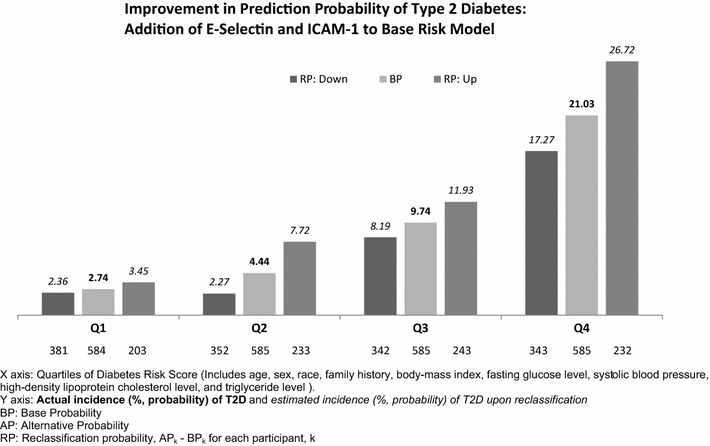
BACKGROUND: Oxidative stress, inflammation and endothelial dysfunction are interrelated factors in the etiology of cardiovascular disease, but their linkage to type 2 diabetes is less clear. We examined the association of these biomarkers with incident type 2 diabetes (T2D). METHODS: Analysis of 2339 participants in the community-based coronary artery risk development in young adults (CARDIA) study. Participants (age 40.1 ± 3.6 years, 44 % Black, 58 % women) were free of diabetes, and were followed 10 years. Cox regression was used to estimate hazard ratios (HRs) for incident T2D adjusting for the other biomarkers under study, demographic and lifestyle measures, dietary biomarkers, BMI (kg/m(2)) and metabolic syndrome components. RESULTS: F2-isoprostanes and oxidized LDL (oxidative stress) were positively associated with incident T2D, but the associations were attenuated by adjustment for BMI. C-reactive protein was positively associated with T2D even with full adjustment: HR (95 % CI) = 2.21 (1.26-3.88) for quartile 4 (Q4) v. quartile 1 (Q1). The HR (95 % CI) for T2D for biomarkers of endothelial dysfunction ICAM-1 and E-selectin for Q4 v. Q1 were 1.64 (0.96-2.81) and 1.68 (1.04-2.71) respectively, with full adjustment. Including these two markers in a common risk score incorporating BMI and clinical measures improved the prediction probability of T2D: relative risk for the average person classified up compared to the average person classified down: 1.09, (1.06-1.13), P < 0.0001. CONCLUSIONS: Biomarkers of inflammation and endothelial dysfunction were positively associated with incident T2D. ICAM-1 and E-selectin add to the prediction of T2D beyond a common risk score.
Overview
The claims and statistics of this paper haven’t been checked yet.
Free: it reads the open-access text and checks the first 5 claims that cite a source we can check. Create a free account to check every claim.
Integrity signals
Registry
Cites
Statistics
Figures
Verification
Claims the paper makes
The claims and statistics of this paper haven’t been checked yet.
Free: it reads the open-access text and checks the first 5 claims that cite a source we can check. Create a free account to check every claim.
Claims other papers make about this one
Each is checked against this paper’s own text: does it say what the citing paper says it does?
The source backs part of the claim, not all of it — or backs it for a different population, condition or comparison.
In the citing paper
“inflammation also contributes to the pathogenesis of other chronic non-CVDs — such as anaemia, cancer, type 2 diabetes, dementia, osteoporosis, sarcopenia, chronic kidney disease, and depression”
From Inflammageing: chronic inflammation in ageing, cardiovascular disease, and frailty (2018) · cites this paper as [138]
Experimental — accuracy not yet measuredThe source backs part of the claim, not all of it — or backs it for a different population, condition or comparison.
In the citing paper
“inflammation is a risk factor for the development of diabetes and its complications, and these associations are not accounted for by body composition parameters”
From Inflammageing: chronic inflammation in ageing, cardiovascular disease, and frailty (2018) · cites this paper as [138]
Experimental — accuracy not yet measuredThe check wasn’t confident either way, so it gives no verdict — never disputed.
In the citing paper
“CVDs in old age often develop in the context of multimorbidity and frailty”
From Inflammageing: chronic inflammation in ageing, cardiovascular disease, and frailty (2018) · cites this paper as [138]
Experimental — accuracy not yet measured
Self-check
Percentages, sums and reported differences re-computed from the paper’s own numbers.
The self-check needs the paper’s full text.
Citations
Cites
Acute-Phase Proteins and Other Systemic Responses to Inflammation
Gabay, C., & Kushner, I. (1999) · New England Journal of Medicine · doi:10.1056/nejm199902113400607 · Cited by 6,734 · cited 2×
“In an inflammatory state a cascade of reactions occur that harm vascular reactivity and insulin delivery and lead to insulin resistance [49].”
BackgroundPencina, M. J., D' Agostino, R. B., D' Agostino, R. B., & Vasan, R. S. (2008) · Statistics in Medicine · doi:10.1002/sim.2929 · Cited by 6,493 · cited 1×
“Due to concerns with net reclassification index (NRI) [34–37], we devised an alternative method.”
MethodHalliwell, B., & Whiteman, M. (2004) · British Journal of Pharmacology · doi:10.1038/sj.bjp.0705776 · Cited by 2,238 · cited 1×
“Furthermore, oxidized LDL and isoprostanes represent different aspects of oxidative stress where the former likely represents a local measure in the vasculature and the latter a more general marker of a specific oxidation pathway [40].”
BackgroundCardia: study design, recruitment, and some characteristics of the examined subjects
Friedman, G. D., Cutter, G. R., Donahue, R. P., Hughes, G. H., Hulley, S. B., Jacobs, D. R., Liu, K., & Savage, P. J. (1988) · Journal of Clinical Epidemiology · doi:10.1016/0895-4356(88)90080-7 · Cited by 1,687 · cited 2×
“Details on the measurement and calibration of glucose and insulin [7], blood pressure measurement [19], and anthropometry (height, weight, waist circumference) have also been previously described [21].”
BackgroundSelf-citationCeriello, A., & Motz, E. (2004) · Arteriosclerosis, Thrombosis, and Vascular Biology · doi:10.1161/01.atv.0000122852.22604.78 · Cited by 1,378 · cited 2×
“Oxidative stress, inflammation, and endothelial dysfunction may be ameliorated by a healthy diet and lifestyle and have also been linked to the etiology of insulin resistance and type 2 diabetes (T2D), and thus hypothesized as unifying components tying vascular factors to metabolic and cardiovascular risk [4, 5].”
BackgroundGreenland, P. (2008) · Statistics in Medicine · doi:10.1002/sim.2976 · Cited by 1,300
Inflammatory Markers and Risk of Type 2 Diabetes
Wang, X., Bao, W., Liu, J., OuYang, Y.-Y., Wang, D., Rong, S., Xiao, X., Shan, Z.-L., Zhang, Y., Yao, P., et al. (2013) · Diabetes Care · doi:10.2337/dc12-0702 · Cited by 820
Genotype score in addition to common risk factors for prediction of type 2 diabetes
Meigs, J. B., Shrader, P., Sullivan, L. M., McAteer, J. B., Fox, C. S., Dupuis, J., Manning, A. K., Florez, J. C., Wilson, P. W. F., D'Agostino, R. B., et al. (2008) · New England Journal of Medicine · doi:10.1056/nejmoa0804742 · Cited by 759 · cited 1×
“Lastly, we examined whether these different biomarkers improved the prediction of diabetes relative to a common risk score utilized in research and clinical settings [33].”
BackgroundBiomarkers of Endothelial Dysfunction and Risk of Type 2 Diabetes Mellitus
Meigs, J. B. (2004) · JAMA · doi:10.1001/jama.291.16.1978 · Cited by 643 · cited 6×
“Of note, only 1982 participants had a measure of VCAM.”
BackgroundInfluentialRacial Differences in Incident Heart Failure among Young Adults
Bibbins-Domingo, K., Pletcher, M. J., Lin, F., Vittinghoff, E., Gardin, J. M., Arynchyn, A., Lewis, C. E., Williams, O. D., & Hulley, S. B. (2009) · New England Journal of Medicine · doi:10.1056/nejmoa0807265 · Cited by 612 · cited 1×
“We included all participants without a history of diabetes or an adjudicated cardiovascular disease event prior to year 15 [26], who also participated in at least one of the year 20 or 25 exams and had complete data on the spectrum of oxidative stress, inflammation, and endothelial dysfunction biomarkers as well as th…”
MethodEndothelial dysfunction in diabetes mellitus: Molecular mechanisms and clinical implications
Tabit, C. E., Chung, W. B., Hamburg, N. M., & Vita, J. A. (2010) · Reviews in Endocrine and Metabolic Disorders · doi:10.1007/s11154-010-9134-4 · Cited by 572 · cited 1×
“This relationship with CVD is exacerbated in those with perturbations in glucose homeostasis such as insulin resistance and diabetes [2, 3].”
BackgroundJacobs, D. R., Hahn, L. P., Haskell, W. L., Pirie, P., & Sidney, S. (1989) · Journal of Cardiopulmonary Rehabilitation · doi:10.1097/00008483-198911000-00003 · Cited by 529
Self-citationNet Reclassification Indices for Evaluating Risk Prediction Instruments: A Critical Review
Kerr, K. F., Wang, Z., Janes, H., McClelland, R. L., Psaty, B. M., & Pepe, M. S. (2014) · Epidemiology · doi:10.1097/ede.0000000000000018 · Cited by 446
Hollman, P. C. H., Cassidy, A., Comte, B., Heinonen, M., Richelle, M., Richling, E., Serafini, M., Scalbert, A., Sies, H., & Vidry, S. (2011) · The Journal of Nutrition · doi:10.3945/jn.110.131490 · Cited by 406 · cited 1×
“Serum carotenoids largely reflect dietary intake of fruit and vegetables [30].”
BackgroundMaddux, B. A., See, W., Lawrence, J. C., Goldfine, A. L., Goldfine, I. D., & Evans, J. L. (2001) · Diabetes · doi:10.2337/diabetes.50.2.404 · Cited by 405 · cited 1×
“Oxidized LDL may have an etiologic role by reducing insulin signaling [47], and glucose uptake [48].”
BackgroundEndothelial Dysfunction: Cause of the Insulin Resistance Syndrome
Pinkney, J. H., Stehouwer, C. D., Coppack, S. W., & Yudkin, J. S. (1997) · Diabetes · doi:10.2337/diab.46.2.s9 · Cited by 351 · cited 1×
“Lastly, clinical and experimental studies suggest that endothelial dysfunction, likely in the capillary and arteriolar endothelium, which are metabolically involved with insulin-sensitive tissues, is the controlling factor for the amount of insulin that effectively reaches the tissues [50].”
BackgroundHolvoet, P. (2008) · JAMA · doi:10.1001/jama.299.19.2287 · Cited by 324 · cited 2×
“Specifically, serum oxidized LDL concentrations were measured by competitive ELISA (Mercodia, Uppsala, Sweden) [8].”
BackgroundMethodLongitudinal Changes in Adiposity Associated With Pregnancy: The CARDIA Study
Smith, D. E. (1994) · JAMA · doi:10.1001/jama.1994.03510460039030 · Cited by 269
Oxidative Stress and Insulin Resistance
Park, K., Gross, M., Lee, D.-H., Holvoet, P., Himes, J. H., Shikany, J. M., & Jacobs, D. R. (2009) · Diabetes Care · doi:10.2337/dc09-0259 · Cited by 246
Self-citationAssociation of Oxidative Stress, Insulin Resistance, and Diabetes Risk Phenotypes
Meigs, J. B., Larson, M. G., Fox, C. S., Keaney, J. F., Vasan, R. S., & Benjamin, E. J. (2007) · Diabetes Care · doi:10.2337/dc07-0817 · Cited by 220 · cited 1×
“However, the evidence is less developed in human and population based studies [7–10].”
BackgroundUsing Isoprostanes as Biomarkers of Oxidative Stress: Some Rarely Considered Issues
Halliwell, B., & Lee, C. Y. J. (2010) · Antioxidants & Redox Signaling · doi:10.1089/ars.2009.2934 · Cited by 191 · cited 1×
“Indeed, urine and plasma measures of isoprostanes are not necessarily equivalent measures [39].”
BackgroundHozawa, A., Jacobs, D. R., Steffes, M. W., Gross, M. D., Steffen, L. M., & Lee, D.-H. (2007) · Clinical Chemistry · doi:10.1373/clinchem.2006.074930 · Cited by 187 · cited 1×
“We have reported that Sum4Carot is related to oxidative stress, endothelial dysfunction and inflammatory biomarkers [27], BMI [28], hypertension [29], and diabetes and smoking [24].”
BackgroundSelf-citationHemostatic Markers of Endothelial Dysfunction and Risk of Incident Type 2 Diabetes
Meigs, J. B., O’Donnell, C. J., Tofler, G. H., Benjamin, E. J., Fox, C. S., Lipinska, I., Nathan, D. M., Sullivan, L. M., D’Agostino, R. B., & Wilson, P. W. F. (2006) · Diabetes · doi:10.2337/diabetes.55.02.06.db05-1041 · Cited by 184
Lahera, V., Goicoechea, M., Garcia de Vinuesa, S., Miana, M., Heras, N. D. L., Cachofeiro, V., & Luno, J. (2007) · Current Medicinal Chemistry · doi:10.2174/092986707779313381 · Cited by 179 · cited 6×
“This literature suggests these factors under study are likely functioning in a cascade or network with pathophysiological consequences [1], but evidence for each has a demonstrated role in the etiology of T2D.”
BackgroundInfluentialBrunner, E. J., Kivimäki, M., Witte, D. R., Lawlor, D. A., Smith, G. D., Cooper, J. A., Miller, M., Lowe, G. D. O., Rumley, A., Casas, J. P., et al. (2008) · PLoS Medicine · doi:10.1371/journal.pmed.0050155 · Cited by 163 · cited 1×
“showed a dose–response association between higher levels of inflammatory markers and incidence of T2D [11], although the true mechanism is not well understood and related evidence suggests that elevated levels of inflammation may be intermediates in the pathophysiology of T2D [12].”
BackgroundThorand, B., Baumert, J., Chambless, L., Meisinger, C., Kolb, H., Döring, A., Löwel, H., & Koenig, W. (2006) · Arteriosclerosis, Thrombosis, and Vascular Biology · doi:10.1161/01.atv.0000198392.05307.aa · Cited by 156 · cited 1×
“The MONICA study observed a similar trend with E-selectin but the ICAM-1 association was only apparent in simple models [15].”
ResultSong, Y., Manson, J. E., Tinker, L., Rifai, N., Cook, N. R., Hu, F. B., Hotamisligil, G. S., Ridker, P. M., Rodriguez, B. L., Margolis, K. L., et al. (2007) · Diabetes · doi:10.2337/db07-0250 · Cited by 148
Plasma F2-Isoprostanes and Coronary Artery Calcification: The CARDIA Study
Gross, M., Steffes, M., Jacobs, D. R., Yu, X., Lewis, L., Lewis, C. E., & Loria, C. M. (2005) · Clinical Chemistry · doi:10.1373/clinchem.2004.037630 · Cited by 127 · cited 1×
“Plasma F2-isoprostanes were measured with gas chromatography-mass spectrometry [23].”
MethodSelf-citationKelly, A. S., Steinberger, J., Jacobs, D. R., Hong, C. P., Moran, A., & Sinaiko, A. R. (2010) · International Journal of Pediatric Obesity · doi:10.3109/17477166.2010.528765 · Cited by 125 · cited 1×
“, the average of the z scores of waist circumference, systolic blood pressure, triglycerides, inverse HDLcholesterol, and fasting glucose) [31].”
BackgroundSelf-citationShah, S., Iqbal, M., Karam, J., Salifu, M., & McFarlane, S. I. (2007) · Antioxidants & Redox Signaling · doi:10.1089/ars.2007.1629 · Cited by 115 · cited 1×
“The oxidative stress aspect of this hypothesis is largely born out of evidence from animal and in vitro studies demonstrating that chronic levels of oxidative stress are among the earliest abnormalities in the natural history of insulin resistance and T2D [6].”
BackgroundComments on ‘Integrated discrimination and net reclassification improvements—Practical advice’
Pencina, M. J., D’Agostino, R. B., D’Agostino, R. B., & Vasan, R. S. (2007) · Statistics in Medicine · doi:10.1002/sim.3106 · Cited by 113
Longitudinal associations between body mass index and serum carotenoids: the CARDIA study
Andersen, L. F., Jacobs, D. R., Gross, M. D., Schreiner, P. J., Dale Williams, O., & Lee, D.-H. (2006) · British Journal of Nutrition · doi:10.1079/bjn20051638 · Cited by 113 · cited 15×
“Including these two markers in a common risk score incorporating BMI and clinical measures improved the prediction probability of T2D: relative risk for the average person classified up compared to the average person classified down: 1.09, (1.06–1.13), P 0.0001.”
BackgroundSelf-citationDuncan, B. B., Schmidt, M. I., Offenbacher, S., Wu, K. K., Savage, P. J., & Heiss, G. (1999) · Diabetes Care · doi:10.2337/diacare.22.5.767 · Cited by 111 · cited 1×
“Aligned with these results related to vascular biomarkers of endothelial dysfunction and T2D risk are a handful of studies that observed a positive association between other measures of endothelial dysfunction and increased risk of T2D [41–44].”
ResultHozawa, A., Jacobs, D. R., Steffes, M. W., Gross, M. D., Steffen, L. M., & Lee, D.-H. (2006) · American Journal of Epidemiology · doi:10.1093/aje/kwj136 · Cited by 104 · cited 2×
“We have reported that Sum4Carot is related to oxidative stress, endothelial dysfunction and inflammatory biomarkers [27], BMI [28], hypertension [29], and diabetes and smoking [24].”
BackgroundMethodSelf-citationAssociation of Small Artery Elasticity With Incident Cardiovascular Disease in Older Adults
Duprez, D. A., Jacobs, D. R., Lutsey, P. L., Bluemke, D. A., Brumback, L. C., Polak, J. F., Peralta, C. A., Greenland, P., & Kronmal, R. A. (2011) · American Journal of Epidemiology · doi:10.1093/aje/kwr120 · Cited by 97
Self-citationHope, S. A., & Meredith, I. T. (2003) · Internal Medicine Journal · doi:10.1046/j.1444-0903.2003.00378.x · Cited by 95 · cited 1×
“The hypothesis for this approach was informed by research showing the CAMs work in a “cascade” fashion in atherosclerosis [32], and thus higher levels of multiple CAMs reflect greater endothelial activation/inflammation (dysfunction) than an individual CAM.”
MethodGross, M. D., Bielinski, S. J., Suarez-Lopez, J. R., Reiner, A. P., Bailey, K. R., Thyagarajan, B., Carr, J. J., Duprez, D. A., & Jacobs, D. R. (2011) · Clinical Chemistry · doi:10.1373/clinchem.2011.168559 · Cited by 93 · cited 8×
“Of note, only 1982 participants had a measure of VCAM.”
BackgroundMethodSelf-citationHozawa, A., Jacobs, D. R., Steffes, M. W., Gross, M. D., Steffen, L. M., & Lee, D.-H. (2009) · Journal of Hypertension · doi:10.1097/hjh.0b013e32832258c9 · Cited by 91 · cited 1×
“We have reported that Sum4Carot is related to oxidative stress, endothelial dysfunction and inflammatory biomarkers [27], BMI [28], hypertension [29], and diabetes and smoking [24].”
BackgroundSelf-citationAssociation of inflammation with worsening HOMA-insulin resistance
Park, K., Steffes, M., Lee, D.-H., Himes, J. H., & Jacobs, D. R. (2009) · Diabetologia · doi:10.1007/s00125-009-1486-5 · Cited by 72 · cited 7×
“High-sensitivity ELISA was used to measure serum C-reactive protein (CRP) [13].”
BackgroundMethodSelf-citationRossi, R., Cioni, E., Nuzzo, A., Origliani, G., & Modena, M. G. (2005) · Diabetes Care · doi:10.2337/diacare.28.3.702 · Cited by 72 · cited 1×
“Aligned with these results related to vascular biomarkers of endothelial dysfunction and T2D risk are a handful of studies that observed a positive association between other measures of endothelial dysfunction and increased risk of T2D [41–44].”
ResultSeven-year trends in pasma low-density-lipoprotein-cholesterol in young Adults: the CARDIA Study
Bild, D. E., Jacobs, D. R., Liu, K., Williams, O. D., Hilner, J. E., Perkins, L. L., Marcovina, S. M., & Hulley, S. B. (1996) · Annals of Epidemiology · doi:10.1016/1047-2797(96)00005-1 · Cited by 70 · cited 1×
“Details on the collection and storage of plasma samples, laboratory quality-control procedures, and methodology for analysis of plasma triglycerides, HDL cholesterol, LDL cholesterol, and total cholesterol are described elsewhere [20].”
MethodSelf-citationHoogeveen, R. C., Ballantyne, C. M., Bang, H., HEISS, G. M., Duncan, B. B., Folsom, A. R., & Pankow, J. S. (2006) · Diabetologia · doi:10.1007/s00125-006-0533-8 · Cited by 61 · cited 1×
“In a case-cohort analysis from the ARIC study higher levels of oxidized LDL were positively associated with T2D in a simple model, and in the context of high levels of ICAM-1, but with further adjustment for established risk factors there was no association [18].”
MethodTissue Plasminogen Activator, von Willebrand Factor, and Risk of Type 2 Diabetes in Older Men
Wannamethee, S. G., Sattar, N. A., Rumley, A., Whincup, P. H., LENNON, L. T., & Lowe, G. D. O. (2008) · Diabetes Care · doi:10.2337/dc07-1569 · Cited by 52
Raynor, L. A., Pankow, J. S., Duncan, B. B., Schmidt, M. I., Hoogeveen, R. C., Pereira, M. A., Young, J. H., & Ballantyne, C. M. (2012) · Diabetes Care · doi:10.2337/dc12-0609 · Cited by 52 · cited 1×
“Lastly, despite the evidence of an etiologic role of these markers of oxidative stress, inflammation and endothelial dysfunction in the development of T2D the addition of them to established clinical risk prediction equations did not improve prediction [38, 45, 46].”
BackgroundInhibition of insulin signaling by oxidized low density lipoprotein
Mazière, C., Morlière, P., Santus, R. C., Marcheux, V., Louandre, C., Conte, M.-A., & Mazière, J. (2004) · Atherosclerosis · doi:10.1016/j.atherosclerosis.2004.02.006 · Cited by 45
Chao, C., Song, Y., Cook, N., Tseng, C.-H., Manson, J. E., Eaton, C., Margolis, K. L., Rodriguez, B., Phillips, L. S., Tinker, L. F., et al. (2010) · Archives of Internal Medicine · doi:10.1001/archinternmed.2010.312 · Cited by 45 · cited 1×
“Lastly, despite the evidence of an etiologic role of these markers of oxidative stress, inflammation and endothelial dysfunction in the development of T2D the addition of them to established clinical risk prediction equations did not improve prediction [38, 45, 46].”
BackgroundDallmeier, D., Larson, M. G., Wang, N., Fontes, J. D., Benjamin, E. J., & Fox, C. S. (2012) · Journal of the American Heart Association · doi:10.1161/jaha.112.000869 · Cited by 45 · cited 2×
“Similar results were observed in the Framingham Heart Study for urinary isoprostanes [38].”
BackgroundResultIs Type 2 Diabetes Mellitus a Vascular Condition?
Hu, F. B., & Stampfer, M. J. (2003) · Arteriosclerosis, Thrombosis, and Vascular Biology · doi:10.1161/01.atv.0000094360.38911.71 · Cited by 45 · cited 5×
“This relationship with CVD is exacerbated in those with perturbations in glucose homeostasis such as insulin resistance and diabetes [2, 3].”
BackgroundInfluentialUrinary F2-Isoprostanes as a Biomarker of Reduced Risk of Type 2 Diabetes
Il’yasova, D., Spasojević, I., Baše, K., Zhang, H., Wang, F. M., Young, S. P., Millington, D. S., D’Agostino, R. B., & Wagenknecht, L. E. (2011) · Diabetes Care · doi:10.2337/dc11-1502 · Cited by 41 · cited 1×
“On the other hand higher urinary isoprostane levels in the IRAS study were inversely associated with T2D [9].”
BackgroundStranges, S., Rafalson, L. B., Dmochowski, J., Rejman, K., Tracy, R. P., Trevisan, M., & Donahue, R. P. (2008) · Obesity · doi:10.1038/oby.2008.59 · Cited by 37 · cited 1×
“Indeed, a handful of studies have reported that elevated markers of endothelial dysfunction are associated with increased risk of T2D [14–18].”
BackgroundCardiovascular disease and diabetes: the vulnerable patient
Hess, K., Marx, N., & Lehrke, M. (2012) · European Heart Journal Supplements · doi:10.1093/eurheartj/sus002 · Cited by 32 · cited 1×
“This relationship with CVD is exacerbated in those with perturbations in glucose homeostasis such as insulin resistance and diabetes [2, 3].”
BackgroundJacobs, D. R., & Brumback, L. C. (2011) · American Journal of Epidemiology · doi:10.1093/aje/kwr486 · Cited by 4
Self-citationPaynter, N. P., & Cook, N. R. (2011) · American Journal of Epidemiology · doi:10.1093/aje/kwr485 · Cited by 2
Cited by
Inflammageing: chronic inflammation in ageing, cardiovascular disease, and frailty
Ferrucci, L., & Fabbri, E. (2018) · Nature Reviews Cardiology · doi:10.1038/s41569-018-0064-2 · Cited by 3,690
Epidemiology of Atrial Fibrillation in the 21st Century: Novel Methods and New Insights
Kornej, J., Börschel, C. S., Benjamin, E. J., & Schnabel, R. B. (2020) · Circulation Research · doi:10.1161/circresaha.120.316340 · Cited by 1,516
Kaur, R., Kaur, M., & Singh, J. (2018) · Cardiovascular Diabetology · doi:10.1186/s12933-018-0763-3 · Cited by 736
Karam, B. S., Chavez-Moreno, A., Koh, W., Akar, J. G., & Akar, F. G. (2017) · Cardiovascular Diabetology · doi:10.1186/s12933-017-0604-9 · Cited by 500
“This article is intended as an update on the evolving link between oxidative stress, inflammation, and AF in the diabetic heart [16].”
BackgroundInflammation and sarcopenia: A focus on circulating inflammatory cytokines
Pan, L., Xie, W., Fu, X., Lu, W., Jin, H., Lai, J., Zhang, A., Yu, Y., Li, Y., & Xiao, W. (2021) · Experimental Gerontology · doi:10.1016/j.exger.2021.111544 · Cited by 298
Metadata
- Authors
- Odegaard, A. O., Jacobs, D. R., Sanchez, O. A., Goff, D. C., Reiner, A. P., & Gross, M. D.
- Affiliations
- University of California, Irvine (US)
- University of Minnesota (US)
- Colorado School of Public Health (US)
- Corresponding author
- Odegaard, Andrew O.
- Venue
- Cardiovascular Diabetology
- Published
- 2016-03-24
- Volume
- 15
- Issue
- 1
- Pages
- 51-51
- ISSN
- 1475-2840 (ISSN-L)
- PMC
- PMC4806507
- OpenAlex
- W2303236807
- Cited by
- 286
- References
- 54
- Citations by year
- 2026: 20 · 2025: 19 · 2024: 35 · 2023: 23 · 2022: 52 · 2021: 25 · 2020: 34 · 2019: 24 · 2018: 27 · 2017: 21 · 2016: 6
- FWCI
- 26.11
- Type
- journal article
- Language
- en
- Open access
- gold
- doi.org
- Licence
- cc-by
- creativecommons.org/licenses/by/4.0/ (tdm)
- creativecommons.org/licenses/by/4.0/ (vor)
- Locations
- Cardiovascular Diabetology (publishedVersion, cc-by)
- PubMed Central (publishedVersion, cc-by)
- PubMed (publishedVersion)
- eScholarship (California Digital Library) (submittedVersion)
- Funders
- National Heart, Lung, and Blood Institute (hl53560)
- Topics
- Health Sciences › Medicine › Endocrinology, Diabetes and Metabolism › Diabetes, Cardiovascular Risks, and Lipoproteins
- Health Sciences › Medicine › Endocrinology, Diabetes and Metabolism › Adipokines, Inflammation, and Metabolic Diseases
- Health Sciences › Medicine › Physiology (medical) › Nitric Oxide and Endothelin Effects
- Keywords
- type 2 diabetes, oxidative stress, inflammation, endothelial dysfunction, F2-isoprostanes, oxidized LDL, C-reactive protein, ICAM-1, E-selectin, diabetes risk prediction, body mass index, CARDIA study
- MeSH terms
- Adult, C-Reactive Protein, Diabetes Mellitus, Type 2, Endothelium, Female, Follow-Up Studies, Humans, Inflammation, Male, Middle Aged, Risk Factors, Biomarkers, Incidence, Oxidative Stress, Black People
About these checks
Registry, retraction, Cites and statistics results are computed, not judged, with one exception: a printed reference that no index lists is read once by a model before it counts as a citation error. Claims are extracted by a model and kept only when their quote appears verbatim in the text; each cited source is then checked, with a model’s help, for whether it says what the claim relies on. Those verdicts can be wrong — read the claim’s quote and the cited source before relying on one.
Statistics and arithmetic are recomputed, not judged.
Confidence bands are shown only for fields calibrated on our annotated test set. None is calibrated yet, so no band is shown.
What counts as a claim ›How we measure confidence ›How we check this ›
Are you an author, or do you see a problem with this page? Request a review
Data sources
Bibliographic data: Semantic Scholar, OpenAlex, Crossref.
Contains information from the Semantic Scholar Academic Graph Datasets, made available under the ODC Attribution License (ODC-BY 1.0).
Semantic Scholar’s data is described in: Kinney, R., et al. (2023). The Semantic Scholar Open Data Platform. arXiv:2301.10140.
