

Oxidative stress, inflammation, endothelial dysfunction and incidence of type 2 diabetes
Open accessThe DOI matches its Crossref record; 49 of the 54 references it cites were found in a registry or an index.
Abstract
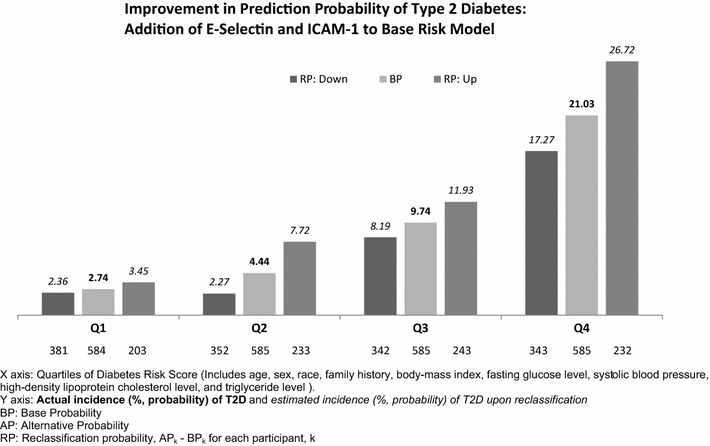
BACKGROUND: Oxidative stress, inflammation and endothelial dysfunction are interrelated factors in the etiology of cardiovascular disease, but their linkage to type 2 diabetes is less clear. We examined the association of these biomarkers with incident type 2 diabetes (T2D). METHODS: Analysis of 2339 participants in the community-based coronary artery risk development in young adults (CARDIA) study. Participants (age 40.1 ± 3.6 years, 44 % Black, 58 % women) were free of diabetes, and were followed 10 years. Cox regression was used to estimate hazard ratios (HRs) for incident T2D adjusting for the other biomarkers under study, demographic and lifestyle measures, dietary biomarkers, BMI (kg/m(2)) and metabolic syndrome components. RESULTS: F2-isoprostanes and oxidized LDL (oxidative stress) were positively associated with incident T2D, but the associations were attenuated by adjustment for BMI. C-reactive protein was positively associated with T2D even with full adjustment: HR (95 % CI) = 2.21 (1.26-3.88) for quartile 4 (Q4) v. quartile 1 (Q1). The HR (95 % CI) for T2D for biomarkers of endothelial dysfunction ICAM-1 and E-selectin for Q4 v. Q1 were 1.64 (0.96-2.81) and 1.68 (1.04-2.71) respectively, with full adjustment. Including these two markers in a common risk score incorporating BMI and clinical measures improved the prediction probability of T2D: relative risk for the average person classified up compared to the average person classified down: 1.09, (1.06-1.13), P < 0.0001. CONCLUSIONS: Biomarkers of inflammation and endothelial dysfunction were positively associated with incident T2D. ICAM-1 and E-selectin add to the prediction of T2D beyond a common risk score.
Overview
The claims and statistics of this paper haven’t been checked yet.
Free: it reads the open-access text and checks the first 5 claims that cite a source we can check. Create a free account to check every claim.
Integrity signals
Registry
Cites
Statistics
Figures
Verification
Claims the paper makes
The claims and statistics of this paper haven’t been checked yet.
Free: it reads the open-access text and checks the first 5 claims that cite a source we can check. Create a free account to check every claim.
Claims other papers make about this one
Each is checked against this paper’s own text: does it say what the citing paper says it does?
The source backs part of the claim, not all of it — or backs it for a different population, condition or comparison.
In the citing paper
“inflammation also contributes to the pathogenesis of other chronic non-CVDs — such as anaemia, cancer, type 2 diabetes, dementia, osteoporosis, sarcopenia, chronic kidney disease, and depression”
From Inflammageing: chronic inflammation in ageing, cardiovascular disease, and frailty (2018) · cites this paper as [138]
Experimental — accuracy not yet measuredThe source backs part of the claim, not all of it — or backs it for a different population, condition or comparison.
In the citing paper
“inflammation is a risk factor for the development of diabetes and its complications, and these associations are not accounted for by body composition parameters”
From Inflammageing: chronic inflammation in ageing, cardiovascular disease, and frailty (2018) · cites this paper as [138]
Experimental — accuracy not yet measuredThe check wasn’t confident either way, so it gives no verdict — never disputed.
In the citing paper
“CVDs in old age often develop in the context of multimorbidity and frailty”
From Inflammageing: chronic inflammation in ageing, cardiovascular disease, and frailty (2018) · cites this paper as [138]
Experimental — accuracy not yet measured
Self-check
Percentages, sums and reported differences re-computed from the paper’s own numbers.
The self-check needs the paper’s full text.
Citations
Cites
Acute-Phase Proteins and Other Systemic Responses to Inflammation
Gabay, C., & Kushner, I. (1999) · New England Journal of Medicine · doi:10.1056/nejm199902113400607 · Cited by 6,734 · cited 2×
“In an inflammatory state a cascade of reactions occur that harm vascular reactivity and insulin delivery and lead to insulin resistance [49].”
BackgroundPencina, M. J., D' Agostino, R. B., D' Agostino, R. B., & Vasan, R. S. (2008) · Statistics in Medicine · doi:10.1002/sim.2929 · Cited by 6,493 · cited 1×
“Due to concerns with net reclassification index (NRI) [34–37], we devised an alternative method.”
MethodHalliwell, B., & Whiteman, M. (2004) · British Journal of Pharmacology · doi:10.1038/sj.bjp.0705776 · Cited by 2,238 · cited 1×
“Furthermore, oxidized LDL and isoprostanes represent different aspects of oxidative stress where the former likely represents a local measure in the vasculature and the latter a more general marker of a specific oxidation pathway [40].”
BackgroundCardia: study design, recruitment, and some characteristics of the examined subjects
Friedman, G. D., Cutter, G. R., Donahue, R. P., Hughes, G. H., Hulley, S. B., Jacobs, D. R., Liu, K., & Savage, P. J. (1988) · Journal of Clinical Epidemiology · doi:10.1016/0895-4356(88)90080-7 · Cited by 1,687 · cited 2×
“Details on the measurement and calibration of glucose and insulin [7], blood pressure measurement [19], and anthropometry (height, weight, waist circumference) have also been previously described [21].”
BackgroundSelf-citationCeriello, A., & Motz, E. (2004) · Arteriosclerosis, Thrombosis, and Vascular Biology · doi:10.1161/01.atv.0000122852.22604.78 · Cited by 1,378 · cited 2×
“Oxidative stress, inflammation, and endothelial dysfunction may be ameliorated by a healthy diet and lifestyle and have also been linked to the etiology of insulin resistance and type 2 diabetes (T2D), and thus hypothesized as unifying components tying vascular factors to metabolic and cardiovascular risk [4, 5].”
BackgroundGreenland, P. (2008) · Statistics in Medicine · doi:10.1002/sim.2976 · Cited by 1,300
Inflammatory Markers and Risk of Type 2 Diabetes
Wang, X., Bao, W., Liu, J., OuYang, Y.-Y., Wang, D., Rong, S., Xiao, X., Shan, Z.-L., Zhang, Y., Yao, P., et al. (2013) · Diabetes Care · doi:10.2337/dc12-0702 · Cited by 820
Genotype score in addition to common risk factors for prediction of type 2 diabetes
Meigs, J. B., Shrader, P., Sullivan, L. M., McAteer, J. B., Fox, C. S., Dupuis, J., Manning, A. K., Florez, J. C., Wilson, P. W. F., D'Agostino, R. B., et al. (2008) · New England Journal of Medicine · doi:10.1056/nejmoa0804742 · Cited by 759 · cited 1×
“Lastly, we examined whether these different biomarkers improved the prediction of diabetes relative to a common risk score utilized in research and clinical settings [33].”
BackgroundBiomarkers of Endothelial Dysfunction and Risk of Type 2 Diabetes Mellitus
Meigs, J. B. (2004) · JAMA · doi:10.1001/jama.291.16.1978 · Cited by 643 · cited 6×
“Of note, only 1982 participants had a measure of VCAM.”
BackgroundInfluentialRacial Differences in Incident Heart Failure among Young Adults
Bibbins-Domingo, K., Pletcher, M. J., Lin, F., Vittinghoff, E., Gardin, J. M., Arynchyn, A., Lewis, C. E., Williams, O. D., & Hulley, S. B. (2009) · New England Journal of Medicine · doi:10.1056/nejmoa0807265 · Cited by 612 · cited 1×
“We included all participants without a history of diabetes or an adjudicated cardiovascular disease event prior to year 15 [26], who also participated in at least one of the year 20 or 25 exams and had complete data on the spectrum of oxidative stress, inflammation, and endothelial dysfunction biomarkers as well as th…”
Method
Cited by
Items 101–200 of 288
Czerwińska, M. E., Gąsińska, E., Leśniak, A., Krawczyk, P., Kiss, A. K., Naruszewicz, M., & Bujalska‐Zadrożny, M. (2018) · Phytomedicine · doi:10.1016/j.phymed.2018.06.006 · Cited by 26
Inhibition of Th17 cell differentiation by aerobic exercise improves vasodilatation in diabetic mice
Liu, X., Su, Y., Liu, J., Liu, D., & Yu, C. (2024) · Clinical and Experimental Hypertension · doi:10.1080/10641963.2024.2373467 · Cited by 30
“Previous studies have shown that oxidative stress, inflammation, endoplasmic reticulum stress, mitochondrial dysfunction and other factors are involved in diabetes-related vascular endothelial dysfunction (4).”
Naderi‐Meshkin, H., Setyaningsih, W. A. W., Yacoub, A., Carney, G., Cornelius, V. A., Nelson, C.-A., Kelaini, S., Donaghy, C. L., Dunne, P. D., Amirkhah, R., et al. (2024) · Stem Cells · doi:10.1093/stmcls/sxae043 · Cited by 26
“16 Studies have shown that increased intracellular ROS primes vascular cells for the uptake of modified LDL (modLDL), subsequently leading to the formation of smooth muscle cell-derived foam cells.”
BackgroundHughes, E. P., Wang, X. X., Sabol, L., Barton, K., Hegde, S., Myakala, K., Krawczyk, E., Rosenberg, A. Z., & Levi, M. (2025) · American Journal of Physiology-Renal Physiology · doi:10.1152/ajprenal.00110.2025 · Cited by 29
Villalobos-Labra, R., Liu, R., Spaans, F., Sáez, T., Quon, A., Wong, M. E., Pink, D., Lewis, J. D., Vatish, M., Davidge, S. T., et al. (2022) · Bioscience Reports · doi:10.1042/bsr20222185 · Cited by 22
Neuroprotective Effects of Amylin Analogues on Alzheimer’s Disease Pathogenesis and Cognition
Grizzanti, J., Corrigan, R. R., & Casadesús, G. (2018) · Journal of Alzheimer s Disease · doi:10.3233/jad-180433 · Cited by 26
Saadati, S., Kabthymer, R. H., Aldini, G., Mousa, A., Feehan, J., & de Courten, B. V. (2023) · Nutrition Reviews · doi:10.1093/nutrit/nuad150 · Cited by 24
Wu, W., Jia, C., Xu, X., He, Y., Xie, Y., Zhou, Y., Lu, H., Liu, J., Chen, J., & Liu, Y. (2024) · Journal of Inflammation Research · doi:10.2147/jir.s458950 · Cited by 25
“51,52 Consequently, additional investigations are warranted to explore these potential mechanisms.”
BackgroundDiabetes and Vascular Disease: Is It All About Glycemia?
Vecchié, A., Montecucco, F., Carbone, F., Dallegri, F., & Bonaventura, A. (2019) · Current Pharmaceutical Design · doi:10.2174/1381612825666190830181944 · Cited by 24
Tuomisto, K., Palmu, J., Long, T., Watrous, J. D., Mercader, K., Lagerborg, K. A., Andres, A. M., Salmi, M., Jalkanen, S., Vasan, R. S., et al. (2022) · BMJ Open Diabetes Research & Care · doi:10.1136/bmjdrc-2021-002519 · Cited by 23
“30 31 Oxidative stress has also been implicated in the development of complications of diabetes such as nephropathy and neuropathy.”
Trombara, F., Cosentino, N., Bonomi, A., Ludergnani, M., Poggio, P., Gionti, L., Baviera, M., Colacioppo, P., Roncaglioni, M. C., Leoni, O., et al. (2023) · Cardiovascular Diabetology · doi:10.1186/s12933-023-01758-y · Cited by 25
“Their adverse prognosis has been traditionally associated with the presence of a higher burden of cardiovascular risk factors [24], a more diffuse and severe coronary atherosclerosis, less symptomatic AMI resulting in delayed hospital presentation, increased platelet activation and pro-coagulant state, and chronic inf…”
BackgroundDuan, X., Chen, Z., Xia, C., Zhong, R., Liu, L., & Long, L. (2023) · The Journal of Clinical Endocrinology & Metabolism · doi:10.1210/clinem/dgad584 · Cited by 28
Antidiabetic Activity and Chemical Composition of Sanbai Melon Seed Oil
Wang, F., Hai-li, L., Zhao, H., Zhang, Y. P., Qiu, P., Li, J., & Wang, S. (2018) · Evidence-based Complementary and Alternative Medicine · doi:10.1155/2018/5434156 · Cited by 23
“Literature suggested that oxidative stress, inflammation, hyperglycemia, ER stress, and apoptosis are interrelated closely [54].”
BackgroundPeptidomics Study of Plant-Based Meat Analogs as a Source of Bioactive Peptides
Wang, S., Zhao, M., Fan, H., & Wu, J. (2023) · Foods · doi:10.3390/foods12051061 · Cited by 23
“Sustained and aberrant oxidative stress contributes to vascular dysfunction, thereby causing hypertension, type 2 diabetes, atherosclerosis and other chronic diseases [41].”
BackgroundGöçmez, S. S., Yazır, Y., Gacar, G., ŞAHİN, T. D., Arkan, S., Karson, A., & Utkan, T. (2020) · Physiology & Behavior · doi:10.1016/j.physbeh.2020.113019 · Cited by 23
Chen, Y., Li, M., Deng, H., Wang, S., Chen, L., Li, N., Xu, D., & Wang, Q. (2017) · Oncotarget · doi:10.18632/oncotarget.16019 · Cited by 23
“Therefore, an association between PCOS and the longterm consequences, such as type 2 diabetes (T2DM) and cardiovascular diseases (CVD), has been recognized [6].”
Backgroundder Werf, R. V., Walter, C., Bietiger, W., Seyfritz, E., Mura, C., Péronet, C., Grandois, J. L., Werner, D., Ennahar, S., Digel, F., et al. (2018) · Cardiovascular Diabetology · doi:10.1186/s12933-018-0744-6 · Cited by 25
“Under these pathological conditions, the strategic equilibrium between relaxant and contractor factors is lost in favour of pro-mitogenic, pro-aggregation mediators and inflammation, leading to endothelial dysfunction as observed in T2D patients [11, 20].”
Tai, H., Jiang, X., Yao, S., Liu, Y., Wei, H., Li, L., Jiao, Z.-J., Wang, T.-Q., Jin-song, K., & Jia, L. (2021) · Frontiers in Endocrinology · doi:10.3389/fendo.2021.622768 · Cited by 20
“Most studies only use the plasma biomarkers of endothelial activation or the FMD of the brachial artery in small study samples (8).”
BackgroundMethodVillalobos-Labra, R., Liu, R., Spaans, F., Sáez, T., Semería-Maitret, T., Quon, A., Sawamura, T., Cooke, C. M., & Davidge, S. T. (2023) · Hypertension · doi:10.1161/hypertensionaha.123.21205 · Cited by 25
“7,10 The reaction between NO and superoxide reduces NO bioavailability via the formation of the potent oxidant peroxynitrite, which further impairs endothelial function by inducing nitrative stress 11,12 (ie, increased production and accumulation of reactive nitrogen species).”
BackgroundDoumatey, A. P., Shriner, D., Zhou, J., Lei, L., Chen, G., Oluwasola-Taiwo, O., Nkem, S., Ogundeji, A., Adebamowo, S. N., Bentley, A. R., et al. (2024) · Genome Medicine · doi:10.1186/s13073-024-01308-5 · Cited by 25
Yuxiu, Y., Ma, X., Gao, F., Liu, T., Deng, J., Li, Q., Liu, Z., Wang, Y., Zheng, Y., Yang, J., et al. (2024) · BMC Cardiovascular Disorders · doi:10.1186/s12872-024-03951-7 · Cited by 28
“We dichotomized the inflammatory status of ACS populations based on enrollment hs-CRP measurements of 2 mg/L or greater (high-inflamed) vs. less than 2 mg/L (uninflamed), consistent with the current consensus [13, 14].”
ResultGhiarone, T., Castorena‐Gonzalez, J. A., Foote, C. A., Ramirez‐Perez, F. I., Ferreira‐Santos, L., Cabral-Amador, F. J., de la Torre, R. A., Ganga, R., Wheeler, A. A., Manrique‐Acevedo, C., et al. (2022) · American Journal of Physiology-Heart and Circulatory Physiology · doi:10.1152/ajpheart.00039.2022 · Cited by 23
Chen, F.-C., Shen, K., Ke, L., Lin, H.-L., Wu, C., & Shaw, S. (2019) · Saudi Pharmaceutical Journal · doi:10.1016/j.jsps.2019.01.014 · Cited by 20
“The inflammatory state usually accompanied the metabolic syndrome (Odegaard et al., 2016).”
Wei, D., Wang, L., Xu, Q., Wang, J., Shi, J., Ma, C., Geng, J., Zhao, M., Liu, X., Hou, J., et al. (2023) · Ecotoxicology and Environmental Safety · doi:10.1016/j.ecoenv.2023.115109 · Cited by 21
Cassano, V., Armentaro, G., Magurno, M., Aiello, V., Borrello, F., Miceli, S., Maio, R., Perticone, M., Marra, A. M., Cittadini, A., et al. (2022) · Frontiers in Pharmacology · doi:10.3389/fphar.2022.1069828 · Cited by 21
“It is known that inflammation and oxidative stress, characterized by increased 8,12-isoprostane F (2α) concentration, low endothelium-bound extracellular superoxide dismutase activity and increased endotheliumbound xanthine oxidase (XO) activity and cytokines production, play a central role in pathogenesis of both end…”
BackgroundGuo, L., Lv, H., Wang, J., Zhang, B., Zhu, Y., Zhang, X., Zhu, H., Zhou, X., & Xia, Y. (2023) · Cardiovascular Diabetology · doi:10.1186/s12933-023-01830-7 · Cited by 22
“A hs-CRP value ≥ 2 mg/L was considered a sign of inflammation, consistent with the current guideline [8].”
MethodMolina, X. E. P., Thomas‐Valdés, S., & Cruz, G. (2021) · Nutrients · doi:10.3390/nu13051458 · Cited by 18
“The improvement of antioxidant defense and control of inflammatory processes could help in the management of these defects [33].”
BackgroundGlycated hemoglobin and subsequent risk of microvascular and macrovascular complications
Samanta, S. (2020) · Indian Journal of Medical Sciences · doi:10.25259/ijms_16_2020 · Cited by 25
Ebrahim, H., Asrie, F., & Getaneh, Z. (2021) · Journal of Blood Medicine · doi:10.2147/jbm.s287136 · Cited by 26
Modulation of Reactive Oxygen Species Homeostasis as a Pleiotropic Effect of Commonly Used Drugs
Thomas, C., Wurzer, L., Malle, E., Ristow, M., & Madreiter-Sokolowski, C. (2022) · Frontiers in Aging · doi:10.3389/fragi.2022.905261 · Cited by 16
Kim, Y. H., Her, A., Rha, S., Choi, C. U., Choi, B. G., Kim, J. B., Park, S., Kang, D. O., Park, J. Y., Park, S., et al. (2022) · Journal of Clinical Medicine · doi:10.3390/jcm11175079 · Cited by 20
“Furthermore, hyperglycemia caused by oxidative stress, inflammation, apoptosis, endothelial dysfunction, hypercoagulation, and platelet aggregation [33] could damage the ischemic myocardium in patients with NSTEMI [12].”
BackgroundLi, Z., Zhong, W.-F., Zhang, X., Chung, V. C., Song, W.-Q., Chen, Q., Wang, X., Huang, Q., Shen, D., Zhang, P., et al. (2022) · Environmental Health · doi:10.1186/s12940-022-00922-3 · Cited by 20
“In addition, air pollution was associated with increased levels of systemic inflammation [35, 36] and oxidative stress [37], which may increase the risk of T2D [38, 39].”
BackgroundZhang, Q., Hu, S., Jin, Z., Wang, S., Zhang, B., & Zhao, L. (2024) · Frontiers in Pharmacology · doi:10.3389/fphar.2024.1339148 · Cited by 22
Mokgalaboni, K., Nkambule, B. B., Ntamo, Y., Ziqubu, K., Nyambuya, T. M., Mazibuko-Mbeje, S. E., Gabuza, K., Chellan, N., Cirilli, I., Tiano, L., et al. (2021) · Life Sciences · doi:10.1016/j.lfs.2021.120068 · Cited by 19
Mažibrada, I., Djukic, T. I., Perović, S., Pljesa-Ercegovac, M. S., Plavšić, L., Bojanin, D., Bjekić-Macut, J., Simić, P. D., Simic, T. P., Savic-Radojevic, A. R., et al. (2018) · Journal of Pediatric Endocrinology and Metabolism · doi:10.1515/jpem-2017-0511 · Cited by 19
Pletsch‐Borba, L., Watzinger, C., Fortner, R. T., Katzke, V. A., Schwingshackl, L., Sowah, S. A., Hüsing, A., Johnson, T., Groß, M.-L., Maldonado, S. G., et al. (2019) · Journal of Clinical Medicine · doi:10.3390/jcm8122075 · Cited by 18
“All three studies [4,30,56] that investigated the association between PSelectin and type 2 diabetes risk found no significant relationships.”
BackgroundMethodResultInfluentialBasu, A., Izuora, K. E., Betts, N. M., Ebersole, J. L., & Scofield, R. H. (2021) · Antioxidants · doi:10.3390/antiox10111730 · Cited by 23
“Oxidative stress has been positively correlated with endothelial dysfunction [6,7], and biomarkers of endothelial dysfunction, such as adhesion and inflammation molecules, have been shown to be modulated by dietary polyphenols found in plant-based diets [8].”
BackgroundTong, X., Yang, L., Jiang, C., Weng, Z., Zu, A., Hou, Y., Fang, Y., Yang, W., & Sun, S. (2023) · Reproductive Sciences · doi:10.1007/s43032-022-00904-3 · Cited by 16
Xu, X., Xie, Y., Gu, X., Zhou, Y., Kang, Y. M., Liu, J., Lai, W., Lu, H., Chen, S., Xu, J., et al. (2023) · Journal of Inflammation Research · doi:10.2147/jir.s425189 · Cited by 16
Chen, Y.-M., Yu, X., Liu, K., Gao, H., Li, Y., Sun, T.-Z., Shi, X., Li, H., Zhu, G., Qi, J., et al. (2019) · Neuroendocrinology · doi:10.1159/000504444 · Cited by 15
Shi, B., Wang, H., Wan, X., Guo, Y., Liu, S., & Gong, Q. (2022) · Spectrochimica Acta Part A Molecular and Biomolecular Spectroscopy · doi:10.1016/j.saa.2022.121375 · Cited by 15
Wang, L., Li, M., Dong, Y., Wang, J., Qin, S., Li, L., Li, B., Wang, B., & Cao, H. (2025) · Microbiome · doi:10.1186/s40168-025-02158-y · Cited by 17
“Furthermore, magnoflorine has exhibited promising anti-diabetic effects, including lowering blood sugar, improving glucose tolerance, increasing insulin secretion, inhibiting adipogenesis, and controlling body weight [67].”
Silva, T. M., Fracasso, D. S., Visentin, A. P. V., Cassini, C., Scariot, F. J., Danetti, S., Echeverrigaray, S., Moura, S., Touguinha, L. B. A., Branco, C. S., et al. (2022) · Journal of Ethnopharmacology · doi:10.1016/j.jep.2022.115564 · Cited by 17
Li, X., Cai, Z., Yang, F., Wang, Y., Pang, X., Sun, J. Y., Li, X., & Lu, Y. (2024) · Foods · doi:10.3390/foods13020273 · Cited by 16
Retracted: Arterial Stiffness and Obesity as Predictors of Diabetes: Longitudinal Cohort Study
Cui, C., Wu, Z., Zheng, J., Chu, J., Zhu, J., Qi, Y., Zhang, Z., Wang, Z., Zhang, M., Mo, Z., et al. (2024) · JMIR Public Health and Surveillance · doi:10.2196/46088 · Cited by 14
RetractedRemnant cholesterol and new-onset atrial fibrillation: The Atherosclerosis Risk in Communities study
Ouyang, X., Tang, X., Peng, L., Wu, H., Wang, J., Huang, Z., Wu, B. T., Li, Y., Lü, Y., Zhuang, X., et al. (2024) · Heart Rhythm · doi:10.1016/j.hrthm.2024.10.030 · Cited by 15
Zhang, H., Xu, X., Liu, Z., Sun‐Waterhouse, D., Wang, J., Ma, C., Waterhouse, G. I. N., & Kang, W. (2021) · Acta Biochimica et Biophysica Sinica · doi:10.1093/abbs/gmaa160 · Cited by 14
Fan, H., Bhullar, K. S., Wang, Z., & Wu, J. (2022) · Foods · doi:10.3390/foods11213372 · Cited by 15
“Sustained oxidative stress and inflammatory responses in the vasculature proceed endothelial dysfunction, thus contributing to the incidence of type 2 diabetes, vascular remodeling, hypertension, atherosclerosis, and other cardiovascular diseases [21,22].”
BackgroundSaadati, S., Cameron, J. D., Menon, K., Hodge, A. D., Lu, Z. X., de Courten, M., Feehan, J., & de Courten, B. V. (2023) · Nutrients · doi:10.3390/nu15224835 · Cited by 16
RETRACTED: Neuroprotective Effects of Dried Tubers of Aconitum napellus
Shoaib, A., Siddiqui, H. H., Dixit, R., Siddiqui, S., Deen, B., Khan, A., Alrokayan, S., Khan, H. A., & Ahmad, P. (2020) · Plants · doi:10.3390/plants9030356 · Cited by 14
“Oxidative nervous tension and construction of cytokines along with dysfunction in vascular tissues are significant aspects responsible for DN [3].”
RetractedIkonomidis, I., Pavlidis, G., Tsoumani, M. E., Kousathana, F., Katogiannis, K., Tsilivarakis, D., Thymis, J., Kountouri, A., Korakas, E., Pliouta, L., et al. (2022) · Journal of Clinical Medicine · doi:10.3390/jcm11123299 · Cited by 21
“Oxidative stress plays an important role in the pathogenesis of type 2 diabetes mellitus (T2DM) and related cardiovascular complications by promoting atherosclerotic process [1–3].”
BackgroundAssociation of Air Quality Improvement and Frailty Progression: A National Study across China
Liu, M., Zeeshan, M., Sun, T., Hu, X., Nie, Z., Dong, H., Dong, G., & Ou, Y. (2024) · Toxics · doi:10.3390/toxics12070464 · Cited by 15
“Inflammation, in particular, plays a crucial role in the development of various age-related chronic diseases and other negative health outcomes, including depression and dementia [39–42].”
BackgroundInfluentialHsu, P., Kor, C., & Hsieh, Y. (2018) · Journal of Clinical Medicine · doi:10.3390/jcm7120550 · Cited by 14
“A prospective study showed that endothelial dysfunction could independently predict DM [30].”
BackgroundSevere Persistent Pain and Inflammatory Biomarkers in Sickle Cell Disease: An Exploratory Study
Knisely, M. R., Tanabe, P. J., Walker, J. K. L., Yang, Q., & Shah, N. (2021) · Biological Research For Nursing · doi:10.1177/10998004211027220 · Cited by 17
“sE-selectin is a glycoprotein commonly used as a marker of systemic endothelial dysfunction (Balta, 2021; Odegaard et al., 2016; Page & Liles, 2013).”
BackgroundHuemer, M., Huth, C., Schederecker, F., Klug, S. J., Meisinger, C., Köenig, W., Rathmann, W., Peters, A., & Thorand, B. (2020) · BMJ Open Diabetes Research & Care · doi:10.1136/bmjdrc-2020-001321 · Cited by 14
YAKUT, Z. A. Ç., Özçelik, R., Çevik, Ö. D., Şener, T. E., & Şener, G. (2020) · International Journal of Impotence Research · doi:10.1038/s41443-020-00356-w · Cited by 14
African Ancestry Gradient Is Associated with Lower Systemic F2‐Isoprostane Levels
Annor, F., Goodman, M. G., Thyagarajan, B., Okosun, I. S., Doumatey, A. P., Gower, B. A., & Il’yasova, D. (2017) · Oxidative Medicine and Cellular Longevity · doi:10.1155/2017/8319176 · Cited by 12
Circulating Reactive Oxygen Species in Adults with Congenital Heart Disease
Vanreusel, I., Vermeulen, D., Goovaerts, I., Stoop, T., Ectors, B., Cornelis, J., Hens, W., de Bliek, E., Heuten, H., Craenenbroeck, E. M. V., et al. (2022) · Antioxidants · doi:10.3390/antiox11122369 · Cited by 12
Lestari, K., Ridho, A., Nurcayani, N., Ramadhania, Z. M., & Barliana, M. I. (2019) · The Indonesian Biomedical Journal · doi:10.18585/inabj.v11i2.686 · Cited by 13
Li, H., Fan, H., Lu, K., Zhu, Q., & Wu, J. (2022) · Nutrients · doi:10.3390/nu15010065 · Cited by 13
“Aberrant and sustained oxidative stress responses are involved in vascular dysfunction, thus contributing to the incidence of vascular remodeling, hypertension, type 2 diabetes, atherosclerosis, and other cardiovascular diseases [44,45].”
BackgroundSINCLAIR, J. K., Shadwell, G., Dillon, S. A., Allan, R., Butters, B., & Bottoms, L. M. (2021) · International Journal of Environmental Research and Public Health · doi:10.3390/ijerph18189759 · Cited by 11
“To date, different pathophysiological biomarkers have emerged within the literature, with indices of oxidative stress, nitric oxide and inflammation being cited as key mechanisms that promote the clinical manifestation of cardiometabolic disease [3,4].”
BackgroundAlfuzosin ameliorates diabetes by boosting PGK1 activity in diabetic mice
Zhou, J., Wu, T., Li, C., Hu, Z., Han, L., Li, X., Liu, J., Zhao, W., Kang, J., & Chen, X. (2023) · Life Sciences · doi:10.1016/j.lfs.2023.121491 · Cited by 12
ALrefai, A. A., Alsalamony, A. M., Fatani, S. H., & Kamel, H. F. M. (2017) · Diabetology & Metabolic Syndrome · doi:10.1186/s13098-017-0220-6 · Cited by 9
“On the other hand, lipid profiles and BMI did not reveal any significant reduction during follow up, with no significant association with glycemic control.”
BackgroundInfluentialIn Vitro Antioxidant and Anti-Diabetic Potential of Gymnema Sylvestre Methanol Leaf Extract
Ibrahim, A., Babandi, A., Tijjani, A. A., Murtala, Y., Yakasai, H. M., Shehu, D., Babagana, K., & Umar, I. A. (2017) · European Scientific Journal ESJ · doi:10.19044/esj.2017.v13n36p218 · Cited by 11
“This ROS produce oxidative stress and generate many pathophysiological disorders such as arthritis, inflammation, cancer and type 2 diabetes (Mandal et al., 2009; Odegaard et al., 2016).”
BackgroundVilkevičiūtė, A., Čebatorienė, D., Kriaučiūnienė, L., Žemaitienė, R., & Liutkevičienė, R. (2021) · Mediators of Inflammation · doi:10.1155/2021/6622934 · Cited by 15
“While the inflammation is characterized as a signal transfer cascade which helps to identify and eliminate foreign materials and induce tissue recovery [1], the longterm inflammation and excessive proinflammatory molecule excretion can cause chronic conditions, such as cancer [2], type 2 diabetes mellitus [3], and neu…”
Infectious Keratitis in Patients Over 65: A Review on Treatment and Preserving Eyesight
Kim, C., Karslıoğlu, M. Z., Zhao, S., & Lee, O. (2024) · Clinical Interventions in Aging · doi:10.2147/cia.s467262 · Cited by 15
“20 While prolonged levels of inflammation are harmful to health in the long-term and contributes to diseases such as diabetes, 21,22 malignancy, 23,24 and dementia, 25,26 some acute inflammation is necessary to clear infections and appropriately heal injuries.”
BackgroundShao, Z., Li, X., Xu, X., & Chen, P. (2022) · Drug Development Research · doi:10.1002/ddr.21966 · Cited by 11
Mokhsin, A., Mokhtar, S. S., Ismail, A. M., Nor, F. M., Shaari, S. A., Nawawi, H. M., Yusoff, K., Rahman, T. H. A., & Hoh, B. (2018) · BMJ Open · doi:10.1136/bmjopen-2018-021580 · Cited by 10
Витальевич, О. Ю., Романов, Б. К., Kukes, V. G., Sychev, D. A., Prokofiev, A. B., Parfenova, O. K., Sidorov, N. G., & Alexandrova, T. V. (2021) · Medical news of the North Caucasus · doi:10.14300/mnnc.2021.16109 · Cited by 12
Mirroring the CANTOS revolution: is anti-inflammatory therapy for diabetes just around the corner?
Tenenbaum, A., & Fisman, E. Z. (2017) · Cardiovascular Diabetology · doi:10.1186/s12933-017-0573-z · Cited by 11
“In patients with moderate or severe obesity and overt T2DM, the action of several pro-inflammatory adipocytokines like E-selectin and intercellular adhesion molecule-1 (ICAM-1) [18] closely correlates with the activation of the nuclear factor-kappa B (NFκB) [19] and IL-1β [20, 21], promoting endothelial dysfunction [2…”
BackgroundHyperactivity and Pro-inflammatory Functions of Platelets in Diabetes
Greaves, J., & Pula, G. (2025) · Frontiers in Bioscience-Landmark · doi:10.31083/fbl26190 · Cited by 15
Iqbal, A., Tekin, Z., Kattan, M. W., Ji, X., Milinovich, A., Pantalone, K. M., Zimmerman, R. S., Chung, M. K., & Kashyap, S. R. (2022) · Journal of Diabetes and its Complications · doi:10.1016/j.jdiacomp.2022.108315 · Cited by 9
Bae, C., Kim, Y., & Kwon, Y. (2023) · Journal of Pharmacological Sciences · doi:10.1016/j.jphs.2023.12.009 · Cited by 10
Chen, Z., Jiang, G., Jiang, G., Ma, S., Zhu, Y., & Zhao, M. (2024) · Cytokine · doi:10.1016/j.cyto.2024.156734 · Cited by 10
Role of Advanced Glycation End Products in the Progression of Diabetes Mellitus
Xu, Y., & Guo, H. (2017) · Global Journal of Obesity Diabetes and Metabolic Syndrome · doi:10.17352/2455-8583.000019 · Cited by 10
Duansak, N., Piyabhan, P., Srisawat, U., Naowaboot, J., Lerdvuthisopon, N., & Schmid‐Schönbein, G. W. (2020) · Journal of Nutrition and Metabolism · doi:10.1155/2020/8374287 · Cited by 10
“Inflammation and oxidative stress are associated with endothelial dysfunction and vascular hypertrophy, in which microvascular endothelium-dependent vasodilation is impaired in response to vasodilators such as insulin [41].”
BackgroundHydroxynonenal causes Langerhans cell degeneration in the pancreas of Japanese macaque monkeys
Boontem, P., & Yamashima, T. (2021) · PLoS ONE · doi:10.1371/journal.pone.0245702 · Cited by 10
“Previous animal and in vitro studies demonstrated that chronic levels of oxidative stress are among the earliest abnormalities in the natural history of type 2 diabetes, although the evidence is insufficient [6].”
BackgroundErkkilä, A. T., Lee, J. C., Lankinen, M. A., Manninen, S. M., Leung, H. H., Oger, C., de Mello, V. D., & Schwab, U. (2019) · Lipids · doi:10.1002/lipd.12176 · Cited by 8
“Furthermore, we hypothesized that because subjects with impaired glucose metabolism have increased oxidative stress (Odegaard et al., 2016; Seet et al., 2011), this could make them more prone to changes in oxidation after dietary modification.”
BackgroundBaasch‐Skytte, T., Gunnarsson, T. P., Fiorenza, M., & Bangsbo, J. (2021) · Physiological Reports · doi:10.14814/phy2.14681 · Cited by 9
Leone, K., Micheletto, M., Maira, G. D., Tedesco, E., Benetti, F., & Zaloker, U. (2022) · Antioxidants · doi:10.3390/antiox11040618 · Cited by 8
“As such, chronic oxidative and inflammatory damage could lead to endothelial dysfunction, potentially causing the formation of atherosclerotic plaques [11,12].”
BackgroundVarghese, D. S., Oommen, D., John, A., & Ali, B. R. (2023) · Lipids in Health and Disease · doi:10.1186/s12944-023-01835-x · Cited by 9
Double‐stranded RNA‐dependent protein kinase signalling and paradigms of cardiometabolic syndrome
Kalra, J., & Dhar, A. (2016) · Fundamental and Clinical Pharmacology · doi:10.1111/fcp.12261 · Cited by 9
Kim, C., Slaughter, J. C., Terry, J. G., Jacobs, D. R., Parikh, N. I., Appiah, D., Leader, B., Moravek, M. B., & Wellons, M. (2020) · Fertility and Sterility · doi:10.1016/j.fertnstert.2020.04.028 · Cited by 10
Self-citationChen, Z., Chen, Z., Zhong, Y., & Wang, Q. (2024) · Nutrition Metabolism and Cardiovascular Diseases · doi:10.1016/j.numecd.2024.10.003 · Cited by 8
Shan, Y., Cui, J., Kang, X., Tang, W., Lu, Y., Gao, Y., & Chen, L. (2022) · Open Life Sciences · doi:10.1515/biol-2022-0522 · Cited by 7
“phorylate receptor substrates, and respond to oxidative stress, resulting in impaired endothelial cell function [42].”
BackgroundLoffredo, L., Ben, M. D., Bartimoccia, S., Castellani, V., Mancinella, M., Ciacci, P., Orlando, F., Paraninfi, A., Angelico, F., Ferro, D., et al. (2021) · Nutrition · doi:10.1016/j.nut.2021.111270 · Cited by 10
Interleukins and redox impairment in type 2 diabetes mellitus: mini-review and pilot study
Ungurianu, A., Zanfirescu, A., Grădinaru, D., Ionescu-Tirgoviste, C., Miulescu, R. D., & Margina, D. M. (2022) · Current Medical Research and Opinion · doi:10.1080/03007995.2022.2033049 · Cited by 8
Kruger, H. S., de Lange, Z., Kruger, I. M., & Pieters, M. (2022) · International Journal of Environmental Research and Public Health · doi:10.3390/ijerph19095061 · Cited by 8
“Another ten-year observational study in the USA where more than 50% of the participants were Black individuals showed that markers of inflammation were positively associated with incident type 2 diabetes [35].”
BackgroundOxidized LDL , insulin resistance and central blood pressure after gestational diabetes mellitus
Vilmi‐Kerälä, T., Palomäki, O., Kankkunen, P., Juurinen, L., Uotila, J. T., & Palomäki, A. (2016) · Acta Obstetricia Et Gynecologica Scandinavica · doi:10.1111/aogs.13029 · Cited by 8
“There is accumulating evidence that type 2 diabetes is associated with increased oxidative stress (10,11), but there are no earlier studies on oxLDL levels after GDM.”
BackgroundMalaba, J., Kosiyo, P. M., & Guyah, B. (2024) · BMC Research Notes · doi:10.1186/s13104-024-06982-7 · Cited by 8
Kuck, L., Griffith, T. A., McNamee, A. P., Peart, J. N., Wilson, J. H., Sharma, A., Sharma, L. A., Robertson, K., Toit, E. F. D., & Simmonds, M. J. (2025) · FEBS Journal · doi:10.1111/febs.70157 · Cited by 6
Zhou, Y.-F., Zeng, Q.-T., Zhang, X.-T., & Wang, F.-X. (2025) · Diabetology & Metabolic Syndrome · doi:10.1186/s13098-025-02056-1 · Cited by 6
Lee, Y., Kim, D. H., Roh, E., Hong, S., Kim, J. A., Yoo, H. J., Baik, S. H., Han, K., & Choi, K. M. (2020) · BMJ Open Diabetes Research & Care · doi:10.1136/bmjdrc-2020-001187 · Cited by 6
“…diabetes was defined based solely on the clinical diagnostic codes, medication prescriptions and fasting plasma glucose level, and other measures to diagnose type 2 diabetes, including glycated hemoglobin, and results of oral glucose tolerance tests were not reflected due to unavailability of data.”
Miao, X., Jin, C., Zhong, Y., Feng, J., Yan, C., Xia, X., Zhang, Y., & Peng, X. (2020) · Journal of Agricultural and Food Chemistry · doi:10.1021/acs.jafc.0c03260 · Cited by 6
Iida, S., Yamamoto, Y., Susa, C., Tsukui, K., & Fujisawa, A. (2018) · Journal of Clinical Biochemistry and Nutrition · doi:10.3164/jcbn.18-6 · Cited by 6
Liu, X., Cao, K. J., Lv, W., Liu, J., Gao, J., Wang, Y., Qin, C., Liu, J., Zang, W., & Liu, J. (2019) · Journal of Functional Foods · doi:10.1016/j.jff.2019.103510 · Cited by 8
Dhas, Y., Banerjee, J., Damle, G., & Mishra, N. (2019) · Steroids · doi:10.1016/j.steroids.2019.108532 · Cited by 6
Keshawarz, A., Hwang, S., Lee, G. Y., Yu, Z., Yao, C., Köttgen, A., & Levy, D. A. (2022) · PLoS ONE · doi:10.1371/journal.pone.0268293 · Cited by 6
“DM is associated with systemic inflammation and oxidative stress [27], which in turn are associated with microvascular and macrovascular complications and kidney damage [28, 29].”
BackgroundDutta, A. K., Hossain, M. A., Somadder, P. D., Moli, M. A., Ahmed, K., Rahman, M. M., & Bui, F. M. (2024) · Diabetes & Metabolic Syndrome Clinical Research & Reviews · doi:10.1016/j.dsx.2024.103111 · Cited by 7
Talebi, S., Shab‐Bidar, S., Askari, G., Mohammadi, H., Moini, A., & Djafarian, K. (2025) · Journal of Research in Medical Sciences · doi:10.4103/jrms.jrms_280_24 · Cited by 6
“[35,36] Toulis et al . found that CRP levels in individuals with PCOS were significantly higher compared to the control group.”
Metadata
- Authors
- Odegaard, A. O., Jacobs, D. R., Sanchez, O. A., Goff, D. C., Reiner, A. P., & Gross, M. D.
- Affiliations
- University of California, Irvine (US)
- University of Minnesota (US)
- Colorado School of Public Health (US)
- Corresponding author
- Odegaard, Andrew O.
- Venue
- Cardiovascular Diabetology
- Published
- 2016-03-24
- Volume
- 15
- Issue
- 1
- Pages
- 51-51
- ISSN
- 1475-2840 (ISSN-L)
- PMC
- PMC4806507
- OpenAlex
- W2303236807
- Cited by
- 286
- References
- 54
- Citations by year
- 2026: 20 · 2025: 19 · 2024: 35 · 2023: 23 · 2022: 52 · 2021: 25 · 2020: 34 · 2019: 24 · 2018: 27 · 2017: 21 · 2016: 6
- FWCI
- 26.11
- Type
- journal article
- Language
- en
- Open access
- gold
- doi.org
- Licence
- cc-by
- creativecommons.org/licenses/by/4.0/ (tdm)
- creativecommons.org/licenses/by/4.0/ (vor)
- Locations
- Cardiovascular Diabetology (publishedVersion, cc-by)
- PubMed Central (publishedVersion, cc-by)
- PubMed (publishedVersion)
- eScholarship (California Digital Library) (submittedVersion)
- Funders
- National Heart, Lung, and Blood Institute (hl53560)
- Topics
- Health Sciences › Medicine › Endocrinology, Diabetes and Metabolism › Diabetes, Cardiovascular Risks, and Lipoproteins
- Health Sciences › Medicine › Endocrinology, Diabetes and Metabolism › Adipokines, Inflammation, and Metabolic Diseases
- Health Sciences › Medicine › Physiology (medical) › Nitric Oxide and Endothelin Effects
- Keywords
- type 2 diabetes, oxidative stress, inflammation, endothelial dysfunction, F2-isoprostanes, oxidized LDL, C-reactive protein, ICAM-1, E-selectin, diabetes risk prediction, body mass index, CARDIA study
- MeSH terms
- Adult, C-Reactive Protein, Diabetes Mellitus, Type 2, Endothelium, Female, Follow-Up Studies, Humans, Inflammation, Male, Middle Aged, Risk Factors, Biomarkers, Incidence, Oxidative Stress, Black People
About these checks
Registry, retraction, Cites and statistics results are computed, not judged, with one exception: a printed reference that no index lists is read once by a model before it counts as a citation error. Claims are extracted by a model and kept only when their quote appears verbatim in the text; each cited source is then checked, with a model’s help, for whether it says what the claim relies on. Those verdicts can be wrong — read the claim’s quote and the cited source before relying on one.
Statistics and arithmetic are recomputed, not judged.
Confidence bands are shown only for fields calibrated on our annotated test set. None is calibrated yet, so no band is shown.
What counts as a claim ›How we measure confidence ›How we check this ›
Are you an author, or do you see a problem with this page? Request a review
Data sources
Bibliographic data: Semantic Scholar, OpenAlex, Crossref.
Contains information from the Semantic Scholar Academic Graph Datasets, made available under the ODC Attribution License (ODC-BY 1.0).
Semantic Scholar’s data is described in: Kinney, R., et al. (2023). The Semantic Scholar Open Data Platform. arXiv:2301.10140.
