

Comparative effects of microvascular and macrovascular disease on the risk of major outcomes in patients with type 2 diabetes
Open accessThe DOI matches its Crossref record; 36 of the 36 references it cites were found in a registry or an index.
Abstract
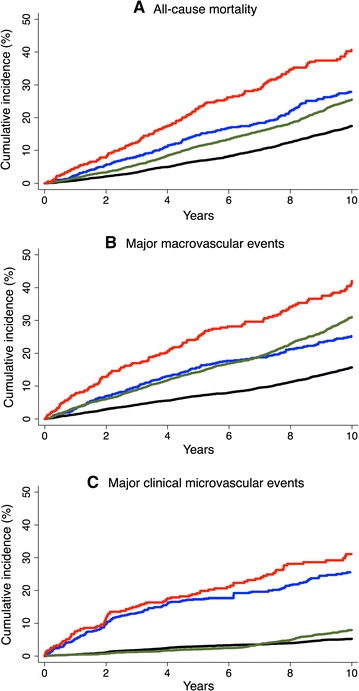
BACKGROUND: Microvascular disease is associated with a high risk of macrovascular events in patients with type 2 diabetes, but the impact of macrovascular disease on the risk of microvascular events remains unknown. We sought to evaluate the respective effects of prior microvascular and macrovascular disease on the risk of major outcomes, including microvascular events, in these patients. METHODS: Participants in the Action in Diabetes and Vascular Disease: PreterAx and DiamicroN Modified-Release Controlled Evaluation (ADVANCE) trial (n = 11,140) and the ADVANCE-ON post-trial study (n = 8494) were categorized into 4 groups at baseline: dual absence of microvascular or macrovascular disease (n = 6789), presence of microvascular disease alone (n = 761), macrovascular disease alone (n = 3196), and both (n = 394). Outcomes were all-cause mortality, major macrovascular events (MACE), and major clinical microvascular events. RESULTS: All-cause mortality, MACE, and major clinical microvascular events occurred in 2265 (20%), 2166 (19%), and 807 (7%) participants respectively, during a median follow-up of 9.9 (inter-quartile interval 5.6-10.9) years. The adjusted hazard ratios [95% CI] of death, MACE, and major clinical microvascular events were each greater in patients with baseline microvascular disease (1.43 [1.20-1.71], 1.64 [1.37-1.97], and 4.74 [3.86-5.82], respectively), macrovascular disease (1.43 [1.30-1.57], 2.04 [1.86-2.25], and 1.26 [1.06-1.51]) or both (2.01 [1.65-2.45], 2.92 [2.40-3.55], and 6.30 [4.93-8.06]) compared with those without these conditions. No interaction was observed between baseline microvascular and macrovascular disease for these events. The addition of microvascular disease (change in c-statistic [95% CI] 0.005 [0.002-0.008], p = 0.02) or macrovascular disease (0.005 [0.002-0.007], p < 0.0001) considered separately or together (0.011 [0.007-0.014], p < 0.0001) improved the discrimination and the classification (integrated discrimination improvement (IDI): 0.013 [0.010-0.016], p < 0.001; net reclassification improvement (NRI): 0.021 [0.011-0.032], p < 0.001) of the risk of all-cause mortality. Microvascular disease improved discrimination (0.009 [0.003-0.014]) and classification (IDI: 0.008 [0.006-0.010]; NRI: 0.011 [0.001-0.020]) of MACE. Baseline macrovascular disease modestly enhanced IDI (0.002 [0.001-0.002]) and NRI (0.041 [0.002-0.087]), but not discrimination, of major clinical microvascular events. CONCLUSIONS: Microvascular and macrovascular disease are independently associated with the 10-year risk of death, MACE, and major clinical microvascular events in patients with type 2 diabetes. The coexistence of these conditions was associated with the highest risks.
Overview
The claims and statistics of this paper haven’t been checked yet.
Free: it reads the open-access text and checks the first 5 claims that cite a source we can check. Create a free account to check every claim.
Integrity signals
Registry
Cites
Statistics
Figures
Verification
Claims the paper makes
The claims and statistics of this paper haven’t been checked yet.
Free: it reads the open-access text and checks the first 5 claims that cite a source we can check. Create a free account to check every claim.
Claims other papers make about this one
Each is checked against this paper’s own text: does it say what the citing paper says it does?
The source backs part of the claim, not all of it — or backs it for a different population, condition or comparison.
In the citing paper
“A study by Mohammedi et al. [79] found that major peripheral arterial disease (PAD) presenting as lower-extremity ulceration or amputation and peripheral revascularization is associated with increased risk of death and CV events in people with T2DM.”
From Prevalence of cardiovascular disease in type 2 diabetes: a systematic literature review of scientific evidence from across the world in 2007–2017 (2018) · cites this paper as [79]
Experimental — accuracy not yet measured
Self-check
Percentages, sums and reported differences re-computed from the paper’s own numbers.
The self-check needs the paper’s full text.
Citations
Cites
A Proportional Hazards Model for the Subdistribution of a Competing Risk
Fine, J. P., & Gray, R. J. (1999) · Journal of the American Statistical Association · doi:10.1080/01621459.1999.10474144 · Cited by 14,290 · cited 1×
“We also evaluated the associations of microvascular and macrovascular disease at baseline on the risk of MACE and major clinical microvascular events after treating non-renal and noncardiovascular death as a competing risk using the Fine and Gray method [13].”
MethodIntensive blood glucose control and vascular outcomes in patients with type 2 diabetes
(2008) · New England Journal of Medicine · doi:10.1056/nejmoa0802987 · Cited by 7,397
Oxidative stress and diabetic complications
Giacco, F., & Brownlee, M. (2010) · Circulation Research · doi:10.1161/circresaha.110.223545 · Cited by 5,461
The Pathobiology of Diabetic Complications
Brownlee, M. (2005) · Diabetes · doi:10.2337/diabetes.54.6.1615 · Cited by 5,339
(2013) · Kidney International Supplements · doi:10.1038/kisup.2012.73 · Cited by 3,206
Andrassy, K. M. (2013) · Kidney International · doi:10.1038/ki.2013.243 · Cited by 2,496
The J-Curve Phenomenon in Hypertension
Kang, Y.-Y., & Wang, J.-G. (2016) · Pulse · doi:10.1159/000446922 · Cited by 1,530
Pencina, M. J., & D'Agostino, R. B. (2004) · Statistics in Medicine · doi:10.1002/sim.1802 · Cited by 1,444 · cited 1×
“Harrell’s c-statistic [12], net reclassification improvement (NRI) and integrated discrimination improvement (IDI) were used to compare discrimination and classification of primary outcomes, assessed using survival methodology, between two prognostic models: basic model and basic model plus baseline history of microva…”
MethodLow Wang, C. C., Hess, C. N., Hiatt, W. R., & Goldfine, A. B. (2016) · Circulation · doi:10.1161/circulationaha.116.022194 · Cited by 1,155
Cited by
Einarson, T. R., Acs, A., Ludwig, C., & Panton, U. H. (2018) · Cardiovascular Diabetology · doi:10.1186/s12933-018-0728-6 · Cited by 2,312
“[79] found that major peripheral arterial disease (PAD) presenting as lower-extremity ulceration or amputation and peripheral revascularization is associated with increased risk of death and CV events in people with T2DM.”
BackgroundDiabetes, Hypertension, and Cardiovascular Disease: Clinical Insights and Vascular Mechanisms
Petrie, J. R., Guzik, T. J., & Touyz, R. M. (2018) · Canadian Journal of Cardiology · doi:10.1016/j.cjca.2017.12.005 · Cited by 1,787
“There are some benefits with respect to macrovascular complications, but this is dependent on the profile of individual drug classes and even appears to be different for agents within the same class.88 The role of BP lowering to improve prognosis in T2D has been established since the UK Prospective Diabetes Study (UKP…”
BackgroundInfluentialAdvanced Glycation End Products and Diabetes Mellitus: Mechanisms and Perspectives
Khalid, M., Petroianu, G., & Adem, A. (2022) · Biomolecules · doi:10.3390/biom12040542 · Cited by 879
“Microvascular and macrovascular complications are the leading cause of morbidity and mortality in people with type 2 diabetes mellitus [4,5].”
BackgroundEarly detection of type 2 diabetes mellitus using machine learning-based prediction models
Kopitar, L., Kocbek, P., Cilar, L., Sheikh, A., & Stiglic, G. (2020) · Scientific Reports · doi:10.1038/s41598-020-68771-z · Cited by 369
Kosiborod, M., Gomes, M. B., Nicolucci, A., Pocock, S., Rathmann, W., Shestakova, M. V., Watada, H., Shimomura, I., Chen, H., Cid-Ruzafa, J., et al. (2018) · Cardiovascular Diabetology · doi:10.1186/s12933-018-0787-8 · Cited by 262
Lower extremity arterial disease in patients with diabetes: a contemporary narrative review
Nativel, M., Potier, L., Alexandre, L., Baillet-Blanco, L., Ducasse, E., Velho, G., Marre, M., Roussel, R., Rigalleau, V., & Mohammedi, K. (2018) · Cardiovascular Diabetology · doi:10.1186/s12933-018-0781-1 · Cited by 194
Self-citationHbA1c variability and diabetic peripheral neuropathy in type 2 diabetic patients
Su, J.-B., Zhao, L.-H., Zhang, X.-L., Cai, H.-L., Huang, H.-Y., Xu, F., Chen, T., & Wang, X.-Q. (2018) · Cardiovascular Diabetology · doi:10.1186/s12933-018-0693-0 · Cited by 146
“[45] demonstrated that the presence of microvascular (including peripheral neuropathy) or macrovascular disease at baseline is independently associated with an increased risk of major clinical micro- and macrovascular events and death in patients with type 2 diabetes.”
BackgroundCOhort of GEriatric Nephrology in NTUH (COGENT) study group, Chao, C., Wang, J., & Chien, K. (2018) · Cardiovascular Diabetology · doi:10.1186/s12933-018-0772-2 · Cited by 144
Ida, S., Kaneko, R., Imataka, K., & Murata, K. (2019) · Cardiovascular Diabetology · doi:10.1186/s12933-019-0885-2 · Cited by 141
Raygan, F., Rezavandi, Z., Bahmani, F., Ostadmohammadi, V., Mansournia, M. A., Tajabadi-Ebrahimi, M., Borzabadi, S., & Asemi, Z. (2018) · Diabetology & Metabolic Syndrome · doi:10.1186/s13098-018-0353-2 · Cited by 116
“Hyperglycemia and insulin resistance in patients with T2DM exert considerable impacts on blood vessels, and demonstrated a capacity to increase the occurrence of retinopathy, nephropathy, and CHD [3].”
BackgroundIhenacho, U. K., Nolden, K. A., Harwig, M. C., Widlansky, M. E., & Hill, R. B. (2021) · Frontiers in Endocrinology · doi:10.3389/fendo.2021.660095 · Cited by 130
Kadowaki, T., Nangaku, M., Hantel, S., Okamura, T., von Eynatten, M., Wanner, C., & Koitka‐Weber, A. (2019) · Journal of Diabetes Investigation · doi:10.1111/jdi.12971 · Cited by 77
Bansal, S., Burman, A., & Tripathi, A. K. (2023) · World Journal of Diabetes · doi:10.4239/wjd.v14.i8.1146 · Cited by 82
Insulin Resistance Is Cheerfully Hitched with Hypertension
Sinha, S., & Haque, M. (2022) · Life · doi:10.3390/life12040564 · Cited by 87
“Worldwide diabetic retinopathy is responsible for 10,000 cases of blindness every year [46].”
BackgroundChen, Y., Ping, Z., Wang, J., Gong, Q., An, Y., Qian, X., Zhang, B., Li, H., Gregg, E. W., Bennett, P. H., et al. (2021) · Diabetologia · doi:10.1007/s00125-021-05401-x · Cited by 73
Cardoso, C. R. L., Salles, G. C., Leite, N. C., & Salles, G. F. (2019) · Cardiovascular Diabetology · doi:10.1186/s12933-019-0809-1 · Cited by 64
Serum levels of copper and zinc in diabetic retinopathy: Potential new therapeutic targets (Review)
Dascălu, A. M., Anghelache, A., Stana, D., Costea, A. C., Nicolae, V. A., Tănăsescu, D., Costea, D. O., Tribus, L. C., Zgura, A. F., Şerban, D., et al. (2022) · Experimental and Therapeutic Medicine · doi:10.3892/etm.2022.11253 · Cited by 60
“The microvascular complications include neuropathy, nephropathy, and retinopathy, while the macrovascular complications are related to the acceleration of atheroscle‑ rosis, resulting in coronary artery disease, cerebrovascular events and peripheral arterial disease (3,4).”
Cardiovascular complications of diabetes
Shah, A., Isath, A. M., & Aronow, W. S. (2022) · Expert Review of Endocrinology & Metabolism · doi:10.1080/17446651.2022.2099838 · Cited by 49
“Trial Medication vs Control Patient Population Primary Outcome EMPA-REG [22] Empagliflozin vs Placebo Patients with diabetes and CVD Empagliflozin reduces HF hospitalizations and CV death, in patients with and without baseline HF DECLARE-TIMI 58 [52] Dapagliflozin vs Placebo Patients with T2DM and CVD or multiple CV r…”
ResultInfluentialZhang, X., Zhao, S., Huang, Y., Ma, M., Li, B., Li, C., Zhu, X., Xu, X., Chen, H., Zhang, Y. Z., et al. (2024) · Journal of the American Heart Association · doi:10.1161/jaha.123.032626 · Cited by 48
“18 The discrepancy may be due to shorter follow-up or cross-sectional designs 13,14 ; inclusion of only end-stage MicroVCs 15,16 ; insufficient or no adjustment for conventional risk factors 18 ; lack of discrimination of individual, composite, or cumulative macrovascular burden; and different…”
BackgroundArnold, S. V., Khunti, K., Tang, F., Chen, H., Nicolucci, A., Gomes, M. B., Ji, L., Shestakova, M. V., Watada, H., Cooper, A., et al. (2022) · Endocrinology Diabetes & Metabolism · doi:10.1002/edm2.321 · Cited by 55
Su, Y., Shao, S., Lai, E. C., Lee, C., Hung, M., Lai, C., Hsu, S., & Hung, J. (2021) · Diabetes, Obesity and Metabolism · doi:10.1111/dom.14445 · Cited by 42
“7% of T2DM patients, respectively,(1) and the coexistence of these conditions has been associated with an excess risk of death.(2) Previous studies have demonstrated that better glycaemic control could lower the risk of macro- and microvascular complications,(3) and several novel antidiabetes medications have been sho…”
Moreira, R. O., Cobas, R. A., & Coelho, R. C. L. A. (2018) · Diabetology & Metabolic Syndrome · doi:10.1186/s13098-018-0327-4 · Cited by 46
“Early tight glycemic control in T2DM is a well-established recommendation with supporting evidence [3, 4].”
BackgroundLópez‐de‐Andrés, A., Pérez-Farinós, N., de Miguel‐Díez, J., Hernández‐Barrera, V., Méndez‐Bailón, M., de Miguel-Yanes, J. M., & Jiménez‐García, R. (2018) · Cardiovascular Diabetology · doi:10.1186/s12933-018-0780-2 · Cited by 39
“The coexistence of these conditions is associated with the highest risks [7, 8].”
BackgroundEnhanced Function of Induced Pluripotent Stem Cell-Derived Endothelial Cells Through ESM1 Signaling
González, M. V., Kelaini, S., Magee, C., Caines, R., Campbell, D., Eleftheriadou, M., Cochrane, A., Drehmer, D., Tsifaki, M., O’Neill, K. M., et al. (2018) · Stem Cells · doi:10.1002/stem.2936 · Cited by 38
Sim, R., Chong, C. W., Loganadan, N. K., Fong, A. Y. Y., Navaravong, L., Hussein, Z. B., Khunti, K., & Lee, S. W. H. (2022) · Diabetic Medicine · doi:10.1111/dme.14780 · Cited by 40
Li, W., Peng, J., Shang, Q., Yang, D., Zhao, H., & Xu, H. Y. (2023) · Journal Of Clinical Periodontology · doi:10.1111/jcpe.13901 · Cited by 31
Wang, S., Wang, J., Zhang, R., Wang, T., Yan, D., He, Z., Jiang, F., Hu, C., & Jia, W. (2018) · Cardiovascular Diabetology · doi:10.1186/s12933-018-0662-7 · Cited by 29
“Diabetes can lead to serious pathological damage of numerous organs and tissues, among which macroangiopathies are the major causes of morbidity and mortality [3].”
BackgroundConsoli, A., Czupryniak, L., Duarte, R., Jermendy, G., Kautzky‐Willer, A., Mathieu, C., Melo, M., Mosenzon, O., Nobels, F. R. E., Παπάνας, Ν., et al. (2020) · Diabetes Obesity and Metabolism · doi:10.1111/dom.14102 · Cited by 26
Sargazi, S., Ravanbakhsh, M., Nia, M. H., Mirinejad, S., Sheervalilou, R., Majidpour, M., Danesh, H., & Saravani, R. (2022) · Disease Markers · doi:10.1155/2022/4327342 · Cited by 27
Kristensen, S. L., Rørth, R., Jhund, P. S., Shen, L., Lee, M. M. Y., Petrie, M. C., Køber, L., & McMurray, J. J. V. (2018) · European Journal of Heart Failure · doi:10.1002/ejhf.1201 · Cited by 26
Cheng, P. C., Hsu, S. R., Cheng, Y. C., & Liu, Y. H. (2017) · PeerJ · doi:10.7717/peerj.3875 · Cited by 23
“Hyperglycemia exerts detrimental effects on blood vessels, as evidenced by a predisposition to develop retinopathy, nephropathy, and coronary heart disease (CHD) (Mohammedi et al., 2017).”
BackgroundVerma, S., Bain, S. C., Honoré, J. B., Mann, J. F. E., Nauck, M. A., Pratley, R. E., Rasmussen, S., Ripa, M. S., Zinman, B., & Buse, J. B. (2020) · Diabetes Obesity and Metabolism · doi:10.1111/dom.14140 · Cited by 23
“9 years.(11) One could speculate that the lower HRs seen in EMPA-REG OUTCOME, compared with ADVANCE and ADVANCE-ON, may be attributable to effective background diabetes therapies and treatments for CV risk factors that were not available to patients in the ADVANCE trial and ADVANCE-ON post-trial study prior to the tri…”
BackgroundResultShi, R., Shi, K., Yang, Z., Guo, Y., Diao, K., Gao, Y., Zhang, Y., & Huang, S. (2019) · Cardiovascular Diabetology · doi:10.1186/s12933-019-0924-z · Cited by 25
Cardiovascular Disease among Patients with Diabetes: The Current Scenario in Saudi Arabia
Robert, A. A., & Dawish, M. A. A. (2020) · Current Diabetes Reviews · doi:10.2174/1573399816666200527135512 · Cited by 25
Fagher, K., & Löndahl, M. (2021) · Acta Diabetologica · doi:10.1007/s00592-021-01731-9 · Cited by 21
“In DFU patients the vascular condition is often complex [9].”
BackgroundHafidh, K., Malek, R., Al-Rubeaan, K. A., Kok, A., Bayram, F., Echtay, A. S., Rajadhyaksha, V., & Hadaoui, A. (2022) · Frontiers in Endocrinology · doi:10.3389/fendo.2022.940309 · Cited by 25
Early vascular parameters in the micro- and macrocirculation in type 2 diabetes
Kannenkeril, D., Bosch, A., Harazny, J. M., Karg, M. V., Jung, S., Ott, C., & Schmieder, R. E. (2018) · Cardiovascular Diabetology · doi:10.1186/s12933-018-0770-4 · Cited by 23
“Microvascular complications in T2DM confer an excess risk of cardiovascular disease and death [27].”
Glycated hemoglobin and subsequent risk of microvascular and macrovascular complications
Samanta, S. (2020) · Indian Journal of Medical Sciences · doi:10.25259/ijms_16_2020 · Cited by 25
Turner, C. G., Stanhewicz, A. E., & Wong, B. J. (2020) · Frontiers in Physiology · doi:10.3389/fphys.2020.596507 · Cited by 20
Canto, E. D., Elders, P. J. M., van der Heijden, A. A. W. A., van Ballegooijen, A. J., Lissenberg-Witte, B. I., Rutters, F., & Beulens, J. W. J. (2022) · Diabetologia · doi:10.1007/s00125-022-05826-y · Cited by 17
“Overall, our findings are consistent with previous studies that established kidney disease as a strong independent risk factor for CVD in diabetes [11, 13, 14, 25, 26].”
ResultCastelblanco, E., Granado-Casas, M., Hernández, M., Pinyol, M., Correig, E., Julve, J., Rojo-López, M. I., Alonso, N., Avogaro, A., Ortega, E., et al. (2022) · Frontiers in Cardiovascular Medicine · doi:10.3389/fcvm.2022.945421 · Cited by 17
“Furthermore, microvascular complications were independently related to the 10-year risk of death and cardiovascular events in individuals with T2D (13).”
BackgroundZhao, M., Dong, Y., Chen, L., & Shen, H. (2024) · PLoS ONE · doi:10.1371/journal.pone.0305954 · Cited by 18
Chen, G., Hukportie, D. N., Liu, Y., Wang, H., Qin, L., Fan, W.-D., Li, F., & Wu, X.-B. (2024) · The Journal of Clinical Endocrinology & Metabolism · doi:10.1210/clinem/dgae100 · Cited by 14
Cardiovascular effects of GLP-1 receptor agonism
Winquist, R. J., & Gribkoff, V. K. (2022) · Advances in pharmacology · doi:10.1016/bs.apha.2022.02.005 · Cited by 16
Zhao, H., Shu, L., Huang, W., Wang, W., & Song, G. (2019) · Diabetes Metabolic Syndrome and Obesity · doi:10.2147/dmso.s213848 · Cited by 14
RUNX1 and CCL3 in Diabetes Mellitus-Related Coronary Artery Disease: A Bioinformatics Analysis
Zhong, Y., Du, G., Liu, J., Li, S., Lin, J., Deng, G., Wei, J., & Huang, J. (2022) · International Journal of General Medicine · doi:10.2147/ijgm.s350732 · Cited by 13
The Severity of Diabetes and the Risk of Diabetic Foot Amputation: A National Cohort Study
Yu, J. S., Kim, J.-H., Kim, B., Han, K., Lee, S.-H., & Kim, M. K. (2025) · Endocrinology and Metabolism · doi:10.3803/enm.2024.2266 · Cited by 13
“The simultaneous presence of these conditions corresponds to the highest risk levels [15].”
Csiha, S., Hernyák, M., Molnár, Á., Lőrincz, H., Katkó, M., Paragh, G., Bodor, M., Harangi, M., Sztanek, F., & Berta, E. (2025) · Biomedicines · doi:10.3390/biomedicines13020438 · Cited by 11
“Persistent elevated blood glucose contributes to the development of micro-and macrovascular complications [4], which are leading causes of morbidity and mortality [5,6].”
Dakhel, A., Zarrouk, M., Ekelund, J., Acosta, S., Nilsson, P. M., Miftaraj, M., Eliasson, B., Svensson, A., & Gottsäter, A. (2020) · Therapeutic Advances in Endocrinology and Metabolism · doi:10.1177/2042018820960294 · Cited by 13
Lázaro‐Martínez, J. L., García‐Madrid, M., Bohbot, S., López‐Moral, M., Álvaro‐Afonso, F. J., & García‐Álvarez, Y. (2023) · Journal of Clinical Medicine · doi:10.3390/jcm12031040 · Cited by 12
“The electrode was placed on the dorsalis pedis for the DFU located on the forefoot or in the posterior tibial artery for the DFU located on the midfoot or rearfoot.”
BackgroundInfluentialTurner, C. G., Miller, J. T., Otis, J. S., Hayat, M. J., Quyyumi, A. A., & Wong, B. J. (2020) · Physiological Reports · doi:10.14814/phy2.14437 · Cited by 11
“…vasodilation may be measurable prior to the development of overt hypertension, as microvascular dysfunction often precedes macrovascular dysfunction (Cohuet & Struijker-Boudier, 2006; Gutierrez et al., 2013; Mohammedi et al., 2017; Vallance & Chan, 2001; Verma, Buchanan, & Anderson, 2003).”
BackgroundJiang, L., Hu, X., & Cai, L. (2022) · Molecules · doi:10.3390/molecules27113472 · Cited by 10
“The increase in the prevalence of many diseases is related to the occurrence of diabetes, including cardiovascular disorder, diabetic neuropathy (DNP), retinopathy (DR), kidney disease (DKD), and so on [2,3].”
BackgroundHuang, H., Shen, L., Huang, H., Zhao, L., Xu, F., Zhang, D., Zhang, X., Chen, T., Wang, X., Xie, Y., et al. (2021) · Diabetes & Metabolism Journal · doi:10.4093/dmj.2020.0149 · Cited by 10
“Moreover, the presence of DKD at baseline can independently predict major adverse cardiovascular events and other microvascular complications in patients with type 2 diabetes mellitus (T2DM) [5].”
Pérez, A., Redondo‐Antón, J., Romera, I., Lizán, L., Santos, M. R., Díaz‐Cerezo, S., & Orozco‐Beltrán, D. (2023) · Diabetes Therapy · doi:10.1007/s13300-023-01503-4 · Cited by 9
“Micro-and macrovascular complications are the major cause of morbidity and mortality in people with T2D (PwT2D) [4, 5] and are also responsible for most of medical costs incurred by patients [6].”
BackgroundKhunti, K., Heerspink, H. J. L., Lam, C. S. P., Nicolucci, A., Ramirez, L., Surmont, F., Fenici, P., & Kosiborod, M. (2021) · Journal of Diabetes and its Complications · doi:10.1016/j.jdiacomp.2021.108077 · Cited by 10
Kocbek, S., Kocbek, P., Gosak, L., Fijačko, N., & Štiglic, G. (2022) · Journal of Personalized Medicine · doi:10.3390/jpm12030368 · Cited by 11
“T2DM can also lead to a substantially increased risk of macrovascular and microvascular disease, especially in inadequate glycemic control [3].”
BackgroundMicroRNAs Have an Immunomodulatory Role in Diabetes Mellitus and Diabetic Cardiomyopathy
Ming, C., Xu, X., Yao, Y., Li, X., Sun, Y., Jawaid, Z., Mujahid, H., Mao, Y., & Zhang, L. (2025) · Cardiovascular Innovations and Applications · doi:10.15212/cvia.2024.0071 · Cited by 11
Mohammedi, K., Préaubert, N., Cariou, T., Rigalleau, V., Foussard, N., Piazza, L., Bairras-Martin, C., Couffinhal, T., Bezin, J., & Bénard, A. (2021) · Cardiovascular Diabetology · doi:10.1186/s12933-021-01253-2 · Cited by 7
Self-citationCanagliflozin: metabolic, Cardiovascular and Renal Protection
Barrios, V., & Escobar, C. (2021) · Future Cardiology · doi:10.2217/fca-2020-0192 · Cited by 8
Yan, S.-Q., Adi, D., Liu, C., Wang, M., Abuzhalihana, J., Wu, Y., Fu, Z.-Y., Yang, Y., Li, X., Xie, X., et al. (2021) · Hereditas · doi:10.1186/s41065-021-00191-z · Cited by 7
Ghusn, W., Ma, P., Ikemiya, K., Salame, M., Hage, K., Mosleh, K. A., Storm, A. C., Kendrick, M., Dayyeh, B. K. A., Higa, K. D., et al. (2024) · Clinical Obesity · doi:10.1111/cob.12732 · Cited by 7
“6,31 In contrast, macrovascular complications can be influenced by a wider range of risk factors, including hypertension, dyslipidemia, and smoking, which are associated but not specific to diabetes.”
Camoin, M., Velho, G., Saulnier, P., Potier, L., Abouleka, Y., Carpentier, C., Dubois, S. G., Larroumet, A., Rigalleau, V., Gand, E., et al. (2022) · Cardiovascular Diabetology · doi:10.1186/s12933-022-01487-8 · Cited by 7
Self-citationLuo, Y., Wang, Q., Li, H., Lin, W., Yao, J., Zhang, J., Duan, S., Zhang, W., Zheng, Y., Cai, G., et al. (2023) · Clinical Biochemistry · doi:10.1016/j.clinbiochem.2023.110593 · Cited by 7
Álvaro‐Afonso, F. J., García‐Álvarez, Y., García‐Morales, E., Flores‐Escobar, S., de Benito-Fernández, L., Alfayate-García, J. M., Sánchez‐Ríos, J. P., Puras-Mallagray, E., Malo-Benages, E. J., Ramírez-Ortega, M., et al. (2024) · Healthcare · doi:10.3390/healthcare12161664 · Cited by 6
“…due to macrovascular disease (atherosclerosis); however, when evaluating the genesis of diabetic foot complications, not only macrovascular complications but also the presence of microvascular complications seem to be important predictors for the development and the prognosis of the DFU [5].”
BackgroundBulum, T., Poljičanin, T., Badanjak, A., Držič, J., & Metelko, Ž. (2025) · Life · doi:10.3390/life15040618 · Cited by 5
What Next After Metformin? Thinking Beyond Glycaemia: Are SGLT2 Inhibitors the Answer?
Evans, M., Morgan, A. R., & Yousef, Z. R. (2019) · Diabetes Therapy · doi:10.1007/s13300-019-00678-z · Cited by 5
“The majority of patients with T2DM have microvascular (kidney disease, neuropathy, retinopathy) and macrovascular complications [coronary artery disease, myocardial infarction, stroke, congestive heart failure (HF), peripheral vascular disease] which increase mortality [6] and result in a substantial clinical and econ…”
BackgroundObservational analyses from ADVANCE and ADVANCE‐ON
Chalmers, J. P., & Woodward, M. (2020) · Diabetes Obesity and Metabolism · doi:10.1111/dom.13894 · Cited by 4
Self-citationPotential Protective Effects of Metformin on Ocular Complications in Patients with Type 2 Diabetes
Kusturica, J., Kulo, A., Rakanović-Todić, M., Burnazović-Ristić, L., & Kapo, S. M. (2020) · IntechOpen eBooks · doi:10.5772/intechopen.91263 · Cited by 4
Morales, C., Merino-Torres, J. F., Moreno-Moreno, P., Laínez, M. G. L., Tejado, I., Yoldi, A., Medina, S. G., Soto, A., Botana, M., Bellido, V., et al. (2022) · Drugs in Context · doi:10.7573/dic.2021-11-5 · Cited by 5
Francis, H., Januszewski, A. S., O’Rourke, M. B., Huang, M. L. H., EMA, F. K., Hardikar, A. A., Joglekar, M. V., SULLIVAN, D. R., Ma, R. C. W., Galande, S., et al. (2026) · Journal of Diabetes and its Complications · doi:10.1016/j.jdiacomp.2026.109330 · Cited by 3
Chen, J., Li, Y., Niu, Z., He, Z., Xie, Y. J., Hernández, J., Huang, W., Wang, H., & on Behalf of the Guangzhou Diabetic Eye Study Group (2025) · Diabetes & Metabolism Journal · doi:10.4093/dmj.2024.0239 · Cited by 4
“…between macrovascular dysfunction and nephrop-CVD athy in T2DM [40,41], while a post hoc analysis of multi-national randomised trial revealed that baseline macrovascular disease was associated with increased risk of retinal photocoagulation or blindness, but not ESRD or renal death [29].”
Exploring the connection between dementia and cardiovascular risk with a focus on ADAM10
Targas, A. B. A., Victoriano, P. H. M., Garcia, M. B. B., Alexandre-Silva, V., & Cominetti, M. R. (2025) · Biochimica et Biophysica Acta (BBA) - Molecular Basis of Disease · doi:10.1016/j.bbadis.2025.167825 · Cited by 3
Sun, R., Jia, J., Wang, S., Wang, Z., Wang, C., Xu, Y., & Yang, Y. (2024) · Endocrine · doi:10.1007/s12020-023-03669-0 · Cited by 3
Turner, C. G., Stanhewicz, A. E., Nielsen, K. E., Otis, J. S., Feresin, R. G., & Wong, B. J. (2025) · American Journal of Physiology-Regulatory, Integrative and Comparative Physiology · doi:10.1152/ajpregu.00159.2024 · Cited by 3
Alami, H. E., Bouqdayr, M., Errafii, K., Lkhider, M., Idrissi, N. A., Ghazal, H., Wakrim, L., Abidi, O., Khlil, N., Naamane, A., et al. (2025) · Pan African Medical Journal · doi:10.11604/pamj.2025.51.38.46334 · Cited by 5
“In this regard, various studies have identified the duration of diabetes as a risk factor not only for hypertension but also for other macro-and microvascular complications of T2DM [37-39].”
Nolden, K. A., Kakarla, M., Egner, J. M., Wang, J., Harwig, M. C., Puppala, V. K., Hofeld, B. C., Arnold, L. A., Trykall, D. Z., Peterson, F. C., et al. (2020) · bioRxiv (Cold Spring Harbor Laboratory) · doi:10.1101/2020.11.16.385054 · Cited by 3
“…and increases NO bioavailability in human vessels Impaired microvascular endothelial function is a well-known predictor of future adverse cardiovascular events, even in the absence of concomitant epicardial coronary artery disease (Brownrigg et al, 2016; Mohammedi et al, 2017; Halcox et al, 2002).”
BackgroundБондарь, И. А., Aa, D., & Grazhdankina, D. V. (2022) · Diabetes Mellitus · doi:10.14341/dm12823 · Cited by 2
Harris, K., Muntner, P., Woodward, M., Jun, M., Oshima, M., Gong, J., Harrap, S. B., Ménard, J., & Chalmers, J. P. (2022) · Journal of Human Hypertension · doi:10.1038/s41371-022-00661-5 · Cited by 2
“This suggests the need for a more tailored approach to prediction of major microvascular events, that should potentially include more specific predictors of major microvascular complications and diabetes, such as glucose levels, eGFR and urinary albumin to creatinine ratio [21], but also, importantly, incorporate know…”
BackgroundSelf-citationThe mitochondrial dicarboxylate carrier mediates in vivo hepatic gluconeogenesisPreprint
Pape, D. J., Falls-Hubert, K. C., Merrill, R. A., Ahmed, A., Qian, Q., McGivney, G. R., Sobieralski, P., Rauckhorst, A. J., Yang, L., & Taylor, E. B. (2024) · bioRxiv (Cold Spring Harbor Laboratory) · doi:10.1101/2024.09.12.612761 · Cited by 2
Mullen, K. A., Garg, A., Gagnon, F., Wells, G. A., Kapur, A. K., Hawken, S., Pipe, A., Walker, K. L., Thiruganasambandamoorthy, V., Klepaczek, M., et al. (2021) · Trials · doi:10.1186/s13063-021-05693-9 · Cited by 2
“Individuals who smoke have a 30–40% greater chance of developing type II diabetes, and those with diabetes have a greater risk of morbidity and premature mortality [4, 5].”
BackgroundRadhakrishnan, O., Goyal, K., Vatkar, V., Gandhi, S., & Agrawal, T. L. (2024) · Cureus · doi:10.7759/cureus.65005 · Cited by 2
“Large retrospective studies done with significant samples of individuals with type 2 diabetes (T2D) have shown that the risk of cardiovascular disease (CVD) rises as the combined burden of microvascular disease increases [10,11].”
BackgroundYeshitla, M., Habte, T., Argaw, Z., & Getahun, N. (2025) · International Journal of Africa Nursing Sciences · doi:10.1016/j.ijans.2025.100861 · Cited by 4
Kim, M. J., Pyo, J. Y., Choi, S. R., Shin, A., Choung, H. K., Ha, Y., Lee, Y. J., Lee, E. B., & Kang, E. H. (2025) · Scientific Reports · doi:10.1038/s41598-025-00551-z · Cited by 1
“For example, some T2DM patients develop macrovascular diseases alone, while others develop microvascular diseases 34 .”
Serum pentosidine – A surrogate marker of vascular complications in type 2 diabetes mellitus
Naz, S., Saxena, T., Kare, P. K., & Dube, S. (2025) · International Journal of Clinical Biochemistry and Research · doi:10.18231/j.ijcbr.12870.1971565007 · Cited by 1
Early cardiometabolic dysfunction: subclinical indicators and sex-specific considerations
Turner, C. G., Stute, N. L., Parker, D. K. S., Gladden, L. B., & Roberts, M. D. (2026) · American Journal of Physiology-Heart and Circulatory Physiology · doi:10.1152/ajpheart.00161.2026 · Cited by 1
Francis, H., Januszewski, A. S., Mangani, A., O’Rourke, M. B., Huang, M., EMA, F. K., Hardikar, A. A., Joglekar, M. V., SULLIVAN, D. R., Ronald, C. W., et al. (2026) · Journal of Diabetes Research · doi:10.1155/jdr/2756059 · Cited by 1
Effect of amodiaquine on the pharmacokinetics of gliclazide in diabetic subjects
Sambo, G. I., Mojirade, T. B.-O., Aminu, M., Ibrahim, A. Y., Garba, M. M., & Adzu, B. (2019) · African Journal of Pharmacy and Pharmacology · doi:10.5897/ajpp2019.5035 · Cited by 3
“The disease results in reduced life expectancy, significant morbidity, risk of microvascular damage (Chawla et al., 2016; Mohammedi et al., 2017), increased risk of macrovascular complications, and diminished quality of life (WHO, 2016; Mohammedi et al.”
BackgroundInfluentialAbubakar, A., Nazifi, A. B., Maje, I. M., Tanko, Y., Anuka, J. A., & Abdurahman, E. M. (2021) · Drug Metabolism and Personalized Therapy · doi:10.1515/dmdi-2021-0129 · Cited by 1
Chavushyan, V. A., Սիմոնյան, Կ. Վ., Danielyan, M., Avetisyan, L. G., Darbinyan, L., Isoyan, A. S., Гагиковна, Л. А., Hovhannisyan, L., Babakhanyan, M. A., & Sukiasyan, L. M. (2022) · Metabolic Brain Disease · doi:10.1007/s11011-022-01098-y · Cited by 1
Zhang, Y., Shi, R., Jiang, Y., Gao, Y., Wang, J., Li, Y., & Yang, Z. (2025) · Frontiers in Endocrinology · doi:10.3389/fendo.2025.1595475 · Cited by 4
Microvascular Disease and Chronic Kidney Disease in Persons With Diabetes in Grenada
Lewis, J. E. (2020) · ScholarWorks (Walden University)
Study of determinants of cardiovascular morbidity among diabetes patients
Kundu, S. S., Majumdar, K. K., Mukherjee, D., Sikder, R., Dey, R., & Joardar, G. K. (2021) · International Journal of Community Medicine and Public Health · doi:10.18203/2394-6040.ijcmph20210807
“In a study by Mohammedi et al, it was found that major peripheral arterial disease presenting as lower-extremity ulceration or amputation and peripheral revascularization was associated with an increased risk of death and cardiovascular events in people with diabetes.(30) In the current study it was found that 15.”
BackgroundMirza, O. A., Iftekhar, M. F., Hussain, R., Din, H.-U., Kumar, A., & Ibrahim, M. T. (2022) · Pakistan Journal of Medical and Health Sciences · doi:10.53350/pjmhs22164833
Metadata
- Authors
- Mohammedi, K., Woodward, M., Marre, M., Colagiuri, S., Cooper, M., Harrap, S., Mancia, G., Poulter, N., Williams, B., Zoungas, S., & Chalmers, J.
- Affiliations
- The University of Sydney (AU)
- Inserm (FR)
- Baker Heart and Diabetes Institute (AU)
- The Royal Melbourne Hospital (AU)
- IRCCS Istituto Auxologico Italiano (IT)
- Imperial College London (GB)
- National Institute for Health and Care Research (GB)
- Corresponding author
- Mohammedi, Kamel
- ORCID
- Venue
- Cardiovascular Diabetology
- Published
- 2017-07-27
- Volume
- 16
- Issue
- 1
- Pages
- 95-95
- ISSN
- 1475-2840 (ISSN-L)
- PMC
- PMC5530952
- OpenAlex
- W2740555108
- Cited by
- 111
- References
- 36
- Citations by year
- 2026: 7 · 2025: 12 · 2024: 10 · 2023: 5 · 2022: 23 · 2021: 16 · 2020: 10 · 2019: 7 · 2018: 13 · 2017: 8
- FWCI
- 8.22
- Type
- journal article
- Language
- en
- Open access
- gold
- doi.org
- Licence
- cc-by
- Locations
- Cardiovascular Diabetology (publishedVersion, cc-by)
- PubMed Central (publishedVersion, cc-by)
- PubMed (publishedVersion)
- UNSWorks (University of New South Wales, Sydney, Australia) (submittedVersion, cc-by-nc-nd)
- Minerva Access (University of Melbourne) (submittedVersion, cc-by)
- Monash University Research Portal (Monash University) (submittedVersion, cc-by)
- BOA (University of Milano-Bicocca) (submittedVersion, cc-by)
- DOAJ (DOAJ: Directory of Open Access Journals) (submittedVersion, cc-by-sa)
- UCL Discovery (University College London) (submittedVersion)
- Spiral (Imperial College London) (submittedVersion, cc-by)
- Funders
- National Institute for Health and Care Research (NF-SI-0509-10222, NF-SI-0514-10011)
- Société Francophone du Diabète
- Association Diabète Risque Vasculaire
- Medical Research Council (MC_PC_13090)
- Topics
- Health Sciences › Medicine › Endocrinology, Diabetes and Metabolism › Diabetes Treatment and Management
- Health Sciences › Medicine › Endocrinology, Diabetes and Metabolism › Diabetes, Cardiovascular Risks, and Lipoproteins
- Health Sciences › Medicine › Endocrinology, Diabetes and Metabolism › Diabetes Management and Research
- Keywords
- type 2 diabetes, microangiopathy, macroangiopathy, major adverse cardiovascular events, all-cause mortality, cardiovascular risk stratification, ADVANCE trial, cardiovascular risk prediction models, diabetes complications, microvascular complications, macrovascular complications
- MeSH terms
- Adult, Aged, Blood Glucose, Diabetes Mellitus, Type 2, Diabetic Angiopathies, Drug Combinations, Female, Gliclazide, Humans, Hypoglycemic Agents, Indapamide, Male, Middle Aged, Risk Factors, Treatment Outcome, Perindopril, Microvessels
About these checks
Registry, retraction, Cites and statistics results are computed, not judged, with one exception: a printed reference that no index lists is read once by a model before it counts as a citation error. Claims are extracted by a model and kept only when their quote appears verbatim in the text; each cited source is then checked, with a model’s help, for whether it says what the claim relies on. Those verdicts can be wrong — read the claim’s quote and the cited source before relying on one.
Statistics and arithmetic are recomputed, not judged.
Confidence bands are shown only for fields calibrated on our annotated test set. None is calibrated yet, so no band is shown.
What counts as a claim ›How we measure confidence ›How we check this ›
Are you an author, or do you see a problem with this page? Request a review
Data sources
Bibliographic data: Semantic Scholar, OpenAlex, Crossref.
Contains information from the Semantic Scholar Academic Graph Datasets, made available under the ODC Attribution License (ODC-BY 1.0).
Semantic Scholar’s data is described in: Kinney, R., et al. (2023). The Semantic Scholar Open Data Platform. arXiv:2301.10140.
