

Cardiovascular disease in a nationwide population of Danish women with polycystic ovary syndrome
Open accessThe DOI matches its Crossref record; 46 of the 46 references it cites were found in a registry or an index.
Abstract
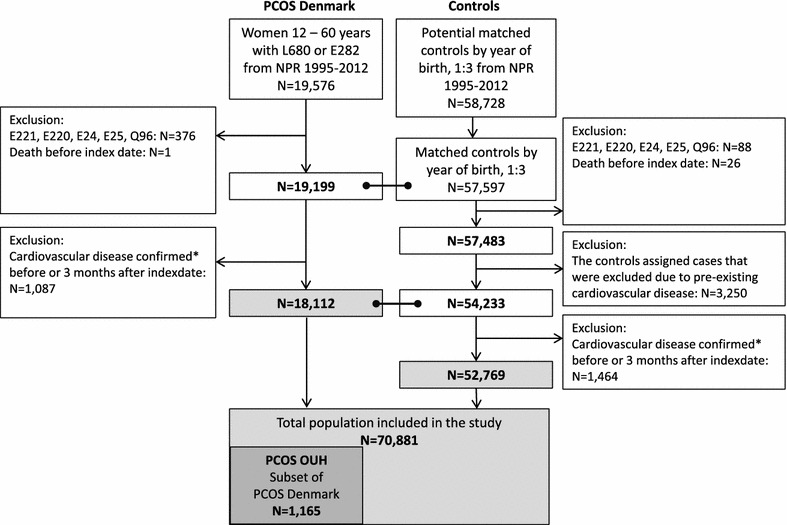
BACKGROUND: Polycystic ovary syndrome (PCOS) is associated with obesity and low grade inflammation and the risk for cardiovascular disease (CVD) could be increased in PCOS. METHODS: National register-based study including women with PCOS and no previous diagnosis of CVD, hypertension, or dyslipidemia. PCOS Denmark (N = 18,112) included women with PCOS in the Danish National Patient Register. PCOS Odense University Hospital (OUH, N = 1165) was an embedded cohort including premenopausal women with PCOS and clinical and biochemical examination. Three age-matched controls were included per patient in PCOS Denmark (N = 52,769). The main study outcome was CVD events including hypertension and dyslipidemia defined according to nationwide in- and outpatient hospital contact diagnosis codes and/or inferred from filled medicine prescriptions. RESULTS: The age at inclusion was median (quartiles) 29 (23-35) years and follow up was 11.1 (6.9-16.0) years. The Hazard ratio (95% CI) for development of CVD in PCOS Denmark was 1.7 (1.7; 1.8) (P < 0.001) and the total event rate of CVD was 22.6 per 1000 patient years in PCOS Denmark vs. 13.2 per 1000 patient years in controls (P < 0.001). The median age at diagnosis of CVD was 35 (28-42) years in PCOS Denmark vs. 36 (30-43) years in controls (P < 0.001). Obesity, diabetes, and infertility, and previous use of oral contraceptives were associated with increased risk of development of CVD in PCOS Denmark (P < 0.001). Women in PCOS OUH resembled women in PCOS Denmark regarding risk of CVD. Age, BMI, blood pressure, lipid status, and glycemic status predicted development of CVD in PCOS OUH. CONCLUSION: The event rate of CVD including hypertension and dyslipidemia was higher in PCOS compared to controls. The risk of developing CVD must be considered even in young women with PCOS.
Overview
The claims and statistics of this paper haven’t been checked yet.
Free: it reads the open-access text and checks the first 5 claims that cite a source we can check. Create a free account to check every claim.
Integrity signals
Registry
Cites
Statistics
Figures
Verification
Claims the paper makes
The claims and statistics of this paper haven’t been checked yet.
Free: it reads the open-access text and checks the first 5 claims that cite a source we can check. Create a free account to check every claim.
Claims other papers make about this one
Each is checked against this paper’s own text: does it say what the citing paper says it does?
The source backs part of the claim, not all of it — or backs it for a different population, condition or comparison.
In the citing paper
“PCOS is associated with increased co-morbidities including obesity, infertility, pregnancy complications, depression and anxiety, metabolic syndrome, diabetes, reproductive cancers and cardiovascular disease [3, 7, 8, 10–13].”
From Challenges in diagnosis and health care in polycystic ovary syndrome in Canada: a patient view to improve health care (2023) · cites this paper as [11]
Experimental — accuracy not yet measuredThe source backs part of the claim, not all of it — or backs it for a different population, condition or comparison.
In the citing paper
“PCOS is associated with a higher incidence of fertility assistance and complications of pregnancy, including gestational hypertension and diabetes.12,17,18,21, 22, 23, 24”
From Increased Prevalence of Adverse Health Outcomes Across the Lifespan in Those Affected by Polycystic Ovary Syndrome: A Canadian Population Cohort (2024) · cites this paper as [18]
Experimental — accuracy not yet measuredThe source backs part of the claim, not all of it — or backs it for a different population, condition or comparison.
In the citing paper
“Women with PCOS experience increased cardiometabolic risk—including the metabolic syndrome, hypertension, insulin resistance, obesity and dyslipidemia—predisposing them to increased risk for diabetes and cardiovascular disease (CVD).2,10,17, 18, 19, 20”
From Increased Prevalence of Adverse Health Outcomes Across the Lifespan in Those Affected by Polycystic Ovary Syndrome: A Canadian Population Cohort (2024) · cites this paper as [18]
Experimental — accuracy not yet measuredThe source backs part of the claim, not all of it — or backs it for a different population, condition or comparison.
In the citing paper
“We used validated ICD coding for diseases using the Charlson Comorbidity Index and specific ICD codes for disease.”
From Increased Prevalence of Adverse Health Outcomes Across the Lifespan in Those Affected by Polycystic Ovary Syndrome: A Canadian Population Cohort (2024) · cites this paper as [18]
Experimental — accuracy not yet measuredThe source backs part of the claim, not all of it — or backs it for a different population, condition or comparison.
In the citing paper
“Not including these symptoms in the PCOS exposure definition may underestimate the number of cases in epidemiologic studies, but it may also prevent inclusion of nonconfirmed PCOS and non-PCOS cases that do not present with 2 out of 3 symptoms of the diagnostic criteria.18,55”
From Increased Prevalence of Adverse Health Outcomes Across the Lifespan in Those Affected by Polycystic Ovary Syndrome: A Canadian Population Cohort (2024) · cites this paper as [18]
Experimental — accuracy not yet measured
3 more claims about this paper
Create a free account to see every claim other papers make about this one.
Self-check
Percentages, sums and reported differences re-computed from the paper’s own numbers.
The self-check needs the paper’s full text.
Citations
Cites
Charlson, M. E., Pompei, P., Ales, K. L., & MacKenzie, C. R. (1987) · Journal of Chronic Diseases · doi:10.1016/0021-9681(87)90171-8 · Cited by 49,742
Coding algorithms for defining comorbidities in ICD-9-CM and ICD-10 administrative data
Quan, H., Sundararajan, V., Halfon, P., Fong, A., Burnand, B., Luthi, J.-C., Saunders, L. D., Beck, C. A., Feasby, T. E., & Ghali, W. A. (2005) · Medical Care · doi:10.1097/01.mlr.0000182534.19832.83 · Cited by 10,669 · cited 1×
“The Charlson Comorbidity Index is based on 19 comorbid conditions [21] and was calculated from the ICD-10 operationalization by Quan et al. [22].”
Method(2004) · Fertility and Sterility · doi:10.1016/j.fertnstert.2003.10.004 · Cited by 9,050
The Diagnosis of Polycystic Ovary Syndrome during Adolescence
Witchel, S. F., Oberfield, S., Rosenfield, R. L., Codner, E., Bonny, A., Ibáñez, L., Pena, A., Horikawa, R., Gomez-Lobo, V., Joel, D., et al. (2015) · Hormone Research in Paediatrics · doi:10.1159/000375530 · Cited by 3,113
Men at risk: occupation and male infertility
Claman, P. (2004) · Fertility and Sterility · doi:10.1016/s0015-0282(03)01188-9 · Cited by 2,387
Diamanti-Kandarakis, E., & Dunaif, A. (2012) · Endocrine Reviews · doi:10.1210/er.2011-1034 · Cited by 1,947 · cited 1×
“Obesity is closely related to insulin resistance and inflammation [9].”
BackgroundGlycated hemoglobin, diabetes, and cardiovascular risk in nondiabetic adults
Selvin, E., Steffes, M. W., Zhu, H., Matsushita, K., Wagenknecht, L., Pankow, J., Coresh, J., & Brancati, F. L. (2010) · New England Journal of Medicine · doi:10.1056/nejmoa0908359 · Cited by 1,544
Prevalence of impaired glucose tolerance and diabetes in women with polycystic ovary syndrome.
Ehrmann, D. A., Barnes, R. B., Rosenfield, R. L., Cavaghan, M. K., & Imperial, J. (1999) · Diabetes Care · doi:10.2337/diacare.22.1.141 · Cited by 1,257 · cited 1×
“The pathogenesis of PCOS includes insulin resistance and low grade inflammation [2], and women with PCOS have increased risk of metabolic syndrome [3, 4].”
BackgroundWild, R. A., Carmina, E., Diamanti-Kandarakis, E., Dokras, A., Escobar-Morreale, H. F., Futterweit, W., Lobo, R., Norman, R. J., Talbott, E., & Dumesic, D. A. (2010) · The Journal of Clinical Endocrinology & Metabolism · doi:10.1210/jc.2009-2724 · Cited by 1,010
The polycystic ovary syndrome: a position statement from the European Society of Endocrinology
Conway, G., Dewailly, D., Diamanti-Kandarakis, E., Escobar-Morreale, H. F., Franks, S., Gambineri, A., Kelestimur, F., Macut, D., Micic, D., Pasquali, R., et al. (2014) · European Journal of Endocrinology · doi:10.1530/eje-14-0253 · Cited by 676 · cited 1×
“Introduction The definition of polycystic ovary syndrome (PCOS) includes irregular ovulation, hyperandrogenism, and/ or polycystic ovaries when other etiologies are excluded [1].”
Background
Cited by
Characteristics of obesity in polycystic ovary syndrome: Etiology, treatment, and genetics
Glueck, C. J., & Goldenberg, N. (2019) · Metabolism · doi:10.1016/j.metabol.2018.11.002 · Cited by 442
Long-term cardiometabolic disease risk in women with PCOS: a systematic review and meta-analysis
Wekker, V, van Dammen, L., Koning, A., Heida, K. Y., Painter, R. C., Limpens, J., Laven, J. S. E., Roeters van Lennep, J. E., Roseboom, T. J., & Hoek, A. (2020) · Human Reproduction Update · doi:10.1093/humupd/dmaa029 · Cited by 425
“Four studies scored low risk of bias on all eight criteria (nine stars), indicating these studies were of the highest quality (Table III) (Morgan et al., 2012; Kazemi Jaliseh et al., 2017; Rubin et al., 2017; Glintborg et al., 2018).”
BackgroundResultInfluentialOsibogun, O., Ogunmoroti, O., & Michos, E. D. (2020) · Trends in Cardiovascular Medicine · doi:10.1016/j.tcm.2019.08.010 · Cited by 423
Pregnancy and Reproductive Risk Factors for Cardiovascular Disease in Women
O’Kelly, A. C., Michos, E. D., Shufelt, C. L., Vermunt, J. V., Minissian, M. B., Quesada, O., Smith, G. N., Rich-Edwards, J. W., Garovic, V. D., El Khoudary, S. R., et al. (2022) · Circulation Research · doi:10.1161/circresaha.121.319895 · Cited by 328
Beyond fertility: polycystic ovary syndrome and long-term health
Cooney, L. G., & Dokras, A. (2018) · Fertility and Sterility · doi:10.1016/j.fertnstert.2018.08.021 · Cited by 270
Epigenetic inheritance of polycystic ovary syndrome — challenges and opportunities for treatment
Stener-Victorin, E., & Deng, Q. (2021) · Nature Reviews Endocrinology · doi:10.1038/s41574-021-00517-x · Cited by 212
The Use of Sex-Specific Factors in the Assessment of Women’s Cardiovascular Risk
Agarwala, A., Michos, E. D., Samad, Z., Ballantyne, C. M., & Virani, S. S. (2020) · Circulation · doi:10.1161/circulationaha.119.043429 · Cited by 217
Polycystic ovary syndrome: a “risk-enhancing” factor for cardiovascular disease
Guan, C., Zahid, S., Minhas, A. S., Ouyang, P., Vaught, A., Baker, V. L., & Michos, E. D. (2022) · Fertility and Sterility · doi:10.1016/j.fertnstert.2022.03.009 · Cited by 188
Characteristics of polycystic ovary syndrome throughout life
Louwers, Y. V., & Laven, J. S. E. (2020) · Therapeutic Advances in Reproductive Health · doi:10.1177/2633494120911038 · Cited by 174
Berni, T. R., Morgan, C. L., & Rees, D. A. (2021) · The Journal of Clinical Endocrinology & Metabolism · doi:10.1210/clinem/dgab392 · Cited by 146
“In a Danish national register-based study (35), involving 18,112 patients and 52,769 controls, the adjusted hazard ratio for incident CVD (excluding hypertension and dyslipidemia) was 1.”
BackgroundTay, C. T., Mousa, A., Vyas, A., Pattuwage, L., Tehrani, F. R., & Teede, H. J. (2024) · Journal of the American Heart Association · doi:10.1161/jaha.123.033572 · Cited by 156
“Diagnosis in the included studies mostly relied on National Institutes of Health criteria (n=6), 22,25,27,36,37,43 Rotterdam criteria (n=6), 23,34,35,38,39,42 or identification through medical records or ICD codes (n=7).”
Unique cardiovascular risk factors in women
Young, L. D., & Cho, L. (2019) · Heart · doi:10.1136/heartjnl-2018-314268 · Cited by 139
Ollila, M.-M., Arffman, R. K., Korhonen, E., Morin-Papunen, L., Franks, S., Junttila, J., & Piltonen, T. T. (2023) · European Journal of Endocrinology · doi:10.1093/ejendo/lvad077 · Cited by 108
Elder, P., Sharma, G., Gulati, M., & Michos, E. D. (2020) · American Journal of Preventive Cardiology · doi:10.1016/j.ajpc.2020.100028 · Cited by 87
“Women with PCOS have been shown to have increased risk for CVD events [28]; although it is debated whether this is independent of the above CVD risk factors or not [25].”
BackgroundCardio-Metabolic Disease and Polycystic Ovarian Syndrome (PCOS): A Narrative Review
Sangaraju, S. L., Yepez, D., Grandes, X. A., Manjunatha, R. T., & Habib, S. (2022) · Cureus · doi:10.7759/cureus.25076 · Cited by 95
“2 per 1,000 patient-years among PCOS vs control females [56].”
BackgroundLi, W., Liu, C., Yang, Q., Zhou, Y., Liu, M., & Shan, H. (2022) · Frontiers in Nutrition · doi:10.3389/fnut.2022.1018674 · Cited by 97
An Update on Contraception in Polycystic Ovary Syndrome
Oguz, S. H., & Yildiz, B. O. (2021) · Endocrinology and Metabolism · doi:10.3803/enm.2021.958 · Cited by 76
“The effect of long-term COC use on future cardiovascular events remains unclear [65].”
BackgroundClinical Presentation and Diagnosis of Polycystic Ovarian Syndrome
LENTSCHER, J. A., & DeCherney, A. H. (2020) · Clinical Obstetrics & Gynecology · doi:10.1097/grf.0000000000000563 · Cited by 96
Antza, C., Gallo, A., Boutari, C., Ershova, A. I., Gürses, K. M., Lewek, J., Mirmaksudov, M., Silbernagel, G., Sandstedt, J., & Lebedeva, А. (2023) · Atherosclerosis · doi:10.1016/j.atherosclerosis.2023.117272 · Cited by 111
Cardiometabolic risks in PCOS: a review of the current state of knowledge
Kakoly, N. S., Moran, L., Teede, H. J., & Joham, A. E. (2018) · Expert Review of Endocrinology & Metabolism · doi:10.1080/17446651.2019.1556094 · Cited by 79
“, women with PCOS reported higher event rates of dyslipidemia than in controls [55].”
BackgroundWomen-specific predictors of cardiovascular disease risk - new paradigms
Maffei, S., Guiducci, L., Cugusi, L., Dessalvi, C. C., Deidda, M., Gallina, S., Sciomer, S., Gastaldelli, A., & Kaski, J. C. (2019) · International Journal of Cardiology · doi:10.1016/j.ijcard.2019.02.005 · Cited by 78
Androgen signaling pathways driving reproductive and metabolic phenotypes in a PCOS mouse model
Aflatounian, A., Edwards, M. C., Paris, V. R., Bertoldo, M. J., Desai, R., Gilchrist, R. B., Ledger, W. J., Handelsman, D. J., & Walters, K. A. (2020) · Journal of Endocrinology · doi:10.1530/joe-19-0530 · Cited by 74
The cardiovascular risk profile of middle‐aged women with polycystic ovary syndrome
Meun, C., Gunning, M. N., Louwers, Y. V., Peters, H., Roos‐Hesselink, J., Roeters van Lennep, J., Rueda Ochoa, O., Appelman, Y., Lambalk, N., Boersma, E., et al. (2020) · Clinical Endocrinology · doi:10.1111/cen.14117 · Cited by 65
Cardiometabolic risk in polycystic ovary syndrome
Bajuk Studen, K., & Pfeifer, M. (2018) · Endocrine Connections · doi:10.1530/ec-18-0129 · Cited by 64
Sydora, B. C., Wilke, M. S., McPherson, M., Chambers, S., Ghosh, M., & Vine, D. F. (2023) · BMC Women's Health · doi:10.1186/s12905-023-02732-2 · Cited by 60
“…these individuals did not receive the necessary care required to assess cardiometabolic risk factors and risk of serious co-morbidities such as Type 2 Diabetes and cardiovascular disease, which are recognized in the international guidelines as important to address in management of PCOS [3, 53, 54].”
BackgroundHan, Y., Wu, H., Sun, S., Zhao, R., Deng, Y., Zeng, S., & Chen, J. (2023) · Nutrients · doi:10.3390/nu15092230 · Cited by 69
“Specifically, these women exhibit an increased free androgen index (FAI), higher insulin resistance, elevated fasting blood glucose levels, lower levels of sex hormone-binding globulin (SHBG), higher levels of testosterone (T), and more prominent hirsutism [83,84].”
BackgroundPrevalence and Etiology of Eating Disorders in Polycystic Ovary Syndrome: A Scoping Review
Lalonde-Bester, S., Malik, M., Masoumi, R., Ng, K., Sidhu, S., Ghosh, M., & Vine, D. F. (2024) · Advances in Nutrition · doi:10.1016/j.advnut.2024.100193 · Cited by 63
Ollila, M.-M. E., Kaikkonen, K., Järvelin, M.-R., Huikuri, H. V., Tapanainen, J. S., Franks, S., Piltonen, T. T., & Morin-Papunen, L. (2019) · The Journal of Clinical Endocrinology & Metabolism · doi:10.1210/jc.2018-00570 · Cited by 53
“Recently, a Danish study reported that the event rate for CVD was significantly higher in premenopausal PCOS population compared to controls (29).”
BackgroundVine, D., Ghosh, M., Wang, T., & Bakal, J. (2024) · CJC Open · doi:10.1016/j.cjco.2023.12.010 · Cited by 53
“6,11,13,18,27,31,32,116,117 Of note, our results showed that diagnosis of myocardial infarction, and peripheral and cerebrovascular disease occurred in young premenopausal women, and 3-4 years earlier in those with PCOS.”
BackgroundResultInfluentialPililis, S., Lampsas, S., Kountouri, A., Pliouta, L., Korakas, E., Livadas, S., Thymis, J., Peppa, Μ., Kalantaridou, S., Oikonomou, E. K., et al. (2024) · Medicina · doi:10.3390/medicina60101656 · Cited by 65
“…a significant risk factor for cardiovascular disease (CVD), especially in patients with Phenotypes A and large Australian retrospective study of 2566 Australian subjects with PCOS reported that these women had more diagnoses of cardiovascular events, with adjusted hazard ratios (HRs) for…”
BackgroundInfluentialHypertension in Polycystic Ovary Syndrome: Novel Insights
Macut, D., Mladenović, V., Bjekić-Macut, J., Livadas, S., Stanojlović, O., Hrnčić, D., Rašić-Marković, A., Milutinović, D. V., & Andrić, Z. (2020) · Current Hypertension Reviews · doi:10.2174/1573402115666190531071422 · Cited by 42
Cardiometabolic Risk in Polycystic Ovary Syndrome
Cooney, L. G., & Dokras, A. (2021) · Endocrinology and Metabolism Clinics of North America · doi:10.1016/j.ecl.2020.11.001 · Cited by 44
“In the absence of definitive data from other sources, however, population-based studies can be helpful in evaluating the risk of CV events because they allow for large sample sizes, long follow-up times, and, in some cases, adjusting for confounders, such as BMI.”
BackgroundInfluentialWang, C., Zhang, W., Wang, Y., Wan, H., Chen, Y., Xia, F., Zhang, K., Wang, N., & Lu, Y. (2019) · Cardiovascular Diabetology · doi:10.1186/s12933-019-0901-6 · Cited by 48
Gariani, K., Hugon‐Rodin, J., Philippé, J., Righini, M., & Blondon, M. (2019) · Thrombosis Research · doi:10.1016/j.thromres.2019.11.019 · Cited by 47
Marchesan, L. B., & Spritzer, P. M. (2019) · Fertility and Sterility · doi:10.1016/j.fertnstert.2018.11.034 · Cited by 53
Hatziagelaki, E. E., Pergialiotis, V., Kannenberg, J. M., Trakakis, E., Tsiavou, A., Markgraf, D. F., Carstensen‐Kirberg, M., Pacini, G., Roden, M., Dimitriadis, G., et al. (2019) · Experimental and Clinical Endocrinology & Diabetes · doi:10.1055/a-0992-9114 · Cited by 51
Rani, R., Hajam, Y. A., Kumar, R., Bhat, R. A., Rai, S., & Rather, M. A. (2021) · Phytomedicine Plus · doi:10.1016/j.phyplu.2021.100161 · Cited by 51
Higher blood pressure in normal weight women with PCOS compared to controls
Mellembakken, J. R., Mahmoudan, A., Mørkrid, L., Poromaa, I. S., Morin-Papunen, L. C., Tapanainen, J. S., Piltonen, T., Hirschberg, A. L., Stener‐Victorin, E., Vanky, E., et al. (2021) · Endocrine Connections · doi:10.1530/ec-20-0527 · Cited by 46
“A total of 24% of women with PCOS and CVD were normal weight at the time of PCOS diagnosis (5).”
BackgroundMethodInfluentialSelf-citationPolycystic Ovary Syndrome, Insulin Resistance, and Cardiovascular Disease
Dubey, P., Reddy, S., Sharma, K., Johnson, S., Hardy, G., & Dwivedi, A. K. (2024) · Current Cardiology Reports · doi:10.1007/s11886-024-02050-5 · Cited by 53
“It remains unclear if PCOS mediates the risk of CVD directly as an independent player or via traditional risk factors like obesity, BMI, and hyperandrogenism especially in light of contradictory evidence demonstrated by BMI-adjusted studies and meta-analyses [54, 59, 60].”
Liang, C., Chung, H., Dobson, A. J., & Mishra, G. D. (2022) · Stroke · doi:10.1161/strokeaha.121.036271 · Cited by 46
Differences in Risk Factors for Coronary Atherosclerosis According to Sex
Kim, H. (2024) · Journal of Lipid and Atherosclerosis · doi:10.12997/jla.2024.13.2.97 · Cited by 52
Wu, C.-H., Chiu, L., Chang, Y., Lee, C., Lee, M., Lee, T., & Wei, J. C. (2020) · Frontiers in Medicine · doi:10.3389/fmed.2020.574651 · Cited by 46
“Recently, a systemic study summarized the findings of 16 studies and found a greater risk of CVD in the women of reproductive age with PCOS (5).”
BackgroundInfluentialPolycystic ovary syndrome and the risk of cardiometabolic complications in longitudinal studies
Jacewicz‐Święcka, M., & Kowalska, I. (2018) · Diabetes/Metabolism Research and Reviews · doi:10.1002/dmrr.3054 · Cited by 38
“2 per 1000 person‐years.(108) Moreover, incidence rate of CVD excluding AH and dyslipidaemia was estimated at 6.”
BackgroundDiagnosis and follow-up of type 2 diabetes in women with PCOS: a role for OGTT?
Andersen, M., & Glintborg, D. (2018) · European Journal of Endocrinology · doi:10.1530/eje-18-0237 · Cited by 36
Self-citationSzczuko, M., Hawryłkowicz, V., Kikut, J., & Drozd, A. (2019) · The Journal of Steroid Biochemistry and Molecular Biology · doi:10.1016/j.jsbmb.2019.105570 · Cited by 39
Unravelling Polycystic Ovary Syndrome and Its Comorbidities
Kim, K.-W. (2021) · Journal of Obesity & Metabolic Syndrome · doi:10.7570/jomes21043 · Cited by 44
“The rates of positive thyroid autoantibodies were reported to be higher in women with PCOS than in controls,74 and subclinical hypothyroidism was present in 10%–25% of women with PCOS.75 The presence of overt thyroid disease was 3.6-times higher in PCOS patients than in controls, and prescriptions for thyroid medicine…”
BackgroundInfluentialSinha, B., & Ghosal, S. (2022) · Frontiers in Endocrinology · doi:10.3389/fendo.2022.830401 · Cited by 40
“7 in patients with PCOS, with obesity, dysglycaemia, hypertension, and dyslipidaemia being the principal contributors (25).”
BackgroundIncreased risk of thyroid disease in Danish women with polycystic ovary syndrome: a cohort study
Glintborg, D., Rubin, K. H., Nybo, M., Abrahamsen, B., & Andersen, M. (2019) · Endocrine Connections · doi:10.1530/ec-19-0377 · Cited by 40
Self-citationMorbidity and mortality in PCOS: A prospective follow-up up to a mean age above 80 years
Forslund, M., Schmidt, J., Brännström, M., Landin‐Wilhelmsen, K., & Dahlgren, E. (2022) · European Journal of Obstetrics & Gynecology and Reproductive Biology · doi:10.1016/j.ejogrb.2022.02.020 · Cited by 39
Krentowska, A., Łebkowska, A., Jacewicz‐Święcka, M., Hryniewicka, J., Leśniewska, M., Adamska, A., & Kowalska, I. (2021) · Endocrine · doi:10.1007/s12020-020-02596-8 · Cited by 40
Socioeconomic status in Danish women with polycystic ovary syndrome: A register‐based cohort study
Rubin, K. H., Andersen, M., Abrahamsen, B., & Glintborg, D. (2018) · Acta Obstetricia Et Gynecologica Scandinavica · doi:10.1111/aogs.13514 · Cited by 38
Self-citationInsights on the NF-κB system in polycystic ovary syndrome, attractive therapeutic targets
Tan, W., Zhang, J., Dai, F., Yang, D., Gu, R., Tang, L., Liu, H., & Cheng, Y. (2023) · Molecular and Cellular Biochemistry · doi:10.1007/s11010-023-04736-w · Cited by 34
“Over the years, many, but not all, studies have proved that PCOS is associated with increased risk of cardiovascular disease [99-101].”
Henney, A. E., Gillespie, C. S., LAI, J., Schofield, P. G., Riley, D. R. J., Caleyachetty, R., Barber, T. M., Miras, A. D., Dobbie, L. J., Hughes, D. M., et al. (2024) · The Journal of Clinical Endocrinology & Metabolism · doi:10.1210/clinem/dgae481 · Cited by 36
“This may be particularly true for acute coronary syndrome and heart failure, but not stroke, as with our results (7).”
InfluentialBroni, E. K., Ndumele, C. E., Echouffo-Tcheugui, J. B., Kalyani, R. R., Bennett, W. L., & Michos, E. D. (2022) · Current Diabetes Reports · doi:10.1007/s11892-021-01444-x · Cited by 35
Polycystic ovary syndrome and risks for COVID-19 infection: A comprehensive review
de Medeiros, S. F., Yamamoto, M. M. W., de Medeiros, M. A. S., Yamamoto, A. K. L. W., & Barbosa, B. B. (2022) · Reviews in Endocrine and Metabolic Disorders · doi:10.1007/s11154-022-09715-y · Cited by 34
“Patients with arterial hypertension with or without PCOS have a 3–fourfold higher risk of death by COVID-19 [15, 192, 193].”
BackgroundBirthweight, Childhood Body Mass Index, Height and Growth, and Risk of Polycystic Ovary Syndrome
Aarestrup, J., Pedersen, D. C., Thomas, P. E., Glintborg, D., Holm, J., Bjerregaard, L. G., & Baker, J. L. (2021) · Obesity Facts · doi:10.1159/000515294 · Cited by 34
Self-citationPossible Effect of Polycystic Ovary Syndrome (PCOS) on Cardiovascular Disease (CVD): An Update
Profili, N. I., Castelli, R., Gidaro, A., Manetti, R., Maioli, M., Petrillo, M., Capobianco, G., & Delitala, A. (2024) · Journal of Clinical Medicine · doi:10.3390/jcm13030698 · Cited by 29
Sucquart, I. E., Nagarkar, R., Edwards, M. C., Paris, V. R., Aflatounian, A., Bertoldo, M. J., Campbell, R. E., Gilchrist, R. B., Begg, D. P., Handelsman, D. J., et al. (2021) · Endocrinology · doi:10.1210/endocr/bqab020 · Cited by 28
Zahid, S., Khan, M. Z., Gowda, S. N., Faza, N. N., Honigberg, M. C., Vaught, A. “. J., Guan, C. S., Minhas, A., & Michos, E. D. (2022) · Journal of the American Heart Association · doi:10.1161/jaha.121.025839 · Cited by 34
“Some studies, 11– 13, 23, 24 but not all, 25 have”
Impact of updated international diagnostic criteria for the diagnosis of polycystic ovary syndrome
Kostroun, K. E., Goldrick, K. M., Mondshine, J. N., Robinson, R. D., Mankus, E. B., Reddy, S., Wang, Z., Song, X., & Knudtson, J. F. (2022) · F&S Reports · doi:10.1016/j.xfre.2022.12.003 · Cited by 33
“Age, BMI, blood pressure, lipid profile, and glycemic control were predicting variables of cardiovascular disease in their study (20).”
BackgroundCirculating miRNAs in Women with Polycystic Ovary Syndrome: A Longitudinal Cohort Study
Udesen, P. B., Sørensen, A. E., Svendsen, R. P., Frisk, N. L. S., Hess, A. L., Aziz, M., Wissing, M. L., Englund, A. L. M., & Dalgaard, L. T. (2023) · Cells · doi:10.3390/cells12070983 · Cited by 29
“Studies have shown an altered expression of miRNAs in insulin-sensitive tissues from obese or overweight individuals and patients with T2D, suggesting a potential role of these small RNA molecules in the complications associated with MetS and T2D [7,8].”
BackgroundInfluentialPathogenesis of Reproductive and Metabolic PCOS Traits in a Mouse Model
Paris, V. R., Edwards, M. C., Aflatounian, A., Bertoldo, M. J., Ledger, W. J., Handelsman, D. J., Gilchrist, R. B., & Walters, K. A. (2021) · Journal of the Endocrine Society · doi:10.1210/jendso/bvab060 · Cited by 31
“Associated reproductive traits include luteinizing hormone hypersecretion, abnormal follicular development, reduced fertility, and an increased risk of miscarriage [2] while the adverse metabolic features comprise obesity, metabolic syndrome, hyperinsulinemia, insulin resistance, dyslipidemia, and hepatic steatosis, a…”
BackgroundInfluentialOsibogun, O. I., Ogunmoroti, O., Kolade, O. B., Hays, A. G., Okunrintemi, V., Minhas, A., Gulati, M., & Michos, E. D. (2022) · Journal of Women s Health · doi:10.1089/jwh.2021.0608 · Cited by 28
“…that there is no evidence to suggest a higher risk of CVD among women with PCOS after accounting for adiposity, 18,20 but other studies have reported contrary findings, 12,13,16 including a recent study that estimated a 19% higher risk for CVD among women with PCOS compared with women without PCOS.”
Dwivedi, A. K., Vishwakarma, D., Dubey, P., & Reddy, S. (2023) · European Journal of Endocrinology · doi:10.1093/ejendo/lvad067 · Cited by 29
Cardiovascular disease risk in the siblings of women with polycystic ovary syndrome
Subramaniam, K., Vipin, V. P., Kapoor, A., Tripathi, A., Shukla, M. K., & Dabadghao, P. (2019) · Human Reproduction · doi:10.1093/humrep/dez104 · Cited by 30
Polycystic Ovarian Syndrome: a Risk Factor for Cardiovascular Disease
Alvarez, Y. R., Pico, M. G., Ashokprabhu, N. D., Abou-Amro, K., Bailey, S., Pung, E., Oberholster, E., & Quesada, O. (2023) · Current Atherosclerosis Reports · doi:10.1007/s11883-023-01168-1 · Cited by 27
“…large study of over 70,000 individuals aimed to determine the risk independent of key risk factors by excluding hypertension and dyslipidemia and after adjustment for obesity and several other factors, found that individuals with PCOS had significantly higher risk of CVD compared to controls [58] .”
Kiconco, S., Tay, C. T., Rassie, K. L., Azziz, R., Teede, H. J., & Joham, A. E. (2022) · Clinical Endocrinology · doi:10.1111/cen.14647 · Cited by 25
How Does Mental Health Impact Women's Heart Health?
O'Neil, A. E., Russell, J. D., & Murphy, B. M. (2020) · Heart Lung and Circulation · doi:10.1016/j.hlc.2020.05.111 · Cited by 25
Sharma, P. P., Gupta, V., Kumar, K., & Khetarpal, P. (2022) · Biological Trace Element Research · doi:10.1007/s12011-021-03058-6 · Cited by 27
“Women with PCOS are at higher risk of obesity and vice versa [3], diabetes mellitus [4], cardiovascular disorder [5] and cancer [6].”
BackgroundClinical guidelines «Polycystic Ovary Syndrome»
Adamyan, L. V., Andreeva, E. N., Absatarova, Y. S., Grigoryan, O. R., Dedov, I. I., Mel'nichenko, G. A., Сутурина, Л. В., Филиппов, О. С., Sheremetyeva, E. V., Евгеньевна, Ч. Г., et al. (2022) · Problems of Endocrinology · doi:10.14341/probl12874 · Cited by 32
Androgen-Induced Cardiovascular Risk in Polycystic Ovary Syndrome: The Role of T Lymphocytes
Moulana, M. (2023) · Life · doi:10.3390/life13041010 · Cited by 27
Barbu, E. M., Popescu, M. R., Popescu, A.-C., & Balanescu, S. M. (2021) · International Journal of Molecular Sciences · doi:10.3390/ijms22136864 · Cited by 27
Aflatounian, A., Paris, V. R., Richani, D., Edwards, M. C., Cochran, B. J., Ledger, W. L., Gilchrist, R. B., Bertoldo, M. J., Wu, L. E., & Walters, K. A. (2022) · Molecular Metabolism · doi:10.1016/j.molmet.2022.101583 · Cited by 23
“Adverse metabolic features, although not included as diagnostic criteria, are present in the majority of women suffering from PCOS [60] and include insulin resistance, obesity, dyslipidemia, liver steatosis and an increased risk of type 2 diabetes and cardiovascular disease [21,28,49,58].”
BackgroundSchiuma, N., Costantino, A., Bartolotti, T., Dattilo, M., Bini, V., Aglietti, M. C., Renga, M., Favilli, A., Falorni, A., & Gerli, S. (2019) · Journal of Endocrinological Investigation · doi:10.1007/s40618-019-01163-x · Cited by 22
Medical Treatment and Comorbidity in Polycystic Ovary Syndrome: An Updated Review
Glintborg, D., & Andersen, M. (2020) · Current Opinion in Endocrine and Metabolic Research · doi:10.1016/j.coemr.2020.02.014 · Cited by 20
Self-citationCussen, L., McDonnell, T., Miller, C., McIlroy, M., & O’Reilly, M. (2025) · Reproduction · doi:10.1530/rep-25-0102 · Cited by 23
Grave, C., Gabet, A., Cinaud, A., Tuppin, P., Blacher, J., & Olié, V. (2023) · European Journal of Preventive Cardiology · doi:10.1093/eurjpc/zwad288 · Cited by 22
Bungum, A. B., Glazer, C. H., Arendt, L. H., Schmidt, L., Pinborg, A. B., Bonde, J. P., & Tøttenborg, S. S. (2019) · Human Reproduction · doi:10.1093/humrep/dez154 · Cited by 20
Öncül, M., Albayrak, M., Sözer, V., Karakuş, B., Gelışgen, R., Karataş, S., Şimşek, G., & Uzun, H. (2020) · Reproductive Biology · doi:10.1016/j.repbio.2020.04.006 · Cited by 20
de Medeiros, S. F., de Medeiros, M. A. S., Barbosa, B. B., & Yamamoto, M. M. W. (2020) · Metabolic Syndrome and Related Disorders · doi:10.1089/met.2020.0045 · Cited by 21
Zhou, S., Ji, Y., & Wang, H. (2021) · BMC Pregnancy and Childbirth · doi:10.1186/s12884-021-03808-3 · Cited by 26
“Since most PCOS patients show lipid peroxidation and hyperlipidemia, this may also be one of the reasons for the damage of vascular endothelial cell function[40].”
BackgroundProspective Risk of Type 2 Diabetes in Normal Weight Women with Polycystic Ovary Syndrome
Glintborg, D., Kolster, N. D., Ravn, P., & Andersen, M. (2022) · Biomedicines · doi:10.3390/biomedicines10061455 · Cited by 21
“Women with PCOS and hyperandrogenism could have a more adverse metabolic phenotype than normoandrogenic women [18], but the data were not uniform [19,20].”
BackgroundSelf-citationAn overview of polycystic ovary syndrome in aging women
Çelik, Ö., & Köse, M. F. (2021) · Journal of the Turkish-German Gynecological Association · doi:10.4274/jtgga.galenos.2021.2021.0077 · Cited by 24
“risk of development of CVD in these patients (53).”
BackgroundKey signalling pathways underlying the aetiology of polycystic ovary syndrome
Walters, K. A., Moreno-Asso, A., Stepto, N. K., Pankhurst, M. W., Paris, V. R., & Rodgers, R. J. (2022) · Journal of Endocrinology · doi:10.1530/joe-22-0059 · Cited by 19
Kim, H., & Kim, M. (2023) · Korean Circulation Journal · doi:10.4070/kcj.2023.0205 · Cited by 21
“86) Conditions such as hypertensive disorder of pregnancy 87)88) and gestational diabetes 89) are notable risk factors for later-life CVD development.”
BackgroundJin, B., Qian, L.-B., Fu, X., Zhu, J., & Shu, J. (2020) · Journal of International Medical Research · doi:10.1177/0300060520935313 · Cited by 21
“Additionally, women with PCOS have an enhanced risk of stroke and heart disease.(4,5) Therefore, lipid-modulating and CVD prevention strategies should be given a high priority in female patients with PCOS.”
BackgroundPourahmad, B., Majidnia, M., Saniee, N., Riyahifar, S., & Moradi, Y. (2025) · BMC Women s Health · doi:10.1186/s12905-025-03927-5 · Cited by 18
Liang, X., He, H., Zeng, H., Wei, L., Yang, J., Wen, Y., Fan, S., & Fan, J. (2023) · Frontiers in Endocrinology · doi:10.3389/fendo.2023.1172750 · Cited by 20
Vine, D. F., Beilin, L. J., Burrows, S., Huang, R.-C., Hickey, M., Hart, R., Proctor, S. D., & Mori, T. A. (2020) · Journal of the Endocrine Society · doi:10.1210/jendso/bvaa061 · Cited by 17
“Recent evidence shows that the presence of cardiometabolic risk factors in adolescence persist into adulthood, and this may contribute to the increased incidence of CVD observed in women with PCOS [1, 3, 50, 51].”
BackgroundInfluentialMidlife women’s health consequences associated with polycystic ovary syndrome
Ali, A. T., & Guidozzi, F. (2019) · Climacteric · doi:10.1080/13697137.2019.1679111 · Cited by 18
Mahboobifard, F., Rahmati, M., Niknam, A., Rojhani, E., Momenan, A. A., Azizi, F., & Tehrani, F. R. (2021) · Archives of Medical Research · doi:10.1016/j.arcmed.2021.11.001 · Cited by 19
Cardiovascular Risk in Postmenopausal Women with Polycystic Ovary Syndrome
Armeni, E., & Lambrinoudaki, I. V. (2018) · Current Vascular Pharmacology · doi:10.2174/1570161116666180828154006 · Cited by 20
Livadas, S., Yıldız, B. O., Mastorakos, G. P., Gambineri, A., Pignatelli, D., Giorgino, F., Andersen, M., Obermayer-Pietsch, B., Μacut, D., ESE PCOS Special Interest Group, et al. (2024) · European Journal of Endocrinology · doi:10.1093/ejendo/lvae085 · Cited by 14
Self-citationPolycystic ovary syndrome and leukocyte telomere length: cross-sectional and longitudinal changes
Pölönen, J., Pinola, P., Ronkainen, J., Blakemore, A. I. F., Buxton, J. L., Tapanainen, J. S., Franks, S., Piltonen, T., Sebert, S. P., & Morin-Papunen, L. C. (2022) · European Journal of Endocrinology · doi:10.1530/eje-22-0462 · Cited by 17
“This observation does not support our original hypothesis, as previous studies by our group and others have established that PCOS women are at risk for adverse cardiometabolic disorders (obesity, insulin resistance, pro-inflammation) (23,27,24,46,45) that are often associated with shorter LTL among the general populat…”
ResultRibeiro, V. B., Kogure, G. S., Silva, R. C., de Souza, H. C. D., Ferriani, R. A., & dos Reis, R. M. (2020) · Revista Brasileira Ginecologia e Obstetrícia · doi:10.1055/s-0040-1701467 · Cited by 14
Kohlhoff, G., Kirwan, R., & Mushtaq, S. (2024) · European Journal of Nutrition · doi:10.1007/s00394-024-03489-6 · Cited by 18
“This IR is believed to contribute to the elevated risk of, obesity, diabetes and cardiovascular disease in women with PCOS [3, 4].”
BackgroundThe Use of Ceramides to Predict Metabolic Response to Metformin in Women With PCOS
Sharma, A. R., Krick, B., Li, Y., Summers, S. A., Playdon, M. C., & Welt, C. K. (2022) · Journal of the Endocrine Society · doi:10.1210/jendso/bvac131 · Cited by 14
“Women with PCOS have elevated ceramide concentrations compared with controls [27, 28], and exhibit insulin resistance with an increased risk of diabetes mellitus type 2 and cardiovascular disease [3, 29, 30].”
BackgroundPCOS and Obesity: Contraception Challenges
Męczekalski, B., Rasi, M., Battipaglia, C., Fidecicchi, T., Bala, G., Szeliga, A., Luisi, S. V., & Genazzani, A. D. (2025) · Open Access Journal of Contraception · doi:10.2147/oajc.s501434 · Cited by 13
“39 In this context, the concepts of “metabolically healthy obese” (MHO) and “metabolically unhealthy obese” (MUO) have emerged to differentiate between individuals with and without cardiometabolic risk factors despite obesity.”
Multi-omics insights and therapeutic implications in polycystic ovary syndrome: a review
Babu, A., & Ramanathan, G. (2023) · Functional & Integrative Genomics · doi:10.1007/s10142-023-01053-9 · Cited by 12
Pandurevic, S., Bergamaschi, L., Pizzi, C., Patton, L., Rucci, P., Corzani, F., Cecchetti, C., Pelusi, C., Altieri, P., Vicennati, V., et al. (2020) · European Journal of Endocrinology · doi:10.1530/eje-20-0725 · Cited by 12
Metadata
- Authors
- Glintborg, D., Rubin, K. H., Nybo, M., Abrahamsen, B., & Andersen, M.
- Affiliations
- University of Southern Denmark (DK)
- Odense University Hospital (DK)
- Corresponding author
- Glintborg, Dorte
- Venue
- Cardiovascular Diabetology
- Published
- 2018-03-08
- Volume
- 17
- Issue
- 1
- Pages
- 37-37
- ISSN
- 1475-2840 (ISSN-L)
- PMC
- PMC5844097
- OpenAlex
- W2789816499
- Cited by
- 200
- References
- 46
- Citations by year
- 2026: 18 · 2025: 21 · 2024: 21 · 2023: 24 · 2022: 27 · 2021: 30 · 2020: 24 · 2019: 26 · 2018: 9
- FWCI
- 23.87
- Type
- journal article
- Language
- en
- Open access
- gold
- doi.org
- Licence
- cc-by
- creativecommons.org/licenses/by/4.0/ (tdm)
- Locations
- Cardiovascular Diabetology (publishedVersion, cc-by)
- PubMed Central (publishedVersion, cc-by)
- PubMed (publishedVersion)
- University of Southern Denmark Research Portal (University of Southern Denmark) (acceptedVersion, cc-by)
- DOAJ (DOAJ: Directory of Open Access Journals) (submittedVersion)
- Topics
- Health Sciences › Medicine › Reproductive Medicine › Ovarian function and disorders
- Health Sciences › Medicine › Endocrinology, Diabetes and Metabolism › Diabetes, Cardiovascular Risks, and Lipoproteins
- Life Sciences › Biochemistry, Genetics and Molecular Biology › Genetics › Genetic and Kidney Cyst Diseases
- Keywords
- polycystic ovary syndrome, cardiovascular disease, hypertension, dyslipidemia, young women, obesity, diabetes mellitus, infertility, oral contraceptives, cardiovascular risk factors, low-grade inflammation
- MeSH terms
- Adult, Cardiovascular Diseases, Contraceptives, Oral, Denmark, Female, Humans, Hypertension, Obesity, Polycystic Ovary Syndrome, Prognosis, Registries, Risk Factors, Time Factors, Comorbidity, Incidence, Prevalence, Case-Control Studies, Age of Onset, Dyslipidemias, Young Adult
About these checks
Registry, retraction, Cites and statistics results are computed, not judged, with one exception: a printed reference that no index lists is read once by a model before it counts as a citation error. Claims are extracted by a model and kept only when their quote appears verbatim in the text; each cited source is then checked, with a model’s help, for whether it says what the claim relies on. Those verdicts can be wrong — read the claim’s quote and the cited source before relying on one.
Statistics and arithmetic are recomputed, not judged.
Confidence bands are shown only for fields calibrated on our annotated test set. None is calibrated yet, so no band is shown.
What counts as a claim ›How we measure confidence ›How we check this ›
Are you an author, or do you see a problem with this page? Request a review
Data sources
Bibliographic data: Semantic Scholar, OpenAlex, Crossref.
Contains information from the Semantic Scholar Academic Graph Datasets, made available under the ODC Attribution License (ODC-BY 1.0).
Semantic Scholar’s data is described in: Kinney, R., et al. (2023). The Semantic Scholar Open Data Platform. arXiv:2301.10140.
