

Cardiovascular disease in a nationwide population of Danish women with polycystic ovary syndrome
Open accessThe DOI matches its Crossref record; 46 of the 46 references it cites were found in a registry or an index.
Abstract
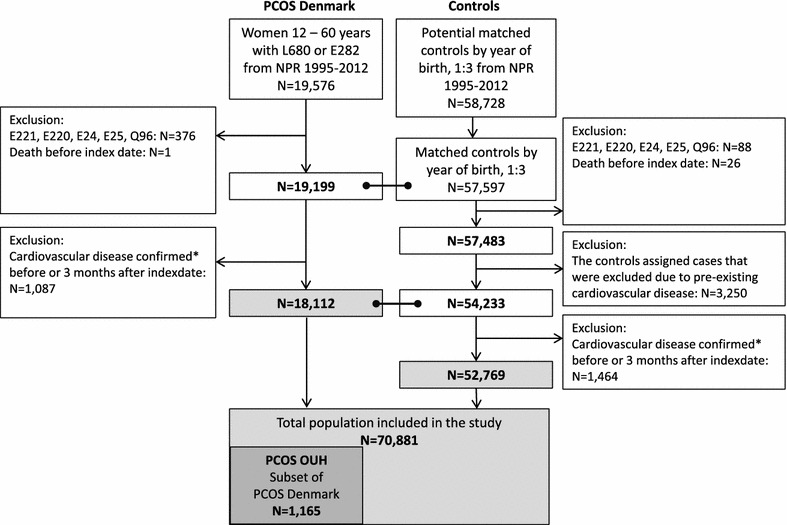
BACKGROUND: Polycystic ovary syndrome (PCOS) is associated with obesity and low grade inflammation and the risk for cardiovascular disease (CVD) could be increased in PCOS. METHODS: National register-based study including women with PCOS and no previous diagnosis of CVD, hypertension, or dyslipidemia. PCOS Denmark (N = 18,112) included women with PCOS in the Danish National Patient Register. PCOS Odense University Hospital (OUH, N = 1165) was an embedded cohort including premenopausal women with PCOS and clinical and biochemical examination. Three age-matched controls were included per patient in PCOS Denmark (N = 52,769). The main study outcome was CVD events including hypertension and dyslipidemia defined according to nationwide in- and outpatient hospital contact diagnosis codes and/or inferred from filled medicine prescriptions. RESULTS: The age at inclusion was median (quartiles) 29 (23-35) years and follow up was 11.1 (6.9-16.0) years. The Hazard ratio (95% CI) for development of CVD in PCOS Denmark was 1.7 (1.7; 1.8) (P < 0.001) and the total event rate of CVD was 22.6 per 1000 patient years in PCOS Denmark vs. 13.2 per 1000 patient years in controls (P < 0.001). The median age at diagnosis of CVD was 35 (28-42) years in PCOS Denmark vs. 36 (30-43) years in controls (P < 0.001). Obesity, diabetes, and infertility, and previous use of oral contraceptives were associated with increased risk of development of CVD in PCOS Denmark (P < 0.001). Women in PCOS OUH resembled women in PCOS Denmark regarding risk of CVD. Age, BMI, blood pressure, lipid status, and glycemic status predicted development of CVD in PCOS OUH. CONCLUSION: The event rate of CVD including hypertension and dyslipidemia was higher in PCOS compared to controls. The risk of developing CVD must be considered even in young women with PCOS.
Overview
The claims and statistics of this paper haven’t been checked yet.
Free: it reads the open-access text and checks the first 5 claims that cite a source we can check. Create a free account to check every claim.
Integrity signals
Registry
Cites
Statistics
Figures
Verification
Claims the paper makes
The claims and statistics of this paper haven’t been checked yet.
Free: it reads the open-access text and checks the first 5 claims that cite a source we can check. Create a free account to check every claim.
Claims other papers make about this one
Each is checked against this paper’s own text: does it say what the citing paper says it does?
The source backs part of the claim, not all of it — or backs it for a different population, condition or comparison.
In the citing paper
“PCOS is associated with increased co-morbidities including obesity, infertility, pregnancy complications, depression and anxiety, metabolic syndrome, diabetes, reproductive cancers and cardiovascular disease [3, 7, 8, 10–13].”
From Challenges in diagnosis and health care in polycystic ovary syndrome in Canada: a patient view to improve health care (2023) · cites this paper as [11]
Experimental — accuracy not yet measuredThe source backs part of the claim, not all of it — or backs it for a different population, condition or comparison.
In the citing paper
“PCOS is associated with a higher incidence of fertility assistance and complications of pregnancy, including gestational hypertension and diabetes.12,17,18,21, 22, 23, 24”
From Increased Prevalence of Adverse Health Outcomes Across the Lifespan in Those Affected by Polycystic Ovary Syndrome: A Canadian Population Cohort (2024) · cites this paper as [18]
Experimental — accuracy not yet measuredThe source backs part of the claim, not all of it — or backs it for a different population, condition or comparison.
In the citing paper
“Women with PCOS experience increased cardiometabolic risk—including the metabolic syndrome, hypertension, insulin resistance, obesity and dyslipidemia—predisposing them to increased risk for diabetes and cardiovascular disease (CVD).2,10,17, 18, 19, 20”
From Increased Prevalence of Adverse Health Outcomes Across the Lifespan in Those Affected by Polycystic Ovary Syndrome: A Canadian Population Cohort (2024) · cites this paper as [18]
Experimental — accuracy not yet measuredThe source backs part of the claim, not all of it — or backs it for a different population, condition or comparison.
In the citing paper
“We used validated ICD coding for diseases using the Charlson Comorbidity Index and specific ICD codes for disease.”
From Increased Prevalence of Adverse Health Outcomes Across the Lifespan in Those Affected by Polycystic Ovary Syndrome: A Canadian Population Cohort (2024) · cites this paper as [18]
Experimental — accuracy not yet measuredThe source backs part of the claim, not all of it — or backs it for a different population, condition or comparison.
In the citing paper
“Not including these symptoms in the PCOS exposure definition may underestimate the number of cases in epidemiologic studies, but it may also prevent inclusion of nonconfirmed PCOS and non-PCOS cases that do not present with 2 out of 3 symptoms of the diagnostic criteria.18,55”
From Increased Prevalence of Adverse Health Outcomes Across the Lifespan in Those Affected by Polycystic Ovary Syndrome: A Canadian Population Cohort (2024) · cites this paper as [18]
Experimental — accuracy not yet measured
3 more claims about this paper
Create a free account to see every claim other papers make about this one.
Self-check
Percentages, sums and reported differences re-computed from the paper’s own numbers.
The self-check needs the paper’s full text.
Citations
Cites
Charlson, M. E., Pompei, P., Ales, K. L., & MacKenzie, C. R. (1987) · Journal of Chronic Diseases · doi:10.1016/0021-9681(87)90171-8 · Cited by 49,742
Coding algorithms for defining comorbidities in ICD-9-CM and ICD-10 administrative data
Quan, H., Sundararajan, V., Halfon, P., Fong, A., Burnand, B., Luthi, J.-C., Saunders, L. D., Beck, C. A., Feasby, T. E., & Ghali, W. A. (2005) · Medical Care · doi:10.1097/01.mlr.0000182534.19832.83 · Cited by 10,669 · cited 1×
“The Charlson Comorbidity Index is based on 19 comorbid conditions [21] and was calculated from the ICD-10 operationalization by Quan et al. [22].”
Method(2004) · Fertility and Sterility · doi:10.1016/j.fertnstert.2003.10.004 · Cited by 9,050
The Diagnosis of Polycystic Ovary Syndrome during Adolescence
Witchel, S. F., Oberfield, S., Rosenfield, R. L., Codner, E., Bonny, A., Ibáñez, L., Pena, A., Horikawa, R., Gomez-Lobo, V., Joel, D., et al. (2015) · Hormone Research in Paediatrics · doi:10.1159/000375530 · Cited by 3,113
Men at risk: occupation and male infertility
Claman, P. (2004) · Fertility and Sterility · doi:10.1016/s0015-0282(03)01188-9 · Cited by 2,387
Diamanti-Kandarakis, E., & Dunaif, A. (2012) · Endocrine Reviews · doi:10.1210/er.2011-1034 · Cited by 1,947 · cited 1×
“Obesity is closely related to insulin resistance and inflammation [9].”
BackgroundGlycated hemoglobin, diabetes, and cardiovascular risk in nondiabetic adults
Selvin, E., Steffes, M. W., Zhu, H., Matsushita, K., Wagenknecht, L., Pankow, J., Coresh, J., & Brancati, F. L. (2010) · New England Journal of Medicine · doi:10.1056/nejmoa0908359 · Cited by 1,544
Prevalence of impaired glucose tolerance and diabetes in women with polycystic ovary syndrome.
Ehrmann, D. A., Barnes, R. B., Rosenfield, R. L., Cavaghan, M. K., & Imperial, J. (1999) · Diabetes Care · doi:10.2337/diacare.22.1.141 · Cited by 1,257 · cited 1×
“The pathogenesis of PCOS includes insulin resistance and low grade inflammation [2], and women with PCOS have increased risk of metabolic syndrome [3, 4].”
BackgroundWild, R. A., Carmina, E., Diamanti-Kandarakis, E., Dokras, A., Escobar-Morreale, H. F., Futterweit, W., Lobo, R., Norman, R. J., Talbott, E., & Dumesic, D. A. (2010) · The Journal of Clinical Endocrinology & Metabolism · doi:10.1210/jc.2009-2724 · Cited by 1,010
The polycystic ovary syndrome: a position statement from the European Society of Endocrinology
Conway, G., Dewailly, D., Diamanti-Kandarakis, E., Escobar-Morreale, H. F., Franks, S., Gambineri, A., Kelestimur, F., Macut, D., Micic, D., Pasquali, R., et al. (2014) · European Journal of Endocrinology · doi:10.1530/eje-14-0253 · Cited by 676 · cited 1×
“Introduction The definition of polycystic ovary syndrome (PCOS) includes irregular ovulation, hyperandrogenism, and/ or polycystic ovaries when other etiologies are excluded [1].”
BackgroundEpidemiology and Adverse Cardiovascular Risk Profile of Diagnosed Polycystic Ovary Syndrome
Lo, J. C., Feigenbaum, S. L., Yang, J., Pressman, A. R., Selby, J. V., & Go, A. S. (2006) · The Journal of Clinical Endocrinology & Metabolism · doi:10.1210/jc.2005-2430 · Cited by 414 · cited 1×
“These results were in accordance with previous studies who reported that the risk of CVD and/or stroke was attenuated but not normalized in women with PCOS after adjusting for BMI [5, 7, 24].”
Resultde Groot, P. C. M., Dekkers, O. M., Romijn, J. A., Dieben, S. W. M., & Helmerhorst, F. M. (2011) · Human Reproduction Update · doi:10.1093/humupd/dmr001 · Cited by 394 · cited 2×
“However, our data confirmed increased risk of VTE in PCOS [16] and that the risk of CVD increased further during use of OCP [7, 17].”
BackgroundResultThe Potential Implications of a PCOS Diagnosis on a Woman's Long-Term Health Using Data Linkage
Hart, R., & Doherty, D. A. (2015) · The Journal of Clinical Endocrinology & Metabolism · doi:10.1210/jc.2014-3886 · Cited by 391 · cited 1×
“We could confirm results from recent studies where the OR for CVD was increased in women with PCOS [5–8, 23, 24].”
ResultMetabolic features of the reproductive phenotypes of polycystic ovary syndrome
Moran, L., & Teede, H. (2009) · Human Reproduction Update · doi:10.1093/humupd/dmp008 · Cited by 362 · cited 1×
“Importantly, mean BMI varies between different PCOS phenotypes [33, 34], and studies regarding vascular risk should adjust for BMI.”
BackgroundOral contraceptives and venous thromboembolism: a five-year national case-control study☆
Lidegaard, Ø., Edström, B., & Kreiner, S. (2002) · Contraception · doi:10.1016/s0010-7824(01)00307-9 · Cited by 334 · cited 3×
“However, our data confirmed increased risk of VTE in PCOS [16] and that the risk of CVD increased further during use of OCP [7, 17].”
BackgroundMorin-Papunen, L. C., Vauhkonen, I., Koivunen, R. M., Ruokonen, A., Martikainen, H. K., & Tapanainen, J. S. (2000) · The Journal of Clinical Endocrinology & Metabolism · doi:10.1210/jcem.85.9.6792 · Cited by 235 · cited 1×
“We and others reported increased insulin levels during OGTT in women with PCOS treated with OCP [35, 36] along with weight gain [14], which could increase the risk of development of CVD.”
BackgroundOstman, C., Smart, N. A., Morcos, D., Duller, A., Ridley, W., & Jewiss, D. (2017) · Cardiovascular Diabetology · doi:10.1186/s12933-017-0590-y · Cited by 234 · cited 1×
“Metabolic risk in PCOS could be related to IL-6 gene polymorphism [39] and the metabolic risk may be modified by lifestyle intervention [40] and metformin treatment [41].”
BackgroundRubin, K. H., Glintborg, D., Nybo, M., Abrahamsen, B., & Andersen, M. (2017) · The Journal of Clinical Endocrinology & Metabolism · doi:10.1210/jc.2017-01354 · Cited by 195 · cited 5×
“Furthermore, testosterone levels did not predict the risk of T2D in PCOS OUH [10].”
BackgroundMethodResultInfluentialSelf-citationMani, H., Levy, M. J., Davies, M. J., Morris, D. H., Gray, L. J., Bankart, J., Blackledge, H., Khunti, K., & Howlett, T. A. (2013) · Clinical Endocrinology · doi:10.1111/cen.12068 · Cited by 194 · cited 1×
“[32] found a prevalence of 27% for myocardial infarction and angina in women with PCOS aged > 65 years attending a specialized clinic in United Kingdom and the OR for myocardial infarction was 12.”
BackgroundPolycystic ovary syndrome (PCOS) and the risk of coronary heart disease (CHD): a meta-analysis.
Zhao, L., Zhu, Z., Lou, H., Zhu, G., Huang, W., Zhang, S., & Liu, F. (2016) · Oncotarget · doi:10.18632/oncotarget.9553 · Cited by 174 · cited 2×
“We could confirm results from recent studies where the OR for CVD was increased in women with PCOS [5–8, 23, 24].”
BackgroundResultInfluentialOllila, M.-M. E., West, S., Keinänen-Kiukaanniemi, S., Jokelainen, J., Auvinen, J., Puukka, K., Ruokonen, A., Järvelin, M.-R., Tapanainen, J. S., Franks, S., et al. (2017) · Human Reproduction · doi:10.1093/humrep/dew329 · Cited by 165
Morin-Papunen, L. C. (2000) · The Journal of Clinical Endocrinology & Metabolism · doi:10.1210/jc.85.9.3161 · Cited by 157
Glintborg, D., Hass Rubin, K., Nybo, M., Abrahamsen, B., & Andersen, M. (2015) · European Journal of Endocrinology · doi:10.1530/eje-14-1108 · Cited by 154 · cited 3×
“Materials and methods The study design and baseline data for this study have recently been reported in detail [18] and data regarding development of type 2 diabetes and incident fractures [10, 19] in the study cohort has recently been published.”
BackgroundMethodSelf-citationDyslipidemia and Oxidative Stress in PCOS
Macut, D., Bjekić-Macut, J., & Savić-Radojević, A. (2013) · Frontiers of Hormone Research · doi:10.1159/000341683 · Cited by 139 · cited 1×
“Previous studies estimated that 70% women with PCOS had borderline or high lipid levels [27], but dyslipidemia Table 3 Characteristics according to development of CVD in PCOS Denmark and controls”
BackgroundGlintborg, D., Henriksen, J. E., Andersen, M., Hagen, C., Hangaard, J., Rasmussen, P. E., Schousboe, K., & Hermann, A. P. (2004) · Fertility and Sterility · doi:10.1016/j.fertnstert.2004.06.040 · Cited by 134 · cited 2×
“Our results regarding BMI and CVD were somewhat different from data regarding the risk of T2D in lean women with PCOS, where the risk of T2D was < 1% at time of PCOS diagnosis [20, 25] and the risk of T2D development during follow up was not increased compared to age-matched controls [4, 10].”
BackgroundResultSelf-citationBird, S. T., Hartzema, A. G., Brophy, J. M., Etminan, M., & Delaney, J. A. C. (2013) · Canadian Medical Association Journal · doi:10.1503/cmaj.120677 · Cited by 126 · cited 2×
“However, our data confirmed increased risk of VTE in PCOS [16] and that the risk of CVD increased further during use of OCP [7, 17].”
BackgroundPinola, P., Puukka, K., Piltonen, T. T., Puurunen, J., Vanky, E., Sundström-Poromaa, I., Stener-Victorin, E., Lindén Hirschberg, A., Ravn, P., Skovsager Andersen, M., et al. (2017) · Fertility and Sterility · doi:10.1016/j.fertnstert.2016.12.017 · Cited by 113 · cited 1×
“BMI and age are closely associated [29, 31], but the significant association between age and CVD development remained significant after adjusting for BMI.”
BackgroundSelf-citationPolycystic Ovary Syndrome: Definitions, Phenotypes and Diagnostic Approach
Livadas, S., & Diamanti-Kandarakis, E. (2013) · Frontiers of Hormone Research · doi:10.1159/000341673 · Cited by 108 · cited 1×
“Importantly, mean BMI varies between different PCOS phenotypes [33, 34], and studies regarding vascular risk should adjust for BMI.”
BackgroundHalperin, I. J., Sujana Kumar, S., Stroup, D. F., & Laredo, S. E. (2011) · Human Reproduction · doi:10.1093/humrep/deq301 · Cited by 102 · cited 1×
“Fasting insulin levels were unchanged during treatment with oral contraceptives (OCP) in PCOS [13], but treatment with OCP has been reported to be associated with weight gain [14], increased thrombin generation [15] and increased risk of venous thromboembolism [16, 17], and use of OCP could therefore have an adverse e…”
BackgroundBañuls, C., Rovira‐Llopis, S., Marañón, A., Veses, S., Jover, A., Gomez, M., Rocha, M., Hernández‐Mijares, A., & Víctor, V. M. (2017) · Metabolism · doi:10.1016/j.metabol.2017.02.012 · Cited by 94 · cited 1×
“PCOS is associated with higher serum levels of IL-6 and other inflammatory cytokines [2, 38], which could be associated with increased risk of CVD.”
BackgroundGlintborg, D., Altinok, M. L., Mumm, H., Hermann, A. P., Ravn, P., & Andersen, M. (2014) · The Journal of Clinical Endocrinology & Metabolism · doi:10.1210/jc.2014-1135 · Cited by 88
Self-citationAnderson, S. A., Barry, J. A., & Hardiman, P. J. (2014) · International Journal of Cardiology · doi:10.1016/j.ijcard.2014.06.079 · Cited by 77 · cited 4×
“0 in recent metaanalyses [5–8], but two of the studies reported no statistically significant association between PCOS and CVD [5, 6].”
BackgroundResultInfluentialGlintborg, D., Mumm, H., Hougaard, D., Ravn, P., & Andersen, M. (2010) · Clinical Endocrinology · doi:10.1111/j.1365-2265.2010.03873.x · Cited by 75 · cited 1×
“depends on for example ethnicity [28] and age [29].”
BackgroundSelf-citationZhou, Y., Wang, X., Jiang, Y., Ma, H., Chen, L., Lai, C., Peng, C., He, C., & Sun, C. (2017) · Gynecological Endocrinology · doi:10.1080/09513590.2017.1347779 · Cited by 64 · cited 3×
“0 in recent metaanalyses [5–8], but two of the studies reported no statistically significant association between PCOS and CVD [5, 6].”
ResultInfluentialEndocrine and metabolic characteristics in polycystic ovary syndrome.
Glintborg, D. (2016) · University of Southern Denmark Research Portal (University of Southern Denmark) · Cited by 63
Self-citationMANAGEMENT OF ENDOCRINE DISEASE: Morbidity in polycystic ovary syndrome
Glintborg, D., & Andersen, M. (2017) · European Journal of Endocrinology · doi:10.1530/eje-16-0373 · Cited by 63 · cited 1×
“Our results regarding BMI and CVD were somewhat different from data regarding the risk of T2D in lean women with PCOS, where the risk of T2D was < 1% at time of PCOS diagnosis [20, 25] and the risk of T2D development during follow up was not increased compared to age-matched controls [4, 10].”
ResultSelf-citationMary, A., Hartemann, A., Liabeuf, S., Aubert, C. E., Kemel, S., Salem, J. E., Cluzel, P., Lenglet, A., Massy, Z. A., Lalau, J.-D., et al. (2017) · Cardiovascular Diabetology · doi:10.1186/s12933-017-0509-7 · Cited by 55 · cited 1×
“Metabolic risk in PCOS could be related to IL-6 gene polymorphism [39] and the metabolic risk may be modified by lifestyle intervention [40] and metformin treatment [41].”
BackgroundShi, Y., Cui, Y., Sun, X., Ma, G., Ma, Z.-X., Gao, Q. F., & Chen, Z. (2013) · European Journal of Obstetrics & Gynecology and Reproductive Biology · doi:10.1016/j.ejogrb.2013.11.011 · Cited by 50 · cited 1×
“In a Chinese population of women with PCOS, women with hypertension had higher lipid, glucose, insulin, and HOMA-ir levels than women without hypertension also after adjusting for BMI [26], which suggested that elevated BP was a marker of metabolic risk.”
BackgroundIncreased thrombin generation in women with polycystic ovary syndrome
Glintborg, D., Sidelmann, J. J., Altinok, M. L., Mumm, H., & Andersen, M. (2015) · Metabolism · doi:10.1016/j.metabol.2015.06.011 · Cited by 48 · cited 2×
“Furthermore, treatment with OCP was associated with increased activation of the coagulation system [15], which was associated with increased thromboembolic risk [17].”
BackgroundSelf-citationRubin, K. H., Glintborg, D., Nybo, M., Andersen, M., & Abrahamsen, B. (2015) · Journal of Bone and Mineral Research · doi:10.1002/jbmr.2737 · Cited by 47
Self-citationGlintborg, D., Mumm, H., Ravn, P., & Andersen, M. (2012) · Hormone and Metabolic Research · doi:10.1055/s-0032-1304608 · Cited by 36 · cited 3×
“BMI and age are closely associated [29, 31], but the significant association between age and CVD development remained significant after adjusting for BMI.”
BackgroundSelf-citationGlintborg, D., Mumm, H., Holst, J. J., & Andersen, M. (2017) · Endocrine Connections · doi:10.1530/ec-17-0034 · Cited by 26
Self-citationEser, B., Taşkın, M. İ., Hişmioğulları, A. A., Akşit, H., & Bodur, A. S. (2016) · Journal of Obstetrics and Gynaecology · doi:10.1080/01443615.2016.1256966 · Cited by 19 · cited 1×
“Metabolic risk in PCOS could be related to IL-6 gene polymorphism [39] and the metabolic risk may be modified by lifestyle intervention [40] and metformin treatment [41].”
BackgroundShould we individualize lipid profiling in women with polycystic ovary syndrome?
Poromaa, I. S., Mellembakken, J. R., Morin-Papunen, L. C., Piltonen, T., Puurunen, J., Tapanainen, J. S., Stener‐Victorin, E., Hirschberg, A. L., Vanky, E., Ravn, P., et al. (2016) · Human Reproduction · doi:10.1093/humrep/dew228 · Cited by 15 · cited 2×
“It is recommended that all women with PCOS should be screened for metabolic syndrome upon diagnosis [11], but measurement of lipids in young women with PCOS rarely changed clinical care [12].”
BackgroundMethodSelf-citationComputerized Surveillance of Diabetic Patient/Health Care Delivery System Interfaces
Bryant, D., Son, A. V., Davis, P. J., & Segal, C. (1978) · Diabetes Care · doi:10.2337/diacare.1.3.141 · Cited by 5
Should we individualize lipid profiling in women with polycystic ovary syndrome?
Poromaa, I. S., Mellembakken, J. R., Morin-Papunen, L. C., Piltonen, T., Puurenen, J., Tapanainen, J. S., Stener‐Victorin, E., Hirschberg, A. L., Vanky, E., Ravn, P., et al. (2017) · Human Reproduction · doi:10.1093/humrep/dex009 · Cited by 3
Self-citation
Cited by
Characteristics of obesity in polycystic ovary syndrome: Etiology, treatment, and genetics
Glueck, C. J., & Goldenberg, N. (2019) · Metabolism · doi:10.1016/j.metabol.2018.11.002 · Cited by 442
Long-term cardiometabolic disease risk in women with PCOS: a systematic review and meta-analysis
Wekker, V, van Dammen, L., Koning, A., Heida, K. Y., Painter, R. C., Limpens, J., Laven, J. S. E., Roeters van Lennep, J. E., Roseboom, T. J., & Hoek, A. (2020) · Human Reproduction Update · doi:10.1093/humupd/dmaa029 · Cited by 425
“Four studies scored low risk of bias on all eight criteria (nine stars), indicating these studies were of the highest quality (Table III) (Morgan et al., 2012; Kazemi Jaliseh et al., 2017; Rubin et al., 2017; Glintborg et al., 2018).”
BackgroundResultInfluentialOsibogun, O., Ogunmoroti, O., & Michos, E. D. (2020) · Trends in Cardiovascular Medicine · doi:10.1016/j.tcm.2019.08.010 · Cited by 423
Pregnancy and Reproductive Risk Factors for Cardiovascular Disease in Women
O’Kelly, A. C., Michos, E. D., Shufelt, C. L., Vermunt, J. V., Minissian, M. B., Quesada, O., Smith, G. N., Rich-Edwards, J. W., Garovic, V. D., El Khoudary, S. R., et al. (2022) · Circulation Research · doi:10.1161/circresaha.121.319895 · Cited by 328
Beyond fertility: polycystic ovary syndrome and long-term health
Cooney, L. G., & Dokras, A. (2018) · Fertility and Sterility · doi:10.1016/j.fertnstert.2018.08.021 · Cited by 270
Metadata
- Authors
- Glintborg, D., Rubin, K. H., Nybo, M., Abrahamsen, B., & Andersen, M.
- Affiliations
- University of Southern Denmark (DK)
- Odense University Hospital (DK)
- Corresponding author
- Glintborg, Dorte
- Venue
- Cardiovascular Diabetology
- Published
- 2018-03-08
- Volume
- 17
- Issue
- 1
- Pages
- 37-37
- ISSN
- 1475-2840 (ISSN-L)
- PMC
- PMC5844097
- OpenAlex
- W2789816499
- Cited by
- 200
- References
- 46
- Citations by year
- 2026: 18 · 2025: 21 · 2024: 21 · 2023: 24 · 2022: 27 · 2021: 30 · 2020: 24 · 2019: 26 · 2018: 9
- FWCI
- 23.87
- Type
- journal article
- Language
- en
- Open access
- gold
- doi.org
- Licence
- cc-by
- creativecommons.org/licenses/by/4.0/ (tdm)
- Locations
- Cardiovascular Diabetology (publishedVersion, cc-by)
- PubMed Central (publishedVersion, cc-by)
- PubMed (publishedVersion)
- University of Southern Denmark Research Portal (University of Southern Denmark) (acceptedVersion, cc-by)
- DOAJ (DOAJ: Directory of Open Access Journals) (submittedVersion)
- Topics
- Health Sciences › Medicine › Reproductive Medicine › Ovarian function and disorders
- Health Sciences › Medicine › Endocrinology, Diabetes and Metabolism › Diabetes, Cardiovascular Risks, and Lipoproteins
- Life Sciences › Biochemistry, Genetics and Molecular Biology › Genetics › Genetic and Kidney Cyst Diseases
- Keywords
- polycystic ovary syndrome, cardiovascular disease, hypertension, dyslipidemia, young women, obesity, diabetes mellitus, infertility, oral contraceptives, cardiovascular risk factors, low-grade inflammation
- MeSH terms
- Adult, Cardiovascular Diseases, Contraceptives, Oral, Denmark, Female, Humans, Hypertension, Obesity, Polycystic Ovary Syndrome, Prognosis, Registries, Risk Factors, Time Factors, Comorbidity, Incidence, Prevalence, Case-Control Studies, Age of Onset, Dyslipidemias, Young Adult
About these checks
Registry, retraction, Cites and statistics results are computed, not judged, with one exception: a printed reference that no index lists is read once by a model before it counts as a citation error. Claims are extracted by a model and kept only when their quote appears verbatim in the text; each cited source is then checked, with a model’s help, for whether it says what the claim relies on. Those verdicts can be wrong — read the claim’s quote and the cited source before relying on one.
Statistics and arithmetic are recomputed, not judged.
Confidence bands are shown only for fields calibrated on our annotated test set. None is calibrated yet, so no band is shown.
What counts as a claim ›How we measure confidence ›How we check this ›
Are you an author, or do you see a problem with this page? Request a review
Data sources
Bibliographic data: Semantic Scholar, OpenAlex, Crossref.
Contains information from the Semantic Scholar Academic Graph Datasets, made available under the ODC Attribution License (ODC-BY 1.0).
Semantic Scholar’s data is described in: Kinney, R., et al. (2023). The Semantic Scholar Open Data Platform. arXiv:2301.10140.
