

Cardiovascular risk reduction with once-weekly semaglutide in subjects with type 2 diabetes: a post hoc analysis of gender, age, and baseline CV risk profile in the SUSTAIN 6 trial
Open accessThe DOI matches its Crossref record; 37 of the 37 references it cites were found in a registry or an index.
Abstract
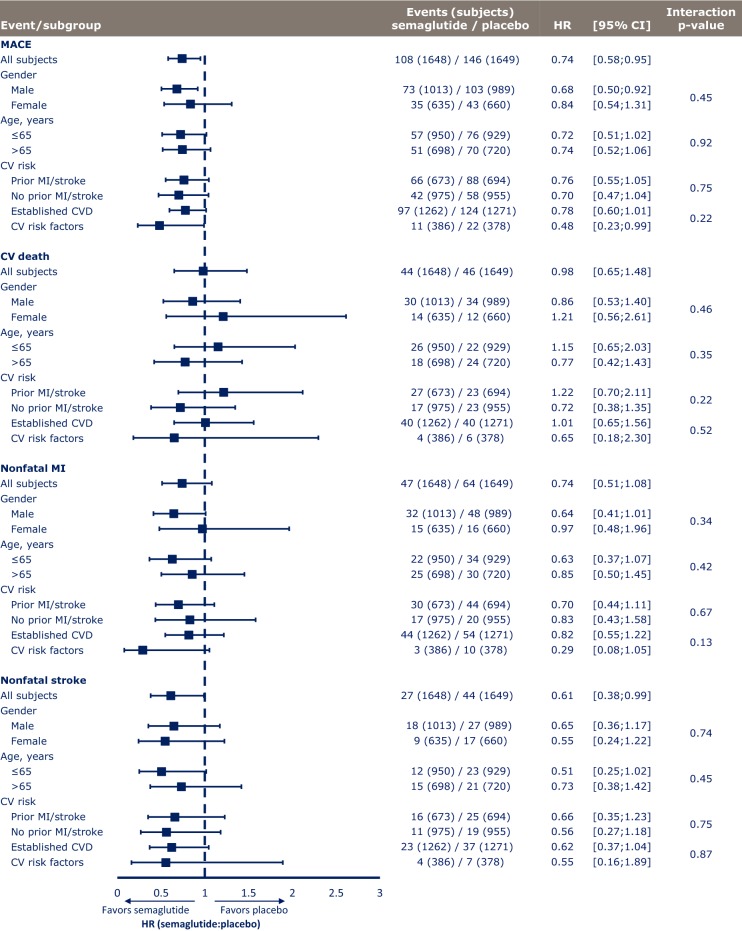
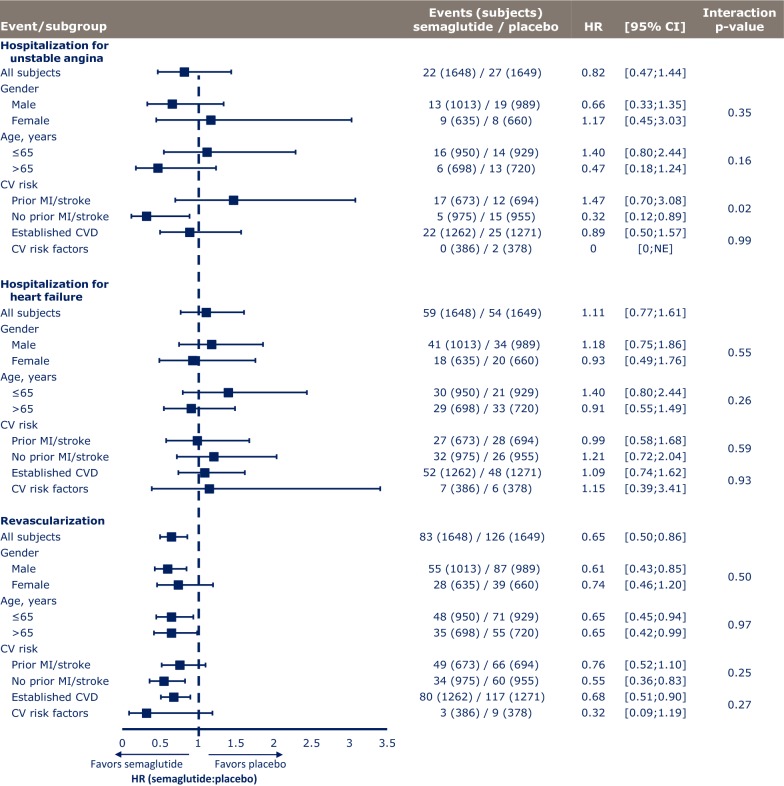
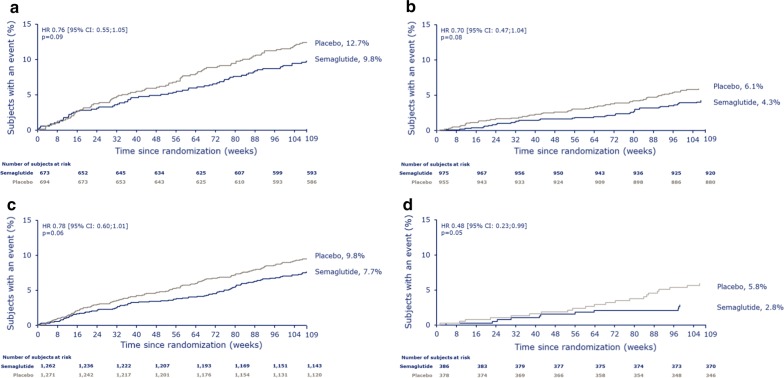
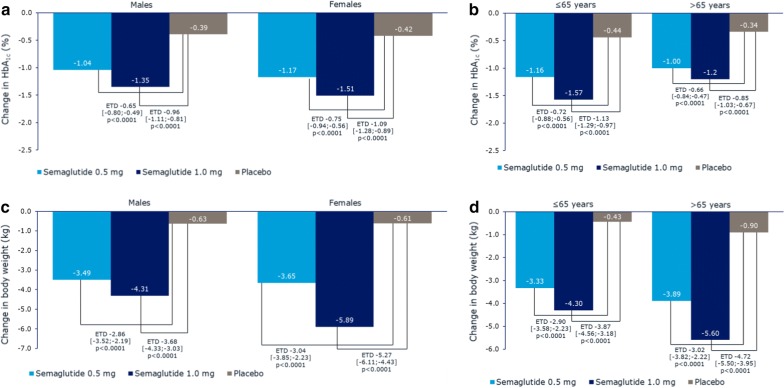
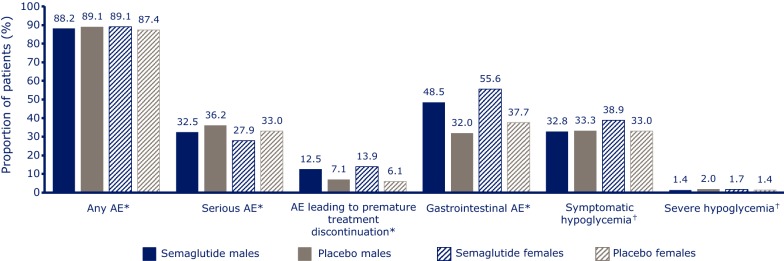
Background: The SUSTAIN 6 trial demonstrated that once-weekly semaglutide (0.5 and 1.0 mg) significantly reduced major adverse cardiovascular (CV) events (MACE) vs placebo in subjects with type 2 diabetes (T2D) and high CV risk. The effects of gender, age and baseline CV risk on outcomes are important considerations for further study. Methods: Subjects were grouped according to gender, age (50–65 years and > 65 years), and CV risk profile at baseline (prior myocardial infarction [MI] or stroke vs no prior MI or stroke, and established CV disease [CVD] vs CV risk factors alone, including subjects with chronic kidney disease). Time to MACE and its individual components (CV death, nonfatal MI, nonfatal stroke), hospitalization for unstable angina or heart failure, and revascularization (coronary and peripheral) were analyzed for all subgroups. Additional analyses were performed for gender and age to investigate change from baseline in HbA 1c and body weight, as well as tolerability. Results: A total of 3297 subjects were included. The majority of subjects (60.7%) were male; 43% were > 65 years of age; 41.5% had a history of MI or stroke; and 76.8% had established CVD. Compared with placebo, semaglutide reduced the risk of the first occurrence of MACE and each MACE component consistently across all subgroups (gender, age, and baseline CV risk profile). Revascularizations, HbA 1c and body weight were also reduced consistently across all subgroups compared with placebo. Gastrointestinal adverse events in all treatment groups were more common among women than men, but rates of premature treatment discontinuation were similar for both genders. Conclusions: In this post hoc analysis of SUSTAIN 6, once-weekly semaglutide vs placebo reduced the risk of MACE in all subjects included in the trial, regardless of gender, age, or baseline CV risk profile. Trial registry Clinicaltrials.gov, Identifying number: NCT01720446, Date of registration: October 29, 2012
Overview
The claims and statistics of this paper haven’t been checked yet.
Free: it reads the open-access text and checks the first 5 claims that cite a source we can check. Create a free account to check every claim.
Integrity signals
Registry
Cites
Statistics
Figures
Verification
Claims the paper makes
The claims and statistics of this paper haven’t been checked yet.
Free: it reads the open-access text and checks the first 5 claims that cite a source we can check. Create a free account to check every claim.
Claims other papers make about this one
Each is checked against this paper’s own text: does it say what the citing paper says it does?
The source backs part of the claim, not all of it — or backs it for a different population, condition or comparison.
In the citing paper
“Data from clinical trials are inconclusive regarding CV protection in men and women treated with GLP-1 RA.”
From Real-world sex differences in type 2 diabetes patients treated with GLP-1 receptor agonists (2024) · cites this paper as [21]
Experimental — accuracy not yet measuredThe cited source says what the claim attributes to it.
In the citing paper
“In a post hoc analysis of the SUSTAIN 6 trial (once weekly semaglutide vs. placebo), in which 76.8 % of the subjects had established CVD, semaglutide reduced the risk of MACE regardless of sex.”
From Real-world sex differences in type 2 diabetes patients treated with GLP-1 receptor agonists (2024) · cites this paper as [21]
In the citing paper
“The effect of semaglutide on nonfatal stroke did not differ according to the participants' age, sex, history of CVD or importantly, MI/stroke history (P interaction =0.75).42”
From Benefits of GLP-1 (Glucagon-Like Peptide 1) Receptor Agonists for Stroke Reduction in Type 2 Diabetes: A Call to Action for Neurologists (2022) · cites this paper as [42]
In the citing paper
“Also, the rate of treatment discontinuation did not differ between men and women [21].”
From Real-world sex differences in type 2 diabetes patients treated with GLP-1 receptor agonists (2024) · cites this paper as [21]
Self-check
Percentages, sums and reported differences re-computed from the paper’s own numbers.
The self-check needs the paper’s full text.
Citations
Cites
Cook, R. J., Dickens, B. M., & Fathalla, M. F. (2003) · Reproductive Health and Human Rights · doi:10.1093/acprof:oso/9780199241323.003.0025 · Cited by 10,769
Standards of Medical Care in Diabetes
Power, D. (2006) · Diabetes Care · doi:10.2337/diacare.29.02.06.dc05-1593 · Cited by 8,673
Liraglutide and Cardiovascular Outcomes in Type 2 Diabetes
Marso, S. P., Daniels, G. H., Brown-Frandsen, K., Kristensen, P., Mann, J. F. E., Nauck, M. A., Nissen, S. E., Pocock, S., Poulter, N. R., Ravn, L. S., et al. (2016) · New England Journal of Medicine · doi:10.1056/nejmoa1603827 · Cited by 7,629 · cited 1×
“All currently approved injectable GLP-1RAs have demonstrated CV safety (non-inferiority) in CVOTs [12, 19–23], but only four have demonstrated both CV safety and superiority relative to standard of care [12, 20, 22, 23].”
BackgroundSemaglutide and Cardiovascular Outcomes in Patients with Type 2 Diabetes
Marso, S. P., Bain, S. C., Consoli, A., Eliaschewitz, F. G., Jódar, E., Leiter, L. A., Lingvay, I., Rosenstock, J., Seufert, J., Warren, M. L., et al. (2016) · New England Journal of Medicine · doi:10.1056/nejmoa1607141 · Cited by 6,900 · cited 7×
“HbA1c and body weight were reported separately for both semaglutide doses following the statistical methods used in the primary SUSTAIN 6 trial [12].”
BackgroundMethodResultInfluentialSelf-citationThe Emerging Risk Factors Collaboration (2010) · The Lancet · doi:10.1016/s0140-6736(10)60484-9 · Cited by 5,125
Davies, M. J., D’Alessio, D. A., Fradkin, J., Kernan, W. N., Mathieu, C., Mingrone, G., Rossing, P., Tsapas, A., Wexler, D. J., & Buse, J. B. (2018) · Diabetes Care · doi:10.2337/dci18-0033 · Cited by 3,518
(2001) · Journal of Obstetrics and Gynaecology Research · doi:10.1111/j.1447-0756.2001.tb01222.x · Cited by 3,461
Lixisenatide in Patients with Type 2 Diabetes and Acute Coronary Syndrome
Pfeffer, M. A., Claggett, B., Diaz, R., Dickstein, K., Gerstein, H. C., Køber, L. V., Lawson, F. C., Ping, L., Wei, X., Lewis, E. F., et al. (2015) · New England Journal of Medicine · doi:10.1056/nejmoa1509225 · Cited by 2,409
Effects of once-weekly exenatide on cardiovascular outcomes in type 2 diabetes
Holman, R. R., Bethel, M. A., Mentz, R. J., Thompson, V. P., Lokhnygina, Y., Buse, J. B., Chan, J. C., Choi, J., Gustavson, S. M., Iqbal, N., et al. (2017) · New England Journal of Medicine · doi:10.1056/nejmoa1612917 · Cited by 2,162
Research works printed but not linked: 2
- International Conference on Harmonisation-World Health Organization Guideline for Good Clinical Practice. ICH harmonised tripartite guideline good clinical practice 2016. https://www.ich.org/products/guidelines/efficacy/efficacy-single/article/integrated-addendum-good-clinical-practice.html. Accessed 22 Mar 2019.
- Eli Lilly Press release, 2018. Trulicity® (dulaglutide) demonstrates superiority in reduction of cardiovascular events for broad range of people with type 2 diabetes. https://investor.lilly.com/node/39796/pdf. Accessed May 2018.
Cited by
Sex/gender differences in obesity prevalence, comorbidities, and treatment
Cooper, A. J., Gupta, S. R., Moustafa, A. F., & Chao, A. M. (2021) · Current Obesity Reports · doi:10.1007/s13679-021-00453-x · Cited by 483
“In post hoc analyses, a similar reduction in weight was observed with semaglutide by gender [82].”
MethodDiabetes and Stroke: What Are the Connections?
Mosenzon, O., Cheng, A. Y., Rabinstein, A. A., & Sacco, S. (2023) · Journal of Stroke · doi:10.5853/jos.2022.02306 · Cited by 249
“Post hoc analyses of the LEADER (Liraglutide Effect and Action in Diabetes: Evaluation of Cardiovascular Outcome Results) and SUSTAIN 6 (Semaglutide Unabated Sustainability in Treatment of Type 2 Diabetes) trials with liraglutide and semaglutide, respectively, evaluated the treatment effect in subgroups of people with…”
ResultSex- and Gender-Based Pharmacological Response to Drugs
Mauvais-Jarvis, F., Berthold, H. K., Campesi, I., Carrero, J.-J., Dhakal, S., Franconi, F., Gouni-Berthold, I., Heiman, M. L., Kautzky-Willer, A., Klein, S. L., et al. (2021) · Pharmacological Reviews · doi:10.1124/pharmrev.120.000206 · Cited by 192
Marsico, F., Paolillo, S., Gargiulo, P., Bruzzese, D., Dell’Aversana, S., Esposito, I., Renga, F., Esposito, L., Marciano, C., Dellegrottaglie, S., et al. (2020) · European Heart Journal · doi:10.1093/eurheartj/ehaa082 · Cited by 191
Karagiannis, T., Tsapas, A., Athanasiadou, E., Avgerinos, I., Liakos, A., Matthews, D. R., & Bekiari, E. (2021) · Diabetes Research and Clinical Practice · doi:10.1016/j.diabres.2021.108737 · Cited by 146
Kanie, T., Mizuno, A., Takaoka, Y., Suzuki, T., Yoneoka, D., Nishikawa, Y., Tam, W. W. S., Morze, J., Rynkiewicz, A., Xin, Y., et al. (2021) · Cochrane Database of Systematic Reviews · doi:10.1002/14651858.cd013650.pub2 · Cited by 127
GLP-1 and Its Analogs: Does Sex Matter?
Börchers, S., & Skibicka, K. P. (2025) · Endocrinology · doi:10.1210/endocr/bqae165 · Cited by 77
Lettino, M., Mascherbauer, J., Nordaby, M., Ziegler, A., Collet, J., Dérumeaux, G., Hohnloser, S. H., Leclercq, C., O’Neill, D. E., Visseren, F. L. J., et al. (2022) · European Journal of Preventive Cardiology · doi:10.1093/eurjpc/zwac033 · Cited by 89
Mancini, G. B. J., O’Meara, E., Zieroth, S., Bernier, M., Cheng, A. Y. Y., Cherney, D. Z. I., Connelly, K. A., Ezekowitz, J., Goldenberg, R. M., Leiter, L. A., et al. (2022) · Canadian Journal of Cardiology · doi:10.1016/j.cjca.2022.04.029 · Cited by 56
Self-citationGoldenberg, R. M., Cheng, A. Y. Y., Fitzpatrick, T., Gilbert, J. D., Verma, S., & Hopyan, J. J. (2022) · Stroke · doi:10.1161/strokeaha.121.038151 · Cited by 82
Cardiovascular outcomes trials: a paradigm shift in the current management of type 2 diabetes
Davies, M. J., Drexel, H., Jornayvaz, F. R., Pataky, Z., Seferovic, P. M., & Wanner, C. (2022) · Cardiovascular Diabetology · doi:10.1186/s12933-022-01575-9 · Cited by 83
Effect of Glucose Levels on Cardiovascular Risk
Poznyak, A. V., Litvinova, L. S., Poggio, P., Sukhorukov, V. N., & Orekhov, A. N. (2022) · Cells · doi:10.3390/cells11193034 · Cited by 80
Natali, A., Nesti, L., Tricò, D., & Ferrannini, E. (2021) · Cardiovascular Diabetology · doi:10.1186/s12933-021-01385-5 · Cited by 76
Treatment of chronic kidney disease in older populations
Kishi, S., Kadoya, H., & Kashihara, N. (2024) · Nature Reviews Nephrology · doi:10.1038/s41581-024-00854-w · Cited by 73
“…which randomly assigned 3,297 patients with T2DM — of whom 43% were aged 65 years or older — to receive semaglutide or placebo, found that once-weekly semaglutide treatment consistently reduced the risk of first occurrence of MACEs and components compared with placebo across all-age subgroups 107 .”
Insulin Resistance and Insulin Handling in Chronic Kidney Disease
Parvathareddy, V. P., Wu, J., & Thomas, S. S. (2023) · Comprehensive physiology · doi:10.1002/cphy.c220019 · Cited by 64
Landgraf, R., Aberle, J., Birkenfeld, A. L., Gallwitz, B., Kellerer, M., Klein, H., Müller-Wieland, D., Nauck, M. A., Reuter, H.-M., & Siegel, E. (2019) · Experimental and Clinical Endocrinology & Diabetes · doi:10.1055/a-1018-9106 · Cited by 62
“versus placebo in all study participants regardless of gender, age or cardiovascular risk profile at the start of the study [121].”
Treating type 2 diabetes in COVID-19 patients: the potential benefits of injective therapies
Longo, M., Caruso, P., Maiorino, M. I., Bellastella, G., Giugliano, D., & Esposito, K. (2020) · Cardiovascular Diabetology · doi:10.1186/s12933-020-01090-9 · Cited by 59
Husain, M., Bain, S. C., Holst, A. G., Mark, T., Rasmussen, S., & Lingvay, I. (2020) · Cardiovascular Diabetology · doi:10.1186/s12933-020-01106-4 · Cited by 55
Self-citationYoung, K., McInnes, E. H., Massey, R. J., Kahkoska, A. R., Pilla, S. J., Raghavan, S., Stanislawski, M. A., Tobias, D. K., McGovern, A. P., Dawed, A. Y., et al. (2023) · Communications Medicine · doi:10.1038/s43856-023-00359-w · Cited by 55
Self-citationSavarese, G., Butler, J., Lund, L. H., Bhatt, D. L., & Anker, S. D. (2021) · Cardiovascular Research · doi:10.1093/cvr/cvab271 · Cited by 48
Alfayez, O. M., Almohammed, O. A., Alkhezi, O. S., Almutairi, A. R., & Al Yami, M. S. (2020) · Cardiovascular Diabetology · doi:10.1186/s12933-020-01070-z · Cited by 41
Sinclair, A. J., Pennells, D., & Abdelhafiz, A. H. (2022) · Aging Clinical and Experimental Research · doi:10.1007/s40520-022-02142-8 · Cited by 48
“The SUSTAIN-6 study of semaglutide which included 43% of participants > 65 years old has shown similar results [113, 114].”
ResultKunutsor, S. K., & Seidu, S. (2025) · Drugs · doi:10.1007/s40265-025-02263-0 · Cited by 45
“…cardiovascular risk factors—including age, blood pressure, lipid levels, body mass index (BMI), HbA1c, and albuminuria—as well as across subgroups defined by cardiovascular and kidney comorbidities, sociodemographic characteristics, and concurrent medications such as statins [16, 18, 19, 57–61].”
Wang, W., Bain, S. C., Bian, F., Chen, R., Gabery, S., Huang, S., Jensen, T. B., Luo, B., Yuan, G., Ning, G., et al. (2024) · Diabetologia · doi:10.1007/s00125-024-06142-3 · Cited by 35
Self-citationNatale, P., Green, S. C., Tunnicliffe, D. J., Pellegrino, G., Toyama, T., & Strippoli, G. F. (2025) · Cochrane Database of Systematic Reviews · doi:10.1002/14651858.cd015849.pub2 · Cited by 40
Abdelhafiz, A. H., & Sinclair, A. J. (2020) · Journal of Diabetes and its Complications · doi:10.1016/j.jdiacomp.2020.107639 · Cited by 40
Tratamento farmacológico da hiperglicemia no DM2
Filho, R. L. D. S., Albuquerque, L., Cavalcanti, S. M., Tambascia, M. A., Valente, F., & Bertoluci, M. C. (2022) · Conectando Pessoas eBooks · doi:10.29327/557753.2022-10 · Cited by 42
Dotan, I., Rudman, Y., Turjeman, ., Akirov, A., Steinmetz, T., Calvarysky, B., & Diker‐Cohen, T. (2024) · Transplantation · doi:10.1097/tp.0000000000004945 · Cited by 37
“Most of the patients who were enrolled in the large cardiovascular outcome trials (CVOTs) of GLP1-RAs had established cardiovascular disease 2,3,5,6 (with the exception of dulaglutide in the REWIND trial 4 ), lending credence to a notion that GLP1-RAs are cardioprotective in secondary prevention.”
Funck, K. L., Bjerg, L., Isaksen, A. A., Sandbæk, A., & Grove, E. L. (2022) · Cardiovascular Diabetology · doi:10.1186/s12933-022-01713-3 · Cited by 36
Dagenais, G. R., Rydén, L., Leiter, L. A., Lakshmanan, M., Dyal, L., Probstfield, J. L., Atisso, C. M., Shaw, J. E., Conget, I., Cushman, W. C., et al. (2020) · Cardiovascular Diabetology · doi:10.1186/s12933-020-01179-1 · Cited by 35
Self-citationRroji, M., Spahia, N., Figurek, A., & Spasovski, G. B. (2025) · Biomedicines · doi:10.3390/biomedicines13030728 · Cited by 35
“Over 2.1 years, semaglu-tide was superior to placebo in reducing MACE (HR 0.74; 95% CI 0.58–0.95; p < 0.001 for non-inferiority and p = 0.02 for superiority) [197].”
InfluentialLandgraf, R., Aberle, J., Birkenfeld, A. L., Gallwitz, B., Kellerer, M., Klein, H. H., Müller‐Wieland, D., Nauck, M. A., Reuter, H., & Siegel, E. G. (2020) · Diabetologie und Stoffwechsel · doi:10.1055/a-1193-3793 · Cited by 33
Chiang, C., Ueng, K.-C., Chao, T., Lin, T., Wu, Y.-J., Wang, K.-L., Sung, S., Yeh, H., Li, Y., Liu, P., et al. (2020) · Journal of the Chinese Medical Association · doi:10.1097/jcma.0000000000000359 · Cited by 31
Efficacy and Safety of Dulaglutide in Older Patients: A post hoc Analysis of the REWIND trial
Riddle, M. C., Gerstein, H. C., Xavier, D., Cushman, W. C., Leiter, L. A., Raubenheimer, P. J., Atisso, C. M., Raha, S., Varnado, O. J., Кониг, М., et al. (2021) · The Journal of Clinical Endocrinology & Metabolism · doi:10.1210/clinem/dgab065 · Cited by 32
“These analyses have shown no evidence of differences in effects on MACE, all-cause mortality and hospitalizations for heart failure, and no differences in GI events among age subgroups (18-20).”
BackgroundResultSelf-citationAlexander, G. C., Xiao, X., Dilek, S., Lewis, S. V., Deng, Q., Kim, M., Bolanle, D., Saldanha, I. J., & Mehta, H. B. (2026) · JAMA Internal Medicine · doi:10.1001/jamainternmed.2025.8222 · Cited by 30
Liarakos, A. L., Tentolouris, A., Kokkinos, A. D., Eleftheriadou, I., & Tentolouris, N. (2022) · Journal of Diabetes and its Complications · doi:10.1016/j.jdiacomp.2022.108390 · Cited by 30
Ali, M. U., Mancini, G. B. J., Fitzpatrick‐Lewis, D., Connelly, K. A., O’Meara, E., Zieroth, S. R., & Sherifali, D. (2024) · Cardiovascular Diabetology · doi:10.1186/s12933-024-02154-w · Cited by 29
Ali, M. U., Mancini, G. B. J., Fitzpatrick‐Lewis, D., Lewis, R., Jovkovic, M., Zieroth, S. R., O’Meara, E., Connelly, K. A., & Sherifali, D. (2022) · Canadian Journal of Cardiology · doi:10.1016/j.cjca.2022.05.011 · Cited by 26
Abdelhafiz, A. H., Peters, S., & Sinclair, A. J. (2021) · Diabetes Research and Clinical Practice · doi:10.1016/j.diabres.2021.109085 · Cited by 26
Pan, S., Su, E.-L., Huang, C., Chuang, S., Chiang, C., Chen, C., & Cheng, H. (2024) · Age and Ageing · doi:10.1093/ageing/afae175 · Cited by 26
Landgraf, R., Kellerer, M., Fach, E.-M., Gallwitz, B., Hamann, A., Joost, H., Klein, H., Müller‐Wieland, D., Nauck, M. A., Reuter, H., et al. (2017) · Diabetologie und Stoffwechsel · doi:10.1055/s-0043-115964 · Cited by 26
Polonsky, W. H., Gamble, C. L., Iyer, N. N., Martin, M. L., & Hamersky, C. M. (2021) · Diabetes Spectrum · doi:10.2337/ds20-0025 · Cited by 23
“Importantly, treatment with a GLP-1 receptor agonist confers a low risk of hypoglycemia when given as monotherapy or in the absence of sulfonylureas or insulin (2), and recent studies have linked certain GLP-1 receptor agonist formulations with cardiovascular (3–5) and renal (3,4,6,7) benefits, as well as cost savings…”
BackgroundSiddiqui, H. F., Ali, D., Sajid, M., Qureshi, S., Siddiqui, H., Hasan, A., Ripley, D. P., Ahmed, R., & Waqas, S. A. (2025) · Diabetes Obesity and Metabolism · doi:10.1111/dom.70123 · Cited by 22
Weiskirchen, R., & Lonardo, A. (2025) · Medical Sciences · doi:10.3390/medsci13040265 · Cited by 22
“The SUSTAIN-6 trial [63] showed that OW semaglutide significantly reduced the risk of major adverse cardiovascular events (MACE) by 26% compared to placebo in patients with T2D.”
Type 2 diabetes and cardiovascular disease: risk reduction and early intervention
Hinnen, D., Kruger, D. F., & MAGWIRE, M. L. (2022) · Postgraduate Medicine · doi:10.1080/00325481.2022.2126235 · Cited by 21
“These results support the use of semaglutide for the reduction of MACE in patients of different ages, sexes, and CV status [16].”
ResultFerrari, F., Scheffel, R. S., Martins, V. M., Santos, R. D., & Stein, R. (2021) · American Journal of Cardiovascular Drugs · doi:10.1007/s40256-021-00515-4 · Cited by 18
“[36] found a reduction in the risk of major cardiovascular events in all individuals included in the study, regardless of sex, age, or baseline cardiovascular risk profile.”
BackgroundShokravi, A., Seth, J., Lu, N., & Mancini, G. B. J. (2025) · Cardiovascular Diabetology – Endocrinology Reports · doi:10.1186/s40842-025-00248-2 · Cited by 17
Muzurović, E. M., Dragnić, S., Medenica, S., Smolović, B., Bulajić, P., & Mikhailidis, D. P. (2020) · Journal of Diabetes and its Complications · doi:10.1016/j.jdiacomp.2020.107619 · Cited by 17
Real-world sex differences in type 2 diabetes patients treated with GLP-1 receptor agonists
Piccini, S., Favacchio, G., Morenghi, E., Mazziotti, G., A. Lania, A. G., & Mirani, M. (2024) · Diabetes Research and Clinical Practice · doi:10.1016/j.diabres.2024.111689 · Cited by 15
Bain, S. C., Belmar, N., Hoff, S. T., Husain, M., Rasmussen, S., Vilsbøll, T., & Petrie, M. C. (2024) · Diabetes Therapy · doi:10.1007/s13300-024-01659-7 · Cited by 17
“…in the guidelines that GLP-1RAs should be used to reduce the risk of MACE across the spectrum of age, and offer an alternative approach to treatment de-escalation, as is currently advised by the ADA in adults ≥ 65 years [6], which should lead to better outcomes for older adults [1, 18, 22].”
Self-citationMishriky, B. M., Okunrintemi, V., Jain, S., Sewell, K. B., Powell, J. R., & Cummings, D. M. (2020) · Diabetes & Metabolism · doi:10.1016/j.diabet.2020.05.002 · Cited by 15
Sacre, J. W., Magliano, D. J., & Shaw, J. E. (2020) · Diabetes Care · doi:10.2337/dc20-0654 · Cited by 15
Cardio‐renal‐metabolic disease in primary care setting
Ibrahim, M. A., Ba-Essa, E. M., Baker, J. C., Cahn, A., Ceriello, A., Cosentino, F., Davies, M. J., Eckel, R. H., Gaal, L. V., Gæde, P., et al. (2023) · Diabetes/Metabolism Research and Reviews · doi:10.1002/dmrr.3755 · Cited by 14
Al‐Salameh, A., Bouzegaoui, N. E., & Saraval, M. (2022) · Annales d Endocrinologie · doi:10.1016/j.ando.2022.09.023 · Cited by 14
Licata, A., Russo, G. T., Giandalia, A., Cammilleri, M., Asero, C., & Cacciola, I. (2023) · Journal of Personalized Medicine · doi:10.3390/jpm13030558 · Cited by 14
Rahman, A., Alqaisi, S., Saith, S. E., Al-Zakhari, R., & Levy, R. (2023) · Cardiology Research · doi:10.14740/cr1523 · Cited by 14
“Furthermore, several post hoc studies attempted to use the data provided by the CV outcome trials to investigate the correlation between the administration of GLP-1 RA and CV outcomes [16-18].”
Melo, M., Gavina, C., Silva‐Nunes, J., Andrade, L., & Carvalho, D. M. (2021) · Diabetology & Metabolic Syndrome · doi:10.1186/s13098-021-00698-5 · Cited by 13
Landgraf, R., Aberle, J., Birkenfeld, A. L., Gallwitz, B., Kellerer, M., Klein, H., Müller-Wieland, D., Nauck, M. A., Wiesner, T., & Siegel, E. (2022) · Experimental and Clinical Endocrinology & Diabetes · doi:10.1055/a-1624-3449 · Cited by 12
Kunutsor, S. K., Seidu, B. S., & Seidu, S. (2024) · Primary care diabetes · doi:10.1016/j.pcd.2024.09.007 · Cited by 12
Stumpf, M. A. M., Cercato, C., de Melo, M. E., Santos, R. D., & Mancini, M. C. (2023) · European Journal of Preventive Cardiology · doi:10.1093/eurjpc/zwad280 · Cited by 12
Waqas, S. A., Ali, D., Afridi, M. K., Siddiqui, H. F., Nazir, A., Greene, S. J., & Khan, M. S. (2025) · Archives of Gerontology and Geriatrics · doi:10.1016/j.archger.2025.105981 · Cited by 11
Geschlechterspezifische Aspekte kardiovaskulärer Erkrankungen
Baessler, A., Bauer, P., Becker, M., Berrisch-Rahmel, S., Goldmann, B. U., Grünig, E., Hamm, C., Meder, B., Kindermann, I., Ong, P., et al. (2024) · Die Kardiologie · doi:10.1007/s12181-024-00694-9 · Cited by 11
Chen, X., Ma, L., Gan, K., Pan, X., & Chen, S. (2023) · Diabetology & Metabolic Syndrome · doi:10.1186/s13098-023-01023-y · Cited by 11
“Its therapeutic efficacy has been demonstrated in patients with type 2 diabetes, obesity and cardiovascular disease [17].”
BackgroundFuentes, B., Amaro, S., de Leciñana, M. A., Arenillas, J. F., Martín, Ó. A., Castellanos, M., Freijo, M., García-Pastor, Gomis, M., Choco, M. G., et al. (2021) · Neurología (English Edition) · doi:10.1016/j.nrleng.2020.04.022 · Cited by 11
Jin, J., Cui, G., Mi, N., Wu, W., Zhang, X., Xiao, C., Wang, J., Qiu, X., Han, M., Li, Z., et al. (2023) · European Journal of Pharmaceutical Sciences · doi:10.1016/j.ejps.2023.106448 · Cited by 10
Fuentes, B., Amaro, S., Alonso de Leciñana, M., Arenillas, J. F., Ayo-Martín, O., Castellanos, M., Freijo, M., García-Pastor, A., Gomis, M., Gómez Choco, M., et al. (2021) · Neurología · doi:10.1016/j.nrl.2020.04.030 · Cited by 9
Caturano, A., Nilo, D., Lorenzo, G. D., Rocco, M. P., Tagliaferri, G., Piacevole, A., Donnarumma, M., Iadicicco, I., Moretto, S. M., Acierno, C., et al. (2025) · Reviews in Cardiovascular Medicine · doi:10.31083/rcm43143 · Cited by 9
Semaglutide in type 2 diabetes management: review of current evidence from concept to date
Demidova, T. Y., Омариевна, У. Ф., & Леонидовна, Б. Т. (2023) · FOCUS Endocrinology · doi:10.15829/2713-0177-2023-3-11 · Cited by 10
Newer anti-diabetic therapies with low hypoglycemic risk-potential advantages for frail older people
Emmerton, D., & Abdelhafiz, A. H. (2021) · Hospital Practice · doi:10.1080/21548331.2021.1905414 · Cited by 9
Usman, M., Yu, H., Chen, X., Zhan, Y., Lai, C., & Xu, K. (2025) · Kidney Research and Clinical Practice · doi:10.23876/j.krcp.24.271 · Cited by 9
“These impacts are especially critical for SOT patients because weight gain and associated metabolic complications are frequent in them after transplantation [9,13].”
Results of semaglutide in patients older than 70 years, a real-world study of efficacy and safety
de Lucas, M. D. G., Perez-Belmonte, L. M., Avilés, B., Jiménez-Millán, A., Rivas‐Ruiz, F., & Miramontes‐González, J. P. (2023) · Minerva Endocrinology · doi:10.23736/s2724-6507.23.03985-4 · Cited by 8
Landgraf, R., Aberle, J., Birkenfeld, A. L., Gallwitz, B., Kellerer, M., Klein, H. H., Müller‐Wieland, D., Nauck, M. A., Wiesner, T., & Siegel, E. G. (2022) · Die Diabetologie · doi:10.1007/s11428-022-00921-5 · Cited by 8
“des persönlichen Risikoprofils Leitend für die Wahl der geeignetenTherapiestrategie sind die ge-meinsam priorisierten, zeitlich abgestimmten Therapieziele sowie die Wahrscheinlichkeit, aufgrund der persönlichen Krank-heitsfaktoren von einer bestimmten Therapie zu profitieren.”
Abdelhafiz, A. H., Emmerton, D., & Sinclair, A. J. (2020) · Diabetes Research and Clinical Practice · doi:10.1016/j.diabres.2020.108438 · Cited by 9
Al-Qurain, A. A., Salem, M., Algarzai, B. A., Eljadi, E. M., Elsayed, H., Almuhanna, A., Albuhayji, D. S., Salami, M., Alzahrani, J. A., Alsayyali, J., et al. (2026) · Cureus · doi:10.7759/cureus.100927 · Cited by 7
Diabetes y mujer, ¿por qué somos diferentes?
Unanua, M. P. P., Simarro, F. L., López, C., Loro, A. G. O., & Freire, S. Y. (2023) · Medicina de Familia SEMERGEN · doi:10.1016/j.semerg.2023.102138 · Cited by 7
Pulleyblank, R., & Larsen, N. B. (2023) · PharmacoEconomics - Open · doi:10.1007/s41669-023-00416-z · Cited by 7
“Some relevant CVOTs are: EMPA-REG OUTCOME (empagliflozin) [60], CANVAS (canagliflozin) [61], TECOS (sitagliptin) [62], PIONEER 6 (oral semaglutide) [63], and SUSTAIN 6 (subcutaneous semaglutide) [64].”
BackgroundGilbert, M. P., Skelly, J. M., Hernandez, A. F., Green, J. B., Krychtiuk, K. A., Granger, C. B., Leiter, L. A., McMurray, J. J. V., Prato, S. D., & Pratley, R. E. (2024) · Diabetes Obesity and Metabolism · doi:10.1111/dom.15479 · Cited by 8
Self-citationLandgraf, R., Aberle, J., Birkenfeld, A. L., Gallwitz, B., Kellerer, M., Klein, H. H., Müller‐Wieland, D., Nauck, M. A., Wiesner, T., & Siegel, E. G. (2024) · Experimental and Clinical Endocrinology & Diabetes · doi:10.1055/a-2166-6755 · Cited by 7
“In the recently published post-hoc analysis of the SUSTAIN-6 study, semaglutide 1 × weekly s.c. vs. placebo was found to reduce the risk of MACE in all study participants regardless of sex, age or cardiovascular risk profile at baseline [173].”
Benefits of Glucagon-like Peptide-1 Receptor Agonists After Kidney Transplantation
Sahi, S. S., Valencia, O. A. G., Na, J., Lemke, A. I., Duffy, D. J., Smith, B. H., Navrátil, P., Budhiraja, P., Diwan, T. S., Issa, N. S., et al. (2025) · Endocrine Practice · doi:10.1016/j.eprac.2025.02.020 · Cited by 7
Barth, S. D., Kostev, K., Krensel, M., Mathey, E., & Rathmann, W. (2022) · Experimental and Clinical Endocrinology & Diabetes · doi:10.1055/a-1927-4454 · Cited by 7
“However, in a post-hoc analysis of the SUSTAIN-6 study, the GLP-1RA semaglutide was found to also reduce the risk of MACE independent of the cardiovascular risk profile at baseline [5].”
MethodZawadka, M., Taguiam, E., Lê, M., Sanjanwala, R., Liu, S., Shah, A. H., & Kunutsor, S. K. (2026) · Diabetes Obesity and Metabolism · doi:10.1111/dom.70411 · Cited by 6
Hectogram‐scale synthesis of [Aib8, Arg34]‐GLP‐1 (7–37) by liquid‐phase fragment condensation
Zhang, J., Zhao, M., He, Y., & Dong, Y. (2022) · Journal of Peptide Science · doi:10.1002/psc.3452 · Cited by 6
“Both injectable and oral semaglutide significantly reduced major adverse cardiovascular (CV) events (MACE) compared to placebo in subjects with T2D and high CV risk.(3,4) The Institute for Clinical and Economic Review (ICER) released a report stating that semaglutide demonstrated the greatest percentage weight loss am…”
BackgroundOral semaglutide: the innovation in type 2 diabetes management
Shestakova, M. V., Шамхалова, М. Ш., Galstyan, G. R., Ruyatkina, L. A., & Суплотова, Л. А. (2021) · Diabetes Mellitus · doi:10.14341/dm12790 · Cited by 6
Predicting treatment response to GLP-1 receptor agonists: still tossing the coin or doing better?
Apostolopoulou, M., & Koufakis, T. (2025) · Expert Opinion on Pharmacotherapy · doi:10.1080/14656566.2025.2517802 · Cited by 6
“In addition to these effects, various studies imply a higher rate of adverse effects in females leading to treatment interruption [8].”
Liébana, L. R. (2023) · Diabetes práctica · doi:10.52102/diabet/pract.2023.3.art3 · Cited by 5
Dang, M., Zhao, X., Cao, Y., Guan, X., & Liu, Y. (2023) · PubMed Central · Cited by 5
Si, P. E. H., Parker, S., Abdelhafiz, D., Summerbell, A. M., Muzulu, S., & Abdelhafiz, A. H. (2024) · Diabetes Research and Clinical Practice · doi:10.1016/j.diabres.2024.111662 · Cited by 5
Newer Glucose-Lowering Therapies in Older Adults with Type 2 Diabetes
Bilal, A., & Pratley, R. E. (2023) · Endocrinology and Metabolism Clinics of North America · doi:10.1016/j.ecl.2022.10.010 · Cited by 5
Evans, M., Berry, S., Nazeri, A., Malkin, S. J. P., Ashley, D., Hunt, B., & Bain, S. C. (2022) · Diabetes Obesity and Metabolism · doi:10.1111/dom.14917 · Cited by 5
“In REWIND, the hazard ratio for dulaglutide versus placebo for MACE was consistent in patients with and without prior cardiovascular disease, and post-hoc analysis of SUSTAIN 6 suggests that once-weekly semaglutide is associated with a reduced risk of MACE in all subjects irrespective of history of cardiovascular dise…”
ResultSelf-citationRichard, J. E., Mohammad, A., Go, K. A., McGovern, A. J., Rechlin, R. K., Splinter, T. F. L., Lieblich, S. E., Radovic, L. K., Feng, L., Blankers, S. A., et al. (2025) · Brain Behavior and Immunity · doi:10.1016/j.bbi.2025.106088 · Cited by 4
Aliyeva, T., Natche, J., Jiakponna, E. C., Ahmad, F., Eze, B., Nawaz, U. H., El-Amri, I., & Shrestha, S. (2026) · Journal of Diabetes & Metabolic Disorders · doi:10.1007/s40200-025-01801-7 · Cited by 4
Series: Cardiovascular outcome trials for diabetes drugs Semaglutide and SUSTAIN-6
Fisher, M. (2021) · British Journal of Diabetes · doi:10.15277/bjd.2021.301 · Cited by 4
Gao, W., Cai, X., Wang, X. D., & Li, P. (2026) · Diabetes Metabolic Syndrome and Obesity · doi:10.2147/dmso.s580095 · Cited by 4
GLP-1 Receptor Agonists and Cardiovascular and Kidney Outcomes by Body Mass Index in Type 2 Diabetes
Ramadurgum, P., Sharma, K. M., Pinon, A., Kattamuri, L. P. V., & Botros, M. (2026) · Current Cardiology Reports · doi:10.1007/s11886-026-02356-6 · Cited by 3
Гришаев, С. Л., Cherkashin, D. V., Салухов, В. В., & Alanichev, A. E. (2024) · Russian Journal of Cardiology · doi:10.15829/1560-4071-2024-5689 · Cited by 3
Alluhidan, M., Alabdulkarim, H. A., Alrumaih, A. M., Alturaiki, A., Alshahrani, A. M., AL-Qahtani, S. S., Alhossan, A., & Al-Jedai, A. H. (2023) · Journal of Medical Economics · doi:10.1080/13696998.2023.2277056 · Cited by 2
Repurposed Drugs and Cardiovascular Morbidity: A Cost-Effectiveness Analysis
Abdul-Aziz, O., Leașu, G. F., Badea, M., Constantinescu, M., Vârciu, M., & Rogozea, L. M. (2026) · American Journal of Therapeutics · doi:10.1097/mjt.0000000000002156 · Cited by 2
Landgraf, R., Aberle, J., Birkenfeld, A. L., Gallwitz, B., Kellerer, M., Klein, H. H., Müller‐Wieland, D., Nauck, M. A., Wiesner, T., & Siegel, E. G. (2023) · Die Diabetologie · doi:10.1007/s11428-023-01047-y · Cited by 2
Al‐Omar, H. A., Almodaimegh, H., Omaer, A., Alzubaidi, L. M. Y., Al-Harbi, B., Al-Harbi, I., Hassan, M., & Akhtar, O. (2024) · Journal of Medical Economics · doi:10.1080/13696998.2024.2319458 · Cited by 2
“Hazard ratios were obtained from relevant trials for semaglutide and dulaglutide 60,61 and from a meta-analysis of SURPASS trials for tirzepatide 26 .”
Allyan, F., Adris, M., Zabut, B. M., & Aa, M. (2019) · Clinical Research Open Access · doi:10.16966/2469-6714.149 · Cited by 2
Metadata
- Authors
- Leiter, L. A., Bain, S. C., Hramiak, I., Jódar, E., Madsbad, S., Gondolf, T., Hansen, T., Holst, I., & Lingvay, I.
- Affiliations
- St. Michael's Hospital (CA)
- Swansea University (GB)
- Western University (CA)
- Hospital Universitario Quirónsalud Madrid (ES)
- University of Copenhagen (DK)
- Novo Nordisk (Denmark) (DK)
- The University of Texas Southwestern Medical Center (US)
- Corresponding author
- Leiter, Lawrence A.
- Venue
- Cardiovascular Diabetology
- Published
- 2019-06-06
- Volume
- 18
- Issue
- 1
- Pages
- 73-73
- ISSN
- 1475-2840 (ISSN-L)
- PMC
- PMC6551895
- OpenAlex
- W2948579396
- Cited by
- 159
- References
- 37
- Citations by year
- 2026: 13 · 2025: 18 · 2024: 22 · 2023: 22 · 2022: 20 · 2021: 26 · 2020: 33 · 2019: 4
- FWCI
- 17.05
- Type
- journal article
- Language
- en
- Open access
- gold
- doi.org
- Licence
- cc-by
- creativecommons.org/licenses/by/4.0 (tdm)
- creativecommons.org/licenses/by/4.0 (vor)
- Locations
- Cardiovascular Diabetology (publishedVersion, cc-by)
- PubMed Central (publishedVersion, cc-by)
- PubMed (publishedVersion)
- Research at the University of Copenhagen (University of Copenhagen) (publishedVersion, cc-by)
- TSpace (University of Toronto) (submittedVersion, cc-by)
- DOAJ (DOAJ: Directory of Open Access Journals) (submittedVersion)
- Funders
- Novo Nordisk
- Topics
- Health Sciences › Medicine › Endocrinology, Diabetes and Metabolism › Diabetes Treatment and Management
- Health Sciences › Medicine › Endocrinology, Diabetes and Metabolism › Diabetes, Cardiovascular Risks, and Lipoproteins
- Health Sciences › Medicine › Cardiology and Cardiovascular Medicine › Heart Failure Treatment and Management
- Keywords
- semaglutide, type 2 diabetes, major adverse cardiovascular events, cardiovascular risk reduction, SUSTAIN 6 trial, subgroup analysis, gender differences, age, baseline cardiovascular risk, myocardial infarction, stroke, revascularization, heart failure hospitalization, gastrointestinal adverse effects, glycemic control, body weight
- MeSH terms
- Semaglutide, Age Factors, Aged, Cardiovascular Diseases, Diabetes Mellitus, Type 2, Drug Administration Schedule, Glucagon-Like Peptides, Female, Humans, Hypoglycemic Agents, Male, Middle Aged, Risk Factors, Sex Factors, Time Factors, Randomized Controlled Trials as Topic, Treatment Outcome, Clinical Trials, Phase III as Topic, Risk Assessment, Incretins, Protective Factors
About these checks
Registry, retraction, Cites and statistics results are computed, not judged, with one exception: a printed reference that no index lists is read once by a model before it counts as a citation error. Claims are extracted by a model and kept only when their quote appears verbatim in the text; each cited source is then checked, with a model’s help, for whether it says what the claim relies on. Those verdicts can be wrong — read the claim’s quote and the cited source before relying on one.
Statistics and arithmetic are recomputed, not judged.
Confidence bands are shown only for fields calibrated on our annotated test set. None is calibrated yet, so no band is shown.
What counts as a claim ›How we measure confidence ›How we check this ›
Are you an author, or do you see a problem with this page? Request a review
Data sources
Bibliographic data: Semantic Scholar, OpenAlex, Crossref.
Contains information from the Semantic Scholar Academic Graph Datasets, made available under the ODC Attribution License (ODC-BY 1.0).
Semantic Scholar’s data is described in: Kinney, R., et al. (2023). The Semantic Scholar Open Data Platform. arXiv:2301.10140.
