

Association of small dense low-density lipoprotein with cardiovascular outcome in patients with coronary artery disease and diabetes: a prospective, observational cohort study
Open accessThe DOI matches its Crossref record; 35 of the 35 references it cites were found in a registry or an index.
Abstract
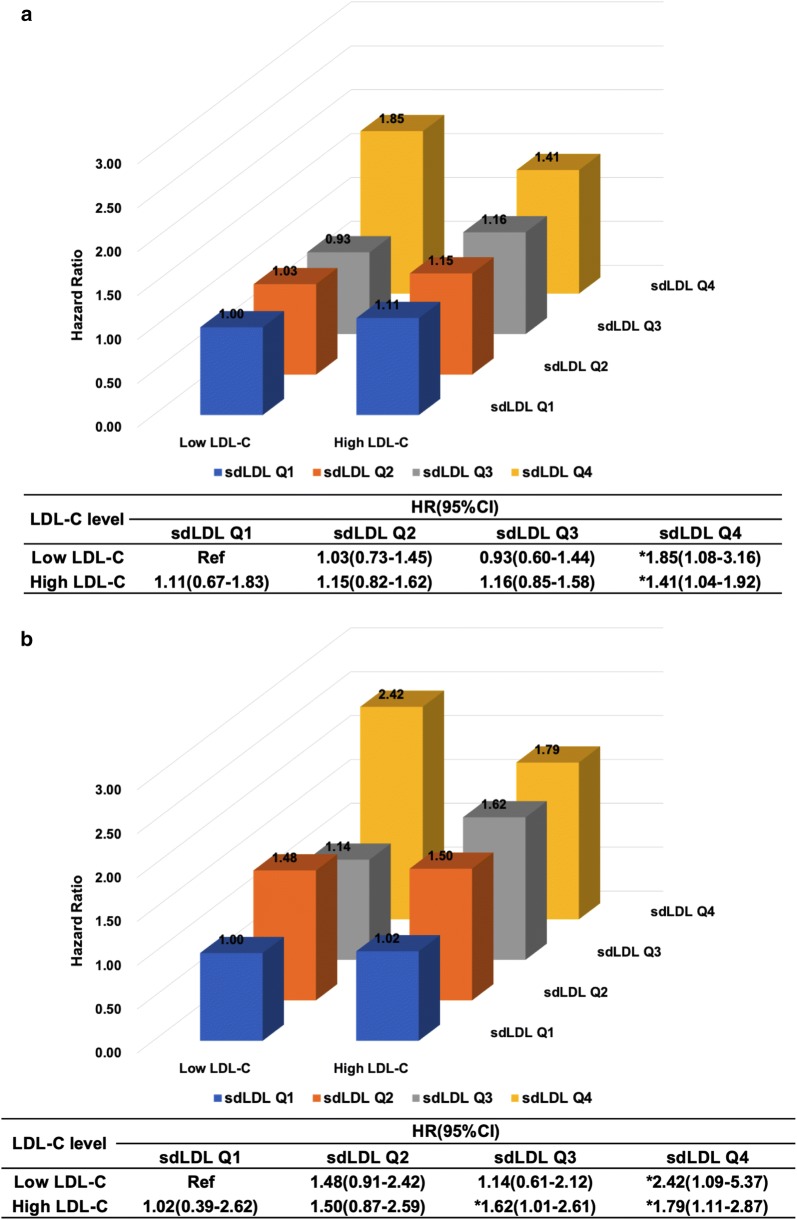
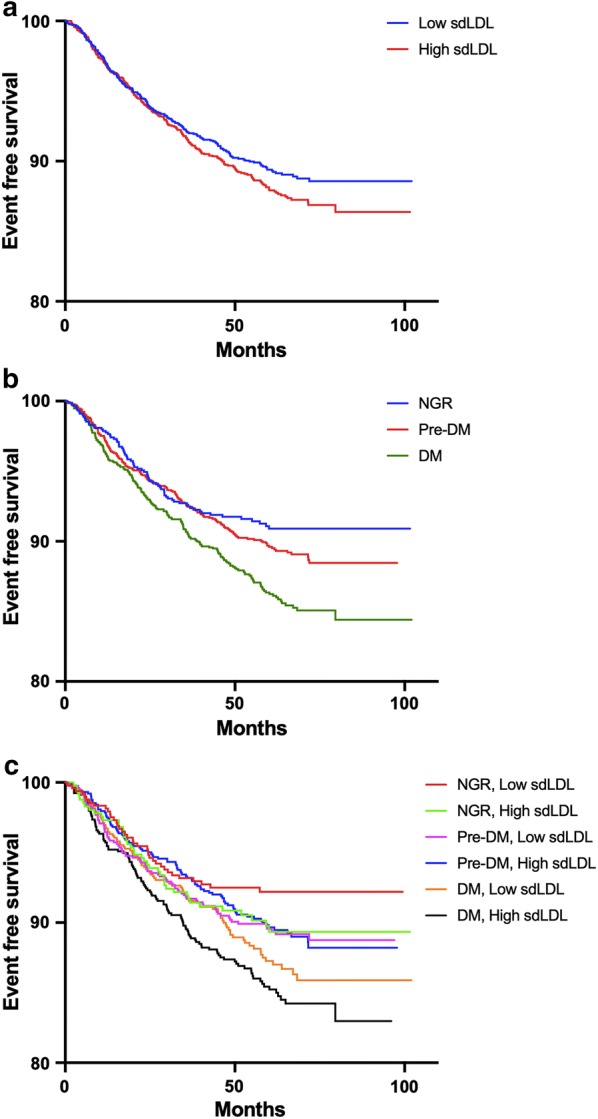
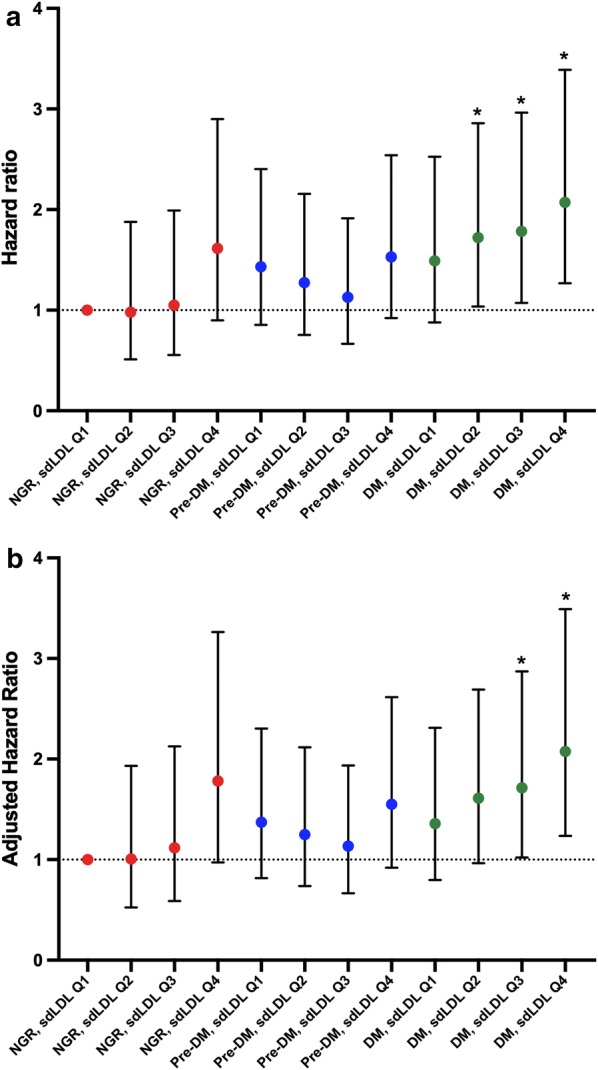
Background: Elevation in small dense low-density lipoprotein (sdLDL) is common in patients with diabetes mellitus (DM), which has already been reported to be associated with incidence of coronary artery disease (CAD). The aim of the present study was to investigate the prognostic value of plasma sdLDL level in patients with stable CAD and DM. Methods: A total of 4148 consecutive patients with stable CAD were prospectively enrolled into the study and followed up for major cardiovascular events (MACEs) up to 8.5 years. Plasma sdLDL level was measured in each patient by a direct method using automated chemistry analyzer. The patients were subsequently divided into four groups by the quartiles of sdLDL and the association of sdLDL level with MACEs in different status of glucose metabolism [DM, Pre-DM, normal glycaemia regulation (NGR)] was evaluated. Results: A total of 464 MACEs were documented. Both Kaplan–Meier analysis and Cox regression analysis indicated that the patients in quartile 4 but not quartile 2 or 3 of sdLDL level had significantly higher rate of MACEs than that in lowest quartile. When the prognostic value of high sdLDL was assessed in different glucose metabolism status, the results showed that the high sdLDL plus DM was associated with worse outcome after adjustment of confounding risk factors (hazard ratio: 1.83, 95% confident interval: 1.24–2.70, p < 0.05). However, no significant association was observed for high sdLDL plus Pre-DM or NGR. Conclusions: The present study firstly indicated that elevated levels of plasma sdLDL were associated with increased risk of MACEs among DM patients with proven CAD, suggesting that sdLDL may be useful for CAD risk stratification in DM.
Overview
The claims and statistics of this paper haven’t been checked yet.
Free: it reads the open-access text and checks the first 5 claims that cite a source we can check. Create a free account to check every claim.
Integrity signals
Registry
Cites
Statistics
Figures
Verification
Claims the paper makes
The claims and statistics of this paper haven’t been checked yet.
Free: it reads the open-access text and checks the first 5 claims that cite a source we can check. Create a free account to check every claim.
Claims other papers make about this one
Each is checked against this paper’s own text: does it say what the citing paper says it does?
The source backs part of the claim, not all of it — or backs it for a different population, condition or comparison.
In the citing paper
“Multiple disturbances in lipoprotein metabolism in individuals with prediabetes and T2D result from the combined effects of insulin deficiency, insulin resistance, and hyperglycemia.”
From American Association of Clinical Endocrinology Clinical Practice Guideline: Developing a Diabetes Mellitus Comprehensive Care Plan-2022 Update. (2022) · cites this paper as [307]
Experimental — accuracy not yet measured
Self-check
Percentages, sums and reported differences re-computed from the paper’s own numbers.
The self-check needs the paper’s full text.
Citations
Cites
Mach, F., Baigent, C., Catapano, A. L., Koskinas, K. C., Casula, M., Badimon, L., Chapman, M. J., De Backer, G. G., Delgado, V., Ference, B. A., et al. (2020) · European Heart Journal · doi:10.1093/eurheartj/ehz455 · Cited by 8,961
Cholesterol Treatment Trialists' (CTT) Collaboration (2010) · The Lancet · doi:10.1016/s0140-6736(10)61350-5 · Cited by 6,550
Grundy, S. M., Stone, N. J., Bailey, A. L., Beam, C., Birtcher, K. K., Blumenthal, R. S., Braun, L. T., de Ferranti, S., Faiella-Tommasino, J., Forman, D. E., et al. (2019) · Circulation · doi:10.1161/cir.0000000000000625 · Cited by 6,185
Mach, F., Baigent, C., Catapano, A. L., Koskinas, K. C., Casula, M., Badimon, L., Chapman, M. J., De Backer, G. G., Delgado, V., Ference, B. A., et al. (2019) · Atherosclerosis · doi:10.1016/j.atherosclerosis.2019.08.014 · Cited by 4,854 · cited 10×
“Unfortunately, among secondary prevention patients, the role of sdLDL in the progression of atherosclerotic cardiovascular disease (ASCVD) was less determined.”
BackgroundInfluentialCosentino, F., Grant, P. J., Aboyans, V., Bailey, C. J., Ceriello, A., Delgado, V., Federici, M., Filippatos, G., Grobbee, D. E., Hansen, T. B., et al. (2020) · European Heart Journal · doi:10.1093/eurheartj/ehz486 · Cited by 4,763
2. Classification and Diagnosis of Diabetes:Standards of Medical Care in Diabetes—2019
American Diabetes Association (2019) · Diabetes Care · doi:10.2337/dc19-s002 · Cited by 2,697
A more meaningful scoring system for determining the severity of coronary heart disease
Gensini, G. G. (1983) · The American Journal of Cardiology · doi:10.1016/s0002-9149(83)80105-2 · Cited by 2,168 · cited 1×
“The precise method of calculating GS was introduced by Gensini GG in 1983 [20].”
MethodMetabolic origins and clinical significance of LDL heterogeneity
Berneis, K. K., & Krauss, R. M. (2002) · Journal of Lipid Research · doi:10.1194/jlr.r200004-jlr200 · Cited by 896 · cited 2×
“In fact, LDL particles were a collection of heterogeneous particles which had different features in size, density, and lipid composition [4].”
BackgroundHoogeveen, R. C., Gaubatz, J. W., Sun, W., Dodge, R. C., Crosby, J. R., Jiang, J., Couper, D., Virani, S. S., Kathiresan, S., Boerwinkle, E., et al. (2014) · Arteriosclerosis Thrombosis and Vascular Biology · doi:10.1161/atvbaha.114.303284 · Cited by 507 · cited 5×
“51-fold higher risk of CAD than those in the lowest quartile [5].”
BackgroundResultInfluentialNew insights into the pathophysiology of dyslipidemia in type 2 diabetes
Taskinen, M.-R., & Borén, J. (2015) · Atherosclerosis · doi:10.1016/j.atherosclerosis.2015.01.039 · Cited by 440
Clinical implications of discordance between low-density lipoprotein cholesterol and particle number
Otvos, J. D., Mora, S., Shalaurova, I., Greenland, P., Mackey, R. H., & Goff, D. C. (2011) · Journal of Clinical Lipidology · doi:10.1016/j.jacl.2011.02.001 · Cited by 384 · cited 1×
“in 2011, they found that in the individuals with low LDL-C but high LDL particle number (LDLP), which reflected higher levels of sdLDL, the event free survival rate was significantly lower than those with low LDL-P but high LDL-C [23].”
BackgroundAnber, V., Griffin, B. A., McConnell, M., Packard, C. J., & Shepherd, J. (1996) · Atherosclerosis · doi:10.1016/0021-9150(96)05842-x · Cited by 238
Dejager, S., Bruckert, E., & Chapman, M. (1993) · Journal of Lipid Research · doi:10.1016/s0022-2275(20)40756-4 · Cited by 237
Tsai, M. Y., Steffen, B. T., Guan, W., McClelland, R. L., Warnick, R., McConnell, J., Hoefner, D. M., & Remaley, A. T. (2014) · Arteriosclerosis, Thrombosis, and Vascular Biology · doi:10.1161/atvbaha.113.302401 · Cited by 182 · cited 10×
“Data from MESA study showed that the plasma levels of sdLDL were largely elevated in patients with impaired glucose metabolism when they were with similar LDL-C as NGR [13].”
BackgroundMethodResultInfluentialDevelopment of a Homogeneous Assay for Measurement of Small Dense LDL Cholesterol
Ito, Y., Fujimura, M., Ohta, M., & Hirano, T. (2011) · Clinical Chemistry · doi:10.1373/clinchem.2010.149559 · Cited by 181
Small Dense LDL Cholesterol and Coronary Heart Disease: Results from the Framingham Offspring Study
Ai, M., Otokozawa, S., Asztalos, B. F., Ito, Y., Nakajima, K., White, C. C., Cupples, L. A., Wilson, P. W., & Schaefer, E. J. (2010) · Clinical Chemistry · doi:10.1373/clinchem.2009.137489 · Cited by 180 · cited 1×
“A great deal of evidence indicated that the sdLDL was related to the incidence of atherosclerotic disease [5, 13, 24].”
BackgroundMora, S., Wenger, N. K., DeMicco, D. A., Breazna, A., Boekholdt, S. M., Arsenault, B. J., Deedwania, P., Kastelein, J. J. P., & Waters, D. D. (2012) · Circulation · doi:10.1161/circulationaha.111.088591 · Cited by 177 · cited 1×
“However, among patients who reached the appropriate LDL-C targets, the risk of incident cardiovascular events remains high [3].”
BackgroundThe atherogenic lipoprotein phenotype and vascular endothelial dysfunction
Sattar, N., Petrie, J. R., & Jaap, A. J. (1998) · Atherosclerosis · doi:10.1016/s0021-9150(98)00037-9 · Cited by 166 · cited 1×
“Furthermore, previous study suggested that sdLDL had a higher propensity to bind to receptors on endothelium [10].”
BackgroundHurt-Camejo, E., Camejo, G., Rosengren, B., Lopez, F., Wiklund, O., & Bondjers, G. (1990) · Journal of Lipid Research · doi:10.1016/s0022-2275(20)42610-0 · Cited by 162
Jin, J., Cao, Y., Zhang, H., Sun, D., Hua, Q., Li, Y., Guo, Y., Wu, N., Zhu, C., Gao, Y., et al. (2019) · Diabetes Care · doi:10.2337/dc19-0274 · Cited by 161 · cited 1×
“Diabetes mellitus (DM) is also one of the most important risk factors of ASCVD and can cause bad prognosis in patients with established CAD [14, 15].”
BackgroundSelf-citationKoba, S., Hirano, T., Ito, Y., Tsunoda, F., Yokota, Y., Ban, Y., Iso, Y., Suzuki, H., & Katagiri, T. (2006) · Atherosclerosis · doi:10.1016/j.atherosclerosis.2005.12.002 · Cited by 121 · cited 2×
“in 2006, results showed that plasma sdLDL levels, which determined by heparin–magnesium precipitation, increased with the increment of diseased coronary vessels or GS [12].”
BackgroundSmall LDL-Cholesterol is Superior to LDL-Cholesterol for Determining Severe Coronary Atherosclerosis
Koba, S., Yokota, Y., Hirano, T., Ito, Y., Ban, Y., Tsunoda, F., Sato, T., Shoji, M., Suzuki, H., Geshi, E., et al. (2008) · Journal of Atherosclerosis and Thrombosis · doi:10.5551/jat.e572 · Cited by 102 · cited 1×
“They also reported that sdLDL levels were superior to LDL-C levels in predicting coronary severity [29].”
BackgroundAlbers, J. J., Slee, A., Fleg, J. L., O’Brien, K. D., & Marcovina, S. M. (2016) · Atherosclerosis · doi:10.1016/j.atherosclerosis.2016.06.019 · Cited by 93 · cited 1×
“Syndrome with Low HDL/High Triglycerides and Impact on Global Health Outcomes (AIM-HIGH) trial, which enrolled 3094 CAD patients, data indicated that sdLDL was not predictive of cardiovascular outcome [30].”
BackgroundNorata, G. D., Raselli, S., Grigore, L., Garlaschelli, K., Vianello, D., Bertocco, S., Zambon, A., & Catapano, A. L. (2009) · Atherosclerosis · doi:10.1016/j.atherosclerosis.2009.03.017 · Cited by 86
Maeda, S., Nakanishi, S., Yoneda, M., Awaya, T., Yamane, K., Hirano, T., & Kohno, N. (2012) · Journal of Atherosclerosis and Thrombosis · doi:10.5551/jat.11445 · Cited by 76
Small dense LDL is more susceptible to glycation than more buoyant LDL in Type 2 diabetes
Younis, N. N., Soran, H., Pemberton, P., Charlton-Menys, V., Elseweidy, M. M., & Durrington, P. N. (2013) · Clinical Science · doi:10.1042/cs20120304 · Cited by 63 · cited 1×
“Furthermore, sdLDL is more susceptible to glycation than lbLDL, which may increase its atherogenicity [17].”
BackgroundPeradze, N., Farr, O. M., Perakakis, N., Lázaro, I., Sala-Vila, A., & Mantzoros, C. S. (2019) · Cardiovascular Diabetology · doi:10.1186/s12933-019-0945-7 · Cited by 61 · cited 1×
“in 2019, treatment of obese patients with liraglutide could induce reductions in number of sdLDL [34].”
BackgroundHsu, S. H.-J., Jang, M.-H., Torng, P., & Su, T. (2018) · Journal of Atherosclerosis and Thrombosis · doi:10.5551/jat.43968 · Cited by 59 · cited 1×
“In some studies on the relationship between lipid and other CAD risk markers, data suggested that sdLDL was more significantly associated with inflammatory markers than LDL-C [11].”
BackgroundNew treatment options for lipid-lowering therapy in subjects with type 2 diabetes
Scicali, R., Pino, A. D., Ferrara, V., Urbano, F., Piro, S., Rabuazzo, A. M., & Purrello, F. (2017) · Acta Diabetologica · doi:10.1007/s00592-017-1089-4 · Cited by 47 · cited 1×
“Proprotein convertase subtilisin/kexin type 9 (PCSK9) inhibitor considerably decreased LDL-C and could be useful in reducing the risk of events in patients with DM and ASCVD receiving maximally tolerated statin [32, 33].”
BackgroundRay, K. K., Del Prato, S., Müller-Wieland, D., Cariou, B., Colhoun, H. M., Tinahones, F. J., Domenger, C., Letierce, A., Mandel, J., Samuel, R., et al. (2019) · Cardiovascular Diabetology · doi:10.1186/s12933-019-0951-9 · Cited by 43 · cited 1×
“Proprotein convertase subtilisin/kexin type 9 (PCSK9) inhibitor considerably decreased LDL-C and could be useful in reducing the risk of events in patients with DM and ASCVD receiving maximally tolerated statin [32, 33].”
BackgroundLipoprotein Subfractions and Glucose Homeostasis in Prediabetes and Diabetes in Taiwan
Hsu, H., Hsu, P.-W., Cheng, M., Ito, Y., Kanda, E., Schaefer, E. J., & Ai, M. (2019) · Journal of Atherosclerosis and Thrombosis · doi:10.5551/jat.48330 · Cited by 38 · cited 2×
“Thus, the plasma level of sdLDL is significantly elevated in pre-diabetes (Pre-DM) and DM individuals [13, 16].”
BackgroundJin, J., Cao, Y., Liu, H., Zhang, H., Guo, Y., Wu, N., Zhu, C., Xu, R., Gao, Y., Sun, J., et al. (2019) · Cardiovascular Diabetology · doi:10.1186/s12933-019-0936-8 · Cited by 34 · cited 1×
“Diabetes mellitus (DM) is also one of the most important risk factors of ASCVD and can cause bad prognosis in patients with established CAD [14, 15].”
BackgroundSelf-citationQi, Y., Liu, J., Wang, W., Wang, M., Zhao, F., Sun, J., Liu, J., Deng, Q., & Zhao, D. H. (2019) · Journal of Atherosclerosis and Thrombosis · doi:10.5551/jat.49841 · Cited by 31
Self-citationLow-Density Lipoprotein Triglycerides
Miller, M. J. (2018) · Journal of the American College of Cardiology · doi:10.1016/j.jacc.2018.03.541 · Cited by 20 · cited 3×
“In hyperglycemic status, the HL-mediated pathway is more active [6].”
BackgroundInfluentialWu, B., Yu, Z., Tong, T., Tong, X., Yang, Y., Tang, Y., Ren, H., Liao, Y., & Liao, J. (2019) · Journal of Clinical Laboratory Analysis · doi:10.1002/jcla.23085 · Cited by 8 · cited 1×
“reported in 2019 that elevated sdLDL concentration was observed in ACS patients (n = 121) but not in healthy controls (n = 172) [28].”
Background
Cited by
Blonde, L., Umpierrez, G. E., Reddy, S. S., McGill, J. B., Berga, S. L., Bush, M., Chandrasekaran, S., DeFronzo, R. A., Einhorn, D., Galindo, R. J., et al. (2022) · Endocrine Practice · doi:10.1016/j.eprac.2022.08.002 · Cited by 507
Samson, S. L., Vellanki, P., Blonde, L., Christofides, E. A., Galindo, R. J., Hirsch, I. B., Isaacs, S. D., Izuora, K. E., Low Wang, C. C., Twining, C. L., et al. (2023) · Endocrine Practice · doi:10.1016/j.eprac.2023.02.001 · Cited by 375
Okamura, T., Tsukamoto, K., Arai, H., Fujioka, Y., Ishigaki, Y., Koba, S., Ohmura, H., Shoji, T., Yokote, K., Yoshida, H., et al. (2024) · Journal of Atherosclerosis and Thrombosis · doi:10.5551/jat.gl2022 · Cited by 302
Zhou, Y., Zhou, H., Hua, L., Hou, C., Jia, Q., Chen, J., Zhang, S., Wang, Y., He, S., & Jia, E. (2021) · Free Radical Biology and Medicine · doi:10.1016/j.freeradbiomed.2021.05.009 · Cited by 249
Xue, C., Chen, K., Gao, Z., Bao, T., Dong, L., Zhao, L., Tong, X., & Li, X. (2023) · Cell Communication and Signaling · doi:10.1186/s12964-022-01016-w · Cited by 164
“The binding affinity between sdLDL and LDL receptors decreases, which hinders sdLDL clearance pathway [89].”
BackgroundSelf-citation
Metadata
- Authors
- Jin, J.-L., Zhang, H.-W., Cao, Y.-X., Liu, H.-H., Hua, Q., Li, Y.-F., Zhang, Y., Wu, N.-Q., Zhu, C.-G., Xu, R.-X., Gao, Y., Li, X.-L., Cui, C.-J., Liu, G., Sun, J., Dong, Q., Guo, Y.-L., & Li, J.-J.
- Affiliations
- Chinese Academy of Medical Sciences & Peking Union Medical College (CN)
- Capital Medical University (CN)
- Corresponding author
- Guo, Yuan-Lin
- Li, Jian-Jun
- ORCID
- Venue
- Cardiovascular Diabetology
- Published
- 2020-04-03
- Volume
- 19
- Issue
- 1
- Pages
- 45-45
- ISSN
- 1475-2840 (ISSN-L)
- PMC
- PMC7118853
- OpenAlex
- W3014624710
- Cited by
- 82
- References
- 35
- Citations by year
- 2026: 5 · 2025: 13 · 2024: 8 · 2023: 27 · 2022: 13 · 2021: 12 · 2020: 3
- FWCI
- 12.56
- Type
- journal article
- Language
- en
- Open access
- gold
- doi.org
- Licence
- cc-by
- creativecommons.org/licenses/by/4.0/ (tdm)
- creativecommons.org/licenses/by/4.0/ (vor)
- Locations
- Cardiovascular Diabetology (publishedVersion, cc-by)
- PubMed Central (publishedVersion, cc-by)
- PubMed (publishedVersion)
- DOAJ (DOAJ: Directory of Open Access Journals) (submittedVersion, cc-by-sa)
- Funders
- Capital Health Development Fund (201614035)
- CAMS Major Collaborative Innovation Project (2016‐I2M‐1‐ 011)
- Topics
- Health Sciences › Medicine › Cardiology and Cardiovascular Medicine › Lipoproteins and Cardiovascular Health
- Health Sciences › Medicine › Endocrinology, Diabetes and Metabolism › Diabetes, Cardiovascular Risks, and Lipoproteins
- Life Sciences › Biochemistry, Genetics and Molecular Biology › Clinical Biochemistry › Paraoxonase enzyme and polymorphisms
- Keywords
- small dense LDL, coronary artery disease, diabetes mellitus, major adverse cardiovascular events, prognostic factors, prediabetes, glucose metabolism, cardiovascular risk stratification, dyslipidemia
- MeSH terms
- Beijing, Aged, Blood Glucose, Coronary Artery Disease, Diabetes Mellitus, Female, Follow-Up Studies, Humans, Cholesterol, LDL, Male, Middle Aged, Particle Size, Prognosis, Prospective Studies, Risk Factors, Time Factors, Biomarkers, Up-Regulation, Risk Assessment, Dyslipidemias
About these checks
Registry, retraction, Cites and statistics results are computed, not judged, with one exception: a printed reference that no index lists is read once by a model before it counts as a citation error. Claims are extracted by a model and kept only when their quote appears verbatim in the text; each cited source is then checked, with a model’s help, for whether it says what the claim relies on. Those verdicts can be wrong — read the claim’s quote and the cited source before relying on one.
Statistics and arithmetic are recomputed, not judged.
Confidence bands are shown only for fields calibrated on our annotated test set. None is calibrated yet, so no band is shown.
What counts as a claim ›How we measure confidence ›How we check this ›
Are you an author, or do you see a problem with this page? Request a review
Data sources
Bibliographic data: Semantic Scholar, OpenAlex, Crossref.
Contains information from the Semantic Scholar Academic Graph Datasets, made available under the ODC Attribution License (ODC-BY 1.0).
Semantic Scholar’s data is described in: Kinney, R., et al. (2023). The Semantic Scholar Open Data Platform. arXiv:2301.10140.
