

The DOI matches its Crossref record; 8 of the 8 references it cites were found in a registry or an index.
Application of different types of CRISPR/Cas-based systems in bacteria
Abstract
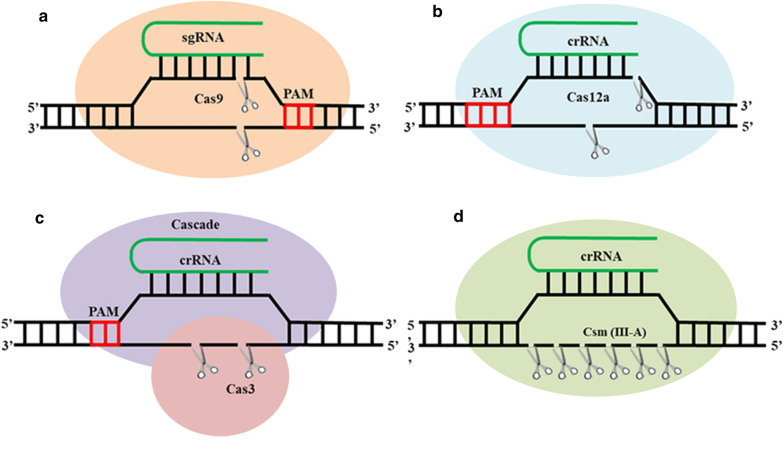
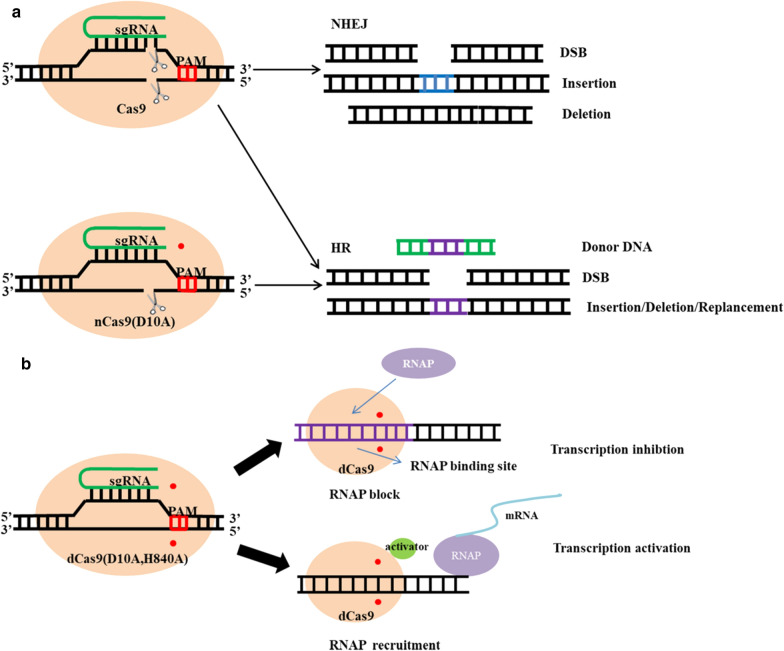
As important genome editing tools, CRISPR/Cas systems, especially those based on type II Cas9 and type V Cas12a, are widely used in genetic and metabolic engineering of bacteria. However, the intrinsic toxicity of Cas9 and Cas12a-mediated CRISPR/Cas tools can lead to cell death in some strains, which led to the development of endogenous type I and III CRISPR/Cas systems. However, these systems are hindered by complicated development and limited applications. Thus, further development and optimization of CRISPR/Cas systems is needed. Here, we briefly summarize the mechanisms of different types of CRISPR/Cas systems as genetic manipulation tools and compare their features to provide a reference for selecting different CRISPR/Cas tools. Then, we show the use of CRISPR/Cas technology for bacterial strain evolution and metabolic engineering, including genome editing, gene expression regulation and the base editor tool. Finally, we offer a view of future directions for bacterial CRISPR/Cas technology.
Overview
The claims and statistics of this paper haven’t been checked yet.
Run the check — free, no account needed. It reads the open-access text and checks the sources it cites.
Integrity signals
Registry
Cites
Statistics
Figures
Verification
Claims the paper makes
The claims and statistics of this paper haven’t been checked yet.
Run the check — free, no account needed. It reads the open-access text and checks the sources it cites.
Claims other papers make about this one
Each is checked against this paper’s own text: does it say what the citing paper says it does?
In the citing paper
“Since the structure of type II CRISPR/Cas-9 is relatively simple, it has been well studied and extensively used in genetic engineering.10”
From Mechanism and Applications of CRISPR/Cas-9-Mediated Genome Editing (2021) · cites this paper as [10]
Self-check
Percentages, sums and reported differences re-computed from the paper’s own numbers.
The self-check needs the paper’s full text.
Citations
Cites
A Programmable Dual-RNA–Guided DNA Endonuclease in Adaptive Bacterial Immunity
Jinek, M., Chylinski, K., Fonfara, I., Hauer, M., Doudna, J. A., & Charpentier, E. (2012) · Science · doi:10.1126/science.1225829 · Cited by 17,116
Repurposing CRISPR as an RNA-Guided Platform for Sequence-Specific Control of Gene Expression
Qi, L. S., Larson, M. H., Gilbert, L. A., Doudna, J. A., Weissman, J. S., Arkin, A. P., & Lim, W. A. (2013) · Cell · doi:10.1016/j.cell.2013.02.022 · Cited by 5,016
Programmable base editing of A•T to G•C in genomic DNA without DNA cleavage
Gaudelli, N. M., Komor, A. C., Rees, H. A., Packer, M. S., Badran, A. H., Bryson, D. I., & Liu, D. R. (2017) · Nature · doi:10.1038/nature24644 · Cited by 4,184
CRISPR RNA Maturation by Trans-Encoded Small RNA and Host Factor RNase III
Deltcheva, E., Chylinski, K., Sharma, C. M., Gonzales, K., Chao, Y., Pirzada, Z. A., Eckert, M. R., Vogel, J., & Charpentier, E. (2011) · Nature · doi:10.1038/nature09886 · Cited by 2,563
Rationally engineered Cas9 nucleases with improved specificity
Slaymaker, I. M., Gao, L., Zetsche, B., Scott, D. A., Yan, W. X., & Zhang, F. (2016) · Science · doi:10.1126/science.aad5227 · Cited by 2,414
Enhanced proofreading governs CRISPR-Cas9 targeting accuracy
Chen, J. S., Dagdas, Y. S., Kleinstiver, B. P., Welch, M. M., Sousa, A. A., Harrington, L. B., Sternberg, S. H., Joung, J. K., Yildiz, A., & Doudna, J. A. (2017) · Nature · doi:10.1038/nature24268 · Cited by 1,168
Continuous evolution of base editors with expanded target compatibility and improved activity
Thuronyi, B. W., Koblan, L. W., Levy, J. M., Yeh, W.-H., Zheng, C., Newby, G. A., Wilson, C., Bhaumik, M., Shubina-Oleinik, O., Holt, J. R., et al. (2019) · Nature Biotechnology · doi:10.1038/s41587-019-0193-0 · Cited by 347
Wendt, K. E., Ungerer, J., Cobb, R. E., Zhao, H., & Pakrasi, H. B. (2016) · Microbial Cell Factories · doi:10.1186/s12934-016-0514-7 · Cited by 232
Research works printed but not linked: 111
- Choi KR, Lee SY. CRISPR technologies for bacterial systems: current achievements and future directions. Biotechnol Adv. 2016;34(7):1180–209. https://doi.org/10.1016/j.biotechadv.2016.08.002. · DOI
- Becker J, Wittmann C. Advanced biotechnology: metabolically engineered cells for the bio-based production of chemicals and fuels, materials, and health-care products. Angew Chem Int Ed Engl. 2015;54(11):3328–50. https://doi.org/10.1002/anie.201409033. · DOI
- Choi KR, Shin JH, Cho JS, Yang D, Lee SY. Systems metabolic engineering of Escherichia coli. EcoSal Plus. 2016. https://doi.org/10.1128/ecosalplus.esp-0010-2015. · DOI
- Straathof AJ. Transformation of biomass into commodity chemicals using enzymes or cells. Chem Rev. 2014;114(3):1871–908. https://doi.org/10.1021/cr400309c. · DOI
- Makarova KS, Wolf YI, Alkhnbashi OS, Costa F, Shah SA, Saunders SJ, Koonin EV. An updated evolutionary classification of CRISPR-Cas systems. Nat Rev Microbiol. 2015;13(11):722–36. https://doi.org/10.1038/nrmicro3569. · DOI · Paper page
- Mohanraju P, Makarova KS, Zetsche B, Zhang F, Koonin EV, van der Oost J. Diverse evolutionary roots and mechanistic variations of the CRISPR-Cas systems. Science. 2016;353(aad5147):5147. https://doi.org/10.1126/science.aad5147. · DOI
- Wang F, Wang L, Zou X, Duan S, Li Z, Deng Z, Chen S. Advances in CRISPR-Cas systems for RNA targeting, tracking and editing. Biotechnol Adv. 2019. https://doi.org/10.1016/j.biotechadv.2019.03.016. · DOI · Paper page
- Zetsche B, Gootenberg JS, Abudayyeh OO, Slaymaker IM, Makarova KS, Essletzbichler P, Zhang F. Cpf1 is a single RNA-guided endonuclease of a class 2 CRISPR-Cas system. Cell. 2015;163(3):759–71. https://doi.org/10.1016/j.cell.2015.09.038. · DOI · Paper page
- Hidalgo-Cantabrana C, Goh YJ, Pan M, Sanozky-Dawes R, Barrangou R. Genome editing using the endogenous type I CRISPR-Cas system in Lactobacillus crispatus. Proc Natl Acad Sci. 2019. https://doi.org/10.1073/pnas.1905421116. · DOI
- Ichikawa HT, Cooper JC, Lo L, Potter J, Terns RM, Terns MP. Programmable type III-A CRISPR-Cas DNA targeting modules. PLoS ONE. 2017;12(4):e0176221. https://doi.org/10.1371/journal.pone.0176221. · DOI
- Jiang F, Doudna JA. CRISPR-Cas9 structures and mechanisms. Annu Rev Biophys. 2017;46:505–29. https://doi.org/10.1146/annurev-biophys-062215-010822. · DOI · Paper page
- Gao P, Yang H, Rajashankar KR, Huang Z, Patel DJ. Type V CRISPR-Cas Cpf1 endonuclease employs a unique mechanism for crRNA-mediated target DNA recognition. Cell Res. 2016;26(8):901–13. https://doi.org/10.1038/cr.2016.88. · DOI
- Wang H, La Russa M, Qi LS. CRISPR/Cas9 in genome editing and beyond. Annu Rev Biochem. 2016;85:227–64. https://doi.org/10.1146/annurev-biochem-060815-014607. · DOI
- Fang H, Li D, Kang J, Jiang P, Sun J, Zhang D. Metabolic engineering of Escherichia coli for de novo biosynthesis of vitamin B12. Nat Commun. 2018;9(1):4917. https://doi.org/10.1038/s41467-018-07412-6. · DOI
- Standage-Beier K, Zhang Q, Wang X. Targeted large-scale deletion of bacterial genomes using CRISPR-nickases. ACS Synth Biol. 2015;4(11):1217–25. https://doi.org/10.1021/acssynbio.5b00132. · DOI
- Banno S, Nishida K, Arazoe T, Mitsunobu H, Kondo A. Deaminase-mediated multiplex genome editing in Escherichia coli. Nat Microbiol. 2018;3(4):423–9. https://doi.org/10.1038/s41564-017-0102-6. · DOI
- Liu Y, Wan X, Wang B. Engineered CRISPRa enables programmable eukaryote-like gene activation in bacteria. Nat Commun. 2019;10(1):3693. https://doi.org/10.1038/s41467-019-11479-0. · DOI
- Tan SZ, Reisch CR, Prather KLJ, O’Toole G. A robust CRISPR interference gene repression system in pseudomonas. J Bacteriol. 2018;200(7):e00575-00517. https://doi.org/10.1128/jb.00575-17. · DOI
- Cress BF, Toparlak OD, Guleria S, Lebovich M, Stieglitz JT, Englaender JA, Koffas MA. CRISPathBrick: modular combinatorial assembly of type II-A CRISPR arrays for dCas9-mediated multiplex transcriptional repression in E. coli. ACS Synth Biol. 2015;4(9):987–1000. https://doi.org/10.1021/acssynbio.5b00012. · DOI
- Ji W, Lee D, Wong E, Dadlani P, Dinh D, Huang V, Lim WA. Specific gene repression by CRISPRi system transferred through bacterial conjugation. ACS Synth Biol. 2014;3(12):929–31. https://doi.org/10.1021/sb500036q. · DOI
- Li S, Jendresen CB, Grunberger A, Ronda C, Jensen SI, Noack S, Nielsen AT. Enhanced protein and biochemical production using CRISPRi-based growth switches. Metab Eng. 2016;38:274–84. https://doi.org/10.1016/j.ymben.2016.09.003. · DOI
- Bikard D, Jiang W, Samai P, Hochschild A, Zhang F, Marraffini LA. Programmable repression and activation of bacterial gene expression using an engineered CRISPR-Cas system. Nucleic Acids Res. 2013;41(15):7429–37. https://doi.org/10.1093/nar/gkt520. · DOI · Paper page
- Zheng K, Wang Y, Li N, Jiang FF, Wu CX, Liu F, Liu ZF. Highly efficient base editing in bacteria using a Cas9-cytidine deaminase fusion. Commun Biol. 2018;1:32. https://doi.org/10.1038/s42003-018-0035-5. · DOI
- Datsenko KA, Wanner BL. One-step inactivation of chromosomal genes in Escherichia coli K-12 using PCR products. Proc Natl Acad Sci U S A. 2000;97(12):6640–5. https://doi.org/10.1073/pnas.120163297. · DOI
- Jiang Y, Chen B, Duan C, Sun B, Yang J, Yang S. Multigene editing in the Escherichia coli genome via the CRISPR-Cas9 system. Appl Environ Microbiol. 2015;81(7):2506–14. https://doi.org/10.1128/AEM.04023-14. · DOI · Paper page
- Reisch CR, Prather KL. The no-SCAR (scarless Cas9 assisted recombineering) system for genome editing in Escherichia coli. Sci Rep. 2015;5:15096. https://doi.org/10.1038/srep15096. · DOI
- Xia J, Wang L, Zhu JB, Sun CJ, Zheng MG, Zheng L, Shi L. Expression of Shewanella frigidimarina fatty acid metabolic genes in E. coli by CRISPR/cas9-coupled lambda Red recombineering. Biotechnol Lett. 2016;38(1):117–22. https://doi.org/10.1007/s10529-015-1956-4. · DOI
- Zhao D, Yuan S, Xiong B, Sun H, Ye L, Li J, Bi C. Development of a fast and easy method for Escherichia coli genome editing with CRISPR/Cas9. Microb Cell Fact. 2016;15(1):205. https://doi.org/10.1186/s12934-016-0605-5. · DOI
- Chen W, Zhang Y, Yeo WS, Bae T, Ji Q. Rapid and efficient genome editing in Staphylococcus aureus by using an engineered CRISPR/Cas9 system. J Am Chem Soc. 2017;139(10):3790–5. https://doi.org/10.1021/jacs.6b13317. · DOI
- Ronda C, Pedersen LE, Sommer MO, Nielsen AT. CRMAGE: CRISPR optimized MAGE recombineering. Sci Rep. 2016;6:19452. https://doi.org/10.1038/srep19452. · DOI
- Huang H, Zheng G, Jiang W, Hu H, Lu Y. One-step high-efficiency CRISPR/Cas9-mediated genome editing in Streptomyces. Acta Biochim Biophys Sin (Shanghai). 2015;47(4):231–43. https://doi.org/10.1093/abbs/gmv007. · DOI
- Li Y, Lin Z, Huang C, Zhang Y, Wang Z, Tang YJ, Zhao X. Metabolic engineering of Escherichia coli using CRISPR-Cas9 meditated genome editing. Metab Eng. 2015;31:13–21. https://doi.org/10.1016/j.ymben.2015.06.006. · DOI
- Mougiakos I, Mohanraju P, Bosma EF, Vrouwe V, Finger Bou M, Naduthodi MIS, van der Oost J. Characterizing a thermostable Cas9 for bacterial genome editing and silencing. Nat Commun. 2017;8(1):1647. https://doi.org/10.1038/s41467-017-01591-4. · DOI
- Pyne ME, Moo-Young M, Chung DA, Chou CP, Kivisaar M. Coupling the CRISPR/Cas9 system with lambda red recombineering enables simplified chromosomal gene replacement in Escherichia coli. Appl Environ Microbiol. 2015;81(15):5103–14. https://doi.org/10.1128/aem.01248-15. · DOI
- Bassalo MC, Garst AD, Halweg-Edwards AL, Grau WC, Domaille DW, Mutalik VK, Gill RT. Rapid and efficient one-step metabolic pathway integration in E. coli. ACS Synth Biol. 2016;5(7):561–8. https://doi.org/10.1021/acssynbio.5b00187. · DOI
- Chung ME, Yeh IH, Sung LY, Wu MY, Chao YP, Ng IS, Hu YC. Enhanced integration of large DNA into E. coli chromosome by CRISPR/Cas9. Biotechnol Bioeng. 2017;114(1):172–83. https://doi.org/10.1002/bit.26056. · DOI
- Altenbuchner J. Editing of the Bacillus subtilis Genome by the CRISPR-Cas9 System. Appl Environ Microbiol. 2016;82(17):5421–7. https://doi.org/10.1128/AEM.01453-16. · DOI
- Wasels F, Jean-Marie J, Collas F, Lopez-Contreras AM, Lopes Ferreira N. A two-plasmid inducible CRISPR/Cas9 genome editing tool for Clostridium acetobutylicum. J Microbiol Methods. 2017;140:5–11. https://doi.org/10.1016/j.mimet.2017.06.010. · DOI
- Cobb RE, Wang Y, Zhao H. High-efficiency multiplex genome editing of Streptomyces species using an engineered CRISPR/Cas system. ACS Synth Biol. 2015;4(6):723–8. https://doi.org/10.1021/sb500351f. · DOI
- Zhang MM, Wong FT, Wang Y, Luo S, Lim YH, Heng E, Zhao H. CRISPR-Cas9 strategy for activation of silent Streptomyces biosynthetic gene clusters. Nat Chem Biol. 2017. https://doi.org/10.1038/nchembio.2341. · DOI
- Bruder MR, Pyne ME, Moo-Young M, Chung DA, Chou CP. Extending CRISPR-Cas9 technology from genome editing to transcriptional engineering in the genus Clostridium. Appl Environ Microbiol. 2016;82(20):6109–19. https://doi.org/10.1128/aem.02128-16. · DOI
- Wolf T, Gren T, Thieme E, Wibberg D, Zemke T, Puhler A, Kalinowski J. Targeted genome editing in the rare actinomycete Actinoplanes sp. SE50/110 by using the CRISPR/Cas9 System. J Biotechnol. 2016;231:122–8. https://doi.org/10.1016/j.jbiotec.2016.05.039. · DOI
- Zhang K, Duan X, Wu J. Multigene disruption in undomesticated Bacillus subtilis ATCC 6051a using the CRISPR/Cas9 system. Sci Rep. 2016;6:27943. https://doi.org/10.1038/srep27943. · DOI
- Cho JS, Choi KR, Prabowo CPS, Shin JH, Yang D, Jang J, Lee SY. CRISPR/Cas9-coupled recombineering for metabolic engineering of Corynebacterium glutamicum. Metab Eng. 2017;42:157–67. https://doi.org/10.1016/j.ymben.2017.06.010. · DOI
- Liu J, Wang Y, Lu Y, Zheng P, Sun J, Ma Y. Development of a CRISPR/Cas9 genome editing toolbox for Corynebacterium glutamicum. Microb Cell Fact. 2017;16(1):205. https://doi.org/10.1186/s12934-017-0815-5. · DOI
- Peng F, Wang X, Sun Y, Dong G, Yang Y, Liu X, Bai Z. Efficient gene editing in Corynebacterium glutamicum using the CRISPR/Cas9 system. Microb Cell Fact. 2017;16(1):201. https://doi.org/10.1186/s12934-017-0814-6. · DOI
- Wang Y, Zhang ZT, Seo SO, Lynn P, Lu T, Jin YS, Blaschek HP. Bacterial genome editing with CRISPR-Cas9: deletion, integration, single nucleotide modification, and desirable “clean” mutant selection in Clostridium beijerinckii as an example. ACS Synth Biol. 2016;5(7):721–32. https://doi.org/10.1021/acssynbio.6b00060. · DOI
- Jia H, Zhang L, Wang T, Han J, Tang H, Zhang L. Development of a CRISPR/Cas9-mediated gene-editing tool in Streptomyces rimosus. Microbiology. 2017;163(8):1148–55. https://doi.org/10.1099/mic.0.000501. · DOI
- Zeng H, Wen S, Xu W, He Z, Zhai G, Liu Y, Sun Y. Highly efficient editing of the actinorhodin polyketide chain length factor gene in Streptomyces coelicolor M145 using CRISPR/Cas9-CodA(sm) combined system. Appl Microbiol Biotechnol. 2015;99(24):10575–85. https://doi.org/10.1007/s00253-015-6931-4. · DOI
- McAllister KN, Bouillaut L, Kahn JN, Self WT, Sorg JA. Using CRISPR-Cas9-mediated genome editing to generate C. difficile mutants defective in selenoproteins synthesis. Sci Rep. 2017;7(1):14672. https://doi.org/10.1038/s41598-017-15236-5. · DOI
- Wang S, Dong S, Wang P, Tao Y, Wang Y. Genome editing in Clostridium saccharoperbutylacetonicum N1-4 with the CRISPR-Cas9 System. Appl Environ Microbiol. 2017. https://doi.org/10.1128/aem.00233-17. · DOI
- Nagaraju S, Davies NK, Walker DJ, Kopke M, Simpson SD. Genome editing of Clostridium autoethanogenum using CRISPR/Cas9. Biotechnol Biofuels. 2016;9:219. https://doi.org/10.1186/s13068-016-0638-3. · DOI
- Su T, Liu F, Gu P, Jin H, Chang Y, Wang Q, Qi Q. A CRISPR-Cas9 assisted non-homologous end-joining strategy for one-step engineering of bacterial genome. Sci Rep. 2016;6:37895. https://doi.org/10.1038/srep37895. · DOI
- Tong Y, Charusanti P, Zhang L, Weber T, Lee SY. CRISPR-Cas9 based engineering of actinomycetal genomes. ACS Synth Biol. 2015;4(9):1020–9. https://doi.org/10.1021/acssynbio.5b00038. · DOI
- Song X, Huang H, Xiong Z, Ai L, Yang S. CRISPR-Cas 9(D10A) nickase-assisted genome editing in Lactobacillus casei. Appl Environ Microbiol. 2017. https://doi.org/10.1128/aem.01259-17. · DOI
- Li Q, Chen J, Minton NP, Zhang Y, Wen Z, Liu J, Yang S. CRISPR-based genome editing and expression control systems in Clostridium acetobutylicum and Clostridium beijerinckii. Biotechnol J. 2016;11(7):961–72. https://doi.org/10.1002/biot.201600053. · DOI
- Li K, Cai D, Wang Z, He Z, Chen S. Development of an efficient genome editing tool in Bacillus licheniformis using CRISPR-Cas9 NICKASE. Appl Environ Microbiol. 2018. https://doi.org/10.1128/aem.02608-17. · DOI
- Xu T, Li Y, Shi Z, Hemme CL, Li Y, Zhu Y, Zhou J. Efficient genome editing in Clostridium cellulolyticum via CRISPR-Cas9 nickase. Appl Environ Microbiol. 2015;81(13):4423–31. https://doi.org/10.1128/AEM.00873-15. · DOI
- Park J, Shin H, Lee SM, Um Y, Woo HM. RNA-guided single/double gene repressions in Corynebacterium glutamicum using an efficient CRISPR interference and its application to industrial strain. Microb Cell Fact. 2018;17(1):4. https://doi.org/10.1186/s12934-017-0843-1. · DOI
- Wang Y, Zhang ZT, Seo SO, Lynn P, Lu T, Jin YS, Blaschek HP. Gene transcription repression in Clostridium beijerinckii using CRISPR-dCas9. Biotechnol Bioeng. 2016;113(12):2739–43. https://doi.org/10.1002/bit.26020. · DOI
- Westbrook AW, Moo-Young M, Chou CP. Development of a CRISPR-Cas9 tool kit for comprehensive engineering of Bacillus subtilis. Appl Environ Microbiol. 2016;82(16):4876–95. https://doi.org/10.1128/AEM.01159-16. · DOI
- Choudhary E, Thakur P, Pareek M, Agarwal N. Gene silencing by CRISPR interference in mycobacteria. Nat Commun. 2015;6:6267. https://doi.org/10.1038/ncomms7267. · DOI
- Singh AK, Carette X, Potluri LP, Sharp JD, Xu R, Prisic S, Husson RN. Investigating essential gene function in Mycobacterium tuberculosis using an efficient CRISPR interference system. Nucleic Acids Res. 2016;44(18):e143. https://doi.org/10.1093/nar/gkw625. · DOI
- Elhadi D, Lv L, Jiang XR, Wu H, Chen GQ. CRISPRi engineering E. coli for morphology diversification. Metab Eng. 2016;38:358–69. https://doi.org/10.1016/j.ymben.2016.09.001. · DOI
- Peters JM, Colavin A, Shi H, Czarny TL, Larson MH, Wong S, Gross CA. A comprehensive, CRISPR-based functional analysis of essential genes in bacteria. Cell. 2016;165(6):1493–506. https://doi.org/10.1016/j.cell.2016.05.003. · DOI
- Cleto S, Jensen JV, Wendisch VF, Lu TK. Corynebacterium glutamicum metabolic engineering with CRISPR interference (CRISPRi). ACS Synth Biol. 2016;5(5):375–85. https://doi.org/10.1021/acssynbio.5b00216. · DOI
- Kim SK, Han GH, Seong W, Kim H, Kim SW, Lee DH, Lee SG. CRISPR interference-guided balancing of a biosynthetic mevalonate pathway increases terpenoid production. Metab Eng. 2016;38:228–40. https://doi.org/10.1016/j.ymben.2016.08.006. · DOI
- Lv L, Ren YL, Chen JC, Wu Q, Chen GQ. Application of CRISPRi for prokaryotic metabolic engineering involving multiple genes, a case study: controllable P(3HB-co-4HB) biosynthesis. Metab Eng. 2015;29:160–8. https://doi.org/10.1016/j.ymben.2015.03.013. · DOI
- Liang JL, Guo LQ, Lin JF, He ZQ, Cai FJ, Chen JF. A novel process for obtaining pinosylvin using combinatorial bioengineering in Escherichia coli. World J Microbiol Biotechnol. 2016;32(6):102. https://doi.org/10.1007/s11274-016-2062-z. · DOI
- Cress BF, Leitz QD, Kim DC, Amore TD, Suzuki JY, Linhardt RJ, Koffas MA. CRISPRi-mediated metabolic engineering of E. coli for O-methylated anthocyanin production. Microb Cell Fact. 2017;16(1):10. https://doi.org/10.1186/s12934-016-0623-3. · DOI
- Gao C, Wang S, Hu G, Guo L, Chen X, Xu P, Liu L. Engineering Escherichia coli for malate production by integrating modular pathway characterization with CRISPRi-guided multiplexed metabolic tuning. Biotechnol Bioeng. 2018;115(3):661–72. https://doi.org/10.1002/bit.26486. · DOI
- Kim SK, Seong W, Han GH, Lee DH, Lee SG. CRISPR interference-guided multiplex repression of endogenous competing pathway genes for redirecting metabolic flux in Escherichia coli. Microb Cell Fact. 2017;16(1):188. https://doi.org/10.1186/s12934-017-0802-x. · DOI
- Wu J, Zhou P, Zhang X, Dong M. Efficient de novo synthesis of resveratrol by metabolically engineered Escherichia coli. J Ind Microbiol Biotechnol. 2017;44(7):1083–95. https://doi.org/10.1007/s10295-017-1937-9. · DOI
- Wu MY, Sung LY, Li H, Huang CH, Hu YC. Combining CRISPR and CRISPRi systems for metabolic engineering of E. coli and 1,4-BDO biosynthesis. ACS Synth Biol. 2017;6(12):2350–61. https://doi.org/10.1021/acssynbio.7b00251. · DOI
- Heo MJ, Jung HM, Um J, Lee SW, Oh MK. Controlling citrate synthase expression by CRISPR/Cas9 genome editing for n-butanol production in Escherichia coli. ACS Synth Biol. 2017;6(2):182–9. https://doi.org/10.1021/acssynbio.6b00134. · DOI
- Wu J, Du G, Chen J, Zhou J. Enhancing flavonoid production by systematically tuning the central metabolic pathways based on a CRISPR interference system in Escherichia coli. Sci Rep. 2015;5:13477. https://doi.org/10.1038/srep13477. · DOI
- Eid A, Alshareef S, Mahfouz MM. CRISPR base editors: genome editing without double-stranded breaks. Biochem J. 2018;475(11):1955–64. https://doi.org/10.1042/bcj20170793. · DOI
- Kim JS. Precision genome engineering through adenine and cytosine base editing. Nat Plants. 2018;4(3):148–51. https://doi.org/10.1038/s41477-018-0115-z. · DOI
- Komor AC, Badran AH, Liu DR. CRISPR-based technologies for the manipulation of eukaryotic genomes. Cell. 2017;168(1–2):20–36. https://doi.org/10.1016/j.cell.2016.10.044. · DOI
- Wang Y, Liu Y, Liu J, Guo Y, Fan L, Ni X, Ma Y. MACBETH: multiplex automated Corynebacterium glutamicum base editing method. Metab Eng. 2018;47:200–10. https://doi.org/10.1016/j.ymben.2018.02.016. · DOI
- Chen W, Zhang Y, Zhang Y, Pi Y, Gu T, Song L, Ji Q. CRISPR/Cas9-based genome editing in Pseudomonas aeruginosa and cytidine deaminase-mediated base editing in Pseudomonas species. iScience. 2018;6:222–31. https://doi.org/10.1016/j.isci.2018.07.024. · DOI
- Wang Y, Wang S, Chen W, Song L, Zhang Y, Shen Z, Ji Q. CRISPR-Cas9 and CRISPR-assisted cytidine deaminase enable precise and efficient genome editing in Klebsiella pneumoniae. Appl Environ Microbiol. 2018. https://doi.org/10.1128/aem.01834-18. · DOI
- Gu T, Zhao S, Pi Y, Chen W, Chen C, Liu Q, Ji Q. Highly efficient base editing in Staphylococcus aureus using an engineered CRISPR RNA-guided cytidine deaminase. Chem Sci. 2018;9(12):3248–53. https://doi.org/10.1039/c8sc00637g. · DOI
- Zhao D, Li J, Li S, Xin X, Hu M, Price MA, Zhang X. New base editors change C to A in bacteria and C to G in mammalian cells. Nat Biotechnol. 2020. https://doi.org/10.1038/s41587-020-0592-2. · DOI
- Murugan K, Babu K, Sundaresan R, Rajan R, Sashital DG. The revolution continues: newly discovered systems expand the CRISPR-Cas Toolkit. Mol Cell. 2017;68(1):15–25. https://doi.org/10.1016/j.molcel.2017.09.007. · DOI
- Liu L, Chen P, Wang M, Li X, Wang J, Yin M, Wang Y. C2c1-sgRNA complex structure reveals RNA-guided DNA cleavage mechanism. Mol Cell. 2017;65(2):310–22. https://doi.org/10.1016/j.molcel.2016.11.040. · DOI
- Zhang J, Hong W, Zong W, Wang P, Wang Y. Markerless genome editing in Clostridium beijerinckii using the CRISPR-Cpf1 system. J Biotechnol. 2018;284:27–30. https://doi.org/10.1016/j.jbiotec.2018.07.040. · DOI
- Li L, Wei K, Zheng G, Liu X, Chen S, Jiang W, Lu Y. CRISPR-Cpf1-assisted multiplex genome editing and transcriptional repression in streptomyces. Appl Environ Microbiol. 2018. https://doi.org/10.1128/aem.00827-18. · DOI
- Hong W, Zhang J, Cui G, Wang L, Wang Y. Multiplexed CRISPR-Cpf1-mediated genome editing in clostridium difficile toward the understanding of pathogenesis of C. difficile infection. ACS Synth Biol. 2018;7(6):1588–600. https://doi.org/10.1021/acssynbio.8b00087. · DOI
- Ao X, Yao Y, Li T, Yang TT, Dong X, Zheng ZT, Guo Y. A multiplex genome editing method for Escherichia coli based on CRISPR-Cas12a. Front Microbiol. 2018;9:2307. https://doi.org/10.3389/fmicb.2018.02307. · DOI
- Jiang Y, Qian F, Yang J, Liu Y, Dong F, Xu C, Yang S. CRISPR-Cpf1 assisted genome editing of Corynebacterium glutamicum. Nat Commun. 2017;8:15179. https://doi.org/10.1038/ncomms15179. · DOI
- Sun B, Yang J, Yang S, Ye RD, Chen D, Jiang Y. A CRISPR-Cpf1-assisted non-homologous end joining genome editing system of Mycobacterium smegmatis. Biotechnol J. 2018;13(9):e1700588. https://doi.org/10.1002/biot.201700588. · DOI
- Zhang X, Wang J, Cheng Q, Zheng X, Zhao G, Wang J. Multiplex gene regulation by CRISPR-ddCpf1. Cell Discov. 2017;3:17018. https://doi.org/10.1038/celldisc.2017.18. · DOI
- Paul B, Montoya G. CRISPR-Cas12a: functional overview and applications. Biomed J. 2020;43(1):8–17. https://doi.org/10.1016/j.bj.2019.10.005. · DOI · Paper page
- Zhang JL, Peng YZ, Liu D, Liu H, Cao YX, Li BZ, Yuan YJ. Gene repression via multiplex gRNA strategy in Y. lipolytica. Microb Cell Fact. 2018;17(1):62. https://doi.org/10.1186/s12934-018-0909-8. · DOI
- Stachler AE, Marchfelder A. Gene repression in haloarchaea using the CRISPR (clustered regularly interspaced short palindromic repeats)-Cas I-B system. J Biol Chem. 2016;291(29):15226–42. https://doi.org/10.1074/jbc.M116.724062. · DOI
- Cheng F, Gong L, Zhao D, Yang H, Zhou J, Li M, Xiang H. Harnessing the native type I-B CRISPR-Cas for genome editing in a polyploid archaeon. J Genet Genomics. 2017;44(11):541–8. https://doi.org/10.1016/j.jgg.2017.09.010. · DOI
- Zhang J, Zong W, Hong W, Zhang ZT, Wang Y. Exploiting endogenous CRISPR-Cas system for multiplex genome editing in Clostridium tyrobutyricum and engineer the strain for high-level butanol production. Metab Eng. 2018;47:49–59. https://doi.org/10.1016/j.ymben.2018.03.007. · DOI
- Richter H, Rompf J, Wiegel J, Rau K, Randau L. Fragmentation of the CRISPR-Cas Type I-B signature protein Cas8b. Biochim Biophys Acta Gen Subj. 2017;1861(11 Pt B):2993–3000. https://doi.org/10.1016/j.bbagen.2017.02.026. · DOI
- Chang Y, Su T, Qi Q, Liang Q. Easy regulation of metabolic flux in Escherichia coli using an endogenous type I–E CRISPR-Cas system. Microb Cell Fact. 2016;15(1):195. https://doi.org/10.1186/s12934-016-0594-4. · DOI
- Tarasava K, Liu R, Garst A, Gill RT. Combinatorial pathway engineering using type I-E CRISPR interference. Biotechnol Bioeng. 2018;115(7):1878–83. https://doi.org/10.1002/bit.26589. · DOI
- You L, Ma J, Wang J, Artamonova D, Wang M, Liu L, Wang Y. Structure studies of the CRISPR-Csm complex reveal mechanism of co-transcriptional interference. Cell. 2019;176(1–2):239–253 e216. https://doi.org/10.1016/j.cell.2018.10.052. · DOI
- Taylor DW, Zhu Y, Staals RH, Kornfeld JE, Shinkai A, van der Oost J, Nogales E, Doudna JA. Structures of the CRISPR-Cmr complex reveal mode of RNA target positioning. Science. 2015;348:581–5. · DOI
- Makarova KS, Aravind L, Wolf YI, Koonin EV. Unification of Cas protein families and a simple scenario for the origin and evolution of CRISPR-Cas systems. Biol Direct. 2011;6:38. https://doi.org/10.1186/1745-6150-6-38. · DOI
- Guan J, Wang W, Sun B. Chromosomal targeting by the type III-A CRISPR-Cas system can reshape genomes in Staphylococcus aureus. mSphere. 2017. https://doi.org/10.1128/msphere.00403-17. · DOI
- Gao Z, Herrera-Carrillo E, Berkhout B. Improvement of the CRISPR-Cpf1 system with ribozyme-processed crRNA. RNA Biol. 2018;15(12):1458–67. https://doi.org/10.1080/15476286.2018.1551703. · DOI
- Kleinstiver BP, Sousa AA, Walton RT, Tak YE, Hsu JY, Clement K, Joung JK. Engineered CRISPR-Cas12a variants with increased activities and improved targeting ranges for gene, epigenetic and base editing. Nat Biotechnol. 2019;37(3):276–82. https://doi.org/10.1038/s41587-018-0011-0. · DOI
- Wang L, Wang H, Liu H, Zhao Q, Liu B, Wang L, Luo Y. Improved CRISPR-Cas12a-assisted one-pot DNA editing method enables seamless DNA editing. Biotechnol Bioeng. 2019;116(6):1463–74. https://doi.org/10.1002/bit.26938. · DOI
- Teng F, Cui T, Feng G, Guo L, Xu K, Gao Q, Li W. Repurposing CRISPR-Cas12b for mammalian genome engineering. Cell Discov. 2018;4:63. https://doi.org/10.1038/s41421-018-0069-3. · DOI
- Liu JJ, Orlova N, Oakes BL, Ma E, Spinner HB, Baney KLM, Doudna JA. CasX enzymes comprise a distinct family of RNA-guided genome editors. Nature. 2019;566(7743):218–23. https://doi.org/10.1038/s41586-019-0908-x. · DOI · Paper page
- Wu J, Zhang X, Zhu Y, Tan Q, He J, Dong M. Rational modular design of metabolic network for efficient production of plant polyphenol pinosylvin. Sci Rep. 2017;7(1):1459. https://doi.org/10.1038/s41598-017-01700-9. · DOI
Cited by
Sorted by citations
Mechanism and Applications of CRISPR/Cas-9-Mediated Genome Editing
Mengstie, M. A., & Wondimu, B. Z. (2021) · Biologics: Targets and Therapy · doi:10.2147/btt.s326422 · Cited by 478
The application of the CRISPR-Cas system in antibiotic resistance
Tao, S., Chen, H., Li, N., & Liang, W. (2022) · Infection and Drug Resistance · doi:10.2147/idr.s370869 · Cited by 147
Metadata
- Authors
- Liu, Z., Dong, H., Cui, Y., Cong, L., & Zhang, D.
- ORCID
- Zhang, Dawei
- Venue
- Microbial Cell Factories
- Published
- 2020-09-03
- Volume
- 19
- Issue
- 1
- ISSN
- 1475-2859
- PMC
- PMC7470686
- Cited by
- 185
- References
- 8
- Language
- en
- Funders
- National Natural Science Foundation of China (NSFC 31800086)
About these checks
Registry, retraction, Cites and statistics results are computed, not judged, with one exception: a printed reference that no index lists is read once by a model before it counts as a citation error. Claims are extracted by a model and kept only when their quote appears verbatim in the text; each cited source is then checked, with a model’s help, for whether it says what the claim relies on. Those verdicts can be wrong — read the claim’s quote and the cited source before relying on one.
Statistics and arithmetic are recomputed, not judged.
Confidence bands are shown only for fields calibrated on our annotated test set. None is calibrated yet, so no band is shown.
What counts as a claim ›How we measure confidence ›How we check this ›
Are you an author, or do you see a problem with this page? Request a review
