

EQUIP Healthcare: An overview of a multi-component intervention to enhance equity-oriented care in primary health care settings
Open accessThe DOI matches its Crossref record; 49 of the 50 references it cites were found in a registry or an index.
Abstract
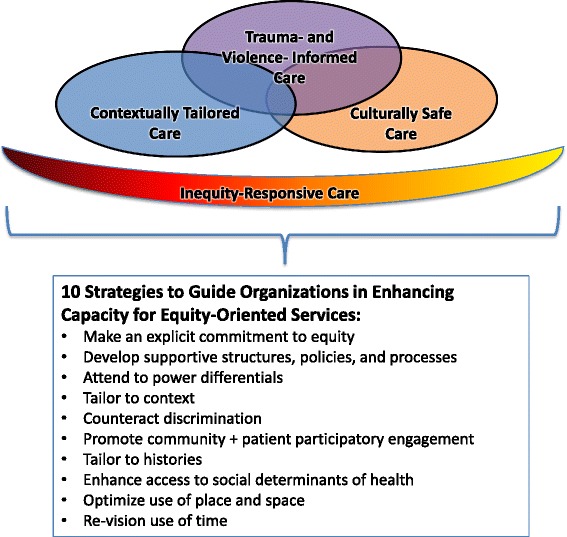
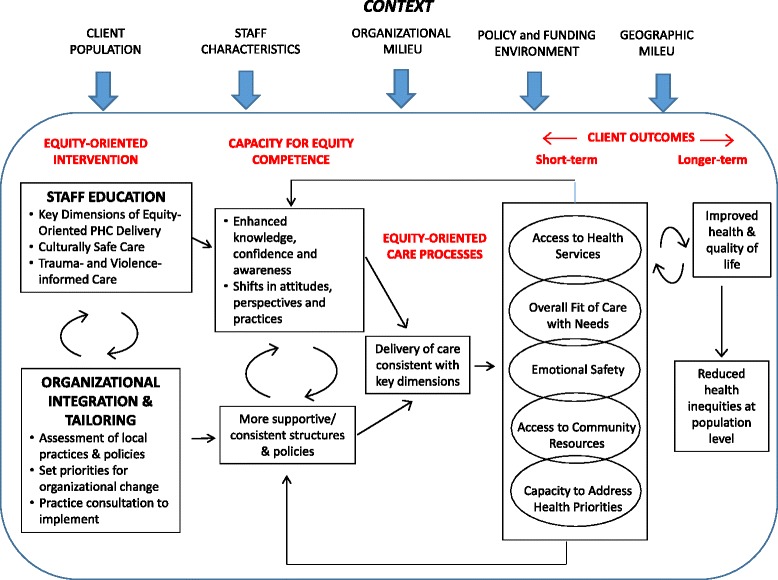
BACKGROUND: The primary health care (PHC) sector is increasingly relevant as a site for population health interventions, particularly in relation to marginalized groups, where the greatest gains in health status can be achieved. The purpose of this paper is to provide an overview of an innovative multi-component, organizational-level intervention designed to enhance the capacity of PHC clinics to provide equity-oriented care, particularly for marginalized populations. The intervention, known as EQUIP, is being implemented in Canada in four diverse PHC clinics serving populations who are impacted by structural inequities. These PHC clinics serve as case studies for the implementation and evaluation of the EQUIP intervention. We discuss the evidence and theory that provide the basis for the intervention, describe the intervention components, and discuss the methods used to evaluate the implementation and impact of the intervention in diverse contexts. DESIGN AND METHODS: Research and theory related to equity-oriented care, and complexity theory, are central to the design of the EQUIP intervention. The intervention aims to enhance capacity for equity-oriented care at the staff level, and at the organizational level (i.e., policy and operations) and is novel in its dual focus on: (a) Staff education: using standardized educational models and integration strategies to enhance staff knowledge, attitudes and practices related to equity-oriented care in general, and cultural safety, and trauma- and violence-informed care in particular, and; (b) Organizational integration and tailoring: using a participatory approach, practice facilitation, and catalyst grants to foster shifts in organizational structures, practices and policies to enhance the capacity to deliver equity-oriented care, improve processes of care, and shift key client outcomes. Using a mixed methods, multiple case-study design, we are examining the impact of the intervention in enhancing staff knowledge, attitudes and practices; improving processes of care; shifting organizational policies and structures; and improving selected client outcomes. DISCUSSION: The multiple case study design provides an ideal opportunity to study the contextual factors shaping the implementation, uptake and impact of our tailored intervention within diverse PHC settings. The EQUIP intervention illustrates the complexities involved in enhancing the PHC sector's capacity to provide equity-oriented care in real world clinical contexts.
Overview
The claims and statistics of this paper haven’t been checked yet.
Free: it reads the open-access text and checks the first 5 claims that cite a source we can check. Create a free account to check every claim.
Integrity signals
Registry
Cites
Statistics
Figures
Verification
Claims the paper makes
The claims and statistics of this paper haven’t been checked yet.
Free: it reads the open-access text and checks the first 5 claims that cite a source we can check. Create a free account to check every claim.
Claims other papers make about this one
Each is checked against this paper’s own text: does it say what the citing paper says it does?
The source backs part of the claim, not all of it — or backs it for a different population, condition or comparison.
In the citing paper
“Significant attention has been given to cultural competency and cultural safety as approaches to improve the quality of care and to reduce health inequities among migrants, as well as indigenous and other ethnic minority groups [111–113].”
From Transnationalism and care of migrant families during pregnancy, postpartum and early-childhood: an integrative review (2020) · cites this paper as [113]
Experimental — accuracy not yet measured
Self-check
Percentages, sums and reported differences re-computed from the paper’s own numbers.
The self-check needs the paper’s full text.
Citations
Cites
Developing and evaluating complex interventions: the new Medical Research Council guidance
Craig, P., Dieppe, P., Macintyre, S., Michie, S., Nazareth, I., & Petticrew, M. (2008) · BMJ · doi:10.1136/bmj.a1655 · Cited by 10,995 · cited 1×
“[57], Hawe and others recommend that researchers: (a) expand their notions of interventions to make them adap-”
BackgroundThe SAGE handbook of qualitative research
(2005) · Choice Reviews Online · doi:10.5860/choice.43-1330 · Cited by 10,183
Stake, R. E. (2005) · Cited by 6,198
Contribution of Primary Care to Health Systems and Health
STARFIELD, B., SHI, L., & MACINKO, J. (2005) · The Milbank Quarterly · doi:10.1111/j.1468-0009.2005.00409.x · Cited by 5,507 · cited 1×
“Background: Why enhance capacity for equity-oriented PHC services? Research shows that the primary health care (PHC) sector is increasingly relevant as a site for population health interventions, particularly in relation to marginalized 2 groups, where the greatest gains in health status can be achieved [1–8].”
Background(2024) · Intersectional Advocacy · doi:10.1017/9781009433075.010 · Cited by 4,041
Davis, D., O'Brien, M. A. T., Freemantle, N., Wolf, F. M., Mazmanian, P., & Taylor-Vaisey, A. (1999) · JAMA · doi:10.1001/jama.282.9.867 · Cited by 2,364 · cited 1×
“While didactic educational strategies by themselves tend to not be drivers of behaviour change, the tailored educational and integration strategies offered through EQUIP created catalysts for change in each of the sites [60, 61].”
BackgroundComplex interventions: how “out of control” can a randomised controlled trial be?
Hawe, P., Shiell, A., & Riley, T. (2004) · BMJ · doi:10.1136/bmj.328.7455.1561 · Cited by 1,244 · cited 3×
“lored to meet the needs of the different contexts in which they are implemented without compromising intervention integrity [52, 53].”
BackgroundMethodTheorising interventions as events in systems
Hawe, P., Shiell, A., & Riley, T. (2009) · American Journal of Community Psychology · doi:10.1007/s10464-009-9229-9 · Cited by 1,143 · cited 2×
“Within the intervention, three inter-related standardized educational components, described below, were delivered in ways which were tailored to local contexts and specific populations served, enhancing the relevance of the intervention [52, 54, 58].”
BackgroundMethodDiscrimination and Health Inequities
Krieger, N. (2014) · International Journal of Health Services · doi:10.2190/hs.44.4.b · Cited by 953 · cited 2×
“Equity in health is, therefore, a social justice goal focused on pursuing the highest possible standard of health and health care for all people, paying special attention to those at greatest risk of poor health, and taking into account broader socio-political and economic influences on health and access to care [14,…”
BackgroundWhat are Health Disparities and Health Equity? We Need to Be Clear
Braveman, P. (2014) · Public Health Reports® · doi:10.1177/00333549141291s203 · Cited by 860 · cited 1×
“Equity in health is, therefore, a social justice goal focused on pursuing the highest possible standard of health and health care for all people, paying special attention to those at greatest risk of poor health, and taking into account broader socio-political and economic influences on health and access to care [14,…”
Background
Research works printed but not linked: 19
- World Health Organization The World Health Report 2008 - primary health care (Now more than ever) 2008 Geneva, Switzerland World Health Organization
- Nasmith L Ballem P Baxter R Bergman H Colin-Thomé D Herbert C Transforming care for Canadians with chronic health conditions: Put people first, expect the best, manage for results 2010 Ottawa, ON Canadian Academy of Health Sciences
- Allen M Allen J Hogarth S Marmot M Working for health equity: The role of health professionals 2013 London, UK UCL Institute of Health Equity
- The Chief Public Health Officer The Chief Public Health Officer’s report on the state of public health in Canada 2009. Growing up well - Priorities for a healthy future 2009 Ottawa, ON Public Health Agency of Canada
- Raphael D Poverty in Canada: Implications for health and quality of life 2011 2 Toronto, Canada Canadian Scholars’ Press
- Public Health Agency of Canada Core competencies for public health in Canada: Release 1.0 2007 Ottawa, ON Public Health Agency of Canada
- Haskell L Randall M Disrupted attachments: A social context complex trauma framework and the lives of Aboriginal peoples in Canada J Aborig Health 2009 5 3 48 99
- Varcoe C Browne AJ MacDonald-Jenkins J Luctkar-Flude M Interpersonal violence assessment Physical examination and health assessment by C. Jarvis 2014 2nd Canadian Toronto, ON Elsevier 120 37
- Wathen CN MacMillan HL Ford-Gilboe M Wekerle C Jack SM Sibbald SL New knowledge about violence across the lifespan: Sharing the findings of three large research programs. Knowledge to Action: An End-of-Grant Knowledge Translation Casebook 2010 Ottawa, ON Canadian Institutes of Health Research 29 32
- Ramsden I Cultural safety and nursing education in Aotearoa and Te Waipounamu [Doctoral dissertation] 2002 Wellington, New Zealand University of Wellington
- Varcoe C Browne AJ Gregory D Raymond-Seniuk C Patrick L Stephen TC Culture and cultural safety: Beyond cultural inventories Fundamentals: Perspectives on the art & science of Canadian nursing 2014 Philadelphia Lippincott Williams & Wilkins
- Health Council of Canada Empathy, dignity, and respect: Creating cultural safety for aboriginal people in urban health care 2012 Toronto, ON Health Council of Canada
- Aboriginal Nurses Association of Canada Cultural competence and cultural safety in nursing education introduction. [Information Sheet] 2010 Ottawa, ON Aboriginal Nurses Association of Canada
- Indigenous Physicians Association of Canada, The Royal College of Physicians and Surgeons of Canada Cultural safety in practice: A curriculum for family medicine residents and physicians 2009 Winnipeg & Ottawa IPAC-RCPSC Family Medicine Curriculum Development Working Group
- Nursing Council of New Zealand Guidelines for cultural safety, the treaty of Waitangi and Maori health in nursing education and practice 2005 Wellington, New Zealand Nursing Council of New Zealand
- Hawe P Riley T Ghali L Herrman H Saxena S Moodie R Developing sustainable interventions: Theory and evidence Promoting mental health: concepts, emerging evidence, practice 2005 Geneva World Health Organization
- The Association of Faculties of Medicine of Canada The Future of Medical Education in Canada (FMEC): A collective vision for MD education 2010 Ottawa, ON The Association of Faculties of Medicine of Canada
- Poole N Essentials of trauma-informed care 2012 Ottawa, ON The Canadian Network of Substance Abuse and Allied Professionals
- Trauma-informed Practice Project Team Trauma-informed practice guide 2013 Vancouver, BC BC Provincial Mental Health and Substance Use Planning Council
Cited by
Andermann, A. (2016) · Canadian Medical Association Journal · doi:10.1503/cmaj.160177 · Cited by 710
Pain in persons who are marginalized by social conditions
Craig, K. D., Holmes, C., Hudspith, M., Moor, G., Moosa-Mitha, M., Varcoe, C., & Wallace, B. (2020) · Pain · doi:10.1097/j.pain.0000000000001719 · Cited by 203
Self-citationFORD‐GILBOE, M., WATHEN, C. N., VARCOE, C., HERBERT, C., JACKSON, B. E., LAVOIE, J. G., PAULY, B. (., PERRIN, N. A., SMYE, V., WALLACE, B., et al. (2018) · The Milbank Quarterly · doi:10.1111/1468-0009.12349 · Cited by 201
Self-citationBrowne, A. J., Varcoe, C., Ford-Gilboe, M., Nadine Wathen, C., Smye, V., Jackson, B. E., Wallace, B., Pauly, B., Herbert, C. P., Lavoie, J. G., et al. (2018) · International Journal for Equity in Health · doi:10.1186/s12939-018-0820-2 · Cited by 151
Self-citationRecommendations for Addressing Structural Racism in Implementation Science: A Call to the Field
Shelton, R. C., Adsul, P., & Oh, A. (2021) · Ethnicity & Disease · doi:10.18865/ed.31.s1.357 · Cited by 150
Shelton, R. C., Adsul, P., Oh, A., Moise, N., & Griffith, D. M. (2021) · Implementation Research and Practice · doi:10.1177/26334895211049482 · Cited by 171
“For example, Browne et al. (2015) applied multilevel implementation strategies (organizational integration and tailoring, practice facilitation, staff training) to build capacity and support practice and policy changes within primary care and facilitate the provision of equity-oriented care in…”
MethodIntegrated knowledge translation: digging deeper, moving forward
Kothari, A., & Wathen, C. N. (2017) · Journal of Epidemiology and Community Health · doi:10.1136/jech-2016-208490 · Cited by 138
Self-citationPaparini, S., Papoutsi, C., Murdoch, J., Green, J., Petticrew, M., Greenhalgh, T., & Shaw, S. E. (2021) · BMC Medical Research Methodology · doi:10.1186/s12874-021-01418-3 · Cited by 131
Spatial analysis and evaluation of medical resource allocation in China based on geographic big data
Wan, S., Chen, Y., Xiao, Y., Zhao, Q., Li, M., & Wu, S. (2021) · BMC Health Services Research · doi:10.1186/s12913-021-07119-3 · Cited by 135
“The establishment of a perfect healthcare system must be based on the equity of medical resource allocation [3].”
BackgroundTowards health equity for people experiencing chronic pain and social marginalization
Wallace, B. B., Varcoe, C., Holmes, C., Moosa-Mitha, M., Moor, G., Hudspith, M., & Craig, K. D. (2021) · International Journal for Equity in Health · doi:10.1186/s12939-021-01394-6 · Cited by 137
Self-citationAdvancing Complexity Theory as a Qualitative Research Methodology
Gear, C., Eppel, E., & Koziol‐McLain, J. (2018) · International Journal of Qualitative Methods · doi:10.1177/1609406918782557 · Cited by 156
McKenzie, H. A., Varcoe, C., Browne, A. J., & Day, L. (2016) · International Indigenous Policy Journal · doi:10.18584/iipj.2016.7.2.4 · Cited by 98
Self-citationLevine, S., Varcoe, C., & Browne, A. J. (2020) · Journal of Interprofessional Care · doi:10.1080/13561820.2019.1708871 · Cited by 75
Self-citationQin, A., Qin, W., Hu, F., Wang, M., Yang, H., Li, L., Chen, C., Bao, B., Xin, T., & Xu, L. (2024) · Globalization and Health · doi:10.1186/s12992-024-01025-z · Cited by 76
“Fair allocation of medical resources is the foundation of establishing a robust healthcare system [46].”
BackgroundKassam, S., Marcellus, L., Clark, N., & O’Mahony, J. M. (2020) · International Journal of Qualitative Methods · doi:10.1177/1609406919898921 · Cited by 68
“Although the significance of understanding structural and social determinants shaping health experiences within vulnerable population groups has been validated, such inquiry remains superficial (Browne et al., 2015).”
BackgroundPlamondon, K., Bottorff, J. L., Caxaj, C. S., & Graham, I. D. (2018) · Critical Public Health · doi:10.1080/09581596.2018.1551613 · Cited by 65
Understanding competing discourses as a basis for promoting equity in primary health care
Blanchet Garneau, A., Browne, A. J., & Varcoe, C. (2019) · BMC Health Services Research · doi:10.1186/s12913-019-4602-3 · Cited by 47
Self-citationBrowne, A. J., Varcoe, C., & Ward, C. (2021) · The International Indigenous Policy Journal · doi:10.18584/iipj.2021.12.3.8204 · Cited by 51
“…can be put in place to support participatory approaches among all levels of staff in an organization to foster shifts in practices and policies to address the aims of cultural safety—tailored to local community contexts, populations served, and organizational priorities (Browne et al., 2015, 2018).”
BackgroundSelf-citationSmye, V. L., Browne, A. J., Josewski, V., Keith, B., & Mussell, W. (2023) · International Journal of Environmental Research and Public Health · doi:10.3390/ijerph20043288 · Cited by 69
“Building on previous research on equity-oriented care [2,75,76], three intersecting key dimensions of equity-oriented health care identified and tested include (a) trauma- and violence-informed care; (b) culturally safe care; and (c) harm reduction [67].”
BackgroundSelf-citationDassieu, L., Pagé, M. G., Lacasse, A., Laflamme, M., Perron, V., Janelle-Montcalm, A., Hudspith, M., Moor, G., Sutton, K., Thompson, J. M., et al. (2021) · International Journal for Equity in Health · doi:10.1186/s12939-021-01496-1 · Cited by 74
Hadjipavlou, G., Varcoe, C., Tu, D., Dehoney, J., Price, R., & Browne, A. J. (2018) · Canadian Medical Association Journal · doi:10.1503/cmaj.171390 · Cited by 45
Self-citationRodger, S., Bird, R., Hibbert, K., Johnson, A. M., Specht, J., & Wathen, C. N. (2020) · Psychology in the Schools · doi:10.1002/pits.22373 · Cited by 69
Self-citationBefus, D., Irby, M. B., Coeytaux, R. R., & Penzien, D. B. (2018) · Current Pain and Headache Reports · doi:10.1007/s11916-018-0731-3 · Cited by 51
EQUIP Emergency: Study protocol for an organizational intervention to promote equity in health care.
Varcoe, C., Bungay, V., Browne, A. J., Wilson, E., Wathen, C. N., Kolar, K., Perrin, N., Comber, S., Blanchet Garneau, A., Byres, D., et al. (2019) · BMC Health Services Research · doi:10.1186/s12913-019-4494-2 · Cited by 47
Self-citationBefus, D., Kumodzi, T., Schminkey, D. L., & Ivany, A. S. (2019) · Journal of Forensic Nursing · doi:10.1097/jfn.0000000000000264 · Cited by 49
Sentinels of inequity: examining policy requirements for equity-oriented primary healthcare
On behalf of the EQUIP Research Team, Lavoie, J. G., Varcoe, C., Wathen, C. N., Ford-Gilboe, M., & Browne, A. J. (2018) · BMC Health Services Research · doi:10.1186/s12913-018-3501-3 · Cited by 43
Self-citationOrienting child- and family-centered care toward equity
Gerlach, A., & Varcoe, C. (2020) · Journal of Child Health Care · doi:10.1177/1367493520953354 · Cited by 52
Self-citationIndigenous Women’s Resistance of Colonial Policies, Practices, and Reproductive Coercion
McKenzie, H. A., Varcoe, C., Nason, D., McKenna, B., Lawford, K. M., Kelm, M.-E., Wajuntah, C. J. O., Gervais, L., Hoskins, J., Anaquod, J., et al. (2022) · Qualitative Health Research · doi:10.1177/10497323221087526 · Cited by 53
“…2011; Denison et al., 2014; Epstein, 2017; Varcoe et al., 2013); b) Trauma- and violence-informed care that explicitly addresses colonial violence (Browne et al., 2015; Browne et al., 2016; Poole, Urquhart, Jasiura, Smylie, & Schmidt, 2013), c) Care for pregnant and parenting people who use…”
BackgroundSelf-citationExperience of emergency department use among persons with a history of adverse childhood experiences
Purkey, E., Davison, C., MacKenzie, M., Beckett, T., Korpal, D., Soucie, K., & Bartels, S. (2020) · BMC Health Services Research · doi:10.1186/s12913-020-05291-6 · Cited by 37
Darroch, F., Varcoe, C., Montaner, G. G., Webb, J. M., & Paquette, M. (2022) · Violence Against Women · doi:10.1177/10778012221134821 · Cited by 45
“A TVIC perspective throughout healthcare or social systems can bring awareness to the impact of trauma and violence on the lives of individuals and reduce harm (Browne et al., 2015; Government of Canada, 2018).”
BackgroundSelf-citationVarcoe, C., Browne, A. J., Bungay, V., Perrin, N., Wilson, E., Wathen, C. N., Byres, D., & Roberta Price, E. (2022) · International Journal of Health Services · doi:10.1177/00207314221075515 · Cited by 39
Self-citationLewis, N. V., Bierce, A., Feder, G. S., Macleod, J., Turner, K. M., Zammit, S., & Dawson, S. (2023) · Health & Social Care in the Community · doi:10.1155/2023/4475114 · Cited by 68
“We developed eight lines of argument for proposed integrated intervention mechanisms with limited evidence from fve studies [41, 42, 46, 48, 52] (Table 2).”
BackgroundUrbanoski, K. A., Pauly, B., Inglis, D., Cameron, F., Haddad, T., Phillips, J., Phillips, P., Rosen, C., Schlotter, G., Hartney, E., et al. (2020) · BMC Health Services Research · doi:10.1186/s12913-020-05915-x · Cited by 41
“individual providers to design organizational-level interventions that attend to the ways in local and system contexts affect equity in primary care (both in terms of front-end access and processes of service delivery) [45].”
BackgroundResultEnhancing equity-oriented care in psychedelic medicine: Utilizing the EQUIP framework
Rea, K., & Wallace, B. B. (2021) · International Journal of Drug Policy · doi:10.1016/j.drugpo.2021.103429 · Cited by 36
Equity-Oriented Healthcare: What It Is and Why We Need It in Oncology
Horrill, T. C., Browne, A. J., & Stajduhar, K. (2022) · Current Oncology · doi:10.3390/curroncol29010018 · Cited by 33
Self-citationJust‐relations and responsibility for planetary health: The global nurse agenda for climate justice
Evans‐Agnew, R. A., LeClair, J., & Sheppard, D. (2023) · Nursing Inquiry · doi:10.1111/nin.12563 · Cited by 37
Experiences of Palliative Health Care for Homeless and Vulnerably Housed Individuals
Purkey, E., & MacKenzie, M. (2019) · The Journal of the American Board of Family Medicine · doi:10.3122/jabfm.2019.06.190093 · Cited by 34
“A framework that can be helpful to enable us to implement these principles in health care systems is the framework of Equity-Oriented Health Care (EOHC).(23) EOHC integrates the principles of 1) trauma and violence informed care, 2) harm reduction, and 3) culturally safe care into a contextspecific care system that is…”
BackgroundEquity-oriented frameworks to inform responses to opioid overdoses: a scoping review
Wallace, B. B., MacKinnon, K., Strosher, H., Macevicius, C., Gordon, C., Raworth, R., Mesley, L., Shahram, S., Marcellus, L., Urbanoski, K. A., et al. (2021) · JBI Evidence Synthesis · doi:10.11124/jbies-20-00304 · Cited by 32
MacKenzie, M., & Purkey, E. (2019) · The Journal of the American Board of Family Medicine · doi:10.3122/jabfm.2019.06.190066 · Cited by 30
“Equity-Oriented Health Care (EOHC) is a model of care that uses a multi-pronged approach (eg, education, strengths, weaknesses, opportunities, and threats (SWOT) analysis, additional funding to promote system change, all adapted to context) focused on 3 aspects of care, namely 1) trauma and violence informed care, 2)…”
BackgroundVarcoe, C., Browne, A. J., Perrin, N., Wilson, E., Bungay, V., Byres, D., Wathen, N., Stones, C., Liao, C., & Price, E. R. (2022) · BMC Health Services Research · doi:10.1186/s12913-022-08475-4 · Cited by 27
“Based on this work, with EOHC serving as the theoretical grounding, we designed an intervention to promote equity at the organizational level [25].”
MethodSelf-citationPurkey, E., Bayoumi, I., Coo, H., Maier, A., Pinto, A. D., Olomola, B., Klassen, C. L., French, S., & Flavin, M. P. (2019) · International Journal for Equity in Health · doi:10.1186/s12939-019-1085-0 · Cited by 29
Cullen, P., Mackean, T., Worner, F., Wellington, C., Longbottom, H., Coombes, J., Bennett‐Brook, K., Clapham, K. F., Ivers, R., Hackett, M. L., et al. (2020) · International Journal of Environmental Research and Public Health · doi:10.3390/ijerph17207363 · Cited by 30
Caldwell, H. A. T., Yusuf, J., Carrea, C., Conrad, P., Embrett, M. G., Fierlbeck, K. A., Hajizadeh, M., Kirk, S., Rothfus, M. A., Sampalli, T., et al. (2024) · JBI Evidence Synthesis · doi:10.11124/jbies-23-00051 · Cited by 29
Kepper, M. M., Walsh‐Bailey, C., Brownson, R. C., Kwan, B. M., Morrato, E. H., Garbutt, J. M., Fuentes, L. D. L., Glasgow, R. E., Lopetegui, M. A., & Foraker, R. E. (2021) · Frontiers in Digital Health · doi:10.3389/fdgth.2021.648777 · Cited by 28
Wallace, B. B., Browne, A. J., Varcoe, C., Ford‐Gilboe, M., Wathen, C. N., Long, P. M., & Parker, J. (2015) · BMJ Open · doi:10.1136/bmjopen-2015-009519 · Cited by 26
Self-citationHulko, W., Mahara, M. S., Wilson, D., & Campbell-McArthur, G. (2021) · International Journal of Older People Nursing · doi:10.1111/opn.12395 · Cited by 27
Horrill, T. C., Martin, D., Lavoie, J. G., & Schultz, A. S. H. (2020) · Nursing Inquiry · doi:10.1111/nin.12394 · Cited by 26
Ivany, A. S., & Schminkey, D. L. (2019) · Journal of Aggression Maltreatment & Trauma · doi:10.1080/10926771.2019.1632400 · Cited by 24
Emergency department care experiences among people who use substances: a qualitative study
Rajab, D., Fujioka, J. K., Walker, M., Bartels, S. A., MacKenzie, M., & Purkey, E. (2023) · International Journal for Equity in Health · doi:10.1186/s12939-023-02050-x · Cited by 26
“From an organizational level, this includes shifts in funding, structures, practices, and policies [28, 30, 45].”
BackgroundMethodInfluentialMerry, L., Villadsen, S. F., Sicard, V., & Lewis-Hibbert, N. (2020) · BMC Health Services Research · doi:10.1186/s12913-020-05632-5 · Cited by 22
Shaw, S. E., Paparini, S., Murdoch, J., Green, J., Greenhalgh, T., Hanckel, B., James, H., Petticrew, M. P., Wood, G. W., & Papoutsi, C. (2023) · BMC Medical Research Methodology · doi:10.1186/s12874-023-01888-7 · Cited by 24
“Extracts from the following articles [36, 38, 40, 44, 47, 48, 53] are reproduced”
BackgroundBroughton, S., Ford‐Gilboe, M., & Varcoe, C. (2022) · Journal of Advanced Nursing · doi:10.1111/jan.15450 · Cited by 22
Self-citationPutting Indigenous Harm Reduction to Work: Developing and Evaluating “Not Just Naloxone”
Medley, A., Levine, S., & Norton, A. (2021) · International Journal of Indigenous Health · doi:10.32799/ijih.v16i2.33346 · Cited by 19
“V O L U M E 1 6 , I S S U E 2 , 2 0 2 1 • 259 (Browne et al., 2015).”
BackgroundInfluentialOlstad, D. L., Beall, R. F., Spackman, E., Dunn, S., Lipscombe, L. L., Williams, K., Oster, R. T., Scott, S., Zimmermann, G. L., McBrien, K., et al. (2022) · BMJ Open · doi:10.1136/bmjopen-2021-050006 · Cited by 21
Marshall, K., Martin, W., Walker, R. L., & Vandenberg, H. (2023) · Journal of Holistic Nursing · doi:10.1177/08980101231189653 · Cited by 18
“Considering equity is a primary aim of social justice (Browne et al., 2015), nursing as a discipline is ideally situated to promote health equity.”
BackgroundA framework for regional primary health care to organise actions to address health inequities
Freeman, T., Javanparast, S., Baum, F. E., Ziersch, A. M., & Mackean, T. (2018) · International Journal of Public Health · doi:10.1007/s00038-018-1083-9 · Cited by 18
Dawson, L., Einboden, R., McCloughen, A., & Buus, N. (2020) · Journal of Marital and Family Therapy · doi:10.1111/jmft.12457 · Cited by 19
Talley, R. M., Shoyinka, S. O., & Minkoff, K. (2021) · Community Mental Health Journal · doi:10.1007/s10597-021-00839-0 · Cited by 18
Using a health equity lens to measure patient experiences of care in diverse health care settings
Browne, A. J., Varcoe, C., Ford-Gilboe, M., Wathen, C. N., Wilson, E., Bungay, V., & Perrin, N. (2024) · PLOS ONE · doi:10.1371/journal.pone.0297721 · Cited by 17
Self-citationTrauma-informed care in the primary care setting: An evolutionary analysis
Varghese, L., & Emerson, A. (2021) · Journal of the American Association of Nurse Practitioners · doi:10.1097/jxx.0000000000000663 · Cited by 17
“…al., 2012, 2015, and 2016; Wong et al., 2014), “culturally safe care” (Browne et al., 2012, 2015, and 2016; Wong et al., 2014), “contextually tailored care” (Browne et al., 2012, 2015, and 2016; Wong et al., 2014), and “patient-centered care” (Machtinger Journal of the American Association of…”
BackgroundInfluentialUtomo, B., Romadlona, N. A., Naviandi, U., Nur, R. J. B., Makalew, R., Liyanto, E., Nanwani, S., Dibley, M. J., & Hull, T. H. (2025) · Scientific Reports · doi:10.1038/s41598-025-91942-9 · Cited by 17
“…capacity of primary health care providers for early detection of maternal complications, stabilization of patient conditions, and timely safe referral to the nearest EMONC facility; and improving the organization of service systems and infrastructure to facilitate safe, timely referrals 83 .”
Homelessness as a Fusion Policy Problem
Oudshoorn, A. (2020) · The Geojournal library · doi:10.1007/978-3-030-33467-3_8 · Cited by 21
Erb, T. L., & Loppie, C. (2023) · AlterNative: An International Journal of Indigenous Peoples · doi:10.1177/11771801231168140 · Cited by 11
“The concept of ICS emerged within the doctoral dissertation of Irihapeti Ramsden, a Māori (the Indigenous people of New Zealand) nurse, when she developed Kawa Whakaruruhau, translated as a safe place made from principles (Hutt Valley District Health Board, 2023), to explicitly address inequitable power relations, rac…”
BackgroundEze, B., Kumar, S., Yang, Y., Kilcoyne, J., Starkweather, A. R., & Perry, M. (2022) · Orthopaedic Nursing · doi:10.1097/nor.0000000000000833 · Cited by 17
“A theoretically based approach for improving health equity in musculoskeletal pain management would help direct a multifaceted approach to support sustainable organizational- and system-level improvements that are responsive to inequitable patient outcomes (Browne et al., 2015).”
BackgroundInfluentialUnderstanding Trauma-Informed Care in Correctional Facilities: A Scoping Review
Gaber, J., Scallan, E., & Kouyoumdjian, F. G. (2025) · Journal of Correctional Health Care · doi:10.1089/jchc.24.07.0056 · Cited by 16
“…and structural violence, that is, how societal structures such as institutions and policies create inequities that cause harm to some people, including historical and ongoing structural violence such as colonialism and systemic racism (Browne et al., 2015; Browne et al., 2016; Levine et al., 2021).”
Ohtsuka, M. S., Shannon, K., Zucchet, A., Krüsi, A., Bingham, B., King, D., Axl-Rose, T., Braschel, M. C., & Deering, K. (2022) · Journal of Interpersonal Violence · doi:10.1177/08862605221118611 · Cited by 14
“…how structural determinants, including food and housing security, criminalized substance use, and incarceration, contribute to the likelihood of experiencing violence; and actively resisting re-traumatization (Browne et al., 2015; Substance Abuse and Mental Health Services Administration, 2014).”
BackgroundThe health challenges of families experiencing homelessness
Annor, B. O. H., & Oudshoorn, A. (2019) · Housing Care and Support · doi:10.1108/hcs-12-2018-0036 · Cited by 14
Fajber, K., Sereda, A., Warren, S., Morris, C., Nash, G., Pauly, B., Urbanoski, K., & Kolla, G. (2025) · Canadian Journal of Public Health · doi:10.17269/s41997-025-01006-8 · Cited by 11
“The SOS program offers harm reduction and trauma-informed care which are foundational to equity-oriented primary care (Browne et al., 2015).”
Befus, D., Hull, S. K., de Oliveira, J. S., Sanders, G. D., Weinberger, M., & Coeytaux, R. R. (2019) · Global Advances in Health and Medicine · doi:10.1177/2164956119858034 · Cited by 12
“What about many of our CAIM spaces and offerings is not attractive or approachable to people like the more marginalized participants in this study? An equity-oriented approach requires investigating all aspects of the care experience and CAIM modalities themselves to uncover implicit assumptions.(37) For example, are…”
BackgroundTaft, A., Young, F., Hegarty, K. L., Yelland, J. S., Mazza, D., Boyle, D. I., Norman, R., García‐Moreno, C., Nguyen, C. D., Li, X., et al. (2021) · BMJ Open · doi:10.1136/bmjopen-2020-046431 · Cited by 11
“26 We will evaluate the clinic training with a pretest and post-test assessment of GP training using the GRIPS instrument 24 and explore its impact in process evaluation outlined below.”
MethodIvany, A. S., Schminkey, D. L., & Munro‐Kramer, M. L. (2021) · Global Qualitative Nursing Research · doi:10.1177/23333936211008163 · Cited by 12
“…40% of nurses have experienced IPV (Bracken, 2010; Forbes, 2019), it is important for nurses to acknowledge and process their own trauma and support one another using principles of trauma and violence informed care employing strategies such as those found in the EQUIP program (Browne et al., 2015).”
MethodKolar, M., Varcoe, C., Brown, H., & Einboden, R. (2023) · Health An Interdisciplinary Journal for the Social Study of Health Illness and Medicine · doi:10.1177/13634593221096241 · Cited by 10
“Coercive psychiatric treatment does not align with contemporary and evidenced informed practices of harm reduction and trauma-and violence-informed care (Browne et al., 2015; Muskett, 2014).”
BackgroundSelf-citationChallenges and opportunities of complexity theory in health care systems
A’aqoulah, A., El‐Metwally, A., Khateeb, B. A., Alammari, D., Alshahrani, A. S., Aldubikhi, A., Alsulami, A., Fatani, F., & Innab, N. (2025) · Journal of Taibah University Medical Sciences · doi:10.1016/j.jtumed.2025.06.006 · Cited by 12
“17 This is a good example of how various contextual factors can be studied in the primary health care setting and then used to design interventions to obtain the intended outcomes.”
Deering, K., Chong, L., Duff, P., Gurney, L., Magagula, P., Wiedmeyer, M.-L., Chettiar, J., Braschel, M. C., D’Souza, K., & Shannon, K. (2021) · Journal of the Association of Nurses in AIDS Care · doi:10.1097/jnc.0000000000000234 · Cited by 11
“Existingbut limitedHIV services (Kestler et al., 2018) and primary health care services (Browne et al., 2015) that includeTVICas part of their overall approach to care and practice in our setting should be supported and/or scaled up to meet the primary care needs of cis and trans WLWH.”
BackgroundA Comprehensive Survey on Healthcare Management
Onar, S. Ç., Öztayşi, B., & Kahraman, C. (2017) · International series in management science/operations research/International series in operations research & management science · doi:10.1007/978-3-319-65455-3_2 · Cited by 10
“Browne et al. (2015) focus on primary healthcare organizations.”
Social determinants of health equity for people with pain: from understanding to action
Walker, E., Karran, E. L., Jones, M. D., Gibbs, M. T., & Sharma, S. (2025) · PAIN Reports · doi:10.1097/pr9.0000000000001364 · Cited by 13
“20,21 Furthermore, seeking facilitated opportunities to engage in communities experiencing disadvantage may offer meaningful collaborations and learning opportunities.”
Sayani, A., Manthorne, J., Nicholson, E., Bloch, G. C., Parsons, J. A., Hwang, S. W., Amenu, B., Freedman, H., Rathbone, M., Jeji, T., et al. (2022) · Research Involvement and Engagement · doi:10.1186/s40900-022-00344-y · Cited by 10
Self-citationProdan‐Bhalla, N., & Browne, A. J. (2019) · Journal of Clinical Nursing · doi:10.1111/jocn.14937 · Cited by 8
Self-citationBalcom, E. F., McCombe, J. A., Kate, M. P., Vu, K. N., Martins, K. J. B., Aponte-Hao, S., Richer, L., Williamson, T. S., Klarenbach, S. W., & Smyth, P. S. (2025) · Neurology · doi:10.1212/wnl.0000000000210251 · Cited by 8
Ambtman-Smith, V., Linklater, R., & Richmond, C. A. M. (2025) · Social Science & Medicine · doi:10.1016/j.socscimed.2025.118365 · Cited by 8
McLindon, E. V.-M., Fiolet, R., & Hegarty, K. L. (2021) · Springer eBooks · doi:10.1007/978-3-030-65006-3_2 · Cited by 8
Johnston, I. S., Miles, B., Soós, B., Garies, S., Perez, G., Queenan, J. A., Drummond, N., & Singer, A. G. (2022) · BMC Family Practice · doi:10.1186/s12875-022-01735-6 · Cited by 8
Li, W., Du, F., & Ruan, O. (2023) · Archives of Public Health · doi:10.1186/s13690-023-01068-5 · Cited by 8
Queen, R., Courtney, K. L., Lau, F., Davison, K. S., Devor, A., & Antonio, M. G. (2023) · Journal of Medical Internet Research · doi:10.2196/46773 · Cited by 8
“The action plan adapted the Equity-Oriented Health Care Intervention (EQUIP) framework as the theoretical foundation for informing how to address the current fragmentation and inaccurate GSSO data by enhancing organizational (including technical) capacity for equity-oriented design [6,7].”
Benbow, S., Forchuk, C., Gorlick, C., Berman, H., & Ward‐Griffin, C. (2019) · Canadian Journal of Nursing Research · doi:10.1177/0844562119840910 · Cited by 9
Iammarino, C., & Pauly, B. (2020) · Drugs Education Prevention and Policy · doi:10.1080/09687637.2020.1840515 · Cited by 10
“Cultural safety is necessary to counteract the effects of racism in healthcare institutions to challenge discriminatory practices and policies to ensure people who experience stigma and discrimination receive high quality and appropriate care (Browne et al., 2015).”
BackgroundInfluentialNkurunziza, A., Smye, V. L., Jackson, K. T., Wathen, C. N., Cechetto, D. F., Tryphonopoulos, P. D., Gishoma, D., & Muhayimana, A. (2024) · BMC Nursing · doi:10.1186/s12912-024-02247-7 · Cited by 7
“For making policies and practices safe, TVIC emphasizes that there needs to be an understanding of trauma and ongoing violence among individuals and communities [24] and the inter-section of interpersonal and structural forms of violence and their impact on health and well-being [25].”
BackgroundSelf-citationAbernethy, P., Waters, S., Kulchyski, T., Rolston, D., Swinkels, H. M., Luttrell, G., & Pillsworth, L. (2021) · International Journal of Indigenous Health · doi:10.32799/ijih.v16i2.33236 · Cited by 7
“Furthermore, while Indigenous cultural safety has been widely discussed in primary health care (Browne et al., 2015) and health promotion in public health (Baba, 2013), it has received less attention in health protection in emergency contexts, often reducing the effectiveness of interventions and…”
BackgroundHealth equity-oriented approaches to inform responses to opioid overdoses: a scoping review protocol
MacKinnon, K., Pauly, B., Shahram, S., Wallace, B. B., Urbanoski, K. A., Gordon, C., Raworth, R., MacDonald, M., Marcellus, L., Sawchuck, D., et al. (2019) · The JBI Database of Systematic Reviews and Implementation Reports · doi:10.11124/jbisrir-2017-003933 · Cited by 6
Genomics-informed nursing strategies and health equity: A scoping review protocol
Dordunoo, D., Limoges, J., Chiu, P., Puddester, R., Carlsson, L., & Pike, A. D. (2023) · PLoS ONE · doi:10.1371/journal.pone.0295914 · Cited by 6
Hira, S., Sheppard-Perkins, M. D., & Darroch, F. (2023) · Frontiers in Psychology · doi:10.3389/fpsyg.2023.1225789 · Cited by 6
“Taking into account cultural understandings and approaches to trauma may be an important factor in the quality of participant experiences, and study designs that implement culturally specific approaches as well as acknowledging systemic inequities and structural violence may improve the experiences of certain communit…”
BackgroundNkurunziza, A., Smye, V. L., Wathen, C. N., Tryphonopoulos, P. D., Jackson, K. T., Cechetto, D. F., & Gishoma, D. (2024) · Discover Public Health · doi:10.1186/s12982-024-00313-8 · Cited by 5
“This perspective underscores the importance of considering the broader, intersecting forces that shape people’s experiences of violence [8, 9].”
Self-citationBishop, R. A., Tarleton, C., Braslow, J. T., & Castillo, E. G. (2025) · BMC Public Health · doi:10.1186/s12889-025-22509-6 · Cited by 5
“…EQUIP Healthcare, which has multiple research and community-based projects providing resources to implement equity-oriented care in Canada [38, 47], and the Camden Coalition of Healthcare Providers in Camden, New Jersey, which provided Section 8 housing vouchers and wraparound services to…”
Atkinson, G., Rai, A., Wankah, P., Lavergne, R., Marshall, E. G., Embrett, M. G., Rayner, J., Reid, M., John, V. S., Beck, D., et al. (2025) · Journal of Primary Care & Community Health · doi:10.1177/21501319251383598 · Cited by 4
Nkurunziza, A., Smye, V. L., Wathen, C. N., Tryphonopoulos, P. D., Cechetto, D. F., Jackson, K. T., & Gishoma, D. (2025) · BMC Pregnancy and Childbirth · doi:10.1186/s12884-025-08230-7 · Cited by 4
“While TVIC has been tested as part of an equity-oriented care intervention in primary care clinics in Canada [28, 29], we are not aware of TVIC integration into primary healthcare perinatal services in Rwanda.”
Self-citationStaying With the Trouble in Nursing 12.5 Hours at a Time
Smith, J. B. (2025) · Nursing Philosophy · doi:10.1111/nup.70060 · Cited by 4
“The conflict isn't simply between compliance and non‐ compliance, but between competing survival needs that healthcare systems rarely acknowledge (Marmot et al. 2020; Browne et al. 2015).”
Moosa-Mitha, M., & Wallace, B. (2021) · The Canadian Journal of Action Research · doi:10.33524/cjar.v21i2.494 · Cited by 5
Planting the Seeds: Insights for Researchers Interested in Working With Indigenous Peoples
Macklin, C. D., Marchand, C., Mitchell, E., Price, R., Mitchell, V., & Bryant, L. (2021) · International Journal of Indigenous Health · doi:10.32799/ijih.v16i1.33193 · Cited by 5
“However, it must be noted that in order for these seeds to grow and to be a sustainable shift toward cultural safety, the institution of education must establish mechanisms for accountability at all levels of organizations and systems (Browne et al., 2015).”
BackgroundBredenberg, C., Normandin, F., Richards, B. A., & Lajoie, G. (2026) · eLife · doi:10.7554/elife.105968 · Cited by 3
“To do so, we will take inspiration from two principal ethical frameworks: the Montreal Declaration on Responsible AI ( Dilhac et al., 2018 ), and the EQUIP framework for equity-oriented healthcare ( Browne et al., 2015 ; Rea and Wallace, 2021 ).”
Ohtsuka, M. S., Shannon, K., Krüsi, A., Lee, M., King, D., Braschel, M. C., & Deering, K. (2023) · AIDS Patient Care and STDs · doi:10.1089/apc.2023.0018 · Cited by 3
“14,17”
Metadata
- Authors
- on behalf of the EQUIP Research Team, Browne, A. J., Varcoe, C., Ford-Gilboe, M., & Wathen, C. N.
- Affiliations
- University of British Columbia (CA)
- Western University (CA)
- Corresponding author
- Browne, Annette J.
- Venue
- International Journal for Equity in Health
- Published
- 2015-12
- Volume
- 14
- Issue
- 1
- Pages
- 152-152
- ISSN
- 1475-9276 (ISSN-L)
- PMC
- PMC4688920
- OpenAlex
- W2220603809
- Cited by
- 152
- References
- 50
- Citations by year
- 2026: 13 · 2025: 22 · 2024: 9 · 2023: 18 · 2022: 19 · 2021: 26 · 2020: 15 · 2019: 15 · 2018: 8 · 2017: 3 · 2016: 1 · 2015: 2
- FWCI
- 8.53
- Type
- journal article
- Language
- en
- Open access
- gold
- doi.org
- Licence
- cc-by
- Locations
- International Journal for Equity in Health (publishedVersion, cc-by)
- PubMed Central (publishedVersion, cc-by)
- PubMed (publishedVersion)
- cIRcle (University of British Columbia) (submittedVersion, cc-by)
- Scholarship@Western (Western University) (submittedVersion)
- Open Collections
- Funders
- Canadian Institutes of Health Research (CA) (ROH-115210)
- Topics
- Health Sciences › Health Professions › General Health Professions › Health Policy Implementation Science
- Health Sciences › Medicine › Public Health, Environmental and Occupational Health › Cultural Competency in Health Care
- Health Sciences › Medicine › Family Practice › Primary Care and Health Outcomes
- Keywords
- primary care, health equity, marginalized communities, structural inequality, cultural safety, trauma-informed care, violence-informed care, employee training, organizational change, practice facilitation, complexity theory, implementation evaluation, organizational capacity
- MeSH terms
- Health Equity, Canada, Health Policy, Humans, Primary Health Care, Vulnerable Populations
About these checks
Registry, retraction, Cites and statistics results are computed, not judged, with one exception: a printed reference that no index lists is read once by a model before it counts as a citation error. Claims are extracted by a model and kept only when their quote appears verbatim in the text; each cited source is then checked, with a model’s help, for whether it says what the claim relies on. Those verdicts can be wrong — read the claim’s quote and the cited source before relying on one.
Statistics and arithmetic are recomputed, not judged.
Confidence bands are shown only for fields calibrated on our annotated test set. None is calibrated yet, so no band is shown.
What counts as a claim ›How we measure confidence ›How we check this ›
Are you an author, or do you see a problem with this page? Request a review
Data sources
Bibliographic data: Semantic Scholar, OpenAlex, Crossref.
Contains information from the Semantic Scholar Academic Graph Datasets, made available under the ODC Attribution License (ODC-BY 1.0).
Semantic Scholar’s data is described in: Kinney, R., et al. (2023). The Semantic Scholar Open Data Platform. arXiv:2301.10140.
