

KRAS oncogene in non-small cell lung cancer: clinical perspectives on the treatment of an old target
Open accessThe DOI matches its Crossref record; 158 of the 160 references it cites were found in a registry or an index.
Abstract
Lung neoplasms are the leading cause of death by cancer worldwide. Non-small cell lung cancer (NSCLC) constitutes more than 80% of all lung malignancies and the majority of patients present advanced disease at onset. However, in the last decade, multiple oncogenic driver alterations have been discovered and each of them represents a potential therapeutic target. Although KRAS mutations are the most frequently oncogene aberrations in lung adenocarcinoma patients, effective therapies targeting KRAS have yet to be developed. Moreover, the role of KRAS oncogene in NSCLC remains unclear and its predictive and prognostic impact remains controversial. The study of the underlying biology of KRAS in NSCLC patients could help to determine potential candidates to evaluate novel targeted agents and combinations that may allow a tailored treatment for these patients. The aim of this review is to update the current knowledge about KRAS-mutated lung adenocarcinoma, including a historical overview, the biology of the molecular pathways involved, the clinical relevance of KRAS mutations as a prognostic and predictive marker and the potential therapeutic approaches for a personalized treatment of KRAS-mutated NSCLC patients.
Overview
The claims and statistics of this paper haven’t been checked yet.
Free: it reads the open-access text and checks the first 5 claims that cite a source we can check. Create a free account to check every claim.
Integrity signals
Registry
Cites
Statistics
Figures
Verification
Claims the paper makes
The claims and statistics of this paper haven’t been checked yet.
Free: it reads the open-access text and checks the first 5 claims that cite a source we can check. Create a free account to check every claim.
Claims other papers make about this one
Each is checked against this paper’s own text: does it say what the citing paper says it does?
In the citing paper
“Standard therapeutic approaches for KRAS G12C-mutant solid tumors vary but generally consist of nonselective chemotherapy, immunotherapy, or both, with therapy resulting in modest benefits in previously treated patients.8,9”
From Single-Agent Divarasib (GDC-6036) in Solid Tumors with a KRAS G12C Mutation (2023) · cites this paper as [8]
Self-check
Percentages, sums and reported differences re-computed from the paper’s own numbers.
The self-check needs the paper’s full text.
Citations
Cites
Cancer incidence and mortality worldwide: Sources, methods and major patterns in GLOBOCAN 2012
Ferlay, J., Soerjomataram, I., Dikshit, R., Eser, S., Mathers, C., Rebelo, M., Parkin, D. M., Forman, D., & Bray, F. (2015) · International Journal of Cancer · doi:10.1002/ijc.29210 · Cited by 28,766
Siegel, R. L., Miller, K. D., & Jemal, A. (2016) · CA: A Cancer Journal for Clinicians · doi:10.3322/caac.21332 · Cited by 16,003
Paclitaxel–Carboplatin Alone or with Bevacizumab for Non–Small-Cell Lung Cancer
Sandler, A., Gray, R., Perry, M. C., Brahmer, J., Schiller, J. H., Dowlati, A., Lilenbaum, R., & Johnson, D. H. (2006) · New England Journal of Medicine · doi:10.1056/nejmoa061884 · Cited by 5,761 · cited 1×
“Those poor results have been significantly improved over the last decade through different therapeutic strategies such as the incorporation of a third antiangiogenic drug to a platinum-based doublet [7], the combination of cisplatin with the antifolate drug pemetrexed [8] and the implementation of pemetrexed maintenan…”
BackgroundIdentification of the transforming EML4–ALK fusion gene in non-small-cell lung cancer
Soda, M., Choi, Y. L., Enomoto, M., Takada, S., Yamashita, Y., Ishikawa, S., Fujiwara, S.-I., Watanabe, H., Kurashina, K., Hatanaka, H., et al. (2007) · Nature · doi:10.1038/nature05945 · Cited by 5,439 · cited 1×
“Non-small cell lung cancer (NSCLC) comprises about 80% of all lung cancer cases [3].”
BackgroundComparison of Four Chemotherapy Regimens for Advanced Non–Small-Cell Lung Cancer
Schiller, J. H., Harrington, D., Belani, C. P., Langer, C., Sandler, A., Krook, J., Zhu, J., & Johnson, D. H. (2002) · New England Journal of Medicine · doi:10.1056/nejmoa011954 · Cited by 4,955 · cited 1×
“In fact, the effect of the combination of different chemotherapeutic agents with a platinum compound in patients with advanced disease observed no significant differences between the different doublets tested [6].”
BackgroundAnaplastic Lymphoma Kinase Inhibition in Non–Small-Cell Lung Cancer
Kwak, E. L., Bang, Y.-J., Camidge, D. R., Shaw, A. T., Solomon, B., Maki, R. G., Ou, S.-H. I., Dezube, B. J., Jänne, P. A., Costa, D. B., et al. (2010) · New England Journal of Medicine · doi:10.1056/nejmoa1006448 · Cited by 4,446 · cited 1×
“whom no molecular targets for a personalized therapy are identified [11].”
BackgroundSystematic RNA interference reveals that oncogenic KRAS-driven cancers require TBK1
Barbie, D. A., Tamayo, P., Boehm, J. S., Kim, S. Y., Moody, S. E., Dunn, I. F., Schinzel, A. C., Sandy, P., Meylan, E., Scholl, C., et al. (2009) · Nature · doi:10.1038/nature08460 · Cited by 3,890 · cited 2×
“Activity modulation of NF-kB by preventing the degradation of NF-kB inhibitor (IkB) using proteasome inhibitors or knocking down TKB1 (an IkB kinase that enhances NK-kB) translates into apoptosis of KRAS-mutated cells [118].”
BackgroundCOMPARISON OF FOUR CHEMOTHERAPY REGIMENS FOR ADVANCED NON-SMALL-CELL LUNG CANCER
Chiller, J. O. H. S., Arrington, D. A. H., Elani, C. H. P. B., Anger, C., Andler, A. L. S., Rook, J. A. K., Hu, J., & Ohnson, D. A. H. J. (2002) · Cited by 3,730
Scagliotti, G. V., Parikh, P., von Pawel, J., Biesma, B., Vansteenkiste, J., Manegold, C., Serwatowski, P., Gatzemeier, U., Digumarti, R., Zukin, M., et al. (2008) · Journal of Clinical Oncology · doi:10.1200/jco.2007.15.0375 · Cited by 3,203
K-Ras(G12C) inhibitors allosterically control GTP affinity and effector interactions
Ostrem, J. M., Peters, U., Sos, M. L., Wells, J. A., & Shokat, K. M. (2013) · Nature · doi:10.1038/nature12796 · Cited by 2,557 · cited 1×
“Moreover, different strategies for direct inhibition of specific KRAS-mutated proteins using several strategies such as an irreversible allosteric inhibitor of G12C RAS to prevent GTP-KRAS formation [37], compounds that target the guanine nucleotide binding pocket (SML-873-1) [86] or allele-specific inhibitors (ARS-85…”
Background
Research works printed but not linked: 1
- D.E. Gerber, R C., D. Morgensztern, J. Cetnar, R. Kelly, S.S. Ramalingam, D.R. Spigel, W. Jeong, P. Scaglioni, M. Li, M. Keegan, J. Horobin, T.F. Burns, Phase II Study of Defactinib, VS-6063, a Focal Adhesion Kinase (FAK) Inhibitor, in Patients with KRAS Mutant Non-Small Cell Lung Cancer (NSCLC). Paper presented at: 16th World Conference on Lung Cancer, Denver 2015.
Cited by
KRAS Mutation: From Undruggable to Druggable in Cancer
Huang, L., Guo, Z., Wang, F., & Fu, L. (2021) · Signal Transduction and Targeted Therapy · doi:10.1038/s41392-021-00780-4 · Cited by 1,127
Single-Agent Divarasib (GDC-6036) in Solid Tumors with a KRAS G12C Mutation
Sacher, A., LoRusso, P., Patel, M. R., Miller, W. H., Garralda, E., Forster, M. D., Santoro, A., Falcon, A., Kim, T. W., Paz-Ares, L., et al. (2023) · New England Journal of Medicine · doi:10.1056/nejmoa2303810 · Cited by 328
Radiogenomics: bridging imaging and genomics
Bodalal, Z., Trebeschi, S., Nguyen-Kim, T. D. L., Schats, W., & Beets-Tan, R. (2019) · Abdominal Radiology · doi:10.1007/s00261-019-02028-w · Cited by 310
“Moreover, a quarter of lung adenocarcinoma patients have a KRAS mutation [87], which would confer resistance to the aforementioned treatments (see Fig.”
BackgroundRodak, O., Peris-Díaz, M. D., Olbromski, M., Podhorska-Okołów, M., & Dzięgiel, P. (2021) · Cancers · doi:10.3390/cancers13184705 · Cited by 233
“The discussed heterogeneity of changes in the sequence and, thus, in the spatial structure of the mutant K-Ras explains the lack of possibility to find a universal inhibitor [167].”
BackgroundLung cancer in never smokers: The role of different risk factors other than tobacco smoking
Corrales, L., Rosell, R., Cardona, A. F., Martín, C., Zatarain-Barrón, Z. L., & Arrieta, O. (2020) · Critical Reviews in Oncology/Hematology · doi:10.1016/j.critrevonc.2020.102895 · Cited by 222
Characterization of KRAS Mutation Subtypes in Non–small Cell Lung Cancer
Judd, J., Abdel Karim, N., Khan, H., Naqash, A. R., Baca, Y., Xiu, J., VanderWalde, A. M., Mamdani, H., Raez, L. E., Nagasaka, M., et al. (2021) · Molecular Cancer Therapeutics · doi:10.1158/1535-7163.mct-21-0201 · Cited by 194
“Previous efforts to target MEK 1/2 or CDK 4/6 were ineffective (20).”
BackgroundLung Adenocarcinoma Tumor Origin: A Guide for Personalized Medicine
Seguin, L., Durandy, M., & Feral, C. C. (2022) · Cancers · doi:10.3390/cancers14071759 · Cited by 171
“Mutations in the KRAS oncogene represent one of the most prevalent genetic alterations in LUAD and patients whose tumors harbor KRAS mutations typically have a poor prognosis, with very aggressive tumors [13,14].”
BackgroundKRAS G12C inhibition produces a driver-limited state revealing collateral dependencies
Lou, K., Steri, V., Ge, A. Y., Hwang, Y. C., Yogodzinski, C. H., Shkedi, A. R., Choi, A. L. M., Mitchell, D. C., Swaney, D. L., Hann, B., et al. (2019) · Science Signaling · doi:10.1126/scisignal.aaw9450 · Cited by 175
“Numerous compounds directed against targets and pathways identified by our screens have failed to demonstrate clinical efficacy as monotherapies in KRAS-mutant cancers (32).”
BackgroundOncogenic alterations in advanced NSCLC: a molecular super-highway
Friedlaender, A., Pérol, M., Banna, G. L., Parikh, K., & Addeo, A. (2024) · Biomarker Research · doi:10.1186/s40364-024-00566-0 · Cited by 179
“The transition between GTP and GDP is regulated by GTPase activating proteins (GAPs) and guanine nucleotide exchange factors (GEFs) [94–96] via the release of GDP and the binding of GTP.”
BackgroundADAM 17 selectively activates the IL ‐6 trans‐signaling/ ERK MAPK axis in KRAS ‐addicted lung cancer
Saad, M. I., Alhayyani, S., McLeod, L., Yu, L., Alanazi, M., Deswaerte, V., Tang, K., Jarde, T., Smith, J. A., Prodanovic, Z., et al. (2019) · EMBO Molecular Medicine · doi:10.15252/emmm.201809976 · Cited by 136
“…of malignancy, and prediction of response and/ or acquired resistance to both chemotherapy and targeted therapies against EGFR (i.e., TKIs) and, very recently, PD-L1-based checkpoint inhibition (Hames et al, 2016; Dong et al, 2017; Hirsch et al, 2017; Zhuang et al, 2017; Román et al, 2018).”
BackgroundDiagnostic, Predictive, and Prognostic Biomarkers in Non-Small Cell Lung Cancer (NSCLC) Management
Šutić, M., Vukić, A., Baranašić, J., Försti, A., Džubur, F., Samaržija, M., Jakopović, M., Brčić, L., & Knežević, J. (2021) · Journal of Personalized Medicine · doi:10.3390/jpm11111102 · Cited by 155
“to distant organs [4], which consequently impacts the median survival time that barely exceeds 18 months [5,6].”
BackgroundInfluentialCheng, Y., Zhang, T., & Xu, Q. (2021) · MedComm · doi:10.1002/mco2.105 · Cited by 143
Mechanisms of Resistance to KRASG12C Inhibitors
Dunnett-Kane, V., Nicola, P., Blackhall, F., & Lindsay, C. (2021) · Cancers · doi:10.3390/cancers13010151 · Cited by 117
“The phenomenon of acquired resistance to targeted therapy has frequently been noted with downstream inhibitors of the RAS pathway, examples of which are too numerous to comprehensively cover here but have been reviewed elsewhere [10,12,46].”
BackgroundKRAS as a druggable target in NSCLC: Rising like a phoenix after decades of development failures
Friedlaender, A., Drilon, A., Weiss, G. J., Banna, G. L., & Addeo, A. (2020) · Cancer Treatment Reviews · doi:10.1016/j.ctrv.2020.101978 · Cited by 118
“Monomeric RAS GTPases regulate downstream signalling by switching between the active GTP-bound and inactive GDP-bound states in response to extracellular signals.”
BackgroundInfluentialCurrent therapy of KRAS-mutant lung cancer
Ghimessy, A., Radeczky, P., Laszlo, V., Hegedus, B., Renyi-Vamos, F., Fillinger, J., Klepetko, W., Lang, C., Dome, B., & Megyesfalvi, Z. (2020) · Cancer and Metastasis Reviews · doi:10.1007/s10555-020-09903-9 · Cited by 115
“All in all, clinical trials investigating the efficacy of KRAS downstream inhibitors in monotherapy provided limited clinical benefit and substantial toxicity in most studies [11, 65] Yet, recent preclinical studies with patient-derived xenograft tumors highlighted the need for combination therapy in order to fully bl…”
BackgroundHayashi, H., Takiguchi, Y., Minami, H., Akiyoshi, K., Segawa, Y., Ueda, H., Iwamoto, Y., Kondoh, C. N., Matsumoto, K., Takahashi, S. I., et al. (2020) · JAMA Oncology · doi:10.1001/jamaoncol.2020.4643 · Cited by 124
A unique CDK4/6 inhibitor: Current and future therapeutic strategies of abemaciclib
Chong, Q.-Y., Kok, Z. H., Bui, N.-L.-C., Xiang, X., Wong, A. L., Yong, W. P., Sethi, G., Lobie, P. E., Wang, L., & Goh, B.-C. (2020) · Pharmacological Research · doi:10.1016/j.phrs.2020.104686 · Cited by 116
Martínez-Usatorre, A., Kadioglu, E., Boivin, G., Cianciaruso, C., Guichard, A., Torchia, B., Zangger, N., Nassiri, S., Keklikoglou, I., Schmittnaegel, M., et al. (2021) · Science Translational Medicine · doi:10.1126/scitranslmed.abd1616 · Cited by 119
The state of the art for artificial intelligence in lung digital pathology
Viswanathan, V. S., Toro, P., Corredor, G., Mukhopadhyay, S., & Madabhushi, A. (2022) · The Journal of Pathology · doi:10.1002/path.5966 · Cited by 115
STAT3: Versatile Functions in Non-Small Cell Lung Cancer
Mohrherr, J., Uras, I. Z., Moll, H. P., & Casanova, E. (2020) · Cancers · doi:10.3390/cancers12051107 · Cited by 112
Advances in Genomic Data and Biomarkers: Revolutionizing NSCLC Diagnosis and Treatment
Restrepo, J. C., Dueñas, D., Corredor, Z., & Liscano, Y. (2023) · Cancers · doi:10.3390/cancers15133474 · Cited by 112
“Consequently, PD-L1 serves as a preferred biomarker for immunotherapy treatment [50].”
BackgroundKRAS G12C Mutations in NSCLC: From Target to Resistance
Addeo, A., Banna, G. L., & Friedlaender, A. (2021) · Cancers · doi:10.3390/cancers13112541 · Cited by 82
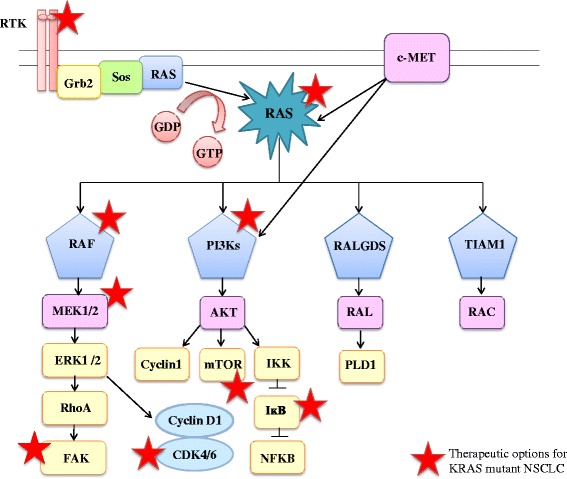
“Abbreviations: RTK: r c ptor tyrosine-kinase, KRAS: Kirsten rat sarcoma, GAP: GTPase activating proteins, GEF: guanine nucleotide exchange factors, SOS: son of sevenless, SHP2: Src h m logy region 2 domain-containing phosphatase-2, Ral: Ras-like, NF-kB: nuclear factor-kB, RAF: RAF proto-oncogene serine/threonine-prote…”
BackgroundInfluentialThe progress and challenge of anti-PD-1/PD-L1 immunotherapy in treating non-small cell lung cancer
Qu, J., Mei, Q., Liu, L., Cheng, T., Wang, P., Chen, L., & Zhou, J. (2021) · Therapeutic Advances in Medical Oncology · doi:10.1177/1758835921992968 · Cited by 87
KRAS-Mutant Non-Small Cell Lung Cancer: An Emerging Promisingly Treatable Subgroup
Xie, M., Xu, X., & Fan, Y. (2021) · Frontiers in Oncology · doi:10.3389/fonc.2021.672612 · Cited by 74
Untold story of human cervical cancers: HPV-negative cervical cancer
Lee, J.-E., Chung, Y., Rhee, S., & Kim, T.-H. (2022) · BMB Reports · doi:10.5483/bmbrep.2022.55.9.042 · Cited by 96
“Since KRAS mutation is also frequently observed in lung adenocarcinomas (58), these two distinct tumors may share a common tumorigenesis mechanism.”
BackgroundJAK–STAT inhibition impairs K‐RAS‐driven lung adenocarcinoma progression
Mohrherr, J., Haber, M., Breitenecker, K., Aigner, P., Moritsch, S., Voronin, V., Eferl, R., Moriggl, R., Stoiber, D., Győrffy, B., et al. (2019) · International Journal of Cancer · doi:10.1002/ijc.32624 · Cited by 80
“Hence, targeting alternative tumor drivers fueling K-RAS-mediated lung tumorigenesis such as tumorpromoting inflammation and K-RAS downstream effector pathways are considered to be a promising treatment strategy.(6,7) Given the pivotal role of Janus kinase (JAK) activation in tumor-promoting inflammation and its oncog…”
BackgroundPinheiro, G., Pereira, T., Dias, C., Freitas, C., Hespanhol, V. P., Costa, J. L., Cunha, A. M. T. D. S., & Oliveira, H. P. (2020) · Scientific Reports · doi:10.1038/s41598-020-60202-3 · Cited by 79
Cao, Q., You, X., Xu, L., Wang, L., & Chen, Y. (2019) · Autophagy · doi:10.1080/15548627.2019.1659654 · Cited by 71
“Non-small cell lung cancer (NSCLC) is the most common type of lung cancer and accounts for 80% of all lung cancers [12,13].”
BackgroundKRAS/LKB1 and KRAS/TP53 co-mutations create divergent immune signatures in lung adenocarcinomas
Gu, M., Xu, T., & Chang, P. (2021) · Therapeutic Advances in Medical Oncology · doi:10.1177/17588359211006950 · Cited by 70
Novel Emerging Molecular Targets in Non-Small Cell Lung Cancer
Rebuzzi, S. E., Zullo, L., Rossi, G., Grassi, M., Murianni, V., Tagliamento, M., Prelaj, A., Coco, S., Longo, L., Bello, M. G. D., et al. (2021) · International Journal of Molecular Sciences · doi:10.3390/ijms22052625 · Cited by 68
“The downstream signaling depends on the RAS bound state: the guanosine triphosphate (GTP)-bound state is the active form while the guanosine diphosphate (GDP)-bound state is the inactive form [74].”
BackgroundFKBP10 Regulates Protein Translation to Sustain Lung Cancer Growth
Ramadori, G., Ioris, R. M., Villányi, Z., Firnkes, R., Panasenko, O. O., Allen, G. E., Konstantinidou, G., Aras, E., Brénachot, X., Biscotti, T., et al. (2020) · Cell Reports · doi:10.1016/j.celrep.2020.02.082 · Cited by 69
Clinical Utility of Liquid Biopsy-Based Actionable Mutations Detected via ddPCR
Palacín-Aliana, I., Garcia‐Romero, N., Asensi-Puig, A., Carrión-Navarro, J., González‐Rumayor, V., & Ayuso‐Sacido, Á. (2021) · Biomedicines · doi:10.3390/biomedicines9080906 · Cited by 74
“Despite all clinical advances in personalized therapies and their proven impact on patient’s clinical outcome, there is only one effective drug (sotorasib) [53] approved by the Food and Drug Administration (FDA) for KRAS G12C NSCLC patients [54,55].”
BackgroundZhang, F., Li, R.-Z., Xu, C., Fan, X., Li, J., Meng, W.-Y., Wang, X., Liang, T.-L., Guan, X., Pan, H., et al. (2021) · Phytomedicine · doi:10.1016/j.phymed.2021.153786 · Cited by 68
Cyclin D1 expression and novel mutational findings in Rosai‐Dorfman disease
Baraban, E. G., Sadigh, S., Rosenbaum, J. N., Arnam, J. V., Bogusz, A. M., Mehr, C. R., & Bagg, A. (2019) · British Journal of Haematology · doi:10.1111/bjh.16006 · Cited by 67
“This variant is a well-characterized driver mutation in various adenocarcinomas (Rom an et al, 2018; Sikdar et al, 2018) but has never been previously reported in RDD.”
BackgroundHigh expression of RAD51 promotes DNA damage repair and survival in KRAS-mutant lung cancer cells
Hu, J., Zhang, Z., Zhao, L., Li, L., Zuo, W., & Han, L. (2019) · BMB Reports · doi:10.5483/bmbrep.2019.52.2.213 · Cited by 62
“The intimate association of KRAS mutation and RAD51 overexpression thus provide a putative mechanism underlying the role of KRAS mutations in hyperactivating homologous recombination repair (14, 15).”
BackgroundBurns, T. F., Borghaei, H., Ramalingam, S. S., Mok, T. S. K., & Peters, S. (2020) · Journal of Clinical Oncology · doi:10.1200/jco.20.00744 · Cited by 65
“However, clinical trials evaluating farnesyl transferase inhibitors in KRAS-mutated lung cancers have produced disappointing results.(8) It appears that the presence of alternative prenylation pathways, via geranylgeranyltransferase type 1, allows for the continued association of KRAS, but not HRAS, with the cell memb…”
BackgroundInfluentialMcDaid, W. J., Greene, M. K., Johnston, M. C., Pollheimer, E., Smyth, P., McLaughlin, K., Van Schaeybroeck, S., Straubinger, R. M., Longley, D. B., & Scott, C. J. (2019) · Nanoscale · doi:10.1039/c9nr07257h · Cited by 58
Emerging Targets in Non-Small Cell Lung Cancer
Liu, L., Soler, J., Reckamp, K. L., & Sankar, K. N. (2024) · International Journal of Molecular Sciences · doi:10.3390/ijms251810046 · Cited by 64
“The most frequent mutations are the nucleotide substitutions in 12 codons of KRAS exon 2: p.G12C, p.G12D, and p.G12V [11].”
BackgroundWang, H., Yuan, Y., Lu, Q., Yue, M., Xue, J., Cui, Z., Zhan, X., Gai, J., Zhang, X., Guan, J., et al. (2024) · Journal of Controlled Release · doi:10.1016/j.jconrel.2024.01.029 · Cited by 53
Ou, A., Schmidberger, J. W., Wilson, K. A., Evans, C. W., Hargreaves, J. A., Grigg, M. C., O’Mara, M. L., Iyer, K. S., Bond, C. S., & Smith, N. M. (2020) · Nucleic Acids Research · doi:10.1093/nar/gkaa262 · Cited by 53
“In fact, aberrant KRAS signaling is a driver of many cancers, such as lung (4,5), prostate (6), colorectal (7,8), pancreatic (9) and breast cancer (10).”
Non-Coding RNAs in Lung Tumor Initiation and Progression
Santos, R. M., Moreno, C., & Zhang, W. C. (2020) · International Journal of Molecular Sciences · doi:10.3390/ijms21082774 · Cited by 50
“KRAS in NSCLC include G12C (most common), G12D, G13D and G12V [71].”
BackgroundUniyal, P., Kashyap, V. K., Behl, T., Parashar, D., & Rawat, R. (2025) · Cancers · doi:10.3390/cancers17050785 · Cited by 52
“The function of RAS is to act as a binary switch between guanosine diphosphate (GDP) and triphosphate (GTP), which mediates essential signal transmission through receptors on the membrane to the intracellular molecule [23].”
RAS genes in colorectal carcinoma: pathogenesis, testing guidelines and treatment implications
Saeed, O. A. M., López-Beltrán, A., Fisher, K. W., Scarpelli, M., Montironi, R., Cimadamore, A., Massari, F., Santoni, M., & Cheng, L. (2018) · Journal of Clinical Pathology · doi:10.1136/jclinpath-2018-205471 · Cited by 52
“Recent advances have shown that GTP is so tightly bound to RAS proteins that it is nearly impossible for small molecular inhibitors to displace GTP. 44 48 One of these approaches is to use drugs that target the mutated sites in the KRAS gene.”
Leal, L. F., de Paula, F. E., Marchi, P. D., Viana, L. D. S., Pinto, G. D. J., Carlos, C. D., Berardinelli, G. N., Miziara, J. E., da Silva, C. M., da Silva, E. C. A., et al. (2019) · Scientific Reports · doi:10.1038/s41598-019-39965-x · Cited by 52
Hung, L. V. M., Moon, J. Y., Ryu, J., & Cho, S. K. (2019) · Phytomedicine · doi:10.1016/j.phymed.2019.153000 · Cited by 47
HDAC10 Regulates Cancer Stem-Like Cell Properties in KRAS-Driven Lung Adenocarcinoma
Li, Y., Zhang, X., Zhu, S., Dejene, E. A., Peng, W., Sepulveda, A. R., & Seto, E. (2020) · Cancer Research · doi:10.1158/0008-5472.can-19-3613 · Cited by 50
Sheng, K. L., Kang, L., Pridham, K. J., Dunkenberger, L., Sheng, Z., & Varghese, R. T. (2020) · Scientific Reports · doi:10.1038/s41598-020-78126-3 · Cited by 50
Small Molecule KRAS Inhibitors: The Future for Targeted Pancreatic Cancer Therapy?
Gillson, J., Ramaswamy, Y., Singh, G., Gorfe, A. A., Pavlakis, N., Samra, J. S., Mittal, A., & Sahni, S. (2020) · Cancers · doi:10.3390/cancers12051341 · Cited by 45
“, lung cancers [27]), their utility for PDAC is limited, with only ~2% KRASG12C mutation observed [15].”
BackgroundKartolo, A., Holstead, R. G., Khalid, S., Emack, J., Hopman, W. M., Robinson, A. G., & Baetz, T. D. (2020) · Immunotherapy · doi:10.2217/imt-2020-0105 · Cited by 47
KRAS(G12C)–AMG 510 interaction dynamics revealed by all-atom molecular dynamics simulations
Pantsar, T. (2020) · Scientific Reports · doi:10.1038/s41598-020-68950-y · Cited by 43
Macropinocytosis: mechanism and targeted therapy in cancers.
Xiao, F., Li, J., Huang, K., Li, X., Xiong, Y., Wu, M., Wu, L., Kuang, W., Lv, S., Wu, L., et al. (2021) · American Journal of Cancer Research · Cited by 52
On target: Rational approaches to KRAS inhibition for treatment of non-small cell lung carcinoma
Lindsay, C. R., Garassino, M. C., Nadal, E., Öhrling, K., Scheffler, M., & Mazières, J. (2021) · Lung Cancer · doi:10.1016/j.lungcan.2021.07.005 · Cited by 44
Self-citationNanomedicine in Non-Small Cell Lung Cancer: From Conventional Treatments to Immunotherapy
García-Fernández, C., Fornaguera, C., & Borrós, S. (2020) · Cancers · doi:10.3390/cancers12061609 · Cited by 48
“The activity of vast majority of these oncogenes is related to the phosphorylation of tyrosine, serine, and threonine receptors, which are involved in complex cell division and growth pathways [75,87,91,92].”
BackgroundNon-BRAF Mutant Melanoma: Molecular Features and Therapeutical Implications
Vanni, I., Tanda, E. T., Dalmasso, B., Pastorino, L., Andreotti, V., Bruno, W., Boutros, A., Spagnolo, F., & Ghiorzo, P. (2020) · Frontiers in Molecular Biosciences · doi:10.3389/fmolb.2020.00172 · Cited by 47
Genotype Driven Therapy for Non-Small Cell Lung Cancer: Resistance, Pan Inhibitors and Immunotherapy
Singh, S. S., Dahal, A., Shrestha, L., & Jois, S. D. S. (2019) · Current Medicinal Chemistry · doi:10.2174/0929867326666190222183219 · Cited by 46
RAS oncogenic activity predicts response to chemotherapy and outcome in lung adenocarcinoma
East, P., Kelly, G. P., Biswas, D., Marani, M., Hancock, D. C., Creasy, T. H., Sachsenmeier, K. F., Swanton, C., Downward, J., & Trécesson, S. D. C. (2022) · Nature Communications · doi:10.1038/s41467-022-33290-0 · Cited by 44
Focal adhesion kinase inhibitors in the treatment of solid tumors: Preclinical and clinical evidence
Quispe, P. A., Lavecchia, M. J., & León, I. E. (2021) · Drug Discovery Today · doi:10.1016/j.drudis.2021.11.025 · Cited by 43
Joint inference of exclusivity patterns and recurrent trajectories from tumor mutation trees
Luo, X. G., Kuipers, J., & Beerenwinkel, N. (2023) · Nature Communications · doi:10.1038/s41467-023-39400-w · Cited by 45
“smoking exposure) between KRAS -mutant and EGFR-mutant subgroups [42, 43].”
BackgroundKRAS: A Promising Therapeutic Target for Cancer Treatment
Wu, H.-Z., Xiao, J., Xiao, S., & Cheng, Y. (2019) · Current Topics in Medicinal Chemistry · doi:10.2174/1568026619666190905164144 · Cited by 43
Actionable Mutation Profiles of Non-Small Cell Lung Cancer patients from Vietnamese population
Dang, A.-T. H., Tran, V.-U., Tran, T.-T., Pham, H.-A. T., Le, D.-T. V., Nguyen, L., Nguyen, N. V., Nguyen, T.-H. T., Nguyen, C. V., Le, H. T., et al. (2020) · Scientific Reports · doi:10.1038/s41598-020-59744-3 · Cited by 59
Notch Transduction in Non-Small Cell Lung Cancer
Sharif, A., Shaji, A., Chammaa, M., Pawlik, E., & Fernandez‐Valdivia, R. (2020) · International Journal of Molecular Sciences · doi:10.3390/ijms21165691 · Cited by 48
KRAS Mutation as a Resistance Mechanism to BRAF/MEK Inhibition in NSCLC
Niemantsverdriet, M., Schuuring, E. M. D., ter Elst, A., van der Wekken, A. J., van Kempen, L. C. L. T., van den Berg, A., & Groen, H. J. M. (2018) · Journal of Thoracic Oncology · doi:10.1016/j.jtho.2018.07.103 · Cited by 42
RAF dimer inhibition enhances the antitumor activity of MEK inhibitors in K‐RAS mutant tumors
Yuan, X., Tang, Z., Du, R., Yao, Z., Cheung, S., Zhang, X., Wei, J., Zhao, Y., Du, Y., Liu, Y., et al. (2020) · Molecular Oncology · doi:10.1002/1878-0261.12698 · Cited by 39
“It is well documented that among the NSCLCs with K-RAS mutations, there is a subgroup shown to be K-RAS-independent (Rom (cid:1) an et al ., 2018).”
Jones, G. D., Caso, R., Tan, K. S., Mastrogiacomo, B., Sánchez-Vega, F., Liu, Y., Connolly, J. G., Murciano‐Goroff, Y. R., Bott, M. J., Adusumilli, P. S., et al. (2021) · Clinical Cancer Research · doi:10.1158/1078-0432.ccr-20-4772 · Cited by 43
“Targeting KRAS, the most prevalent of the KRAS alterations, present in up to half of KRAS-mutant tumors (33), has led to encouraging tumor responses in phase I clinical trials (13, 15).”
BackgroundST6GalNAc‐I promotes lung cancer metastasis by altering MUC5AC sialylation
Lakshmanan, I., Chaudhary, S., Vengoji, R., Seshacharyulu, P., Rachagani, S., Carmicheal, J., Jahan, R., Atri, P., Chirravuri‐Venkata, R., Gupta, R., et al. (2021) · Molecular Oncology · doi:10.1002/1878-0261.12956 · Cited by 41
Yu, F., Zheng, S., Yu, C., Gao, S., Shen, Z., Nar, R., Liu, Z., Huang, S., Wu, L., Gu, T., et al. (2025) · Journal of Clinical Investigation · doi:10.1172/jci185149 · Cited by 48
“Consequently, there is an urgent need to identify effective targets for inhibiting drug resistance in NSCLC. Mutations in KRAS have been detected in up to 25% of cases of NSCLC, which accounts for 85% of all lung cancer cases (3, 4).”
Cysteine specific bioconjugation with benzyl isothiocyanates
Petri, L., Szijj, P. A., Kelemen, Á. A., Imre, T., Gömöry, Á., Lee, M. T. W., Hegedűs, K., Ábrányi‐Balogh, P., Chudasama, V., & Keserű, G. M. (2020) · RSC Advances · doi:10.1039/d0ra02934c · Cited by 44
Phenotypic Switching of Naïve T Cells to Immune-Suppressive Treg-Like Cells by Mutant KRAS
Kalvala, A., Wallet, P., Yang, L., Wang, C., Li, H., Nam, A., Nathan, A., Mambetsariev, I., Poroyko, V., Gao, H., et al. (2019) · Journal of Clinical Medicine · doi:10.3390/jcm8101726 · Cited by 38
Tu, H., Li, J., Lin, L., & Wang, L. (2020) · Journal of Investigative Surgery · doi:10.1080/08941939.2019.1672839 · Cited by 37
“The development of effective therapeutic strategies for lung cancer, one of the leading causes for cancer-related death, is critically medical needed [1].”
BackgroundRizzo, S., Raimondi, S., de Jong, E. E. C., van Elmpt, W., Piano, F. D., Petrella, F., Bagnardi, V., Jochems, A., Bellomi, M., Dingemans, A. C., et al. (2018) · European Journal of Radiology · doi:10.1016/j.ejrad.2018.11.032 · Cited by 40
Pązik, M., Michalska, K., Żebrowska-Nawrocka, M., Zawadzka, I., Łochowski, M. P., & Balcerczak, E. (2021) · BMC Cancer · doi:10.1186/s12885-021-07858-w · Cited by 38
Román, M., López, I., Guruceaga, E., Baraibar, I., Ecay, M., Collantes, M., Nadal, E., Vallejo, A., Cadenas, S., Miguel, M. E.-D., et al. (2019) · Cancer Research · doi:10.1158/0008-5472.can-18-1479 · Cited by 39
“Although some patients withNSCLC, such as thosewith EGFRmutations andALKorROS1 rearrangements are susceptible to tailored treatments (3), patients with KRAS mutations, the most frequently mutated oncogene (around 25%), still lack efficient therapies (4).”
BackgroundSelf-citationA Real-World Study in Advanced Non–Small Cell Lung Cancer with KRAS Mutations
Lei, L., Wang, W., Yu, Z., Liang, X., Pan, W., Chen, H., Wang, L., Fang, Y., Wang, M., Xu, C., et al. (2019) · Translational Oncology · doi:10.1016/j.tranon.2019.12.004 · Cited by 37
Targeting KRAS in Non-Small Cell Lung Cancer
Corral de la Fuente, E., Olmedo Garcia, M. E., Gomez Rueda, A., Lage, Y., & Garrido, P. (2022) · Frontiers in Oncology · doi:10.3389/fonc.2021.792635 · Cited by 30
Comprehensive molecular profiling of pulmonary pleomorphic carcinoma
Nagano, M., Kohsaka, S., Hayashi, T., Ueno, T., Kojima, S., Shinozaki‐Ushiku, A., Morita, S., Tsuda, M., Tanaka, S., Shinohara, T., et al. (2021) · npj Precision Oncology · doi:10.1038/s41698-021-00201-3 · Cited by 36
Zhang, Y., Li, C., Xia, C., Wah To, K. K., Guo, Z., Ren, C., Wen, L., Wang, F., Fu, L., & Liao, N. (2022) · Cell Communication and Signaling · doi:10.1186/s12964-022-00955-8 · Cited by 33
“The KRAS gene is an extensively studied oncogene that encodes a small GTPase transducer protein KRAS to regulate intracellular signal transduction, thereby controlling cell growth and differentiation[12].”
BackgroundKumar, S. U., Bithia, R., Kumar, D. T., Doss, C. G. P., & Zayed, H. (2020) · Journal of Biomolecular Structure and Dynamics · doi:10.1080/07391102.2020.1830177 · Cited by 36
Targeting UHRF1-dependent DNA repair selectively sensitizes KRAS mutant lung cancer to chemotherapy
Tian, D., Tang, J., Geng, X., Li, Q., Wang, F., Zhao, H., Narla, G., Yao, X., & Zhang, Y. (2020) · Cancer Letters · doi:10.1016/j.canlet.2020.08.008 · Cited by 35
John, A. K., Shah, R. A., Wong, W. B., Schneider, C. E., & Alexander, M. (2020) · The Oncologist · doi:10.1634/theoncologist.2019-0864 · Cited by 32
Kim, Y., Baek, D.-S., Lee, S., Park, D., Kang, H. N., Cho, B. C., & Kim, Y. (2019) · Cancer Letters · doi:10.1016/j.canlet.2019.09.005 · Cited by 31
Small-Molecule RAS Inhibitors as Anticancer Agents: Discovery, Development, and Mechanistic Studies
Shetu, S. A., & Bandyopadhyay, D. (2022) · International Journal of Molecular Sciences · doi:10.3390/ijms23073706 · Cited by 32
Michaelidou, K., Koutoulaki, C., Mavridis, K., Vorrias, E., Papadaki, M. A., Koutsopoulos, A. V., Mavroudis, D., & Agelaki, S. (2020) · Cells · doi:10.3390/cells9112514 · Cited by 33
Kong, Y., Allison, D. B., Zhang, Q., He, D., Li, Y., Mao, F., Li, C., Li, Z., Zhang, Y., Wang, J., et al. (2022) · Science Signaling · doi:10.1126/scisignal.abj4009 · Cited by 32
“Non–small cell lung cancer (NSCLC) is the major subclassification, accounting for more than 80% of all lung malignancies (2).”
BackgroundTherapeutic Targets of KRAS in Colorectal Cancer
Rahman, S., Garrel, S., Gerber, M., Maitra, R., & Goel, S. (2021) · Cancers · doi:10.3390/cancers13246233 · Cited by 28
“Subsequently, in 1982, the human HRAS and KRAS oncogene sequences were ascertained in human bladder and lung cancer cell lines, respectively [17].”
BackgroundTrivizakis, E., Souglakos, J., Karantanas, A. H., & Marias, K. (2021) · Diagnostics · doi:10.3390/diagnostics11122383 · Cited by 29
Wang, H., Li, H., Hu, L., Zhou, J., Zhai, C., Wang, D., & Sun, X. (2019) · Histopathology · doi:10.1111/his.13868 · Cited by 28
“KRAS mutations are frequently found in cancers of the colon, pancreas, and lung.(10,11) Previously, Udager et al.”
BackgroundTargeted Therapy for Non-Small Cell Lung Cancer
Noor, Z. S., Cummings, A. L., Johnson, M. M., Spiegel, M. L., & Goldman, J. W. (2020) · Seminars in Respiratory and Critical Care Medicine · doi:10.1055/s-0039-1700994 · Cited by 29
Molecular Biology and Therapeutic Perspectives for K-Ras Mutant Non-Small Cell Lung Cancers
Cekani, E., Epistolio, S., Dazio, G., Cefalì, M., Wannesson, L., Frattini, M., & Froesch, P. (2022) · Cancers · doi:10.3390/cancers14174103 · Cited by 30
“The presence of mutations in KRAS blocks this protein in the active GTP-bound conformation, thereby activating constitutively downstream signaling pathways, finally resulting in uncontrolled cell growth [11].”
BackgroundInfluentialSzpechciński, A., Florczuk, M., Duk, K., Zdral, A., Rudziński, S., Bryl, M., Czyżewicz, G., Rudzinski, P. M., Kupis, W. R., Wojda, E., et al. (2019) · Cellular and Molecular Life Sciences · doi:10.1007/s00018-019-03089-2 · Cited by 29
Head perturbations during walking while viewing a head-fixed target.
Das, V. E., Zivotofsky, A. Z., DiScenna, A. O., & Leigh, R. J. (1995) · PubMed · Cited by 30
Manolakos, P., & Ward, L. D. (2023) · Journal of Personalized Medicine · doi:10.3390/jpm13061010 · Cited by 27
MCM5 Aggravates the HDAC1-Mediated Malignant Progression of Lung Cancer
Zhang, L., Li, Q., Zhong, D., Zhang, W., Sun, X., & Zhu, Y. T. (2021) · Frontiers in Cell and Developmental Biology · doi:10.3389/fcell.2021.669132 · Cited by 27
“Patients with lung cancer are usually accompanied by mutations of epidermal growth factor receptor (EGFR), tumor protein p53 (P53), and KRAS proto-oncogene (KRAS) (Bennett et al., 1999; Roman et al., 2018; Wu and Shih, 2018; Adderley et al., 2019).”
BackgroundRetractedmiR-34c-3p targets CDK1 a synthetic lethality partner of KRAS in non-small cell lung cancer
Palma, F., Affinito, A., Nuzzo, S., Roscigno, G., Scognamiglio, I., Ingenito, F., Martínez, L., Franzese, M., Zanfardino, M., Soricelli, A., et al. (2020) · Cancer Gene Therapy · doi:10.1038/s41417-020-00224-1 · Cited by 25
“nocarcinoma was frequent as already reported [9] (Supple-”
BackgroundSui, Y., Liu, J., Zhang, J., Zheng, Z., Wang, Z., Jia, Z., & Meng, Z. (2021) · Frontiers in Molecular Biosciences · doi:10.3389/fmolb.2021.663011 · Cited by 28
Wu, S., Liao, W., Su, K., Yu, S., Huang, Y.-L., Yu, C., Yang, J. C., & Shih, J. (2020) · JTO Clinical and Research Reports · doi:10.1016/j.jtocrr.2020.100140 · Cited by 30
“insignificant and controversial.(14) Villaruz et al.”
Analyses of expressions and prognostic values of Polo-like kinases in non-small cell lung cancer
Zeng, Y., Li, N., Liu, W., Zeng, M., Cheng, J., & Huang, J. (2020) · Journal of Cancer Research and Clinical Oncology · doi:10.1007/s00432-020-03288-6 · Cited by 24
Vaishnavi, A., Scherzer, M. T., Kinsey, C. G., Parkman, G. L., Truong, A., Ghazi, P., Schuman, S., Battistone, B., Garrido-Laguna, I., & McMahon, M. (2020) · Cell Reports · doi:10.1016/j.celrep.2020.107994 · Cited by 23
Blocking STAT3 by pyrvinium pamoate causes metabolic lethality in KRAS-mutant lung cancer
Feng, J., Jiang, W., Liu, Y., Huang, W., Hu, K., Li, K., Chen, J., Ma, C., Sun, Z., & Pang, X. (2020) · Biochemical Pharmacology · doi:10.1016/j.bcp.2020.113960 · Cited by 23
Lin, H.-P., Rea, M., Wang, Z., & Yang, C. (2021) · Toxicology and Applied Pharmacology · doi:10.1016/j.taap.2021.115724 · Cited by 23
Xiaochuan, L., Yu, J., Ping, Z., Wu, X., & Li, L. (2020) · Thoracic Cancer · doi:10.1111/1759-7714.13420 · Cited by 23
Metadata
- Authors
- Román, M., Baraibar, I., López, I., Nadal, E., Rolfo, C., Vicent, S., & Gil-Bazo, I.
- Affiliations
- Clinica Universidad de Navarra (ES)
- Centro de Investigación Médica Aplicada (ES)
- Institut Català d'Oncologia (ES)
- Antwerp University Hospital (BE)
- Navarre Institute of Health Research (ES)
- Venue
- Molecular Cancer
- Published
- 2018-02-19
- Volume
- 17
- Issue
- 1
- Pages
- 33-33
- ISSN
- 1476-4598 (ISSN-L)
- PMC
- PMC5817724
- OpenAlex
- W2795913084
- Cited by
- 301
- References
- 158
- Citations by year
- 2026: 11 · 2025: 18 · 2024: 25 · 2023: 31 · 2022: 39 · 2021: 62 · 2020: 64 · 2019: 37 · 2018: 13
- FWCI
- 7.84
- Type
- journal article
- Language
- en
- Open access
- gold
- doi.org
- Licence
- cc-by
- Locations
- Molecular Cancer (publishedVersion, cc-by)
- PubMed Central (publishedVersion, cc-by)
- PubMed (publishedVersion)
- Deposito Adademico Digital Universidad De Navarra (University of Navarra) (submittedVersion, cc-by)
- DOAJ (DOAJ: Directory of Open Access Journals) (submittedVersion, cc-by-sa)
- Zenodo (CERN European Organization for Nuclear Research) (submittedVersion, cc-by)
- Funders
- Ministerio de Educación, Gobierno de España (FPU15/00173)
- Instituto de Salud Carlos III (SAF2013-46423-R, PI11/00976, PI15/02223)
- FP7 People: Marie-Curie Actions (618312 KRASmiR FP7-PEOPLE-2013-CIG)
- Worldwide Cancer Research (16-0224)
- RTICC (RD12/0036/0040)
- Topics
- Health Sciences › Medicine › Pulmonary and Respiratory Medicine › Lung Cancer Treatments and Mutations
- Health Sciences › Medicine › Oncology › Lung Cancer Research Studies
- Life Sciences › Biochemistry, Genetics and Molecular Biology › Molecular Biology › Protein Kinase Regulation and GTPase Signaling
- Keywords
- KRAS mutation, non-small cell lung cancer, lung adenocarcinoma, KRAS-targeted therapy, prognostic factors, predictive biomarkers, molecular pathways, personalized treatment, KRAS inhibitors
- MeSH terms
- Animals, Antineoplastic Agents, Carcinoma, Non-Small-Cell Lung, Humans, Lung Neoplasms, Mutation, Genes, ras
About these checks
Registry, retraction, Cites and statistics results are computed, not judged, with one exception: a printed reference that no index lists is read once by a model before it counts as a citation error. Claims are extracted by a model and kept only when their quote appears verbatim in the text; each cited source is then checked, with a model’s help, for whether it says what the claim relies on. Those verdicts can be wrong — read the claim’s quote and the cited source before relying on one.
Statistics and arithmetic are recomputed, not judged.
Confidence bands are shown only for fields calibrated on our annotated test set. None is calibrated yet, so no band is shown.
What counts as a claim ›How we measure confidence ›How we check this ›
Are you an author, or do you see a problem with this page? Request a review
Data sources
Bibliographic data: Semantic Scholar, OpenAlex, Crossref.
Contains information from the Semantic Scholar Academic Graph Datasets, made available under the ODC Attribution License (ODC-BY 1.0).
Semantic Scholar’s data is described in: Kinney, R., et al. (2023). The Semantic Scholar Open Data Platform. arXiv:2301.10140.
