

KRAS oncogene in non-small cell lung cancer: clinical perspectives on the treatment of an old target
Open accessThe DOI matches its Crossref record; 158 of the 160 references it cites were found in a registry or an index.
Abstract
Lung neoplasms are the leading cause of death by cancer worldwide. Non-small cell lung cancer (NSCLC) constitutes more than 80% of all lung malignancies and the majority of patients present advanced disease at onset. However, in the last decade, multiple oncogenic driver alterations have been discovered and each of them represents a potential therapeutic target. Although KRAS mutations are the most frequently oncogene aberrations in lung adenocarcinoma patients, effective therapies targeting KRAS have yet to be developed. Moreover, the role of KRAS oncogene in NSCLC remains unclear and its predictive and prognostic impact remains controversial. The study of the underlying biology of KRAS in NSCLC patients could help to determine potential candidates to evaluate novel targeted agents and combinations that may allow a tailored treatment for these patients. The aim of this review is to update the current knowledge about KRAS-mutated lung adenocarcinoma, including a historical overview, the biology of the molecular pathways involved, the clinical relevance of KRAS mutations as a prognostic and predictive marker and the potential therapeutic approaches for a personalized treatment of KRAS-mutated NSCLC patients.
Overview
The claims and statistics of this paper haven’t been checked yet.
Free: it reads the open-access text and checks the first 5 claims that cite a source we can check. Create a free account to check every claim.
Integrity signals
Registry
Cites
Statistics
Figures
Verification
Claims the paper makes
The claims and statistics of this paper haven’t been checked yet.
Free: it reads the open-access text and checks the first 5 claims that cite a source we can check. Create a free account to check every claim.
Claims other papers make about this one
Each is checked against this paper’s own text: does it say what the citing paper says it does?
In the citing paper
“Standard therapeutic approaches for KRAS G12C-mutant solid tumors vary but generally consist of nonselective chemotherapy, immunotherapy, or both, with therapy resulting in modest benefits in previously treated patients.8,9”
From Single-Agent Divarasib (GDC-6036) in Solid Tumors with a KRAS G12C Mutation (2023) · cites this paper as [8]
Self-check
Percentages, sums and reported differences re-computed from the paper’s own numbers.
The self-check needs the paper’s full text.
Citations
Cites
Cancer incidence and mortality worldwide: Sources, methods and major patterns in GLOBOCAN 2012
Ferlay, J., Soerjomataram, I., Dikshit, R., Eser, S., Mathers, C., Rebelo, M., Parkin, D. M., Forman, D., & Bray, F. (2015) · International Journal of Cancer · doi:10.1002/ijc.29210 · Cited by 28,766
Siegel, R. L., Miller, K. D., & Jemal, A. (2016) · CA: A Cancer Journal for Clinicians · doi:10.3322/caac.21332 · Cited by 16,003
Paclitaxel–Carboplatin Alone or with Bevacizumab for Non–Small-Cell Lung Cancer
Sandler, A., Gray, R., Perry, M. C., Brahmer, J., Schiller, J. H., Dowlati, A., Lilenbaum, R., & Johnson, D. H. (2006) · New England Journal of Medicine · doi:10.1056/nejmoa061884 · Cited by 5,761 · cited 1×
“Those poor results have been significantly improved over the last decade through different therapeutic strategies such as the incorporation of a third antiangiogenic drug to a platinum-based doublet [7], the combination of cisplatin with the antifolate drug pemetrexed [8] and the implementation of pemetrexed maintenan…”
BackgroundIdentification of the transforming EML4–ALK fusion gene in non-small-cell lung cancer
Soda, M., Choi, Y. L., Enomoto, M., Takada, S., Yamashita, Y., Ishikawa, S., Fujiwara, S.-I., Watanabe, H., Kurashina, K., Hatanaka, H., et al. (2007) · Nature · doi:10.1038/nature05945 · Cited by 5,439 · cited 1×
“Non-small cell lung cancer (NSCLC) comprises about 80% of all lung cancer cases [3].”
BackgroundComparison of Four Chemotherapy Regimens for Advanced Non–Small-Cell Lung Cancer
Schiller, J. H., Harrington, D., Belani, C. P., Langer, C., Sandler, A., Krook, J., Zhu, J., & Johnson, D. H. (2002) · New England Journal of Medicine · doi:10.1056/nejmoa011954 · Cited by 4,955 · cited 1×
“In fact, the effect of the combination of different chemotherapeutic agents with a platinum compound in patients with advanced disease observed no significant differences between the different doublets tested [6].”
BackgroundAnaplastic Lymphoma Kinase Inhibition in Non–Small-Cell Lung Cancer
Kwak, E. L., Bang, Y.-J., Camidge, D. R., Shaw, A. T., Solomon, B., Maki, R. G., Ou, S.-H. I., Dezube, B. J., Jänne, P. A., Costa, D. B., et al. (2010) · New England Journal of Medicine · doi:10.1056/nejmoa1006448 · Cited by 4,446 · cited 1×
“whom no molecular targets for a personalized therapy are identified [11].”
BackgroundSystematic RNA interference reveals that oncogenic KRAS-driven cancers require TBK1
Barbie, D. A., Tamayo, P., Boehm, J. S., Kim, S. Y., Moody, S. E., Dunn, I. F., Schinzel, A. C., Sandy, P., Meylan, E., Scholl, C., et al. (2009) · Nature · doi:10.1038/nature08460 · Cited by 3,890 · cited 2×
“Activity modulation of NF-kB by preventing the degradation of NF-kB inhibitor (IkB) using proteasome inhibitors or knocking down TKB1 (an IkB kinase that enhances NK-kB) translates into apoptosis of KRAS-mutated cells [118].”
BackgroundCOMPARISON OF FOUR CHEMOTHERAPY REGIMENS FOR ADVANCED NON-SMALL-CELL LUNG CANCER
Chiller, J. O. H. S., Arrington, D. A. H., Elani, C. H. P. B., Anger, C., Andler, A. L. S., Rook, J. A. K., Hu, J., & Ohnson, D. A. H. J. (2002) · Cited by 3,730
Scagliotti, G. V., Parikh, P., von Pawel, J., Biesma, B., Vansteenkiste, J., Manegold, C., Serwatowski, P., Gatzemeier, U., Digumarti, R., Zukin, M., et al. (2008) · Journal of Clinical Oncology · doi:10.1200/jco.2007.15.0375 · Cited by 3,203
K-Ras(G12C) inhibitors allosterically control GTP affinity and effector interactions
Ostrem, J. M., Peters, U., Sos, M. L., Wells, J. A., & Shokat, K. M. (2013) · Nature · doi:10.1038/nature12796 · Cited by 2,557 · cited 1×
“Moreover, different strategies for direct inhibition of specific KRAS-mutated proteins using several strategies such as an irreversible allosteric inhibitor of G12C RAS to prevent GTP-KRAS formation [37], compounds that target the guanine nucleotide binding pocket (SML-873-1) [86] or allele-specific inhibitors (ARS-85…”
BackgroundHSP90 and the chaperoning of cancer
Whitesell, L., & Lindquist, S. L. (2005) · Nature Reviews Cancer · doi:10.1038/nrc1716 · Cited by 2,502 · cited 1×
“Therefore, inhibition of heat shock proteins results in blockade of multiple oncogenic signaling pathways in tumor cells [135].”
BackgroundA Comprehensive Survey of Ras Mutations in Cancer
Prior, I. A., Lewis, P. D., & Mattos, C. (2012) · Cancer Research · doi:10.1158/0008-5472.can-11-2612 · Cited by 2,063 · cited 9×
“Patients harboring G12C mutation are more likely to present bone metastases dissemination, while pleuro-pericardial metastases are more frequent in those with G12V mutations.”
BackgroundInfluentialGEFs and GAPs: Critical Elements in the Control of Small G Proteins
Bos, J. L., Rehmann, H., & Wittinghofer, A. (2007) · Cell · doi:10.1016/j.cell.2007.05.018 · Cited by 1,903 · cited 1×
“The exchange of GDP-GTP is regulated by additional proteins: Guanine nucleotide exchange factors (GEFs) decrease the affinity of RAS proteins for GDP and favor GTP binding that results in RAS activation, while GTPase-activating proteins (GAPs) accelerate the intrinsic GTPase activity to regulate the RAS cycle [43, 44].”
BackgroundRAS oncogenes: the first 30 years
Malumbres, M., & Barbacid, M. (2003) · Nature Reviews Cancer · doi:10.1038/nrc1097 · Cited by 1,902 · cited 1×
“During the following two decades, studies of RAS focused on its biology and biochemical characteristics both in normal and cancer cells, as well as in the signaling cascade in which RAS is involved [32].”
BackgroundThe Guanine Nucleotide-Binding Switch in Three Dimensions
Vetter, I. R., & Wittinghofer, A. (2001) · Science · doi:10.1126/science.1062023 · Cited by 1,875 · cited 1×
“These modifications diverge in each isoform because of the sequence variability of the HVR and locate RAS proteins to the cell membrane, where they perform their signaling function [38, 39].”
BackgroundRAF inhibitors transactivate RAF dimers and ERK signalling in cells with wild-type BRAF
Poulikakos, P. I., Zhang, C., Bollag, G., Shokat, K. M., & Rosen, N. (2010) · Nature · doi:10.1038/nature08902 · Cited by 1,811 · cited 1×
“More importantly, inhibition of activating BRaf mutations in mutant KRAS tumors induces Erk phosphorylation in a Craf-dependent manner to promote tumorigenesis, in what is known as the MAPK paradox [94, 95], thus discouraging the use of BRaf inhibitors in oncogenic KRAS tumors.”
BackgroundUsing Multiplexed Assays of Oncogenic Drivers in Lung Cancers to Select Targeted Drugs
Kris, M. G., Johnson, B. E., Berry, L. D., Kwiatkowski, D. J., Iafrate, A. J., Wistuba, I. I., Varella-Garcia, M., Franklin, W. A., Aronson, S. L., Su, P.-F., et al. (2014) · JAMA · doi:10.1001/jama.2014.3741 · Cited by 1,724 · cited 1×
“41 years) compared to patients candidates to personalized therapies [20, 21].”
BackgroundKinase-Dead BRAF and Oncogenic RAS Cooperate to Drive Tumor Progression through CRAF
Heidorn, S. J., Milagre, C., Whittaker, S., Nourry, A., Niculescu-Duvas, I., Dhomen, N., Hussain, J., Reis-Filho, J. S., Springer, C. J., Pritchard, C., et al. (2010) · Cell · doi:10.1016/j.cell.2009.12.040 · Cited by 1,465 · cited 1×
“More importantly, inhibition of activating BRaf mutations in mutant KRAS tumors induces Erk phosphorylation in a Craf-dependent manner to promote tumorigenesis, in what is known as the MAPK paradox [94, 95], thus discouraging the use of BRaf inhibitors in oncogenic KRAS tumors.”
BackgroundEberhard, D. A., Johnson, B. E., Amler, L. C., Goddard, A. D., Heldens, S. L., Herbst, R. S., Ince, W. L., Jänne, P. A., Januario, T., Johnson, D. H., et al. (2005) · Journal of Clinical Oncology · doi:10.1200/jco.2005.02.857 · Cited by 1,461 · cited 2×
“In 2005, results from the phase III, Tarceva Responses in Conjunction with Paclitaxel and Carboplatin (TRIBUTE) trial in advanced NSCLC comparing first-line carboplatin/paclitaxel plus erlotinib or placebo were published [70].”
BackgroundEngelman, J. A., Chen, L., Tan, X., Crosby, K., Guimaraes, A. R., Upadhyay, R., Maira, M., McNamara, K., Perera, S. A., Song, Y., et al. (2008) · Nature Medicine · doi:10.1038/nm.1890 · Cited by 1,330 · cited 1×
“mTOR and BRAF/MEK/ERK pathways as an effective approach [127].”
BackgroundBRAF mutation predicts sensitivity to MEK inhibition
Solit, D. B., Garraway, L. A., Pratilas, C. A., Sawai, A., Getz, G., Basso, A., Ye, Q., Lobo, J. M., She, Y., Osman, I., et al. (2006) · Nature · doi:10.1038/nature04304 · Cited by 1,328 · cited 1×
“1), to suppress signaling through the mitogenactivated protein kinase (MAPK) cascade seem to have greater antitumor activity in tumors harboring RAS or BRaf mutations [101], whose proliferation and survival rely on the activation of the RAF-MEK-ERK pathway.”
BackgroundTargeting RAS–ERK signalling in cancer: promises and challenges
Samatar, A. A., & Poulikakos, P. I. (2014) · Nature Reviews Drug Discovery · doi:10.1038/nrd4281 · Cited by 1,163
The quest to overcome resistance to EGFR-targeted therapies in cancer
Chong, C. R., & Jänne, P. A. (2013) · Nature Medicine · doi:10.1038/nm.3388 · Cited by 1,052 · cited 1×
“downstream signaling mediated by EGF [13].”
A Genome-wide RNAi Screen Identifies Multiple Synthetic Lethal Interactions with the Ras Oncogene
Luo, J., Emanuele, M. J., Li, D., Creighton, C. J., Schlabach, M. R., Westbrook, T. F., Wong, K.-K., & Elledge, S. J. (2009) · Cell · doi:10.1016/j.cell.2009.05.006 · Cited by 1,017 · cited 2×
“Additionally, chemical screens have unveiled further options to treat mutant KRAS cancers using combinatorial strategies, which included the combination of IGFR1 and MEK inhibitors [150], TNKR and MEK inhibitors [151], or PLK1 and ROCK inhibitors [152].”
BackgroundDong, Z.-Y., Zhong, W.-Z., Zhang, X.-C., Su, J., Xie, Z., Liu, S.-Y., Tu, H.-Y., Chen, H.-J., Sun, Y.-L., Zhou, Q., et al. (2017) · Clinical Cancer Research · doi:10.1158/1078-0432.ccr-16-2554 · Cited by 959 · cited 3×
“showed in TP53, KRAS or TP53/KRAS patients [84].”
BackgroundInfluentialHuman EJ bladder carcinoma oncogene is homologue of Harvey sarcoma virus ras gene
Parada, L. F., Tabin, C. J., Shih, C., & Weinberg, R. A. (1982) · Nature · doi:10.1038/297474a0 · Cited by 944 · cited 1×
“It was not until 1982 when new human sequences homologous to the HRAS and KRAS oncogenes were identified in human bladder and lung carcinoma cell lines, respectively [25, 26].”
BackgroundSkoulidis, F., Byers, L. A., Diao, L., Papadimitrakopoulou, V. A., Tong, P., Izzo, J., Behrens, C., Kadara, H., Parra, E. R., Canales, J. R., et al. (2015) · Cancer Discovery · doi:10.1158/2159-8290.cd-14-1236 · Cited by 936 · cited 1×
“On the other hand, KRAS mutated NSCLC patients harboring mutations in the tumor suppressor genes STK11/LKB1 or CDKN2A show a worse prognosis than those with TP53 mutations [53].”
BackgroundProgress and prospects of early detection in lung cancer
Blandin Knight, S., Crosbie, P. A., Balata, H., Chudziak, J., Hussell, T., & Dive, C. (2017) · Open Biology · doi:10.1098/rsob.170070 · Cited by 935 · cited 1×
“in early stages of NSCLC the survival rates are relatively higher after surgical resection [4].”
BackgroundThe BATTLE Trial: Personalizing Therapy for Lung Cancer
Kim, E. S., Herbst, R. S., Wistuba, I. I., Lee, J. J., Blumenschein, G. R., Tsao, A., Stewart, D. J., Hicks, M. E., Erasmus, J., Gupta, S., et al. (2011) · Cancer Discovery · doi:10.1158/2159-8274.cd-10-0010 · Cited by 889
Singh, A., Greninger, P., Rhodes, D., Koopman, L., Violette, S., Bardeesy, N., & Settleman, J. (2009) · Cancer Cell · doi:10.1016/j.ccr.2009.03.022 · Cited by 841 · cited 1×
“These data suggest that there are specific pathways and activated genes according to the KRAS dependency that have an important role in the different cancer phenotypes and their potential treatments [58, 59].”
BackgroundK-ras Oncogene Activation as a Prognostic Marker in Adenocarcinoma of the Lung
Slebos, R. J. C., Kibbelaar, R. E., Dalesio, O., Kooistra, A., Stam, J., Meijer, C. J. L. M., Wagenaar, S. S., Vanderschueren, R. G. J. R. A., van Zandwijk, N., Mooi, W. J., et al. (1990) · New England Journal of Medicine · doi:10.1056/nejm199008303230902 · Cited by 809 · cited 1×
“Although KRAS mutations have been classically defined as a negative prognostic factor with more undifferentiated tumors having unfavorable survival rates and disease-free survival compared to KRAS wild-type tumors [60], its real clinical significance remains controversial due to heterogeneity amongst studies.”
ResultDer, C. J., Krontiris, T. G., & Cooper, G. M. (1982) · Proceedings of the National Academy of Sciences · doi:10.1073/pnas.79.11.3637 · Cited by 800 · cited 1×
“It was not until 1982 when new human sequences homologous to the HRAS and KRAS oncogenes were identified in human bladder and lung carcinoma cell lines, respectively [25, 26].”
BackgroundSelective inhibition of oncogenic KRAS output with small molecules targeting the inactive state
Patricelli, M. P., Janes, M. R., Li, L.-S., Hansen, R., Peters, U., Kessler, L. V., Chen, Y., Kucharski, J. M., Feng, J., Ely, T., et al. (2016) · Cancer Discovery · doi:10.1158/2159-8290.cd-15-1105 · Cited by 759 · cited 1×
“Moreover, different strategies for direct inhibition of specific KRAS-mutated proteins using several strategies such as an irreversible allosteric inhibitor of G12C RAS to prevent GTP-KRAS formation [37], compounds that target the guanine nucleotide binding pocket (SML-873-1) [86] or allele-specific inhibitors (ARS-85…”
BackgroundLinardou, H., Dahabreh, I. J., Kanaloupiti, D., Siannis, F., Bafaloukos, D., Kosmidis, P., Papadimitriou, C. A., & Murray, S. (2008) · The Lancet Oncology · doi:10.1016/s1470-2045(08)70206-7 · Cited by 739 · cited 4×
“Another recently published pooled analysis including four trials testing EGFR TKIs documented an OS benefit among patients with tumors showing the G12D/S mutation, whereas treatment with EGFR TKIs resulted harmful for those with the G12V mutations [63].”
BackgroundInfluentialAllele-specific inhibitors inactivate mutant KRAS G12C by a trapping mechanism
Lito, P., Solomon, M., Li, L.-S., Hansen, R., & Rosen, N. (2016) · Science · doi:10.1126/science.aad6204 · Cited by 691 · cited 1×
“Moreover, different strategies for direct inhibition of specific KRAS-mutated proteins using several strategies such as an irreversible allosteric inhibitor of G12C RAS to prevent GTP-KRAS formation [37], compounds that target the guanine nucleotide binding pocket (SML-873-1) [86] or allele-specific inhibitors (ARS-85…”
BackgroundJänne, P. A., Shaw, A. T., Pereira, J. R., Jeannin, G., Vansteenkiste, J., Barrios, C., Franke, F. A., Grinsted, L., Zazulina, V., Smith, P., et al. (2013) · The Lancet Oncology · doi:10.1016/s1470-2045(12)70489-8 · Cited by 655 · cited 2×
“Mek Selumetinib + docetaxel/placebo + docetaxel [109] 2013 II 87 2 Mut OS 37 vs 0 5.”
BackgroundKeap1 loss promotes Kras-driven lung cancer and results in dependence on glutaminolysis
Romero, R., Sayin, V. I., Davidson, S. M., Bauer, M. R., Singh, S. X., LeBoeuf, S. E., Karakousi, T. R., Ellis, D. C., Bhutkar, A., Sánchez-Rivera, F. J., et al. (2017) · Nature Medicine · doi:10.1038/nm.4407 · Cited by 652
Dearden, S., Stevens, J., Wu, Y.-L., & Blowers, D. (2013) · Annals of Oncology · doi:10.1093/annonc/mdt205 · Cited by 646
Rinehart, J., Adjei, A. A., LoRusso, P. M., Waterhouse, D., Hecht, J. R., Natale, R. B., Hamid, O., Varterasian, M., Asbury, P., Kaldjian, E. P., et al. (2004) · Journal of Clinical Oncology · doi:10.1200/jco.2004.01.185 · Cited by 645
Koyama, S., Akbay, E. A., Li, Y. Y., Aref, A. R., Skoulidis, F., Herter-Sprie, G. S., Buczkowski, K. A., Liu, Y., Awad, M. M., Denning, W. L., et al. (2016) · Cancer Research · doi:10.1158/0008-5472.can-15-1439 · Cited by 640 · cited 1×
“Moreover, the ineffectiveness of immunotherapy in KRAS/LKB1 patients has been described and associated with a marked increase in inflammatory cytokines that recruit neutrophils and block T cells [142].”
BackgroundPaz-Ares, L., de Marinis, F., Dediu, M., Thomas, M., Pujol, J.-L., Bidoli, P., Molinier, O., Sahoo, T. P., Laack, E., Reck, M., et al. (2012) · The Lancet Oncology · doi:10.1016/s1470-2045(12)70063-3 · Cited by 610 · cited 1×
“Those poor results have been significantly improved over the last decade through different therapeutic strategies such as the incorporation of a third antiangiogenic drug to a platinum-based doublet [7], the combination of cisplatin with the antifolate drug pemetrexed [8] and the implementation of pemetrexed maintenan…”
BackgroundMascaux, C., Iannino, N., Martin, B., Paesmans, M., Berghmans, T., Dusart, M., Haller, A., Lothaire, P., Meert, A.-P., Noel, S., et al. (2005) · British Journal of Cancer · doi:10.1038/sj.bjc.6602258 · Cited by 605 · cited 2×
“A meta-analysis of 28 studies and 3620 patients demonstrated the negative prognosis of KRAS in lung adenocarcinomas, but not in squamous-cell carcinoma histology tumors [61].”
MethodGainor, J. F., Varghese, A. M., Ou, S.-H. I., Kabraji, S., Awad, M. M., Katayama, R., Pawlak, A., Mino-Kenudson, M., Yeap, B. Y., Riely, G. J., et al. (2013) · Clinical Cancer Research · doi:10.1158/1078-0432.ccr-13-0318 · Cited by 604 · cited 1×
“as pathological features, clinical background and prognostic or predictive implications [14, 15].”
BackgroundAn Unidentified Virus which causes the Rapid Production of Tumours in Mice
HARVEY, J. J. (1964) · Nature · doi:10.1038/2041104b0 · Cited by 555 · cited 1×
“These viral oncogenes were only able to generate rat sarcomas for what they were called RAS genes, KRAS and HRAS alluding to its discoverers [23, 24].”
BackgroundMutational Activation of the K-ras Oncogene
Rodenhuis, S., van de Wetering, M. L., Mooi, W. J., Evers, S. G., van Zandwijk, N., & Bos, J. L. (1987) · New England Journal of Medicine · doi:10.1056/nejm198710083171504 · Cited by 536 · cited 1×
“prevalence of mutational KRAS activation in lung cancers, specifically in NSCLC, was demonstrated [30].”
BackgroundIhle, N. T., Byers, L. A., Kim, E. S., Saintigny, P., Lee, J. J., Blumenschein, G. R., Tsao, A., Liu, S., Larsen, J. E., Wang, J., et al. (2012) · JNCI: Journal of the National Cancer Institute · doi:10.1093/jnci/djr523 · Cited by 532 · cited 1×
“However, KRAS G12D mutations preferably activate PI3K and MEK signaling [51, 52].”
BackgroundSpigel, D. R., Ervin, T. J., Ramlau, R. A., Daniel, D. B., Goldschmidt, J. H., Blumenschein, G. R., Krzakowski, M. J., Robinet, G., Godbert, B., Barlesi, F., et al. (2013) · Journal of Clinical Oncology · doi:10.1200/jco.2012.47.4189 · Cited by 480 · cited 2×
“Onartuzumab, a monoclonal antibody that targets MET receptor, has also been tested in combination with erlotinib in molecularly unselected recurrent NSCLC patients [122].”
BackgroundGarassino, M. C., Martelli, O., Broggini, M., Farina, G., Veronese, S., Rulli, E., Bianchi, F., Bettini, A., Longo, F., Moscetti, L., et al. (2013) · The Lancet Oncology · doi:10.1016/s1470-2045(13)70310-3 · Cited by 475 · cited 1×
“While some investigations have not found statistically significant differences in terms of overall response rate (ORR) or PFS according to KRAS mutation status [78], others have found KRAS to be a negative predictor for EGFRTKI treatment [79].”
ResultKonstantinopoulos, P. A., Karamouzis, M. V., & Papavassiliou, A. G. (2007) · Nature Reviews Drug Discovery · doi:10.1038/nrd2221 · Cited by 451
Hall, A., Marshall, C. J., Spurr, N. K., & Weiss, R. A. (1983) · Nature · doi:10.1038/303396a0 · Cited by 442 · cited 1×
“NRAS, was described in human sarcoma cell lines in 1983 [27, 28].”
BackgroundSantos, E., Martin-Zanca, D., Reddy, E. P., Pierotti, M. A., Della Porta, G., & Barbacid, M. (1984) · Science · doi:10.1126/science.6695174 · Cited by 418 · cited 1×
“human lung cancer specimen that was not observed in normal tissue of the same patient [29].”
BackgroundSchabath, M. B., Welsh, E. A., Fulp, W. J., Chen, L., Teer, J. K., Thompson, Z. J., Engel, B. E., Xie, M., Berglund, A. E., Creelan, B. C., et al. (2016) · Oncogene · doi:10.1038/onc.2015.375 · Cited by 416
Puyol, M., Martín, A., Dubus, P., Mulero, F., Pizcueta, P., Khan, G., Guerra, C., Santamaría, D., & Barbacid, M. (2010) · Cancer Cell · doi:10.1016/j.ccr.2010.05.025 · Cited by 415 · cited 1×
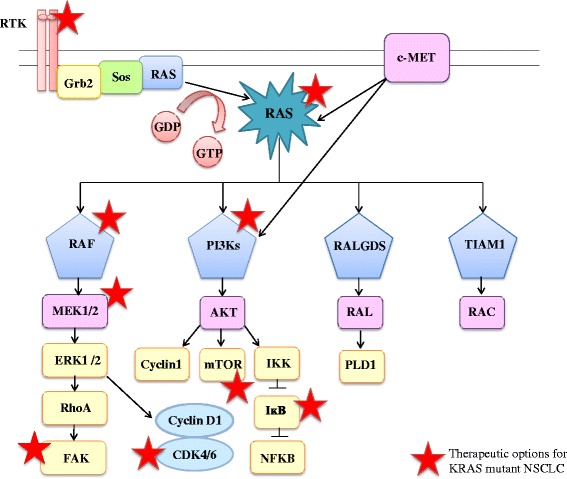
“ner with KRAS oncogene in a study that shows genetic and pharmacological evidence demonstrating the role of CDK4 in proliferation of KRAS-mutant lung cells [141].”
BackgroundA combinatorial strategy for treating KRAS-mutant lung cancer
Manchado, E., Weissmueller, S., Morris, J. P., Chen, C.-C., Wullenkord, R., Lujambio, A., de Stanchina, E., Poirier, J. T., Gainor, J. F., Corcoran, R. B., et al. (2016) · Nature · doi:10.1038/nature18600 · Cited by 403 · cited 1×
“Despite their preclinical activity, first clinical trials using MEK inhibitors as CI-1040 [102], RO5126766 [103, 104] and PD-0325901 [105] in non-selected populations of different tumors types harboring KRAS mutations yielded disappointing results, more likely due to activation of resistance mechanisms through compens…”
Signaling Interplay in Ras Superfamily Function
Mitin, N., Rossman, K. L., & Der, C. J. (2005) · Current Biology · doi:10.1016/j.cub.2005.07.010 · Cited by 399
Three human transforming genes are related to the viral ras oncogenes.
Shimizu, K., Goldfarb, M., Suard, Y., Perucho, M., Li, Y., Kamata, T., Feramisco, J., Stavnezer, E., Fogh, J., & Wigler, M. H. (1983) · Proceedings of the National Academy of Sciences · doi:10.1073/pnas.80.8.2112 · Cited by 387 · cited 1×
“NRAS, was described in human sarcoma cell lines in 1983 [27, 28].”
BackgroundDavies, B. R., Logie, A., McKay, J. S., Martin, P., Steele, S., Jenkins, R., Cockerill, M., Cartlidge, S., & Smith, P. D. (2007) · Molecular Cancer Therapeutics · doi:10.1158/1535-7163.mct-07-0231 · Cited by 387
Sequist, L. V., von Pawel, J., Garmey, E. G., Akerley, W. L., Brugger, W., Ferrari, D., Chen, Y., Costa, D. B., Gerber, D. E., Orlov, S., et al. (2011) · Journal of Clinical Oncology · doi:10.1200/jco.2010.34.0570 · Cited by 378 · cited 2×
“A phase II trial comparing erlotinib alone or in combination with the MET inhibitor tivantinib (ARQ 197) in previously treated EGFR TKI-naïve unselected advanced NSCLC failed to demonstrate clinical benefit in PFS in this cohort [120].”
BackgroundCorcoran, R. B., Cheng, K. A., Hata, A. N., Faber, A. C., Ebi, H., Coffee, E. M., Greninger, P., Brown, R. D., Godfrey, J. T., Cohoon, T. J., et al. (2013) · Cancer Cell · doi:10.1016/j.ccr.2012.11.007 · Cited by 377 · cited 1×
“These have unveiled molecular targets potentially amenable to therapeutic intervention such as PLK1 [143], TBK1 [118]], BCL-XL [144], FAS [145] and XPO1 [146].”
BackgroundTargeting RAS Membrane Association: Back to the Future for Anti-RAS Drug Discovery?
Cox, A. D., Der, C. J., & Philips, M. R. (2015) · Clinical Cancer Research · doi:10.1158/1078-0432.ccr-14-3214 · Cited by 351
Blumenschein, G. R., Smit, E. F., Planchard, D., Kim, D.-W., Cadranel, J., De Pas, T., Dunphy, F., Udud, K., Ahn, M.-J., Hanna, N. H., et al. (2015) · Annals of Oncology · doi:10.1093/annonc/mdv072 · Cited by 349
LKB1 loss links serine metabolism to DNA methylation and tumorigenesis
Kottakis, F., Nicolay, B. N., Roumane, A., Karnik, R., Gu, H., Nagle, J. M., Boukhali, M., Hayward, M. C., Li, Y. Y., Chen, T., et al. (2016) · Nature · doi:10.1038/nature20132 · Cited by 348
Jänne, P. A., van den Heuvel, M. M., Barlesi, F., Cobo, M., Mazieres, J., Crinò, L., Orlov, S., Blackhall, F., Wolf, J., Garrido, P., et al. (2017) · JAMA · doi:10.1001/jama.2017.3438 · Cited by 335 · cited 2×
“Hsp90 Selumetinib + docetaxel/placebo + docetaxel [111] 2017 III 505 2 Mut PFS 20.”
Tsao, M.-S., Aviel-Ronen, S., Ding, K., Lau, D., Liu, N., Sakurada, A., Whitehead, M., Zhu, C.-Q., Livingston, R., Johnson, D. H., et al. (2007) · Journal of Clinical Oncology · doi:10.1200/jco.2007.12.6953 · Cited by 325 · cited 2×
“, 2007 [71] 210 (stage Ib-II) 46 164 Vinorelbine + cisplatin OS (months) 6.”
BackgroundMao, C., Qiu, L.-X., Liao, R.-Y., Du, F.-B., Ding, H., Yang, W.-C., Li, J., & Chen, Q. (2010) · Lung Cancer · doi:10.1016/j.lungcan.2009.11.020 · Cited by 313 · cited 5×
“Moreover, KRAS activation is one of the signaling pathways involved in resistance to EGFR TKIs and monoclonal antibodies.”
BackgroundInfluentialMorphologic Responses to a Murine Erythroblastosis Virus 2
(1967) · JNCI: Journal of the National Cancer Institute · doi:10.1093/jnci/39.2.311 · Cited by 306 · cited 1×
“These viral oncogenes were only able to generate rat sarcomas for what they were called RAS genes, KRAS and HRAS alluding to its discoverers [23, 24].”
BackgroundBlasco, R. B., Francoz, S., Santamaría, D., Cañamero, M., Dubus, P., Charron, J., Baccarini, M., & Barbacid, M. (2011) · Cancer Cell · doi:10.1016/j.ccr.2011.04.002 · Cited by 302 · cited 2×
“Even though attempts to target KRAS pathway have shed little light so far, new molecules or new therapeutic strategies may revolutionize outcomes in patients with KRAS-driven NSCLC in the near future.”
BackgroundShepherd, F. A., Domerg, C., Hainaut, P., Jänne, P. A., Pignon, J.-P., Graziano, S., Douillard, J.-Y., Brambilla, E., Le Chevalier, T., Seymour, L., et al. (2013) · Journal of Clinical Oncology · doi:10.1200/jco.2012.48.1390 · Cited by 293 · cited 2×
“10, and CALGB- 9633) was published [62].”
KRAS mutation-induced upregulation of PD-L1 mediates immune escape in human lung adenocarcinoma
Chen, N., Fang, W., Lin, Z., Peng, P., Wang, J., Zhan, J., Hong, S., Huang, J., Liu, L., Sheng, J., et al. (2017) · Cancer Immunology, Immunotherapy · doi:10.1007/s00262-017-2005-z · Cited by 288 · cited 1×
“cover the tumor immunity of CD3+ T cells, that normally become apoptotic and promote the immune scape [85].”
BackgroundOncogene status predicts patterns of metastatic spread in treatment‐naive nonsmall cell lung cancer
Doebele, R. C., Lu, X., Sumey, C., Maxson, D. A., Weickhardt, A. J., Oton, A. B., Bunn, P. A., Barón, A. E., Franklin, W. A., Aisner, D. L., et al. (2012) · Cancer · doi:10.1002/cncr.27409 · Cited by 280 · cited 1×
“It has been proposed that KRAS-mutated tumors behave similarly to the KRAS, EGFR and ALK-native tumors with respect to sites of metastases [47].”
BackgroundIhle, N. T., Lemos, R., Wipf, P., Yacoub, A., Mitchell, C., Siwak, D., Mills, G. B., Dent, P., Kirkpatrick, D. L., & Powis, G. (2009) · Cancer Research · doi:10.1158/0008-5472.can-07-6656 · Cited by 274 · cited 1×
“It has been demonstrated that KRAS mutations can coexist with PI3K activation in tumors at the same time [124].”
BackgroundKhambata-Ford, S., Harbison, C. T., Hart, L. L., Awad, M., Xu, L.-A., Horak, C. E., Dakhil, S., Hermann, R. C., Lynch, T. J., & Weber, M. R. (2010) · Journal of Clinical Oncology · doi:10.1200/jco.2009.25.2890 · Cited by 266 · cited 2×
“, 2010 [82] 202 (stage IIIB, IV) 35 167 Taxane + carboplatin + cetuximab ORR (%) 30.”
BackgroundScolnick, E. M., Rands, E., Williams, D., & Parks, W. P. (1973) · Journal of Virology · doi:10.1128/jvi.12.3.458-463.1973 · Cited by 252 · cited 1×
“The ability of single-stranded murine sarcoma virus, Kirsten and Harvey, to transform normal mammalian genes into potent oncogenes was discovered over four decades ago [22].”
BackgroundLi, S., Li, L., Zhu, Y., Huang, C., Qin, Y., Liu, H., Ren-Heidenreich, L., Shi, B., Ren, H., Chu, X., et al. (2014) · British Journal of Cancer · doi:10.1038/bjc.2014.210 · Cited by 243 · cited 1×
“Nevertheless, recent studies have described concomitant genetic alterations such as EGFR or Echinoderm microtubule-associated protein-like 4 (EML4) ALK translocation with KRAS (EGFR/KRAS or EML4ALK/KRAS), most of them associated with an acquired mutation after treatment that promotes drug resistance [16, 17].”
BackgroundHunter, J. C., Gurbani, D., Ficarro, S. B., Carrasco, M. A., Lim, S. M., Choi, H. G., Xie, T., Marto, J. A., Chen, Z., Gray, N. S., et al. (2014) · Proceedings of the National Academy of Sciences · doi:10.1073/pnas.1404639111 · Cited by 242 · cited 1×
“Moreover, different strategies for direct inhibition of specific KRAS-mutated proteins using several strategies such as an irreversible allosteric inhibitor of G12C RAS to prevent GTP-KRAS formation [37], compounds that target the guanine nucleotide binding pocket (SML-873-1) [86] or allele-specific inhibitors (ARS-85…”
BackgroundHaura, E. B., Ricart, A. D., Larson, T. G., Stella, P. J., Bazhenova, L., Miller, V. A., Cohen, R. B., Eisenberg, P. D., Selaru, P., Wilner, K. D., et al. (2010) · Clinical Cancer Research · doi:10.1158/1078-0432.ccr-09-1920 · Cited by 237 · cited 3×
“Despite their preclinical activity, first clinical trials using MEK inhibitors as CI-1040 [102], RO5126766 [103, 104] and PD-0325901 [105] in non-selected populations of different tumors types harboring KRAS mutations yielded disappointing results, more likely due to activation of resistance mechanisms through compens…”
Wallin, J. J., Edgar, K. A., Guan, J., Berry, M., Prior, W. W., Lee, L., Lesnick, J. D., Lewis, C., Nonomiya, J., Pang, J., et al. (2011) · Molecular Cancer Therapeutics · doi:10.1158/1535-7163.mct-11-0446 · Cited by 229 · cited 1×
“The blockade of the pathway using mTOR inhibitors, arresting tumor cells in G1 phase, has also been tested [125].”
BackgroundKarachaliou, N., Mayo, C., Costa, C., Magrí, I., Gimenez-Capitan, A., Molina-Vila, M. A., & Rosell, R. (2013) · Clinical Lung Cancer · doi:10.1016/j.cllc.2012.09.007 · Cited by 228 · cited 9×
“Patients harboring G12C mutation are more likely to present bone metastases dissemination, while pleuro-pericardial metastases are more frequent in those with G12V mutations.”
BackgroundInfluentialSuda, K., Tomizawa, K., & Mitsudomi, T. (2010) · Cancer and Metastasis Reviews · doi:10.1007/s10555-010-9209-4 · Cited by 222 · cited 1×
“as pathological features, clinical background and prognostic or predictive implications [14, 15].”
BackgroundAdjei, A. A., Mauer, A., Bruzek, L., Marks, R. S., Hillman, S., Geyer, S., Hanson, L. J., Wright, J. J., Erlichman, C., Kaufmann, S. H., et al. (2003) · Journal of Clinical Oncology · doi:10.1200/jco.2003.09.075 · Cited by 219 · cited 2×
“Tipifarnib was tested in 44 patients with advanced NSCLC [91].”
BackgroundSocinski, M. A., Goldman, J., El-Hariry, I., Koczywas, M., Vukovic, V., Horn, L., Paschold, E., Salgia, R., West, H., Sequist, L. V., et al. (2013) · Clinical Cancer Research · doi:10.1158/1078-0432.ccr-12-3381 · Cited by 215 · cited 2×
“Although in vivo activity of tipifarnib in Mek, PI3k Trametinib/ docetaxel [113] 2015 II 129 2 Mut PFS 12 vs 12 3 vs 2.75 2 vs NR NCT01362296 Mek, PI3k Bortezomib [119] 2015 II 16 ≥2 Mut ORR 6.6 1 13 NCT01833143 Fak Defactinib [134] 2015 II 55 ≥2 Mut PFS at 12 weeks 1.8 NA NA NCT01951690 Hsp90 Ganetespib + docetaxel/…”
InfluentialO'Byrne, K. J., Gatzemeier, U., Bondarenko, I., Barrios, C., Eschbach, C., Martens, U. M., Hotko, Y., Kortsik, C., Paz-Ares, L., Pereira, J. R., et al. (2011) · The Lancet Oncology · doi:10.1016/s1470-2045(11)70189-9 · Cited by 205 · cited 2×
“, 2011 [83] 395 (stage IIIB, IV) 75 320 Cisplatin + vinorelbine + cetuximab ORR (%) 36.”
BackgroundXPO1-dependent nuclear export is a druggable vulnerability in KRAS-mutant lung cancer
Kim, J., McMillan, E., Kim, H. S., Venkateswaran, N., Makkar, G., Rodriguez-Canales, J., Villalobos, P., Neggers, J. E., Mendiratta, S., Wei, S., et al. (2016) · Nature · doi:10.1038/nature19771 · Cited by 202 · cited 1×
“These have unveiled molecular targets potentially amenable to therapeutic intervention such as PLK1 [143], TBK1 [118]], BCL-XL [144], FAS [145] and XPO1 [146].”
BackgroundSchiller, J. H., Adak, S., Feins, R. H., Keller, S. M., Fry, W. A., Livingston, R. B., Hammond, M. E. M., Wolf, B., Sabatini, L., Jett, J., et al. (2001) · Journal of Clinical Oncology · doi:10.1200/jco.2001.19.2.448 · Cited by 192 · cited 2×
“found differences in OS when assessing the potential benefit of postsurgical chemotherapy (cisplatin and etoposide) added to thoracic radiation in patients with stage II and IIIA NSCLC according to KRAS status [69].”
BackgroundGarassino, M. C., Marabese, M., Rusconi, P., Rulli, E., Martelli, O., Farina, G., Scanni, A., & Broggini, M. (2011) · Annals of Oncology · doi:10.1093/annonc/mdq680 · Cited by 184 · cited 1×
“The induction of a different sensitivity pattern depending on the specific KRASmutation has been studied in the preclinical scenario by generation of NSCLC cell lines overexpressing the three most common amino acid substitutions (G12C, G12V and G12D) leading to the KRAS-mutated proteins [75].”
BackgroundVallejo, A., Perurena, N., Guruceaga, E., Mazur, P. K., Martinez-Canarias, S., Zandueta, C., Valencia, K., Arricibita, A., Gwinn, D., Sayles, L. C., et al. (2017) · Nature Communications · doi:10.1038/ncomms14294 · Cited by 181 · cited 2×
“These studies led to the identification of the kinase receptor DDR1 [148] and the transcription factor FOSL1 [149] as KRAS vulnerabilities in mutant KRAS tumors.”
BackgroundSelf-citationLudovini, V., Bianconi, F., Pistola, L., Chiari, R., Minotti, V., Colella, R., Giuffrida, D., Tofanetti, F. R., Siggillino, A., Flacco, A., et al. (2011) · Journal of Thoracic Oncology · doi:10.1097/jto.0b013e31820a3a6b · Cited by 177
Ambrogio, C., Gómez-López, G., Falcone, M., Vidal, A., Nadal, E., Crosetto, N., Blasco, R. B., Fernández-Marcos, P. J., Sánchez-Céspedes, M., Ren, X., et al. (2016) · Nature Medicine · doi:10.1038/nm.4041 · Cited by 176 · cited 2×
“These studies led to the identification of the kinase receptor DDR1 [148] and the transcription factor FOSL1 [149] as KRAS vulnerabilities in mutant KRAS tumors.”
BackgroundSelf-citationWang, T., Nelson, R. A., Bogardus, A., & Grannis, F. W. (2010) · Cancer · doi:10.1002/cncr.24871 · Cited by 176 · cited 1×
“However, at the time of diagnosis, the majority of patients have already developed advanced disease and the median survival barely exceeds 18 months from diagnosis [5].”
BackgroundA Phase II Trial of Salirasib in Patients with Lung Adenocarcinomas with KRAS Mutations
Riely, G. J., Johnson, M. L., Medina, C., Rizvi, N. A., Miller, V. A., Kris, M. G., Pietanza, M. C., Azzoli, C. G., Krug, L. M., Pao, W. J., et al. (2011) · Journal of Thoracic Oncology · doi:10.1097/jto.0b013e318223c099 · Cited by 168 · cited 2×
“Mek Salirasib [92] 2011 II 33 All lines Mut Rate of nonprogression at 10 weeks 0 TTP: 2 (1st line), 1 (2nd line) Not reached (1st line), 15 (2nd line) NCT00531401”
BackgroundHainsworth, J. D., Cebotaru, C. L., Kanarev, V., Ciuleanu, T. E., Damyanov, D., Stella, P., Ganchev, H., Pover, G., Morris, C., & Tzekova, V. (2010) · Journal of Thoracic Oncology · doi:10.1097/jto.0b013e3181e8b3a3 · Cited by 162 · cited 2×
“C-Raf Selumetinib/ pemetrexed [107] 2010 II 84 2 or 3 Unknown Disease progression event 5 vs 4 2.”
BackgroundMethodMurray, S. J., Dahabreh, I. J., Linardou, H., Manoloukos, M., Bafaloukos, D. I., & Kosmidis, P. (2008) · Journal of Thoracic Oncology · doi:10.1097/jto.0b013e31818071f3 · Cited by 161
KEAP1 loss modulates sensitivity to kinase targeted therapy in lung cancer
Krall, E. B., Wang, B., Munoz, D. M., Ilic, N., Raghavan, S., Niederst, M. J., Yu, K., Ruddy, D. A., Aguirre, A. J., Kim, J. W., et al. (2017) · eLife · doi:10.7554/elife.18970 · Cited by 160
Molina-Arcas, M., Hancock, D. C., Sheridan, C., Kumar, M. S., & Downward, J. (2013) · Cancer Discovery · doi:10.1158/2159-8290.cd-12-0446 · Cited by 157 · cited 1×
“Additionally, chemical screens have unveiled further options to treat mutant KRAS cancers using combinatorial strategies, which included the combination of IGFR1 and MEK inhibitors [150], TNKR and MEK inhibitors [151], or PLK1 and ROCK inhibitors [152].”
BackgroundMartinez-Garcia, M., Banerji, U., Albanell, J., Bahleda, R., Dolly, S., Kraeber-Bodéré, F., Rojo, F., Routier, E., Guarin, E., Xu, Z.-X., et al. (2012) · Clinical Cancer Research · doi:10.1158/1078-0432.ccr-12-0742 · Cited by 151 · cited 2×
“Despite their preclinical activity, first clinical trials using MEK inhibitors as CI-1040 [102], RO5126766 [103, 104] and PD-0325901 [105] in non-selected populations of different tumors types harboring KRAS mutations yielded disappointing results, more likely due to activation of resistance mechanisms through compens…”
BackgroundRas activation revisited: role of GEF and GAP systems
Hennig, A., Markwart, R., Esparza-Franco, M. A., Ladds, G., & Rubio, I. (2015) · Biological Chemistry · doi:10.1515/hsz-2014-0257 · Cited by 138 · cited 1×
“The exchange of GDP-GTP is regulated by additional proteins: Guanine nucleotide exchange factors (GEFs) decrease the affinity of RAS proteins for GDP and favor GTP binding that results in RAS activation, while GTPase-activating proteins (GAPs) accelerate the intrinsic GTPase activity to regulate the RAS cycle [43, 44].”
BackgroundKoeppen, H., Yu, W., Zha, J., Pandita, A., Penuel, E., Rangell, L., Raja, R., Mohan, S., Patel, R., Desai, R., et al. (2014) · Clinical Cancer Research · doi:10.1158/1078-0432.ccr-13-1836 · Cited by 136 · cited 1×
“In an exploratory subgroup analysis concerning potential predictive biomarkers, no responses were observed in the group of patients harboring KRAS mutations [123].”
BackgroundTakashima, A., & Faller, D. V. (2013) · Expert Opinion on Therapeutic Targets · doi:10.1517/14728222.2013.764990 · Cited by 134
Monotherapy Administration of Sorafenib in Patients With Non–Small Cell Lung Cancer (MISSION) Trial
Paz-Ares, L. G., Hirsh, V., Zhang, L., de Marinis, F., Yang, J. C., Wakelee, H. A., Seto, T., Wu, Y.-L. L. C., Novello, S., Juhász, É., et al. (2015) · Journal of Thoracic Oncology · doi:10.1097/jto.0000000000000693 · Cited by 129 · cited 3×
“Preclinical data demonstrated that AZD6244 has potential to inhibit tumor Mek, PI3k, mTOR Sorafenib/placebo [99] 2015 III 706 3 or 4 Mut, wt OS 4.9 vs 0.9 (KRAS-mut: 2.9 vs 0) 2.8 vs 1.4 (KRAS-mut: 2.6 vs 1.7) 8.2 vs 8.3 (KRAS-mut: 6.4 vs 5.1) NCT00863746 Mek Selumentinib + erlotinib/placebo + erlotinib [112] 2016 II…”
BackgroundInfluentialScagliotti, G. V., Novello, S., Schiller, J. H., Hirsh, V., Sequist, L. V. D., Soria, J., von Pawel, J., Schwartz, B. E., von Roemeling, R., & Sandler, A. B. (2012) · Clinical Lung Cancer · doi:10.1016/j.cllc.2012.01.003 · Cited by 129 · cited 2×
“A phase III clinical trial named MARQUEE, compared erlotinib and tivantinib with erlotinib and placebo in patients with locally advanced or metastatic, nonsquamous NSCLC and stratified the cohort by KRAS and EGFR status [121].”
BackgroundMethodShepherd, F. A., Lacas, B., Le Teuff, G., Hainaut, P., Jänne, P. A., Pignon, J.-P., Le Chevalier, T., Seymour, L., Douillard, J.-Y., Graziano, S., et al. (2017) · Journal of Clinical Oncology · doi:10.1200/jco.2016.71.2893 · Cited by 124 · cited 1×
“Co-mutation of TP53 and KRAS has also been studied, showing worse OS in patients harboring co-mutation versus double wild type tumors [74].”
BackgroundBiernacka, A., Tsongalis, P. D., Peterson, J. D., de Abreu, F. B., Black, C. C., Gutmann, E. J., Liu, X., Tafe, L. J., Amos, C. I., & Tsongalis, G. J. (2016) · Cancer Genetics · doi:10.1016/j.cancergen.2016.03.001 · Cited by 120
RHOA-FAK is a required signaling axis for the maintenance of KRAS-driven lung adenocarcinomas
Konstantinidou, G., Ramadori, G., Torti, F., Kangasniemi, K., Ramirez, R. E., Cai, Y., Behrens, C., Dellinger, M. T., Brekken, R. A., Wistuba, I. I., et al. (2013) · Cancer Discovery · doi:10.1158/2159-8290.cd-12-0388 · Cited by 114 · cited 1×
“The RHOA-FAK pathway, involved in cell migration, has also proved to play an important role in some KRAS-mutated tumors, in which the mutation of KRAS added to inactivation of the tumor suppressor genes INK4a/ARF/p16, leads to hyperactivation of the GTPase RHOA by MEK1/2 and ERK1/2 [133].”
BackgroundKRAS-G12C Mutation Is Associated with Poor Outcome in Surgically Resected Lung Adenocarcinoma
Nadal, E., Chen, G., Prensner, J. R., Shiratsuchi, H., Sam, C., Zhao, L., Kalemkerian, G. P., Brenner, D., Lin, J., Reddy, R. M., et al. (2014) · Journal of Thoracic Oncology · doi:10.1097/jto.0000000000000305 · Cited by 113 · cited 1×
“Concerning KRAS mutation subtypes, retrospective studies have shown that patients with early stage and advanced NSCLC harboring G12C KRAS mutations had significantly shorter OS compared to other KRAS mutations [66, 67].”
BackgroundSelf-citationRamalingam, S. S., Goss, G. D., Rosell, R., Schmid‐Bindert, G., Zarić, B., Andric, Z. G., Bondarenko, I., Комов, Д. В., Cerić, T., Khuri, F. R., et al. (2015) · Annals of Oncology · doi:10.1093/annonc/mdv220 · Cited by 111 · cited 2×
“Hsp90 Ganetespib + docetaxel/ Docetaxel [138] 2015 II 385 2 Mut, wt PFS NA KRAS-mut: 3.”
InfluentialKwak, E. L., LoRusso, P. M., Hamid, O., Jankú, F., Kittaneh, M., Catenacci, D. V. T., Chan, E. W., Bekaii‐Saab, T., Amore, B. M., Hwang, Y. C., et al. (2015) · Journal of Clinical Oncology · doi:10.1200/jco.2015.33.3_suppl.1 · Cited by 109
Wang, S., An, T., Wang, J., Zhao, J., Wang, Z., Zhuo, M., Bai, H., Yang, L., Zhang, Y., Wang, X., et al. (2010) · Clinical Cancer Research · doi:10.1158/1078-0432.ccr-09-2672 · Cited by 103 · cited 1×
“Nevertheless, recent studies have described concomitant genetic alterations such as EGFR or Echinoderm microtubule-associated protein-like 4 (EML4) ALK translocation with KRAS (EGFR/KRAS or EML4ALK/KRAS), most of them associated with an acquired mutation after treatment that promotes drug resistance [16, 17].”
BackgroundRas redux: rethinking how and where Ras acts
Hingorani, S. R., & Tuveson, D. A. (2003) · Current Opinion in Genetics & Development · doi:10.1016/s0959-437x(02)00017-5 · Cited by 103
Morphologic responses to a murine erythroblastosis virus.
Kirsten, W. H., & La, M. (1967) · The Mouseion at the JAXlibrary (Jackson Laboratory) · Cited by 101
Carter, C. A., Rajan, A., Keen, C., Szabo, E. M., Khozin, S., Thomas, A., Brzezniak, C. E., Guha, U., Doyle, L. A., Steinberg, S. M., et al. (2016) · Annals of Oncology · doi:10.1093/annonc/mdw008 · Cited by 100 · cited 2×
“In KRAS mutant NSCLC patients, no responses were seen in the monotherapy cohort, and the combination therapy failed to show significant improvement in PFS or ORR and caused more adverse events [112].”
BackgroundUlivi, P., Chiadini, E., Dazzi, C., Dubini, A., Costantini, M., Medri, L., Puccetti, M., Capelli, L., Calistri, D., Verlicchi, A., et al. (2015) · Clinical Lung Cancer · doi:10.1016/j.cllc.2015.11.004 · Cited by 97 · cited 2×
“On the one hand, EML4-ALK fusion has been proven to be associated with poor prognosis when KRAS mutations are also copresent [19].”
BackgroundSuppression of KRas-mutant cancer through the combined inhibition of KRAS with PLK1 and ROCK
Wang, J., Hu, K., Guo, J., Cheng, F., Lv, J., Jiang, W., Lu, W., Liu, J., Pang, X., & Liu, M. (2016) · Nature Communications · doi:10.1038/ncomms11363 · Cited by 96 · cited 1×
“Additionally, chemical screens have unveiled further options to treat mutant KRAS cancers using combinatorial strategies, which included the combination of IGFR1 and MEK inhibitors [150], TNKR and MEK inhibitors [151], or PLK1 and ROCK inhibitors [152].”
BackgroundTargeting KRAS-Mutant Non–Small Cell Lung Cancer with the Hsp90 Inhibitor Ganetespib
Acquaviva, J., Smith, D. L., Sang, J., Friedland, J. C., He, S., Sequeira, M., Zhang, C., Wada, Y., & Proia, D. A. (2012) · Molecular Cancer Therapeutics · doi:10.1158/1535-7163.mct-12-0615 · Cited by 96 · cited 1×
“Treatment with ganetespib, an Hsp90 inhibitor, of KRAS-mutated cells resulted in decrease levels of EGFR, MET and CRAF, leading to inactivation of the RAS/RAF/MEK/ERK and PI3K/AKT pathways resulting consequently in apoptosis [136].”
BackgroundInfante, J. R., Papadopoulos, K. P., Bendell, J. C., Patnaik, A., Burris, H. A., Rasco, D. W., Jones, S. F., Smith, L. S., Cox, D. S., Durante, M., et al. (2013) · European Journal of Cancer · doi:10.1016/j.ejca.2013.03.020 · Cited by 93
Lee, T., Lee, B., Choi, Y., Han, J., Ahn, M., & Um, S. (2016) · Journal of Pathology and Translational Medicine · doi:10.4132/jptm.2016.03.09 · Cited by 93 · cited 2×
“Also during the last decade, a number of genetic alterations have been described in NSCLC, being Kristen Rat Sarcoma viral oncogene (KRAS), Epidermal Growth Factor Receptor (EGFR) and Anaplastic Lymphoma Kinase (ALK) the most commonly altered oncogenes acting as tumor genomic drivers [10].”
BackgroundRodenhuis, S., Boerrigter, L., Top, B., Slebos, R. J., Mooi, W. J., van't Veer, L., & van Zandwijk, N. (1997) · Journal of Clinical Oncology · doi:10.1200/jco.1997.15.1.285 · Cited by 92 · cited 2×
“assessed the influence of KRAS mutations on the response to chemotherapy (carboplatin, ifosfamide and etoposide) in the metastatic setting [68].”
BackgroundTakezawa, K., Okamoto, I., Yonesaka, K., Hatashita, E., Yamada, Y., Fukuoka, M., & Nakagawa, K. (2009) · Cancer Research · doi:10.1158/0008-5472.can-09-1076 · Cited by 92 · cited 1×
“Sorafenib, an oral multi-tyrosine kinase inhibitor that targets Raf and related transmembrane receptors, was seen to induce CRaf depletion and, secondarily, inhibit cell growth and induce G1 arrest in NSCLC KRAS-mutant cells [97].”
BackgroundPan, W., Yang, Y., Zhu, H., Zhang, Y., Zhou, R., & Sun, X. (2016) · Oncotarget · doi:10.18632/oncotarget.7080 · Cited by 89 · cited 2×
“However, another meta-analysis of 41 studies has described the negative prognostic value of KRAS mutations, showing a worse OS and disease-free survival (DFS) when mutations are present [64].”
Reconstructing targetable pathways in lung cancer by integrating diverse omics data
Balbin, O. A., Prensner, J. R., Sahu, A., Yocum, A., Shankar, S., Malik, R., Fermin, D., Dhanasekaran, S. M., Chandler, B., Thomas, D., et al. (2013) · Nature Communications · doi:10.1038/ncomms3617 · Cited by 87 · cited 1×
“These data suggest that there are specific pathways and activated genes according to the KRAS dependency that have an important role in the different cancer phenotypes and their potential treatments [58, 59].”
BackgroundThe evolution of the unstable cancer genome
Burrell, R. A., & Swanton, C. (2014) · Current Opinion in Genetics & Development · doi:10.1016/j.gde.2013.11.011 · Cited by 80
Dingemans, A. C., Mellema, W. W., Groen, H. J. M., van Wijk, A. W., Burgers, S. A., Kunst, P. W. A., Thunnissen, E., Heideman, D. A. M., & Smit, E. F. (2013) · Clinical Cancer Research · doi:10.1158/1078-0432.ccr-12-1779 · Cited by 80 · cited 4×
“Mek Sorafenib [98] 2013 II 59 > 1 Mut DCR at 6 weeks 10.”
BackgroundMethodInfluentialJänne, P. A., Smith, I., McWalter, G., Mann, H., Dougherty, B., Walker, J., Orr, M. C. M., Hodgson, D. R., Shaw, A. T., Pereira, J. R., et al. (2015) · British Journal of Cancer · doi:10.1038/bjc.2015.215 · Cited by 76 · cited 1×
“RR and PFS was longer for the combination arm [110].”
BackgroundMetro, G., Chiari, R., Duranti, S., Siggillino, A., Fischer, M. J., Giannarelli, D., Ludovini, V., Bennati, C., Marcomigni, L., Baldi, A., et al. (2012) · Lung Cancer · doi:10.1016/j.lungcan.2012.06.005 · Cited by 75
Villalona‐Calero, M. A., Lam, E., Otterson, G. A., Zhao, W., Timmons, M., Subramaniam, D., Hade, E. M., Gill, G. M., Coffey, M., Selvaggi, G., et al. (2016) · Cancer · doi:10.1002/cncr.29856 · Cited by 69 · cited 2×
“Additional therapeutic strategies for mutant KRAS NSCLC such as reovirus type 3 [139], docetaxel nanoparticles (NCT02283320) or abemaciclib (a cell cycle inhibitor selective for the cyclin-dependent kinases CDK4 and CDK6)”
BackgroundZundelevich, A., Elad‐Sfadia, G., Haklai, R., & Kloog, Y. (2007) · Molecular Cancer Therapeutics · doi:10.1158/1535-7163.mct-06-0706 · Cited by 65 · cited 1×
“Despite promising in vitro and in vivo results in preclinical models demonstrated that farnesyl transferase inhibitors (FTI) such as tipifarnib (R115777) or salirasib could prevent the development of lung tumors [89, 90], phase II trials using FTI failed to show clinical activity.”
BackgroundRenaud, S., Seitlinger, J., Falcoz, P.-E., Schaeffer, M., Voegeli, A.-C., Legrain, M., Beau-Faller, M., & Massard, G. (2016) · British Journal of Cancer · doi:10.1038/bjc.2016.182 · Cited by 64
Hames, M. L., Chen, H., Iams, W., Aston, J., Lovly, C. M., & Horn, L. (2016) · Lung Cancer · doi:10.1016/j.lungcan.2015.11.004 · Cited by 63
Fiala, O., Pesek, M., Finek, J., Benesova, L., Belsanova, B., & Minarik, M. (2013) · Cancer Genetics · doi:10.1016/j.cancergen.2012.12.003 · Cited by 60 · cited 2×
“Patients harboring the dominant G12C KRAS mutation had shorter PFS and OS than those with non-G12C KRAS mutations in a subgroup of 38 patients harboring a mutated KRAS gene and wild-type EGFR gene who were treated with erlotinib or genitinib [80].”
BackgroundJia, Y., Jiang, T., Li, X., Zhao, C., Zhang, L., Zhao, S., Liu, X., Qiao, M., Luo, J., Shi, J., et al. (2017) · Oncology Letters · doi:10.3892/ol.2017.7016 · Cited by 60 · cited 1×
“However, KRAS G12D mutations preferably activate PI3K and MEK signaling [51, 52].”
BackgroundZer, A., Ding, K., Lee, S. M., Goss, G. D., Seymour, L., Ellis, P. M., Hackshaw, A., Bradbury, P. A., Han, L., O’Callaghan, C. J., et al. (2016) · Journal of Thoracic Oncology · doi:10.1016/j.jtho.2015.11.010 · Cited by 56 · cited 4×
“Another recently published pooled analysis including four trials testing EGFR TKIs documented an OS benefit among patients with tumors showing the G12D/S mutation, whereas treatment with EGFR TKIs resulted harmful for those with the G12V mutations [63].”
BackgroundInfluentialKRAS and BRAF Mutation Analysis in Routine Molecular Diagnostics
Heideman, D. A. M., Lurkin, I., Doeleman, M., Smit, E. F., Verheul, H. M. W., Meijer, G. A., Snijders, P. J. F., Thunnissen, E., & Zwarthoff, E. C. (2012) · Journal of Molecular Diagnostics · doi:10.1016/j.jmoldx.2012.01.011 · Cited by 56 · cited 1×
“BRaf inhibitors used against BRaf-mutated melanomas, such as vemurafenib or dabrafenib, are unlikely to prove any meaningful clinical effect as targeted agents in KRASmutated NSCLC, since KRAS and BRaf activating mutations are mutually exclusive [93].”
BackgroundJuric, D., Soria, J.-C., Sharma, S., Banerji, U., Azaro, A., Desai, J., Ringeisen, F. P., Kaag, A., Radhakrishnan, R., Hourcade-Potelleret, F., et al. (2014) · Journal of Clinical Oncology · doi:10.1200/jco.2014.32.15_suppl.9051 · Cited by 55 · cited 1×
“Mek, PI3k Alpelisib + binimetinib [132] 2014 Ib 58 NS Mut Safety 8.”
BackgroundmiR-1298 Inhibits Mutant KRAS-Driven Tumor Growth by Repressing FAK and LAMB3
Zhou, Y., Dang, J., Chang, K.-Y., Yau, E., Aza-Blanc, P., Moscat, J., & Rana, T. M. (2016) · Cancer Research · doi:10.1158/0008-5472.can-15-2936 · Cited by 54 · cited 1×
“Lastly, diverse research lines are currently open in this field, leading to the identification of promising unconventional therapeutic targets such as miR-1298 that inhibits tumor growth in KRAS-driven tumors [153] or the Inhibitor of Differention-1 (Id1) [154] that may Román et al.”
BackgroundGoldman, J. W., Shi, P., Reck, M., Paz-Ares, L., Koustenis, A., & Hurt, K. C. (2016) · Clinical Lung Cancer · doi:10.1016/j.cllc.2015.08.003 · Cited by 52
Gandara, D. R., Leighl, N. B., Delord, J., Barlési, F., Bennouna, J., Zalcman, G., Infante, J. R., Reckamp, K. L., Kelly, K. L., Shepherd, F. A., et al. (2016) · Journal of Thoracic Oncology · doi:10.1016/j.jtho.2016.11.2218 · Cited by 50
LoRusso, P., Shapiro, G., Pandya, S. S., Kwak, E. L., Jones, C., Belvin, M., Musib, L. C., de Crespigny, A., McKenzie, M., Gates, M. R., et al. (2012) · Journal of Clinical Oncology · doi:10.1200/jco.2012.30.15_suppl.2566 · Cited by 48 · cited 1×
“Mek Cobimetinib + pictilisib [129] 2012 Ib 78 NS Unknown Safety 14 NA NA NCT00996892”
BackgroundFan, G., Zhang, K., Ding, J., & Li, J. (2017) · Oncotarget · doi:10.18632/oncotarget.15412 · Cited by 47 · cited 2×
“, 2017 [65] Pooled analysis 658 (advanced NSCLC) 93 565 HR for PFS 1.”
BackgroundGenetic disruption of oncogenic Kras sensitizes lung cancer cells to Fas receptor-mediated apoptosis
Mou, H., Moore, J., Malonia, S. K., Li, Y., Ozata, D. M., Hough, S., Song, C.-Q., Smith, J. L., Fischer, A., Weng, Z., et al. (2017) · Proceedings of the National Academy of Sciences · doi:10.1073/pnas.1620861114 · Cited by 46 · cited 1×
“These have unveiled molecular targets potentially amenable to therapeutic intervention such as PLK1 [143], TBK1 [118]], BCL-XL [144], FAS [145] and XPO1 [146].”
BackgroundSchoumacher, M., Hurov, K. E., Lehár, J., Yan-Neale, Y., Mishina, Y., Sonkin, D., Korn, J. M., Flemming, D., Jones, M. D., Antonakos, B., et al. (2014) · Cancer Research · doi:10.1158/0008-5472.can-14-0138-t · Cited by 44 · cited 1×
“Additionally, chemical screens have unveiled further options to treat mutant KRAS cancers using combinatorial strategies, which included the combination of IGFR1 and MEK inhibitors [150], TNKR and MEK inhibitors [151], or PLK1 and ROCK inhibitors [152].”
BackgroundKelly, K., Mazieres, J., Leighl, N. B., Barlesi, F., Zalcman, G., Gordon, M. S., Reckamp, K. L., Gandara, D. R., Gomez-Roca, C. A., Bennouna, J., et al. (2013) · Journal of Clinical Oncology · doi:10.1200/jco.2013.31.15_suppl.8027 · Cited by 42
Riely, G. J., Brahmer, J. R., Planchard, D., Crinò, L., Doebele, R. C., Mas Lopez, L. A., Gettinger, S. N., Schumann, C., Li, X., Atkins, B. M., et al. (2012) · Journal of Clinical Oncology · doi:10.1200/jco.2012.30.15_suppl.7531 · Cited by 39 · cited 2×
“Mek Ridaforolimus [126] 2012 II 79 > 1 Mut PFS 1 4 18 NCT00818675”
BackgroundGunning, W. T., Kramer, P. M., Lubet, R. A., Steele, V. E., End, D. W., Wouters, W., & Pereira, M. A. (2003) · PubMed · Cited by 39
Svatoň, M., Fiala, O., Pešek, M., Bortlíček, Z., Minárik, M., Benešová, L., & Topolčan, O. (2016) · PubMed · Cited by 37
KRAS and TP53 mutations in bronchoscopy samples from former lung cancer patients
Gao, W., Jin, J., Yin, J., Land, S. R., Gaither‐Davis, A., Christie, N. A., Luketich, J. D., Siegfried, J. M., & Keohavong, P. (2016) · Molecular Carcinogenesis · doi:10.1002/mc.22501 · Cited by 34 · cited 1×
“41 years) compared to patients candidates to personalized therapies [20, 21].”
BackgroundThe Ras Superfamily G-Proteins
Tetlow, A. L., & Tamanoi, F. (2013) · The Enzymes · doi:10.1016/b978-0-12-416749-0.00001-4 · Cited by 31
Honda, K., Yamamoto, N., Nokihara, H., Tamura, Y., Asahina, H., Yamada, Y., Suzuki, S., Yamazaki, N., Ogita, Y., & Tamura, T. (2013) · Cancer Chemotherapy and Pharmacology · doi:10.1007/s00280-013-2228-4 · Cited by 29 · cited 2×
“Despite their preclinical activity, first clinical trials using MEK inhibitors as CI-1040 [102], RO5126766 [103, 104] and PD-0325901 [105] in non-selected populations of different tumors types harboring KRAS mutations yielded disappointing results, more likely due to activation of resistance mechanisms through compens…”
Heist, R. S., Gandhi, L., Shapiro, G. I., Rizvi, N. A., Burris, H. A., Bendell, J. C., Baselga, J. M., Yerganian, S. B., Hsu, K., Ogden, J., et al. (2013) · Journal of Clinical Oncology · doi:10.1200/jco.2013.31.15_suppl.2530 · Cited by 28 · cited 1×
“Met Pimasertib + voxtalisib [130] 2013 Ib 53 NS NS Safety 7 NA NA NCT01390818”
BackgroundGandara, D. R., Hiret, S., Blumenschein, G. R., Barlesi, F., Delord, J.-P., Madelaine, J., Infante, J. R., Reckamp, K. L., Lara, P., Audebert, C., et al. (2013) · Journal of Clinical Oncology · doi:10.1200/jco.2013.31.15_suppl.8028 · Cited by 27
Simmons, B. H., Lee, J. H., Lalwani, K., Giddabasappa, A., Snider, B. A., Wong, A., Lappin, P. B., Eswaraka, J. R., Kan, J. L. C., Christensen, J. G., et al. (2012) · Cancer Chemotherapy and Pharmacology · doi:10.1007/s00280-012-1899-6 · Cited by 24 · cited 1×
“This modality has also been studied in the clinic [128].”
BackgroundCooley, M. E., Blonquist, T. M., Catalano, P. J., Lobach, D. F., Braun, I. M., Halpenny, B., McCorkle, R. C., Rabin, M. S., Johns, E., Finn, K. T., et al. (2014) · Journal of Clinical Oncology · doi:10.1200/jco.2014.32.31_suppl.1 · Cited by 21
Zalcman, G., Beau‐Faller, M., Créveuil, C., de Fraipont, F., Mounawar, M., Richard, N., Bergot, E., Favrot, M., Morin, F., & Milleron, B. J. (2008) · Journal of Clinical Oncology · doi:10.1200/jco.2008.26.15_suppl.7500 · Cited by 19 · cited 1×
“The phase III IFCT-0002 trial compared two chemotherapy regimens (carboplatin and paclitaxel vs cisplatin and gemcitabine) and two sequences of chemotherapy (neoadjuvant vs perioperative) in stage I and II NSCLC [72].”
BackgroundPhase II trial of bortezomib in KRAS G12D mutant lung cancers.
Litvak, A. M., Drilon, A. E. D. C., Rekhtman, N., Pietanza, M. C., Chaft, J. E., Woo, K. M., Paik, P. K., Kris, M. G., & Riely, G. J. (2015) · Journal of Clinical Oncology · doi:10.1200/jco.2015.33.15_suppl.e19002 · Cited by 16 · cited 3×
“Although in vivo activity of tipifarnib in Mek, PI3k Trametinib/ docetaxel [113] 2015 II 129 2 Mut PFS 12 vs 12 3 vs 2.75 2 vs NR NCT01362296 Mek, PI3k Bortezomib [119] 2015 II 16 ≥2 Mut ORR 6.6 1 13 NCT01833143 Fak Defactinib [134] 2015 II 55 ≥2 Mut PFS at 12 weeks 1.8 NA NA NCT01951690 Hsp90 Ganetespib + docetaxel/…”
BackgroundInfluentialRamanathan, R. K., Hoff, D. D. V., Eskens, F. A. L. M., Blumenschein, G. R., Richards, D., Renshaw, F. G., Rajagopalan, P., Kelly, A. T., Peña, C. E., & Mross, K. B. (2014) · Journal of Clinical Oncology · doi:10.1200/jco.2014.32.15_suppl.2588 · Cited by 16 · cited 1×
“mTOR Copanlisib + refametinib [131] 2014 Ib 49 NS Mut, wt, unknown Safety 2.”
BackgroundKRAS and the Reality of Personalized Medicine in Non-Small Cell Lung Cancer
Kılgöz, H. Ö., Bender, G., Scandura, J. M., Viale, A. J., & Taneri, B. (2016) · Molecular Medicine · doi:10.2119/molmed.2016.00151 · Cited by 16
Kim, E. Y., Kim, A., Kim, S. K., Kim, H. J., Chang, J., Ahn, C. M., Lee, J. S., Shim, H. S., & Chang, Y. S. (2014) · Lung Cancer · doi:10.1016/j.lungcan.2014.04.012 · Cited by 13
Goldkorn, A., Vogelzang, N. J., Fink, L. M., Ely, B., Quinn, D. I., Tangen, C. M., Tai, Y., Twardowski, P. W., Veldhuizen, P. J. V., Agarwal, N., et al. (2012) · Journal of Clinical Oncology · doi:10.1200/jco.2012.30.30_suppl.1 · Cited by 11
Kuznetsov, J. L., Bailey, K., Bombach, P. K., Carmichael, S., Chen, X., Herberg, M. L., Owen, T., Wilson, J., & Blayney, D. W. (2013) · Journal of Clinical Oncology · doi:10.1200/jco.2013.31.31_suppl.1 · Cited by 10
Gerber, D. E., Ramalingam, S. S., Morgensztern, D., Kelly, R. J., Burns, T. F., López-Chávez, A., Spigel, D. R., Wehbe, A. M., Sorensen, R., Weaver, D. T., et al. (2014) · Journal of Clinical Oncology · doi:10.1200/jco.2014.32.15_suppl.tps8126 · Cited by 7
Zhang, H., Bai, H., Yang, X., Zhong, J., An, T., Zhao, J., & Wang, J. (2015) · Thoracic Cancer · doi:10.1111/1759-7714.12266 · Cited by 4 · cited 1×
“Tumors with concomitant EGFR/KRAS mutation usually show the typical histologic patterns and cell characteristics of EGFR-mutated tumors and correlates with a better response to EGFR-TKIs therapy [10, 18, 19].”
BackgroundMoreno, M. R., Vicent, S., López, I., Argota, I. B., Fraile, E. A., & Bazo, I. G. (2017) · Annals of Oncology · doi:10.1093/annonc/mdx361.031 · Cited by 1
Self-citation
Research works printed but not linked: 1
- D.E. Gerber, R C., D. Morgensztern, J. Cetnar, R. Kelly, S.S. Ramalingam, D.R. Spigel, W. Jeong, P. Scaglioni, M. Li, M. Keegan, J. Horobin, T.F. Burns, Phase II Study of Defactinib, VS-6063, a Focal Adhesion Kinase (FAK) Inhibitor, in Patients with KRAS Mutant Non-Small Cell Lung Cancer (NSCLC). Paper presented at: 16th World Conference on Lung Cancer, Denver 2015.
Cited by
KRAS Mutation: From Undruggable to Druggable in Cancer
Huang, L., Guo, Z., Wang, F., & Fu, L. (2021) · Signal Transduction and Targeted Therapy · doi:10.1038/s41392-021-00780-4 · Cited by 1,127
Single-Agent Divarasib (GDC-6036) in Solid Tumors with a KRAS G12C Mutation
Sacher, A., LoRusso, P., Patel, M. R., Miller, W. H., Garralda, E., Forster, M. D., Santoro, A., Falcon, A., Kim, T. W., Paz-Ares, L., et al. (2023) · New England Journal of Medicine · doi:10.1056/nejmoa2303810 · Cited by 328
Radiogenomics: bridging imaging and genomics
Bodalal, Z., Trebeschi, S., Nguyen-Kim, T. D. L., Schats, W., & Beets-Tan, R. (2019) · Abdominal Radiology · doi:10.1007/s00261-019-02028-w · Cited by 310
“Moreover, a quarter of lung adenocarcinoma patients have a KRAS mutation [87], which would confer resistance to the aforementioned treatments (see Fig.”
BackgroundRodak, O., Peris-Díaz, M. D., Olbromski, M., Podhorska-Okołów, M., & Dzięgiel, P. (2021) · Cancers · doi:10.3390/cancers13184705 · Cited by 233
“The discussed heterogeneity of changes in the sequence and, thus, in the spatial structure of the mutant K-Ras explains the lack of possibility to find a universal inhibitor [167].”
BackgroundLung cancer in never smokers: The role of different risk factors other than tobacco smoking
Corrales, L., Rosell, R., Cardona, A. F., Martín, C., Zatarain-Barrón, Z. L., & Arrieta, O. (2020) · Critical Reviews in Oncology/Hematology · doi:10.1016/j.critrevonc.2020.102895 · Cited by 222
Metadata
- Authors
- Román, M., Baraibar, I., López, I., Nadal, E., Rolfo, C., Vicent, S., & Gil-Bazo, I.
- Affiliations
- Clinica Universidad de Navarra (ES)
- Centro de Investigación Médica Aplicada (ES)
- Institut Català d'Oncologia (ES)
- Antwerp University Hospital (BE)
- Navarre Institute of Health Research (ES)
- Venue
- Molecular Cancer
- Published
- 2018-02-19
- Volume
- 17
- Issue
- 1
- Pages
- 33-33
- ISSN
- 1476-4598 (ISSN-L)
- PMC
- PMC5817724
- OpenAlex
- W2795913084
- Cited by
- 301
- References
- 158
- Citations by year
- 2026: 11 · 2025: 18 · 2024: 25 · 2023: 31 · 2022: 39 · 2021: 62 · 2020: 64 · 2019: 37 · 2018: 13
- FWCI
- 7.84
- Type
- journal article
- Language
- en
- Open access
- gold
- doi.org
- Licence
- cc-by
- Locations
- Molecular Cancer (publishedVersion, cc-by)
- PubMed Central (publishedVersion, cc-by)
- PubMed (publishedVersion)
- Deposito Adademico Digital Universidad De Navarra (University of Navarra) (submittedVersion, cc-by)
- DOAJ (DOAJ: Directory of Open Access Journals) (submittedVersion, cc-by-sa)
- Zenodo (CERN European Organization for Nuclear Research) (submittedVersion, cc-by)
- Funders
- Ministerio de Educación, Gobierno de España (FPU15/00173)
- Instituto de Salud Carlos III (SAF2013-46423-R, PI11/00976, PI15/02223)
- FP7 People: Marie-Curie Actions (618312 KRASmiR FP7-PEOPLE-2013-CIG)
- Worldwide Cancer Research (16-0224)
- RTICC (RD12/0036/0040)
- Topics
- Health Sciences › Medicine › Pulmonary and Respiratory Medicine › Lung Cancer Treatments and Mutations
- Health Sciences › Medicine › Oncology › Lung Cancer Research Studies
- Life Sciences › Biochemistry, Genetics and Molecular Biology › Molecular Biology › Protein Kinase Regulation and GTPase Signaling
- Keywords
- KRAS mutation, non-small cell lung cancer, lung adenocarcinoma, KRAS-targeted therapy, prognostic factors, predictive biomarkers, molecular pathways, personalized treatment, KRAS inhibitors
- MeSH terms
- Animals, Antineoplastic Agents, Carcinoma, Non-Small-Cell Lung, Humans, Lung Neoplasms, Mutation, Genes, ras
About these checks
Registry, retraction, Cites and statistics results are computed, not judged, with one exception: a printed reference that no index lists is read once by a model before it counts as a citation error. Claims are extracted by a model and kept only when their quote appears verbatim in the text; each cited source is then checked, with a model’s help, for whether it says what the claim relies on. Those verdicts can be wrong — read the claim’s quote and the cited source before relying on one.
Statistics and arithmetic are recomputed, not judged.
Confidence bands are shown only for fields calibrated on our annotated test set. None is calibrated yet, so no band is shown.
What counts as a claim ›How we measure confidence ›How we check this ›
Are you an author, or do you see a problem with this page? Request a review
Data sources
Bibliographic data: Semantic Scholar, OpenAlex, Crossref.
Contains information from the Semantic Scholar Academic Graph Datasets, made available under the ODC Attribution License (ODC-BY 1.0).
Semantic Scholar’s data is described in: Kinney, R., et al. (2023). The Semantic Scholar Open Data Platform. arXiv:2301.10140.
