

KRAS oncogene in non-small cell lung cancer: clinical perspectives on the treatment of an old target
Open accessThe DOI matches its Crossref record; 158 of the 160 references it cites were found in a registry or an index.
Abstract
Lung neoplasms are the leading cause of death by cancer worldwide. Non-small cell lung cancer (NSCLC) constitutes more than 80% of all lung malignancies and the majority of patients present advanced disease at onset. However, in the last decade, multiple oncogenic driver alterations have been discovered and each of them represents a potential therapeutic target. Although KRAS mutations are the most frequently oncogene aberrations in lung adenocarcinoma patients, effective therapies targeting KRAS have yet to be developed. Moreover, the role of KRAS oncogene in NSCLC remains unclear and its predictive and prognostic impact remains controversial. The study of the underlying biology of KRAS in NSCLC patients could help to determine potential candidates to evaluate novel targeted agents and combinations that may allow a tailored treatment for these patients. The aim of this review is to update the current knowledge about KRAS-mutated lung adenocarcinoma, including a historical overview, the biology of the molecular pathways involved, the clinical relevance of KRAS mutations as a prognostic and predictive marker and the potential therapeutic approaches for a personalized treatment of KRAS-mutated NSCLC patients.
Overview
The claims and statistics of this paper haven’t been checked yet.
Free: it reads the open-access text and checks the first 5 claims that cite a source we can check. Create a free account to check every claim.
Integrity signals
Registry
Cites
Statistics
Figures
Verification
Claims the paper makes
The claims and statistics of this paper haven’t been checked yet.
Free: it reads the open-access text and checks the first 5 claims that cite a source we can check. Create a free account to check every claim.
Claims other papers make about this one
Each is checked against this paper’s own text: does it say what the citing paper says it does?
In the citing paper
“Standard therapeutic approaches for KRAS G12C-mutant solid tumors vary but generally consist of nonselective chemotherapy, immunotherapy, or both, with therapy resulting in modest benefits in previously treated patients.8,9”
From Single-Agent Divarasib (GDC-6036) in Solid Tumors with a KRAS G12C Mutation (2023) · cites this paper as [8]
Self-check
Percentages, sums and reported differences re-computed from the paper’s own numbers.
The self-check needs the paper’s full text.
Citations
Cites
Cancer incidence and mortality worldwide: Sources, methods and major patterns in GLOBOCAN 2012
Ferlay, J., Soerjomataram, I., Dikshit, R., Eser, S., Mathers, C., Rebelo, M., Parkin, D. M., Forman, D., & Bray, F. (2015) · International Journal of Cancer · doi:10.1002/ijc.29210 · Cited by 28,766
Siegel, R. L., Miller, K. D., & Jemal, A. (2016) · CA: A Cancer Journal for Clinicians · doi:10.3322/caac.21332 · Cited by 16,003
Paclitaxel–Carboplatin Alone or with Bevacizumab for Non–Small-Cell Lung Cancer
Sandler, A., Gray, R., Perry, M. C., Brahmer, J., Schiller, J. H., Dowlati, A., Lilenbaum, R., & Johnson, D. H. (2006) · New England Journal of Medicine · doi:10.1056/nejmoa061884 · Cited by 5,761 · cited 1×
“Those poor results have been significantly improved over the last decade through different therapeutic strategies such as the incorporation of a third antiangiogenic drug to a platinum-based doublet [7], the combination of cisplatin with the antifolate drug pemetrexed [8] and the implementation of pemetrexed maintenan…”
BackgroundIdentification of the transforming EML4–ALK fusion gene in non-small-cell lung cancer
Soda, M., Choi, Y. L., Enomoto, M., Takada, S., Yamashita, Y., Ishikawa, S., Fujiwara, S.-I., Watanabe, H., Kurashina, K., Hatanaka, H., et al. (2007) · Nature · doi:10.1038/nature05945 · Cited by 5,439 · cited 1×
“Non-small cell lung cancer (NSCLC) comprises about 80% of all lung cancer cases [3].”
BackgroundComparison of Four Chemotherapy Regimens for Advanced Non–Small-Cell Lung Cancer
Schiller, J. H., Harrington, D., Belani, C. P., Langer, C., Sandler, A., Krook, J., Zhu, J., & Johnson, D. H. (2002) · New England Journal of Medicine · doi:10.1056/nejmoa011954 · Cited by 4,955 · cited 1×
“In fact, the effect of the combination of different chemotherapeutic agents with a platinum compound in patients with advanced disease observed no significant differences between the different doublets tested [6].”
BackgroundAnaplastic Lymphoma Kinase Inhibition in Non–Small-Cell Lung Cancer
Kwak, E. L., Bang, Y.-J., Camidge, D. R., Shaw, A. T., Solomon, B., Maki, R. G., Ou, S.-H. I., Dezube, B. J., Jänne, P. A., Costa, D. B., et al. (2010) · New England Journal of Medicine · doi:10.1056/nejmoa1006448 · Cited by 4,446 · cited 1×
“whom no molecular targets for a personalized therapy are identified [11].”
BackgroundSystematic RNA interference reveals that oncogenic KRAS-driven cancers require TBK1
Barbie, D. A., Tamayo, P., Boehm, J. S., Kim, S. Y., Moody, S. E., Dunn, I. F., Schinzel, A. C., Sandy, P., Meylan, E., Scholl, C., et al. (2009) · Nature · doi:10.1038/nature08460 · Cited by 3,890 · cited 2×
“Activity modulation of NF-kB by preventing the degradation of NF-kB inhibitor (IkB) using proteasome inhibitors or knocking down TKB1 (an IkB kinase that enhances NK-kB) translates into apoptosis of KRAS-mutated cells [118].”
BackgroundCOMPARISON OF FOUR CHEMOTHERAPY REGIMENS FOR ADVANCED NON-SMALL-CELL LUNG CANCER
Chiller, J. O. H. S., Arrington, D. A. H., Elani, C. H. P. B., Anger, C., Andler, A. L. S., Rook, J. A. K., Hu, J., & Ohnson, D. A. H. J. (2002) · Cited by 3,730
Scagliotti, G. V., Parikh, P., von Pawel, J., Biesma, B., Vansteenkiste, J., Manegold, C., Serwatowski, P., Gatzemeier, U., Digumarti, R., Zukin, M., et al. (2008) · Journal of Clinical Oncology · doi:10.1200/jco.2007.15.0375 · Cited by 3,203
K-Ras(G12C) inhibitors allosterically control GTP affinity and effector interactions
Ostrem, J. M., Peters, U., Sos, M. L., Wells, J. A., & Shokat, K. M. (2013) · Nature · doi:10.1038/nature12796 · Cited by 2,557 · cited 1×
“Moreover, different strategies for direct inhibition of specific KRAS-mutated proteins using several strategies such as an irreversible allosteric inhibitor of G12C RAS to prevent GTP-KRAS formation [37], compounds that target the guanine nucleotide binding pocket (SML-873-1) [86] or allele-specific inhibitors (ARS-85…”
Background
Research works printed but not linked: 1
- D.E. Gerber, R C., D. Morgensztern, J. Cetnar, R. Kelly, S.S. Ramalingam, D.R. Spigel, W. Jeong, P. Scaglioni, M. Li, M. Keegan, J. Horobin, T.F. Burns, Phase II Study of Defactinib, VS-6063, a Focal Adhesion Kinase (FAK) Inhibitor, in Patients with KRAS Mutant Non-Small Cell Lung Cancer (NSCLC). Paper presented at: 16th World Conference on Lung Cancer, Denver 2015.
Cited by
Items 201–300 of 315
Systemic Therapy for Mutation-Driven NSCLC
Sun, L., Marmarelis, M. E., & Langer, C. J. (2021) · Seminars in Radiation Oncology · doi:10.1016/j.semradonc.2020.11.011 · Cited by 6
Kulkarni, A., McDermott, J. R., Kathad, U., Modali, R., Richard, J., Sharma, P., & Bhatia, K. G. (2021) · Oncotarget · doi:10.18632/oncotarget.27943 · Cited by 6
“KRAS and KEAP1 promote NSCLC pathogenesis [3, 4] owing to their constitutive activation as oncogenes whereas TP53 and STK11 contribute to tumorigenesis upon inactivation of their tumor suppressor function [5, 6].”
BackgroundCancer mutation profiles predict ICIs efficacy in patients with non-small cell lung cancer
Zhu, L., Ye, D., Lei, T., Wu, J., Wang, W., & Xu, B. (2022) · Expert Reviews in Molecular Medicine · doi:10.1017/erm.2022.9 · Cited by 6
Exploration of Kras Mutations and Their Potential for Being a Target Molecule in Cancer Chemotherapy
Chinthareddy, A., & Oroszi, T. L. (2023) · Journal of Cancer Therapy · doi:10.4236/jct.2023.146022 · Cited by 5
Knott, E. P., Kim, E., Kim, E. Q., Freire, R., Medina, J., Wang, Y., Chen, C., Wu, C., Wangpaichitr, M., Conejo-Garcia, J. R., et al. (2024) · Cells · doi:10.3390/cells13131120 · Cited by 5
Inhibitor of ghrelin receptor reverses gefitinib resistance in lung cancer
Li, X., Zhao, X., Li, C., Liu, S., Yan, F., Teng, Y., Feng, J., & Miao, D. (2019) · Human Cell · doi:10.1007/s13577-019-00245-5 · Cited by 5
Liu, Z., Han, L., Yu, H., Gao, N., & Xin, H. (2020) · PubMed · Cited by 5
Burns, E. A., Ensor, J., Hsu, J. W.-C., Thomas, J. S., Olsen, R. J., & Bernicker, E. (2021) · Journal of Thoracic Disease · doi:10.21037/jtd-21-432 · Cited by 5
Review on Documented Medicinal Plants used for the Treatment of Cancer
Joshi, B. C., Juyal, V., Sah, A. N., Verma, P., & Mukhija, M. (2021) · Current Traditional Medicine · doi:10.2174/2215083807666211011125110 · Cited by 5
MiR-301a/b function as oncomiRs in non-small-cell lung cancer
Hirono, T., Jingushi, K., Kitae, K., Nagata, T., Sato, M., Minami, K., Aoki, M., Harada-Takeda, A., Umehara, T., Egawa, H., et al. (2018) · Integrative Molecular Medicine · doi:10.15761/imm.1000347 · Cited by 5
“It is well known that Rap1 and Ras promote cell proliferation and migration by activating MAPK signaling pathway [30,31].”
BackgroundTong, C. W. S., Wu, M., Yan, V. W., Cho, W. C. S., & To, K. K. W. (2020) · Cancer Treatment and Research Communications · doi:10.1016/j.ctarc.2020.100229 · Cited by 6
Luna, H. G. C., Imasa, M. S. B., Juat, N., Hernandez, K. V., Sayo, T. M., Cristal‐Luna, G., Asur-Galang, S. M., Bellengan, M., Duga, K. J., Buenaobra, B. B., et al. (2023) · Translational Lung Cancer Research · doi:10.21037/tlcr-23-118 · Cited by 7
“Consequently, KRAS mutation was associated with higher risk of acquired resistance to TKIs than wildtype (41).”
InfluentialMCM5 aggravates HDAC1 mediated malignant progression of lung cancerPreprint
Zhang, L., Li, Q., Zhong, D., Zhang, W., Sun, X., & Zhu, Y. T. (2021) · Research Square · doi:10.21203/rs.3.rs-147856/v1 · Cited by 5
Pan, L., Luo, J., Nie, C., Fan, S., Wang, X., Peng, S., & Liang, Q. (2025) · Cancer Research · doi:10.1158/0008-5472.can-25-0582 · Cited by 4
Kumar, G., Pandey, D. M., Ghosh, M. C., Dall’Acqua, S., Gupta, R., Tiwari, N. P., Siddique, M. U. M., Vishwakrama, L., Guleri, S. K., Lal, U. R., et al. (2023) · Anti-Cancer Agents in Medicinal Chemistry · doi:10.2174/0118715206255557231024095245 · Cited by 4
Eser, M., Hekimoğlu, G., Yarar, M. H., Canbek, S., & Özçelik, M. (2024) · Scientific Reports · doi:10.1038/s41598-024-75208-4 · Cited by 4
Wang, M., Yu, T., Liu, J., Chen, L., Stromberg, A. J., Villano, J. L., Arnold, S. M., Liu, C., & Wang, C. (2019) · BMC Bioinformatics · doi:10.1186/s12859-019-3218-2 · Cited by 5
“This is not surprising as KRAS is the most frequently mutated gene in the lung adenocarcinoma but less frequent in the lung squamous cell carcinoma [25, 26].”
BackgroundCell-type specific tumorigenesis with Ras oncogenes in human lung epithelial cells
Kumazaki, M., Shimomura, I., Kiyono, T., Ochiya, T., & Yamamoto, Y. (2020) · Biochemical and Biophysical Research Communications · doi:10.1016/j.bbrc.2020.02.113 · Cited by 5
Tavano, F., Latiano, A., Palmieri, O., Gioffreda, D., Latiano, T. P., Gentile, A., Tardio, M., Latiano, T. P., Gentile, M., Terracciano, F., et al. (2024) · International Journal of Molecular Sciences · doi:10.3390/ijms25158436 · Cited by 4
Zhao, R., Gao, S., He, H., Zhang, J., Zhang, G., & Wen, X. (2021) · International Journal of General Medicine · doi:10.2147/ijgm.s316151 · Cited by 4
Hiremath, N. B., & Dayananda, P. (2023) · Engineering Technology & Applied Science Research · doi:10.48084/etasr.5770 · Cited by 4
Clinical laboratory utilization management and improved healthcare performance
Naugler, C. T., & Church, D. L. (2018) · Critical Reviews in Clinical Laboratory Sciences · doi:10.1080/10408363.2018.1526164 · Cited by 4
“mutations in EGFR (a genetic variant in small-cell lung cancer) [71], KRAS (a genetic variant most commonly found in colorectal, lung and pancreatic cancers) [72,73], and BRAF (a genetic variant in melanoma) [48,57].”
BackgroundA KRASG12V-targeted bispecific T cell engager promotes immunity against colorectal solid tumor
Huynh, N., Nguyen, T.-M. T., Bui, N. T., Nguyen, H., & Nguyen, C. T. (2025) · Molecular Therapy Oncology · doi:10.1016/j.omton.2025.201098 · Cited by 3
Pan-RAS Inhibitors: Expanding Therapeutic Potential and Evading Resistance
Ramesh, S., Wang, J. W., Huang, C.-H., Moore, A. M., Fadlalla, K., Berry, K. L., Maxuitenko, Y. Y., Chen, X., Keeton, A. B., El‐Rayes, B. F., et al. (2026) · Cancers · doi:10.3390/cancers18111844 · Cited by 3
“Later, in the 1980s, RAS became the first cellular oncogene to be isolated [2] and it is the most frequently mutated oncogene in human cancer overall [3,4].”
Targeted Therapies in Lung Cancers: Current Landscape and Future Prospects
Feng, X., Ding, W., Ma, J., Liu, B., & Yuan, H. (2021) · Recent Patents on Anti-Cancer Drug Discovery · doi:10.2174/1574892816666210615161501 · Cited by 3
Cutting-edge Nanotechnological Approaches for Lung Cancer Therapy
Bhattacharya, S., & Agrawal, A. (2022) · Current Drug Research Reviews · doi:10.2174/2589977514666220418085658 · Cited by 4
Drugging the undruggable: Advances in targeting KRAS signaling in solid tumors
Tripathi, P., Kumari, R., & Pathak, R. (2024) · International review of cytology · doi:10.1016/bs.ircmb.2023.11.004 · Cited by 4
The Endeavours in RAS Inhibition - the Past, Present, and Future
Hussain, J., Kirubakaran, S., & Ravi, S. (2020) · Current Topics in Medicinal Chemistry · doi:10.2174/1568026620666200903163044 · Cited by 5
Future of lung cancer treatment
Petruzelka, L. B., Špaček, J., & Křížová, Ľ. (2021) · Klinicka onkologie · doi:10.48095/ccko2021s71 · Cited by 5
Identifying complex gene–gene interactions: a mixed kernel omnibus testing approach
Liu, Y., Gao, Y., Fang, R., Cao, H., Sa, J., Wang, J., Liu, H., Wang, T., & Cui, Y. (2021) · Briefings in Bioinformatics · doi:10.1093/bib/bbab305 · Cited by 3
Hikita, E., Gando, Y., Chubachi, H., Shirota, M., Kushiyama, A., & Yasu, T. (2023) · Drug Discoveries & Therapeutics · doi:10.5582/ddt.2023.01043 · Cited by 3
Blandino, G., & Sardo, F. L. (2019) · Journal of Thoracic Disease · doi:10.21037/jtd.2018.11.17 · Cited by 3
RPL35A drives aerobic glycolysis and tumorigenesis by facilitating MYC-mediated SKP2 transcription
Yan, L., Chen, Y., Cao, D., Hou, M., Xue, T., & Zhang, X. (2025) · Journal of Biological Chemistry · doi:10.1016/j.jbc.2025.110944 · Cited by 2
“Although specific somatic mutations—such as those in EGFR , KRAS , and EML4-ALK—have been identified, particularly in lung adenocarcinoma, they are absent in the majority of patients with lung cancer (21, 22).”
Liang, X., Zhu, X., Zhang, Y., Chen, M. M., & Liu, N. (2026) · Discover Oncology · doi:10.1007/s12672-025-04326-w · Cited by 3
“KRAS mutations account for approximately 30% of NSCLC cases, and G12C is the most common subtype in NSCLC [42].”
Washimkar, K. R., Tomar, M. S., Verma, S., Prajapati, V. M., Shrivastava, A., & Mugale, M. N. (2026) · Journal of Molecular Histology · doi:10.1007/s10735-026-10721-6 · Cited by 2
“Previous literature shows lung cancer patients with K-Ras activating mutations had a lower response rate to cytotoxic chemotherapy and experienced reduced survival than those with native K-Ras (Minowada and Miller 2009 ; Román et al. 2018 ).”
From G12C To pan-RAS: The expanding therapeutic landscape of KRAS-mutant NSCLC
Canaslan, K., Başbınar, Y., & Öztop, İ. (2026) · Critical Reviews in Oncology/Hematology · doi:10.1016/j.critrevonc.2026.105344 · Cited by 3
Singh, N. K., Ahmad, F., & Husain, A. (2026) · Pathology - Research and Practice · doi:10.1016/j.prp.2026.156506 · Cited by 3
Understanding the Promise and Challenges of Tumor-Agnostic Therapy: Could One Size Really Fit All?
Myat, Y. M., Thein, K. Z., Han, M. M., Ahluwalia, M. S., Mukherjee, S., & Aung, K. L. (2026) · Cancers · doi:10.3390/cancers18101568 · Cited by 2
“KRAS mutations are the most frequent mutations in lung adenocarcinomas [49].”
Li, Y. (2019) · Advances in intelligent systems and computing · doi:10.1007/978-3-030-32520-6_50 · Cited by 4
Chen, S., Fu, A., Lu, Y., Lu, W., Chen, Y., Hong, S., Zhou, S., Xiang, T., Zhang, Z., & Cai, Y. (2022) · BMC Genomics · doi:10.1186/s12864-021-08289-4 · Cited by 2
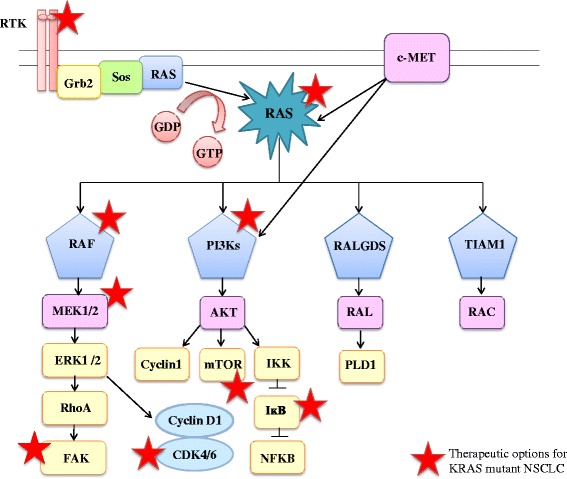
“These mutations cause constitutive activation of the RAS signaling pathway, and further activate several downstream signaling effectors such as the canonical Raf-MEK-ERK, the PI3K-AKT-mTOR, RalGDS-RalA/B pathways and the TIAM1-RAC1 pathway [28].”
BackgroundDifferentially Expressed Mutant Genes Reveal Potential Prognostic Markers For Lung Adenocarcinoma
Liu, Y., Qiu, S., Hu, Y., & Wang, Y. (2021) · IEEE International Conference on Bioinformatics and Biomedicine (BIBM) · doi:10.1109/bibm52615.2021.9669472 · Cited by 2
Biomarkers in Pulmonary Carcinomas
Gündoğdu, B., Gürel, D., & Ulukuş, E. Ç. (2022) · Springer eBooks · doi:10.1007/978-3-030-84432-5_5 · Cited by 3
Hashimoto, T., Owada, Y., Katagiri, H., Yakuwa, K., Tyo, K., Sugai, M., Fuzimura, I., Utsumi, Y., Akiyama, M., Nagashima, H., et al. (2023) · Translational Lung Cancer Research · doi:10.21037/tlcr-23-15 · Cited by 3
“Kirsten rat sarcoma virus ( KRAS ) mutations were first reported in 1985 as driver mutations on the human chromosome (8,9).”
KRAS-mutated non-small cell lung cancer: new therapy strategies
Лактионов, К. К., Саранцева, К. А., Александровна, Н. Л., Gamayunov, S. V., Kolesnikova, Е. А., & Gordiev, M. (2024) · Siberian Journal of Oncology · doi:10.21294/1814-4861-2024-23-2-72-81 · Cited by 3
Molecular Insights and Risk Factors Associated with Small and Non-small Cell Lung Cancer
Sharma, M., Mehra, S., Budhwar, M., Sobti, R. C., & Chopra, M. (2024) · Springer eBooks · doi:10.1007/978-981-99-3746-2_18 · Cited by 2
Lung cancer classification model using convolutional neural network with feature ranking process
Aharonu, M., & Lokeshkumar, R. (2024) · Engineering Research Express · doi:10.1088/2631-8695/ad7b9c · Cited by 2
A Computationally Guided Approach to Improve Expression of VHH Binders
Özdemir, E. S., Tolley, J., Goncalves, F., Gomes, M. M., Wagnell, E., Branchaud, B. P., Dubrovskaya, V., & Ranganathan, S. V. (2024) · Biophysica · doi:10.3390/biophysica4040038 · Cited by 2
Animal models and in vivo investigations for drug repurposing in lung cancer
Chang, H.-W. K., & Chang, V. H. S. (2020) · Elsevier eBooks · doi:10.1016/b978-0-12-819668-7.00010-5 · Cited by 2
Cavagna, R. D. O., Leal, L. F., de Paula, F. E., Berardinelli, G. N., & Reis, R. M. (2021) · Methods in molecular biology · doi:10.1007/978-1-0716-1278-1_9 · Cited by 2
Lung Cancer and KRAS -Its Molecular Biology/Genetics and Therapeutic Strategy-
Koga, T., & Mitsudomi, T. (2022) · Haigan · doi:10.2482/haigan.62.188 · Cited by 1
Yari, E., Mohamadnia, A., Bahrami, N., & Salahshourifar, I. (2024) · International Journal of Cancer Management · doi:10.5812/ijcm-151012 · Cited by 1
Wang, Q., Liu, Z., Yao, J., Xie, H., Liu, Z., Zhai, J., Li, S., Zhang, J., Han, N., & Yin, J. (2025) · Drug Delivery and Translational Research · doi:10.1007/s13346-025-01793-0 · Cited by 1
Udoh, E. S., Stephanie, M. I., Otuonye, F., Oluwadamilola, D., & Lazarus, A. A. (2025) · In Silico Pharmacology · doi:10.1007/s40203-025-00361-1 · Cited by 2
“1) and functions as a molecular switch which controls multiple signal pathways from activated membrane receptors to intracellular molecules (Roman et al. 2018 ).”
Emerging Targets in Non-Small Cell Lung Cancer
Wang, J., Biglow, L. R., & Baumgart, M. A. (2025) · Lung Cancer Targets and Therapy · doi:10.2147/lctt.s511767 · Cited by 1
Rabbi, M. R., & Morshed, M. R. (2025) · In Silico Research in Biomedicine · doi:10.1016/j.insi.2025.100080 · Cited by 1
A Digital Single‐Molecule Nanocavity Assay to Monitor Phosphoprotein Circuits in Single‐Cell
Miao, X., Shanmugasundaram, K. B., Vedelago, C., Naei, V. Y., Kulasinghe, A., Lobb, R. J., Trau, M., & Wuethrich, A. (2025) · Advanced Materials Technologies · doi:10.1002/admt.202502611 · Cited by 1
Discovery of Pyrazoloquinazoline Analogues as Orally Bioavailable KRAS-G12D Inhibitors
Song, J., Jang, E., Cho, G., Jung, H., Cho, M., Park, C., Kim, J., Ki, S., Hong, B., Koh, I., et al. (2025) · Journal of Medicinal Chemistry · doi:10.1021/acs.jmedchem.5c02840 · Cited by 3
Shao, Y., Miura, K., & Nakamura, H. (2026) · ACS Bio & Med Chem Au · doi:10.1021/acsbiomedchemau.6c00004 · Cited by 1
Perumal, M. K. K., Kumar, R., Thirugnanasambandam, R., & Renuka, R. R. (2026) · Advances in Biomarker Sciences and Technology · doi:10.1016/j.abst.2026.03.009 · Cited by 1
Bommu, U. D., Konidala, K. K., Neeraja, P., & Yeguvapalli, S. (2020) · Gene Reports · doi:10.1016/j.genrep.2020.100633 · Cited by 1
Косарева, П. В., Broyan, S. A., Самоделкин, Е. И., & Sivakova, L. V. (2021) · Современные проблемы науки и образования · doi:10.17513/spno.31129 · Cited by 1
Лактионов, К. К., Kazakov, A. M., Саранцева, К. А., Scherbo, D. S., & Koval, A. P. (2022) · Siberian Journal of Oncology · doi:10.21294/1814-4861-2022-21-1-115-121 · Cited by 1
“Потенциальное применение анализа KRAS-статуса KRAS-статус может быть определен как при исследовании опухолевой ткани, так и путём ана- таблица 1/table 1 [19, 21–23, 25] зависимость эффекта иммунотерапии от KRas и ко-мутационного статуса dependence of the immunotherapy effect on KRas and co-mmutation status KRAS-статус…”
Soeroso, N. N., Ananda, F. R., Sitanggang, J. S., & Vinolina, N. S. (2022) · F1000Research · doi:10.12688/f1000research.113303.1 · Cited by 1
Cao, H., Wang, S., & Liu, Y. (2021) · Oncology and Translational Medicine · doi:10.1007/s10330-020-0465-5 · Cited by 1
Zarogoulidis, P., Matthaios, D., Oikonomou, P., Nikolaou, C., Charalampidis, C., & Sardeli, C. (2023) · Cancer Treatment and Research Communications · doi:10.1016/j.ctarc.2023.100757 · Cited by 3
Zhang, J., Xiong, W., Wang, H., Sun, L., Chen, C., Sun, X., Man, X., Lei, Y., & Li, Z. (2025) · Frontiers in Immunology · doi:10.3389/fimmu.2025.1547872 · Cited by 1
Malfeasance of KRAS mutations in carcinogenesis
Tripathi, R., Nathany, S., Mehta, A., Batra, U., Mattoo, S., & Sharma, M. (2021) · Clinical and Experimental Medicine · doi:10.1007/s10238-021-00694-z · Cited by 1
“1 3 exploited to design covalent inhibitors [6] that have encouraging preclinical activity [13].”
BackgroundCommentary: Every detail matters—Understanding the impact of KRAS mutations
Smith, S. A., & van Berkel, V. H. (2020) · Journal of Thoracic and Cardiovascular Surgery · doi:10.1016/j.jtcvs.2020.06.024 · Cited by 1
“2,3 In this issue of the Journal , Ma and colleagues 6 looked to further elucidate the prognostic value of varying KRAS mutations among patients with resected lung adenocarcinoma.”
BackgroundNovel drug development for KRAS-mutated non-small cell lung cancer
Shakil, M. S. (2020) · Otago University Research Archive (University of Otago) · Cited by 1
Investigating mechanisms of acquired drug resistance in Triple Negative Breast Cancer
Grimsley, H. E. (2021) · Kent Academic Repository (University of Kent) · doi:10.22024/unikent/01.02.88062 · Cited by 1
Zhu, Z. G., Liang, Z., Tong, J., Mao, X., Yin, Y., Manor, L. C., & Shen, Z. (2018) · Saudi Journal of Biological Sciences · doi:10.1016/j.sjbs.2018.05.023
“It is worth noting that the prevalence of EGFR and KRAS mutations is relatively low, while tumor suppressor gene STK11 and TP53 abnormalities are relatively high in Caucasian ethnicity when compared with Asian ethnicity (Daga et al., 2015; Liu et al., 2017; Román et al., 2018).”
BackgroundBlocking KRAS Signaling for the Treatment of Lung Cancer: Mission Possible?
Horio, Y. (2018) · Haigan · doi:10.2482/haigan.58.953
Genetic and Chemical Genetic Tools for Examining Context-Dependent Protein-Protein Interactions
Baruti, O. J. (2019) · Deep Blue (University of Michigan)
Resistance Mechanisms to ALK Tyrosine Kinase Inhibitors (TKIs) in NSCLC
Recondo, G. (2019) · theses.fr (ABES) · doi:10.70675/91dc4b74zbf5dz4c5dza4ebz4c4d02511d76
Systemic Therapy in Lung Cancer
Thomas, R., Braschi‐Amirfarzan, M., & Madan, R. (2020) · Advances in Clinical Radiology · doi:10.1016/j.yacr.2020.04.001
Integrated Molecular Characterization of Lung Adenocarcinoma with Implications for Immunotherapy
Gimbrone, N. T. (2019) · Digital Commons - University of South Florida (University of South Florida)
Cavalcanti, I. D. L., & Soares, J. C. S. (2021) · Springer eBooks · doi:10.1007/978-3-030-68334-4_3 · Cited by 1
Lin, H.-P. (2021) · UKnowledge (University of Kentucky) · doi:10.13023/etd.2021.356
Lung Adenocarcinoma: Next Generation Sequencing and Outcome in Regional Community Oncology Setting
Skacel, L., Babcock, M. J., Harb, A. J., Curtis, A. D., Liou, C. L., Brawn, K., Sandor, F., & Skacel, M. (2021) · Journal of Surgery and Research · doi:10.26502/jsr.10020194
Management of Brain Metastasis in Non-Small Cell Lung Cancer (NSCLC)
Hiley, C. T., & Urwin, R. (2020) · Elsevier eBooks · doi:10.1016/b978-0-08-102723-3.00048-2
Non-Small Cell Lung Cancer: Treatment, Diagnosis, and Life after Treatment
Yadlapalli, R., Valmiki, E. K. A., & Oroszi, T. L. (2022) · Journal of Cancer Therapy · doi:10.4236/jct.2022.137040
Zhou, Y. J., Tang, Y., Luo, J., Yang, Y., Zang, H., Ning, Y., Zheng, H., Fan, S., & Wen, Q. (2022) · Research Square · doi:10.21203/rs.3.rs-2101621/v1
First Detection of KRAS Mutation in Colorectal Cancer Patients in Côte d’Ivoire
Coulibaly, T. G. S., Gbonon, V., Osseni, A., Bernadette, D. T. F., David, C. N., Sylla, A., Ngazoa, S. K., Toure, M., & Dosso, M. B. (2022) · European Journal of Biomedical Research · doi:10.24018/ejbiomed.2022.1.5.30
“This activation of the protein is related to the introduction of mutations into the gene and it has been shown that the presence of mutations in the KRAS gene leads to cell resistance to certain anti-tumor treatments [6], [7].”
BackgroundYin, F., Wu, M., Lu, X., Zhu, J., Wang, J., Zhang, X., Chen, J., Zheng, K., & Jiang, J. (2023) · Research Square · doi:10.21203/rs.3.rs-2474236/v1
Jones, G. D., Caso, R., Tan, K. S., Mastrogiacomo, B., Sánchez-Vega, F., Liu, Y., Connolly, J. G., Murciano‐Goroff, Y. R., Bott, M. J., Adusumilli, P. S., et al. (2023) · doi:10.1158/1078-0432.c.6530886.v1
Data from HDAC10 Regulates Cancer Stem-Like Cell Properties in KRAS-Driven Lung Adenocarcinoma
Li, Y., Zhang, X., Zhu, S., Dejene, E. A., Peng, W., Sepulveda, A. R., & Seto, E. (2023) · doi:10.1158/0008-5472.c.6511392.v1
Daemen, A., Cooper, J. E., Myrta, S., Wongchenko, M. J., Lin, E., Long, J. E., Foreman, O., Modrusan, Z. D., Tremayne, J. R., de la Cruz, C. C., et al. (2023) · doi:10.1158/1078-0432.c.6529943.v1
Phenotypic and Genotypic Appraisal of Pulmonary Mucinous Adenocarcinoma: A Retrospective Study
Roshan, V. D., Ramji, A., Saravanan, M., Gopinath, V., & Nayanar, S. K. (2023) · National Journal of Laboratory Medicine · doi:10.7860/njlm/2023/58014.2729
LncRNA-ATB Can Be a Biomarker for Diagnosis and Prognosis Evaluation of Non-Small Cell Lung Cancer
Geng, N., Hu, W., Liu, Z., Su, J., Sun, W., Xie, S., & Ding, C. (2020) · ONCOLOGIE · doi:10.32604/oncologie.2020.014125
Gonzalez, M. A. C., Högnäsbacka, A., Halldin, C., & Schou, M. (2023) · Journal of Labelled Compounds and Radiopharmaceuticals · doi:10.1002/jlcr.4079
Classification of Lung Adenocarcinoma Using Convolutional Neural Networks: A Bioinformatics Approach
Aharonu, M., & Kumar, R. L. (2024) · Traitement du signal · doi:10.18280/ts.410243
“There are various types and classification patterns of lung cancers, as discussed in the studies of reference [9, 10].”
Xia, W., Zhang, S., Ye, Y., Han, X., Zhang, Y., Ning, G., Zhang, Y., Wang, W. J., & Fei, G. (2024) · Pathology - Research and Practice · doi:10.1016/j.prp.2024.155359
Chapilliquen, D., Universidad de Piura, F. D. M. H. L., Castillo, J. E. F., Dongo, R. J. Z., Diaz, B. M., Infante, S., Universidad de Piura, F. D. M. H. L., Universidad de Piura, F. D. M. H. L., Universidad de Piura, F. D. M. H. L., & Universidad de Piura, F. D. M. H. L. (2024) · Horizonte Médico (Lima) · doi:10.24265/horizmed.2024.v24n2.07
“Sin embargo, las mutaciones más comunes en los residuos de aminoácidos Gly12, Gly13 y Val61 (9) conducen a una resistencia en la hidrólisis de GTP mediada por RasGAP (10,11) .”
BackgroundUnderstanding colorectal cancer, screening, and treatment
Ghanta, M. K., Hussain, M. F., Kurumella, S. N. D., Chenchula, S., Kumar, N. N., Malla, M., & Bhaskar, L. V. (2025) · Elsevier eBooks · doi:10.1016/b978-0-443-24742-2.00009-5
Liu, J., Zhou, P., Deng, L., Xue, J., & Zhou, L. (2025) · Frontiers in Oncology · doi:10.3389/fonc.2025.1598159
Seal, I., Gayen, S., Sil, S., Das, A., & Roy, S. (2025) · Naunyn-Schmiedeberg s Archives of Pharmacology · doi:10.1007/s00210-025-04303-8
“…rat sarcoma viral onco-gene homolog (KRAS) belongs in the Ras family of small GTPases which regulates carcinogenic signaling of EGFR to the extracellular regulated kinases (ERK1/2), which contributes a central role for cellular growth and proliferation (Román et al. 2018; Holme et al. 2023).”
Kishore, R., Kille, S., Kishore, R., Venkataram, R., Arjuna, S., Chakraborty, G., Hosmane, G. B., & Chakraborty, A. (2025) · Monaldi Archives for Chest Disease · doi:10.4081/monaldi.2025.3190
Precision oncology in advanced non-small cell lung cancer in 2022: a narrative review
Friedlaender, A. (2023) · Archive ouverte UNIGE (University of Geneva) · doi:10.13097/archive-ouverte/unige:169975
Metadata
- Authors
- Román, M., Baraibar, I., López, I., Nadal, E., Rolfo, C., Vicent, S., & Gil-Bazo, I.
- Affiliations
- Clinica Universidad de Navarra (ES)
- Centro de Investigación Médica Aplicada (ES)
- Institut Català d'Oncologia (ES)
- Antwerp University Hospital (BE)
- Navarre Institute of Health Research (ES)
- Venue
- Molecular Cancer
- Published
- 2018-02-19
- Volume
- 17
- Issue
- 1
- Pages
- 33-33
- ISSN
- 1476-4598 (ISSN-L)
- PMC
- PMC5817724
- OpenAlex
- W2795913084
- Cited by
- 301
- References
- 158
- Citations by year
- 2026: 11 · 2025: 18 · 2024: 25 · 2023: 31 · 2022: 39 · 2021: 62 · 2020: 64 · 2019: 37 · 2018: 13
- FWCI
- 7.84
- Type
- journal article
- Language
- en
- Open access
- gold
- doi.org
- Licence
- cc-by
- Locations
- Molecular Cancer (publishedVersion, cc-by)
- PubMed Central (publishedVersion, cc-by)
- PubMed (publishedVersion)
- Deposito Adademico Digital Universidad De Navarra (University of Navarra) (submittedVersion, cc-by)
- DOAJ (DOAJ: Directory of Open Access Journals) (submittedVersion, cc-by-sa)
- Zenodo (CERN European Organization for Nuclear Research) (submittedVersion, cc-by)
- Funders
- Ministerio de Educación, Gobierno de España (FPU15/00173)
- Instituto de Salud Carlos III (SAF2013-46423-R, PI11/00976, PI15/02223)
- FP7 People: Marie-Curie Actions (618312 KRASmiR FP7-PEOPLE-2013-CIG)
- Worldwide Cancer Research (16-0224)
- RTICC (RD12/0036/0040)
- Topics
- Health Sciences › Medicine › Pulmonary and Respiratory Medicine › Lung Cancer Treatments and Mutations
- Health Sciences › Medicine › Oncology › Lung Cancer Research Studies
- Life Sciences › Biochemistry, Genetics and Molecular Biology › Molecular Biology › Protein Kinase Regulation and GTPase Signaling
- Keywords
- KRAS mutation, non-small cell lung cancer, lung adenocarcinoma, KRAS-targeted therapy, prognostic factors, predictive biomarkers, molecular pathways, personalized treatment, KRAS inhibitors
- MeSH terms
- Animals, Antineoplastic Agents, Carcinoma, Non-Small-Cell Lung, Humans, Lung Neoplasms, Mutation, Genes, ras
About these checks
Registry, retraction, Cites and statistics results are computed, not judged, with one exception: a printed reference that no index lists is read once by a model before it counts as a citation error. Claims are extracted by a model and kept only when their quote appears verbatim in the text; each cited source is then checked, with a model’s help, for whether it says what the claim relies on. Those verdicts can be wrong — read the claim’s quote and the cited source before relying on one.
Statistics and arithmetic are recomputed, not judged.
Confidence bands are shown only for fields calibrated on our annotated test set. None is calibrated yet, so no band is shown.
What counts as a claim ›How we measure confidence ›How we check this ›
Are you an author, or do you see a problem with this page? Request a review
Data sources
Bibliographic data: Semantic Scholar, OpenAlex, Crossref.
Contains information from the Semantic Scholar Academic Graph Datasets, made available under the ODC Attribution License (ODC-BY 1.0).
Semantic Scholar’s data is described in: Kinney, R., et al. (2023). The Semantic Scholar Open Data Platform. arXiv:2301.10140.
