

Targeting tumour microenvironment by tyrosine kinase inhibitor
Open accessThe DOI matches its Crossref record; 167 of the 167 references it cites were found in a registry or an index.
Abstract
Tumour microenvironment (TME) is a key determinant of tumour growth and metastasis. TME could be very different for each type and location of tumour and TME may change constantly during tumour growth. Multiple counterparts in surrounding microenvironment including mesenchymal-, hematopoietic-originated cells as well as non-cellular components affect TME. Thus, therapeutics that can disrupt the tumour-favouring microenvironment should be further explored for cancer therapy. Previous efforts in unravelling the dysregulated mechanisms of TME components has identified numerous protein tyrosine kinases, while its corresponding inhibitors have demonstrated potent modulatory effect on TME. Recent works have demonstrated that beyond the direct action on cancer cells, tyrosine kinase inhibitors (TKIs) have been implicated in inactivation or normalization of dysregulated TME components leading to cancer regression. Either through re-sensitizing the tumour cells or reversing the immunological tolerance microenvironment, the emergence of these TME modulatory mechanism of TKIs supports the combinatory use of TKIs with current chemotherapy or immunotherapy for cancer therapy. Therefore, an appropriate understanding on TME modulation by TKIs may offer another mode of action of TKIs for cancer treatment. This review highlights mode of kinase activation or paracrine ligand production from TME components and summarises the findings on the potential use of various TKIs on regulating TME components. At last, the combination use of current TKIs with immunotherapy in the perspectives of efficacy and safety are discussed.
Overview
The claims and statistics of this paper haven’t been checked yet.
Free: it reads the open-access text and checks the first 5 claims that cite a source we can check. Create a free account to check every claim.
Integrity signals
Registry
Cites
Statistics
Figures
Verification
Claims the paper makes
The claims and statistics of this paper haven’t been checked yet.
Free: it reads the open-access text and checks the first 5 claims that cite a source we can check. Create a free account to check every claim.
Claims other papers make about this one
Each is checked against this paper’s own text: does it say what the citing paper says it does?
The source backs part of the claim, not all of it — or backs it for a different population, condition or comparison.
In the citing paper
“Furthermore, while many cancers are driven by aberrant kinase activity, it is thought that targeting the PPIs that regulate the activity of a specific kinase is a more viable approach to develop selective kinase inhibitors than targeting the conserved ATP binding site of kinases directly [4, 102, 103].”
From The design and development of covalent protein-protein interaction inhibitors for cancer treatment (2020) · cites this paper as [102]
Experimental — accuracy not yet measured
Self-check
Percentages, sums and reported differences re-computed from the paper’s own numbers.
The self-check needs the paper’s full text.
Citations
Cites
The protein kinase complement of the human genome
Manning, G., Whyte, D. B., Martinez, R., Hunter, T., & Sudarsanam, S. (2002) · Science · doi:10.1126/science.1075762 · Cited by 8,145 · cited 1×
“To our knowledge, there are in total 518 kinases in human genome [2], while 90 of them are classified in the category of tyrosine kinases (58 of them are receptor tyrosine kinase RTK; the remaining are non-receptor tyrosine kinase) [3].”
BackgroundKalluri, R., & Zeisberg, M. (2006) · Nature Reviews Cancer · doi:10.1038/nrc1877 · Cited by 4,538
Stromal fibroblasts in cancer initiation and progression
Bhowmick, N. A., Neilson, E. G., & Moses, H. L. (2004) · Nature · doi:10.1038/nature03096 · Cited by 2,302 · cited 1×
“Cancer associated stromal cell, comprised of approximately 40% of total tumour volume [36], plays a pivotal role in carcinogenesis, in which its role involves promoting cancer cell initiation [37], extracellular matrix remodelling [38], and even preserving stem/progenitor cells [39].”
BackgroundEpidermal growth factor receptor (EGFR) signaling in cancer
Normanno, N., De Luca, A., Bianco, C., Strizzi, L., Mancino, M., Maiello, M. R., Carotenuto, A., De Feo, G., Caponigro, F., & Salomon, D. S. (2006) · Gene · doi:10.1016/j.gene.2005.10.018 · Cited by 2,038 · cited 1×
“For instances, overexpression of epidermal growth factor receptor (EGFR) and platelet derived growth factor receptor α/β (PDGFR) have been well implicated in supporting various malignancy growth and progression [6, 7].”
BackgroundTumour micro-environment elicits innate resistance to RAF inhibitors through HGF secretion
Straussman, R., Morikawa, T., Shee, K., Barzily-Rokni, M., Qian, Z. R., Du, J., Davis, A., Mongare, M. M., Gould, J., Frederick, D. T., et al. (2012) · Nature · doi:10.1038/nature11183 · Cited by 1,771 · cited 1×
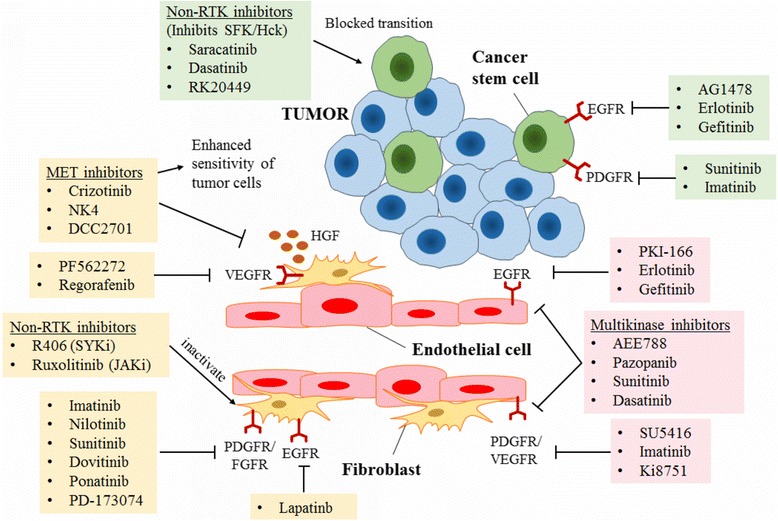
“While co-treatment with another c-MET TKIs, crizotinib [58, 59] or NK4 [60] reversed the drug resistance.”
BackgroundShibuya, M. (2011) · Genes & Cancer · doi:10.1177/1947601911423031 · Cited by 1,748
DeNardo, D. G., Brennan, D. J., Rexhepaj, E., Ruffell, B., Shiao, S. L., Madden, S. F., Gallagher, W. M., Wadhwani, N., Keil, S. D., Junaid, S. A., et al. (2011) · Cancer Discovery · doi:10.1158/2159-8274.cd-10-0028 · Cited by 1,715 · cited 1×
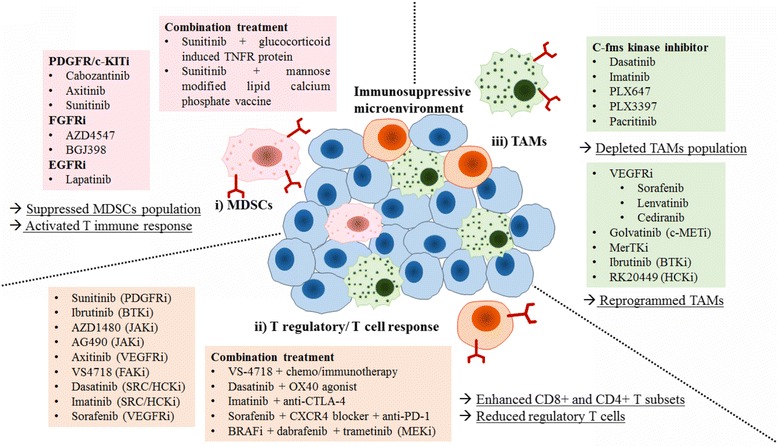
“The same also observed on its counterpart compound PLX3397, in which it enhanced the sensitivity of cancer cells towards chemotherapeutic treatment through declining TAMs infiltration to tumor microenvironment [120].”
BackgroundDe Palma, M., Venneri, M. A., Galli, R., Sergi, L. S., Politi, L. S., Sampaolesi, M., & Naldini, L. (2005) · Cancer Cell · doi:10.1016/j.ccr.2005.08.002 · Cited by 1,311 · cited 1×
“Tie2 receptor has been shown to highly express on monocytes/macrophages and its paracrine secretion supports tumour neovascularization [123].”
BackgroundLong-Term Outcomes of Imatinib Treatment for Chronic Myeloid Leukemia
Hochhaus, A., Larson, R. A., Guilhot, F., Radich, J. P., Branford, S., Hughes, T. P., Baccarani, M., Deininger, M. W., Cervantes, F., Fujihara, S., et al. (2017) · New England Journal of Medicine · doi:10.1056/nejmoa1609324 · Cited by 1,285 · cited 1×
“gastrointestinal stromal patients [10, 11]; sorafenib which multi-targeted VEGFR, PDGFR and Raf, is uti-”
BackgroundGainor, J. F., Shaw, A. T., Sequist, L. V., Fu, X., Azzoli, C. G., Piotrowska, Z., Huynh, T. G., Zhao, L., Fulton, L., Schultz, K. R., et al. (2016) · Clinical Cancer Research · doi:10.1158/1078-0432.ccr-15-3101 · Cited by 1,250 · cited 1×
“treatment efficacy of TKIs to cancer patients [160].”
Background
Cited by
Deepak, K. G. K., Vempati, R., Nagaraju, G. P., Dasari, V. R., S., N., Rao, D. N., & Malla, R. R. (2020) · Pharmacological Research · doi:10.1016/j.phrs.2020.104683 · Cited by 614
Fibroblasts as immune regulators in infection, inflammation and cancer
Davidson, S., Coles, M., Thomas, T., Kollias, G., Ludewig, B., Turley, S., Brenner, M., & Buckley, C. D. (2021) · Nature Reviews Immunology · doi:10.1038/s41577-021-00540-z · Cited by 605
Tyrosine Kinase Inhibitors in Cancer: Breakthrough and Challenges of Targeted Therapy
Pottier, C., Fresnais, M., Gilon, M., Jérusalem, G., Longuespée, R., & Sounni, N. E. (2020) · Cancers · doi:10.3390/cancers12030731 · Cited by 515
Adaptive Mechanisms of Tumor Therapy Resistance Driven by Tumor Microenvironment
Wu, P., Gao, W., Su, M., Nice, E. C., Zhang, W., Lin, J., & Xie, N. (2021) · Frontiers in Cell and Developmental Biology · doi:10.3389/fcell.2021.641469 · Cited by 209
Lin, Y.-H., Chen, Y.-H., Chang, H.-Y., Au, H.-K., Tzeng, C.-R., & Huang, Y.-H. (2018) · International Journal of Molecular Sciences · doi:10.3390/ijms19082385 · Cited by 186
Borcea, A.-M., Ionuț, I., Crișan, O., & Oniga, O. (2021) · Molecules · doi:10.3390/molecules26030624 · Cited by 180
Zhong, Q., Fang, Y., Lai, Q., Wang, S., He, C., Li, A., Liu, S., & Yan, Q. (2020) · Journal of Experimental & Clinical Cancer Research · doi:10.1186/s13046-020-01637-4 · Cited by 149
Receptor tyrosine kinase inhibitors in cancer
Ebrahimi, N., Fardi, E., Ghaderi, H., Palizdar, S., Khorram, R., Vafadar, R., Ghanaatian, M., Rezaei‐Tazangi, F., Baziyar, P., Ahmadi, A., et al. (2023) · Cellular and Molecular Life Sciences · doi:10.1007/s00018-023-04729-4 · Cited by 168
Kinase Inhibitors and Kinase-Targeted Cancer Therapies: Recent Advances and Future Perspectives
Li, J., Chen, G., Zhou, H., Liu, J., Xia, X., Ha, W., Jiang, Y., Liu, Q., & Xiong, H. (2024) · International Journal of Molecular Sciences · doi:10.3390/ijms25105489 · Cited by 151
Tumor microenvironment-driven non-cell-autonomous resistance to antineoplastic treatment
Qu, Y., Dou, B., Tan, H., Feng, Y., Wang, N., & Wang, D. (2019) · Molecular Cancer · doi:10.1186/s12943-019-0992-4 · Cited by 127
Self-citationThe tumor microenvironment: shaping cancer progression and treatment response
Desai, S. A., Patel, V. P., Bhosle, K. P., Nagare, S. D., & Thombare, K. C. (2025) · Journal of Chemotherapy · doi:10.1080/1120009x.2023.2300224 · Cited by 106
Huang, W.-C., Kuo, K.-T., Wang, C., Yeh, C., & Wang, Y. (2019) · Journal of Experimental & Clinical Cancer Research · doi:10.1186/s13046-019-1166-3 · Cited by 104
microRNA-23a in Human Cancer: Its Roles, Mechanisms and Therapeutic Relevance
Wang, N., Tan, H.-Y., Feng, Y.-G., Zhang, C., Chen, F., & Feng, Y. (2018) · Cancers · doi:10.3390/cancers11010007 · Cited by 99
Self-citationThe design and development of covalent protein-protein interaction inhibitors for cancer treatment
Cheng, S.-S., Yang, G.-J., Wang, W., Leung, C.-H., & Ma, D.-L. (2020) · Journal of Hematology & Oncology · doi:10.1186/s13045-020-00850-0 · Cited by 98
“Furthermore, while many cancers are driven by aberrant kinase activity, it is thought that targeting the PPIs that regulate the activity of a specific kinase is a more viable approach to develop selective kinase inhibitors than targeting the conserved ATP binding site of kinases directly [4, 102, 103].”
BackgroundBlocking P2X7-Mediated Macrophage Polarization Overcomes Treatment Resistance in Lung Cancer
Qin, J., Zhang, X., Tan, B., Zhang, S., Yin, C., Xue, Q., Zhang, Z., Ren, H., Chen, J., Liu, M., et al. (2020) · Cancer Immunology Research · doi:10.1158/2326-6066.cir-20-0123 · Cited by 85
“Tumor-associated macrophages (TAM) with an M2-like phenotype play an important role in facilitating tumor progression and metastasis (6).”
BackgroundYan, P., Patel, H. J., Sharma, S., Corben, A. D., Wang, T., Panchal, P., Yang, C., Sun, W., Araujo, T. L. S., Rodina, A., et al. (2020) · Cell Reports · doi:10.1016/j.celrep.2020.107840 · Cited by 63
“, EGFR, HER2, and MET) is observed in a variety of cancer cells and in cells of a tumor-supportive microenvironment (Butti et al., 2018; Contessa et al., 2008, 2010; Siddals et al., 2011; Tan et al., 2018; Turrini et al., 2017).”
BackgroundCombination of HGF/MET-targeting agents and other therapeutic strategies in cancer
Moosavi, F., Giovannetti, E., Peters, G. J., & Firuzi, O. (2021) · Critical Reviews in Oncology/Hematology · doi:10.1016/j.critrevonc.2021.103234 · Cited by 62
Functions and Targets of miR-335 in Cancer
Ye, L., Wang, F., Wu, H., Yang, H., Yang, Y. T., Ma, Y., Xue, A., Zhu, J., Chen, M., Wang, J., et al. (2021) · OncoTargets and Therapy · doi:10.2147/ott.s305098 · Cited by 60
“MiR335 and Tumor Microenvironment The research focusing on the tumor microenvironment of cancer has significantly progressed, indicating that the tumor microenvironment plays a key role in modulating cancer initiation, progression, metastasis, as well as therapeutic responses.(84) The tumor microenvironment mainly con…”
BackgroundRole of Cytokines and Chemokines in NSCLC Immune Navigation and Proliferation
Ramachandran, S., Verma, A. K., Dev, K., Goyal, Y., Bhatt, D., Alsahli, M. A., Rahmani, A. H., Almatroudi, A., Almatroodi, S. A., Alrumaihi, F., et al. (2021) · Oxidative Medicine and Cellular Longevity · doi:10.1155/2021/5563746 · Cited by 61
“In different cancers, crosstalk between TAMs and tumour cells play various roles in their growth through the CCL-2/CCR-2 axis [95].”
BackgroundTherapeutic applications of the cancer immunoediting hypothesis
Desai, R. R., Coxon, A. T., & Dunn, G. P. (2021) · Seminars in Cancer Biology · doi:10.1016/j.semcancer.2021.03.002 · Cited by 60
EZH2 enhances expression of CCL5 to promote recruitment of macrophages and invasion in lung cancer
Xia, L., Zhu, X., Zhang, L., Xu, Y., Chen, G., & Luo, J. (2019) · Biotechnology and Applied Biochemistry · doi:10.1002/bab.1875 · Cited by 59
Novel Human Bispecific Aptamer–Antibody Conjugates for Efficient Cancer Cell Killing
Passariello, M., Camorani, S., Vetrei, C., Cerchia, L., & Lorenzo, C. D. (2019) · Cancers · doi:10.3390/cancers11091268 · Cited by 54
SRC Kinase in Glioblastoma: News from an Old Acquaintance
Cirotti, C., Contadini, C., & Barilà, D. (2020) · Cancers · doi:10.3390/cancers12061558 · Cited by 54
“In addition, its role in the inflammatory response and in the reprogramming of metabolism that overall sustains the tumor microenvironment, point to SRC kinase targeting as a valuable approach to ameliorate GBM treatment [96].”
BackgroundKarnik, K. S., Sarkate, A. P., Tiwari, S. V., Azad, R., Burra, P. V. L. S., & Wakte, P. S. (2021) · Bioorganic Chemistry · doi:10.1016/j.bioorg.2020.104612 · Cited by 50
Nanomedicine of tyrosine kinase inhibitors
Šmídová, V., Michálek, P., Goliášová, Z., Eckschlager, T., Hodek, P., Adam, V., & Heger, Z. (2020) · Theranostics · doi:10.7150/thno.48662 · Cited by 51
“Other times, TKIs like sunitinib are used in combination with immunotherapy for their ability to modulate tumor microenvironment [118].”
BackgroundEmerging roles and mechanisms of microRNA‑222‑3p in human cancer (Review)
Wang, D., Sang, Y., Sun, T., Kong, P., Zhang, L., Dai, Y., Cao, Y., Tao, Z., & Liu, W. (2021) · International Journal of Oncology · doi:10.3892/ijo.2021.5200 · Cited by 51
“Increased miR‐222‐3p expression directly targeted the 3'‐UTR of claudin‐2 mRNA to decrease apoptosis and induce CRC resistance to 5‐fluo‐ rouracil (92).”
BackgroundRationale of Immunotherapy in Hepatocellular Carcinoma and Its Potential Biomarkers
Tai, D. W.-M., Choo, S. P., & Chew, V. (2019) · Cancers · doi:10.3390/cancers11121926 · Cited by 46
Lu, C., Gao, Z., Wu, D., Zheng, J., Hu, C., Huang, D., He, C., Liu, Y., Lin, C., Peng, T., et al. (2024) · Journal for ImmunoTherapy of Cancer · doi:10.1136/jitc-2024-009165 · Cited by 53
Luo, J., Cheng, K., Ji, X., Gao, C., Zhu, R., Chen, J., Xue, W., Huang, Q., & Xu, Q. (2024) · Cancer Letters · doi:10.1016/j.canlet.2024.216892 · Cited by 51
Turning ‘Cold’ tumors ‘Hot’: immunotherapies in sarcoma
Rytlewski, J. D., Milhem, M. M., & Monga, V. (2021) · Annals of Translational Medicine · doi:10.21037/atm-20-6041 · Cited by 42
“Examples of postulated mechanisms include c-Kit inhibition leading to depletion of MDSCs with sunitinib, c-fms kinase inhibition leading to TAM decreases with dasatinib, and JAK inhibition leading to decreased regulatory T-cells (Tregs) (44).”
BackgroundSun, Y., Yang, L., Hao, X., Liu, Y., Zhang, J., Ning, Z., & Shi, Y. (2019) · Journal of Hematology & Oncology · doi:10.1186/s13045-018-0695-0 · Cited by 40
Non-coding Natural Antisense Transcripts: Analysis and Application
Krappinger, J. C., Bonstingl, L., Pansy, K., Sallinger, K., Wreglesworth, N. I., Grinninger, L., Deutsch, A. J. A., Heliebi, A. E., Kroneis, T., McFarlane, R. J., et al. (2021) · Journal of Biotechnology · doi:10.1016/j.jbiotec.2021.08.005 · Cited by 44
Karnik, K. S., Sarkate, A. P., Tiwari, S. V., Azad, R., & Wakte, P. S. (2021) · Bioorganic Chemistry · doi:10.1016/j.bioorg.2021.105226 · Cited by 38
Osmium–Tellurium Nanozymes for Pentamodal Combinatorial Cancer Therapy
Kang, S., Gil, Y., Yim, G., Min, D., & Jang, H. (2021) · ACS Applied Materials & Interfaces · doi:10.1021/acsami.1c14201 · Cited by 36
Lin, W., Qiu, X., Sun, P., Ye, Y., Huang, Q., Kong, L., & Lu, J. J. (2021) · Molecular Therapy — Oncolytics · doi:10.1016/j.omto.2021.04.010 · Cited by 43
“This mechanism may involve the aberrant regulation mediated by mutated EGFR in the generation of Treg and tolerogenic DCs.(32,33) Our study went on to evaluate other somatic mutations in these three tumor subtypes and showed that both the receptor tyrosine kinase-Ras pathway and the EGFR pathway mutations were more co…”
BackgroundOrganoids in Translational Oncology
Tatullo, M., Marrelli, B., Benincasa, C., Aiello, E., Im, M., Zavan, B., Ballini, A., Vito, D. D., & Spagnuolo, G. (2020) · Journal of Clinical Medicine · doi:10.3390/jcm9092774 · Cited by 38
Afatinib and Erlotinib in the treatment of squamous-cell lung cancer
Tagliamento, M., Genova, C., Rijavec, E., Rossi, G., Biello, F., Bello, M. G. D., Alama, A., Coco, S., Boccardo, S., & Grossi, F. (2018) · Expert Opinion on Pharmacotherapy · doi:10.1080/14656566.2018.1540591 · Cited by 34
“effect, the use of EGFR-inhibitors combined with immune checkpoint inhibitors could reveal some good surprises [57,58].”
BackgroundStrategies to overcome myeloid cell induced immune suppression in the tumor microenvironment
Cao, J. H., Chow, L., & DOW, S. W. (2023) · Frontiers in Oncology · doi:10.3389/fonc.2023.1116016 · Cited by 36
The Tumour Vasculature as a Target to Modulate Leucocyte Trafficking
Zhao, Y., Ting, K. K., Coleman, P. R., Qi, Y., Chen, J., Vadas, M. A., & Gamble, J. R. (2021) · Cancers · doi:10.3390/cancers13071724 · Cited by 36
Acquired resistance to tyrosine kinase targeted therapy: mechanism and tackling strategies
Wu, D., Sun, Q., Tang, H., Xiao, H., Luo, J., Ouyang, L., & Sun, Q. (2024) · Drug Resistance Updates · doi:10.1016/j.drup.2024.101176 · Cited by 38
Chiabotto, G., Grignani, G., Todorovic, M., Martín, V., Centomo, M. L., Prola, E., Giordano, G. D., Merlini, A., Miglio, U., Berrino, E., et al. (2020) · Cancers · doi:10.3390/cancers12061519 · Cited by 32
Cellular Origins of the Lymphatic Endothelium: Implications for Cancer Lymphangiogenesis
Gutiérrez-Miranda, L., & Yaniv, K. (2020) · Frontiers in Physiology · doi:10.3389/fphys.2020.577584 · Cited by 31
“Although the process of lymphatic formation is highly conserved among vertebrates, certain divergences between the mammalian and zebrafish systems have also been described (Tao et al., 2011; van Impel et al., 2014; Semo et al., 2016).”
BackgroundAhn, R., & Ursini‐Siegel, J. (2021) · International Journal of Molecular Sciences · doi:10.3390/ijms22052608 · Cited by 31
Receptor tyrosine kinase inhibitors for the treatment of osteosarcoma and Ewing sarcoma
Just, M. A., Mater, D. V., & Wagner, L. M. (2021) · Pediatric Blood & Cancer · doi:10.1002/pbc.29084 · Cited by 29
A receptor-mediated landscape of druggable and targeted nanomaterials for gliomas
Filippo, L. D. D., Carvalho, S. G., Duarte, J. L., Luiz, M. T., Dutra, J. A. P., de Paula, G. A., Chorilli, M., & Conde, J. (2023) · Materials Today Bio · doi:10.1016/j.mtbio.2023.100671 · Cited by 34
RETRACTED: The pharmacological and biological importance of EZH2 signaling in lung cancer
Entezari, M., Taheriazam, A., Paskeh, M. D. A., Sabouni, E., Zandieh, M. A., Aboutalebi, M., Kakavand, A., Rezaei, S., Hejazi, E. S., Saebfar, H., et al. (2023) · Biomedicine & Pharmacotherapy · doi:10.1016/j.biopha.2023.114313 · Cited by 29
RetractedImmune Checkpoint Inhibitors in HBV-Caused Hepatocellular Carcinoma Therapy
Zhang, J., Hu, C., Xie, X., Qi, L.-Z., Li, C., & Li, S. (2023) · Vaccines · doi:10.3390/vaccines11030614 · Cited by 33
Synergistic targeting strategies for prostate cancer
Li, X., Han, Z., & Ai, J. (2025) · Nature Reviews Urology · doi:10.1038/s41585-025-01042-6 · Cited by 27
“Tyrosine kinase inhibitors also exert immunomodulatory effects in the TME by regulating different immunosuppressive cells, such as TAMs, MDSCs and T reg cells, reversing immune tolerance to tumour cells and promoting tumour regression 351,384 .”
Lost in translation: Revisiting the use of tyrosine kinase inhibitors in colorectal cancer
Iyer, K. K., van Erp, N. P., Tauriello, D. V. F., Verheul, H. M. W., & Poel, D. (2022) · Cancer Treatment Reviews · doi:10.1016/j.ctrv.2022.102466 · Cited by 20
“Therefore, TKIs are increasingly perceived as a promising candidate for TME modulation [81].”
Chu, P. L., Shihabuddeen, W. A., Low, K. P., Poon, D., Ramaswamy, B., Liang, Z., Nei, W. L., Chua, K. L. M., Thong, P. S. P., Soo, K. C., et al. (2019) · Photodiagnosis and Photodynamic Therapy · doi:10.1016/j.pdpdt.2019.06.008 · Cited by 20
Naffaa, M. M., Al-Ewaidat, O. A., Gogia, S., & Begiashvili, V. (2025) · Exploration of Targeted Anti-tumor Therapy · doi:10.37349/etat.2025.1002313 · Cited by 28
Comprehensive Survey of the Landscape of Digital Twin Technologies and Their Diverse Applications
Chen, H., Shao, H., Deng, X., Wang, L., & Wang, X. (2023) · Computer Modeling in Engineering & Sciences · doi:10.32604/cmes.2023.027834 · Cited by 29
Chu, C., Lee, Y., Pang, C., Lin, H., Chen, C.-S., & You, R.-I. (2020) · International Immunopharmacology · doi:10.1016/j.intimp.2020.106357 · Cited by 19
Naganna, N., Opoku‐Temeng, C., Choi, E. Y., Larocque, E. A., Chang, E. T., Carter‐Cooper, B., Wang, M., Torregrosa‐Allen, S. E., Elzey, B. D., Lapidus, R. G., et al. (2019) · EBioMedicine · doi:10.1016/j.ebiom.2019.01.012 · Cited by 16
“cancer driver kinase and downstream “collaborating” kinases) as well as kinases that regulate the tumor microenvironment [53] and/or immunokinases, which either activate cytotoxic T-cells and/or inhibit suppressor immune cells [54].”
BackgroundOrgan-Specific, Fibroblast-Derived Matrix as a Tool for Studying Breast Cancer Metastasis
Jensen, A. R. D., Horton, E. R., Blicher, L. H., Pietras, E. J., Steinhauer, C., Reuten, R., Schoof, E. M., & Erler, J. T. (2021) · Cancers · doi:10.3390/cancers13133331 · Cited by 14
Heterogeneity of the tumor immune microenvironment and clinical interventions
Jin, Z., Zhou, Q., Cheng, J., Jia, Q., & Zhu, B. (2023) · Frontiers of Medicine · doi:10.1007/s11684-023-1015-9 · Cited by 15
Small Molecules against Metastatic Tumors: Concrete Perspectives and Shattered Dreams
Serra, M., Rubes, D., Schinelli, S., & Paolillo, M. (2023) · Cancers · doi:10.3390/cancers15164173 · Cited by 13
Narayanan, J., Tamilanban, T., Senthilkumar, P., Guru, A., Saravanan, M., Kathiravan, M. K., & Arockiaraj, J. (2023) · Archives of Microbiology · doi:10.1007/s00203-023-03559-z · Cited by 15
Pursuing Precision: Receptor Tyrosine Kinase Inhibitors for Treatment of Pediatric Solid Tumors
Bellantoni, A. J., & Wagner, L. M. (2021) · Cancers · doi:10.3390/cancers13143531 · Cited by 14
Toward structure-based drug design against the epidermal growth factor receptor (EGFR)
Haddad, Y., Remeš, M., Adam, V., & Heger, Z. (2020) · Drug Discovery Today · doi:10.1016/j.drudis.2020.10.007 · Cited by 14
Fleuren, E. D. G., Terry, R. L., Meyran, D., Omer, N., Trapani, J. A., Haber, M., Neeson, P. J., & Ekert, P. G. (2021) · Biomedicines · doi:10.3390/biomedicines9121798 · Cited by 12
Sato, R., Yamaki, H., Komatsuda, H., Wakisaka, R., Inoue, T., Kumai, T., & Takahara, M. (2024) · Cancers · doi:10.3390/cancers16061205 · Cited by 13
“Lymphocytes express exhausted markers, such as CTLA-4 and LAG3, in the TME of SGCs [28,29,42].”
BackgroundNing, T., Li, D., Deng, T., Bai, Y., Chen, Y., Wang, Z., Hu, B., Ba, Y., & Lu, W. (2024) · Cancer · doi:10.1002/cncr.35377 · Cited by 14
“8,9 The TME, which consists of cancer cells, stromal cells, and immune cells, undergoes constant changes during tumor immuno-therapy.”
Fumarola, C., Monica, S. L., Bonelli, M. A., Zoppi, S., Alfieri, R. R., Galetti, M., Gnetti, L., Campanini, N., Pozzi, G., Cavazzoni, A., et al. (2024) · Biochemical Pharmacology · doi:10.1016/j.bcp.2024.116397 · Cited by 13
Chen, G., Chen, B., Wu, Y., Nie, H., Zhong, Z., Yang, S., Qin, R., Kang, W., Zhang, C., Wang, N., et al. (2025) · Molecular Cancer · doi:10.1186/s12943-025-02379-7 · Cited by 19
“Compared to scramble siRNA-treated orthotopic male mice group [143] activin A suppression, which is acquired by tumor-targeted INHBA siRNA using cholesterol-modified polymeric nanoparticles, retards tumor metastasis and cachexia and improves survival [14].”
Self-citationPikatan, N. W., Liu, Y., Bamodu, O. A., Hsiao, M., Hsu, W., Haryana, S. M., Sutaryo, S., Chao, T.-Y., & Yeh, C. (2020) · Cellular Oncology · doi:10.1007/s13402-020-00541-5 · Cited by 11
“Similar to most tyrosine kinase inhibitors, the BTK inhibitors ibrutinib and acalabrutinib block the binding of kinase receptors to the coenzyme messenger adenosine triphosphate (ATP), thereby preventing BTK-mediated transfer of a phosphate group from ATP to the tyrosine residues of proteins that may induce carcinogen…”
BackgroundMiao, K., Zhang, A., Yang, X., Zhang, Y., Lin, A., Wang, L., Zhang, X., Sun, H., Xu, J., Zhang, J., et al. (2025) · Molecular Cancer · doi:10.1186/s12943-025-02279-w · Cited by 10
“Specifically, our single-cell RNA sequencing (scRNA-seq) data reveal that fibroblasts in the primary tumor micro-environment expressed high levels of TGFβ2, which is known to enhance tumor cell invasiveness and epithe-lial-mesenchymal transition (EMT) [29, 30].”
Self-citationCuproptosis patterns and tumor microenvironment in endometrial cancer
Chen, J., Wang, G., Luo, X., Zhang, J., & Zhang, Y. (2022) · Frontiers in Genetics · doi:10.3389/fgene.2022.1001374 · Cited by 12
“Extensive articles (Tan et al., 2018; Hessmann et al., 2020; Jin and Jin, 2020; Bejarano et al., 2021; Singleton et al., 2021) reported that the TME plays a significant role in cancer development and might be a therapeutic target as well as a regulator of cancer development.”
BackgroundMihajlović, M., Ivković, B. M., Jančić–Stojanović, B., Zeljković, A., Spasojević‐Kalimanovska, V., Kotur‐Stevuljević, J., & Vujanović, D. (2020) · Anti-Cancer Drugs · doi:10.1097/cad.0000000000000924 · Cited by 10
Combining Fruquintinib and Doxorubicin in Size-Converted Nano-Drug Carriers for Tumor Therapy
Zhang, N., Xin, X., Feng, N., Wu, D., Zhang, J., Yu, T., Jiang, Q., Gao, M. J., Yang, H. D., Zhao, S., et al. (2022) · ACS Biomaterials Science & Engineering · doi:10.1021/acsbiomaterials.1c01606 · Cited by 10
Liang, L., Wang, X., Huang, S., Chen, Y., Zhang, P., Li, L., & Cui, Y. (2023) · Frontiers in Immunology · doi:10.3389/fimmu.2023.1046771 · Cited by 10
“Investigations have proved the immunoregulatory effects of targeted therapy on tumor microenvironment and immune responses (117), making it a potential sensitizer for adoptive T cell therapy.”
BackgroundLiu, J., Li, W., Sun, S., Huang, L., Wan, M., Li, X., Zhang, L., Yang, D., Liu, F., Liao, X., et al. (2024) · Comparative Biochemistry and Physiology Part C Toxicology & Pharmacology · doi:10.1016/j.cbpc.2024.109834 · Cited by 8
Wang, B., Lim, C.-B., Yan, J., Li, L., Wang, J., Little, J. B., & Yuan, Z.-M. (2020) · Journal of Molecular Cell Biology · doi:10.1093/jmcb/mjaa038 · Cited by 9
“both tyrosine kinases (Tan et al., 2018) and p38 in stress re-”
BackgroundQi, L., Zhang, Y., Song, F., Han, Y., & Ding, Y. (2021) · Bioorganic Chemistry · doi:10.1016/j.bioorg.2021.104625 · Cited by 8
Sorafenib safety evaluation: Real-world analysis of adverse events from the FAERS database
Ning, L., Tian, Y., Chen, D., Han, J., Xie, G., & Sun, J. (2024) · Heliyon · doi:10.1016/j.heliyon.2024.e37348 · Cited by 10
“TKIs are specifically designed to inhibit cancer growth, metastasis, and survival, offering more personalized and effective treatment options for patients [8,9].”
BackgroundRobillard, L., Liao, M., Nguyen, M., Harding, T. C., Simmons, A. D., & Dusek, R. L. (2022) · Journal of Immunotherapy · doi:10.1097/cji.0000000000000427 · Cited by 9
Chen, H., Chen, Q., Chen, J., Mao, Y., Duan, L., Ye, D., Cheng, W., Chen, J., Gao, X., Lin, R., et al. (2024) · International Journal of Molecular Sciences · doi:10.3390/ijms25158096 · Cited by 12
“Furthermore, elevated PYCR expression correlates positively with immune cell infiltration, implicating potential roles in tumor immune evasion [32,33].”
BackgroundSinha, D., Smith, C., & Khanna, R. (2020) · Trends in Molecular Medicine · doi:10.1016/j.molmed.2020.09.005 · Cited by 7
Analysis of m6A methylation patterns and tumor microenvironment in endometrial cancer
Chen, J., Luo, X., Wang, G., Zhang, J., & Zhang, Y. (2022) · Gene · doi:10.1016/j.gene.2022.147052 · Cited by 7
Shi, J., Fu, Q., Ma, Q., Wei, Z., Su, X., & Li, X. (2024) · Medicine · doi:10.1097/md.0000000000039928 · Cited by 6
Han, Z., Li, T., Zhang, H., Liang, K., You, M., Xu, M., Bai, F., & Zhang, T. (2024) · Molecular Cancer · doi:10.1186/s12943-024-02070-3 · Cited by 5
“EGFR inhibition can reduce the production of immuno-suppressive cytokines and growth factors by tumor cells, creating a more favorable environment for immune cell infiltration [44, 45].”
BackgroundThe Biological Effect of Small Extracellular Vesicles on Colorectal Cancer Metastasis
Wang, X., Huang, D., Wu, J., Li, Z., Yi, X., & Zhong, T. (2022) · Cells · doi:10.3390/cells11244071 · Cited by 5
Liu, J., Zheng, Z., Zhang, W., Wan, M., Ma, W., Wang, R., Yang, Y., Guo, Y., Zhang, J., Li, W., et al. (2021) · Annals of Translational Medicine · doi:10.21037/atm-21-4023 · Cited by 5
“The TME may vary greatly between tumor types and locations and may change continuously during tumor growth (7), while changes in itcan induce the malignant transformation of other non-malignant cells to become highly aggressive and motile (8).”
BackgroundTahiri, A., Puco, K., Naji, F., Kristensen, V. N., Alfsen, G. C., Farkas, L., Nilsen, F. S., Müller, S., Oldenburg, J., & Geisler, J. (2022) · Oncotarget · doi:10.18632/oncotarget.28257 · Cited by 4
“Studies have shown that stromal cells in the TME exposed to TKIs produce cytokines, hormones, or growth factors that modulate the response of the tumor to TKIs [33, 34].”
BackgroundPrakash, S., Tyagi, P., Singh, P., Rajkumar, R., & Singh, A. P. (2024) · Current Cancer Drug Targets · doi:10.2174/0115680096331827240911165227 · Cited by 8
Carneiro, A. P. C. D., Monteiro, F. S. M., & Soares, A. (2021) · Kidney Cancer · doi:10.3233/kca-210111 · Cited by 5
“One possible explanation 613 for this difference across lines of treatment is that 614 most patients in advanced lines have been previously 615 exposed to antiangiogenics, which could influence 616 the TME turning it more immunologic active (“hot”) 617 and, therefore, more favorable to ICI activity [39, 40].”
BackgroundSorafenib with or without co-interventions for hepatocellular carcinoma
Chen, S., Liu, J., Li, X., Dang, S., & Li, W. (2025) · Cochrane Database of Systematic Reviews · doi:10.1002/14651858.cd015851 · Cited by 5
“TKIs are a class of compounds that can suppress the growth and metastasis of tumour cells by inhibiting the phosphorylation of tyrosine residues in proteins and blocking the downstream signal pathways (Du 2018; Tan 2018).”
Characterization of in vitro 3D cultures
Mousavi, N. (2021) · Apmis · doi:10.1111/apm.13168 · Cited by 3
Chen, H., Chen, Q., Chen, J., Mao, Y., Duan, L., Ye, D., Cheng, W., Chen, J., Gao, X., Lin, R., et al. (2024) · Research Square · doi:10.21203/rs.3.rs-4231917/v1 · Cited by 3
Liu, J. T., Sun, S., Guo, Y., Gu, Z., Wang, H., Yu, Y., Mao, S., Wei, Y., Zheng, Z., Shen, B. Q., et al. (2025) · npj Digital Medicine · doi:10.1038/s41746-025-02091-2 · Cited by 2
Analysis of bladder cancer therapeutic drug clinical trials in mainland China and globally
Kuang, J., An, Y., Zhang, X., He, Z., He, J., Zhang, Y., Sun, F., & Chen, K. (2026) · Biochimica et Biophysica Acta (BBA) - Reviews on Cancer · doi:10.1016/j.bbcan.2026.189558 · Cited by 2
Guan, B., Ge, Z., Zhang, J., & Feng, X. (2024) · Expert Review of Anticancer Therapy · doi:10.1080/14737140.2024.2433634 · Cited by 2
Bao, L., Zhang, X., Wang, W., & Jiang, B. (2023) · Aging · doi:10.18632/aging.205099 · Cited by 4
Frontiers in combining immune checkpoint inhibitors for advanced urothelial cancer management
Rebhan, K., Laukhtina, E., Shariat, S. F., & Gust, K. M. (2020) · Current Opinion in Urology · doi:10.1097/mou.0000000000000765 · Cited by 2
“Therefore, FGFR inhibitors are thought to re-sensitize these tumors to CPI [38].”
BackgroundExposition of Protein Kinase Targeted Nanoplatforms: An Extensive Review
Jenita⃰, J. J. L., Kulkarni, J., Mahesh, A. R., Banu, S., Rathore, S. S. S., & Manjula, D. (2022) · Advances in Pharmacology and Pharmacy · doi:10.13189/app.2022.100207 · Cited by 2
TMT1A inhibits lung adenocarcinoma progression by suppressing M2 macrophage polarization
Pan, J., Wu, Q., Zhao, Y., Wu, S., He, L., Pan, Q., Chen, X., Zhang, J., & Xu, Y. (2025) · iScience · doi:10.1016/j.isci.2025.114332 · Cited by 1
Multi-tyrosine kinase inhibitors in paediatric soft tissue sarcoma – A review
Schellekens, K. P. J., Ferrari, A., Meister, M. T., Zwaan, C. M., Gatz, S. A., van Noesel, M. M., Casanova, M., & Schoot, R. A. (2026) · EJC Paediatric Oncology · doi:10.1016/j.ejcped.2026.100484 · Cited by 1
Clinical Benefit and Safety of Combined Immunotherapy and Targeted Therapy in Prostate Cancer
Han, Z., Yi, X., Tang, Y., Li, X., Liao, D., Xu, H., Zheng, X., & Ai, J. (2026) · International Journal of Cancer · doi:10.1002/ijc.70512 · Cited by 1
“PARP inhibitors may increase sensitivity to immunotherapy by upregulating PDL1 via GSK3 beta inactivation, while TKIs can modulate immunosuppressive cell, helping to reverse immune tolerance and promote tumor regression [48, 49].”
Monaca, F., Woodford, R., Joshi, K., Thistlethwaite, F. C., Lim, K. H. J., & Gomez-Randulfe, I. (2026) · Therapeutic Advances in Medical Oncology · doi:10.1177/17588359261457552
“58 Dosing strategy may further modulate CRS risk.”
Khamarudin, F., Muhamad, M., Khan, J., Ibahim, M. J., Zain, W. N. I. W. M., Aziz, M. A., Ridzuan, N. R. A., & Rahim, S. A. (2023) · Malaysian Applied Biology · doi:10.55230/mabjournal.v52i6.2413 · Cited by 1
“Higher protein tyrosine kinase expression, for example, has been linked to resistance to induced apoptosis in small-cell lung cancer (Tan et al ., 2018).”
Background
Metadata
- Authors
- Tan, H.-Y., Wang, N., Lam, W., Guo, W., Feng, Y., & Cheng, Y.-C.
- Affiliations
- University of Hong Kong (HK)
- Yale University (US)
- Corresponding author
- Feng, Yibin
- Cheng, Yung-Chi
- Venue
- Molecular Cancer
- Published
- 2018-02-19
- Volume
- 17
- Issue
- 1
- Pages
- 43-43
- ISSN
- 1476-4598 (ISSN-L)
- PMC
- PMC5817793
- OpenAlex
- W2794836336
- Cited by
- 107
- References
- 167
- Citations by year
- 2026: 4 · 2025: 8 · 2024: 16 · 2023: 14 · 2022: 8 · 2021: 26 · 2020: 19 · 2019: 9 · 2018: 3
- FWCI
- 1.49
- Type
- journal article
- Language
- en
- Open access
- gold
- doi.org
- Licence
- cc-by
- creativecommons.org/licenses/by/4.0/ (tdm)
- creativecommons.org/licenses/by/4.0/ (vor)
- Locations
- Molecular Cancer (publishedVersion, cc-by)
- PubMed Central (publishedVersion, cc-by)
- PubMed (publishedVersion)
- DOAJ (DOAJ: Directory of Open Access Journals) (submittedVersion, cc-by-sa)
- Funders
- research council of the University of Hong Kong (104003422, 104004092)
- the Research Grants Committee (RGC) of Hong Kong (106160190)
- Wong’s Donation on Modern Oncology of Chinese Medicine (200006276)
- Gala Family Trust (200007008)
- Government-Matching Grant Scheme (207060411)
- HKU Overseas Fellowship Awards (102009600)
- National Cancer Institute (PO1CA154295-01A1)
- Topics
- Health Sciences › Medicine › Oncology › Cancer Cells and Metastasis
- Life Sciences › Biochemistry, Genetics and Molecular Biology › Cancer Research › Cancer Mechanisms and Therapy
- Life Sciences › Biochemistry, Genetics and Molecular Biology › Molecular Biology › Angiogenesis and VEGF in Cancer
- Keywords
- tumor microenvironment, tyrosine kinase inhibitors, tyrosine kinase, tumor immunosuppression, combination immunotherapy, paracrine signaling, cancer therapy
- MeSH terms
- Animals, Humans, Immunotherapy, Neoplasms, Protein Kinase Inhibitors, Tumor Microenvironment
About these checks
Registry, retraction, Cites and statistics results are computed, not judged, with one exception: a printed reference that no index lists is read once by a model before it counts as a citation error. Claims are extracted by a model and kept only when their quote appears verbatim in the text; each cited source is then checked, with a model’s help, for whether it says what the claim relies on. Those verdicts can be wrong — read the claim’s quote and the cited source before relying on one.
Statistics and arithmetic are recomputed, not judged.
Confidence bands are shown only for fields calibrated on our annotated test set. None is calibrated yet, so no band is shown.
What counts as a claim ›How we measure confidence ›How we check this ›
Are you an author, or do you see a problem with this page? Request a review
Data sources
Bibliographic data: Semantic Scholar, OpenAlex, Crossref.
Contains information from the Semantic Scholar Academic Graph Datasets, made available under the ODC Attribution License (ODC-BY 1.0).
Semantic Scholar’s data is described in: Kinney, R., et al. (2023). The Semantic Scholar Open Data Platform. arXiv:2301.10140.
