

Natural killer cells in cancer biology and therapy
Open accessThe DOI matches its Crossref record; 269 of the 269 references it cites were found in a registry or an index.
Abstract
The tumor microenvironment is highly complex, and immune escape is currently considered an important hallmark of cancer, largely contributing to tumor progression and metastasis. Named for their capability of killing target cells autonomously, natural killer (NK) cells serve as the main effector cells toward cancer in innate immunity and are highly heterogeneous in the microenvironment. Most current treatment options harnessing the tumor microenvironment focus on T cell-immunity, either by promoting activating signals or suppressing inhibitory ones. The limited success achieved by T cell immunotherapy highlights the importance of developing new-generation immunotherapeutics, for example utilizing previously ignored NK cells. Although tumors also evolve to resist NK cell-induced cytotoxicity, cytokine supplement, blockade of suppressive molecules and genetic engineering of NK cells may overcome such resistance with great promise in both solid and hematological malignancies. In this review, we summarized the fundamental characteristics and recent advances of NK cells within tumor immunometabolic microenvironment, and discussed potential application and limitations of emerging NK cell-based therapeutic strategies in the era of presicion medicine.
Overview
The claims and statistics of this paper haven’t been checked yet.
Free: it reads the open-access text and checks the first 5 claims that cite a source we can check. Create a free account to check every claim.
Integrity signals
Registry
Cites
Statistics
Figures
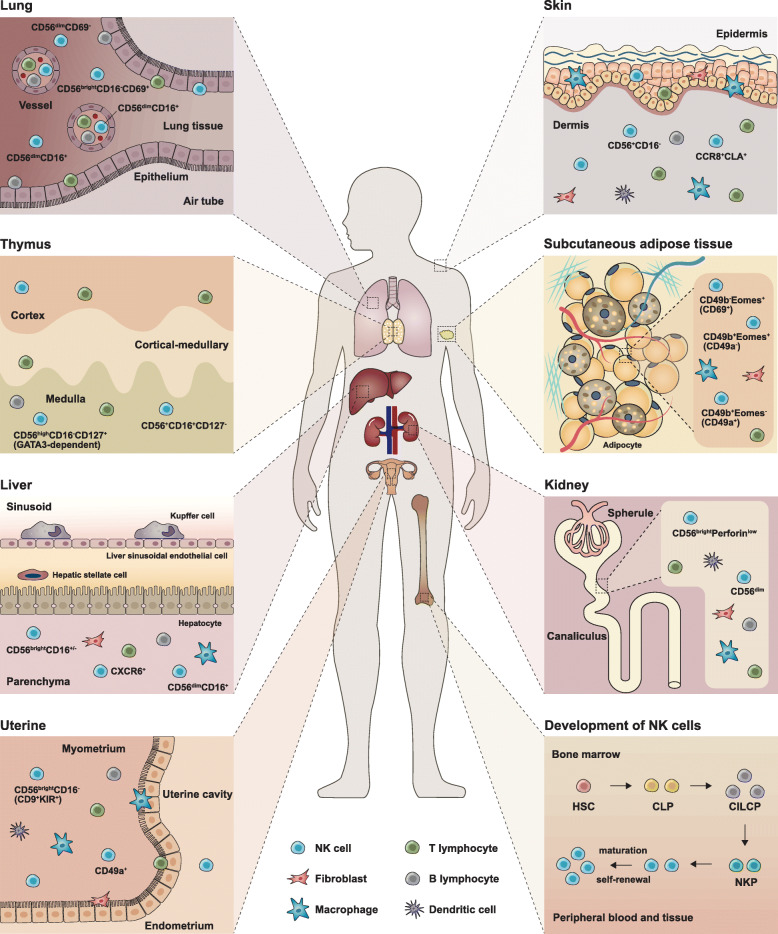
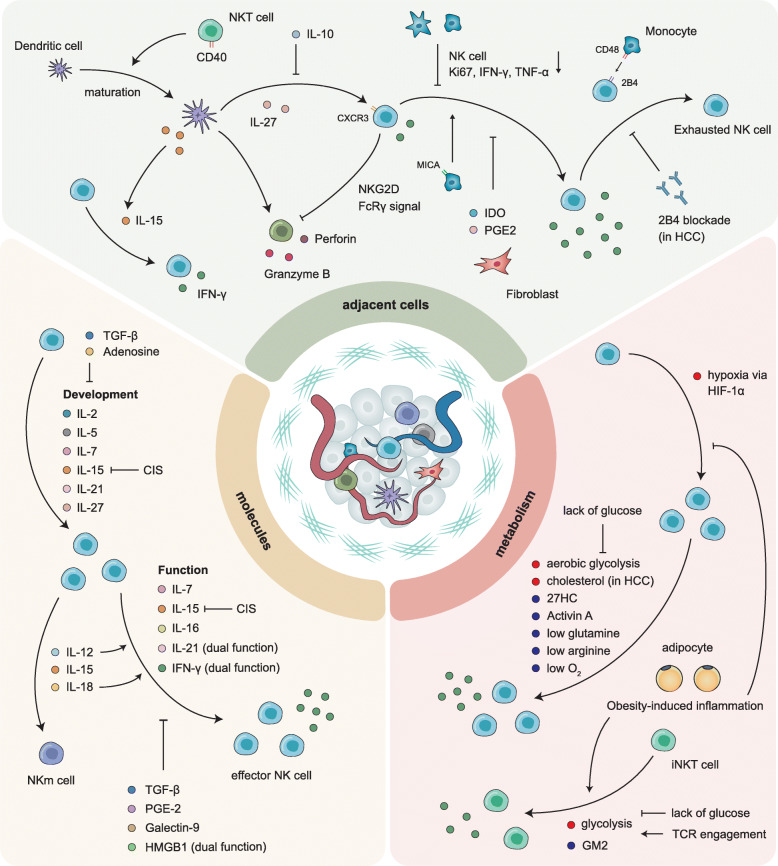
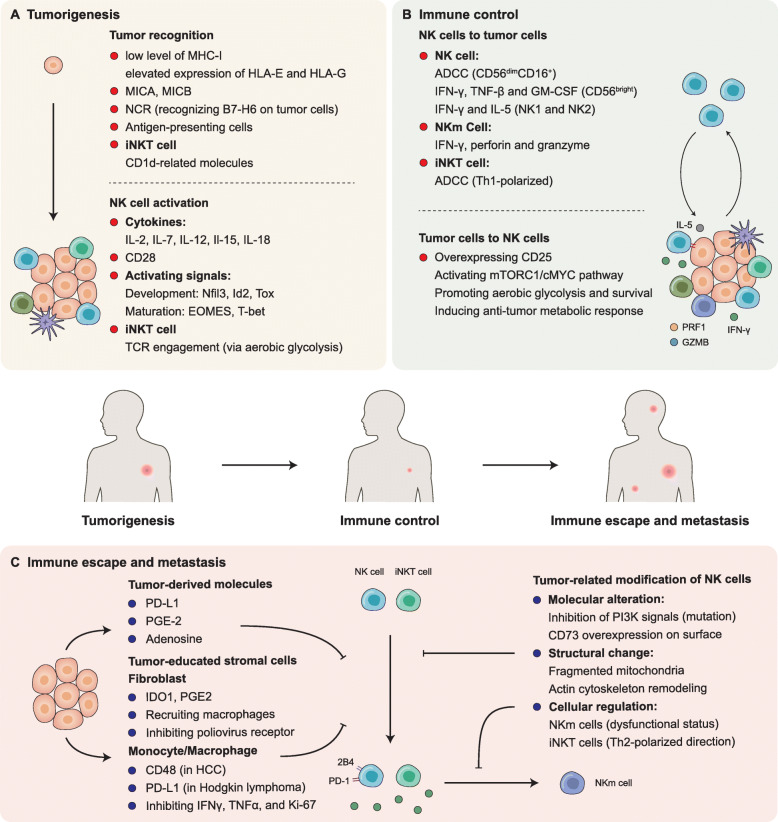
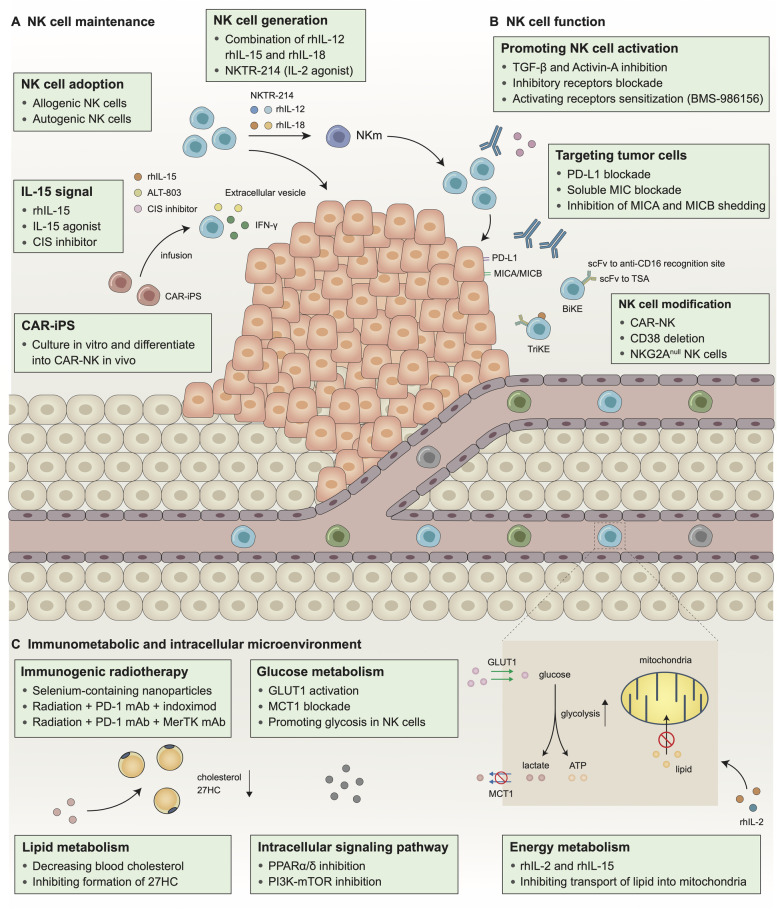
Verification
Claims the paper makes
The claims and statistics of this paper haven’t been checked yet.
Free: it reads the open-access text and checks the first 5 claims that cite a source we can check. Create a free account to check every claim.
Claims other papers make about this one
Each is checked against this paper’s own text: does it say what the citing paper says it does?
The source backs part of the claim, not all of it — or backs it for a different population, condition or comparison.
In the citing paper
“Due to this difference in cytokine secretion profile, NK cells have the potential to be developed as “off-the-shelf” CAR products with a lower risk of inducing CRS compared to CAR-T cells.”
From Multiple myeloma: signaling pathways and targeted therapy (2024) · cites this paper as [267]
Experimental — accuracy not yet measuredThe source backs part of the claim, not all of it — or backs it for a different population, condition or comparison.
In the citing paper
“Importantly, NK cells do not produce IL-1 and IL-6, which are key cytokines involved in the development of CRS [266, 267].”
From Multiple myeloma: signaling pathways and targeted therapy (2024) · cites this paper as [267]
Experimental — accuracy not yet measured
Self-check
Percentages, sums and reported differences re-computed from the paper’s own numbers.
The self-check needs the paper’s full text.
Citations
Cites
1 retracted
Meyaard, L., de Vries, A.-R. V. D. V., Ruiter, T. E.-D., Lanier, L. L., Phillips, J. H., & Clevers, H. C. (2001) · The Journal of Experimental Medicine · doi:10.1084/jem.194.1.107 · Cited by 43
RetractedHallmarks of Cancer: The Next Generation
Hanahan, D., & Weinberg, R. A. (2011) · Cell · doi:10.1016/j.cell.2011.02.013 · Cited by 66,590 · cited 2×
“Background The diversity of infiltrating stromal cells occurring in human cancers exceeds 30 distinct subgroups, reflecting the huge complexity of the tumor microenvironment (TME), thereby deeply affecting the treatment option for each patient [1].”
BackgroundRobust enumeration of cell subsets from tissue expression profiles
Newman, A. M., Liu, C. L., Green, M. R., Gentles, A. J., Feng, W., Xu, Y., Hoang, C. D., Diehn, M., & Alizadeh, A. A. (2015) · Nature Methods · doi:10.1038/nmeth.3337 · Cited by 13,224
Axicabtagene Ciloleucel CAR T-Cell Therapy in Refractory Large B-Cell Lymphoma
Neelapu, S. S., Locke, F. L., Bartlett, N. L., Lekakis, L. J., Miklos, D. B., Jacobson, C. A., Braunschweig, I., Oluwole, O. O., Siddiqi, T., Lin, Y., et al. (2017) · New England Journal of Medicine · doi:10.1056/nejmoa1707447 · Cited by 6,030
Self-citationTisagenlecleucel in children and young adults with B-cell lymphoblastic leukemia
Maude, S. L., Laetsch, T. W., Buechner, J., Rives, S., Boyer, M., Bittencourt, H., Bader, P., Verneris, M. R., Stefanski, H. E., Myers, G. D., et al. (2018) · New England Journal of Medicine · doi:10.1056/nejmoa1709866 · Cited by 5,735
Chimeric Antigen Receptor T Cells for Sustained Remissions in Leukemia
Maude, S. L., Frey, N., Shaw, P. A., Aplenc, R., Barrett, D. M., Bunin, N. J., Chew, A., Gonzalez, V. E., Zheng, Z., Lacey, S. F., et al. (2014) · New England Journal of Medicine · doi:10.1056/nejmoa1407222 · Cited by 5,413
TGFβ attenuates tumour response to PD-L1 blockade by contributing to exclusion of T cells
Mariathasan, S., Turley, S. J., Nickles, D., Castiglioni, A., Yuen, K., Wang, Y., Kadel III, E. E., Koeppen, H., Astarita, J. L., Cubas, R., et al. (2018) · Nature · doi:10.1038/nature25501 · Cited by 5,400
IFN-γ–related mRNA profile predicts clinical response to PD-1 blockade
Ayers, M., Lunceford, J., Nebozhyn, M., Murphy, E., Loboda, A., Kaufman, D. R., Albright, A., Cheng, J. D., Kang, S. P., Shankaran, V., et al. (2017) · Journal of Clinical Investigation · doi:10.1172/jci91190 · Cited by 3,788
The Tumor Microenvironment Innately Modulates Cancer Progression
Hinshaw, D. C., & Shevde, L. A. (2019) · Cancer Research · doi:10.1158/0008-5472.can-18-3962 · Cited by 3,270 · cited 1×
“However, the specific role of NK cells remains controversial and largely depends on distinct cancer types [109].”
BackgroundEmerging Biological Principles of Metastasis
Lambert, A. W., Pattabiraman, D. R., & Weinberg, R. A. (2017) · Cell · doi:10.1016/j.cell.2016.11.037 · Cited by 3,067 · cited 1×
“Apart from primary tumor proliferation, metastasis remains lethal, accounting for the majority of cancerassociated deaths, and invasion-metastasis cascade is largely attributable to the immune escape [136].”
Background
Research works printed but not linked: 1
- Chiossone L Dumas P-Y Vienne M Vivier E Natural killer cells and other innate lymphoid cells in cancer Nature Reviews Immunol 2018 18 671 688 30209347 · DOI · Paper page
Cited by
Items 501–600 of 911
Shao, P., Hu, W., Shi, X., Shu, M., Li, D., Zhou, T., & Zhao, Q. (2023) · Journal of Cellular and Molecular Medicine · doi:10.1111/jcmm.18045 · Cited by 4
Zhou, L., Gan, L., Sun, C., Chu, A., Yang, M., & Liu, Z. (2024) · Oncology Letters · doi:10.3892/ol.2024.14397 · Cited by 4
Schneider, J., Lim, S. T., An, Y. Y., & Suh, Y. J. (2024) · Life · doi:10.3390/life14050608 · Cited by 4
Immunological landscape of solid cancer: Interplay between tumor and autoimmunity
Singh, A. K., Duddempudi, P. K., Kenchappa, D., Srivastava, N., & Amdare, N. P. (2024) · International review of cytology · doi:10.1016/bs.ircmb.2024.04.002 · Cited by 4
Shi, Y., Zheng, X., Peng, H. C., Xu, C., Sun, R., Tian, Z., Sun, H., & Wang, X. (2024) · Cancer Immunology Research · doi:10.1158/2326-6066.cir-23-1061 · Cited by 5
Zhang, Z., Chen, Z., Que, Z., Fang, Z., Zhu, H., & Tian, J. (2024) · Cancer Reports · doi:10.1002/cnr2.2134 · Cited by 7
“NK cells serve as the cornerstone of the host's immune defense against viral infections and malignant neoplasms [44].”
BackgroundMohite, P. B., Puri, A. V., Munde, S. V., Yadav, V., Mukerjee, N., Patil, R., Mahindrakar, N., Prasad, G. V. S., Verma, R., & Sinha, A. (2024) · Journal of Drug Delivery Science and Technology · doi:10.1016/j.jddst.2024.106596 · Cited by 4
Dong, G., He, X., He, J., Bao, D., Gao, Q., & Zhou, J. (2025) · Journal of Exercise Science & Fitness · doi:10.1016/j.jesf.2025.09.002 · Cited by 4
Natural killer cell therapies in cancer: innovations, challenges, and future directions
Aljabali, A. A. A., Gammoh, O., Qnais, E. Y., Alqudah, A. M., El‐Tanani, Y., Mishra, V. K., Mishra, Y., El‐Tanani, M., & Hatahet, T. (2025) · Expert Opinion on Biological Therapy · doi:10.1080/14712598.2025.2601053 · Cited by 7
“Natural killer cells are highly potent cell destroyers, but they encounter numerous challenges while eliminating tumors [102].”
Kmieciak, A., Brown, L., Coles, M. C., Wagg, J., Phipps, A., & Gaffney, E. A. (2021) · Scientific Reports · doi:10.1038/s41598-021-95225-x · Cited by 4
RELATIONSHIP OF LYMPHOCYTE SUBPOPULATIONS IN BREAST CANCER PATIENTS WITH TREATMENT RESULTS
Заботина, Т. Н., Ивановна, Ч. А., Анатольевна, Б. А., Захарова, Е. Н., Shoua, E. K., Артамонова, Е. В., Kovalenko, E. I., Khoroshilov, M. V., & Григорьевна, К. З. (2021) · Russian Journal of Biotherapy · doi:10.17650/1726-9784-2021-20-3-25-33 · Cited by 5
Wang, H., Qi, X. Z., Jia, W., Yu, J., Yang, K., Zhang, X., & Wang, L. (2023) · Evidence-based Complementary and Alternative Medicine · doi:10.1155/2023/1481114 · Cited by 4
Guo, J., Liu, X., Song, H., Gu, Y., Niu, J., & Yang, L. (2023) · Extracellular Vesicle · doi:10.1016/j.vesic.2023.100024 · Cited by 4
He, X., & Feng, W. (2023) · Mediators of Inflammation · doi:10.1155/2023/6845701 · Cited by 4
“Previous investigations have demonstrated that investigating transcriptome characteristics based on the molecular profile of immunocytes extracted from scRNA-seq information may be an effective weapon for predicting clinical outcomes and immunotherapy response [13].”
BackgroundMu, Y., Tong, J., Wang, Y., Yang, Y., & Wu, X. (2023) · Frontiers in Immunology · doi:10.3389/fimmu.2023.1213161 · Cited by 4
“Previous studies have proposed that NK cells can regulate other immune cells, including potentiating the functions of CD4 and CD8 T cells, DC, and activating neutrophils (26, 27).”
BackgroundImpact of anesthesia choice in cutaneous melanoma surgery
Benesch, M. G. K., & Skitzki, J. J. (2023) · Melanoma Research · doi:10.1097/cmr.0000000000000936 · Cited by 4
“These innate immunity cells serve as the primary effector cells against cancer [37].”
BackgroundMechanistic insights into super-enhancer-related genes as prognostic signatures in colon cancer
Tang, Y., Sang, S., Gao, S., Xu, W., Zhou, H., & Xia, X. (2024) · Aging · doi:10.18632/aging.205906 · Cited by 4
Han, C., Su, J., Pei, Y., Su, X., & Zheng, D. (2024) · Cancer Cell International · doi:10.1186/s12935-024-03411-4 · Cited by 4
“Currently, numerous studies and drugs target NK cell-related pathways to inhibit tumors [12, 13].”
BackgroundEngineered Platelet for In Situ Natural Killer Cell Activation to Inhibit Tumor Recurrence
Deng, Y., Tan, C., Huang, S., Zhou, Z., Luo, X., Yang, X., & Sun, M. (2024) · Nano Letters · doi:10.1021/acs.nanolett.4c02316 · Cited by 4
Wu, X., & Fang, S. (2024) · Frontiers in Immunology · doi:10.3389/fimmu.2024.1494887 · Cited by 4
“NK cells are innate lymphoid cells recognized for their cytotoxic capabilities (124).”
Li, X., Wang, K., Liu, J., & Li, Y. (2025) · Discover Oncology · doi:10.1007/s12672-025-01779-x · Cited by 4
“In addition, FN1 and RUNX1 were also found to have the highest correlation in TF regulatory network.”
Courot, H., Rigal, É., Adib, N., Criton, M., Cookson, A., Fauvel, B., & Présumey, J. (2025) · Cells · doi:10.3390/cells14040254 · Cited by 4
Plasma proteins and herpes simplex virus infection: a proteome-wide Mendelian randomization study
Fu, C., Xu, W., Xu, X., Zhao, F., Zheng, C., & Yin, Z. (2025) · Virus Genes · doi:10.1007/s11262-025-02145-3 · Cited by 5
Boichuk, S., Galembikova, A. R., & Vollmer, D. L. (2025) · International Journal of Molecular Sciences · doi:10.3390/ijms26072897 · Cited by 4
“NK cells belong to the family of innate lymphoid cells (ILCs), which play a key role in the early phase of innate immune responses against infections and malignancies due to the potent killing capacities against virus-infected and transformed cells that are dangerous to the host [27,28].”
Konstantis, G., Katsadouros, I., Tsaousi, G. G., Grosomanidis, V., & Pourzitaki, C. (2025) · Medicina · doi:10.3390/medicina61071263 · Cited by 5
“NK cells comprise part of the innate immunity, with similar cytotoxic activity to CD8+ cells without expressing the CD3 marker and the TCR [28].”
Potential of Natural Killer Cell Enriched Conditioned Media for Skin Care and Anti-Aging
Kim, D. S., Kim, D. J., Kim, H. P., Hwang, S. H., & Kang, J. H. (2021) · Journal of Cosmetics Dermatological Sciences and Applications · doi:10.4236/jcdsa.2021.112013 · Cited by 5
“NK cell is a type of innate immune cell that not only removes abnormal cells such as cancer cells or virus-infected cells, but also secretes various substances such as cytokine to affect surrounding cells [30] [31].”
BackgroundLiu, R., Yang, X., Quan, Y., Tang, Y., Lai, Y., Li, C., Yang, D., Wang, M., & Wu, A. (2022) · Scientific Reports · doi:10.1038/s41598-022-17857-x · Cited by 4
Çubukçu, H. C., Yurdakul, P., Seval, G. C., & Beksaç, M. (2022) · Clinical and Experimental Medicine · doi:10.1007/s10238-022-00923-z · Cited by 4
“Keywords Natural killer · Expansion · Immunotherapy · Hematological malignancies · Cancer Introduction The immune system targeting tumors and pathogens comprises adaptive immune system cells such as T and B lymphocytes and innate immune system cells such as NK cells [1].”
Moran, J., Mylod, E., Kane, L. E., Marion, C., Keenan, E., Mekhaeil, M., Lysaght, J., Dev, K. K., O'Sullivan, J. N., & Conroy, M. J. (2023) · Pharmaceutics · doi:10.3390/pharmaceutics15020360 · Cited by 4
Cancer Immunotherapy Via Stem Cell-Derived NK Cells
Hosseini, F. S., Ahmadvand, M., Karimi, R., Mousavi, S. A., Ai, J., & Nikbakht, M. (2023) · Immunotherapy · doi:10.2217/imt-2022-0224 · Cited by 4
Qu, N., Meng, Y., Zhai, J., Griffin, N., Shan, Y., Gao, Y., & Shan, F. (2023) · International Immunopharmacology · doi:10.1016/j.intimp.2023.110967 · Cited by 4
Advances and considerations in the use of immunotherapies for primary hepato-biliary malignancies
Gorji, L., Brown, Z. J., & Pawlik, T. M. (2023) · Surgical Oncology · doi:10.1016/j.suronc.2023.102031 · Cited by 4
Li, Y., Zhu, Y., Sheng, P., Guo, X., Li, X., Li, R., Zhao, Z., Li, L., & Gong, K. (2024) · Research Square · doi:10.21203/rs.3.rs-3865289/v1 · Cited by 4
Thymic NK-Cells and Their Potential in Cancer Immunotherapy
Forbes, C., Nierkens, S., & Cornel, A. M. (2024) · ImmunoTargets and Therapy · doi:10.2147/itt.s441639 · Cited by 3
“5 13 This intrinsic combination of effector mechanisms gives the cells a “dual functionality” and makes them an interesting alternative in the development of cellular therapy against cancer.”
BackgroundMethodInfluentialMYC amplification sensitizes TNBC to CHK1 inhibitors
Li, B., Liu, T., Zhao, M., Guo, D., Peng, W., Tao, Z., Hu, X., & Jin, J. (2025) · Cellular Signalling · doi:10.1016/j.cellsig.2025.111709 · Cited by 4
Peng, J., Yan, H., Zhou, W., Chen, H., Xu, T., & He, C. (2025) · Cellular Immunology · doi:10.1016/j.cellimm.2025.104994 · Cited by 3
Ergün, P., Samuels, T. L., Mathison, A., Liu, T., Jin, V. X., & Johnston, N. (2025) · International Journal of Molecular Sciences · doi:10.3390/ijms26136182 · Cited by 3
Liew, Y. W., Goh, J. X., Lim, J. S., Hamzah, S. B., Looi, Q. H., Lim, M. N., Foo, J. B., & Tan, L. (2025) · Journal of Drug Delivery Science and Technology · doi:10.1016/j.jddst.2025.107263 · Cited by 3
Wang, X., Liu, Q., Li, X., Xing, W., Chen, P., Feng, Q., Hou, M., Wang, Q., Zhou, H., & Peng, J. (2025) · Research and Practice in Thrombosis and Haemostasis · doi:10.1016/j.rpth.2025.102977 · Cited by 4
“First, the low proportion of NK cells in PBMCs may result in their relatively weak cytotoxic activity [62–65].”
Chimeric antigen receptor (CAR)-NK cell therapy in gastrointestinal (GI) cancers; a new arena
Alkhathami, A. G., Ahmed, A. T., Hussn, A., RenukaJyothi, S., Panigrahi, R., Al‐Hetty, H. R. A. K., Negi, H., Jassal, P., Hammady, F. J., & Salih, S. A. (2025) · Experimental Cell Research · doi:10.1016/j.yexcr.2025.114683 · Cited by 3
Caseinolytic Protease P: A Therapeutic Nexus in Infection, Inflammation, and Immunity
Sonak, S. S., Ishwarkar, S., Nimbarte, C., & Nimbarte, V. D. (2025) · Critical Reviews in Immunology · doi:10.1615/critrevimmunol.2025059878 · Cited by 3
The role of long non-coding RNAs in NK cell biology and diseases
Zhang, D., Wei, S., Wei, Q., Lin, Z., & Sun, X. (2025) · Genes & Diseases · doi:10.1016/j.gendis.2025.101833 · Cited by 4
“16,17 Although lacking protein-coding capacity, certain lncRNAs potently modulate essential NK cell functions, including development, differentiation, migration, and cytotoxicity.”
Wu, H., Wang, Y., Yang, R., Liang, X., Su, Y., Ma, R., Yang, Z., Du, X., Sun, Q., Huang, Y., et al. (2025) · Annals of Surgical Oncology · doi:10.1245/s10434-025-18335-0 · Cited by 4
Wang, Q., Yang, S., Zhang, Y., Piao, C., Liu, X., & Wu, X. (2025) · Genes · doi:10.3390/genes16111389 · Cited by 3
“Natural killer (NK) cells serve as the primary effector cells against cancer in innate immunity and exhibit high heterogeneity within the tumor microenvironment [18].”
The role of natural killer cells in the immune response after liver transplantation
Gao, Z.-C., Wan, H. S., Shan, G.-Y., Zhang, Y.-X., Sun, Z., Shi, Y.-P., & Li, H. (2025) · Transplantation Reviews · doi:10.1016/j.trre.2025.100986 · Cited by 3
Xiao, D., Zou, J., Li, Y., Zhang, H., Shen, M., Wang, H., Yu, Y., Xiao, H., & Gao, L. (2026) · Biomaterials · doi:10.1016/j.biomaterials.2026.124018 · Cited by 4
Sun, J., Pan, S., Wang, N., Ma, X., & Yang, X. G. (2026) · Cell Communication and Signaling · doi:10.1186/s12964-026-02697-3 · Cited by 5
Tang, R., Juan, Z., Xing, F., Yi, Z., & Fu, Y. (2026) · Cellular Signalling · doi:10.1016/j.cellsig.2026.112452 · Cited by 3
Kaur, K., Chen, P., Ko, M.-W., Huerta‐Yépez, S., Maharaj, D., & Jewett, A. (2023) · Critical Reviews in Immunology · doi:10.1615/critrevimmunol.2023047233 · Cited by 4
Jin, M., Kim, C. A., Bae, D. J., Kim, S., Kim, T. Y., Kim, W. B., Shong, Y. K., Kim, W. G., & Jeon, M. J. (2023) · Scientific Reports · doi:10.1038/s41598-023-39503-w · Cited by 3
Zheng, J., Li, X., Gong, X., Hu, Y., & Tang, M. (2024) · Translational Cancer Research · doi:10.21037/tcr-24-1064 · Cited by 3
“This mechanism is increasingly acknowledged as an indicator of cancer progression, with significant implications for prognosis and treatment responses across various cancer types (23,25).”
Guo, X., Wang, F., Li, X., Luo, Q., Liu, B., & Yuan, J. (2024) · Translational Cancer Research · doi:10.21037/tcr-24-1153 · Cited by 3
“Additionally, high blood cholesterol and cholesterol accumulation in natural killer (NK) cells facilitate lipid raft development in liver-tumor-bearing mouse models, highlighting the diverse roles of lipid metabolism in cancer (57-59).”
An intraepithelial ILC1-like natural killer cell subset produces IL-13
Maddineni, S., Sharma, K., Mohammad, I., Sherman, A. R., Štěpánek, I., Shin, J. H., Bando, J. K., & Sunwoo, J. B. (2025) · Frontiers in Immunology · doi:10.3389/fimmu.2025.1521086 · Cited by 4
“Natural killer (NK) cells are innate lymphoid cells (ILCs) with cytotoxic functions and include subsets that parallel those of T cells (2).”
Yang, J., Shen, L., Cai, Y., Wu, J., Chen, K., Xu, D., Lei, Y., Chai, S., & Xiong, N. (2025) · Biochemical Genetics · doi:10.1007/s10528-025-11086-3 · Cited by 3
“Tumor cells often evade CD8 T-cell-mediated cytotoxicity by downregulating MHC class I molecules (Wu et al. 2020).”
Su, Q., Fang, L., Li, C., Yue, L., Yun, Z., Zhang, H., Liu, Q., Ma, R., Zhong, P., Liu, H., et al. (2025) · Discover Oncology · doi:10.1007/s12672-025-02282-z · Cited by 3
Wang, H., Chen, X., Chen, Y.-L., Cao, Y., Chen, Y.-L., Liu, G., & Huang, L. (2021) · PubMed · doi:10.12122/j.issn.1673-4254.2021.04.11 · Cited by 3
Engineered immune cells with nanomaterials to improve adoptive cell therapy
Kim, N. Y., & Park, J. (2021) · Biomedical Engineering Letters · doi:10.1007/s13534-021-00197-6 · Cited by 3
O’Donovan, C., Davern, M., Donlon, N. E., Lysaght, J., & Conroy, M. J. (2021) · Cancer Letters · doi:10.1016/j.canlet.2021.09.005 · Cited by 6
“CX 3 CL1 mediates the homing of CX 3 CR1 + CD8 + memory T cells to the omentum in OAC patients, effectively driving inflammation of the adipose tissue and depriving the oesophageal TME of a crucial anti-tumour immune population [24].”
BackgroundStarčević, A., Grebić, D., Avirović, M., Mavrinac, M., Zujić, P. V., Vujaklija, D. V., & Gulić, T. (2022) · Neoplasma · doi:10.4149/neo_2022_220615n635 · Cited by 3
“1093/jnci/djw192 [17] WU SY, FU T, JIANG YZ, SHAO ZM.”
BackgroundInfluentialModern breast cancer therapy: from tamoxifen to T-cell engineering
Shevchenko, J. A., Kuznetsova, M. S., Khristin, A. A., Васильевич, С. С., & Sennikov, S. V. (2022) · Siberian Journal of Oncology · doi:10.21294/1814-4861-2022-21-5-109-122 · Cited by 3
Zamir, M. R., Ariafar, A., Ghaderi, A. A., & Amirzargar, A. (2022) · Immunobiology · doi:10.1016/j.imbio.2022.152319 · Cited by 3
Lesnak, J. B., Mazhar, K., & Price, T. J. (2023) · Current Rheumatology Reports · doi:10.1007/s11926-023-01107-8 · Cited by 3
Polymorphisms of Killer Ig-like Receptors and the Risk of Glioblastoma
Choi, H., Baek, I., Park, S. A., Park, J., Jeun, S., Kim, T., & Ahn, S. (2023) · Journal of Clinical Medicine · doi:10.3390/jcm12144780 · Cited by 3
Ma, X., Wei, X., Yang, G., Li, S., & Liu, R. (2023) · Combinatorial Chemistry & High Throughput Screening · doi:10.2174/1386207326666230831164358 · Cited by 3
Prognostic and immune infiltration features of disulfidptosis-related subtypes in breast cancer
Chen, S., Li, X., & Ao, W. (2024) · BMC Women s Health · doi:10.1186/s12905-023-02823-0 · Cited by 3
“However, long-term exposure to the TME leads to NK cells being in an immunosuppressive state, promoting tumor immune evasion and metastasis [24].”
BackgroundClinical Implementation of MicroRNAs in Cancer Immunology
Schwarzenbach, H. (2024) · International Journal of Translational Medicine · doi:10.3390/ijtm4010003 · Cited by 4
Guo, L., Cheng, H., Liu, J., Shao, W., Luo, L., Zheng, W., Sun, S., Kong, D., & Chen, C. (2024) · BMC Medical Genomics · doi:10.1186/s12920-023-01762-x · Cited by 4
“Macrophage [47], activated NK cell [48], and T follicular helper cells [49] have also been associated with anti-tumor effects during immunotherapy.”
BackgroundNatural killer cell‐based signature: Prognostic analysis in head and neck squamous cell carcinoma
Guo, Z., Zhao, Y., Xu, M., Zhao, L., & Wang, X. (2024) · The Journal of Gene Medicine · doi:10.1002/jgm.3671 · Cited by 4
“15 The infiltration of NK cells has been linked to improved overall survival (OS) in solid tumors.”
BackgroundNon-viral vector-based genome editing for cancer immunotherapy
Fang, T., & Chen, G. (2024) · Biomaterials Science · doi:10.1039/d4bm00286e · Cited by 4
Mei, N., Gong, S., Wang, L., Wang, L., Wang, J., Li, J., Bao, Y., Zhang, H., & Wang, H. (2024) · Blood and Lymphatic Cancer Targets and Therapy · doi:10.2147/blctt.s461529 · Cited by 3
“11 Due to their broad-spectrum anti-cancer properties and low side effects, NK cells have garnered widespread attention in recent years for their role in cancer mechanisms and therapeutic applications.”
BackgroundKim, R., Kawai, A., Wakisaka, M., Shimoyama, M., Yasuda, N., Ito, M., Kin, T., & Arihiro, K. (2024) · World Journal of Oncology · doi:10.14740/wjon1885 · Cited by 3
“The distribution of NK cell subsets varies by cancer type, suggesting that these cells are characterized by plasticity and heterogeneity in patients with cancer [12].”
BackgroundZhang, Y., Chen, F., Cao, Y., Zhang, H., Zhao, L., & Xu, Y. (2025) · Cancer Biomarkers · doi:10.1177/18758592251317400 · Cited by 5
“…M2 can contribute to tumor growth and immunosuppression, 27 but CD8 T cells, Dendritic cells, Macrophage M1 and NK cells can inhibit LC. 27 – 30 In this study, B cells naive, T cells CD4 memory activated, T cells regulatory, T cells gamma delta, Macrophages M0 and Dendritic cells activated…”
Go, S., Demetriou, C., Hughes, S. L., Lanfredini, S., Valenzano, G., Ferry, H., Arbe-Barnes, E. H., Sivakumar, S., Bashford-Rogers, R. J. M., Middleton, M. R., et al. (2024) · eLife · doi:10.7554/elife.92672.1 · Cited by 4
Yoffe, L., Bhinder, B., Kang, S. W., Zhang, H., Singh, A., Ravichandran, H., Markowitz, G. J., Martin, M., Kim, J., Zhang, C., et al. (2025) · bioRxiv (Cold Spring Harbor Laboratory) · doi:10.1101/2024.12.31.630523 · Cited by 4
“NK cells constitute an important arm of the innate immune system that contributes to protective antitumor immunity 57 .”
Watanabe, C. M., Suzuki, C., Marins-Dos-Santos, A., Aloia, T. P. A., Lee, G. E., Wald, D. N., Okamoto, O. K., de Azevedo, J. T. C., de Godoy, J. A. P., Santos, F. P. S., et al. (2024) · Transplantation and Cellular Therapy · doi:10.1016/j.jtct.2024.07.004 · Cited by 2
Progress in Utilizing Chitosan-Based Nanoparticles for Pulmonary Drug Administration
Mercan, G., & Selçuk, Z. V. (2024) · ODÜ Tıp Dergisi · doi:10.56941/odutip.1442818 · Cited by 2
Xie, D., Wang, J., Sun, K., Shi, Z.-Y., Wang, Y., Chang, Y., Yuan, X., Liu, Y., Jiang, H., Jiang, Q., et al. (2024) · Biomedicines · doi:10.3390/biomedicines12102207 · Cited by 2
“Natural killer (NK) cells are a subset of lymphoid cells performing innate immunity functions [9–11].”
BackgroundDineshkumar, T., Anandan, N., Rajkumar, K., & Indumathi, N. (2024) · Journal of Oral and Maxillofacial Pathology · doi:10.4103/jomfp.jomfp_53_24 · Cited by 3
The prognostic and immunomodulatory role of the MMR system in patients with stomach adenocarcinoma
Tian, Z., Yang, L., Yang, R., & Yang, W. (2025) · Scientific Reports · doi:10.1038/s41598-024-84613-8 · Cited by 2
Alves, E., Gurupadayya, B., & Prabhakaran, P. (2025) · Clinical Cancer Drugs · doi:10.2174/012212697x375313250623163944 · Cited by 2
Liu, P., Ma, W., Wang, T., Lü, J., Wang, W., Wang, Y., Tang, Q., Di, J., Bischof, E. Y., Zhao, Q., et al. (2025) · Cell Death Discovery · doi:10.1038/s41420-025-02619-1 · Cited by 3
Xu, C., Qian, W., Wu, Y., Chen, X., Li, Z., & Xu, D. (2025) · Journal of Molecular Histology · doi:10.1007/s10735-025-10562-9 · Cited by 2
“Activated NK cells release pro-inflammatory cytokines to against primary tumor cells, also can collaborate with myeloid-derived suppressor cells or dendritic cells to initiate distinct pro-/anti-tumor reactions (Wu et al. 2020).”
Wang, J., Meng, L., Meng, F., Zhang, T., Cheng, G., Chen, X., & Liu, Y. (2025) · Small · doi:10.1002/smll.202505680 · Cited by 2
Multi-omics analysis reveals ultraviolet response insights for immunotherapy and prognosis
Zhang, D., Dai, M., Ying, J., Huang, Y., Liu, Z., & Wu, C. (2025) · Frontiers in Immunology · doi:10.3389/fimmu.2025.1598070 · Cited by 2
“As key CTLs, CD8+ T and NK cells play critical roles in the immune system by directly killing infected or cancerous cells, thus protecting the body from pathogens and tumors (90 – 94).”
Liu, J., Wang, Y., Wei, X., Liu, S., Hu, C., Peng, P., Wu, W., Cai, J., & Sun, H. (2025) · Cellular Oncology · doi:10.1007/s13402-025-01114-0 · Cited by 3
Yin, X., Cai, H., Zhang, A., Zheng, W., Zhao, J., & Ma, J. (2025) · Frontiers in Immunology · doi:10.3389/fimmu.2025.1666199 · Cited by 2
“However, within the immunosuppressive microenvironment of solid tumors, NK cell function is often severely impaired (9, 10).”
Non-Histone Lysine Modifications in Tumor Microenvironment: Mechanisms and Therapeutic Opportunities
Sun, K., Xiao, S., Huang, Q., Zhang, S., Li, Q., & Hu, C. (2025) · International Journal of Molecular Sciences · doi:10.3390/ijms262211229 · Cited by 3
“Natural killer (NK) cells are the primary effector cells in antitumor innate immunity and have emerged as promising therapeutic targets in cancer treatment [119].”
Xie, J., Tang, Y., Wang, Y., Gao, X., Fu, F., Liu, Y., Yi, C., Zhou, G., Wang, Z., Chen, C., et al. (2025) · BMC Medical Genomics · doi:10.1186/s12920-025-02262-w · Cited by 3
“Immune escape represents a critical characteristic of cancer, profoundly influencing tumor development and the process of metastasis [63].”
Yu, L., Jiang, Y., Liu, X., Yan, F., Yan, H. P., Xie, Y., Shi, W., Shang, Z., Du, J., & Yang, Z. (2026) · Immunology · doi:10.1111/imm.70095 · Cited by 2
“However, overexpression of co-inhibitory receptors (e.g., TIM-3, TIGIT) on NK cells in the tumour microenvironment (TME) leads to reduced function, creating immunosuppression and promoting immune evasion [8, 9].”
Self-citationThe application of MOF-based drug delivery systems in tumor immunotherapy
Mi, J., Jiang, X., Yin, M., Wang, Y., Tong, Y., & Zhu, Y. (2026) · Colloids and Surfaces B Biointerfaces · doi:10.1016/j.colsurfb.2026.115506 · Cited by 2
Disarming the natural killers: mechanisms of NK cell dysfunction in hematological malignancies
Takanlu, J. S., Durkan, L., & Szegezdi, É. (2026) · Blood Immunology & Cellular Therapy · doi:10.1016/j.bict.2026.100038 · Cited by 3
BCG-trained macrophages promote pan-anti-tumor activity through epigenetic rewiring of NOX2-ROS axis
Sun, R.-M., Yang, Y., Lai, Y., Wang, H., Yang, X.-X., Ji, P., Chen, Y.-Y., Liu, Z.-Y., Ginhoux, F., Fan, X.-Y., et al. (2026) · Journal of Experimental & Clinical Cancer Research · doi:10.1186/s13046-026-03708-4 · Cited by 2
Li, N., Li, S., Cao, P., Tang, M., Zhang, J., Zhang, W. K., Liu, J., Ye, C., Wu, D., Li, X., et al. (2026) · Cancer Gene Therapy · doi:10.1038/s41417-026-01058-z · Cited by 2
“Natural killer (NK) cells represent an alternative platform for CAR engineering, offering MHC-independent cytotoxicity and potentially improved safety pro fi les compared with CAR-T cells [62 – 65].”
A Novel Concept for Nano-Selenium Supplementation to Fight against COVID-19
Bano, I., Baloch, A. R., Arbab, S., Sajjad, H., Talpur, M. S. H., & Khalid, A. (2021) · International Journal of Clinical and Experimental Medicine Research · doi:10.26855/ijcemr.2021.07.006 · Cited by 2
“006 266 International Journal of Clinical and Experimental Medicine Research spleen in NK cells was increased by Se supplementation [18].”
BackgroundCell-based immunotherapies in gynecologic cancers
Lang, S. M., & Dorigo, O. (2021) · Current Opinion in Obstetrics & Gynecology · doi:10.1097/gco.0000000000000760 · Cited by 2
“NK cells are a member of the innate system whose role is to recognize and induce cell death in a variety of cells, including cancer cells [31,32].”
BackgroundWang, L., Song, Y., Bai, J., Sun, W., Yu, J., Cai, M., & Fu, S. (2022) · Frontiers in Genetics · doi:10.3389/fgene.2022.924781 · Cited by 2
Emerging Antibodies in Cancer Therapy
Sun, Y., & Xu, J. (2022) · Advanced NanoBiomed Research · doi:10.1002/anbr.202200083 · Cited by 3
Sun, Y., Khan, M. A., Mangiola, S., & Barrow, A. D. (2023) · Pathogens · doi:10.3390/pathogens12040572 · Cited by 2
Zheng, L., Wang, Y., Liu, Z., Wang, Z., Tao, C., Xiao, Y.-G., Zhang, K., Wu, A., Li, H., Wu, J., et al. (2023) · World Journal of Gastrointestinal Surgery · doi:10.4240/wjgs.v15.i8.1600 · Cited by 2
Zhang, L., Yang, S., Chen, H., Xue, C.-E., Wang, T.-E., Chen, S., Xu, X., Ma, S., Yu, M., Guo, T., et al. (2023) · PubMed Central · Cited by 6
Metadata
- Authors
- Wu, S.-Y., Fu, T., Jiang, Y.-Z., & Shao, Z.-M.
- Affiliations
- Shanghai Medical College of Fudan University (CN)
- Corresponding author
- Jiang, Yi-Zhou
- Shao, Zhi-Ming
- Venue
- Molecular Cancer
- Published
- 2020-08-06
- Volume
- 19
- Issue
- 1
- Pages
- 120-120
- ISSN
- 1476-4598 (ISSN-L)
- PMC
- PMC7409673
- OpenAlex
- W3046958019
- Semantic Scholar
- 39d8edf4e0dc0327b06f47529d0bf8fcfde417e6
- Cited by
- 863
- References
- 268
- Citations by year
- 2026: 77 · 2025: 199 · 2024: 219 · 2023: 170 · 2022: 122 · 2021: 70 · 2020: 5
- FWCI
- 8.96
- Type
- journal article
- Language
- en
- Open access
- gold
- doi.org
- Licence
- cc-by
- creativecommons.org/licenses/by/4.0 (tdm)
- creativecommons.org/licenses/by/4.0 (vor)
- Locations
- Molecular Cancer (publishedVersion, cc-by)
- PubMed Central (publishedVersion, cc-by)
- PubMed (publishedVersion)
- DOAJ (DOAJ: Directory of Open Access Journals) (submittedVersion, cc-by-sa)
- Funders
- National Natural Science Foundation of China (81572583, 81874112, 81874113, 81502278, 81922048)
- Shanghai Education Development Foundation (17CG01)
- Fudan University
- Shanghai Municipal Education Commission (17CG01)
- Topics
- Life Sciences › Immunology and Microbiology › Immunology › Immune Cell Function and Interaction
- Health Sciences › Medicine › Oncology › Cancer Immunotherapy and Biomarkers
- Life Sciences › Immunology and Microbiology › Immunology › Immune cells in cancer
- Keywords
- natural killer cells, tumor microenvironment, immune evasion, NK cell therapy, NK cell resistance, tumor immunometabolism, NK cell engineering, innate immunity, hematologic malignancies, solid tumors, precision medicine
- MeSH terms
- Animals, Disease Susceptibility, Energy Metabolism, Humans, Immunity, Innate, Immunotherapy, Killer Cells, Natural, Neoplasms, Signal Transduction, Biomarkers, Disease Progression, Disease Management, Immunomodulation, Tumor Microenvironment
About these checks
Registry, retraction, Cites and statistics results are computed, not judged, with one exception: a printed reference that no index lists is read once by a model before it counts as a citation error. Claims are extracted by a model and kept only when their quote appears verbatim in the text; each cited source is then checked, with a model’s help, for whether it says what the claim relies on. Those verdicts can be wrong — read the claim’s quote and the cited source before relying on one.
Statistics and arithmetic are recomputed, not judged.
Confidence bands are shown only for fields calibrated on our annotated test set. None is calibrated yet, so no band is shown.
What counts as a claim ›How we measure confidence ›How we check this ›
Are you an author, or do you see a problem with this page? Request a review
Data sources
Bibliographic data: Semantic Scholar, OpenAlex, Crossref.
Contains information from the Semantic Scholar Academic Graph Datasets, made available under the ODC Attribution License (ODC-BY 1.0).
Semantic Scholar’s data is described in: Kinney, R., et al. (2023). The Semantic Scholar Open Data Platform. arXiv:2301.10140.
