

High concentrations of illicit stimulants and cutting agents cause false positives on fentanyl test strips
Open accessPublished version of a preprint
The DOI matches its Crossref record; 23 of the 24 references it cites were found in a registry or an index.
Abstract
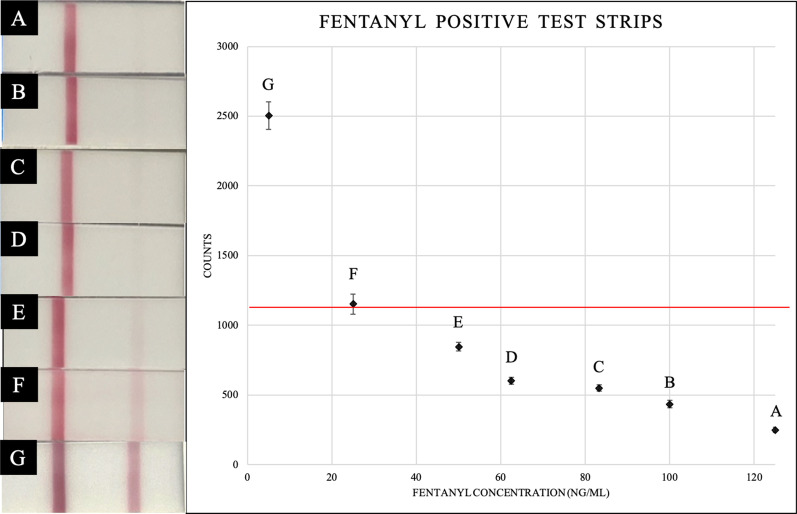
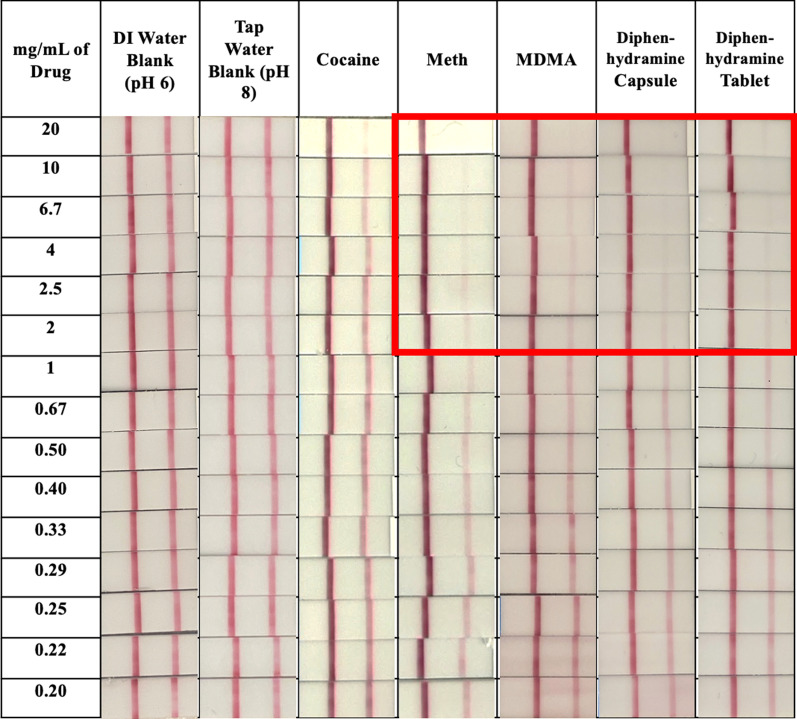
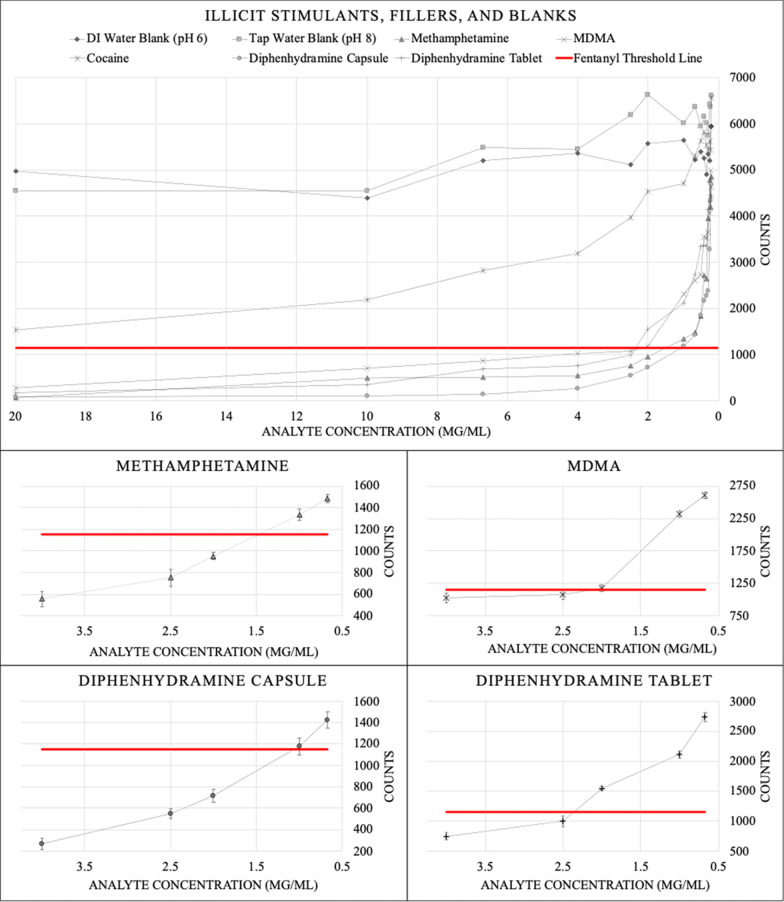
Background: The opioid epidemic has caused an increase in overdose deaths which can be attributed to fentanyl combined with various illicit substances. Drug checking programs have been started by many harm reduction groups to provide tools for users to determine the composition of their street drugs. Immunoassay fentanyl test strips (FTS) allow users to test drugs for fentanyl by either filling a baggie or cooker with water to dissolve the sample and test. The antibody used in FTS is very selective for fentanyl at high dilutions, a characteristic of the traditional use of urine testing. These street sample preparation methods can lead to mg/mL concentrations of several potential interferents. We tested whether these concentrated samples could cause false positive results on a FTS. Methods: 20 ng/mL Rapid Response FTS were obtained from BTNX Inc. and tested against 4 different pharmaceuticals (diphenhydramine, alprazolam, gabapentin, and naloxone buprenorphine) and 3 illicit stimulants [cocaine HCl, methamphetamine, and 3,4-methylenedioxymethamphetamine (MDMA)] in concentrations from 20 to 0.2 mg/mL. The FTS testing pad is divided into 2 sections: the control area and the test area. Control and test area signal intensities were quantified by ImageJ from photographs of the test strips and compared to a threshold set by fentanyl at the FTS limit of detection. Results: False positive results indicating the presence of fentanyl were obtained from samples of methamphetamine, MDMA, and diphenhydramine at concentrations at or above 1 mg/mL. Diphenhydramine is a common cutting agent in heroin. The street sample preparation protocols for FTS use suggested by many online resources would produce such concentrations of these materials. Street samples need to be diluted more significantly to avoid interference from potential cutting agents and stimulants. Conclusions: Fentanyl test strips are commercially available, successful at detecting fentanyl to the specified limit of detection and can be a valuable tool for harm reduction efforts. Users should be aware that when drugs and adulterants are in high concentrations, FTS can give a false positive result.
Overview
The claims and statistics of this paper haven’t been checked yet.
Free: it reads the open-access text and checks the first 5 claims that cite a source we can check. Create a free account to check every claim.
Integrity signals
Registry
Cites
Statistics
Figures
Verification
Claims the paper makes
The claims and statistics of this paper haven’t been checked yet.
Free: it reads the open-access text and checks the first 5 claims that cite a source we can check. Create a free account to check every claim.
Claims other papers make about this one
Each is checked against this paper’s own text: does it say what the citing paper says it does?
The source backs part of the claim, not all of it — or backs it for a different population, condition or comparison.
In the citing paper
“it has been demonstrated that high concentrations (≥ 1 mg/mL) of MDMA, methamphetamine, levamisole, and diphenhydramine produce false positive results with FTS [39, 45, 57].”
From Nitazene test strips: a laboratory evaluation (2024) · cites this paper as [57]
Experimental — accuracy not yet measuredThe check wasn’t confident either way, so it gives no verdict — never disputed.
In the citing paper
“caffeine is one of the most commonly detected cutting agents in illicit drug samples, including street heroin, cocaine, and amphetamines [19].”
From Evaluation of nitazene immunoassay test strips for rapid in-situ detection of nitazene and nitazene analogs in illicit drug samples (2025) · cites this paper as [19]
Experimental — accuracy not yet measured
Self-check
Percentages, sums and reported differences re-computed from the paper’s own numbers.
The self-check needs the paper’s full text.
Citations
Cites
Drug harms in the UK: a multicriteria decision analysis
Nutt, D. J., King, L. A., & Phillips, L. D. (2010) · The Lancet · doi:10.1016/s0140-6736(10)61462-6 · Cited by 1,681
Drug Overdose Deaths in the United States, 1999–2020
Hedegaard, H., Miniño, A., Spencer, M. R., & Warner, M. (2021) · doi:10.15620/cdc:112340 · Cited by 1,283
The ‘risk environment’: A framework for understanding and reducing drug-related harm
Rhodes, T. (2002) · International Journal of Drug Policy · doi:10.1016/s0955-3959(02)00007-5 · Cited by 1,241
(2022) · doi:10.15620/cdc:122556 · Cited by 562
Harper, L., Powell, J., & Pijl, E. M. (2017) · Harm Reduction Journal · doi:10.1186/s12954-017-0179-5 · Cited by 337
O’Donnell, J., Gladden, R. M., Mattson, C. L., Hunter, C. T., & Davis, N. L. (2020) · MMWR. Morbidity and Mortality Weekly Report · doi:10.15585/mmwr.mm6935a1 · Cited by 245
Antiretroviral drugs and liver injury
Soriano, V., Puoti, M., Garcia-Gascó, P., Rockstroh, J. K., Benhamou, Y., Barreiro, P., & McGovern, B. (2008) · AIDS · doi:10.1097/qad.0b013e3282f0e2fd · Cited by 216
Green, T. C., Park, J. N., Gilbert, M., McKenzie, M., Struth, E., Lucas, R., Clarke, W., & Sherman, S. G. (2020) · International Journal of Drug Policy · doi:10.1016/j.drugpo.2020.102661 · Cited by 211
Karamouzian, M., Dohoo, C., Forsting, S., McNeil, R., Kerr, T., & Lysyshyn, M. (2018) · Harm Reduction Journal · doi:10.1186/s12954-018-0252-8 · Cited by 209
Goldman, J. E., Waye, K. M., Periera, K. A., Krieger, M. S., Yedinak, J. L., & Marshall, B. D. L. (2019) · Harm Reduction Journal · doi:10.1186/s12954-018-0276-0 · Cited by 183
Research works printed but not linked: 2
- Hunt N Ashton M Lenton S Mitcheson L Nelles B A review of the evidence-base for harm reduction approaches to drug use PLoS ONE 2006 3 1 16 30
- BTNX Inc. Rapid Response SIngle Drug Test Strip Product Insert, pp. 3–5
Cited by
Wagner, K. D., Fiuty, P., Page, K. A., Tracy, E. C., Nocera, M., Miller, C. W., Tarhuni, L., & Dasgupta, N. (2023) · Drug and Alcohol Dependence · doi:10.1016/j.drugalcdep.2023.110985 · Cited by 144
Gozdzialski, L., Wallace, B., & Hore, D. (2023) · Harm Reduction Journal · doi:10.1186/s12954-023-00764-3 · Cited by 76
“Abbreviations ATR Attenuated total reflection ATR–IR Attenuated total reflection infrared FT Fourier transform FTIR Fourier transform infrared GC Gas chromatography GC–MS Gas chromatography mass spectrometry IR Infrared LC–MS Liquid chromatography mass spectrometry LOD Limit of detection LSD Lysergic acid diethylamide…”
BackgroundInfluentialResults from a mobile drug checking pilot program using three technologies in Chicago, IL, USA
Karch, L., Tobias, S., Schmidt, C., Doe-Simkins, M., Carter, N., Salisbury-Afshar, E., & Carlberg-Racich, S. (2021) · Drug and Alcohol Dependence · doi:10.1016/j.drugalcdep.2021.108976 · Cited by 51
Friedman, J. R., Bourgois, P. I., Godvin, M., Chavez, A., Pacheco, L., Segovia, L. A., Beletsky, L. A., & Arredondo, J. (2022) · International Journal of Drug Policy · doi:10.1016/j.drugpo.2022.103678 · Cited by 52
Testing the test strips: laboratory performance of fentanyl test strips
Halifax, J. C., Lim, L., Ciccarone, D., & Lynch, K. L. (2024) · Harm Reduction Journal · doi:10.1186/s12954-023-00921-8 · Cited by 45
“The presence of methamphetamine and MDMA in high concentrations has been shown, by only one study, to cause false positives with the BTNX FTS [45], leading some community organizations to advocate for diluting samples to 2 mg/ mL to avoid false positives [47].”
BackgroundResultResponding to a surge in overdose deaths: perspectives from US syringe services programs
Frost, M. C., Austin, E. J., Corcorran, M. A., Briggs, E. S., Behrends, C. N., Juarez, A. M., Frank, N. D., Healy, E., Prohaska, S. M., LaKosky, P. A., et al. (2022) · Harm Reduction Journal · doi:10.1186/s12954-022-00664-y · Cited by 45
Methamphetamine Toxicities and Clinical Management
Coffin, P. O., & Suen, L. W. (2023) · NEJM Evidence · doi:10.1056/evidra2300160 · Cited by 44
Park, J. N., Sherman, S. G., Sigmund, V., Breaud, A., Martin, K., & Clarke, W. A. (2022) · Drug and Alcohol Dependence · doi:10.1016/j.drugalcdep.2022.109610 · Cited by 43
Friedman, J. R., Godvin, M., Molina, C. A., Romero, R., Bórquez, A., Avra, T. D., Goodman‐Meza, D., Strathdee, S. A., Bourgois, P. I., & Shover, C. L. (2023) · Drug and Alcohol Dependence · doi:10.1016/j.drugalcdep.2023.110819 · Cited by 44
Fentanyl Test Strip Use and Overdose Risk Reduction Behaviors Among People Who Use Drugs
Vickers‐Smith, R., Gelberg, K. H., Childerhose, J. E., Babineau, D. C., Chandler, R. K., David, J. L., D’Costa, L., Dzurec, M. E., Eggleston, B. S., Fallin‐Bennett, A., et al. (2025) · JAMA Network Open · doi:10.1001/jamanetworkopen.2025.10077 · Cited by 43
Suite of Aptamer-Based Sensors for the Detection of Fentanyl and Its Analogues
Canoura, J., Liu, Y., Perry, J., Willis, C., & Xiao, Y. (2023) · ACS Sensors · doi:10.1021/acssensors.2c02463 · Cited by 42
Aptamer-Based Fentanyl Detection in Biological Fluids
Canoura, J., Liu, Y., Alkhamis, O., & Xiao, Y. (2023) · Analytical Chemistry · doi:10.1021/acs.analchem.3c04104 · Cited by 41
Daniulaityte, R., Ruhter, L., Juhascik, M. P., & Silverstein, S. M. (2023) · Harm Reduction Journal · doi:10.1186/s12954-023-00782-1 · Cited by 38
“In addition, FTS use for testing methamphetamine samples requires specific instructions on increased sample dilution to avoid false positives [39].”
BackgroundWhitehead, H. D., Hayes, K. L., Swartz, J. A., Prete, E., Robison, L., Mackesy‐Amiti, M. E., Jimenez, A. D., & Lieberman, M. (2023) · Forensic Chemistry · doi:10.1016/j.forc.2023.100475 · Cited by 37
Self-citationReed, M. K., Salcedo, V. J., Guth, A., & Rising, K. L. (2022) · Journal of Substance Abuse Treatment · doi:10.1016/j.jsat.2022.108790 · Cited by 36
Nitazene test strips: a laboratory evaluation
De Vrieze, L. M., Stove, C. P., & Vandeputte, M. M. (2024) · Harm Reduction Journal · doi:10.1186/s12954-024-01078-8 · Cited by 34
“For instance, it has been demonstrated that high concentrations ( ≥ 1 mg/mL) of MDMA, meth-amphetamine, levamisole, and diphenhydramine produce false positive results with FTS [39, 45, 57].”
BackgroundTake-home drug checking as a novel harm reduction strategy in British Columbia, Canada
Klaire, S., Janssen, R. M., Olson, K., Bridgeman, J., Korol, E. E., Chu, T., Ghafari, C., Sabeti, S., Buxton, J. A., & Lysyshyn, M. (2022) · International Journal of Drug Policy · doi:10.1016/j.drugpo.2022.103741 · Cited by 33
Wallace, B. B., van Roode, T., Burek, P., Pauly, B., & Hore, D. K. (2022) · Drugs Education Prevention and Policy · doi:10.1080/09687637.2022.2087487 · Cited by 32
Rose, C. E. G., Kulbokas, V., Carkovic, E., Lee, T. A., & Pickard, A. S. (2023) · Harm Reduction Journal · doi:10.1186/s12954-023-00856-0 · Cited by 32
“False-positive results with FTS have been reported with methamphetamine, MDMA, and diphenhy-dramine (a cutting agent), with critical levels identified between 1 and 2 mg/mL [22].”
BackgroundDeveloping Aptamer-Based Colorimetric Opioid Tests
Canoura, J., Alkhamis, O., Venzke, M., Ly, P. T., & Xiao, Y. (2024) · JACS Au · doi:10.1021/jacsau.3c00801 · Cited by 32
Fentanyl Test Strips for Harm Reduction: A Scoping Review
Kutscher, E., Barber Grossi, M., LaPolla, F., & Lee, J. D. (2024) · Journal of Addiction Medicine · doi:10.1097/adm.0000000000001321 · Cited by 30
Sisco, E., Nestadt, D. F., Bloom, M. B., Schneider, K. E., Elkasabany, R. A., Rouhani, S., & Sherman, S. G. (2024) · Drug Testing and Analysis · doi:10.1002/dta.3612 · Cited by 29
“Cross-Reactivity An important aspect of all screening tools is understanding what compounds may cause false positives due to cross-reactivity, as has been found with some fentanyl test strips with certain other illicit drugs and common cutting agents.(20) To establish what compounds may cross-react, a panel of 77 diff…”
BackgroundBetsos, A., Valleriani, J., Boyd, J., & McNeil, R. (2022) · Social Science & Medicine · doi:10.1016/j.socscimed.2022.115229 · Cited by 27
Norman, C., Marland, V., McKenzie, C., Ménard, H., & Nic Daéid, N. (2023) · International Journal of Drug Policy · doi:10.1016/j.drugpo.2023.104102 · Cited by 25
Rodriguez‐Cruz, S. E. (2023) · Journal of Forensic Sciences · doi:10.1111/1556-4029.15332 · Cited by 24
“Lockwood and coworkers investigated the use of FTS and reported that false- positive results were obtained when high- concentration samples of methamphetamine, 3,4- methylenedioxymethamphetam ine (MDMA), and diphenhydramine were tested [11].”
BackgroundSignal-on lateral flow immunoassays for rapid detection of tetrodotoxin in pufferfish
Tang, Y., Yao, L., Wang, Y., Lin, B., Yao, Y., Chen, L., Huang, H., Xu, J., & Guo, L. (2024) · Journal of Hazardous Materials · doi:10.1016/j.jhazmat.2024.136973 · Cited by 24
Marland, V., Nisbet, L., & Nic Daéid, N. (2025) · Harm Reduction Journal · doi:10.1186/s12954-025-01287-9 · Cited by 21
“This study highlights a significant challenge for harm reduction services, as caffeine is one of the most commonly detected cutting agents in illicit drug samples, including street heroin, cocaine, and amphetamines [19].”
Sisco, E., Appley, M. G., Pyfrom, E. M., Banta-Green, C. J., Shover, C. L., Molina, C. A., Biamont, B., & Robinson, E. L. (2024) · Forensic Chemistry · doi:10.1016/j.forc.2024.100594 · Cited by 21
Hayes, K. L., & Lieberman, M. (2023) · Harm Reduction Journal · doi:10.1186/s12954-023-00911-w · Cited by 21
Self-citationInterpol Review of Drug Analysis 2019-2022
Love, D., & Jones, N. S. (2023) · Forensic Science International Synergy · doi:10.1016/j.fsisyn.2022.100299 · Cited by 19
Lam, T., Barratt, M. J., Bartlett, M., Latimer, J., JAUNCEY, M. E., Hiley, S., Clark, N. C., Gerostamoulos, D., Glowacki, L. L., Roux, C. P., et al. (2022) · Addiction · doi:10.1111/add.15832 · Cited by 18
“False positive results have been identified as an issue with both drug checking and urine testing with FTS [15,16].”
BackgroundInfluentialDeep learning-assisted sensitive detection of fentanyl using a bubbling-microchip
Chen, H., Kim, S., Hardie, J. M., Thirumalaraju, P., Gharpure, S., Rostamian, S., Udayakumar, S., Lei, Q., Cho, G., Kanakasabapathy, M. K., et al. (2022) · Lab on a Chip · doi:10.1039/d2lc00478j · Cited by 18
Nielsen, S., Barratt, M. J., Hiley, S., Bartlett, M., Latimer, J., JAUNCEY, M. E., Roux, C. P., Morelato, M., Clark, N. C., Kowalski, M., et al. (2023) · International Journal of Drug Policy · doi:10.1016/j.drugpo.2023.104015 · Cited by 18
Cruz, S. L., Bencomo-Cruz, M., Medina-Mora, M. E., Vázquez-Quiroz, F., & Fleiz, C. (2023) · Harm Reduction Journal · doi:10.1186/s12954-023-00905-8 · Cited by 15
Zibbell, J. E., Aldridge, A., Peiper, N. C., Clarke, S. E. D., Rinderle, A., & Feinberg, J. (2024) · International Journal of Drug Policy · doi:10.1016/j.drugpo.2024.104588 · Cited by 14
Hill, K., Dunham, K. T., Brokos, Z., Butner, J. L., Hull, I., Sue, K. L., Li, L., & Thakarar, K. (2023) · Substance Use & Addiction Journal · doi:10.1177/29767342231212787 · Cited by 14
“7 As a more intermediate drug checking method, FTIR spectroscopy provides accurate, specific, and sensitive information on a substance’s chemical composition within about 10 to 20 minutes—moving beyond the presence of a substance to also provide the relative amount of a substance in a drug sample.”
BackgroundMethodThree Candidates, Two Peaks: Addressing Conflicting Assignments of Fentanyl Protomers with DMS-UVPD
Ieritano, C., Fry, A. N., Dodds, J. N., Baker, E. S., & Hopkins, W. S. (2025) · Journal of the American Society for Mass Spectrometry · doi:10.1021/jasms.5c00130 · Cited by 14
Choucair, I., Shang, E., Tran, M. N., Cassella, G., & El-Khoury, J. M. (2024) · Clinica Chimica Acta · doi:10.1016/j.cca.2024.119939 · Cited by 13
Olson, R., Case, P., Palacios, W. R., Hunter, A., Lopes-McCoy, V., & Green, T. C. (2022) · Journal of Public Health Management and Practice · doi:10.1097/phh.0000000000001576 · Cited by 12
Endogenous opiates and behavior: 2021
Bodnar, R. J. (2023) · Peptides · doi:10.1016/j.peptides.2023.171004 · Cited by 12
Lieberman, M., Badea, A., Desnoyers, C., Hayes, K. L., & Park, J. N. (2024) · Harm Reduction Journal · doi:10.1186/s12954-024-01025-7 · Cited by 12
“Several reasons for this range of performance have been documented, including inaccurate field sample preparation, sample heterogeneity, and off-target binding of the antibody to fentanyl analogs and other substances [14].”
BackgroundSelf-citationCance, J. D., Bingaman, A., Kane, H., Hairgrove, S., Torrez, S. B., Buck, A., Zagorski, C. M., Loera, L. J., & Hill, L. G. (2022) · Journal of the American Pharmacists Association · doi:10.1016/j.japh.2022.10.005 · Cited by 12
Capture and Detection of Fentanyl with Thiolated Cucurbit[7]uril Macrocycles on Silver Nanoparticles
Braegelman, A. S., Thimes, R. L., Sherman, L. M., Addonizio, C. J., Xian, S., Lieberman, M., Camden, J. P., & Webber, M. J. (2024) · ACS Applied Nano Materials · doi:10.1021/acsanm.4c01444 · Cited by 11
Self-citationBlack, J. C., Rockhill, K. M., Dart, R. C., & Iwanicki, J. L. (2022) · Annals of Epidemiology · doi:10.1016/j.annepidem.2022.03.011 · Cited by 11
Feasibility of Emergency Department–based Fentanyl Test Strip Distribution
Lima, R., Karch, L., Lank, P. M., Allen, K. C., & Kim, H. S. (2022) · Journal of Addiction Medicine · doi:10.1097/adm.0000000000001008 · Cited by 11
It's what the community demands: Results of community‐based emergency opioid overdose trainings
Febres‐Cordero, S., Smith, D. J., Wulkan, A. Z., Béliveau, A., Gish, A., Zine, S., Fugitt, L., & Giordano, N. A. (2022) · Public Health Nursing · doi:10.1111/phn.13151 · Cited by 11
Ecstasy, molly, MDMA: What health practitioners need to know about this common recreational drug
Farrar, A. M., Nordstrom, I. H., Shelley, K., Archer, G., Kunstman, K., & Palamar, J. J. (2025) · Disease-a-Month · doi:10.1016/j.disamonth.2024.101851 · Cited by 10
Development of a neural network model to predict the presence of fentanyl in community drug samples
Ti, L., Grant, C. J., Tobias, S., Hore, D. K., Laing, R. R., & Marshall, B. D. L. (2023) · PLoS ONE · doi:10.1371/journal.pone.0288656 · Cited by 9
“Lastly, recent studies have suggested that depending on the composition and concentration of drug samples, line faintness on immunoassay strips (which were used as the reference standard for our model) may lead to subjectivity in determining the presence of fentanyl [40, 41].”
BackgroundUjeneza, M., Tardif, J., Thompson, E., Badea, A., Morales, A., Jarczyk, C., Green, T. C., Serafinski, R. L., McKenzie, M., & Park, J. N. (2025) · Drug and Alcohol Review · doi:10.1111/dar.70037 · Cited by 8
Zhu, Y., Song, H., Liu, R., Mu, Y., Gedda, M., Alodhay, A. N., Ying, L., & Gan, Q. (2025) · npj Nanophotonics · doi:10.1038/s44310-025-00055-8 · Cited by 8
“In some instances, fentanyl solutionspreparedforillegalusecanbeasconcentratedas1 μ g/mL,whichis farmorepotentthanmedicallyprescribedformulations 33,34 .”
A Supramolecular–Quantum Dot System for Broad‐Spectrum Detection of Fentanyl Analogs
Gao, Y., Shirinichi, F., Hansrisuk, A., Zhu, R., Xian, S., Lieberman, M., Webber, M. J., & Wang, Y. (2024) · Small · doi:10.1002/smll.202407702 · Cited by 7
Self-citationPiercey, C. J., Schlechter, T. E., Henry, D., Allen-Collins, M., Ahern, R., Cameron, J., Conner, B. T., Snodgrass, J. G., & Karoly, H. C. (2025) · Harm Reduction Journal · doi:10.1186/s12954-025-01181-4 · Cited by 7
“Additionally, individuals testing MDMA may experience greater difficulty in their interpretation of test results given potentially growing awareness that these drugs can produce false positives with FTS [42].”
Assessment of urine drug screen utility at autopsy to predict laboratory postmortem blood toxicology
Arndt, C., Huestis, M. A., Jarvis, H. C., & Gray, T. R. (2024) · Journal of Forensic Sciences · doi:10.1111/1556-4029.15561 · Cited by 7
A lot testing protocol for quality assurance of fentanyl test strips for harm reduction applications
Fernando, H., Amate, A., Hayes, K. L., Whitehead, H. D., Desnoyers, C., Uzobuife, E., Denchfield, M. S., Whitelatch, B., & Lieberman, M. (2024) · Harm Reduction Journal · doi:10.1186/s12954-024-01058-y · Cited by 7
“However, false positives are a concern because many bulk drugs or common cutting agents are potential interferences and could be pre-sent at relatively high concentrations [9].”
BackgroundSelf-citationBojarska, E., Zajaczkowski, W., Furtak, E., Stela, M., Gorniak, L., Podogrocki, M., & Bijak, M. (2025) · Molecules · doi:10.3390/molecules30173577 · Cited by 6
Fitzgerald, N. D., & Palamar, J. J. (2024) · Drug and Alcohol Review · doi:10.1111/dar.13829 · Cited by 6
Teal, T., Wallace, B., & Hore, D. K. (2024) · Journal of Public Health Management and Practice · doi:10.1097/phh.0000000000002041 · Cited by 5
“13 , 32 , 33 Misreading the test strip results is also possible, especially given that a positive result is indicated by appearance of 1 line; for other tests that learners may be familiar with (eg, COVID rapid tests, pregnancy tests), 1 line generally means negative.”
Stimulant use among patients in opioid treatment settings: Provider perspectives
Breland, H., Larkins, S., Antonini, V. P., Freese, T. E., McGovern, M. P., Dunn, J. A., & Rawson, R. A. (2023) · Journal of Substance Use and Addiction Treatment · doi:10.1016/j.josat.2023.209012 · Cited by 5
Preliminary investigation into isolation and extraction of DNA recovered from drug residues
Bertram, A. M., Conlan, X. A., van Oorschot, R. A. H., & Durdle, A. (2023) · Forensic Science International · doi:10.1016/j.forsciint.2023.111551 · Cited by 5
Monroy, K. A. R., McCrary, R., Parry, I., Webber, C., Golden, T. D., & Verbeck, G. F. (2025) · Journal of the American Society for Mass Spectrometry · doi:10.1021/jasms.4c00455 · Cited by 4
Greydanus, D. E., Nazeer, A., & Patel, D. R. (2025) · Disease-a-Month · doi:10.1016/j.disamonth.2025.101853 · Cited by 4
Urgent Need for Pairing Training and Education With Fentanyl Test Strip Distribution
Reed, M. K., Camacho, T. E., Rising, K. L., Laurano, R., Albaciete, D., & Lankenau, S. E. (2025) · Drug and Alcohol Review · doi:10.1111/dar.70049 · Cited by 2
“Previous research has found that high concentrations of lidocaine, di-phenhydramine, methamphetamine and MDMA can cause a false positive, but no study to our knowledge has yet assessed non-psychoactive cutting agents that may cause false positives [18, 19].”
Comparison of the DRI II and LZI I fentanyl immunoassays for in vitro clinical diagnostic use
Olaniyan, H. S., Beckman, J., Crosby, E., Shepherd, D., & Dahal, R. A. (2025) · Laboratory Medicine · doi:10.1093/labmed/lmaf079 · Cited by 2
Chen, X., Chi, X., Hu, Y., Gao, X., Wang, X., Shu, Y., Wei, D., Xu, P., Zou, B., & Di, B. (2026) · Analytical Chemistry · doi:10.1021/acs.analchem.5c08177 · Cited by 2
Highlighting variability in fentanyl test strip instructions using thematic content analysis
Piercey, C. J., Pince, C. L., & Karoly, H. C. (2025) · Harm Reduction Journal · doi:10.1186/s12954-025-01252-6 · Cited by 2
Febres‐Cordero, S., Thompson, L. M., Chalfant, O. S., Sherman, A. D. F., Winiker, A. K., Kelly, U. A., & Smith, K. (2024) · Workplace Health & Safety · doi:10.1177/21650799231215806 · Cited by 2
“Introducing fentanyl to the illicit drug supply in the United States has contributed to a surge in mortality from opioid overdose (Lockwood et al., 2021).”
BackgroundInterpretation of drug trafficking patterns and utility of forensic intelligence
Thakur, D., Dubey, N. P., & Singh, R. (2025) · Forensic Sciences Research · doi:10.1093/fsr/owaf040 · Cited by 1
“Some studies have reported the use of fentanyl with other illicit narcotics and diphenhydramine, a cutting agent for heroin [6].”
Aronson, I. D., Bennett, A. S., Marcus, O., Cramer, A., Quiles, R., & Fong, C. (2026) · Hawaii International Conference on System Sciences (HICSS) · doi:10.24251/hicss.2026.472 · Cited by 1
Polymer Mimetics for Soil Modeling and Detection of Biomarkers
Hasan, M. R. (2022) · Louisiana State University · doi:10.31390/gradschool_dissertations.5998 · Cited by 1
Nocera, M., Wagner, K. D., Miller, C. W., Page, K. A., Dasgupta, N., Fiuty, P., Tracy, E. C., & Tarhuni, L. (2023) · Carolina Digital Repository (University of North Carolina at Chapel Hill) · doi:10.17615/qhbb-qs48
The (Lack of) Benefit of a Screening Urine Drug Screen
Ervin, R., & Padmanabhan, P. (2024) · Oxford University Press eBooks · doi:10.1093/med/9780197635513.003.0016
Gao, Y., Shirinchi, F., Hansrisuk, A., Zhu, R., Lieberman, M., Webber, M. J., & Wang, Y. (2024) · ChemRxiv · doi:10.26434/chemrxiv-2024-kqt51
Self-citationA Supramolecular–Quantum Dot System for Broad-Spectrum Detection of Fentanyl AnaloguesPreprint
Gao, Y., Shirinchi, F., Hansrisuk, A., Zhu, R., Xian, S., Lieberman, M., Webber, M. J., & Wang, Y. (2024) · ChemRxiv · doi:10.26434/chemrxiv-2024-kqt51-v2
Self-citationThe Analysis of Synthetic Opioids Belonging to the Fentanyl Class
Monroy, K. A. R. (2025) · University of North Texas Digital Library (University of North Texas) · doi:10.12794/metadc2443105
Evaluating Updated Fentanyl Immunoassays for Loperamide Interference
Walsh, M. E., Williams, G. R., Jannetto, P. J., & Geno, K. A. (2025) · The Journal of Applied Laboratory Medicine · doi:10.1093/jalm/jfaf110
Fleiz, C., Medina-Mora, M. E., Cruz, S. L., López-Brambila, M. A., Miranda‐Soto, V., Chávez, D., Mata, J., Chavez, A., Segovia, L., Angulo, L., et al. (2025) · Harm Reduction Journal · doi:10.1186/s12954-025-01355-0
Additional file 2 of Testing the test strips: laboratory performance of fentanyl test strips
Halifax, J. C., Lim, L., Ciccarone, D., & Lynch, K. L. (2024) · Figshare · doi:10.6084/m9.figshare.25026006
Hayes, K. L., & Lieberman, M. (2024) · Figshare · doi:10.6084/m9.figshare.26650509
Self-citationGrace Rose, C., Kulbokas, V., Carkovic, E., Lee, T. A., & Pickard, A. S. (2024) · Figshare · doi:10.6084/m9.figshare.26614957
Additional file 3 of Testing the test strips: laboratory performance of fentanyl test strips
Halifax, J. C., Lim, L., Ciccarone, D., & Lynch, K. L. (2024) · Figshare · doi:10.6084/m9.figshare.26669133
Additional file 1 of Testing the test strips: laboratory performance of fentanyl test strips
Halifax, J. C., Lim, L., Ciccarone, D., & Lynch, K. L. (2024) · Figshare · doi:10.6084/m9.figshare.25025887
Bailey, K. (2024) · eScholarship (California Digital Library)
London, K., & Alexander, K. (2025) · The Conversation · doi:10.64628/aai.sr3syjmnx
Piercey, C. J., Pince, C. L., & Karoly, H. C. (2025) · Journal of Addiction Medicine · doi:10.1097/adm.0000000000001590
Fernando, H., Whitehead, H. D., Black, N. J., West, E. D., Znamierowski, E., Edelmann, A., Green, T., & Lieberman, M. (2026) · Harm Reduction Journal · doi:10.1186/s12954-026-01537-4
Self-citationRife, T., Douglas, M. P., & Pennington, D. (2026) · Substance Use & Misuse · doi:10.1080/10826084.2026.2626837
“…was limited; subsequent work has demonstrated that high concentrations of methamphetamine, MDMA, and diphenhydramine can cause false-positives for fentanyl, underscoring the importance of ongoing updates to FTS educational content as the evidence base evolves (Lockwood et al., 2021).”
Gelberg, K. H., Hall, M. E., Childerhose, J. E., Russo, M. R., Montero, F., Niles, K., Oliveri, J. M., Harden, H. J. R., Vickers‐Smith, R., Aldridge, A., et al. (2026) · Harm Reduction Journal · doi:10.1186/s12954-026-01455-5
“…which includes education on proper use including differences in testing techniques based on the strip manufacturer, and drug or drug type (e.g., pills versus powder); and on FTS limitations, such as their inability to detect all fentanyl analogues, and measure concentration or potency [6, 31–33].”
Assessment of Test Strips for Detection of Fentanyl in Powders
Armstrong, J. L., & Wharton, R. E. (2026) · Prevention Science · doi:10.1007/s11121-026-01933-z
“The white/light blue to dark blue shaded color gradient boxes indicate lower to higher cut-off limits, respectively to be a concentration threshold for causing false positives with other drugs in the absence of fentanyl (Lockwood et al., 2021).”
A Selective, Class-Specific Aptamer for Fentanyl Analog Screening
Wang, L., de Castro, G., Alkhamis, O., Gangireddy, M. S. R., Bukhryakov, K. V., Vinueza, N. R., & Xiao, Y. (2026) · Analytical Chemistry · doi:10.1021/acs.analchem.6c03173
Schecter, A., Bailey, K., Valasek, C., Vera, C., Harvey-Vera, A., Bórquez, A., & Strathdee, S. A. (2026) · eScholarship (California Digital Library)
Quo Vadis (Where to), Illicit Drug Testing? Status, Developments, and Perspectives
Kostov, Y. V., Angelone, L. M., & Koustova, E. (2026) · ACS Sensors · doi:10.1021/acssensors.6c03922
Metadata
- Authors
- Lockwood, T.-L. E., Vervoordt, A., & Lieberman, M.
- Affiliations
- University of Notre Dame (US)
- Corresponding author
- Lockwood, Tracy-Lynn E.
- Venue
- Harm Reduction Journal
- Published
- 2021-03-09
- Volume
- 18
- Issue
- 1
- Pages
- 30-30
- ISSN
- 1477-7517 (ISSN-L)
- PMC
- PMC7941948
- OpenAlex
- W3134216738
- Cited by
- 85
- References
- 24
- Citations by year
- 2026: 5 · 2025: 19 · 2024: 24 · 2023: 21 · 2022: 15 · 2021: 1
- FWCI
- 9.94
- Type
- journal article
- Language
- en
- Open access
- gold
- doi.org
- Licence
- cc-by
- creativecommons.org/licenses/by/4.0/ (tdm)
- creativecommons.org/licenses/by/4.0/ (vor)
- Locations
- Harm Reduction Journal (publishedVersion, cc-by)
- Research Square (acceptedVersion, cc-by)
- PubMed Central (publishedVersion, cc-by)
- PubMed (publishedVersion)
- DOAJ (DOAJ: Directory of Open Access Journals) (submittedVersion, cc-by-sa)
- Funders
- National Center for Advancing Translational Sciences (UL1TR002529)
- Advanced Diagnostics and Therapeutics (Substance Abuse Discovery Fund)
- Topics
- Life Sciences › Pharmacology, Toxicology and Pharmaceutics › Toxicology › Forensic Toxicology and Drug Analysis
- Health Sciences › Medicine › Public Health, Environmental and Occupational Health › Opioid Use Disorder Treatment
- Health Sciences › Medicine › Epidemiology › HIV, Drug Use, Sexual Risk
- Keywords
- fentanyl test strips, false positives, drug adulterants, cutting agents, illicit stimulants, methamphetamine, MDMA, diphenhydramine, sample preparation, immunoassay interference, harm reduction, drug checking, opioid overdose, heroin
- MeSH terms
- Analgesics, Opioid, Heroin, Drug Contamination, False Positive Reactions, Fentanyl, Humans, Opioid-Related Disorders, Illicit Drugs, Drug Overdose
About these checks
Registry, retraction, Cites and statistics results are computed, not judged, with one exception: a printed reference that no index lists is read once by a model before it counts as a citation error. Claims are extracted by a model and kept only when their quote appears verbatim in the text; each cited source is then checked, with a model’s help, for whether it says what the claim relies on. Those verdicts can be wrong — read the claim’s quote and the cited source before relying on one.
Statistics and arithmetic are recomputed, not judged.
Confidence bands are shown only for fields calibrated on our annotated test set. None is calibrated yet, so no band is shown.
What counts as a claim ›How we measure confidence ›How we check this ›
Are you an author, or do you see a problem with this page? Request a review
Data sources
Bibliographic data: Semantic Scholar, OpenAlex, Crossref.
Contains information from the Semantic Scholar Academic Graph Datasets, made available under the ODC Attribution License (ODC-BY 1.0).
Semantic Scholar’s data is described in: Kinney, R., et al. (2023). The Semantic Scholar Open Data Platform. arXiv:2301.10140.
