

Where’s WALY? : A proof of concept study of the ‘wellbeing adjusted life year’ using secondary analysis of cross-sectional survey data
Open accessThe DOI matches its Crossref record; 44 of the 45 references it cites were found in a registry or an index.
Abstract
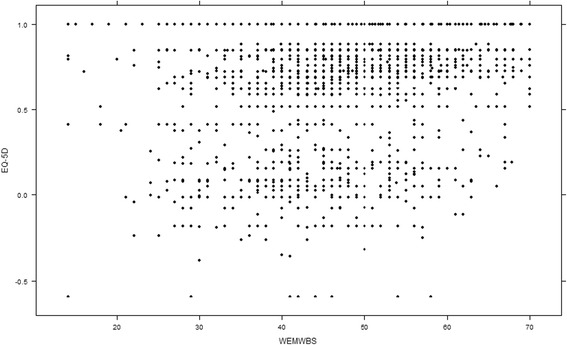
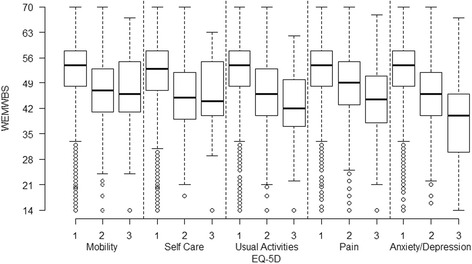
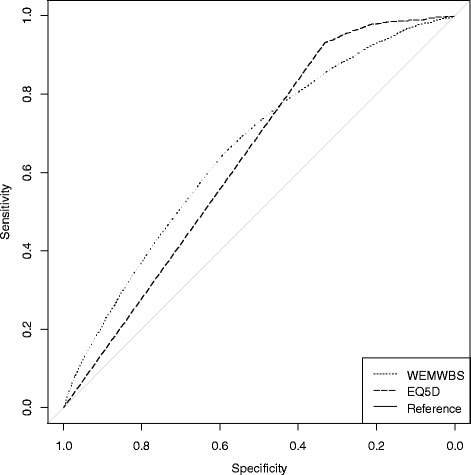
BACKGROUND: The Quality-Adjusted Life Year (QALY) is a measure that combines life extension and health improvement in a single score, reflecting preferences around different types of health gain. It can therefore be used to inform decision-making around allocation of health care resources to mutually exclusive options that would produce qualitatively different health benefits. A number of quality-of-life instruments can be used to calculate QALYs. The EQ-5D is one of the most commonly used, and is the preferred option for submissions to NICE ( https://www.nice.org.uk/process/pmg9/ ). However, it has limitations that might make it unsuitable for use in areas such as public and mental health where interventions may aim to improve well-being. One alternative to the QALY is a Wellbeing-Adjusted Life Year. In this study we explore the need for a Wellbeing-Adjusted Life Year measure by examining the extent to which a measure of wellbeing (the Warwick-Edinburgh Mental Well-being Scale) maps onto the EQ-5D-3L. METHODS: Secondary analyses were conducted on data from the Coventry Household Survey in which 7469 participants completed the EQ-5D-3L, Warwick-Edinburgh Mental Well-being Scale, and a measure of self-rated health. Data were analysed using descriptive statistics, Pearson's and Spearman's correlations, linear regression, and receiver operating characteristic curves. RESULTS: Approximately 75 % of participants scored the maximum on the EQ-5D-3L. Those with maximum EQ-5D-3L scores reported a wide range of levels of mental wellbeing. Both the Warwick-Edinburgh Mental Well-being Scale and the EQ-5D-3L were able to detect differences between those with higher and lower levels of self-reported health. Linear regression indicated that scores on the Warwick-Edinburgh Mental Well-being Scale and the EQ-5D-3L were weakly, positively correlated (with R(2) being 0.104 for the index and 0.141 for the visual analogue scale). CONCLUSION: The Warwick-Edinburgh Mental Well-being Scale maps onto the EQ-5D-3L to only a limited extent. Levels of mental wellbeing varied greatly amongst participants who had the maximum score on the EQ-5D-3L. To evaluate the relative effectiveness of interventions that impact on mental wellbeing, a new measure - a Wellbeing Adjusted Life Year - is needed.
Overview
The claims and statistics of this paper haven’t been checked yet.
Free: it reads the open-access text and checks the first 5 claims that cite a source we can check. Create a free account to check every claim.
Integrity signals
Registry
Cites
Statistics
Figures
Verification
Claims the paper makes
The claims and statistics of this paper haven’t been checked yet.
Free: it reads the open-access text and checks the first 5 claims that cite a source we can check. Create a free account to check every claim.
Claims other papers make about this one
Each is checked against this paper’s own text: does it say what the citing paper says it does?
The cited source doesn’t support the claim as written.
In the citing paper
“Using the WEMWBS, we can calculate mental health costs and quality-adjusted life-years [63,64].”
From A Virtual Reality-Assisted Cognitive Behavioral Therapy for and With Inuit in Québec: Protocol for a Proof-of-Concept Randomized Controlled Trial (2023) · cites this paper as [64]
Checked by a reasoning model — may be wrong.
Experimental — accuracy not yet measured
Self-check
Percentages, sums and reported differences re-computed from the paper’s own numbers.
The self-check needs the paper’s full text.
Citations
Cites
R: A Language and Environment for Statistical Computing
R Core Team (2025) · doi:10.32614/r.manuals · Cited by 352,181
Development and validation of brief measures of positive and negative affect: The PANAS scales.
Watson, D., Clark, L. A., & Tellegen, A. (1988) · Journal of Personality and Social Psychology · doi:10.1037/0022-3514.54.6.1063 · Cited by 32,433 · cited 2×
“01) and high correlations with scales measuring aspects of wellbeing or positive affect, such as the Positive and Negative Affect Schedule-Positive Affect Scale, [41] among others (Positive Affect r = 0.”
BackgroundInfluentialEuroQol: a new facility for the measurement of health-related quality of life
(1990) · Health Policy · doi:10.1016/0168-8510(90)90421-9 · Cited by 15,736 · cited 2×
“The EQ-5D-3L is a generic preference-based measure used to assess health-related quality of life and cost effectiveness of health interventions [1].”
MethodpROC: an open-source package for R and S+ to analyze and compare ROC curves
Robin, X., Turck, N., Hainard, A., Tiberti, N., Lisacek, F., Sanchez, J.-C., & Müller, M. (2011) · BMC Bioinformatics · doi:10.1186/1471-2105-12-77 · Cited by 13,697
Development and preliminary testing of the new five-level version of EQ-5D (EQ-5D-5L)
Herdman, M., Gudex, C., Lloyd, A., Janssen, M., Kind, P., Parkin, D., Bonsel, G., & Badia, X. (2011) · Quality of Life Research · doi:10.1007/s11136-011-9903-x · Cited by 9,795 · cited 1×
“A new version (EQ-5D-5L) has recently been published [52] which has ameliorated some of the limitations of EQ-5D-3L discussed in this paper and has reduced ceiling effects with increased discriminatory power [53].”
BackgroundSelf-rated health and mortality: a review of twenty-seven community studies.
Idler, E. L., & Benyamini, Y. (1997) · Journal of Health and Social Behavior · doi:10.2307/2955359 · Cited by 8,598 · cited 1×
“Self-rated health (SRH) is a generic health measure used in a range of populations and countries [42–45], and has been has been associated with all-cause mortality [44, 46].”
BackgroundEuroQol: the current state of play
Brooks, R. (1996) · Health Policy · doi:10.1016/0168-8510(96)00822-6 · Cited by 5,815 · cited 1×
“The most common method of calculating QALYs uses a measure called EQ-5D-3L [1, 2] which has been successfully employed to assess the relative effectiveness of a wide range of treatments and interventions.”
MethodEQ-SD: a measure of health status from the EuroQol Group
Rabin, R., & Charro, F. D. (2001) · Annals of Medicine · doi:10.3109/07853890109002087 · Cited by 5,613 · cited 1×
“It has been found to be a practical way of measuring and detecting differences in the health states of individuals within general [36, 37] and patient populations [38, 39].”
BackgroundThe Warwick-Edinburgh Mental Well-being Scale (WEMWBS): development and UK validation
Tennant, R., Hiller, L., Fishwick, R., Platt, S., Joseph, S., Weich, S., Parkinson, J., Secker, J., & Stewart-Brown, S. (2007) · Health and Quality of Life Outcomes · doi:10.1186/1477-7525-5-63 · Cited by 5,031 · cited 7×
“Originally validated in English and Scottish populations of people aged 16 and older [15], the scale has now been translated into many different languages and validated in many different cultures [18].”
BackgroundMethodSelf-citation(1997) · doi:10.1097/00005650-199711000-00002 · Cited by 4,544 · cited 1×
“The EQ-5D-3L utility index uses a time trade-off method For the UK, this is from a sample of 3395 respondents from the general population [12, 13] Intra-class coefficients (ICC) of 0.”
MethodMortality prediction with a single general self-rated health question: A meta-analysis
DeSalvo, K. B., Bloser, N., Reynolds, K., He, J., & Muntner, P. (2006) · Journal of General Internal Medicine · doi:10.1111/j.1525-1497.2005.00291.x · Cited by 2,290 · cited 1×
“Self-rated health (SRH) is a generic health measure used in a range of populations and countries [42–45], and has been has been associated with all-cause mortality [44, 46].”
BackgroundChida, Y., & Steptoe, A. (2008) · Psychosomatic Medicine · doi:10.1097/psy.0b013e31818105ba · Cited by 1,592 · cited 1×
“Wellbeing is now recognised as a determinant of longevity and an important player in the adoption and maintenance of healthy lifestyles and successful management of chronic illness [10].”
BackgroundJanssen, M. F., Pickard, A. S., Golicki, D., Gudex, C., Niewada, M., Scalone, L., Swinburn, P., & Busschbach, J. (2013) · Quality of Life Research · doi:10.1007/s11136-012-0322-4 · Cited by 1,582 · cited 1×
“A new version (EQ-5D-5L) has recently been published [52] which has ameliorated some of the limitations of EQ-5D-3L discussed in this paper and has reduced ceiling effects with increased discriminatory power [53].”
BackgroundVariations in population health status: results from a United Kingdom national questionnaire survey
Kind, P., Dolan, P., Gudex, C., & Williams, A. (1998) · BMJ · doi:10.1136/bmj.316.7133.736 · Cited by 1,059
The Increasing Predictive Validity of Self-Rated Health
Schnittker, J., & Bacak, V. (2014) · PLoS ONE · doi:10.1371/journal.pone.0084933 · Cited by 902 · cited 1×
“SRH has demonstrated moderate test-retest reliability [43], and has consistent and strong predictive validity with respect to mortality [47, 48].”
BackgroundA comparison of the EQ‐5D and SF‐6D across seven patient groups
Brazier, J., Roberts, J., Tsuchiya, A., & Busschbach, J. (2004) · Health Economics · doi:10.1002/hec.866 · Cited by 797 · cited 1×
“Consistent with previous studies [14], we found a pronounced ceiling effect in the EQ-5D-3L, with nearly three quarters of participants having the maximum score of 1 (i.”
ResultSelf-rated health. Comparisons between three different measures. Results from a population study
Eriksson, I., Undén, A.-L., & Elofsson, S. (2001) · International Journal of Epidemiology · doi:10.1093/ije/30.2.326 · Cited by 502
Clarke, A., Friede, T., Putz, R., Ashdown, J., Martin, S., Blake, A., Adi, Y., Parkinson, J., Flynn, P., Platt, S., et al. (2011) · BMC Public Health · doi:10.1186/1471-2458-11-487 · Cited by 493 · cited 1×
“A well-established tool to measure mental wellbeing is the Warwick-Edinburgh Mental Well-being Scale (WEMWBS) [15, 16].”
MethodSelf-citationUK population norms for EQ-5DPreprint
Kind, P., Hardman, G., & Macran, S. (1999) · RePEc: Research Papers in Economics · Cited by 443
Longworth, L., Yang, Y., Young, T., Mulhern, B., Hernández Alava, M., Mukuria, C., Rowen, D., Tosh, J., Tsuchiya, A., Evans, P., et al. (2014) · Health Technology Assessment · doi:10.3310/hta18090 · Cited by 417 · cited 1×
“The EQ-5D-3L has been shown to capture the impact of health care interventions for a broad range of conditions, but the fact that we found a ceiling effect in the EQ-5D-3L (as have others before us [51], with nearly three quarters of participants at the maximum score reinforces the likelihood that it does not capture…”
BackgroundHuppert, F. A., & Johnson, D. M. (2010) · The Journal of Positive Psychology · doi:10.1080/17439761003794148 · Cited by 391
Reliability of Self-rated Health in US Adults
Zajacova, A., & Dowd, J. B. (2011) · American Journal of Epidemiology · doi:10.1093/aje/kwr204 · Cited by 358 · cited 1×
“SRH has demonstrated moderate test-retest reliability [43], and has consistent and strong predictive validity with respect to mortality [47, 48].”
BackgroundTest-retest reliability of health state valuations collected with the EuroQol questionnaire
van Agt, H. M. E., Essink-Bot, M.-L., Krabbe, P. F. M., & Bonsel, G. J. (1994) · Social Science & Medicine · doi:10.1016/0277-9536(94)90005-1 · Cited by 342 · cited 1×
“73 for Time Trade Off (TTO) methods, with little non-response effect [12, 35].”
MethodComparison of the EQ-5D and SF-12 in an adult US sample
Johnson, J. A., & Coons, S. J. (1998) · Quality of Life Research · doi:10.1023/a:1008809610703 · Cited by 287 · cited 1×
“However, there is evidence of ceiling effects in the EQ-5D-3L, with up to 85 % of respondents who have physical health problems reporting maximum scores [3, 4].”
BackgroundMaheswaran, H., Weich, S., Powell, J., & Stewart-Brown, S. (2012) · Health and Quality of Life Outcomes · doi:10.1186/1477-7525-10-156 · Cited by 265 · cited 1×
“WEMWBS has been in use since 2007, it is valid and reliable at the population level [15] and is sensitive to change [17].”
MethodSelf-citationMapping to Obtain EQ-5D Utility Values for Use in NICE Health Technology Assessments
Longworth, L., & Rowen, D. (2013) · Value in Health · doi:10.1016/j.jval.2012.10.010 · Cited by 262 · cited 2×
“WEMWBS was mapped onto the EQ-5D-3L using methodology derived from Longworth and Rowen [29].”
MethodQuality of life of people with schizophrenia, bipolar disorder and other psychotic disorders
Saarni, S. I., Viertiö, S., Perälä, J., Koskinen, S., Lönnqvist, J., & Suvisaari, J. (2010) · British Journal of Psychiatry · doi:10.1192/bjp.bp.109.076489 · Cited by 251
HURST, N. P., JOBANPUTRA, P., HUNTER, M., LAMBERT, M., LOCHHEAD, A., & BROWN, H. (1994) · Rheumatology · doi:10.1093/rheumatology/33.7.655 · Cited by 248
Self-rated health and mortality in a Lithuanian and a Dutch population
Appels, A., Bosma, H., Grabauskas, V., Gostautas, A., & Sturmans, F. (1996) · Social Science & Medicine · doi:10.1016/0277-9536(95)00195-6 · Cited by 239
Bharmal, M., & Thomas, J. (2006) · Value in Health · doi:10.1111/j.1524-4733.2006.00108.x · Cited by 178 · cited 1×
“However, there is evidence of ceiling effects in the EQ-5D-3L, with up to 85 % of respondents who have physical health problems reporting maximum scores [3, 4].”
BackgroundSelecting outcome measures in mental health: the views of service users
Crawford, M. J., Robotham, D., Thana, L., Patterson, S., Weaver, T., Barber, R., Wykes, T., & Rose, D. (2011) · Journal of Mental Health · doi:10.3109/09638237.2011.577114 · Cited by 172 · cited 1×
“Evidence suggests that users of mental health services and their carers prefer the WEMWBS to other health outcome measures [26].”
BackgroundIs the EQ–5D fit for purpose in mental health?
Brazier, J. (2010) · British Journal of Psychiatry · doi:10.1192/bjp.bp.110.082453 · Cited by 166
ROAMER: roadmap for mental health research in Europe
Haro, J. M., Ayuso‐Mateos, J. L., Bitter, I., Demotes‐Mainard, J., Leboyer, M., Lewis, S. W., Linszen, D., Maj, M., Mcdaid, D., Meyer‐Lindenberg, A., et al. (2014) · International Journal of Methods in Psychiatric Research · doi:10.1002/mpr.1406 · Cited by 163
Papaioannou, D. E., Brazier, J. E., & Parry, G. D. (2011) · Value in Health · doi:10.1016/j.jval.2011.04.006 · Cited by 162
Powell, J., Hamborg, T., Stallard, N., Burls, A., McSorley, J., Bennett, K., Griffiths, K. M., & Christensen, H. (2012) · Journal of Medical Internet Research · doi:10.2196/jmir.2240 · Cited by 156
A Review of Generic Preference-Based Measures of Health-Related Quality of Life in Visual Disorders
Tosh, J. C., Brazier, J. E., Evans, P., & Longworth, L. (2011) · Value in Health · doi:10.1016/j.jval.2011.08.002 · Cited by 149
Odou, N., & Vella‐Brodrick, D. (2011) · Social Indicators Research · doi:10.1007/s11205-011-9919-1 · Cited by 136
Taggart, F., Friede, T., Weich, S., Clarke, A., Johnson, M., & Stewart-Brown, S. (2013) · Health and Quality of Life Outcomes · doi:10.1186/1477-7525-11-27 · Cited by 127
Self-citationComparing Utility Scores Before and After Hearing-Aid Provision
Barton, G., Bankart, J., Davis, A. C., & Summerfield, A. Q. (2004) · Applied Health Economics and Health Policy · doi:10.2165/00148365-200403020-00006 · Cited by 113
Kaplan, M. S., Berthelot, J., Feeny, D. H., McFarland, B. H., Khan, S., & Orpana, H. (2007) · Quality of Life Research · doi:10.1007/s11136-007-9256-7 · Cited by 92 · cited 1×
“SRH has demonstrated moderate test-retest reliability [43], and has consistent and strong predictive validity with respect to mortality [47, 48].”
BackgroundCrone, D., O'Connell, E. E., Tyson, P., Clark‐Stone, F., Opher, S., & James, D. V. B. (2012) · International Journal of Mental Health Nursing · doi:10.1111/j.1447-0349.2012.00862.x · Cited by 73
Lindsay, G., Strand, S., & Davis, H. (2011) · BMC Public Health · doi:10.1186/1471-2458-11-962 · Cited by 73
Counselling in the workplace: How time‐limited counselling can effect change in well‐being
Collins, J., Gibson, A., Parkin, S., Parkinson, R., Shave, D., & Dyer, C. (2012) · Counselling and Psychotherapy Research · doi:10.1080/14733145.2011.638080 · Cited by 26
A pilot study of the Incredible Years BASIC parenting programme with bereaved families
Braiden, H., McDaniel, B., Duffy, J., & McCann, M. (2011) · Journal of Children s Services · doi:10.1108/17466661111176015 · Cited by 7
Research works printed but not linked: 1
- Hoffmeyer-Zlotnik JHP Ferligoj A Mrvar A New sampling designs and the quality of data. Developments in applied statistics Developments in Applied Statistics 2003 Ljubljana FDV Methodoloski zvezki 205 17
Cited by
The Psychology of (In)Effective Altruism
Caviola, L., Schubert, S., & Greene, J. D. (2021) · Trends in Cognitive Sciences · doi:10.1016/j.tics.2021.03.015 · Cited by 180
Peasgood, T., Mukuria, C., Carlton, J., Connell, J., Devlin, N. J., Jones, K., Lovett, R. E. S., Naidoo, B., Rand, S. E., Rejón-Parrilla, J. C., et al. (2021) · The European Journal of Health Economics · doi:10.1007/s10198-021-01306-z · Cited by 55
“Within-sector QALYs can support within-sector resource allocation (although even here sector-specific outcomes may be too narrow).”
Towards a general sustainability assessment of human/industrial and nature-based solutions
Schaubroeck, T. (2018) · Sustainability Science · doi:10.1007/s11625-018-0559-0 · Cited by 30
Coulman, E., Gore, N. J., Moody, G., Wright, M., Segrott, J., Gillespie, D., Petrou, S., Lugg-Widger, F. V., Kim, S.-W., Bradshaw, J., et al. (2021) · Frontiers in Psychiatry · doi:10.3389/fpsyt.2021.729129 · Cited by 21
Yiu, H. H. E., Buckell, J., Petrou, S., Stewart-Brown, S. L., & Madan, J. J. (2023) · Social Science & Medicine · doi:10.1016/j.socscimed.2023.115928 · Cited by 15
Self-citation
Metadata
- Authors
- Johnson, R., Jenkinson, D., Stinton, C., Taylor-Phillips, S., Madan, J., Stewart-Brown, S., & Clarke, A.
- Affiliations
- University of Warwick (GB)
- Corresponding author
- Clarke, Aileen
- Venue
- Health and Quality of Life Outcomes
- Published
- 2016-09-08
- Volume
- 14
- Issue
- 1
- Pages
- 126-126
- ISSN
- 1477-7525 (ISSN-L)
- PMC
- PMC5016960
- OpenAlex
- W2512907588
- Cited by
- 31
- References
- 45
- Citations by year
- 2026: 1 · 2025: 4 · 2024: 9 · 2023: 4 · 2022: 3 · 2021: 7 · 2020: 1 · 2019: 1 · 2018: 1
- FWCI
- 1.30
- Type
- journal article
- Language
- en
- Open access
- gold
- doi.org
- Licence
- cc-by
- Locations
- Health and Quality of Life Outcomes (publishedVersion, cc-by)
- PubMed Central (publishedVersion, cc-by)
- PubMed (publishedVersion)
- Pure (Coventry University) (acceptedVersion, cc-by)
- Warwick Research Archive Portal (University of Warwick) (acceptedVersion)
- University of Birmingham Research Portal (University of Birmingham) (submittedVersion)
- University of Birmingham Research Portal (University of Birmingham) (submittedVersion, cc-by)
- Funders
- National Institute for Health Research (GB)
- Topics
- Social Sciences › Economics, Econometrics and Finance › Economics and Econometrics › Health Systems, Economic Evaluations, Quality of Life
- Social Sciences › Economics, Econometrics and Finance › Economics and Econometrics › Economic and Environmental Valuation
- Social Sciences › Sociology and Political Science › Quality of Life Measurement
- Keywords
- quality-adjusted life years, EQ-5D-3L, Warwick-Edinburgh Mental Well-being Scale, psychological well-being, self-rated health, health-related quality of life, measurement invariance, healthcare resource allocation
- MeSH terms
- Adolescent, Adult, Aged, Cross-Sectional Studies, Female, Humans, Male, Mental Health, Middle Aged, Surveys and Questionnaires, ROC Curve, Quality-Adjusted Life Years, Young Adult, Self Report, Visual Analog Scale
About these checks
Registry, retraction, Cites and statistics results are computed, not judged, with one exception: a printed reference that no index lists is read once by a model before it counts as a citation error. Claims are extracted by a model and kept only when their quote appears verbatim in the text; each cited source is then checked, with a model’s help, for whether it says what the claim relies on. Those verdicts can be wrong — read the claim’s quote and the cited source before relying on one.
Statistics and arithmetic are recomputed, not judged.
Confidence bands are shown only for fields calibrated on our annotated test set. None is calibrated yet, so no band is shown.
What counts as a claim ›How we measure confidence ›How we check this ›
Are you an author, or do you see a problem with this page? Request a review
Data sources
Bibliographic data: Semantic Scholar, OpenAlex, Crossref.
Contains information from the Semantic Scholar Academic Graph Datasets, made available under the ODC Attribution License (ODC-BY 1.0).
Semantic Scholar’s data is described in: Kinney, R., et al. (2023). The Semantic Scholar Open Data Platform. arXiv:2301.10140.
