

Interventions for health workforce retention in rural and remote areas: a systematic review
Open accessThe DOI matches its Crossref record; 64 of the 66 references it cites were found in a registry or an index.
Abstract
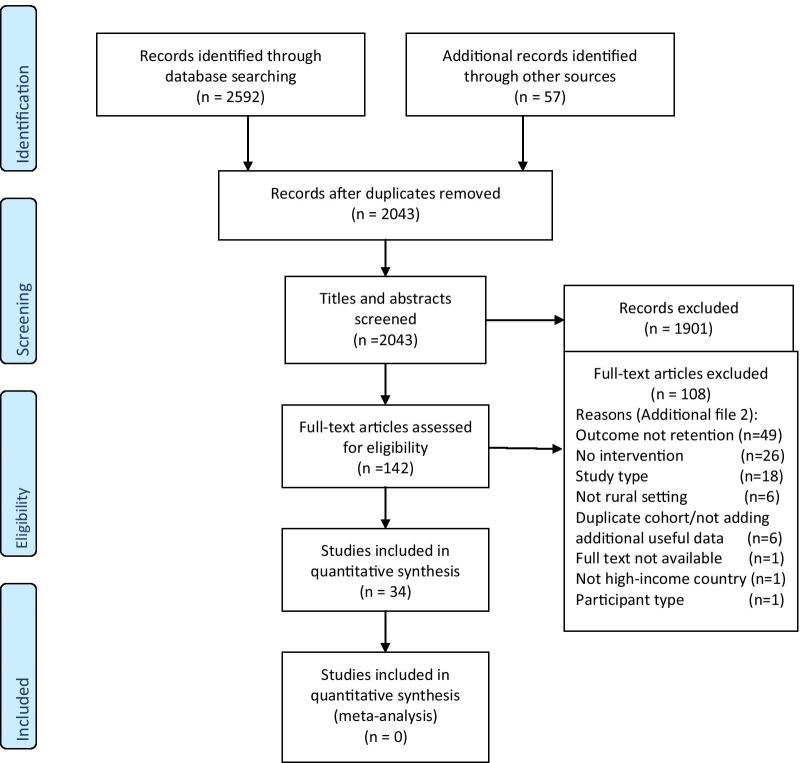
Background: Attracting and retaining sufficient health workers to provide adequate services for residents of rural and remote areas has global significance. High income countries (HICs) face challenges in staffing rural areas, which are often perceived by health workers as less attractive workplaces. The objective of this review was to examine the quantifiable associations between interventions to retain health workers in rural and remote areas of HICs, and workforce retention. Methods: The review considers studies of rural or remote health workers in HICs where participants have experienced interventions, support measures or incentive programs intended to increase retention. Experimental, quasi-experimental and observational study designs including cohort, case–control, cross-sectional and case series studies published since 2010 were eligible for inclusion. The Joanna Briggs Institute methodology for reviews of risk and aetiology was used. Databases searched included MEDLINE (OVID), CINAHL (EBSCO), Embase, Web of Science and Informit. Results: Of 2649 identified articles, 34 were included, with a total of 58,188 participants. All study designs were observational, limiting certainty of findings. Evidence relating to the retention of non-medical health professionals was scant. There is growing evidence that preferential selection of students who grew up in a rural area is associated with increased rural retention. Undertaking substantial lengths of rural training during basic university training or during post-graduate training were each associated with higher rural retention, as was supporting existing rural health professionals to extend their skills or upgrade their qualifications. Regulatory interventions requiring return-of-service (ROS) in a rural area in exchange for visa waivers, access to professional licenses or provider numbers were associated with comparatively low rural retention, especially once the ROS period was complete. Rural retention was higher if ROS was in exchange for loan repayments. Conclusion: Educational interventions such as preferential selection of rural students and distributed training in rural areas are associated with increased rural retention of health professionals. Strongly coercive interventions are associated with comparatively lower rural retention than interventions that involve less coercion. Policy makers seeking rural retention in the medium and longer term would be prudent to strengthen rural training pathways and limit the use of strongly coercive interventions.
Overview
The claims and statistics of this paper haven’t been checked yet.
Free: it reads the open-access text and checks the first 5 claims that cite a source we can check. Create a free account to check every claim.
Integrity signals
Registry
Cites
Statistics
Figures
Verification
Claims the paper makes
The claims and statistics of this paper haven’t been checked yet.
Free: it reads the open-access text and checks the first 5 claims that cite a source we can check. Create a free account to check every claim.
Claims other papers make about this one
Each is checked against this paper’s own text: does it say what the citing paper says it does?
The cited source says what the claim attributes to it.
In the citing paper
“A search for systematic reviews published in the last 10 years examining turnover intention among HCWs on PubMed, PROSPERO and Google Scholar produced nine relevant systematic reviews [11–19]”
From A global overview of healthcare workers’ turnover intention amid COVID-19 pandemic: a systematic review with future directions (2022) · cites this paper as [17]
The cited source says what the claim attributes to it.
In the citing paper
“and many of which were known factors prior to the pandemic [11–19].”
From A global overview of healthcare workers’ turnover intention amid COVID-19 pandemic: a systematic review with future directions (2022) · cites this paper as [17]
In the citing paper
“several systematic reviews highlighted an insufficient number of HWs to enable the provision of quality care, affecting health systems before and during the pandemic, with considerable inequities across countries worldwide [56–60].”
From Health workers’ perspectives on the quality of maternal and newborn health care around the time of childbirth: Results of the Improving MAternal Newborn carE in the EURO Region (IMAgiNE EURO) project in 12 countries of the World Health Organization European Region (2024) · cites this paper as [58]
Self-check
Percentages, sums and reported differences re-computed from the paper’s own numbers.
The self-check needs the paper’s full text.
Citations
Cites
Preferred Reporting Items for Systematic Reviews and Meta-Analyses: the PRISMA statement
Moher, D., Liberati, A., Tetzlaff, J., Altman, D. G., & for the PRISMA Group (2009) · BMJ · doi:10.1136/bmj.b2535 · Cited by 83,823
Preferred reporting items for systematic reviews and meta-analyses: the PRISMA Statement.
(2009) · PubMed Central · Cited by 44,859
Preferred Reporting Items for Systematic Reviews and Meta-Analyses: The PRISMA Statement
Moher, D., Liberati, A., Tetzlaff, J., & Altman, D. G. (2009) · Journal of Clinical Epidemiology · doi:10.1016/j.jclinepi.2009.06.005 · Cited by 19,575
Chapter 7: Systematic reviews of etiology and risk
Moola, S., Munn, Z., Tufanaru, C., Aromataris, E., Sears, K., Sfetic, R., Currie, M., Lisy, K., Qureshi, R., Mattis, P., et al. (2019) · JBI Reviewer's Manual · doi:10.46658/jbirm-17-06 · Cited by 2,114
Chapter 7: Systematic reviews of etiology and risk
(2020) · JBI Manual for Evidence Synthesis · doi:10.46658/jbimes-20-08 · Cited by 1,268 · cited 1×
“This systematic review accords with the Joanna Briggs Institute (JBI) methods for systematic reviews of aetiology and risk evidence [20] and followed an a priori published protocol which more fully describes methods and definitions [21].”
MethodHoltom, B. C., Mitchell, T. R., Lee, T. W.-H., & Eberly, M. B. (2008) · Academy of Management Annals · doi:10.1080/19416520802211552 · Cited by 1,042 · cited 1×
“However, studies reporting job satisfaction without direct turnover or retention outcomes were excluded [22], and we did not use the Grading of Recommendations, Assessment, Development and Evaluation (GRADE) approach for grading the certainty of evidence.”
MethodAnderson, I., Robson, B., Connolly, M., Al-Yaman, F., Bjertness, E., King, A., Tynan, M., Madden, R., Bang, A., Coimbra, C. E. A., et al. (2016) · The Lancet · doi:10.1016/s0140-6736(16)00345-7 · Cited by 990 · cited 1×
“A high proportion of Indigenous peoples live in remote and rural areas, and they experience considerably poorer health outcomes than non-Indigenous citizens [8].”
BackgroundPereira Gray, D. J., Sidaway-Lee, K., White, E., Thorne, A., & Evans, P. H. (2018) · BMJ Open · doi:10.1136/bmjopen-2017-021161 · Cited by 759 · cited 1×
“Hum Resour Health (2021) 19:103 the development of strong professional relationships between health providers and patients which are vital for improving health outcomes of vulnerable populations [2, 3].”
BackgroundWilson, N., Couper, I., de Vries, E., Reid, S., Fish, T., & Marais, B. (2009) · Rural and Remote Health · doi:10.22605/rrh1060 · Cited by 518
Grobler, L., Marais, B. J., & Mabunda, S. (2015) · Cochrane Database of Systematic Reviews · doi:10.1002/14651858.cd005314.pub3 · Cited by 359
Research works printed but not linked: 8
- Dolea C Increasing access to health workers in remote and rural areas through improved retention: global policy recommendations 2010 Geneva World Health Organization 23741785
- Tuttle C Rural-urban differences among older adults 2020 Minneapolis University of Minnesota Rural Health Research Center
- Humphreys JS Improving primary health care workforce retention in small rural and remote communities: how important is ongoing education and training? 2007 Canberra Australian Primary Health Care Research Institute (APHCRI)
- Aromataris E Munn Z Joanna Briggs Institute reviewer's manual 2017 Adelaide The Joanna Briggs Institute
- World Health Organization Increasing access to health workers in remote and rural areas through improved retention—global policy recommendations 2010 Geneva WHO 23741785
- Fleming P Mathews M Retention of specialist physicians in Newfoundland and Labrador Open Med 2012 6 1 e1 9 22567077 PMC3329069
- Patterson DG Family medicine rural training track residencies: 2008–2015 graduate outcomes 2016 Seattle WWAMI Rural Health Research Center, University of Washington
- Russell DJ, et al. Health workforce turnover, stability and employment survival in remote NT health centres 2004–15. In: Proceedings of the 15th national rural health conference, 24–27 March, 2019. Hobart, Tasmania: National Rural Health Alliance.
Cited by
Poon, Y.-S. R., Lin, Y. P., Griffiths, P., Yong, K. K., Seah, B., & Liaw, S. Y. (2022) · Human Resources for Health · doi:10.1186/s12960-022-00764-7 · Cited by 394
Mseke, E. P., Jessup, B., & Barnett, T. (2024) · Journal of Transport & Health · doi:10.1016/j.jth.2024.101819 · Cited by 209
Morris, M. E., Brusco, N. K., McAleer, R., Billett, S. R., Brophy, L. M., Bryant, R. B., Carey, L. M., Wright, A. C., East, C. E., Eckert, M. C., et al. (2023) · Human Resources for Health · doi:10.1186/s12960-023-00879-5 · Cited by 56
“For example, the World Health Organisation (WHO) developed a guideline for increasing access to health professional workers and care workers in remote and rural areas through improved staff retention [18].”
MethodPaul, E., Jessup, B., & Barnett, T. (2023) · Australian Journal of Rural Health · doi:10.1111/ajr.12961 · Cited by 49
Rose, H., Skaczkowski, G., & Gunn, K. M. (2023) · Journal of Advanced Nursing · doi:10.1111/jan.15636 · Cited by 48
Kolié, D., van de Pas, R., Codjia, L., & Zurn, P. (2023) · Human Resources for Health · doi:10.1186/s12960-023-00801-z · Cited by 46
Jinah, N., Adnan, I. K., Bakit, P. A., Sharin, I. A., & Lee, K. Y. (2024) · BMC Health Services Research · doi:10.1186/s12913-024-12154-x · Cited by 40
The pathway to more rural doctors: the role of universities
McGrail, M. R., Doyle, Z., Fuller, L., Gupta, T. S., Shires, L., & Walters, L. (2023) · The Medical Journal of Australia · doi:10.5694/mja2.52021 · Cited by 36
Krahe, M. A., Baker, S., Woods, L., & Larkins, S. (2025) · Australian Journal of Rural Health · doi:10.1111/ajr.70045 · Cited by 35
“High turnover rates among healthcare workers result in a loss of critical knowledge and resources, exacerbating inconsistencies in treatment, lack of follow-up, and a reliance on costly patient transfers to regional hospitals [43].”
Rural medical workforce pathways: exploring the importance of postgraduation rural training time
McGrail, M. R., Gurney, T., Fox, J. L., Martin, P., Eley, D. S., Nasir, B., & Kondalsamy‐Chennakesavan, S. (2023) · Human Resources for Health · doi:10.1186/s12960-023-00819-3 · Cited by 33
The Global Status of Occupational Therapy Workforce Research Worldwide: A Scoping Review
Jesus, T. S., Mani, K., von Zweck, C., Bhattacharjya, S., Kamalakannan, S., & Ledgerd, R. (2023) · American Journal of Occupational Therapy · doi:10.5014/ajot.2023.050089 · Cited by 33
“Similarly, supplying rural and remote areas of the country with a needed and capable health workforce is a major policy, research, and research policy priority in Australia (Gillam et al., 2021; Russell et al., 2021; Wakerman et al., 2019).”
Scheffer, M. C., Mosquera, P. A., Cassenote, A. J. F., McPake, B., & Russo, G. (2025) · Globalization and Health · doi:10.1186/s12992-025-01105-8 · Cited by 32
“Public sector policies will be needed to offset earning opportunities differentials between urban and rural posts, and make the latter an attractive choice of location [53].”
OECD Reviews of Health Systems: Romania 2025
OECD (2025) · OECD Reviews of Health Systems · doi:10.1787/f52e4a98-en · Cited by 30
Beks, H., Walsh, S., Alston, L. V., Jones, M., Smith, T., Maybery, D. J., Sutton, K., & Versace, V. L. (2022) · International Journal of Environmental Research and Public Health · doi:10.3390/ijerph19031438 · Cited by 30
“Other reviews have also found rural and remote health workforce studies to be observational and predominantly medical workforce-focused [8].”
BackgroundInfluentialSkilled Health Workforce Emigration
Joshi, R., Yakubu, K., Keshri, V. R., & Jha, V. (2023) · Mayo Clinic Proceedings · doi:10.1016/j.mayocp.2023.02.035 · Cited by 30
Kumar, P., Anshu, Lionis, C. D., Andoko, D., Rahman, Z., Anastasaki, M., & Ateghang-Awankem, B. (2025) · Journal of Surgical Specialties and Rural Practice · doi:10.4103/jssrp.jssrp_8_25 · Cited by 29
Gillespie, J., Cosgrave, C., & Malatzky, C. A. R. (2022) · Social Sciences & Humanities Open · doi:10.1016/j.ssaho.2022.100356 · Cited by 30
A comparative analysis of pharmaceutical workforce development needs across the commonwealth
Bates, I. P., Patel, D., Chan, A. H. Y., Rutter, V., Bader, L. R., Meilianti, S., & Udoh, A. (2022) · Research in Social and Administrative Pharmacy · doi:10.1016/j.sapharm.2022.07.010 · Cited by 28
Mura, A. L., Insalata, L. A., & Bonaiuto, M. (2024) · Journal of Environmental Psychology · doi:10.1016/j.jenvp.2024.102378 · Cited by 31
Tam, H. L., Chair, S. Y., Leung, I. S. H., Leung, L. Y. L., & Chan, A. S. W. (2023) · JMIR Public Health and Surveillance · doi:10.2196/45697 · Cited by 27
“For example, increased training in rural areas, the payment of locum relief, and loan repayment may help do so [50].”
BackgroundImplementing the European code of cancer practice in rural settings
Nelson, D., Selby, P. J., Kane, R., Harding-Bell, A., Kenny, A. J., McPeake, K., Cooke, S., Hogue, T. E., Oliver, K. R., Gussy, M. G., et al. (2024) · Journal of Cancer Policy · doi:10.1016/j.jcpo.2023.100465 · Cited by 24
Glenister, K., McNeil, R., Thorpe, T., & Bourke, L. (2024) · Australian Journal of Rural Health · doi:10.1111/ajr.13099 · Cited by 23
Jesus, T. S., Mani, K., von Zweck, C., Kamalakannan, S., Bhattacharjya, S., Ledgerd, R., & on behalf of the World Federation of Occupational Therapists (2022) · International Journal of Environmental Research and Public Health · doi:10.3390/ijerph19095307 · Cited by 22
Dewi, S. P., Kasim, R., Sutarsa, I. N., Hunter, A., & Dykgraaf, S. H. (2023) · Family Practice · doi:10.1093/fampra/cmac151 · Cited by 23
“27,28 Rural and remote populations commonly rely on PCPs to mitigate and address health impacts of climate-related risks, including preparing for and responding to disasters and extreme weather events, providing care for health-related sequelae, and dealing with indirect and long-term consequences.”
BackgroundNewton, J., Carpenter, T., & Zwicker, J. D. (2024) · BMC Emergency Medicine · doi:10.1186/s12873-024-00986-z · Cited by 23
“Such approaches require nuance and local adaptation, necessitating identifying and empowering local champions to pursue strategies like preferential recruitment and support for rural students that evidence shows are more likely to be retained as rural healthcare workers [29].”
BackgroundImbalances in the oral health workforce: a Canadian population-based study
Gupta, N., & Miah, P. (2024) · BMC Health Services Research · doi:10.1186/s12913-024-11677-7 · Cited by 22
“There is little evidence that financial incentives alone contribute to longer-term rural retention of dentists and other allied health professionals [35, 54].”
BackgroundJobalayeva, B., Khismetova, Z. A., Glushkova, N., Кожекенова, Ж. А., Abzaliyeva, A., Berikuly, D., & Semenova, Y. M. (2024) · Human Resources for Health · doi:10.1186/s12960-024-00905-0 · Cited by 20
“Overall, prioritizing rural students and offering rural training programs yield better results compared to coercive measures, such as requiring return-of-service for access to professional licenses or provider numbers [2].”
BackgroundResultInfluentialMartin, P., Lizarondo, L. M., Argus, G., Kumar, S., & Kondalsamy‐Chennakesavan, S. (2022) · International Journal of Environmental Research and Public Health · doi:10.3390/ijerph19095555 · Cited by 19
“Recruiting and retaining the healthcare workforce in these areas is crucial towards achieving equity in healthcare access to vulnerable populations, including the Aboriginal and Torres Strait Islander communities [3,20].”
BackgroundAddressing the workforce crisis in (rural) social care: A scoping review
Carson, D. B., Johansson, A. B., Schaumberg, M. A., & Hurtig, A. (2024) · The International Journal of Health Planning and Management · doi:10.1002/hpm.3774 · Cited by 19
Khatri, R. B., & Assefa, Y. A. (2023) · BioMed Research International · doi:10.1155/2023/6648138 · Cited by 18
“Preferential selection of rural students and distributed training in rural areas are associated with increased rural retention of health professionals [190].”
BackgroundWorkforce research priorities for resilience to future health shocks—and the workforce crisis
Walshe, K., Smith, J., Lamont, T., & Leary, A. (2024) · BMJ · doi:10.1136/bmj-2023-078997 · Cited by 18
Rural healthcare workers’ well-being: A systematic review of support interventions.
Malik, M. A., Penalosa, M., Busch, I. M., Burhanullah, M. H., Weston, C. M., Weeks, K. R., Connors, C. A., Michtalik, H. J., Everly, G. S., & Wu, A. W. (2024) · Families Systems & Health · doi:10.1037/fsh0000921 · Cited by 18
Herbert, J., Schumacher, T. L., Brown, L., Clarke, E. D., & Collins, C. E. (2023) · International Journal of Behavioral Nutrition and Physical Activity · doi:10.1186/s12966-023-01505-2 · Cited by 18
“People living in rural areas, defined broadly as any area outside of a major city, can experience unique challenges accessing health services and professionals that provide individualised behaviour change interventions as part of their routine care [10, 11].”
BackgroundKhamisu, M. S., Paluri, R. A., & Sonwaney, V. P. (2024) · South Asian Journal of Business and Management Cases · doi:10.1177/22779779241232187 · Cited by 18
“Furthermore, the other side of the review studies has focused on ISM approaches and experiences unique to specific regions or countries (e.g., Baek et al., 2021; Bouchaib, 2023; Browne et al., 2015; Knight-Grofe & Deacon, 2016; Russell et al., 2021).”
BackgroundMcGrail, M. R., O'Sullivan, B. G., & Giddings, P. (2024) · The Medical Journal of Australia · doi:10.5694/mja2.52448 · Cited by 15
Onnis, L., & Hunter, T. (2024) · Journal of Health Organization and Management · doi:10.1108/jhom-03-2024-0077 · Cited by 15
Beduchaud, L., Celingant, E., Faure, C., Meunier, M., & Blanco-Cazeaux, I. (2024) · Health Policy · doi:10.1016/j.healthpol.2024.105190 · Cited by 15
Fraher, E. P., Page, C. P., Hawes, E. M., Galloway, E., Pathak, S., Tomola, L., & Holmes, M. (2022) · The Journal of Rural Health · doi:10.1111/jrh.12735 · Cited by 15
The Pediatrician Workforce in the United States and China
Russ, C. M., Gao, Y., Karpowicz, K., Lee, S. T., Stephens, T. N., Trimm, F., Yu, H., Jiang, F., & Palfrey, J. S. (2023) · PEDIATRICS · doi:10.1542/peds.2022-059143 · Cited by 14
Interventions of Brazil's more doctors program through continuing education for Primary Health Care
Pereira, L. K. M., da Silva, J. A., Valentim, R. A. D. M., Lima, T. G. F. M. S., de Gusmão, C. M. G., da Rocha, M. A., dos Santos, M. M., Caitano, A. R., de Barros, R. M. B., & Rosendo, T. M. S. D. S. (2024) · Frontiers in Public Health · doi:10.3389/fpubh.2023.1289280 · Cited by 14
Couch, A., Haines, T. P., O'Sullivan, B. G., Menz, H. B., & Williams, C. (2023) · Journal of Foot and Ankle Research · doi:10.1186/s13047-023-00646-8 · Cited by 13
“Especially as this exposure has been linked to an increased likeliness of working rurally in the first year of practice [2] and thereby reducing any health disparities seen between rural and metropolitan locations [29].”
BackgroundDymmott, A., George, S., Campbell, N., & Brebner, C. (2024) · BMC Health Services Research · doi:10.1186/s12913-024-11207-5 · Cited by 13
“Previous studies have explored strategies to address workforce challenges in rural and remote areas, but these predominantly address doctors’ needs [5, 6].”
BackgroundSelf-citationBourke, L., McNeil, R., Thompson, S., Debenham, J. R., Freire, K., Harvey, P., & Brown, L. (2025) · Journal of Rural Studies · doi:10.1016/j.jrurstud.2025.103658 · Cited by 13
Global health inequity and primary care
Allen, L. N., Pettigrew, L. M., Exley, J., Collin, H., Bates, S. M., & Kidd, M. R. (2024) · BJGP Open · doi:10.3399/bjgpo.2024.0189 · Cited by 12
Jiang, Y., Lin, K., Dalton, H. E., Buys, N. J., & Sun, J. (2026) · International Journal of Mental Health Systems · doi:10.1186/s13033-026-00694-0 · Cited by 13
“In Australia, resilience may stem from policy-driven telehealth and workforce incentives [84], whereas in low-income regions it may emerge through community solidarity, NGO engagement, and traditional belief systems [25, 67, 80, 82].”
Poku, C. A., Mensah, E., Kyei, J. M., & Ofei, A. M. A. (2023) · Journal of Nursing Management · doi:10.1155/2023/9396817 · Cited by 12
“Te capacity of the health workforce in these regions is insufcient to meet the population’s health objectives [2].”
Solutions for Addressing the Dermatologist Shortage in Rural Canada: A Review of the Literature
McMullen, E. P., & Kirshen, C. (2024) · Journal of Cutaneous Medicine and Surgery · doi:10.1177/12034754241247521 · Cited by 12
“11,12 An example of this is the Northern Ontario School of Medicine, whereby graduates from their undergraduate medicine program, the majority of which grew up in northern Ontario and/or rural areas were 2.57 times more likely [95% confidence interval (CI) 1.21, 5.44; P = .014] to have practices in…”
BackgroundInfluentialFoo, C. D., Krishaa, L., Eu, E., Erlangga, D., Rivillas, J. C., Kosycarz, E. A., Pholpark, A., Ritthisirikul, N., Hanvoravongchai, P., Putri, L. P., et al. (2025) · BMJ Global Health · doi:10.1136/bmjgh-2024-017578 · Cited by 12
Kurup, C., Burston, A., Betihavas, V., & Jacob, E. R. (2025) · Nursing Open · doi:10.1002/nop2.70184 · Cited by 11
Podubinski, T., Jessup, B., Obamiro, K. O., Hoang, H., & Bourke, L. (2023) · Australian Journal of Rural Health · doi:10.1111/ajr.13025 · Cited by 11
Nott, S., Wingfield, G., Haigh, A., Luscombe, G. M., Thompson, A. E., Saurman, E., Shaw, T. J., Huben, A. V., Howard, K., & Wilson, A. J. (2024) · The Medical Journal of Australia · doi:10.5694/mja2.52529 · Cited by 11
Jesus, T. S., Mani, K., Ledgerd, R., Kamalakannan, S., Bhattacharjya, S., von Zweck, C., & World Federation of Occupational Therapists (2022) · International Journal of Environmental Research and Public Health · doi:10.3390/ijerph19127327 · Cited by 11
“, fund) the study and implementation of contextsensitive recruitment and retention programs targeting the underserved areas [80], as the funding rate for occupational therapy workforce research has been substandard [10].”
BackgroundDrivers and barriers to rural and urban healthcare placement in Ghana: a Delphi study
Boye, B. O., Pokhrel, S., Cheung, K. L., & Anokye, N. (2025) · Frontiers in Public Health · doi:10.3389/fpubh.2025.1436098 · Cited by 10
Health human resources shortages in radiography and sustainable workforce development in Australia
Chau, M. T., Spuur, K. M., & Vu, H. (2026) · Radiography · doi:10.1016/j.radi.2025.103319 · Cited by 10
Terry, D. R., Peck, B., Elliott, J. P., East, L., Ryan, L., Baker, E., & Schmitz, D. F. (2024) · Nurse Education in Practice · doi:10.1016/j.nepr.2024.103989 · Cited by 10
Rural community‐centred co‐planning for sustainable rural health systems
Hyett, N., Hutchinson, M., Doyle, D. J., Adem, T., Coghill, D., Harvey, P., Lees, C. D., & O'Sullivan, B. G. (2024) · Australian Journal of Rural Health · doi:10.1111/ajr.13162 · Cited by 9
Phanthunane, P., Suwatmakin, A., Konglumpun, N., & Pannarunothai, S. (2025) · BMC Health Services Research · doi:10.1186/s12913-025-12408-2 · Cited by 9
Work-Related Pull Factors and Mechanisms for Attracting Internal Migrants to the Kaliningrad Region
Voloshenko, K. Y., Lialina, A. V., Farafonova, Y. Y., & Novikova, A. (2023) · REGIONOLOGY · doi:10.15507/2413-1407.122.031.202301.143-165 · Cited by 9
Patel, E., Gillette, C., Ostermann, J., Everett, C., Caviness, D., & Garvick, S. (2025) · The Journal of Rural Health · doi:10.1111/jrh.70088 · Cited by 8
“2 Despite research and policy initiatives aimed at addressing this issue over decades, 3,4 the problem continues to worsen.”
Toll, K., Moullin, J. C., Andrew, S., Williams, A., Varhol, R., Carey, T. A., & Robinson, S. (2024) · Digital Health · doi:10.1177/20552076241242790 · Cited by 8
“The Totten et al. 19 review, and following workshop convened by the National Institutes of Health in the United States, 20 identi fi ed key knowledge gaps and speci fi c recommendations to build evidence on the emerging use and effects of RPPT. Highlighted was the inconsistent evaluation, implementation, and sustainment…”
InfluentialΚάσσας, Π., Gogou, E., Varsamas, C., Vogiatzidis, K., Psatha, A., Pinaka, M., Siachpazidou, D. S., Sistou, A., Papazoglou, E. D., Kalousi, D., et al. (2023) · Healthcare · doi:10.3390/healthcare11131931 · Cited by 7
“There are specific interventions that policymakers can employ in order to achieve this by strengthening rural training pathways [17].”
BackgroundAn MRT workforce shortage is no laughing matter
Zychla, L., & Given, M. R. (2024) · Journal of medical imaging and radiation sciences · doi:10.1016/j.jmir.2024.04.012 · Cited by 7
Mogan, C., Davies, N., Dening, K. H., & Lloyd‐Williams, M. (2024) · Age and Ageing · doi:10.1093/ageing/afae169 · Cited by 9
McDonald, E., Bailie, R. S., Radchenko, P., & Bakar, K. S. (2025) · PLoS ONE · doi:10.1371/journal.pone.0321198 · Cited by 7
“Current studies suggest that personal factors such as a rural background or extended training in rural areas increases the likelihood of healthcare professionals working rurally [8,9,10,11,12].”
Ahmed, S. M. M., Gasmalha, M. E. A., Ahmed, A. B. M., Alrawa, S. S. K., Mohammed, K. A. E., & Ahmed, M. B. M. (2025) · Conflict and Health · doi:10.1186/s13031-025-00703-y · Cited by 7
Okpalauwaekwe, U., MacPhee, B. K., Balezantis, L. R., Khayatzadeh‐Mahani, A., Zarzeczny, A., Ramsden, V. R., Baerwald, A., Align Primary Care Working Group Members, Andreas, B., Brady, E., et al. (2025) · BMC Family Practice · doi:10.1186/s12875-025-03049-9 · Cited by 7
“4 Health system improvements in primary care delivery a) Implementing Team-Based Care models in primary care delivery: The Patient Medical Home is a well-documented model for effective primary care delivery, developed by the College of Family Physicians of Canada [50].”
Hepner, K. A., Roth, C. P., Qureshi, N., & Sousa, J. (2023) · RAND Corporation eBooks · doi:10.7249/pea2038-1 · Cited by 7
Nicer, C., Dinah Jo, B., Faller, F., & Erwin, M. A. (2024) · International Journal of Research Publication and Reviews · doi:10.55248/gengpi.5.0924.2631 · Cited by 7
“This sense of responsibility adds more stress because nurses feel the obligation of being readily available, which blurs the boundaries between work and home-life, thus making it difficult for them to attain work-life balance (Russell et. al., 2021).”
BackgroundXiao, X., Cao, J., Chen, W., & Yang, Q. C. (2025) · BMC Medical Education · doi:10.1186/s12909-025-06854-z · Cited by 6
“Previous research had shown that participants from these types of programs decided to leave because they want to seek better living standards and career opportunities in big cities [9].”
Employment experiences of the oral health workforce in rural New South Wales: a qualitative study
Do, L. H. M., Dimitropoulos, Y., Biles, J. M., Christian, B., & Sohn, W. (2025) · BMC Health Services Research · doi:10.1186/s12913-025-13066-0 · Cited by 6
Rural Nursing Workforce Sustainability in Australia: A Scoping Review of Global Retention Strategies
Fortabong, A. A., Kloot, K., Reedy, N., Peck, B., & Terry, D. R. (2025) · Australian Journal of Rural Health · doi:10.1111/ajr.70079 · Cited by 6
Locock, L., Maclaren, A. S., Skea, Z., Angell, L., Cleland, J., Dawson, T., Denison, A. R., Dobson, C., Hollick, R. J., Murchie, P., et al. (2025) · Health and Social Care Delivery Research · doi:10.3310/djgr6622 · Cited by 6
Digital Health for Australia: Bridging the Rural, Regional, and Remote Health Gap
Mahmood, S., Huda, M. M., Ahmed, K. Y., Thapa, S., Astawesegn, F. H., Anyasodor, A. E., Moni, M. A., Shiddiky, M. J. A., Mondal, U. K., Aychiluhm, S. B., et al. (2025) · Interactive Journal of Medical Research · doi:10.2196/67460 · Cited by 6
Russo, G., McKee, M., Zapata, T., Llop‐Gironés, A., Nandi, S., & Ares-Blanco, S. (2026) · The Lancet Primary Care · doi:10.1016/j.lanprc.2026.100166 · Cited by 6
Somerville, J. G., Strang, N. C., & Jonuscheit, S. (2024) · Primary Health Care Research & Development · doi:10.1017/s1463423624000185 · Cited by 6
“Other systematic reviews have found experience in rural areas or training in rural areas as the strongest predictor for subsequent rural working (Mbemba et al ., 2016; Ogden et al ., 2020; Russell et al ., 2021).”
BackgroundCarson, D. B., McGrail, M. R., & Sahay, A. (2022) · Journal of Rural Studies · doi:10.1016/j.jrurstud.2022.02.005 · Cited by 6
Pingo, Z., Volk, H., & Dianati, S. (2024) · Pacific Journal of Technology Enhanced Learning · doi:10.24135/pjtel.v6i2.163 · Cited by 7
“…to undertake further training and development, or have a positive placement experience, or have a longer time on placement, are more likely to work in a rural and remote area upon qualification (Campbell et al., 2021; Cosgrave et al., 2018; Russell et al., 2021; Seymour-Walsh, Bell, et al., 2020).”
BackgroundStudent led community health checks in regional Victoria: A mixed methods study
Porter, J. E., Coombs, N. M., & Barbagallo, M. S. (2024) · Health Promotion Journal of Australia · doi:10.1002/hpja.909 · Cited by 5
From Policy to Practice: A Qualitative Study on Reforms and Frontline Retention in Healthcare
Dubé, A., Collin, S., Hakim, J., Johnson, C., Laforest, M.-E., Landry, M., & Lauzier, M. (2025) · INQUIRY The Journal of Health Care Organization Provision and Financing · doi:10.1177/00469580251365821 · Cited by 5
“11,23,24 Identified strategies to help policy makers retain healthcare professionals include removing barriers to their professional development, 24,25 implementing initiatives that foster job satisfaction and work-life balance, 24 providing mentoring programs for nurses and physicians, 26 and…”
Zheng, H., Li, M., Tang, H., Zhang, B., Cheng, X., Cheng, H., Zhang, X., Hu, D., & Liu, X. (2025) · BMJ Global Health · doi:10.1136/bmjgh-2023-014641 · Cited by 5
Öntaş, E., & Yavuz, C. İ. (2025) · Health Policy · doi:10.1016/j.healthpol.2025.105523 · Cited by 6
Rhoney, D. H., Barone, M., Caretta‐Weyer, H. A., Edgar, L., Schumacher, D. J., Young, J. Q., Ladenheim, R. I., & Caverzagie, K. J. (2026) · Perspectives on Medical Education · doi:10.5334/pme.2574 · Cited by 5
Choi, S. E., Shen, Y., & Wright, D. R. (2023) · JAMA Health Forum · doi:10.1001/jamahealthforum.2023.0128 · Cited by 5
Tapp, J., Ketel, C. R., Vick, R., Zsamboky, M., Pfieffer, M. L., Gardner, V., Cole, S., & Pitts, C. J. (2024) · Nurse Educator · doi:10.1097/nne.0000000000001723 · Cited by 5
Socioeconomic Determinants of Access to Primary Healthcare in Rural Population of Sindh, Pakistan
Haider, S., Shabbir, S., Tariq, M., Nayeem, A., Shaffique, H., & Sahitia, S. (2025) · Pakistan Journal of Health Sciences · doi:10.54393/pjhs.v6i3.2755 · Cited by 5
Sutarsa, I. N., Kasim, R., Steward, B. A., Bain‐Donohue, S., Slimings, C., Dykgraaf, S. H., & Barnard, A. S. (2022) · Healthcare · doi:10.3390/healthcare10061045 · Cited by 5
Silberman, P., & Silberman, M. S. (2023) · Investigación en Educación Médica · doi:10.22201/fm.20075057e.2023.47.23499 · Cited by 5
Turner, B., Bullock, S., Butler, S., Ferrington, L., Macartney, M., Major, L., Monrouxe, L. V., Osuagwu, U. L., Southwell, P., Schaik, L. V., et al. (2024) · Rural and Remote Health · doi:10.22605/rrh8306 · Cited by 5
Scrima, F., Nonnis, M., Mura, A. L., Foddai, E., Rioux, L., & Fornara, F. (2023) · Environment and Behavior · doi:10.1177/00139165241270613 · Cited by 5
“…during the most acute phases of the COVID-19 pandemic entailed, which led to the “breaking down” of the meaning of the home environment (Franken et al., 2021; McAllister et al., 2022; Russell et al., 2021), taking on that of remote school and work environment (Mura, Ariccio, et al., 2023).”
Personality and interest in general practice: results from an online survey among medical students
Krauthausen, M., Leutritz, T., Koch, M. J., Hagen, P. E., Koenig, S., & Simmenroth, A. (2024) · BMC Family Practice · doi:10.1186/s12875-024-02682-0 · Cited by 5
“Further, for example, GP is a preferential selection of students who grew up in rural areas, and the immersion of medical students in the rural environment at different stages of their medical studies for a longer period has proven to be an effective tool to increase their interest in GP [10, 11].”
Maclaren, A. S., Locock, L., Skea, Z. C., Angell, L., Cleland, J., Dawson, T., Denison, A. R., Dobson, C., Hollick, R. J., Murchie, P., et al. (2025) · Journal of Health Services Research & Policy · doi:10.1177/13558196251318607 · Cited by 5
“6,7 The best predictor of career intention to work in these settings is being born or brought up in a rural area.”
Amadi, H. O., Muoneke, L.-S. C., Meremikwu, M. M., Udo, J. J., Jimoh, A., Ochigbo, S., Adams, E. B., Ikobah, J. M., Asi, E. U., Ajake, C. O., et al. (2025) · BMJ Innovations · doi:10.1136/bmjinnov-2024-001286 · Cited by 4
Gordon, J. A., Costner-Lark, A., Allen, K. A., Dresser, S. C., Shreffler, K. M., & Craft, M. (2025) · INQUIRY The Journal of Health Care Organization Provision and Financing · doi:10.1177/00469580251366933 · Cited by 4
“11,12,14,18 The project supports student enrollment, recruitment, and retention in the Family Nurse Practitioner (FNP), Psychiatric Mental Health Nurse Practitioner (PMHNP), and Adult Gerontology Clinical Nurse Specialist (AGCNS) programs.”
InfluentialE-Cog: An online training platform for cognitive health interventions based on the ADDIE model
Sousa, A. E., Dakoure, C., Au‐Yeung, C., Lavigne, K. M., Raucher‐Chéné, D., Bowie, C. R., Moritz, S., Lepage, M., & Sauvé, G. (2025) · Digital Health · doi:10.1177/20552076251381249 · Cited by 4
“26 Online training programs, by offering fl exible, cost-effective, and scalable options, have the potential to facilitate the wide-spread adoption of evidence-based interventions and increased logistic feasibility compared to in-person training methods.”
Chen, D., Zhang, Z., Ma, S., Yin, J., Zhao, L., & Jiang, L. (2025) · Health Policy and Planning · doi:10.1093/heapol/czaf078 · Cited by 4
“Studies in other LMICs have shown that integrated support systems can improve health worker retention more effectively than isolated financial incentives (Russell et al. 2021, Jinah et al. 2024).”
Pagotto, D. D. P., Marques, W. D. S., de Aquino, É. C., Guimarães, R. A., Júnior, C. V. B., & Isidro-Filho, A. (2025) · Saúde em Debate · doi:10.1590/2358-28982025e19797p · Cited by 4
A review of twenty-first century developments in paediatric surgery in Africa
Bandyopadhyay, S., Philipo, G. S., Bokhary, Z. M., & Lakhoo, K. (2024) · Pediatric Surgery International · doi:10.1007/s00383-024-05718-9 · Cited by 4
Impact of rurality on health care utilization among Australian residents from 2009 to 2021
Yisma, E., Jones, M., Puah, L. S., Walsh, S., Jones, S., May, E., & Gillam, M. (2024) · The Journal of Rural Health · doi:10.1111/jrh.12884 · Cited by 4
The virtual doctor prescribing the future: Diagnostics with interactive clinical decision support
Ruhland, J. B., Wichmann, J., Degtyar, D., Martin, R., Fehse, L., Klau, J. H., Papenbrock, T., Sowa, J., Canbay, A. E., Freisleben, B., et al. (2025) · Computers in Biology and Medicine · doi:10.1016/j.compbiomed.2025.110968 · Cited by 4
Rural resilience: A collaborative autoethnographic study of medical radiation practitioners
Chau, M. T., Spuur, K. M., & Han, J. (2025) · Radiography · doi:10.1016/j.radi.2025.103178 · Cited by 4
Metadata
- Authors
- Russell, D., Mathew, S., Fitts, M., Liddle, Z., Murakami-Gold, L., Campbell, N., Ramjan, M., Zhao, Y., Hines, S., Humphreys, J. S., & Wakerman, J.
- Affiliations
- Charles Darwin University (AU)
- Flinders University (AU)
- Government of the Northern Territory (AU)
- Monash University (AU)
- Corresponding author
- Russell, Deborah
- ORCID
- Venue
- Human Resources for Health
- Published
- 2021-08-26
- Volume
- 19
- Issue
- 1
- Pages
- 103-103
- ISSN
- 1478-4491 (ISSN-L)
- PMC
- PMC8393462
- OpenAlex
- W3193525039
- Cited by
- 268
- References
- 66
- Citations by year
- 2026: 53 · 2025: 85 · 2024: 66 · 2023: 49 · 2022: 15
- FWCI
- 7.99
- Type
- journal article
- Language
- en
- Open access
- gold
- doi.org
- Licence
- cc-by
- creativecommons.org/licenses/by/4.0 (tdm)
- creativecommons.org/licenses/by/4.0 (vor)
- Locations
- Human Resources for Health (publishedVersion, cc-by)
- PubMed Central (publishedVersion, cc-by)
- PubMed (publishedVersion)
- DOAJ (DOAJ: Directory of Open Access Journals) (submittedVersion, cc-by-sa)
- Funders
- australian research council (DP190100328)
- australian government medical research future fund
- Topics
- Health Sciences › Medicine › Public Health, Environmental and Occupational Health › Global Health Workforce Issues
- Social Sciences › Education › Education in Rural Contexts
- Health Sciences › Health Professions › General Health Professions › Healthcare Systems and Challenges
- Keywords
- health workforce retention, rural health workers, remote areas, rural health workforce shortage, loan repayment, visa waiver, professional licensing, coercive measures, non-medical health professionals, high-income countries
- MeSH terms
- Workforce, Cross-Sectional Studies, Health Workforce, Humans, Medically Underserved Area, Rural Health Services, Observational Studies as Topic
About these checks
Registry, retraction, Cites and statistics results are computed, not judged, with one exception: a printed reference that no index lists is read once by a model before it counts as a citation error. Claims are extracted by a model and kept only when their quote appears verbatim in the text; each cited source is then checked, with a model’s help, for whether it says what the claim relies on. Those verdicts can be wrong — read the claim’s quote and the cited source before relying on one.
Statistics and arithmetic are recomputed, not judged.
Confidence bands are shown only for fields calibrated on our annotated test set. None is calibrated yet, so no band is shown.
What counts as a claim ›How we measure confidence ›How we check this ›
Are you an author, or do you see a problem with this page? Request a review
Data sources
Bibliographic data: Semantic Scholar, OpenAlex, Crossref.
Contains information from the Semantic Scholar Academic Graph Datasets, made available under the ODC Attribution License (ODC-BY 1.0).
Semantic Scholar’s data is described in: Kinney, R., et al. (2023). The Semantic Scholar Open Data Platform. arXiv:2301.10140.
