

A global overview of healthcare workers’ turnover intention amid COVID-19 pandemic: a systematic review with future directions
Open accessThe DOI matches its Crossref record; 88 of the 88 references it cites were found in a registry or an index; 64 of the 133 sources its claims cite were checked for support.
Abstract
Background: Globally, the health workforce has long suffered from labour shortages. This has been exacerbated by the workload increase caused by the COVID-19 pandemic. Major collapses in healthcare systems across the world during the peak of the pandemic led to calls for strategies to alleviate the increasing job attrition problem within the healthcare sector. This turnover may worsen given the overwhelming pressures experienced by the health workforce during the pandemic, and proactive measures should be taken to retain healthcare workers. This review aims to examine the factors affecting turnover intention among healthcare workers during the COVID-19 pandemic. Methods: A mixed studies systematic review was conducted. The PubMed, Embase, Scopus, CINAHL, Web of Science and PsycINFO databases were searched from January 2020 to March 2022. The Joanna Briggs Institute’s Critical Appraisal Tools and the Mixed Methods Appraisal Tool version 2018 were applied by two independent researchers to critically appraise the methodological quality. Findings were synthesised using a convergent integrated approach and categorised thematically. Results: Forty-three studies, including 39 quantitative, two qualitative and two mixed methods studies were included in this review. Eighteen were conducted in the Middle East, ten in the Americas, nine in the Asia–Pacific region and six in Europe. Nurses ( n = 35) were included in the majority of the studies, while physicians ( n = 13), allied health workers ( n = 11) and healthcare administrative or management staff ( n = 7) were included in a smaller proportion. Five themes emerged from the data synthesis: (1) fear of COVID-19 exposure, (2) psychological responses to stress, (3) socio-demographic characteristics, (4) adverse working conditions, and (5) organisational support. Conclusions: A wide range of factors influence healthcare workers’ turnover intention in times of pandemic. Future research should be more focused on specific factors, such as working conditions or burnout, and specific vulnerable groups, including migrant healthcare workers and healthcare profession minorities, to aid policymakers in adopting strategies to support and incentivise them to retain them in their healthcare jobs.
Overview
CoChat Summary
TL;DR
This mixed-studies systematic review synthesizes 43 studies on healthcare workers’ turnover intention during the COVID-19 pandemic and identifies five themes: fear of COVID-19 exposure, psychological responses to stress, socio-demographic characteristics, adverse working conditions, and organisational support. It concludes that turnover intention is shaped by multiple pandemic-exacerbated factors, with fear of exposure being the most prevalent and resilience/social/organisational support appearing protective.
Key findings
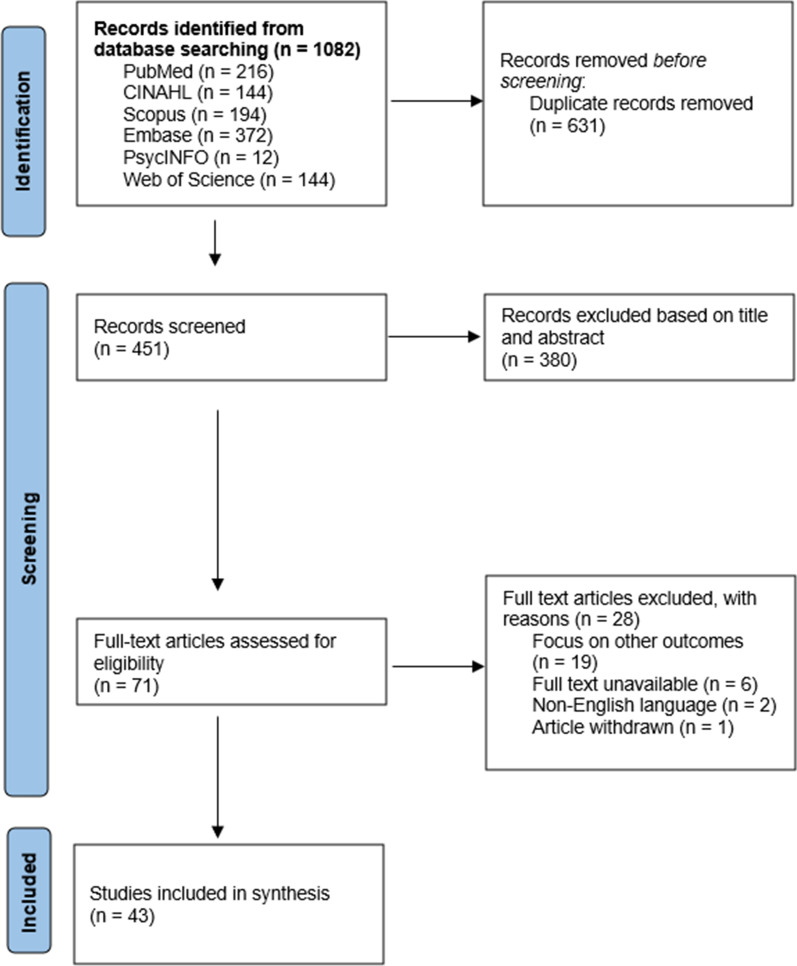
- The review included 43 studies: 39 quantitative, 2 qualitative, and 2 mixed methods; 18 were from the Middle East, 10 from the Americas, 9 from Asia–Pacific, and 6 from Europe. Nurses were included in 35 studies, physicians in 13, allied health workers in 11, and administrative/management staff in 7.
- Five themes emerged: (1) fear of COVID-19 exposure, (2) psychological responses to stress, (3) socio-demographic characteristics, (4) adverse working conditions, and (5) organisational support. Fear of COVID-19 exposure was the most prevalent theme, with 12 studies reporting a positive correlation or association with turnover intention.
- Psychological factors linked to higher turnover intention included stress/anxiety, depression, burnout, compassion fatigue, and COVID-19-associated discrimination; resilience was negatively correlated with turnover intention in multiple studies and acted as a protective mechanism in two.
- Adverse working conditions associated with turnover intention included increased workload, long working hours, workplace violence, deployment to other departments, and perceived low rewards; organisational trust, perceived organisational support, quality employer communication, job preparedness, and leadership support were associated with reduced turnover intention.
Methods
- Mixed studies systematic review using Joanna Briggs Institute methodology and a convergent integrated approach; PubMed, Embase, Scopus, CINAHL, Web of Science, and PsycINFO were searched from January 2020 to March 2022.
- From 1,082 retrieved articles, 43 met inclusion criteria after screening; two independent reviewers performed selection, critical appraisal, and data extraction, with disagreements resolved by discussion and a third reviewer when needed.
- Methodological quality was appraised with JBI Critical Appraisal Tools and MMAT 2018; findings were synthesized thematically using a three-step thematic synthesis and presented narratively.
Limitations
- Stated by the paper: grey literature and non-English studies were excluded; some included studies did not account for confounding factors; turnover intention was measured rather than actual turnover, though the paper notes evidence that these are correlated; and heterogeneity prevented a meta-analysis.
- Evident from the text: most included studies were quantitative and cross-sectional (39 of 43), limiting causal inference; nurses were included in the vast majority of studies (n = 35), so findings may not equally represent physicians, allied health workers, or administrative/management staff.
Model-written summary. Check it against the paper before relying on it.
Integrity signals
Registry
Cites
Statistics
Figures
Verification
Claims the paper makes
43 Valid · 0 Not valid · 38 Not checked · 33 Own results and interpretations
Every source the paper cites for this claim was checked and supports it.
In the paper
“One integrative review examined the COVID-19 pandemic’s impact on predictors of nurses’ turnover intention”
§ A global overview of healthcare workers’ turnover intention amid COVID-19 pandemic: a systematic review with future directions > Background
What the sources say
- Supportedcites [20] Falatah R The impact of the coronavirus disease (COVID-19) pandemic on nurses’ turnover intention: an integrative review Nurs Rep. 2021 10.3390/nursrep11040075 34968269 PMC8715458 source
The Aim (1.1, p.1) states the review appraised and integrated turnover literature using Whittemore and Knafl's integrative review method, asking 'What are the predictors of nurse turnover before and after the COVID-19 pandemic?' The Conclusions (6) state that on the basis of 43 studies 'the COVID-19 pandemic has impacted both the rates and predictors of nurses' turnover intention,' and the Discussion (3) confirms the shift in most-reported predictors post-COVID-19 (fear, stress, anxiety) versus pre-COVID-19 (satisfaction, commitment, leadership style). Thus the source is indeed an integrative review examining the pandemic's impact on predictors of nurses' turnover intention. (LLM, conf=0.95)
plain- Asserted: passes — The authors put it forward as true.
- Checkable: passes — It can be checked against evidence.
- Load-bearing: passes — The paper’s conclusions depend on it.
- Based: passes — The paper gives a reason why it holds.
- Supported
The sources with a verdict support this claim; the rest weren’t checked yet, have no full text we could read, or their verdicts aren’t rated yet.
In the paper
“A search for systematic reviews published in the last 10 years examining turnover intention among HCWs on PubMed, PROSPERO and Google Scholar produced nine relevant systematic reviews [11–19]”
§ A global overview of healthcare workers’ turnover intention amid COVID-19 pandemic: a systematic review with future directions > Background
What the sources say
- Not checked yetcites [11] Cowden T Cummings G Profetto-McGrath J Leadership practices and staff nurses' intent to stay: a systematic review J Nurs Manag 2011 19 4 461 477 10.1111/j.1365-2834.2011.01209.x 21569143 source
- Not checked yetcites [12] Daouk-Öyry L Anouze AL Otaki F Dumit NY Osman I The JOINT model of nurse absenteeism and turnover: a systematic review Int J Nurs Stud 2014 51 1 93 110 10.1016/j.ijnurstu.2013.06.018 23928322 source
- Supportedcites [13] Halter M Boiko O Pelone F Beighton C Harris R Gale J The determinants and consequences of adult nursing staff turnover: a systematic review of systematic reviews BMC Health Serv Res 2017 17 1 824 10.1186/s12913-017-2707-0 29246221 PMC5732502 source
The cited paper is a systematic review of systematic reviews on adult nursing staff turnover; its Discussion explicitly includes intention to leave among the outcomes considered. In the citing sentence, [11–19] identifies the nine reviews found by the citing authors, so this source supports its role as one relevant review. The citing authors’ search databases and total of nine are not attributed to this individual paper. (LLM, conf=0.86)
- Supportedcites [14] Lai GC Taylor EV Haigh MM Thompson SC Factors affecting the retention of indigenous australians in the health workforce: a systematic review Int J Environ Res Public Health 2018 10.3390/ijerph15050914 29734679 PMC5981953 source
The citation identifies this paper as one of the relevant systematic reviews, rather than attributing the citing authors’ search or its count of nine to this paper alone. The Methods (section 2.2) describe a review of retention and turnover among Indigenous Australian health workers, and the Introduction explicitly discusses turnover intention in that workforce. (LLM, conf=0.88)
- Not checked yetcites [15] Lartey S Cummings G Profetto-McGrath J Interventions that promote retention of experienced registered nurses in health care settings: a systematic review J Nurs Manag 2014 22 8 1027 1041 10.1111/jonm.12105 23758834 source
- Supportedcites [16] Lee J Nursing home nurses' turnover intention: a systematic review Nurs Open 2022 9 1 22 29 10.1002/nop2.1051 34811952 PMC8685779 source
The Abstract (Design) identifies this paper as a systematic review, and the Introduction identifies its subject as nursing-home nurses’ turnover intentions. It therefore fits as one of the relevant reviews cited; the search of PubMed, PROSPERO and Google Scholar and the count of nine describe the citing authors’ search, not a finding attributed to this individual source. (LLM, conf=0.90)
- Supportedcites [17] Russell D Mathew S Fitts M Liddle Z Murakami-Gold L Campbell N Interventions for health workforce retention in rural and remote areas: a systematic review Hum Resour Health 2021 19 1 103 10.1186/s12960-021-00643-7 34446042 PMC8393462 source
The cited work is a 2021 systematic review of health-worker retention, and its Methods > Inclusion criteria list intention to stay or leave among the eligible outcomes. It therefore qualifies as a relevant review in the citing authors’ list; the search procedure and total of nine reviews are the citing authors’ own account, not findings attributed to this individual source. (LLM, conf=0.85)
- Supportedcites [18] Shen X Jiang H Xu H Ye J Lv C Lu Z The global prevalence of turnover intention among general practitioners: a systematic review and meta-analysis BMC Fam Pract 2020 21 1 246 10.1186/s12875-020-01309-4 33250045 PMC7702723 source
The Methods (Search strategy and selection criteria) identify this paper as a systematic review and meta-analysis of turnover intention among general practitioners, who are healthcare workers. In the citing sentence, the grouped citations identify the reviews found by the citing authors; this source qualifies as one such review. (LLM, conf=0.89)
- Not checked yetcites [19] Yildiz B Yildiz H Ayaz AO Relationship between work-family conflict and turnover intention in nurses: a meta-analytic review J Adv Nurs 2021 77 8 3317 3330 10.1111/jan.14846 33855744 source
plain- Asserted: passes — The authors put it forward as true.
- Checkable: passes — It can be checked against evidence.
- Load-bearing: passes — The paper’s conclusions depend on it.
- Based: passes — The paper gives a reason why it holds.
The cited sources support only part of this claim — read each source’s verdict below.
In the paper
“A major contributing factor to the shortages seen in the health workforce is employee turnover [3].”
§ A global overview of healthcare workers’ turnover intention amid COVID-19 pandemic: a systematic review with future directions > Background
What the sources say
- Partly supportedcites [3] Dawson AJ Stasa H Roche MA Homer CSE Duffield C Nursing churn and turnover in Australian hospitals: nurses perceptions and suggestions for supportive strategies BMC Nurs 2014 13 1 11 10.1186/1472-6955-13-11 24708565 PMC3985533 sourceExperimental — accuracy not yet measured
The Background (p.1) treats high nursing turnover as 'a problem currently affecting many countries' whose staff movement 'can negatively impact upon skill-mix, scheduling and continuity of care', and lists costs, morale/productivity and patient-safety consequences — so turnover as a major staffing problem is supported. However, no passage states that turnover is a contributing factor to health workforce shortages; where our copy discusses shortages (Results, 'Low nurse-to-patient ratios'; Discussion, 'Work design'), shortages and reduced staff supply appear as antecedents of workload/dissatisfaction rather than as an outcome of turnover. The claim also generalises beyond the paper's scope, which is nurses in Australian hospital medical and surgical units, not the health workforce overall. (LLM, conf=0.65)
plainstates a cause- Asserted: passes — The authors put it forward as true.
- Checkable: passes — It can be checked against evidence.
- Load-bearing: passes — The paper’s conclusions depend on it.
- Based: passes — The paper gives a reason why it holds.
- Partly supported
The cited sources support only part of this claim — read each source’s verdict below.
In the paper
“Nurses were at a greater risk of experiencing turnover intention during the COVID-19 pandemic compared to pre-pandemic times [53].”
§ A global overview of healthcare workers’ turnover intention amid COVID-19 pandemic: a systematic review with future directions > Results > Data synthesis
What the sources say
- Partly supportedcites [53] Nashwan AJ Abujaber AA Villar RC Nazarene A Al-Jabry MM Fradelos EC Comparing the impact of covid-19 on nurses’ turnover intentions before and during the pandemic in qatar J Pers Med. 2021 11 6 787 810 10.3390/jpm11060456 34073655 PMC8225037 sourceExperimental — accuracy not yet measured
The Discussion (Section 5) and the Results subsection 'Stress Levels during and before COVID-19' state that nurses' turnover intentions were significantly higher during COVID-19 than before (Wilcoxon Z = -11.058, p < 0.01), echoed in the Abstract's conclusion for nurses in Qatar, so the direction of the comparison is supported. However, that finding comes from a single cross-sectional survey of 512 nurses at Hamad Medical Corporation in Qatar (Methods, Section 2; Results, Section 4), whereas the citing sentence attributes elevated turnover intention to 'nurses' generally, so the population is wider than the source studied. The Section 6 Limitations also flag recall bias for the pre-pandemic comparison and a 4.3% response rate, and the paper reports higher turnover-intention scores rather than a measurable 'risk'; it does note the opposite trend in the 21-30 age subgroup (Discussion). (LLM, conf=0.72)
plainstates an association- Asserted: passes — The authors put it forward as true.
- Checkable: passes — It can be checked against evidence.
- Load-bearing: unclear — It is unclear whether the paper’s conclusions depend on it.
- Based: passes — The paper gives a reason why it holds.
- Partly supported
Every source the paper cites for this claim was checked and supports it.
In the paper
“with two studies concluding that it acted as a protective mechanism against factors that contributed to turnover intention [43, 44].”
§ A global overview of healthcare workers’ turnover intention amid COVID-19 pandemic: a systematic review with future directions > Results > Data synthesis
What the sources say
- Supportedcites [43] Labrague LJ, Santos JAA de los. Resilience as a mediator between compassion fatigue, nurses' work outcomes, and quality of care during the COVID-19 pandemic. Appl Nurs Res. 2021; 10.1016/j.apnr.2021.151476 PMC8448586 34544570 source
The Results (Table 3 and accompanying text) show compassion fatigue positively associated with turnover intention (β = 0.301, p = 0.001) while resilience was negatively associated with turnover intention (β = −0.178, p = 0.004) and partially mediated the CF → turnover intention link (β = 0.272, p = 0.001), i.e. 'resilience reduced the effects of CF on ... organizational turnover intention'. The Discussion states this confirms 'its protective role against various mental and psychological consequences of stress-provoking events', and the Abstract Conclusion that 'Psychological resilience reduces the negative impact of CF on frontline nurses' job satisfaction, turnover intention, and the quality of care'. Thus the paraphrase that resilience acted as a protective mechanism against factors contributing to turnover intention is what this source reports, for frontline nurses during the COVID-19 pandemic (the paper does note its cross-sectional design limits causal inference). (LLM, conf=0.85)
- Supportedcites [44] Labrague LJ De Los Santos JAA Fronda DC Perceived COVID-19-associated discrimination, mental health and professional-turnover intention among frontline clinical nurses: the mediating role of resilience Int J Ment Health Nurs 2021 30 6 1674 1683 10.1111/inm.12920 34374480 PMC8447016 source
The Results (p. 2, Table 4 discussion) state that psychological resilience mediated the relationship between COVID-19-associated discrimination and professional-turnover intention and that 'resilience reduced the negative effects of COVID-19-related discrimination and resulted in improved mental health and reduced professional-turnover intention', with resilience itself negatively associated with turnover intention (β = -0.182, p = 0.004). The Discussion repeats this as a key finding, describing resilience as a protective factor, which matches the citing sentence's paraphrase of a protective mechanism against factors contributing to turnover intention. (Minor detail: the indirect path via resilience to turnover intention was reported as full mediation with p = 0.107 / Sobel p = 0.07, but the paper nonetheless frames it as protective.) (LLM, conf=0.85)
plainstates a cause- Asserted: passes — The authors put it forward as true.
- Checkable: passes — It can be checked against evidence.
- Load-bearing: unclear — It is unclear whether the paper’s conclusions depend on it.
- Based: passes — The paper gives a reason why it holds.
- Supported
73 more claims · 37 with their cited sources checked
Create a free account to see all 114 claims and to verify the 69 references still open.
- It may state two separate claims as one. 27
- Probably not a substantial claim. 12
- The quote only partly states this claim. 2
Claims other papers make about this one
Each is checked against this paper’s own text: does it say what the citing paper says it does?
The source backs part of the claim, not all of it — or backs it for a different population, condition or comparison.
In the citing paper
“The implications of mental health problems in these professionals not only refer to their well-being but also include social and organizational consequences, such as increasing rates of absenteeism and turnover intention [9-11], as well as so-called quiet quitting [12].”
From Effectiveness of a Web-Based Self-Guided Intervention (MINDxYOU) for Reducing Stress and Promoting Mental Health Among Health Professionals: Results From a Stepped-Wedge Cluster Randomized Trial (2025) · cites this paper as [11]
Experimental — accuracy not yet measuredIn the citing paper
“several systematic reviews highlighted an insufficient number of HWs to enable the provision of quality care, affecting health systems before and during the pandemic, with considerable inequities across countries worldwide [56–60].”
From Health workers’ perspectives on the quality of maternal and newborn health care around the time of childbirth: Results of the Improving MAternal Newborn carE in the EURO Region (IMAgiNE EURO) project in 12 countries of the World Health Organization European Region (2024) · cites this paper as [60]
Self-check
Percentages, sums and reported differences re-computed from the paper’s own numbers.
Each contradiction between two passages listed here was confirmed by an independent check.
Rated major: it would touch a result — a value a result rests on, reported and recomputed p-values on opposite sides of the significance level, two passages that conflict with no sign which is right, or a cited work retracted before this paper was published.
In the paper
§ A global overview of healthcare workers’ turnover intention amid COVID-19 pandemic: a systematic review with future directions > Results > Data synthesis
“While two American studies found that seniority in nurses was associated with greater turnover intention [34, 50]”
§ A global overview of healthcare workers’ turnover intention amid COVID-19 pandemic: a systematic review with future directions > Results > Study characteristics
“Age and quality of work–life were negatively correlated with turnover intention”
Citations
Cites
Methods for the thematic synthesis of qualitative research in systematic reviews
Thomas, J., & Harden, A. (2008) · BMC Medical Research Methodology · doi:10.1186/1471-2288-8-45 · Cited by 9,312
The Mixed Methods Appraisal Tool (MMAT) version 2018 for information professionals and researchers
Hong, Q. N., Fàbregues, S., Bartlett, G., Boardman, F., Cargo, M., Dagenais, P., Gagnon, M.-P., Griffiths, F., Nicolau, B., O’Cathain, A., et al. (2018) · Education for Information · doi:10.3233/efi-180221 · Cited by 4,737 · cited 1×
“The Mixed Methods Appraisal Tool (MMAT) version 2018 [24] was used to appraise mixed methods studies.”
MethodLabrague, L. J., & Santos, J. A. A. (2021) · Journal of Nursing Management · doi:10.1111/jonm.13168 · Cited by 882 · cited 1×
“Six quantitative studies used the Fear of COVID-19 Scale (FCV-19S) as an instrument to measure the psychological impact of exposure to COVID-19 on HCWs [26, 36, 37, 41, 42, 49], while one study used the Coronavirus Anxiety Scale (CAS) [39], with all studies finding a positive correlation between fear of COVID-19 expos…”
MethodNurse turnover: A literature review
Hayes, L. J., O’Brien-Pallas, L., Duffield, C., Shamian, J., Buchan, J., Hughes, F., Spence Laschinger, H. K., North, N., & Stone, P. W. (2006) · International Journal of Nursing Studies · doi:10.1016/j.ijnurstu.2005.02.007 · Cited by 873 · cited 2×
“In the context of the healthcare sector, turnover intention refers to the willingness of healthcare workers (HCWs) to leave their positions of employment for other positions in either the same or different professions [4].”
BackgroundMental health care for medical staff and affiliated healthcare workers during the COVID-19 pandemic
Walton, M., Murray, E., & Christian, M. D. (2020) · European Heart Journal: Acute Cardiovascular Care · doi:10.1177/2048872620922795 · Cited by 791 · cited 2×
“, childcare, grocery shopping) for HCWs in isolation or quarantine should also not be neglected [86].”
BackgroundMethodological guidance for the conduct of mixed methods systematic reviews
Stern, C., Lizarondo, L., Carrier, J., Godfrey, C., Rieger, K., Salmond, S., Apóstolo, J., Kirkpatrick, P., & Loveday, H. (2020) · JBI Evidence Synthesis · doi:10.11124/jbisrir-d-19-00169 · Cited by 700
Stigma during the COVID-19 pandemic
Bagcchi, S. (2020) · The Lancet Infectious Diseases · doi:10.1016/s1473-3099(20)30498-9 · Cited by 650 · cited 1×
“To make matters worse, frontline HCWs around the world endured episodes of harassment and violence at the hands of members of the public who held irrational beliefs about the transmissibility of COVID-19 [83].”
BackgroundThe validation of the turnover intention scale
Bothma, C. F. C., & Roodt, G. (2013) · SA Journal of Human Resource Management · doi:10.4102/sajhrm.v11i1.507 · Cited by 570 · cited 1×
“Quantitative studies measured turnover intention with the Turnover Intention Scale (TIS-6) [69] or modified versions, Likert scales, or yes–no questions.”
MethodThe Italian health system and the COVID-19 challenge
Armocida, B., Formenti, B., Ussai, S., Palestra, F., & Missoni, E. (2020) · The Lancet Public Health · doi:10.1016/s2468-2667(20)30074-8 · Cited by 554 · cited 1×
“The severity of COVID-19 infections, coupled with the large number of cases, placed immense pressure on healthcare systems as high volumes of patients in need of acute treatment required hospitalisation; some regions suffered from high COVID-19 mortality rates due to shortages of medical workers and equipment [2].”
BackgroundSaid, R. M., & El-Shafei, D. A. (2021) · Environmental Science and Pollution Research · doi:10.1007/s11356-020-11235-8 · Cited by 408 · cited 1×
“In addition, HCWs who worked long hours, or faced an increase in working hours due to the pandemic, were more prone to experiencing turnover intention [40, 50, 55, 59].”
Background
Cited by
Quiet quitting: A significant risk for global healthcare
Boy, Y., & Sürmeli, M. (2023) · Journal of Global Health · doi:10.7189/jogh.13.03014 · Cited by 139
Galanis, P., Moisoglou, I., Malliarou, M. M., Papathanasiou, I. V., Katsiroumpa, A., Vraka, I. S., Siskou, O. C., Konstantakopoulou, O., & Καϊτελίδου, Δ. (2023) · Healthcare · doi:10.3390/healthcare12010079 · Cited by 157
“During the COVID-19 pandemic, factors such as fear of virus infection, increased stress, working conditions, and reduced organizational support were found to contribute to an increase in nurses reporting their turnover intention [31], with rates being higher than before the pandemic [8].”
BackgroundGalanis, P., Katsiroumpa, A., Vraka, I. S., Siskou, O. C., Konstantakopoulou, O., Katsoulas, T. A., Moisoglou, I., Gallos, P., & Καϊτελίδου, Δ. (2024) · International Nursing Review · doi:10.1111/inr.12931 · Cited by 124
Bautista, T. G., Roman, G., Khan, M., Lee, M. S., Sahbaz, S., Duthely, L. M., Knippenberg, A., Burgos, M. A. M., Davidson, A., Scaramutti, C., et al. (2023) · Journal of Clinical and Translational Science · doi:10.1017/cts.2023.648 · Cited by 165
“However, psychological distress from the pandemic on the overall workforce has led to greater turnover intention [4], resignation [5], and ultimately, labor shortages.”
Global estimate of burnout among the public health workforce: a systematic review and meta-analysis
Nagarajan, R., Ramachandran, P., Dilipkumar, R., & Kaur, P. (2024) · Human Resources for Health · doi:10.1186/s12960-024-00917-w · Cited by 137
“Like frontline workers, public health workers are massively short staffed and do not work on a shift basis, significantly impacting their burnout [50].”
BackgroundWork engagement, resilience and turnover intentions among nurses: a mediation analysis
Poku, C. A., Bayuo, J., Agyare, V. A., Sarkodie, N. K., & Bam, V. B. (2025) · BMC Health Services Research · doi:10.1186/s12913-025-12242-6 · Cited by 125
Berger, S., Grzonka, P., Frei, A. I., Hunziker, S., Baumann, S. M., Amacher, S. A., Gebhard, C. E., & Sutter, R. (2024) · Critical Care · doi:10.1186/s13054-024-04844-z · Cited by 116
The Future of Healthcare and Patient-Centric Care: Digital Innovations, Trends, and Predictions
Aminabee, S. (2024) · Advances in healthcare information systems and administration book series · doi:10.4018/979-8-3693-1214-8.ch012 · Cited by 130
Galanis, P., Katsiroumpa, A., Vraka, I. S., Siskou, O. C., Konstantakopoulou, O., Katsoulas, T. A., Moisoglou, I., Gallos, P., & Καϊτελίδου, Δ. (2025) · International Journal of Nursing Practice · doi:10.1111/ijn.70057 · Cited by 117
Ning, L., Jia, H., Gao, S. H., Liu, M., Xu, J., Ge, S., Li, M., & Yu, X. (2023) · International Journal for Equity in Health · doi:10.1186/s12939-023-01971-x · Cited by 131
“In recent years, there has been an increasing focus on the influence of psychological factors, such as job satisfaction and job stress, on employees’ intention to leave [22].”
BackgroundDrennan, J., Murphy, A., Carthy, V. J. C. M., Ball, J., Duffield, C. M., Crouch, R., Kelly, G., Loughnane, C., Murphy, A., Hegarty, J. M., et al. (2024) · International Journal of Nursing Studies · doi:10.1016/j.ijnurstu.2024.104706 · Cited by 104
“…workers as a consequence of the Covid-19 pandemic (Maben and Bridges, 2020) with a reported increase in the number of nurses stating they will leave emergency nursing in the future due to factors relating to the working environment and the pandemic (Cornish et al., 2021; Poon et al., 2022).”
BackgroundSelf-citationMirza, M., Goerke, L., Anderson, A., & Wilsdon, T. (2024) · Value in Health · doi:10.1016/j.jval.2024.04.023 · Cited by 78
Stogiannos, N., Malik, R., Kumar, A., Barnes, A., Pogose, M., Harvey, H., McEntee, M. F., & Malamateniou, C. (2023) · The British Journal of Radiology · doi:10.1259/bjr.20221157 · Cited by 58
“84 Before procuring AI models, a detailed cost/benefit analysis 85 should aim to reduce costs and improve services to benefit the patients and healthcare staff.”
BackgroundMorales-García, W. C., Vallejos, M. A., Sairitupa-Sanchez, L. Z., Morales-García, S. B., Rivera‐Lozada, O., & Morales-García, M. (2024) · Frontiers in Public Health · doi:10.3389/fpubh.2024.1268336 · Cited by 85
Spaced Digital Education for Health Professionals: Systematic Review and Meta-Analysis
Martinengo, L., Ng, M. S. P., Ng, T. D. R., Ang, Y.-I., Jabir, A. I., Kyaw, B. M., & Car, L. T. (2024) · Journal of Medical Internet Research · doi:10.2196/57760 · Cited by 73
“Long working hours, low wages, workplace stress, and lack of professional development opportunities [3,4] appear to drive the health care workforce turnover [3].”
Application of artificial intelligence to the public health education
Wang, X., He, X., Wei, J., Liu, J., Li, Y., & Liu, X. (2023) · Frontiers in Public Health · doi:10.3389/fpubh.2022.1087174 · Cited by 73
Mincarone, P., Bodini, A., Tumolo, M. R., Sabina, S., Colella, R., Mannini, L., Sabato, E., & Leo, C. G. (2024) · JMIR Public Health and Surveillance · doi:10.2196/49772 · Cited by 74
“…even more evident during the COVID-19 pandemic [6], which tightened physicians’ work conditions [7,8], significantly increasing the share of physicians and nurses expressing an intention to leave the profession [9,10], and highlighted the frailty of health care systems in emergency management [11].”
Alsadaan, N., Ramadan, O. M. E., & Alqahtani, M. (2024) · BMC Nursing · doi:10.1186/s12912-024-01996-9 · Cited by 62
Fixing the health workforce crisis in Europe: retention must be the priority
Zapata, T., Muscat, N. A., McKee, M., & Kluge, H. H. P. (2023) · BMJ · doi:10.1136/bmj.p947 · Cited by 52
Idriss-Wheeler, D., Ormel, I., Assefa, M. E., Rab, F., Angelakis, C., Yaya, S., & Sohani, S. (2024) · PLOS Global Public Health · doi:10.1371/journal.pgph.0002799 · Cited by 55
“Climate change, migration, food insecurities, wars, infectious disease outbreaks and growing inequities are increasingly stressing already weakened systems, especially during humanitarian emergencies [6,7].”
Zhong, Y., Ma, H., Zhang, C., Jiang, Q.-Y., Li, J., Liao, C., Liang, Y., & Li, S. (2024) · Medicine · doi:10.1097/md.0000000000036903 · Cited by 56
“[5] Nowadays, the acute shortage of nurses and high turnover rates, including among novice nurses, are of great concern in many countries.”
BackgroundInfluentialWong, K. P., Zhang, B., Xie, Y. J., Wong, F. K. Y., Lai, C. K. Y., Chen, S., & Qin, J. (2024) · Journal of Nursing Management · doi:10.1155/2024/3534750 · Cited by 53
“Te implications of turnover intention are profound, afecting not only the healthcare system and continuity of patient care but also the well-being of nurses themselves [28].”
Hospital doctor turnover and retention: a systematic review and new research pathway
Raman, S. S. S., McDonnell, A., & Beck, M. P. (2024) · Journal of Health Organization and Management · doi:10.1108/jhom-04-2023-0129 · Cited by 55
“…however, typically encompassed several types of doctors, including general practitioners, those from hospitals but within specific specialities, and also other medical professionals, such as nurses (e.g. Lichtenstein, 1984; Misra-Hebert et al. , 2004; Poon et al. , 2022; de Vries et al. , 2023).”
BackgroundThe impact of health emergencies on nurses’ burnout: a systematic review and meta-analysis
Liang, Y., Peng, H., Luo, X., Wang, M., Zhang, Y., Huang, H., Zhu, J., Chen, M., Tian, W., Mo, J., et al. (2025) · BMC Public Health · doi:10.1186/s12889-025-24150-9 · Cited by 50
“A recent mixed-methods systematic review identified a wide range of factors influencing healthcare workers’ turnover intention during the pandemic [21].”
Mafula, D., Arifin, H., Chen, R., Sung, C., Lee, C., Chiang, K., Banda, K. J., & Chou, K. (2025) · Journal of Nursing Regulation · doi:10.1016/s2155-8256(25)00031-6 · Cited by 50
Boucher, V. G., Haight, B. L., Hives, B. A., Zumbo, B. D., Merali-Dewji, A., Hutton, S., Liu, Y., Nguyen, S., Beauchamp, M. R., Black, A., et al. (2023) · JAMA Psychiatry · doi:10.1001/jamapsychiatry.2023.2706 · Cited by 48
Keskin, S. T., & Kılıç, M. Ö. (2023) · Journal of Advanced Nursing · doi:10.1111/jan.15951 · Cited by 54
Nabia, S., Wonodi, C. B., Vilajeliu, A., Sussman, S., Olson, K., Cooke, R., Udayakumar, K., Twose, C., Ezeanya, N., Adefarrell, A. A., et al. (2023) · Vaccines · doi:10.3390/vaccines11050974 · Cited by 37
Nazarov, A., Forchuk, C. A., Houle, S. A., Hansen, K. T., Plouffe, R. A., Liu, J. J. W., Dempster, K. S., Le, T., Kocha, I., Hosseiny, F., et al. (2024) · European Journal of Psychotraumatology · doi:10.1080/20008066.2024.2306102 · Cited by 38
“…during the recent COVID-19 pandemic has shown that moral distress is linked to burnout (Plou ff e et al., 2021), and in light of reported global HCW shortages (Poon et al., 2022), its impact on patient care, job satisfaction, productivity, and attrition, should not be understated (De Hert, 2020).”
BackgroundDoes employee engagement mediate the nexus of job resource and employee turnover intentions?
Otoo, F. N. K. (2024) · IIMT Journal of Management · doi:10.1108/iimtjm-10-2023-0032 · Cited by 57
Managing knowledge loss: a systematic literature review and future research directions
Daghfous, A., Amer, N. T., Belkhodja, O., Angell, L. C., & Zoubi, T. A. (2023) · Journal of Enterprise Information Management · doi:10.1108/jeim-05-2022-0171 · Cited by 40
Talent management of international nurses in healthcare settings: A systematic review
Zulfiqar, S. H., Ryan, N., Berkery, E., O’Donnell, C., Purtill, H., & O’Malley, B. (2023) · PLoS ONE · doi:10.1371/journal.pone.0293828 · Cited by 45
Coccia, M., & Benati, I. (2024) · AIMS Public Health · doi:10.3934/publichealth.2024024 · Cited by 30
“…such as COVID-19, one of the main problems is the improvement of health systems and preparedness of countries to address the main challenges posed by pandemics, such as: increased demand for medical care [19], shortages of medical resources [20–22], and overburdened healthcare staff [23–26].”
BackgroundPrevalence of turnover intention among emergency nurses worldwide: a meta-analysis
Ren, H., Xue, Y., Li, P., Yin, X., Xin, W., & Li, H. (2024) · BMC Nursing · doi:10.1186/s12912-024-02284-2 · Cited by 46
“The dramatic increase in workload, the complexity of patient conditions, heightened individual infection risks, and increased emotional stress are realities that nurses faced during the pandemic [63].”
BackgroundBouma, D., Hoffmans, C. C. A., van den Hout, N. J., Zwarts, N., Jan Treur, A., & Roelofsma, P. H. M. P. (2024) · Lecture notes in networks and systems · doi:10.1007/978-3-031-75016-8_10 · Cited by 29
Mousavi, S. M., Yazdanirad, S., Naeini, M. J., Khoshakhlagh, A. H., & Haghighat, M. (2023) · BMC Health Services Research · doi:10.1186/s12913-023-09268-z · Cited by 33
“Since nurses are highly likely to get COVID-19 due to direct exposure to Covid patients, the fear of getting infected or transmitting the virus to family members and friends leaves nurses overstressed, and ultimately can lead to nurses’ tendency to quit their professions or jobs [51, 52].”
BackgroundA salutogenic approach: Changing the paradigm
Hewis, J. (2023) · Journal of medical imaging and radiation sciences · doi:10.1016/j.jmir.2023.02.004 · Cited by 35
Halms, T., Strasser, M., Papazova, I., Reicherts, P., Zerbini, G., Grundey, S., Täumer, E., Ohmer-Kluge, M., Miriam Kunz, A., & Hasan, A. (2023) · BMC Psychiatry · doi:10.1186/s12888-023-04686-z · Cited by 34
“The importance of addressing mental health issues among HCWs has been particularly highlighted during the pandemic as a result of the consequences that may arise from increases in workload, traumatic experiences and unaddressed mental health problems [18].”
BackgroundHafez, G., Aarnio, E., Mucherino, S., Kamusheva, M., Qvarnström, M., Potočnjak, I., Trečiokienė, I., Mihajlović, J., Ekenberg, M., van Boven, J. F. M., et al. (2024) · Journal of General Internal Medicine · doi:10.1007/s11606-024-08851-2 · Cited by 28
Nursing students' experience of bullying and/or harassment during clinical placement
Birks, M., Harrison, H., Zhao, L. Y., Wright, H., Tie, Y. C., & Rathnayaka, N. (2024) · Nurse Education Today · doi:10.1016/j.nedt.2024.106151 · Cited by 25
Miller, J., Young, B., McCallum, L., Rattray, J. E., Ramsay, P., Salisbury, L., Scott, T., Hull, A. M., Cole, S., Pollard, B., et al. (2023) · Journal of Advanced Nursing · doi:10.1111/jan.15773 · Cited by 35
Professional commitment and related factors among nursing undergraduates: A latent profile analysis
Zhang, J., Ren, X., Lai, F., Chen, J., Shan, S., & Tian, L. (2023) · Nurse Education Today · doi:10.1016/j.nedt.2023.105958 · Cited by 24
Wynendaele, H., Clays, E., Peeters, E., DeJonghe, Y., Hecke, A. V., & Trybou, J. (2025) · BMC Health Services Research · doi:10.1186/s12913-025-12966-5 · Cited by 34
Kuhlmann, E., Falkenbach, M., Brînzac, M. G., Correia, T., Panagioti, M., & Ungureanu, M. (2024) · The International Journal of Health Planning and Management · doi:10.1002/hpm.3752 · Cited by 27
Mentoring programmes – building capacity for learning and retaining workers in the workplace
Wikström, E., Arman, R., Dellve, L., & Gillberg, N. (2023) · Journal of Workplace Learning · doi:10.1108/jwl-01-2023-0003 · Cited by 22
Bradford, N., Moore, E., Taylor, K., Cook, O., Gent, L., Beane, T., Williams, N., Alexander, K. E., Pitt, E., Still, J., et al. (2023) · BMC Nursing · doi:10.1186/s12912-023-01629-7 · Cited by 27
Almeida‐Meza, P., Ledden, S., Dempsey, B., Smith, A. C., Croak, B., Bhundia, R., Lamb, D., Malik, A., Raine, R., Redlich, C., et al. (2025) · The Lancet Regional Health - Europe · doi:10.1016/j.lanepe.2025.101463 · Cited by 38
“19,23,49,50,56,59,60,62,71,78,79 Organisational culture and work environment includes setting clear goals within the team and commitment of organisation members to achieving these; supportive work atmosphere, and cohesion within teams; mutual trust between colleagues; and positive connections…”
InfluentialBoone, A., Lavreysen, O., de Vries, N., de Winter, P., Mazzucco, W., Matranga, D., Maniscalco, L., Miceli, S., Savatteri, A., Kowalska, M., et al. (2024) · Qualitative Health Research · doi:10.1177/10497323241254253 · Cited by 27
“…and increased work pressure, which, in turn, raised concerns about potential long-term mental health implications and higher intentions to leave among healthcare workers (Frogner & Dill, 2022; Godderis et al., 2020; Kowalska et al., 2023; Luo et al., 2020; Poon et al., 2022; Vries et al., 2023).”
Essien, E. A., Mahmood, M. Y., Adiukwu, F., Kareem, Y. A., Hayatudeen, N., Ojeahere, M. I., Salihu, M. O., Sanni, K. A., Omotoso, A. B., & Pinto da Costa, M. (2024) · Cambridge Prisms: Global Mental Health · doi:10.1017/gmh.2024.25 · Cited by 20
Butt, S. P., Raza, A., Siddiqui, R. P., Saleem, Y., Cook, B., & Khan, H. (2023) · Journal of Work-Applied Management · doi:10.1108/jwam-06-2023-0052 · Cited by 28
Meese, K. A., Boitet, L. M., Sweeney, K. L., Gorman, C. A., Nassetta, L. B., Patel, N., & Rogers, D. A. (2024) · Journal of Multidisciplinary Healthcare · doi:10.2147/jmdh.s437816 · Cited by 25
“25 Additionally, net promotor scores serve two evaluative purposes.”
BackgroundMutsonziwa, G. A., Mojab, M., Katuwal, M., & Glew, P. (2024) · Nursing Open · doi:10.1002/nop2.2132 · Cited by 26
“In addition to the high mortality, the COVID-19 pandemic spurred resignations in large numbers, exacerbating the already exist - ing global shortages of HCWs (Poon et al., 2022).”
BackgroundTh’ng, F., Rao, K. A., Ge, L., Neo, H. N., Molina, J. A. D. C., Lim, W. Y., & Mao, D. R. (2022) · International Journal of Environmental Research and Public Health · doi:10.3390/ijerph192416878 · Cited by 22
“The pandemic has placed great pressure on the healthcare system, and many studies have attributed that to a combination of an increase in workload and the attrition of HCWs [13].”
BackgroundA Global Overview of Missed Nursing Care During the COVID-19 Pandemic: A Systematic Review
Labrague, L. J., & Kostovich, C. T. (2023) · Western Journal of Nursing Research · doi:10.1177/01939459231214598 · Cited by 21
“21,24 The incidence of missed nursing care can be reduced by implementing periodic monitoring of the clinical tasks performed by nurses using standardized scales, such as the Missed Nursing Care Survey.”
BackgroundJin, T., Hong, S., Liu, J., Liu, L., Jia, S., & Shen, G. (2025) · BMC Nursing · doi:10.1186/s12912-025-03487-x · Cited by 19
Atnafu, A., Teshale, G., Dellie, E., & Park, Y. S. (2025) · BMC Health Services Research · doi:10.1186/s12913-025-13084-y · Cited by 18
What accounts for turnover intention in the Australian public mental health workforce?
Haywood, D., Crocker, K. M., Gnatt, I., Jenkins, Z., Bhat, R. S., Lalitha, A. R. N., Butterfield, I., & Castle, D. J. (2023) · International Journal of Mental Health Nursing · doi:10.1111/inm.13233 · Cited by 20
Jones, C. B., Kim, S., McCollum, M., & Tran, A. (2023) · Nursing Outlook · doi:10.1016/j.outlook.2023.102107 · Cited by 24
A global prevalence of turnover intention among doctors: a systematic review and meta-analysis
Wang, J., Lv, H., Qin, Q., Jiang, H., Ren, W., & Shariff, N. M. (2025) · Scientific Reports · doi:10.1038/s41598-025-07019-0 · Cited by 26
“The high rate of turnover intention among healthcare workers, especially doctors, poses a significant threat to the quality of patient care 10 .”
Factors protecting Swiss nurses’ health during the COVID-19 pandemic: a longitudinal study
Jubin, J., Delmas, P., Gilles, I., Bachmann, A. O., & Bucher, C. O. (2023) · BMC Nursing · doi:10.1186/s12912-023-01468-6 · Cited by 21
“Indeed, many nurses found themselves incapable of working on and had to take sick leave, increasing the burdens on the staff remaining [6].”
BackgroundA mixed-methods analysis of moral injury among healthcare workers during the COVID-19 pandemic
Scoglio, A. A. J., Stelson, E., Becene, I. A., Marquez, C. I., & Rich-Edwards, J. W. (2024) · PLoS ONE · doi:10.1371/journal.pone.0304620 · Cited by 18
“Although outside of the timespan of our analysis, this context is important to consider in light of healthcare workforce shortages [39] and implications for patient care.”
BackgroundD’Alessandro-Lowe, A. M., Brown, A., Sullo, E., Pichtikova, M., Karram, M., Mirabelli, J., McCabe, R. E., McKinnon, M. C., & Ritchie, K. (2024) · Nursing Reports · doi:10.3390/nursrep14030152 · Cited by 23
“Indeed, most of the research on turnover intention among HCPs during the pandemic used quantitative designs [7], which alone are insufficient for capturing HCPs’ perspectives on and experiences with turnover intention during this historic period.”
BackgroundResultInfluentialPeutere, L., Pentti, J., Ropponen, A., Kivimäki, M., Härmä, M., Krutova, O., Ervasti, J. M., Koskinen, A., & Virtanen, M. (2023) · International Journal of Nursing Studies · doi:10.1016/j.ijnurstu.2023.104628 · Cited by 23
Tay, G. W. N., Tong, M. M., Yap, J. Y. G., Mak, H. K., Goh, Y. S., & Ho, C. S. H. (2025) · Medical Education Online · doi:10.1080/10872981.2025.2542809 · Cited by 17
“While patient agitation can be a contributing stressor, broader systematic factors such as workplace conditions and organisational issues also play a substantial role in attrition [18,19].”
How Nurses’ Person-Organization Fit Influences Organizational Loyalty
Sun, M., Alam, F., & Ma, C. (2023) · Risk Management and Healthcare Policy · doi:10.2147/rmhp.s425025 · Cited by 18
“5 This presumes job roles have related factors that affect employee work attitudes, such as definite job roles.”
Okonkwo, C. C., Nwose, E. U., Beccaria, G., & Khanam, R. (2024) · BMC Health Services Research · doi:10.1186/s12913-024-11806-2 · Cited by 17
“This shortage in the health workforce due to the COVID-19 pandemic has become a global issue of concern as such calls for urgent attention [27].”
BackgroundLesnik, T., & Hauser-Oppelmayer, A. (2025) · Human Resources for Health · doi:10.1186/s12960-025-00992-7 · Cited by 15
“The COVID-19 pandemic has placed additional pressure on ICU staff due to repeated waves of the disease and the large number of critically ill patients [4].”
Yang, S., Zhang, X.-D., Guo, W., Ho, K. Y., Lam, K. K. W., Dong, Y.-Y., Pan, J.-D., Liu, Q., Xu, R.-D., Ling, D., et al. (2023) · Nurse Education Today · doi:10.1016/j.nedt.2023.105894 · Cited by 16
Napolitano, F., Pagnucci, N., Aleo, G., Walsh, N., Kearns, T., Wray, J., Mahon, P., Gazić, M., Samardžija, M., Bagnasco, A., et al. (2024) · Nurse Education in Practice · doi:10.1016/j.nepr.2024.104123 · Cited by 14
Orr, T., Cheung, E., Saha, M., Balogun, T., Feng, C. X., & Farag, M. (2025) · BMC Health Services Research · doi:10.1186/s12913-025-12522-1 · Cited by 23
Aslanidis, V., Tsolaki, V., Papadonta, M. E., Amanatidis, T., Parisi, K., Makris, D., & Zakynthinos, E. (2023) · Journal of Personalized Medicine · doi:10.3390/jpm13020250 · Cited by 9
“This contrasts with the findings of other studies, which report that front‐line hospital workers (doctors, nurses) reported the least job satisfaction, and the highest levels of burnout [31,33].”
ResultBoakye, K. G., Opoku, S. T., & Apenteng, B. A. (2023) · Quality Management Journal · doi:10.1080/10686967.2023.2245090 · Cited by 15
Jansen, E. J., Czabanowska, K., de Pagter, A. P. J., & Koeijer, R. D. (2024) · The International Journal of Health Planning and Management · doi:10.1002/hpm.3761 · Cited by 20
Burnout and Turnover Intention Among Community and Hospital Pharmacists in Metro Manila, Philippines
Carandang, R. R., Puguon, F., Santos, M. L., Ilagan, E., Gamboa, K. G., & Aquino, J. G. (2024) · Merits · doi:10.3390/merits4040033 · Cited by 17
“Adverse working conditions, such as inadequate staffing, result in increased workloads, greater workplace pressure, and eventual burnout, which significantly contribute to turnover intentions [24].”
Exploring turnover intentions of employees at a South African government education council
Selesho, R. A., & Matjie, M. A. (2024) · SA Journal of Human Resource Management · doi:10.4102/sajhrm.v22i0.2251 · Cited by 24
Procter, D., McCullough, K., Massey, D. L., & Strickland, K. (2025) · Nurse Education in Practice · doi:10.1016/j.nepr.2025.104434 · Cited by 12
Kunst, H., Nguyen, H., Johnson, A. M., Mo, S., & MacCann, C. (2023) · Australian Journal of Management · doi:10.1177/03128962231211173 · Cited by 14
“Recent crises (e.g. the COVID-19 pandemic) have exacerbated the problem of low job satisfaction among healthcare employees (Zhang et al., 2022), increasing anxiety and depression (Chen et al., 2021), and prompting an unprecedented wave of resignations worldwide (Poon et al., 2022).”
Mortier, P., Vilagut, G., García‐Mieres, H., Alayo, I., Ferrer, M., Amigo, F., Aragonès, E., Peña, A. A., Asúnsolo, Á., Campos, M., et al. (2024) · Psychiatry Research · doi:10.1016/j.psychres.2024.115800 · Cited by 14
“This vicious circle is further reinforced by the fact that increasing workloads among HCW also leads to increased turnover intentions (Poon et al., 2022) which leaves the remaining workforce with even higher work pressure, disparate mental health burden, and unmet needs for care.”
BackgroundWalsh, R., Telner, D., Butt, D. A., Krueger, P. D., Fleming, K., MacDonald, S., Pyakurel, A., Greiver, M., & Jaakkimainen, L. (2024) · BMC Family Practice · doi:10.1186/s12875-024-02374-9 · Cited by 16
“Consistent with previous literature [14], we identified that COVID-19-related fears (including trouble maintaining IP&C practices and pro-curing PPE, and caring for an elderly relative), psychological factors (not feeling a duty to provide care, being unwilling to work in-person, feeling unable to…”
BackgroundNémeth, Z., Deák, P., Szűcs, R., Makai, A., & Hock, M. (2024) · Scientific Reports · doi:10.1038/s41598-024-66671-0 · Cited by 21
Ndatshe, Y., Mokhele, M. O., & Jakoet‐Salie, A. (2024) · International Journal of Research in Business and Social Science (2147-4478) · doi:10.20525/ijrbs.v13i7.3673 · Cited by 12
Jing, S., Dai, Z., Wu, Y., Liu, X., Zhang, L., Liu, X., Ren, T., Fu, J., Chen, X., Wang, W., et al. (2025) · BMC Public Health · doi:10.1186/s12889-024-20930-x · Cited by 15
Côté, N., & Denis, J. (2024) · The International Journal of Health Planning and Management · doi:10.1002/hpm.3785 · Cited by 13
Using system dynamics to support a functional exercise for pandemic preparedness and response
Green, C., Beishuizen, B. H. H., Stein, M. L., Bleeker‐Rovers, C. P., Tostmann, A., de Jong, D. L. K., Houareau, C., Perseke, K., Spieker, C., Grote, U., et al. (2024) · System Dynamics Review · doi:10.1002/sdr.1786 · Cited by 12
Double-duty caregivers enduring COVID-19 pandemic to endemic: “It’s just wearing me down”
Parmar, J., L’Heureux, T., Lobchuk, M., Penner, J., Charles, L., St. Amant, O., Ward-Griffin, C., & Anderson, S. (2024) · PLOS ONE · doi:10.1371/journal.pone.0298584 · Cited by 11
“The COVID-19 pandemic has severely impacted healthcare providers, causing exhaustion, anxiety, and burnout [1–4].”
Transition Shock of Newly Employed Nurses: A Cross-sectional Study
Gusar, I., Peroš, E., Šare, S., & Ljubičić, M. (2023) · Open Access Macedonian Journal of Medical Sciences · doi:10.3889/oamjms.2023.11658 · Cited by 11
“Around the world, the past decade in health-care systems has been marked by challenges caused by the abandonment of the profession by all healthcare workers’ profiles [1].”
BackgroundAn Exploration of Mental Health-Related Stigma in an Emergency Setting
Smith, J. M., Knaak, S. J., Smith, J., Horn, S., Mustapha, W., Hilton, E., Brudnyi, S., & Sass, S. C. (2024) · International Journal of Mental Health and Addiction · doi:10.1007/s11469-023-01233-5 · Cited by 16
“Also, the connection of moral distress and burnout to the problem of structural stigma is in itself an important finding, as many healthcare systems find themselves struggling with low staff morale and high levels of burnout and staff turnover (Murthy, 2022; Poon et al., 2022).”
Bondjers, K., Glad, A. K., Wøien, H., Wentzel‐Larsen, T., Atar, D., Reitan, S. K., Rosseland, L. A., Zwart, J., Dyb, G. A., & Stensland, S. Ø. (2024) · BMC Medical Ethics · doi:10.1186/s12910-024-01098-w · Cited by 16
“…of moral distress associated with such situations across various occupational factors (i.e., profession, exposure to patients with Covid-19), and [3] the impact of work environmental factors on lingering moral distress associated with such situations, in a sample of HCW during the pandem-ic’s…”
BackgroundExploring the Core of Emotional Intelligence in Healthcare Leadership: A Concept Analysis
Heikkinen, H., Kuha, S., & Kanste, O. I. (2025) · Journal of Advanced Nursing · doi:10.1111/jan.17023 · Cited by 13
Chen, A. P., Hansoti, B., & Hsu, E. B. (2022) · Sustainability · doi:10.3390/su142316301 · Cited by 11
“Lower income nations faced additional burdens, such as loss of healthcare personnel to recruitment from higher income nations, fewer resources such as PPE and equipment to treat severe cases, and less infrastructure for vaccine and medical countermeasure development and production [86–89].”
BackgroundKim, J., Yoon, J., Kim, S. J., Kim, J. Y., Bahk, J., & Kim, S. (2023) · Epidemiology and Health · doi:10.4178/epih.e2023058 · Cited by 13
“A high level of burnout among EMS providers is a public health concern because it could lead to turnover intention and decreased work performance, which would increase the burden on the healthcare sys-tem [30,31].”
BackgroundHuman resource management to assist infection prevention and control professionals: a scoping review
Ülgüt, R., Tomsic, I., Chaberny, I. F., & von Lengerke, T. (2024) · Journal of Hospital Infection · doi:10.1016/j.jhin.2024.04.004 · Cited by 11
Looi, J. C., Allison, S. C., Bastiampillai, T. J., Hensher, M., Kisely, S. R., & Robson, S. (2024) · Australasian Psychiatry · doi:10.1177/10398562241267138 · Cited by 12
“The priority should be retentionthrough addressingcontinuing effects of the pandemic, 13 and known causes of moral injury and burnout.”
BackgroundForeign Healthcare Workers and COVID-19 in Europe: The Paradox of Unemployed Skilled Labour
Dotsey, S. (2023) · Social Sciences · doi:10.3390/socsci12040211 · Cited by 10
Medicolegal analysis of physical violence toward physicians in Egypt
Khedr, R. I., Mohamed, O. I., & Sobh, Z. K. (2024) · Scientific Reports · doi:10.1038/s41598-024-60857-2 · Cited by 10
Pathman, D. E., Zerden, L. D. S., Konrad, T. R., Shafer, A. B., Harrison, J. N., Fannell, J., & Lombardi, B. M. (2025) · BMC Health Services Research · doi:10.1186/s12913-025-12698-6 · Cited by 14
Das, S., Grant, L., & Fearon, D. (2025) · Critical Public Health · doi:10.1080/09581596.2025.2501495 · Cited by 10
“…2020). wHO estimated that 80,000–180,000 HRH lost lives globally (wHO, 2021). the pandemic worsened shortages, increased attrition (Oo, 2023; Poon et al., 2022), and left one in three with anxiety or depression and half with burnout (Pappa et al., 2020; wHO, 2021), straining systems…”
(2023) · doi:10.29333/ejosdr/12936 · Cited by 10
“Nearly 20% of 1000 American allied health workers (nurses, assistants, etc.) who responded to the survey stated that the pandemic was one of the main reasons they quit their jobs (Poon et al., 2022).”
BackgroundPhan, T., Nguyen, H. P. A., Dang, C. K., Phan, M. T., Nguyen, V. T., Le, V. T., Tran, B. T., Dang, C. V., Ho, T. H., Nguyễn, M. T., et al. (2023) · Journal of Preventive Medicine and Public Health · doi:10.3961/jpmph.22.528 · Cited by 13
“Specifically, an increase in quick returns (i.e., 11 hours or less between 2 consecutive shifts) and long workdays ( > 8 hours) were associated with worse sleep quality and higher turnover intention [8].”
BackgroundLooi, J. C., Allison, S. C., Bastiampillai, T. J., Kisely, S. R., & Robson, S. (2023) · Australian Health Review · doi:10.1071/ah23048 · Cited by 10
Metadata
- Authors
- Poon, Y.-S. R., Lin, Y. P., Griffiths, P., Yong, K. K., Seah, B., & Liaw, S. Y.
- Affiliations
- Tan Tock Seng Hospital (SG)
- National Institute for Health and Care Research (GB)
- National Healthcare Group (SG)
- National University of Singapore (SG)
- Corresponding author
- Seah, Betsy
- Venue
- Human Resources for Health
- Published
- 2022-09-24
- Volume
- 20
- Issue
- 1
- Pages
- 70-70
- ISSN
- 1478-4491 (ISSN-L)
- PMC
- PMC9509627
- OpenAlex
- W4296954279
- Semantic Scholar
- 9763f9705b57004e6b6c3ebd917811d6993367a1
- Cited by
- 394
- References
- 88
- Citations by year
- 2026: 64 · 2025: 86 · 2024: 139 · 2023: 102 · 2022: 3
- FWCI
- 23.05
- Type
- journal article
- Language
- en
- Open access
- gold
- doi.org
- Licence
- cc-by
- creativecommons.org/licenses/by/4.0 (tdm)
- creativecommons.org/licenses/by/4.0 (vor)
- Locations
- Human Resources for Health (publishedVersion, cc-by)
- PubMed Central (publishedVersion, cc-by)
- PubMed (publishedVersion)
- ePrints Soton (University of Southampton) (acceptedVersion)
- DOAJ (DOAJ: Directory of Open Access Journals) (submittedVersion, cc-by-sa)
- Figshare (cc-by)
- Funders
- Alice Lee Centre for Nursing Studies, Yong Loo Lin School of Medicine, National University of Singapore (Research fellow start-up fund)
- Topics
- Health Sciences › Medicine › Public Health, Environmental and Occupational Health › Global Health Workforce Issues
- Health Sciences › Health Professions › General Health Professions › Healthcare Systems and Challenges
- Health Sciences › Nursing › Research and Theory › Nursing education and management
- Keywords
- turnover intention, healthcare workers, COVID-19 pandemic, nurse retention, psychological stress, working conditions, organizational support, burnout, migrant healthcare workers, health workforce shortage
- MeSH terms
- COVID-19, Health Personnel, Humans, Personnel Turnover, Intention, Pandemics
About these checks
Registry, retraction, Cites and statistics results are computed, not judged, with one exception: a printed reference that no index lists is read once by a model before it counts as a citation error. Claims are extracted by a model and kept only when their quote appears verbatim in the text; each cited source is then checked, with a model’s help, for whether it says what the claim relies on. Those verdicts can be wrong — read the claim’s quote and the cited source before relying on one.
The claim verdicts this report counts are experimental: their accuracy is not yet measured.
A language model drew the claims from the paper on 2026-10-05, under version 3 of the claim definition (model deepseek-v4.1-flash, prompt extract-v3).
A second model labelled each claim on 2026-10-05 (model jev-1.13-20260917, definition revision gold-guideline-v0.2).
Cited sources are checked with a language model’s help (qwen3.8-omni-flash and gpt-6-sol).
Statistics and arithmetic are recomputed, not judged.
Confidence bands are shown only for fields calibrated on our annotated test set. None is calibrated yet, so no band is shown.
What counts as a claim ›How we measure confidence ›How we check this ›
Are you an author, or do you see a problem with this page? Request a review
Data sources
Bibliographic data: Semantic Scholar, OpenAlex, Crossref.
Contains information from the Semantic Scholar Academic Graph Datasets, made available under the ODC Attribution License (ODC-BY 1.0).
Semantic Scholar’s data is described in: Kinney, R., et al. (2023). The Semantic Scholar Open Data Platform. arXiv:2301.10140.
