

The DOI matches its Crossref record; 105 of the 105 references it cites were found in a registry or an index.
A code within the genetic code: codon usage regulates co-translational protein folding
Open accessAbstract
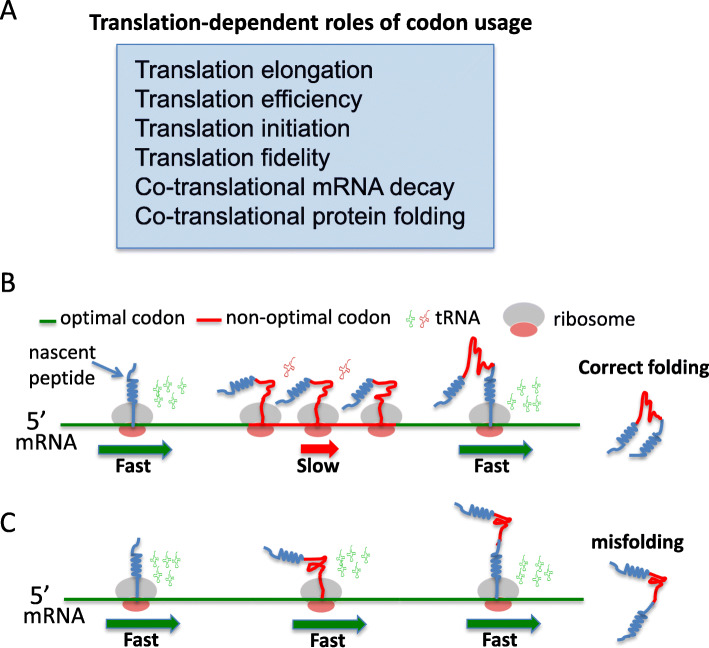
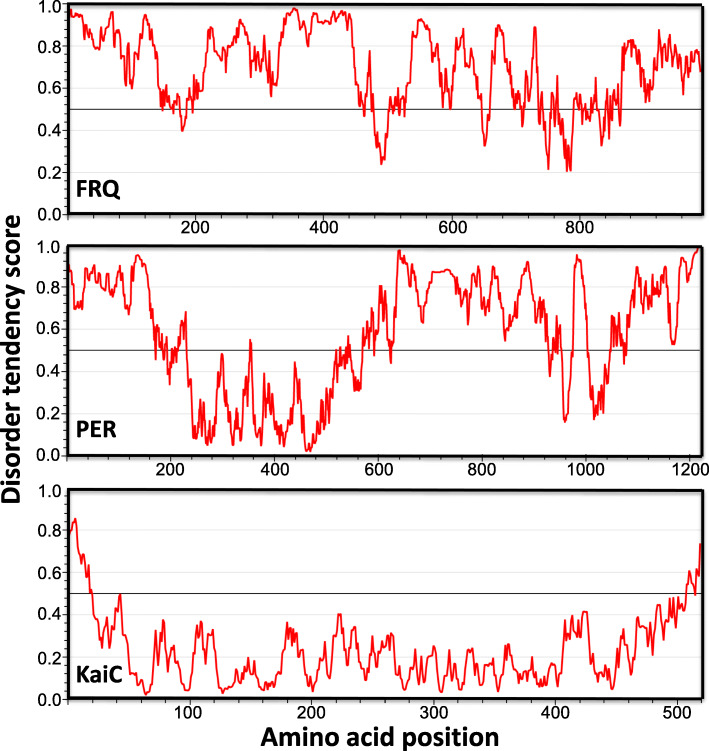
The genetic code is degenerate, and most amino acids are encoded by two to six synonymous codons. Codon usage bias, the preference for certain synonymous codons, is a universal feature of all genomes examined. Synonymous codon mutations were previously thought to be silent; however, a growing body evidence now shows that codon usage regulates protein structure and gene expression through effects on co-translational protein folding, translation efficiency and accuracy, mRNA stability, and transcription. Codon usage regulates the speed of translation elongation, resulting in non-uniform ribosome decoding rates on mRNAs during translation that is adapted to co-translational protein folding process. Biochemical and genetic evidence demonstrate that codon usage plays an important role in regulating protein folding and function in both prokaryotic and eukaryotic organisms. Certain protein structural types are more sensitive than others to the effects of codon usage on protein folding, and predicted intrinsically disordered domains are more prone to misfolding caused by codon usage changes than other domain types. Bioinformatic analyses revealed that gene codon usage correlates with different protein structures in diverse organisms, indicating the existence of a codon usage code for co-translational protein folding. This review focuses on recent literature on the role and mechanism of codon usage in regulating translation kinetics and co-translational protein folding. Video abstract.
Overview
The claims and statistics of this paper haven’t been checked yet.
Run the check — free, no account needed. It reads the open-access text and checks the sources it cites.
Integrity signals
Registry
Cites
Statistics
Figures
Verification
Claims the paper makes
The claims and statistics of this paper haven’t been checked yet.
Run the check — free, no account needed. It reads the open-access text and checks the sources it cites.
Claims other papers make about this one
Each is checked against this paper’s own text: does it say what the citing paper says it does?
In the citing paper
“Codon optimization can not only result in an improvement in protein expression yield, but also antibody assembly, affinity, and biological activity [85,86].”
From Computational and artificial intelligence-based methods for antibody development (2023) · cites this paper as [86]
Self-check
Percentages, sums and reported differences re-computed from the paper’s own numbers.
The self-check needs the paper’s full text.
Citations
Cites
Intrinsically unstructured proteins and their functions
Dyson, H. J., & Wright, P. E. (2005) · Nature Reviews Molecular Cell Biology · doi:10.1038/nrm1589 · Cited by 3,871
Genome-Wide Analysis in Vivo of Translation with Nucleotide Resolution Using Ribosome Profiling
Ingolia, N. T., Ghaemmaghami, S., Newman, J. R. S., & Weissman, J. S. (2009) · Science · doi:10.1126/science.1168978 · Cited by 3,853
Protein Misfolding, Amyloid Formation, and Human Disease: A Summary of Progress Over the Last Decade
Chiti, F., & Dobson, C. M. (2017) · Annual Review of Biochemistry · doi:10.1146/annurev-biochem-061516-045115 · Cited by 2,629
A "Silent" Polymorphism in the MDR 1 Gene Changes Substrate Specificity
Kimchi-Sarfaty, C., Oh, J. M., Kim, I.-W., Sauna, Z. E., Calcagno, A. M., Ambudkar, S. V., & Gottesman, M. M. (2007) · Science · doi:10.1126/science.1135308 · Cited by 2,416
Ingolia, N. T., Lareau, L. F., & Weissman, J. S. (2011) · Cell · doi:10.1016/j.cell.2011.10.002 · Cited by 2,187
Synonymous but not the same: the causes and consequences of codon bias
Plotkin, J. B., & Kudla, G. (2010) · Nature Reviews Genetics · doi:10.1038/nrg2899 · Cited by 1,733
Codon usage and tRNA content in unicellular and multicellular organisms.
Ikemura, T. (1985) · Molecular Biology and Evolution · doi:10.1093/oxfordjournals.molbev.a040335 · Cited by 1,712
Codon bias and heterologous protein expression
Gustafsson, C., Govindarajan, S., & Minshull, J. (2004) · Trends in Biotechnology · doi:10.1016/j.tibtech.2004.04.006 · Cited by 1,330
Converging concepts of protein folding in vitro and in vivo
Hartl, F. U., & Hayer-Hartl, M. K. (2009) · Nature Structural & Molecular Biology · doi:10.1038/nsmb.1591 · Cited by 1,235
Codon usage in yeast: cluster analysis clearly differentiates highly and lowly expressed genes
Sharp, P. M., Tuohy, T. M. F., & Mosurski, K. (1986) · Nucleic Acids Research · doi:10.1093/nar/14.13.5125 · Cited by 1,206
Codon Optimality Is a Major Determinant of mRNA Stability
Presnyak, V., Alhusaini, N., Chen, Y.-H., Martin, S., Morris, N., Kline, N., Olson, S., Weinberg, D., Baker, K. E., Graveley, B. R., et al. (2015) · Cell · doi:10.1016/j.cell.2015.02.029 · Cited by 1,078
Mistranslation-Induced Protein Misfolding as a Dominant Constraint on Coding-Sequence Evolution
Drummond, D. A., & Wilke, C. O. (2008) · Cell · doi:10.1016/j.cell.2008.05.042 · Cited by 1,065
Understanding the contribution of synonymous mutations to human disease
Sauna, Z. E., & Kimchi-Sarfaty, C. (2011) · Nature Reviews Genetics · doi:10.1038/nrg3051 · Cited by 1,022
Function and structure of inherently disordered proteins
Dunker, A. K., Silman, I., Uversky, V. N., & Sussman, J. L. (2008) · Current Opinion in Structural Biology · doi:10.1016/j.sbi.2008.10.002 · Cited by 963
Codon optimality, bias and usage in translation and mRNA decay
Hanson, G., & Coller, J. (2018) · Nature Reviews Molecular Cell Biology · doi:10.1038/nrm.2017.91 · Cited by 825
Duret, L., & Mouchiroud, D. (1999) · Proceedings of the National Academy of Sciences · doi:10.1073/pnas.96.8.4482 · Cited by 808
Codon Bias as a Means to Fine-Tune Gene Expression
Quax, T. E. F., Claassens, N. J., Söll, D. G., & John van der, O. O. S. T. (2015) · Molecular Cell · doi:10.1016/j.molcel.2015.05.035 · Cited by 791
Co-variation of tRNA Abundance and Codon Usage inEscherichia coliat Different Growth Rates
Dong, H., Nilsson, L., & Kurland, C. G. (1996) · Journal of Molecular Biology · doi:10.1006/jmbi.1996.0428 · Cited by 790
The anti-Shine–Dalgarno sequence drives translational pausing and codon choice in bacteria
Li, G., Oh, E., & Weissman, J. S. (2012) · Nature · doi:10.1038/nature10965 · Cited by 644
Yu, C., Dang, Y., Zhou, Z., Wu, C., Zhao, F., Sachs, M. S., & Liu, Y. (2015) · Molecular Cell · doi:10.1016/j.molcel.2015.07.018 · Cited by 624
Codon usage determines translation rate in Escherichia coli
Sørensen, M. A., Kurland, C. G., & Pedersen, S. B. (1989) · Journal of Molecular Biology · doi:10.1016/0022-2836(89)90260-x · Cited by 579
Transient ribosomal attenuation coordinates protein synthesis and co-translational folding
Zhang, G., Hubalewska, M., & Ignatova, Z. (2009) · Nature Structural & Molecular Biology · doi:10.1038/nsmb.1554 · Cited by 553
Hartl, F. U. (2017) · Annual Review of Biochemistry · doi:10.1146/annurev-biochem-061516-044518 · Cited by 528
Evolutionary conservation of codon optimality reveals hidden signatures of cotranslational folding
Pechmann, S., & Frydman, J. (2012) · Nature Structural & Molecular Biology · doi:10.1038/nsmb.2466 · Cited by 504
Dynamics of Translation of Single mRNA Molecules In Vivo
Yan, X., Hoek, T. A., Vale, R. D., & Tanenbaum, M. E. (2016) · Cell · doi:10.1016/j.cell.2016.04.034 · Cited by 503
Determinants of translation efficiency and accuracy
Gingold, H., & Pilpel, Y. (2011) · Molecular Systems Biology · doi:10.1038/msb.2011.14 · Cited by 482
High Guanine and Cytosine Content Increases mRNA Levels in Mammalian Cells
Kudla, G., Lipinski, L., Caffin, F., Helwak, A., & Zylicz, M. (2006) · PLoS Biology · doi:10.1371/journal.pbio.0040180 · Cited by 476
Kramer, E. B., & Farabaugh, P. J. (2006) · RNA · doi:10.1261/rna.294907 · Cited by 442
Codon influence on protein expression in E. coli correlates with mRNA levels
Boël, G., Letso, R. R., Neely, H., Price, W. N., Wong, K., Su, M., Luff, J. D., Valecha, M., Everett, J. K., Acton, T., et al. (2016) · Nature · doi:10.1038/nature16509 · Cited by 442
Zhou, Z., Dang, Y., Zhou, M., Li, L., Yu, C., Fu, J., Chen, S., & Liu, Y. (2016) · Proceedings of the National Academy of Sciences · doi:10.1073/pnas.1606724113 · Cited by 441
Non-optimal codon usage affects expression, structure and function of clock protein FRQ
Zhou, M., Guo, J., Cha, J., Chae, M., Chen, S., Barral, J. M., Sachs, M. S., & Liu, Y. (2013) · Nature · doi:10.1038/nature11833 · Cited by 418
Duret, L. (2000) · Trends in Genetics · doi:10.1016/s0168-9525(00)02041-2 · Cited by 412
Synonymous Codons Direct Cotranslational Folding toward Different Protein Conformations
Buhr, F., Jha, S., Thommen, M., Mittelstaet, J., Kutz, F., Schwalbe, H., Rodnina, M. V., & Komar, A. A. (2016) · Molecular Cell · doi:10.1016/j.molcel.2016.01.008 · Cited by 395
Weinberg, D. E., Shah, P., Eichhorn, S. W., Hussmann, J. A., Plotkin, J. B., & Bartel, D. P. (2016) · Cell Reports · doi:10.1016/j.celrep.2016.01.043 · Cited by 392
Komar, A. A., Lesnik, T., & Reiss, C. (1999) · FEBS Letters · doi:10.1016/s0014-5793(99)01566-5 · Cited by 386
A pause for thought along the co-translational folding pathway
Komar, A. A. (2009) · Trends in Biochemical Sciences · doi:10.1016/j.tibs.2008.10.002 · Cited by 349
Codon Usage Bias and tRNA Abundance in Drosophila
Moriyama, E., & Powell, J. (1997) · Journal of Molecular Evolution · doi:10.1007/pl00006256 · Cited by 341
Cotranslational assembly of protein complexes in eukaryotes revealed by ribosome profiling
Shiber, A., Döring, K., Friedrich, U. A., Klann, K., Merker, D., Zedan, M., Tippmann, F., Krämer, G., & Bukau, B. (2018) · Nature · doi:10.1038/s41586-018-0462-y · Cited by 326
Roles for Synonymous Codon Usage in Protein Biogenesis
Chaney, J. L., & Clark, P. L. (2015) · Annual Review of Biophysics · doi:10.1146/annurev-biophys-060414-034333 · Cited by 313
Bazzini, A., Viso, F. D., Moreno-Mateos, M. A., Johnstone, T. G., Vejnar, C. E., Qin, Y., Yao, J., Khokha, M. K., & Giráldez, A. J. (2016) · The EMBO Journal · doi:10.15252/embj.201694699 · Cited by 309
Balanced Codon Usage Optimizes Eukaryotic Translational Efficiency
Qian, W., Yang, J.-R., Pearson, N. M., Maclean, C. J., & Zhang, J. (2012) · PLoS Genetics · doi:10.1371/journal.pgen.1002603 · Cited by 308
Transfer RNA gene redundancy and translational selection in Saccharomyces cerevisiae
Percudani, R., Pavesi, A., & Ottonello, S. (1997) · Journal of Molecular Biology · doi:10.1006/jmbi.1997.0942 · Cited by 302
Positively Charged Residues Are the Major Determinants of Ribosomal Velocity
Charneski, C. A., & Hurst, L. D. (2013) · PLoS Biology · doi:10.1371/journal.pbio.1001508 · Cited by 299
Unstructural biology coming of age
Tompa, P. (2011) · Current Opinion in Structural Biology · doi:10.1016/j.sbi.2011.03.012 · Cited by 292
Codon Usage and 3′ UTR Length Determine Maternal mRNA Stability in Zebrafish
Mishima, Y., & Tomari, Y. (2016) · Molecular Cell · doi:10.1016/j.molcel.2016.02.027 · Cited by 288
Translation affects mRNA stability in a codon-dependent manner in human cells
Wu, Q., Medina, S. G., Kushawah, G., DeVore, M. L., Castellano, L. A., Hand, J. M., Wright, M., & Bazzini, A. A. (2019) · eLife · doi:10.7554/elife.45396 · Cited by 283
The Ccr4-Not complex monitors the translating ribosome for codon optimality
Buschauer, R., Matsuo, Y., Sugiyama, T., Chen, Y.-H., Alhusaini, N., Sweet, T. J., Ikeuchi, K., Cheng, J., Matsuki, Y., Nobuta, R., et al. (2020) · Science · doi:10.1126/science.aay6912 · Cited by 281
Silent Substitutions Predictably Alter Translation Elongation Rates and Protein Folding Efficiencies
Spencer, P. S., Siller, E., Anderson, J. F., & Barral, J. M. (2012) · Journal of Molecular Biology · doi:10.1016/j.jmb.2012.06.010 · Cited by 278
Translation inhibitors cause abnormalities in ribosome profiling experiments
Gerashchenko, M. V., & Gladyshev, V. N. (2014) · Nucleic Acids Research · doi:10.1093/nar/gku671 · Cited by 262
Walsh, I. M., Bowman, M. A., Santarriaga, I. F. S., Rodríguez, A., & Clark, P. L. (2020) · Proceedings of the National Academy of Sciences · doi:10.1073/pnas.1907126117 · Cited by 231
Adjacent Codons Act in Concert to Modulate Translation Efficiency in Yeast
Gamble, C. E., Brule, C. E., Dean, K., Fields, S., & Grayhack, E. J. (2016) · Cell · doi:10.1016/j.cell.2016.05.070 · Cited by 229
Local slowdown of translation by nonoptimal codons promotes nascent-chain recognition by SRP in vivo
Pechmann, S., Chartron, J. W., & Frydman, J. (2014) · Nature Structural & Molecular Biology · doi:10.1038/nsmb.2919 · Cited by 224
Hussmann, J. A., Patchett, S., Johnson, A. M., Sawyer, S. L., & Press, W. H. (2015) · PLoS Genetics · doi:10.1371/journal.pgen.1005732 · Cited by 223
Translationally Optimal Codons Associate with Structurally Sensitive Sites in Proteins
Zhou, T., Weems, M., & Wilke, C. O. (2009) · Molecular Biology and Evolution · doi:10.1093/molbev/msp070 · Cited by 213
Cotranslational protein folding on the ribosome monitored in real time
Holtkamp, W., Kokić, G., Jäger, M., Mittelstaet, J., Komar, A. A., & Rodnina, M. V. (2015) · Science · doi:10.1126/science.aad0344 · Cited by 212
Differential Arginylation of Actin Isoforms Is Regulated by Coding Sequence–Dependent Degradation
Zhang, F., Saha, S., Shabalina, S. A., & Kashina, A. S. (2010) · Science · doi:10.1126/science.1191701 · Cited by 202
Chen, R., Davydov, E. V., Sirota, M., & Butte, A. J. (2010) · PLoS ONE · doi:10.1371/journal.pone.0013574 · Cited by 201
Visualizing a Circadian Clock Protein
Pattanayek, R., Wang, J., Mori, T., Xu, Y. Q., Johnson, C. H., & Egli, M. (2004) · Molecular Cell · doi:10.1016/j.molcel.2004.07.013 · Cited by 199
Selective and Mutational Patterns Associated With Gene Expression in Humans
Comeron, J. M. (2004) · Genetics · doi:10.1534/genetics.104.026351 · Cited by 197
Baker, C. L., Kettenbach, A. N., Loros, J., Gerber, S. A., & Dunlap, J. (2009) · Molecular Cell · doi:10.1016/j.molcel.2009.04.023 · Cited by 193
Translational tuning optimizes nascent protein folding in cells
Kim, S. J., Yoon, J. S., Shishido, H., Yang, Z., Rooney, L. A., Barral, J. M., & Skach, W. R. (2015) · Science · doi:10.1126/science.aaa3974 · Cited by 193
Silent mutations affect in vivo protein folding in Escherichia coli
Cortazzo, P., Červeñanský, C., Marı́n, M., Reiss, C. J., Ehrlich, R., & Deana, A. (2002) · Biochemical and Biophysical Research Communications · doi:10.1016/s0006-291x(02)00226-7 · Cited by 179
The efficiency of folding of some proteins is increased by controlled rates of translation in vivo
Purvis, I. J., Bettany, A. J. E., Santiago, T. C., Coggins, J. R., Duncan, K., Eason, R. W., & Brown, A. J. P. (1987) · Journal of Molecular Biology · doi:10.1016/0022-2836(87)90230-0 · Cited by 178
Non-optimal codon usage is a mechanism to achieve circadian clock conditionality
Xu, Y. Q., Ma, P., Shah, P., Rokas, A., Liu, Y., & Johnson, C. H. (2013) · Nature · doi:10.1038/nature11942 · Cited by 176
Sander, I. M., Chaney, J. L., & Clark, P. L. (2014) · Journal of the American Chemical Society · doi:10.1021/ja411302m · Cited by 171
Slowing Bacterial Translation Speed Enhances Eukaryotic Protein Folding Efficiency
Siller, E., DeZwaan, D. C., Anderson, J. F., Freeman, B., & Barral, J. M. (2010) · Journal of Molecular Biology · doi:10.1016/j.jmb.2009.12.042 · Cited by 170
Synonymous codon usage influences the local protein structure observed
Saunders, R., & Deane, C. M. (2010) · Nucleic Acids Research · doi:10.1093/nar/gkq495 · Cited by 169
Protein secondary structural types are differentially coded on messenger RNA
Thanaraj, T. A., & Argos, P. (1996) · Protein Science · doi:10.1002/pro.5560051003 · Cited by 163
Carlini, D. B., & Stephan, W. (2003) · Genetics · doi:10.1093/genetics/163.1.239 · Cited by 159
Rare Codons Regulate KRas Oncogenesis
Lampson, B. L., Pershing, N. L., Prinz, J. A., Lacsina, J. R., Marzluff, W. F., Nicchitta, C. V., MacAlpine, D. M., & Counter, C. M. (2012) · Current Biology · doi:10.1016/j.cub.2012.11.031 · Cited by 149
Mordret, E., Dahan, O., Asraf, O., Rak, R., Yehonadav, A., Barnabas, G. D., Cox, J., Geiger, T., Lindner, A. B., & Pilpel, Y. (2019) · Molecular Cell · doi:10.1016/j.molcel.2019.06.041 · Cited by 146
Specific correlations between relative synonymous codon usage and protein secondary structure
Orešič, M., & Shalloway, D. I. (1998) · Journal of Molecular Biology · doi:10.1006/jmbi.1998.1921 · Cited by 144
The Effects of Codon Context on In Vivo Translation Speed
Chevance, F. F. V., Guyon, S. L., & Hughes, K. T. (2014) · PLoS Genetics · doi:10.1371/journal.pgen.1004392 · Cited by 140
Alteration of protein function by a silent polymorphism linked to tRNA abundance
Kirchner, S., Cai, Z., Rauscher, R., Kastelić, N., Anding, M., Czech, A., Kleizen, B., Ostedgaard, L. S., Braakman, I., Sheppard, D. N., et al. (2017) · PLoS Biology · doi:10.1371/journal.pbio.2000779 · Cited by 139
Artieri, C. G., & Fraser, H. B. (2014) · Genome Research · doi:10.1101/gr.175893.114 · Cited by 136
Modelling the Efficiency of Codon–tRNA Interactions Based on Codon Usage Bias
Sabi, R., & Tuller, T. (2014) · DNA Research · doi:10.1093/dnares/dsu017 · Cited by 135
The relationship between synonymous codon usage and protein structure
Tao, X., & Dafu, D. (1998) · FEBS Letters · doi:10.1016/s0014-5793(98)00955-7 · Cited by 134
Protein folding on the ribosome
Cabrita, L. D., Dobson, C. M., & Christodoulou, J. (2010) · Current Opinion in Structural Biology · doi:10.1016/j.sbi.2010.01.005 · Cited by 123
Widespread position-specific conservation of synonymous rare codons within coding sequences
Chaney, J. L., Steele, A., Carmichael, R., Rodríguez, A., Specht, A. T., Ngo, K., Li, J., Emrich, S., & Clark, P. L. (2017) · PLoS Computational Biology · doi:10.1371/journal.pcbi.1005531 · Cited by 120
Zhao, F., Yu, C.-H., & Liu, Y. (2017) · Nucleic Acids Research · doi:10.1093/nar/gkx501 · Cited by 120
Differences in codon bias and GC content contribute to the balanced expression of TLR7 and TLR9
Newman, Z. R., Young, J. M., Ingolia, N. T., & Barton, G. M. (2016) · Proceedings of the National Academy of Sciences · doi:10.1073/pnas.1518976113 · Cited by 118
Gu, W., Zhou, T., Ma, J., Sun, X. S., & Lu, Z. (2004) · Biosystems · doi:10.1016/j.biosystems.2003.10.001 · Cited by 112
Co-translational protein folding: progress and methods
Thommen, M., Holtkamp, W., & Rodnina, M. V. (2016) · Current Opinion in Structural Biology · doi:10.1016/j.sbi.2016.11.020 · Cited by 110
Nonoptimal codon usage influences protein structure in intrinsically disordered regions
Zhou, M., Wang, T., Fu, J., Xiao, G., & Liu, Y. (2015) · Molecular Microbiology · doi:10.1111/mmi.13079 · Cited by 109
Tang, C.-T., Li, S., Long, C., Cha, J., Huang, G., Li, L. Y., Chen, S., & Liu, Y. (2009) · Proceedings of the National Academy of Sciences · doi:10.1073/pnas.0904898106 · Cited by 107
Codon usage bias controls mRNA and protein abundance in trypanosomatids
Jeacock, L., Faria, J. R. C., & Horn, D. (2018) · eLife · doi:10.7554/elife.32496 · Cited by 97
Zhang, G., & Ignatova, Z. (2009) · PLoS ONE · doi:10.1371/journal.pone.0005036 · Cited by 92
Prediction of variable translation rate effects on cotranslational protein folding
O’Brien, E. P., Vendruscolo, M., & Dobson, C. M. (2012) · Nature Communications · doi:10.1038/ncomms1850 · Cited by 91
Alexaki, A., Hettiarachchi, G. K., Athey, J. C., Katneni, U. K., Simhadri, V., Hamasaki-Katagiri, N., Nanavaty, P., Lin, B., Takeda, K., Freedberg, D., et al. (2019) · Scientific Reports · doi:10.1038/s41598-019-51984-2 · Cited by 78
Yang, Q., Yu, C., Zhao, F., Dang, Y., Wu, C., Xie, P., Sachs, M. S., & Liu, Y. (2019) · Nucleic Acids Research · doi:10.1093/nar/gkz710 · Cited by 74
Effect of codon adaptation on codon-level and gene-level translation efficiency in vivo
Nakahigashi, K., Takai, Y., Shiwa, Y., Wada, M., Honma, M., Yoshikawa, H., Tomita, M., Kanai, A., & Mori, H. (2014) · BMC Genomics · doi:10.1186/1471-2164-15-1115 · Cited by 72
Zhou, Z., Dang, Y., Zhou, M., Yuan, H., & Liu, Y. (2018) · eLife · doi:10.7554/elife.33569 · Cited by 71
Bonekamp, F. J., Dalbøge, H., Christensen, T., & Jensen, K. F. (1989) · Journal of Bacteriology · doi:10.1128/jb.171.11.5812-5816.1989 · Cited by 70
Chamary, J.-V., & Hurst, L. D. (2005) · Trends in Genetics · doi:10.1016/j.tig.2005.03.001 · Cited by 69
Codon usage affects the structure and function of the Drosophila circadian clock protein PERIODPreprint
Fu, J., Murphy, K. A., Zhou, M., Li, Y. H., Lam, V. H., Tabuloc, C. A., Chiu, J. C., & Liu, Y. (2016) · Genes & Development · doi:10.1101/gad.281030.116 · Cited by 67
Codon usage regulates human KRAS expression at both transcriptional and translational levels
Fu, J., Dang, Y., Counter, C. M., & Liu, Y. (2018) · Journal of Biological Chemistry · doi:10.1074/jbc.ra118.004908 · Cited by 60
Increased incidence of rare codon clusters at 5' and 3' gene termini: implications for function
Clarke, T. F. E., & Clark, P. L. (2010) · BMC Genomics · doi:10.1186/1471-2164-11-118 · Cited by 58
Friberg, M. T., von Rohr, P., & Gonnet, G. H. (2004) · Yeast · doi:10.1002/yea.1150 · Cited by 40
Lyu, X., Yang, Q., Li, L., Dang, Y., Zhou, Z., Chen, S., & Liu, Y. (2020) · PLoS Genetics · doi:10.1371/journal.pgen.1008836 · Cited by 40
Unraveling co-translational protein folding: Concepts and methods
Komar, A. A. (2017) · Methods · doi:10.1016/j.ymeth.2017.11.007 · Cited by 34
Hense, W., Anderson, N., Hütter, S., Stephan, W., Parsch, J., & Carlini, D. B. (2009) · Genetics · doi:10.1534/genetics.109.111294 · Cited by 33
A Single Synonymous Variant (c.354G>A [p.P118P]) in ADAMTS13 Confers Enhanced Specific Activity
Hunt, R., Hettiarachchi, G. K., Katneni, U., Hernandez, N. E., Holcomb, D. D., Kames, J. M., Alnifaidy, R., Lin, B., Hamasaki‐Katagiri, N., Wesley, A., et al. (2019) · International Journal of Molecular Sciences · doi:10.3390/ijms20225734 · Cited by 24
Komar, A. A. (2019) · Molecular Biology · doi:10.1134/s0026898419060090 · Cited by 20
Synonymous Codon Usage—a Guide for Co-Translational Protein Folding in the Cell
Komar, A. A. (2019) · Molecular Biology · doi:10.1134/s0026893319060098 · Cited by 16
Sanguinetti, M., Iriarte, A., Amillis, S., Marı́n, M., Musto, H., & Ramón, A. (2019) · Royal Society Open Science · doi:10.1098/rsos.190773 · Cited by 6
Cited by
Sorted by citations
Parvathy, S. T., Udayasuriyan, V., & Bhadana, V. P. (2021) · Molecular Biology Reports · doi:10.1007/s11033-021-06749-4 · Cited by 579
Computational and artificial intelligence-based methods for antibody development
Kim, J., McFee, M., Fang, Q., Abdin, O., & Kim, P. M. (2023) · Trends in Pharmacological Sciences · doi:10.1016/j.tips.2022.12.005 · Cited by 178
Ribosome states signal RNA quality control
D’Orazio, K. N., & Green, R. (2021) · Molecular Cell · doi:10.1016/j.molcel.2021.02.022 · Cited by 147
Zhao, Y., Coelho, C., Hughes, A. L., Lazar‐Stefanita, L., Yang, S., Brooks, A. N., Walker, R. S. K., Zhang, W., Lauer, S. L., Hernandez, C., et al. (2023) · Cell · doi:10.1016/j.cell.2023.09.025 · Cited by 115
Translation and mRNA Stability Control
Wu, Q., & Bazzini, A. (2023) · Annual Review of Biochemistry · doi:10.1146/annurev-biochem-052621-091808 · Cited by 120
Metadata
- Authors
- Liu, Y.
- Affiliations
- The University of Texas Southwestern Medical Center (US)
- Corresponding author
- Liu, Yi
- ORCID
- Liu, Yi
- Venue
- Cell Communication and Signaling
- Published
- 2020-09-09
- Volume
- 18
- Issue
- 1
- Pages
- 145-145
- ISSN
- 1478-811X (ISSN-L)
- PMC
- PMC7488015
- OpenAlex
- W3083874241
- Cited by
- 252
- References
- 105
- Citations by year
- 2026: 29 · 2025: 54 · 2024: 63 · 2023: 48 · 2022: 36 · 2021: 21 · 2020: 1
- FWCI
- 2.54
- Type
- journal article
- Language
- en
- Open access
- gold
- doi.org
- Locations
- Cell Communication and Signaling (publishedVersion, cc-by)
- PubMed Central (publishedVersion, cc-by)
- PubMed (publishedVersion)
- DOAJ (DOAJ: Directory of Open Access Journals) (submittedVersion, cc-by-sa)
- Funders
- National Institute of General Medical Sciences (R35GM118118)
- Welch Foundation (I-1560)
- Topics
- Life Sciences › Biochemistry, Genetics and Molecular Biology › Molecular Biology › RNA and protein synthesis mechanisms
- Life Sciences › Biochemistry, Genetics and Molecular Biology › Molecular Biology › Protein Structure and Dynamics
- Life Sciences › Biochemistry, Genetics and Molecular Biology › Molecular Biology › RNA Research and Splicing
- Keywords
- codon usage bias, co-translational folding, synonymous codons, genetic code degeneracy, translation elongation rate, intrinsically disordered regions, protein misfolding, translation efficiency, mRNA stability
- MeSH terms
- Codon Usage, Animals, Genetic Code, Humans, Protein Conformation, Proteins, RNA, Messenger, Protein Biosynthesis, Protein Folding, Intrinsically Disordered Proteins
About these checks
Registry, retraction, Cites and statistics results are computed, not judged, with one exception: a printed reference that no index lists is read once by a model before it counts as a citation error. Claims are extracted by a model and kept only when their quote appears verbatim in the text; each cited source is then checked, with a model’s help, for whether it says what the claim relies on. Those verdicts can be wrong — read the claim’s quote and the cited source before relying on one.
Statistics and arithmetic are recomputed, not judged.
Confidence bands are shown only for fields calibrated on our annotated test set. None is calibrated yet, so no band is shown.
What counts as a claim ›How we measure confidence ›How we check this ›
Are you an author, or do you see a problem with this page? Request a review
